1. Introduction
Acrylic solid-surface composites made of poly (methyl methacrylate) (PMMA) and aluminum trihydrate, Al(OH)
3 (ATH), briefly described as PMMA/ATH composites, first commercialized in the late 1960s by DuPont™ as Corian
®, have left a lasting mark on product and spatial design and are widely used in furniture, interior and exterior elements, lighting, and accessories [
1]. The material has influenced designers and architects such as Zaha Hadid, Ora Ito, Karim Rashid, Viktor Vasilev, Ron Arad, Ross Lovegrove, and many others [
2]. Typical applications of the PMMA/ATH composite include countertops for kitchens, restaurants, bars, laboratories, sinks and basins, lighting fixtures, tables and cabinets, wall cladding, facades, and more. Among the leading brands are Corian
®, Kerrock
®, HI-MACS
®, KRION
®, Hanex
®, BetaCryl
® and many others. PMMA/ATH solid-surface materials are classified in ISO 19712-2:2007 as cast solid-surface composites based on a polymeric binder with mineral fillers and pigments [
3]. Commercial PMMA/ATH solid surfaces typically comprise a continuous polymethyl methacrylate matrix with aluminum trihydrate (Al (OH)
3 filler (often on the order of 35–45% PMMA and 55–65% ATH by mass).
From a structural and joining perspective, the mechanical response of PMMA/ATH assemblies, especially corner (L-type) joints is governed by interacting factors that should be considered separately: adhesive cohesive behavior and adhesive–substrate interaction (wetting, interfacial bonding and failure mode), substrate stiffness/strength of the PMMA/ATH composite, and joint design variables, such as geometry (butt, mitre, rebate), thickness, reinforcement detailing and when applicable, type of connector, clearances and slip in detachable systems. Because corner joints generally develop mixed-mode loading (shear/peel combined with bending) and strong stress concentrations near the corner, joint-level characterization is needed to obtain directly comparable stiffness and moment-capacity metrics for practical designs.
Prior studies on PMMA/ATH composites converge on several topics. Filler-content investigations indicate that increasing ATH generally raises stiffness but reduces flexural strength, with particle agglomeration and particle size mediating these effects. Some studies find little net strength gain from additional filler, despite a stiffer response [
4,
5]. Comparisons between different brands, such as Corian, Tristone, and LG Hi-MACS [
6], or Corian, Kerrock, and Betacryl [
7], show similar levels of densities and bending strengths. However, the statistical data for some results are limited, which does not allow for definitive conclusions to be drawn [
6]. For PMMA/ATH acrylic solid-surface composites, previous work has shown that heat treatment (160 °C) and cooling, required for plasticization, increase flexural strength and flexural strain [
7]. This observation may not be directly transferable to other polymer-matrix composites with different matrices, fillers, and interfaces. Temperature-dependent testing of Corian and Staron shows that both modulus and flexural strength are highest at room temperature and decline notably as temperature rises [
8]. Another study reported that veneering PMMA/ATH sheets with PVAc yields a modest increase in flexural strength without improving elastic modulus, and thickness alone does not produce meaningful differences [
9]. Studies on the bond strength between acrylic solid surfaces and other materials have shown that the adhesive system and the adhesive–substrate interaction can strongly affect bond performance but may require alternative testing methods to EN 205 [
10,
11]. This motivates evaluating PMMA/ATH corner joints directly at the joint level using the intended joining systems, rather than inferring performance from generic adhesive or substrate data.
Evidence directly on PMMA/ATH solid-surface corner (L-type) joint behavior, particularly regarding bending moment capacity and rotational stiffness across different practical joint designs, is limited. A single study determined the bending strength and stiffness under arm-compression loading of joints made of PMMA/ATH composites, as well as those combined with particleboard and PMMA/ATH composites [
12]. The joints made with a PMMA/ATH composite and dowels achieved bending moments of 2.46 and 3.09 N·m at 45% and 90% atmospheric humidity, respectively, at a temperature of 23 °C, whereas those made with an eccentric connector achieved 7.96 to 7.48 N·m. An interesting finding from the cited study is that the bending moment increases with increasing atmospheric humidity in dowel joints. This could be due to swelling of the dowels, which may increase joint tightness. The difference between the two means for different atmospheric humidity levels is relatively small, and the authors do not provide information on whether it is statistically significant. Furthermore, the values for the bending moments with dowels are pretty low. In another study on the strength and stiffness of a miter joint at a 6-mm material thickness under arm-compression loading, it was reported that the bending moment substantially exceeded other wood and non-wood joints in the same study, while stiffness was near the average of the set [
2].
The type of adhesive material and its application were investigated to assess the strength of adhesive joints formed from poly (methyl methacrylate) (PMMA) sheets used in the production of advertising elements, with the performance of adhesive joints formed from 8 mm-thick PMMA sheets examined [
13]. Two adhesive systems were evaluated: a one-component solvent-based adhesive and methylene chloride employed as a solvent. The investigation included measurements of surface wettability and work of adhesion—quantified via contact angle analysis—on both coated and uncoated adherend surfaces. Joint strength was assessed in accordance with ISO 4578 [
14]. The findings indicate that methylene chloride can produce adhesive joints with mechanical strength comparable to those formed using conventional solvent-based adhesives. Furthermore, the application of protective surface coatings demonstrated dual functionality: preventing contamination and surface damage, while also enhancing adhesive properties through improved surface wettability.
Kang et al. (2024) showed that structural PMMA joints produced by bulk polymerization achieve tensile strengths up to about 90% of the base material and maintain seam strengths consistently above 85% of monolithic PMMA over the temperature range 20–140 °C [
15]. Furthermore, thermal cycling up to 140 °C causes only a slight reduction in the strength and modulus of the base material and essentially no detrimental effect on joint strength, indicating that such acrylic glass elements can remain in service even after fire exposure.
There are some studies on joint strength of thin wood-based materials, which provide practical methodological and comparative context, but do not substitute for targeted PMMA/ATH joint data [
2,
16,
17,
18].
Based on the above, there appears to be a shortage of quantitative benchmarks for the bending moments and rotational stiffness of practically used PMMA/ATH corner joints at common sheet thicknesses. Therefore, the present study aims to establish bending-moment capacity (Mmax) and rotational stiffness (kθ) data for commonly used glued and detachable corner-joint configurations in two commercial PMMA/ATH materials (Kerrock and Corian), using clearly specified fixtures and a consistent test protocol to enhance comparability. The resulting dataset is intended to support design selection and to provide joint-level reference values suitable for simplified joint-spring modelling and future model calibration.
2. Materials and Methods
2.1. Materials
Two commercial brands of PMMA/ATH composites have been selected for this study: Kerrock (Kolpa, Metlika, Slovenia) and Corian (DuPont, Wilmington, DE, USA). Textures and colors were chosen at random, and both were based on white. The selected colours represent commonly used commercial grades and were chosen to be representative of typical applications and to ensure material availability and repeatable manufacturing. The two most common sheet thicknesses—6 mm and 12 mm—were used for prefabricating the joints. Information for the commercial brand, manufacturer, texture, color, and nominal thickness is given in
Table 1.
Physical (density and thickness) and mechanical (flexural modulus and flexural strength) properties of PMMA/ATH composites used for the joints’ prefabrication are given in
Table 2. Flexural modulus and flexural strength are established according to ISO 178:2019 “Plastics—determination of flexural properties” [
19]. The data were obtained from the authors’ previous study, and in the present study, sheets from the same batch were used [
7].
2.2. Type of Joints
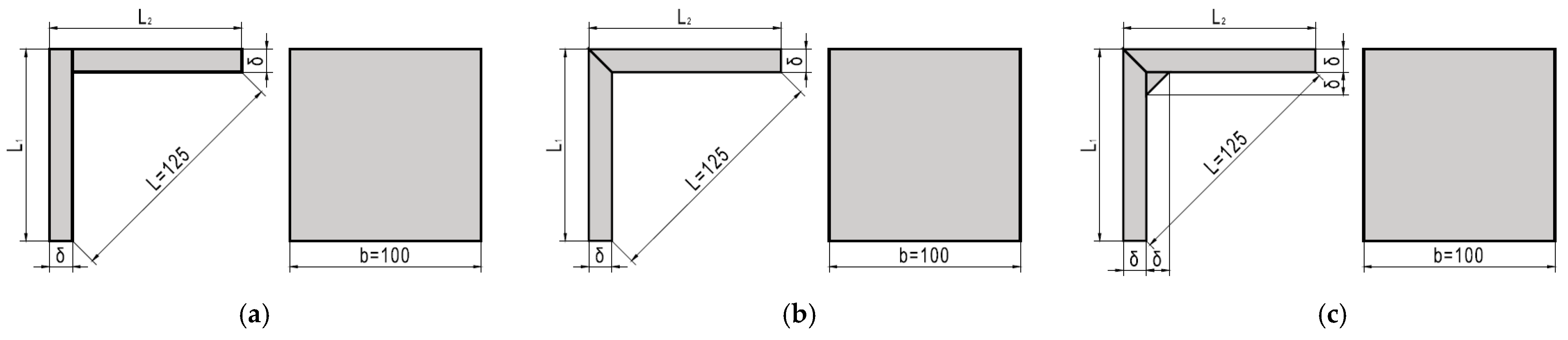
An L-type joint was selected for the study. Two groups of PMMA/ATH corner-joint systems were fabricated: bonded (seam-adhesive) and detachable (mechanical connectors). The definition of the type and dimensions of the test specimens, as described by Kyuchukov and Jivkov [
20], is shown in
Figure 1. The dimension
δ corresponds to the thickness of the composites (6 and 12 mm). The dimensions
L1 and
L2 are equal and depend on the thickness of the composites (
Figure 2 and
Figure 3). The width (
b) of the joints is 100 mm. The arm of the joint (
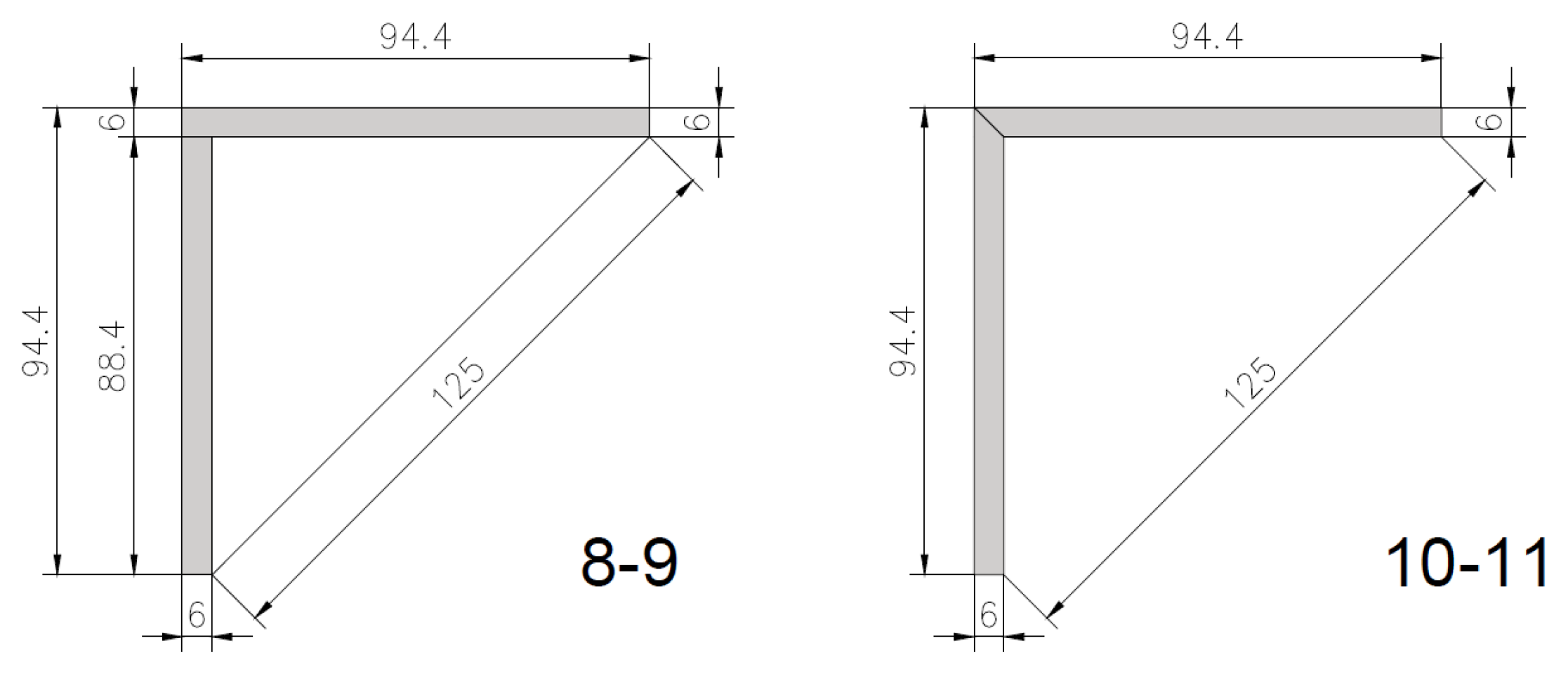
l) depends on the thickness and has a nominal length of 66.75 mm for 6-mm thick composites and 62.50 mm for 12-mm thick composites. For each series of glued joints, at least 15 test specimens, and for detachable joints, at least 12 were prepared. Dimensions (width
, thickness
, arm
length
) were measured to an accuracy of 0.01 mm.
All test specimens were cut from the PMMA/ATH commercial sheets using a stationary saw blade with a sliding tray, designed for cutting standard panels such as particleboard, plywood, and MDF. A circular saw blade with straight and trapezoidal teeth, where the trapezoidal teeth are 0.3 mm higher than the straight teeth, and the teeth are inclined at an angle of −6°, is used for cutting. The diameter of the blade saw was 300 mm, and the number of teeth was 96. The cut thickness was 3.2 mm. Before cutting, the sheets were left in the production facility for 48 h at an ambient temperature of approximately 22 °C. Prior to bonding, all joining surfaces were prepared using the same surface-finish procedure for the bonding areas: sanded with P280 abrasive paper (dry, uniform manual/controlled sanding) and then cleaned/degreased in the same manner before adhesive application. No instrumental roughness measurements (Ra/Rz) were performed; therefore, the reported results correspond to this standardized surface-preparation condition.
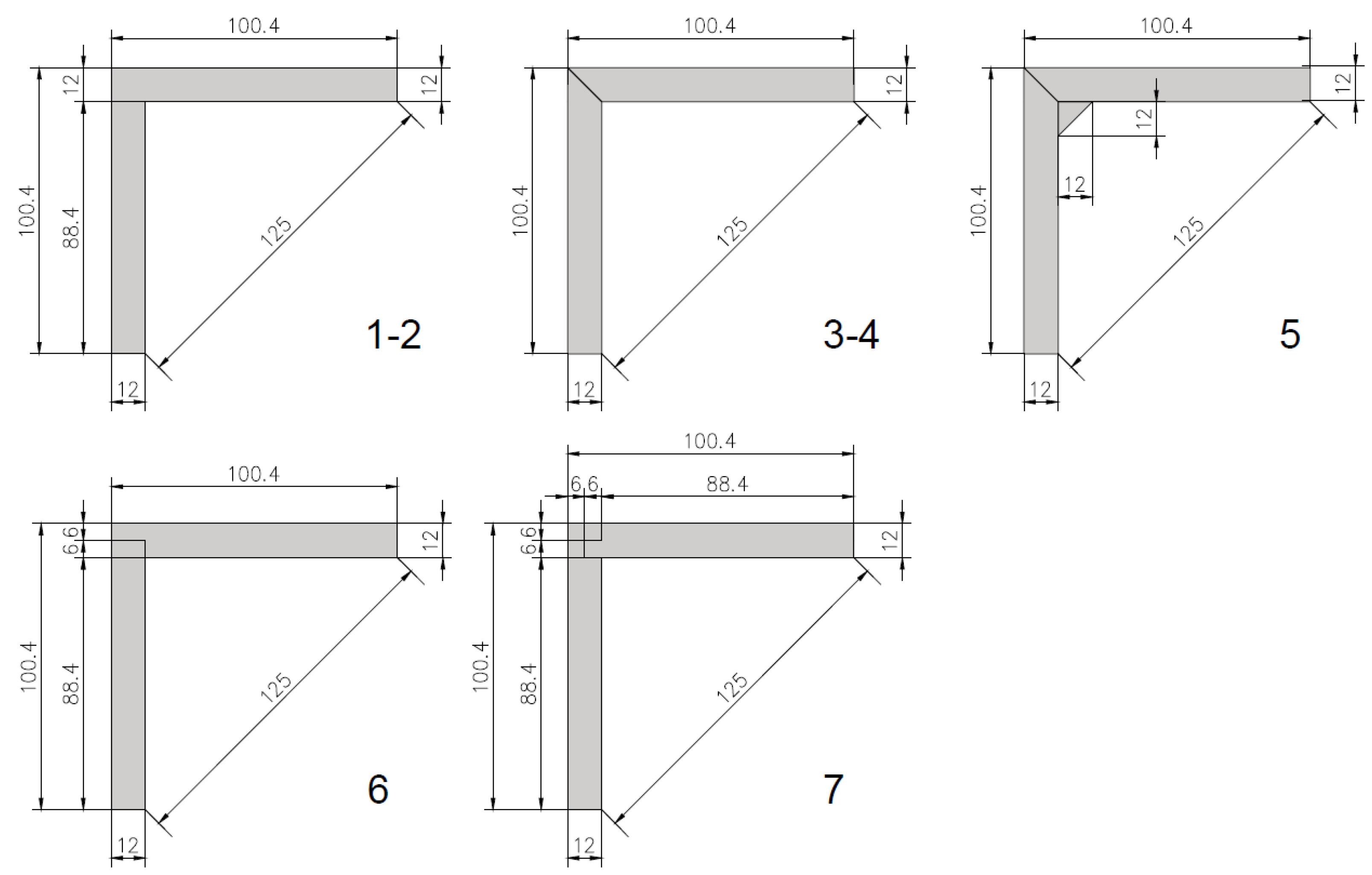
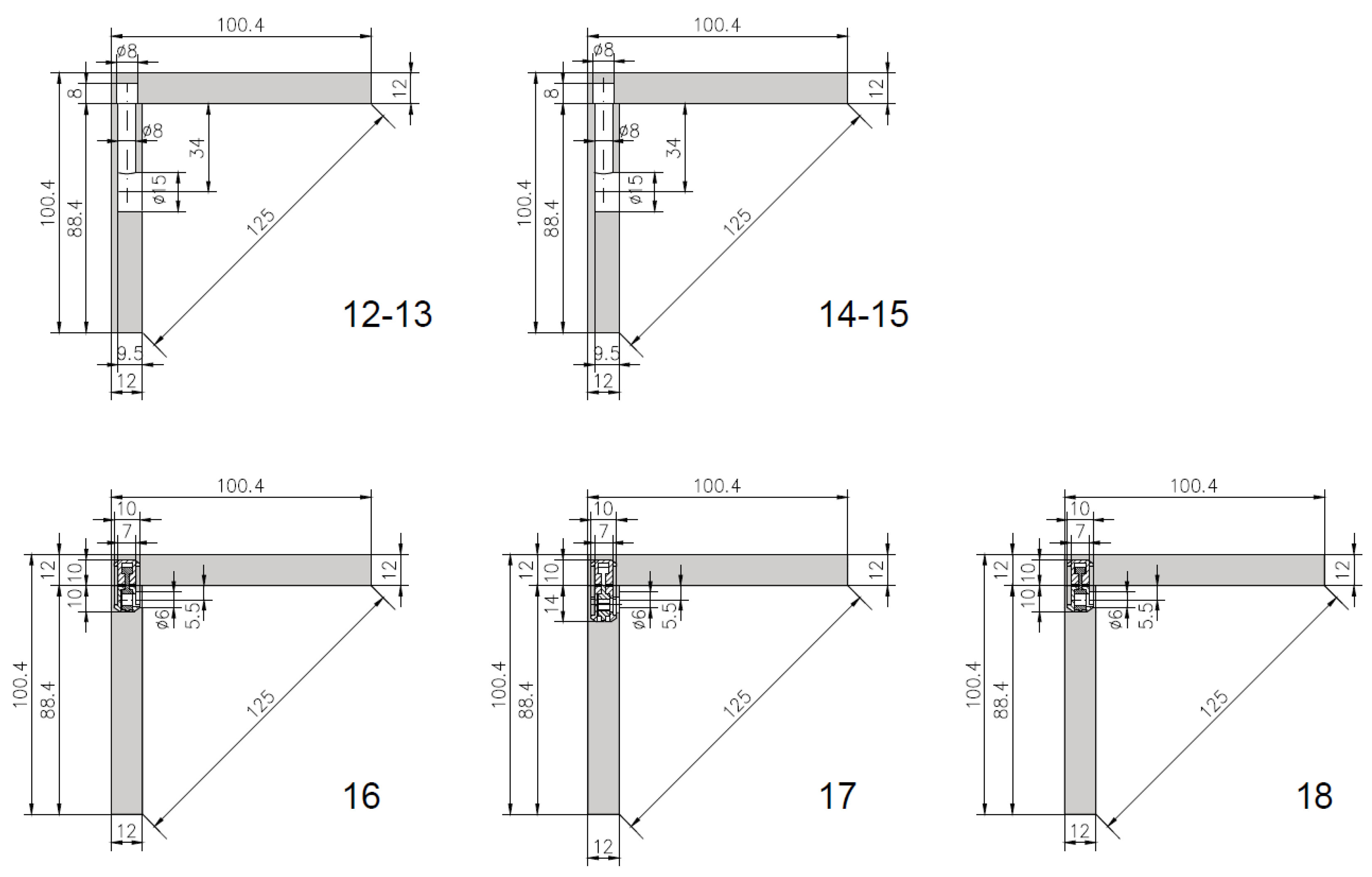
Descriptions of L-type corner joints made of PMMA/ATH composites are given in
Table 3, and technical drawings of the joints are presented in
Figure 2,
Figure 3 and
Figure 4.
Figure 2,
Figure 3 and
Figure 4 specify not only the full dimensions (including thickness-dependent arm parameters) but also the material assignment for each joint configuration, since some variants were manufactured only in one of the tested PMMA/ATH materials. Numbering, as shown in the first column of
Table 3, was used to interpret the results and provide a brief description of the type of joint.
For the study, five types of glued joints were selected, each made from 12 mm-thick sheets of PMMA/ATH composites. The two most popular methods for joining such composites, right-angle butt and miter joints, were produced using Kerrock and Corian materials (
Figure 2(1-2),(3-4)). Additionally, from Kerrock only, one mitre joint with a reinforcing element (
Figure 2(5)), one with a rebate (
Figure 2(6)), and one with a groove (
Figure 2(7)).
From 6 mm thick PMMA/ATH sheets, two glued butt (
Figure 3(8-9)) and miter joints (
Figure 3(10-11)) were produced, as well as from both materials—Kerrock and Corian.
To bond the elements of glued joints, a two-component seam adhesive composed of a modified methyl methacrylate resin (MMA) and a dibenzoyl peroxide hardener was used for all test specimens, manufactured by the company that produces the PMMA/ATH composites (Kerrock and Corian). The seam adhesive is the manufacturer-recommended, color-matched MMA system intended for the respective PMMA/ATH material and was kept consistent within each material. Hence, the glued-joint benchmarks apply to the tested material–adhesive systems and preparation conditions. It was dispensed from cartridges through a static mixer. The edges to be bonded are lightly sanded, cleaned with alcohol, aligned with a small, deliberate gap, and clamped together without over-squeezing so that the line of connection remains intact. After this, the test pieces are left to harden completely. The joints’ structural elements are bonded at room temperature (20 ± 2 °C) and at an atmospheric humidity of 50 ± 5%.
Five types of detachable joints were selected, each made from 12 mm thick sheets of PMMA/ATH composites (
Figure 4).
The two detachable joints, connected with a Minifix connector (produced Häfele SE & Co. KG, Nagold, Germany), were made with Kerrock and Corian. The selected Minifix connector consists of an eccentric, a metric thread bolt, and a plastic sleeve. According to the manufacturers’ recommendations, which do not allow direct screwing of nuts and bolts, it is necessary to use a sleeve (nut) in which the connecting elements are screwed. To ensure the necessary strength, these sleeves (nuts) must be glued to the composite. For joints 12 and 13 (
Figure 4), a two-component seam adhesive composed of a modified methyl methacrylate resin (MMA) and a dibenzoyl peroxide hardener was used for all test specimens, manufactured by the company that produces the PMMA/ATH composites (Kerrock and Corian). For joints 14 and 15, a two-component gel adhesive, TURBO INJECT UNIVERSAL (Bostik, La Défense, France), was used to join plastic sleeves into the hole of PMMA/ATH. The gel adhesive is a two-component ethyl cyanoacrylate-based. The manufacturer describes the product as a patented semi-structural adhesive intended for rapid bonding and instant gap filling, supplied in a dual syringe in which the two components are automatically mixed through a static-mixing nozzle to ensure uniform and accurate application. The cured adhesive is reported to be transparent. Before bonding, all adherend surfaces were prepared to be clean, dry, and free of dust. For applying Bostik glue, the syringe was assembled with the static mixer, and the first few drops were discarded. The adhesive was applied to one surface, the parts were assembled within 10 min, and then pressed together for approximately 30 s. The manufacturer reports an open time of 4–9 min and an initial cure of 2 min, with good handling strength after 10 min and full strength after 24 h (the latter was used as the conditioning time before testing).
The other three detachable joints were made with Lamello detachable furniture connectors for materials from 12 mm thickness—Clamex P10 and detachable furniture connectors with flexible positioning pins, Clamex P-10/P14, both produced by the Swiss company Lamello AG (Bubendorf, Switzerland). These joints were made only with Kerrock. A Zeta P2 cutter was used to make the profile grooves. Due to the specific design of these connectors, adhesive is not required.
2.3. Test Methods
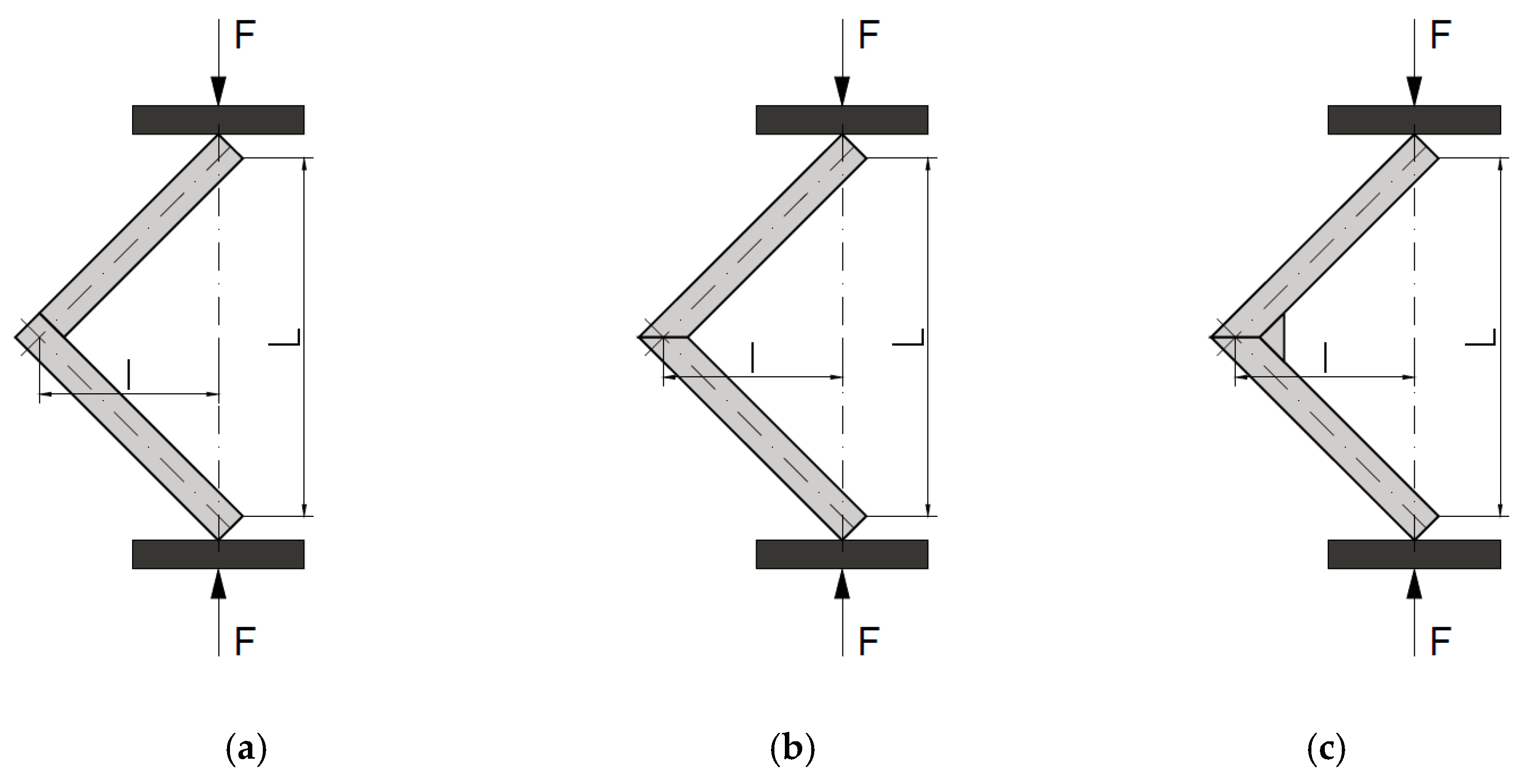
The general test scheme and bending arm determination are presented in
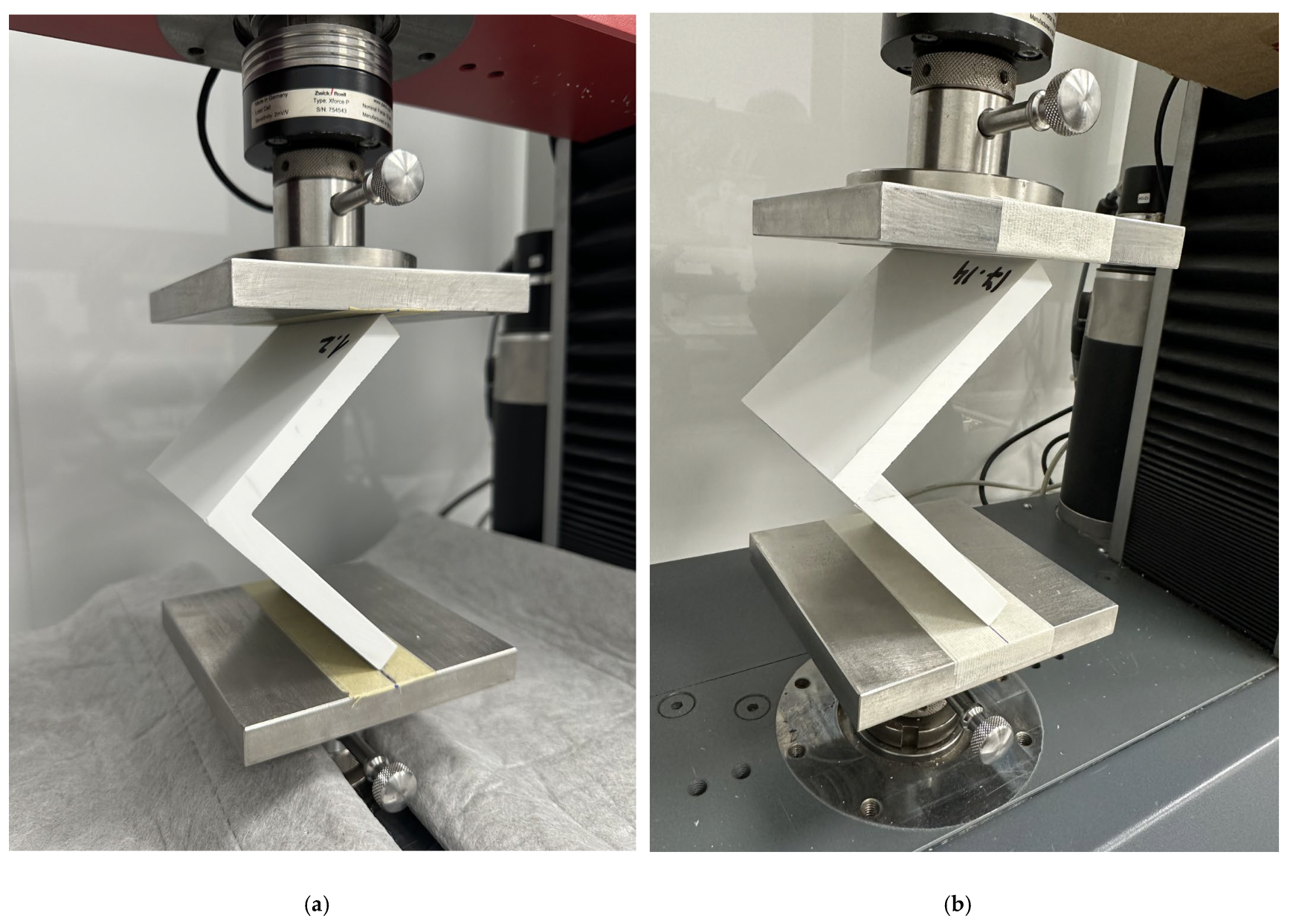
Figure 5. The test samples were tested on a Zwick/Roell Z010 universal testing machine (Zwick-Roell GmbH & Co. KG, Ulm, Germany) at the University of Chemical Technology and Metallurgy (UCTM) in the Department of Pulp, Paper, and Printing Arts. Tests were conducted at a temperature of 20 °C ± 2 °C and a relative humidity of 55% ± 5%.
Figure 6 shows a test specimen during testing on a universal testing machine. The crosshead speed was specified per test series (as a function of panel thickness), in order to keep all tests in a quasi-static regime and to achieve comparable test durations, with a target time to reach the peak load of approximately 60 ± 30 s. A two-phase loading program was applied: a lower speed in the initial segment used for stiffness identification (quasi-linear region), followed by a higher speed to reach the peak load/failure within the target time window. This approach was selected in line with the “Method B” concept of ISO 178:2019 “Plastics. Determination of flexural properties” [
19], where the deformation/strain rate in the modulus region is lower than the subsequent rate used to approach the strength limit, while noting that the present corner-joint configuration is non-standard relative to ISO 178. For the series with 12 mm thick specimens (joints 1–7 and 12–15), the speeds were 2 mm/min in the stiffness segment and 10 mm/min thereafter. For the series with thinner specimens (δ = 6 mm), joints 8–11, the speeds were 5 mm/min in the stiffness segment and 20 mm/min thereafter. The lower initial speed for the thicker and stiffer series was chosen because, at higher stiffness, the force increases more rapidly for a given displacement rate, and the quasi-linear segment occurs over smaller displacements; therefore, a lower speed improves force/displacement resolution for stiffness identification and reduces the risk of transient and dynamic effects during the steep force rise. Conversely, the thinner (more compliant) series requires larger displacements to reach the peak load, and a higher speed in the second phase was therefore used to keep the overall test duration within the target range.
The criterion for determining the strength of the tested joints is the maximum bending moment
Mmax calculated according to the following formula:
where
Fmax is the maximum force under arm compression bending, N, and
l is the arm, m.
For glued joints, the bending moment is for a 0.1 m length of the connecting line, and for detachable joints, it is for one connecting element.
Because PMMA/ATH L-type joints include relatively compliant arms (especially at 6 mm thickness) and the test setup exhibits non-negligible compliance, the actuator displacement does not represent joint rotation alone. It combines machine/frame compliance, elastic bending, and rotation of the two arms, and an initial non-linear “toe” region associated with seating (initial contact and micro-clearances). Therefore, simpler stiffness estimates based directly on the global force–crosshead displacement slope (or a two-point secant stiffness) would provide an “apparent” stiffness that systematically underestimates the true joint rotational stiffness and biases comparisons across thicknesses and joint geometries.
The joint rotational stiffness
of right-angle (L-type) joints under arm compression loading, was assuming small rotations, linear elasticity within the analyzed range, and bending-dominated behaviour. The joint is modeled as a rotational spring connecting two arms with a flexural rigidity (Equation (2)). Small rotations and linear elasticity are assumed within the analyzed range; slip and local plasticity are neglected for stiffness identification. These assumptions define
kθ as an effective initial stiffness identified only within the quasi-linear elastic window (Equation (11)) and are a limitation outside this range (toe region, near-peak nonlinearity, and damage). The limitation is more relevant for detachable joints, where seating/clearances and local slip are more pronounced, and for the low-stiffness 6 mm configurations, where higher arm compliance may amplify deviations from ideal linear behaviour.
where
E is the modulus of elasticity, N/mm
2;
I is the axial moment of inertia of the cross-section of the joint arms,
m4; which is calculated by the formula:
where
b is the width of the arms,
m;
δ is the thickness of the arms,
m.
During quasi-static loading tests, the applied force F in newtons and actuator displacement Δ in mm were recorded together with the bending arm l (
Figure 5), defined as the perpendicular distance from the force line of action to the joint center, the machine compliance C_mach (0.031 mm/kN), calibrated using a rigid dummy specimen, and the flexural properties of the two arms, calculated as in Formula (2).
Accordingly, before stiffness identification, the raw force–displacement data were first corrected in three steps to remove preload/reference effects and machine compliance.
Before the stiffness evaluation, the raw
–
data were corrected. First, a preload level
was selected, at which the slope of
stabilizes, and the corrected force was defined as
Second, the displacement was referenced such that
at
,
Third, the contribution of machine compliance was subtracted to obtain the specimen-only displacement,
Assuming small rotations and using the undeformed geometry of the joint, the total rotation (rad) at the joint was obtained from simple kinematics as
while the corresponding bending moment at the joint was calculated as
The elastic bending of the two arms was then removed using a double-cantilever estimate. Treating each arm as a cantilever under constant bending moment, the total arm rotation (rad) was evaluated as
and the net joint rotation (rad) was obtained as
The elastic range for stiffness evaluation was defined as a fixed fraction of the maximum corrected force. For each specimen, the maximum value
was determined, and only data points satisfying
were retained for stiffness identification. These bounds were selected after preliminary inspection of all tests, which showed that forces below about
are affected by noise and fixture settling, whereas forces above about
may already be approaching nonlinearity.
Within this elastic window, the rotational stiffness was obtained from the
–
relationship using a zero-intercept linear regression,
For a given specimen, the stiffness
was computed by a least-squares fit as
where
and
are the bending moment and joint rotation at the
-th data point, respectively. The goodness of fit of the through-origin model was quantified by the coefficient of determination
which is calculated for each specimen.
Rotational stiffness values are expressed in .
This integrated workflow for determining the stiffness of L-type joints is the key methodological contribution, as it provides stiffness values that are comparable across different joint geometries and thicknesses and are not influenced by the testing equipment or the arm’s elasticity. The stiffness identification is based on corrected force–displacement data and joint-rotation kinematics within a defined quasi-linear interval.
2.4. Statistical Processing
Descriptive statistics were computed in XLSTAT (Lumivero, Denver, CO, USA, version 2025.2.0), a statistical and data analysis package [
21]. Extreme outliers were screened using Grubbs’ test under the assumption of normality, and values flagged at α = 0.05 were removed prior to inferential analyses. For each response variable (maximum bending moment,
Mmax, and joint rotational stiffness,
kθ), differences among joint types were assessed using one-way analysis of variance (ANOVA) at a 95% confidence level (α = 0.05). When the overall ANOVA was significant (
p < 0.05), pairwise comparisons were performed using Tukey’s honestly significant difference (HSD) test. Results are reported as group means (±SD) with 95% confidence intervals, where “LS means” are provided. They correspond to the same group means because the statistical model is one-way (no covariates or additional factors).
In all figures and tables, the material and joint index numbers are based on the data presented in
Table 1 and
Table 3.
3. Results
3.1. Bending Strength of Glued Joints Made of PMMA/ATH Composite
The results for bending moments of joints made of PMMA/ATH composite are presented separately for glued and detachable joints due to significant differences between the two groups. The bending strength for glued joints was evaluated for 11 purely adhesively bonded corner joints in PMMA/ATH solid-surface composites (Kerrock and Corian). A total of 171 joints were tested, and 6 were identified as outliers, but they do not influence the ranking or conclusions.
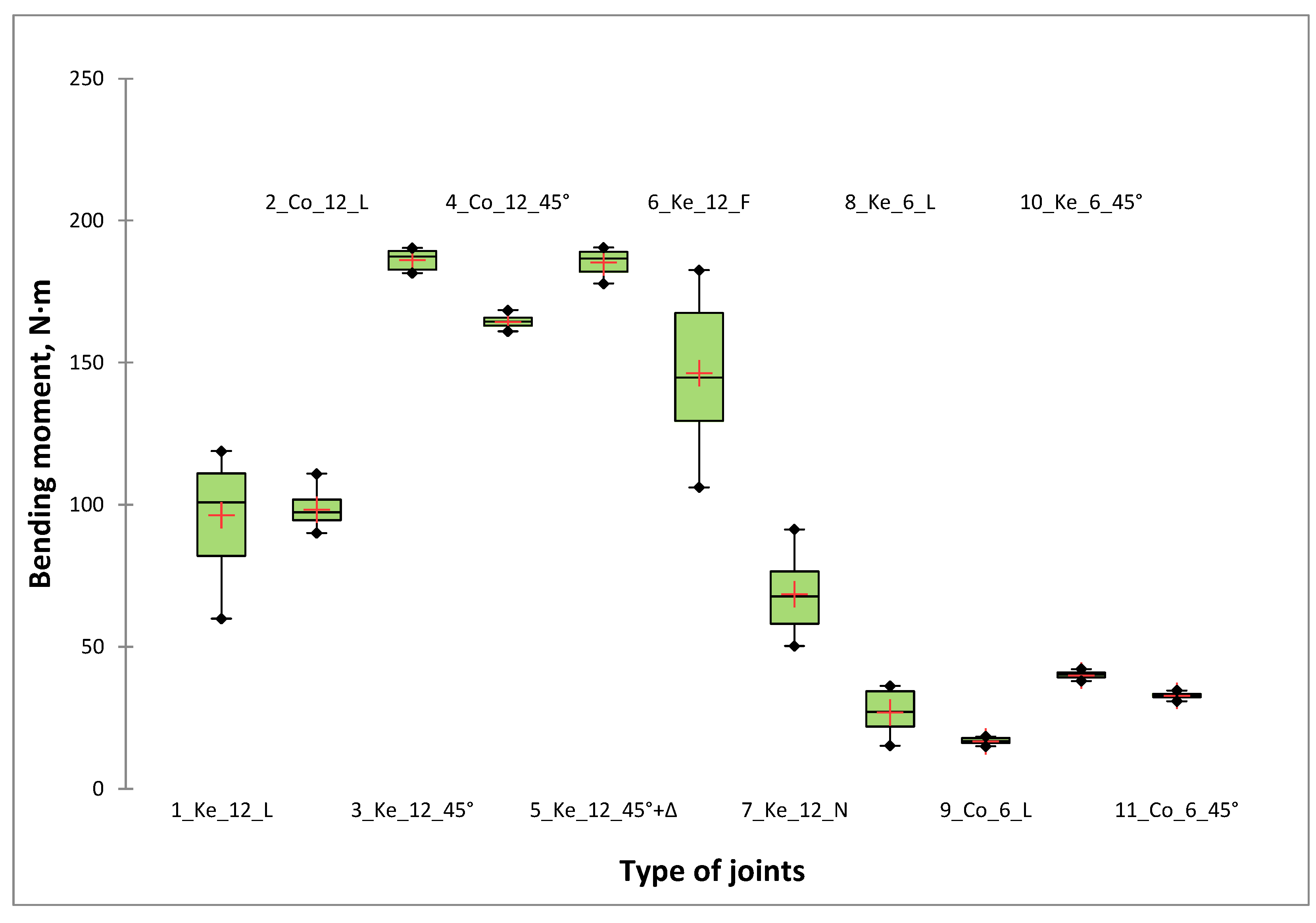
Figure 7 shows the box plot,
Table 4 shows the One-way ANOVA for the effect of joint type, and
Table 5 summarizes the Tukey HSD analysis of pairwise differences (95% confidence level) for all comparisons of the bending capacity of glued joints made of PMMA/ATH composites.
A one-way ANOVA was performed to evaluate the effect of joint type on the bending moment (N·m) of L-type glued joints. The effect of joint type was highly significant on the failure-bending moment with
(
Table 5). Given the significant ANOVA result, Tukey’s HSD post-hoc test was applied to determine which joint types differed and to define homogeneous groups of means (
Table 5).
Across all glued joints, the LS means range from 16.76 N·m for the weakest configuration (9_Co6_L) to 186.21 N·m for the strongest one (3_Ke12_45°), more than an order-of-magnitude difference in bending capacity.
For 12 mm Kerrock, the 45° mitre joints clearly form the upper performance bound. Both joints 3_Ke12_45° with LS mean 186.21 N·m (95% CI 184.55–187.88) and 5_Ke12_45° + Δ (mitre joint with reinforcement, Kerrock, 12 mm) with LS mean 185.36 N·m (95% CI 183.12–187.61) belong to the same homogeneous group A and are statistically indistinguishable. The additional corner reinforcement in 5_Ke12_45° + Δ does not produce a noticeable increase in bending capacity compared with the simple 45° mitre 3_Ke12_45°. In practice, a correctly executed Kerrock mitre joint already mobilises almost the complete bending resistance of the section.
The 12 mm Corian mitre joint (4_Co12_45°), with LS mean 164.42 N·m (95% CI 163.34–165.49), is in homogeneity group B. The achieved bending moment is somewhat lower than for the Kerrock mitre joints (roughly 10–15% reduction), but still clearly higher than any of the non-mitre geometries. This confirms that the mitre configuration itself is structurally very efficient for both materials.
The rebate 12 mm Kerrock joint (6_Ke12_F), with LS mean 146.47 N·m (95% CI 134.44–158.50), is also in homogeneity group B, reaching a similar statistical level to the Corian mitre joint. Although the rebate geometry may strengthen the inner corner, the step in thickness introduces stress concentrations and limits the bending capacity compared with the best mitre joints.
The 12 mm butt joints are the most commonly used in prefabricating PMMA/ATH composites and therefore provide a convenient reference level. The 12 mm Corian butt joint (2_Co12_L) has an LS mean of 98.35 N·m (95% CI 95.30–101.40), while the corresponding Kerrock joint (1_Ke12_L) has an LS mean of 96.37 N·m (95% CI 86.50–106.24). Both fall into homogeneity group C and show almost identical LS means, indicating that in a simple butt corner joint, Kerrock and Corian, each with its proprietary adhesive, are mechanically equivalent in bending. The 45° Kerrock mitre joints (group A) carry almost twice the bending moment of these 12 mm lap joints.
The Kerrock groove joint (7_Ke12_N), with an LS mean of 68.55 N·m (95% CI 62.20–74.89), belongs to group D and is the weakest of the 12 mm configurations. The reduction of the cross-section in the grooved region leads to a significant drop in bending moment compared with the butt joints.
For the 6 mm joints, a precise sequence is also observed. The Kerrock mitre joint 10_Ke6_45° shows the highest bending capacity with an LS mean of 40.03 N·m (95% CI 39.45–40.62) and forms homogeneity group E. The 6 mm Corian mitre joint 11_Cor_6_45° follows with an LS mean of 32.89 N·m (95% CI 32.37–33.40) in group F. The 6 mm Kerrock butt joint 8_Ke6_L (LS mean 26.94 N·m, 95% CI 23.40–30.48) forms group G, while the 6 mm Corian butt joint 9_Co6_L (LS mean 16.76 N·m, 95% CI 16.16–17.35) is isolated in group H and is clearly the weakest configuration overall. Thus, at a thickness of 6 mm, each successive change—from mitre to butt geometry and from Kerrock to Corian—results in a statistically significant reduction in bending capacity.
Overall, the bending capacity for both thicknesses is clearly governed by joint geometry, with material and adhesives playing a secondary role. In a 12 mm thickness, Kerrock 45° mitre joints define the upper bound. In contrast, Corian mitre and Kerrock rebate joints form an intermediate level, and butt joints in Kerrock and Corian are markedly weaker but mechanically equivalent to each other. The Kerrock groove joint is the weakest 12 mm configuration due to the locally reduced cross-section. In 6 mm thickness, the same hierarchy is repeated, with each step—first from mitre to butt geometry and then from Kerrock to Corian—causing a statistically significant drop in bending moment. Overall, a well-executed Kerrock mitre joint mobilises almost the complete bending resistance of the section, whereas thin Corian butt joints represent the most critical, lowest-capacity solution.
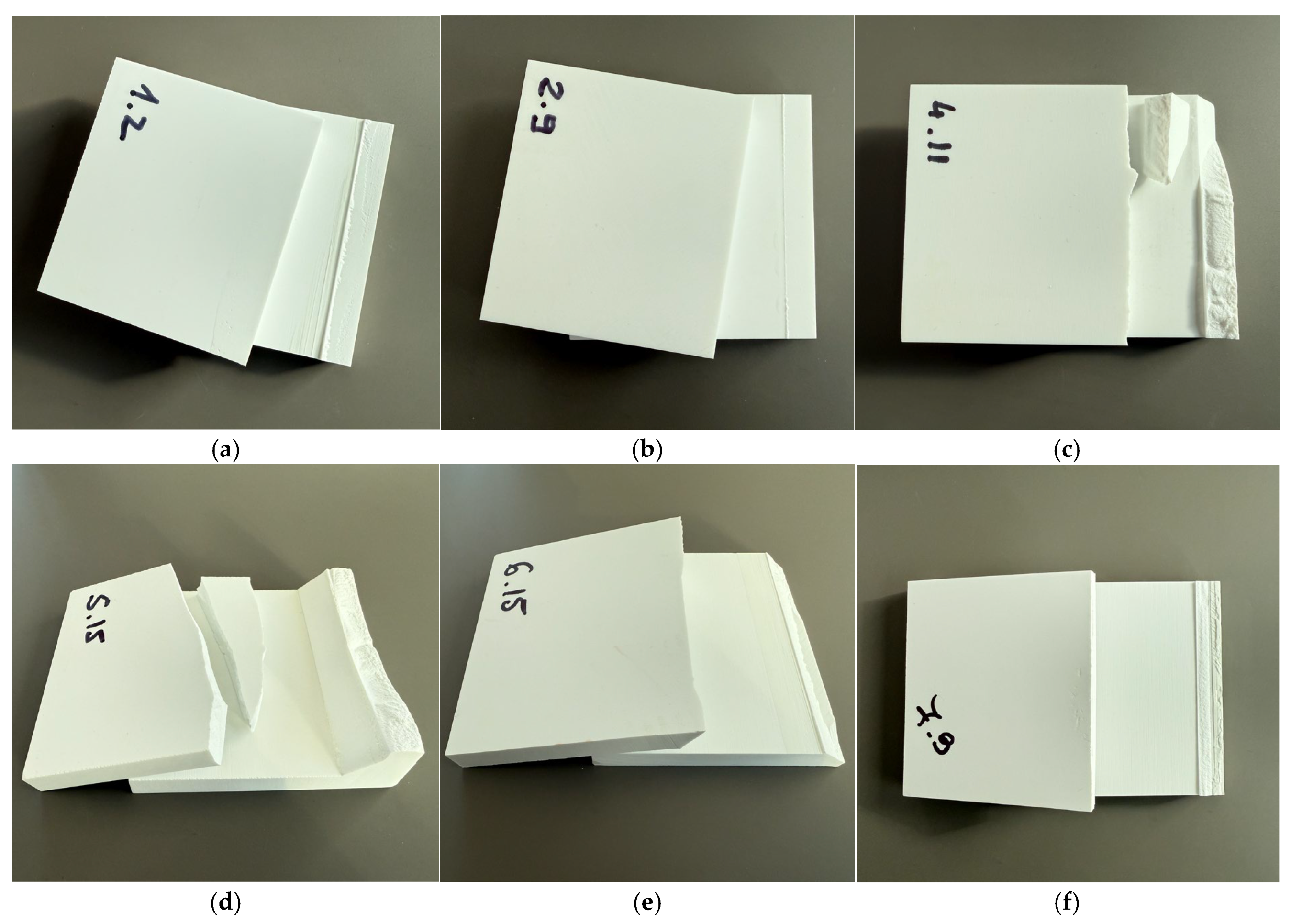
Visual inspection after testing revealed consistent failure patterns across all joint configurations. Some of the typical failures of glued L-type joints made of PMMA/ATH are shown in
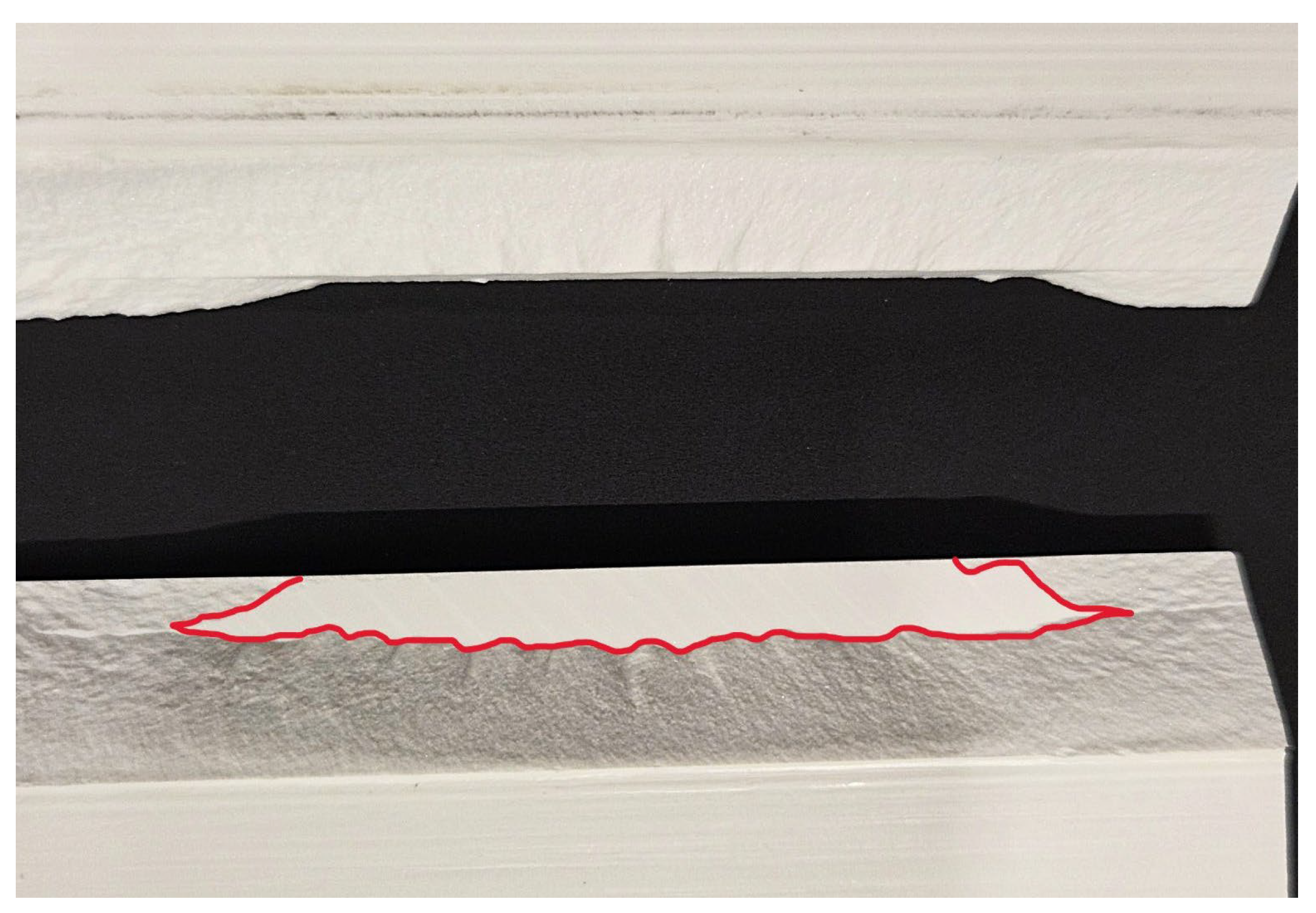
Figure 8. The 12 mm and 6 mm butt joints in Kerrock and Corian failed predominantly by fracture along the adhesive line, i.e., cohesive/adhesive failure in the glue with only limited damage in the PMMA/ATH composites. In contrast, the mitre joints (3_Ke12_45°, 4_Co12_45°, 10_Ke6_45°, 11_Co6_45°) showed fractures mainly in the solid-surface material with partial extension along the adhesive layer, indicating that the load-carrying capacity is controlled by the composites rather than by the adhesive alone. For the reinforced mitre joint (5_Ke12_45° + Δ), the fracture occurred in the Kerrock composites, behind the corner reinforcing element, while the adhesive layer in the reinforced zone remained largely intact. The rebate joint (6_Ke12_F) also failed in the material with partial cracking along the adhesive line (
Figure 9), and in some specimens, a distinct feather (tongue) breakage of the rebate was observed. For the groove joint (7_Ke12_N), failure was localized to the reduced cross-section of the material in the grooved area, with the adhesive layer primarily adhering to one of the adherends.
The observed failure modes correspond to the results of the bending moment test. Joints with lower bending capacity—butt joint configurations in Kerrock and Corian (1_Ke12_L, 2_Co12_L, 8_Ke6_L, 9_Co6_L)—tend to fail along the bonding line, indicating that the stress state (expressed by delamination along the bonding line) reaches the bonding strength before the PMMA/ATH composite fails.
In contrast, the high-capacity joints, in particular, the 12 mm Kerrock mitres and the reinforced mitre (3_Ke12_45°, 4_Co12_45° and 5_Ke12_45° + Δ), as well as the mitre joints in 6 mm plates (10_Ke6_45°, 11_Co6_45°)—fail predominantly in the composite, with only partial propagation along the adhesive layer. This change from adhesive-line failure to material-controlled failure confirms that, in these geometries, the matched Kerrock/Corian adhesives are sufficiently strong and rigid so that the limiting factor becomes the solid-surface material itself. Given the high filler content at the ATH, literature suggests that matrix cracking may be accompanied by particle cracking and/or particle–matrix interfacial damage (debonding), depending on interfacial strength and loading conditions. This aspect is therefore discussed qualitatively and proposed for future SEM verification.
The rebate joint (6_Ke12_F) and especially the groove joint (7_Ke12_N) illustrate how geometric weakening of the cross-section governs performance. Both show material fracture concentrated in the locally thinned region (rebate tongue or groove), which explains their lower LS means compared to the 45° mitres despite similar adhesive systems.
3.2. Bending Strength of Detachable Joints Made of PMMA/ATH Composite
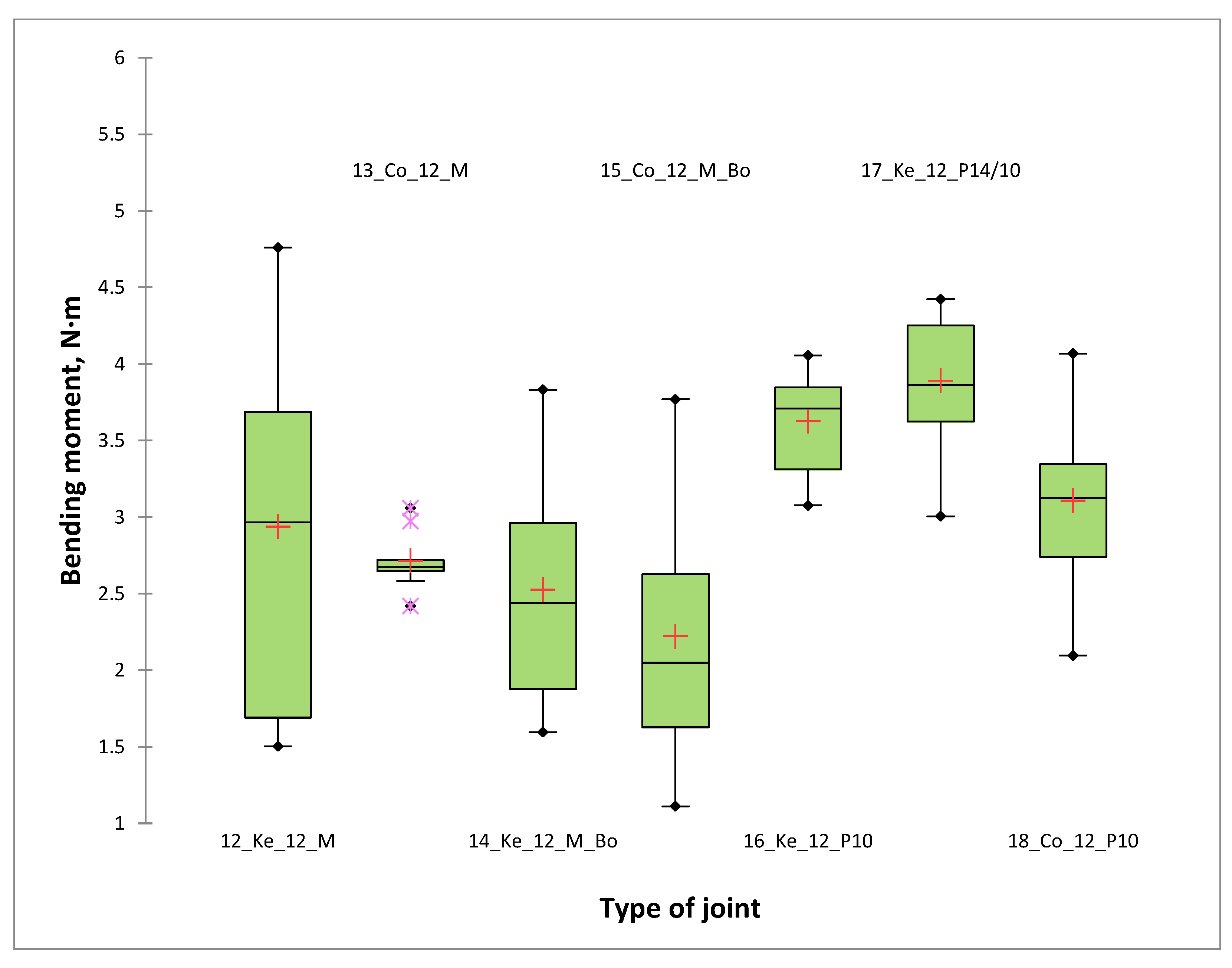
The results for the detachable joints are presented in
Figure 10, which shows the box plot,
Table 6 shows the One-way ANOVA for the effect of joint type, and
Table 7 summarizes the Tukey HSD analysis of pairwise differences (95% confidence level) for all comparisons of the bending capacity of detachable joints made of PMMA/ATH composites. A total of 95 joints were tested, and 5 were identified as outliers, but they do not influence the ranking or conclusions.
Joint configuration had a statistically significant and practically meaningful effect on bending moment (F (6, 80) = 9.94,
p < 0.0001), explaining 38–43% of the variance (ω
2 = 0.381; η
2 = 0.427). Compared with the adhesively bonded joints, where configuration effects were much stronger (e.g., η
2 and ω
2 close to 1 in the bonded set), the detachable joints showed a more moderate—yet still practically meaningful—configuration effect (ω
2 = 0.381; η
2 = 0.427) and substantially lower bending-moment levels. However, because within-group variability is substantial for detachable joints, several pairwise contrasts are not significant. This is reflected in the Tukey HSD grouping (
Table 7). Therefore, the interpretation should focus on the significant group separations identified by Tukey rather than assuming that all configurations differ.
For the detachable joints, the bending capacity was evaluated for Lamello Clamex and Minifix-based corner joints in 12 mm PMMA/ATH composites. Importantly, the Lamello-based configurations do not use adhesive, and in Minifix joints, adhesive is used only to fix the sleeve, so the detachable-joint response is mainly governed by connector mechanics and clearances/slip rather than by seam-adhesive strength. Across all detachable configurations, the LS means range from 2.22 N·m for the weakest joint (15_Co12_M_Bo) to 3.89 N·m for the strongest one (17_Ke12_C_P14/10), a spread of about 1.75 times. As expected, these values are about 30–60 times lower than the bending moments of the corresponding purely glued joints with the same thickness and materials, which justifies analysing the two groups separately.
Among the detachable joints, the Lamello Clamex connectors in Kerrock clearly form the upper performance bound. The joint 17_Ke12_C_P14/10 (Kerrock, Clamex P14/10) reaches an LS mean of 3.89 N·m (95% CI 3.66–4.12), while 16_Ke12_P10 (Kerrock, Clamex P10) attains 3.63 N·m (95% CI 3.46–3.79). Both joints belong to homogeneity group A and are statistically indistinguishable, indicating that the connector P14/10 offers no significant advantage in bending over the P10 connector. In practical terms, Lamello-based detachable joints in Kerrock provide the highest bending resistance among the mechanically connected corners.
All remaining detachable joints fall into homogeneity group B, with slightly lower LS means. The Corian Lamello joint 18_Co12_P10 achieves 3.03 N·m (95% CI 2.74–3.33), about 20–25% lower bending moment than the best Kerrock Lamello joint, but still at the upper end of group B. The Minifix-based joints with plastic sleeve and manufacturer-specific solid-surface adhesives show comparable values: 12_Ke12_M exhibits an LS mean of 2.94 N·m (95% CI 2.38–3.50), and 13_Cor_12_M reaches 2.71 N·m (95% CI 2.59–2.84). The Minifix variants bonded with Bostik adhesive (14_Ke12_M_Bo and 15_Co12_M_Bo) occupy the lower end of group B, with LS means of 2.53 N·m (95% CI 2.15–2.91) and 2.22 N·m (95% CI 1.75–2.69), respectively.
Although the joints in homogeneity group B are not statistically different from one another, a consistent trend is evident: systems using the original Kerrock/Corian adhesives outperform the corresponding Bostik-bonded Minifix joints. Overall, the detachable joints based on Lamello Clamex connectors (group A) define the upper limit of bending capacity among mechanically fastened corners. In contrast, Minifix joints with Bostik glue represent the structurally weakest and should only be used for non-load-bearing joints.
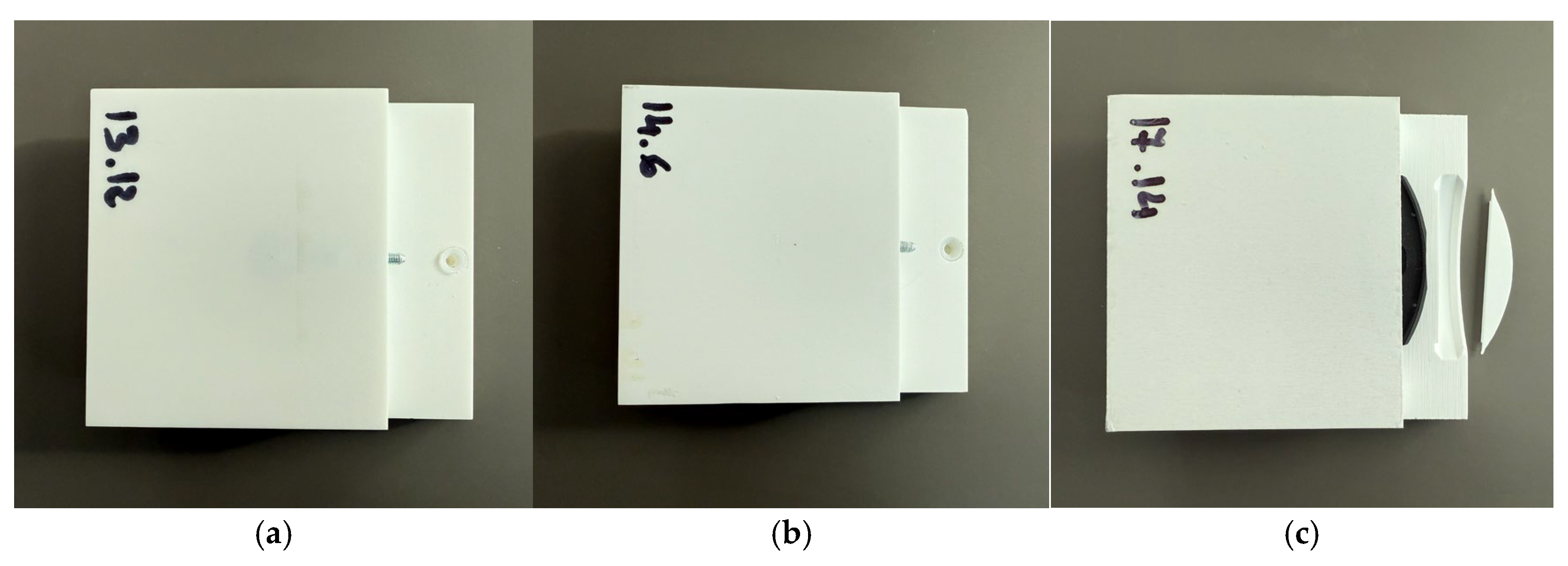
The typical failures of detachable L-type joints made of PMMA/ATH are shown in
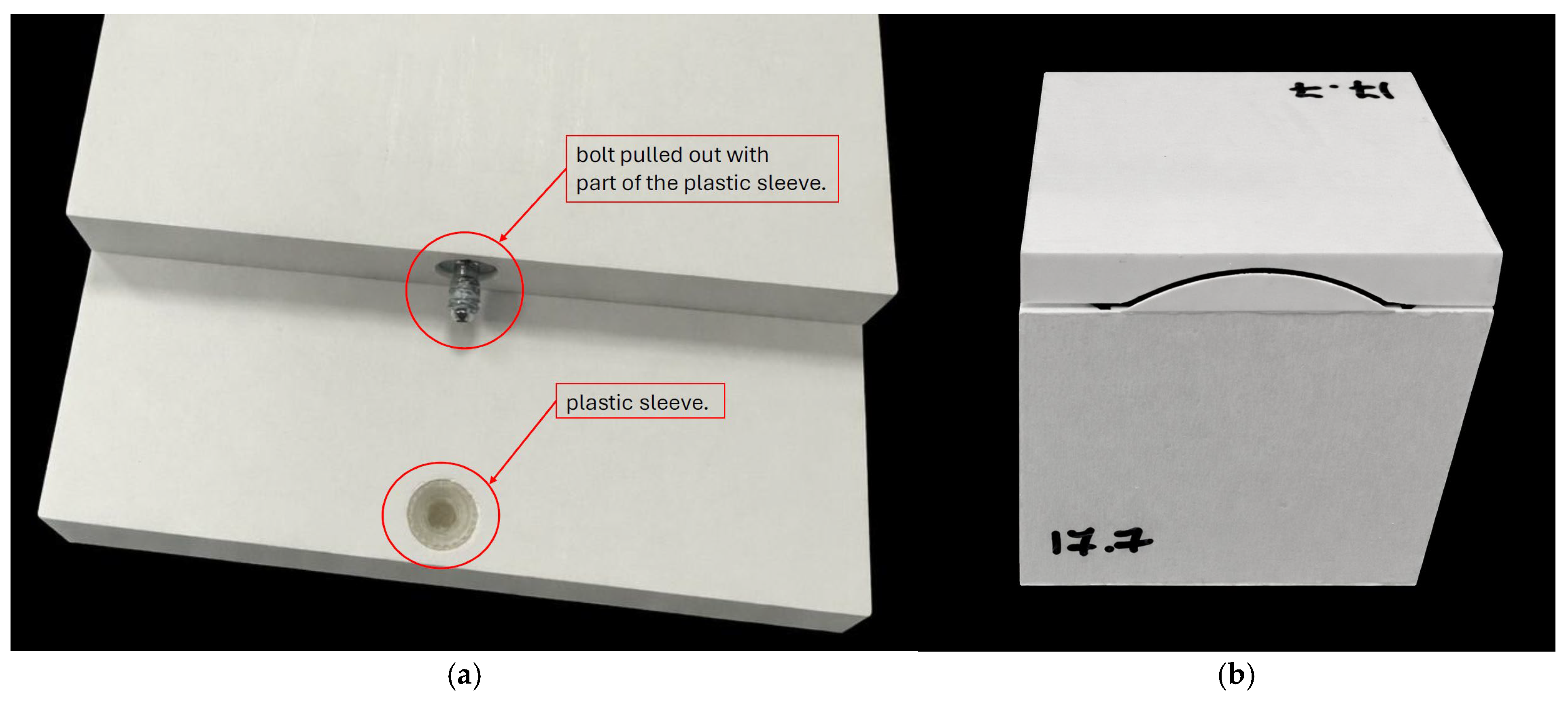
Figure 11. Based on the observations, it can be concluded that failure was primarily concentrated in the connector area rather than in the glue line around the sleeves for the Minifix-based joints (12_Ke12_M; 13_Co12_M; 14_Ke12_M_Bo; 15_Co12_M_Bo). Failure typically occurred when the bolt withdrew from the plastic sleeve (
Figure 12a), while the sleeve and surrounding PMMA/ATH material remained largely intact. After unloading, the bolt could still be reinserted and tightened, confirming the reversible character of this connection type, to some extent. In contrast, for the Lamello Clamex joints (16_Ke12_P10; 17_Ke12_P14/10; 18_Co12_P10), the fracture localized in the area of the connector near the edge of the panel, involving damage to the solid-surface material around the housing. This indicates that, at the achieved bending moments, the limiting component of these systems is the material in the connector zone rather than the mechanical fastener itself. The reason for this is the small remaining wall thickness (2 mm) in the connector area (
Figure 12b) and the concentration of stresses in the material due to milling.
3.3. Rotational Stiffness of Glued Joints Made of PMMA/ATH Composite
The results for the rotational stiffness under compression bending load of the glued joints made of PMMA/ATH composites are presented in
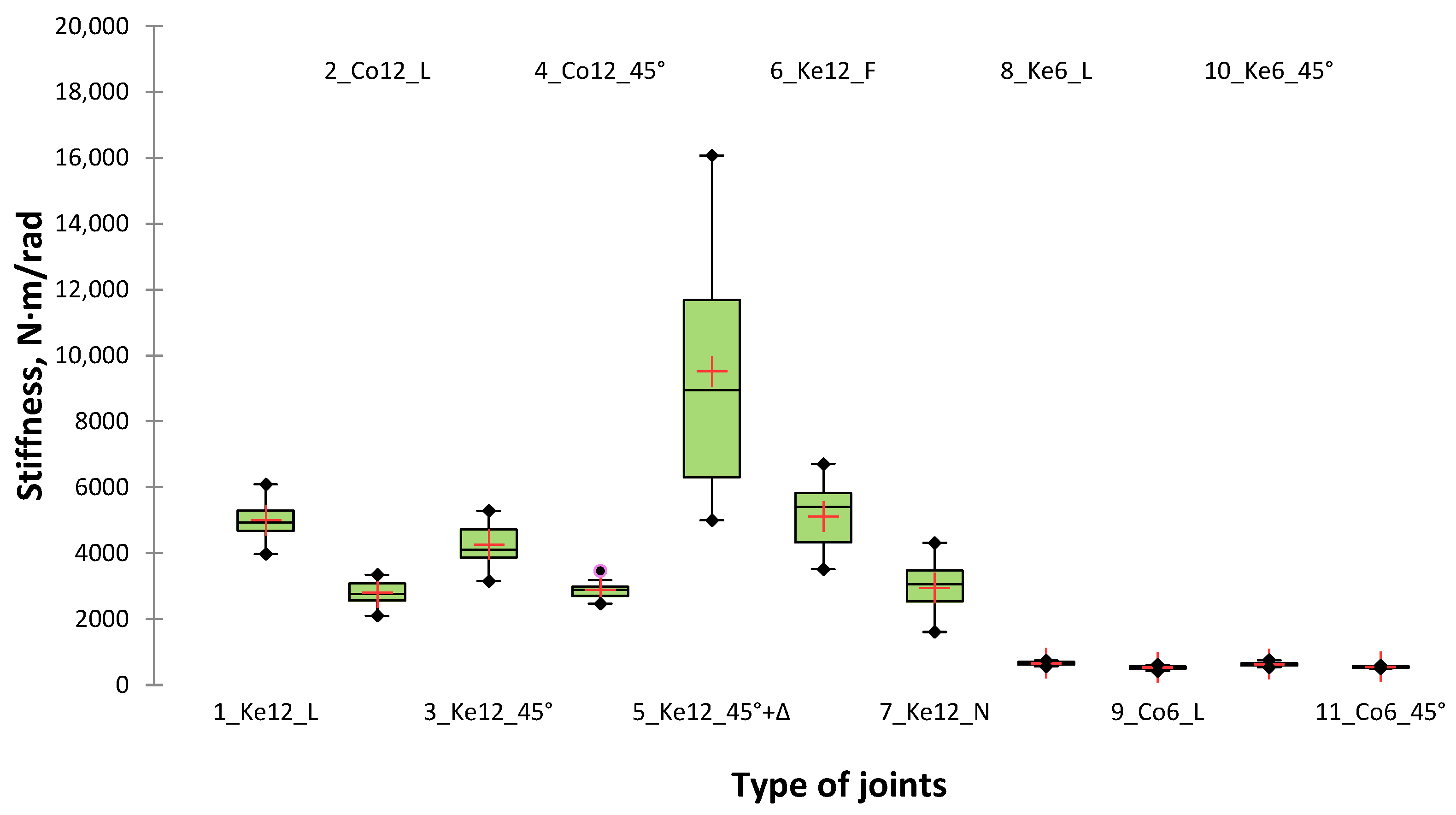
Figure 13, which shows the box plot,
Table 8 shows the One-way ANOVA for the effect of joint type, and
Table 9 summarizes the Tukey HSD analysis of pairwise differences (95% confidence level) for all comparisons of the stiffness of glued joints made of PMMA/ATH composites. A total of 171 joints were tested, and 8 were identified as outliers, but they do not influence the ranking or conclusions.
Rotational stiffness differed significantly among joint configurations (one-way ANOVA: F(10, 151) = 81.221, p < 0.0001). The between-configuration effect was substantial (η2 = 0.843; ω2 = 0.832), meaning that approximately 83–84% of the total variance in rotational stiffness was attributable to the joint configuration, with the remaining variance reflecting within-group scatter.
Due to within-group variability, several configurations are statistically indistinguishable in stiffness according to Tukey HSD (
Table 9), indicating practical equivalence under the tested conditions. The reinforced mitre configuration shows the highest stiffness, but the stiffness gain is not necessarily accompanied by an equivalent gain in bending moment capacity, highlighting that stiffness-driven and strength-driven design choices can differ for PMMA/ATH corner joints.
The rotational stiffness of the glued joints ranges over almost 20 times, with LS means from about 528 to 9521 N·m/rad. The mitre joint with reinforcement, made of Kerrock 12 mm (5_Ke12_45° + Δ), clearly forms the upper performance bound, with an LS mean of 9521 N·m/rad (95% CI 7686–11,357). It constitutes a separate homogeneous group A and is significantly stiffer than all other glued configurations.
Among the non-reinforced 12 mm Kerrock joints, the rebate joint 6_Ke12_F and the butt joint 1_Ke12_L exhibit the highest stiffness, with LS means of 5112 and 4991 N·m/rad, respectively (groups B). These two joints are statistically indistinguishable and show only a moderate reduction in stiffness (around 45–50%) compared to the reinforced mitre joint. The plain 45° mitre joint 3_Ke12_45° (Kerrock, 12 mm) reaches an LS mean stiffness of 4261 N·m/rad and belongs simultaneously to groups B and C, acting as a transition between the high-stiffness Kerrock configurations (rebate and butt) and the less stiff joints.
The groove joint 7_Ke12_N (Kerrock, 12 mm) and the corresponding Corian mitre 12 mm joints (4_Co12_45°) and 12 mm butt joint (2_Co12_L) form a second cluster of medium stiffness. Their LS means lie between 2798 and 2942 N·m/rad, and they are assigned to overlapping groups C and D, indicating that their mutual differences are not statistically significant at the chosen confidence level. Within this cluster, an apparent material effect can be observed: 12 mm Kerrock butt and mitre joints (1_Ke12_L and 3_Ke12_45°) are roughly 1.5–1.8 times stiffer than their 12 mm Corian counterparts (2_Co12_L and 4_Co12_45°), which consistently occupy the lower end of the 12 mm stiffness spectrum.
All 6 mm joints, both Kerrock and Corian, butt and mitre—display very low rotational stiffness compared to their 12 mm analogues. The LS means for 8_Ke6_L, 10_Ke6_45°, 11_Co6_45°, and 9_Co6_L fall in a narrow range between 528 and 662 N·m/rad, and all four joints belong exclusively to homogeneous group E, which is clearly separated from the 12 mm joints (groups A–D). The reinforced 12 mm mitre joint (5_Ke12_45° + Δ) is approximately 14–18 times stiffer than the 6 mm glued joints, underlining the pronounced influence of panel thickness on the rotational stiffness of the connection.
Overall, the results show that reinforcement of the 12 mm Kerrock mitre joint yields the highest rotational stiffness, followed by the rebate and butt joints in 12 mm thick Kerrock. Groove joints and all Corian 12 mm configurations form an intermediate group with clearly lower stiffness, while all 6 mm joints are significantly more compliant and constitute a distinct low-stiffness class.
3.4. Stiffness of Detachable Joints Made of PMMA/ATH Composite
The results for the stiffness under compression-bending load of the detachable joints made of PMMA/ATH composites are presented in
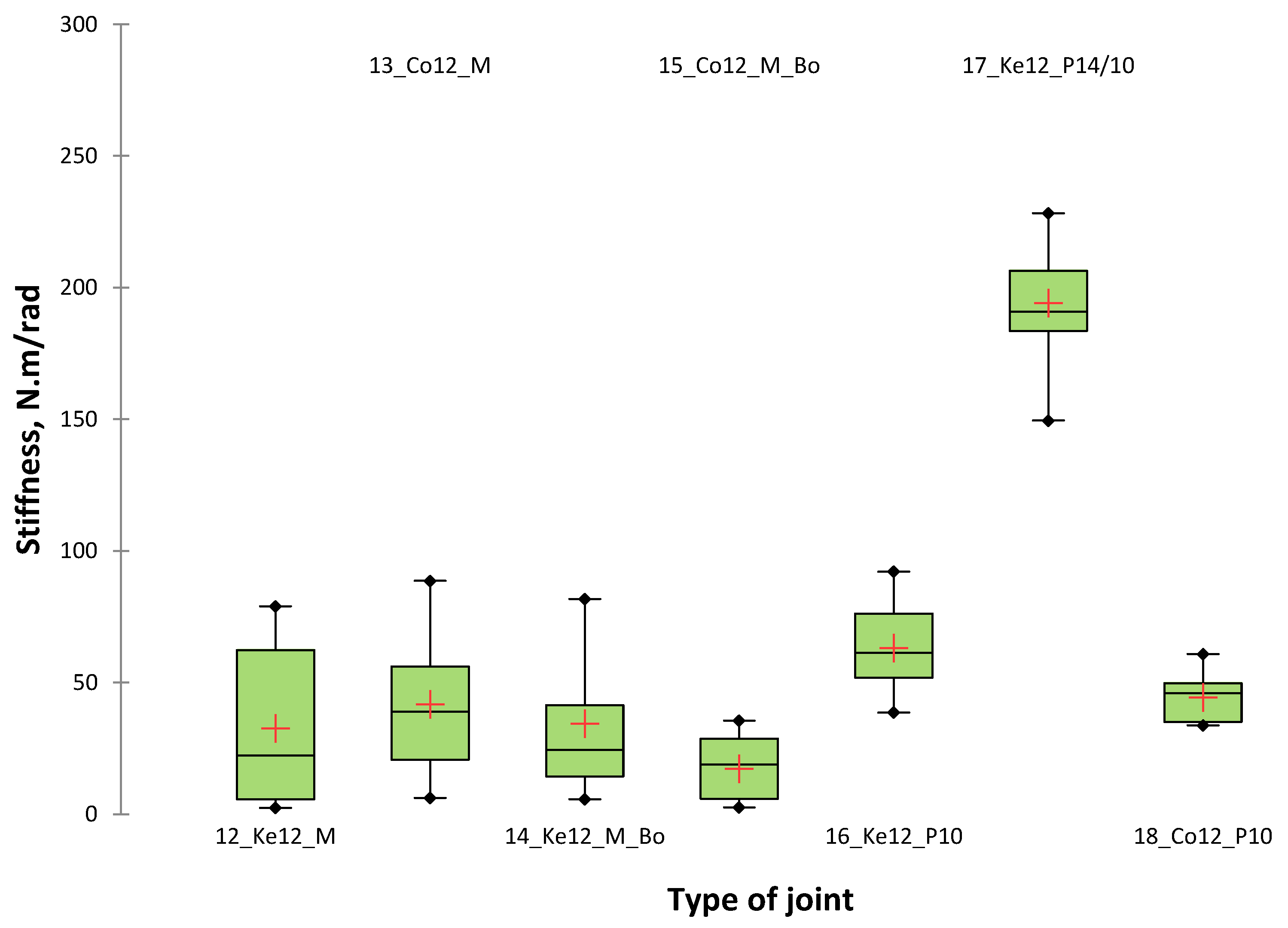
Figure 14, which shows the box plot,
Table 10 shows the One-way ANOVA for the effect of joint type and
Table 11 summarizes the Tukey HSD analysis of pairwise differences (95% confidence level) for all comparisons of the stiffness of detachable joints made of PMMA/ATH composites. A total of 95 joints were tested, and 12 were identified as outliers, but they do not influence the ranking or conclusions.
Stiffness of the detachable joint is primarily governed by the connector system’s mechanics (geometry, engagement, and clearances/slip), while adhesive plays a role only in the Minifix variants, where it anchors the plastic sleeve to the composite. The Lamello configurations (16–18) are purely mechanical and do not use adhesive; therefore, stiffness differences within the detachable set cannot be attributed solely to adhesive behaviour. In addition, the stiffness identification is based on corrected joint rotation (machine compliance and arm deformation removed), so it reflects joint-level rotational stiffness rather than global displacement effects.
A one-way ANOVA was conducted to assess the effect of joint configuration on the rotational stiffness of the detachable joints (
Table 10). Joint configuration had a highly significant effect on rotational stiffness, F(6, 75) = 89.05,
p < 0.0001, accounting for a substantial proportion of the variance (R
2 = 0.877; η
2 = 0.877; ω
2 = 0.866). This indicates that differences in stiffness among detachable joint types are substantial and primarily driven by the joint design rather than random within-group variability.
The rotational stiffness of the detachable joints is extremely significantly lower than that of the glued joints, with LS ranging from 17 to 194 N·m/rad. Joint with Lamello Clamex P14/P10 of 12 mm composites (17_Ke12_P14/10) clearly forms the upper performance bound among all detachable connectors, with an LS mean stiffness of 194 N·m/rad (95% CI 180.96–207.39). It belongs exclusively to homogeneous group A, indicating that it is significantly stiffer than all other detachable configurations.
The 12-mm joint of Lamello connector P10 (16_Ke12_P10) constitutes the second stiffness level with an LS mean of 63.20 N·m/rad (95% CI 55–72, group B). It is distinctly separated from the weaker Minifix-based joints and from the Lamello configuration in Corian. The corresponding Corian Lamello joint 18_Co12_P10 (LS mean 44 N·m/rad, 95% CI 39–50) belongs to overlapping groups B and C, indicating that it is significantly less stiff than 17_Ke12_P14/10 but statistically comparable to 16_Ke12_P10 and to the stiffer Minifix configurations.
The Minifix joints with manufacturer-specific solid-surface adhesives occupy the mid-range of the detachable stiffness spectrum. The Corian Minifix joint 13_Co12_M (Corian glue) shows an LS mean of 42 N·m/rad (95% CI 26–57), and spans groups B, C, and D due to its relatively large standard error. The Kerrock Minifix joint 12_Ke12_M (Kerrock glue) is weaker, with an LS mean of 29 N·m/rad (95% CI 13–45, groups C–D). However, its confidence interval overlaps that of 13_Co12_M, so a clear difference between the two adhesives/material combinations cannot be established at the chosen confidence level.
For the Minifix variants, using Bostik instead of the manufacturer’s seam adhesive tended to reduce stiffness, and this effect is most evident for Corian (15_Co12_M_Bo), whereas for Kerrock the difference is not statistically resolved at α = 0.05 (12_Ke12_M vs. 14_Ke12_M_Bo;
Table 11). The Kerrock Minifix joint with Bostik glue (14_Ke12_M_Bo) has an LS mean of 34 N·m/rad (95% CI: 21–48, groups C–D), which is statistically indistinguishable from that of 12_Ke12_M. In contrast, the Corian Minifix with Bostik glue (15_Co12_M_Bo) displays the lowest stiffness of all detachable configurations, with an LS mean of only 17 N·m/rad (95% CI 10–24). It belongs exclusively to group D, indicating that it is significantly more compliant than the stiffer Lamello joints and the Minifix joints, which have higher LS means.
Comparing these results with the glued joints highlights the decisive penalty in rotational stiffness introduced by detachable connectors. Even the stiffest detachable configuration 17_Ke12_P14/10 reaches only about 7% of the stiffness of the weakest 12 mm glued joint, and all detachable joints remain substantially more compliant than the glued 6 mm joints. Thus, while Lamello P14/10 connectors can partially compensate for the loss of rigidity, all detachable joints form a clearly distinct class with low rigidity compared to structurally glued joints and can even be classified as hinge joints due to their extremely low rigidity.
Overall, the detachable-joint stiffness ranking is driven primarily by connector design (Lamello vs. Minifix and their variants), while adhesive effects are secondary and limited to the sleeve-anchoring step in Minifix configurations.
3.5. Load–Deformation Behaviour of Joints Made of PMMA/ATH Composite
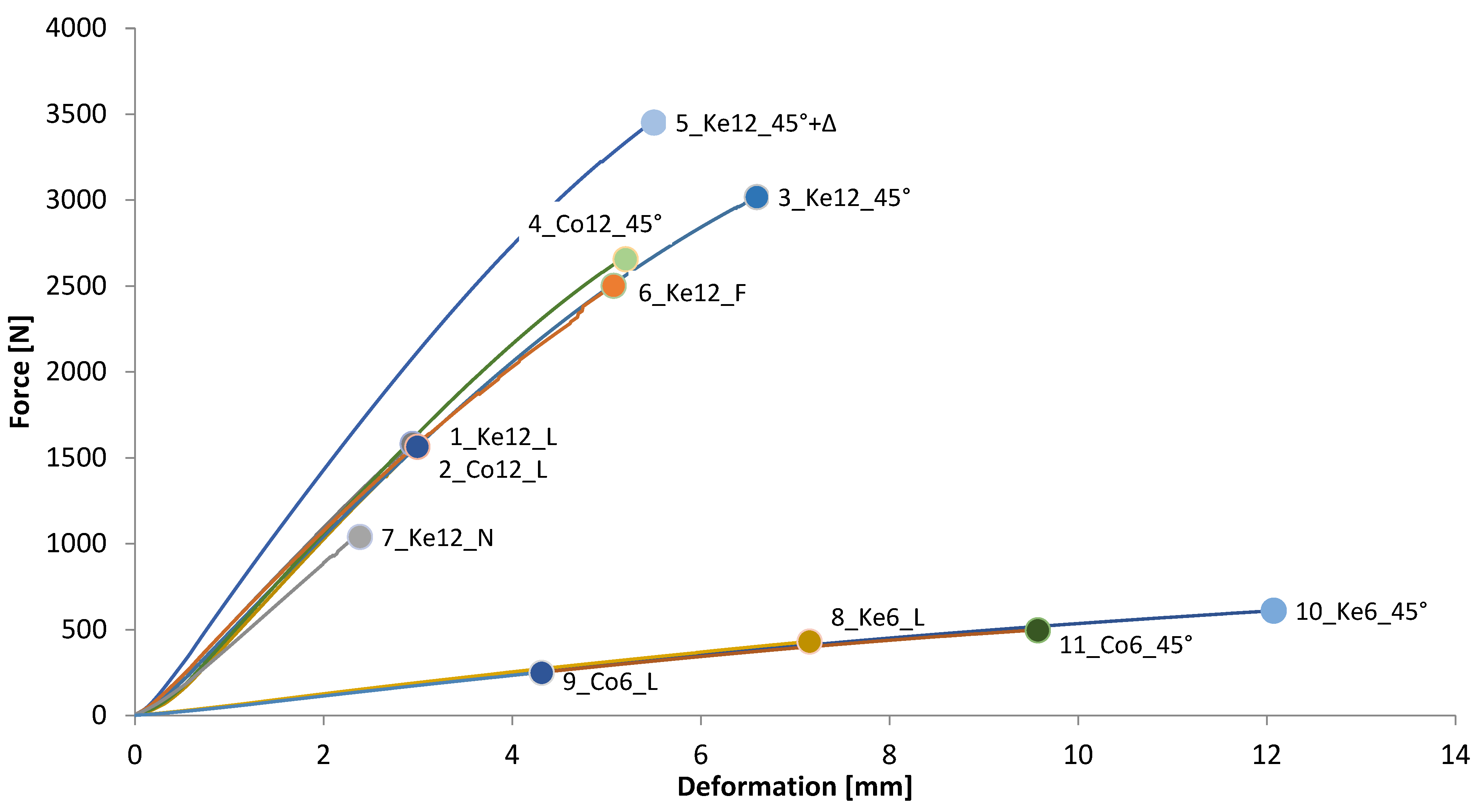
Here, the reported slopes in N/mm describe the initial force–deformation stiffness. The combined mean force–deformation (
−
curves of glued joints of PMMA/ATH show clear and systematic differences between joint designs in terms of both initial stiffness and load-bearing capacity (
Figure 15). All series exhibit a short non-linear “toe” region at minimal deformations, which is typical for corner-joint testing and can be attributed to seating effects (contact settling, micro-clearances, and progressive engagement of the bonded interface). After this stage, the response becomes predominantly linear and therefore suitable for stiffness assessment, while deviations from linearity at larger deformations indicate damage initiation and progressive stiffness degradation. A pronounced thickness effect is evident: the 12 mm joints reach markedly higher forces than the 6 mm variants (up to 3.45 kN versus < 0.61 kN in the mean curves), and their initial slopes are approximately one order of magnitude higher (typically 438–758 N/mm for 12 mm compared with 53–60 N/mm for 6 mm). The larger deformation observed at peak for the 6 mm joints reflects the higher compliance of the thinner arms rather than improved structural capacity.
Within the 12 mm group, joint geometry governs performance ranking. The reinforced mitre joint (5_Ke12_45° + Δ) provides the best response, combining the highest peak force (3.45 kN) with the highest initial stiffness (758 N/mm), confirming that reinforcement improves stress redistribution in the critical corner zone and delays damage development. The mitre joints (3_Ke12_45° and 4_Co12_45°) also show high capacity (3.03 kN and 2.66 kN) and sustain loading up to larger deformations (5–6.6 mm), indicating a more progressive response compared with butt joints. The rebated joint (6_Ke12_F) offers a favourable compromise, achieving high stiffness and high peak force (2.50 kN). In contrast, the groove joint (7_Ke12_N) is the weakest among the 12 mm solutions (1.06 kN), consistent with a less favourable load path and increased local stress concentration. Material effects are visible but secondary to geometry: Kerrock generally trends higher than Corian for the same configuration, particularly for mitre joints at 12 mm thickness (14% higher peak for Kerrock). Importantly, because the stiffness evaluation is based on the quasi-linear interval following the toe region (elastic-range selection), the mean (− curves support a robust comparison of joint stiffness and early-stage behaviour, while post-peak interpretations should be treated cautiously unless supplemented by specimen-level curves.
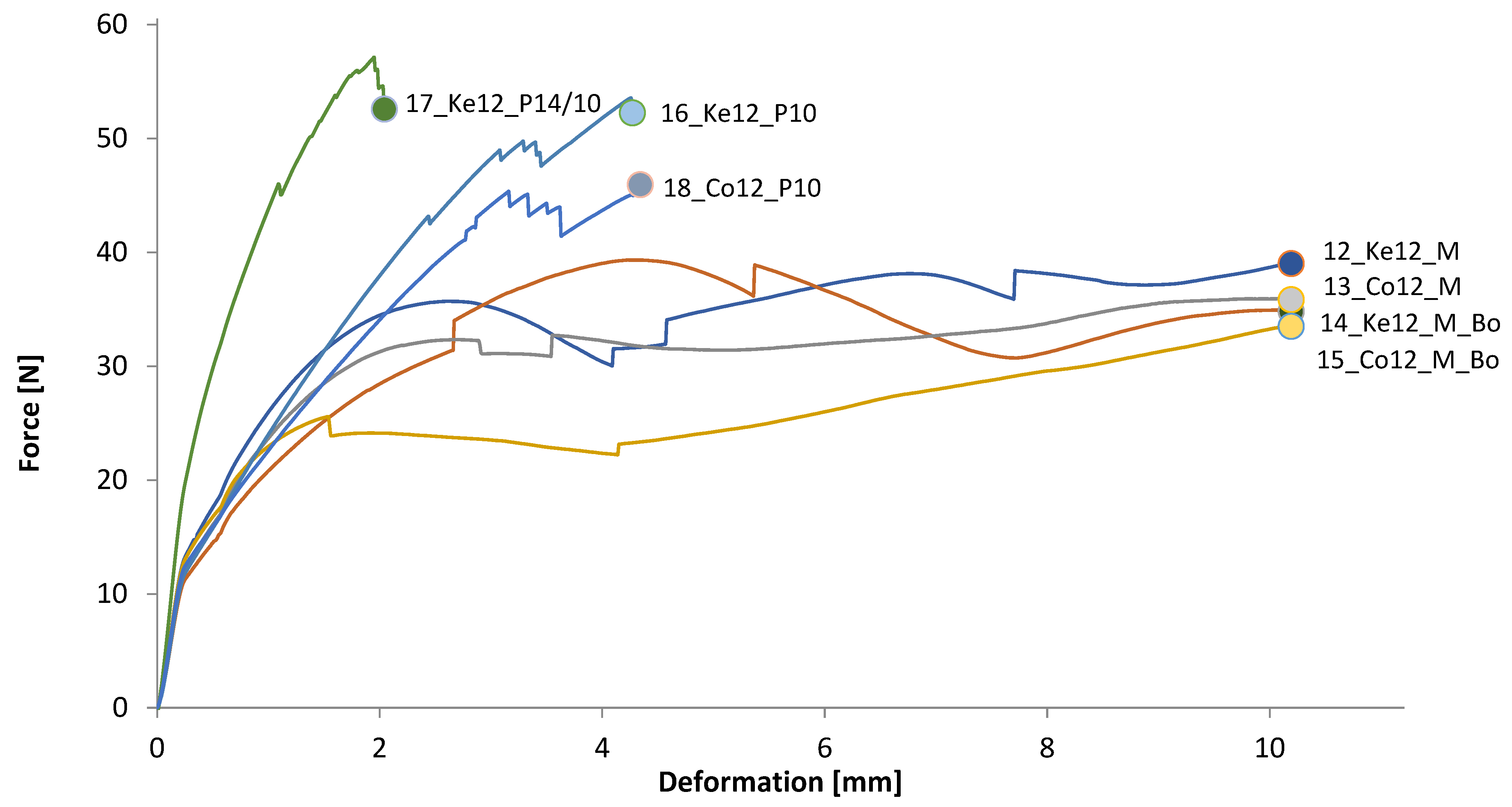
The combined mean force–deformation (
−
Curves of detachable joints of PMMA/ATH show a noticeably higher scatter and a more pronounced initial toe region compared with adhesively bonded joints, which is consistent with seating effects and compliance introduced by mechanical elements (clearances, local slip, and progressive engagement of the connector). After the initial non-linear segment, the curves generally evolve into a quasi-linear response, followed by either an early peak (for the Lamello-based configurations) or a longer, more gradual increase in force over a larger deformation range (for Minifix-based configurations) (
Figure 16).
A clear separation is observed between connector families. The Lamello Clamex joints reach the highest mean force levels but over a relatively shorter deformation range: 17_Ke12_P14/10 exhibits the highest mean peak with Fmax = 57 N (peak at 2.0 mm), followed by 16_Ke12_P10 with Fmax = 54 N (peak at 4.3 mm) and 18_Co12_P10 with Fmax = 46 N (peak at 4.3 mm). In contrast, the Minifix joints show lower mean peak forces but sustain loading to substantially larger deformations (the end of the mean curve is around 10.2 mm): 12_Ke12_M and 13_Co12_M both reach Fmax = 39 N. At the same time, the Bostik adhesive variants are lower (14_Ke12_M_Bo = 36 N, 15_Co12_M_Bo = 34 N. In the early quasi-linear region, 17_Ke12_P14/10 also shows the steepest initial slope (32 N/mm), whereas the remaining configurations cluster at lower initial stiffness levels (roughly 13–18 N/mm). Overall, the results indicate that Lamello configurations provide higher mean force capacity with shorter deformation-to-peak. In contrast, Minifix configurations provide a more compliant response with a more extended deformation range. Within Minifix, Bostik glue variants reduce both mean force levels and early stiffness relative to the corresponding variants with Minifix and solid-surface adhesive.
4. Discussions
This study jointly evaluated the bending capacity and rotational stiffness of L-type joints in PMMA/ATH solid-surface composites, distinguishing between glued and detachable configurations. Overall, both properties are primarily governed by joint geometry and thickness, while material and adhesive (Kerrock vs. Corian), connector type, and adhesive for connectors act as secondary modifiers.
For glued joints, the ranking in bending and stiffness is similar but not identical. The 12 mm Kerrock mitre with reinforcement (5_Ke12_45° + Δ) is by far the stiffest configuration (9521 N·m/rad) but has bending capacity statistically indistinguishable from the Kerrock 12-mm mitre joint (3_Ke12_45°). Reinforcement, therefore, mainly reduces joint rotation (increases rigidity) rather than increasing ultimate bending capacity. The rebate and butt joints in 12 mm Kerrock combine high bending strength with high stiffness, forming a second performance level, whereas the groove and all 12 mm Corian joints fall within an intermediate range. All 6 mm joints, regardless of geometry and material, form a distinct class with low bending capacity and low stiffness. This hierarchy, where geometry and thickness dominate both bending and stiffness, mirrors the behaviour of mitre joints in thin and ultra-thin wood-based panels (MDF, MDF laminated with HPL, plywood and laminated PB) reported by Petrova et al. [
22], who also found that glued mitres joints in strong panels like MDF, plywood and compact HPL, combine the highest bending moments (up to 44.3 N·m) with stiffness coefficients up to 5000 N·m/rad. The interplay between bending capacity and stiffness is evident when comparing the glued joints in this study with the thin and ultra-thin glued wood-based joints [
22] While the absolute values in PMMA/ATH (up to 186 N·m and 9500 N·m/rad) are much higher due to the more substantial composite and different geometry, both studies show that the joint with the highest stiffness does not necessarily provide the highest bending moment. For example, a previous study reported that a mitre joint in compact HPL glued with a highly elastic adhesive (Bison Grizzly Extreme) achieved the highest stiffness (4992 N·m/rad) but ranked only tenth in bending capacity. In contrast, other MDF laminated with HPL and plywood joints provided higher bending moments but lower stiffness. This is analogous to our finding that reinforcing the Kerrock mitre yields a significant increase in stiffness with virtually no gain in bending capacity. In both materials systems, design choices such as reinforcement and adhesive type can be used to “tune” stiffness independently of ultimate strength.
The behaviour of detachable joints in this study also agrees well with previous research. The Lamello Clamex connectors in 12 mm Kerrock define the upper bound of detachable performance. However, even the stiffest configuration (17_Ke12_P14/10, 194 N·m/rad) reaches only about 7% of the stiffness of the weakest 12 mm glued joint, and all detachable joints remain more compliant than any glued 6 mm joint. Petrova et al. [
22] observed a similar decoupling between bending and stiffness for mitre joints with Minifix eccentric connectors in thin panels: these joints ranked 4th–5th in bending capacity but last in stiffness (35 N·m/rad), clearly separated from glued mitres in MDF and plywood (1607–2615 N·m/rad). Our detachable PMMA/ATH joints therefore behave in the same way as detachable mitre joints in thin wood-based panels. In conclusion, they can carry moderate bending moments but, from a global-structural point of view, act as hinge-like rotational springs.
The importance of adhesive type and substrate for the combined bending–stiffness response also emerges when comparing with Máchová et al. [
12]. They studied corner joints between 12 mm Staron solid surface (Quartz; Cheil Industries, Uiwang, Republic of Korea) and a combination of particleboard and solid surface bonded with epoxy resin or PUR and tested in dry and humid climates. They showed that the bonded joints exhibited a combined increase in load-bearing capacity (2.4–4.37 N·m) and stiffness (144–261 N·m/rad) with increasing humidity, whereas the detachable joints showed much more minor changes. These results differ markedly from those obtained in the present study, with the difference several times in favor of the joints in this study. It should be noted that in the cited study, dowels were used as connecting elements, whereas PUR adhesive was used with no connecting elements; however, in the current study, adhesives provided by the composite manufacturers were used.
In the present study, manufacturer-specific solid-surface adhesives in glued Kerrock/Corian joints likewise provide a strong, stiff bond, so that failure shifts into the composite and the joint approaches the properties of the base material. By contrast, replacing the proprietary adhesives with ethyl cyanoacrylate gel adhesive (Bostik) in Minifix-based joints results in a clear drop in both bending and stiffness, especially in Corian, confirming Máchová’s conclusion that adhesive selection, together with substrate properties, controls the mechanical response of the joint under service conditions.
Finally, the results for detachable joints are consistent with the comparative analysis of furniture joints with different fasteners and materials by Sydor et al. [
16]. For Rastex cam connectors in 12 mm thick panels, they reported that stiffness is roughly proportional to substrate strength, with HPL joints achieving the highest stiffness of 3.09 N·m/° (177 N·m/rad) and bending moments up to 15 N·m. At the same time, expansion fasteners (Blu 8, Frend) exhibited extremely low stiffness across all board materials, despite similar or only slightly lower bending moments. This is directly analogous to our finding that Lamello connectors in the stiffer Kerrock panels provide the stiffest and strongest detachable PMMA/ATH joints. In contrast, Minifix-based systems form a separate low-stiffness level, irrespective of modest differences in bending capacity. In both studies, expansion- or eccentric-type detachable connectors are suitable when assembly and disassembly are prioritised, but they cannot provide rotational stiffness comparable to glued joints.
The final mean force–deformation curves highlight a fundamental difference between the two joining concepts—glued and detachable. The adhesively bonded joints exhibit a markedly more homogeneous response, with closely grouped curve shapes and comparatively consistent stiffness and load development, indicating a stable load transfer mechanism governed primarily by the bonded interface and joint geometry. In contrast, the detachable joints show substantially greater scatter and a more compliant, “seating/slip-dominated” early response, reflecting the influence of clearances, friction, and progressive engagement of the connector elements.
Most importantly, the detachable configurations operate at a very low force level (only tens of newtons in the mean curves) while reaching much larger deformations (up to 10 mm). In contrast, the bonded joints sustain forces in the kilonewton range at far more minor deformations. This confirms that, within the tested setup, detachable joints exhibit softer load–deformation behaviour, with low force levels and large deformations. In contrast, glued joints provide a significantly stiffer and stronger structural response with better repeatability.
In practical application, the bending moment for glued joints must be calculated based on the length of the adhesive line of the joint, with 0.1 m taken as the unit, and multiplied by the corresponding length in meters. For detachable joints, this calculation should be based on the number of connecting elements; however, note that bending moments do not increase in direct proportion to the number of connecting elements.
Future work may incorporate DIC and/or fractography to quantify local strain concentrations, crack initiation sites, and filler–matrix/adhesive interactions in the corner zone.
5. Conclusions
Taken together, the present results show a consistent picture: joint geometry and composite thickness primarily control both bending capacity and stiffness. Reinforcement can significantly modify stiffness at nearly constant bending capacity. Detachable connectors inevitably introduce a large stiffness penalty and should be modelled as hinge-like elements in global analyses, both in wood-based systems and in PMMA/ATH solid-surface composites.
Because the tested glued joints were manufactured using the manufacturer’s recommended, color-matched 2K MMA seam adhesives, the reported ranking and characteristic values are most directly applicable to other PMMA/ATH solid-surface materials joined with comparable 2K MMA seam-adhesive systems under similar surface preparation and cutting conditions. Extrapolation to generic MMA-based adhesives or other adhesive chemistries is not supported by the present dataset and should be validated experimentally.
Beyond the general ranking, the results provide directly applicable design guidance for PMMA/ATH furniture and interior components. For load-bearing end corner connections, 12 mm mitre joints represent the structurally optimal solution, reaching bending moments on the order of 165–186 N·m, while reinforcement primarily serves as a measure to improve the stiffness, substantially increasing rotational stiffness (up to 9521 N·m/rad) without a statistically meaningful gain in bending capacity. In contrast, local geometric weakening (grooves and rebates) shifts failure to reduced cross-sections and should be avoided wherever high bending resistance is required. Detachable connectors form a distinctly separate performance class: their bending capacity remains in the 2–4 N·m range, and their stiffness is at most 194 N·m/rad, i.e., they should be treated as hinge-like rotational springs in structural modelling and detailing. The observed failure modes support these recommendations: high-capacity glued joints fail mainly in the composite (material-controlled), while detachable systems concentrate damage in the connector zone (bolt withdrawal or edge-zone fracture). Detachable joints, like those tested in this study, should therefore be avoided in load-bearing designs and considered only as auxiliary connectors enabling reassembly, whereas adhesively bonded joints ensure primary structural load transfer. Overall, the reported characteristic values can serve as a practical benchmark for joint selection, preliminary sizing, and simplified joint-spring modelling in PMMA/ATH-based product structures.