2. Materials and Methods
The current experimental section describes the comprehensive methodology employed to develop and characterise rubber–concrete composites (CRCs) incorporating acetone-treated ground tyre rubber (GTR). The work encompasses three primary phases: validation of GTR surface treatment efficiency, systematic design and preparation of concrete mixtures with variable rubber content and treatment duration, and comprehensive mechanical and acoustic characterisation of the resulting composites.
Rubber processing agents, including chemical treatments such as NaOH, KMnO
4, and cement, are used to modify the surface properties of recycled rubber particles. This makes them more compatible with a concrete matrix. Some chemicals used to treat rubber, along with their properties, are presented in
Table 2.
Acetone was chosen for treating rubber crumbs due to its effect on the material’s surface. There are certain advantages of using acetone for the surface treatment of crumb rubber. Effective Cleaning Agent: Acetone is highly effective at removing oils, grease, dirt, and other impurities from crumb rubber surfaces, resulting in cleaner particles that promote better bonding with the cement matrix. Fast Evaporation Rate: It evaporates quickly, minimising residual moisture and reducing the time needed for drying before mixing, which enhances the efficiency of the treatment process. Improved Surface Roughness: Acetone can modify the surface texture, increasing the roughness and surface energy of rubber particles, which can improve adhesion in concrete composites. Chemical Compatibility: It is compatible with many organic compounds and can dissolve a wide range of contaminants, leaving no harmful residues.
2.1. Surface Treatment and GTR Characterisation. Validation of Acetone Treatment Efficiency
The initial phase of this research focused on establishing the effectiveness of acetone treatment in modifying the hydrophobic nature of ground tyre rubber. This preliminary investigation was crucial in confirming that surface modification would enhance adhesion at the rubber–cement interface in the final composite.
Rubber samples were initially obtained by extracting strips from the sidewalls of waste tyres and cutting these into approximately 1 cm2 squares. Following initial examination, selected samples were sectioned to expose the inner liner and sidewall layers, as these regions exhibit distinctly different microstructures and surface properties due to their different functional roles in the tyre. The sidewall rubber, characterised by its dense structure optimised for absorbing vehicle turn forces, contrasts sharply with the inner liner layer composed of softer butyl rubber designed to maintain tyre inflation.
Surface characterisation was performed using a Hitachi TM3000 tabletop scanning electron microscope by Hitachi High-Technologies Corp., Tokyo, Japan and contact angle measurements. Initial treatment trials involved submerging rubber samples in acetone for sequential periods of 5, 15, 30, and 45 min and 1 h. Following solvent exposure, samples were removed, analysed via SEM imaging, and photographed for water contact angle determination. The preliminary results indicated only marginal differences, with inner liner samples showing a reduction from 90° to 80° after one hour of treatment, suggesting that an extended treatment duration would be beneficial.
Consequently, additional samples underwent 24 h acetone immersion to maximise surface modification. These extended treatments yielded substantially more significant results: sidewall rubber samples demonstrated a marked decrease in contact angle from 105° (untreated control) to 80° (treated samples), representing a 35° difference and confirming effective hydrophilicity enhancement. The inner liner samples continued to exhibit modest improvements in wettability, similar to those observed during shorter treatment periods. Since ground tyre rubber composition is predominantly sidewall and tread material, these results conclusively demonstrated the viability of acetone treatment for improving GTR–cement interfacial bonding in subsequent composite formulations.
It should be noted that SEM observations at higher magnification levels (beyond 1500×) were limited by image quality degradation, preventing definitive visualisation of surface structural changes. The colourimetric response of acetone during treatment—darkening to brown with visible dirt accumulation at the solvent surface—provided additional evidence of effective cleaning and removal of hydrophobic surface contaminants from the rubber particles.
2.2. Concrete Mix Design and Material Selection. Design Considerations and Mix Formulation
Following confirmation of GTR treatment efficacy, the research progressed to systematic development of concrete mixture designs incorporating variable rubber content and treatment durations. The overarching objective was to evaluate the dependence of both mechanical and acoustic properties on rubber volume and acetone treatment time.
The mix design process was guided by five key criteria: (1) maintaining comparable workability across all formulations through consistent slump values of 10–12 cm, (2) calculating replacement values based on material densities to preserve constant mixture volumes despite GTR substitution for natural aggregate, (3) identifying optimal rubber replacement levels through comprehensive property characterisation, (4) implementing countermeasures to minimise air entrainment associated with GTR incorporation, and (5) establishing the minimum treatment duration necessary for effective surface modification.
Portland cement (Schwenk CEM II 42.5 N) (
Table 3) was selected as the primary binder due to its ready availability for testing purposes. Three GTR replacement percentages were established, 20%, 40%, and 60% by volume, reflecting a practical range from moderate to substantial rubber content. To minimise strength degradation associated with particle size reduction, the natural aggregate fraction was limited to a maximum grain size of 8 mm, utilising sand fractions of 0–2 mm and gravel of 2–8 mm to provide a gradation comparable to typical concrete specifications.
To maintain adequate workability while accommodating GTR incorporation, the water-to-cement (w/c) ratio was increased to 0.65, and a chemical plasticiser (Stachema) was incorporated into all mixtures. Simultaneously, to compensate for strength reductions anticipated from the increased w/c ratio and to combat sample porosity, both metakaolin and microsilica were included in all formulations. These supplementary cementitious materials function through two complementary mechanisms: metakaolin creates additional cementation phases that enhance mechanical properties, while both metakaolin and microsilica particles, due to their sub-micrometre dimensions, fill inter-paste voids and substantially improve interfacial zone (ITZ) bonding characteristics.
Three treatment durations were incorporated into the experimental matrix: 0 (untreated), 1, 6, and 24 h. The intermediate 6 h treatment was introduced to provide additional data points between the preliminary 1 h and 24 h treatments evaluated during the surface characterisation phase.
2.3. Mix Proportions and Sample Batch Organisation
Table 4 presents the detailed mix proportions for 1 litre of concrete across all thirteen formulations. The nomenclature employed identifies each mixture through a two-index designation system: CRC designates concrete rubber composite, where the first index indicates the GTR content by volume (20%, 40%, or 60%), and the second index specifies the acetone treatment duration in hours (0, 1, 6, or 24). A control mixture without rubber was also prepared for comparison purposes.
Due to the diversity of testing requirements—tensile testing necessitated prism-shaped specimens (40 × 40 × 160 mm), compressive testing was performed on cube samples (100 × 100 × 100 mm), and acoustic characterisation required cylindrical specimens (d ≈ 98 mm, h ≈ 50 mm)—batch volumes varied according to specific test needs. For each experimental condition (i.e., for each combination of rubber content and processing time), six samples were prepared and tested to determine the mechanical and acoustic characteristics.
2.4. GTR Preparation and Acetone Treatment Protocol
Prior to concrete mixing, ground tyre rubber destined for treatment was weighed according to batch specifications and entirely submerged in acetone-filled containers. GTR particles were screened to match these size fractions (0–2 mm and 2–8 mm) to maintain a comparable particle size distribution with typical concrete characteristics. Treatment proceeded for the designated durations (1, 6, or 24 h), with periodic stirring to maintain uniform distribution. Identification of the mix is presented in
Table 5. During acetone exposure, the solvent underwent progressive darkening to deep brown colouration, with visible dirt accumulation at the solution surface, confirming the extraction of surface contaminants from the rubber particles. Air drying of rubber particles proceeded for a minimum of 24 h to ensure complete acetone evaporation before concrete mixing commenced. Based on practical experience gained during this phase, the use of wide-mouthed containers and the placement of rubber over fine mesh sieves substantially facilitated GTR separation, reducing procedural time and waste.
2.5. Concrete Mixing, Casting, and Curing. Mixing Protocol and Workability Adjustment
Mix batches were mixed mechanically to accommodate the material volume. The standardised mixing procedure proceeded as follows: (1) stone aggregate and sand were initially combined in a slightly moistened vessel and thoroughly blended, (2) treated or untreated GTR was subsequently incorporated into the aggregate matrix, (3) metakaolin and microsilica were added and intensively mixed to eliminate powder agglomeration, and (4) Portland cement was finally added and incorporated. This dry-phase blending typically requires approximately five minutes.
Following the incorporation of the dry component, water was gradually introduced to approximately 80% of the calculated volume, allowing for subsequent plasticiser additions without altering the target water-to-cement ratio. Concrete from 6-litre batches was evaluated using standard slump cone procedures according to EN 12350-2:2019 [
20], with target slump values of 8–12 cm indicating satisfactory workability.
When the initial concrete consistency proved inadequate—slump values were outside the 8–12 cm range—chemical plasticiser was incrementally added in scheduled portions (5 g plus 45 g of water for each batch). Upon achieving the target workability, water was added, and the mixture was stirred to achieve a uniform consistency.
2.6. Casting and Compaction
Following concrete preparation, freshly mixed material was cast into all required mould configurations (prisms, cubes, and cylinders). The compaction strategy evolved during the experimental program based on observations of sample cross-sections following preliminary tensile testing, which involved one-and-a-half minutes of table vibration at 50 Hz. This progressive intensification of vibration energy was implemented after cross-sectional examination of batches 1–7 demonstrated the absence of material segregation under moderate vibration regimes, confirming that elevated vibration intensity could be safely employed for more efficient consolidation.
Immediately following casting and vibration, all moulds were wrapped with plastic sheeting to minimise surface evaporation and maintain internal moisture conducive to early-stage hydration. After one to two days of mould-enclosed curing, samples were demarcated with batch identification and transferred to water storage tanks for extended curing at ambient temperature. Specimens designated for mechanical testing were cured until they were seven to twenty-eight days old, while samples reserved for acoustic characterisation underwent curing identical to that of mechanical test specimens but were subsequently subjected to controlled drying before acoustic measurements to eliminate moisture effects on sound transmission properties.
2.7. Mechanical and Physical Characterisation Workability Assessment
Concrete workability was evaluated through slump cone testing according to the standardised procedure detailed in EN 12350-2:2019 [
20]. This test employed a standardised metal cone (height 300 mm, base diameter 200 mm, top opening 100 mm) filled with fresh concrete in three successive layers with appropriate compaction. Following vertical cone removal, slump distance was measured in millimetres from the cone top reference to the highest point of the symmetrical concrete pile, providing direct quantification of mixture fluidity and workability.
2.8. Flexural Strength Determination
Flexural strength was determined through three-point bending tests conducted on 40 × 40 × 160 mm prism specimens. Test procedures involved placing each specimen on two support points, separated by 130 mm, and applying a concentrated load to the specimen’s midspan. Maximum failure load was recorded and converted to flexural strength (
σt) using Equation (1):
where
F represents the failure load (N),
L is the support span length (mm), and
b and
d denote specimen width and height (mm), respectively. Load–displacement graphs were recorded for subsequent analysis.
2.9. Compressive Strength Assessment
Compressive strength evaluation was performed at a 300-ton hydraulic press operating at a loading rate of approximately 0.7 MPa/s. Maximum failure loads were recorded and converted to compressive strength (σ
c) using Equation (2):
where
F denotes the failure load (N) and
A represents the loaded contact area (mm
2).
2.10. Water Absorption and Drying Behaviour
Water absorption characterisation comprised two sequential phases. The drying stage involved heating intact sample halves in a laboratory oven maintained at 60 °C following the completion of mechanical testing. Daily mass measurements continued until successive weighings demonstrated a mass change of less than 0.5%, indicating that a constant dry mass had been achieved.
The subsequent saturation phase immersed thoroughly dried specimens in distilled water. Specimens were extracted at prescribed intervals (30 min, 1 h, 2 h, 4 h, 6 h, 8 h, 24 h, and then daily). Surface water was removed using absorbent towelling, and the specimens were immediately reweighed. Saturation measurements continued until consecutive weighings exhibited a mass change less than 0.5%, signifying equilibrium moisture content. Water absorption for each specimen was calculated as shown in Equation (3):
where m
sat represents the water-saturated mass and m
dry denotes the dry mass, both in grams.
Cylindrical specimens prepared for acoustic testing underwent the drying protocol only, with water removal accomplished prior to acoustic measurements to prevent moisture-induced alterations to sound transmission characteristics.
2.11. Acoustic Characterisation
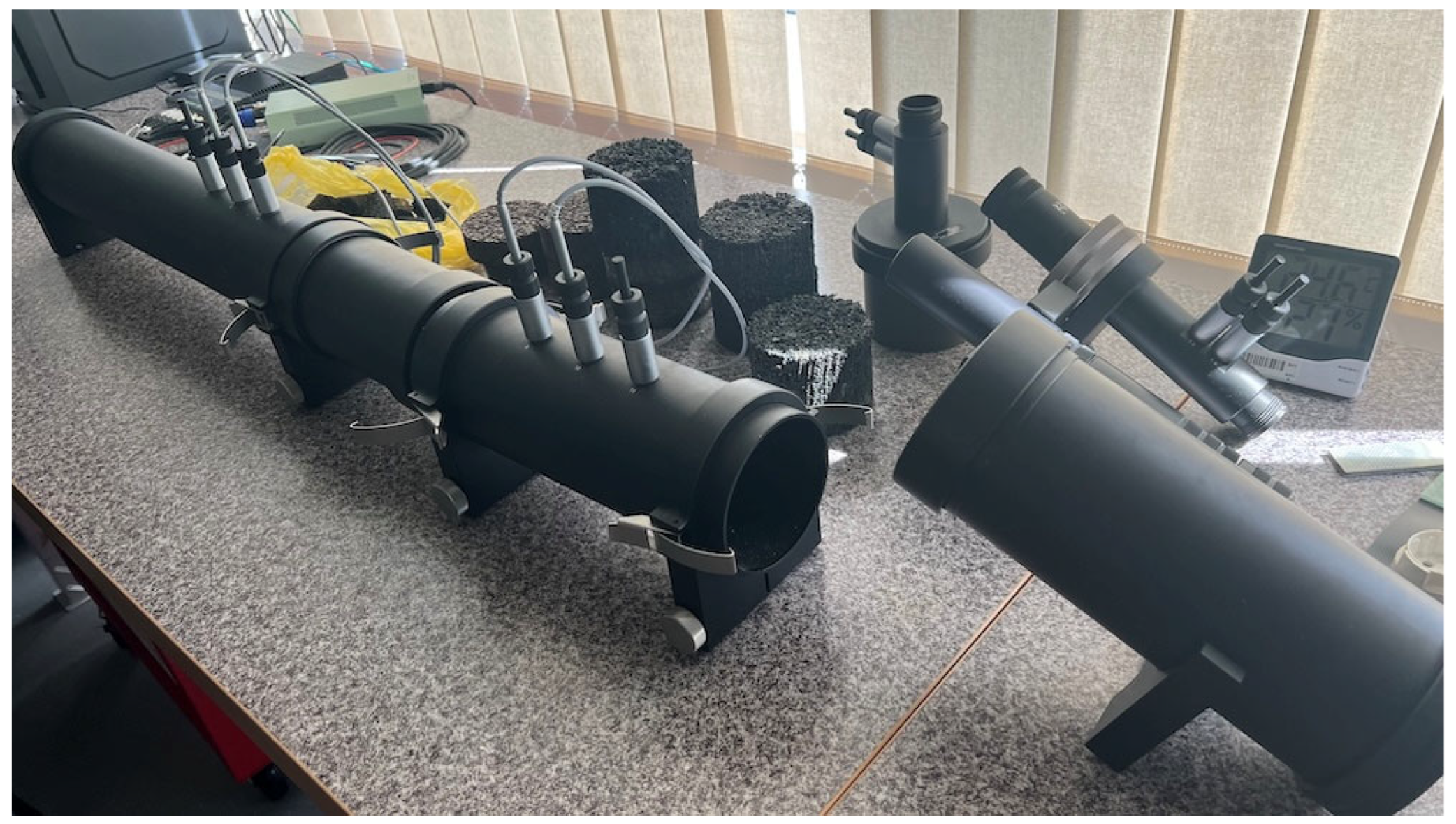
Acoustic testing employed Brüel & Kjær, Virum, Denmark calibrated equipment (Type 4206 Impedance tube kit and Type 4206-T Transmission Loss tube kit) (
Figure 1) to characterise sound absorption and sound insulation properties according to the ASTM E1050–12 international standards for absorption [
21] and ASTM E2611–17 for transmission loss [
22] measurements. Testing encompassed the frequency range from 50 to 1600 Hz; specimen geometry constraints precluded higher-frequency evaluation (up to 6.4 kHz), as such measurements necessitate cylinders with a diameter of 29 mm, whereas only specimens with a diameter of 98 mm were produced.
Impedance Tube (Sound Absorption) Testing: The two-microphone transfer function method establishes the normal incidence sound absorption coefficient. Cylindrical specimens were firmly seated within the impedance tube, ensuring complete contact without gaps, and then subjected to broadband random acoustic excitation generated by an internal loudspeaker. Plane waves propagating through the tube interact with the specimen, producing reflected waves that establish standing-wave interference patterns. Sound pressure measurements at two fixed microphone positions, combined with digital frequency analysis, permit the determination of the sound absorption coefficient (α), complex reflection coefficients, and acoustic impedance. All absorption spectra and one-third octave band extracts were recorded for subsequent analysis.
Transmission Loss Tube (Sound Insulation) Testing: The four-microphone transfer-function method characterises sound transmission loss (dB). In this configuration, cylindrical specimens are positioned in a specialised holder located at the midpoint between source and receiving tubes. Broadband acoustic excitation is generated within the source tube, with incident plane waves partially reflected to the source, partially absorbed by the specimen, and partially transmitted to the receiving tube. Four strategically positioned microphones (two in the source tube, two in the receiving tube) measure sound pressure throughout the system. Complex transfer function calculations yield transmission loss values quantifying the material’s sound insulation capability. Measurements were conducted with both empty and foam-lined termination boundaries, with results from both configurations employed in final transmission loss calculations. All transmission loss spectra and one-third octave band extractions were archived for detailed analysis.
3. Results and Discussion
The addition of ground tyre rubber (GTR) into concrete leads to noticeable changes in the mechanical properties and acoustic behaviour of the resulting composites, especially in terms of sound absorption and sound transmission loss across a range of frequencies. Experimental data are presented on rubber–concrete composites with 20%, 40%, and 60% replacement with shredded rubber. Experimental data on rubber–concrete composites are analysed with studies by other authors.
3.1. Mechanical Properties: Compressive Strength
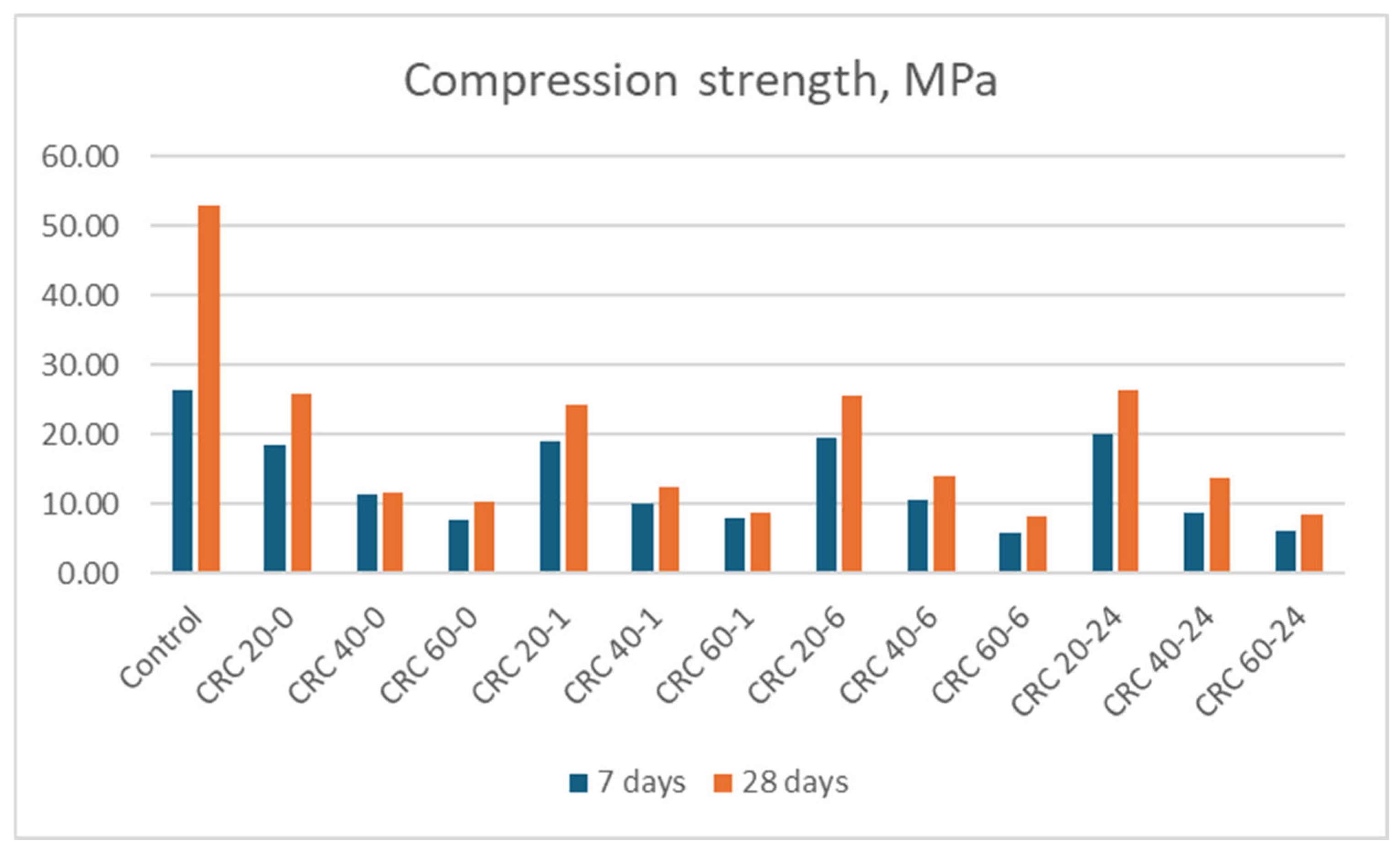
The experimental results show that the compressive strength decreases from approximately 43–46 MPa (control) to 25–38 MPa at a 60% rubber content at 28 days, representing a 40–46% strength reduction (
Figure 2).
The observed strength degradation aligns closely with established patterns reported across multiple studies. Holmes et al. [
23] documented that 15% crumb rubber replacement resulted in compressive strength reductions, with higher rubber proportions causing progressively greater losses. Gerges et al. [
24] reported a systematic decrease in compressive strength with increasing powdered rubber content, attributing this to the rubber particles being elastically deformable and softer than the surrounding mineral materials, which causes rapid crack initiation around the rubber particles.
Vadivel and Thenmozhi [
25] found that rubberised concrete generally exhibits lower compressive strength than conventional concrete, with reductions up to 33% observed—lower than some literature values but within the expected range. Sofi [
26] reported more severe reductions, with compressive strength decreasing from 65.5 MPa (control) to 27 MPa at 20% rubber replacement. The current dataset’s 40–46% reduction at 35% rubber is consistent with this trend, although the absolute values remain above critical thresholds for non-structural applications.
Yasser et al. [
27] investigated 10%, 15%, and 20% rubber replacement, finding 28-day compressive strength reductions of 7.07%, 25.84%, and 29.78% respectively, for a 40 MPa target mix. Extrapolating this trend, the current 60% replacement, showing a 40–46% reduction, follows the expected trend.
The current research extends the replacement range to 60% rubber content, which is higher than most prior studies, which typically limit replacement to 10–20%. While maintaining a compressive strength above 25 MPa, this demonstrates the feasibility of non-structural applications at higher ground rubber incorporation rates than those conventionally explored.
3.2. Mechanical Properties: Flexural Strength
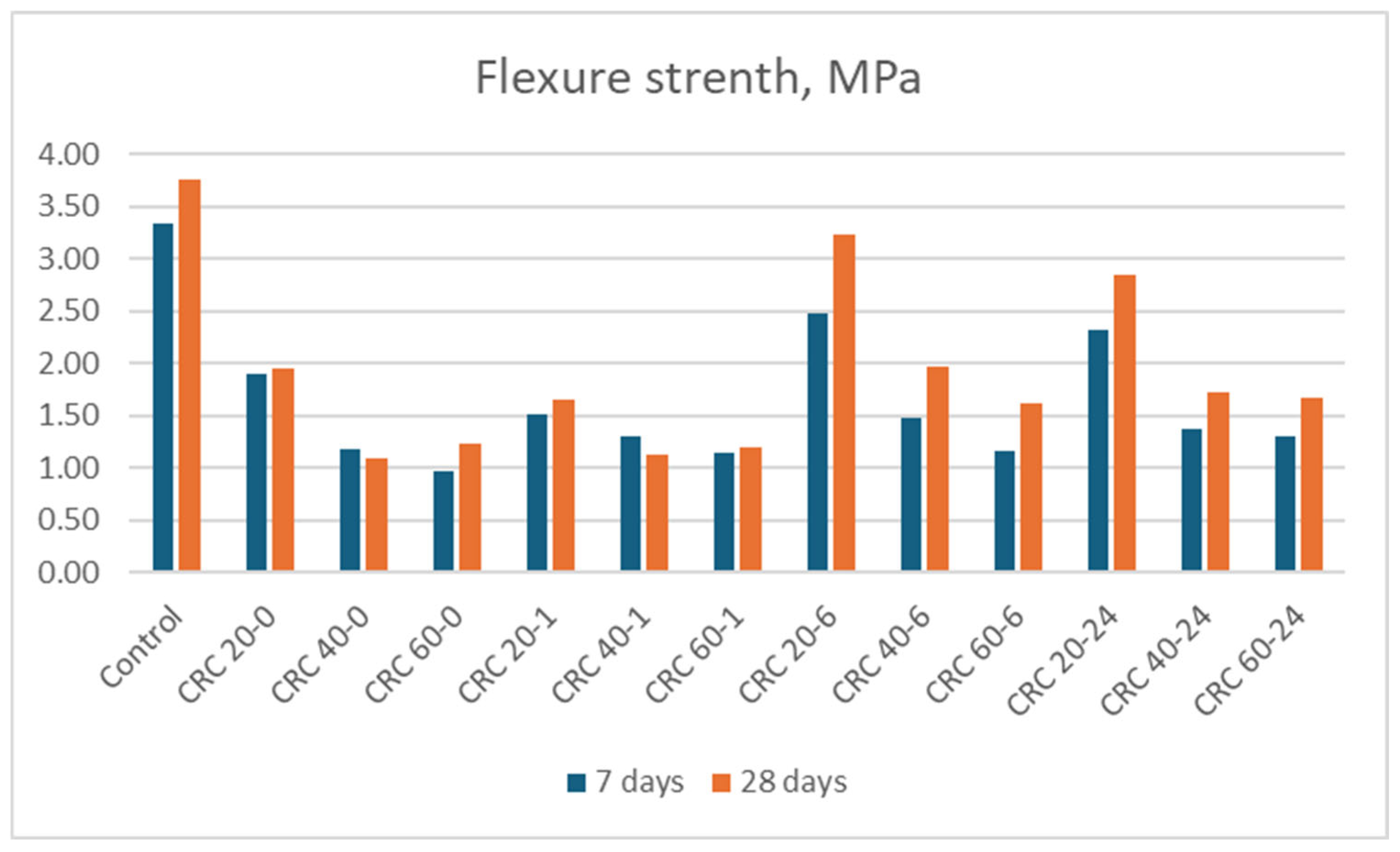
Current research reveals that flexural strength exhibits a steep decline from approximately 4.2 MPa (control) to approximately 1.7 MPa at a 60% rubber content, corresponding to a 60% reduction (
Figure 3).
This finding is consistent with the literature, which reports a more pronounced degradation in flexural strength compared to compressive strength.
Albidah et al. [
28] concluded that beams with 20% crumb rubber reduced flexural capacity by approximately 20% compared to control beams without rubber.
The flexural strength reduction reported in the current dataset (60% at 60% rubber) aligns more closely with studies on unreinforced specimens. One study cited a decrease in flexural strength of 56% for 17 MPa concrete when incorporating tyre rubber crumbs. Chen et al. [
29] confirmed through mesoscale simulation that the addition of rubber reduces flexural strength, with the reduction rate primarily controlled by the rubber content.
The 60% reduction in flexural strength at 60% rubber demonstrates more severe degradation in the flexural mode than in the compressive mode, validating the mechanistic understanding that rubber particles create preferential crack propagation paths under tensile loading conditions—critical information for applications requiring bending resistance.
3.3. Water Absorption and Durability
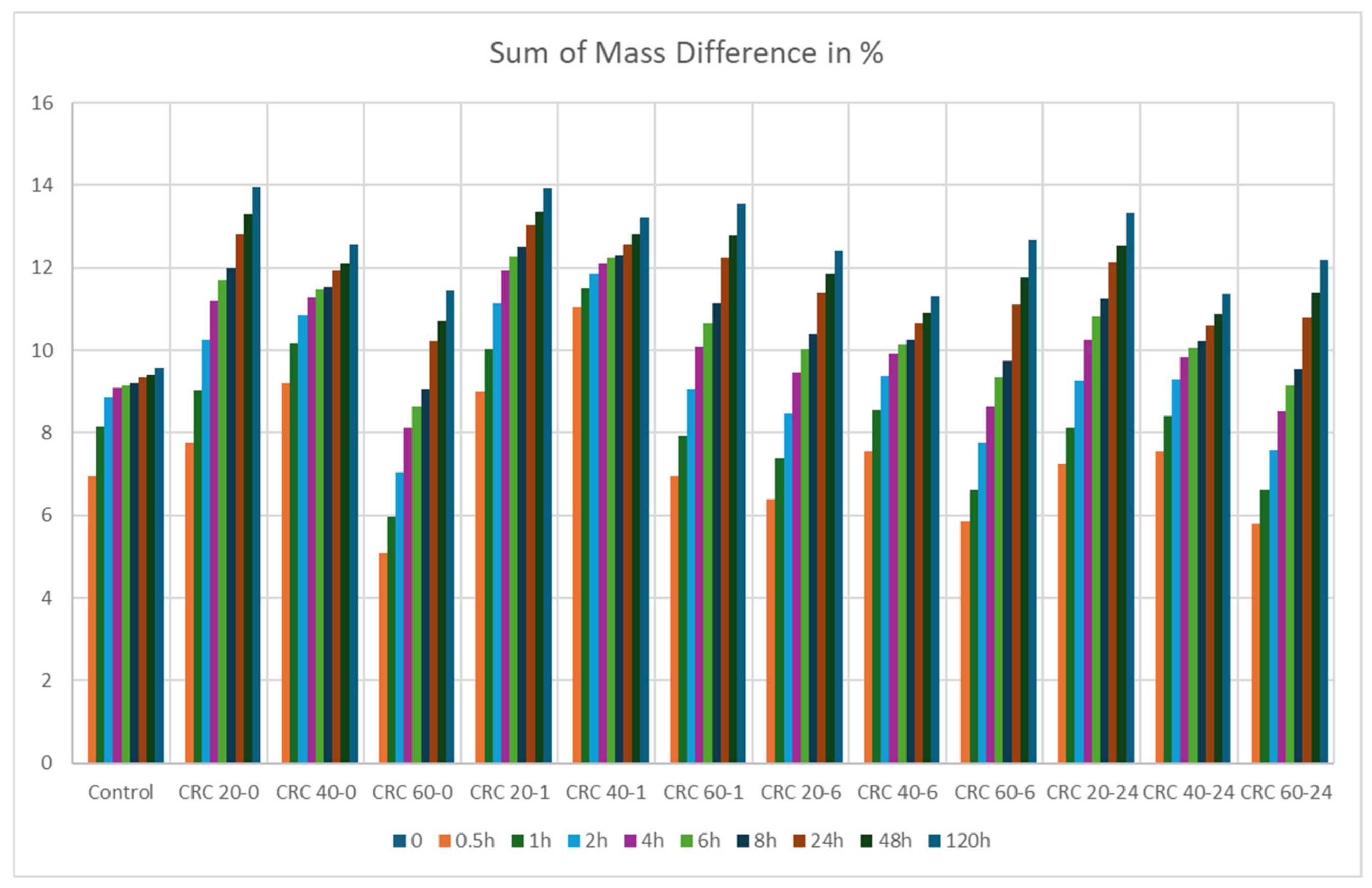
For obtained specimens, water absorption increases with rubber content, as shown by temporal monitoring, which reveals progressive absorption over 30 min, 1 h, and 2 h. Full absorption properties over 120 h are presented in
Figure 4.
The observed increase in water absorption with rubber content is well-documented, but it exhibits complex and sometimes contradictory patterns in the literature. Ahmad et al. [
30] reported that rubberised concrete absorbs more water than regular concrete, with water absorption increasing proportionally to rubber content due to weak bonding with cement paste and increased capillary absorption. This is consistent with measured specimens
The prior research reveals nuanced relationships. Yasser et al. [
27] found contradictory trends: control specimens showed maximum water absorption of 2.55% (Group 1) and 1.47% (Group 2), which decreased to 2.1% and 1.28%, respectively, at 20% rubber content—reductions of 17.65% and 12.92%. These results can be attributed to the rubber’s hydrophobic nature and the use of two different crumb rubber sizes, which provide superior pore-filling capacity. Similarly, some studies reported that replacing fine aggregates with rubber up to 15% reduced water absorption by 7–25% compared to control mixes.
Güneyişi et al. [
31] found that while silica fume initially reduced water absorption, increasing the rubber content progressively increased water absorption values, with the differences diminishing at a 25% rubber content. Khern et al. [
32] documented that 8% rubber incorporation increased water penetration depth by 32.3% compared to reference concrete, though chemical surface treatment (NaOH, Ca(ClO)
2) improved resistance.
The current research on temporal kinetic monitoring (0, 30 min, 1 hr, 2 hr) of water absorption is relatively rare in the literature, which typically reports only equilibrium values. This temporal data enables modelling of diffusion kinetics and capillary transport rates, which are critical for predicting freeze–thaw durability and environmental degradation mechanisms.
3.4. Sound Absorption Coefficient
The inclusion of rubber particles significantly enhances the sound absorption capacity of the concrete mixtures compared to control samples without rubber. This enhancement is attributed to an increase in the porosity and elasticity of rubber. The addition of rubber particles increases the overall porosity and internal void structure of the concrete matrix, enabling more effective sound wave penetration and energy dissipation through friction and viscous losses. Unlike rigid mineral aggregates, rubber has elastic and damping characteristics, which help absorb sound energy rather than reflecting it outright.
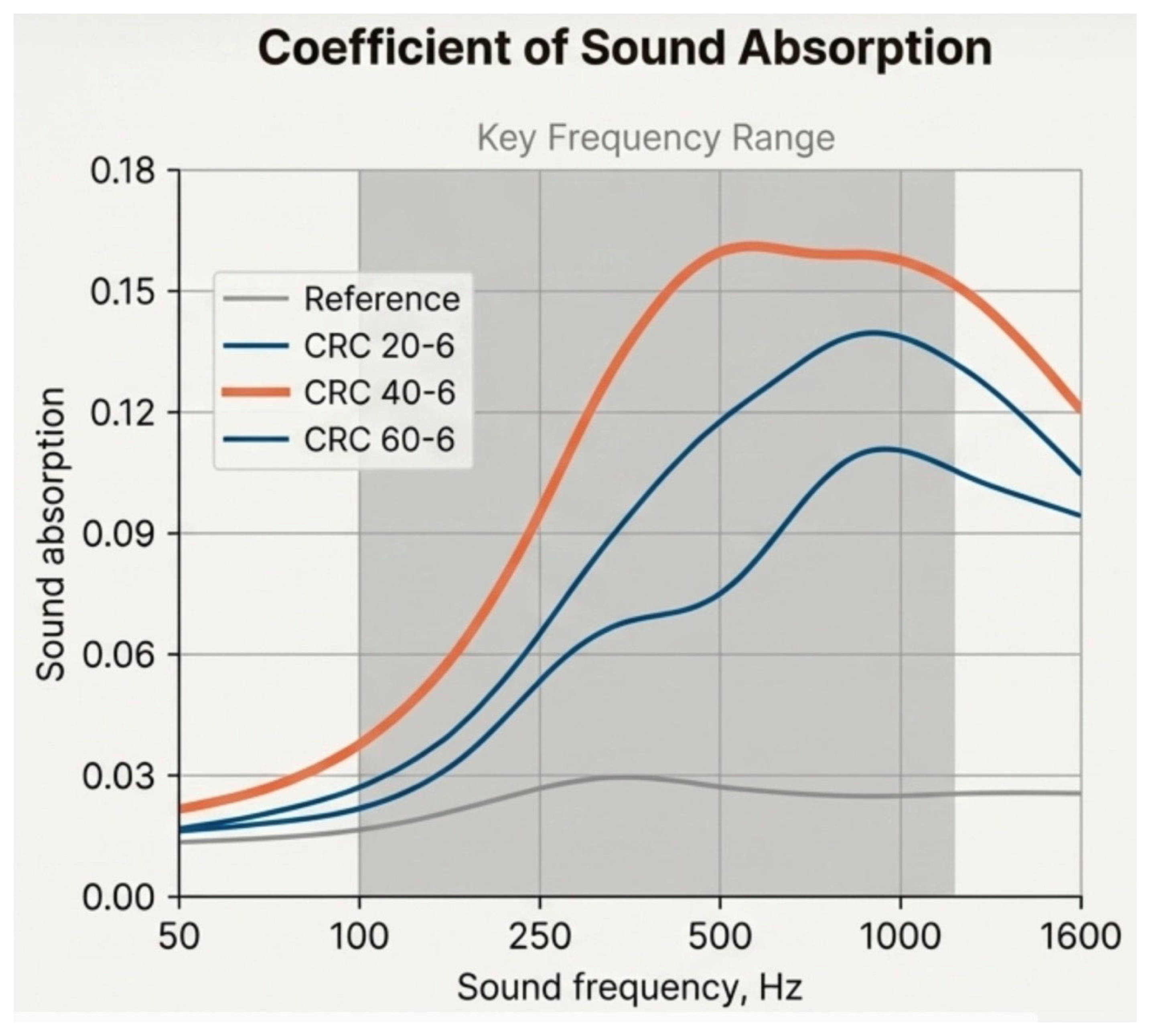
The sound absorption coefficient data for samples with 20%, 40%, and 60% rubber content clearly demonstrate the sound absorption capacity. At lower frequencies (50 Hz to ~315 Hz), sound absorption improves with increasing rubber content, with 60% CRC samples showing the highest absorption coefficients. At mid to high frequencies (400 Hz to 1600 Hz), all rubberised concretes exhibit absorption coefficients ranging approximately from 0.06 to 0.16, consistently higher than those of the control samples.
This indicates that rubber inclusion improves sound absorption performance across a broad acoustic spectrum, which makes such composites suitable for noise reduction in various applications, including wind parks.
In current research, the sound absorption coefficients increase to approximately 0.18, with maximum benefits in the frequency range of 100–1250 Hz. Results of the sound absorption test for specimens with 20%, 40%, and 60% of rubber contents treated for 6 h are presented in
Figure 5.
The sensitivity analysis demonstrates that all three CRC mixes manifest improved sound absorption compared to the reference mix across the tested frequency range (
Table 6).
CRC 40-6 is the most sensitive mix, providing the highest overall gain in sound absorption (+44.9%), particularly in the mid-to-high frequency range. Thus, CRC 40-6 represents an optimal composition for maximising acoustic absorption, offering the best balance of peak performance and average increase. At the same time, the CRC 60-6 composition, while effective, shows reduced sensitivity compared to the 20 and 40 variants, suggesting an upper limit to the acoustic benefits of the additive for this specific frequency range.
The results for the low-frequency (50 Hz to ~315 Hz) range show that sound absorption improves with increasing rubber content in this range, with samples with 60% CRC demonstrating the highest absorption coefficients. This can be explained primarily by the increase in overall porosity and larger internal void structures created by the larger volume of rubber. Larger or more interconnected pores are generally more effective at dissipating longer waves (lower frequencies) because sound waves can penetrate deeper into the material and lose energy through friction in these larger pathways. The higher volume of soft rubber particles also contributes to overall damping.
In the mid- and high-frequency (400 Hz to 1600 Hz) range, all rubberised concretes demonstrated absorption coefficients consistently higher than those of the control samples, ranging from 0.06 to 0.16. It is important to note that the CRC 40-6 mixture exhibited the highest overall increase in sound absorption (+44.9%) and was most sensitive in the mid- and high-frequency ranges. This suggests that with a moderate rubber content, the viscoelastic damping properties of rubber become particularly effective. Rubber particles embedded in the concrete matrix can effectively convert sound energy into heat through internal friction and elastic deformation at these shorter wavelengths. Although porosity remains a factor, the optimal balance between pore structure and the viscoelastic response of the rubber–cement interface appears to be achieved at a rubber content of approximately 40%, allowing for effective energy dissipation without excessive porosity, which can lead to sound leakage at higher frequencies. Maximum acoustic benefits have been observed overall in the 100–1250 Hz range.
These findings align with the established literature that documents the enhancement of sound absorption through the incorporation of rubber. Holmes et al. [
23] investigated crumb rubber concrete panels with 7.5% and 15% acceptable aggregate replacement across two frequency ranges: low (63–500 Hz) and high (1000–5000 Hz). They found CRC performed well in sound absorption, particularly with higher proportions (15%) and coarser rubber grades (2–6 mm and 10–19 mm), though it was marginally inferior to plain concrete as an insulator.
The Pacheco et al. [
33] study reported that rubber-modified concrete is highly effective in absorbing sound energy compared to pure concrete, with sound absorption and noise reduction coefficients increasing at replacement levels exceeding 20% crumb rubber. They found that specific proportions promote improved sound absorption, while others decreased it, with optimal performance occurring at a 10% rubber content, as reported in their investigation.
Atef et al. [
34] demonstrated that rubber concrete achieved sound absorption coefficients above 0.5 for nine out of twelve specimens, with maximum values reaching 0.82–0.93 under favourable conditions, particularly at 15% rubber crumb. Sukontasukkul [
35] reported a 46% improvement in the noise reduction coefficient (NRC) with the addition of 20% crumb rubber in precast concrete panels.
The obtained absorption coefficient of 0.18 appears lower than some reported values, which may reflect differences in specimen configuration, rubber particle size distribution, porosity, or testing methodology. Materials containing crumb rubber typically exhibit absorption coefficients ranging from 0.3 to 0.7.
Frequency-Specific Performance: Your observation of maximum acoustic benefits in the 100–1250 Hz range aligns with the literature, which identifies mid-frequency enhancements. Batista et al. [
36] found that concrete with rubber and vermiculite showed optimal performance at 500 Hz and 1000 Hz—typical frequencies for traffic noise. One study [
33] noted that rubber content affects noise reduction most noticeably in octave bands at 125 Hz and 250 Hz (low frequencies/bass sounds).
The current study explicates the identification of frequency-selective acoustic enhancement in the 100–1250 Hz band, which coincides with urban noise spectra, and represents practical application insights less commonly emphasised in the literature, which often reports broadband acoustic coefficients without detailed frequency-dependent analysis.
3.5. Sound Transmission Loss
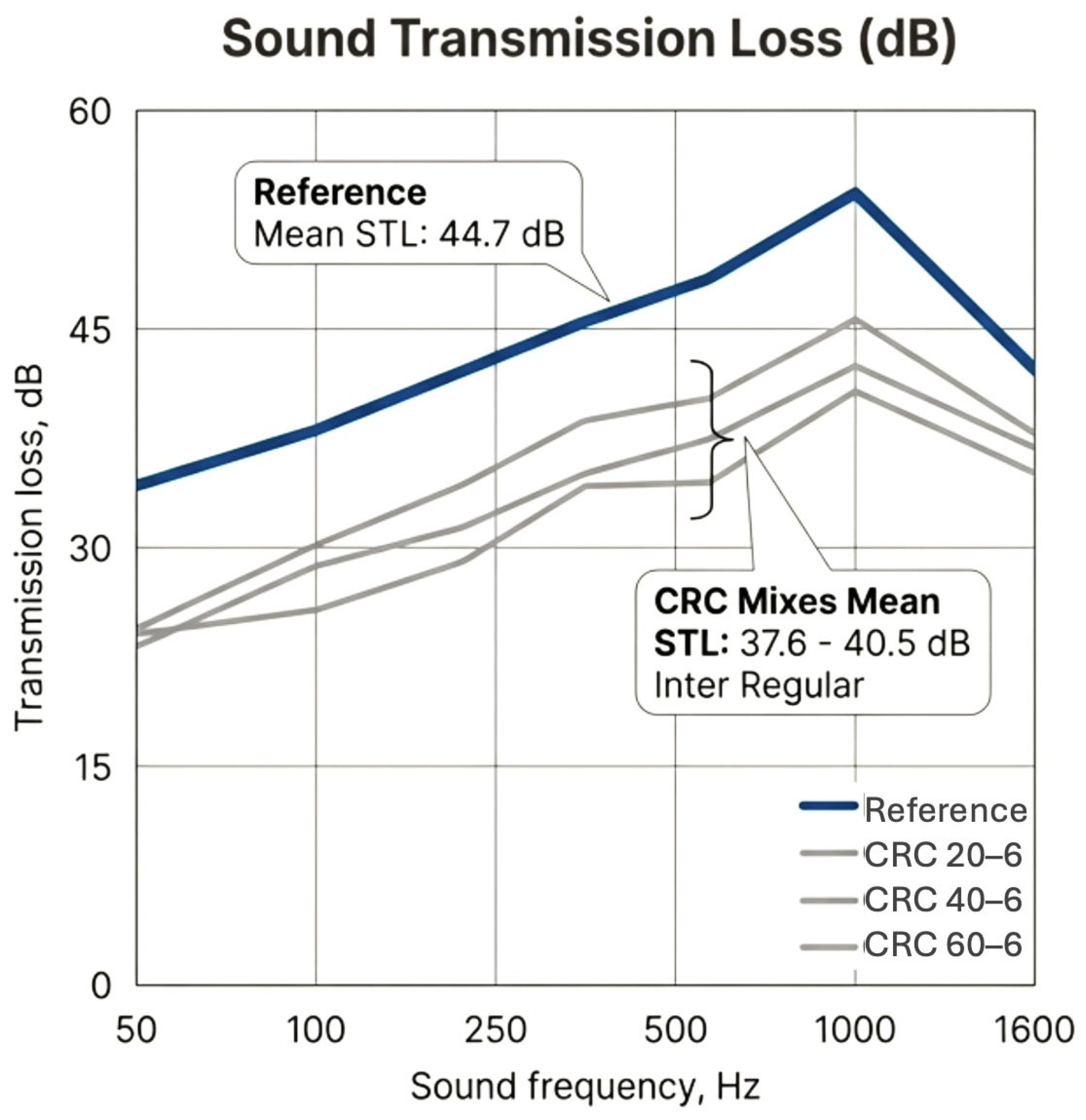
Sound transmission loss, which measures how well a material blocks sound, also varies with the rubber content; 40% rubber content samples exhibit increased sound transmission loss compared to both control samples and samples with varying rubber percentages, particularly in the mid-frequency range (100 Hz to 1250 Hz). However, the transfer loss does not always increase linearly with rubber volume; very high rubber content (e.g., 60%) may sometimes lead to marginally reduced STL due to increased porosity and reduced density, which can facilitate some sound transmission.
This behaviour is consistent with the trade-off between increased sound energy absorption within the matrix and potential pathways created by increased porosity that allow sound leakage.
The current study reports an improvement in sound transmission loss with the incorporation of rubber, with peak performance observed in the 100–1250 Hz frequency band. Sound transmission loss in % for specimens with 20%, 40%, and 60% of rubber contents treated for 6 h is presented in
Figure 6.
The fundamental statistical parameters demonstrate apparent differences in acoustic performance between the reference concrete and rubber–concrete composite samples (
Table 7).
Holmes et al. [
23] found that CRC performance as an insulator was comparable to that of plain concrete, with only marginal differences, performing marginally worse (approximately 5 dB lower) than plain concrete at frequencies between 1000 and 4000 Hz. They concluded that, despite slightly reduced insulation properties, CRC combined with improved absorption could effectively reduce urban noise.
Chalangaran et al. [
37] reported more dramatic improvements: concrete with 15% fine-grained recycled rubber crumbs achieved a sound transmission loss of up to 190%, and 15% coarse-grained rubber achieved a transmission loss of up to 228%. This suggests that particle size has a significant influence on acoustic insulation performance.
Batista et al. [
36] found that concrete acoustic barriers with 10% rubber and 40% vermiculite reduced sound intensity levels by 23.81–23.94 dB at 500 Hz and by 24–29 dB at 1000 Hz compared to highways without barriers.
Current research that combines the measurement of both sound absorption and transmission loss across frequency spectra is less common in the literature, which often focuses on one acoustic metric. This dual characterisation enables comprehensive acoustic design for applications requiring both noise absorption (reducing echo in the environment) and insulation (for noise elimination).
3.6. Comparing the Key Parameters of the Current Study with the Representative Literature
Table 8 compares key parameters of the current study with those of the representative literature discussed in this paper, with an emphasis on expanding replacement ranges, frequency-specific analysis, and an integrated multifunctional approach.
3.7. Curing Period Effects
The current study demonstrates an improvement in mechanical properties from 7 days to 28 days, while acoustic properties remain relatively stable.
The literature consistently documents continued strength development in rubberised concrete across curing periods, though rubber incorporation affects hydration kinetics. Khern et al. [
32] reported that untreated rubber concrete exhibited 16.82% lower compressive strength than the reference concrete at 28 days, with similar patterns observed at 7 days. Sofi [
26] documented a maximum 7-day compressive strength of 65.5 MPa for the control mix, decreasing to 27 MPa at 20% rubber, with similar proportional losses at 28 days.
The current study shows that acoustic properties stabilise early. In contrast, mechanical properties continue to develop, which appears to be a novel empirical finding not explicitly discussed in most literature, which typically reports properties at fixed curing intervals without examining the temporal divergence between mechanical and acoustic evolution.
The identification of decoupled temporal development and continued mechanical densification without acoustic alteration suggests that the initial mixing architecture determines acoustic performance, while mechanical properties reflect progressive hydration, a mechanistic insight underrepresented in the current literature.
3.8. Integrated Multifunctional Characterisation
Most rubberised concrete studies isolate specific property domains—mechanical characterisation (compressive, tensile, and flexural strength), durability assessment (water absorption and permeability), or acoustic evaluation (sound absorption and transmission loss)—but rarely integrate all three within a unified experimental framework.
Holmes et al. [
23] combined acoustic testing with mechanical and workability analysis but did not include detailed water absorption kinetics. Yasser et al. [
27] integrated mechanical, durability (water absorption, sorptivity, acid resistance), and elevated temperature performance but did not address acoustic properties. Fediuk et al. [
2] reviewed the acoustic properties of innovative concretes, noting that most studies focus narrowly on either absorption or insulation without providing a comprehensive, multifunctional assessment.
Obtained data with simultaneous characterisation of mechanical strength (compressive and flexural), durability (temporal water absorption), and acoustic performance (frequency-dependent absorption and transmission loss) across three rubber content levels (20%, 40%, 60%) represent a comprehensive multifunctional evaluation framework that is relatively uncommon. This integration enables trade-off analysis and application-specific optimisation not possible with single-property datasets.
Current research data represent a valuable empirical contribution that validates established mechanistic understanding while extending the knowledge base toward higher rubber incorporation rates, temporal property evolution, and integrated multifunctional performance assessment—critical for advancing rubberised concrete from an experimental material to an engineered construction composite with predictable, application-specific performance characteristics.
In conclusion, a SWOT analysis of the rubber–concrete composites was performed based on the results obtained and the potential applicability of the materials.
4. Conclusions
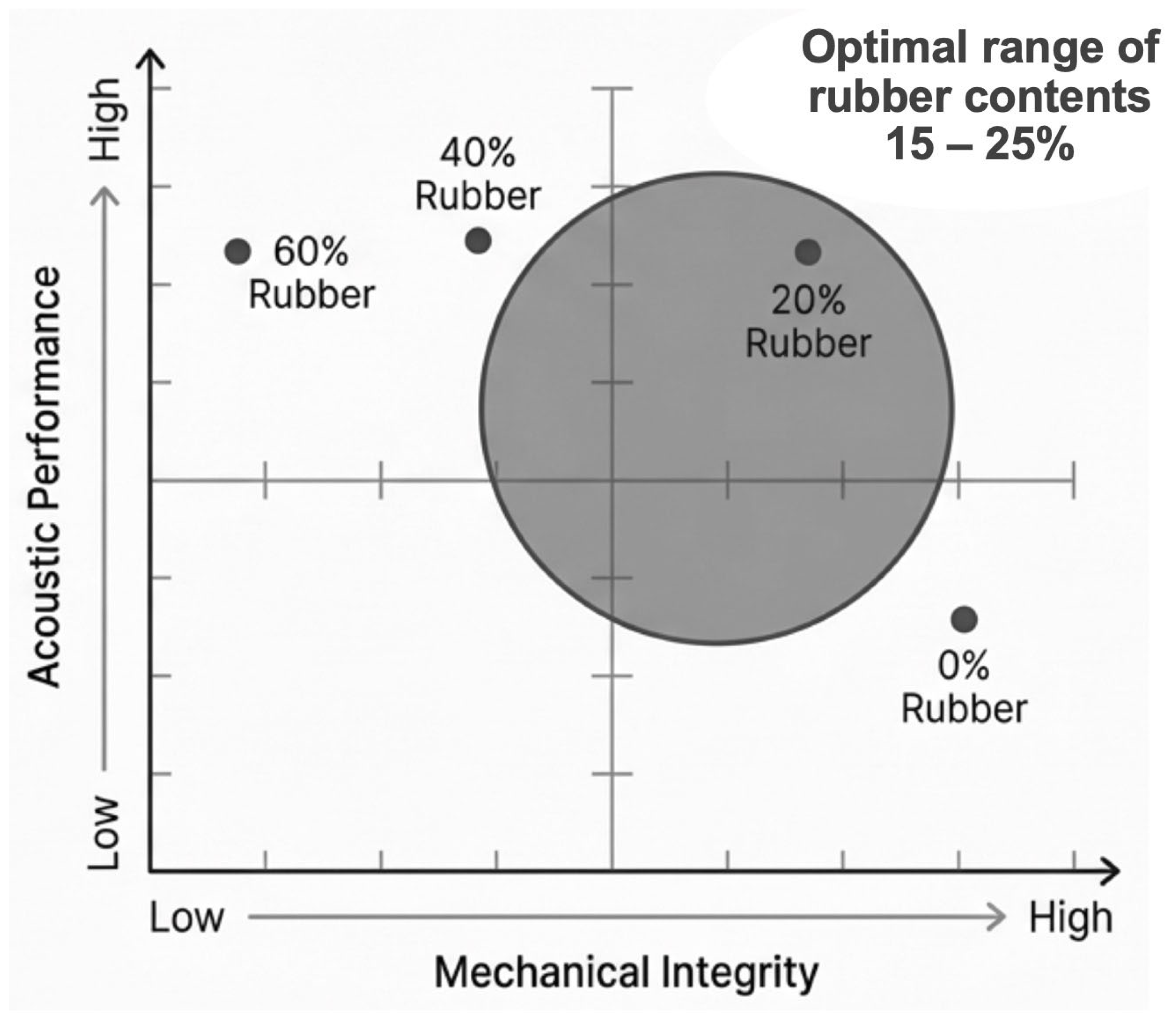
The current study demonstrates that moderate rubber content, exemplified by our 20% GTR samples, provides a favourable balance between improved acoustic performance and acceptable mechanical integrity. Although our experimental range focused on 20%, 40%, and 60% GTR content, the results obtained on samples with 20% content, when considered in the context of the literature review (which indicates optimal characteristics at a rubber content of around 15%) and the significant deterioration in mechanical properties observed at higher contents (40% and 60%), suggest that the lower limit of our tested range (20%) is very promising. This confirms the broader view, consistent with existing research, that a rubber content range of approximately 15–25% represents an optimal compromise for applications requiring both significant noise reduction and adequate structural characteristics. In particular, our samples with 20% rubber content demonstrated noticeable improvements in sound absorption and transmission loss without the significant deterioration in mechanical strength observed at substitutions of 40% and 60%. The following key conclusions are drawn from the experimental results:
Acoustic Performance: The inclusion of rubber particles significantly enhanced sound absorption capacity, particularly within the 100–1250 Hz frequency range. The sound absorption coefficients observed reached approximately 0.18, demonstrating improved absorption relative to control concrete mixtures. Sound transmission loss showed clear improvement, reinforcing the composites’ efficacy in noise mitigation across mid-frequency ranges.
Mechanical Properties and Water Absorption: Mechanical strength exhibited a trade-off with rubber content. At a rubber replacement level of 35%, compressive strength declined by 40–46%, decreasing from typical values over 25 MPa to lower but still structurally relevant levels. Flexural strength reductions were even more pronounced, decreasing by approximately 60% at 35% rubber content. Acetone treatment of GTR markedly improved the interfacial bonding between rubber particles and the cement matrix, enhancing mechanical integrity at moderate rubber dosages (20–40%). Water absorption increased with higher rubber content, which could negatively impact long-term durability and resistance to freeze–thaw or aggressive environmental conditions.
The optimal range for rubber content balancing acoustic benefits and structural integrity appears to be between 15% and 25%, where notable enhancements in sound absorption and transmission loss are achieved without prohibitively compromising mechanical strength (
Figure 7).




 ,
,