
How the Vestibular Labyrinth Encodes Air-Conducted Sound: From Pressure Waves to Jerk-Sensitive Afferent Pathways


Abstract
1. Introduction
2. Anatomical and Cellular Substrate for Acoustic Vestibular Sensitivity
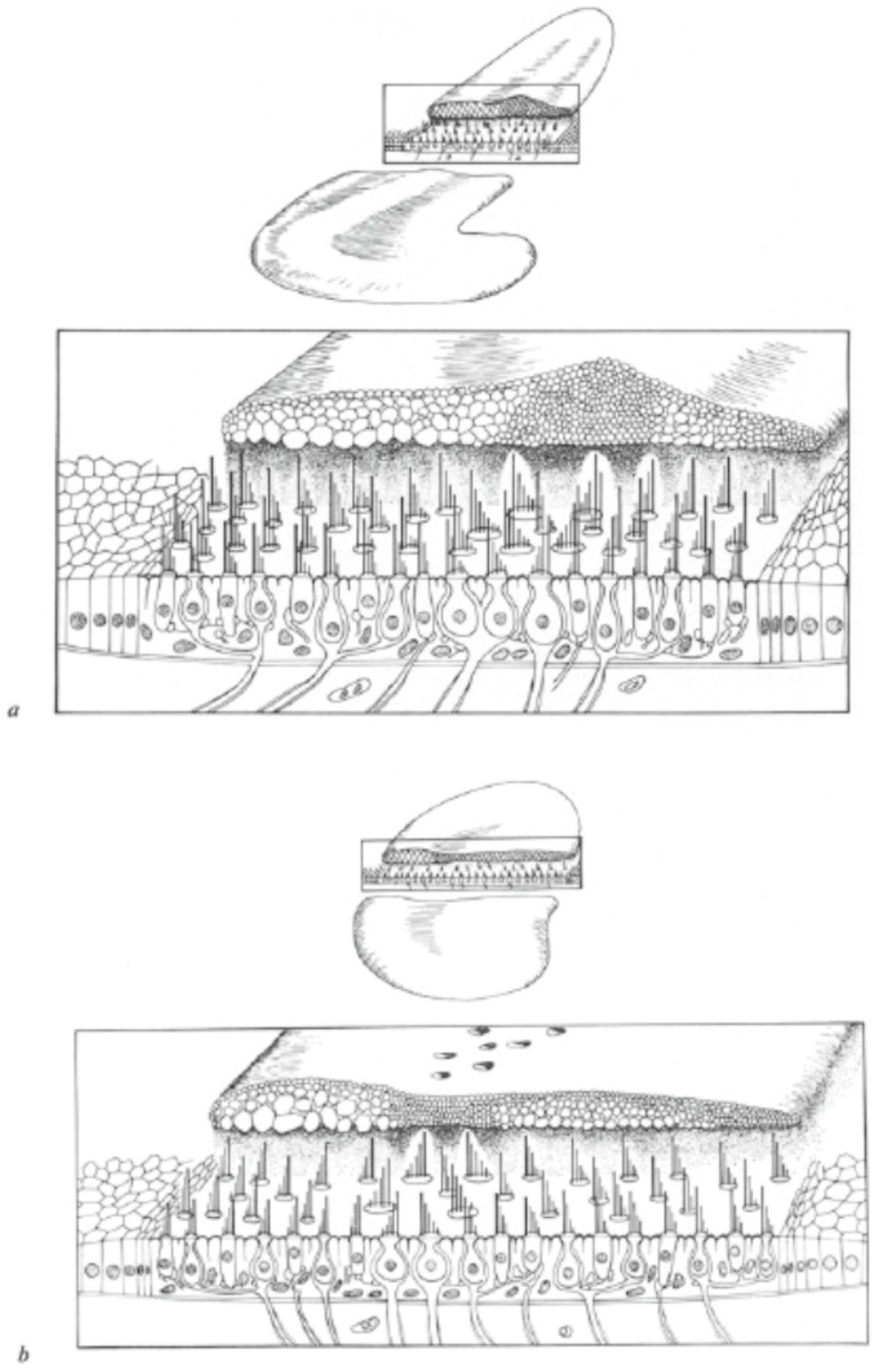
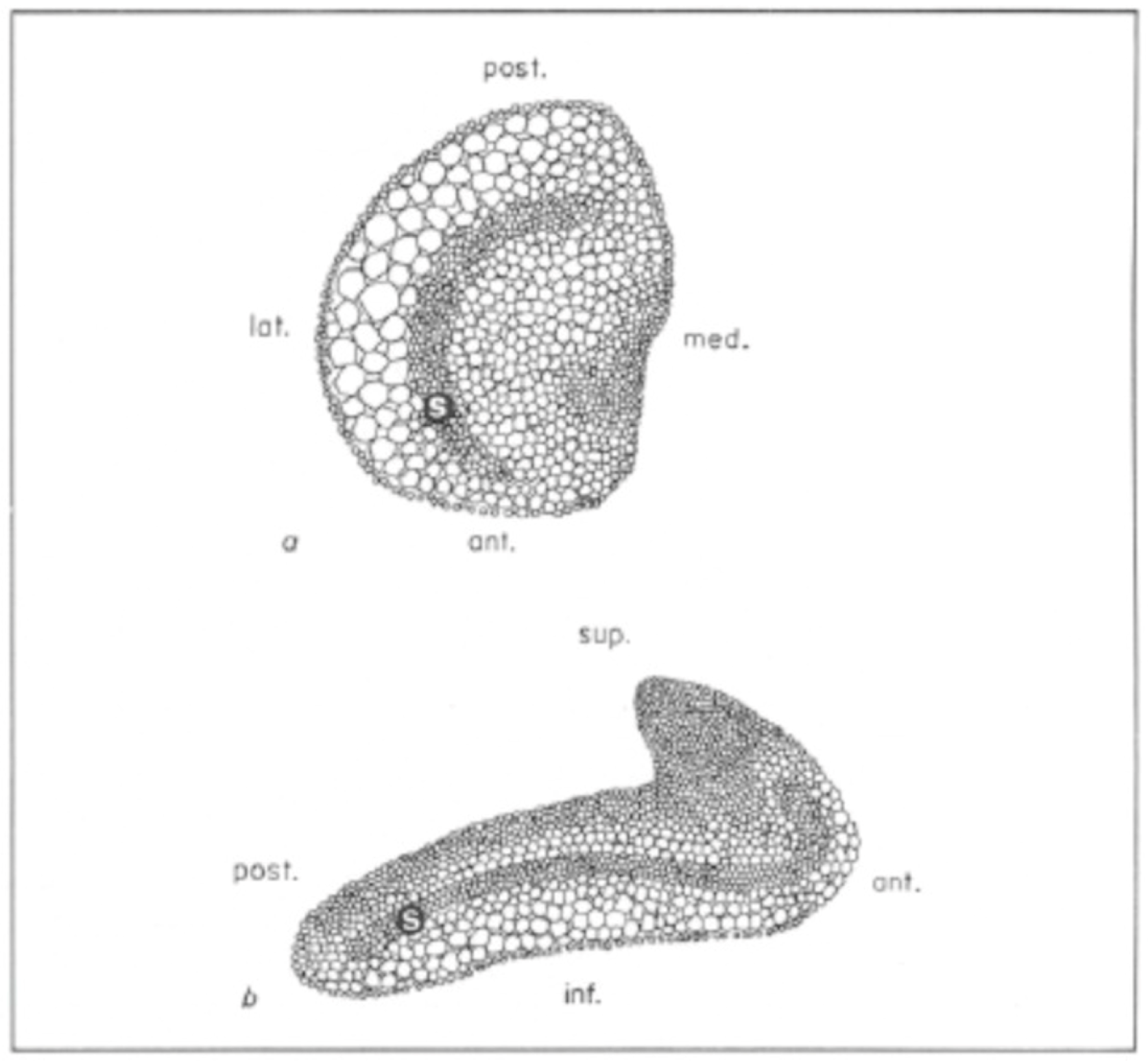
2.1. Zonal Organization: Striola and Extrastriola
2.2. Hair Bundle–Otoconial Membrane Coupling
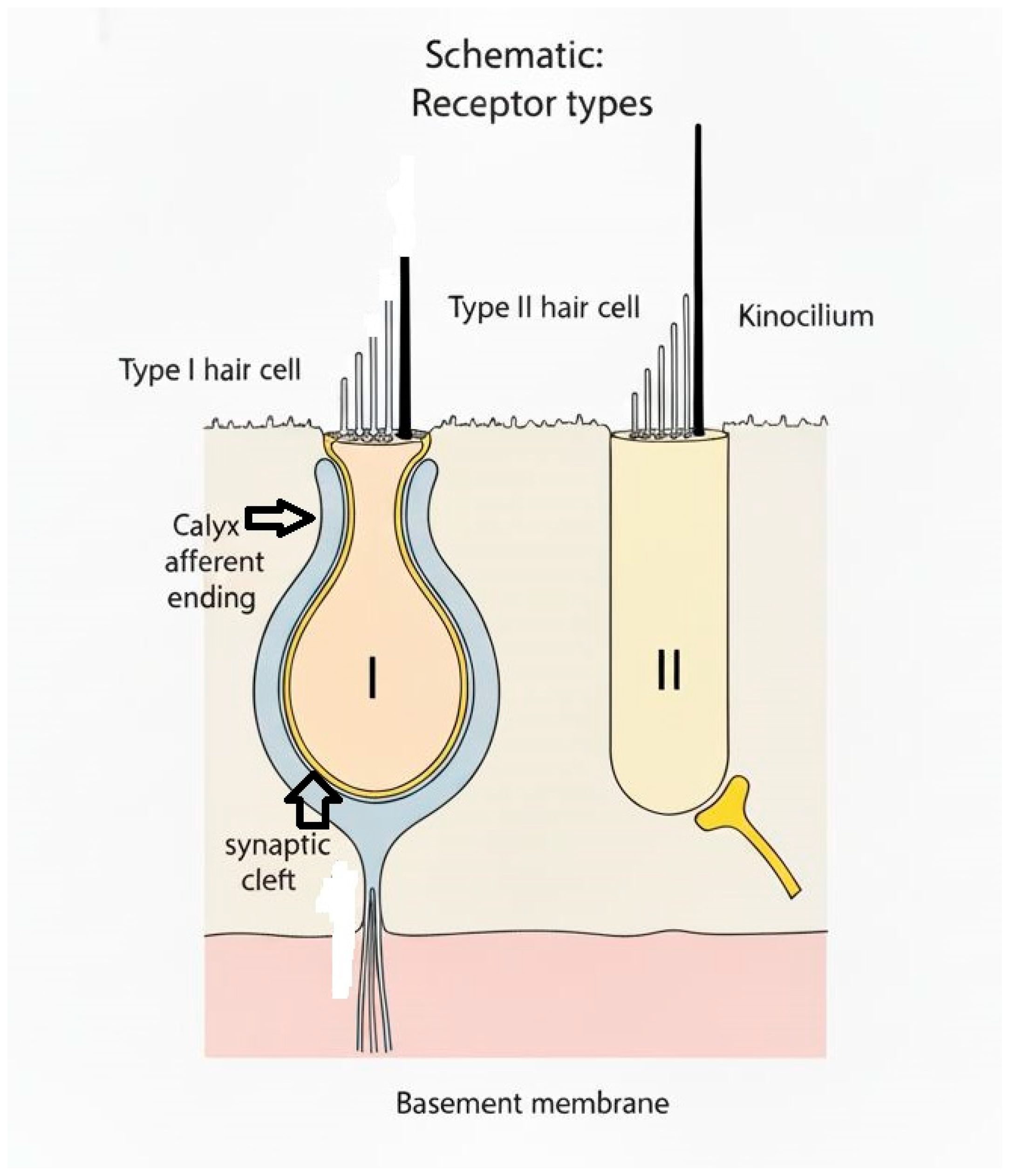
2.3. Intrinsic Membrane Properties of Hair Cells and Afferents
- Band-pass tuning and phase lead in type I hair cell receptor potentials, emphasizing higher frequencies and fast transients.
3. How Air-Conducted Sound Reaches the Vestibular Labyrinth
3.1. Middle and Inner Ear Transmission of ACS
3.2. Fluid Particle Motion and Local Pressure Gradients
- Local oscillatory particle displacement and velocity of endolymph and perilymph.
- Pressure gradients across the otoconial membrane and macular surface.
4. Single-Unit Evidence for Sound-Responsive Vestibular Afferents
4.1. Squirrel Monkey
- A subset of vestibular afferents exhibited phase-locked firing to ACS, with lowest sound thresholds around 120–130 dB SPL (minimum ~76 dB SPL).
- Rate-change thresholds were typically 10–30 dB above phase-locking thresholds, indicating that timing measures are more sensitive than firing-rate measures for detecting ACS-evoked vestibular activation.
- Irregularly discharging neurons were more sensitive than regularly discharging units.
- The sacculus did not show a unique superiority for ACS; saccular units were not dramatically more sensitive than units from other vestibular end-organs, challenging early views of a “pure acoustic sacculus” in mammals [10].
4.2. Cat
- Fibers with spontaneous activity and clear frequency selectivity to ACS;
- Phase-locked responses to tones and clicks;
- Thresholds and tuning curves distinct from those of auditory nerve fibers;
4.3. Rat
- Many irregular otolithic afferents responded to clicks with short-latency, phase-locked bursts of spikes.
- Input–output functions for click level were steep, with rapid growth of response probability and timing precision once threshold was exceeded.
4.4. Guinea Pig
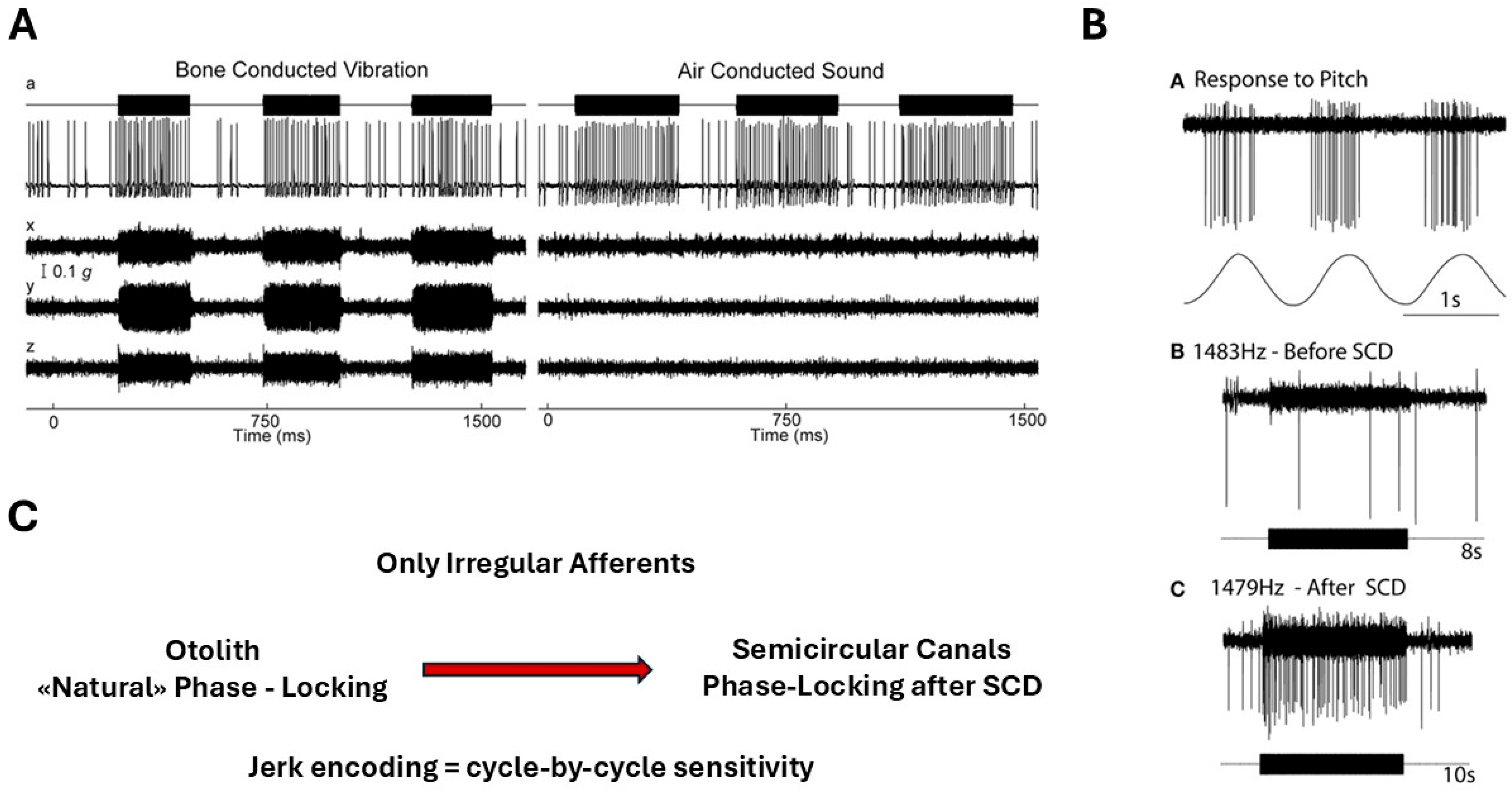
- Selectivity for irregular otolithic afferents. Regular otolithic afferents and most semicircular canal afferents showed no detectable rate increase even at high stimulus levels (up to ~3 g for BCV and ~140 dB SPL for ACS), whereas irregular otolithic afferents were robustly activated [28].
- BCV thresholds and bandwidth. For BCV, utricular and saccular irregular afferents showed similarly low thresholds (on the order of ~0.02 g on average) for frequencies roughly between 100 and 750 Hz, followed by a steep rise in thresholds above ~750 Hz, indicating reduced effectiveness of very-high-frequency BCV at the skull [27].
- ACS tuning and relative utricle–saccule sensitivity. For ACS, both utricular and saccular irregular afferents could be activated at high intensities across approximately 250–3000 Hz, with broadly flattened U-shaped tuning curves and lowest thresholds around 1–2 kHz. Across frequencies, saccular afferents were ~10–15 dB more sensitive (lower thresholds) than utricular afferents to the same ACS stimuli [28].
- Phase locking to high-frequency stimulation. A hallmark of these neurons was strong phase locking: responses could remain cycle-locked to at least ~1500 Hz for BCV and up to ~3000 Hz for ACS. At low frequencies, phase locking also implies an apparent ceiling on firing rate (often ~one spike per stimulus cycle), so timing measures can be more informative than mean-rate measures [27].
- Anatomical substrate: striolar type I–calyx/dimorphic units. Neurobiotin labeling showed that recorded afferents typically originated from the striolar region of the utricular or saccular macula and commonly made calyceal contacts with type I hair cells, often with additional bouton contacts on nearby type II cells (i.e., many were dimorphic rather than pure calyx-only) [27].
4.5. Other Vertebrates
5. From Hair Cell to Afferent: Mechanisms for Encoding Fast Acoustic Transients
5.1. Transduction and Adaptation in Vestibular Hair Cells
- A rapid onset, shaped by membrane capacitance and channel kinetics;
- Partial decay (adaptation) that is more pronounced in some cells;
5.2. Type I Hair Cells, KLV, and High-Frequency Tuning
- Transducer adaptation and membrane charging produce band-pass tuning of the receptor potential with best frequencies ~10–30 Hz and significant phase lead below 10 Hz.
- During maturation, type I cells acquire low-voltage-activated K+ channels (KLV) that further sharpen tuning and shorten receptor potential rise times.
5.3. Synaptic Transmission: Quantal, Non-Quantal, and Timing
- (1)
- A relatively slow but powerful nonquantal component driven by K+ build-up in the cleft;
- (2)
- Conventional glutamatergic quantal transmission on the millisecond timescale; and
- (3)
- An ultra-fast bidirectional “resistive” (or ephaptic) coupling mediated by cleft-facing low-voltage-activated K+ channels that are open at rest [17,20,28,30,31] Nonquantal postsynaptic potentials recorded in type I–calyx pairs are smoother, less noisy, and extend to higher frequencies than EPSPs, providing a more faithful representation of rapid bundle motion, while resistive coupling can transmit voltage changes across the cleft within tens of microseconds. Together, these mechanisms offer a concrete biophysical explanation for why vestibular type I–calyx synapses can sustain phase-locked firing to high-frequency, jerk-rich ACS with timing precision that rivals, and in some regimes surpasses, that of cochlear inner hair cell–auditory nerve synapses.
5.4. Afferent Spike Generation and High-Pass Filtering
- Large-diameter axons, high conduction velocities, and higher spike thresholds;
- Prominent expression of KLV channels at the soma and initial segment, promoting phasic responses;
5.5. Developmental Aspects Relevant to Acoustic Stimulation
6. Physics of Air-Conducted Sound and the Concept of Jerk
6.1. From Displacement to Jerk
6.2. Why Rise-Time Matters at Constant RMS
- A short-rise-time click or burst concentrates energy into a brief onset, producing large instantaneous changes in pressure and fluid acceleration (high jerk).
- A long-rise-time tone burst spreads the same total energy over a longer interval, reducing peak acceleration and jerk.
6.3. Jerk as a Functional Descriptor
- The combination of mechanical high-frequency sensitivity (striola, fluid pressure fields),
- Transducer adaptation and KLV-dominated membrane dynamics, and
- Phasic spike-generation in irregular afferents.
7. Clinical Correlates: Sound-Evoked VEMPs and Sound-Induced Ocular Responses
7.1. Cervical and Ocular VEMPs to ACS
7.2. Sound-Induced Eye Movements and Nystagmus
- Low ACS thresholds for eliciting torsional and vertical eye movements;
- Alignment of slow-phase eye velocity with the anatomical plane of the dehiscent canal;
7.3. High-Frequency (4 kHz) ACS VEMPs as a Specific Functional Test for SSCD
8. A Dual-Channel, Jerk-Centered Framework for Acoustic Vestibular Coding
- Mechanical input. Intense ACS generates pressure waves in the vestibular fluids. Because of anatomical and mechanical specializations, these waves produce local high-frequency fluid velocity and pressure gradients that preferentially deflect hair bundles in the striola and central cristae [1,2,7,18,19,20].
9. Conclusions and Perspectives
Funding
Institutional Review Board Statement
Informed Consent Statement
Data Availability Statement
Conflicts of Interest
References
- Curthoys, I.S.; Grant, J.W. How does high-frequency sound or vibration activate vestibular receptors? Exp. Brain Res. 2015, 233, 691–699. [Google Scholar] [CrossRef]
- Curthoys, I.S. The new vestibular stimuli: Sound and vibration—Anatomical, physiological and clinical evidence. Exp. Brain Res. 2017, 235, 957–972. [Google Scholar] [CrossRef]
- Curthoys, I.S.; Burgess, A.M.; Goonetilleke, S.C. Phase-locking of irregular guinea pig primary vestibular afferents to high frequency (>250 Hz) sound and vibration. Hear. Res. 2019, 373, 59–70. [Google Scholar] [CrossRef] [PubMed]
- McCue, M.P.; Guinan, J.J., Jr. Acoustically responsive fibers in the vestibular nerve of the cat. J. Neurosci. 1994, 14, 6058–6070. [Google Scholar] [CrossRef] [PubMed]
- Zhu, H.; Tang, X.; Wei, W.; Mustain, W.; Xu, Y.; Zhou, W. Click-evoked responses in vestibular afferents in rats. J. Neurophysiol. 2011, 106, 754–763. [Google Scholar] [CrossRef] [PubMed]
- Lu, Z.; Xu, Z.; Buchser, W.J. Coding of acoustic particle motion by utricular afferents of the sleeper goby, Dormitator latifrons. J. Comp. Physiol. A 2004, 190, 923–938. [Google Scholar]
- Curthoys, I.S.; Vulovic, V.; Burgess, A.M.; Cornell, E.D.; Mezey, L.E.; MacDougall, H.G.; Manzari, L. The skull vibration-induced nystagmus test of unilateral vestibular loss. Ann. N. Y. Acad. Sci. 2011, 1233, 231–241. [Google Scholar] [CrossRef]
- Eatock, R.A.; Songer, J.E. Vestibular hair cells and afferents: Two channels for head motion signals. Annu. Rev. Neurosci. 2011, 34, 501–534. [Google Scholar] [CrossRef]
- Curthoys, I.S.; Vulovic, V.; Sokolic, L.; Pogson, J.; Burgess, A.M. Irregular primary otolithic and canal vestibular neurons show low thresholds to bone-conducted vibration and to air-conducted sound. Brain Res. Bull. 2012, 89, 16–21. [Google Scholar] [CrossRef]
- Young, E.D.; Fernandez, C.; Goldberg, J.M. Responses of squirrel monkey vestibular neurons to audio-frequency sound and head vibration. Acta Oto-Laryngol. 1977, 84, 352–360. [Google Scholar] [CrossRef]
- Zhu, H.; Tang, X.; Wei, W.; Maklad, A.; Mustain, W.; Rabbitt, R.; Highstein, S.; Allison, J.; Zhou, W. Inputs from semicircular canals to the otolith organs via bone-conducted clicks in rats. J. Assoc. Res. Otolaryngol. 2014, 15, 73–86. [Google Scholar] [CrossRef] [PubMed]
- Todd, N.P.M.; Rosengren, S.M.; Aw, S.T.; Colebatch, J.G. Ocular vestibular evoked myogenic potentials (OVEMPS) produced by air- and bone-conducted sound. Clin. Neurophysiol. 2007, 118, 381–390. [Google Scholar] [CrossRef] [PubMed]
- Songer, J.E.; Rosowski, J.J. The effect of superior canal dehiscence on cochlear potential in response to air-conducted stimuli in chinchilla. Hear. Res. 2005, 210, 53–62. [Google Scholar] [CrossRef] [PubMed]
- Noij, K.S.; Rauch, S.D. Vestibular evoked myogenic potential (VEMP) testing for diagnosis of superior semicircular canal dehiscence. Front. Neurol. 2020, 11, 695. [Google Scholar] [CrossRef]
- Jones, S.M.; Subramanian, G.; Avniel, W.; Guo, Y.; Burkard, R.F.; Jones, T.A. Intracellular responses of vestibular afferents to air-conducted sound and vibration and their relation to vestibular evoked potentials. J. Neurosci. Methods. 2002, 118, 23–31. [Google Scholar] [CrossRef]
- Songer, J.E.; Eatock, R.A. Tuning and timing in mammalian type I hair cells and calyceal synapses. J. Neurosci. 2013, 33, 3706–3724. [Google Scholar] [CrossRef]
- Contini, D.; Holstein, G.R.; Art, J.J. Simultaneous dual recordings from vestibular hair cells and their calyx afferents demonstrate multiple modes of transmission at these specialized endings. Front. Neurol. 2022, 13, 891536. [Google Scholar] [CrossRef]
- Uzun-Coruhlu, H.; Curthoys, I.S.; Jones, A.S. Attachment of the utricular and saccular maculae to the temporal bone in humans. Hear. Res. 2007, 233, 77–85. [Google Scholar] [CrossRef]
- Xue, J.B.; Peterson, E.H. Hair bundle heights in the utricle: Differences between macular locations and hair cell types. J. Neurophysiol. 2006, 95, 171–186. [Google Scholar] [CrossRef][Green Version]
- Pastras, C.J.; Curthoys, I.S.; Asadnia, M.; McAlpine, D.; Rabbitt, R.D.; Brown, D.J. Evidence that ultrafast nonquantal transmission underlies synchronized vestibular action potential generation. J. Neurosci. 2023, 43, 7149–7157. [Google Scholar] [CrossRef]
- Songer, J.E.; Rosowski, J.J. The effect of superior canal opening on middle-ear input admittance and stapes velocity in chinchilla. J. Acoust. Soc. Am. 2006, 120, 258–269. [Google Scholar] [CrossRef]
- Contini, D.; Price, S.D.; Art, J.J. Accumulation of K⁺ in the synaptic cleft modulates activity by influencing both vestibular hair cell and calyx afferent in the turtle. J. Physiol. 2017, 595, 777–803. [Google Scholar] [CrossRef] [PubMed]
- Lindemann, H.H. Anatomy of the Otolith Organs. Adv. Oto-Rhino-Laryngol. 1973, 20, 405–434. [Google Scholar]
- Spoon, C.; Moravec, W.J.; Rowe, M.H.; Grant, J.W.; Peterson, E.H. Steady-state stiffness of utricular hair cells depends on macular location and hair bundle structure. J. Neurophysiol. 2011, 106, 2950–2963. [Google Scholar] [CrossRef] [PubMed]
- Grant, W.; Curthoys, I. Otoliths—Accelerometer and seismometer; Implications in Vestibular Evoked Myogenic Potential (VEMP). Hear. Res. 2017, 353, 26–35. [Google Scholar] [CrossRef]
- McCue, M.P.; Guinan, J.J., Jr. Sound-evoked activity in primary afferents of a mammalian vestibular system. Am. J. Otol. 1997, 18, 355–360. [Google Scholar]
- Curthoys, I.S.; Vulovic, V.; Burgess, A.M.; Sokolic, L.; Goonetilleke, S.C. The response of guinea pig primary utricular and saccular irregular neurons to bone-conducted vibration (BCV) and air-conducted sound (ACS). Hear. Res. 2016, 331, 131–143. [Google Scholar] [CrossRef]
- Contini, D.; Holstein, G.R.; Art, J.J. Synaptic cleft microenvironment influences potassium permeation and synaptic transmission in hair cells surrounded by calyx afferents in the turtle. J. Physiol. 2020, 598, 853–889. [Google Scholar] [CrossRef]
- Palmer, A.R.; Russell, I.J. Phase-locking in the cochlear nerve of the guinea-pig and its relation to the receptor potential of inner hair-cells. Hear. Res. 1986, 24, 1–15. [Google Scholar] [CrossRef]
- Contini, D.; Holstein, G.R.; Art, J.J. Simultaneous recordings from vestibular Type I hair cells and their calyceal afferents in mice. Front. Neurol. 2024, 15, 1434026. [Google Scholar] [CrossRef]
- Eatock, R.A. Functional development and differentiation of mammalian vestibular hair cells and their synapses. Curr. Top. Dev. Biol. 2025, 165, 235–306. [Google Scholar] [CrossRef] [PubMed]
- Zhou, D.; Yu, Z.; Kodama, T.; Schoo, W.; du Lac, S.; Glowatzki, E.; Sadeghi, S.G. Functional contributions of quantal and non-quantal hair cell synaptic transmission in the vestibular periphery. bioRxiv 2025. [Google Scholar] [CrossRef]
- Curthoys, I.S.; Manzari, L. A simple specific functional test for SCD: VEMPs to high frequency (4000 Hz) stimuli—Their origin and explanation. Front. Neurol. 2020, 11, 612075. [Google Scholar] [CrossRef]
- Manzari, L.; Burgess, A.M.; McGarvie, L.A.; Curthoys, I.S. An indicator of probable semicircular canal dehiscence: Sustained torsional nystagmus elicited by bone-conducted vibration or by loud sound at high frequencies. Otolaryngol. Head Neck Surg. 2013, 149, 142–145. [Google Scholar] [CrossRef]
- Weber, K.P.; Rosengren, S.M.; Michels, R.; Sturm, V.; Straumann, D.; Landau, K. Single motor unit activity in human extraocular muscles during the vestibulo-ocular reflex. J. Physiol. 2012, 590, 3091–3101. [Google Scholar] [CrossRef]
- Curthoys, I.S.; Grant, J.W.; Burgess, A.M.; Pastras, C.J.; Brown, D.J.; Manzari, L. Otoliths as accelerometers and seismometers: A review. Front. Neurol. 2018, 9, 366. [Google Scholar]
- Suzuki, J.I.; Tokumasu, K.; Goto, K. Eye movements from single utricular nerve stimulation in the cat. Acta Oto-Laryngol. 1969, 68, 350–362. [Google Scholar] [CrossRef]


Disclaimer/Publisher’s Note: The statements, opinions and data contained in all publications are solely those of the individual author(s) and contributor(s) and not of MDPI and/or the editor(s). MDPI and/or the editor(s) disclaim responsibility for any injury to people or property resulting from any ideas, methods, instructions or products referred to in the content. |
© 2026 by the author. Licensee MDPI, Basel, Switzerland. This article is an open access article distributed under the terms and conditions of the Creative Commons Attribution (CC BY) license.
Share and Cite
Manzari, L. How the Vestibular Labyrinth Encodes Air-Conducted Sound: From Pressure Waves to Jerk-Sensitive Afferent Pathways. J. Otorhinolaryngol. Hear. Balance Med. 2026, 7, 5. https://doi.org/10.3390/ohbm7010005
Manzari L. How the Vestibular Labyrinth Encodes Air-Conducted Sound: From Pressure Waves to Jerk-Sensitive Afferent Pathways. Journal of Otorhinolaryngology, Hearing and Balance Medicine. 2026; 7(1):5. https://doi.org/10.3390/ohbm7010005
Chicago/Turabian StyleManzari, Leonardo. 2026. "How the Vestibular Labyrinth Encodes Air-Conducted Sound: From Pressure Waves to Jerk-Sensitive Afferent Pathways" Journal of Otorhinolaryngology, Hearing and Balance Medicine 7, no. 1: 5. https://doi.org/10.3390/ohbm7010005
APA StyleManzari, L. (2026). How the Vestibular Labyrinth Encodes Air-Conducted Sound: From Pressure Waves to Jerk-Sensitive Afferent Pathways. Journal of Otorhinolaryngology, Hearing and Balance Medicine, 7(1), 5. https://doi.org/10.3390/ohbm7010005