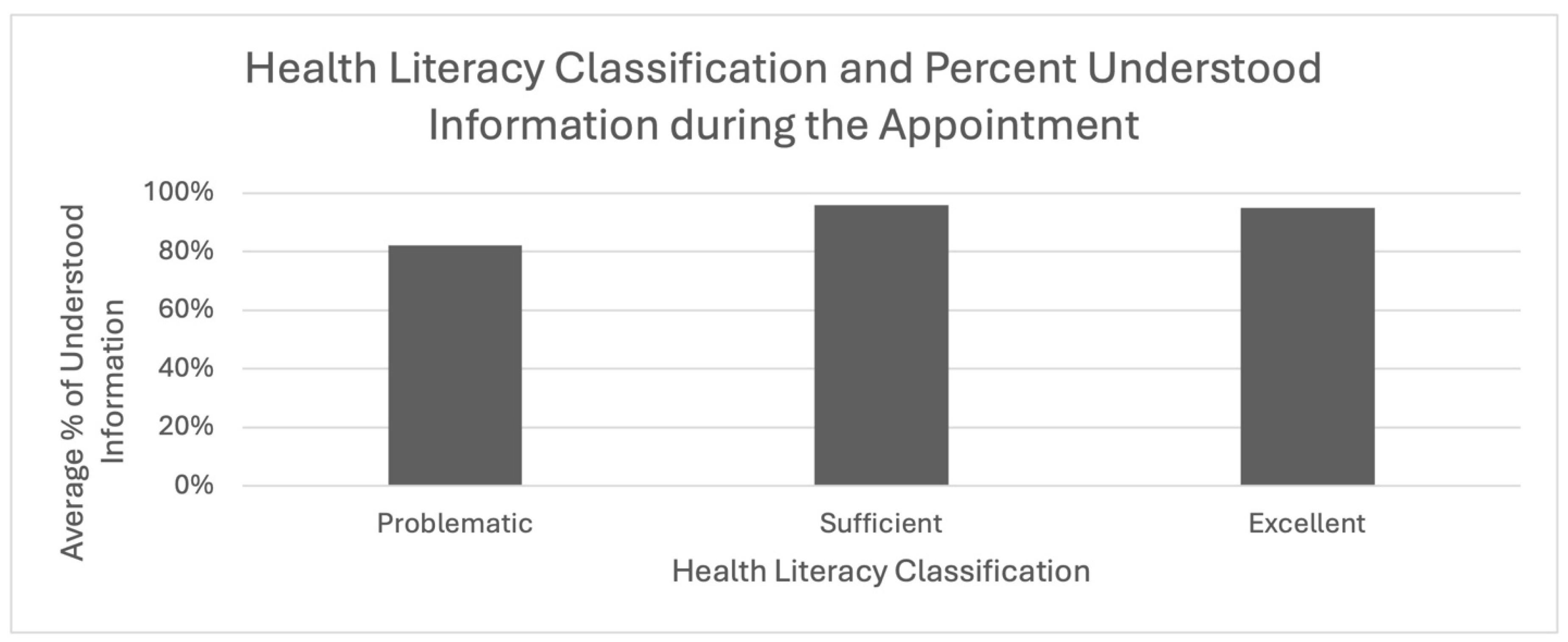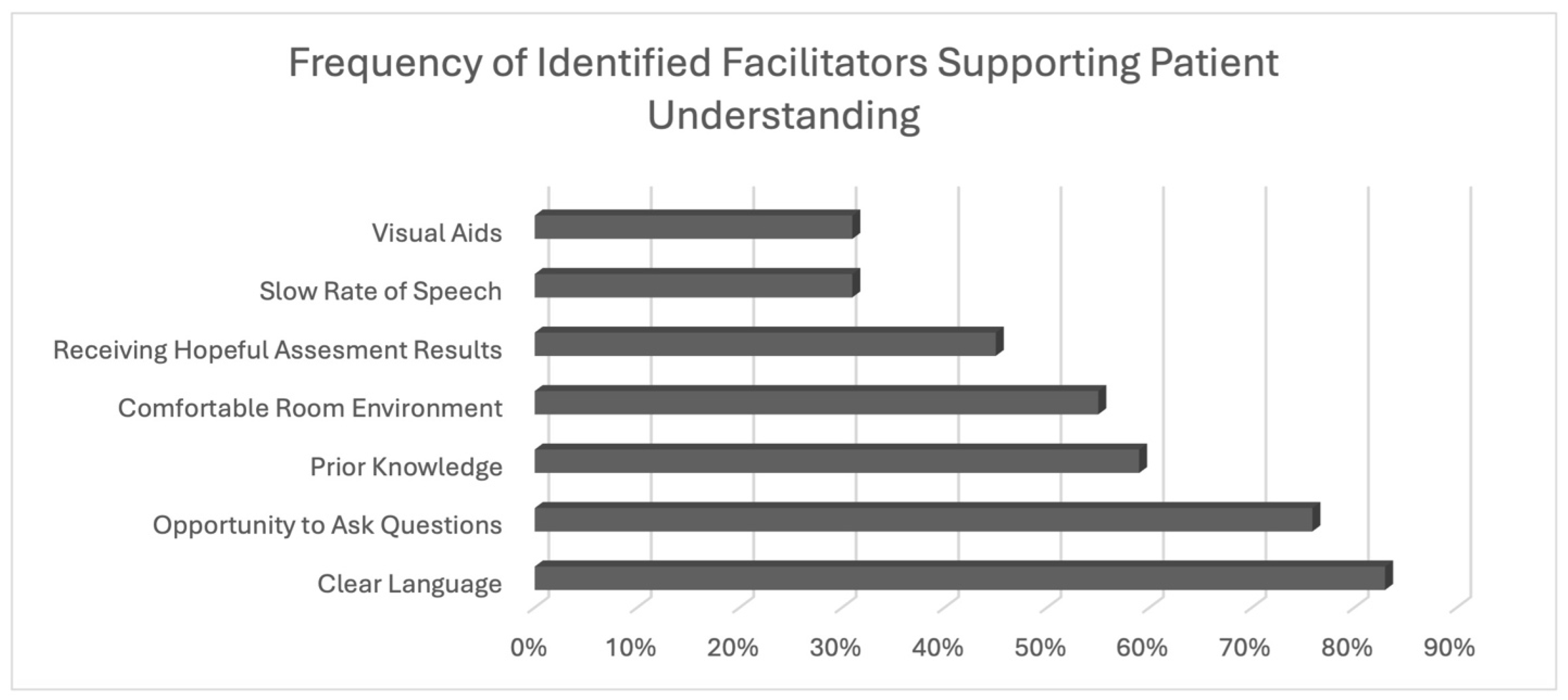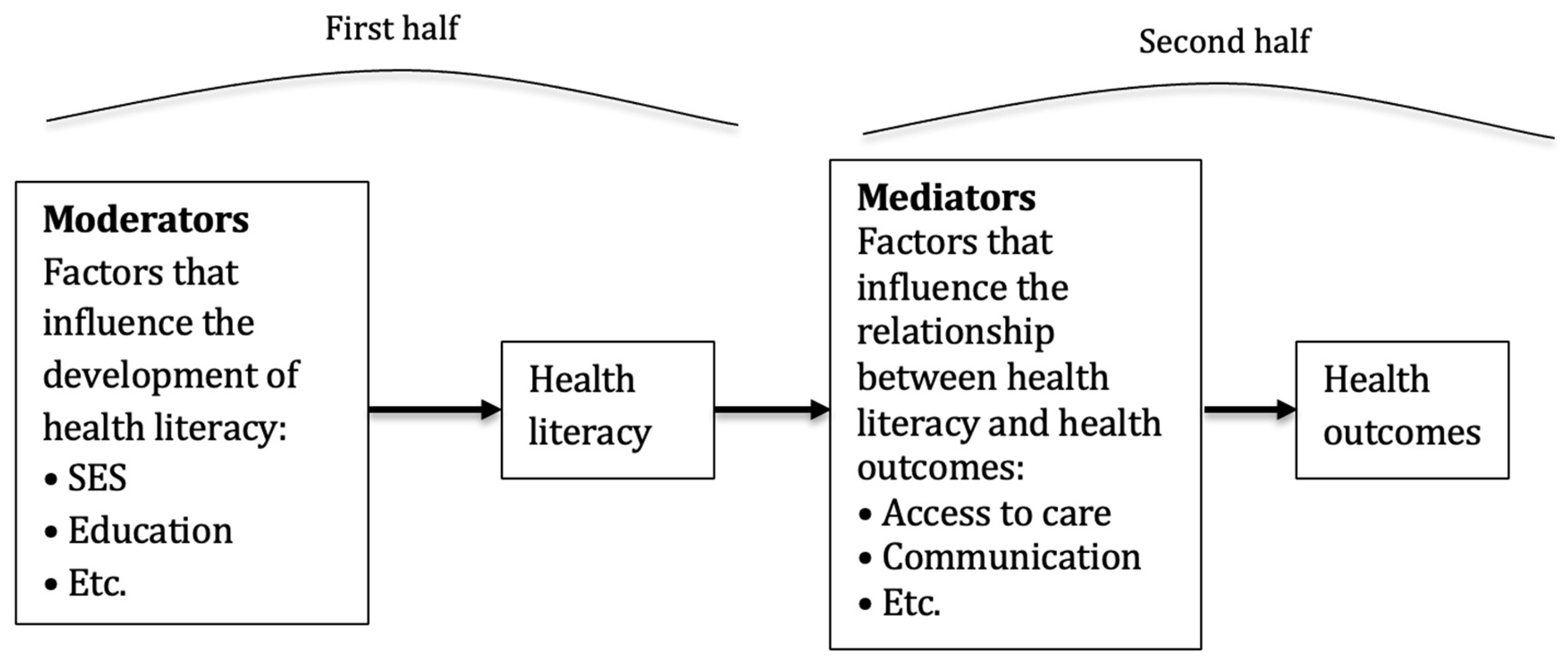

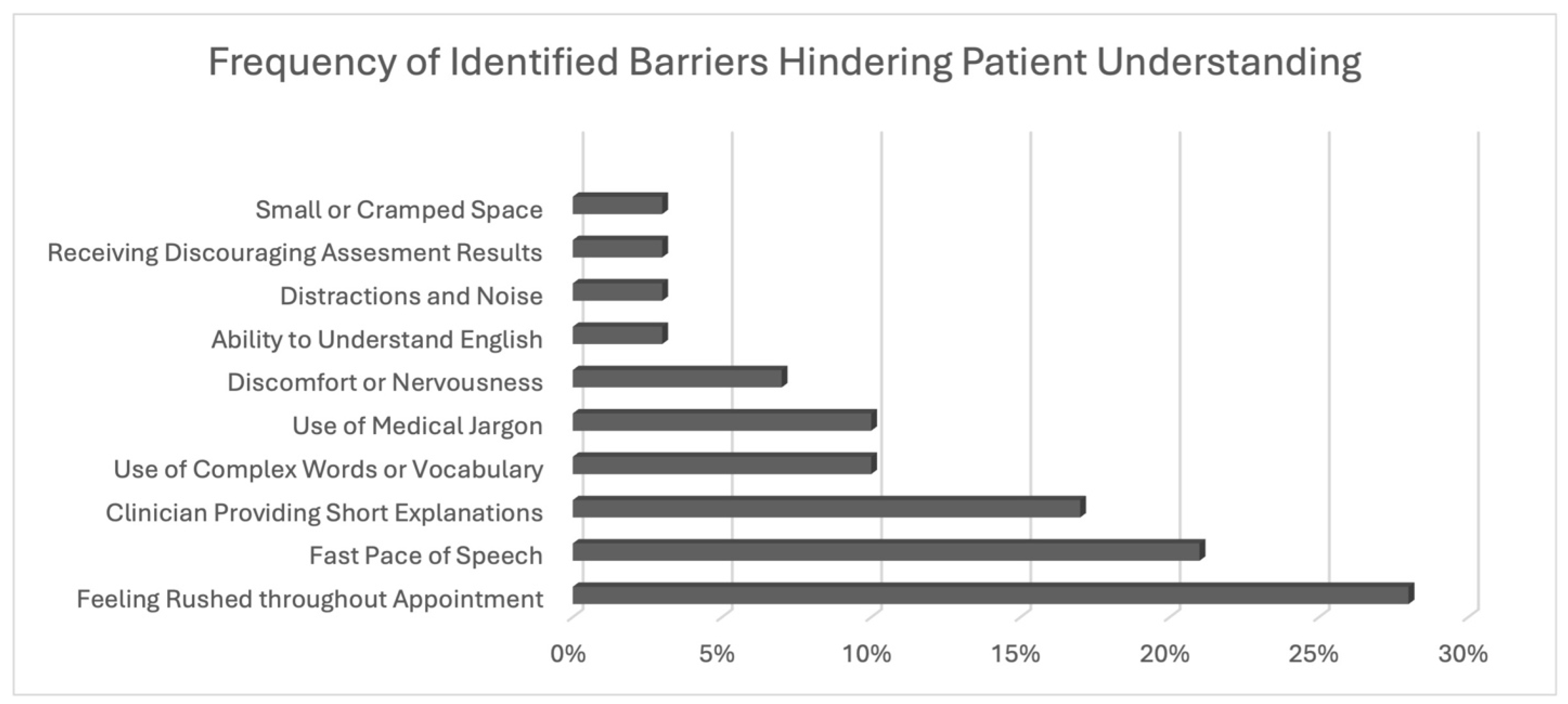
What Shapes Perceived Patient Understanding in Dysphagia and Voice Care? A Survey of Barriers and Facilitators


Abstract
1. Introduction
2. Methods
2.1. Study Design
2.2. Recruitment
2.3. Survey
2.4. Data Analyses
3. Results
3.1. Participant Characteristics
3.2. Health Literacy
3.3. Thematic Analysis of Open-Ended Questions
4. Discussion
4.1. Clinical Implications
4.2. Limitations
5. Conclusions
Author Contributions
Funding
Institutional Review Board Statement
Informed Consent Statement
Data Availability Statement
Conflicts of Interest
Appendix A. The Equator Network’s Consensus-Based Checklist for Reporting of Survey Studies (CROSS) Guidelines for Survey Studies

| Section/Topic | Item | Item Description | Reported on Page # |
|---|---|---|---|
| Title and abstract | |||
| Title and abstract | 1a | State the word “survey” along with a commonly used term in title or abstract to introduce the study’s design. | 1 |
| 1b | Provide an informative summary in the abstract, covering background, objectives, methods, findings/results, interpretation/discussion, and conclusions. | 2 | |
| Introduction | |||
| Background | 2 | Provide a background about the rationale of study, what has been previously done, and why this survey is needed. | 4 |
| Purpose/aim | 3 | Identify specific purposes, aims, goals, or objectives of the study. | 5 |
| Methods | |||
| Study design | 4 | Specify the study design in the methods section with a commonly used term (e.g., cross-sectional or longitudinal). | 5 |
| 5a | Describe the questionnaire (e.g., number of sections, number of questions, number and names of instruments used). | 5 | |
| Data collection methods | 5b | Describe all questionnaire instruments that were used in the survey to measure particular concepts. Report target population, reported validity and reliability information, scoring/classification procedure, and reference links (if any). | 5 |
| 5c | Provide information on pretesting of the questionnaire, if performed (in the article or in an online supplement). Report the method of pretesting, number of times questionnaire was pre-tested, number and demographics of participants used for pretesting, and the level of similarity of demographics between pre-testing participants and sample population. | 6 | |
| 5d | Questionnaire if possible, should be fully provided (in the article, or as appendices or as an online supplement). | Appendix B | |
| Sample characteristics | 6a | Describe the study population (i.e., background, locations, eligibility criteria for participant inclusion in survey, exclusion criteria). | 6 |
| 6b | Describe the sampling techniques used (e.g., single stage or multistage sampling, simple random sampling, stratified sampling, cluster sampling, convenience sampling). Specify the locations of sample participants whenever clustered sampling was applied. | 6 | |
| 6c | Provide information on sample size, along with details of sample size calculation. | 6 | |
| 6d | Describe how representative the sample is of the study population (or target population if possible), particularly for population-based surveys. | 6 | |
| Survey administration | 7a | Provide information on modes of questionnaire administration, including the type and number of contacts, the location where the survey was conducted (e.g., outpatient room or by use of online tools, such as SurveyMonkey). | 5 |
| 7b | Provide information of survey’s time frame, such as periods of recruitment, exposure, and follow-up days. | ||
| 7c | Provide information on the entry process: –>For non-web-based surveys, provide approaches to minimize human error in data entry. –>For web-based surveys, provide approaches to prevent “multiple participation” of participants. | 5 | |
| Study preparation | 8 | Describe any preparation process before conducting the survey (e.g., interviewers’ training process, advertising the survey). | 6 |
| Ethical considerations | 9a | Provide information on ethical approval for the survey if obtained, including informed consent, institutional review board [IRB] approval, Helsinki declaration, and good clinical practice [GCP] declaration (as appropriate). | 5 |
| 9b | Provide information about survey anonymity and confidentiality and describe what mechanisms were used to protect unauthorized access. | 6 | |
| Statistical analysis | 10a | Describe statistical methods and analytical approach. Report the statistical software that was used for data analysis. | 6 |
| 10b | Report any modification of variables used in the analysis, along with reference (if available). | 6 | |
| 10c | Report details about how missing data was handled. Include rate of missing items, missing data mechanism (i.e., missing completely at random [MCAR], missing at random [MAR] or missing not at random [MNAR]) and methods used to deal with missing data (e.g., multiple imputation). | 6 | |
| 10d | State how non-response error was addressed. | 5 | |
| 10e | For longitudinal surveys, state how loss to follow-up was addressed. | ||
| 10f | Indicate whether any methods such as weighting of items or propensity scores have been used to adjust for non-representativeness of the sample. | ||
| 10g | Describe any sensitivity analysis conducted. | ||
| Results | |||
| Respondent characteristics | 11a | Report numbers of individuals at each stage of the study. Consider using a flow diagram, if possible. | 7 |
| 11b | Provide reasons for non-participation at each stage, if possible. | ||
| 11c | Report response rate, present the definition of response rate or the formula used to calculate response rate. | 7 | |
| 11d | Provide information to define how unique visitors are determined. Report number of unique visitors along with relevant proportions (e.g., view proportion, participation proportion, completion proportion). | ||
| Descriptive results | 12 | Provide characteristics of study participants, as well as information on potential confounders and assessed outcomes. | 7 |
| Main findings | 13a | Give unadjusted estimates and, if applicable, confounder-adjusted estimates along with 95% confidence intervals and p-values. | |
| 13b | For multivariable analysis, provide information on the model building process, model fit statistics, and model assumptions (as appropriate). | ||
| 13c | Provide details about any sensitivity analysis performed. If there are considerable amount of missing data, report sensitivity analyses comparing the results of complete cases with that of the imputed dataset (if possible). | ||
| Discussion | |||
| Limitations | 14 | Discuss the limitations of the study, considering sources of potential biases and imprecisions, such as non-representativeness of sample, study design, important uncontrolled confounders. | 12 |
| Interpretations | 15 | Give a cautious overall interpretation of results, based on potential biases and imprecisions and suggest areas for future research. | 12 |
| Generalizability | 16 | Discuss the external validity of the results. | 12 |
| Other sections | |||
| Role of funding source | 17 | State whether any funding organization has had any roles in the survey’s design, implementation, and analysis. | |
| Conflict of interest | 18 | Declare any potential conflict of interest. | 1 |
| Acknowledgements | 19 | Provide names of organizations/persons that are acknowledged along with their contribution to the research. | 1 |
Appendix B. Survey
References
- Graham, S.; Brookey, J. Do Patients Understand? Perm. J. 2008, 12, 67–69. [Google Scholar] [CrossRef]
- Krekeler, B.N.; Broadfoot, C.K.; Johnson, S.; Connor, N.P.; Rogus-Pulia, N. Patient Adherence to Dysphagia Recommendations: A Systematic Review. Dysphagia 2018, 33, 173–184. [Google Scholar] [CrossRef] [PubMed]
- Brown, M.T.; Bussell, J.K. Medication Adherence: Who Cares? Mayo Clin. Proc. 2011, 86, 304–314. [Google Scholar] [CrossRef] [PubMed]
- Davis, T.C.; Federman, A.D.; Bass, P.F.; Jackson, R.H.; Middlebrooks, M.; Parker, R.M.; Wolf, M.S. Improving Patient Understanding of Prescription Drug Label Instructions. J. Gen. Intern. Med. 2009, 24, 57–62. [Google Scholar] [CrossRef] [PubMed]
- Houts, P.S.; Doak, C.C.; Doak, L.G.; Loscalzo, M.J. The Role of Pictures in Improving Health Communication: A Review of Research on Attention, Comprehension, Recall, and Adherence. Patient Educ. Couns. 2006, 61, 173–190. [Google Scholar] [CrossRef]
- Østen, K.; Menichetti, J.; Nordfalk, J.M.; Ofstad, E.H. Recall and Understanding of Discharge Information in Observation Ward Patients: An Explorative Observational Study. Front. Commun. 2021, 6, 736095. [Google Scholar] [CrossRef]
- Townshend, R.; Grondin, C.; Gupta, A.; Al-Khafaji, J. Assessment of Patient Retention of Inpatient Care Information Post-Hospitalization. Jt. Comm. J. Qual. Patient Saf. 2023, 49, 70–78. [Google Scholar] [CrossRef]
- Eijkelenboom, A.; Bluyssen, P.M. Comfort and Health of Patients and Staff Related to the Physical Environment of Different Hospital Departments: A Literature Review. Intell. Build. Int. 2022, 14, 95–113. [Google Scholar] [CrossRef]
- Huisman, E.R.C.M.; Morales, E.; van Hoof, J.; Kort, H.S.M. Healing Environment: A Review of the Impact of Physical Environmental Factors on Users. Build. Environ. 2012, 58, 70–80. [Google Scholar] [CrossRef]
- Andrea, M.; Andrea, M.; Figueira, M.L. Self-Perception of Quality of Life in Patients with Functional Voice Disorders: The Effects of Psychological and Vocal Acoustic Variables. Eur. Arch. Otorhinolaryngol. 2018, 275, 2745–2754. [Google Scholar] [CrossRef]
- Naunheim, M.R.; Goldberg, L.; Dai, J.B.; Rubinstein, B.J.; Courey, M.S. Measuring the Impact of Dysphonia on Quality of Life Using Health State Preferences. Laryngoscope 2020, 130, 993–998. [Google Scholar] [CrossRef]
- Wilson, J.A.; Deary, I.J.; Millar, A.; Mackenzie, K. The Quality of Life Impact of Dysphonia. Clin. Otolaryngol. Allied Sci. 2002, 27, 179–182. [Google Scholar] [CrossRef]
- Jones, E.; Speyer, R.; Kertscher, B.; Denman, D.; Swan, K.; Cordier, R. Health-Related Quality of Life and Oropharyngeal Dysphagia: A Systematic Review. Dysphagia 2018, 33, 141–172. [Google Scholar] [CrossRef]
- McCarty, E.B.; Chao, T.N. Dysphagia and Swallowing Disorders. Med. Clin. N. Am. 2021, 105, 939–954. [Google Scholar] [CrossRef]
- Toles, L.E.; Dabney, E.; Smith-Morris, C. The Lived Experience of Phonotrauma: Discussions on Identity and Stigma. Am. J. Speech Lang. Pathol. 2026, 35, 772–786. [Google Scholar] [CrossRef] [PubMed]
- Hapner, E.; Portone-Maira, C.; Johns, M.M. A Study of Voice Therapy Dropout. J. Voice 2009, 23, 337–340. [Google Scholar] [CrossRef]
- Nagshabandi, B.S.; Zinnershine, L.; Shune, S.E. Factors Contributing to Adults’ Adherence to Dysphagia Dietary Recommendations: An Ecological Review. Am. J. Speech Lang. Pathol. 2023, 32, 341–357. [Google Scholar] [CrossRef] [PubMed]
- Pohl, M. HLS19 International Report on the Methodology, Results and Recommendations; WHO Action Network on Measuring Population and Organizational Health Literacy, n.d. Available online: https://m-pohl.net/Int_Report_methdology_results_recommendations (accessed on 24 October 2024).
- Braun, V.; Clarke, V. Reflecting on Reflexive Thematic Analysis. Qual. Res. Sport Exerc. Health 2019, 11, 589–597. [Google Scholar] [CrossRef]
- Liu, C.; Wang, D.; Liu, C.; Jiang, J.; Wang, X.; Chen, H.; Ju, X.; Zhang, X. What Is the Meaning of Health Literacy? A Systematic Review and Qualitative Synthesis. Fam. Med. Community Health 2020, 8, e000351. [Google Scholar] [CrossRef]
- McCormack, L.; Bann, C.; Squiers, L.; Berkman, N.D.; Squire, C.; Schillinger, D.; Ohene-Frempong, J.; Hibbard, J. Measuring Health Literacy: A Pilot Study of a New Skills-Based Instrument. J. Health Commun. 2010, 15, 51–71. [Google Scholar] [CrossRef]
- Squiers, L.; Peinado, S.; Berkman, N.; Boudewyns, V.; McCormack, L. The Health Literacy Skills Framework. J. Health Commun. 2012, 17, 30–54. [Google Scholar] [CrossRef]
- Salunkhe, R.M.; Salunkhe, S.R.; Prashant, R.; Ingale, M.H.; Tayade, M.C. Patient-Centered Approaches to Communicating Ear, Nose, and Throat Advancements. J. Fam. Med. Prim. Care 2024, 13, 3838–3842. [Google Scholar] [CrossRef] [PubMed]
- Vale, R.D. The Value of Asking Questions. Mol. Biol. Cell 2013, 24, 680–682. [Google Scholar] [CrossRef] [PubMed]
- Danaher, T.S.; Berry, L.L.; Howard, C.; Moore, S.G.; Attai, D.J. Improving How Clinicians Communicate with Patients: An Integrative Review and Framework. J. Serv. Res. 2023, 26, 493–510. [Google Scholar] [CrossRef]
- Roe, A.K.; Eppler, S.L.; Shapiro, L.M.; Satteson, E.S.; Yao, J.; Kamal, R.N. Engaging Patients to Ask More Questions: A Pragmatic Randomized Controlled Trial. J. Hand Surg. 2021, 46, 818.e1–818.e6. [Google Scholar] [CrossRef]
- Cox, C.L. Patient Understanding: How Should It Be Defined and Assessed in Clinical Practice? J. Eval. Clin. Pract. 2023, 29, 1127–1134. [Google Scholar] [CrossRef]
- Piaget, J. The Origins of Intelligence in Children; W.W. Norton & Co.: New York, NY, USA, 1952. [Google Scholar] [CrossRef]
- McDonald, K.M.; Rodriguez, H.P.; Shortell, S.M. Organizational Influences on Time Pressure Stressors and Potential Patient Consequences in Primary Care. Med. Care 2018, 56, 822–830. [Google Scholar] [CrossRef]
- Greenwell, T.; Walsh, B. Evidence-Based Practice in Speech-Language Pathology: Where Are We Now? Am. J. Speech Lang. Pathol. 2021, 30, 186–198. [Google Scholar] [CrossRef]
- McGill, N.; McLeod, S.; Crowe, K.; Wang, C.; Hopf, S.C. Waiting Lists and Prioritization of Children for Services: Speech-Language Pathologists’ Perspectives. J. Commun. Disord. 2021, 91, 106099. [Google Scholar] [CrossRef]
- Wallston, K.A.; Cawthon, C.; McNaughton, C.D.; Rothman, R.L.; Osborn, C.Y.; Kripalani, S. Psychometric Properties of the Brief Health Literacy Screen in Clinical Practice. J. Gen. Intern. Med. 2014, 29, 119–126. [Google Scholar] [CrossRef]
- Pynnonen, M.A.; Hawley, S.T. A Patient-Centered Approach to Clinical Practice Guidelines in Otolaryngology. Otolaryngol. Head Neck Surg. 2014, 150, 910–913. [Google Scholar] [CrossRef]
- Longtin, C.; Chang, J.R.; Hersch, J.; Sharma, S.; Ferraro, M.C.; Rizzo, R.R.N.; McBride, J.; Wong, A.Y.L.; Maher, C.G.; Guppy, M.; et al. One-Page Patient Fact Sheets for Low Back Pain in Primary Care: A Randomized Clinical Trial. JAMA Netw. Open 2025, 8, e2523352. [Google Scholar] [CrossRef]



| Frequency (N = 29) | Percentage (%) | |
|---|---|---|
| Age Mean ± SD | 64 ± 16 | |
| Health Practitioner | ||
| Speech–Language Pathologist | 6 | 21 |
| Otolaryngologist | 23 | 79 |
| Reason for Appointment | ||
| Swallowing Concern | 6 | 21 |
| Voice Concern | 23 | 79 |
| Gender Identity | ||
| Man | 18 | 62 |
| Woman | 11 | 34 |
| Self-Identified Racial or Ethnic Group | ||
| White | 22 | 76 |
| Black | 1 | 3 |
| Asian | 2 | 7 |
| Brazilian | 1 | 3 |
| Canadian | 1 | 3 |
| Iraqi | 1 | 3 |
| Latin European | 1 | 3 |
| Sexual Orientation | ||
| Heterosexual | 14 | 48 |
| Bisexual | 1 | 3 |
| Unanswered | 14 | 48 |
| First Language | ||
| English | 22 | 76 |
| Arabic | 2 | 7 |
| Cantonese | 1 | 3 |
| Italian | 1 | 3 |
| Portuguese | 1 | 3 |
| Romanian | 1 | 3 |
| Vietnamese | 1 | 3 |
| Highest Level of Education Completed | ||
| Some High School | 3 | 10 |
| High School Diploma, or Equivalent | 6 | 21 |
| Some College, No Degree | 3 | 10 |
| Associate Degree | 4 | 14 |
| Bachelor’s Degree | 5 | 17 |
| Master’s Degree | 6 | 21 |
| Doctoral or Professional Degree (e.g., PhD, MD, or JD) | 2 | 7 |
| Category | Score Range | Frequency (n = 29) | Percentage (%) |
|---|---|---|---|
| Inadequate | ≤50 | 0 | 0 |
| Problematic | >50 to ≤66.67 | 8 | 28 |
| Sufficient | >66.67 to ≤83.33 | 6 | 21 |
| Excellent | >83.33 | 10 | 34 |
| Incomplete | 5 | 17 |
Disclaimer/Publisher’s Note: The statements, opinions and data contained in all publications are solely those of the individual author(s) and contributor(s) and not of MDPI and/or the editor(s). MDPI and/or the editor(s) disclaim responsibility for any injury to people or property resulting from any ideas, methods, instructions or products referred to in the content. |
© 2026 by the authors. Licensee MDPI, Basel, Switzerland. This article is an open access article distributed under the terms and conditions of the Creative Commons Attribution (CC BY) license.
Share and Cite
Doyon, C.; Werden Abrams, S.; Namasivayam-MacDonald, A. What Shapes Perceived Patient Understanding in Dysphagia and Voice Care? A Survey of Barriers and Facilitators. J. Otorhinolaryngol. Hear. Balance Med. 2026, 7, 17. https://doi.org/10.3390/ohbm7010017
Doyon C, Werden Abrams S, Namasivayam-MacDonald A. What Shapes Perceived Patient Understanding in Dysphagia and Voice Care? A Survey of Barriers and Facilitators. Journal of Otorhinolaryngology, Hearing and Balance Medicine. 2026; 7(1):17. https://doi.org/10.3390/ohbm7010017
Chicago/Turabian StyleDoyon, Chloe, Sophia Werden Abrams, and Ashwini Namasivayam-MacDonald. 2026. "What Shapes Perceived Patient Understanding in Dysphagia and Voice Care? A Survey of Barriers and Facilitators" Journal of Otorhinolaryngology, Hearing and Balance Medicine 7, no. 1: 17. https://doi.org/10.3390/ohbm7010017
APA StyleDoyon, C., Werden Abrams, S., & Namasivayam-MacDonald, A. (2026). What Shapes Perceived Patient Understanding in Dysphagia and Voice Care? A Survey of Barriers and Facilitators. Journal of Otorhinolaryngology, Hearing and Balance Medicine, 7(1), 17. https://doi.org/10.3390/ohbm7010017