1. Introduction
Injection molding is a critical process in the mass production of plastic products, known for its efficiency and stability. This process is widely utilized across various industries due to its capability to produce complex shapes with high precision. However, maintaining high-quality output can be challenging, particularly with the increase in quality requirements or the use of recycled plastics, which introduce greater variability in material properties. Some studies have shown that the quality-defining parameters can be independent of the machine [
1,
2], meaning that within a controlled process setting, the quality variation comes from material behavior and material properties. With the introduction of recycled compounds or post-production plastics that have more variability in their rheological behavior, the process window is disturbed most of the time. Therefore, monitoring and predicting process deviation are crucial during the injection process. Research in [
3,
4,
5,
6,
7] has shown that process monitoring systems, especially those incorporating time series data, reduce production capacity losses and improve part quality. Real-time monitoring and data-based quality control enable early detection of defects [
2,
4].
Traditional methods for monitoring the injection molding process primarily rely on sensors that measure pressure and temperature [
8,
9,
10]. While these sensors are essential [
11,
12], they provide indirect data about the material state, failing to capture critical parameters such as viscosity, shrinkage or shear rate. These parameters are vital for ensuring the quality of the molded parts but are challenging to measure directly due to the harsh conditions within the molding environment, such as high pressure, rapid cycle or elevated temperature. In-mold sensors are efficient but costly and do not give information on melt history, avoiding an important step of injection molding, namely the plasticizing step and melt transfer between barrel and mold through the nozzle. The injection rate is related to the forward speed of the injection cylinder of the screw and can vary during the filling stage. It is a fundamental process parameter in the setting of the injection molding machine and thus the optimization of the molding process.
Besides temperature and pressure, it is difficult to find other sensors that resist the severe injection molding process conditions: high hydraulic pressure (currently up to 20 MPa, high cadency below 1s for forming in the packaging industry and a temperature higher than 200 °C depending on polymer family). Recent approaches [
13,
14,
15] use ultrasound but maintain traditional methods of pressure and temperature monitoring. Ageyave [
11] reviews mold sensor technologies and presents some alternative techniques to piezoelectric sensors or thermocouples. However, the author concedes that a high number of important process parameters, such as viscosity, shrinkage or shear rate, that are directly linked to the polymer material state are worth monitoring. This is well understood in the field of extrusion, where real-time monitoring of melt viscosity is a challenge. Some researchers propose an indirect method using software-based sensors where dynamic measurements are processed, calculating new quantities that cannot be measured in practice [
16,
17].
Virtual sensors, also known as soft sensors, offer a promising solution to this challenge [
18]. By combining real sensor data with mathematical models, virtual sensors can estimate unmeasurable variables, providing more comprehensive monitoring of the process. Virtual sensing has gained significant attention because it complements and enhances the capabilities of monitoring or brings knowledge support to workers and has been widely embraced in numerous application areas. They are used in many applications for the chemical industry [
19] or mechanical engineering [
20]. In the case of polymer processes, virtual sensors are mainly used to capture viscosity or polymer melt temperatures in extrusion processes [
21]. Many approaches combine the virtual sensor approach with Artificial Intelligence (AI) algorithms. However, in this case a large number of high-quality datasets for the training of the AI models are needed.
This study aims to develop a virtual sensor specifically for the injection molding process, with a focus on incorporating the plasticizing step to simulate the entire process. The plasticizing step, which involves melting and homogenizing the plastic granules before injection, is a critical stage that significantly influences the quality of the final product. However, this step is often overlooked in traditional monitoring approaches. By including the plasticizing step in the virtual sensor model, we aim to provide a more accurate and complete representation of the injection molding process. The plasticizing process in injection molding is governed by a combination of heat transfer, shear-induced melting, and material rheology. Several experimentally verified models exist to describe these phenomena. One of the most well-established models is the Tadmor melting model [
22], which describes the melting mechanism of polymer granulates within the screw extruder based on conduction and viscous dissipation. This model has been extensively validated and extended through experimental studies and is widely used in the optimization of screw designs for improved melting efficiency. Other relevant approaches are models that describe solid conveying and melting during the process, which emphasizes the role of mixing in ensuring homogeneity of the molten polymer [
23,
24].
Our methodology involves linking three physical calculations to offer a comprehensive view of the material and process states: the plasticizing stage, the transfer of the molten plastic from the screw to the mold, and the filling and cooling stages within the mold. These three physical calculations are linked together in order to have a complete view of the material and the process. Each of these stages involves complex interactions between material properties and process conditions, which our virtual sensor model aims to capture. By integrating high-quality live data from machine sensors such as injection pressure, cycle time, temperature or switchover volume, our virtual sensor can provide real-time monitoring and control, offering valuable insights and data to the user.
2. Methods
2.1. Case of Study
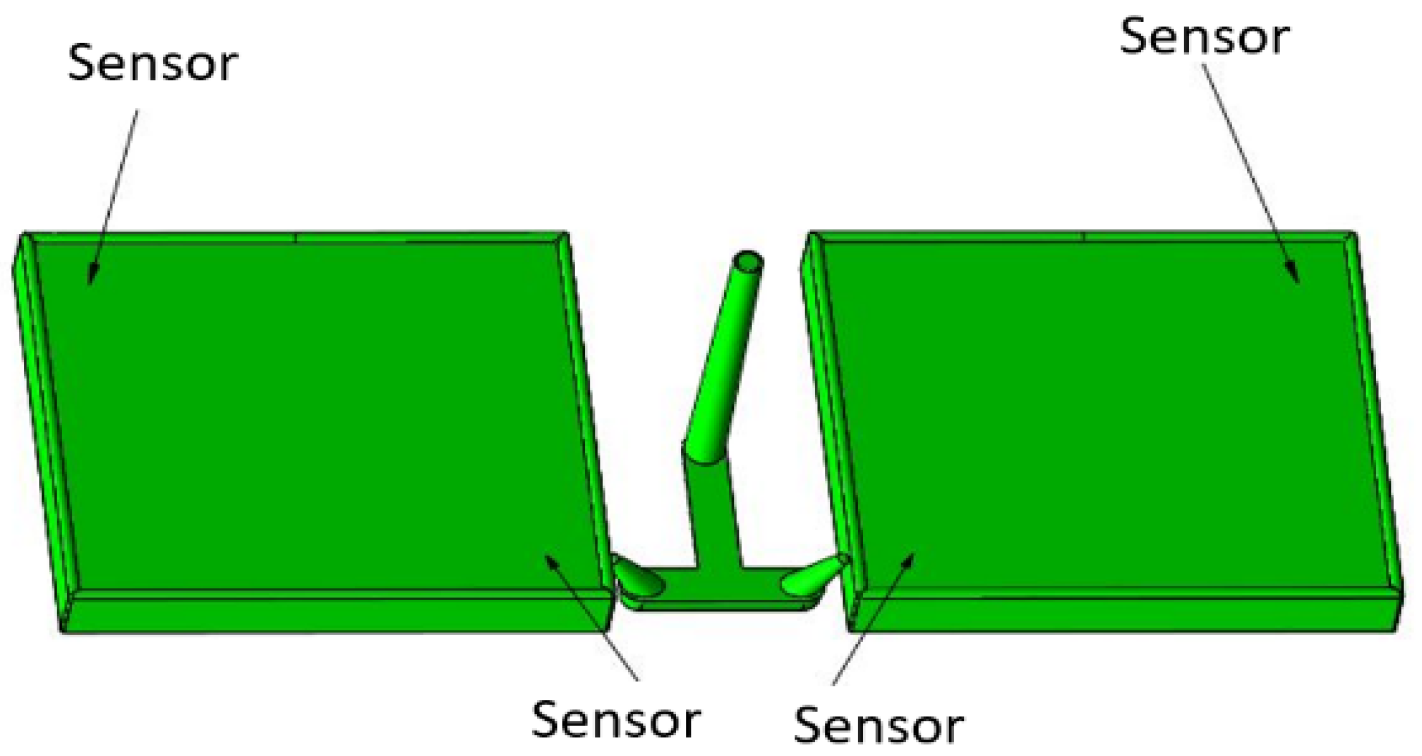
The virtual sensor has been implemented in injection molding of a plastic cover box, depicted in
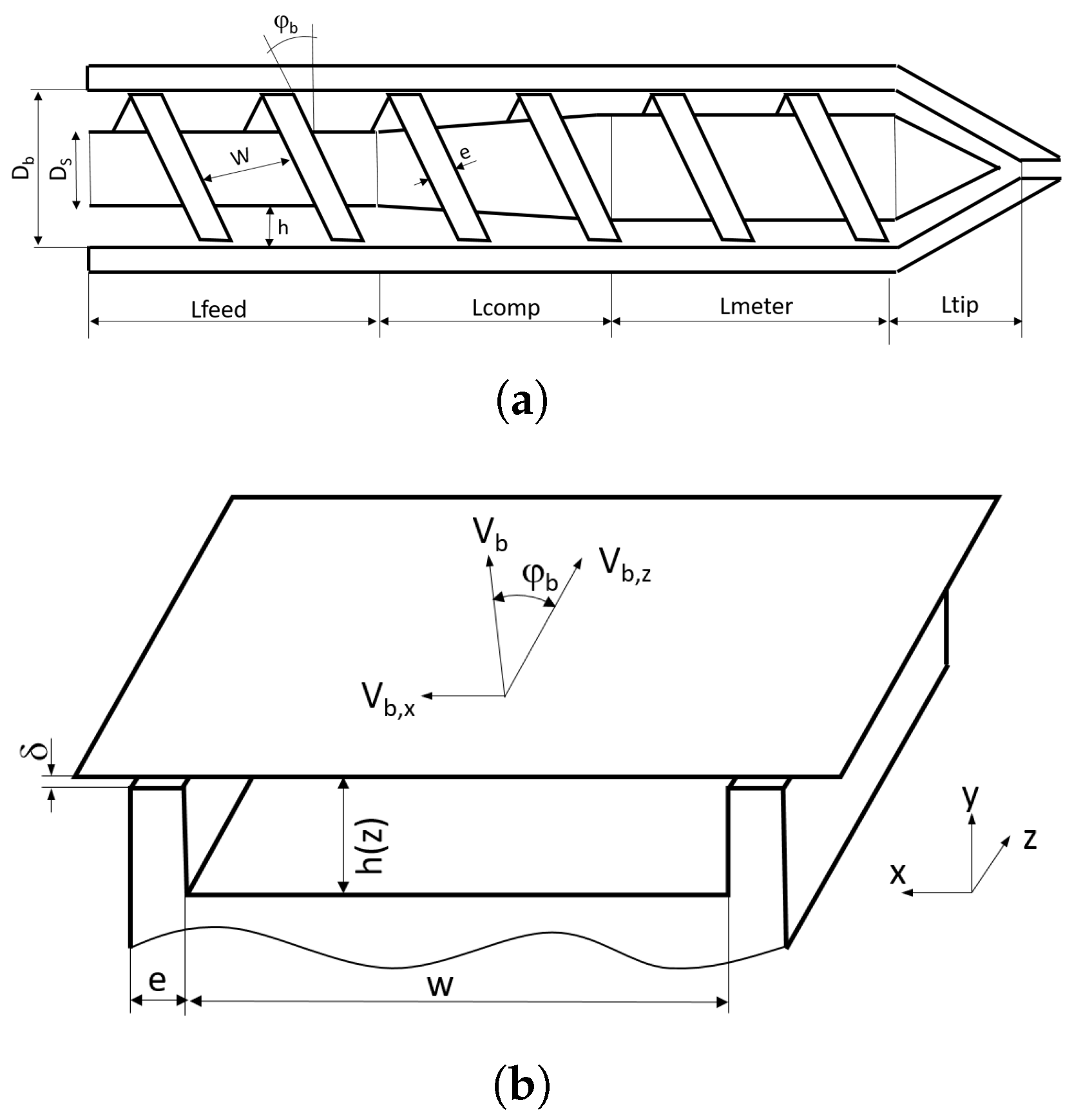
Figure 1. The mold possesses two cavities to inject the melted polymer fed by a cold runner system and instrumented with 4 pressure sensors. The acrylonitrile butadiène styrène (ABS) polymer is chosen as injected material, with a commercial grade a TERLURAN GP35. The injection molding is achieved on an Arburg machine with a clamping force of 700 kN and a screw diameter of 25 mm. The cycle time to produce such a part is around 30 s. The screw geometry of the Arburg machine is schematized in
Figure 2a. It is divided into 4 areas with varying diameters. Lfeed corresponds to the screw’s length for feeding. The material enters the annular section with a constant section. Lcomp is defined as the compression area with an increasing screw diameter, enabling a frictional action between polymer, screw and barrel that increases heat generation. Finally, the metering length is set as Lmeter. The molten polymer is pumped towards the extrusion tip in the injection chamber. In the following, plasticizing is viewed as the melt-conveying section of a single-screw extruder. Then, the flat-plate assumption, extensively explored in the literature [
25,
26,
27], is applied and described in
Appendix A. The helical screw channel is unwound and is considered as a flat rectangular channel, as shown in
Figure 2b. Using the flat-plate model, the system is described by a Cartesian coordinate system, and hence, the channel curvature is ignored. This is reasonable if the channel depth is considerably smaller than the outer diameter, i.e., for channel depth-to-diameter ratios h/Db. Thereby, the geometrical parameters of the screw are shown in
Table 1.
2.2. Virtual Sensor Strategy
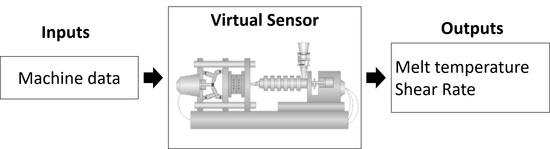
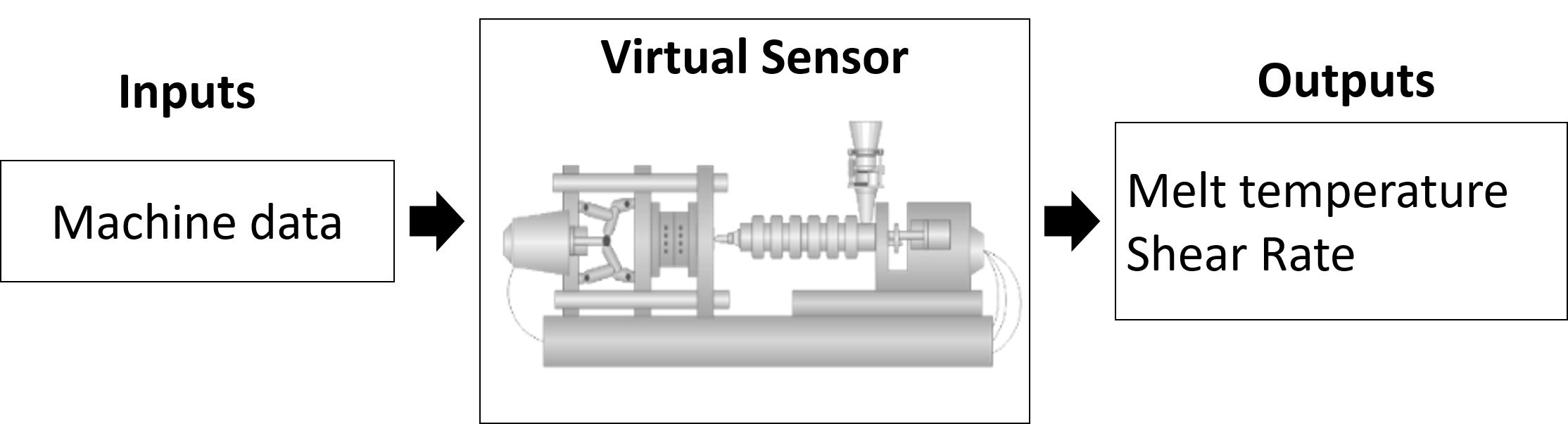
The virtual sensor calculates a quantity at a point of interest using data from existing real sensors that measure different quantities or the same quantity at different locations in the process. The virtual sensor is constituted by a mathematical model that describes the relationship between the measured data and the value needed at the point of interest. Virtual sensors are particularly useful in situations where a real sensor cannot be mounted at the point of interest, such as mold entrance, to monitor the shear rate and the polymer melt temperature.
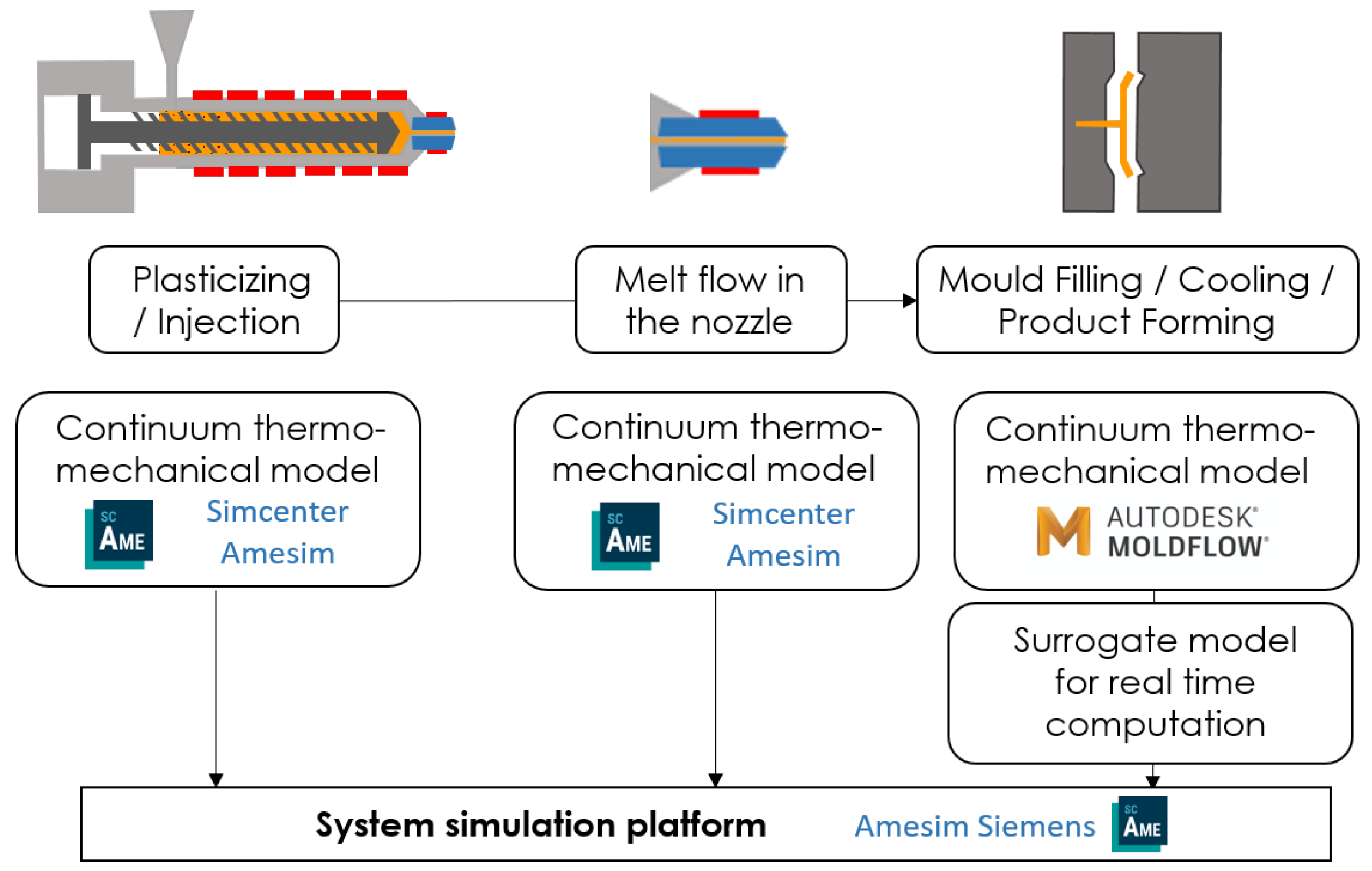
Indeed, to follow the behavior of the polymer melt, no sensor can be applied due to the rough conditions in injection molding. However, a virtual sensor can be used to determine this very specific parameter that is critical to monitor. In the case of injection molding, machine manufacturers follow the Euromap 77 recommendations to make sensor data available through the OPCUA technology so that it can be used as input data. In order to simulate the whole process efficiently in real time, a system-level model is developed based on one-dimensional physical models and a surrogate model. These models are developed and coupled in Simcenter Amesim version 2210 a computer simulation software to model multiphysics systems. The modeling approaches differ depending on the machine subpart to be considered, as described in
Figure 3. Three subparts are considered:
The plasticizing process and screw control for injection are directly modeled using system modeling with a construction of one-dimensional physical equations.
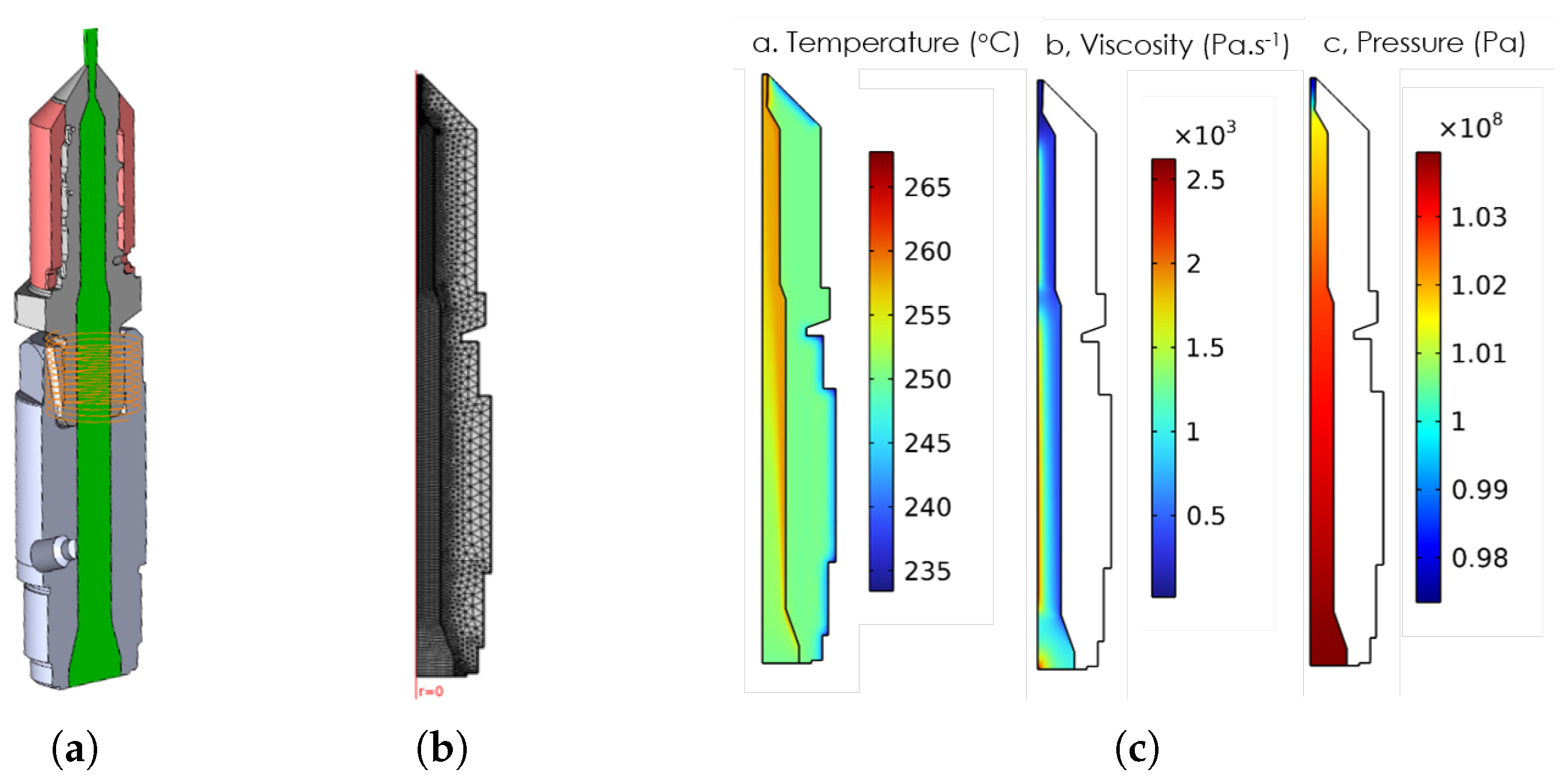
The melt flow inside the nozzle is based on a one-dimensional model calibrated using results of a finite element model developed in Comsol 6.0. The simulations intend to build reference results of the polymer flow in the nozzle during the injection stage that allow the identification of missing parameters in the one-dimensional model. During this step, the thermomechanical behavior of the polymer is modified because of the nozzle geometry and injection parameters before entering the mold.
Mold filling and the thermomechanical state of the polymer are modeled using FEM software Moldflow® Insight 2023. In order to include this step into a real-time computation needed for virtual sensoring, Moldflow’s output results are interpolated to generate a surrogate model.
The melt flow inside the nozzle is calculated separately from Moldflow for two reasons. The primary reason is to better monitor the relationship between volume variations at the tip and their impact on the flow rate. The second reason is related to the potential applications of the model. Each model can be implemented separately, depending on the focus of the virtual sensor. In this article, a holistic methodology is presented to account for multiphysical coupling. The three stages considered are then integrated into a system model to improve accuracy in the mold filling and product forming stages. A compromise between the real-time calculation capacity of the virtual sensor and the physical description of the mechanism is chosen and described in
Section 3 for each model.
The purpose of a virtual sensor is to integrate it into the shopfloor, allowing data exchange with hardware. Real-time data are collected from the injection molding machine using the KISTLER ComoNeo data acquisition module. The virtual sensor, installed on an edge computer, processes these data as input for models that estimate material properties and process conditions. Since injection molding is a cyclic process, the virtual sensor operates at each cycle. The results are then stored and displayed at the end of each cycle on a dedicated dashboard to monitor the variations.
2.3. Modeling
2.3.1. Plasticizing Model
The plasticizing process has been studied in detail by recreating the different steps with Simcenter Amesim physical components.
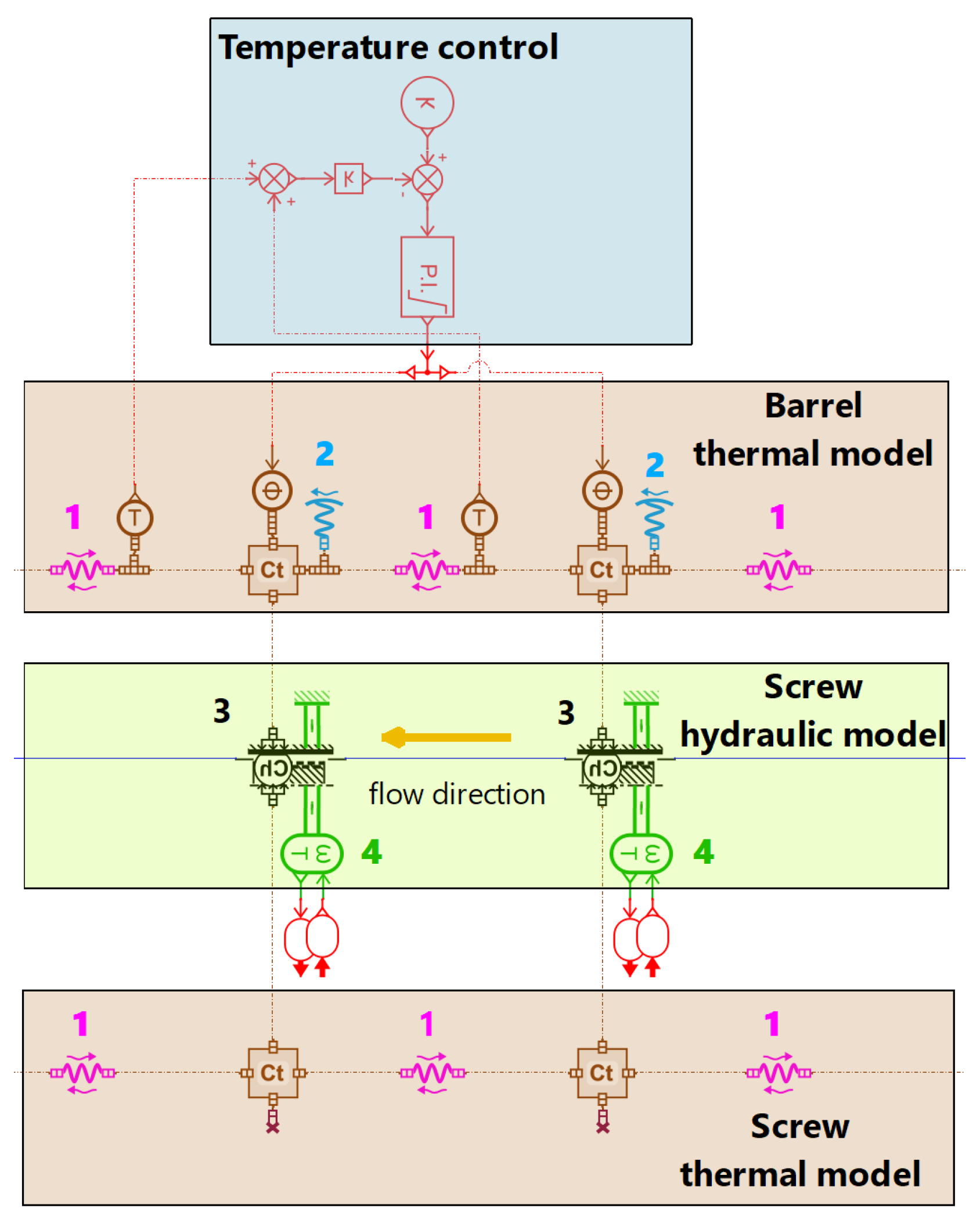
The thermo-hydraulic calculation consists of three separate physical blocks, as shown in
Figure 4. The hydraulic flow is computed in the screw hydraulic model, whose components control the screw rotation and the volume (3) of melted plastic passing through each section, which is regulated by the torque (4). The melt description in the screw follows the equations given in
Appendix A. Solid unmelted pellets and solid melting effect are not considered. The screw thermal model accounts for the heat conduction of the polymer (1) and applies it to the hydraulic chamber. Similarly, the barrel model follows the same physical principles but also incorporates external convection (2) and heat flow from functional resistance. This model is replicated in the 3 plasticizing zones, with adapted geometry. In addition, the temperature control component enables the use of the machine signals. Then, each of the six electrical heaters along the barrel is connected. Consequently, the modeling layout considered six screw sections for each heater. Components of the model include the temperature setting of heaters, convection exchange between the barrel and the exterior, heat flux received from the control, heat flux transmitted to the plastic going through a section and conduction exchange with the next section. The polymer accumulation in the tip is also modeled. The thermal management is similar to the previous section. The difference lies in the fact that the polymer accumulates in front of the screw during plasticizing and is injected through the nozzle during injection. Then a specific component corresponding to a variable volume is added that allows the simulation of the screw rotation and the associated polymer volume variation. This component also controls the volume variation due to the screw displacement for injection. The control of the linear screw displacement follows three steps. First, a constant pressure is applied to the polymer to increase its volume in the front of the screw. The pressure in the chamber rises until a predefined volume target is reached, causing the screw to retract within its sheath. Once the target is achieved, switching occurs to pull on the screw; this is the decompression stage. Then, the control switches to maintain the accumulated volume until injection can occur.
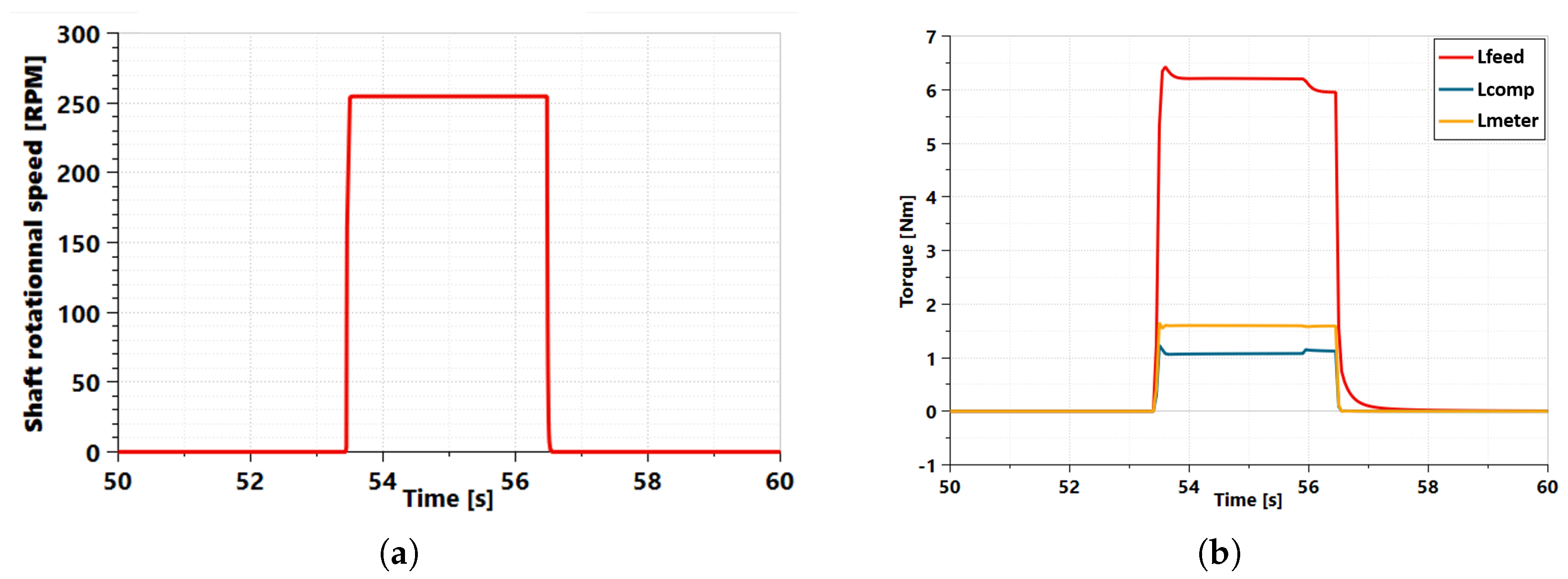
Finally, the model simulates and controls the screw rotation and its impact on the torque along the shaft for each section. The rotation speed is displayed in
Figure 5. Rotation control enables movement to stop once a sufficient amount of material has accumulated. Equations (1)–(5) described screw torque and friction forces derived from classical tribological and rheological principles [
28]. In this calculation, three force actions on the material are considered:
Friction of the screw core shaft
Resistance at the screw thread
Ng is the number of grooves in the shaft, b is the acute angle of the groove, w is the width of the groove cross-section, L is the axial length of bushing, is the dynamic viscosity of the fluid, v is the velocity, fbarrel is the friction coefficient of the barrel, fscrew is the friction coefficient of the screw, fthread is the friction coefficient of the screw thread, Sthread is the surface of the thread.
In
Figure 5, the impact of rotation on total torques is represented for each section. The highest torque is observed for Lfeed, as it has the longest length. The torque for Lmeter is higher than that for Lcomp because its annular section is smaller.
The model has been implemented in the workflow process, highlighting the multiphysics approach (mechanical, thermal, hydraulic) in a transient state linked with functional control. A state chart controls the entire model and switches from one step to the next when the process conditions are met. Finally, this model will be further validated with an experimental comparison in
Section 4.
2.3.2. Transfer Between the Screw and the Mold Through the Nozzle
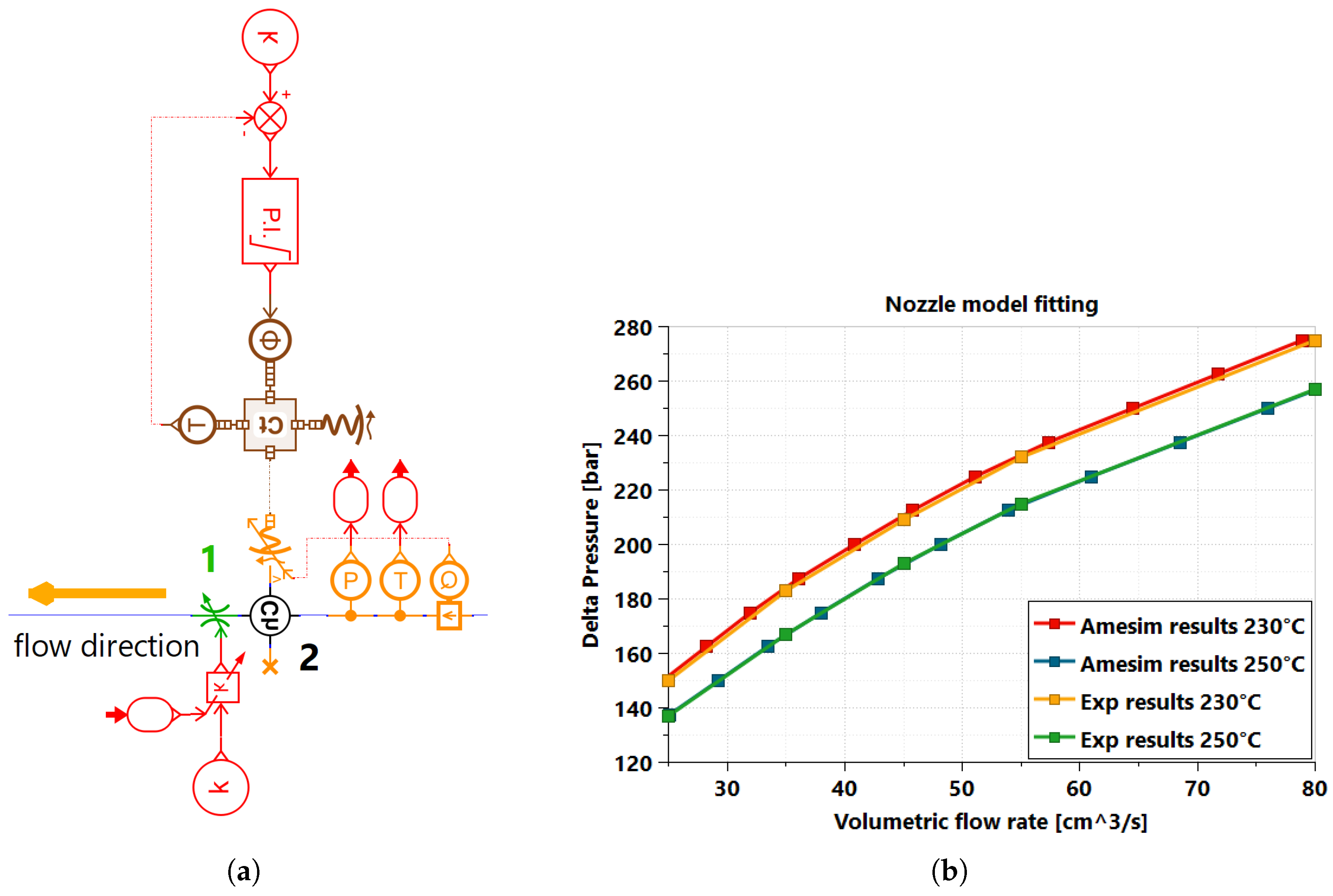
The polymer flowing through the nozzle is also modeled using the one-dimensional model in Simcenter Amesim. This step is crucial, as the polymer attains its final viscosity at this stage before entering the mold. Based on the standard components given in
Figure 6, pressure drops (1) as a function of volumetric flow (2) and temperature are computed. The heat flux from the heater, conducted through the nozzle, is modeled as previously described for the barrel. To improve the accuracy of the Amesim 2210 model, a calibration is carried out using the COMSOL. finite element solver version 6.0. The geometry of the injection nozzle is depicted in
Figure 7. In this figure, the polymer is colored green, and the surrounding parts are metal parts. The shell in red is designed to receive a heater in its surrounding and to accept an air-filled region with the grey inner part in order for the heat to be transferred only by the contact region between the red and grey parts. Since the flow channel has a cylindrical revolution, a 2D axisymmetric model is chosen to perform the computation. The fluid and the solid domains are meshed with different elements, as displayed in
Figure 7.
The COMSOL 6.0 pressure conditions are imposed as inputs to the nozzle one-dimensional model. Then, the volumetric flow rate computed by the one-dimensional model is compared to the COMSOL results for all the cycles, and a non-linear partial least square algorithm is used to minimize the difference (3). The maximum shear rate has also been correlated with the volumetric flow rate and integrated into the nozzle model. To calibrate the one-dimensional model, a virtual design of experiments (DOE) is launched in order to generate transient synthetic data. Four different boundary conditions are chosen according to the injection molding window, as referred to in
Table 2. Two factors are considered among the injection machine setting parameters: injection flow rate and melt temperature.
The result of the optimization process is presented in
Figure 6b. The figures show the comparison of Simcenter Amesim and COMSOL after optimization for two experiments. The correlation is accurate with respect to the average value and the tendency. This is considered to be satisfactory for providing a flow rate input at the entrance of the mold model as well as for defining the pressure drop in the nozzle.
2.3.3. Mold Filling and Thermo-Mechanical Analysis Meta Models
The final step of the process simulation corresponding to mold filling and part forming is based on a surrogate model, where FEM results are used to train an interpolation model for fast computations. The approach allows us to tackle the problem of nonlinear and time-dependent computations, whereby both geometrical and material nonlinearities can be addressed, making it particularly interesting.
To obtain a surrogate model of the product forming and cooling, transient simulations of the mold filling process were performed using a comprehensive and accurate FEM-based model developed in the commercial software Autodesck Moldflow® Insight 2023. A virtual design of experiments has been carried out using the standard L8 Taguchi table. As listed in
Table 3, seven factors have been selected with a range that corresponds to the process tuning for such a pair of material/mold. As a studied effect, the dimensional quality of the product is considered. In the table, the factors are ranked according to their relative impact, with those variables having the most significance given a higher percentage than those that have less. As a result, the three sensitive parameters influencing the product quality are the packing pressure, the melt temperature and the coolant inflow temperature of the mold.
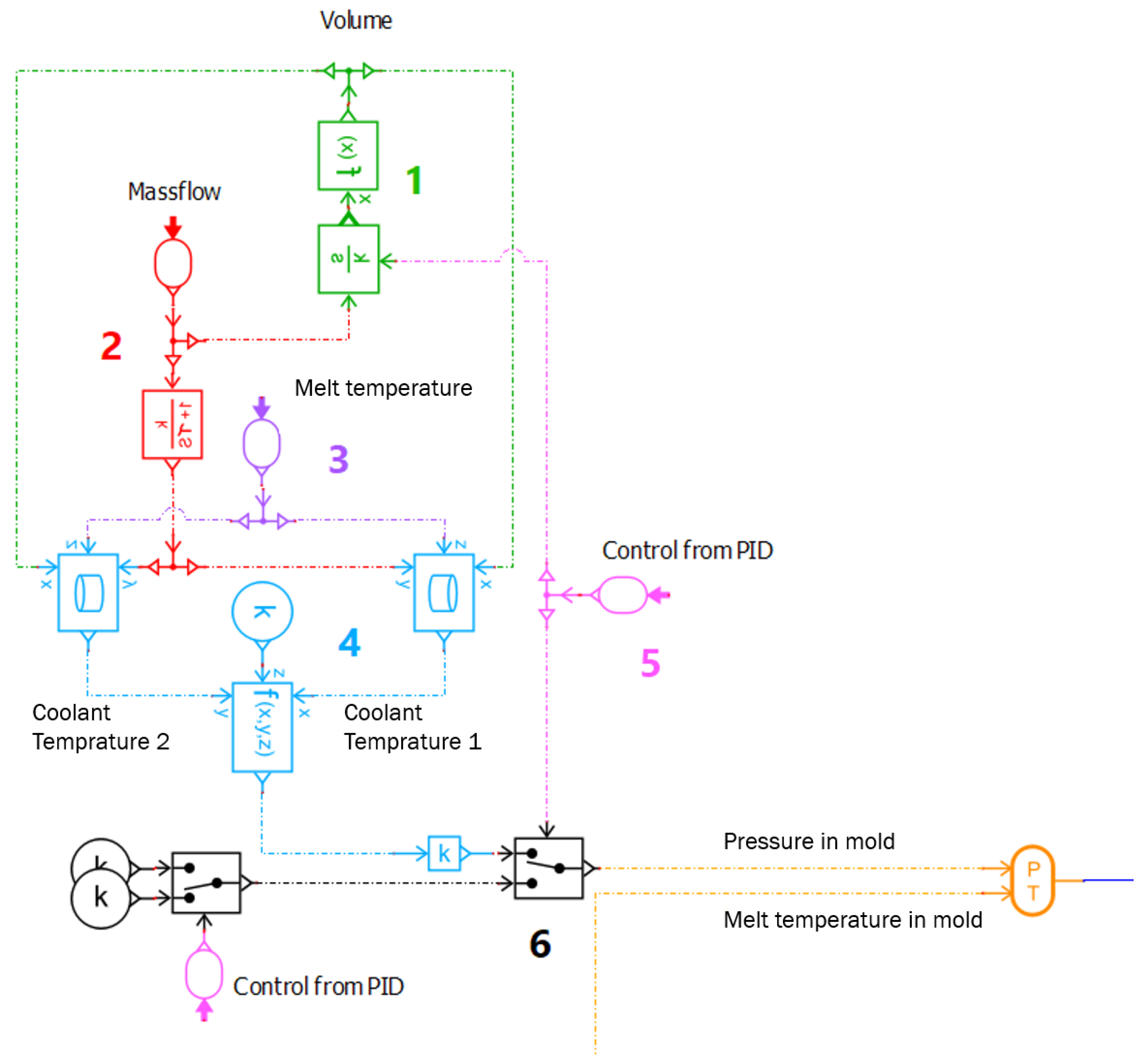
The data outputs extracted from MoldFlow simulations include the pressure at the mold entrance, the volumetric flow rate, the filling percentage and the position of the screw, as a function of time. This dataset has been processed to generate a surrogate model that interpolates the evolution of the pressure and the melt temperature as a function of input data measured on the machine at each cycle as well as data coming from the Amesim nozzle model. The surrogate model is integrated in Simcenter Amesim in component (4), as shown in
Figure 8. All relevant inputs are displayed on the figure: coolant inflow temperature, mass flow (2) related to filling volume variation (1) and melt temperature (3). The control of the system, which triggers calculations and manages kinematics, is ensured by components (5) and (6).
2.3.4. Implementation
The three developed models have been integrated into Simcenter Amesim 2210 software to facilitate interoperability. The linking between these steps is ensured by the transfer of pressure, temperature and flow rate from a model to the subsequent steps, creating a seamless flow of information and ensuring that the entire process is accurately simulated. Furthermore, each stage requires specific inputs listed below:
Material data: This includes the material properties of the ABS being processed, such as viscosity, thermal conductivity, specific heat capacity or density. Material data are defined once off-line and are the same for one-dimensional models, Comsol and Moldflow calculations.
Geometric data: The design parameters of the screw in the plasticizing unit, which influence the melting and mixing efficiency, the CAD file of the nozzle and the CAD file of the part with the cooling channel design.
Process data: The models need 18 parameters coming from the machine to be run. They are summarized in
Table 4. Two kinds of process data are used as input, available thanks to the OPCUA machine server: setting parameters and measurements.
Regarding outputs, the focus is given on 2 measurements that are difficult to carry out with physical sensing:
Melt temperature at mold entrance. This temperature depends on viscous dissipation happening in the screw and in the nozzle and enables the knowledge to be obtained on the true temperature entering the mold. It influences the polymer flow and mold filling.
Maximum shear rate in the nozzle. Shear rate depends on the flow rate and the temperature. Shear rate influences polymer viscosity, molecular degradation, and flow behavior, making it a key indicator of the stability of the process.
3. Results
3.1. Virtual Sensor Validation
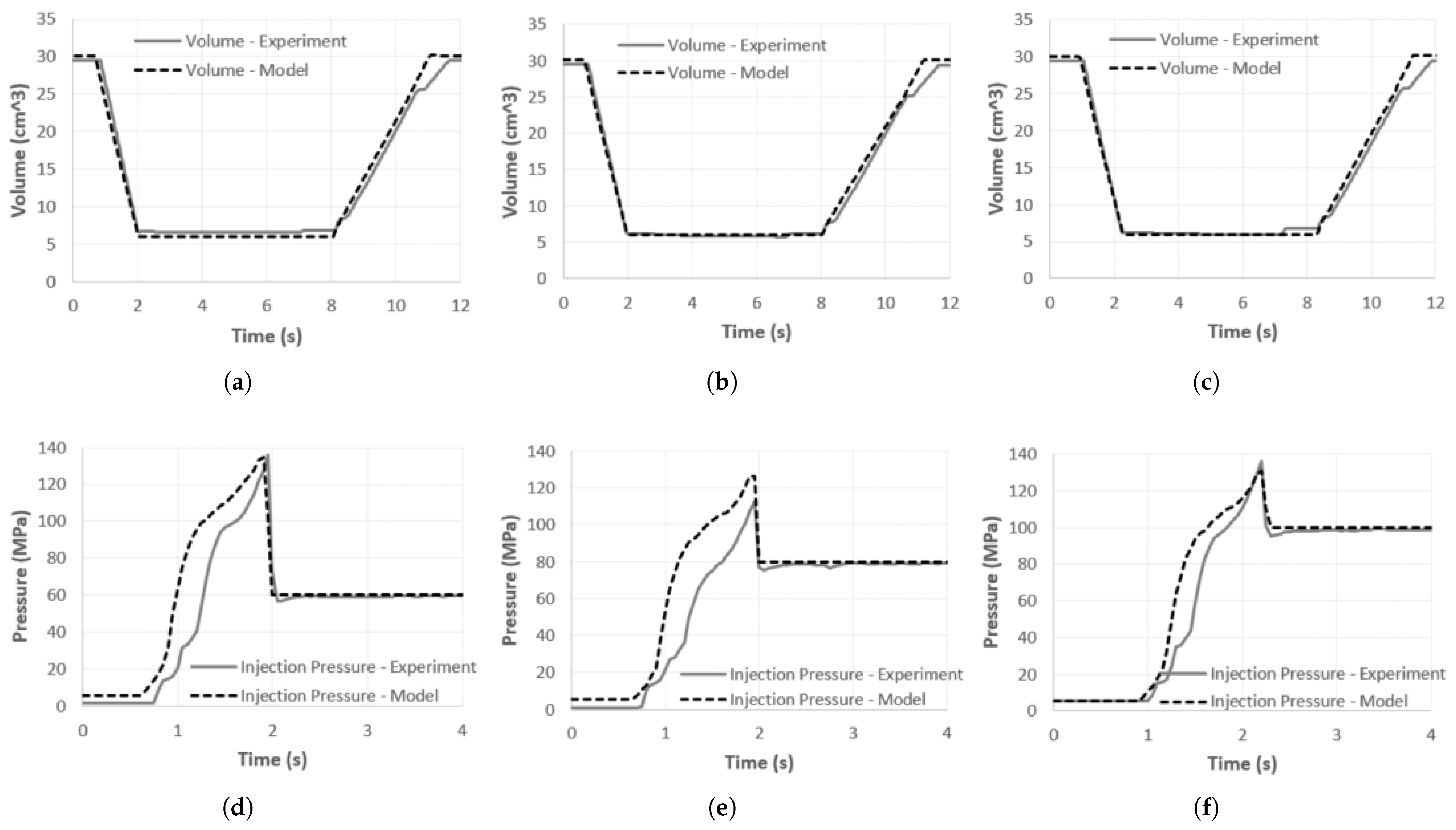
A challenge in establishing the virtual sensor is the model’s ability to reproduce the behavior of the injection machine. Two variables are usually studied to qualify the process as they are monitored on every industrial machine. The first one is the hydraulic injection pressure, as it allows us to characterize the filling, the switchover and the holding. The hydraulic pressure is here converted into injection pressure applied in front of the screw, at the entrance of the nozzle. The ratio between hydraulic pressure and specific pressure is 11.11 for the considered machine depending on the diameter of the screw. The sensor is an Arburg pressure transmitter TPSA. The second is the screw displacement measured by an Arburg LWH035 linear displacement sensor. From measurement we can capture the volume chamber variation in front of the screw, flow rate, cushion and plasticizing speed. The purpose of validating the model is not simply to confirm that the machine follows its setpoints, but rather to assess the accuracy of the virtual sensor in replicating the actual process dynamics. Therefore, the most interesting results are the dynamic pressure during filling and the volume variation during plasticizing. Their real-time evolution depends on material behavior, machine response, and transient effects, Then for the virtual sensor validation step, the model is launched, trying to reproduce the behavior of three different experiments whose setting parameters are shown in
Table 5. As the primary objective of the experimental assessment is to validate the numerical model, rather than optimizing the cycle time to maximize productivity, the ejection time is intentionally prolonged to ensure the attainment of a steady-state condition for each injection cycle. Subsequently, the data generated by each experimental scenario is employed as the input for our virtual sensor. The virtual sensor is validated offline, meaning that all data are recorded in a data base using the COMONEO KISTKER data acquisition module connected to the Arburg injection machine. The data generated by each experimental scenario is employed as the input for our virtual sensor in order to calculate the injection pressure and the volume variation in front of the screw.
Figure 9a–c display the injection pressure profile, while
Figure 9d–f show the volume of injection chambers corresponding to screw displacement for the three different experimental conditions. Experimental evolutions of pressure and volume are obtained after process stabilization. Then, five replications of each setting are saved. As the injection process is very stable, only one experiment of each setting is presented. In each instance, a comprehensive comparison is presented between the measured data and the results obtained from the virtual sensor. With respect to the volume, it can be observed that there is a good match of the curves. All triggers on the process that correspond to slope discontinuities are effectively predicted (beginning of plasticizing, starting of filling, switchover, end of packing). The prediction in the injection pressure dynamic stage shows a gap with the experiments. It can be related to several hypotheses: model simplification performed in Moldflow and material model characterization. The surrogate model for mold filling and cooling is based on precomputed FEM data and interpolation techniques. Although this approach allows real-time execution, interpolation between precomputed datasets can introduce errors, particularly when phenomena are nonlinear or operating parameters are outside the trained process window. In our case, the model overestimates the pressure, whereas the shape of the rise is similar, translating to a good representation of the influence of the shape cavity on polymer flow. At switchover, the maximum difference is around 10 MPa.
3.2. Virtual Sensor Outcomes
The virtual sensor is installed on a laptop with a Core i7-7700H CPU. To run in real time, data exchange is performed thanks to a communication system based on Asset Administration Shell (AAS) representation. AAS enables the creation of a digital representation of manufacturing assets in order to facilitate interoperability between digital devices and services. AAS-based interfaces to existing data sources are well described in [
29]. Its deployment on the injection molding work cell is presented in [
30]. Then the virtual sensor is connected to the injection machine’s AAS to obtain data at each cycle. Specific Python 3 scripts are developed to record the results in a SQL database. Many variables can be analyzed, but the focus is on two key insights that are missing when tuning an injection molding machine: the melt temperature variation and the shear rate at the mold entrance. The calculated outcomes are presented considering the same three experiments, as in the validation step.
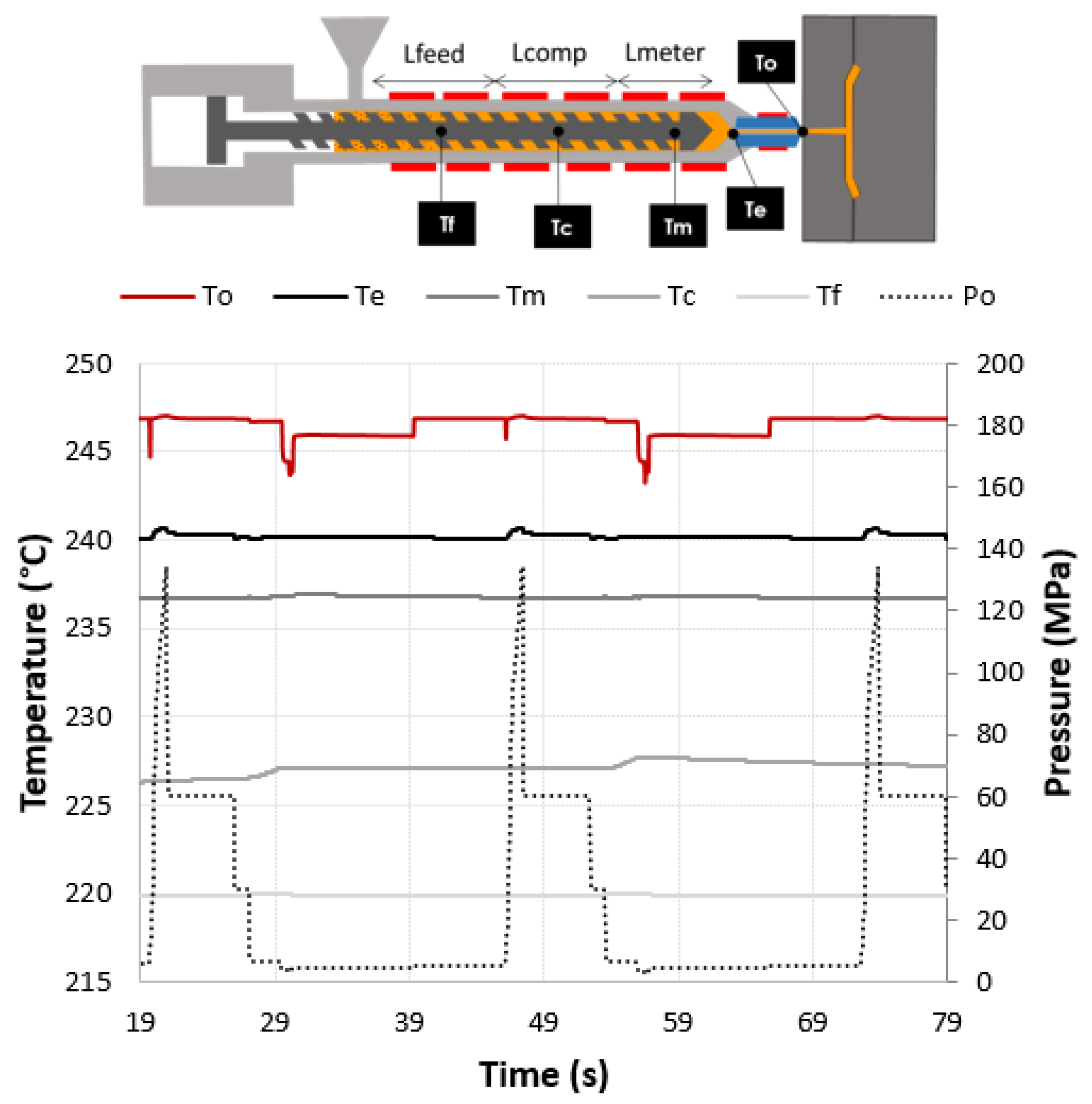
Figure 10 shows the evolution of the melt temperature according to time, considering a sequence of three cycles. Three averaged temperatures, Tf, Tc and Tm, are calculated according to the model related to
Figure 4 for each section of the screw (feeding, compression and metering). In order to visualize the temperature along the process, the temperature calculated in the tip Te and the temperature at the mold entrance To are also represented. To better understand the phenomena, the calculated injection pressure evolution Po is displayed on a secondary axis. The influence of viscous dissipation during plasticizing is visible on the Lcomp and Lmeter temperatures. The same phenomenon appears on the nozzle temperature during mold filling. The increase in temperature along the screw can be noticed following barrel heater setting. In the screw, temperature is calculated under the setting values attributed to heat losses through the barrel. At the mold entrance, temperature evolution is chaotic due to model discrepancies. For EXP1, the heat transfer between each section results in an average increase of 6.5 °C. Temperatures for all experiments are summarized in
Table 6. An equivalent increase is found for EXP2 and EXP3.
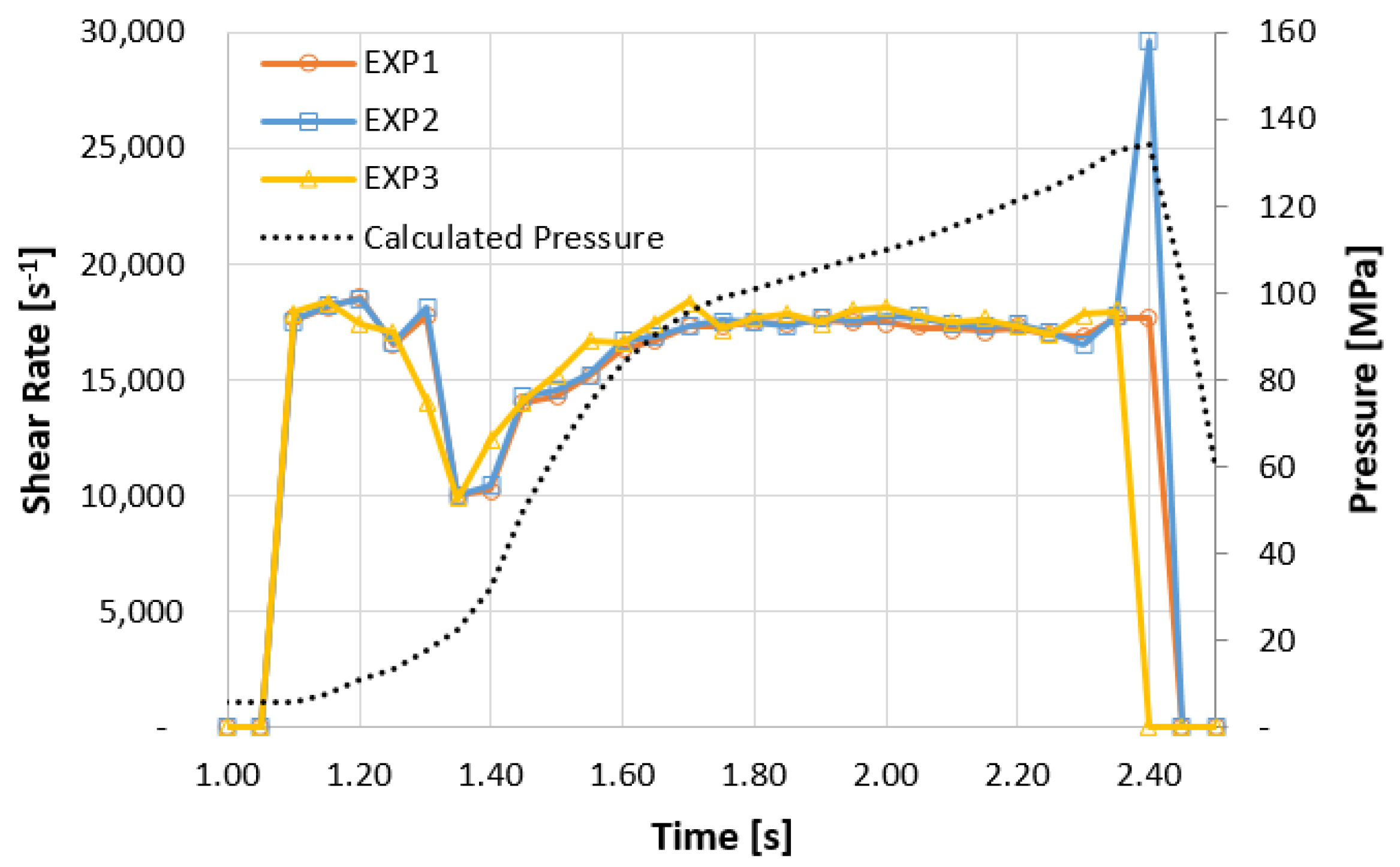
The shear rate at the mold entrance is also determined by the virtual sensor. Its evolution during mold filling can be observed in
Figure 11. Virtual shear rate calculation is interesting to monitor during the injection dynamical stage, so a calculated injection pressure profile is also represented. For each experiment, the flow rate remains constant at the same value, ensuring a similar evolution of the shear. The calculation of the shear rate allows for the verification of whether a polymer reaches the maximum shear rate at which degradation can occur. Shear rates exceeding a critical threshold (e.g., 20,000 s
−1 for ABS) can induce the scission of polymer chains. In the three cases under consideration, the shear rates exhibit a similar pattern, with a decrease occurring at 0.3 s after the start of injection. This occurrence corresponds to the pressure inflection when the polymer reaches the edge of the part. The maximum shear rate reaches 19,000 s
−1, which is an acceptable value given that the model overestimated pressure during the filling stage. A peak is observed for EXP2 with no physical interpretation, so it should be due to modeling discrepancies at the switchover.
4. Discussion
The virtual sensor provides real-time monitoring of key injection molding parameters. However, its accuracy is constrained by inherent limitations in the underlying modeling approach. The one-dimensional physical models used for plasticizing and melt flow incorporate simplifying approximations, such as the flat-plate assumption for screw modeling, which ignores channel curvature. Additionally, the polymer is assumed to be fully molten from the feed section onward, omitting the solid-to-melt phase transition occurring in the feeding and compression zones. Incorporating this transition would improve the fidelity of the plasticizing model and enhance the predictive capabilities of the virtual sensor. Similarly, the surrogate model used for mold-filling is derived from a limited set of FEM simulations, which may not fully capture all nonlinearities in the process. These simplifications could lead to discrepancies in the predicted shear rate and melt temperature. Nevertheless, the model demonstrates a reasonably accurate fit for volume variation during the plasticizing stage, particularly the ascending portion of the curve, which can be leveraged to estimate the plasticizing time and serve as a monitoring metric. Furthermore, this modeling approach facilitates the estimation of additional parameters that are not directly measurable with conventional instrumentation.
Real-time melt temperature and shear rate insights are chosen as they are particularly valuable for fine-tuning the injection process. For instance, velocity profiles can be adapted to avoid flow hesitation or jetting, ensuring uniform cavity filling and improving dimensional accuracy. Traditional sensors typically provide only localized measurements, whereas the virtual sensor offers spatially resolved, real-time estimation of critical parameters such as melt temperature and shear rate throughout the flow domain. This capability is particularly valuable in injection molding, where these factors significantly impact part quality but are challenging to measure directly due to harsh operating conditions. By integrating one-dimensional physical models and surrogate modeling, the virtual sensor extends process monitoring beyond conventional pressure and temperature sensors. Moreover, coupling virtual measurements of temperature or shear rate with machine learning-based optimization enables early detection of process deviations, reducing defect rates and improving repeatability.
Future work should focus on conducting targeted experimental tests to quantify model uncertainties. The concept of the virtual sensor for injection molding needs to be improved for considering the process dynamics. The transition between process stages, such as switchover from filling to packing, involves machine-dependent response times. While the virtual sensor assumes idealized transitions, real-world variations in machine behavior and external disturbances can introduce discrepancies in pressure and flow rate predictions.
5. Conclusions
This article demonstrates an approach using virtual sensors for monitoring the injection molding process. By combining real-time data from machine sensors with mathematical modeling, the virtual sensor provides a comprehensive representation of material behavior and process conditions throughout the molding cycle.
The modeling framework of the virtual sensor is structured around three distinct approaches, each tailored to specific stages of the process. A temporal uni-dimensional model is explained for plasticizing step and melt transfer from the screw to the mold through the nozzle. For the mold filling and part cooling stages, a surrogate model is presented based on data interpolation from FEM simulations. The results are compared with experimental measurements, including injection pressure and screw displacement. The virtual sensor provides valuable information on melt temperature and shear rate, quantities that are typically difficult to measure with conventional sensing technologies. While the model performs satisfactorily, some discrepancies have been observed that necessitate a thorough validation in a future work. The novelty of this approach lies in its holistic representation of the entire injection molding process from polymer plasticizing to part ejection.
The virtual sensor developed in this study offers several operational advantages. It enables real-time monitoring of key parameters, facilitating early detection and correction of process deviations. This capability is expected to improve quality control, reduce defects, and enhance the overall efficiency and reliability of injection molding operations. By providing an unified view of the process, the virtual sensor supports the optimization of the process setting, reduction in cycle times, and improvement of part quality.
Furthermore, the virtual sensor can serve as a valuable tool for process optimization and diagnostics. By providing detailed insights into material behavior and process conditions, the virtual sensor can support the identification of root causes of defects and inefficiencies. This information can be leveraged to fine-tune the process parameters, adjust the machine settings, and implement more robust control strategies. In addition to its practical benefits, the virtual sensor also offers significant potential to advance understanding of the injection molding process. By providing detailed, real-time data on material properties and process conditions, it contributes to the development of more accurate and predictive models. These models can be used to improve mold and machine design, develop new materials with tailored properties, and explore new process configurations and techniques.
Author Contributions
Conceptualization, R.L.G. and M.P.; methodology, S.B. and A.D.; software, A.D., F.S., M.P. and A.C.; validation, S.B., N.M. and A.C.; data curation, S.B. and A.D.; writing—original draft preparation, R.L.G.; writing—review and editing, A.D. and S.B.; visualization, R.L.G. and A.D.; funding acquisition, R.L.G. All authors have read and agreed to the published version of the manuscript.
Funding
This Research has been supported by the European Union’s Horizon 2020 research and innovation programme under the grant agreement No 870092, the project DIMOFAC (Digital and Intelligent MOdular FACtories).
Data Availability Statement
All data are contained in this article.
Conflicts of Interest
Delacourt, A., Sellier, F. and Ponchant, M are affiliated with SIEMENS INDUSTRY SOFTWARE SAS. The authors declare no conflicts of interest.
Appendix A
The flat-plate assumption extensively explored in the literature is applied [
25,
26,
27]. The estimation of the volumetric flow rate Q through a screw section is governed by Equations (A2)–(A4). The clearance between the screw flight and the barrel wall is modeled by incorporating both groove clearance and radial clearance. It has been estimated by using a combination of Couette and Poiseuille flows. The total flow going through the screw is discretized to take into account the channel thickness variation according to the z axis for each functional zone, as illustrated in
Figure 2.
where
QNgroove is the volumetric flow rate due to groove displacement,
Qgroove clearance is the volumetric flow rate due to groove clearance,
Qradial clearance is the volumetric flow rate due to radial clearance,
Ng is the number of grooves on the shaft,
Vgroove,h/2 is the the linear mean tangential velocity in the groove,
b is the groove acute angle,
h(
z) is the groove cross-section height along the screw,
w is the groove cross section width,
is the radial clearance between shaft and bushing,
Db is the inner diameter of the bushing,
L is the axial length of the bushing,
is the dynamic viscosity of the fluid,
p1 and
p2 are the downstream and upstream pressure.
In the model, the estimation of the viscous dissipation is given by Equation (A5).
where
is the viscous dissipation,
is the shear rate and
n is the flow behavior index.
To compute the shear rate, one-dimensional down-channel flow is considered; the momentum equation is given by (
A6) and the magnitude of the shear rate results from Equation (A7).
The total viscous dissipation rate
Qdiss is given by the integration of viscous dissipation over the cross-channel:
References
- Mensler, H.; Zhang, S.; Win, T. A method for determining the flow front velocity of a plastic melt in an injection molding process. Polym. Eng. Sci. 2019, 59, 1132–1145. [Google Scholar] [CrossRef]
- Huszar, M.; Belblidia, F.; Davies, H.M.; Arnold, C.; Bould, D.; Sienz, J. Sustainable injection moulding: The impact of materials selection and gate location on part warpage and injection pressure. Sustain. Mater. Technol. 2015, 5, 1–8. [Google Scholar] [CrossRef]
- Zhang, Y.; Mao, T.; Huang, Z.; Gao, H.; Li, D. A statistical quality monitoring method for plastic injection molding using machine built-in sensors. Int. J. Adv. Manuf. Technol. 2016, 85, 2483–2494. [Google Scholar] [CrossRef]
- Bogedale, L.; Doerfel, S.; Schrodt, A.; Heim, H.P. Online Prediction of Molded Part Quality in the Injection Molding Process Using High-Resolution Time Series. Polymers 2023, 15, 978. [Google Scholar] [CrossRef] [PubMed]
- Fernandes, C.; Pontes, A.J.; Viana, J.C.; Gaspar-Cunha, A. Modeling and Optimization of the Injection-Molding Process: A Review. Adv. Polym. Technol. 2018, 37, 429–449. [Google Scholar] [CrossRef]
- Chen, J.Y.; Tseng, C.C.; Huang, M.S. Quality Indexes Design for Online Monitoring Polymer Injection Molding. Adv. Polym. Technol. 2019, 2019, 3720127. [Google Scholar] [CrossRef]
- Ke, K.C.; Huang, M.S. Quality Classification of Injection-Molded Components by Using Quality Indices, Grading, and Machine Learning. Polymers 2021, 13, 353. [Google Scholar] [CrossRef]
- Kazmer, D.O.; Gordon, G.W.; Mendible, G.A.; Johnston, S.P.; Tang, X.; Fan, Z.; Gao, R.X. A Multivariate Sensor for Intelligent Polymer Processing. IEEE/ASME Trans. Mechatronics 2015, 20, 1015–1023. [Google Scholar] [CrossRef]
- Kazmer, D.O.; Westerdale, S. A model-based methodology for on-line quality control. Int. J. Adv. Manuf. Technol. 2009, 42, 280–292. [Google Scholar] [CrossRef]
- Bader, C. The ABC of Mould-Sensor System. 2006. Available online: www.Kunststoffe-international.com (accessed on 12 June 2006).
- Ageyeva, T.; Horváth, S.; Kovács, J.G. In-Mold Sensors for Injection Molding: On the Way to Industry 4.0. Sensors 2019, 19, 3551. [Google Scholar] [CrossRef]
- Gao, R.X.; Tang, X.; Gordon, G.; Kazmer, D.O. Online product quality monitoring through in-process measurement. CIRP Ann. 2014, 63, 493–496. [Google Scholar] [CrossRef]
- Zhao, P.; Zhang, J.; Dong, Z.; Huang, J.; Zhou, H.; Fu, J.; Turng, L.S. Intelligent Injection Molding on Sensing, Optimization, and Control. Adv. Polym. Technol. 2020, 2020, 7023616. [Google Scholar] [CrossRef]
- Steinparz, C.A.; Mitterlehner, T.; Praher, B.; Straka, K.; Stitz, H.; Streit, M. Visualizing and monitoring the process of injection molding. Electron. Imaging 2023, 35, 403-1–403-7. [Google Scholar] [CrossRef]
- Zhang, J.; Zhao, P.; Zhao, Y.; Huang, J.; Xia, N.; Fu, J. On-line measurement of cavity pressure during injection molding via ultrasonic investigation of tie bar. Sens. Actuators A Phys. 2019, 285, 118–126. [Google Scholar] [CrossRef]
- Abeykoon, C. Design and Applications of Soft Sensors in Polymer Processing: A Review. IEEE Sens. J. 2019, 19, 2801–2813. [Google Scholar] [CrossRef]
- Wang, Z.H.; Li, Y.T.; Wen, F.C. A Novel In-Line Polymer Melt Viscosity Sensing System of Integrated Soft Sensor and Machine Learning. IEEE Sens. J. 2023, 23, 12181–12189. [Google Scholar] [CrossRef]
- Martin, D.; Kühl, N.; Satzger, G. Virtual Sensors. Bus. Inf. Syst. Eng. 2021, 63, 315–323. [Google Scholar] [CrossRef]
- Brunner, V.; Siegl, M.; Geier, D.; Becker, T. Challenges in the Development of Soft Sensors for Bioprocesses: A Critical Review. Front. Bioeng. Biotechnol. 2021, 9, 722202. [Google Scholar] [CrossRef]
- Doerrer, F.; Otto, A.; Kolouch, M.; Ihlenfeldt, S. Virtual Sensor for Accuracy Monitoring in CNC Machines. J. Manuf. Mater. Process. 2022, 6, 137. [Google Scholar] [CrossRef]
- Abeykoon, C. Sensing technologies for process monitoring in polymer extrusion: A comprehensive review on past, present and future aspects. Meas. Sens. 2022, 22, 100381. [Google Scholar] [CrossRef]
- Tadmor, Z.; Klein, I. Engineering Principles of Plasticating Extrusion; Polymer Science and Engineering Series; Van Nostrand Reinhold Company: London, UK, 1970. [Google Scholar]
- Wilczyński, K.; Nastaj, A.; Lewandowski, A.; Wilczyński, K.J. Multipurpose Computer Model for Screw Processing of Plastics. Polym.-Plast. Technol. Eng. 2012, 51, 626–633. [Google Scholar] [CrossRef]
- Aigner, M.; Praher, B.; Kneidinger, C.; Miethlinger, J.; Steinbichler, G. Verifying the Melting Behavior in Single-Screw Plasticization Units Using a Novel Simulation Model and Experimental Method. Int. Polym. Process. 2014, 29, 624–634. [Google Scholar] [CrossRef]
- Broyer, E.; Tadmor, Z. Solids conveying in screw extruders part I: A modified isothermal model. Polym. Eng. Sci. 1972, 12, 12–24. [Google Scholar] [CrossRef]
- Béreaux, Y.; Charmeau, J.Y.; Moguedet, M. A simple model of throughput calculation for single screw. In Proceedings of the AIP Conference Proceedings, Zaragoza, Spain, 18–20 April 2007; Volume 907, pp. 963–968. [Google Scholar] [CrossRef]
- Roland, W.; Marschik, C.; Krieger, M.; Löw-Baselli, B.; Miethlinger, J. Symbolic regression models for predicting viscous dissipation of three-dimensional non-Newtonian flows in single-screw extruders. J. Non-Newton. Fluid Mech. 2019, 268, 12–29. [Google Scholar] [CrossRef]
- Rauwendaal, C. Polymer Extrusion; Carl Hanser Verlag GmbH Co KG: Munich, Germany, 2014. [Google Scholar]
- Nikolova, N.; Bouter, C.; Bekkum, M.v.; Rongen, S.; Wilterdink, R. A Participatory Modelling Approach to Agents in Industry Using AAS. In Artificial Intelligence in Manufacturing: Enabling Intelligent, Flexible and Cost-Effective Production Through AI; Springer: Cham, Switzerland, 2023; pp. 217–230. [Google Scholar]
- IPC DIMOFAC—Solution for Injection Moulding Process. Available online: https://www.youtube.com/watch?v=Hv4Y_IdNQ50503 (accessed on 16 February 2024).
Figure 1.
Image of the part.
Figure 1.
Image of the part.
Figure 2.
(
a) Schematic of the screw section. (
b) Schematic of screw channel flat-plate model [
27].
Figure 2.
(
a) Schematic of the screw section. (
b) Schematic of screw channel flat-plate model [
27].
Figure 3.
ModelingWorkflow.
Figure 3.
ModelingWorkflow.
Figure 4.
Plasticizing model–1: conduction, 2: external convection, 3: thermal hydraulic screw, 4: mechanical torque input and speed sensor.
Figure 4.
Plasticizing model–1: conduction, 2: external convection, 3: thermal hydraulic screw, 4: mechanical torque input and speed sensor.
Figure 5.
Impact of rotation speed on torques along the shaft. (a) Screw rotation speed. (b) Torques along the shaft.
Figure 5.
Impact of rotation speed on torques along the shaft. (a) Screw rotation speed. (b) Torques along the shaft.
Figure 6.
One-dimensional model of polymer flow in a nozzle. (a) One-dimensional model building in Simcenter Amesim—1: pressure drop, 2: volume in front of the nozzle. (b) Nozzle calibration result.
Figure 6.
One-dimensional model of polymer flow in a nozzle. (a) One-dimensional model building in Simcenter Amesim—1: pressure drop, 2: volume in front of the nozzle. (b) Nozzle calibration result.
Figure 7.
Finite element process using Comsol for one-dimensional model calibration. (a) Nozzle Geometry. (b) Mesh for melt flow calculation. (c) Three physical fields from Comsol calculation.
Figure 7.
Finite element process using Comsol for one-dimensional model calibration. (a) Nozzle Geometry. (b) Mesh for melt flow calculation. (c) Three physical fields from Comsol calculation.
Figure 8.
Simcenter Amesim mold model based on DOE results interpolation–1: Volume computation, 2: Mass flow input, 3: Fluid temperature input, 4: Mold pressure during injection computation as function of fluid temperature, mass flow and volume, 5: Control input from PID, 6: Mold pressure computation depending on the cycle stage.
Figure 8.
Simcenter Amesim mold model based on DOE results interpolation–1: Volume computation, 2: Mass flow input, 3: Fluid temperature input, 4: Mold pressure during injection computation as function of fluid temperature, mass flow and volume, 5: Control input from PID, 6: Mold pressure computation depending on the cycle stage.
Figure 9.
Virtual sensor results compared with measurements. (a) EXP1—volume variation. (b) EXP2—volume variation. (c) EXP3—volume variation. (d) EXP1—injection pressure. (e) EXP2—injection pressure. (f) EXP3—injection pressure.
Figure 9.
Virtual sensor results compared with measurements. (a) EXP1—volume variation. (b) EXP2—volume variation. (c) EXP3—volume variation. (d) EXP1—injection pressure. (e) EXP2—injection pressure. (f) EXP3—injection pressure.
Figure 10.
Virtual sensor temperature melt result for EXP1.
Figure 10.
Virtual sensor temperature melt result for EXP1.
Figure 11.
Mean shear rate at mold entrance.
Figure 11.
Mean shear rate at mold entrance.
Table 1.
Geometrical data of the screw.
Table 1.
Geometrical data of the screw.
| Geometrical Parameter | Value |
|---|
| Lfeed (mm) | 600 |
| Lcomp (mm) | 360 |
| Lmeter (mm) | 336 |
| hfeed (mm) | 10.45 |
| hcomp (mm) | 7.45 |
| hmeter (mm) | 4.45 |
| w (mm) | 65 |
| Ds (mm) | 60 |
| (mm) | 0.1 |
| b (°) | 57 |
| Tip Volume (mm3) | 15,000 |
Table 2.
Virtual design of experiment for COMSOL 6.0 computational model.
Table 2.
Virtual design of experiment for COMSOL 6.0 computational model.
| Experiment ID | Injection Flow Rate (cm3/s) | Melt Temperature (°C) |
|---|
| 1 | 30 | 230 |
| 2 | 20 | 230 |
| 3 | 20 | 250 |
| 4 | 30 | 250 |
Table 3.
Numerical design of experiments launched on Moldflow in order to generate a reduced order model.
Table 3.
Numerical design of experiments launched on Moldflow in order to generate a reduced order model.
| Moldflow Parameter | DOE L8 | Sensitivity Level |
|---|
| Melt temperature TM (°C) | [min: 220; max: 260] | 0.32 |
| Packing pressure (MPa) | [min: 50; max: 90] | 0.32 |
| Mold coolant temperature TC (°C) | [min: 20; max: 60] | 0.19 |
| Injection time (s) | [min: 0.5; max: 1.5] | 0.053 |
| Switchover percentage | [min: 96; max: 100] | 0.049 |
| Packing time (s) | [min: 3; max: 7] | 0.034 |
| Closed mold duration (s) | [min: 16; max: 26] | 0.017 |
Table 4.
Process data as input for virtual sensor.
Table 4.
Process data as input for virtual sensor.
| Process Data | Type | Error |
|---|
| Plasticizing Volume | Setting | |
| Plasticizing speed | Setting | |
| Back pressure | Setting | |
| Decompression volume | Setting | |
| Decompression speed | Setting | |
| Barrels temperatures x6 (Zone 1 to 6) | Measurement | ±2 °C |
| Injection speed | Setting | |
| switchover volume | Measurement | ±0.001 cm3 |
| Holding pressure | Setting | |
| Holding time | Setting | |
| Cooling time | Setting | |
| Cycle time | Measurement | ±1 s |
| Mold temperature | Measurement | ±2 °C |
Table 5.
Setting parameters for 3 experiments.
Table 5.
Setting parameters for 3 experiments.
| Setting Parameters | EXP1 | EXP2 | EXP3 |
|---|
| TH Feed (°C) | 220 | 240 | 220 |
| TH Compression (°C) | 230 | 250 | 230 |
| TH Metering (°C) | 240 | 260 | 240 |
| TH Nozzle (°C) | 240 | 260 | 240 |
| Holding pressure (MPa) | 60 | 80 | 100 |
| TC Mold coolant temp. (°C) | 30 | 45 | 45 |
| Closed mold duration (s) | | 21 | |
| Injection time (s) | | 1.2 | |
| Switchover Percentage | | 98 | |
| Packing time (s) | | 5 | |
| Cooling time (s) | | 15 | |
Table 6.
Mean melt temperature results before entering the mold.
Table 6.
Mean melt temperature results before entering the mold.
| Dataset | EXP1 | EXP2 | EXP3 |
|---|
|
Model
|
Gap
|
Model
|
Gap
|
Model
|
Gap
|
|---|
| Mold Entrance | 246.5 | | 266.3 | | 246.6 | |
| Nozzle | 240.3 | | 260.1 | | 240.2 | |
| Lmeter | 236.8 | 3.2 | 257 | 3 | 236.7 | 3.3 |
| Lcomp | 227.1 | 2.9 | 247.1 | 2.9 | 227.1 | 2.9 |
| Lfeed | 219.9 | 0.1 | 240 | 0 | 219.9 | 0.1 |
| Disclaimer/Publisher’s Note: The statements, opinions and data contained in all publications are solely those of the individual author(s) and contributor(s) and not of MDPI and/or the editor(s). MDPI and/or the editor(s) disclaim responsibility for any injury to people or property resulting from any ideas, methods, instructions or products referred to in the content. |
© 2025 by the authors. Licensee MDPI, Basel, Switzerland. This article is an open access article distributed under the terms and conditions of the Creative Commons Attribution (CC BY) license (https://creativecommons.org/licenses/by/4.0/).




 ,
,