Article

Mechanism Governing the Effect of Roller Straightening of a Pure Magnesium Strip on the Tensile Stress–Strain Curve Shape


by
Stanislav O. Rogachev
1,2,
Viacheslav E. Bazhenov
1,*,
Eugene S. Statnik
1,3,
Vladimir A. Andreev
2,
Anatoly E. Shelest
2 and
Nikita A. Ershov
1
1
National University of Science and Technology MISIS, 119049 Moscow, Russia
2
Laboratory of Plastic Deformation of Metallic Materials, Baikov Institute of Metallurgy and Materials Science of Russian Academy of Sciences, 119334 Moscow, Russia
3
Skoltech, 121205 Moscow, Russia
*
Author to whom correspondence should be addressed.
J. Manuf. Mater. Process. 2025, 9(12), 413; https://doi.org/10.3390/jmmp9120413
Submission received: 25 November 2025 / Revised: 12 December 2025 / Accepted: 15 December 2025 / Published: 17 December 2025

Abstract

A roller straightening process of a pure magnesium strip, accompanied by alternating elastic-plastic deformation, was performed through one and three passes, where one pass corresponded to 19 bending events. It was discovered that roller straightening leads to the appearance of a kink in the specimen’s tensile stress–strain curve as well as an almost twofold decrease in the yield stress. This effect was observed only on longitudinal specimens. The conducted EBSD analysis confirmed the previously stated hypothesis about the influence of twinning on the change in the shape of the roller-straightened magnesium alloy specimen’s stress–strain curve. The tensile twins { 10 1 ¯ 2 } formed during roller straightening facilitate the detwinning process during subsequent tensile deformation, which, along with the basal sliding, is the reason for the decrease in yield stress. The scaling factor of the tensile specimens was investigated.

1. Introduction

Roller straightening of a sheet metal is widely used in industry [1,2,3]. During this process, the sheet, passing between two rows of rollers, experiences an alternating elastic–plastic deformation in a bending scheme, which changes its mechanical properties [4]. A positive effect of roller straightening on the mechanical properties of the material is generally noted, namely an increase in strength while maintaining ductility, which has been observed for materials such as aluminum [5], copper [6], brass [7], and steel [8]. These studies also analyze the mechanism behind this change in mechanical properties. Another effect of roller straightening has been noted for magnesium alloys. Most often, a sharp decrease in the yield strength was observed [9]. This effect was first described in paper [10]. Conversely, in paper [11], roller straightening of the AZ31 magnesium alloy along the bending and stretching route led to an increase in both yield strength and tensile strength. The weak effect of roller straightening on the mechanical properties of the AZ31 magnesium alloy was noted in paper [12].
Currently, there is no generally accepted mechanism for the influence of roller straightening on the mechanical properties of magnesium. For example, in paper [10], a sharp decrease in the yield strength for the magnesium strip’s longitudinal direction was explained by the appearance of a new orientation due to intense twinning in the { 10 1 ¯ 2 } planes; however, a high-precision microstructure and texture analysis was not performed. In papers [9,13], the decrease in the yield strength of the AZ31 magnesium alloy was explained by the effect of textural softening in the bending direction, activated by the significant influence of the twinning mechanism. However, the authors of [9,13] focused on studying the influence of the roller straightening process on the mechanical properties of magnesium alloy, but did not conduct in-depth microstructural studies. Conversely, in paper [11], the increase in the strength of the AZ31 alloy during straightening along the tension direction with bending route was associated with strain hardening and an increase in the intensity of the basal texture.
Thus, the primary studies on the roller straightening effect on the mechanical properties of magnesium alloys were conducted several decades ago, before the development of high-precision analysis methods. Therefore, the observed effect was not rigorously explained. Moreover, the studies used different straightening schemes and parameters, leading to differences in the observed effect.
The present work aims to further investigate the mechanisms of the influence of roller straightening on the microstructure, texture and mechanical properties of magnesium using high-precision research methods. For experimental integrity, we used pure magnesium to eliminate the influence of alloying elements. Furthermore, the scaling factor of the tensile specimens as well as the anisotropy of the mechanical properties were investigated.

2. Materials and Methods

The strips of a pure magnesium (99.8 wt.% purity) obtained by longitudinal hot rolling were used as a material for the study. Before each rolling pass, the strip was heated to 300 °C and held for 15 min. The nominal strip wide and thickness were 20 and 2.5 mm. Before processing on a roller straightener, the rolled strips were annealed at 350 °C for 1 h with air cooling.
The alternating elastic–plastic deformation using a bending scheme was performed on an EcoMaster® 25 precision roller straightener (ARKU, Baden-Baden, Germany) equipped with 21 rollers with a diameter of 25 mm, where one pass (N) corresponds to 19 bending events [14]. The number of passes was 1 and 3. The direction of the strip movement in the straightening process corresponded to the rolling direction. During the experiment, the ambient temperature was 22 ± 3 °C. The strip did not heat up during roller straightening, which was ensured by a low drawing speed of 3 m/min (the total time the rollers were applied to the sample was 12 s).
To reveal the microstructure, the prepared longitudinal section was chemically etched with a solution containing 1.5 g of picric acid and 1.5 mL of acetic acid in 100 mL of ethanol. The microstructural analysis was performed using an Axiovert 5 optical microscope (Carl Zeiss, Oberkochen, Germany) equipped with a digital camera at magnifications from ×100 to ×500. Additional examination was conducted using a Tescan VEGA 3 SBH scanning electron microscope (SEM) (Tescan, Brno, Czech Republic) in secondary electron detection mode at a magnification of ×5000.
Crystal lattice defects were examined using transmission electron microscopy (TEM) on a JEM-2100 instrument (JEOL, Tokyo, Japan) at an accelerating voltage of 200 kV. To do this, a thin lamella was fabricated in the area selected for analysis using a standard focused ion beam (FIB) technique on a Tescan AMBER microscope (Tescan, Brno, Czech Republic). The lamella was coated with a protective platinum coating and then polished with a low-energy ion beam to minimize mechanical damage. In addition to lamella preparation, the microstructural analysis was performed using electron backscatter diffraction (EBSD) in the FIB-SEM. The measurements were performed using an Oxford Instruments detector with the following parameters: accelerating voltage of 20 kV, beam current of 30 nA, working distance of 9 mm, scanning step of 0.70 μm, and data acquisition frequency of 2 Hz.
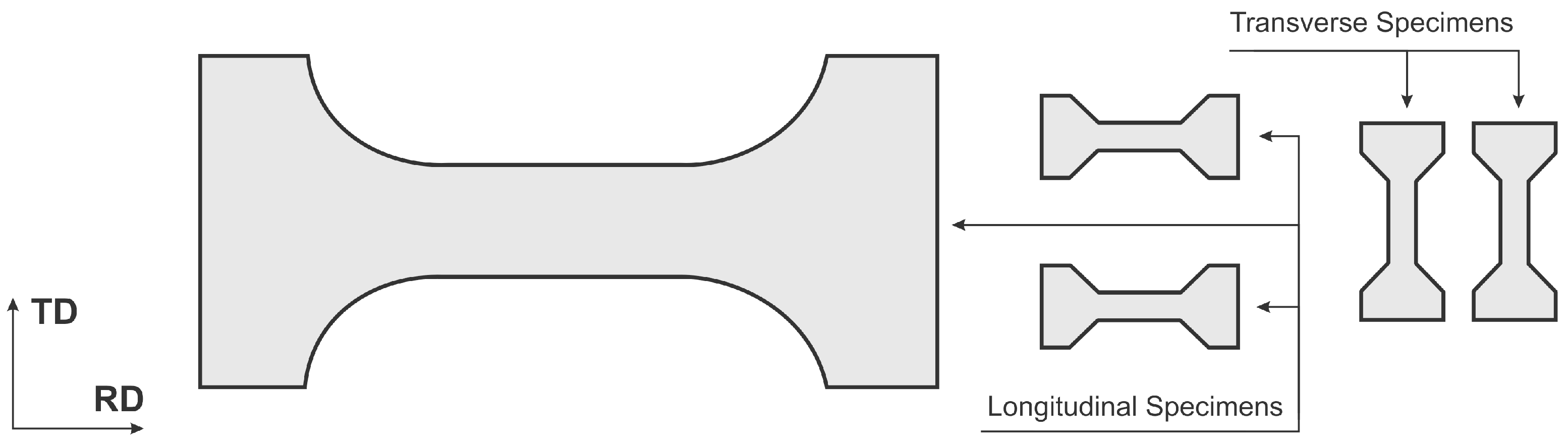
The mechanical properties were determined by tensile testing using an Instron 5569 and Instron 5966 machines (Instron, Norwood, MA, USA). The strain rate was 0.002 s−1. A non-contact extensometer was used for precise strain measurements. The full-scale specimens with a gauge length and width of 25 mm and 10 mm, respectively, were cut in the longitudinal direction. To study anisotropy, the miniature tensile specimens with a gauge length and width of 5 mm and 1.5 mm, cut in the longitudinal (RD) and transverse (TD) directions, were used. The thickness of the full-scale and miniature specimens corresponded to the strip thickness (~2.5 mm). The arrangement of the tensile specimens relative to the strip is shown in Figure 1. Two full-scale and three miniature specimens were tested for each condition. Considering that all hot-rolling and heat treatment processes were carried out in an air environment without protection, the surface of the tensile specimens was subjected to grinding to remove the traces of oxidation.
To calculate the strain hardening coefficient, the Ludwik–Hollomon Equation (1) was used [15].
S = K × en
where S is the true stress, S = σ × (1 + ε), σ and ε are engineering stress and strain, respectively, K is the coefficient, e is the true strain, e = ln(1 + ε), and n is the strain hardening coefficient.
The Ludwik–Hollomon equation parameters were determined using the least squares method as the coefficients of the linear regression equation, ln(S) = ln(K) + n × ln(e).

3. Results and Discussion

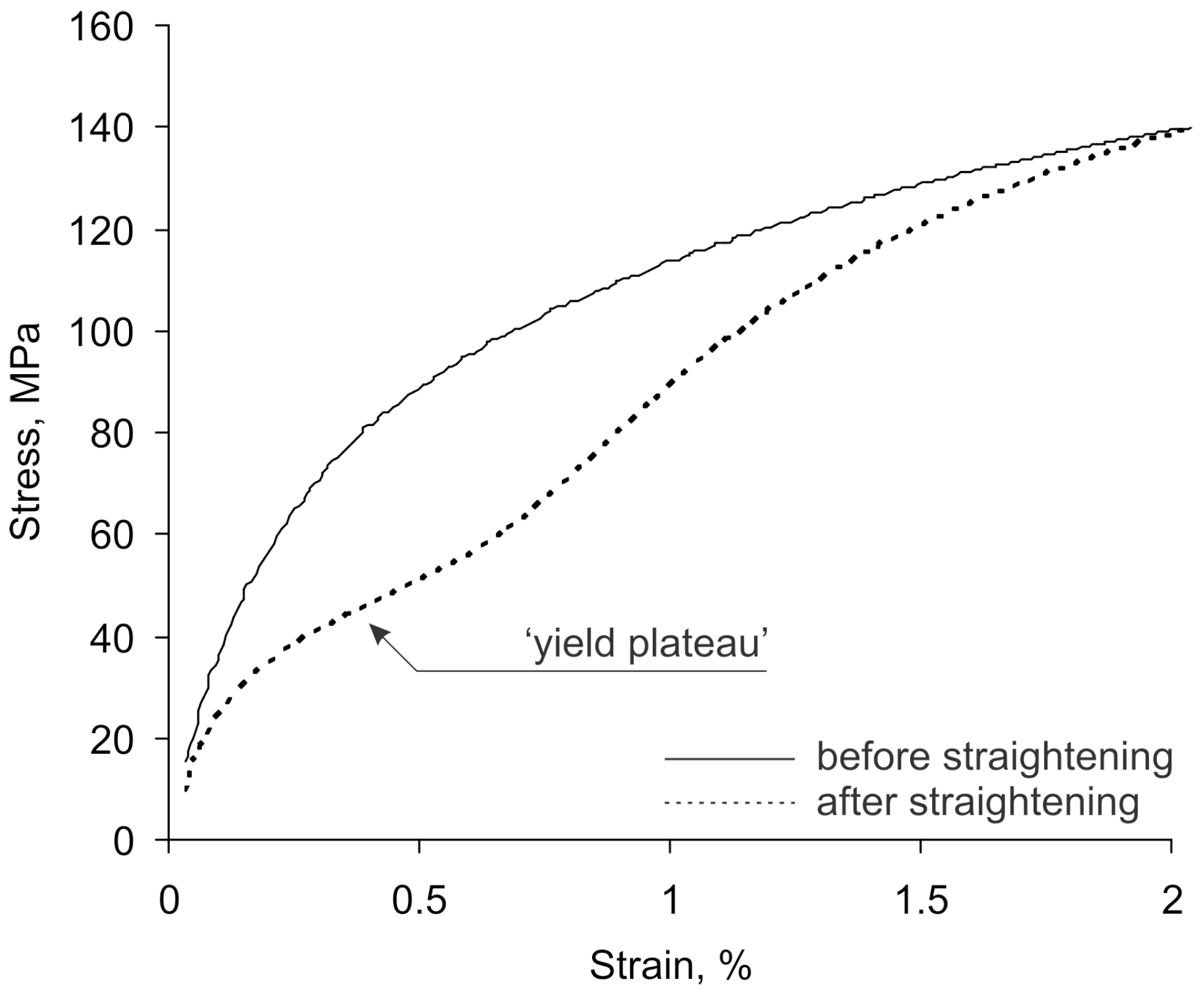
The mechanical properties of the magnesium strip before and after roller straightening, obtained by tensile testing of the full-scale specimens, are presented in Table 1. In the initial conditions (hot rolling followed annealing), the yield strength (YS), tensile strength (TS), and relative elongation (RE) averaged 85 MPa, 143 MPa, and 2.3%. Roller straightening in one pass resulted in an inflection point in the tensile stress–strain curve, similar to a yield plateau, as well as a nearly twofold reduction in the yield stress (Figure 2), without significantly affecting the tensile strength or elongation. Increasing the number of passes from one to three resulted in no further change in the mechanical properties.
Given the strip dimensions (approximately 20 mm wide), the anisotropy of the mechanical properties was studied by testing miniature specimens. The mechanical properties of the strip before and after roller straightening, in the longitudinal (RD) and transverse (TD) directions, obtained by tensile testing of the miniature specimens, are presented in Table 2. It can be seen that the initial strip had the same yield strength in the longitudinal and transverse directions, while the tensile strength and relative elongation in the transverse direction were 1.4 and 3.8 times higher, respectively. The yield stress reduction effect after roller straightening was weakly observed in miniature longitudinal specimens, which did not allow for reliable measurement of the yield strength. For the miniature transverse specimens, roller straightening had no effect on the yield strength.
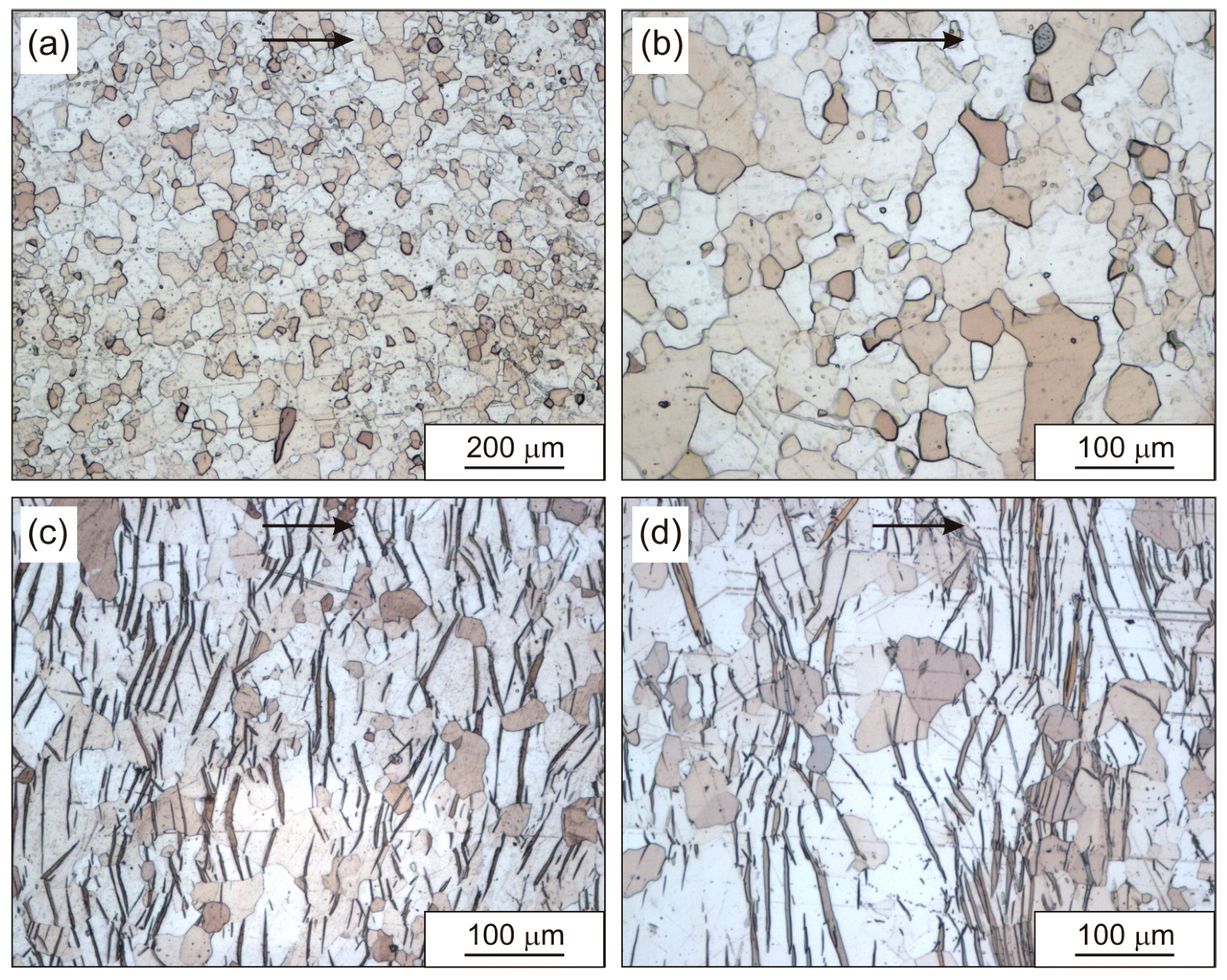
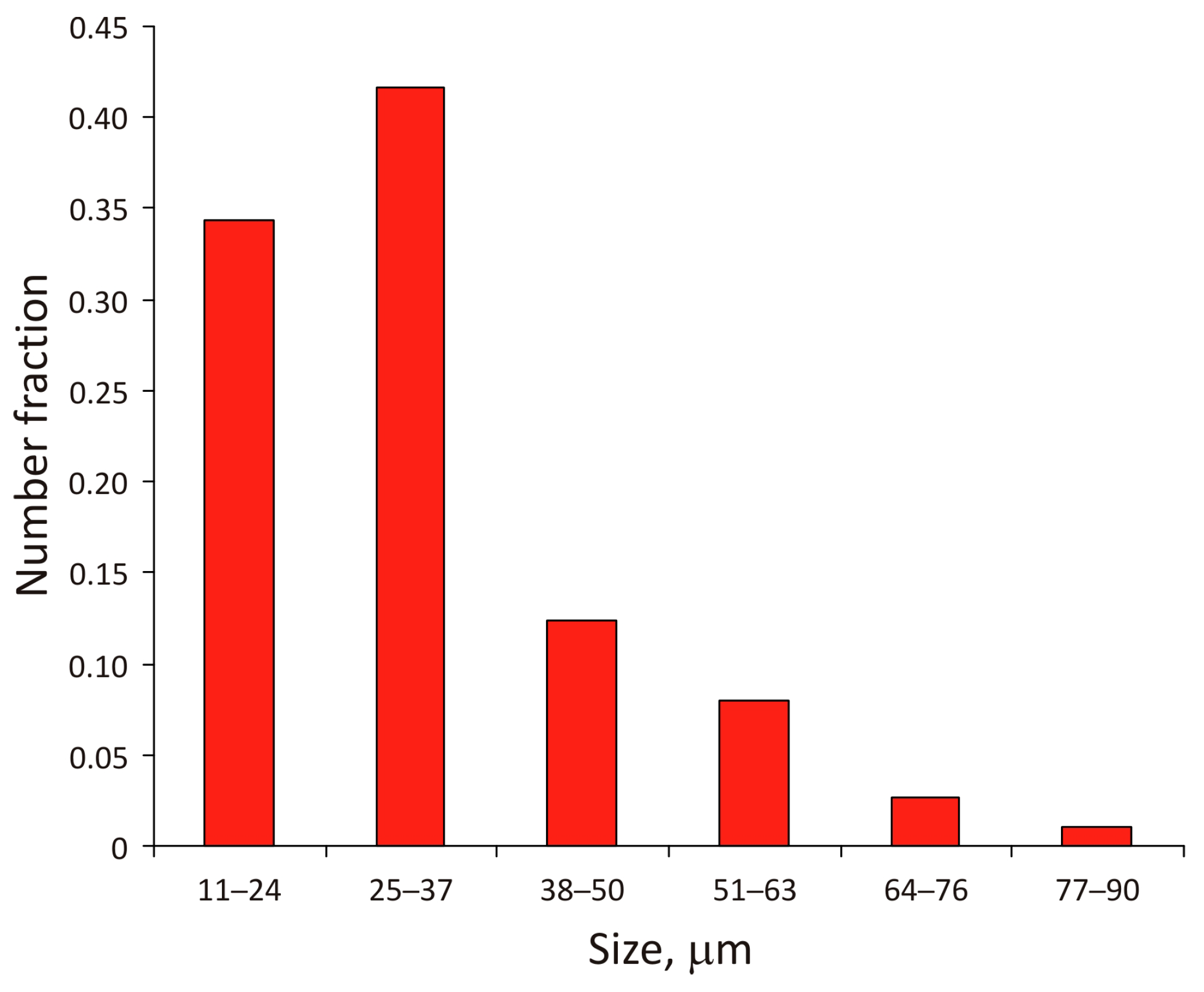
To explain the reasons for this change in the mechanical properties, the detailed studies of the strip microstructure before and after roller straightening were conducted using optical microscopy, scanning and transmission electron microscopy. In addition, the EBSD analysis was carried out. The results are presented below. Optical microscopy data revealed a predominantly recrystallized grain microstructure with a small number of twins in the initial strip (Figure 3a,b). The microstructure was characterized by pronounced grain size heterogeneity (Figure 4). Roller straightening in a single pass resulted in the formation of the numerous twins (Figure 3c), oriented predominantly perpendicular to rolling direction. The proportion of twins determined in the Image Expert software (ImageExpert Pro 3, NEXYS, Moscow, Russia) was 15%. The same microstructure pattern was observed after three passes of roller straightening (Figure 3d).
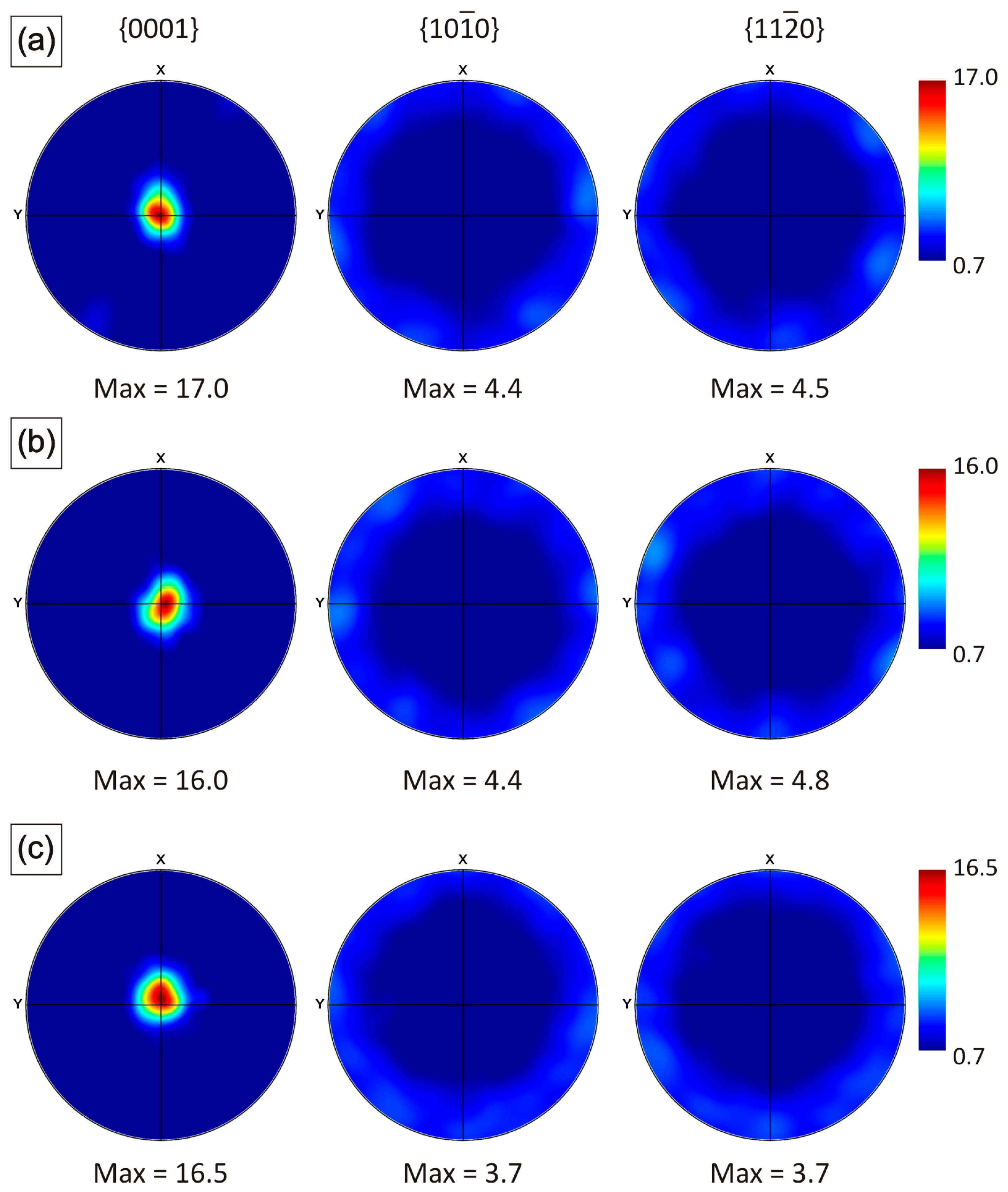
Figure 5 shows the pole figures of the magnesium strip in the initial condition and after roller straightening. All samples exhibited a typical strong basal texture, with the {0001} basal plane of most grains parallel to the strip surface. Roller straightening had no significant effect on the pole intensity.
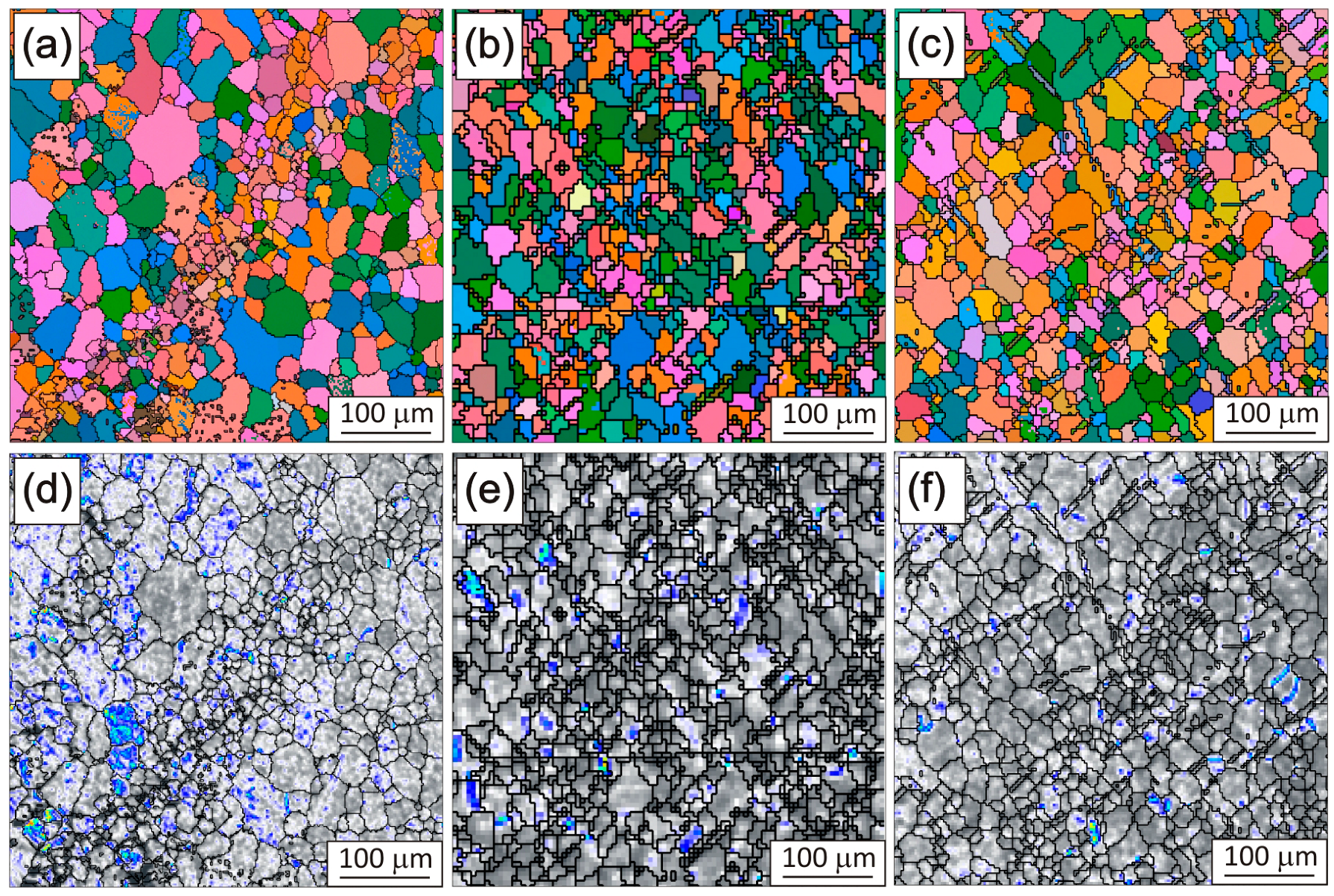
Figure 6 shows the EBSD analysis results for the magnesium strip in the initial condition and after roller straightening. The EBSD image confirmed the presence of a heterogeneous microstructure of magnesium in the initial condition with a bimodal grain size distribution (Figure 6a). The main proportions of the grains were in two ranges from 8 to 50 μm and from 60 to 90 μm. These data are close to those measured using optical microscopy (Figure 4). After 1 and 3 passes in the roller straightening machine, large twins appeared within many grains (Figure 6b,c). The main proportions of the grains were in two ranges from 8 to 40 μm and from 50 to 80 μm. Thus, after straightening, the grain size ranges shifted to smaller values, which can be explained by the refinement of the original grains due to the formation of the numerous twin boundaries in them.
Figure 6d–f shows the results of Kernel Average Misorientation (KAM) measurements for the magnesium strip in the initial condition and after roller straightening. The KAM value was approximately 0.35 and remained unchanged after straightening, including with an increase in the number of passes from 1 to 3, indicating a constant dislocation density in the material.
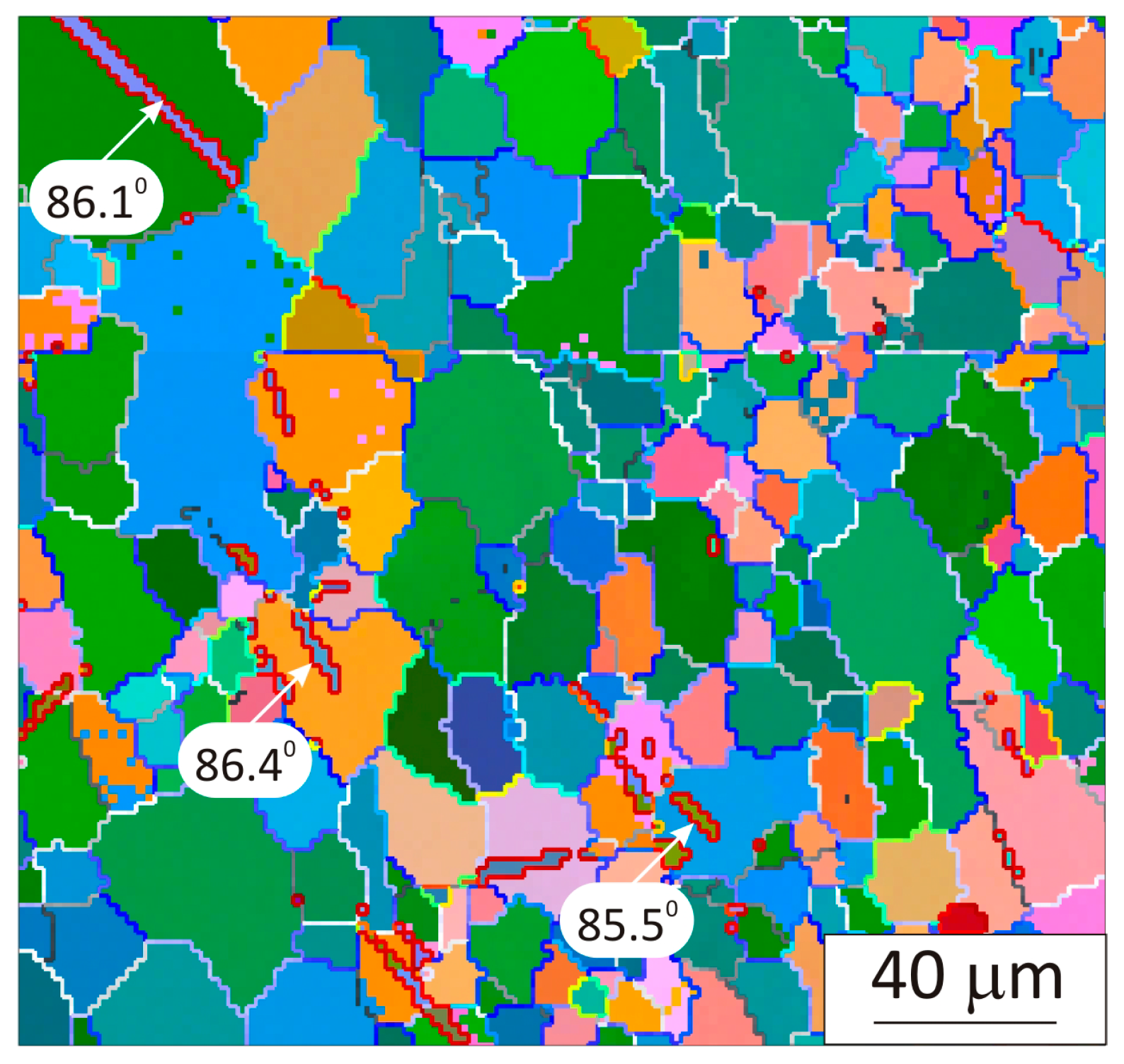
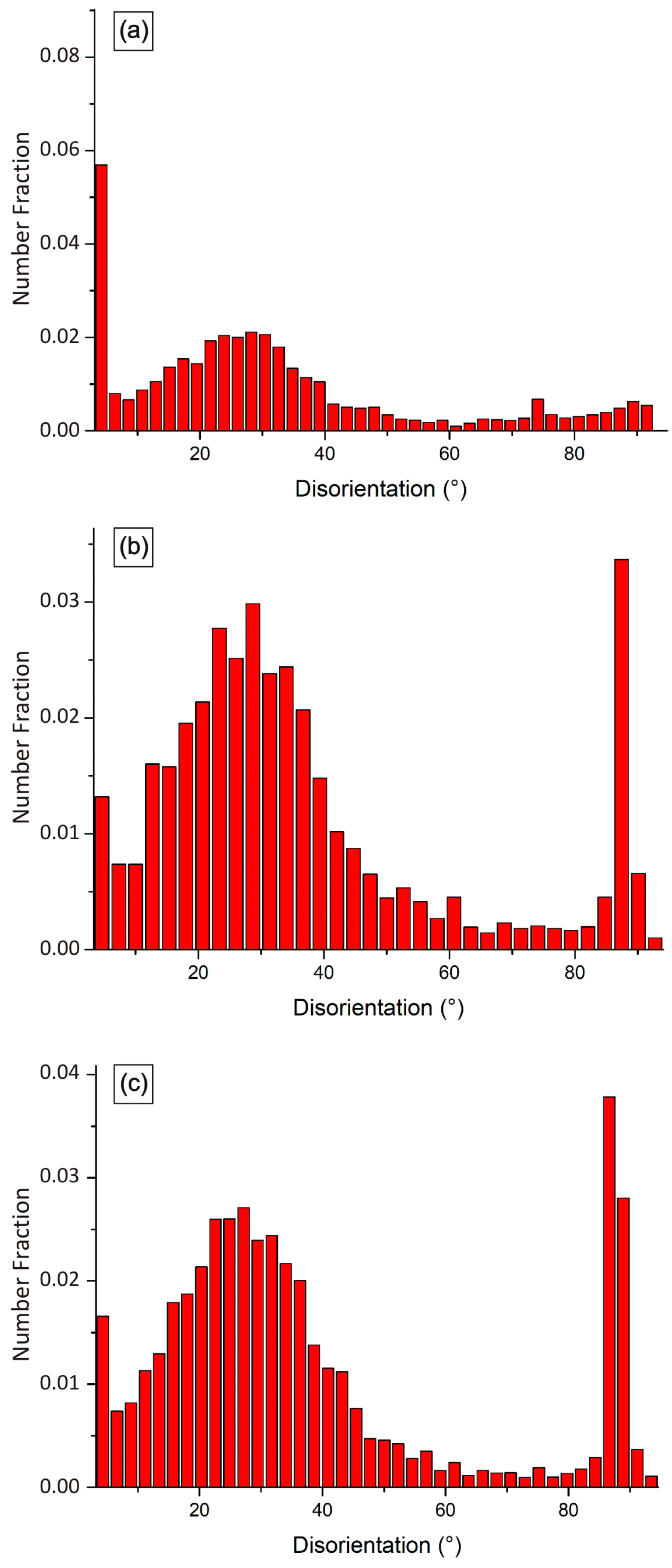
Direct measurement of misorientations in the EBSD image showed that the twin planes in the sample after roller straightening, with both one and three passes, were misoriented relative to the matrix plane by angles of 85.5–86.4° (Figure 7). Considering the error of the EBSD method (approximately 1%), we can confidently identify the observed twins with the { 10 1 ¯ 2 } tensile twins, whose planes should be misoriented relative to the matrix plane by an angle of 86.3° [16]. The formation of such twins led to the appearance of intense peaks at angles of about 86° in the misorientations histograms of the roller straightened samples (Figure 8).
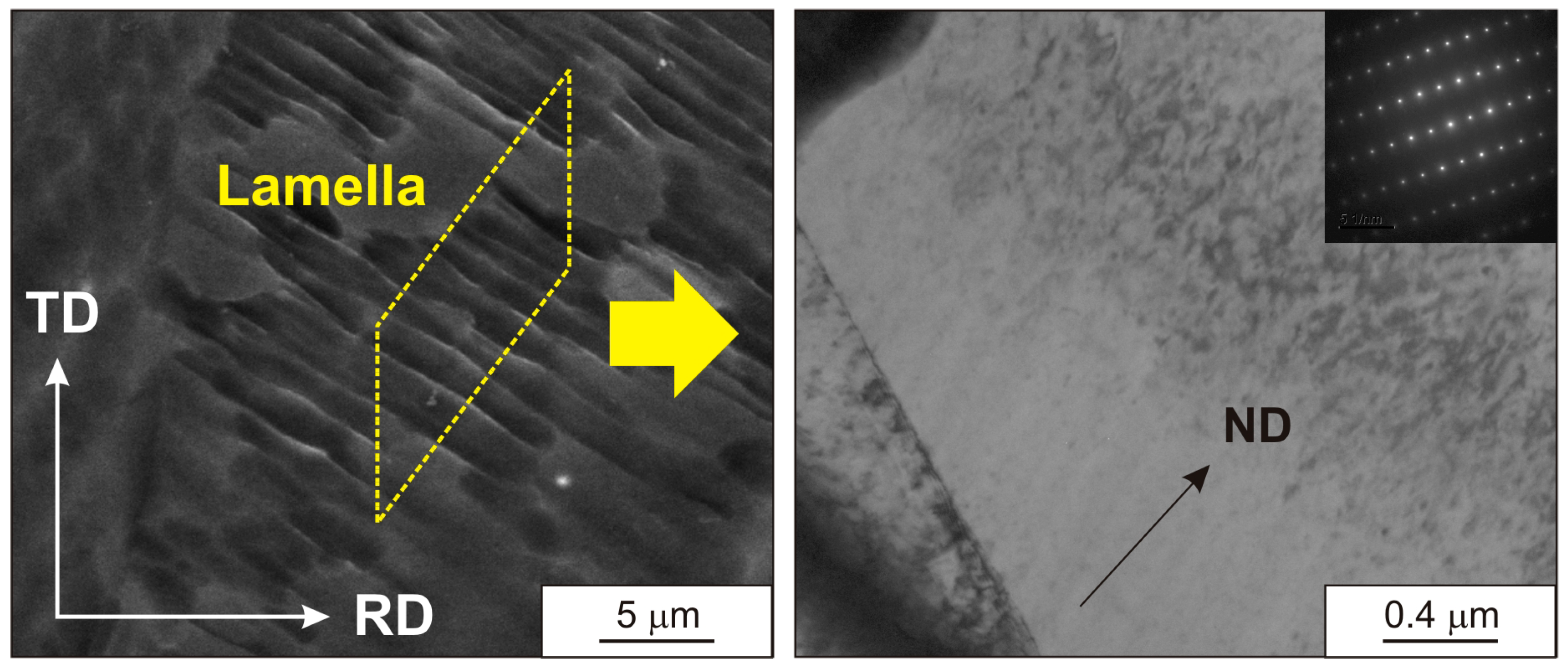
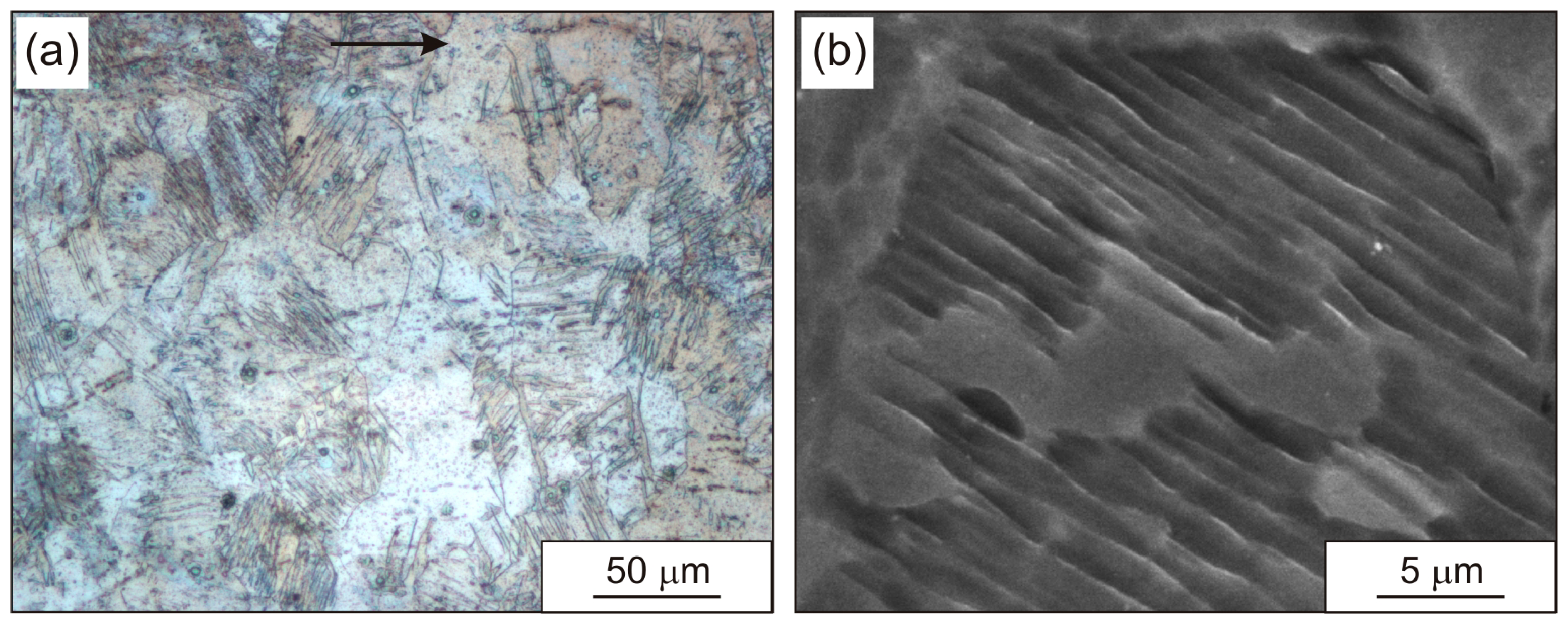
Deep etching of the samples after roller straightening revealed an internal lamellar structure in some grains, consisting of very thin (approximately 1 µm) parallel bands (Figure 9). Moreover, the orientation of these bands varied in adjacent grains. These bands were observed after both one and three passes.
The lamellar structures within the grains formed after roller straightening are usually associated with parallel twinning [16,17]; however, their analysis by EBSD (Figure 6) and TEM (Figure 10) did not confirm the presence of twins in these regions. Therefore, it can be cautiously concluded that these bands are slip lines.

4. Discussion

The appearance of a kink (‘yield plateau’) and a sharp decrease in the yield stress were previously observed for the AZ31 magnesium alloy after roller straightening [9]. Moreover, this phenomenon was observed after just one half-cycle of bending deformation, which excludes the influence of the Bauschinger effect. The authors of paper [9] suggested that this effect is associated with a change in texture caused by twinning. A change in texture and the formation of twins in an Mg–Li alloy after alternating deformation were observed in paper [18]. Similar results were obtained in paper [19] during straightening of hot-rolled ZA31B magnesium alloy sheet, with the authors noting a slight dissipation of texture after straightening, although a strong basal texture was preserved. The results of the present study demonstrate the absence of any significant effect of alternating deformation on the texture of magnesium, although twin formation was observed. Thus, in the present study, a change in the mechanical properties of magnesium after roller straightening occurred while maintaining a strong basal texture.
The initial part of the tensile stress–strain curve of the magnesium specimen after roller straightening is similar to the region of easy glide of a single crystal [20]. A similar type of the stress–strain curve was observed during compression deformation of magnesium alloys [21,22]. The low yield stress was explained by the authors of paper [22] through an elastic–plastic transition at the early stage of deformation, leading to microyield as a result of the activation of primary slip systems. Apparently, after roller straightening applied in present study, the movement of dislocations at the initial stage of tensile deformation is also facilitated; which leads to a decrease in the flow stress. The microstructural studies using the EBSD method showed that roller straightening promoted the formation of tensile twins. A decrease in the yield stress in a magnesium alloy with pre-induced tensile twins was observed, for example, in paper [23]. The formation of the tensile twins leads to a sharp reorientation of the original matrix planes by ~86.3° around the <1120> axes. Although the formation of such twins should enhance the axial texture, their small proportion (about 15%), as well as their non-uniform distribution in the strip microstructure, apparently did not affect the change in the overall texture. In newly twinned grains, the c-axis direction becomes parallel to the rolling direction corresponding to the tensile direction. In paper [23], it was shown that in this case, detwinning is sharply facilitated, which is the reason for the decrease in the yield stress [24], along with the ongoing basal slip. This mechanism also explains the lack of the yield stress lowering effect in the transverse specimens, in which the c-axis of twinned grains will be perpendicular to the tensile direction.
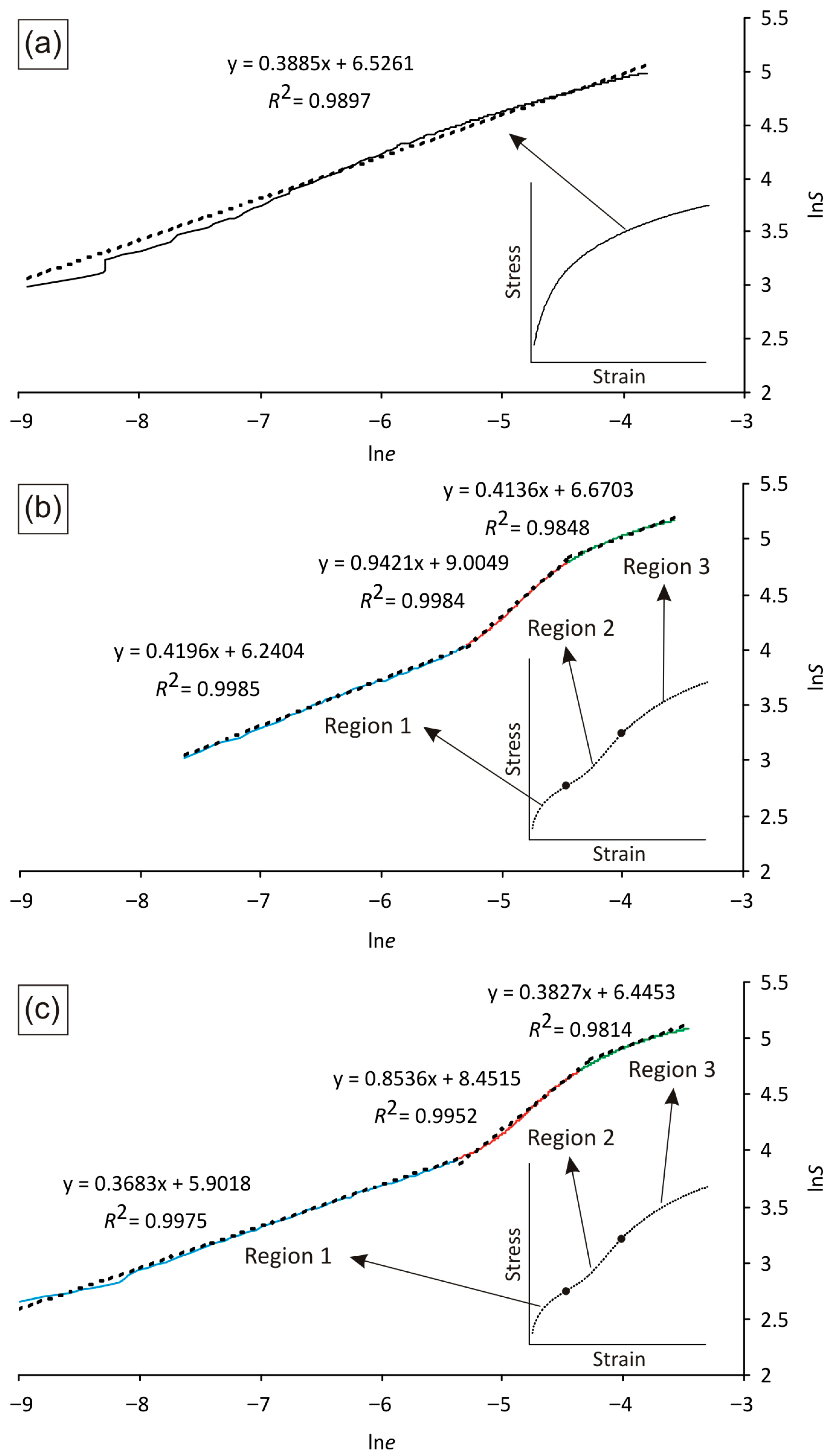
The results of calculating the strain hardening coefficient for the specimens before and after roller straightening according to Equation (1) are shown in Figure 11. In the specimen before roller straightening, the strain hardening coefficient was 0.39 (Figure 11a). Considering that the stress–strain curve for specimens after roller straightening contained two inflections, which divided the entire curve into three regions, the calculation was performed for each region separately (Figure 11b,c).
At the initial section of the tensile stress–strain curve of the roller-straightened specimens, the strain hardening coefficient is low (e = 0.37–0.42, the Region 1 in Figure 11b,c).
Already after ~0.5% tensile strain, the roller-straightened specimens exhibit an inflection in the tensile stress–strain curve (the concave portion of the curve in Figure 2), and with further tension deformation, the strain hardening coefficient increases (e = 0.85–0.92, the Region 2 in Figure 11b,c). In paper [25], it was reported that magnesium flow curves showing a concave shape and characterized by a high strain hardening coefficient are determined by the twin formation process. In this case, strengthening is due to the effect of twins on slip process, and not to the stress required for twinning. After ~1% tensile strain, another inflection in the stress–strain curve is observed (the convex portion of the curve in Figure 2), and with further tension deformation, the strain hardening coefficient decreases (e = 0.38–0.41, the Region 3 in Figure 11b,c). It was reported in paper [25] that magnesium flow curves of a convex nature are determined by the slip process.
Thus, in the roller-straightened magnesium strip, upon subsequent tension deformation, detwinning begins, even at low stress, along with the ongoing basal slip, leading to a low yield stress. The development of detwinning leads to an increase in the strain hardening coefficient, which forms a concave portion of the stress–strain curve. The continuing detwinning process reorients the original planes, resulting in the facilitation of non-basal dislocation slip [23], which causes continuous strain hardening and forms the convex portion of the stress–strain curve.
The weakening or even absence of the yield strength reduction effect under tension loading of miniature specimens can be attributed to an insufficient volume fraction of the { 10 1 ¯ 2 } twins participating in deformation process due to their non-uniform distribution in the strip microstructure. In paper [23], it was found that a decreasing in the yield strength is observed at a twin fraction of 10% or higher.
Anisotropy of strength and ductility is typical for magnesium alloys with a strong basal texture, which hinders the activation of non-basal slip systems and limits the ductility of the specimen. However, in this study, specimens in both the longitudinal (RD) and transverse (TD) directions had the same yield strength. This is explained by the fact that both longitudinal and transverse specimens had the same basal texture: the {1000} basal planes were in the plane of the specimens, while the prismatic planes were randomly distributed, and thus had the same textural strength. At the same time, the tensile strength and the relative elongation of the transverse specimens were significantly higher than those of the longitudinal specimens. This can be explained by the presence of cracks in the strip that formed during hot rolling [26]. Such cracks in the longitudinal specimen were located perpendicular to the tension direction and led to premature failure of the specimen, as observed in paper [27]. This explains the low relative elongation and tensile strength of the longitudinal specimens. In contrast, in the transverse specimens, the cracks were oriented along the tension direction and did not influence the fracture process. As a result, the transverse specimens experienced longer deformation before failure and demonstrated a longer process of strain hardening, which contributed to an increase in their relative elongation and tensile strength.

5. Conclusions

This study examined the effect of roller straightening of a pure magnesium strip on the microstructure, texture, and the specimens’ tensile stress–strain curves. The following findings were found:
  • Roller straightening results in the appearance of an inflection point (‘yield plateau’) in the tensile stress–strain curve of longitudinal specimens, as well as a nearly twofold decrease in the yield stress from 85 to 45 MPa. This effect was observed only on longitudinal specimens, and it persists when increasing the number of passes through the roller straightening machine from one to three. The use of miniature tensile specimens, compared to full-scale ones, weakened or suppressed this effect.
  • Roller straightening in 1 and 3 passes maintains a strong basal texture and does not affect the pole density.
  • The hypothesis about the influence of the roller straightening-induced twins on the change in the yield strength, proposed in early works, was confirmed. High-precision microstructural studies, including EBSD analysis, established that roller straightening initiates the formation of the { 10 1 ¯ 2 } tensile twins with a proportion of about 15%, which, during subsequent tensile deformation, facilitate the detwinning process. This, along with ongoing basal slip, reduces the yield strength.
  • The tensile strength and the relative elongation of the transverse specimens were significantly higher than those of longitudinal specimens, while their yield strength was identical. The lower tensile strength and relative elongation of the longitudinal specimens are due to the presence of transverse cracks formed in the original strip during hot rolling.

Author Contributions

Conceptualization, S.O.R. and A.E.S.; methodology, V.E.B., E.S.S., A.E.S., V.A.A. and N.A.E.; validation, V.E.B.; formal analysis, S.O.R.; investigation, S.O.R., E.S.S. and N.A.E.; Resources, V.E.B.; funding acquisition, S.O.R., V.E.B. and N.A.E.; data curation, S.O.R. and A.E.S.; writing—original draft preparation, S.O.R.; writing—review and editing, V.E.B., E.S.S., A.E.S. and V.A.A.; visualization, S.O.R. and V.E.B. All authors have read and agreed to the published version of the manuscript.

Funding

The authors are grateful to the implementation of the strategic project “Biomedical materials and bioengineering” within the frame work of the Strategic Academic Leadership Program “Priority-2030” at NUST MISIS.

Data Availability Statement

The raw data supporting the conclusions of this article will be made available by the authors on request.

Acknowledgments

We thank Mikhail Gorshenkov for assistance in discussing the EBSD results, as well as Natalia Tabachkova and Alexander Ogoltsov for their assistance in conducting the research.

Conflicts of Interest

The authors declare no conflicts of interest.

References

  1. Sunil, B.R. Repetitive corrugation and straightening of sheet metals. Mater. Manuf. Process. 2015, 30, 1262–1271. [Google Scholar] [CrossRef]
  2. Maksimov, E.A.; Shatalov, R.L.; Ustinovsky, E.P. Development of a method for the evaluation of the gap in the course of straightening of sheet products on roller leveling machines. Metallurgist 2021, 65, 62–71. [Google Scholar] [CrossRef]
  3. Kotov, K.A.; Bolobanova, N.L.; Nushtaev, D.V. Modeling the Stress State of a Steel Strip with a Roller Leveling Machine under Cyclic Alternating Deformations. Steel Transl. 2020, 50, 750–755. [Google Scholar] [CrossRef]
  4. Raab, G.; Utyashev, F.; Asfandiyarov, R.; Raab, A.; Aksenov, D.; Kodirov, I.; Janeček, M.; Krajňák, T. Physical and technical foundations of the use of alternating free bending for producing long-length semi-products from metals and alloys with improved mechanical properties. Metals 2020, 10, 879. [Google Scholar] [CrossRef]
  5. Shkatulyak, N.M.; Pravednaya, N.P. Effect of alternating bending on the texture, structure and mechanical properties of aluminum sheets. Met. Sci. Heat Treat. 2013, 54, 472–476. [Google Scholar] [CrossRef]
  6. Rogachev, S.O.; Andreev, V.A.; Perkas, M.M.; Yusupov, V.S.; Shelest, A.E.; Khatkevich, V.M.; Isaenkova, M.G.; Babich, Y.A. Effect of alternating bending on the structure and mechanical properties of tough-pitch copper. Met. Sci. Heat Treat. 2022, 63, 612–617. [Google Scholar] [CrossRef]
  7. Rogachev, S.O.; Shelest, A.E.; Perkas, M.M.; Andreev, V.A.; Tabachkova, N.Y.; Yusupov, V.S.; Ten, D.V.; Isaenkova, M.G.; Krymskaya, O.A. Effect of Alternating Bending on Structure, Texture, and Mechanical Properties of Cu–Zn Alloy. J. Mater. Eng. Perform. 2024, 33, 1241–1249. [Google Scholar] [CrossRef]
  8. Usov, V.V.; Shkatulyak, N.M.; Dragomeretskaya, E.A.; Savchuk, E.S.; Bargan, D.V.; Daskalytsa, G.V. Effect of Alternating Bending and Texture on Anisotropic Damage and Mechanical Properties of Stainless Steel Sheets. Mech. Mater. Sci. Eng. 2016, 6, 56–61. [Google Scholar] [CrossRef]
  9. Zilberg, Y.V.; Bach, F.-W.; Bormann, D.; Rodman, M.; Sharper, M.; Hepke, M. Effect of alternating bending on the structure and properties of strips from AZ31 magnesium alloy. Met. Sci. Heat Treat. 2009, 51, 170–175. [Google Scholar] [CrossRef]
  10. Ovechkin, B.I. Influence of straightening on the texture and mechanical of sheets of the MA2-1 alloy. Met. Sci. Heat Treat. 1966, 8, 632–634. [Google Scholar] [CrossRef]
  11. Chen, R.; Shen, A.; Zhang, P.; Guo, X.; Yang, N.; Zhang, G.; Chen, Q.; Su, J.; Song, H.; Dai, Q. Effect of Stretch Bending on the Microstructure and Mechanical Properties of AZ31 Magnesium Alloy. J. Mater. Eng. Perform. 2025, 34, 6199–6211. [Google Scholar] [CrossRef]
  12. Bryukhanov, A.A.; Stoyanov, P.P.; Zilberg, Y.V.; Shaper, M.; Rodman, M.; Hepke, M.; Rodman, D. Anisotropy of Mechanical Properties of Magnesium Alloy AZ31 Sheets as a Result of Sign-Variable Bending Deformation. Metall. Min. Ind. 2010, 2, 215–219. [Google Scholar]
  13. Hepke, M.; Rodman, M.; Haverkamp, H.; Zilberg, J.V.; Briukhanov, A.A.; Bormann, D.; Schaper, M.; Bach, F.-W. Investigation of the influence of low cycle alternating bending loads on the properties of thin sheets possessing different crystal lattice structures. Metall. Min. Ind. 2011, 3, 69–73. [Google Scholar]
  14. Rogachev, S.O.; Shelest, A.E.; Andreev, V.A.; Yusupov, V.S.; Tabachkova, N.Y.; Ten, D.V.; Isaenkova, M.G.; Krymskaya, O.A. Effect of preliminary heat treatment on the formation of structure and mechanical properties of brass during alternating bending. Russ. Metall. 2023, 2023, 1494–1500. [Google Scholar] [CrossRef]
  15. Nikulin, S.; Nikitin, A.; Khatkevich, V.; Rogachev, S. Deformation and fracture analysis of nitrided steels by acoustic emission measurement. Int. J. Microstruct. Mater. Prop. 2017, 12, 183–192. [Google Scholar] [CrossRef]
  16. Li, X.; Li, Q. Effect of pre-compression on microstructural evolution, mechanical property and strengthening mechanism of AZ31 alloy. J. Mater. Sci. 2020, 55, 11637–11649. [Google Scholar] [CrossRef]
  17. Tolouie, E.; Jamaati, R. Achieving Unusual Stable Textures in AZ91 Alloy by Asymmetric Hot Rolling. Met. Microstruct. Anal. 2024, 13, 307–316. [Google Scholar] [CrossRef]
  18. Shkatulyak, N.M.; Smirnova, S.V.; Usov, V.V. Effect of alternating bending on texture, structure, and elastic properties of sheets of magnesium lithium alloy. Int. J. Met. 2015, 2015, 349810. [Google Scholar] [CrossRef]
  19. Wang, R.; Zhou, Q.; Huang, Y.; Su, H.; Ma, L.; Zhang, P.; Huang, Z.; Yao, Z.; Gui, H.; Ma, L. Influence of plastic zone ratios on microstructural changes in AZ31B magnesium alloy plates after straightening. J. Alloys Compd. 2024, 981, 173649. [Google Scholar] [CrossRef]
  20. Shin, K.S.; Wang, L.; Bian, M.; Choi, S.; Komissarov, A.; Bazhenov, V. Effects of temperature on critical resolved shear stresses of slip and twining in Mg single crystal via experimental and crystal plasticity modeling. J. Magnes. Alloy. 2023, 11, 2027–2041. [Google Scholar] [CrossRef]
  21. Gautam, P.C.; Biswas, S. Anisotropic compressive deformation behavior of hot-rolled Mg-3Al-0.5Ce alloy. J. Magnes. Alloy. 2024, 12, 4646–4666. [Google Scholar] [CrossRef]
  22. Sahoo, S.K.; Biswas, S.; Toth, L.S.; Gautam, P.C.; Beausir, B. Strain hardening, twinning and texture evolution in magnesium alloy using the all twin variant polycrystal modelling approach. Int. J. Plast. 2020, 128, 102660. [Google Scholar] [CrossRef]
  23. Hidetoshi, S.; Alok, S. Mechanical response and microstructural evolution in tension of twin-induced Mg alloy. J. Alloys Compd. 2025, 1045, 184614. [Google Scholar] [CrossRef]
  24. Go, J.; Park, M.-h.; Gao, S.; Matsumiya, H.; Gong, W.; Tsuji, N. Loading-direction dependence of non-basal slip activity in a pre-twinned AZ31 magnesium alloy. J. Alloys Compd. 2025, 1014, 178749. [Google Scholar] [CrossRef]
  25. Barnett, M.R.; Keshavarz, Z.; Beer, A.G.; Atwell, D. Influence of grain size on the compressive deformation of wrought Mg–3Al–1Zn. Acta Mater. 2004, 52, 5093–5103. [Google Scholar] [CrossRef]
  26. Shelest, A.E.; Rogachev, S.O.; Yusupov, V.S.; Andreev, V.A.; Karelin, R.D.; Bazhenov, V.E. Features of the influence of alternating elastic-plastic deformation on the mechanical properties of metallic materials. Russ. Metall. 2025, 3, 97–103. (In Russian) [Google Scholar] [CrossRef]
  27. Yang, L.; Zhang, H.; Liu, G. Anisotropy evolution of wide magnesium alloy foils during continuous electroplastic rolling. J. Mech. Sci. Technol. 2023, 37, 1747–1759. [Google Scholar] [CrossRef]
Figure 1. Location of tensile specimens relative to the strip.
Jmmp 09 00413 g001
Figure 2. Tensile stress–strain curves of the full-scale longitudinal specimens before and after roller straightening (N = 1).
Jmmp 09 00413 g002
Figure 3. Microstructure of the magnesium strip before (a,b) and after roller straightening with the number of passes N = 1 (c) and N = 3 (d). The arrows indicate the rolling direction.
Jmmp 09 00413 g003
Figure 4. Grain size distribution in the magnesium microstructure before roller straightening.
Jmmp 09 00413 g004
Figure 5. Pole figures of the magnesium strip before (a) and after roller straightening with the number of passes N = 1 (b) and N = 3 (c). Color variation shows pole density.
Jmmp 09 00413 g005
Figure 6. EBSD results for magnesium before (a,d) and after roller straightening with the number of passes N = 1 (b,e) and N = 3 (c,f). Euler Angles Maps (ac). Different colors represent different crystallographic orientations; Kernel Average Misorientation (df). Brighter colors indicate greater dislocation density.
Jmmp 09 00413 g006
Figure 7. Misorientations of twins in the magnesium microstructure after roller straightening (N = 1). Different colors represent different crystallographic orientations.
Jmmp 09 00413 g007
Figure 8. Misorientations histograms of the magnesium samples before (a) and after roller straightening with the number of passes N = 1 (b) and N = 3 (c).
Jmmp 09 00413 g008
Figure 9. Lamellar structures in the magnesium grains after three passes of roller straightening: Optical microscopy (a); SEM (b). The arrow indicates the rolling direction.
Jmmp 09 00413 g009
Figure 10. TEM analysis results of a lamellar structure region in a magnesium grain (N = 1).
Jmmp 09 00413 g010
Figure 11. The results of the strain hardening coefficient calculating for samples before (a) and after roller straightening with the number of passes N = 1 (b) and N = 3 (c).
Jmmp 09 00413 g011
Table 1. Mechanical properties of the strip before and after roller straightening, obtained by tensile testing of the full-scale specimens.
Specimen ConditionYS, MPaTS, MPaRE, %
Before straightening85.0143.02.3
After straighteningN = 146.0170.32.9
N = 344.0158.23.3
Table 2. Mechanical properties of the strip before and after roller straightening, obtained by tensile testing of the miniature samples.
Specimen ConditionCutting DirectionYS, MPaTS, MPaRE, %
Before straighteningLongitudinal88.5145.92.8
After straightening, N = 1-160.63.0
After straightening, N = 3-158.03.5
Before straighteningTransverse92.7203.010.8
After straightening, N = 192.3187.812.7
After straightening, N = 396.0206.510.5
Disclaimer/Publisher’s Note: The statements, opinions and data contained in all publications are solely those of the individual author(s) and contributor(s) and not of MDPI and/or the editor(s). MDPI and/or the editor(s) disclaim responsibility for any injury to people or property resulting from any ideas, methods, instructions or products referred to in the content.