
Review

Recent Advances in Ultrasonic Vibration-Assisted Machining of Ti-Al Intermetallic Compounds
1
School of Mechanical Engineering, Pingdingshan University, Pingdingshan 467000, China
2
School of Mechanical and Aviation Manufacturing Engineering, Anyang Institute of Technology, Anyang 455000, China
*
Author to whom correspondence should be addressed.
J. Manuf. Mater. Process. 2026, 10(7), 238; https://doi.org/10.3390/jmmp10070238
Submission received: 30 May 2026 / Revised: 29 June 2026 / Accepted: 30 June 2026 / Published: 6 July 2026

Abstract

Ti-Al intermetallic compounds (Ti-Al IMCs) are emerging as lightweight, high-temperature structural materials with considerable application potential. Owing to their low density and high-temperature capability, these materials can improve the thrust-to-weight ratio of aeroengines, enhance the high-temperature service performance of aircraft, increase fuel efficiency, and improve adaptability to harsh environments. However, their intrinsic room-temperature brittleness leads to high cutting forces, elevated cutting temperatures, and severe tool wear during machining, making it difficult to ensure machining quality and limiting their large-scale applications in the aerospace industry. Ultrasonic vibration-assisted machining (UVAM) introduces a high-frequency, low-amplitude intermittent cutting mechanism that actively regulates material removal and offers a feasible route for overcoming the machining bottleneck of Ti-Al IMCs. This review summarizes the recent progress in UVAM for machining Ti-Al IMCs. First, the typical applications and machining characteristics of Ti-Al IMCs are discussed. Existing studies are then reviewed in terms of cutting performance, including cutting force, cutting temperature, chip morphology, tool wear, and post-machining surface integrity, including surface roughness, surface defects, residual stress, and work hardening. The reviewed evidence indicates that UVAM can reduce cutting forces and temperatures, improve chip morphology, and extend the tool life. It can also improve machined surface integrity by decreasing surface roughness, suppressing surface defects, inducing beneficial residual compressive stress layers, and regulating work-hardening behavior. This review provides systematic theoretical guidance and technical references for improving the machinability of Ti-Al IMCs via UVAM, thereby enabling the controllable, high-performance, and high-reliability fabrication of these difficult-to-machine materials in aerospace precision manufacturing.

1. Characteristics of Ti-Al IMCs

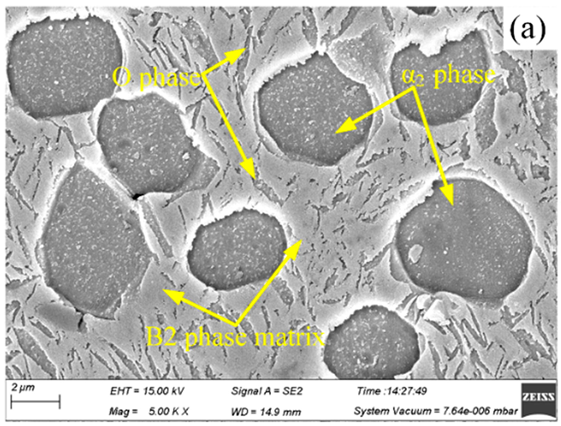
Ti-Al intermetallic compounds (Ti-Al IMCs) are compounds composed of titanium and aluminum as the two base metallic elements, with the addition of other metallic or metalloid elements, where two or more metallic elements or metallic and metalloid elements are combined in specific atomic ratios [1,2,3,4,5]. Based on the Ti-Al binary phase diagram summarized by Schuster and Palm [6], Ti–Al ICMs can form different phases and microstructures depending on the heat-treatment temperature and aluminum content. The three phases currently in widespread use are α2-Ti3Al, γ-TiAl, and Ti2AlNb, and their physical and mechanical properties are presented in Table 1. The microstructure and structure of Ti-Al IMCs differ depending on the phase. The binary alloy α2-Ti3Al has a D019 crystal structure [7], and its phase composition primarily consists of an equiaxed α2 phase and a B2 matrix. When additional Nb is introduced to form the ternary alloy Ti2AlNb, ultrafine lamellar O phases precipitate in the alloy, resulting in a phase structure comprising α2, B2, and O phases [8,9]. The physical properties of α2-Ti3Al, such as density, thermal conductivity, and coefficient of linear expansion, are similar to those of titanium alloys. Its operating temperature range is 600–750 °C, and it can even withstand temperatures as high as 1000 °C for short periods, representing an increase of approximately 200 °C compared to the operating temperature of conventional titanium alloys [10]. This enables a weight reduction of approximately 50% in aircraft engines and significantly improves the engine thrust-to-weight ratio (the ratio of thrust to weight) [11,12]. However, its insufficient resistance to oxidation in high-temperature environments limits its practical applications. As research progresses, studies on γ-TiAl have gradually increased; compared with α2-Ti3Al, γ-TiAl exhibits a lower density and improved high-temperature oxidation resistance [13,14]. Nevertheless, the elongation of γ-TiAl (≤4%) is significantly lower than that of conventional titanium alloys (greater than 10%), and its poor plasticity at room temperature makes forming and machining difficult. Issues such as poor ductility and low-temperature brittleness hinder the further application of γ-TiAl [15,16]. During material preparation, adding more Nb—an alloying element that stabilizes the β phase—can improve the strength and stiffness of α2-Ti3Al and enhance its ductility, tensile strength, and high-temperature specific strength [17]. Among these, Ti2AlNb, which exhibits superior mechanical properties and has a broader range of applications, has become a research focus in this material system. At operating temperatures of 600–700 °C, it is considered one of the most promising rare-earth materials for aircraft engine applications.
However, although these materials possess high-temperature service performance, their inherent physical and mechanical properties present a significant “machining barrier.” The core contradiction lies in the severe conflict between the material’s high strength and low thermal conductivity and its inherently low ductility at room temperature (typically ≤2%) and limited damage tolerance [24]. This directly leads to increased cutting forces and elevated cutting temperatures during machining, causing tool failure owing to severe abrasive and adhesive wear [25,26]. More critically, the machining process readily induces microcracks, laminar plastic deformation (“surface dragging” phenomenon), and deep work-hardening layers on the workpiece surface and subsurface, severely compromising the workpiece surface integrity and posing a potential threat to its fatigue life [27,28,29].
This review focuses on recent advances in ultrasonic vibration-assisted machining (UVAM) of Ti-Al IMCs and is organized as follows. Section 2 systematically reviews the current research status of UVAM in machining Ti-Al IMCs, with emphasis on its advantages for processing this class of materials, the main machining processes, and different vibration modes. The development history and core mechanism of UVAM, namely the tool-workpiece contact ratio, are also discussed. Section 3 summarizes the machining performance of Ti-Al IMCs under UVAM in terms of cutting force, cutting temperature, chip morphology, and tool wear. Section 4 reviews the surface integrity of Ti-Al IMCs after UVAM, including surface roughness, surface defects, surface residual stress, and work hardening. Finally, the existing research is summarized, and future research directions in this field are proposed.

2. Current Status of UVAM

Against this backdrop, the introduction of UVAM technology facilitates a shift from “confrontational” material removal to “controlled” material processing [30]. This machining method is not merely a matter of optimizing process parameters; rather, by applying high-frequency, small-amplitude mechanical vibrations to the tool, it transforms the continuous cutting process into periodic, intermittent pulsed cutting. This reduces the contact ratio between the tool and workpiece and alters the chip formation mechanism, friction behavior between the tool and workpiece, and energy dissipation patterns [31,32,33,34,35,36,37,38,39]. By introducing a controllable high-frequency vibrational energy field, UVAM actively intervenes in the transient deformation behavior of the material, shifting from “passively responding” to damage caused during machining to “actively regulating” post-machining surface integrity [40], thereby opening up a highly promising new pathway to overcome the “machining barrier” of Ti-Al IMCs. UVAM is a process that applies high-frequency, low-amplitude vibrations to the cutting tool or workpiece during conventional machining to enhance the machining performance [41]. The introduction of ultrasonic vibrations during the machining of difficult-to-machine materials, such as Ti-Al IMCs, can effectively reduce cutting forces [42], lower cutting temperatures [43], improve surface quality [44], and extend tool life [45].
UVAM has emerged as an important method for improving the machinability of Ti-Al IMCs. Its underlying mechanism is mainly based on the fact that high-frequency, small-amplitude vibration changes the contact state between the tool or abrasive grains and the workpiece, thereby transforming continuous cutting or grinding into a material removal process characterized by intermittent contact. Common ultrasonic vibration-assisted machining processes include ultrasonic vibration-assisted turning, ultrasonic vibration-assisted milling, and ultrasonic vibration-assisted grinding. In turning, ultrasonic vibration can reduce friction at the tool-chip interface and decrease the average cutting load, thereby improving chip formation and surface quality. In milling, Ti-Al IMCs processed by elliptical or axial ultrasonic vibration-assisted milling exhibit more stable chip breaking behavior and a lower tendency for edge chipping. Ultrasonic vibration can regulate the instantaneous chip thickness and tool-tooth contact ratio, thus reducing subsurface plastic deformation and improving surface roughness, work-hardened layer characteristics, residual stress state, and fatigue performance. In grinding, ultrasonic vibration-assisted high-efficiency deep grinding and single-grain CBN abrasive grinding are relatively active research directions for Ti-Al IMCs. By modifying abrasive-grain trajectories, reducing the equivalent chip thickness, and promoting chip evacuation and coolant penetration, ultrasonic vibration can weaken plowing, adhesion, and abrasive-grain dulling, while effectively regulating grinding temperature, material removal mechanisms, and abrasive wear behavior. Therefore, it is suitable for semi-finishing and finishing Ti-Al components such as blade tenons, complex profiles, and parts requiring high surface integrity.
UVAM is classified into one-dimensional (1D) [46,47], two-dimensional (2D) [48,49,50,51], and three-dimensional (3D) [52,53] types based on the vibration direction. In UVAM of Ti-Al IMCs, the vibration modes can be understood as an increase in the degrees of freedom of tool/abrasive-grain motion. One-dimensional vibration refers to the superposition of high-frequency, small-amplitude sinusoidal vibration in a single direction onto conventional cutting or grinding motion. This vibration may be applied along the cutting speed, feed, depth-of-cut, or grinding-wheel axial direction. Its main function is to generate periodic tool-workpiece contact and separation, thereby reducing the average cutting/grinding force and frictional heat, although its effectiveness is highly sensitive to the vibration direction. Two-dimensional vibration involves the superposition of ultrasonic vibrations with a phase difference in two mutually perpendicular directions, causing the tool tip or abrasive grain to follow an elliptical trajectory in a given plane; it is therefore often referred to as elliptical ultrasonic vibration-assisted machining. This mode combines intermittent cutting, variation in the instantaneous rake angle, friction reversal, and improved chip evacuation, making it more effective in suppressing edge chipping, microcracking, and surface damage in brittle materials such as Ti-Al IMCs. 3D vibration further introduces vibration in a third direction, enabling the tool tip or abrasive grain to form a spatial closed trajectory. It can simultaneously modulate the contact state in the tangential, normal, and axial directions, and thus has greater potential to improve force-thermal coupling behavior and surface integrity in multidirectional contact regions of complex surfaces. However, it also involves the most complex transducer structure, modal coupling, and amplitude/phase control.
UVAM equipment tailored for Ti-Al IMCs has continuously evolved along the trajectory of advancing vibration dimensionality and enhancing process adaptability. In the early development stage, 1D axial ultrasonic machining systems were first adopted for the turning and drilling of Ti-Al IMCs. Driven by a single set of piezoelectric transducers to impose unidirectional high-frequency vibration on the cutting tool, such systems reduce cutting forces and tool wear to a certain degree via intermittent cutting, yet exhibit limited efficacy in suppressing brittle chipping of the material and improving surface integrity. From the 1990s to around 2010, 2D elliptical ultrasonic vibration machining technology was gradually implemented in the precision processing of Ti-Al IMCs. With a configuration of two orthogonally arranged piezoelectric transducers, this technology enables the coupling of planar elliptical cutting trajectories; by virtue of the reverse friction effect, it further mitigates cutting forces, restrains built-up edge formation and subsurface microcracks, and substantially elevates the machined surface quality of TiAl components. Since 2010, responding to the demand for fabricating complex curved TiAl components, 3D ultrasonic vibration machining equipment has undergone rapid advancement. On one hand, longitudinal-torsional coupled ultrasonic tool holders compatible with standard machine tool spindles have been developed to accommodate rotary machining processes such as milling; on the other hand, multi-excitation driven 3D vibration experimental platforms have emerged. Through generating sophisticated spatial vibration trajectories, these systems further optimize chip morphology and alleviate machining-induced work hardening. At present, this technology continues to iterate toward intelligent regulation of machining parameters and multi-energy field hybridization, persistently expanding the machining feasibility of difficult-to-machine intermetallics represented by Ti-Al IMCs. Figure 1 illustrates the development history of UVAM technology [54]. Skelton [55] employed a hydraulic vibrator to perform tangential and axial ultrasonic vibration turning and found that the cutting forces were significantly reduced. Moriwaki and Shamoto [56] used diamond tools for radial ultrasonic vibration turning of stainless steel and found that, compared with conventional turning, ultrasonic vibration-assisted turning (UVAT) effectively reduced tool wear. Zhang et al. [57] found through tangential-axial ultrasonic vibration turning that UVAT can suppress tool wear during steel machining, but energy consumption is higher than that of conventional turning. From the research of the aforementioned scholars, it is evident that compared with 1D UVAT, 2D UVAT improves machining quality and offers superior adaptability but also places higher demands on the vibration system. Lin et al. [58] developed a three-dimensional elliptical vibration system and employed diamond tools to implement 3D UVAT. The study demonstrated that the three-dimensional elliptical vibration extended tool life and improved surface quality, and its complex tool paths are better suited for the machining of free-form surfaces. Ming et al. [52] employed a 3D ultrasonic vibration system for 3D UVAM and found that the vibration separation effect significantly reduced the tangential and radial force coefficients; however, the axial force coefficient increased owing to axial friction. Therefore, three-dimensional vibration is more conducive to chip evacuation and can improve the tool life and machining efficiency [59].
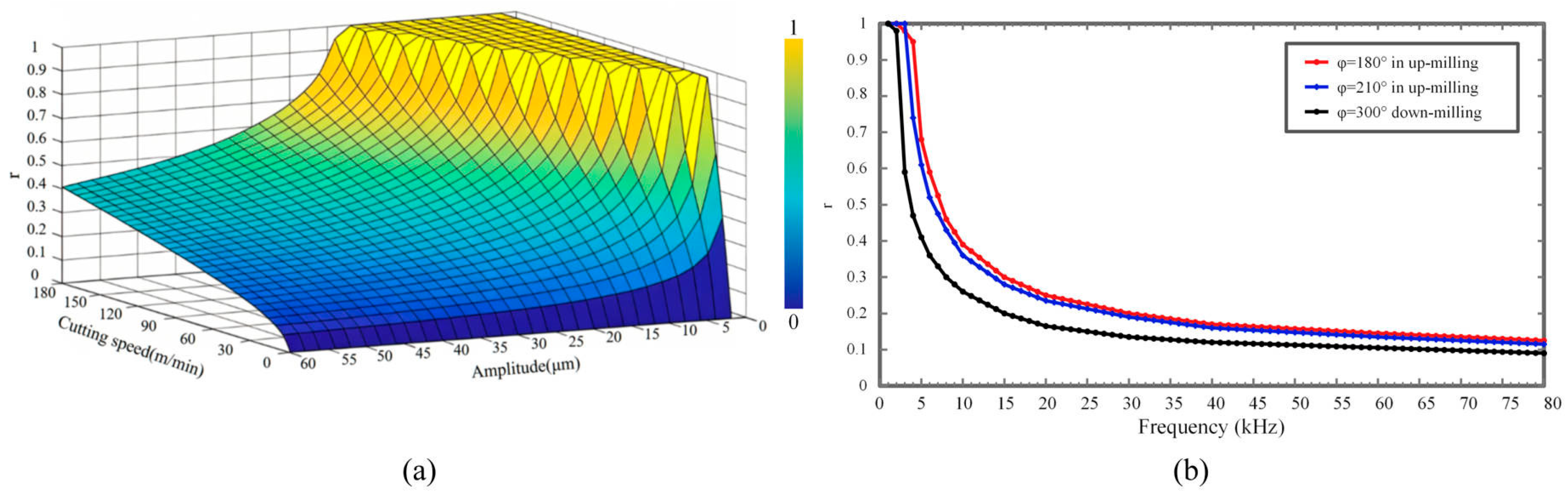
UVAM has core advantages over conventional machining. This is because introducing ultrasonic vibrations into the traditional machining process applies high-frequency, low-amplitude mechanical vibrations to the tool, transforming the continuous cutting process into periodic, intermittent pulse cutting, thereby reducing the tool-workpiece contact ratio [64,65,66,67,68]. Based on this, to analyze the periodic separation characteristics in UVAM, Ni et al. [42] proposed a mathematical model for evaluating the tool-workpiece contact ratio (TWCR). The TWCR is the ratio of the cutting time to the duration of a single vibration cycle, and its value depends on various machining and ultrasonic vibration parameters. During UVAM, the TWCR is influenced by the cutting speed, vibration frequency, amplitude, and cutting angle. Figure 2 illustrates the effects of cutting speed, amplitude, and frequency on the TWCR during UVAM. As the amplitude and frequency increase, the TWCR value decreases, and the separation time increases [69]. The cutting speed exhibited a positive correlation with the TWCR during UVAM. Because the contact time between the tool and workpiece is longer during high-speed cutting, the TWCR increases with increasing cutting speed [70]. The cutting angle [71,72] also has a significant effect on the contact rate during the UVAM process: in up-milling, the TWCR decreases as the cutting angle increases, whereas in down-milling, it increases as the cutting angle increases. The machining performance of UVAT is highly dependent on the tool-workpiece contact rate. Similarly to UVAM, the TWCR in UVAT is influenced by three key machining parameters: cutting speed, vibration frequency, and amplitude. The low contact rate achieved under conditions of high amplitude, high frequency, and low cutting speed can effectively reduce the cutting forces and temperatures, thereby improving the surface finish [73].
In summary, UVAM is not merely a means of optimizing process parameters, but a machining method that actively regulates the tool-workpiece contact state, material removal mode, and interfacial friction behavior through high-frequency, small-amplitude vibrations. For Ti-Al IMCs, this characteristic exhibits distinct material-specific significance. Ti-Al IMCs such as γ-TiAl, α2-Ti3Al, and TiAl3 possess a combination of low density, high-temperature strength, and excellent oxidation resistance, holding significant application potential in lightweight hot-section components such as low-pressure turbine blades of aero-engines. However, their ordered crystal structure, limited slip systems, insufficient room-temperature plasticity, and strong tendency towards brittle fracture lead to severe issues during conventional cutting, grinding, and drilling processes, including excessive cutting forces, rapid tool wear, surface/subsurface cracks, edge chipping, and accumulation of machining damage.
Previous studies on ultrasonic machining and UVAM have demonstrated that acoustic vibration can alter the material removal process through periodic separation, instantaneous impact, friction reduction, and regulation of chip formation, making it particularly suitable for low-damage machining of hard and brittle or difficult-to-machine materials. Therefore, the core significance of introducing UVAM into the machining research of Ti-Al IMCs should not be limited to “reducing cutting forces” or “improving surface roughness” but should be elevated to the level of material machinability regulation. Specifically, it is necessary to systematically evaluate the effects of ultrasonic vibration on the material removal behavior and service-related surface quality of Ti-Al IMCs by focusing on the coupling relationships among brittle-ductile transition, crack initiation and propagation, surface integrity, tool wear mechanisms, and machining efficiency.
Based on this, this review focuses on the machinability evolution of Ti-Al intermetallic compounds during ultrasonic vibration-assisted machining, with particular emphasis on the intrinsic relationships among ultrasonic vibration parameters, machining methods, microstructural characteristics, and machining-induced damage, thereby providing a reference for the efficient and low-damage manufacturing of this class of high-performance lightweight intermetallic compounds.

3. Current Status of Research on the Machining Performance of Ti-Al IMCs

Researchers, both domestically and internationally, have explored various directions to evaluate the machining characteristics of Ti-Al IMCs under actual operating conditions, focusing on the mechanisms of material removal. The mechanical behavior of materials during cutting [74], thermomechanical coupling effects [75], material separation mechanisms [76], patterns of cutting force variation [77], heat distribution during cutting [78], chip formation characteristics, and tool failure modes [79] have been analyzed in previous studies. These studies have laid a solid theoretical and experimental foundation for optimizing the UVAM processes of Ti-Al IMCs, improving their post-machining surface integrity, and broadening their engineering applications.

3.1. Current Status of Research on Cutting Forces

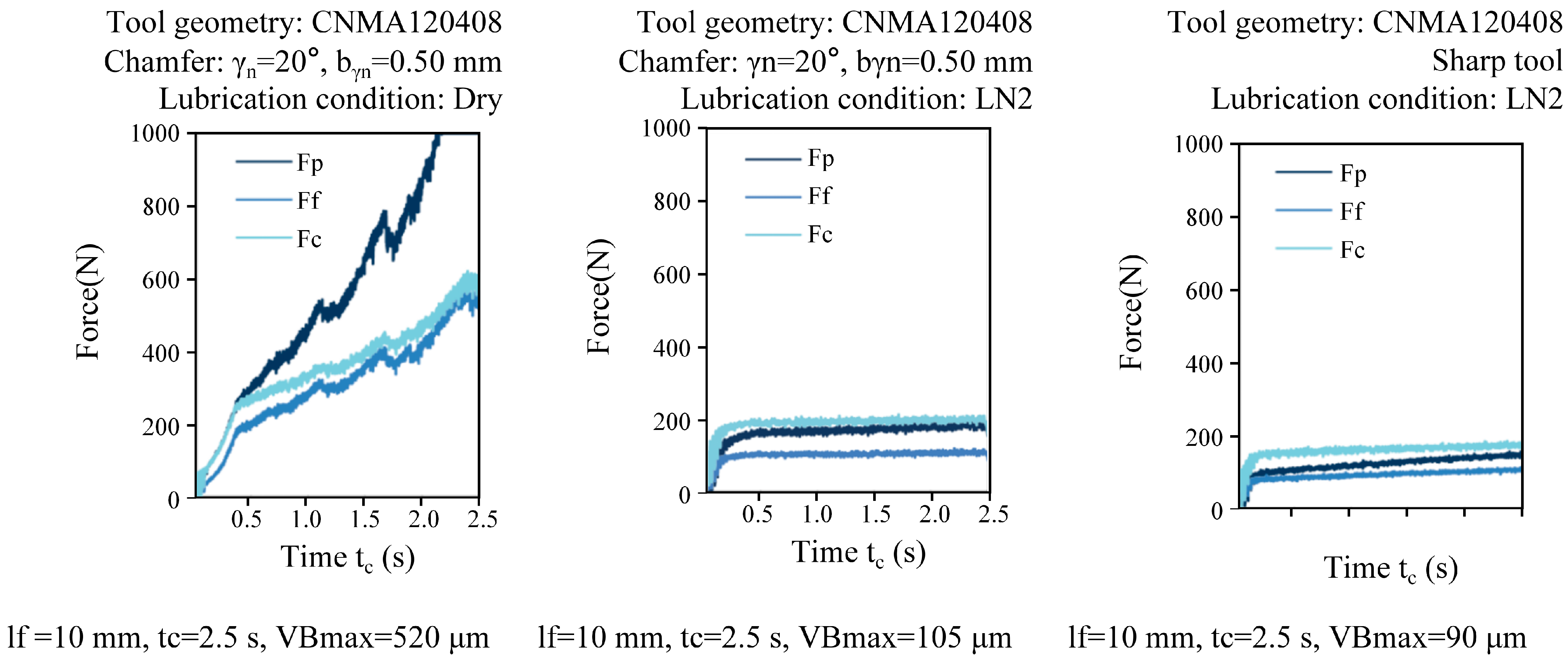
The magnitude of the cutting force is closely related to factors such as cutting energy consumption, tool wear rate, and machined surface quality [80,81]. Scholars both domestically and internationally have conducted extensive research on the variation in cutting forces during the UVAM of Ti-Al IMCs. The effects of different machining methods and experimental conditions on cutting force are summarized in Table 2. Klocke et al. [82] used a CNMA120408-type tool to investigate the mechanisms by which cooling methods, tool geometric parameters, and wear levels affect cutting forces in Ti-45Al-8Nb-0.2C-0.2B; the experimental results are shown in Figure 3. Under identical machining parameters, the cutting forces and rake face wear generated by dry cutting were 3 and 4.95 times higher, respectively, than those under liquid nitrogen cooling conditions, indicating that liquid nitrogen cooling can significantly reduce cutting forces and delay tool wear. Comparing the effects of tool geometry, the rake face wear of a sharp-edged tool under liquid nitrogen cooling was 8.5% lower than that of a chamfered tool, indicating that edge sharpness reduces cutting resistance [83]. The study also noted that among the various cutting parameters, cutting depth had the most significant impact on the cutting force, followed by feed rate, whereas the effect of cutting speed was relatively minor. Two-dimensional finite element simulations and experiments by Patil et al. [84] on Ti-6Al-4V demonstrated that UVAT can reduce cutting forces by approximately 40–45%, with the reduction in force decreasing as the cutting speed increases. They emphasized that the intermittent tool-workpiece contact induced by ultrasonic vibration was the primary cause of the reduction in cutting forces.
Li et al. [85] established a force prediction model for ultrasonic-assisted grinding (UAG) based on the single-grain chip formation mechanism. This model accounts for the force components in the three stages of sliding, plowing, and chip formation, and its accuracy was verified through experiments on γ-TiAl alloys. The results show that the grinding force decreases with increasing amplitude and frequency; for example, when the amplitude increases from 10 μm to 30 μm, the cutting force decreases by 28%. Gao et al. [86] established a cutting force model for longitudinal ultrasonic-assisted spiral grinding of α-Ti3Al microholes and systematically analyzed the effect of ultrasonic vibration on cutting forces. They found that when the ultrasonic amplitude increased from 0 to 1.6 μm, the planar and axial cutting forces decreased by 27.2% and 28%, respectively, and the total grinding force decreased by 27.4%. This was primarily due to the increased cutting speed of the abrasive grains under ultrasonic vibration, which reduced the cross-sectional area of the swarf, thereby decreasing the grinding force [86].
Based on existing research on the cutting forces of Ti-Al IMCs [87,88,89], the mechanical properties of these materials result in a relatively high baseline cutting force. Because modifying the mechanical properties of these materials is costly, employing UVAM combined with appropriate cutting parameters, utilizing liquid nitrogen cooling, or employing minimal lubrication techniques can effectively mitigate the issue of high cutting forces during the machining of such materials.

3.2. Current Status of Research on Cutting Temperature

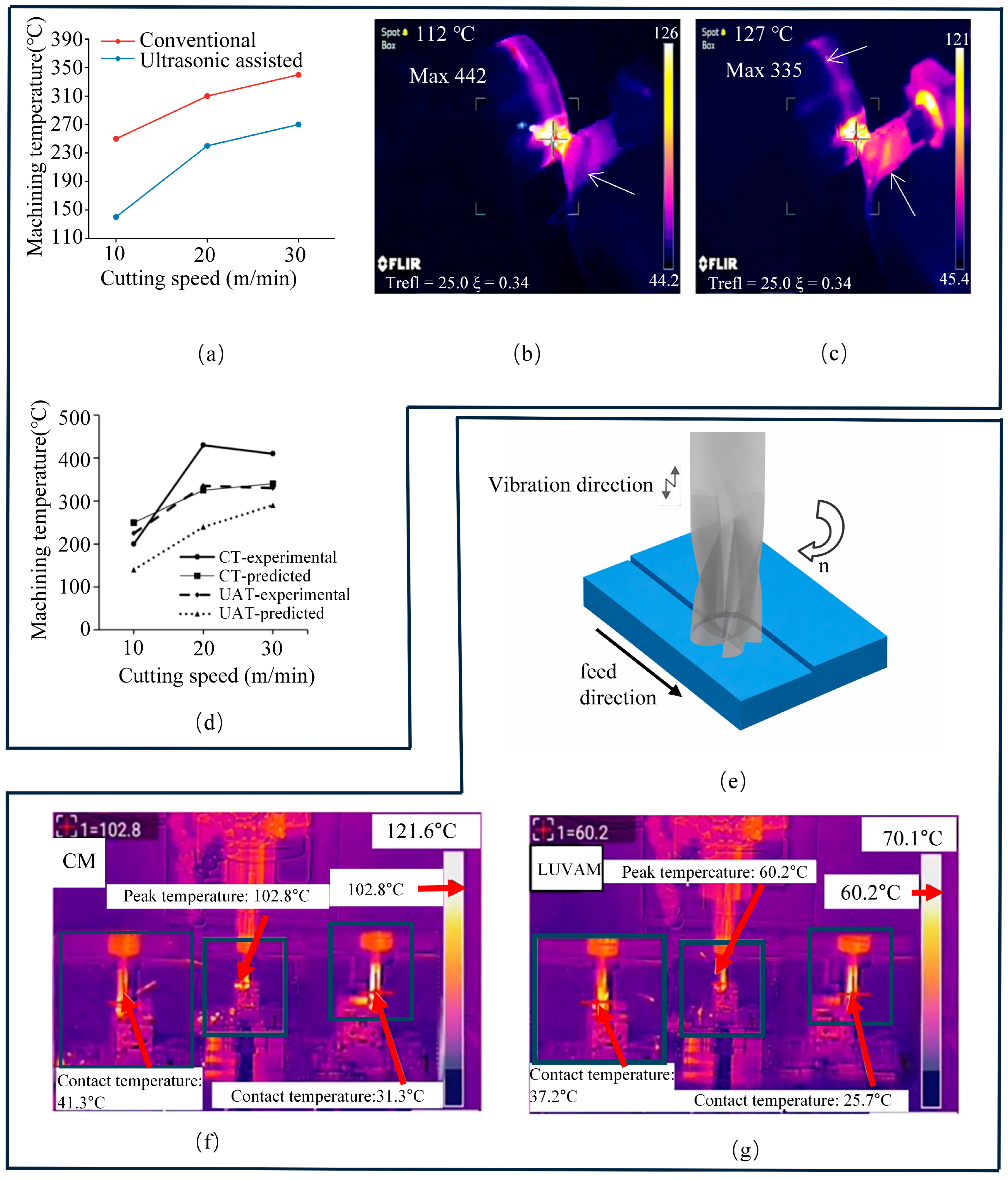
Cutting temperature is a core parameter in UVAM technology, directly affecting tool life, surface integrity, and machining efficiency when processing Ti-Al IMCs. Researchers, both domestically and internationally, have conducted extensive studies on the variation in cutting temperature during UVAM of Ti-Al IMCs. Patil et al. [84] investigated the cutting temperature during UVAT of Ti-6Al-4V through experiments and finite element modeling (FEM). The results are presented in Figure 4a–d. At cutting speeds between 10 and 30 m/min, the temperature during UVAM was consistently lower than that during conventional turning. This is attributed to the intermittent contact between the tool and workpiece caused by ultrasonic vibrations, which reduces frictional heat generation and enhances heat diffusion [90,91]. Khan et al. [54] compared machining temperatures during conventional machining and longitudinal ultrasonic vibration-assisted milling (LUVAM) processes and noted that both UVAT and UVAM reduce cutting temperatures, as shown in Figure 4e–g. This is primarily due to the intermittent separation of the tool caused by vibrations, which reduces the concentration of the heat sources.
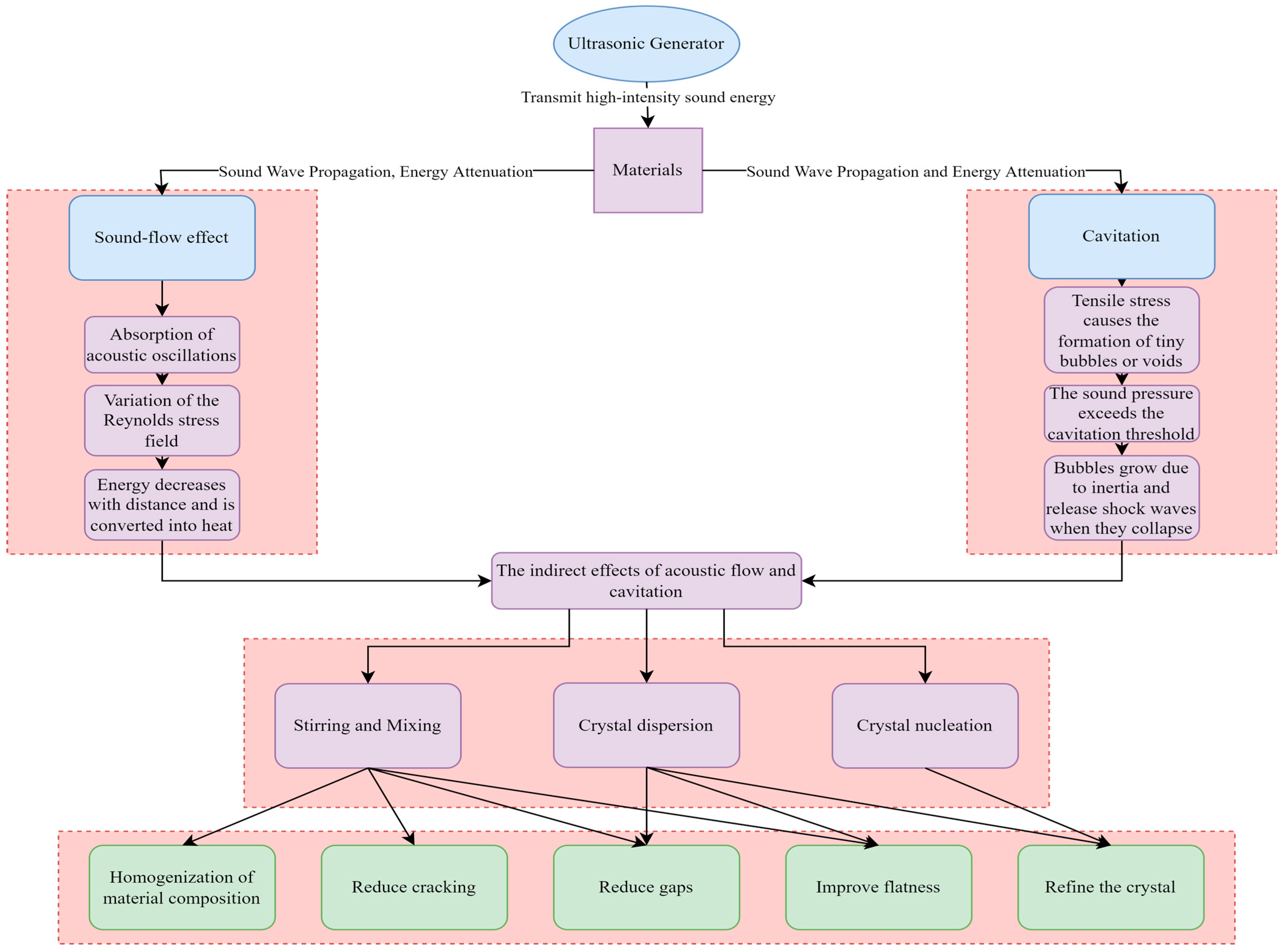
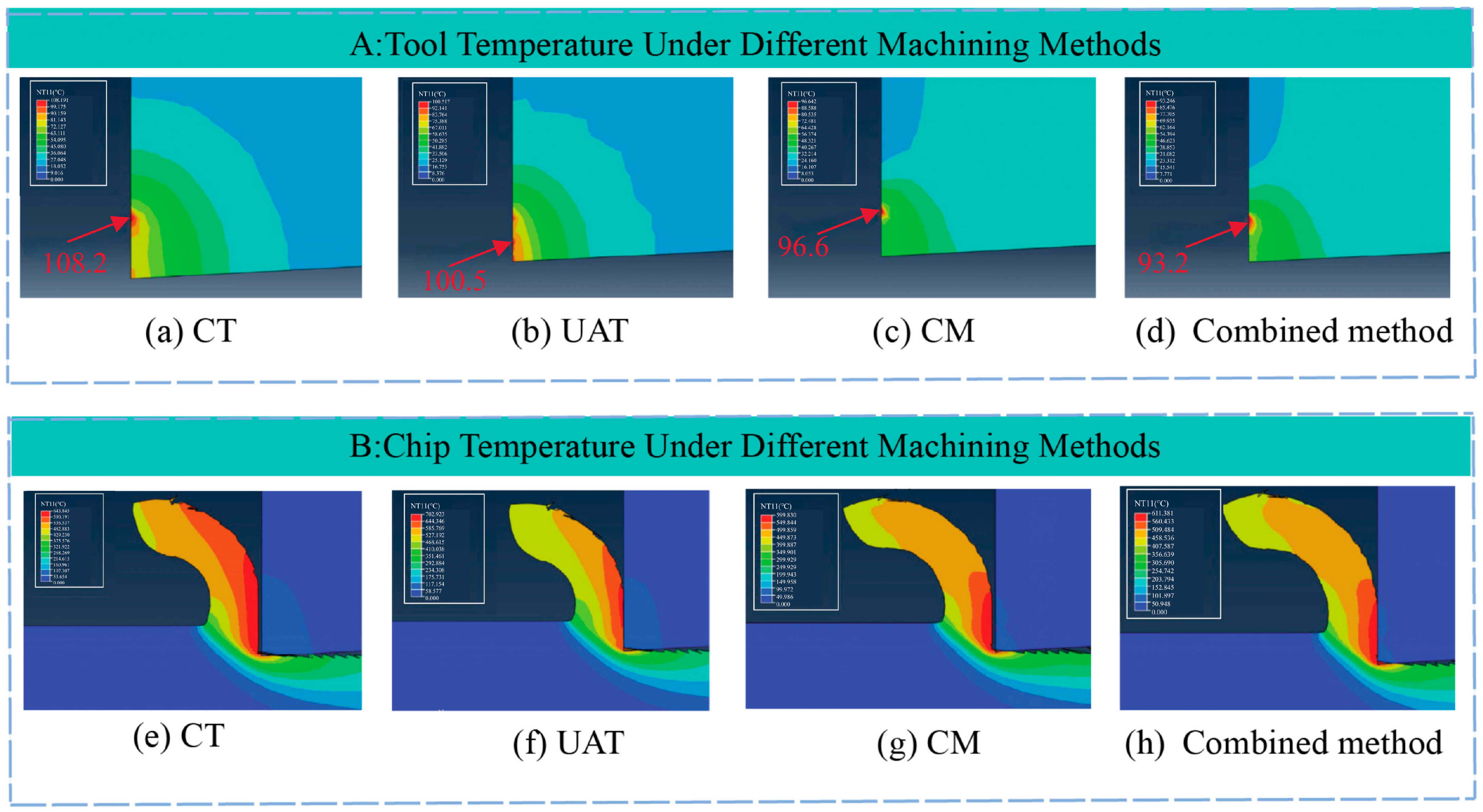
Ning and Cong [92] pointed out that ultrasonic vibration promotes heat dissipation during thermal manufacturing through acoustic streaming and cavitation effects, thereby reducing local temperature peaks. The role and effects of ultrasonic vibration during the machining process are shown in Figure 5. In their study on ultrasonic vibration-assisted milling (UVAM) of Ti-6Al-4V, Gao et al. [93] found that increasing the vibration amplitude (e.g., from 1 μm to 4 μm) enhanced the tool separation effect, thereby reducing the average cutting temperature. However, excessively high amplitudes may lead to an increased vibration energy input, which in turn raises the temperature; therefore, an optimal parameter range exists. Liu et al. [94] demonstrated through single-factor experiments that in LTUAG, the grinding temperature increases gradually with an increase in the grinding wheel linear velocity. Bejjani et al. [95] combined low-temperature cooling with UVAT and analyzed the temperature distribution of the tool and chips during machining using computational fluid dynamics (CFD) and FEM simulations, as shown in Figure 6. The study found that introducing a low-temperature fluid (such as carbon dioxide) into the UVAT can further reduce the tool temperature by approximately 13.86% compared to using the UVAT alone, as the low-temperature fluid enhances thermal convection and cooling at the tool-workpiece interface. This experiment validated that the combined method can effectively suppress the temperature increase and reduce tool thermal softening.
In summary, ultrasonic vibration effectively reduced the temperature through intermittent contact and enhanced heat diffusion. Simultaneously, the use of appropriate cooling techniques during machining can reduce heat generation at the source and accelerate heat transfer [96]. Additionally, adjusting the machining parameters can lower the temperature in the cutting zone, thereby improving the machinability of Ti-Al IMCs [97]. Future research should focus on multi-field coupling effects, such as combining low-temperature, lubrication, and laser-assisted techniques to further enhance cooling efficiency.

3.3. Current Status of Research on Chip Morphology

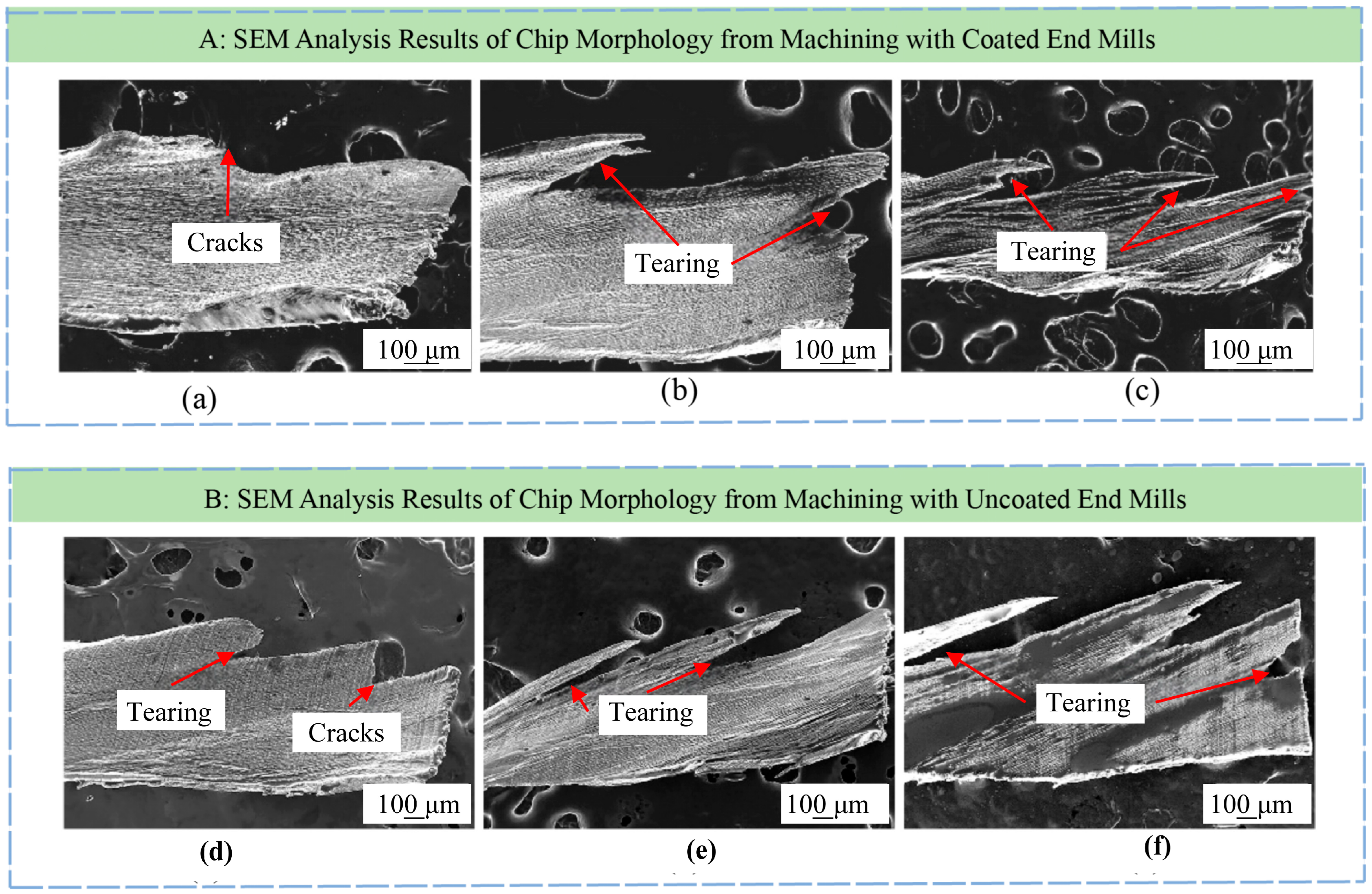
As a key output parameter in UVAM, chip morphology not only reflects the material removal mechanisms, tool-workpiece interactions, and machining stability, but also directly affects the surface finish, tool life, and overall machining efficiency, making it crucial for the machining and precision manufacturing of Ti-Al IMCs [98]. Scholars both domestically and internationally have conducted extensive research on the changes in chip morphology during the UVAM of Ti-Al IMCs. The effects of different machining methods and experimental conditions on chip morphology are summarized in Table 3. Wang et al. [99] observed in side milling experiments on Ti2AlNb that the conventional machining of Ti-Al IMCs, such as Ti2AlNb and γ-TiAl, produced thick, irregular chips accompanied by significant tearing and material adhesion. In contrast, the chips generated by UVAM were thinner and more uniform, with significantly reduced edge tearing. This is attributed to heat accumulation and plastic deformation caused by the material’s high fracture toughness and low thermal conductivity, whereas the introduction of ultrasonic vibration alters the chip formation mechanism through a periodic tool-workpiece separation effect. Simultaneously, Wang et al. [99] analyzed via scanning electron microscopy (SEM) that chips produced using coated tools (such as TiAlN-coated tools) under ultrasonic vibration assistance had more uniform edges and less tearing, whereas uncoated tools were prone to severe chip edge tearing and plastic flow marks, as shown in Figure 7. Thus, the tool condition is a key factor influencing chip morphology, and chip control can be improved by optimizing the coating design of the tools. To interpret this coating effect, the source of Al at the tool-chip interface must be distinguished. Some of the Al originated from the titanium workpiece. For example, Yang et al. [100] showed that Al is an intrinsic alloying element in the TC4 titanium alloy and remains mainly in the TC4 matrix, whereas Yu et al. [101] also detected Al in the original TC4 surface composition. This type of Al reflects the chemical composition and phase constitution of the workpiece. In contrast, when Al-containing coated tools, such as TiAlN or AlCrN, are used, additional Al may be introduced from the tool coating during cutting. Yu et al. [101] reported that AlCrN-coated carbide tools can react with TC4 at high temperature and pressure, forming adhesive or diffusion layers on the rake face; meanwhile, the workpiece material may adhere to the coating surface and promote coating peeling and fretting-slip wear. Therefore, the Al observed on the chip edges or machined surfaces during coated-tool machining should be regarded as the combined result of intrinsic workpiece Al and coating-derived Al-containing transfer/adsorption layers, rather than being attributed only to the titanium alloy substrate. This distinction also helps explain why ultrasonic vibration assistance improves chip morphology. As demonstrated by Hu et al. [102], longitudinal bending hybrid ultrasonic vibration promotes intermittent tool-chip separation, suppresses adhesion, and facilitates chip segmentation, thereby reducing edge tearing and plastic flow traces.
In contrast, Nath et al. [31] found that conventional turning (CT) produced thick, uneven, short, and cracked chips in Inconel 718, whereas UVAT produced relatively thinner, smoother, and longer chips. Similarly, Ni et al. [42] conducted analytical modeling and experimental studies on the tool-workpiece contact rate during ultrasonic vibration-assisted milling of Ti-6Al-4V and found that, for Ti-6Al-4V, the chips produced by conventional milling (CM) were thicker, longer, and more tortuous than those produced by ultrasonic vibration-assisted milling (UVAM). Tesfay et al. [103] indicated that chips produced during conventional grinding (CG) were thicker and longer than those produced during ultrasonic vibration-assisted grinding (UVAG). Additionally, chips obtained during CG exhibited a rough texture, with average dimensions ranging from 0.64 to 0.68 mm, whereas in the UVAG process, the chips were smaller, with an average size of approximately 0.05 to 0.07 mm. Thus, the influence of ultrasonic vibration alters the chip formation mechanism.
Furthermore, compared to conventional machining, the high-frequency intermittent cutting characteristics alter the material removal behavior of hard and brittle materials. Studies have found that different material removal modes exist in UVAG (e.g., ductile and brittle modes). In the ductile mode, the maximum undeformed chip thickness was approximately 3.369 μm [104]. However, when operating in the brittle mode, the maximum undeformed chip thickness is significantly higher than 3.369 μm, leading to an increased surface roughness in the brittle grinding mode. Some studies have also indicated that the amplitude affects chip morphology. For example, an amplitude in the range of 6.5–7.5 μm effectively suppresses crack propagation and promotes plastic removal; however, when the amplitude exceeds 8.5 μm, excessive dynamic impact forces can induce brittle fracture [105].
In summary, UVAM significantly improved the chip morphology of Ti-Al IMCs by altering the chip formation mechanism, thereby reducing machining defects and improving machining efficiency. Simultaneously, different machining methods and the use of coatings also influenced chip morphology during the cutting process. Future research should focus on the effects of multi-field-coupled UVAM on chip morphology and on optimizing machining parameters to further enhance the machining accuracy and sustainability of Ti-Al IMCs.

3.4. Current Status of Research on Tool Wear

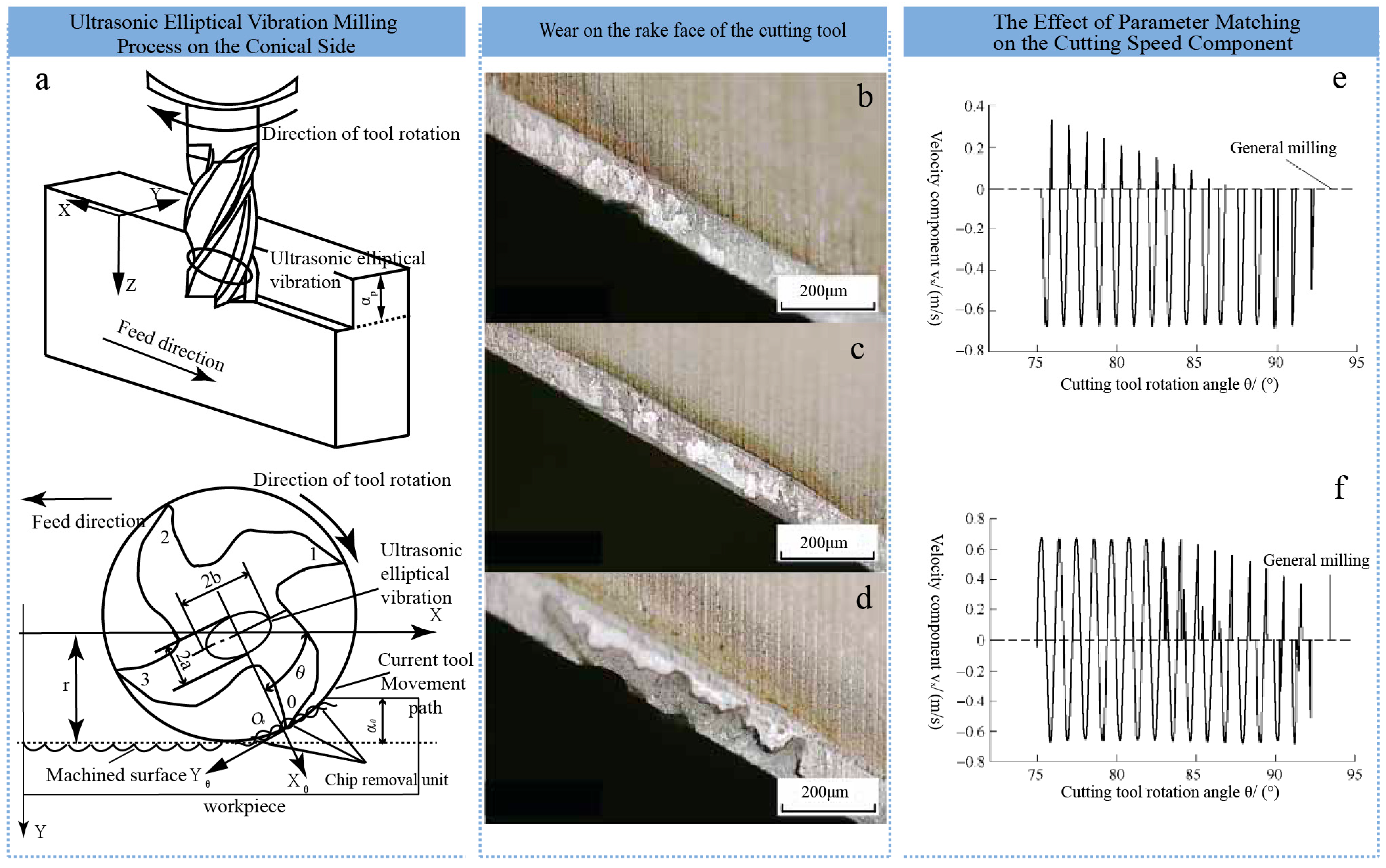
In the UVAM of Ti-Al IMCs, tool wear is a key factor that limits machining efficiency and quality [106]. Owing to the high strength, low thermal conductivity, and high chemical reactivity of Ti-Al IMCs, tools are prone to adhesion, diffusion, and oxidation wear during conventional machining, resulting in reduced tool life [107,108,109,110]. Ultrasonic vibration significantly influences the tool wear behavior by altering the tool-workpiece interaction mechanism [111]. Researchers have conducted extensive studies on changes in chip morphology during the UVAM of Ti-Al IMCs, both domestically and internationally. Liu et al. [112] performed experiments on the side milling of Ti-6Al-4V using high-speed rotating ultrasonic elliptical vibration (the material removal process is shown in Figure 8a). After the experiments, the wear on the rake face of the tool was observed under a microscope (Figure 8b–d). The results revealed that appropriate parameter matching (e.g., a vibration period lag coefficient K = 0.25) enables separated intermittent cutting (Figure 8e), resulting in uniform and gradual wear on the rake face of the tool, with mechanical wear being the primary mechanism at this stage. In contrast, non-separated cutting (K = 1.00, as shown in Figure 8f) results in adhesive wear and chipping owing to the impact and plastic deformation on the rake face of the tool.
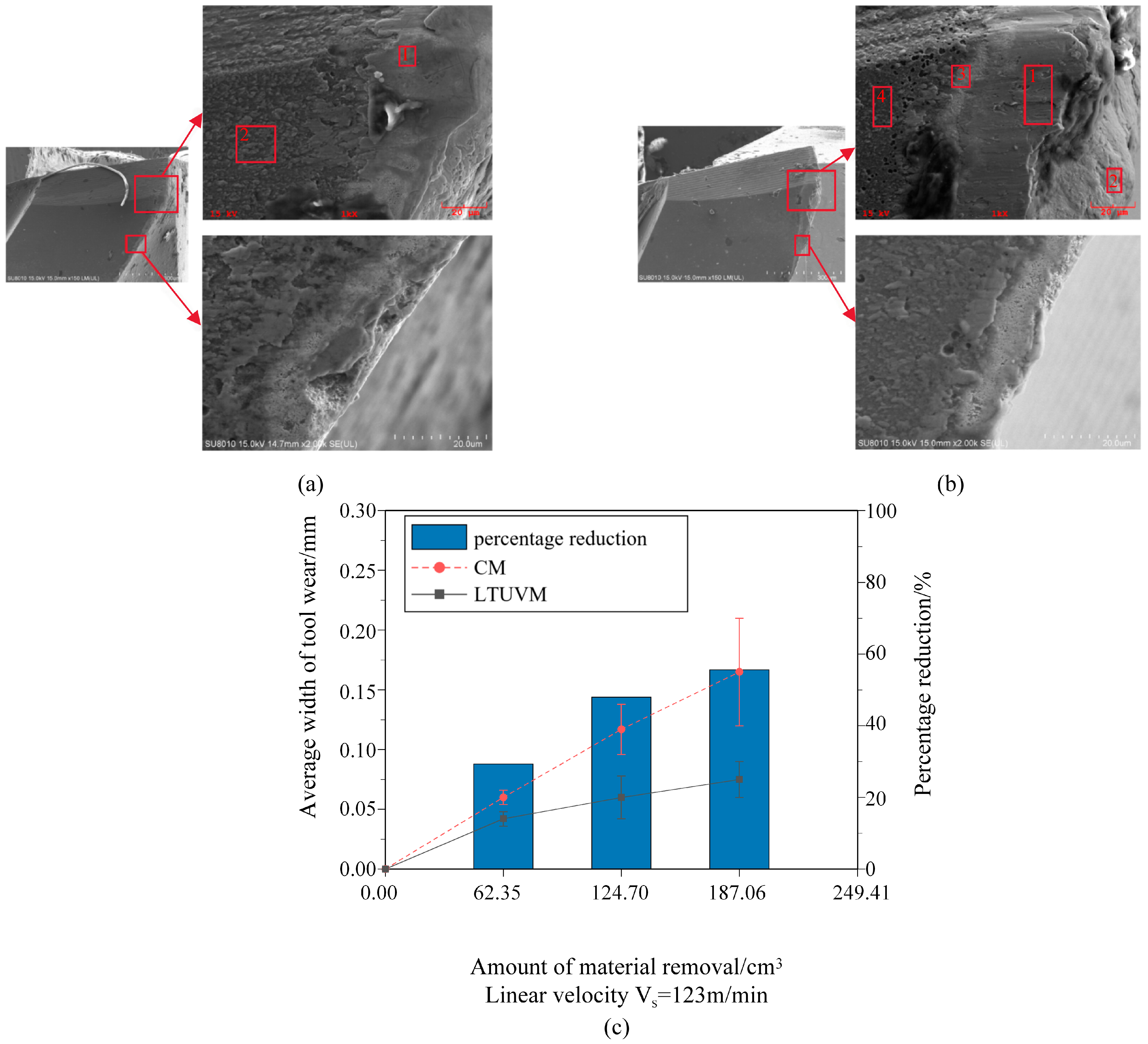
Lu et al. [113] observed in ultrasonic side milling tests of titanium-aluminum alloys that the rake face was dominated by adhesive wear, accompanied by oxidation and diffusion wear, while the flank face was dominated by diffusion and adhesive wear, both accompanied by coating peeling. Han et al. [114] noted in their study on the longitudinal torsional ultrasonic vibration milling (LTUVM) of Ti-6Al-4V that even when the cutting speed exceeded the critical value (approximately 60 m/min), causing the separation phenomenon to disappear, LTUVM can still reduce wear by lowering the tool-workpiece friction coefficient. The results showed that the wear width of the LTUVM tools was reduced by 55.82% and the wear rate by 76.64% compared to CM (see Figure 9). This is primarily attributed to the ultrasonic volume effect and friction reversal mechanism proposed by Kumar et al. [115], which posits that vibration lowers the average coefficient of friction and reduces heat accumulation. The above studies indicate that under high-speed machining conditions, the wear suppression effect of UVAM is more pronounced. Different ultrasonic vibration modes exhibit varying effects on wear [116]. For example, both elliptical vibration (UEVM) and longitudinal torsional vibration (LTUVM) can reduce cutting forces; however, UEVM facilitates separated cutting more effectively at low speeds, whereas LTUVM suppresses wear through multidirectional vibration at high speeds. Nevertheless, current research primarily focuses on single vibration modes and lacks systematic comparisons. Furthermore, the mechanisms underlying tool degradation caused by ultrasonic vibration when using tool coatings (such as TiAlN) remain unclear and require further investigation.
In summary, during the UVAM of Ti-Al IMCs, optimizing the cutting trajectories and interface conditions significantly mitigates tool wear; however, the effectiveness is influenced by the vibration parameters, cutting speed, and tool coatings. Future research should focus on the coupled effects of multiple vibration modes, machine learning-based tool wear prediction models, and the influence of different vibration directions on cutting performance to advance the application of UVAM in the field of aerospace materials.
Overall, current studies indicate that the machinability of Ti-Al IMCs is mainly governed by the coupled effects of cutting force, cutting temperature, chip formation, and tool wear. Owing to their high strength, low thermal conductivity, and strong chemical activity, Ti-Al IMCs usually exhibit high cutting resistance, severe heat accumulation, irregular chip formation, and rapid tool degradation during conventional machining. UVAM primarily improves these problems through intermittent tool-workpiece contact, friction reduction, enhanced heat dissipation, and modified material removal behavior. Appropriate vibration amplitude and frequency can reduce cutting forces and temperature, promote thinner and more uniform chips, and suppress adhesive, diffusion, and oxidation wear. As shown in Table 4. However, the beneficial effects are strongly dependent on parameter matching; excessive amplitude, high cutting speed, unsuitable tool coating, or poor cooling conditions may weaken tool-workpiece separation, increase dynamic impact or thermal load, and accelerate tool failure. Therefore, future research should emphasize multiparameter optimization, multifield coupling strategies, and systematic comparisons of different vibration modes to further improve the machining efficiency, surface integrity, and tool life of Ti-Al IMCs.

4. Current Status of Research on Surface Integrity of Ti-Al IMCs

Surface integrity primarily encompasses surface topography [117], mechanical characterization of the surface and near-surface layers [118], and surface microstructure [119]. The results of these characterizations are closely related to the material properties, tool selection, machining parameters, cooling conditions, machine tool performance, and environmental factors [120,121,122]. During the precision machining of Ti-Al IMCs, challenges such as high cutting forces, excessive temperatures in the tool contact zone, and rapid tool wear are commonly encountered. These issues often result in suboptimal final surface quality of the workpiece, with surface defects such as microcracks, material spalling, brittle fractures, and hardening [123,124,125,126,127,128]. During UVAM, maintaining the surface integrity of Ti-Al IMCs is of paramount importance. To enhance this integrity, it is essential to understand the effects of UVAM on the machined surfaces. Researchers have conducted in-depth studies from multiple perspectives, including surface roughness, microdefect distribution, residual stress states, and hardened-layer characteristics.

4.1. Current Research Status on Surface Roughness

Surface roughness is a key indicator for evaluating the integrity of machined surfaces, directly affecting the fatigue life, wear resistance, and corrosion resistance of a component. Controlling the surface roughness is particularly critical during the UVAM of Ti-Al IMCs. UVAM significantly reduces the surface roughness and optimizes the surface texture (e.g., by homogenizing tool marks and suppressing burrs and chatter) through the introduction of high-frequency and low-amplitude vibrations. This mechanism is primarily attributed to the intermittent cutting behavior induced by vibration, which reduces the tool-workpiece contact time, lowers the cutting forces and heat accumulation, and thereby suppresses the plastic deformation of the material and the formation of surface defects [120,129,130]. Researchers both domestically and internationally have studied the surface roughness of machined Ti-Al IMCs from various perspectives, including vibration modes and cooling/lubrication techniques.
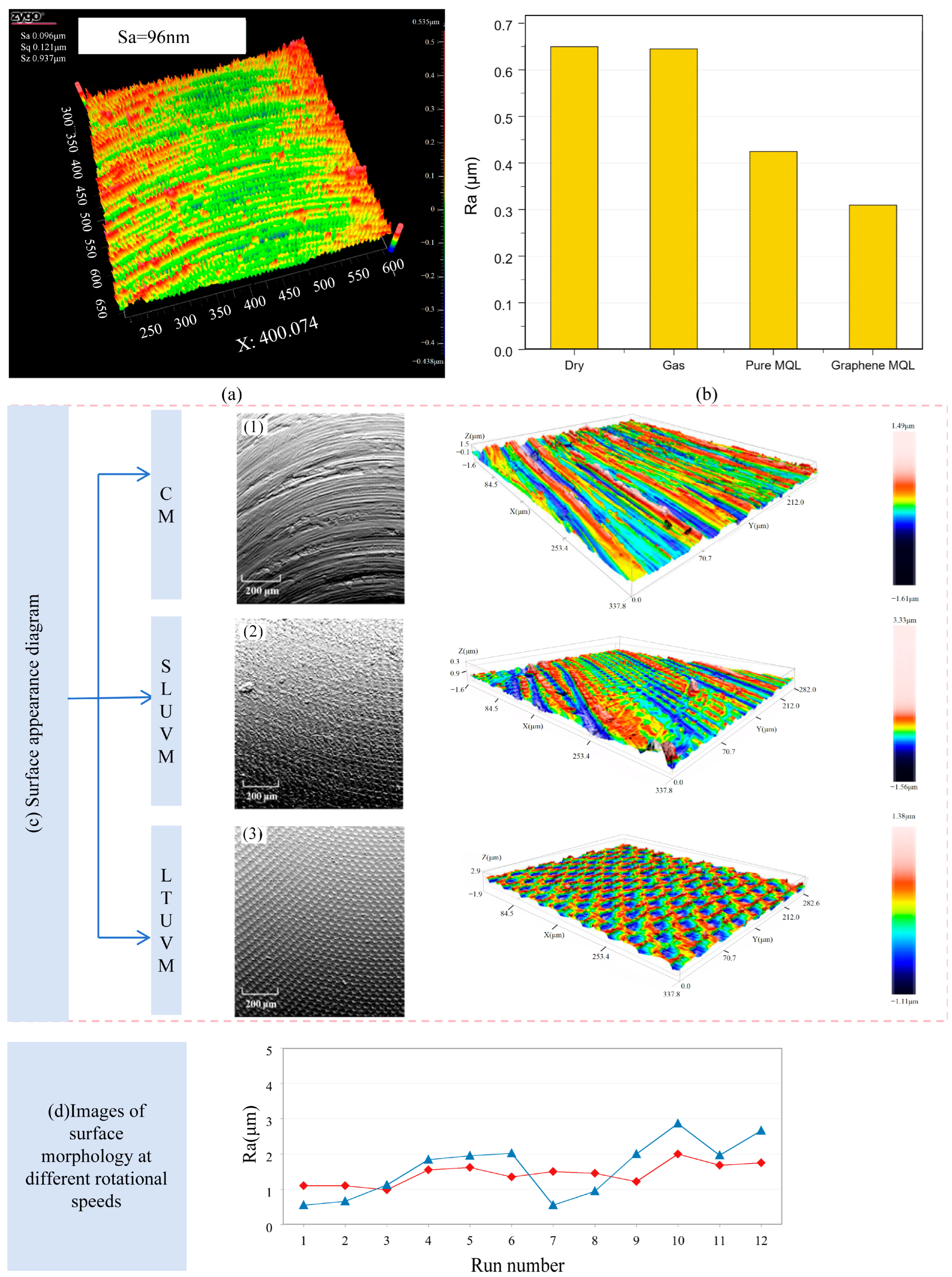
In terms of milling, research on surface roughness began later than that on turning. The materials under investigation primarily involve ultrasonic-assisted vibratory milling of metallic [120,131,132,133,134] and composite materials [135]. In a study on longitudinal-bending hybrid ultrasonic vibration milling of Ti-6Al-4V, Hu et al. [102] found that, compared to CM, longitudinal-bending hybrid ultrasonic vibration milling reduced the surface roughness Sa value from 180 to 96 nm, a decrease of 46.7%. The machining appearance observed using a white light interferometer is shown in Figure 10a. Li et al. [136] compared surface roughness under different cooling conditions, as shown in Figure 10b. Their study found that the surface roughness of TC4 milled under graphene minimal quantity lubrication (MQL) conditions was 311 nm [136,137], which is 324% higher than the 96 nm achieved by longitudinal-bending hybrid ultrasonic vibration milling. Therefore, compared with MQL milling, longitudinal-bending hybrid ultrasonic vibration milling can significantly reduce the surface roughness of machined titanium alloys while also reducing coolant consumption and avoiding environmental harm, demonstrating broad prospects for promoting environmentally friendly dry machining of TC4 alloys. Pang et al. [138] pointed out in their experiments on Ti-6Al-4V that LTUVM, under conditions of 3 μm amplitude and 20 kHz frequency, reduced the surface roughness Sa by 28.5% and generated a dense “sinusoidal” microstructure on the surface. Verified through finite element simulation, the vibration separation characteristics reduced the tool-workpiece contact time and suppressed material adhesion caused by thermal softening. As shown in Figure 10c. LTUVM further improved the surface quality. Similarly, the findings of Lotfi et al. [139] on three-dimensional elliptical ultrasonic-assisted turning (3D-EUAT) are illustrated in Figure 10d. Different spindle speeds also affect surface roughness; at the same spindle speed, ultrasonic vibration reduces surface roughness by approximately 30%, and the microstructure exhibits an isotropic distribution, avoiding the oriented tool marks commonly seen in CM.
Vibration parameters (such as amplitude and frequency) are crucial for optimizing the surface texture. Gao et al. [140] found that when the ultrasonic amplitude increased from 2 μm to 5 μm, the surface roughness Sa of Ti-6Al-4V processed by LTUVM decreased by approximately 25%; however, excessively increasing the amplitude (e.g., >5 μm) led to an increase in the microtexture slope, which reduced uniformity. Frequency matching is equally critical; if the vibration frequency deviates from the tool resonance band (e.g., 20 kHz), the surface quality deteriorates. Compared to various studies, LBVAM and 3D-EUAT outperform conventional vibration modes in suppressing chatter, as multidirectional vibration enhances the chip-breaking capacity and reduces dynamic instability during machining. Furthermore, Wang and Liu [141] conducted milling experiments on Ti-47.5Al-2.5V-1Cr to investigate the effects of different cutting parameters on surface roughness. The study showed that when the cutting speed increased from 40 m/min to 120 m/min, Ra fluctuated around 0.075 μm. However, at 80 m/min, defects caused abnormal Ra values. Furthermore, increasing the cutting depth or feed rate resulted in higher the Ra values. Priarone et al. [142] reported an inverse relationship between cutting speed and Ra; when the cutting speed varied from 35 to 71 m/min, Ra decreased by approximately 23%.
To date, studies combining UVAM with cryogenic cooling have mainly focused on conventional titanium alloys such as Ti-6Al-4V, whereas cryogenic cooling has also been independently investigated in the machining of γ-TiAl alloys. However, systematic studies on the hybrid application of UVAM and cryogenic cooling in the machining of Ti-Al intermetallic compounds remain scarce or have not yet been reported.
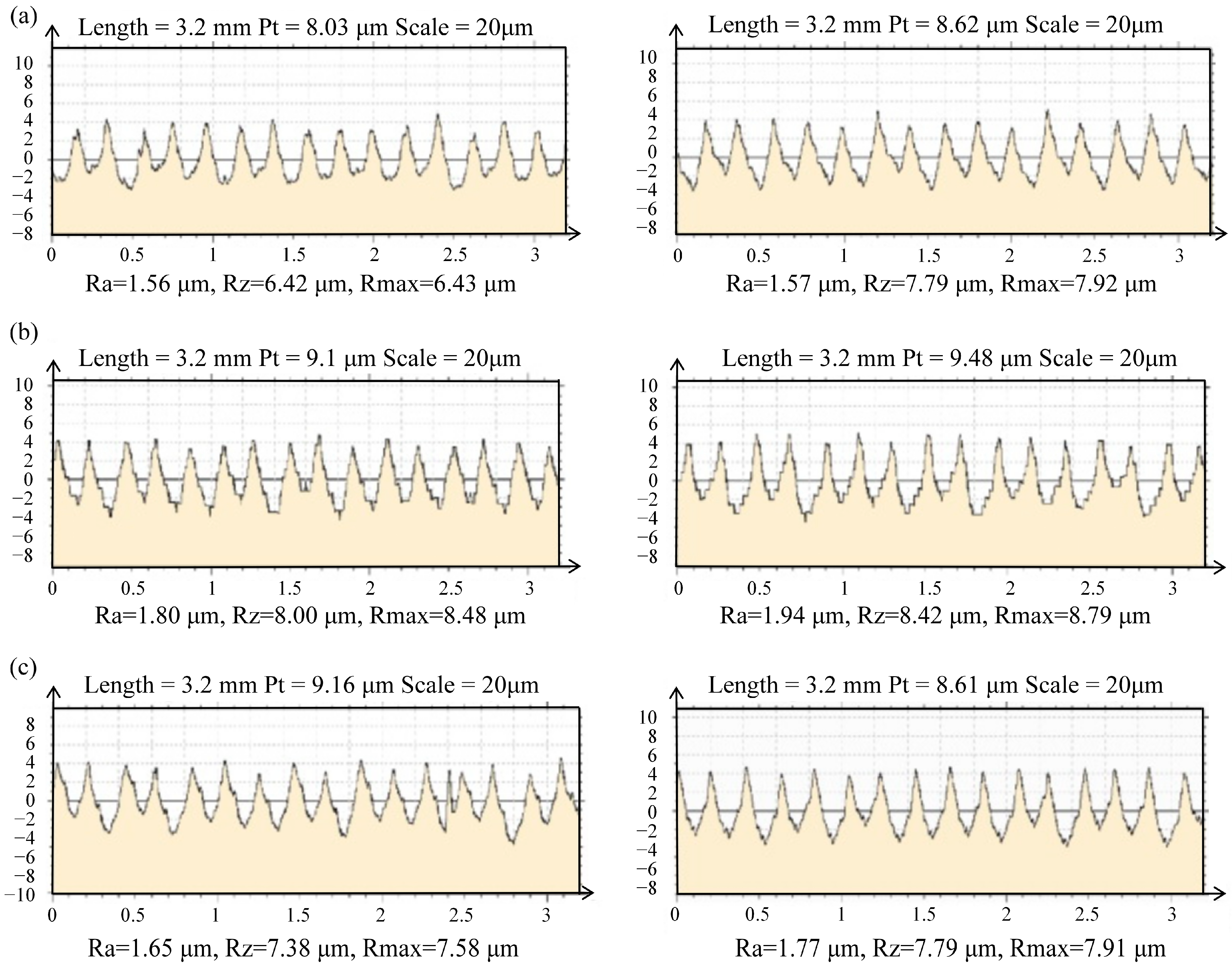
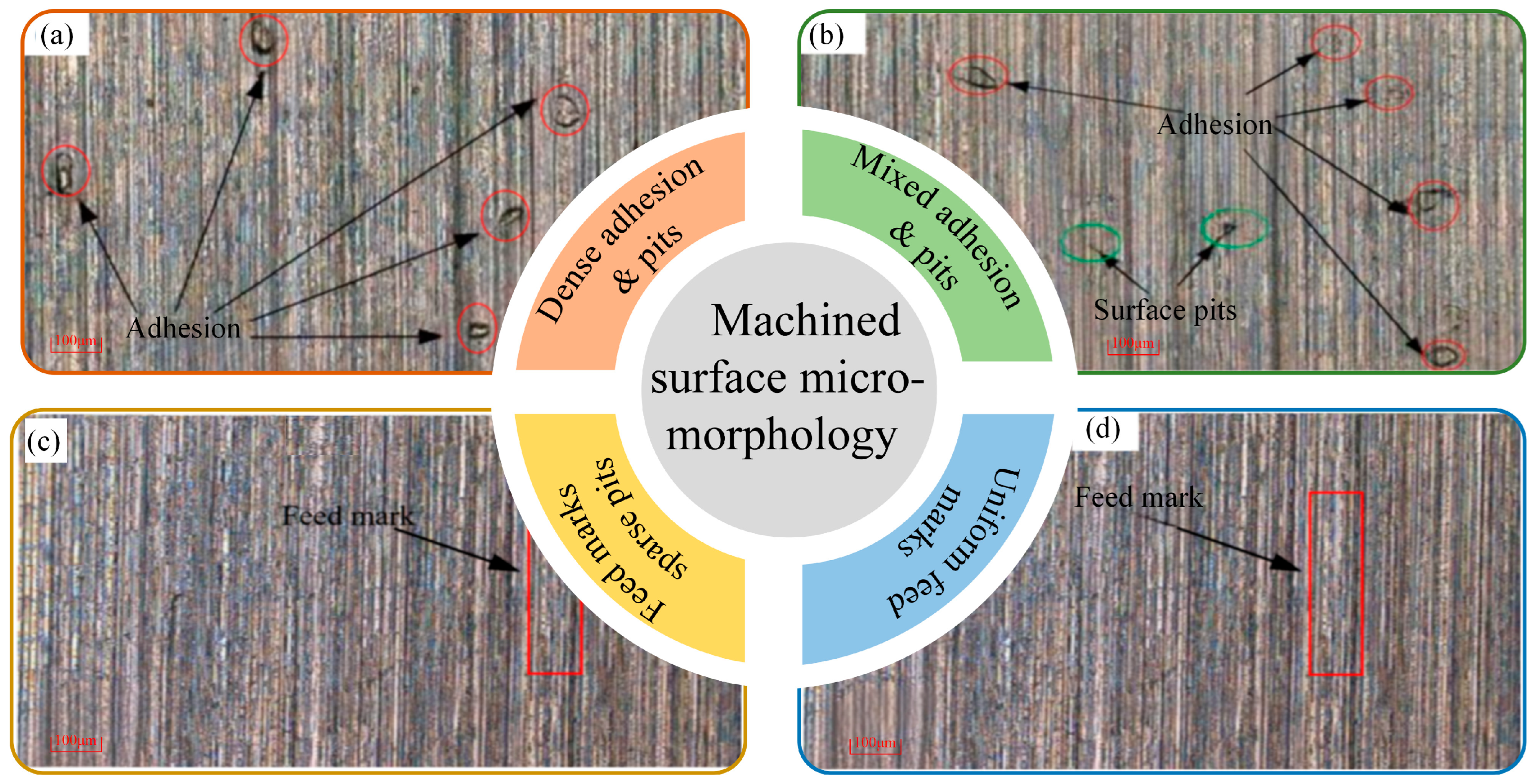
Cooling strategies also significantly affect the surface roughness. Nandy et al. [143] systematically compared the effects of different cooling methods—such as conventional wet cooling, high-pressure neat oil cooling, and high-pressure water-soluble oil cooling—on the post-machining surface roughness during the turning of Ti-6Al-4V alloy bars (150 mm in diameter). The experimental results are presented in Figure 11. Conventional wet cooling provides more stable machining conditions and yields the lowest surface roughness, making it suitable for applications with high-surface-quality requirements. In contrast, high-pressure cooling (especially with water-soluble oil) improves the tool life but sacrifices the surface quality, resulting in increased roughness. Surface roughness under conventional wet machining conditions appears to be lower than under other conditions [144,145,146,147]. Previous research by Sharman et al. [148] reached the same conclusion that surface roughness increases similarly under high-pressure cooling conditions. Li et al. [136] conducted an evaluation study on surface roughness by examining experiments involving partially submerged milling of TC4, comparing four cooling/lubrication conditions: dry conditions (dry, without any cooling or lubrication), gas conditions (gas, with only high-pressure gas injection and no coolant), pure MQL conditions (pure MQL, using the vegetable oil-based coolant LB2000 for MQL), and graphene MQL conditions (Graphene MQL, using graphene nanoparticles dispersed in a vegetable oil-based cutting fluid to form a nanofluid for MQL). They observed the machined surface topography using a confocal laser microscope and measured the surface roughness, Ra. The results are presented in Figure 12. The surface roughness was highest under dry conditions, at 0.653 μm. The surface exhibited obvious adhesion, pits, deep grooves, and feed marks (Figure 12a), indicating that high temperatures and high milling forces caused surface damage. Under gas conditions, the surface roughness decreased slightly to 0.647 μm (a 0.92% reduction compared to the dry condition), but the morphology remained poor, with adhesion and pits (Figure 12b), suggesting that gas cooling alone has limited effectiveness. Under pure MQL conditions, the surface roughness decreased significantly to 0.425 μm (a 34.92% reduction compared to dry cutting), with only feed marks visible on the surface and a reduction in adhesion and pits (Figure 12c), primarily due to the lubricating and cooling effects of the oil film. Under graphene-MQL conditions, the surface roughness was the lowest at 0.311 μm (a 52.37% reduction compared to dry cutting), with the smoothest surface morphology and only slight feed marks remaining (Figure 12d). This indicates that graphene can enhance the performance of oil films.
Compared with conventional titanium alloys such as Ti-6Al-4V, research on the application of hybrid UVAM and cryogenic cooling to the machining of Ti-Al IMCs remains limited. The above studies indicate that cryogenic cooling can effectively improve the surface integrity during the machining of materials such as γ-TiAl, whereas UVAM can enhance material removal stability by modifying the tool-workpiece contact condition, reducing the average cutting force, and improving the chip formation process. From a mechanistic perspective, these two techniques are complementary to some extent: cryogenic cooling mainly improves surface roughness through thermal control and tool wear suppression, whereas UVAM improves surface roughness primarily through intermittent cutting and reduced friction. Therefore, combining UVAM with cryogenic cooling is expected to simultaneously alleviate several issues encountered during the machining of Ti-Al IMCs, including high-temperature softening, brittle fracture, rapid tool wear, and surface damage. However, systematic investigations into the cutting mechanisms, thermo-mechanical coupling behavior, and evolution of surface integrity associated with this hybrid process in the machining of Ti-Al IMCs remain insufficient. Further studies on the synergistic mechanisms of UVAM and cryogenic cooling are therefore needed to clarify the relationships among vibration parameters, cooling strategies, and cutting parameters, thereby providing a theoretical basis and process support for the efficient and low-damage machining of Ti-Al IMCs.

4.2. Current Research Status on Surface Defects

During precision machining, Ti-Al IMCs (such as Ti2AlNb and γ-TiAl) are prone to developing coarse surface defects under mechanical stress and high temperatures owing to their high strength, low thermal conductivity, and high chemical reactivity. These defects include microcracks [149], tears [150], pits [151], material spalling [152], chip adhesion [141], welding [23], and coating [153]. These defects not only compromise the surface integrity but also affect the fatigue life and corrosion resistance of the components [154,155,156,157,158,159]. Researchers both domestically and internationally have conducted a series of experiments on the effects of UVAM on surface defects in Ti-Al IMCs.
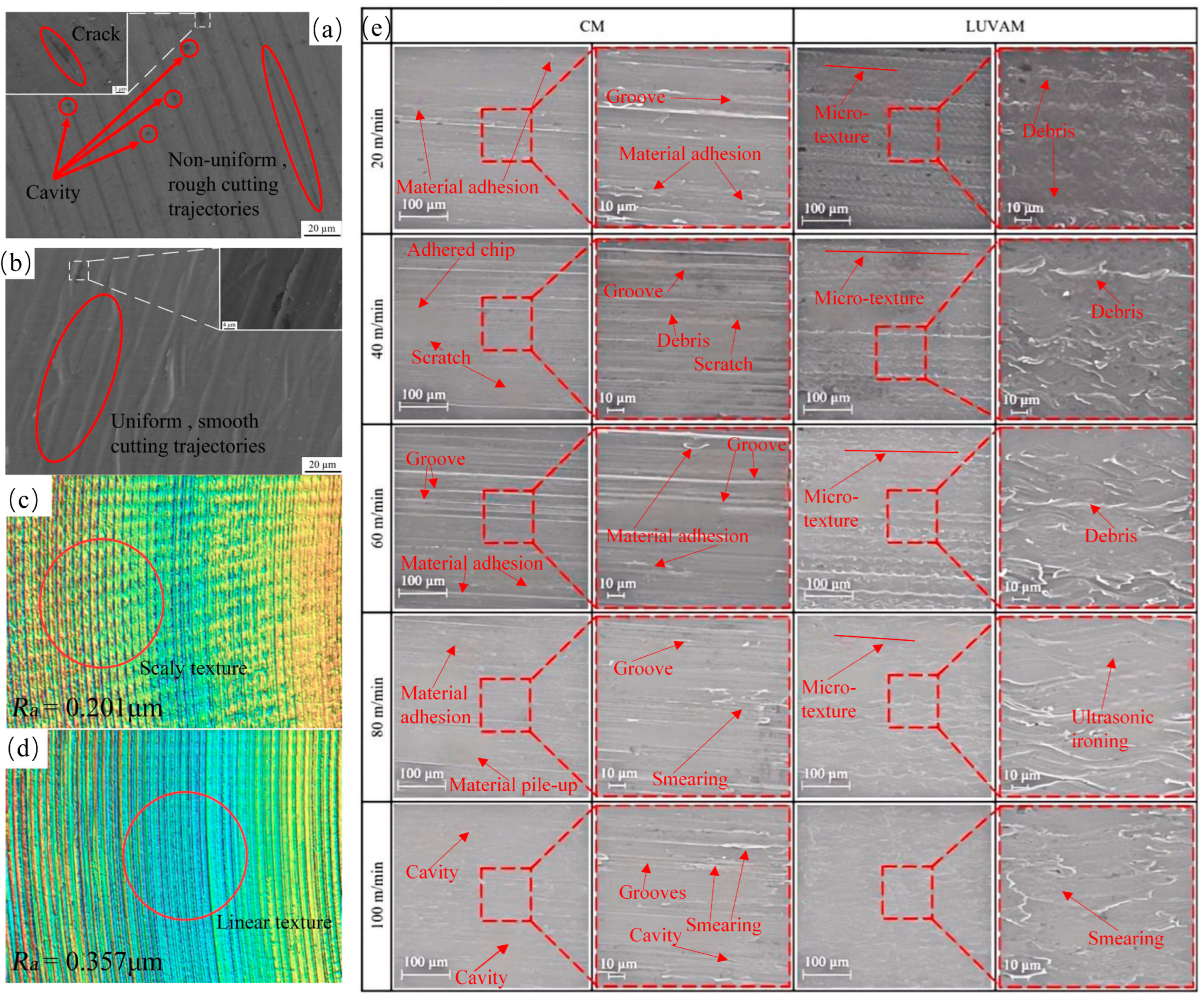
Wang et al. [160] found that the CM surface exhibited distinct tool marks, pits, and material spalling in their study of UVAM on a γ-TiAl alloy, which were attributed to localized plastic deformation and thermal softening caused by high cutting forces. Following UVAM treatment, the surface roughness Ra decreased from 0.341 to 0.202 μm, and the surface morphology exhibited a uniform fish-scale texture (this fish-scale texture corresponds to the tool’s motion trajectory in the X–Y plane, as shown in Figure 13c,d), thereby avoiding the linear grooves and adherents typically generated during conventional machining. As shown in Figure 13a,b, SEM analysis indicates that UVAM reduces microcracks and spalling, as the intermittent cutting induced by vibration lowers the cutting temperature and promotes chip separation [161]. Similarly, Khan et al. [162] reported in their study on the LUVAM of Ti2AlNb alloy that CM surfaces are prone to scratches, adhesion, and microcracks, particularly at high cutting speeds (>80 m/min), where thermal stress exacerbates defect propagation. LUVAM (frequency 29 kHz, amplitude 4.2 μm) creates microtextures on the surface through the undulating motion of the tool path, thereby reducing chip adhesion and material tearing. This is shown in the SEM image in Figure 13e. The CM surface exhibited a large amount of adhered material and grooves, whereas the LUVAM surface contained only minor debris and no macroscopic cracks. This is because vibration-assisted intermittent cutting reduces the tool-workpiece contact time, thereby suppressing material adhesion [163,164]. Khan and Wang et al. [54] have emphasized the synergistic effect of vibration frequency and amplitude: excessively high amplitude may cause tool interference, which conversely increases surface roughness.
For the Ti-6Al-4V alloy, Liu et al. [165] compared surface defects between Rotating Ultrasonic Elliptical Machining (RUEM) and CM. The results indicate that CM is prone to material buildup and pitting at low feed rates, whereas RUEM promotes surface homogenization through an elliptical vibration trajectory (frequency 17.88 kHz), thereby reducing the risk of flaking. However, at high cutting speeds exceeding 120 m/min, the vibration effect weakens, and micro-tearing may still occur on the surface, highlighting the critical importance of optimizing the parameters [166,167]. Research on 3D vibration-assisted machining by Ali et al. [168] further indicates that vibration can reduce cutting forces during dry cutting; however, tool mark overlap at low feed rates increases surface roughness, highlighting the nonlinear relationship between vibration parameters and the formation of surface defects [169,170]. Regarding surface strengthening, Wang et al. [171] subjected the TC4 titanium alloy to ultrasonic surface rolling peening (USRP) and found that the periodic tool marks and pits with a pitch of 8.8 μm on the surface were transformed into a flat, band-like structure (with the pitch reduced to 1.7 μm) after USRP. USRP eliminates micropores and cracks through a “peak-smoothing and valley-filling” mechanism; at high spindle speeds (650 rpm), surface hardness increases by 38% and residual compressive stress rises, effectively suppressing the formation of surface defects. Comparisons across different studies indicate that the defect suppression effect of UVAM depends on the alloy type and processing parameters. For example, ordered-phase alloys such as γ-TiAl and Ti2AlNb are prone to cracking owing to their high brittleness, and the vibrational energy of UVAM must be precisely controlled to avoid excessive plastic deformation that could lead to new defects (such as micropores).

4.3. Current Status of Research on Surface Residual Stresses

UVAM technology demonstrates significant advantages in regulating the surface integrity of Ti-Al IMCs and is particularly effective in inducing beneficial compressive stress layers. From the perspective of mechanical properties, compressive residual stresses on the processed surface can partially offset external tensile stresses, thereby delaying the initiation of fatigue cracks, which is a key factor in enhancing fatigue strength. However, tensile residual stresses can also be superimposed on external loads, leading to localized stress concentrations that trigger lattice mismatch and plastic deformation, thereby posing a threat to the service performance of the workpiece [172,173,174,175]. Extensive research has shown that UVAM, through severe plastic deformation and thermomechanical coupling effects generated by high-frequency vibrational impacts, can form gradient nanostructures on the workpiece surface and introduce high-amplitude residual compressive stresses, thereby significantly improving the fatigue performance and wear resistance of components [176,177].
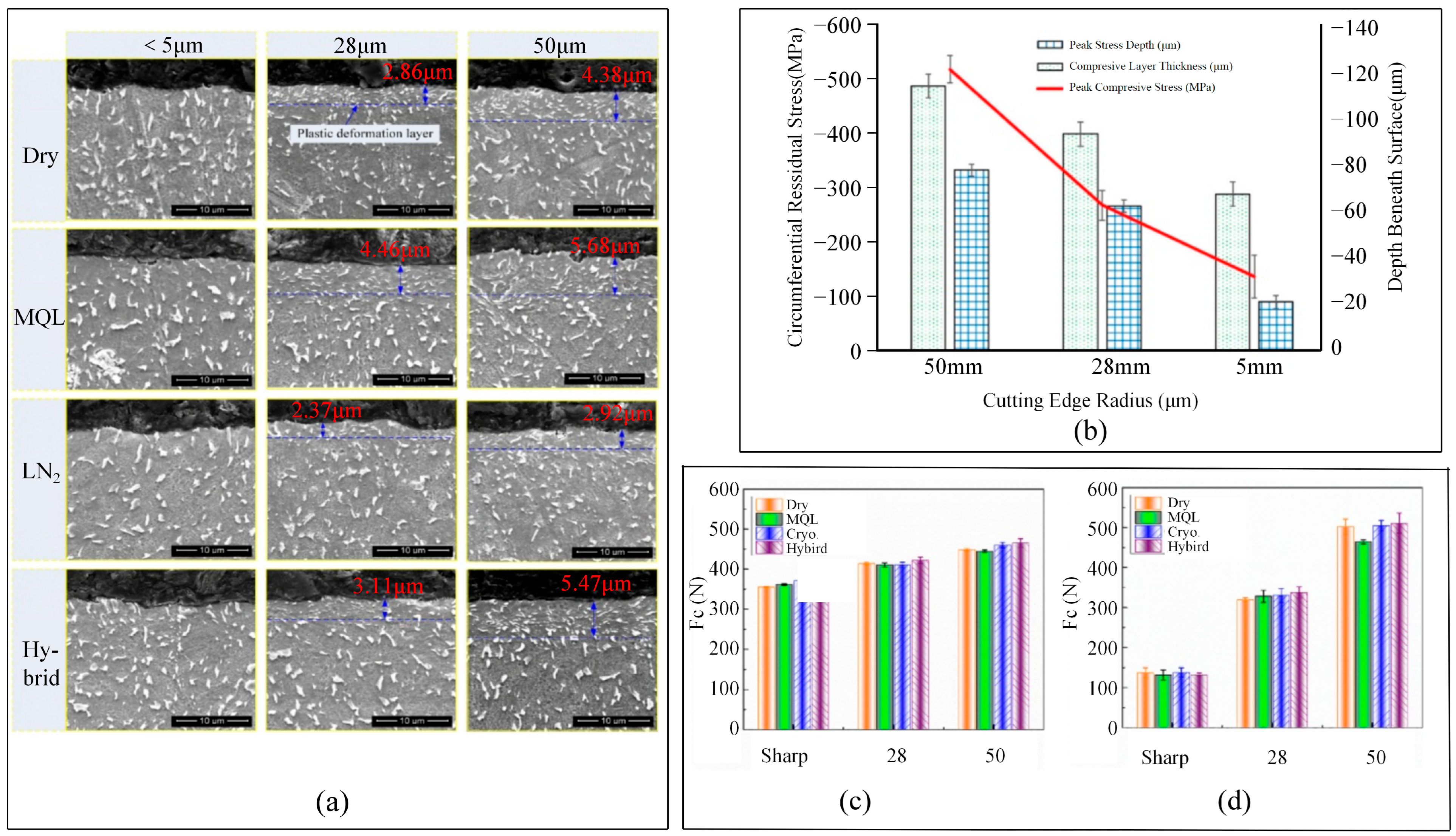
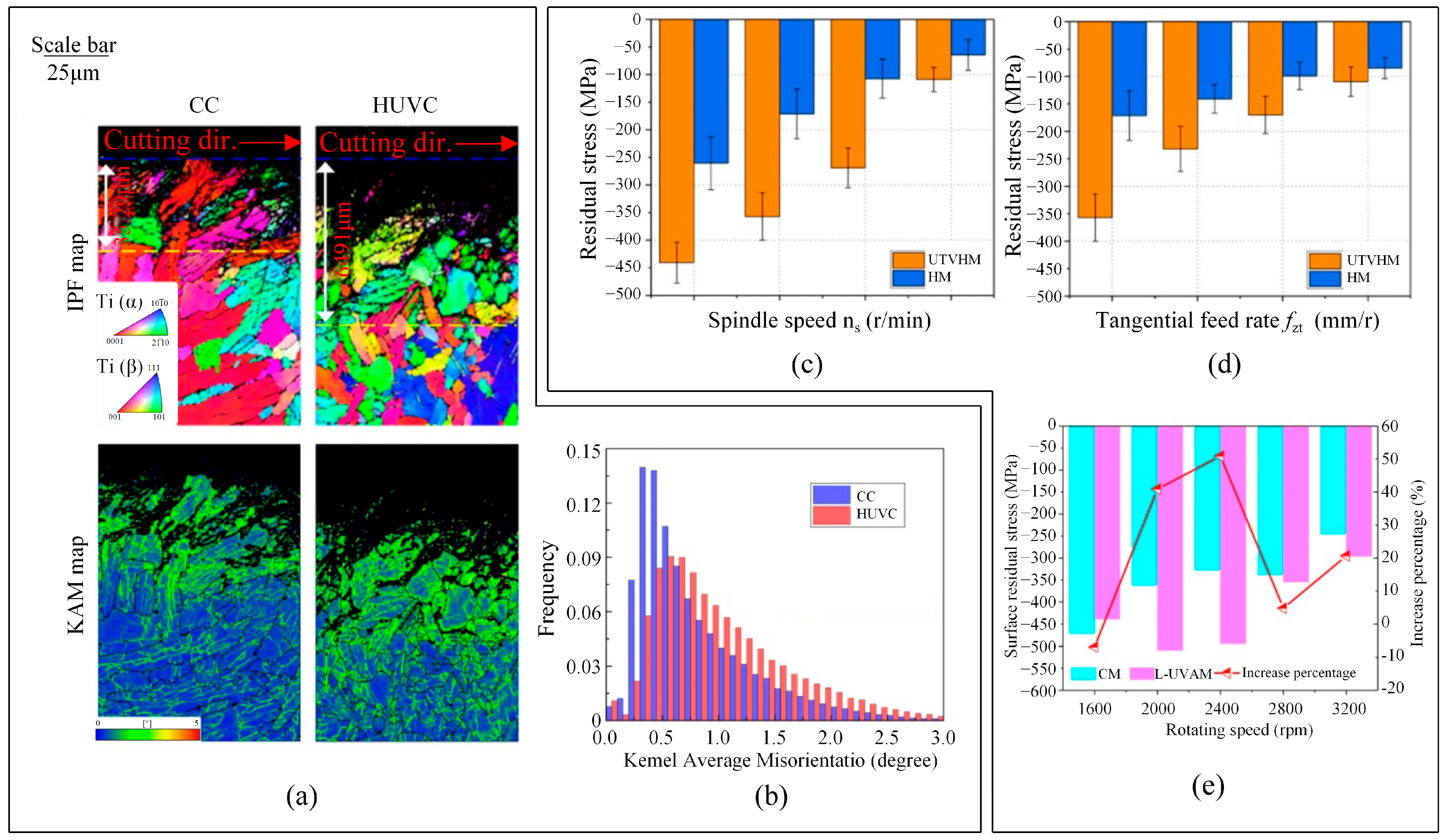
At the processing mechanism level, the essence of the UVAM-induced residual compressive stress stems from the competitive relationship between plastic deformation and thermal effects triggered by vibrational impact. Chen et al. [178] conducted orthogonal cutting experiments using three cutting edge radius values to observe the compressive layer of residual stresses. They found that a larger cutting edge radius (50 μm) combined with mixed cooling (liquid nitrogen + MQL) could achieve a peak residual compressive stress of 501 MPa with a compressive layer depth of 118 μm. SEM images of the microstructural distribution in the machined surface layers under different cutting edge radii and mixed cooling lubrication conditions are shown in Figure 14a. Based on these results, the residual stress characteristics under mixed conditions for different cutting-edge radii were derived, as shown in Figure 14b. This variation is primarily attributed to thermoplastic deformation caused by thermomechanical coupling mechanisms and increased friction resulting from a larger tool-workpiece contact area, which leads to elevated cutting temperatures at the material surface. Furthermore, Chen et al. [179] indicated that under all cooling/lubrication conditions, both cutting forces increased significantly with increasing edge radius, with the change in thrust being particularly pronounced, as shown in Figure 14c,d. Peng et al. [180]. indicate that high-speed ultrasonic vibration cutting (HUVC) generates residual compressive stresses as high as 840 MPa on the surface of Ti-6Al-4V alloy, with an amplitude approximately 50.9% higher than that of conventional cutting, and a compressive layer depth increased by approximately 40%. This strengthening effect is primarily attributed to the intermittent cutting characteristics and the impact-strengthening effects induced by ultrasonic vibration. Concurrently, the team observed via TEM that the surface layer of Ti-6Al-4V processed by HUVC formed isotropic nanocrystals of approximately 250 nm, as shown in Figure 15a. This grain refinement phenomenon is directly related to the plastic deformation at high strain rates. As shown in Figure 15b. EBSD analysis further indicated that the average kernel average misorientation (KAM) value of the ultrasonic vibration-machined specimens was significantly higher than that of the conventionally machined specimens, suggesting a higher dislocation density and lattice distortion. This serves as the structural basis for the generation of high-amplitude residual compressive stress [181], demonstrating an intrinsic correlation between the microstructural evolution and residual stress distribution.
Vibration parameters have a decisive influence on the distribution of residual stress. As shown in Figure 15e. Xie et al. [182] found that in their study of longitudinal ultrasonic vibration milling of TC18 titanium alloy, when the amplitude increased from 0 to 4 μm, the depth of the surface plastic deformation layer increased from 1.5 μm to 5.2 μm, and the corresponding surface residual compressive stress increased by approximately 50.9%. This change is directly related to the vibrational impact energy, as the increased amplitude enhances the impact of the tool on the workpiece, leading to more severe plastic deformation [183]. Geng et al. [184] further confirmed in their study of ultrasonic transverse vibration-assisted helical milling (UTVHM) of Ti-6Al-4V that by adjusting the vibration frequency (17.8–22 kHz) and amplitude (2–11 μm), the residual stress gradient can be designed. As shown in Figure 15c, d, the effect of the amplitude on the residual stress distribution was particularly significant, with the residual compressive stress increasing by 150.2%. This controllability provides an important avenue for optimizing the service performance of parts.

4.4. Current Status of Research on Work Hardening

Work hardening is a key indicator of surface integrity in Ti-Al IMCs during UVAM; it directly affects the tribological properties and service life of the workpiece [185,186,187]. It manifests as an increase in hardness following plastic deformation. At this stage, microstructural changes, such as increased dislocation density and grain refinement, lead to reduced toughness and plasticity, resulting in the “work hardening” phenomenon in the surface layer of the material [188,189]. However, the high-frequency energy introduced by ultrasonic vibration may induce thermal softening effects, which compete with work hardening and thus affect the surface properties of the workpiece [188,189,190,191].
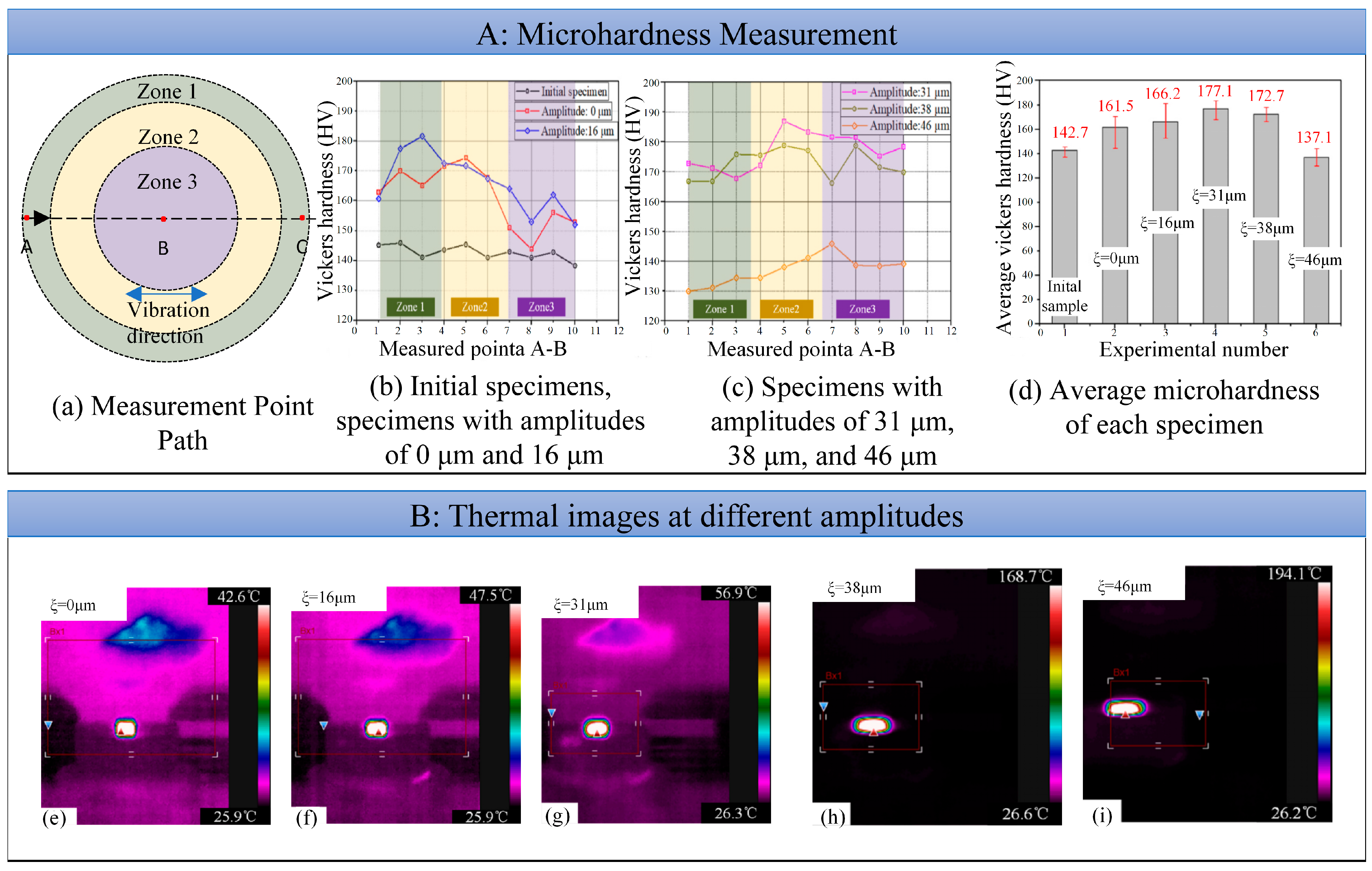
Cutting parameters are key factors in regulating work hardening [192]. Increasing the cutting speed typically increases the strain rate, promoting dislocation growth, but also elevates the cutting temperature, triggering thermal softening [193,194,195]. Simultaneously, an increased amplitude exacerbates heat accumulation, thereby affecting the surface hardening effect. As shown in Figure 16, in transverse ultrasonic vibration-assisted compression experiments on the Ti-45Nb alloy, Wang et al. [195] observed that the microhardness first increased and then decreased with increasing amplitude. When the amplitude increased from 16 to 31 μm, the increase in hardness was attributed to an increase in the dislocation density. However, when the amplitude reached 46 μm, the temperature increased to 194 °C, and thermal softening became dominant, causing the hardness to decrease by approximately 15%. This nonlinear change reveals the balance between hardening and thermal softening. The feed rate also significantly affects the surface hardness of the processed material. For instance, Liu et al. [161] reported that in the ultrasonic milling of Inconel 718, as the feed rate increased, the surface hardness increased owing to intensified deformation; however, high feed rates are prone to inducing cracks, thereby reducing the hardness uniformity.
The interaction between work hardening and thermal softening is modulated by microstructural evolution. Ultrasonic vibration promotes dynamic recrystallization and dislocation reorganization; however, overheating may lead to recrystallization. For example, in Ti2AlNb alloys, Gao et al. [196] demonstrated via EBSD analysis that after ultrasonic micro-forging, the grains transformed from a dendritic to an equiaxed morphology, dislocation density increased, and hardness improved by 25%. However, when the heating temperature exceeded 800 °C, thermally activated softening dominated, causing the hardness to decrease. Onder et al. [197] also observed a similar trend in the shot peening treatment of SLM Ti-6Al-4V: shot peening introduces compressive residual stresses that enhance hardening, but subsequent heat treatment (such as annealing) eliminates dislocations and induces softening. Therefore, optimizing the parameters to achieve an optimal balance between hardening and softening is a current research focus.

5. Conclusions and Outlook

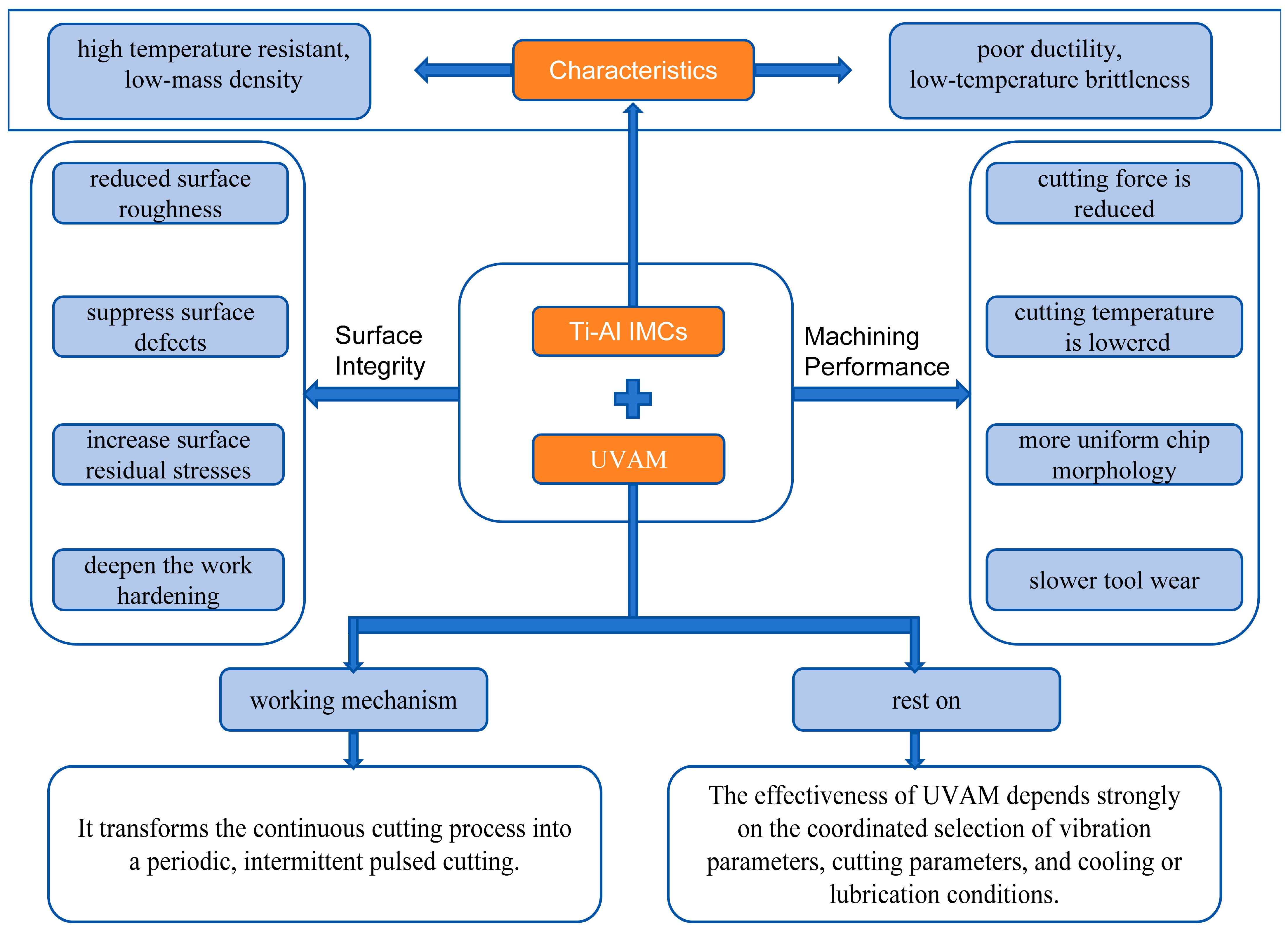
Compared with nickel-based superalloys, the most widely employed conventional high-temperature structural materials in aerospace applications, Ti-Al IMCs exhibit distinct advantages in terms of weight reduction and high-temperature performance; however, their machinability remains poor. Conventional cutting processes are inefficient and costly and cannot reliably ensure the surface quality and service performance of the components. UVAM is a promising strategy for the precision machining of Ti-Al IMCs. This review compares conventional machining and UVAM for Ti-Al IMCs and summarizes the research on the ability of UVAM to improve cutting performance and surface integrity. The main findings are presented in the following text and Figure 17.
(1) When machining Ti-Al IMCs, UVAM achieves active control over the cutting process by modifying the tool-workpiece interaction mode. The periodic “separation-contact” effect fundamentally reduces the overall cutting force and cutting heat. By altering the chip formation mechanism, UVAM drives the chip morphology to evolve towards thinner, more uniform, and readily evacuable characteristics, while significantly retarding the progression of tool wear and failure.
(2) In terms of the surface integrity of Ti-Al IMCs processed via UVAM, this technology effectively reduces the machined surface roughness of Ti-Al IMCs, generates uniform micro-nano-scale textures, and suppresses common defects in conventional machining, such as scaly burrs, chatter, and material adhesion. It also induces high-amplitude residual compressive stress and a work-hardened layer of definite depth in the surface layer, which provides a mechanical basis for enhancing the fatigue performance of Ti-Al IMCs.
(3) The process performance of UVAM for Ti-Al IMCs is strongly dependent on the synergistic matching of the vibration parameters, cutting parameters, and cooling/lubrication conditions. Meanwhile, the hybrid application of UVAM with technologies, including cryogenic cooling and MQL, demonstrates synergistic enhancement potential, which can further regulate the cutting temperature while optimizing the surface morphology and residual stress distribution of Ti-Al IMCs.
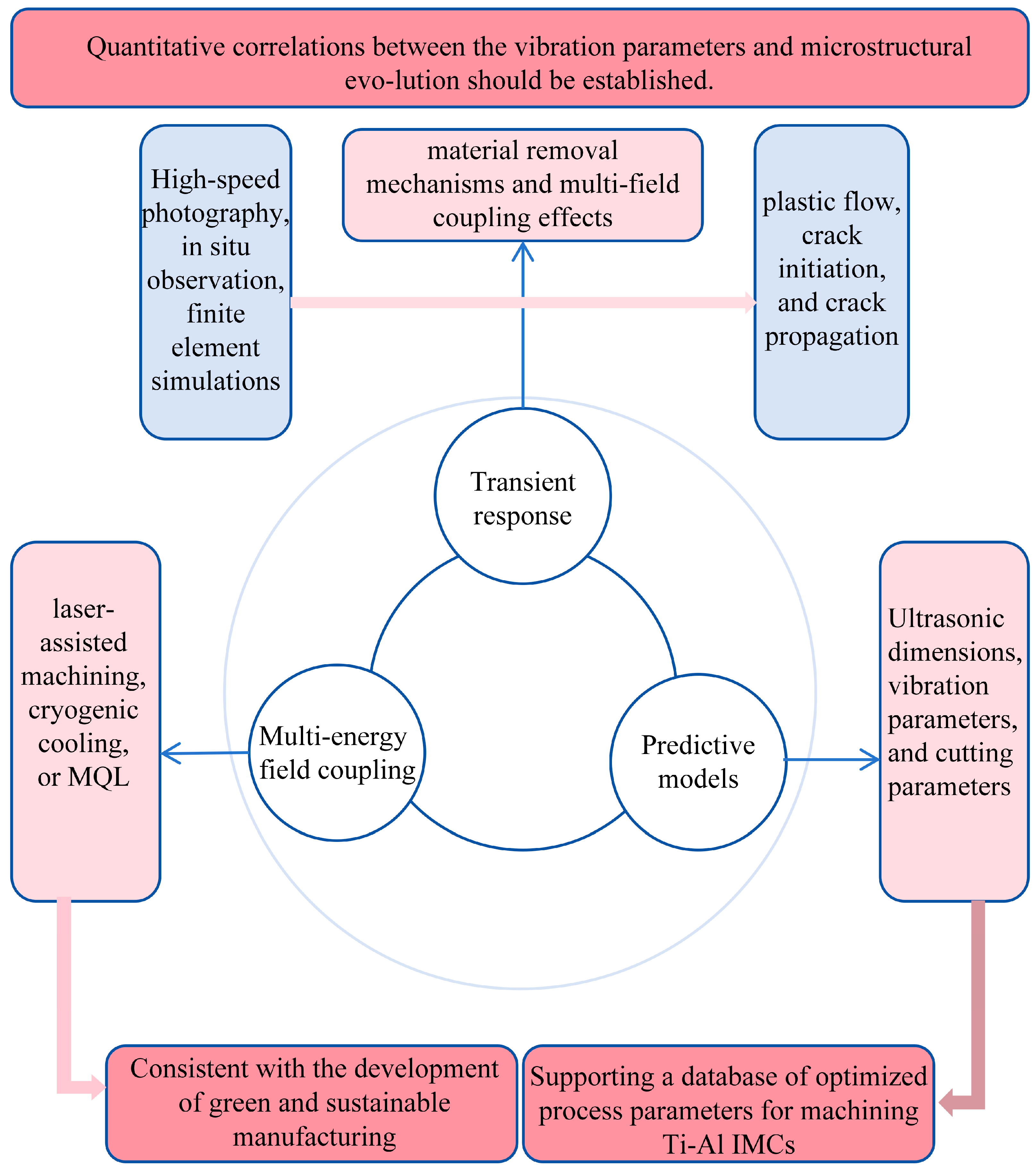
Despite this progress, three key knowledge gaps continue to limit the large-scale industrial application of UVAM in aeroengine component manufacturing. This is summarized in Figure 18. Future research should focus on the following directions.
(1) The transient material response during UVAM should be investigated based on microscale material removal mechanisms and multi-field coupling effects. High-speed photography, in situ observation, and crystal-plasticity finite element simulations should be combined to observe and clarify plastic flow, crack initiation, and crack propagation suppression in Ti-Al IMCs under vibrational energy fields. The competitive and synergistic relationships between acoustic-plastic effects and thermal softening should be clarified, and quantitative correlations between the vibration parameters and microstructural evolution should be established.
(2) Multivariate predictive models incorporating ultrasonic dimensions, vibration parameters, and cutting parameters should be developed. These models should accurately predict key integrity indicators, including surface topography, residual stress fields, and microstructural evolution. Machine learning and artificial intelligence algorithms can be incorporated to address the complex nonlinear relationships between the process parameters and material properties, ultimately supporting a database of optimized process parameters for machining Ti-Al IMCs.
(3) New processing routes that combine UVAM with other energy fields should be explored for the surface layers of Ti-Al IMCs. Examples include hybrid processes that combine UVAM with laser-assisted machining, cryogenic cooling, or MQL. These approaches can improve machining performance and are consistent with the development of green and sustainable manufacturing. Future studies should investigate the synergistic effects of coupling UVAM with different energy fields to suppress machining cracks in Ti-Al IMCs and reduce tool wear.

Author Contributions

Conceptualization, Z.F.; methodology, Z.F. and X.Z.; formal analysis, Z.F.; investigation, Z.F. and X.Z.; data curation, Z.F. and X.J. writing—original draft preparation, Z.F. and X.Z.; writing—review and editing, Z.F., H.S. and X.J.; supervision, Z.F.; project administration, Z.F. and H.S.; funding acquisition, Z.F., H.S. and X.J. All authors have read and agreed to the published version of the manuscript.

Funding

This research was funded by the Science and Technology Research and Development Program of Henan Province (grant No. 242102221036 and No. 252102221031); the Key Scientific Research Projects of Colleges and Universities in Henan Province (grant No. 24A460001), and the Science and Technology Project of Anyang City (grant No. 2025C01GX040).

Data Availability Statement

The original research findings of this study have been included in the article. For further inquiries, please contact the corresponding authors.

Conflicts of Interest

The authors declare no conflicts of interest.

Abbreviations

The following abbreviations are used in this manuscript.
Ti-Al IMCsTi-Al intermetallic compounds
UVAMultrasonic vibration-assisted machining
1Done-dimensional
2Dtwo-dimensional
3Dthree-dimensional
UVATultrasonic vibration-assisted turning
TWCRtool-workpiece contact ratio
UAGultrasonic-assisted grinding
FEMfinite element modeling
CMconventional milling
LUVAMlongitudinal ultrasonic vibration-assisted milling
CTconventional turning
UATultrasonic-assisted turning
LTUAGlongitudinal-torsional ultrasonic-assisted grinding
CFDcomputational fluid dynamics
SEMscanning electron microscopy
CGconventional grinding
UVAGultrasonic vibration-assisted grinding
LTUVMlongitudinal-torsional ultrasonic vibration milling
UEVMultrasonic elliptical vibration machining
MQLminimum quantity lubrication
EUATelliptical ultrasonic-assisted turning
LBVAMlongitudinal-bending vibration-assisted machining
RUEMrotating ultrasonic elliptical machining
USRPultrasonic surface rolling peening
HUVChigh-speed ultrasonic vibration cutting
TEMtransmission electron microscopy
EBSDelectron backscatter diffraction
KAMkernel average misorientation
UTVHMultrasonic transverse vibration-assisted helical milling
IPFinverse pole figure
HMhelical milling
SLMselective laser melting

References

  1. Yang, R. Advances and Challenges of TiAl Base Alloys. Acta Met. Sin. 2015, 51, 129–147. [Google Scholar] [CrossRef]
  2. Demakov, S.L.; Illarionov, A.G.; Stepanov, S.I.; Grachev, D.V.; Shabanov, M.A.; Popov, A.A.; Praveenkumar, K.; Prasanth, S.; Suwas, S. The Influence of L-PBF Process Parameters with Platform Preheating on the Structure and Properties of Orthorhombic Titanium Aluminide Ti2AlNb Alloy. JOM 2025, 77, 9760–9772. [Google Scholar] [CrossRef]
  3. Genc, O.; Unal, R. Development of Gamma Titanium Aluminide (γ-TiAl) Alloys: A Review. J. Alloys Compd. 2022, 929, 167262. [Google Scholar] [CrossRef]
  4. Park, J.-S.; Yang, G.; Kim, S.-W. A High Tensile Strength above 900 °C in β-Solidified TiAl Alloy through Alloy Design and Microstructure Optimization. J. Alloys Compd. 2023, 947, 169676. [Google Scholar] [CrossRef]
  5. Zhuo, J.; Zhang, Z.; Shan, Y.; Zhang, H.; Li, Y. External Stress Driving Lamellar Evolution in γ-TiAl Alloys. Int. J. Mech. Mater. Des. 2025, 21, 415–424. [Google Scholar] [CrossRef]
  6. Witusiewicz, V.T.; Bondar, A.A.; Hecht, U.; Rex, S.; Velikanova, T.Y. The Al–B–Nb–Ti System: III. Thermodynamic Re-Evaluation of the Constituent Binary System Al–Ti. J. Alloys Compd. 2008, 465, 64–77. [Google Scholar] [CrossRef]
  7. Si, Y.; Chen, Z.; Meng, L.; Wang, Z.; Chen, Y. Research Progress in Ti3Al Base Intermetallic Compound. Spec. Cast. Nonferrous Alloys 2003, 23, 33–35. [Google Scholar] [CrossRef]
  8. Li, Z.; Guo, B.; Wang, D.; Wang, J.; Li, X.; Xue, S.; Wang, G. Improvement Room and High Temperature Ductility by Regulating O-Phase Lath Structure for Ti2AlNb Alloy. J. Alloys Compd. 2025, 1039, 183259. [Google Scholar] [CrossRef]
  9. Liu, H.; Wang, B.; Liu, Z.; Li, L.; Ma, K.; Cai, Y. In-Situ Test of Full Field Deformation and Chip Formation Mechanism during Machining of Ti2AlNb Intermetallic with Digital Image Correlation Method. CIRP J. Manuf. Sci. Technol. 2024, 49, 40–55. [Google Scholar] [CrossRef]
  10. Zheng, G.; Tang, B.; Zhao, S.; Wang, W.Y.; Chen, X.; Zhu, L.; Li, J. Evading the Strength-Ductility Trade-off at Room Temperature and Achieving Ultrahigh Plasticity at 800 °C in a TiAl Alloy. Acta Mater. 2022, 225, 117585. [Google Scholar] [CrossRef]
  11. Aspinwall, D.K.; Dewes, R.C.; Mantle, A.L. The Machining of γ-TiAI Intermetallic Alloys. CIRP Ann. 2005, 54, 99–104. [Google Scholar] [CrossRef]
  12. Perrut, M.; Caron, P.; Thomas, M.; Couret, A. High Temperature Materials for Aerospace Applications: Ni-Based Superalloys and γ-TiAl Alloys. Comptes Rendus Phys. 2018, 19, 657–671. [Google Scholar] [CrossRef]
  13. Hao, J.; Qian, K.; Li, X.; Xue, P.; Shu, L.; Chen, B.; Liu, K. Thermomechanical Characterization and Conventional Rolling of a Novel β-Solidifying γ-TiAl Alloy with Excellent Comprehensive Properties. J. Mater. Res. Technol. 2023, 26, 7722–7739. [Google Scholar] [CrossRef]
  14. Yin, B.; Xue, X.; Tang, B.; Li, K.; Li, J. Calibration of Crystal Plasticity Constitutive Parameters for γ and A2 Phase in TiAl Alloys Related to Indentation Size Effect. J. Alloys Compd. 2025, 1047, 184873. [Google Scholar] [CrossRef]
  15. Wang, S.; Zhou, X.; Lu, Z.; Huang, X.; He, L.; Feng, X.; Li, W.; Zhai, P.; Li, G. Size-Dependent Deformation Mechanisms in Two-Phase γ-TiAl/A2-Ti3Al Alloys. Scr. Mater. 2025, 254, 116330. [Google Scholar] [CrossRef]
  16. Zhang, T.; Wang, D.; Zhu, J.; Xiao, H.; Liu, C.T.; Wang, Y. Non-Conventional Transformation Pathways and Ultrafine Lamellar Structures in γ-TiAl Alloys. Acta Mater. 2020, 189, 25–34. [Google Scholar] [CrossRef]
  17. Djanarthany, S.; Viala, J.-C.; Bouix, J. An Overview of Monolithic Titanium Aluminides Based on Ti3Al and TiAl. Mater. Chem. Phys. 2001, 72, 301–319. [Google Scholar] [CrossRef]
  18. Wang, L.; Shen, C.; Zhang, Y.; Li, F.; Huang, Y.; Ding, Y.; Xin, J.; Zhou, W.; Hua, X. Effect of Al Content on the Microstructure and Mechanical Properties of γ-TiAl Alloy Fabricated by Twin-Wire Plasma Arc Additive Manufacturing System. Mater. Sci. Eng. A 2021, 826, 142008. [Google Scholar] [CrossRef]
  19. Zhao, J.; Geng, S.; Jiang, P.; Song, M.; Xu, B.; Luo, Q. Experimental and Numerical Research on Formation Mechanism of Intermetallic Compounds in Laser Brazing Welding for Ti/Al Dissimilar Alloy. J. Mater. Res. Technol. 2024, 31, 2930–2944. [Google Scholar] [CrossRef]
  20. Lin, C.; Wu, W.; Han, Y.; Liu, J.; Zhang, M.; Wang, Q.; Li, X. Orderly Nucleation and Competitive Growth Behaviors of Ti-Al Intermetallic Compounds in Ti/TiAl3 Diffusion Couple under High Temperature. J. Alloys Compd. 2023, 939, 168815. [Google Scholar] [CrossRef]
  21. Liu, X.; Liu, H.; Shi, S.; Xu, B.; Zhang, W.; Tang, Y.; Zhang, J.; Zhao, W. Surface Topology Evolution Induced by Chip Formation and Microstructure Features during Machining γ-TiAl Alloy with Increasing Uncut Chip Thickness. J. Mater. Res. Technol. 2025, 38, 792–806. [Google Scholar] [CrossRef]
  22. Qin, S.; Cui, X.; Tian, Z.; Geng, L.; Liu, B.; Zhang, J.; Chen, J. Synthesis and Mechanical Properties of Innovative (TiB/Ti)-Ti3Al Micro-Laminated Composites. J. Alloys Compd. 2017, 700, 122–129. [Google Scholar] [CrossRef]
  23. Hu, J.; He, Z.; Cong, Z.; Liu, Y.; Li, S.; Wang, Y.; Bai, J.; Zhao, W.; Li, R.; Song, X.; et al. The structure and applications in the materials field of Ti2AlNb alloy: A review. Rev. Mater. Res. 2026, 2, 100131. [Google Scholar] [CrossRef]
  24. Dimiduk, D.M. Gamma Titanium Aluminide Alloys—An Assessment within the Competition of Aerospace Structural Materials. Mater. Sci. Eng. A 1999, 263, 281–288. [Google Scholar] [CrossRef]
  25. Zhang, H.; Yan, N.; Liang, H.; Liu, Y. Phase Transformation and Microstructure Control of Ti2AlNb-Based Alloys: A Review. J. Mater. Sci. Technol. 2021, 80, 203–216. [Google Scholar] [CrossRef]
  26. Hu, R.; Zhang, K.; Zou, H.; Gao, Z.; Luo, X.; Liu, X.; Wu, Z. Research Progress on Ti2AlNb-Based Alloys and Composites for Aerospace Applications. J. Alloys Compd. 2025, 1021, 179701. [Google Scholar] [CrossRef]
  27. Klocke, F.; Settineri, L.; Lung, D.; Claudio Priarone, P.; Arft, M. High Performance Cutting of Gamma Titanium Aluminides: Influence of Lubricoolant Strategy on Tool Wear and Surface Integrity. Wear 2013, 302, 1136–1144. [Google Scholar] [CrossRef]
  28. Gan, Z.; Zhang, X.; Wang, Y.; Yang, L.; Jia, Q.; Zhang, G.; Kong, X.; Yang, Q.; Yang, R. Tensile Behavior of the Designed SiCf/Ti2AlNb/Ti17 Composites. J. Mater. Res. Technol. 2024, 30, 1148–1158. [Google Scholar] [CrossRef]
  29. Li, D.; Wang, B.; Luo, L.; Li, X.; Xu, Y.; Li, B.; Wang, L.; Liu, W.; Han, B.; Su, Y.; et al. The Interface Structure and Its Impact on the Mechanical Behavior of TiAl/Ti2AlNb Laminated Composites. Mater. Sci. Eng. A 2021, 827, 142095. [Google Scholar] [CrossRef]
  30. Zhao, S.; Zhang, H.; Peng, F.; Tang, X.; Sun, H.; Yan, R. United Optimization Strategy of Ultrasonic Vibration Assisted Process and Multiple Parameters for Machining Deformation Reduction. J. Manuf. Process. 2024, 131, 1942–1958. [Google Scholar] [CrossRef]
  31. Nath, C.; Rahman, M. Effect of Machining Parameters in Ultrasonic Vibration Cutting. Int. J. Mach. Tools Manuf. 2008, 48, 965–974. [Google Scholar] [CrossRef]
  32. Liu, W.; Li, J.; Chen, Z.; Liang, Z.; Yang, B.; Du, K.; Fu, J.; Mahjoub, A.R.; Xing, M. Unveiling the “Sono-Physico-Chemical” Essence: Cavitation and Vibration Effects in Ultrasound–Assisted Processes. Chin. J. Catal. 2024, 61, 37–53. [Google Scholar] [CrossRef]
  33. Chen, T.; Wang, X.; Zhao, B.; Ding, W.; Xiong, M.; Xu, J.; Liu, Q.; Xu, D.; Zhao, Y.; Zhu, J. Material Removal Mechanisms in Ultrasonic Vibration-Assisted High-Efficiency Deep Grinding γ-TiAl Alloy. Chin. J. Aeronaut. 2024, 37, 462–476. [Google Scholar] [CrossRef]
  34. Wu, H.; Duan, W.; Sun, L.; Zeng, J.; Li, S.; Wang, Q.; Wu, Y.; Chen, Y. Effect of Ultrasonic Vibration on the Machining Performance and Mechanism of Hybrid Ultrasonic Vibration/Plasma Oxidation Assisted Grinding. J. Manuf. Process. 2023, 94, 466–478. [Google Scholar] [CrossRef]
  35. Yang, G.; Wang, T.; Wang, Y.; Li, X.; An, D. Effect of Ultrasonic-Assisted Magnetic Abrasive Finishing on the Surface Morphology and Defects of TC4 Alloy by Selective Laser Melting. J. Manuf. Process. 2025, 152, 99–113. [Google Scholar] [CrossRef]
  36. Jamshidi, H.; Nategh, M.J. Theoretical and Experimental Investigation of the Frictional Behavior of the Tool–Chip Interface in Ultrasonic-Vibration Assisted Turning. Int. J. Mach. Tools Manuf. 2013, 65, 1–7. [Google Scholar] [CrossRef]
  37. Qin, S.; Zhu, L.; Hao, Y.; Shi, C.; Wang, S.; Yang, Z. Theoretical and Experimental Investigations of Surface Generation Induced by Ultrasonic Assisted Grinding. Tribol. Int. 2023, 179, 108120. [Google Scholar] [CrossRef]
  38. Zhang, B.; Chen, G.; Chen, Z.; Hu, G.; Lv, Y.; Li, H. Ultrasonic Elliptic Vibration Assisted Turning SiCp/Al Composite Surface Morphology. J. Manuf. Process. 2025, 141, 1071–1083. [Google Scholar] [CrossRef]
  39. Zhang, Y.; Zhang, Q.; Zhao, J.; Zhu, Y.; Fu, X.; Yang, C.; Chen, Y. Ultrasonic Vibration Assisted Milling of Titanium Alloy Microchannel. Precis. Eng. 2024, 88, 251–265. [Google Scholar] [CrossRef]
  40. Wu, S.; Mei, X.; Lin, Y.; Zhang, X.; Wang, C.; Tan, C. Surface Integrity in Titanium Alloy Cutting: A Comprehensive Review. Chin. J. Aeronaut. 2025, 103903. [Google Scholar] [CrossRef]
  41. Xu, W.-X.; Zhang, L.-C. Ultrasonic Vibration-Assisted Machining: Principle, Design and Application. Adv. Manuf. 2015, 3, 173–192. [Google Scholar] [CrossRef]
  42. Ni, C.; Zhu, L.; Liu, C.; Yang, Z. Analytical Modeling of Tool-Workpiece Contact Rate and Experimental Study in Ultrasonic Vibration-Assisted Milling of Ti–6Al–4V. Int. J. Mech. Sci. 2018, 142–143, 97–111. [Google Scholar] [CrossRef]
  43. Niu, Y.; Jiao, F.; Zhao, B.; Tong, J. Experiment of Machining Induced Residual Stress in Longitudinal Torsional Ultrasonic Assisted Milling of Ti-6Al-4V. Surf. Technol. 2019, 48, 41–51. [Google Scholar] [CrossRef]
  44. Zhang, C.; Zhao, B.; Wang, X. Modeling and Experiment of Surface Microstructure by Longitudinal-Torsional Compound Ultrasonic End Milling. Surf. Technol. 2019, 48, 52–63, 79. [Google Scholar] [CrossRef]
  45. Gao, G.; Wang, Y.; Fu, Z.; Zhao, C.; Xiang, D.; Zhao, B. Review of Multi-Dimensional Ultrasonic Vibration Machining for Aeronautical Hard-to-Cut Materials. Int. J. Adv. Manuf. Technol. 2023, 124, 681–707. [Google Scholar] [CrossRef]
  46. Ni, C.; Zhu, L.; Yang, Z. Comparative Investigation of Tool Wear Mechanism and Corresponding Machined Surface Characterization in Feed-Direction Ultrasonic Vibration Assisted Milling of Ti–6Al–4V from Dynamic View. Wear 2019, 436–437, 203006. [Google Scholar] [CrossRef]
  47. Liu, X.; Wu, D.; Zhang, J.; Hu, X.; Cui, P. Analysis of Surface Texturing in Radial Ultrasonic Vibration-Assisted Turning. J. Mater. Process. Technol. 2019, 267, 186–195. [Google Scholar] [CrossRef]
  48. Han, X.; Zhang, D. Effects of Separating Characteristics in Ultrasonic Elliptical Vibration-Assisted Milling on Cutting Force, Chip, and Surface Morphologies. Int. J. Adv. Manuf. Technol. 2020, 108, 3075–3084. [Google Scholar] [CrossRef]
  49. Tan, R.; Zhao, X.; Guo, S.; Zou, X.; He, Y.; Geng, Y.; Hu, Z.; Sun, T. Sustainable Production of Dry-Ultra-Precision Machining of Ti–6Al–4V Alloy Using PCD Tool under Ultrasonic Elliptical Vibration-Assisted Cutting. J. Clean. Prod. 2020, 248, 119254. [Google Scholar] [CrossRef]
  50. Zheng, Y.; Wang, C.; Ma, J.; Li, H.; Li, Y.; Luo, C. Gradient Characteristics of Surface Metamorphic Layer Microstructure Induced by Longitudinal Torsional Ultrasonic-Assisted Milling Ti-6Al-4 V Alloy. J. Mater. Eng. Perform. 2023, 32, 10141–10157. [Google Scholar] [CrossRef]
  51. Du, P.; Han, L.; Qiu, X.; Chen, W.; Deng, J.; Liu, Y.; Zhang, J. Development of a High-Precision Piezoelectric Ultrasonic Milling Tool Using Longitudinal-Bending Hybrid Transducer. Int. J. Mech. Sci. 2022, 222, 107239. [Google Scholar] [CrossRef]
  52. Ming, W.; Cai, C.; Ma, Z.; Nie, P.; Li, C.; An, Q. Milling Mechanism and Surface Roughness Prediction Model in Ultrasonic Vibration-Assisted Side Milling of Ti–6Al–4 V. Int. J. Adv. Manuf. Technol. 2024, 131, 2279–2293. [Google Scholar] [CrossRef]
  53. Wei, S.; Zou, P.; Fang, L.; Duan, J. Theoretical and Experimental Study of 3D Ultrasonic Vibration-Assisted Turning Driven by Two Actuators. Measurement 2023, 215, 112865. [Google Scholar] [CrossRef]
  54. Khan, A.; Wang, X.; Zhao, B.; Ding, W.; Jamil, M.; Khan, A.M.; Ali, S.H.; Hussain, S.; Zhang, J.; Das, R. Ultrasonic Vibration-Assisted Cutting of Titanium Alloys: A State-of-the-Art Review. Chin. J. Aeronaut. 2025, 38, 103078. [Google Scholar] [CrossRef]
  55. Skelton, R.C. Turning with an Oscillating Tool. Int. J. Mach. Tool Des. Res. 1968, 8, 239–259. [Google Scholar] [CrossRef]
  56. Moriwaki, T.; Shamoto, E. Ultraprecision Diamond Turning of Stainless Steel by Applying Ultrasonic Vibration. CIRP Ann. 1991, 40, 559–562. [Google Scholar] [CrossRef]
  57. Zhang, X.; Liu, K.; Kumar, A.S.; Rahman, M. A Study of the Diamond Tool Wear Suppression Mechanism in Vibration-Assisted Machining of Steel. J. Mater. Process. Technol. 2014, 214, 496–506. [Google Scholar] [CrossRef]
  58. Lin, J.; Lu, M.; Zhou, X. Development of a Non-Resonant 3D Elliptical Vibration Cutting Apparatus for Diamond Turning. Exp. Tech. 2016, 40, 173–183. [Google Scholar] [CrossRef]
  59. Wang, X.; Tang, Y.; Zhao, B.; Chen, T.; Ding, W.; Xu, J. Grindability of γ-TiAl Intermetallic Compounds during Ultrasonic Vibration-Assisted High Efficiency Deep Grinding Process. Int. J. Adv. Manuf. Technol. 2023, 128, 1127–1138. [Google Scholar] [CrossRef]
  60. Kim, G.D.; Loh, B.G. An Ultrasonic Elliptical Vibration Cutting Device for Micro V-Groove Machining: Kinematical Analysis and Micro V-Groove Machining Characteristics. J. Mater. Process. Technol. 2007, 190, 181–188. [Google Scholar] [CrossRef]
  61. Shan, S.; Feng, P.; Zha, H.; Feng, F. Building of Longitudinal Ultrasonic Assisted Turning System and Its Cutting Simulation Study on Bulk Metallic Glass. Materials 2020, 13, 3131. [Google Scholar] [CrossRef] [PubMed]
  62. Tan, R.; Zhao, X.; Sun, T.; Zou, X.; Hu, Z. Experimental Investigation on Micro-Groove Manufacturing of Ti-6Al-4V Alloy by Using Ultrasonic Elliptical Vibration Assisted Cutting. Materials 2019, 12, 3086. [Google Scholar] [CrossRef] [PubMed]
  63. Beldi, O.; Zarrouk, T.; Abbadi, A.; Nouari, M.; Ding, W.; Abbadi, M.; Salhi, J.-E.; Barboucha, M. Modification of the Tribomechanical Cutting Regime in Longitudinal-Torsional Ultrasonic Milling: From Adhesion to Controlled Fragmentation. Eng 2026, 7, 177. [Google Scholar] [CrossRef]
  64. Jiang, Q.; Hua, Y.; Liu, X.; Li, L.; Zhang, J.; Li, F.; Han, J.; Li, Z. Cutting Mechanism of Laser-Ultrasonic-Vibration Assisted Machining of Ti6Al4V under Two Chip States Based on FEM Model. Int. J. Adv. Manuf. Technol. 2025, 137, 2267–2291. [Google Scholar] [CrossRef]
  65. Jiang, Q.; Liu, X.; Li, L.; Han, J.; Chen, N.; Xu, L. Numerical Study on the Effect of Processing Parameters on Cutting Performance of Ti6Al4V in Laser-Ultrasonic-Vibration Assisted Machining. Int. J. Adv. Manuf. Technol. 2025, 141, 3037–3059. [Google Scholar] [CrossRef]
  66. Khan, M.A.; Ullah, S.; Umeed, M.; Abduvalieva, D.; Khaqan, A.M.; Othman, N.A.; Gupta, M.; Khan, M.I. A Comprehensive Review on the Evaluation and Effectiveness of Ultrasonic Vibration-Assisted Devices in Machining. Int. J. Interact. Des. Manuf. IJIDeM 2025, 19, 7361–7411. [Google Scholar] [CrossRef]
  67. Wang, L.; Xu, S.; Liu, Y.; Wang, X. Cavitation Performance Analysis of Micro-Textured Sleeve Bearing in Elliptical Vibration-Assisted Turning Machining. Int. J. Adv. Manuf. Technol. 2025, 141, 1299–1312. [Google Scholar] [CrossRef]
  68. Yin, H.; Cai, W.; Liu, C.; Jia, S.; Gao, Y.; Lai, K. A Novel Parallel Ultrasonic Vibration-Assisted Cutting Method for Ti6Al4V: Surface Integrity and Mechanism Analysis. Int. J. Adv. Manuf. Technol. 2025, 141, 6273–6290. [Google Scholar] [CrossRef]
  69. Li, Z.; Zhu, L.; Yang, Z.; Ma, J.; Cao, W. Investigation of Tool-Workpiece Contact Rate and Milling Force in Elliptical Ultrasonic Vibration-Assisted Milling. Int. J. Adv. Manuf. Technol. 2022, 118, 585–601. [Google Scholar] [CrossRef]
  70. Geng, D.; Lu, Z.; Yao, G.; Liu, J.; Li, Z.; Zhang, D. Cutting Temperature and Resulting Influence on Machining Performance in Rotary Ultrasonic Elliptical Machining of Thick CFRP. Int. J. Mach. Tools Manuf. 2017, 123, 160–170. [Google Scholar] [CrossRef]
  71. Nategh, M.J.; Razavi, H.; Abdullah, A. Analytical Modeling and Experimental Investigation of Ultrasonic-Vibration Assisted Oblique Turning, Part I: Kinematics Analysis. Int. J. Mech. Sci. 2012, 63, 1–11. [Google Scholar] [CrossRef]
  72. Razavi, H.; Nategh, M.J.; Abdullah, A. Analytical Modeling and Experimental Investigation of Ultrasonic-Vibration Assisted Oblique Turning, Part III: Experimental Investigation. Int. J. Mech. Sci. 2012, 63, 26–36. [Google Scholar] [CrossRef]
  73. Yin, H.; Xie, Z.; Zhou, Q.; Xiang, J.; Lai, K.; Wiercigroch, M.; Cai, W. Mechanism of a Novel Parallel Ultrasonic Vibration-Assisted Cutting System for High Performance Machining. Mech. Syst. Signal Process. 2025, 238, 113213. [Google Scholar] [CrossRef]
  74. Yu, H.; Liang, X.; Guo, F.; Xiao, H.; Li, S.; Liu, K.; Cai, Y.; Liu, Z. Laser-Ultrasonic Vibration Hybrid Assisted Machining in Advanced Difficult-to-Cut Materials: Technologies, Mechanisms, and Challenges. J. Mater. Process. Technol. 2025, 345, 119076. [Google Scholar] [CrossRef]
  75. Wang, T.; Liang, X.; Wang, B.; Liu, K.; Li, T.; Cai, Y.; Liu, Z. Ultrasonic Vibration-Assisted Machining in Aerospace Composite Materials: Principle, Technology, Challenges. Compos. Part Appl. Sci. Manuf. 2025, 199, 109250. [Google Scholar] [CrossRef]
  76. Cai, W.; Long, Y.; Yin, H.; Jia, S.; Lai, K. Towards Understanding Wear Mechanisms of Parallel Ultrasonic Vibration-Assisted Cutting for Titanium Alloy. Wear 2025, 574–575, 206092. [Google Scholar] [CrossRef]
  77. Wang, Y.; Gao, G.; Zhang, K.; Wang, Y.; Wang, X.; Xiang, D. Modelling of Tribological Behavior and Wear for Micro-Textured Surfaces of Ti2AlNb Intermetallic Compounds Machined with Multi-Dimensional Ultrasonic Vibration Assistance. Tribol. Int. 2024, 191, 109167. [Google Scholar] [CrossRef]
  78. Gu, G.; Wu, S.; Wang, D.; Zhou, S.; Zhu, L.; An, Q.; Guo, H.; Li, C. A Review of the Research on the Variation of Tool’s Motion Trajectory and Its Influence on the Formation Mechanism of Surface Quality in Ultrasonic Vibration Machining. J. Manuf. Process. 2023, 107, 294–319. [Google Scholar] [CrossRef]
  79. Guo, Q.; Liu, Z.; Yang, Z.; Jiang, Y.; Sun, Y.; Xu, J.; Zhao, W.; Wang, W.; Wang, W.; Ren, Q.; et al. Development, Challenges and Future Trends on the Fabrication of Micro-Textured Surfaces Using Milling Technology. J. Manuf. Process. 2024, 126, 285–331. [Google Scholar] [CrossRef]
  80. Perveen, A.; Jahan, M.P.; Wong, Y.S.; Rahman, M. Cutting Force Analysis of On-Machine Fabricated PCD Tool during Glass Micro-Grinding. Adv. Mater. Res. 2011, 264–265, 1085–1090. [Google Scholar] [CrossRef]
  81. Zhao, M.; Zhu, J.; Song, S.; Xue, B.; Zhao, B. Influence of Machining Parameters in Longitudinal-Torsional Ultrasonic Vibration Milling Titanium Alloy for Milling Force. Int. J. Adv. Manuf. Technol. 2022, 123, 3587–3597. [Google Scholar] [CrossRef]
  82. Klocke, F.; Lung, D.; Arft, M.; Priarone, P.C.; Settineri, L. On High-Speed Turning of a Third-Generation Gamma Titanium Aluminide. Int. J. Adv. Manuf. Technol. 2013, 65, 155–163. [Google Scholar] [CrossRef]
  83. Ma, X.; Jiao, F.; Chen, F.; Niu, Y.; Li, C.; Tong, J.; Bie, W. Effects of Ultrasonic Vibration on the Machining Mechanism of Internal Cylindrical Ultrasonic-Assisted Electrochemical Hybridized Grinding of Bearing Ring: Experimental Study. J. Manuf. Process. 2025, 150, 129–146. [Google Scholar] [CrossRef]
  84. Patil, S.; Joshi, S.; Tewari, A.; Joshi, S.S. Modelling and Simulation of Effect of Ultrasonic Vibrations on Machining of Ti6Al4V. Ultrasonics 2014, 54, 694–705. [Google Scholar] [CrossRef] [PubMed]
  85. Li, Z.; Yang, S.; Liu, X.; Xiao, G.; San, H.; Zhang, Y.; Wang, W.; Yang, Z. Grinding Force Model for Ultrasonic Assisted Grinding of γ-TiAl Intermetallic Compounds and Experimental Validation. Rev. Adv. Mater. Sci. 2024, 63, 20230167. [Google Scholar] [CrossRef]
  86. Gao, G.; Wang, D.; Pan, X.; Qiao, H.; Fu, Z.; Xiang, D.; Zhao, B. Study on Grinding Force Model of Longitudinal Ultrasonic Assisted Helical Grinding Ti3Al Microholes. China Mech. Eng. 2023, 34, 1280–1286. [Google Scholar] [CrossRef]
  87. Xie, Z.; Zhang, D.; Liu, X.; Jiang, X. Experimental and Simulation Analysis of Transient Temperature in High-Speed Ultrasonic Vibration Cutting Ti-6Al-4V. Chin. J. Mech. Eng. 2025, 100189. [Google Scholar] [CrossRef]
  88. Li, Y.; Jiao, F.; Shen, J.; Zhang, Z.; Wang, D.; Li, Z. Study on Ultrasonic and Low-Frequency Combined Vibration-Assisted Drilling of CFRP/Ti Stacks. J. Manuf. Process. 2025, 155, 1222–1242. [Google Scholar] [CrossRef]
  89. Long, Y.; Cai, W.; Yin, H.; Liu, Z.; Jia, S.; Lai, K.; Wiercigroch, M. Mechanism of a High Performance and Energy Efficiency Parallel Ultrasonic Vibration-Assisted Cutting. Energy 2025, 326, 136244. [Google Scholar] [CrossRef]
  90. Du, Y.; Lu, M.; Lin, J.; Li, Y.; Sun, S. Investigation on Machinability of SiCp/Al Composites under the Synergistic Effect of Pulsed Laser Assisted and Ultrasonic Elliptical Vibration Cutting. J. Mater. Process. Technol. 2024, 332, 118561. [Google Scholar] [CrossRef]
  91. Niu, Q.; Rong, J.; Jing, L.; Gao, H.; Tang, S.; Qiu, X.; Liu, L.; Wang, X.; Dai, F. Study on Force-Thermal Characteristics and Cutting Performance of Titanium Alloy Milled by Ultrasonic Vibration and Minimum Quantity Lubrication. J. Manuf. Process. 2023, 95, 115–130. [Google Scholar] [CrossRef]
  92. Ning, F.; Cong, W. Ultrasonic Vibration-Assisted (UV-A) Manufacturing Processes: State of the Art and Future Perspectives. J. Manuf. Process. 2020, 51, 174–190. [Google Scholar] [CrossRef]
  93. Gao, G.; Xia, Z.; Su, T.; Xiang, D.; Zhao, B. Cutting Force Model of Longitudinal-Torsional Ultrasonic-Assisted Milling Ti-6Al-4V Based on Tool Flank Wear. J. Mater. Process. Technol. 2021, 291, 117042. [Google Scholar] [CrossRef]
  94. Liu, J.; Liu, Z.; Yan, Y.; Wang, X. Study on the CBN Wheel Wear Mechanism of Longitudinal-Torsional Ultrasonic-Assisted Grinding Applied to TC4 Titanium Alloy. Micromachines 2022, 13, 1480. [Google Scholar] [CrossRef] [PubMed]
  95. Bejjani, R.; Bachir, E.; Salame, C. Advanced Manufacturing of Titanium Alloy Ti-6Al-4V by Combining Cryogenic Machining and Ultrasonic-Assisted Turning. J. Mater. Eng. Perform. 2024, 33, 6507–6527. [Google Scholar] [CrossRef]
  96. Wang, C.; Li, P.; Li, S.; Qiu, X.; Niu, Q.; Li, C.; Ko, T.J. Study on the Mechanism and Performance of Longitudinal-Torsional Ultrasonic Vibration Assisted Drilling CFRP/Ti Stack. J. Manuf. Process. 2023, 92, 453–465. [Google Scholar] [CrossRef]
  97. Lei, X.; Wang, R.; Ding, W.; Qian, C.; Liu, Z.; Zhao, B. Ultrasonic Cutting of Aerospace Difficult-to-Cut Alloys: Current Status and Prospects. J. Manuf. Process. 2025, 142, 191–221. [Google Scholar] [CrossRef]
  98. Xia, Z.; Shan, C.; Zhang, M.; Liu, W.; Cui, M.; Luo, M. Machinability of Elliptical Ultrasonic Vibration Milling γ-TiAl: Chip Formation, Edge Breakage, and Subsurface Layer Deformation. Chin. J. Aeronaut. 2025, 38, 103096. [Google Scholar] [CrossRef]
  99. Wang, X.; He, Q.-L.; Zhao, B.; Ding, W.-F.; Liu, Q.; Xu, D.-D. Effects of Tool Coating and Tool Wear on the Surface and Chip Morphology in Side Milling of Ti2AlNb Intermetallic Alloys. Adv. Manuf. 2025, 13, 155–166. [Google Scholar] [CrossRef]
  100. Yang, X.; Zhang, M.; Jiang, M.; Ren, D.; Liu, Y.; Cai, Y.; Ji, H.; Lei, J. Effect of TiN Inclusion on the Microstructure and Mechanical Property of TC4 Titanium Alloy. J. Mater. Res. Technol. 2025, 38, 4654–4661. [Google Scholar] [CrossRef]
  101. Yu, G.; Hu, L.; Qu, Y. Fretting Slip Wear Mechanism of AlCrN Coated Cemented Carbide Tool on Titanium Alloy TC4 under Ultimate Continuous Cutting. Int. J. Refract. Met. Hard Mater. 2026, 140, 107859. [Google Scholar] [CrossRef]
  102. Hu, W.; Du, P.; Qiu, X.; Zhao, X.; Hu, Z.; Zhang, J.; Liu, Y. Enhanced Dry Machinability of TC4 Titanium Alloy by Longitudinal-Bending Hybrid Ultrasonic Vibration-Assisted Milling. J. Clean. Prod. 2022, 379, 134866. [Google Scholar] [CrossRef]
  103. Tesfay, H.D.; Xu, Z.; Li, Z.C. Ultrasonic Vibration Assisted Grinding of Bio-Ceramic Materials: An Experimental Study on Edge Chippings with Hertzian Indentation Tests. Int. J. Adv. Manuf. Technol. 2016, 86, 3483–3494. [Google Scholar] [CrossRef]
  104. Liu, K.; Li, X.P.; Rahman, M. Characteristics of Ultrasonic Vibration-Assisted Ductile Mode Cutting of Tungsten Carbide. Int. J. Adv. Manuf. Technol. 2008, 35, 833–841. [Google Scholar] [CrossRef]
  105. Jianhua, Z.; Yan, Z.; Shuo, Z.; Fuqiang, T.; Lanshen, G.; Ruizhen, D. Study on Effect of Ultrasonic Vibration on Grinding Force and Surface Quality in Ultrasonic Assisted Micro End Grinding of Silica Glass. Shock Vib. 2014, 2014, 418059. [Google Scholar] [CrossRef]
  106. Shi, H.; Chen, T.; Pan, X.; Duan, Z.; Suo, Y. Investigation of Edge Damage of the Hole and Adhesive Wear of the Tool in Ultrasonically Assisted Step Drilling of SiCp/Al Composites. J. Manuf. Process. 2025, 150, 88–110. [Google Scholar] [CrossRef]
  107. Zhang, Y.; Soo, S.L.; Hood, R. Semi-Analytical Modelling of Forces and Tool Wear in Ultrasonic-Assisted Milling. Int. J. Mech. Sci. 2025, 304, 110718. [Google Scholar] [CrossRef]
  108. Song, C.; Xiang, D.; Yuan, Z.; Zhang, Z.; Yang, S.; Gao, G.; Tong, J.; Wang, X.; Cui, X. Two-Dimensional Ultrasonic-Assisted Variable Cutting Depth Scratch Force Model Considering Tool Wear and Experimental Verification. Tribol. Int. 2025, 204, 110510. [Google Scholar] [CrossRef]
  109. Yadav, R.; Kumar, M.; Chakladar, N.D.; Sidpara, A.M.; Paul, S. Evaluation of Tool Wear during Micro-Milling of Ultrasonically Assisted Abrasive Peened Ti-6Al-4V. Wear 2024, 552–553, 205450. [Google Scholar] [CrossRef]
  110. Zhang, C.; Li, H.; Zhang, X.; An, Q.; Chen, M. Parameter Optimization, Machining Quality, Removal Mechanism, and Tool Wear in Ultrasonic-Vibration-Assisted Micro-Hole Drilling Process of Cf/SiC Ceramic Matrix Composites. Ceram. Int. 2025, 51, 60645–60656. [Google Scholar] [CrossRef]
  111. Zhang, G.; Yang, S.; Deng, Y.; Liang, C.; Song, T.; Wu, Y. Experimental Study on Surface Finish and Tool Wear in Ultrasonic Vibration-Assisted Milling of Nickel-Based Single-Crystal Superalloys. Precis. Eng. 2025, 94, 571–581. [Google Scholar] [CrossRef]
  112. Liu, J.; Jiang, X.; Zhang, D. Research on the Characteristics of Chips and Tool Flank Wear in High-Speed Rotary Ultrasonic Elliptical Machining for Side Milling of Ti-6Al-4V. J. Mech. Eng. 2020, 55, 186–194. [Google Scholar] [CrossRef]
  113. Lu, Y.; Jiang, Z.; Ma, Y.; Huang, L. Study on Surface Integrity and Tool Wear of TiAl Alloy in Ultrasonic Milling. Mach. Manuf. 2023, 118–123, 129. [Google Scholar] [CrossRef]
  114. Han, G.; Ye, Z.; Xu, J.; Ma, Y.; Xu, C.; Zhao, X.; Yu, L.; Feng, P.; Feng, F. Investigation on Cutting Forces and Tool Wear in High-Speed Milling of Ti-6Al-4V Assisted by Longitudinal Torsional Ultrasonic Vibrations. Int. J. Adv. Manuf. Technol. 2023, 129, 783–799. [Google Scholar] [CrossRef]
  115. Kumar, V.C.; Hutchings, I.M. Reduction of the sliding friction of metals by the application of longitudinal or transverse ultrasonic vibration. Tribol. Int. 2004, 37, 833–840. [Google Scholar] [CrossRef]
  116. Yu, F.; Zhang, C.; Zhu, Q.; Liu, C.; Dong, Z. Investigation of Ultrasonic Mechanism and Development of Tool Wear Model in Ultrasonic Elliptic Vibration Assisted Cutting of Stainless Steel. Tribol. Int. 2023, 189, 108962. [Google Scholar] [CrossRef]
  117. Zhang, D.; Li, H.; Tang, J.; Huang, W. Cutting Mechanism and Surface Characteristics of during Ultrasonic Vibration-Assisted Cutting Iron Alloy: An Atomistic Investigation. Tribol. Int. 2026, 214, 111275. [Google Scholar] [CrossRef]
  118. Sun, Z.; Geng, D.; Guo, H.; Ge, E.; Zhou, E.; Fan, Z.; Meng, F.; Jiang, X.; Zhang, D. Influence of Transversal Vibration on Cutting Performance and Surface Integrity during Ultrasonic Peening Drilling of Al-Li Alloys. Chin. J. Aeronaut. 2024, 37, 493–507. [Google Scholar] [CrossRef]
  119. Peng, Z.; Zhang, X.; Zhang, D. Improvement of Ti–6Al–4V Surface Integrity through the Use of High-Speed Ultrasonic Vibration Cutting. Tribol. Int. 2021, 160, 107025. [Google Scholar] [CrossRef]
  120. Suárez, A.; Veiga, F.; de Lacalle, L.N.L.; Polvorosa, R.; Lutze, S.; Wretland, A. Effects of Ultrasonics-Assisted Face Milling on Surface Integrity and Fatigue Life of Ni-Alloy 718. J. Mater. Eng. Perform. 2016, 25, 5076–5086. [Google Scholar] [CrossRef]
  121. Sales, W.F.; Schoop, J.; da Silva, L.R.R.; Machado, Á.R.; Jawahir, I.S. A Review of Surface Integrity in Machining of Hardened Steels. J. Manuf. Process. 2020, 58, 136–162. [Google Scholar] [CrossRef]
  122. Gavalda Diaz, O.; Garcia Luna, G.; Liao, Z.; Axinte, D. The New Challenges of Machining Ceramic Matrix Composites (CMCs): Review of Surface Integrity. Int. J. Mach. Tools Manuf. 2019, 139, 24–36. [Google Scholar] [CrossRef]
  123. Lei, X.-F.; Ding, W.-F.; Zhao, B.; Xiang, D.-H.; Liu, Z.-A.; Qian, C.; Liu, Q.; Xu, D.-D.; Zhao, Y.-J.; Zhu, J.-H. Surface Roughness Model of Ultrasonic Vibration-Assisted Grinding GCr15SiMn Bearing Steel and Surface Topography Evaluation. Adv. Manuf. 2025, 13, 88–104. [Google Scholar] [CrossRef]
  124. Li, C.; Zhang, F.; Meng, B.; Liu, L.; Rao, X. Material Removal Mechanism and Grinding Force Modelling of Ultrasonic Vibration Assisted Grinding for SiC Ceramics. Ceram. Int. 2017, 43, 2981–2993. [Google Scholar] [CrossRef]
  125. Li, X.; Guan, C.; Zhao, P. Influences of Milling and Grinding on Machined Surface Roughness and Fatigue Behavior of GH4169 Superalloy Workpieces. Chin. J. Aeronaut. 2018, 31, 1399–1405. [Google Scholar] [CrossRef]
  126. Liu, X.; Shan, C.; Xiong, Y.; Zhou, C. Modeling and Simulation for Orthogonal Cutting Force in Ultrasonic Vibration–Assisted Machining in Situ TiB2/Al MMCs. Int. J. Adv. Manuf. Technol. 2025, 137, 1667–1682. [Google Scholar] [CrossRef]
  127. Liu, X.; Wang, W.; Jiang, R.; Xiong, Y.; Lin, K.; Li, J. Investigation on Surface Roughness in Axial Ultrasonic Vibration–Assisted Milling of in Situ TiB2/7050Al MMCs. Int. J. Adv. Manuf. Technol. 2020, 111, 63–75. [Google Scholar] [CrossRef]
  128. Zhang, Y.; Yuan, Z.; Fang, B.; Gao, L.; Chen, Z.; Su, G. Study on the Mechanism of Burr Formation by Simulation and Experiment in Ultrasonic Vibration-Assisted Micromilling. Micromachines 2023, 14, 625. [Google Scholar] [CrossRef] [PubMed]
  129. Yuan, Z.; Gao, G.; Wang, Y.; Fu, Z.; Xiang, D. Experimental Study on a Two-Dimensional Ultrasonic Vibration Platform and Milling of Ti2AlNb Intermetallic Alloy. Int. J. Adv. Manuf. Technol. 2022, 121, 4187–4208. [Google Scholar] [CrossRef]
  130. Tan, R.; Zhao, X.; Lin, F.; Jin, S.; Guo, X.; Chen, X.; Sun, T. Analytical Modelling and Experimental Study of Surface Roughness in Ultrasonic Elliptical Vibration Assisted Ultra-Precision Cutting of Ti-6Al-4 V Alloy. Int. J. Adv. Manuf. Technol. 2023, 126, 1863–1875. [Google Scholar] [CrossRef]
  131. Chen, G.; Ren, C.; Zou, Y.; Qin, X.; Lu, L.; Li, S. Mechanism for Material Removal in Ultrasonic Vibration Helical Milling of Ti6Al4V Alloy. Int. J. Mach. Tools Manuf. 2019, 138, 1–13. [Google Scholar] [CrossRef]
  132. Börner, R.; Winkler, S.; Junge, T.; Titsch, C.; Schubert, A.; Drossel, W.-G. Generation of Functional Surfaces by Using a Simulation Tool for Surface Prediction and Micro Structuring of Cold-Working Steel with Ultrasonic Vibration Assisted Face Milling. J. Mater. Process. Technol. 2018, 255, 749–759. [Google Scholar] [CrossRef]
  133. Sarvi Hampa, P.; Razfar, M.R.; Malaki, M.; Maleki, A. The Role of Dry Aero-Acoustical Lubrication and Material Softening in Ultrasonically Assisted Milling of Difficult-to-Cut AISI 304 Steels. Trans. Indian Inst. Met. 2015, 68, 43–49. [Google Scholar] [CrossRef]
  134. Lian, H.; Guo, Z.; Huang, Z.; Tang, Y.; Song, J. Experimental Research of Al6061 on Ultrasonic Vibration Assisted Micro-Milling. Procedia CIRP 2013, 6, 561–564. [Google Scholar] [CrossRef]
  135. Li, Z.D.; Zhao, B.; Tong, J.L.; Duan, P. Study of Carbon/Carbon Composite Material Surface Morphology on Ultrasonic Vibration Assisted Milling. Key Eng. Mater. 2014, 579–580, 181–185. [Google Scholar] [CrossRef]
  136. Li, M.; Yu, T.; Zhang, R.; Yang, L.; Li, H.; Wang, W. MQL Milling of TC4 Alloy by Dispersing Graphene into Vegetable Oil-Based Cutting Fluid. Int. J. Adv. Manuf. Technol. 2018, 99, 1735–1753. [Google Scholar] [CrossRef]
  137. Song, Y.; Cao, H.; Qu, D.; Yi, H.; Kang, X.; Huang, X.; Zhou, J.; Yan, C. Surface Integrity Optimization of High Speed Dry Milling UD-CF/PEEK Based on Specific Cutting Energy Distribution Mechanisms Effected by Impact and Size Effect. J. Manuf. Process. 2022, 79, 731–744. [Google Scholar] [CrossRef]
  138. Pang, Y.; Feng, P.; Wang, J.; Zha, H.; Xu, J. Performance Analysis of the Longitudinal-Torsional Ultrasonic Milling of Ti-6Al-4V. Int. J. Adv. Manuf. Technol. 2021, 113, 1255–1266. [Google Scholar] [CrossRef]
  139. Lotfi, M.; Amini, S.; Akbari, J. Surface integrity and microstructure changes in 3D elliptical ultrasonic assisted turning of Ti–6Al–4V: FEM and experimental examinationTi–6Al–4V. Tribol. Int. 2020, 151, 106492. [Google Scholar] [CrossRef]
  140. Gao, G.; Xia, Z.; Yuan, Z.; Xiang, D.; Zhao, B. Influence of Longitudinal-Torsional Ultrasonic-Assisted Vibration on Micro-Hole Drilling Ti-6Al-4V. Chin. J. Aeronaut. 2021, 34, 247–260. [Google Scholar] [CrossRef]
  141. Wang, Z.; Liu, Y. Study of Surface Integrity of Milled Gamma Titanium Aluminide. J. Manuf. Process. 2020, 56, 806–819. [Google Scholar] [CrossRef]
  142. Priarone, P.C.; Rizzuti, S.; Rotella, G.; Settineri, L. Technological and Environmental Aspects in Milling of γ-TiAl. Adv. Mater. Res. 2011, 223, 340–349. [Google Scholar] [CrossRef]
  143. Nandy, A.K.; Gowrishankar, M.C.; Paul, S. Some Studies on High-Pressure Cooling in Turning of Ti–6Al–4V. Int. J. Mach. Tools Manuf. 2009, 49, 182–198. [Google Scholar] [CrossRef]
  144. Agrawal, C.; Wadhwa, J.; Pitroda, A.; Pruncu, C.I.; Sarikaya, M.; Khanna, N. Comprehensive Analysis of Tool Wear, Tool Life, Surface Roughness, Costing and Carbon Emissions in Turning Ti–6Al–4V Titanium Alloy: Cryogenic versus Wet Machining. Tribol. Int. 2021, 153, 106597. [Google Scholar] [CrossRef]
  145. Rauf, A.; Khan, M.A.; Jaffery, S.H.I.; Butt, S.I. Effects of Machining Parameters, Ultrasonic Vibrations and Cooling Conditions on Cutting Forces and Tool Wear in Meso Scale Ultrasonic Vibrations Assisted End-Milling (UVAEM) of Ti–6Al–4V under Dry, Flooded, MQL and Cryogenic Environments—A Statistical Analysis. J. Mater. Res. Technol. 2024, 30, 8287–8303. [Google Scholar] [CrossRef]
  146. Duman, E.; Yapan, Y.F.; Salvi, H.; Sofuoğlu, M.A.; Khanna, N.; Uysal, A. Investigation of Ultrasonic Vibration Assisted Orthogonal Turning under Dry and Minimum Quantity Lubrication Conditions and Performing Sustainability Analyses. J. Clean. Prod. 2024, 434, 140187. [Google Scholar] [CrossRef]
  147. Wu, C.; Gao, S.; Yin, Q.; Shi, L.; Yang, C.; Kumar, S.; Zhao, W.; Zhang, H.; Guo, N. Mechanism of Formation and Evolution of Intermetallic in Aluminum/Steel FSW Joint Assisted by Ultrasonic Vibration. Mater. Charact. 2025, 228, 115405. [Google Scholar] [CrossRef]
  148. Sharman, A.R.C.; Aspinwall, D.K.; Dewes, R.C.; Bowen, P. Workpiece Surface Integrity Considerations When Finish Turning Gamma Titanium Aluminide. Wear 2001, 249, 473–481. [Google Scholar] [CrossRef]
  149. Mohsan, A.U.H.; Shu, X.; Mina, Z.; Su, Z. Synergistic Enhancement in Laser Manufacturing: A Review of Ultrasonic Vibration Assisted Laser Manufacturing (UVA-LM). J. Alloys Compd. 2025, 1045, 184743. [Google Scholar] [CrossRef]
  150. Cheng, Y.; Zou, P.; Kong, L.; Li, B.; Zhang, Y. Research on the Effect of Ultrasonic Vibration-Assisted Laser Polishing (UVLP) on Ti6Al4V Surface Properties and Establishment of Roughness Prediction Model. Opt. Laser Technol. 2025, 186, 112714. [Google Scholar] [CrossRef]
  151. Chen, G.; Peng, Y.; Zheng, G.; Qi, Z.; Wang, M.; Yu, H.; Dong, C.; Liu, C.T. Polysynthetic Twinned TiAl Single Crystals for High-Temperature Applications. Nat. Mater. 2016, 15, 876–881. [Google Scholar] [CrossRef] [PubMed]
  152. Xu, R.; Li, M.; Zhao, Y. A Review of Microstructure Control and Mechanical Performance Optimization of γ-TiAl Alloys. J. Alloys Compd. 2023, 932, 167611. [Google Scholar] [CrossRef]
  153. Yao, C.; Lin, J.; Wu, D.; Ren, J. Surface Integrity and Fatigue Behavior When Turning γ-TiAl Alloy with Optimized PVD-Coated Carbide Inserts. Chin. J. Aeronaut. 2018, 31, 826–836. [Google Scholar] [CrossRef]
  154. Li, X.; Yang, S.; Lu, Z.; Zhang, D.; Zhang, X.; Jiang, X. Influence of Ultrasonic Peening Cutting on Surface Integrity and Fatigue Behavior of Ti-6Al-4V Specimens. J. Mater. Process. Technol. 2020, 275, 116386. [Google Scholar] [CrossRef]
  155. Novovic, D.; Dewes, R.C.; Aspinwall, D.K.; Voice, W.; Bowen, P. The Effect of Machined Topography and Integrity on Fatigue Life. Int. J. Mach. Tools Manuf. 2004, 44, 125–134. [Google Scholar] [CrossRef]
  156. Qin, S.; Zhu, L.; Wiercigroch, M.; Ren, T.; Hao, Y.; Ning, J.; Zhao, J. Material Removal and Surface Generation in Longitudinal-Torsional Ultrasonic Assisted Milling. Int. J. Mech. Sci. 2022, 227, 107375. [Google Scholar] [CrossRef]
  157. Sajjady, S.A.; Nouri Hossein Abadi, H.; Amini, S.; Nosouhi, R. Analytical and Experimental Study of Topography of Surface Texture in Ultrasonic Vibration Assisted Turning. Mater. Des. 2016, 93, 311–323. [Google Scholar] [CrossRef]
  158. Tong, J.; Zhang, Z.; Chen, P.; Zai, P.; Yang, S.; Bian, P. Study on Surface Morphology of Titanium Alloy Curved Thin-Walled Parts by Longitudinal-Torsional Composite Ultrasonic Assisted Milling. J. Manuf. Process. 2022, 84, 316–326. [Google Scholar] [CrossRef]
  159. Wu, M.; Niu, Q.; Gao, J.; Xie, Z.; Zhang, Y.; Tan, J. Experimental Study of Ultrasonic Vibration-Assisted Milling of Titanium Alloys with Longitudinal Torsion of Microstructure Tools. Int. J. Adv. Manuf. Technol. 2025, 138, 1449–1460. [Google Scholar] [CrossRef]
  160. Wang, X.; Song, Y.; Wang, Z.; Huang, L. Study on Surface Roughness, Hardened Layer, Residual Stress, and Fatigue Fracture Performance of γ-TiAl Alloys Processed by Ultrasonic Vibration-Assisted Milling. Int. J. Adv. Manuf. Technol. 2025, 138, 5555–5573. [Google Scholar] [CrossRef]
  161. Liu, Y.; Geng, D.; Zhang, D.; Zhai, Y.; Liu, L.; Sun, Z.; Shao, Z.; Zhang, M.; Jiang, X. Cutting Performance and Surface Integrity for Rotary Ultrasonic Elliptical Milling of Inconel 718 with the Ball End Milling Cutter. J. Mater. Process. Technol. 2023, 319, 118094. [Google Scholar] [CrossRef]
  162. Khan, A.; He, Q.; Wang, X.; Zhao, B.; Ding, W.; Khan, A.M.; Ali, S.H.; Hussain, S. Unraveling the Influence of Vibrations on Material Removal and Surface Quality in Longitudinal Ultrasonic Vibration–Assisted Milling of Ti2AlNb Intermetallic Alloy. Int. J. Adv. Manuf. Technol. 2025, 136, 2507–2525. [Google Scholar] [CrossRef]
  163. Ulutan, D.; Ozel, T. Machining Induced Surface Integrity in Titanium and Nickel Alloys: A Review. Int. J. Mach. Tools Manuf. 2011, 51, 250–280. [Google Scholar] [CrossRef]
  164. Gao, G.; Fu, Z.; Wang, Y.; Pan, X.; Xiang, D.; Zhao, B. Ultrasonic Constitutive Model and Its Application in Ultrasonic Vibration-Assisted Milling Ti3Al Intermetallics. Chin. J. Aeronaut. 2023, 36, 226–243. [Google Scholar] [CrossRef]
  165. Liu, J.; Jiang, X.; Han, X.; Gao, Z.; Zhang, D. Effects of Rotary Ultrasonic Elliptical Machining for Side Milling on the Surface Integrity of Ti-6Al-4V. Int. J. Adv. Manuf. Technol. 2019, 101, 1451–1465. [Google Scholar] [CrossRef]
  166. Che-Haron, C.H.; Jawaid, A. The Effect of Machining on Surface Integrity of Titanium Alloy Ti–6% Al–4% V. J. Mater. Process. Technol. 2005, 166, 188–192. [Google Scholar] [CrossRef]
  167. Wang, F.; Zhao, J.; Li, A.; Zhao, J. Experimental Study on Cutting Forces and Surface Integrity in High-Speed Side Milling of Ti-6Al-4V Titanium Alloy. Mach. Sci. Technol. 2014, 18, 448–463. [Google Scholar] [CrossRef]
  168. Ali, S.; Kurniawan, R.; Xu, M.; Ko, T.J. Sustainable Dry Machining of Ti-6 Al-4 V Alloy via 3D Resonant Vibration Assisted Machining. Int. J. Adv. Manuf. Technol. 2025, 138, 5149–5163. [Google Scholar] [CrossRef]
  169. Kurniawan, R.; Ahmed, F.; Ali, S.; Park, G.C.; Ko, T.J. Analytical, FEA, and Experimental Research of 2D-Vibration Assisted Cutting (2D-VAC) in Titanium Alloy Ti6Al4V. Int. J. Adv. Manuf. Technol. 2021, 117, 1739–1764. [Google Scholar] [CrossRef]
  170. Ali, S.; Kurniawan, R.; Xu, M.; Ahmed, F.; Danish, M.; Aslantas, K. Effect of Micro-Dimple Geometry on the Tribological Characteristics of Textured Surfaces. Lubricants 2022, 10, 328. [Google Scholar] [CrossRef]
  171. Wang, Y.; Liu, Y.; Wang, D.; Ma, J.; Han, J. Research on Surface Integrity of TC4 Titanium Alloy by Ultrasonic Surface Rolling Peening. Int. J. Adv. Manuf. Technol. 2024, 132, 4795–4804. [Google Scholar] [CrossRef]
  172. Meng, L.; He, N.; Li, L.; Yang, Y.; Zhao, W. Measurement of the Residual Stress Induced by Milling in TC4 Workpiece before Self-Balancing and Its FEA. Rare Met. Mater. Eng. 2014, 43, 1991–1996. [Google Scholar]
  173. Salman, K.H.; Elsheikh, A.H.; Ashham, M.; Ali, M.K.A.; Rashad, M.; Haiou, Z. Effect of Cutting Parameters on Surface Residual Stresses in Dry Turning of AISI 1035 Alloy. J. Braz. Soc. Mech. Sci. Eng. 2019, 41, 349. [Google Scholar] [CrossRef]
  174. Ding, W.; Zhang, L.; Li, Z.; Zhu, Y.; Su, H.; Xu, J. Review on Grinding-Induced Residual Stresses in Metallic Materials. Int. J. Adv. Manuf. Technol. 2017, 88, 2939–2968. [Google Scholar] [CrossRef]
  175. Thakur, A.; Gangopadhyay, S. State-of-the-Art in Surface Integrity in Machining of Nickel-Based Super Alloys. Int. J. Mach. Tools Manuf. 2016, 100, 25–54. [Google Scholar] [CrossRef]
  176. Cao, Y.; Yao, C.; Tan, L.; Cui, M.; Zhang, Z.; Cheng, Q.; Sun, Y.; Xie, B. Prediction and Analysis of Blade Deformation Induced by Residual Stress in Precision Milling. Int. J. Adv. Manuf. Technol. 2025, 141, 2235–2256. [Google Scholar] [CrossRef]
  177. Zhao, M.; Yang, X.; Qiu, S.; Qian, B.; Liu, G.; Liang, S.Y. Modeling of Residual Stress and Microstructure Evolution in Machining: A Review. Int. J. Precis. Eng. Manuf. 2026, 27, 349–401. [Google Scholar] [CrossRef]
  178. Chen, G.; Caudill, J.; Chen, S.; Jawahir, I.S. Machining-Induced Surface Integrity in Titanium Alloy Ti-6Al-4V: An Investigation of Cutting Edge Radius and Cooling/Lubricating Strategies. J. Manuf. Process. 2022, 74, 353–364. [Google Scholar] [CrossRef]
  179. Chen, G.; Chen, S.; Caudill, J.; Jawahir, I.S. Effect of Cutting Edge Radius and Cooling Strategies on Surface Integrity in Orthogonal Machining of Ti-6Al-4V Alloy. Procedia CIRP 2019, 82, 148–153. [Google Scholar] [CrossRef]
  180. Peng, Z.; Zhang, X.; Liu, L.; Xu, G.; Wang, G.; Zhao, M. Effect of High-Speed Ultrasonic Vibration Cutting on the Microstructure, Surface Integrity, and Wear Behavior of Titanium Alloy. J. Mater. Res. Technol. 2023, 24, 3870–3888. [Google Scholar] [CrossRef]
  181. Zhang, Z.; Lin, M.; Seng, D.H.L.; Teo, S.L.; Wei, F.; Tan, H.R.; Cheong, A.K.H.; Lim, S.H.; Wang, S.; Pan, J. Fatigue Life Enhancement in Alpha/Beta Ti–6Al–4V after Shot Peening: An EBSD and TEM Crystallographic Orientation Mapping Study of Surface Layer. Materialia 2020, 12, 100813. [Google Scholar] [CrossRef]
  182. Xie, W.; Wang, X.; Liu, E.; Wang, J.; Tang, X.; Li, G.; Zhang, J.; Yang, L.; Chai, Y.; Zhao, B. Research on Cutting Force and Surface Integrity of TC18 Titanium Alloy by Longitudinal Ultrasonic Vibration Assisted Milling. Int. J. Adv. Manuf. Technol. 2022, 119, 4745–4755. [Google Scholar] [CrossRef]
  183. Priyadarshi, A.; Kaur, A.; Khavari, M.; Morton, J.A.; Tyurnina, A.V.; Ghorbani, M.; Prentice, P.; Mi, J.; Pericleous, K.; Lee, P.D.; et al. Role of Shock Waves in Materials Processing: Fundamentals and Applications. Ultrason. Sonochem. 2025, 120, 107473. [Google Scholar] [CrossRef] [PubMed]
  184. Geng, D.; Sun, Z.; Liu, Y.; Liu, L.; Ying, E.; Cai, J.; Jiang, X.; Zhang, D. Unravelling the Influence of Vibration on Material Removal and Microstructure Evolution in Ultrasonic Transversal Vibration-Assisted Helical Milling of Ti-6Al-4V Holes. J. Mater. Process. Technol. 2024, 326, 118320. [Google Scholar] [CrossRef]
  185. Yin, X.; Zhao, S.; Liu, Y.; Zhai, Y.; Li, X.; Geng, D.; Zhang, D. Evaluation of Profile Accuracy and Surface Integrity for Inconel 718 Blade Machined by Ultrasonic Peening Milling. J. Manuf. Process. 2023, 104, 150–163. [Google Scholar] [CrossRef]
  186. Yin, X.; Yang, S.; Li, X.; Zhang, D. Research on Surface Integrity of Inconel 718 with Various Ultrasonic Ball-End Milling Times. Int. J. Adv. Manuf. Technol. 2023, 128, 2187–2197. [Google Scholar] [CrossRef]
  187. Zhang, J.; Yuan, H.; Feng, L.; Zhang, J.; Chen, X.; Xiao, J.; Xu, J. Enhanced Machinability of Ni-Based Single Crystal Superalloy by Vibration-Assisted Diamond Cutting. Precis. Eng. 2023, 79, 300–309. [Google Scholar] [CrossRef]
  188. Wang, X.; Wang, J.; Qiu, W.; Niu, J.; Fu, X.; Qiao, Y. Material Removal Mechanism and Surface Integrity of Cutting Titanium Aluminum Alloy under Different Cooling Conditions. Acta Aeronaut. Astronaut. Sin. 2023, 45, 629471. [Google Scholar] [CrossRef]
  189. Chang, B.; Yi, Z.; Cao, X.; Duan, J. Surface Feature and Material Removal in Ultrasonic Vibration-Assisted Slot-Milling of Ti–6Al–4 V Titanium Alloy. Int. J. Adv. Manuf. Technol. 2022, 122, 2235–2251. [Google Scholar] [CrossRef]
  190. Gao, H.; Ma, B.; Zhu, Y.; Yang, H. Enhancement of Machinability and Surface Quality of Ti-6Al-4V by Longitudinal Ultrasonic Vibration-Assisted Milling under Dry Conditions. Measurement 2022, 187, 110324. [Google Scholar] [CrossRef]
  191. Hughes, D.A.; Hansen, N. The Microstructural Origin of Work Hardening Stages. Acta Mater. 2018, 148, 374–383. [Google Scholar] [CrossRef]
  192. Meng, B.; Cao, B.N.; Wan, M.; Wang, C.J.; Shan, D.B. Constitutive Behavior and Microstructural Evolution in Ultrasonic Vibration Assisted Deformation of Ultrathin Superalloy Sheet. Int. J. Mech. Sci. 2019, 157–158, 609–618. [Google Scholar] [CrossRef]
  193. Hung, J.-C.; Lin, C.-C. Investigations on the Material Property Changes of Ultrasonic-Vibration Assisted Aluminum Alloy Upsetting. Mater. Des. 2013, 45, 412–420. [Google Scholar] [CrossRef]
  194. Yao, Z.; Kim, G.-Y.; Faidley, L.; Zou, Q.; Mei, D.; Chen, Z. Effects of Superimposed High-Frequency Vibration on Deformation of Aluminum in Micro/Meso-Scale Upsetting. J. Mater. Process. Technol. 2012, 212, 640–646. [Google Scholar] [CrossRef]
  195. Wang, X.; Qi, Z.; Chen, W. Investigation of Ti–45Nb Alloy’s Mechanical and Microscopic Behaviors under Transverse Ultra-sonic Vibration-Assisted Compression. Mater. Sci. Eng. A 2022, 832, 142401. [Google Scholar] [CrossRef]
  196. Gao, G.; Wang, G.; Pan, X.; Wei, C.; Xiang, Y.; Xiang, D. Study on the Surface Properties of Ti2AlNb Laser Additive Cladding Layer under Ultrasonic Micro-Forging. Metall. Mater. Trans. B 2025, 56, 2768–2781. [Google Scholar] [CrossRef]
  197. Önder, S.; Saklakoğlu, N.; Sever, A. Selective Laser Melting of Ti6Al4V Alloy: Effect of Post-Processing on Fatigue Life, Residual Stress, Microstructure, Microhardness and Surface Roughness. Mater. Charact. 2023, 196, 112571. [Google Scholar] [CrossRef]
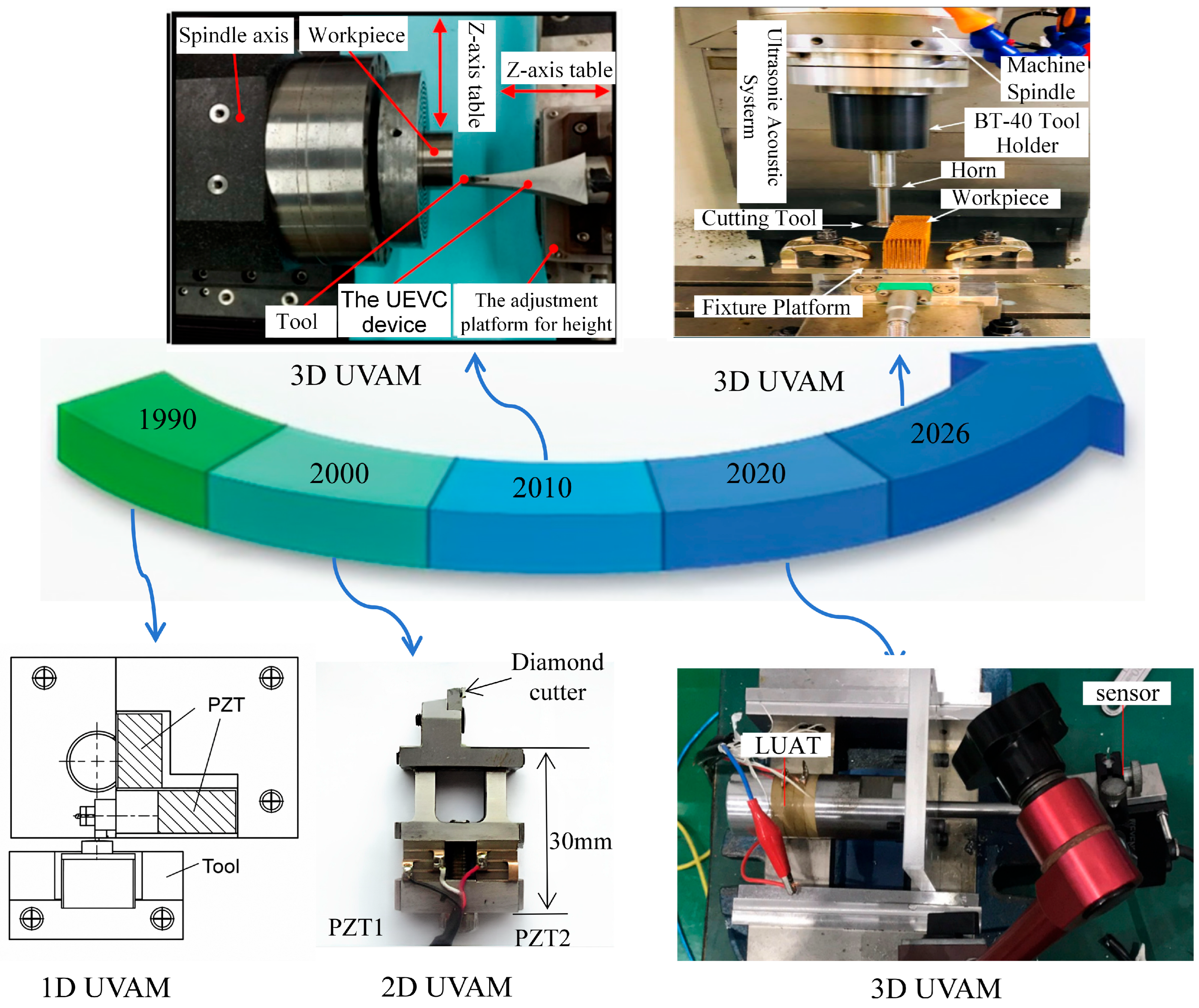
Figure 1. Development history of UVAM [60,61,62,63].
Jmmp 10 00238 g001
Figure 2. Influence of various factors on TWCR [42]: (a) 3D plot of the effects of cutting speed and amplitude on TWCR; (b) effect of frequency on TWCR.
Jmmp 10 00238 g002
Figure 3. Cutting forces of γ-TiAl under dry cutting and liquid nitrogen lubrication conditions [82].
Jmmp 10 00238 g003
Figure 4. Influence of various factors on machining temperature: (a) maximum cutting temperatures during CT and UAT [84]; (b) graph of maximum machining temperatures during CT [84]; (c) graph of maximum machining temperatures during UAT [84]; (d) relationship between cutting speed and machining temperature [84]; (e) schematic of the LUVAM process [54]; (f) cutting temperatures during conventional machining [54]; (g) cutting temperatures during LUVAM [54].
Jmmp 10 00238 g004
Figure 5. Role and influence of ultrasonic vibration during machining.
Jmmp 10 00238 g005
Figure 6. Tool and chip temperatures during machining using different methods [95].
Jmmp 10 00238 g006
Figure 7. SEM analysis results of chip morphology during end milling [99]. (ac) Chips produced by coated end mills at milling lengths of 0.04 m, 1.6 m and 3.6 m, respectively; (df) Chips produced by uncoated end mills at milling lengths of 0.04 m, 0.8 m and 1.2 m, respectively.
Jmmp 10 00238 g007
Figure 8. Ultrasonic elliptical vibration side milling: (a) process schematic; tool rake face wear for CM (b), non-separated-type high-speed ultrasonic elliptical vibration milling (c), and non-separated-type high-speed ultrasonic elliptical vibration milling (d); cutting speed component analysis for separated-type (e) and non-separated-type (f) processes under different parameter matching conditions [112].
Jmmp 10 00238 g008
Figure 9. Tool wear patterns and average width: (a) wear on the rake face after CM; (b) wear on the rake face after LTUVM; (c) average width of tool wear [114].
Jmmp 10 00238 g009
Figure 10. Surface morphology and surface roughness under different machining conditions [102,136,138,139]. (a) surface morphology measured by white light interferometer; (b) surface roughness under different cooling conditions.
Jmmp 10 00238 g010
Figure 11. Surface roughness of Ti-6Al-4V bars after turning under conventional wet conditions: (a) high-pressure pure oil; (b) high-pressure water-soluble oil; (c) conditions [143].
Jmmp 10 00238 g011
Figure 12. Machined surface morphology and surface roughness under different cooling methods [136].
Jmmp 10 00238 g012
Figure 13. Surface appearance of machined TiAl alloys [160,162]: (a) CM; (b) UVAM;3D surface topography of titanium-aluminum alloys milled using different methods: (c) CM; (d) UVAM; (e) SEM analysis of machined surfaces under CM and LUVAM at different cutting speeds.
Jmmp 10 00238 g013
Figure 14. Effects of cutting edge radius and cooling/lubrication methods on machined surface residual stress [178,179,180]: (a) SEM images of surface microstructure distribution under different cutting edge radii and cooling/lubrication conditions. (The blue dashed line denotes the lower boundary of the plastic deformation layer; blue double-headed arrows mark the layer thickness, with the red values adjacent to the arrows corresponding to the measured thickness values.); (b) residual stress characteristics under mixed cooling/lubrication conditions with different cutting edge radii; (c) variations in main cutting force (Fc); and (d) thrust force (Ft) under different working conditions.
Jmmp 10 00238 g014
Figure 15. Effects of different cutting processes on machined surface residual stress [181,182,183,184]: (a) inverse pole figure (IPF) maps and (b) KAM maps of cross-sectional microstructures; (c) variations in residual stress with spindle speed and (d) tangential feed rate in UTVHM and HM; (e) surface residual stress and percentage increase in residual stress.
Jmmp 10 00238 g015
Figure 16. Microhardness measurements and thermal imaging at different amplitudes [195]. (e–i) Infrared thermal images depicting the surface temperature field of specimens under vibration amplitudes of 0 μm, 16 μm, 31 μm, 38 μm, and 46 μm, respectively.
Jmmp 10 00238 g016
Figure 17. Conclusions.
Jmmp 10 00238 g017
Figure 18. Outlook.
Figure 18. Outlook.
Jmmp 10 00238 g018
Table 1. Performance parameters of Ti-Al IMCs [18,19,20,21,22,23].
Performanceα2-Ti3Alγ-TiAlTi2AlNb
Density/g·cm−34.15~4.93.76~3.95~5.8
Elastic modulus/GPa95~115160~180102~134
Yield strength/MPa700~1150400~8001030~1292
Tensile strength/MPa750~1200450~9001245~1413
Room temperature ductility/%2~101~4.23.5~10
High temperature ductility/%10~20 (660 °C)10~60 (870 °C)6~14 (650 °C)
Fracture toughness/MPa·m1/212~8012~3539
Oxidation resistance limit/°C649800~9501100
Thermal conductivity/W·(m·K)−1722~247.87
Coefficient of expansion/·10−6 K−11010.88.22
MicrostructuresJmmp 10 00238 i001Jmmp 10 00238 i002Jmmp 10 00238 i003
Table 2. The effects of different machining methods and experimental conditions on cutting force.
Machining Material and MethodMain Experimental/Simulation ConditionsVariation Law of Cutting ForceMain Reason or MechanismResearcher
Ti-45Al-8Nb-0.2C-0.2B; high-speed cuttingCutting speed, feed rate, and depth of cut were variedDepth of cut had the greatest influence on cutting force, followed by feed rate, while cutting speed had a relatively small effectIncreasing the depth of cut significantly increases the material removal cross-sectional areaKlocke et al. [82]
Ti-6Al-4V;
ultrasonic-assisted turning
Vibration amplitude increased from 10 μm to 20 μm, and then to 30 μmWhen the amplitude increased from 10 μm to 20 μm, the cutting force decreased by about 17% and the thrust force decreased by about 33%; when the amplitude further increased to 30 μm, the cutting force continued to decrease slightlyIncreasing the amplitude enhances the intermittent tool-workpiece contact effect and reduces the average contact loadPatil et al. [84]
γ-TiAl intermetallic compound
ultrasonic-assisted grinding
A grinding force model based on the single-abrasive-grain chip formation mechanism was established, considering the three stages of sliding, plowing, and chip formationThe grinding force decreased with increasing ultrasonic amplitude and frequency; when the amplitude increased from 10 μm to 30 μm, the cutting/grinding force decreased by about 28%Ultrasonic vibration changes the motion trajectory of abrasive grains, reducing the undeformed chip thickness and contact load of a single abrasive grainLi et al. [85]
α-Ti3Al micro-hole;
longitudinal ultrasonic-assisted helical grinding
A grinding force model was established and experimentally verified; amplitude increased from 0 to 1.6 μm; spindle speed and feed rate were variedWhen the amplitude increased from 0 to 1.6 μm, the planar grinding force decreased by 27.2%, the axial grinding force decreased by 28%, and the total grinding force decreased by 27.4%; increasing spindle speed reduced the grinding force, while increasing feed rate increased the grinding forceUltrasonic vibration increases the instantaneous cutting speed of abrasive grains and reduces the chip cross-sectional area; increasing feed rate raises the material removal loadGao et al. [86]
Table 3. The effects of different machining methods and experimental conditions on chip morphology.
Machining Object/MaterialMachining Method or Experimental ConditionChanges in Chip MorphologyMain Reason or MechanismResearcher
Ti2AlNbUltrasonic vibration-assisted millingChips became thinner and more uniform, with significantly reduced edge tearingUltrasonic vibration introduces a periodic tool-workpiece separation effect, thereby changing the chip formation mechanismWang et al. [99]
Inconel 718Ultrasonic vibration-assisted turningChips were relatively thinner, smoother, and longerUltrasonic vibration improves the cutting contact state and reduces the nonuniformity of chip deformationNath et al. [31]
Ti-6Al-4VUltrasonic vibration-assisted millingChips were thinner and shorter, with a more regular morphologyThe tool-workpiece contact rate is reduced, and periodic separation changes the material removal processNi et al. [42]
Bio-ceramic materialsUltrasonic vibration-assisted grindingChip size was significantly reduced, with an average size of approximately 0.05–0.07 mmUltrasonic vibration promotes micro-scale and intermittent material removalTesfay et al. [103]
Table 4. Effects of different processing parameters on the machinability of Ti-Al IMCs.
Machining ParameterEffect on Cutting ForceEffect on Cutting TemperatureEffect on Chip MorphologyEffect on Tool Wear
Cutting speedGenerally has a smaller effect than the cutting depth and feed rate; however, the force-reduction effect of UVAM decreases as the cutting speed increases.Higher cutting or grinding speed tends to increase the temperature because of greater frictional and deformation heat.High speed may reduce stable intermittent separation, leading to less-controlled chip segmentation.At excessive speeds, tool-workpiece separation may disappear, increasing friction and wear; however, some ultrasonic modes can still reduce wear by lowering friction.
Feed rateIncreasing the feed rate usually increases the undeformed chip thickness and therefore the cutting force.A higher feed rate can increase heat generation owing to the larger material removal load.The chips became thicker and more difficult to control, and tearing and plastic flow became more apparent.A greater mechanical load accelerates flank/rake face wear and may promote chipping.
Cutting depthHas the most significant influence on cutting force among common cutting parameters; larger depth sharply increases force.Larger cutting depth increases deformation work and heat accumulation in the cutting zone.Produces thicker chips and may intensify tearing or unstable fracture.Higher contact load increases abrasive, adhesive, and diffusion wear.
Vibration amplitudeIncreasing amplitude within a proper range reduces force by enhancing intermittent contact; excessive amplitude may introduce impact load.Moderate amplitude reduces average temperature through tool-workpiece separation; excessive amplitude may increase energy input and temperature.Proper amplitude promotes chip segmentation, thinner chips, and reduced tearing; excessive amplitude may induce brittle fracture.Suitable amplitude reduces adhesion and friction wear; excessive impact may cause edge chipping or coating damage.
Vibration frequencyHigher frequency can reduce grinding/cutting force by increasing periodic separation and reducing chip thickness.Helps disperse heat and reduce local thermal concentration.Promotes more regular chip formation and improved chip breaking.Reduces average friction and adhesion, but the effect depends on vibration mode and tool coating stability.
Disclaimer/Publisher’s Note: The statements, opinions and data contained in all publications are solely those of the individual author(s) and contributor(s) and not of MDPI and/or the editor(s). MDPI and/or the editor(s) disclaim responsibility for any injury to people or property resulting from any ideas, methods, instructions or products referred to in the content.