Article

Machine Learning-Based Analysis of Elastic Springback in Bending of SS, Al, and Cu Sheets with Localized Heating


by
Naser A. Alsaleh
Industrial Engineering Department, College of Engineering, Imam Mohammad Ibn Saud Islamic University (IMSIU), Riyadh 11432, Saudi Arabia
J. Manuf. Mater. Process. 2026, 10(6), 207; https://doi.org/10.3390/jmmp10060207 (registering DOI)
Submission received: 5 May 2026 / Revised: 8 June 2026 / Accepted: 10 June 2026 / Published: 14 June 2026

Abstract

Elastic springback is a critical challenge in sheet metal bending that directly affects dimensional accuracy and manufacturing efficiency. This study presents a comparative experimental and machine learning-based analysis of elastic springback behavior in three widely used sheet metals like stainless steel, aluminum, and copper, which are subjected to folding bending. The influence of key process parameters, namely sheet thickness (0.5 to 1.5 mm) and bending temperature (room temperature to 200 °C), was systematically examined under cold working. A cost-effective localized heating approach using a direct flame was introduced to enhance process control and reduce elastic recovery without the complexity associated with heated dies. Experimental results revealed substantial variability in elastic springback, ranging from 0.15% to 12.41%, emphasizing the fact that they are nonlinear in nature. Statistical evaluation confirmed that sheet thickness is the dominant factor governing elastic springback, while material type and temperature exhibit secondary yet meaningful effects. To improve predictive capability, five regression models (Linear, Polynomial, Support Vector, Random Forest, and Gradient Boosting) were developed and assessed. Among them, Random Forest demonstrated superior performance with the lowest prediction errors and strongest explanatory power, achieving an R2 of approximately 0.85. Cross-validation further validated its robustness and generalization capability. Feature importance and SHapley Additive exPlanations (SHAP) analyses reinforced the primary role of thickness in determining elastic recovery behavior. The findings provide practical insights for selecting materials and process conditions to minimize elastic springback while highlighting the effectiveness of ensemble learning techniques for accurate prediction. This work contributes a consistent framework for enhancing bending precision and supports data-driven decision-making in modern manufacturing environments.

1. Introduction

Sheet metal bending can be accomplished by deforming along a line where compression and tension progressively and oppositely distribute across the thickness of the sheet to be bent. In actual production setups, bending is performed through a variety of processes including, but not limited to, V-bending, air bending, wipe bending, and folding bending. V-bending is very popular and vastly used due to its relative efficiency in positioning sheets for multiple bends and its lower force requirement. In contrast, folding bending employs a revolving die to deform the sheet metal to a desired angle after clamping one of its edges to another die. Folding bending surpasses other bending methods by its quality output in terms of uniform deformation and reduced scratches on the material’s surfaces around the bent area, especially for bends exceeding 90 degrees. In addition, through folding bending, sharp corners and tight bends can be achieved with high precision across a wide range of bending angles of sheet metal components, providing reduced springback, better structural stability, and fewer dimensional errors [1]. However, like all other forming processes, and despite the disparities in the different bending processes, the success and consistency of such deformation operations hinge essentially on the formed part material, its intended end geometry, and the forming process characteristics.
It is important to predict metals’ springback in order to obtain precise dimensions following the bending processes [2]. Otherwise, several subsequent alternations have to be made to fit the manufactured parts in their intended positions of the final product, which generates extra costs and time for corrections. Springback has been a major concern and considered an unfavorable phenomenon in bending where sheet metal undergoes an elastic reversal effect after being subjected to the plastic deformation associated with bending, causing dimensional errors in the intended end product shape. It happens when the tools that hold and form the sheet metal are released, causing the product to spring out due to the effect of the internal stresses. The deviation in the intended form necessitates some compensations in the process itself through the design of the tools. Such a concern exists in the majority of metals, especially stainless steels, aluminum, and copper with different degrees depending on the yield strength and ductility of the deformed metal. Based on these properties, aluminum exhibits high springback due to its high ductility and low yield strength, while stainless steel tends to have less springback because of its lower ductility and higher strength [3].
Several factors critically affect elastic springback;ok among them, the most important are the following: sheet metal alloying elements [4]; heat treatment of the raw material [5]; thermal conductivity throughout the springback behavior [6]; temperature under which the bending process is performed [7]; bending process parameters, such as die radius and angle [8,9,10]; holding time of the bent sheet [11]; die/punch-sheet clearance [12]; and thickness of the bent sheet [13,14].
Despite any changes in the geometry of the deformed part, the magnitude of springback seems to decline significantly with the increased thickness of sheet metal, while a positive relationship exists between springback and uniaxial strain at first yield [15]. Sheet thicknesses have also shown contradicting results in V-bending of other alloys, as exhibited in 6061 aluminum sheets where an insignificant effect of thickness on springback was observed, despite the unexpected positive effect of die width which decreased sheet springback significantly [16]. In some cases where holding time was increased, springback was significantly decreased for cold rolled high-strength steel sheets (DP600), due to the transformation of elastic stresses into plastic ones in such material [17]. Nonetheless, a negligible effect of holding time on springback was reported for different steels, like (CP800) and (JSH-440) [11,18]. The influence of heat-holding time during the warm forming of Al–Mg–Si heat-treatable aluminum alloys at RT and 200 °C [19] was investigated and it was reported that heat-holding time could be a crucial parameter for the thermo-mechanical response of the same.
Limited review studies, such as [20], have indicated that application of liquid lubricants results in reduction in springback and improves surface quality after deformation in bending of materials like high-strength steels. Some findings in the literature revealed that some of these variables have more effects than the others. For example, when investigated individually, sheet thickness seems to have more effect on springback than forming temperature [8].
Elastic springback prediction was approached by different means, including machine learning and statistical methods [21]. Through statistical analyses, some studies’ results concluded, via analysis of variance ANOVA, that the thickness of the sheet is a major influencing parameter, while sheet orientation and punch radius have a minimum effect on springback [13,22]. Others [23] have stated that interactions among the bending parameters, such as sheet thickness and bending angle, should also be considered. An attempt was also utilized to control springback by introducing slight vibration using electromagnetic forming that seems to slightly reduce springback [24]. The influence of natural aging and heat treatment was also evident on the springback effect of AW-2024 aluminum alloy sheets with varying thickness [25].
In the literature of interest, elastic springback reduction has been approached through experimental and numerical studies that utilized different techniques. Among the alternative numerical practices for springback accommodation, common efforts include compensation, by either displacement adjustment or by spring forward methodologies [26]. In these techniques, the die surface is adjusted by moving nodes in the reverse direction to springback error, or by multiplying the residual stress state by the negative factor during forming to accommodate for springback, respectively. Alleviating the springback effect can also be reduced via elevated temperatures, particularly for aluminum alloy AA5754 through heated dies [27]. Other scholars such as [28] have attempted in their research to study the effects of distinctive heating timings on the springback of mild steel plates during incremental die-free bending processes. At the elevated temperatures 250 °C and 500 °C, the springback effect was found to benefit somewhat from focused heating through an infrared temperature controller [29] for employing a local heating mechanism using cartridge heaters of metal foils. Although this method was used for nonmetallic sheets bending, the local heating appeared to improve the process itself and the properties of the bent product. Eventually, the study by N. Woellner et al. [30] demonstrates that, while moderate temperature increases initially reduce forming limits in HSLA and DP steels, higher temperatures near phase transformation regions can enhance formability, highlighting a complex, nonlinear relationship between temperature and forming behavior.
Highly efficient, thin (0.1 mm) hydrogen fuel cell electrodes were bent with a micro-scale four-point tool [31] and grain size of the bending zone was found to positively affect springback. On the other hand, a few studies have investigated the springback of other types of sheets made of magnesium AZ31 by V-bending and springback appears to be similar to that of conventional steel when bend radius is decreased [32]. In a study of springback in such material [33], holding pressure, punch speed, specimen temperature, and mold depth parameters all affect springback interactively.
However, comparisons of springback in metals under different variables were scarce in the literature, with a few exceptions [3,34]. In this present study, commonly used engineering materials; stainless steel (SS), aluminum (Al), and copper (Cu) were studied in roll bending under cold metal forming a temperature zone using a localized direct flame heating in the range of 200 °C. The direct focused flame was expected to provide a more economical solution in springback reduction instead of heating the bending dies [13]. In addition to the economic advantage, direct flame heating provides the required local heating only within the bending region, which might enhance the process efficiency, application simplicity, and application feasibility.
Recent advancements in smart manufacturing have accelerated the adoption of machine learning (ML) techniques for predicting defects in sheet metal forming processes. Traditional analytical and finite element models often struggle to capture the complex nonlinear interactions between material properties, geometry, and process conditions that govern springback behavior. In contrast, ML algorithms can learn these relationships directly from experimental data, enabling faster and more accurate predictions. Ramnath et al. [21] demonstrated the effectiveness of machine learning in predicting springback for automotive body-in-white structures, reporting improved accuracy and reduced modeling complexity compared to conventional approaches. Similarly, Abdullah and Jalil [3] proposed a hybrid advanced analysis framework that integrates statistical and computational techniques to enhance the prediction of springback phenomena in metals.
Data-driven models also provide the advantage of minimizing costly trial-and-error experimentation while supporting rapid optimization of forming parameters. However, most existing studies concentrate on single materials or restricted processing conditions, limiting their applicability to broader manufacturing scenarios. Comparative ML-based investigations across multiple commercially important metals remain limited, particularly for folding bending processes performed under elevated temperatures. Furthermore, the predictive capability of ensemble learning models in capturing the combined effects of thickness, material type, and thermal conditions has not been sufficiently explored. Addressing these gaps, the present study integrates experimental analysis with multiple regression-based ML models to develop a robust predictive framework for elastic springback. Such an approach contributes to improved process reliability and supports the transition toward intelligent, data-driven manufacturing systems.

2. Materials and Methods

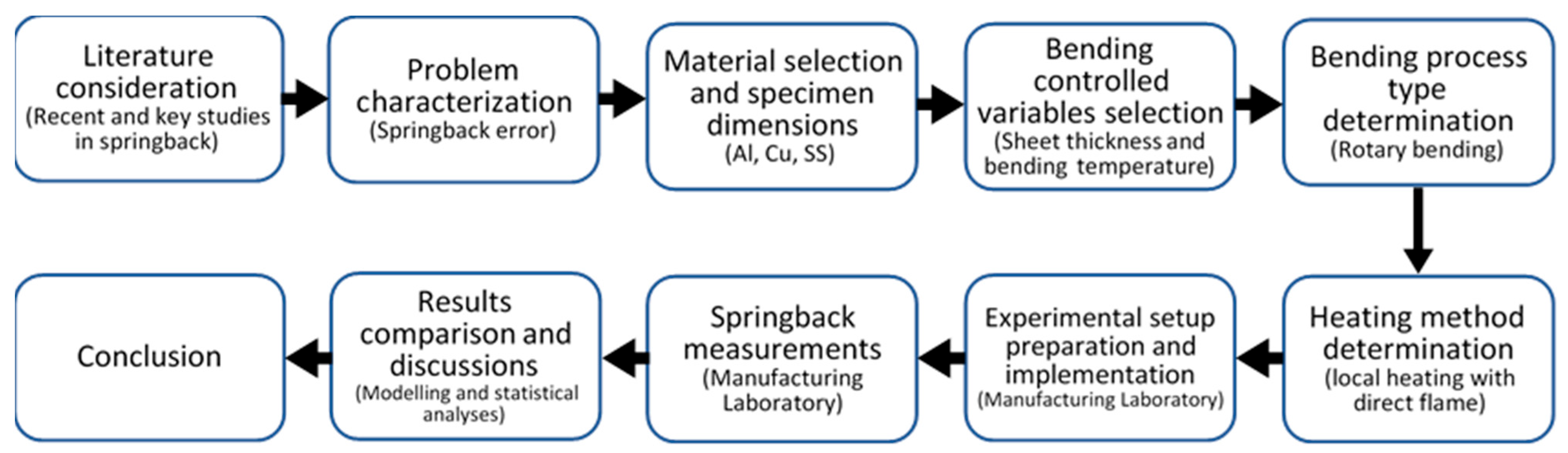
The methodology of this research study is shown in the flow chart illustrated in Figure 1, which highlights the stages of events and their interrelations. The problem description and its attributes were identified after examining the related literature. The bending process parameters and materials were chosen based on their suitability for application in actual manufacturing setups.
Heavily consumed metals across various industrial domains were selected in this research. Thus, the study aims to concentrate on sheet metal made of popular materials in the local industry, namely stainless steel, 99% pure copper, and 99% pure aluminum. The specimens used in this study were prepared so that their longitudinal direction was transverse to the rolling direction. The dimensions of all specimens were 50 mm × 50 mm with different thicknesses. The standard chemical compositions and the mechanical properties for as-received sheets, stainless steel, aluminum, and copper, are presented in Table 1.
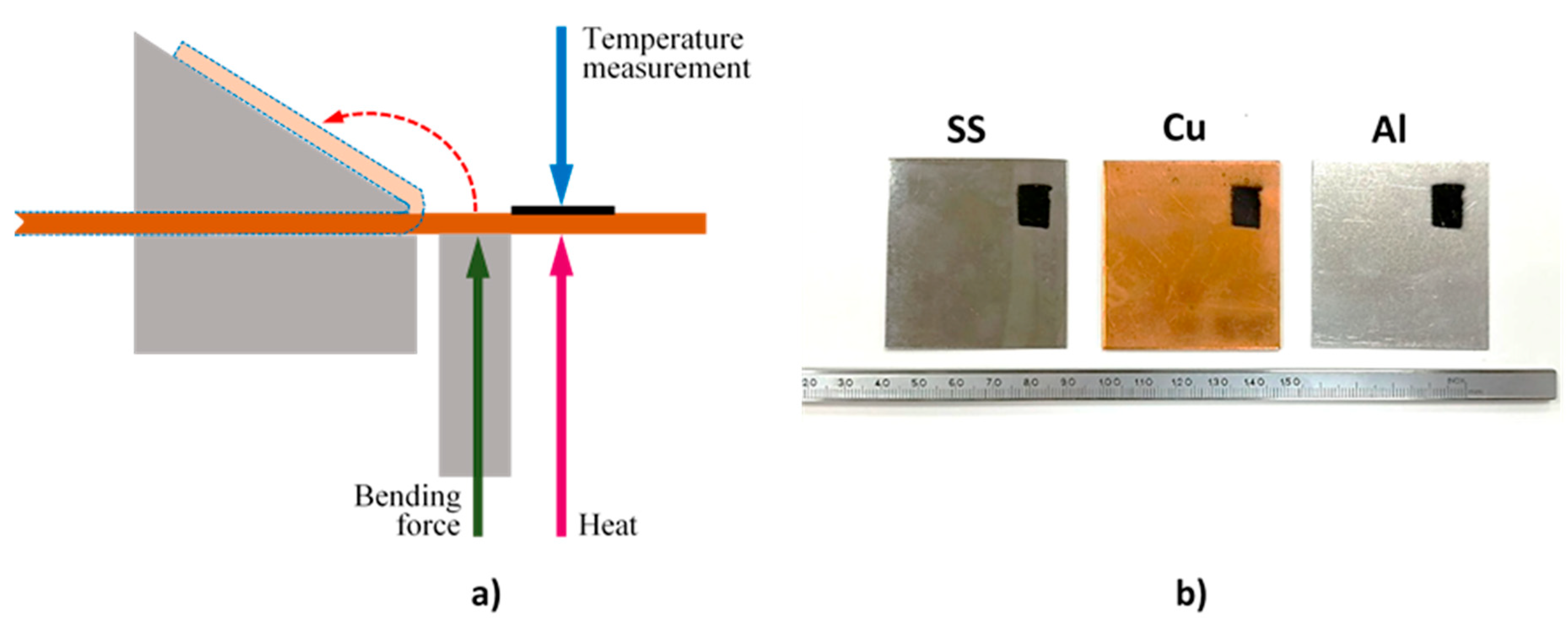
The bending mechanism implemented in this study consists of a rotating die made of carbon steel fitted in a folding bending machine to fold the blank specimens, as shown in Figure 2. To get more precise springback results, the die should fold the sheet metal to the extent that is sufficient to reveal even minute springback under different bending conditions, including elevated temperature. Based on that, the rotating die was set to bend the sheet metal specimens to 135°.
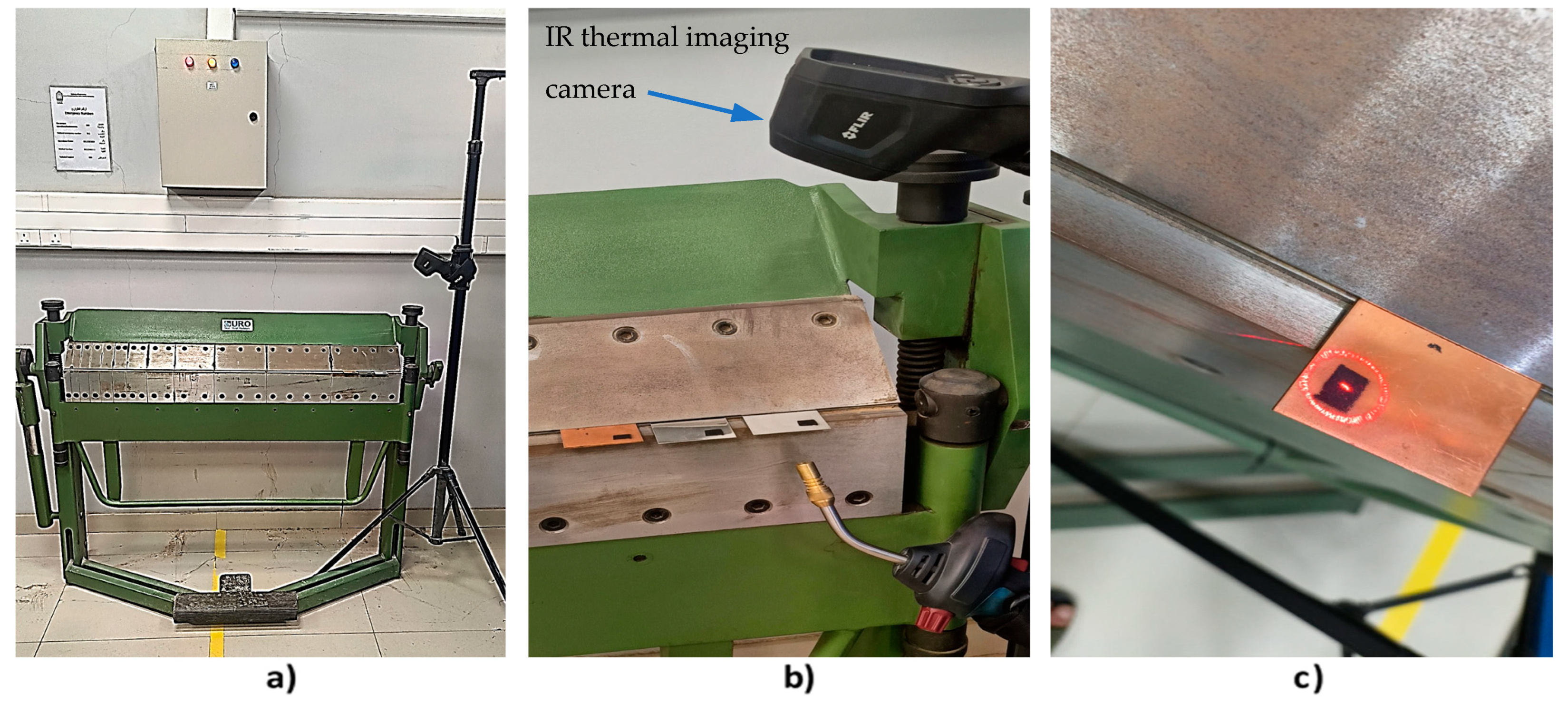
Bending takes place after heating the specimen at the bending region to the desired temperature. Heating was provided by direct flame focused near the bending region by a torch placed underneath the specimen. The top surface temperature of the specimen near the bending region was measured by an infrared (IR) thermal imaging camera. The specimen area where the temperature had to be measured was painted with matt black to avoid erroneous temperature readings normally caused by the sheet metal emissivity and reflection. Figure 3 shows the experimental setup.
In general, heating the bending region only of a bent sheet is believed to be beneficial in forming processes for several reasons, including the following:
  • Reducing surface discoloration and deformities caused by heating beyond the bending region;
  • Improving the process efficiency by reducing the energy consumed in heating unnecessary parts such as the sheet clamping dies and the undeformed regions of the processed part;
  • Providing the least possible level of complexity that is normally associated with transferring the bent sheets from heating furnaces to the bending machine which also results in inconsistent bending temperature;
  • Improving the accuracy of temperature measurement within the bending region where the heat is directed.
However, accomplishing localized and focused heating only within the bending region seems challenging and of a certain degree of intricacy that may considerably inflate the cost of processing equipment. Hence, an economic solution had to be introduced to achieve the required localized heating and attain the advantages of enhanced process efficiency while maintaining the utmost simplicity and applicability. Likewise, any proposed heating method should exclude the drawbacks generally associated with typical heated bending such as the higher costs inflicted by the complexity of integrating heating elements within the clamping mechanisms of the bent sheets during the process. While fairly useful, integrating heating elements within the clamping mechanisms normally does not focus heat entirely on the deformation region, while bending and is considered time consuming due to heat transfer delay.
Thus, the proposed heating method in this study comprises a direct and concentrated flame aligned along the bending line. For the sake of the experiment conducted in this study, the flame is produced by a torch placed below and near the bending line to avoid any abnormalities in the sheet surface quality beyond the bending region. Pointing the flame towards the bending line on the lower surface of the clamped specimen seems to produce precise control of the bending temperature. Once the targeted temperature is reached, the specimen is bent quickly by the bending machine dies. It also seems more efficient and commercially viable to perform in such way rather than heating the die and waiting for heat transfer via conduction to the sheet metal.
The experiments conducted in this study were meant to examine the effects of temperature and material thickness on springback for bending sheets made of the different materials mentioned earlier. Table 2 lists all the controlled parameters and their gradients as varied during the bending experiments. A folding bending machine was controlled manually to perform the required bending using a 70 cm long lever that was rotated at a speed of approximately 0.88 m/s or 12 rpm. However, strain gradient has previously shown a negligible effect on springback and can be ignored [24].
Statistical analyses are to be conducted to investigate the significance of each effect on springback for the controlled variables of interest in this study and their interactions, including sheet thickness and bending region deformation temperature. Prediction numerical models will be proposed, evaluated, and compared with reference to the quality of springback prediction for the materials investigated in this study based on the aforementioned controlled variables. Further investigation of sheet metal hardness across the sheet thickness in the deformation region will be conducted in an upcoming study to explore its relationships with the dependent and controlled variables proposed in this research.

3. Results and Discussion

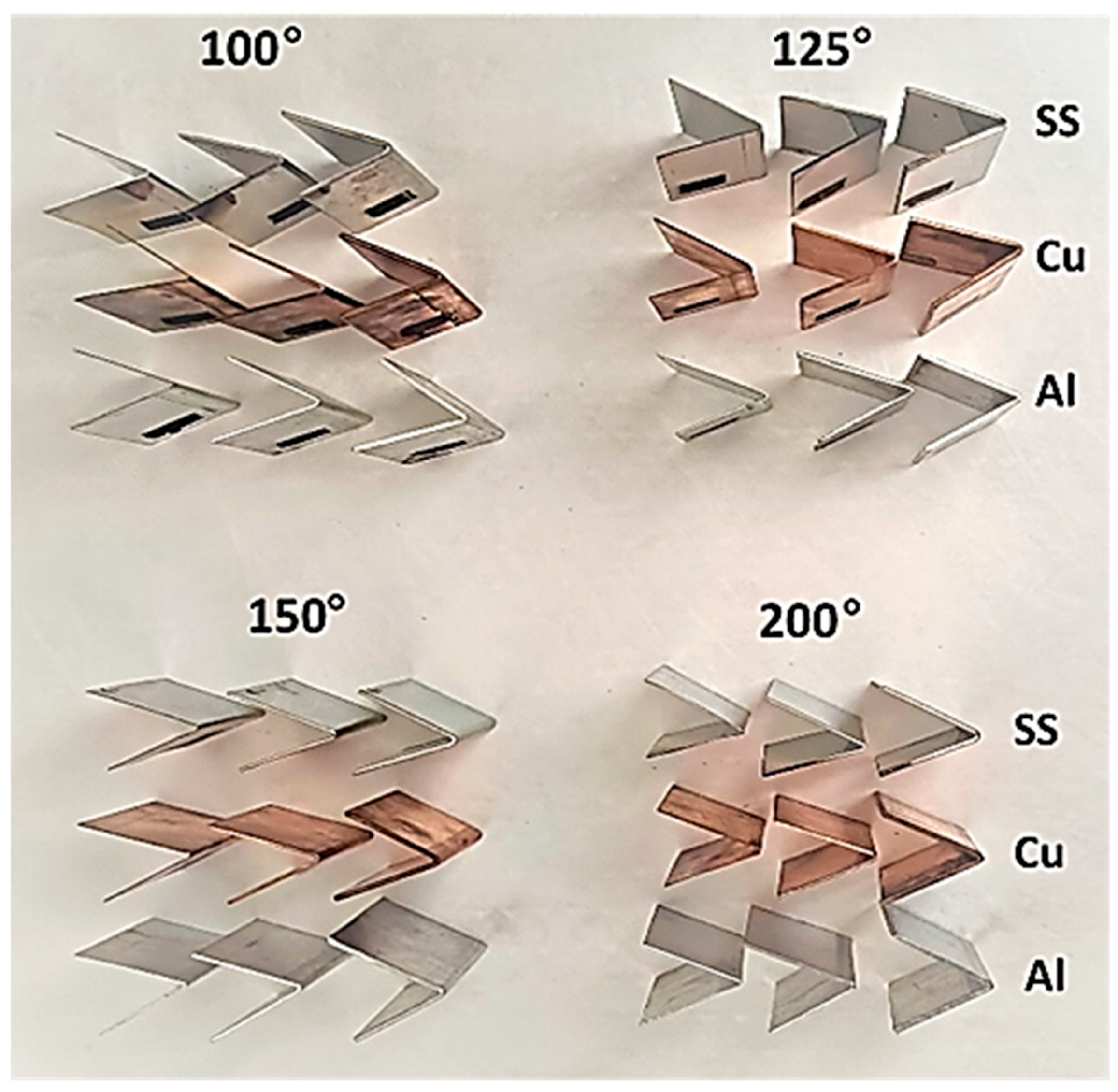
The bent samples were measured to obtain the springback angles using a calibrated digital angle finder protractor with a resolution of 0.05° and accuracy of ±0.2°. Figure 4 below shows some of the samples after being bent at elevated temperatures of 100 °C, 125 °C, 150 °C, 200 °C. A comprehensive machine learning analysis was conducted using the experimental dataset consisting of three process parameters: material, sheet thickness, and bending temperature as inputs, and springback (%) as the output. Five regression models were evaluated: Linear Regression, Polynomial Regression (degree 2), Support Vector Regression (SVR), Random Forest Regression, and Gradient Boosting Regression. The following subsections summarize the numerical results, statistical interpretation, and the physical significance of the findings.

3.1. Descriptive Statistics and Correlation Insights

The statistical summary of the dataset shows in Table 3 that the springback values range from 0.15% to 12.41%, with an average of 4.63% and a standard deviation of 3.40%, indicating a wide variability in the elastic recovery behavior during bending. The interquartile range (IQR) spans from 1.97% (25th percentile) to 7.06% (75th percentile), suggesting that most samples exhibit moderate levels of springback, while a few high-value cases significantly elevate the upper bound. The material parameter, encoded as 0, 1, and 2, has a mean of 1.0, showing a balanced distribution of the three material categories. Overall, the statistical distribution highlights substantial nonlinearity and spread in springback responses, reinforcing the need for machine learning models capable of capturing these variations.

3.2. Correlation Heatmap

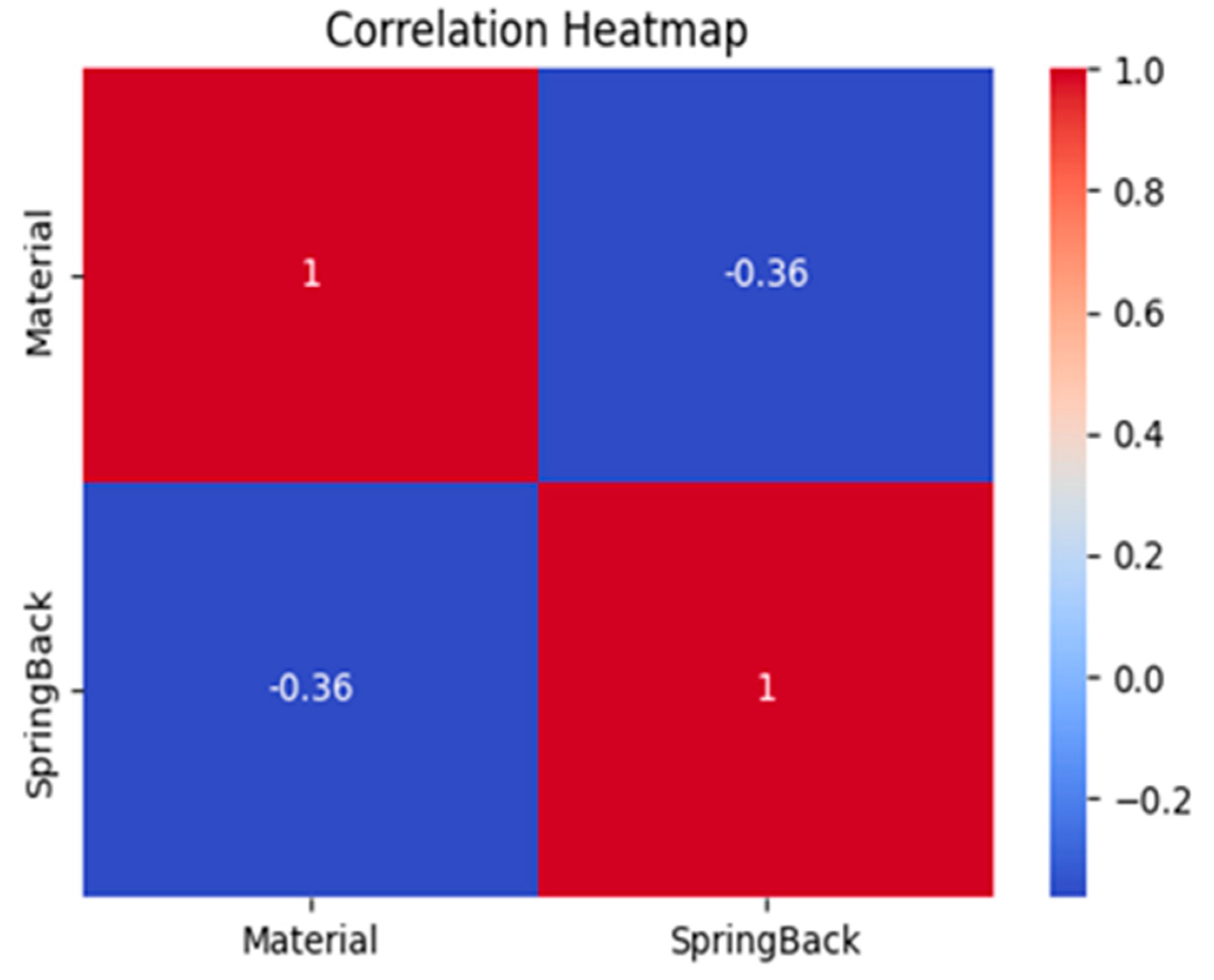
Figure 5 shows that the relationship between material and springback is moderately negative, with a correlation coefficient of −0.36. This indicates that, as the material category changes (based on label-encoded values), the springback percentage tends to decrease, suggesting that certain materials exhibit lower elastic recovery after bending. However, the magnitude of this correlation is not very strong, implying that, while material type influences springback behavior, it is not the primary controlling factor. The diagonal entries in the heatmap are equal to 1, representing perfect self-correlation, which is expected and carries no analytical significance. Overall, the heatmap suggests that material affects springback to some extent, but additional factors (such as thickness and bending temperature) likely play a more dominant role in determining the springback response.

3.3. Performance Matrices

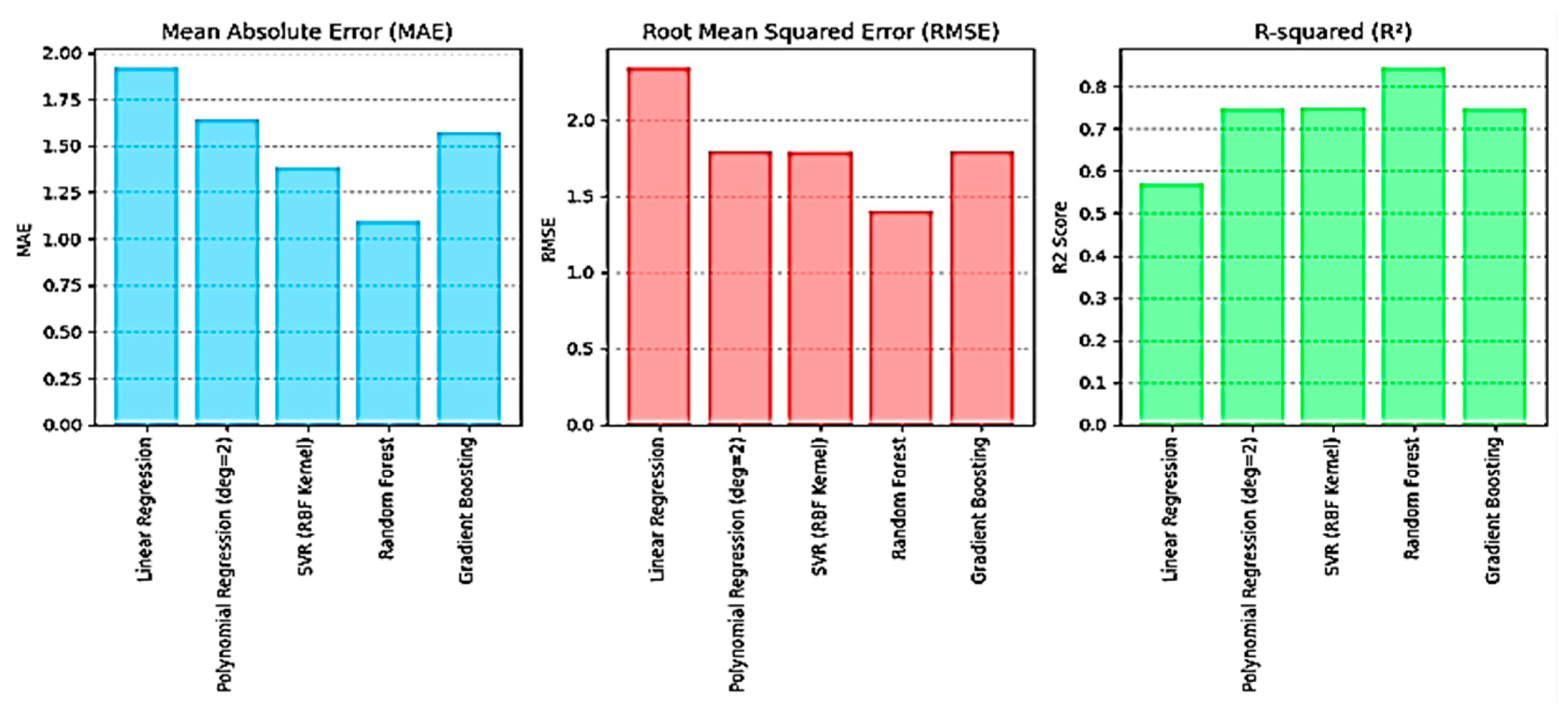
The comparative bar charts in Figure 6 for MAE, RMSE, and R2 clearly show that Random Forest Regression outperforms all other models in predicting springback. It achieves the lowest MAE (~1.1) and lowest RMSE (~1.4), indicating minimal prediction error, and the highest R2 value (~0.85), demonstrating strong explanatory power and excellent fit to the experimental data. Polynomial Regression and Gradient Boosting provide moderate accuracy, performing better than Linear Regression but still inferior to Random Forest, reflecting the nonlinear nature of springback behavior. In contrast, SVR shows the weakest performance across all metrics, with higher error values and lower R2, suggesting that it struggles with the small dataset and underlying nonlinearity. Overall, the visual comparison confirms that Random Forest is the most robust and reliable model for capturing the complex relationships between material, thickness, temperature, and springback.

3.4. Model-Wise Prediction Accuracy for Springback

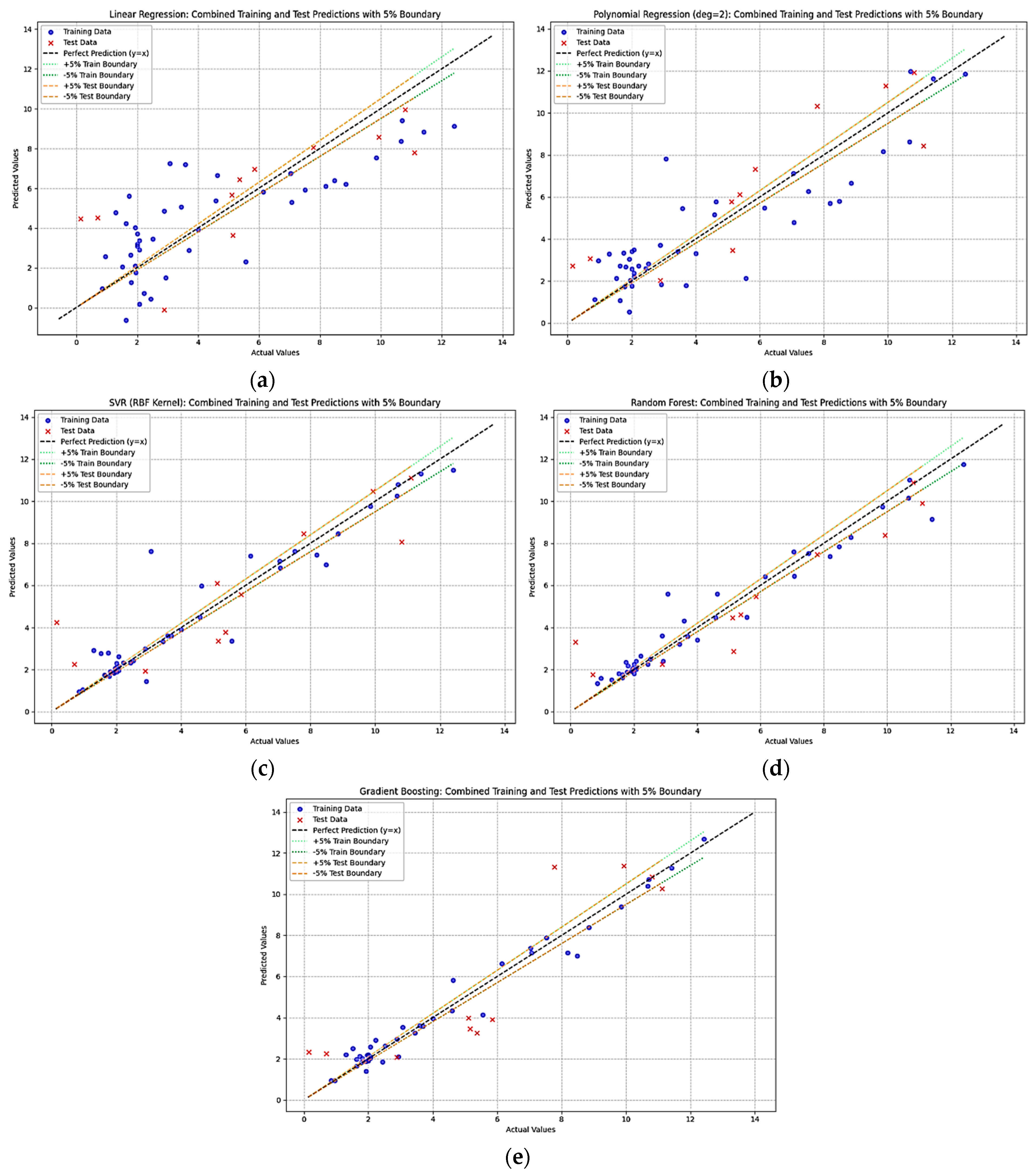
The combined prediction plots in Figure 7a–e compare the actual springback values with the predicted values from all five machine learning models along with a ±5% error boundary around the ideal 1:1 reference line. Linear Regression (a) shows noticeable scatter and several points falling outside the 5% tolerance, reflecting its limited ability to capture nonlinear springback behavior.
In Figure 7 Polynomial Regression (b) improves the fit, with more points aligning closer to the reference line, but still exhibits variability for extreme springback values. The SVR model (c) performs inconsistently, with significant deviations and many predictions lying outside the tolerance band, indicating poor generalization. In contrast, Random Forest (d) demonstrates the strongest agreement with actual data, with the majority of points closely clustered around the ideal line and well within the 5% boundary, highlighting its superior predictive accuracy and robustness. Gradient Boosting (e) also shows good alignment but with slightly greater dispersion than Random Forest. Overall, these plots confirm that tree-based ensemble models, particularly Random Forest, provide the most reliable and precise prediction of springback across the full range of observed values.

3.5. 5-Fold Cross-Validation

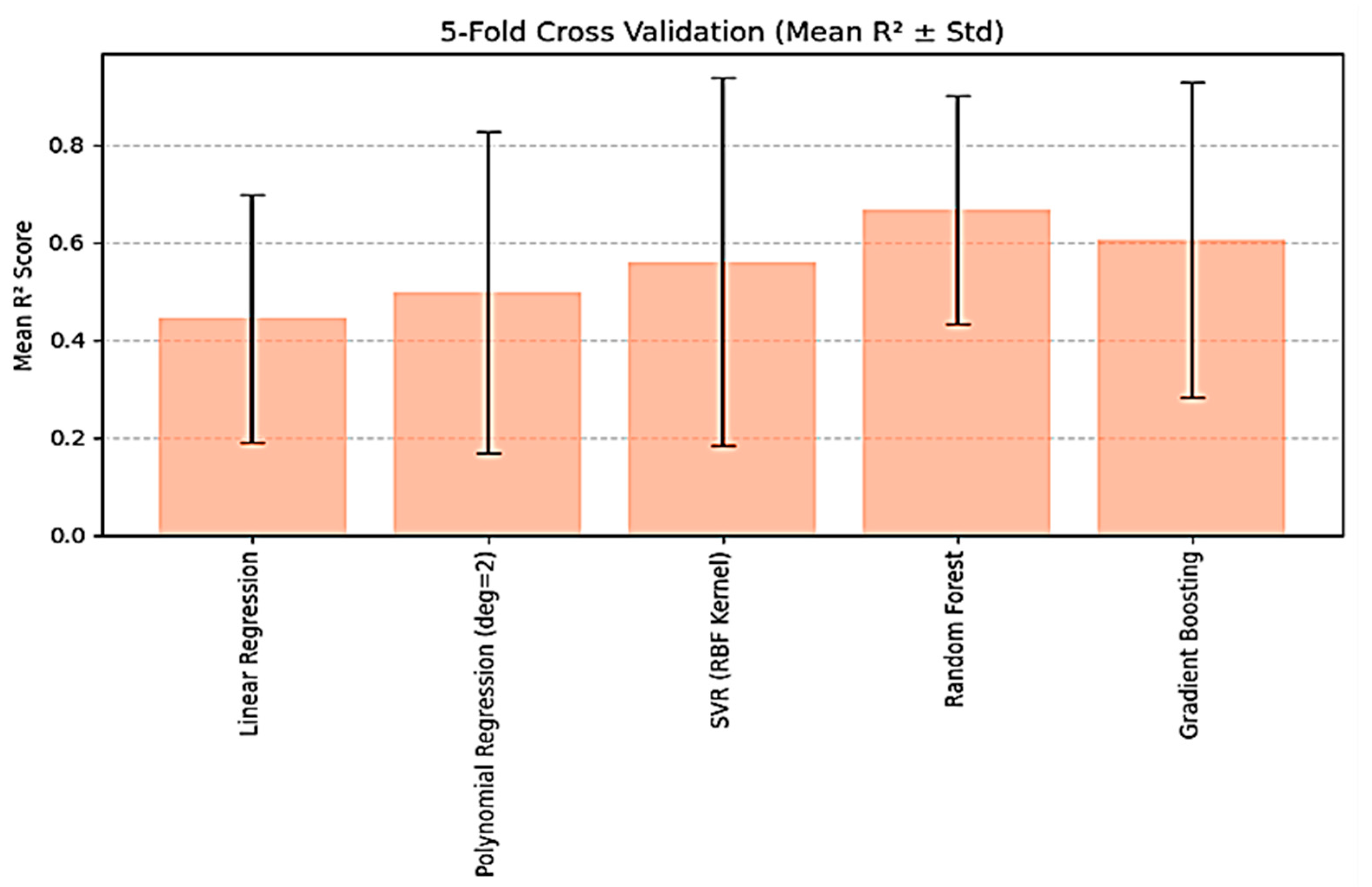
The 5-fold cross-validation plot shows (Figure 8) the mean R2 score along with its standard deviation for each model, providing a measure of both predictive accuracy and stability across different data splits. Among all models, Random Forest achieves the highest mean R2 (~0.67) with a moderate standard deviation, indicating strong and relatively consistent performance even with the small dataset. Gradient Boosting also performs well, with a mean R2 of about 0.60, but with higher variability. Polynomial Regression and Linear Regression yield moderate mean R2 values, reflecting their limited ability to capture the nonlinear behavior of springback. Although SVR shows a similar average R2 (~0.56), it exhibits the largest variability across folds, indicating unstable performance and sensitivity to training data distribution. Overall, the cross-validation results reinforce that Random Forest is the most reliable and generalizable model, offering the best balance between accuracy and stability.

3.6. Feature Importance Analysis

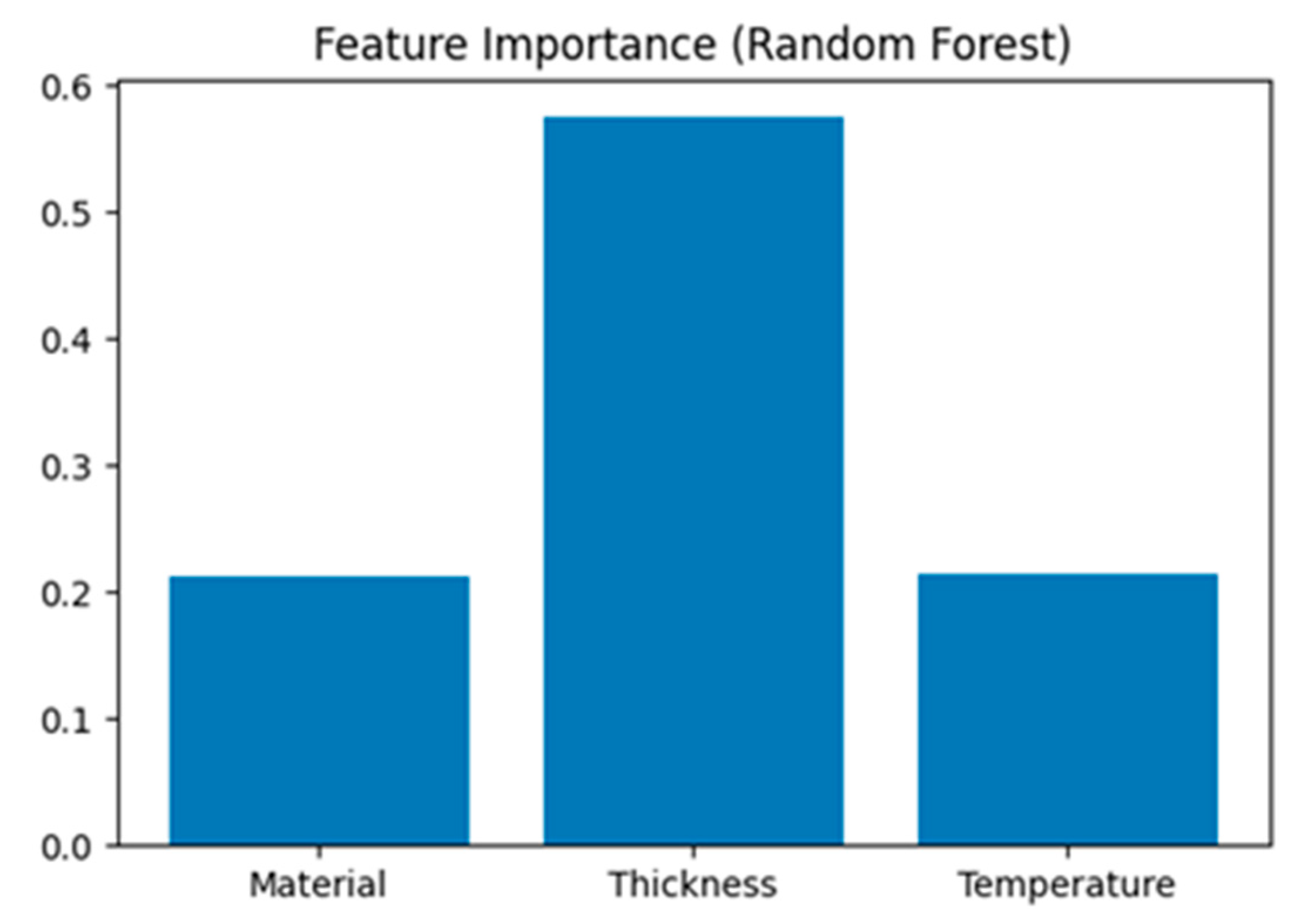
The feature importance plot (Figure 9) from the Random Forest model shows that thickness is the most influential factor, contributing nearly 58% to the prediction of springback, indicating that variations in sheet thickness strongly affect elastic recovery during bending. Both material and temperature exhibit similar but significantly lower importance values (around 21% each), suggesting that, while they do influence the springback behavior, their impact is comparatively smaller than thickness. This trend aligns with bending mechanics, where thicker sheets typically exhibit higher stiffness and therefore different elastic recovery characteristics, making thickness a dominant predictor. Overall, the model highlights that springback is primarily governed by geometric stiffness (thickness), with material properties and temperature playing secondary roles.

3.7. SHAP Analysis

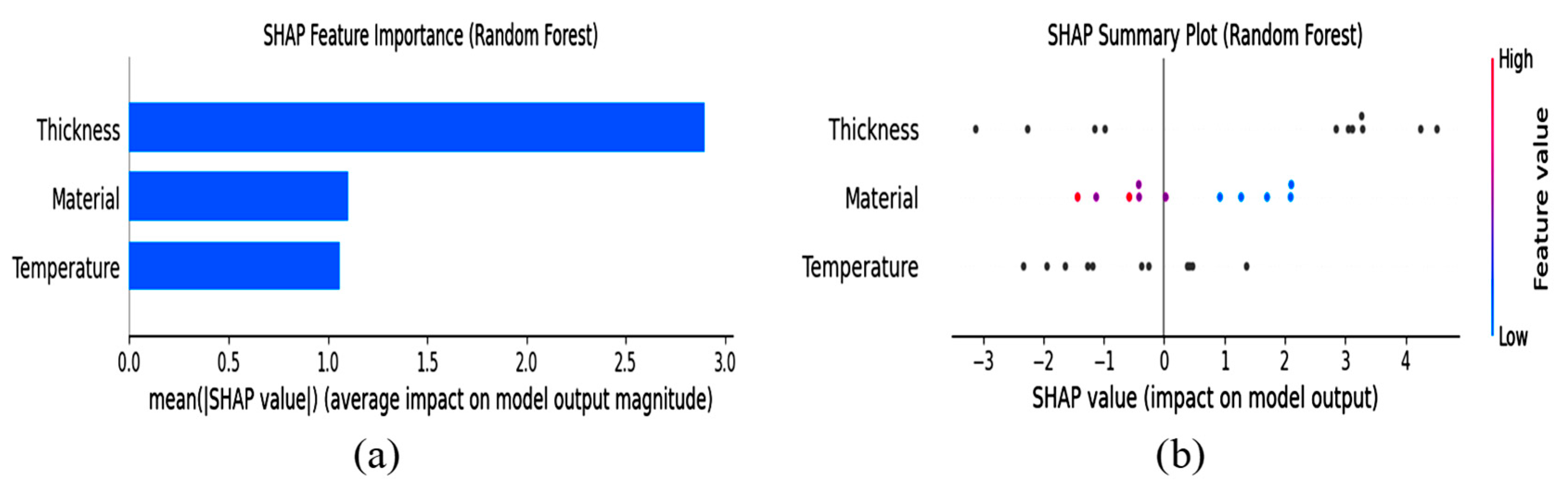
Figure 10a shows the mean absolute SHAP values for each input feature, indicating their average contribution to the Random Forest model’s springback predictions. Thickness exhibits by far the highest SHAP value, confirming that it is the dominant driver of model output and the most influential parameter affecting springback behavior. Material and temperature show noticeably lower SHAP magnitudes, meaning they contribute less strongly to the prediction, although both still affect the output in meaningful ways. On the other hand, Figure 10b provides a more detailed SHAP summary plot, illustrating how individual feature values influence the model in positive or negative directions. The wider spread of SHAP values for thickness highlights its strong and variable impact across different samples, whereas material and temperature show narrower distributions, indicating more consistent but smaller effects. The color gradient further reveals that higher material values tend to push predictions downward, while lower temperatures generally increase the predicted springback. Together, these SHAP plots confirm that thickness governs the majority of predictive behavior, with material and temperature acting as secondary modifiers of springback response.

4. Conclusions

The comparative study established an integrated experimental and machine learning-based framework to accurately predict elastic springback in folding bending, improving overall manufacturing precision.
  • Sheet thickness was identified as the dominant factor influencing elastic springback and the increased thickness enhances structural stiffness and significantly reduces elastic recovery.
  • Material type and bending temperature were found to have notable effects on deformation behavior and springback response.
  • The direct flame heating technique proved effective in localizing heat within the bending zone, resulting in improved dimensional accuracy, reduced energy consumption, and lowering application process complexity compared to conventional heated tooling methods.
  • The ensemble machine learning models, particularly Random Forest, achieved the highest prediction accuracy, demonstrating lower error margins and greater reliability than traditional regression approaches.
  • Feature importance and SHAP analyses consistently confirmed thickness as the most influential predictor, providing both statistical validation and physical insight into springback mechanics.
  • The developed hybrid framework enables enhanced process planning, optimized parameter selection, and reduced need for post-process corrections that leads to enhanced production efficiency and product quality.
Future work is recommended to investigate the effects of a wider range of cold working temperatures on the mechanical properties of the said metals and to correlate these effects with their elastic springback behavior. Also, the variation in hardness across the sheet thickness within the deformation zone should be examined to better understand its relationship with the governing process variables.

Funding

This research received no external funding.

Data Availability Statement

Data available.

Acknowledgments

The author conveys special thanks to Imam Mohammad Ibn Saud Islamic University (IMSIU), Riyadh, Saudi Arabia for providing lab supports.

Conflicts of Interest

The author declares no conflicts of interest.

References

  1. Quang, V.D. The Optimization of Rotary Bending Die Process: Criteria for the Metal Sheet Angles and Springback Effects. Eng. Technol. Appl. Sci. Res. 2025, 15, 20553–20558. [Google Scholar] [CrossRef]
  2. Andersson, A. Numerical and experimental evaluation of springback in advanced high strength steel. J. Mater. Eng. Perform. 2007, 16, 301–307. [Google Scholar] [CrossRef]
  3. Abdullah, E.; Jalil, A. A hybrid advanced analysis approach for predicting spring back phenomena existing in metals. Adv. Sci. Technol. Res. J. 2025, 19, 185–199. [Google Scholar] [CrossRef]
  4. Cada, R.; Tiller, P.; Hikade, A. Blank Material Influence on Stamping Springback. MM Sci. J. 2024, 2024, 7185–7195. [Google Scholar] [CrossRef]
  5. Soualem, A.; Hakimi, S. Experimental study and prediction of the springback under heat treatments for anisotropic sheet. Exp. Tech. 2018, 42, 253–260. [Google Scholar] [CrossRef]
  6. Abdullah, E.; Jalil, A. Enhancing experimental prediction of springback in forming processes using advanced finite element modelling. J. Mach. Eng. 2025, 25, 79–101. [Google Scholar] [CrossRef]
  7. Nakagawa, Y.; Mori, K.-I.; Maeno, T. Springback-free mechanism in hot stamping of ultra-high-strength steel parts and deformation behaviour and quenchability for thin sheet. Int. J. Adv. Manuf. Technol. 2018, 95, 459–467. [Google Scholar] [CrossRef]
  8. Karakaya, Ç.; Ekşi, S. Springback Behavior of AA 7075-T6 Alloy in V-Shaped Bending. Appl. Sci. 2025, 15, 5509. [Google Scholar] [CrossRef]
  9. Sharma, P.K.; Gautam, V.; Agarwal, A. Effect of punch profile radius and sheet setting on springback in V-bending of A 2-ply sheet. Adv. Mater. Process. Technol. 2023, 9, 416–424. [Google Scholar] [CrossRef]
  10. Taşdemir, V. Finite Element Analysis of Bending Zone Damage and Springback Behavior After V Bending Process of AA5754 Alloy. Int. J. Automot. Sci. Technol. 2025, 9, 241–248. [Google Scholar] [CrossRef]
  11. Şen, N.; Taşdemir, V. Experimental and numerical investigation of the springback behaviour of CP800 sheet after the V-bending process. Ironmak. Steelmak. 2021, 48, 811–818. [Google Scholar] [CrossRef]
  12. Bahloul, R.; Ben Ayed, L.; Potiron, A.; Batoz, J.-L. Comparison between three optimization methods for the minimization of maximum bending load and springback in wiping die bending obtained by an experimental approach. Int. J. Adv. Manuf. Technol. 2010, 48, 1185–1203. [Google Scholar] [CrossRef]
  13. Kut, S.; Pasowicz, G.; Stachowicz, F. On the springback and load in three-point air bending of the AW-2024 aluminium alloy sheet with AW-1050A aluminium cladding. Materials 2023, 16, 2945. [Google Scholar] [CrossRef]
  14. Kumar, A.; Kajikawa, S.; Makiyama, T.; Kuboki, T. Effect of Roller Axial Position and Thickness on a Twisted Angle in the Twist Rolling of Aluminum Alloy 1050 Sheet Metal. Metals 2023, 13, 383. [Google Scholar] [CrossRef]
  15. Kutt, L.M.; Nardiello, J.A.; Ogilvie, P.L.; Pifko, A.B.; Papazian, J.M. Non-linear finite element analysis of springback. Commun. Numer. Methods Eng. 1999, 15, 33–42. [Google Scholar] [CrossRef]
  16. Örnekci, A.O.; Ekşi, S. Experimental Study on Springback Properties of 6061 Aluminum in V-Bending. Sak. Univ. J. Sci. 2024, 28, 646–653. [Google Scholar] [CrossRef]
  17. Aydın, K.; Karaağaç, İ.; Uluer, O. The formability and springback characterization of laser-welded DP–HSLA sheets. Appl. Phys. A 2019, 125, 525. [Google Scholar] [CrossRef]
  18. Wasif, M.; Fatima, A.; Iqbal, S.A.; Tufail, M.; Karim, H. Analysis and optimization of springback during the V-bending of hot-rolled high-strength steels (JSH440). J. Eng. Res. 2022, 10, 298–314. [Google Scholar] [CrossRef]
  19. Simões, V.; Oliveira, M.; Laurent, H.; Menezes, L. The Influence of Heat and Holding Time on the Warm Forming of Al–Mg–Si Alloys. J. Manuf. Mater. Process. 2026, 10, 94. [Google Scholar] [CrossRef]
  20. Li, W.; Attallah, M.M.; Essa, K. Heat-assisted incremental sheet forming for high-strength materials—A review. Int. J. Adv. Manuf. Technol. 2023, 124, 2011–2036. [Google Scholar] [CrossRef]
  21. Ramnath, S.; Adrian, A.; Bolar, A.; Alawadhi, I.; Sunkara, S.; Kumar, P.; Davidson, J.; Shah, J. Springback prediction using machine learning: An application for simplified automotive body-in-white structures. Int. J. Adv. Manuf. Technol. 2025, 139, 1253–1273. [Google Scholar] [CrossRef]
  22. Rajesh, R.; Bharath, K.A.; Mohammed Nehal, P.K.; Subramaniam, S. Springback Defect Minimization in U Bending of Al5052 Alloy Sheet Using Box Behnken Design of Experiments. Acad. J. Manuf. Eng. 2024, 22, 127–134. [Google Scholar]
  23. Karalar, M.; Bayramoğlu, M. Combined impacts of thickness and bending angle on springback of 1000DP steel sheets. Ironmak. Steelmak. 2023, 49, 693–698. [Google Scholar] [CrossRef]
  24. Xia, W.; Cui, X.; Du, Z.; Deng, Z.; Lin, Y. Springback control with small vibration using electromagnetic forming. Int. J. Adv. Manuf. Technol. 2022, 118, 3133–3145. [Google Scholar] [CrossRef]
  25. Kut, S.; Pasowicz, G.; Stachowicz, F. Experimental determination of springback characteristics in a three-point bending test of the aluminium alloy sheet with aluminium cladding. Acta Mech. Autom. 2024, 18, 307–313. [Google Scholar] [CrossRef]
  26. Siswanto, W.A.; Anggono, A.D.; Omar, B.; Jusoff, K. An alternate method to springback compensation for sheet metal forming. Sci. World J. 2014, 2014, 301271. [Google Scholar] [CrossRef]
  27. Wang, A.; Zhong, K.; El Fakir, O.; Liu, J.; Sun, C.; Wang, L.-L.; Lin, J.; Dean, T.A. Springback analysis of AA5754 after hot stamping: Experiments and FE modelling. Int. J. Adv. Manuf. Technol. 2017, 89, 1339–1352. [Google Scholar] [CrossRef]
  28. Wei, B.; Wei, Y.; Zhang, F.; He, K.; Dang, X.; Du, R. Influence of different heating methods on springback of mild steel plate during dieless bending process. Procedia Manuf. 2020, 50, 318–323. [Google Scholar] [CrossRef]
  29. Tatsuno, D.; Yoneyama, T.; Matsumoto, T. Local heat clamp bending of carbon fiber-reinforced thermoplastic sheet. Int. J. Adv. Manuf. Technol. 2020, 111, 1517–1533. [Google Scholar] [CrossRef]
  30. Woellner, N.; Gipiela, M.L.; Lajarin, S.F.; Rebeyka, C.J.; Nikhare, C.P.; Marcondes, P.V.P. Influence of Temperature on the Forming Limits of High-Strength Low Alloy, and Dual-Phase Steels. J. Manuf. Mater. Process. 2023, 7, 211. [Google Scholar] [CrossRef]
  31. Guo, S.; Tian, C.; Pan, H.; Tang, X.; Han, L.; Wang, J. Research on the springback behavior of 316LN stainless steel in micro-scale bending processes. Materials 2022, 15, 6373. [Google Scholar] [CrossRef] [PubMed]
  32. Weiss, M.; Desinghe, S.G.; Hodgson, P.; Beladi, H. The Effect of the Forming Mode on Twinning and Springback in the Bending-Dominated Forming of Magnesium AZ31 Sheet. Metals 2024, 14, 983. [Google Scholar] [CrossRef]
  33. Özdemïr, A.O.; Subaşi, M.S.; Karataş, Ç. Investigating the effects of forming parameters on molding force and springback in deep drawing process of thermoplastic composite laminates. Gazi Univ. J. Sci. 2021, 34, 506–515. [Google Scholar] [CrossRef]
  34. Khleif, A.A.; Kashkool, L.H.; Hassoon, O.H. Experimental investigation of hold time effect on springback in v-bending sheet metal forming process. In IOP Conference Series: Materials Science and Engineering; IOP Publishing: Bristol, UK, 2020; Volume 881, p. 012071. [Google Scholar]
Figure 1. Research methodology.
Jmmp 10 00207 g001
Figure 2. Folding bending and specimens: (a) heated bending schematic view and (b) specimens.
Jmmp 10 00207 g002
Figure 3. Experimental setup: (a) folding bending machine, (b) direct heating of specimens and temperature measurement by IR thermal imaging camera, and (c) temperature measurement region on specimen.
Jmmp 10 00207 g003
Figure 4. Samples of different materials after bending at elevated temperatures of 100 °C, 125 °C, 150 °C, 200 °C.
Jmmp 10 00207 g004
Figure 5. Correlation heatmap.
Jmmp 10 00207 g005
Figure 6. Performance matrices mapping.
Jmmp 10 00207 g006
Figure 7. Model-wise prediction accuracy for elastic springback. (a) Linear Regression—combined training and test predictions with 5% boundary; (b) Polynomial Regression—combined training and test predictions with 5% boundary; (c) SRV—combined training and test predictions with 5% boundary; (d) Random Forest—combined training and test predictions with 5% boundary; (e) Gradient Boosting—combined training and test predictions with 5% boundary.
Jmmp 10 00207 g007
Figure 8. Five-fold cross-validation.
Jmmp 10 00207 g008
Figure 9. Feature importance.
Jmmp 10 00207 g009
Figure 10. (a) SHAP feature importance (Random Forest), (b) SHAP summary plot (Random Forest).
Jmmp 10 00207 g010
Table 1. Chemical compositions and mechanical properties of the received sheets and tested specimens.
ElementStainless Steel
SS Alloy: CF-8
AISI 304
Copper
Cu-Alloy: C81100
ASM Cu515
Aluminum
Al-Alloy: 1050 S1B
AA1050A
Wt.%:
Si0.45–0.5300.07–0.09
Fe69.73–71.360.14–0.160.38–0.39
Cu0.19–0.3299.700.02–0.05
Mn0.80–1.1500.00–0.01
Ni7.97–9.500.00–0.010
Cr18.03–18.940.010
Pb00.00–0.010
Sn00.01–0.020.02
Ti0.01–0.0200
Bi000.00–0.01
P0.02–0.040.040.00–0.01
Co0.09–0.150.010
V0.07–0.0900.01
Ga000.01
Al0.010.0299.20–99.50
Te00.01–0.020
S0.00–0.0100
Au00.010
C0.04–0.0700
Mo0.03–0.700
Nb0.0300
W0.02–0.0300
Ce0.0100
Mechanical properties: (at room temperature)
Tensile Strength~485 MPa~170 MPa~95 MPa
Yield Strength~205 MPa~62 MPa~20 MPa
Elongation~30%~35%~40%
Modulus of elasticity~200 GPa~115 GPa~71 GPa
Hardness~190 HB~44 HB~20 HB
Table 2. Forming parameters for folding bending tests.
Forming Parameters
Bending Angle135°
MaterialsSS, Cu, Al
Sheet metal Thickness (mm)0.5, 1.0, 1.5
Bending temperature (°C)Cold forming temperature (room temperature 24 to 25), 75, 100, 125, 150, 200
Table 3. Statistical summary table.
StatisticMaterialSpringback (%)
Count5454
Mean1.04.63
Standard Deviation (Std)0.8241633.406915
Minimum (Min)0.000.15
25th Percentile (Q1)0.001.97
50th Percentile (Median)1.0003.255
75th Percentile (Q3)2.00007.0625
Maximum (Max)2.0012.41
Disclaimer/Publisher’s Note: The statements, opinions and data contained in all publications are solely those of the individual author(s) and contributor(s) and not of MDPI and/or the editor(s). MDPI and/or the editor(s) disclaim responsibility for any injury to people or property resulting from any ideas, methods, instructions or products referred to in the content.