Article

Insights into GPB Zones Evolution and S’ Phase Formation in Al-Cu-Mg Alloy

1
Graduate of School Science and Engineering for Research, University of Toyama, Toyama 930-8555, Japan
2
Advanced Aluminum International Research Centre, University of Toyama, Toyama 933-8601, Japan
3
Machinery and Engineering Group, YKK Corporation, Kurobe 938-8601, Japan
*
Author to whom correspondence should be addressed.
J. Manuf. Mater. Process. 2026, 10(4), 129; https://doi.org/10.3390/jmmp10040129
Submission received: 23 March 2026 / Revised: 9 April 2026 / Accepted: 9 April 2026 / Published: 10 April 2026

Abstract

The precipitation behavior of an Al-Cu-Mg alloy during high-temperature aging was systematically examined, with particular emphasis on the evolution of Guinier–Preston–Bagaryatsky (GPB) zones and their role in the formation of the S’ phase. Aging at 250 °C led to a progressive evolution of the precipitate state, as revealed by high-resolution transmission electron microscopy. At a short-term aging of 0.5 h, only GPB zones were observed as fine rod-like features preferentially formed on the {012} Al planes. With increased aging time, these zones gradually diminished, while S’ precipitates became predominant after approximately 2 h. Crystallographic analysis indicates that the growth direction of GPB zones is parallel to the g-(012) Al vector, corresponding to the habit plane of S’ phase. This crystallographic continuity suggests that GPB zones act as an effective precursor for S’ precipitation, contributing to not only nucleation but also to subsequent precipitate thickening. The present results provide new insight into the phase transformation pathway and precipitation mechanism governing high-temperature aging in Al-Cu-Mg alloys.

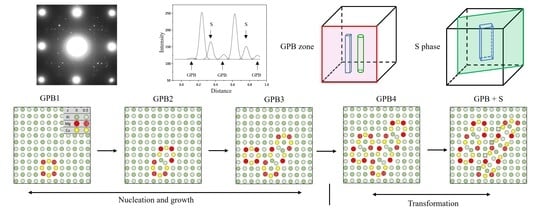
Graphical Abstract

1. Introduction

Precipitation-hardening Al-Cu-Mg alloys have gained much attraction for aerospace and automobile industries, because of their advantages such as lightweight, extraordinary strength, and good corrosion resistance [1]. The strengthening response of these alloys is governed by the formation and evolution of nanoscale precipitates that emerge from a supersaturated solid solution (SSSS) during thermal treatment. It is generally accepted that the sequence of Al-Cu-Mg alloys induced by multistep decomposition pathway as follow: SSSS → GPB zone → S’ → S [2,3,4].
Among these metastable features, GPB zones correspond to early-stage solute clustering that develops during the initial aging period at 190 °C, characterized by short-range ordering of Cu and Mg atoms on specific crystallographic planes of the Al matrix [3,5]. Subsequent aging promotes the nucleation of the S’ phase that remains more coherent with the Al matrix than the equilibrium S phase [4,5]. In general, the S’/S phase precipitates are widely recognized as the primary strengthening precipitates in Al-Cu-Mg alloys, playing a predominant role in determining their mechanical properties [5]. Structurally, the equilibrium S phase has been identified as Al2CuMg with an orthorhombic crystal structure, as first established by Perlis and Westgren (PW) using X-ray diffraction [6]. Since S’ and S are generally regarded as structural variants derived from the PW model, they share similar chemical composition (Al2CuMg), lattice parameters, and crystallographic structure.
Despite extensive investigations, the correlation between GPB zones and the subsequent formation of S’ precipitates remains questionable. Some studies have suggested that the development of S’ precipitates is accompanied by the dissolution of GPB zones, implying a competitive relationship between the two types of precipitates [7,8]. Conversely, other experimental observations indicate a possible transformation from GPB zones into S’ precipitate under specific compositions and aging conditions, suggesting a precursor–feature relationship [8]. However, a clear understanding of this transformation pathway has been hindered by several experimental challenges. First, GPB zones are extremely small (typically 1–2 nm), making their direct observation difficult using conventional transmission electron microscopy (TEM) techniques. Second, the transformation from GPB zones to S’ precipitates often occurs rapidly, particularly at elevated temperatures, limiting the ability to capture intermediate states. Third, the coexistence of multiple GPB configurations and their structural similarity to early-stage S’ precipitates complicate the distinction between transformation and dissolution mechanisms. As a result, although the precipitation sequence is well established, direct crystallographic evidence demonstrating the structural continuity between GPB zones and S’ precipitates remains limited, particularly under high-temperature aging conditions.
Furthermore, crystallographic similarities between certain GPB zone variants and the S’ phase have been reported, implying a close structural connection between these two precipitate states [9,10]. Nevertheless, GPB zones and S’ precipitates exhibit notable differences in morphology and stability, and the detailed atomic-scale transformation pathway between them has not yet been clearly established.
In the present work, transmission electron microscopy (TEM) was employed to investigate the microstructural evolution of an Al-Cu-Mg alloy aged at 250 °C. Particular attention was paid to the crystallographic characteristics, growth behavior, and temporal evolution of GPB zones, as well as their relationship to the nucleation and growth of S’ precipitates. In particular, this study provides direct experimental evidence that the growth direction of GPB zones is parallel to the g-(012)Al vector, which corresponds to the habit plane of the S’ phase. This crystallographic alignment suggests structural continuity between GPB zones and S’ precipitates, supporting a precursor-mediated transformation pathway. By combining diffraction analysis with atomic-resolution imaging under high-temperature aging conditions (250 °C), the present work captures the rapid evolution from GPB zones to S’ precipitates more clearly than in conventional low-temperature studies, where phase coexistence often obscures the transformation process.
Based on atomic-scale analyses of microstructural evolution in the alloy artificially aged for various durations, this work systematically elucidates the transformation pathway from GPB zones to the S’ phase. The present findings provide useful insight for optimizing heat-treatment strategies in Al-Cu-Mg alloys. In particular, controlling the transformation from GPB zones to S’ precipitates at elevated temperatures may enable improved strength-ductility balance through tailored precipitate distributions. Future work will focus on quantitative strain analysis using techniques such as geometric phase analysis (GPA) to better understand the coherency of precipitate interfaces, as well as investigating the transformation behavior under different aging temperatures and alloy compositions.

2. Materials and Experimental Methods

The material investigated in this work was an Al-Cu-Mg-Si alloy with a nominal chemical composition of Al-1.0%Cu-0.96%Mg-0.16%Si (wt.%). The alloys were supplied by YKK Corporation in the form of rods with a diameter of ~10 mm, and a length of 1 m. The rods were sectioned and subsequently cold-deformed by mechanical rolling in multiple steps into plate specimens with dimensions of ∅10 × 0.2 mm, corresponding to a total thickness reduction of approximately ~98% from the initial thickness (~10 mm). Solution heat treatment (SHT) was carried out at 505 °C for 3 h to ensure sufficient dissolution of soluble phases. Immediately after solutionizing, the specimens were rapidly quenched in ice water maintained at ~0 °C in order to retain a supersaturated solid solution. Following quenching, artificial aging (AA) was performed at 250 °C for various aging durations using an oil furnace. The furnace temperature was controlled within ±2 °C, and the oil medium ensured uniform heat distribution during aging, thereby minimizing temperature gradients and ensuring reliable thermal conditions for precipitation.
For TEM/STEM analysis, the heat-treated specimens were first mechanically ground from an initial thickness of 0.2 mm to approximately 0.02 mm, followed by twin-jet electro-polishing. A mixed electrolyte consisting of one-third nitric acid and two-thirds methanol was employed, while the polishing temperature was controlled in the range of −20 °C to −30 °C using liquid nitrogen. The prepared foils were subsequently examined using a transmission electron microscope (TOPCON EM-002B) (Toyama, Japan). STEM characterization was performed using a Talos F200X-GII (Toyama, Japan) cold-field emission at 200 kV, with a probe current of 0.5 nA and a probe diameter below 1 nm. High-angle annular dark-field (HAADF) imaging employed collection angles of 59–200 mrad, and all STEM observations were conducted along the <100>Al orientation. To improve clarity, the TEM images shown in this paper are filtered using a circular bandpass mask applied to the respective fast Fourier transform (FFT), and an inverse FFT (IFFT). The image processing was carried out using Digital Micrograph software (version 3.51.1680.0). Vickers microhardness tests were performed with a Mitutoyo HM-101 tester (Toyama, Japan) under a load of 0.98 N and a dwell time of 15 s. For each testing condition, twelve indentations were made, and the reported hardness value corresponds to the average of ten measurements after excluding two outliers.

3. Results and Discussion

3.1. Time-Dependent Hardness Variation During Aging at 250 °C

Figure 1 displays the time-dependent hardness variation in the alloy subjected to AA at 250 °C immediately after quenching. The as-quenched (as Q.) condition exhibits the lowest hardness value of ~52 HV. As the aging time is extended, the hardness rises progressively and attains a maximum of approximately 110 HV at around 3 h, followed by a subsequent decrease at longer aging times. This age-hardening behavior originates from precipitation processes activated during AA, leading to a marked improvement in the alloy’s mechanical performance [11,12]. From our previous study [13], GPB zones form during the early stage of aging, and contribute to early strengthening response. As aging proceeds, further hardening is mainly governed by the nucleation and subsequent development of S’ precursor precipitate. Upon prolonged aging, the alloy exhibits its maximum hardness, which is largely associated with the presence of well-developed S’ precipitates with a favorable size, volume fraction, and distribution within the matrix.
Although aging at 250 °C accelerates the kinetics of the S’ phase precipitations, the maximum achievable peak hardness is lower than that attained at lower aging temperatures, such as 160 °C, as reported in our previous work [13]. This behavior suggests that, in addition to S’ phase precipitates, other thermodynamically stable phases with lower strengthening efficiency may form at higher aging temperatures. These competing precipitates consume supersaturated solute atoms from the matrix, thereby reducing the strengthening contribution of S’ phase precipitates. As a result, the observed variations in hardness are expected to be reflected in differences in microstructure, including precipitate type, size, and morphology [14]. To further elucidate the precipitation evolution during aging at 250 °C, the microstructural characteristics of the aged samples were investigated by high-resolution transmission electron microscopy (HRTEM), as discussed in the following section.

3.2. Precipitation Evolution During Aging at 250 °C

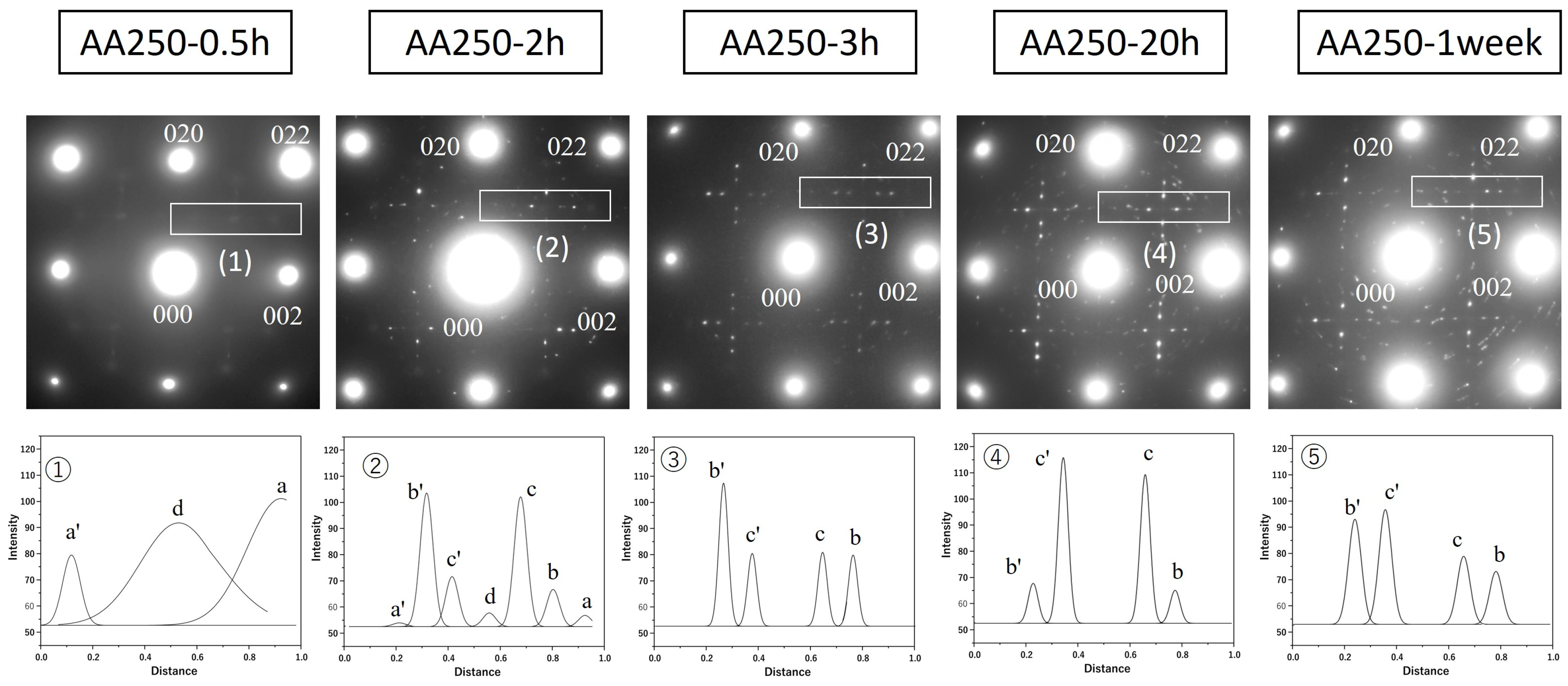
Figure 2 presents the intensity profiles obtained from selected area electron diffraction (SAED) patterns, conducted on the regions highlighted by white rectangles (1) to (5). These profiles capture the evolution of diffraction spots at different aging times ranging from 0.5 h to 1 week. The intensity peaks labeled a’, a, and d, which are associated with the GPB zones [15], while peaks b’, b, c’, and c correspond to the S’ phase precipitate [16]. At the early stage of aging (0.5 h), the GPB zones begin to form, as indicated by the appearance of diffraction peaks a’, a, and d. These peaks increase in intensity and reach their maximum. At longer aging durations, the GPB zone peak intensity gradually decreases. Simultaneously, new peaks representing the S’ phase (b’, b, c’, and c) start to appear, consistent with the emergence of the S’ phase at the expense of GPB zones [8,17]. At peak-aging condition (3 h), the diffraction spots for GPB zones have completely disappeared. Finally, at one week of aging, the diffraction pattern is predominantly characterized by the S’ phase, with all S’ phase peaks displaying strong intensity.
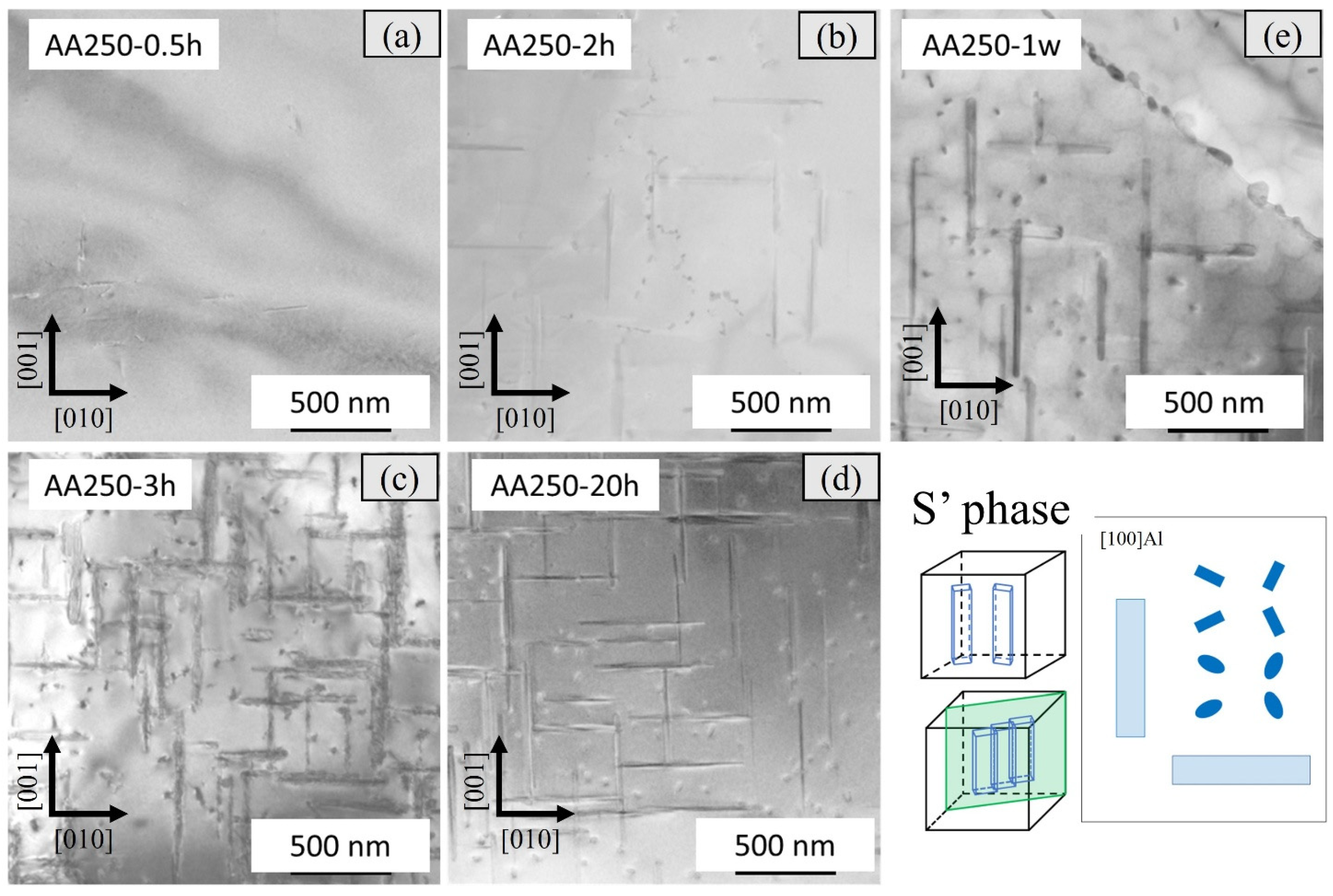
Figure 3a–e presents low-magnification TEM observations acquired in bright-field mode, illustrating the changes in the alloy microstructure after aging at 250 °C for various durations ranging from 0.5 h to 1 week. At a short-term aging of 0.5 h, the microstructure exhibits no visible precipitation features (Figure 3a). In contrast, when the aging exceeds 2 h, two distinct precipitate morphologies, namely plate-shaped and rod-shaped precipitates, are clearly identified, as shown in Figure 3b–d. Herein, the plate-shaped precipitates are oriented parallel to [010]. Al and [001] Al zone directions, which are characteristic of the S’ phase (Al2CuMg), are similar to refs [6]. These precipitates are distributed throughout the matrix and exhibit continuous growth with increasing aging time. In addition, rod-shaped precipitates are observed, which are similar to the cross-sectional views of the plate-shaped precipitates when viewed from [100] Al zone direction. At this magnification, all visible precipitates are identified as the well-established S’ phase precipitate, serving as the main contributor to age hardening.
The absence of observable precipitates at the early aging stage in Figure 3a is consistent with the SAED intensity profiles presented in Figure 2, which demonstrate that the microstructure at 0.5 h is dominated by GPB zones. Although these GPB zones are detected by diffraction through the presence of a’, a, and d peaks, their extremely small size, typically on the order of 1–2 nm, limits their direct observation in low magnification TEM images. Their formation and crystallographic characteristics are discussed in detail in Section 3.4 based on high-resolution TEM observations. With further aging, a well-developed distribution of S’ phase is observed, particularly at the peak-aging conditions and after 1-week aging. This TEM observation in Figure 3b–d is fully consistent with the diffraction-based phase evolution in Figure 2, where a gradual decrease in the intensity of GPB-zone-related diffraction peaks, accompanied by the emergence and strengthening of S’ phase peak.

3.3. Morphology and Growth of S’ Precipitates

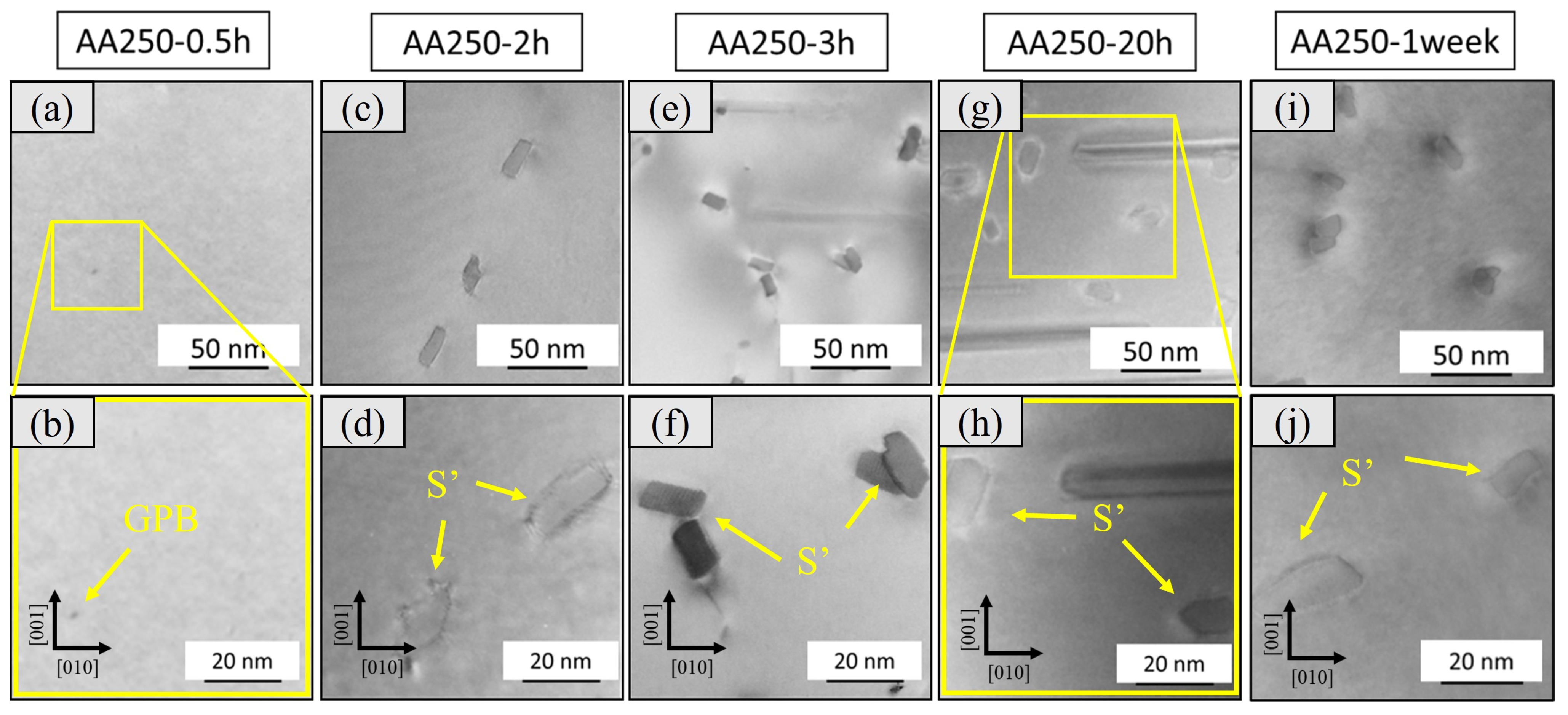
Figure 4 presents high-magnification bright-field TEM images corresponding to the same alloy artificially aged at 250 °C for durations from 0.5 h to 1 week. At the early aging stage of 0.5 h, very fine GPB zones are observed, as highlighted in the magnified image in Figure 4b. With prolonged aging, the S’ phase precipitates exhibited a pronounced increase in size, as shown in Figure 4c–j. From 2 h of aging onward, the GPB zones are no longer observed, while S’ phase precipitates become the prevailing features within the microstructure. The GPB zones cannot be detected at any aging time between 2 h and 1 week, suggesting their rapid transformation into the S’ phase under the present aging conditions. In contrast, our previous studies reported that GPB zones could still be clearly observed after 1 week of aging at a lower temperature of 160 °C, where they co-exist with the S’ phase [18,19]. The accelerated disappearance of GPB zones in the present work is therefore associated with the higher aging temperature of 250 °C, which promotes solute diffusion and phase transformation. This interpretation is fully consistent with the SAED pattern intensity profiles (Figure 2), showing a progressive decrease in GPB-zone-related diffraction peaks accompanied by the appearance and stronger intensity of the S’ phase peaks.

3.4. Atomic-Scale Characteristics of GPB Zones and S’ Phase

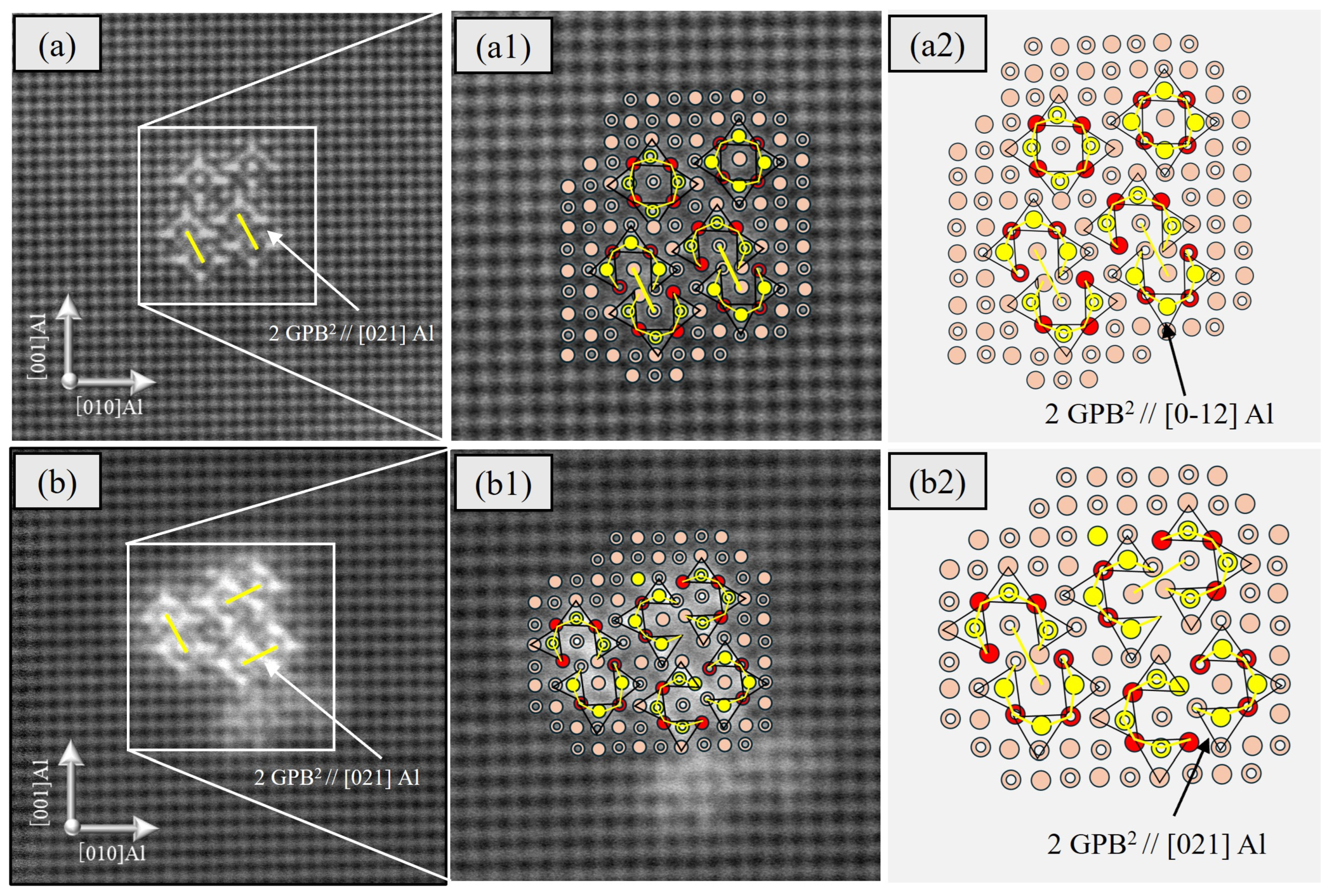
Figure 5 shows high-angle annular dark-field scanning transmission electron microscopy (HAADF-STEM) images of a sample subjected to AA at 250 °C for 0.5 h, alongside the corresponding inverse FFT images and the GPB structural models arranged horizontally. The atomic configuration of GPB zones has been previously described by Kovarik et al. [20,21] and further illustrated by Pan et al. [22]. According to these models, GPB zones consist of rod-like clusters aligned along the [100] Al direction and share a characteristic 0.405 nm periodicity with the Al matrix along the viewing direction. The STEM observations in Figure 5a,b are fully consistent with this description. The precipitates appear as fine rod-shaped features whose long axis follows the [100] Al orientation. Figure 5 further confirms that atomic columns remain registered with the (100) Al planes over the 0.405 nm repeat distance, indicating coherency between the GPB zone and the surrounding matrix. The structural schematics shown in Figure 5(a2,b2) are therefore constructed based on the reported GPB models. In these representations, the column periodicity is taken to be that of Al, while Cu and Mg atoms are highlighted for clarity. Notably, the central column is frequently Cu-enriched, which is commonly interpreted as an early-stage GPB configuration where subsequent substitution by Mg and Al may occur during continued artificial aging [23,24].
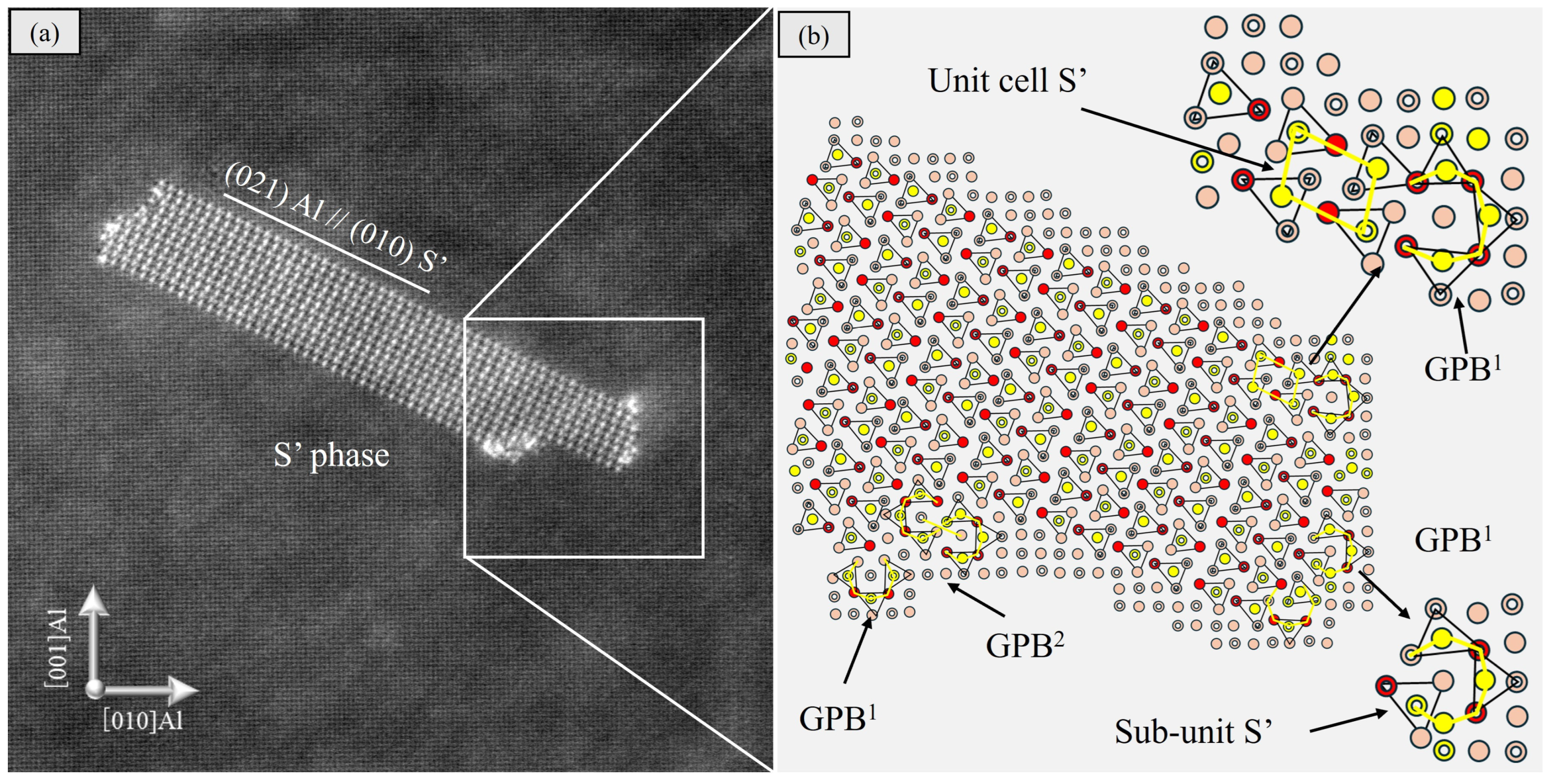
Figure 6 displays HAADF-STEM observation of the alloy aged at 250 °C for 2 h. The crystallographic characteristics of the S’ precipitate are examined with the electron beam oriented along the [100] Al zone axis. Under this condition, a dominant orientation relationship between the Al matrix and the S’ phase can be identified as (021) Al//(010) S. This interface appears highly coherent, implying that lattice mismatch is effectively minimized at this boundary, as evidenced in Figure 6b. In contrast, other interfaces surrounding the precipitate, particularly those associated with thickening ledges, are likely related to local atomic concentration variations and are considered to be closely related to the lateral growth process of the S’ phase. In addition to the large rod-shaped S’ phase, very small rod-shaped features coexist at the interface, as highlighted by the white circles in the enlarged lower-right corner in Figure 6b. These fine precipitates are believed to contain GPB-type structural units and may serve as precursors that assist the development of the S’ phase during aging [23].
The role of these fine features can be better understood by considering the structural stability and evolution of GPB zones. Previous studies have shown that GPB zones may adopt several cross-sectional configurations and typically appear as elongated features parallel to the [100] Al direction [10,15]. These GPB zones appeared as rod-shaped features with their long axes aligned parallel to the [100] Al viewing direction. Once this morphology is established, GPB zones become readily distinguishable in HRTEM images due to their characteristic atomic arrangement. From a structural perspective, GPB zones can be regarded as assemblies of coherent GPBx units with a repeating spacing of approximately 0.405 nm along the growth direction [15]. During the early stage of aging, GPB1 units preferentially extend along this periodic direction. With continued aging, these units progressively coalesce and reorganize into larger GPB2 configurations, which are thermodynamically more stable and therefore more frequently detected experimentally [21,24]. An example of a GPB zone composed predominantly of GPB2 crystal can be seen in Figure 5.
Continued growth results in small rod-shaped GPB zones consisting of several GPB2, GPB3, and GPB4. In general, the development of GPB zones follows the g-(012) Al vector, consistent with previous observation [22,25]. Notably, this growth direction coincides with the habit plane of the S’ phase, being parallel to g-(012) Al. Such crystallographic alignment strongly suggests that, under the present aging conditions, GPB zones act as structural precursors and can transform into S’ precipitates, thereby driving the observed microstructural evolution. It is also noted that the present alloy contains a small amount of Si (0.16 wt.%). Although no distinct Si-containing precipitates were observed, previous studies have shown that Si can influence solute clustering and diffusion behavior in Al-Cu-Mg-(Si) systems [26]. In particular, Si may interact with Mg atoms to form Mg-Si clusters and modify the local chemical environment surrounding GPB zones. Such effects can enhance solute redistribution and may facilitate the transformation from GPB zones to S’ precipitates. Therefore, the presence of Si is considered to contribute, at least partially, to the accelerated GPB → S’ transformation observed at 250 °C in this study.

3.5. GPB-to-S’ Phase Transformation Pathway

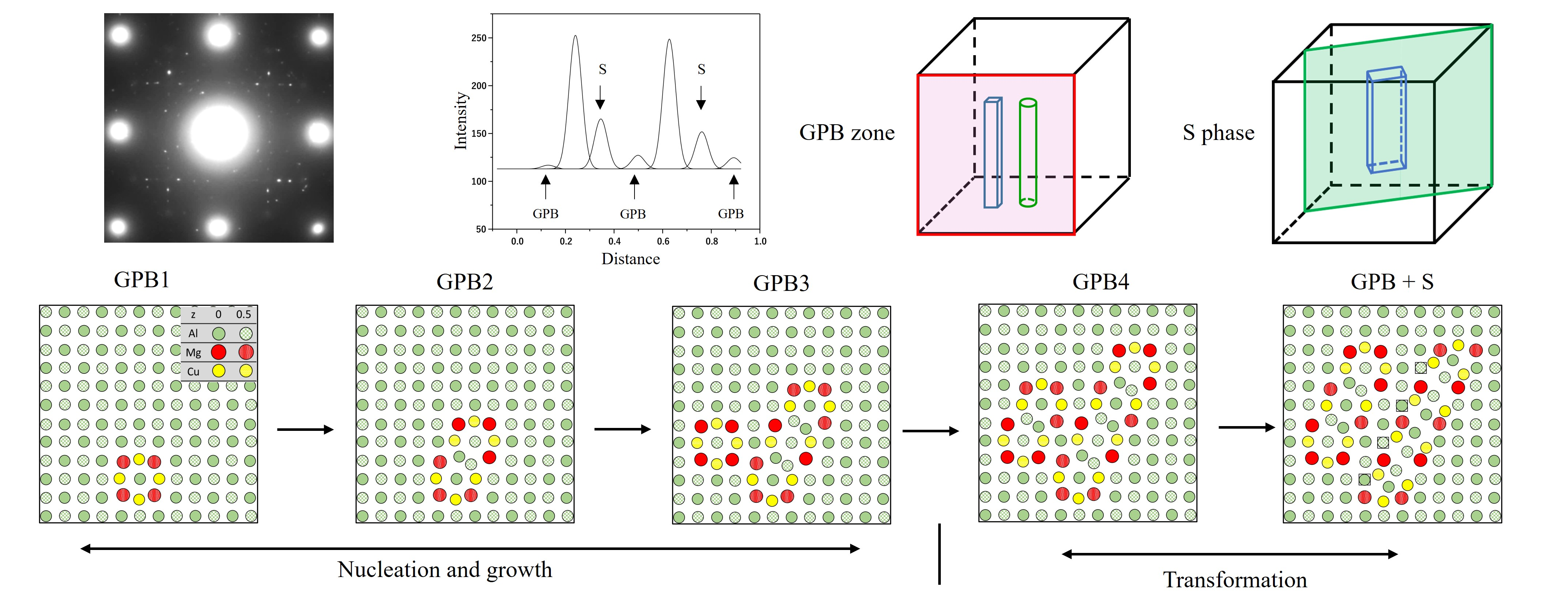
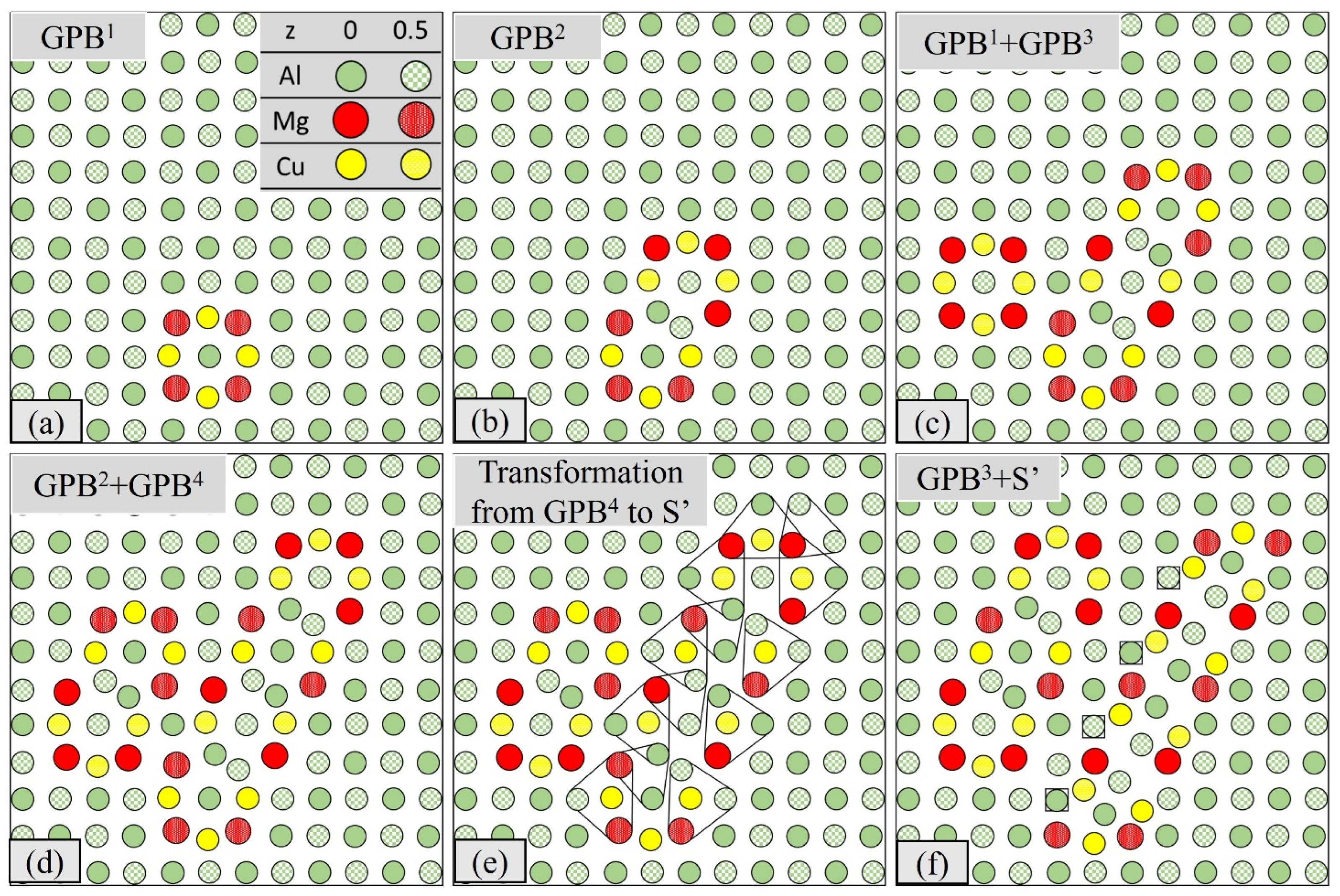
As indicated by the microstructural observations in Figure 4, prolonging the aging time at 250 °C progressively shifts the precipitate state toward S’-type features. To elucidate microstructural evolution at high aging temperatures, Figure 7 provides schematic representations illustrating how GPB zones embedded in the Al matrix may structurally evolve and eventually transform into S’ precipitates [23]. These schematics are consistent with previously proposed mechanisms describing the formation of the S’ phase from GPB-derived configurations in Al alloys with a relatively high Cu/Mg ratio [27,28]. Among various GPB configurations, the GPB1 structure is regarded as the smallest energetically viable unit that can exist as an independent cluster. The occupation of interstitial or substitutional positions within this unit may involve Al, Mg, or Cu atoms. Atomistic calculations have suggested that Al is energetically the most favorable occupant, whereas Cu is the least preferred at these positions [25,29]. Nevertheless, experimental observations frequently reveal GPB zones containing Cu-enriched central columns. Such features are interpreted as transitional states in which Cu atoms are progressively replaced by Mg and Al as aging proceeds, reflecting the gradual reconfiguration of GPB units during their evolution toward S’ precipitates [23].
The formation of GPB zones on {012} Al planes is driven by the localized redistribution of solute atoms from the matrix [20]. The progressive evolution from an initial GPBx configuration to a more complex GPBx+1 structure is schematically illustrated in Figure 7a–d. With continued aging, these GP-based units undergo structural rearrangement that facilitates their transition toward the S’ phase, as proposed in Figure 7e,f. This transformation process is closely associated with the interstitial diffusion of Cu atoms [30,31]. During this process, Cu atoms initially located at the center of the “larger triangle” with three corners, defined by two Mg atoms and one Al atom, diffuse to a “smaller triangle” with three corners, defined by two Al atoms and one Mg atom (Figure 7e). However, this diffusion generates vacancies, and then is replaced by Al from the matrix, which is marked by small black squares (Figure 7f). This transformation mechanism illustrates the one-dimensional thickening process of the S’ phase precipitates, which is strongly promoted at high aging temperatures. Early in the aging process, GPB zones develop first and subsequently provide favorable locations for S’ phase nucleation [32]. As aging proceeds, the accumulation and transformation of GPB units contribute not only to the nucleation of S’ precipitates but also to their lateral thickening. Therefore, GPB zones act as indispensable precursors governing both the nucleation and subsequent growth of the S’ phase.
To further understand the coherency at the precipitate/matrix interface, the lattice misfit between the S’ phase and the Al matrix was evaluated. The interfacial lattice misfit (ε) was calculated using Equation (1) based on the matching of interplanar spacings [33]. Considering the orientation relationship (010) S’//(02-1) Al, a matching configuration of one unit cell of the S’ phase with two-unit cells of the Al matrix was assumed. Using this approach, the lattice misfit was estimated to be approximately 2.2%, based on m = 1 [(1 × d (010) S’) = 0.925 nm] and n = 2 [(2 × d (02-1) Al) = 0.905 nm].
ε % = | m d h k l , p r e c i p i t a t i o n n d h k l , m a t r i x | | n d h k l , m a t r i x |
where m and n are integer multiples of the interplanar spacing, and d is the interplanar spacing of the Al matrix [33]. This relatively small misfit indicates that the S’ precipitates maintain a semi-coherent interface with the Al matrix. However, as the precipitates grow, the accumulated strain associated with this mismatch may lead to partial loss of coherency, particularly at the interface edges or thickening regions. This is consistent with the local distortions observed in the HRTEM images and suggests that interfacial strain plays an important role in the morphological evolution of S’ precipitates.

4. Conclusions

This work clarifies the precipitation behavior of an Al–Cu–Mg–Si alloy aged at 250 °C, with particular emphasis on the transformation from GPB zones to the S’ phase. HRTEM results indicate that GPB zones dominate the early stage of aging, whereas S’ precipitates become predominant after approximately 2 h. GPB zones form as fine rod-like features on {012} Al planes and extend along a direction parallel to the g-(012) Al vector, corresponding to the habit plane of the S’ phase. This crystallographic relationship demonstrates that GPB zones serve as structural precursors facilitating both the nucleation and thickening of S’ precipitates during aging.

Author Contributions

Conceptualization, V.N.H., T.S.Q. and K.M.; methodology, S.L., T.T., A.A. and V.N.H.; software, A.A.; validation, V.N.H., S.L. and A.A.; formal analysis, V.N.H., S.L., T.T. and A.A.; investigation, V.N.H., T.S.Q. and A.A.; resources, S.L., T.T., T.K. and K.M.; data curation, V.N.H., K.K. and T.K.; writing—original draft preparation, V.N.H. and K.M.; writing—review and editing, K.M., T.K. and K.K.; supervision, K.M.; project administration, K.K. and T.K.; funding acquisition, K.M. All authors have read and agreed to the published version of the manuscript.

Funding

This research received no external funding.

Data Availability Statement

The original contributions presented in this study are included in the article. Further inquiries can be directed to the corresponding author.

Acknowledgments

The authors sincerely acknowledge the Advanced Aluminum International Research Center (ARC), University of Toyama, for their support.

Conflicts of Interest

Author Tetsuya Katsumi and Kazuhiko Kita were employed by the company YKK Corporation. The remaining authors declare that the research was conducted in the absence of any commercial or financial relationships that could be construed as a potential conflict of interest.

References

  1. Irmer, D.; Yildirim, C.; Sennour, M.; Esin, V.A.; Moussa, C. Effect of second-phase precipitates on deformation microstructure in AA2024 (Al–Cu–Mg): Dislocation substructures and stored energy. J. Mater. Sci. 2024, 59, 18978–19002. [Google Scholar] [CrossRef]
  2. Shih, H.C.; Ho, N.J.; Huang, J.C. Precipitation behaviors in Al–Cu–Mg and 2024 aluminum alloys. Metall. Mater. Trans. A 1996, 27, 2479–2494. [Google Scholar] [CrossRef]
  3. Silcock, J.M. The structural ageing characteristics of Al–Cu–Mg alloys with copper–magnesium weight ratios of 7:1 and 2.2:1. J. Inst. Met. 1961, 89, 203–210. [Google Scholar]
  4. Wang, S.C.; Starink, M.J. The assessment of GPB2/S″ structures in Al–Cu–Mg alloys. Mater. Sci. Eng. A 2004, 386, 156–163. [Google Scholar] [CrossRef]
  5. Bagaryatskii, Y.A. Mechanism of artificial aging of Al–Cu–Mg alloy. Dokl. Akad. Nauk SSSR 1952, 87, 397–400. Available online: https://www.osti.gov/biblio/4417616 (accessed on 25 March 2025).
  6. Perlitz, H.; Westgren, A. The Crystal Structure of Al2CuMg; Almqvist & Wiksell: Stockholm, Sweden, 1943. [Google Scholar]
  7. Flower, H.M.; Gregson, P.J. Solid state phase transformations in aluminium alloys containing lithium. Mater. Sci. Technol. 1987, 3, 81–90. [Google Scholar] [CrossRef]
  8. Weatherly, G.C. Precipitation Phenomena in Al–Cu–Mg Alloys. Ph.D. Thesis, University of Cambridge, Cambridge, UK, 1966. [Google Scholar]
  9. Chen, Z.; Li, S. Reinterpretation of precipitation behavior in an aged AlMgCu alloy. J. Mater. Sci. 2014, 49, 7659–7668. [Google Scholar] [CrossRef]
  10. Kovarik, L.; Mills, M.J. Structural relationship between one-dimensional crystals of Guinier–Preston–Bagaryatsky zones in Al–Cu–Mg alloys. Scr. Mater. 2011, 64, 999–1002. [Google Scholar] [CrossRef]
  11. Rockenhäuser, C.; Rowolt, C.; Milkereit, B.; Darvishi Kamachali, R.; Kessler, O.; Skrotzki, B. On the long-term aging of S-phase in aluminum alloy 2618A. J. Mater. Sci. 2021, 56, 8704–8716. [Google Scholar] [CrossRef]
  12. Hai, V.N.; Ahmed, A.; Lee, S.; Tsuchiya, T.; Zou, Y.; Katsumi, T.; Kita, K.; Khanh, P.M.; Holmestad, R.; Marioara, C.D.; et al. A comparative investigation of microstructure and mechanical properties in a deformed and aged Al–Mg–Si alloy with high Cu content. Mater. Des. 2025, 260, 115172. [Google Scholar] [CrossRef]
  13. Hai, V.N.; Lee, S.; Tsuchiya, T.; Katsumi, T.; Kita, K.; Khanh, P.M.; Holmestad, R.; Marioara, C.D.; Matsuda, K. Effect of deformation on mechanical properties and microstructure of Al–1.0% Cu–0.96% Mg–0.36% Si (mass%) alloy. Mater. Trans. 2025, 66, 220–229. [Google Scholar] [CrossRef]
  14. Yin, M.J.; Chen, J.H.; Wang, S.B.; Liu, Z.R.; Cha, L.M.; Duan, S.Y.; Wu, C.-L. Anisotropic and temperature-dependent growth mechanism of S-phase precipitates in Al–Cu–Mg alloy in relation with GPB zones. Trans. Nonferrous Met. Soc. China 2016, 26, 1–11. [Google Scholar] [CrossRef]
  15. Kovarik, L.; Gouma, P.I.; Kisielowski, C.; Court, S.A.; Mills, M.J. A HRTEM study of metastable phase formation in Al–Mg–Cu alloys during artificial aging. Acta Mater. 2004, 52, 2509–2520. [Google Scholar] [CrossRef]
  16. Wang, S.C.; Starink, M.J. Precipitates and intermetallic phases in precipitation hardening Al–Cu–Mg–(Li) based alloys. Int. Mater. Rev. 2005, 50, 193–215. [Google Scholar] [CrossRef]
  17. Ravanan, A.; Palanivel, I.; Kulendran, B. Microstructure, Tensile, and Fractography Analysis of Al2016 and Al2618 Age Hardened Aluminium Alloys. Chiang Mai J. Sci. 2022, 49, 1217–1232. [Google Scholar] [CrossRef]
  18. Wang, Z.; Li, H.; Miao, F.; Fang, B.; Song, R.; Zheng, Z. Improving the strength and ductility of Al–Mg–Si–Cu alloys by a novel thermo-mechanical treatment. Mater. Sci. Eng. A 2014, 607, 313–317. [Google Scholar] [CrossRef]
  19. Vu, N.H.; Lee, S.; Tsuchiya, T.; Katsumi, T.; Kita, K.; Matsuda, K. Effect of pre-aging temperature on hardening behavior and precipitation response of deformed Al–1.0% Cu–0.96% Mg–0.36% Si (wt.%) alloy. Arch. Metall. Mater. 2025, 70, 1287–1293. [Google Scholar] [CrossRef]
  20. Kovarik, L.; Court, S.A.; Fraser, H.L.; Mills, M.J. GPB zones and composite GPB/GPBII zones in Al–Cu–Mg alloys. Acta Mater. 2008, 56, 4804–4815. [Google Scholar] [CrossRef]
  21. Kovarik, L.; Mills, M.J. Ab initio analysis of Guinier–Preston–Bagaryatsky zone nucleation in Al–Cu–Mg alloys. Acta Mater. 2012, 60, 3861–3872. [Google Scholar] [CrossRef]
  22. Pan, C.; Yang, Y.; Wang, S.; Liu, Y.; Hu, S.; Wang, Z.; Shen, P. Atomistic building blocks of one-dimensional Guinier–Preston–Bagaryatsky zones in Al–Cu–Mg alloys. Mater. Des. 2020, 187, 108393. [Google Scholar] [CrossRef]
  23. Chen, X.; Marioara, C.D.; Andersen, S.J.; Friis, J.; Lervik, A.; Holmestad, R.; Kobayashi, E. Precipitation processes and structural evolutions of various GPB zones and two types of S phases in a cold rolled Al–Mg–Cu alloy. Mater. Des. 2021, 199, 109425. [Google Scholar] [CrossRef]
  24. Torsæter, M.; Ehlers, F.J.H.; Marioara, C.D.; Andersen, S.J.; Holmestad, R. Applying precipitate–host lattice coherency for compositional determination of precipitates in Al–Mg–Si–Cu alloys. Philos. Mag. 2012, 92, 3833–3856. [Google Scholar] [CrossRef]
  25. Raviprasad, K.; Hutchinson, C.R.; Sakurai, T.; Ringer, S.P. Precipitation processes in an Al–2.5 Cu–1.5 Mg (wt.%) alloy microalloyed with Ag and Si. Acta Mater. 2003, 51, 5037–5050. [Google Scholar] [CrossRef]
  26. Vu, N.H.; Ahmed, A.; Lee, S.; Tsuchiya, T.; Katsumi, T.; Matsuda, K. Hybrid precipitate formation and strengthening behavior in a severely pre-deformed Al–Mg–Si–Cu alloy. Metall. Mater. Trans. A 2026, 57, 524–529. [Google Scholar] [CrossRef]
  27. Wang, S.B.; Chen, J.H.; Yin, M.J.; Liu, Z.R.; Yuan, D.W.; Liu, J.Z.; Liu, C.H.; Wu, C.L. Double-atomic-wall-based dynamic precipitates of the early-stage S-phase in Al–Cu–Mg alloys. Acta Mater. 2012, 60, 6573–6580. [Google Scholar] [CrossRef]
  28. Liu, Y.; Han, X.; Wang, S.; Wei, B.; Li, W. Subtle atomistic processes of S-phase formation in Al–Cu–Mg alloys. J. Alloys Compd. 2020, 838, 155677. [Google Scholar] [CrossRef]
  29. Andersen, S.J.; Marioara, C.D.; Friis, J.; Wenner, S.; Holmestad, R. Precipitates in aluminium alloys. Adv. Phys. X 2018, 3, 1479984. [Google Scholar] [CrossRef]
  30. Porter, D.A.; Easterling, K.E. Phase Transformations in Metals and Alloys; CRC Press: Boca Raton, FL, USA, 2021. [Google Scholar] [CrossRef]
  31. Hutchinson, C.R.; Ringer, S.P. Precipitation processes in Al–Cu–Mg alloys microalloyed with Si. Metall. Mater. Trans. A 2000, 31, 2721–2733. [Google Scholar] [CrossRef]
  32. Imurai, S.; Kajornchaiyakul, J.; Thanachayanont, C.; Pearce, J.T.; Chairuangsri, T. Age Hardening and Precipitation Behavior of an Experimental Cast Al-Mg-Si Alloy Treated by T6 and T6I6 Heat Treatments. Chiang Mai J. Sci. 2010, 37, 269–281. [Google Scholar]
  33. Hai, V.N.; Ahmed, A.; Lee, S.; Tsuchiya, T.; Khanh, P.M.; Katsumi, T.; Kita, K.; Matsuda, K. A Comprehensive TEM Study on the Structure and Interfacial Characteristics of S’ and S phases in Aluminum Alloys. Micron 2026, 204, 104021. [Google Scholar] [CrossRef]
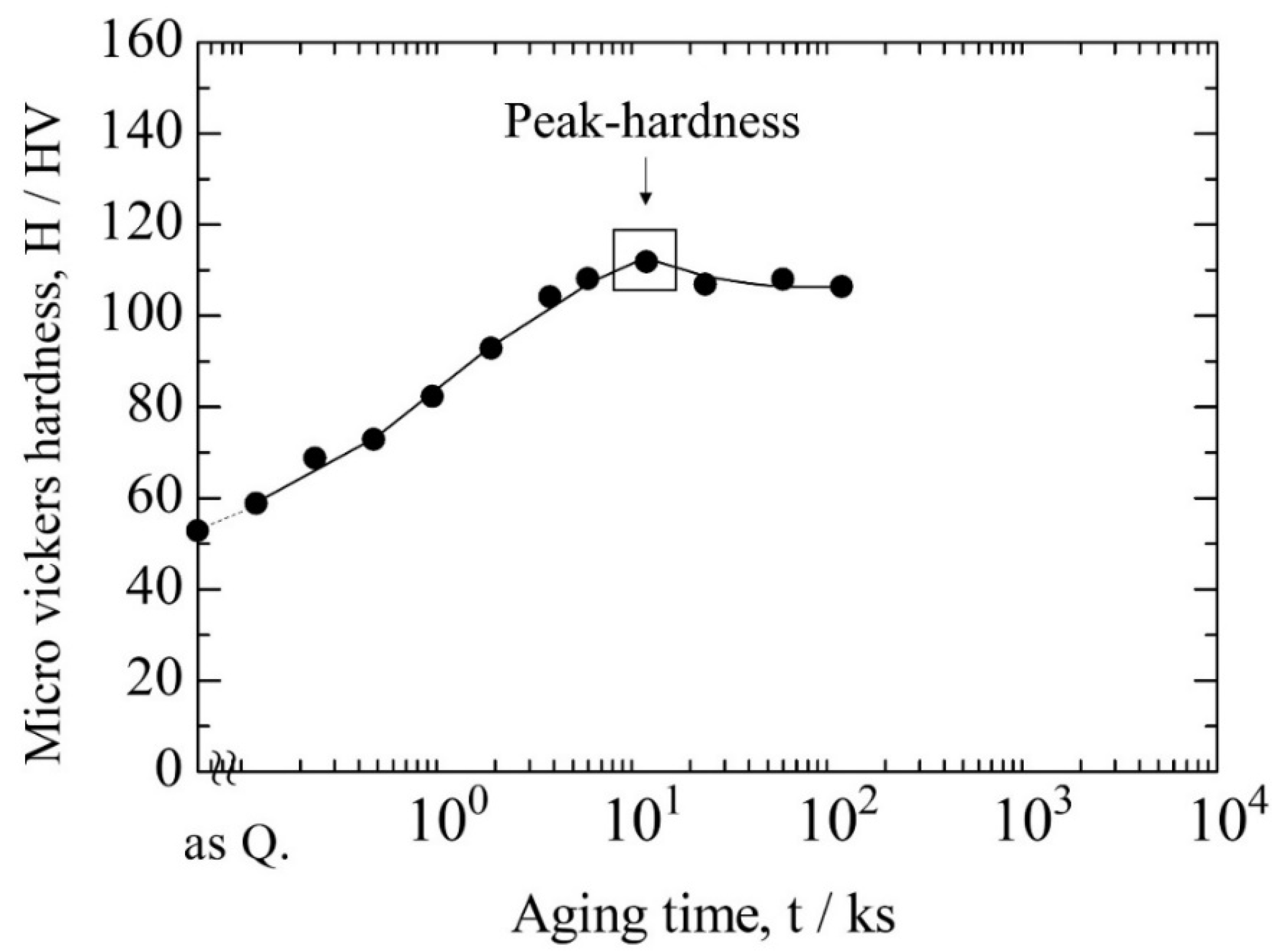
Figure 1. Time-dependent hardness variation in the alloys during artificial aging at 250 °C.
Jmmp 10 00129 g001
Figure 2. Electron diffraction (SAED pattern) and intensity profiles from (1) to (5) white rectangles from 0.5 h to 1 week, respectively.
Jmmp 10 00129 g002
Figure 3. Bright-field TEM images at low magnification (a) 0.5 h, (b) 2 h, (c) 3 h, (d) 20 h, (e) 1 week at 250 °C and morphology of S’ phase observed from [100] Al zone direction.
Jmmp 10 00129 g003
Figure 4. Bright-field TEM images at higher magnification: (a,b) 0.5 h; (c,d) 2 h; (e,f) 3 h; (g,h) 20 h; (i,j) 1 week at 250 °C.
Jmmp 10 00129 g004
Figure 5. (a,b) HAADF-STEM images artificially aged at 250 °C for 0.5 h, (a1,a2) corresponding atomic overlays extracted from the white boxed regions; (b1,b2) atomic configurations of the GPB zones. Yellow, red, and green circles denote Cu, Mg, and Al atoms, respectively. Yellow lines indicate the orientation of the GPB zones.
Jmmp 10 00129 g005
Figure 6. (a) HAADF-STEM image of the alloy artificially aged at 250 °C for 2 h; (b) atomic configurations of the S’ phase from the white square in (a). Yellow, red, and green circles denote Cu, Mg, and Al atoms, respectively. Yellow lines indicate the orientation of the S’ phase.
Jmmp 10 00129 g006
Figure 7. Possible schematics showing GPB zones embedded in the matrix, and suggested steps regarding their structural evolution and transformation to S’ phases: (a) GPB1; (b) GPB2; (c) GPB1 + GPB3; (d) GPB2 + GPB4; (e) transformation from GPB4 to S’; (f) GPB3 + S’.
Jmmp 10 00129 g007
Disclaimer/Publisher’s Note: The statements, opinions and data contained in all publications are solely those of the individual author(s) and contributor(s) and not of MDPI and/or the editor(s). MDPI and/or the editor(s) disclaim responsibility for any injury to people or property resulting from any ideas, methods, instructions or products referred to in the content.