
Article

Termite: An Open-Source Grasshopper Plugin for Parametric Slicing in Architectural Clay 3D Printing

Institute of Architecture and Media, Graz University of Technology, 8010 Graz, Austria
*
Author to whom correspondence should be addressed.
J. Manuf. Mater. Process. 2026, 10(4), 128; https://doi.org/10.3390/jmmp10040128
Submission received: 16 March 2026 / Revised: 6 April 2026 / Accepted: 8 April 2026 / Published: 10 April 2026

Abstract

Over the last decade, 3D printing of clay has gained attention in architecture. Yet most slicing software is designed for thermoplastics with nozzle sizes between 0.3 and 1.0 mm. Clay printing, using larger nozzles (1–30 mm), requires precise control over path arrangement, material flow, and shrinkage—capabilities not sufficiently addressed by conventional software. This paper introduces Termite, an open-source software plugin for Rhinoceros 3D Grasshopper designed specifically for Liquid Deposition Modeling (LDM) 3D printing. The novelty of this work lies in embedding slicing logic directly into a parametric design environment, enabling explicit and flexible control of printing paths tailored to the rheological behavior of clay. The plugin supports designing, simulating, optimizing, and exporting machine data within a unified workflow. In contrast to conventional slicers, it allows variable printing parameters within a single print job, controlled inrun speeds for smoother path starts, adapted material flow at path crossings, and extrusion flattening at path ends to enhance adhesion and precision. The software was evaluated through multiple architectural-scale case studies and student-based design experiments. Results demonstrate that integrating slicing operations into parametric design workflows enables new fabrication strategies and expands accessibility of clay 3D printing for architectural applications.

1. Introduction and State of the Art

Interest in clay 3D printing is growing in architecture [1,2]. Yet this method still lags behind the 3D printing of polymers and concrete [3]. Existing slicing software primarily targets thermoplastic printing with nozzle sizes from 0.3 to 1.0 mm. Such software is primarily designed for smaller nozzles, limiting its applicability to clay printing, which requires nozzle sizes ranging from 1 to 30 mm. Due to the larger scale of the nozzles, a strategic arrangement and direct control of the printing paths become crucial for effectively taking clay’s material properties, including flow behavior and shrinkage, into account. The significant time and cost involved in sharing and transferring custom slicing processes suggest that the dissemination of 3D printed clay workflows remains predominantly limited to specialized research groups and expert companies. This research aims to make advanced clay 3D printing available to teaching institutions, architectural offices, companies without research facilities, and designers.
Key contributors to clay 3D printing include artists, researchers, and companies. Olivier van Herpt is known for smooth, textured ceramics using delta printers [4]. His innovative methods include printing influenced by environmental sensors, vibrating print beds, and multi-colored clay. Jonathan Keep documented one of the first clay 3D printing approaches in 2015 [5]. His tutorials cover calibration, clay mixtures, extruder heads, and software. His work merges traditional pottery with digital fabrication and manual reinforcements. Piotr Waśniowski creates intricate, geometrically patterned prints using modular systems [6]. In scientific research, ETH Zurich focuses on digital fabrication, with Gramazio Kohler Research exploring projects with clay aggregates, and Block Research Group exploring projects including 3D printed slabs for concrete roofing [7,8,9,10]. The Institute for Advanced Architecture of Catalonia (IAAC) integrates clay 3D printing into its curriculum through experimental projects [11,12]. In collaboration with WASP, a company that provides 3D printers for clay, several large-scale projects were realized [13]. The Material Processes and Systems (MaP + S) Group at Harvard’s Graduate School of Design has conducted research on 3D printing of ceramics, exploring various topics, including the potential applications of clay printing, multi-material printing techniques, and strategies for managing the inherent uncertainties of clay as a material [14,15,16]. A collaboration with Cevisama, a trade event exhibiting ceramics, presents projects with global visibility [17]. Companies such as WASP develop clay 3D printers, including the Delta WASP 40100 Clay used to construct a habitable 3D printed house with Mario Cucinella Architects [18]. Wienerberger, known for clay-based products, applies 3D printing in pipe manufacturing, illustrating Industry 4.0’s future impact of digitalization on clay components [19,20]. XtreeE, focusing on large-scale concrete 3D printing, explores clay-based materials and collaborates on research publications [21]. Commercial slicing software such as Cura and PrusaSlicer require expertise for clay printing and lack manual print path customization [22,23]. While applications like WASP App, Clayon, and Potterware simplify entry-level design and G-code generation for clay, these programs focus on parametric workflows for tubular objects but lack manual print path customization [24,25,26].
While commercially available printers have replaced many custom-built models, the sharing and preparation of underlying software processes for advanced 3D printing remains limited in university projects due to funding and project durations, hindering industry adoption. Larger clay companies often lack software and hardware expertise, complicating digital fabrication implementation outside research. In addition to factors such as logistics and machinery, a key challenge lies in the technical expertise required for designing and producing 3D printed clay objects, particularly in relation to the specialized software involved. This research addresses the following question: How can slicing software be designed to support the specific requirements of architectural-scale clay 3D printing within parametric design workflows?

2. Materials and Methods

This paper provides detailed documentation, including descriptions of each developed component for Grasshopper, an evaluation of the software through user studies, resulting printing techniques, a conclusion, and future perspectives. Detailed information on the plugin’s components, installation, and usage is provided in the Supplementary Software Documentation (Supplementary File S1 Termite 1.4 Readme).
All fabrication experiments were conducted using a commercially available clay powder (Type 208, Goerg & Schneider, Boden, Germany). This material was selected due to its low chamotte content, which reduces abrasion within the extrusion system and ensures more stable long-term operation of the printing hardware. The clay was consistently prepared by mixing the dry powder with 30% water by weight, allowing precise control over the material composition across different experiments. Starting from a dry powder state enabled reproducible adjustment of water content, which is a critical parameter influencing extrusion behavior. The chosen mixture is based on prior experimental experience and has been characterized in terms of shrinkage behavior, flow properties, and mechanical performance [27]. While no formal sensitivity analysis was conducted within the scope of this study (see Section 4.1), the use of a standardized material composition and controlled preparation method ensured consistent printing behavior across multiple case studies and fabrication batches. Variations in extrusion performance were primarily addressed through adjustable process parameters within the Termite workflow, such as printing speed, extrusion rate, and path organization.

2.1. Documentation of the Plugin

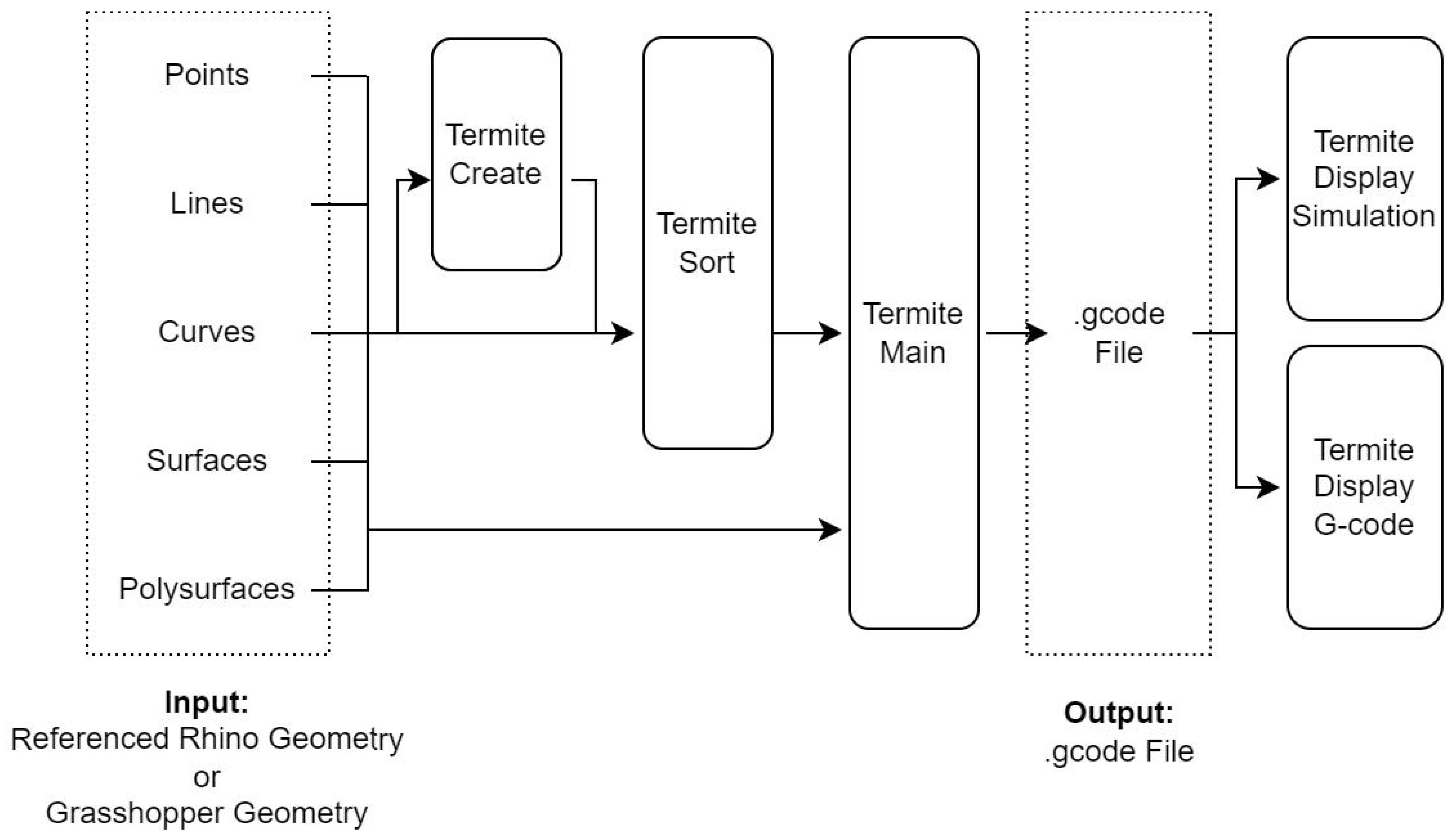
The Termite plugin consists of 21 modular components organized into five functional categories: Main, Create, Sort, Display, and Example. Implemented within the parametric design environment of Grasshopper for Rhinoceros 3D, these components can be combined in flexible workflows that allow users to generate, modify, and organize printing paths prior to the generation of machine instructions. The modular structure reflects the typical stages of a clay additive manufacturing workflow, including geometry generation, path organization, process control, and visualization (Figure 1).
All components were implemented as open-source Grasshopper user objects in Rhinoceros 3D (McNeel Europe S.L. C/de Roger de Flor, 32, 08018 Barcelona, Spain) modeling software (7 SR20). Tasks exceeding the native functionality of Grasshopper—such as path optimization using a traveling salesman algorithm or iterative geometric operations—were implemented using embedded Python 3 and C# scripts within Grasshopper’s scripting environment. This approach enables the plugin to operate without external dependencies or additional software libraries. Furthermore, example definitions are provided that allow users to examine the generated toolpaths even without installing the plugin components themselves. Rather than functioning as a conventional slicing application that converts closed volumes into layers, the plugin directly processes geometric primitives such as curves, lines, and surfaces. This allows designers to explicitly control individual printing paths and enables experimental fabrication strategies that are difficult to achieve with traditional thermoplastic slicing software.

2.1.1. G-Code Generation and Process Control

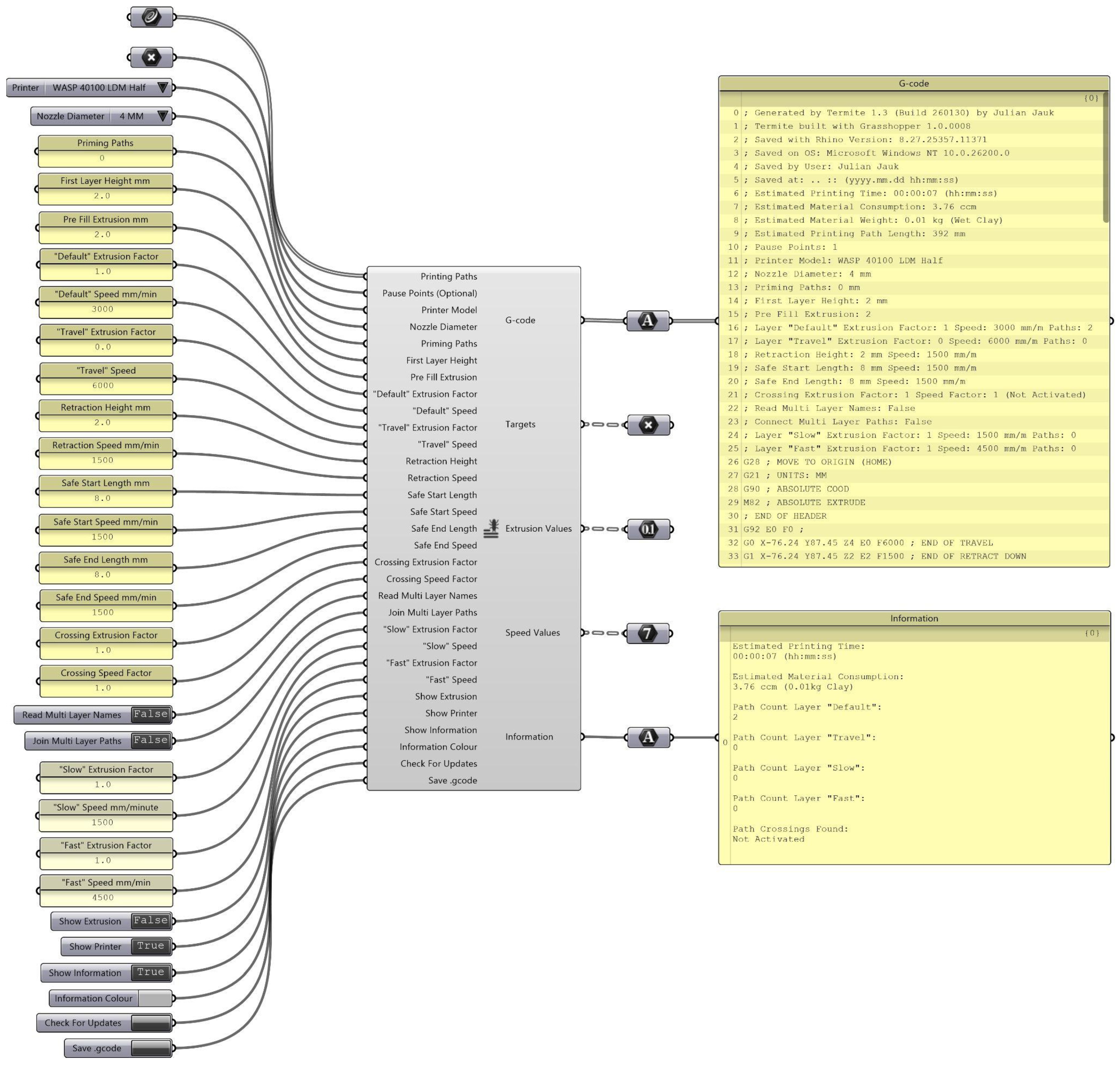
The central component of the plugin is the Termite Main G-Code Generator, which converts organized printing paths into machine-readable instructions. The component processes geometric input together with printing parameters such as extrusion rate, printing speed, pause positions, and visualization options. The generation of machine instructions is based on a set of consistent geometric and process assumptions. Input geometries for printing paths are defined as lines or curves, which are discretized into a sequence of target points. These points are then translated into G-code coordinates (X, Y, Z) within a Cartesian system corresponding to the printer workspace, with all values defined in millimeters. The generator traverses these targets in a user-defined sequence, assigning movement commands with corresponding printing speeds and extrusion values. Extrusion is primarily calculated relative to the length of the discretized path segments. The resulting extrusion width is influenced by nozzle diameter and material behavior and is therefore treated as an empirically calibrated parameter rather than a strictly predefined geometric value. Calibration of extrusion rate and printing speed is performed experimentally prior to fabrication, based on observed material flow and layer adhesion, and can be adjusted within the parametric workflow for different path groups. This approach reflects the material-dependent nature of clay extrusion, where reliable results are achieved through iterative calibration rather than fixed material models. The resulting output consists of a ready-to-print G-code file as well as corresponding geometric representations of the generated toolpaths within Grasshopper.
Unlike conventional slicers that operate on volumetric meshes, the generator processes user-defined printing paths directly. Paths are discretized into target positions defined by X, Y, and Z coordinates, and extrusion values are calculated primarily based on path length. Additional parameters enable process-specific adjustments, including variable printing speeds across different path groups, automatic connection of adjacent paths, and insertion of pause commands for manual interventions during fabrication.
Several auxiliary parameters were introduced to address the specific requirements of clay extrusion. These include Pre Fill, Safe Start, and Safe End functions that improve extrusion reliability at the beginning and end of printing paths, as well as retraction and intersection-handling strategies that reduce material accumulation and improve seam quality (Figure 2).

2.1.2. Path Creation

The Create category contains a set of components for generating printing paths from geometric inputs. These tools support common fabrication strategies such as base structures, wall generation, spiral printing paths, and contour-based toolpaths. Rather than imposing strict material constraints, these components provide flexible geometric operations that can be adapted to different design intentions and experimental fabrication approaches.
Several components generate continuous printing paths, such as spiralized contours or staircase-like toolpaths, which can improve printing speed and structural stability by minimizing start–stop sequences. Other components introduce controlled modifications to printing paths, for example by shifting seam positions or adjusting start and end points of individual paths.
Beyond structural path generation, selected components allow the introduction of controlled surface patterns, such as zigzag geometries or sling-like features, enabling variation in surface texture; similar approaches in polymer-based additive manufacturing have been shown to influence functional properties such as wettability and friction [28].

2.1.3. Path Organization and Optimization

Efficient organization of printing paths is essential for clay-based additive manufacturing, as unnecessary travel movements can disrupt material flow and increase printing time. The Sort category therefore includes a set of tools for organizing printing paths according to spatial or geometric criteria.
These tools allow paths to be ordered along axes, curves, or distance relationships, or optimized based on travel distance using a traveling salesman approach. Additional utilities enable the removal of impractically short segments or the alternation of path directions between layers to reduce material stresses during drying and firing.

2.1.4. Visualization and Process Verification

The Display components support visualization and verification of generated toolpaths. These tools enable users to inspect individual layers, reconstruct previously generated G-code files into Rhino geometry, and simulate the movement of the printer head along the generated toolpaths. Such visualization functions are particularly useful for detecting potential collisions, evaluating path order, and verifying fabrication sequences prior to printing.

2.2. Evaluation Through Case Studies

During the development of the Termite plugin, a series of user-centered case studies were conducted to evaluate the feasibility and practical applicability of the software. These studies were integrated into university design courses and served as an iterative testing environment in which students applied the plugin to real design and fabrication tasks. Observations and feedback from these studies informed several improvements to the software’s functionality and stability.
Five studies titled Digital Form and Motion and Digital Fabrication were conducted between 2020 and 2025 at the [institute name withheld]. Each study involved approximately 20 participants, including bachelor’s and master’s students as well as professionals, and consisted of seminars totaling 30 teaching hours. Participants were tasked with developing experimental ceramic structural or façade systems using parametric design tools and additive manufacturing workflows. The resulting designs were fabricated as full-scale prototypes using a Delta WASP 40100 clay 3D printer model from the year 2020 (Massa Lombarda, RA, Italy). Prior knowledge of clay processing or slicing software was not required. Designs were evaluated according to five criteria: (1) feasibility of fabrication using clay extrusion, (2) suitability for paste-based additive manufacturing, (3) modularity, (4) relevance for architectural applications, and (5) potential for full-scale implementation. Each case study followed a consistent workflow consisting of: (1) introduction to clay materials and additive manufacturing processes, (2) parametric design using the Termite plugin, (3) material and machine tests, and (4) fabrication and evaluation of printed modules.
The studies revealed several challenges for users unfamiliar with clay-based additive manufacturing. Although many participants had experience with thermoplastic 3D printing, understanding clay-specific constraints required experimentation. Preliminary manual extrusion tests using cartridge mastic guns helped students observe key material behaviors, including slower hardening, the influence of extrusion geometry on stability, and the importance of optimized printing paths. As design complexity increased, efficient organization of printing paths became critical. Early studies relied on manually arranged paths or continuous extrusion strategies, which proved inefficient for complex geometries. Consequently, sorting methods were integrated into the software, enabling automated path ordering based on spatial axes, geometric proximity, path length, or travel distance using a traveling salesman optimization approach. Material behavior during drying and firing revealed additional constraints. Uneven shrinkage occasionally introduced internal stresses, particularly in spiral printing patterns. These effects were mitigated by alternating path orientations or introducing intersecting paths to balance internal tensions. Further observations concerned extrusion reliability at the start and end of individual printing paths. Start points frequently exhibited insufficient material deposition, which could reduce layer adhesion. To address this issue, the Safe Start parameter was introduced, enabling a short initial extrusion segment at reduced speed before normal printing speed was reached. Additionally, the Pre Fill parameter ensured adequate material flow at the beginning of extrusion, particularly when using larger nozzle diameters (>4 mm). Endpoints were prone to detachment or deformation, which was mitigated by the Safe End feature that gradually reduced extrusion speed and pressure to ensure consistent seam quality.
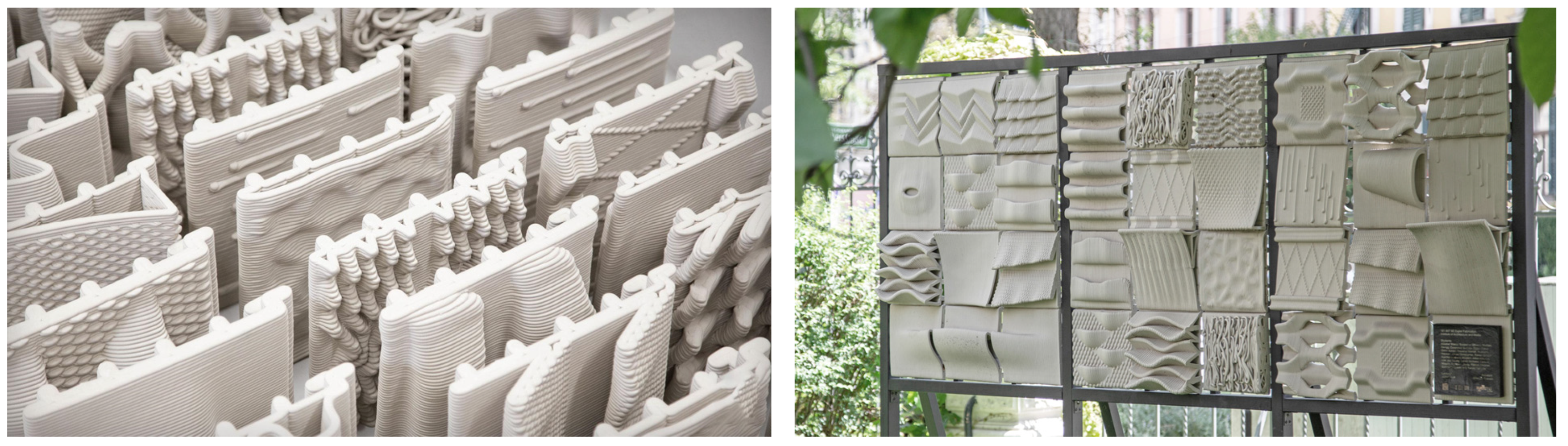
In the final case study, 36 façade elements (24 cm × 24 cm front) were fabricated at full architectural scale. The specific geometries of the 36 façade elements were not part of a controlled experimental setup but emerged from the individual design approaches of the participants. The intention of this case study was not to evaluate a fixed set of geometric patterns, but to test the applicability of the workflow across a diverse range of design solutions. This approach reflects the exploratory and design-driven nature of the study. After printing, the components were fired at 1240 °C and installed outdoors to evaluate their durability under environmental conditions. Over a six-month period, they were exposed to temperatures ranging from −5.9 °C to 24.2 °C (Figure 3).
To assess the durability of the printed elements under environmental exposure, all 36 façade panels were documented using close-up photography immediately after fabrication and again after six months of outdoor installation. The evaluation was based on a comparative analysis of these images, complemented by on-site inspection. Across all samples, no visible cracks or structural failures were observed, including no damage attributable to freeze–thaw cycles. Furthermore, no significant color changes due to prolonged exposure to sunlight were detected.
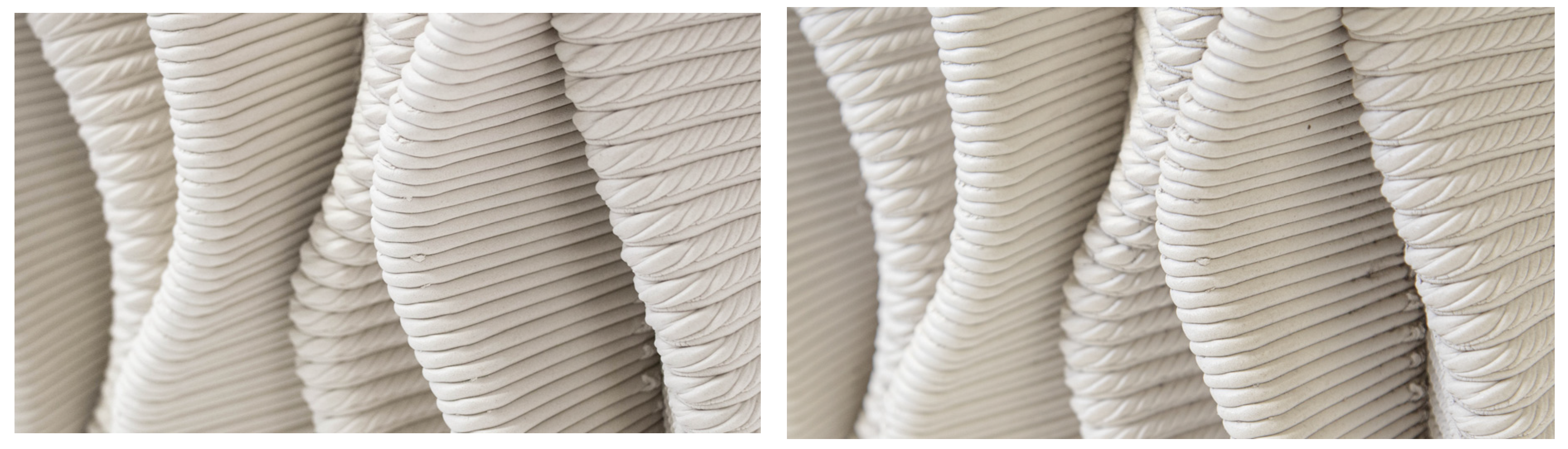
Minor surface alterations were observed in some areas, where small dark spots (<1 mm) appeared on the rough ceramic surface (Figure 4). These deposits could not be removed through simple cleaning and are assumed to result from environmental exposure. Overall, the results indicate stable material performance under the tested conditions. It should be noted that the evaluation is based on qualitative visual assessment rather than quantitative measurements, and the findings are therefore indicative rather than statistically derived.

3. Results

The results are evaluated with respect to their fabrication feasibility, material stability during extrusion, and the degree of control over printing path behavior enabled by the proposed workflow. The following techniques demonstrate how different path design strategies influence extrusion continuity, structural performance, and geometric expressiveness in clay-based additive manufacturing.
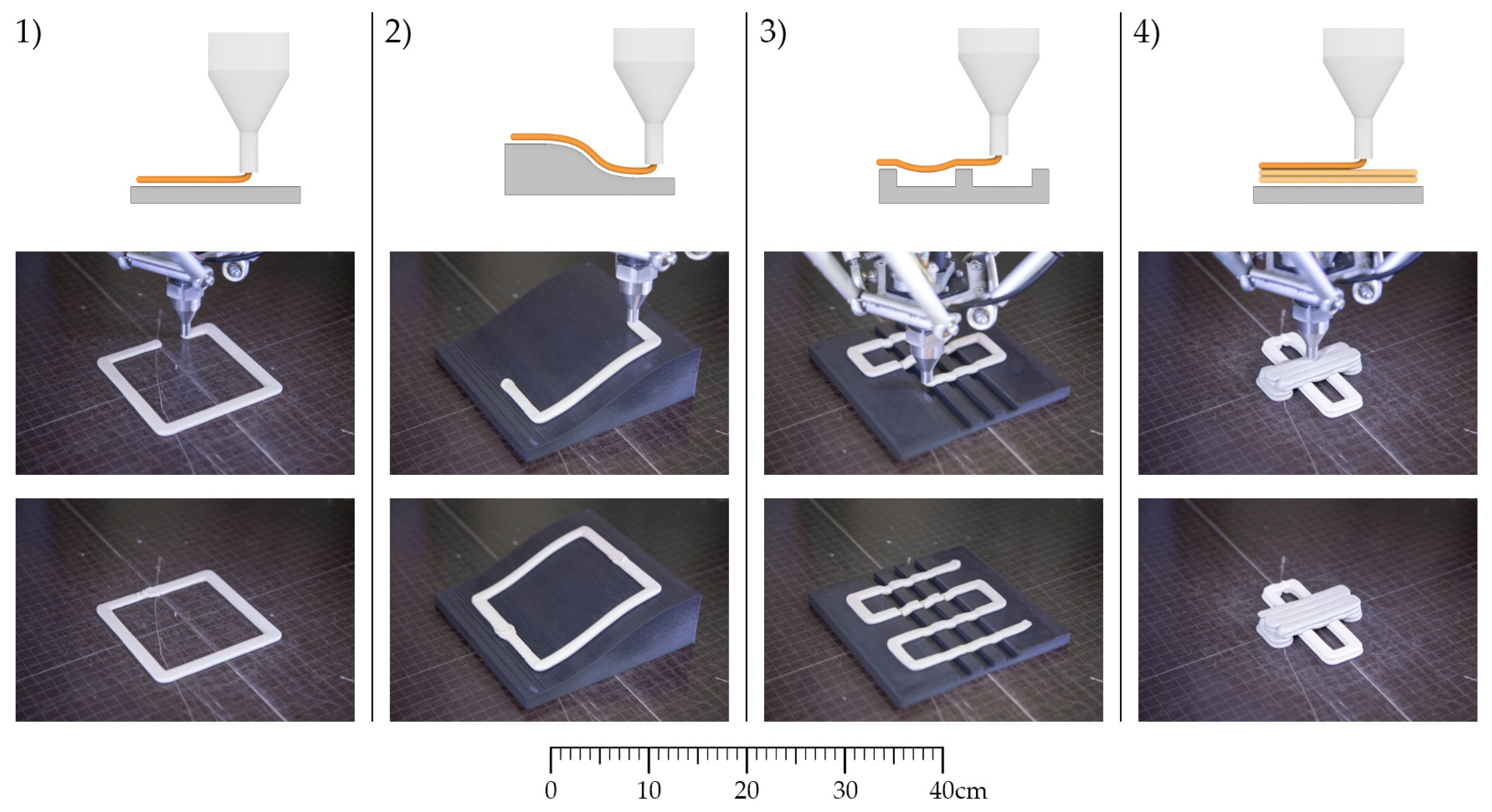
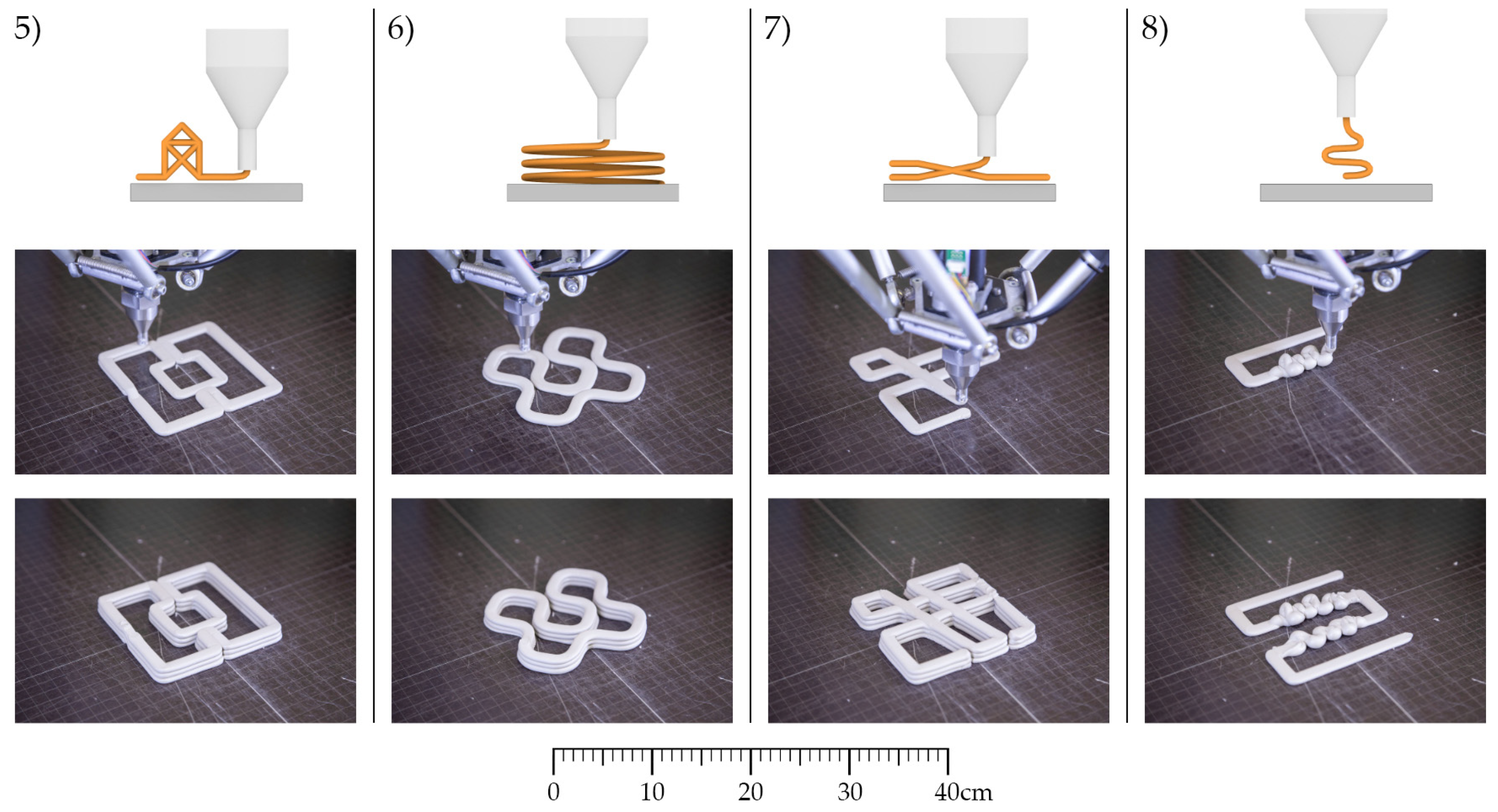
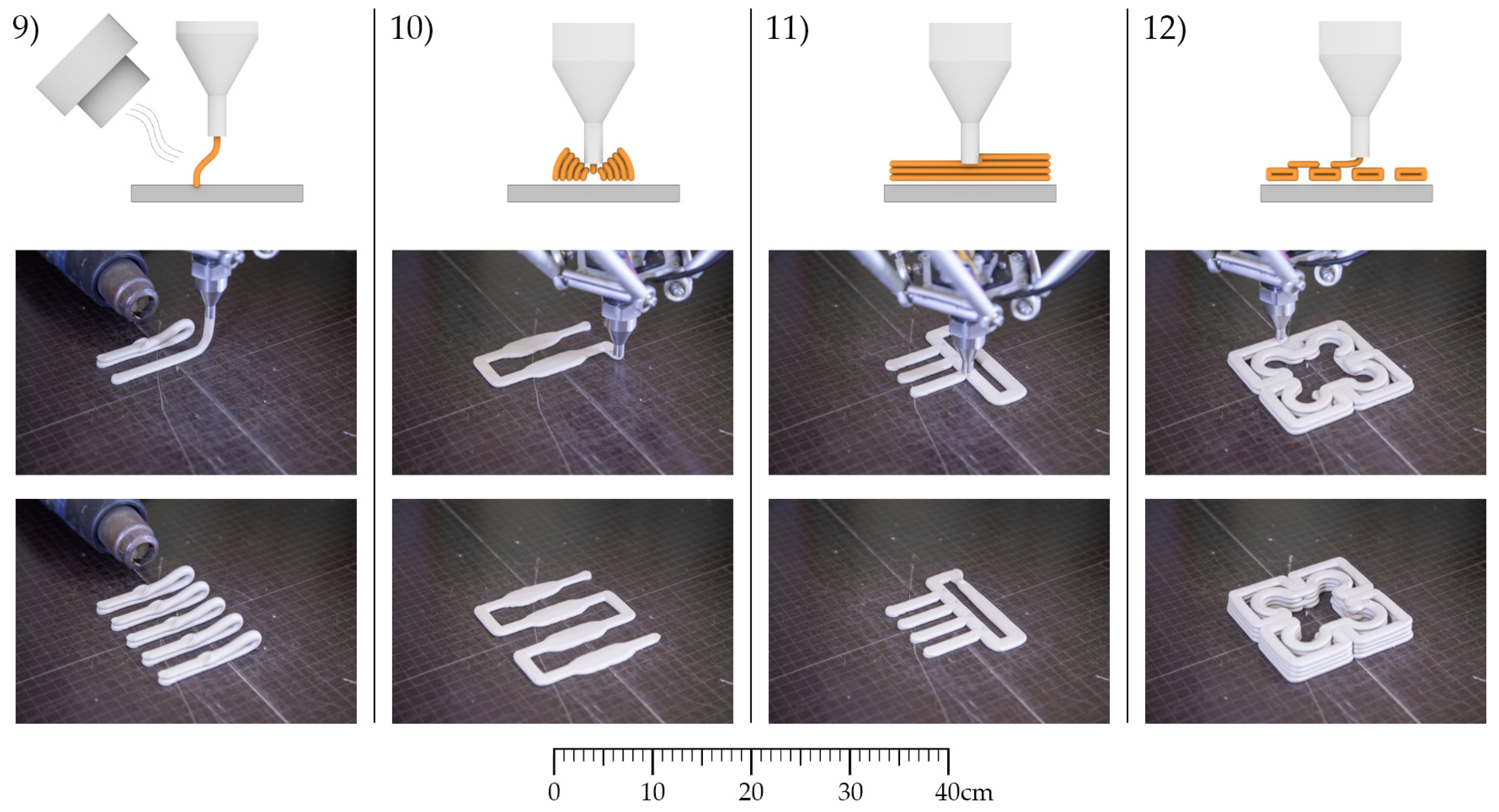
The design possibilities for printing paths using the plugin were demonstrated through twelve distinct techniques, employing the hardware setup described in the previous sections. The presented techniques are not derived from a predefined taxonomy but emerged iteratively through the design and fabrication process. The printed results are presented in the following paragraphs, with abstract representations alongside images captured during and after the printing process.
During printing, distinctions can be made based on the design of the base being printed onto. Possible applications include: (1) Standard printing on a horizontal printing bed or previously printed layers of wet clay (Figure 5(1)). (2) The printing paths can be designed to enable direct printing on a freeform formwork instead of a planar printing bed (Figure 5(2)). (3) Printing onto a discontinuous support structure is an option to facilitate bridging of the extrusion (Figure 5(3)). (4) The use of previously printed and dried objects to serve as a support for further printing (Figure 5(4)).
Additionally, distinctions can also be made based on the design of the printing path: (5) Designing the printing path to achieve a continuous extrusion within horizontal layers yields a more homogeneous material flow and enhanced stability by circumventing potential weak spots associated with starting and stopping motions (Figure 6(5)). (6) Creating tubular objects along a vertically spiraled printing path, linking multiple horizontal layers to achieve a seamless surface finish (Figure 6(6)). (7) Crossing printing paths within horizontal layers in order to increase the strength of the connection (Figure 6(7)). (8) Printing in mid-air without support to artistically utilize the weight and the intentional material discontinuities of the extruded material, resulting in sling-like attachments (Figure 6(8)).
Finally, more experimental methods can be employed, such as: (9) The cautious use of a heat gun to enable increased overhangs and reduce shaking of printed layers (Figure 7(9)). (10) Extruding material in place with only minimal movement to inflate the extrusion in its volume (Figure 7(10)). (11) Utilizing the nozzle for smoothing printed layers of wet clay without extruding (Figure 7(11)). (12) Alternating layers cross-wise in order to counteract a one-sided material property (Figure 7(12)).
All techniques were successfully executed, producing geometries consistent with their intended design while revealing distinct differences in material behavior, stability, and surface quality depending on the selected toolpath strategy. Across all investigated techniques, a clear relationship between toolpath design and material behavior can be observed. Continuous extrusion strategies, such as single-stroke and spiralized paths, resulted in more stable material deposition and reduced the occurrence of defects associated with start–stop sequences. In contrast, discontinuous or intersecting paths enabled increased structural interlocking but required careful adjustment of extrusion parameters to avoid material accumulation at crossing points.
Techniques involving unsupported or non-planar extrusion, such as mid-air printing or bridging, demonstrated the expressive potential of clay as a material but were more sensitive to variations in extrusion rate and environmental conditions. Similarly, process-enhancing methods such as heat-assisted printing or layer ironing improved surface quality and geometric control but introduced additional dependencies on operator input and timing. Overall, the results indicate that the integration of toolpath design within a parametric environment allows for targeted adaptation of printing strategies, enabling users to balance fabrication constraints and design intent more effectively than with conventional slicing approaches.

4. Discussion and Conclusions

The contribution of this research can be summarized in three aspects:
  • Development of an open-source slicing framework for clay printing integrated into Grasshopper;
  • Implementation of clay-specific extrusion control strategies (Safe Start, Safe End, crossing extrusion control);
  • Validation of the workflow through architectural-scale case studies and educational applications.
Termite, a software plugin designed specifically for clay 3D printing, addresses the unique challenges of this technology, such as large nozzle sizes and precise path control. Integrated into Rhinoceros 3D as an open-source plugin, Termite simplifies the clay printing process, making it more accessible to companies, artists, and educational institutions. Its capabilities are categorized into 12 distinct clay printing techniques, enabling enhanced stability, surface quality, or clay-specific aesthetics by integrating these techniques into path creation. Termite provides a user-friendly platform for paste-based 3D printing, enabling users to design and generate printing paths using Rhinoceros 3D, Grasshopper, or Termite components. It produces G-code files ready for execution and offers real-time visualization of design changes on print and travel paths, as well as their sequencing. Compared to similar Grasshopper plugins, Termite provides an extensive toolset for path creation, sorting, simulation, and machine data export [29,30]. Its advanced features include assigning variable parameters like thickness and speed through Rhinoceros 3D layers, Safe Start for adhesion reliability, and Safe End to prevent detachment when finishing paths. It also enables custom travel paths to avoid obstacles, nesting algorithms to reduce travel paths, and time and material estimation with print simulations. Early versions of Termite were tested in courses and workshops, serving as user studies to refine its features. Case studies allowed students to collaboratively design and produce experimental modular systems with 3D printed ceramic elements as 1:1 prototypes. Using parametric design tools and additive fabrication processes, students without prior material or software knowledge successfully created ceramic structural and façade systems. The plugin supports experimental setups and non-standard printing paths unattainable with conventional slicing software, expanding the potential of 3-axis printers. For instance, non-planar paths allow larger overhangs and reinforce weak points caused by horizontal layering [31]. These advancements are expected to broaden clay 3D printing’s applications in architecture and other disciplines, promoting innovative approaches. Additionally, Termite has served as the foundation for research projects like filament-reinforced printing, multi-material printing, and 3D printing of mycelium-based clay composites [32,33,34].

4.1. Limitations and Future Research

Despite the demonstrated capabilities of the Termite plugin, several limitations of the present study should be acknowledged.
First, the evaluation is primarily based on qualitative case studies conducted in academic settings. While these studies provide valuable insights into usability and design potential, they do not include systematic quantitative benchmarking against existing slicing software in terms of performance metrics such as printing time, material efficiency, or geometric accuracy. Future work should therefore incorporate controlled comparative studies to more rigorously assess the technical performance of the proposed workflow.
Second, material behavior is addressed indirectly through toolpath design rather than through integrated simulation models. Although strategies such as Safe Start, Safe End, and path organization mitigate common issues in clay extrusion, the plugin does not yet incorporate predictive models for shrinkage, deformation, or structural performance. Integrating such material-informed simulation tools represents an important direction for future research.
In terms of future developments, the extension of the workflow to 6-axis robotic fabrication systems offers significant potential. This would enable non-planar toolpaths, variable extrusion orientations, and increased geometric complexity. Additionally, the integration of multi-material printing, adaptive process control, and real-time feedback systems could further expand the applicability of the approach. Future work could also include systematic evaluation of Termite against other tools using metrics such as printing time, material consumption, adhesion quality, defect rate, or dimensional accuracy, complementing its demonstrated feasibility and usability. Potential applications extend beyond architectural prototyping to include customized building components, façade systems, and material research in ceramic composites. By lowering the barrier between design and fabrication, the proposed approach may also contribute to broader adoption of clay-based additive manufacturing in both academic and industrial contexts.

Supplementary Materials

The following supporting information can be downloaded at: https://www.mdpi.com/article/10.3390/jmmp10040128/s1, Supplementary File S1: Termite 1.4 Readme.pdf.

Author Contributions

Conceptualization, J.J.; Methodology, J.J.; Software, J.J.; Resources, L.G.; Writing—Review and Editing, H.V.; Supervision, M.S.; Funding Acquisition, M.S. All authors have read and agreed to the published version of the manuscript.

Funding

This research was funded in whole or in part by the Austrian Science Fund (FWF) [DOI 10.55776/F77]. For open access purposes, the author has applied a CC BY public copyright license to any author-accepted manuscript version arising from this submission.

Data Availability Statement

Data available on request due to restrictions. The data presented in this study are available on request from the corresponding author.

Acknowledgments

The authors acknowledge the use of ChatGPT (OpenAI, GPT-4.5, 2025) for paraphrasing and proofreading support during the writing process.

Conflicts of Interest

The authors declare no conflicts of interest.

References

  1. Rael, R.; Fratello, V.S. Printing Architecture: Innovative Recipes for 3D Printing; Chronicle Books: New York, NY, USA, 2018. [Google Scholar]
  2. Ben Said, L.; Ayadi, B.; Alharbi, S.; Dammak, F. Recent Advances in Additive Manufacturing: A Review of Current Developments and Future Directions. Machines 2025, 13, 813. [Google Scholar] [CrossRef]
  3. Chen, Z.; Li, Z.; Li, J.; Liu, C.; Lao, C.; Fu, Y.; Liu, C.; Li, Y.; Wang, P.; He, Y. 3D Printing of Ceramics: A Review. J. Eur. Ceram. Soc. 2019, 39, 661–687. [Google Scholar] [CrossRef]
  4. van Herpt, O. Work. 2023. Available online: https://oliviervanherpt.com/work/ (accessed on 7 April 2026).
  5. Keep, J. Portfolio. 2020. Available online: http://www.keep-art.co.uk/recent.htm (accessed on 7 April 2026).
  6. Waśniowski, P. Piotr_Wasniowski. 2023. Available online: https://www.instagram.com/piotr_wasniowski/ (accessed on 7 April 2026).
  7. Anton, A.; Bedarf, P.; Yoo, A.; Dillenburger, B.; Reiter, L.E.X.; Wangler, T.; Flatt, R.J. Concrete Choreography: Prefabrication of 3D-Printed Columns. In Fabricate 2020: Making Resilient Architecture; UCL Press: London, UK, 2020; pp. 286–293. [Google Scholar] [CrossRef]
  8. Gramazio, F.; Kohler, M. Digital Materiality in Architecture; Lars Müller Publishers: Baden, Switzerland, 2008; Available online: https://books.google.at/books?id=LIXWGAAACAAJ (accessed on 7 April 2026).
  9. Jenny, D.; Mayer, H.; Aejmelaeus-Lindström, P.; Gramazio, F.; Kohler, M. A Pedagogy of Digital Materiality: Integrated Design and Robotic Fabrication Projects of the Master of Advanced Studies in Architecture and Digital Fabrication. Archit. Struct. Constr. 2022, 2, 649–660. [Google Scholar] [CrossRef]
  10. Mirjan, A.; Mata-Falcón, J.; Rieger, C.; Herkrath, J.; Kaufmann, W.; Gramazio, F.; Kohler, M. Mesh Mould Prefabrication. In Third RILEM International Conference on Concrete and Digital Fabrication; Springer Nature: Loughborough, UK, 2022; pp. 31–36. [Google Scholar]
  11. Vaish, A.; Prajapat, S.; Kumarji, S. Reinforced Clay Printing. 2018. Available online: https://www.iaacblog.com/programs/reinforced-clay-printing-3d-printing-pla-printing/ (accessed on 7 April 2026).
  12. Shin, J.; Bocian, A. Fibre Reinforcement in 3D Printing with Clay. 2020. Available online: https://www.iaacblog.com/programs/fiber-reinforcement-3d-printing-clay/ (accessed on 7 April 2026).
  13. Chukkappali, S.; Giraud, I.; Ibrahim, A.; Naagendran, R.C.; Ratoi, L.; Tayefi, L.; Thomas, T. Terraperforma. 2017. Available online: https://iaac.net/project/terraperforma/ (accessed on 7 April 2026).
  14. Seibold, Z.; Hinz, K.; del Castillo, J.L.G.; Alonso, N.M.; Mhatre, S.; Bechthold, M. Ceramic Morphologies: Precision and Control in Paste-Based Additive Manufacturing. In Proceedings of the 38th Annual Conference of the Association for Computer Aided Design in Architecture, Mexico City, Mexico, 18–20 October 2018; Acadia Publishing Company: Mexico City, Mexico, 2018; pp. 350–357. [Google Scholar] [CrossRef]
  15. Seibold, Z.; Mhatre, S.; López, J.; Alhadidi, S.; Bechthold, M. Janus Printing: Co-Extrusion Based Multi-Material Additive Manufacturing for Ceramics. In Proceedings of the Annual Conference of the Association for Computer-Aided Design in Architecture (ACADIA), Austin, TX, USA, 24–26 October 2019; Acadia Publishing Company: Austin, TX, USA, 2019; pp. 576–585. [Google Scholar] [CrossRef]
  16. Im, H.C.; AlOthman, S.; del Castillo, J.L.G. Responsive Spatial Print. In Proceedings of the ACADIA 2018: On Imprecision and Infidelity, Mexico City, Mexico, 18–20 October 2018; pp. 286–293. [Google Scholar] [CrossRef]
  17. Cevisama. The Fair. 2023. Available online: https://cevisama.feriavalencia.com/the-fair/ (accessed on 7 April 2026).
  18. WASP. 3D Printers. 2023. Available online: https://www.3dwasp.com/en/clay-3d-printer-delta-wasp-2040-clay/ (accessed on 7 April 2026).
  19. Wienerberger. Industry 4.0: Wienerberger in Touch with the Future. 2022. Available online: https://www.wienerberger.com/en/stories/2022/20221116-Industry-4-0-Wienerberger-in-Touch-with-the-Future.html (accessed on 7 April 2026).
  20. Lasi, H.; Fettke, P.D.P.; Kemper, H.-G.; Feld, T.; Hoffmann, M. Industrie 4.0. Wirtschaftsinformatik 2014, 56, 261–264. [Google Scholar] [CrossRef]
  21. Gaudillière, N.; Duballet, R.; Bouyssou, C.; Mallet, A.; Roux, P.; Zakeri, M.; Dirrenberger, J. Large-Scale Additive Manufacturing of Ultra-High-Performance Concrete of Integrated Formwork for Truss-Shaped Pillars. In Robotic Fabrication in Architecture, Art and Design 2018: Foreword by Sigrid Brell-Çokcan and Johannes Braumann, Association for Robots in Architecture; Springer: Cham, Switzerland, 2019; pp. 459–472. [Google Scholar] [CrossRef]
  22. UltiMaker. Cura. 2023. Available online: https://ultimaker.com/software/ultimaker-cura/ (accessed on 7 April 2026).
  23. Prusa Research by Josef Prusa. PrusaSlicer. 2023. Available online: https://www.prusa3d.com/de/page/prusaslicer_424/ (accessed on 7 April 2026).
  24. Wasp App. 2023. Available online: https://www.3dwasp.com/en/wasp-app-parametric-clay-3d-modelling-software/ (accessed on 7 April 2026).
  25. MicroPlus Technologies. Clayon. 2022. Available online: https://www.clayontec.com/en/ (accessed on 7 April 2026).
  26. Emerging Objects. Potterware. 2020. Available online: https://www.potterware.com/ (accessed on 7 April 2026).
  27. Jauk, J. Advancing 3D Printing of Clay in Architecture. 2024. Available online: https://www.researchgate.net/publication/378822643_Advancing_3D_Printing_of_Clay_in_Architecture (accessed on 7 April 2026).
  28. Vesco, S.; Salvi, D. Fuzzy Skin in Fused Filament Fabrication: Enhancing Morphology, Wettability, and Friction Through a Full-Factorial Experimental Plan. Prog. Addit. Manuf. 2025, 10, 11233–11257. [Google Scholar] [CrossRef]
  29. Chamorro Martin, Eduardo. Mamba. 2022. Available online: https://www.food4rhino.com/en/app/mamba (accessed on 7 April 2026).
  30. Teo, S. Droid. 2021. Available online: https://www.food4rhino.com/en/app/droid-3d-print-slicer-and-path-plotter (accessed on 7 April 2026).
  31. Vele, J.; Kurilla, L.; Achten, H. Improving Buildability of Overhangs of 3D Printed Objects Through Non-Planar Slicing Informed by Force Flow Analysis. In Volume 1—Digital Design Reconsidered—eCAADe 41; eCAADe: Graz, Austria, 2023; pp. 519–526. [Google Scholar] [CrossRef]
  32. Jauk, J.; Gosch, L.; Vašatko, H.; Christian, I.; Klaus, A.; Stavric, M. MyCera. Application of Mycelial Growth Within Digitally Manufactured Clay Structures. Int. J. Archit. Comput. 2022, 20, 31–40. [Google Scholar] [CrossRef]
  33. Jauk, J.; Gosch, L.; Vašatko, H.; Königsberger, M.; Schlusche, J.; Stavric, M. Filament-Reinforced 3D Printing of Clay. Materials 2023, 16, 6253. [Google Scholar] [CrossRef] [PubMed]
  34. Jauk, J.; Vašatko, H.; Gosch, L.; Ristoski, K.; Füssl, J.; Stavric, M. Coextrusion of Clay-Based Composites: Using a Multi-Material Approach to Achieve Gradient Porosity in 3D-Printed Ceramics. Ceramics 2023, 6, 2243–2255. [Google Scholar] [CrossRef]
Figure 1. Flowchart illustrating the functionality and interaction of the plugin’s components.
Jmmp 10 00128 g001
Figure 2. Screenshot of Termite 1.4 Main G-code Generator component in Rhinoceros 3D Grasshopper.
Jmmp 10 00128 g002
Figure 3. Investigation of 36 3D printed façade elements regarding their durability in outdoor environments.
Jmmp 10 00128 g003
Figure 4. Close-up comparison of a representative 3D printed façade element before installation (left) and after six months of outdoor exposure (right).
Jmmp 10 00128 g004
Figure 5. Printing techniques from left to right: (1) Standard, (2) On-Top, (3) Bridging, and (4) Wet on Dry.
Jmmp 10 00128 g005
Figure 6. Printing techniques from left to right: (5) Single-stroke, (6) Spiralize, (7) Crossing, (8) Mid-Air.
Jmmp 10 00128 g006
Figure 7. Printing techniques from left to right: (9) Heat Gun, (10) Inflate, (11) Ironing, (12) Weaving.
Jmmp 10 00128 g007
Disclaimer/Publisher’s Note: The statements, opinions and data contained in all publications are solely those of the individual author(s) and contributor(s) and not of MDPI and/or the editor(s). MDPI and/or the editor(s) disclaim responsibility for any injury to people or property resulting from any ideas, methods, instructions or products referred to in the content.