
Article

Effects of Compaction Rotation Speed and Compaction Thickness in Roller-Compaction-Assisted Binder Jetting Additive Manufacturing

1
Department of Industrial and Systems Engineering, Texas A&M University, College Station, TX 77843, USA
2
Department of Materials Science and Engineering, Texas A&M University, College Station, TX 77843, USA
3
Department of Engineering Technology and Industrial Distribution, Texas A&M University, College Station, TX 77843, USA
4
School of Manufacturing Systems and Networks, Arizona State University, Mesa, AZ 85212, USA
*
Authors to whom correspondence should be addressed.
J. Manuf. Mater. Process. 2026, 10(3), 97; https://doi.org/10.3390/jmmp10030097
Submission received: 3 February 2026 / Revised: 23 February 2026 / Accepted: 9 March 2026 / Published: 12 March 2026

Abstract

Powder bed compaction can be used to control powder bed density in binder jetting additive manufacturing. Applying a forward-rotating roller to the powder bed is one of the methods for powder bed compaction. Both the compaction rotation speed and compaction thickness are critical parameters affecting the powder packing density and resultant printed sample integrity. However, their joint effects have not been investigated for roller-compaction-assisted binder jetting. This paper reports an experimental study to investigate the effects of the compaction rotation speed and the compaction thickness on powder bed density and the printed sample quality (in terms of distortion and cracks). The experimental results showed that powder bed density was not affected by changing compaction rotation speed but was enhanced by increasing compaction thickness. Small compaction thickness did not cause any observable distortions or cracks in the printed samples at any compaction rotation speed. Large compaction thickness caused printed samples to distort and crack under specific conditions. At large compaction thickness, compaction rotation speed significantly affected both the direction and extent of the printed sample distortion. Samples with improved density and integrity were achieved in the center of the build platform at large compaction thickness and at a compaction circumferential speed larger than the compaction traverse speed. These results can help optimize binder jetting additive manufacturing for printed sample quality.

1. Introduction

Binder jetting, as one of the seven additive manufacturing (AM) technologies [1] defined by ASTM and ISO [2], has been studied to fabricate samples with different densities [3,4] and properties [5,6,7]. The density of printed samples produced by binder jetting can be altered in three phases, including feedstock powder preparation (for example, mixing powders of different sizes [8] and granulation [9]), printing process (for example, varying powder spreading parameters [4] and applying powder bed compaction [10,11,12]), and post-processing (for example, applying isostatic pressing [13] and infiltration [14]).
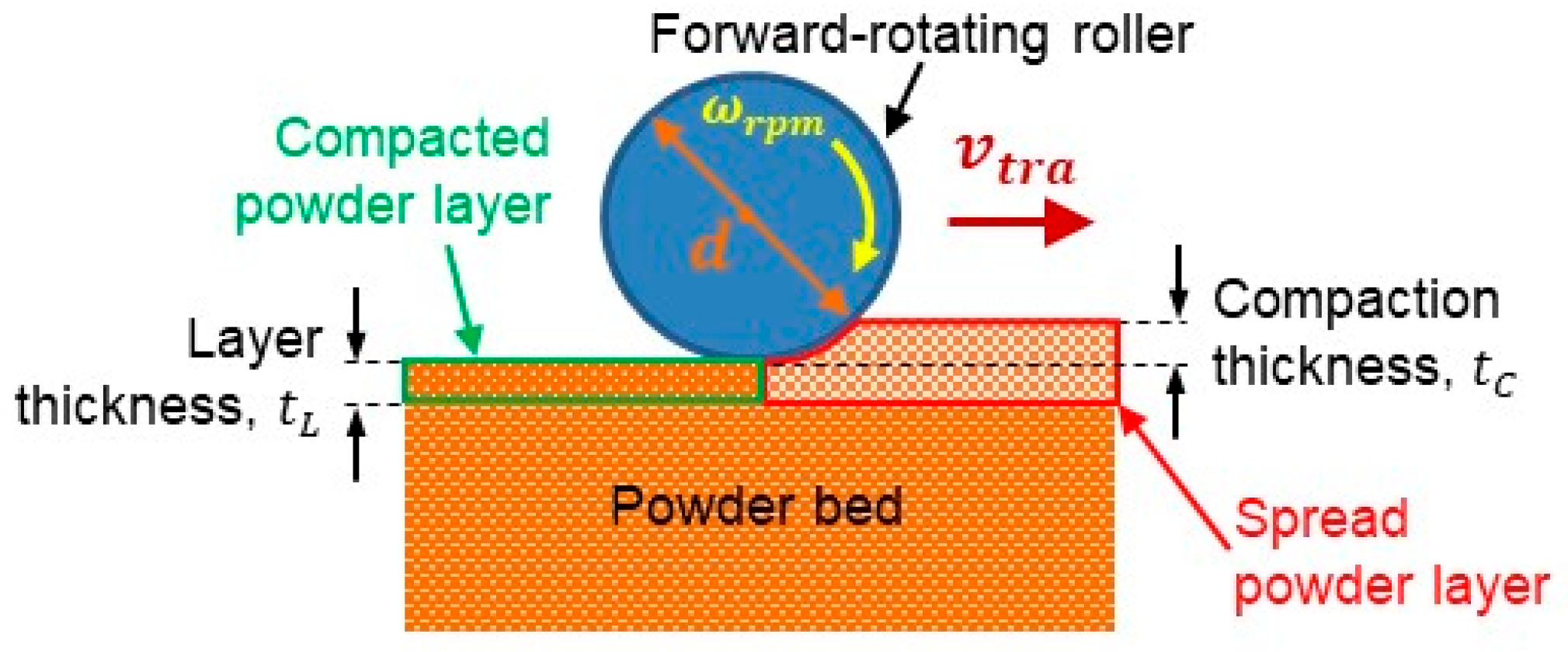
Forward-rotating roller compaction is one of the methods of powder bed compaction. It is an effective method for altering powder bed density and printed sample density [11,15]. Figure 1 illustrates the schematic of forward-rotating roller compaction. After spreading powder onto the powder bed using a counter-rotating roller, the roller rotates forward to compact the spread powder, increasing powder bed density. Table 1 lists the terminologies related to forward-rotating roller compaction. It should be noted that the circumferential speed is the rotation-induced speed of any point on the roller surface, and the net horizontal speed at the bottom point is the subtraction of the traverse speed from the circumferential speed.
Table 2 lists reported studies about forward-rotating roller compaction in additive manufacturing. The studies listed in this table have shown the effectiveness of forward-rotating roller compaction in altering the density of the printed samples. For example, in Ziaee et al.’s study [11], the powder bed density increased from 0.45 to 0.60 g/cm3 by using forward-rotating roller compaction. In Moghadasi et al.’s study [15], the sintered density increased from 50% to 65% by using forward-rotating roller compaction. In Budding and Vaneker’s study [16], three powder compaction methods were experimentally investigated, and the powder bed density and powder bed surface quality were examined, indicating the effectiveness of forward-rotating roller compaction after powder spreading via a doctor blade.
Defects can occur if parameters of forward-rotating roller compaction are not optimized, including compaction thickness [18] and compaction rotation speed [12]. In Li et al.’s study [17], the compaction thickness was studied in terms of its effect on the powder bed defects (more specifically, surface ridges). It was found that surface ridges occurred on the powder bed when the compaction was aggressive (i.e., a high compaction thickness). According to Niino and Sato’s study [12], it was suggested that compaction circumferential speed should have the same value as compaction traverse speed (resulting in a zero net horizontal speed at the bottom point) to avoid powder layer shifting and consequent printed sample distortion.
While previous studies have explored the individual effects of compaction thickness and rotation speed on powder bed density and printed sample quality, the combined effects of these parameters remain largely unexplored. This study addresses this research gap by systematically investigating how compaction thickness and rotation speed interact to influence powder bed density, distortion, and cracking in printed samples. The findings provide critical insights into optimizing roller-compaction-assisted binder jetting processes for improved printed sample quality and geometric integrity. In this study, the combined effects of compaction rotation speed and compaction thickness were studied on a commercially available binder jetting printer equipped with a forward-rotating roller compaction system. A commercially available alumina powder was used as the feedstock powder. Various values of compaction rotation speed and compaction thickness were selected. Thereafter, samples were printed using each combination of compaction rotation speed and compaction thickness values. Powder bed density was quantified. The quality of printed samples was studied in terms of distortion and cracks.

2. Materials and Methods

2.1. Feedstock Powder

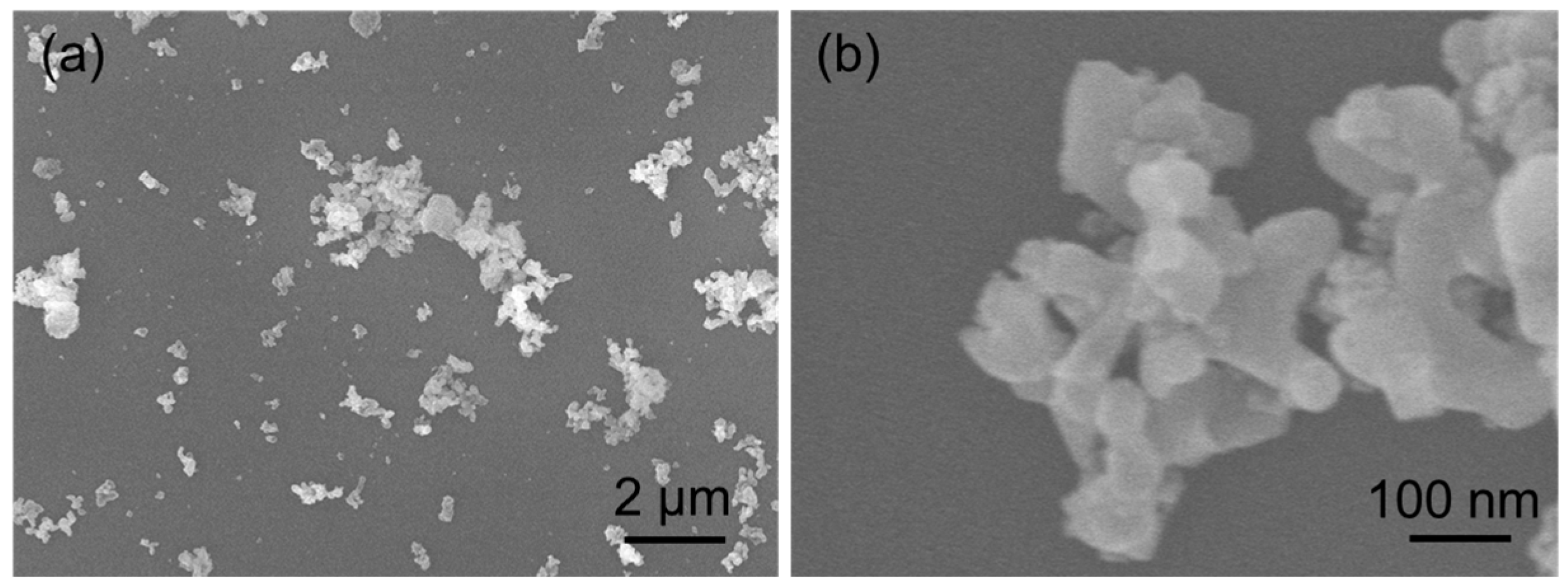
Alpha phase alumina powder (90-187125, Allied High Tech, Rancho Dominguez, CA, USA) was used as the feedstock powder for printing. It has a nominal particle size of 300 nm, and measured apparent density of ~6% and tap density of ~13% by ASTM standards (B417-22 and B527-15, respectively) [19,20]. Based on a particle size measurement using dry powder, the particle size distribution has two peaks at about 11 µm and 100 µm, indicating a significant amount of agglomeration. Therefore, the powder was manually sieved to a size range of <90 µm to screen out large agglomerates, as those could obstruct the powder dispensing from the hopper. The sieved powder was examined with a scanning electron microscope (SEM, FERA-3, TESCAN, Brno–Kohoutovice, Czech Republic).

2.2. Printing

2.2.1. Forward-Rotating Roller Compaction

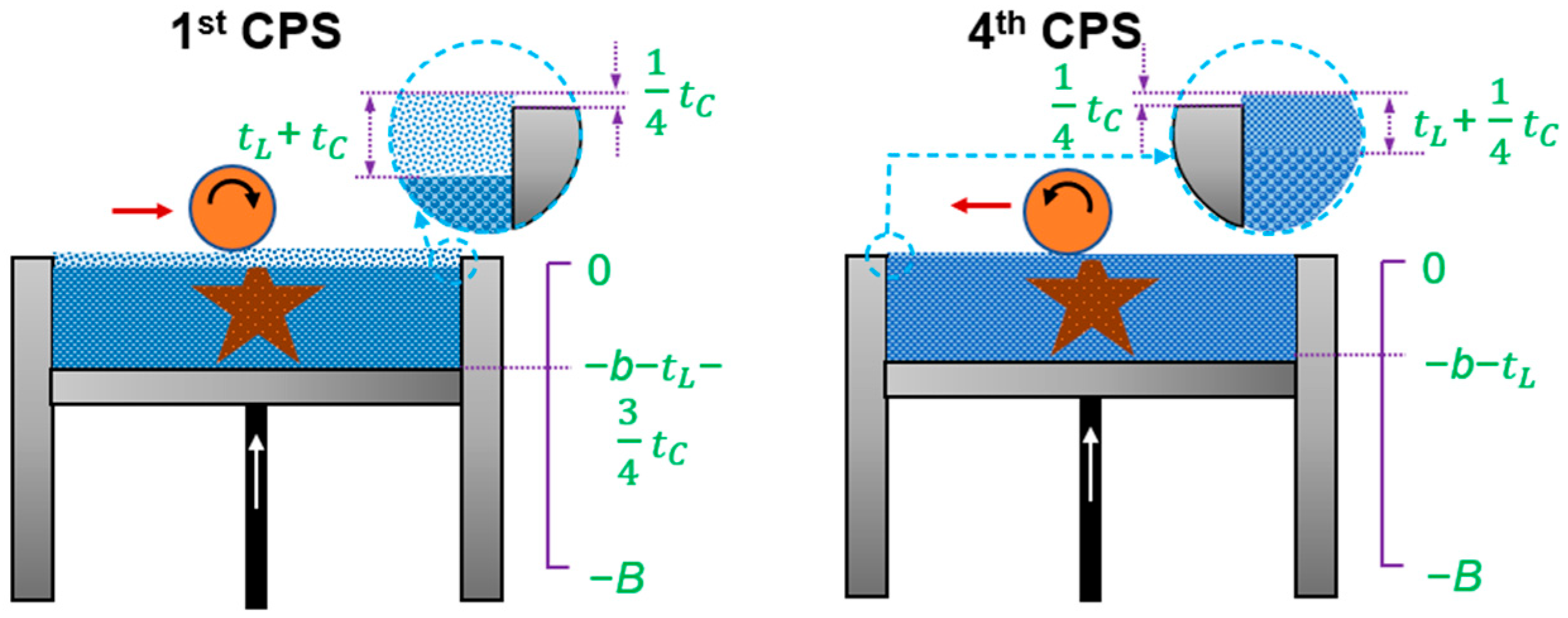
A commercially available binder jetting printer (Innovent+, ExOne, North Huntingdon, PA, USA) was used. This printer is equipped with a forward-rotating roller compaction system. The printer can be commanded to compact each layer in a desired number of compaction passes. In each compaction pass, the forward-rotating roller traverses back and forth once, completing a round trip. A one-way trip of the forward-rotating roller, regardless of the direction, is defined as a compaction pass segment for the ease of discussion. In this study, two compaction passes (i.e., four compaction pass segments) were used for each layer. Figure 2 illustrates the first and fourth segments of the compaction pass segments.
Assuming that the topmost and bottommost positions of the build platform are 0 and −B, respectively, a layer of forward-rotating roller compaction through four compaction pass segments conducted at an arbitrary build platform position of −b works as follows. A detailed description of roller-assisted compaction can be found in the authors’ previous publications [21].
First, the build platform descends by a distance of h. Second, the hopper dispenses the powder onto the powder bed. Third, the build platform rises to spread a powder layer with a thickness of t L + t C . Here, t L and t C are the values of layer thickness and compaction thickness, respectively. Fourth, the roller spreads an un-compacted layer with a thickness of t L  + t C . Thereafter, the build platform moves upward by a quarter of t C in the first compaction pass segment, and the roller traverses (with a specified compaction traverse speed) while forward-rotating (with a specified compaction rotation speed); the same is repeated for each of the other three compaction pass segments.

2.2.2. Printer Settings

The compaction rotation speed cannot be directly entered on the GUI of the printer, but it can be tuned with the nominal roller diameter. The compaction rotation speed ( ω r p m ) is determined by the printer based on the nominal roller diameter ( d ) and the compaction traverse speed ( v t r a ) as follows:
ω r p m = 60 v t r a π d      
Accordingly, the compaction circumferential speed ( v c i r ) and the compaction net horizontal speed at the bottom point ( v n e t ) are as follows:
v c i r = d d v t r a
v n e t = d d 1 v t r a
where d is the actual roller diameter. To tune the compaction rotation speed, the nominal roller diameter was varied across four different values, 9, 12, 13.5, and 15 mm, while the actual roller diameter and the compaction traverse speed were fixed at 15 mm and 5 mm/s, respectively. As a result, different values were obtained for the compaction rotation speed, the compaction circumferential speed, and the compaction net horizontal speed at the bottom point, as listed in Table 3.
In addition, the compaction thickness was varied across three values: 20, 40, and 100 µm. All other parameters were kept the same in this study, as listed in Table 4. One printing was conducted for each combination of compaction thickness and nominal roller diameter values, leading to a total of 12 printings.
The parameter ranges for compaction thickness (20, 40, and 100 µm) and nominal roller diameter (9, 12, 13.5, and 15 mm) were selected based on prior studies and practical constraints of the binder jetting printer used in this study. The compaction thickness values represent low (conservative), medium, and high (aggressive) levels of powder bed compaction, based on a previous study that showed its high compactibility even after granulation [21]. The nominal roller diameters correspond to a range of achievable compaction rotation speeds. Specifically, to ensure a forward-rotating roller rotating during compaction for enhanced compaction [16], the nominal roller diameter should be no larger than the actual roller diameter (i.e., 15 mm).

2.2.3. Printing Layout

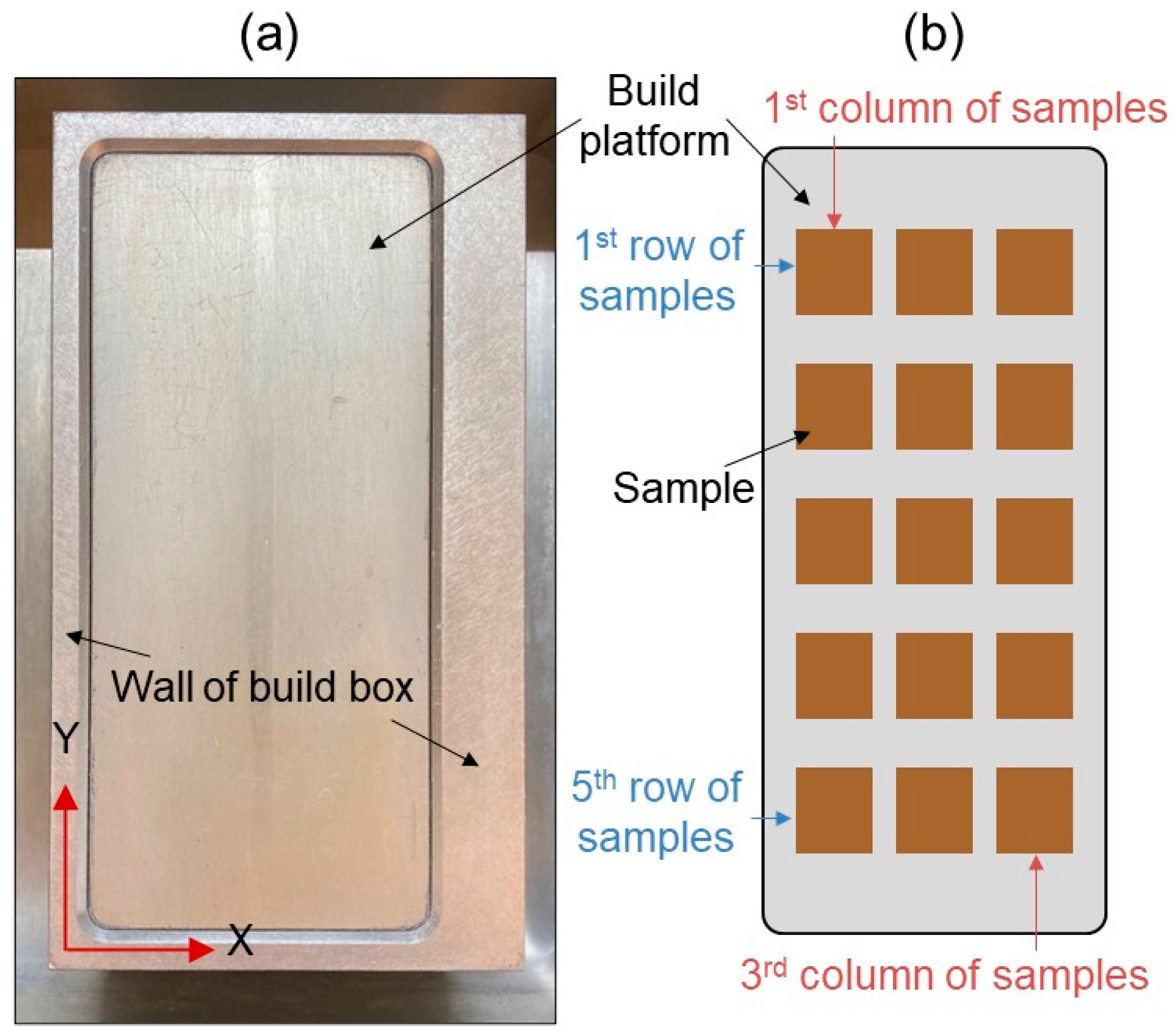
Figure 3 shows the printing layout in reference to the build box and build platform of the printer with the defined coordinate system. There were five rows and three columns of samples in each printing. Each sample has a length of 11 mm, a width of 10 mm, and a height of 3 mm.

2.2.4. Curing

After each printing was finished, the build box was put in an oven (DX402C, Yamato Scientific America Inc., San Jose, CA, USA) to cure the samples at 200 °C for 6 h [22].

2.3. Powder Bed Density Measurement

Powder bed density was determined based on the measurements of the dimensions and mass of the whole powder bed. Specifically, the height of the powder bed was measured by a caliper (with a resolution of 0.01 mm) at the four corners of the build platform with three repetitions at each corner, as well as the length and width of the build platform. After depowdering, the powder left inside the build box was collected. The mass of the collected powder and the mass of the printed samples were measured by a scale (with a resolution of 0.01 g). The total mass of the powder and printed samples was then divided by the volume of the whole powder bed to calculate the powder bed density. Relative powder bed density was finally calculated based on the theoretical density of alumina (i.e., 3.97 g/cm3 [23]).

2.4. Assessment of Distortion and Cracks

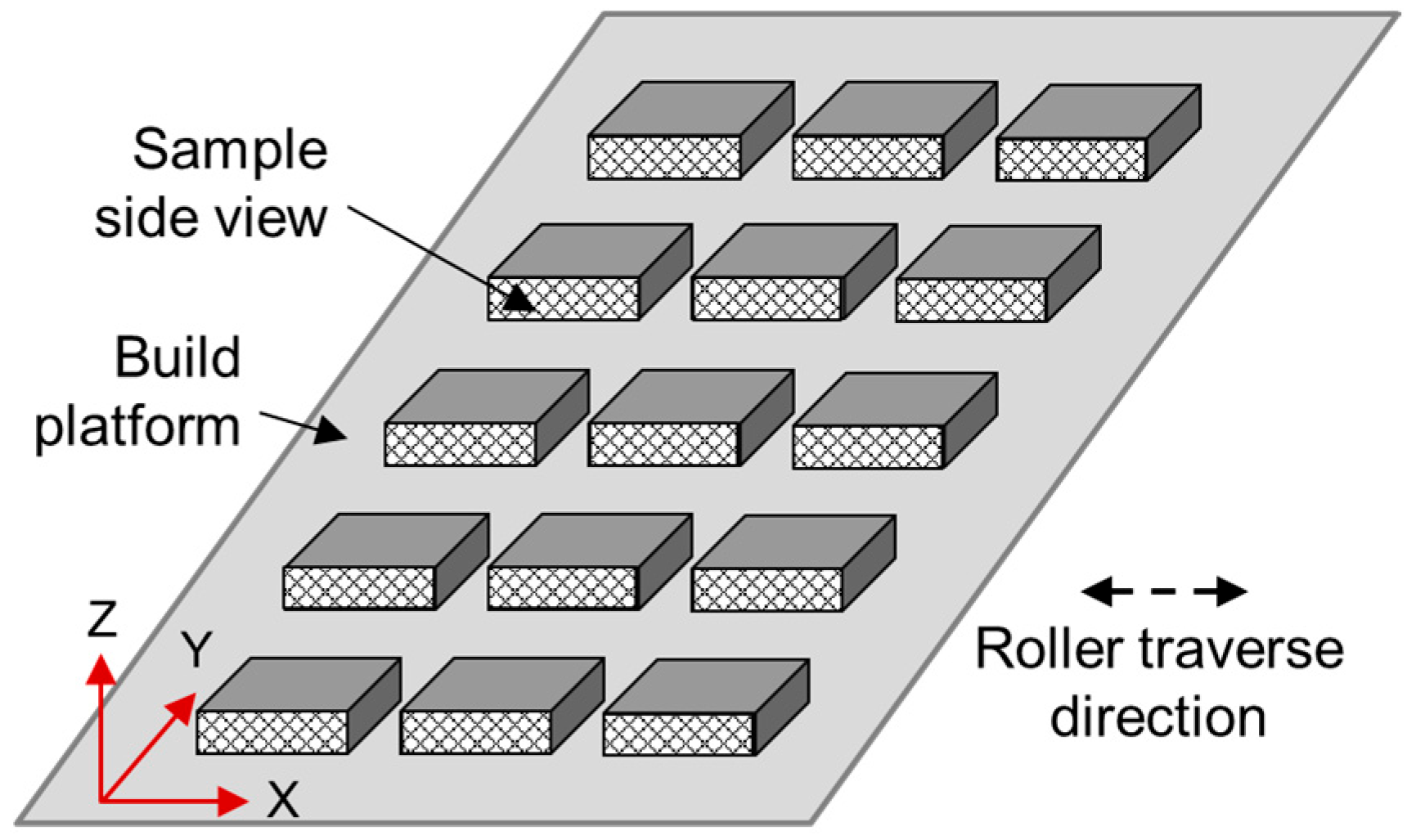
Since samples from the printings were fragile, the distortion of the printed samples was photographed during the depowdering process before any manual handling. The distortion was assessed by the color difference between the printed samples and the powder bed. After curing, the binder inside the printed samples turned a beige color, while the powder bed kept the white color of the powder itself. Therefore, the edges of the printed samples can be easily identified during depowdering. Photos of the printed samples were taken from the side view in the X-Z plane for assessing distortion and cracks, as shown in Figure 4.

3. Results

3.1. Characteristics of Feedstock Powder

The SEM images of the feedstock powder are shown in Figure 5. The particles have an irregular shape. The actual particle size is about 100 nm (smaller than the nominal particle size of 300 nm). The particles form agglomerates with a much larger size than their primary particle size. Due to its nanoscale particle size, irregular shape, and agglomeration, this powder has poor flowability [24]. The detailed flowability characterization results can be found in the authors’ previous study [15]. The agglomeration of the feedstock could lead to a high inter-granular friction and consequently a high powder compactibility [21].

3.2. Powder Bed Density

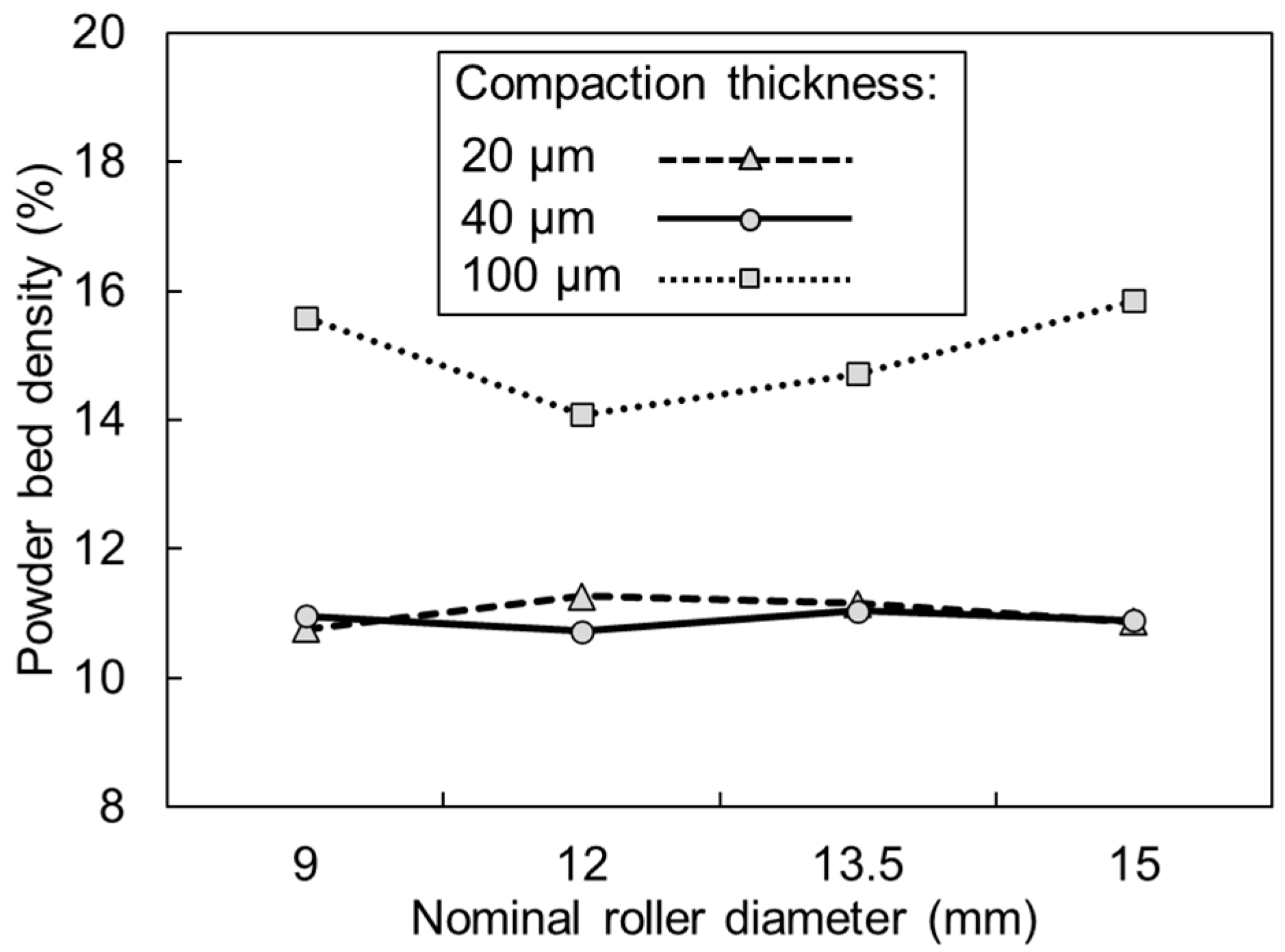
Figure 6 presents the powder bed density results for all the printings. The powder bed density at the compaction thickness of 100 µm is much higher than that at the compaction thicknesses of 20 and 40 µm. These results show that powder bed density can be altered by forward-rotating roller compaction. At each compaction thickness, no observable relationship is found between nominal roller diameter and powder bed density. While each parameter set was tested once, the results are consistent with prior studies of compacted powder bed density [15,18]. Future work will focus on conducting repeated experiments and statistical analyses.

3.3. Summary of Printed Sample Quality

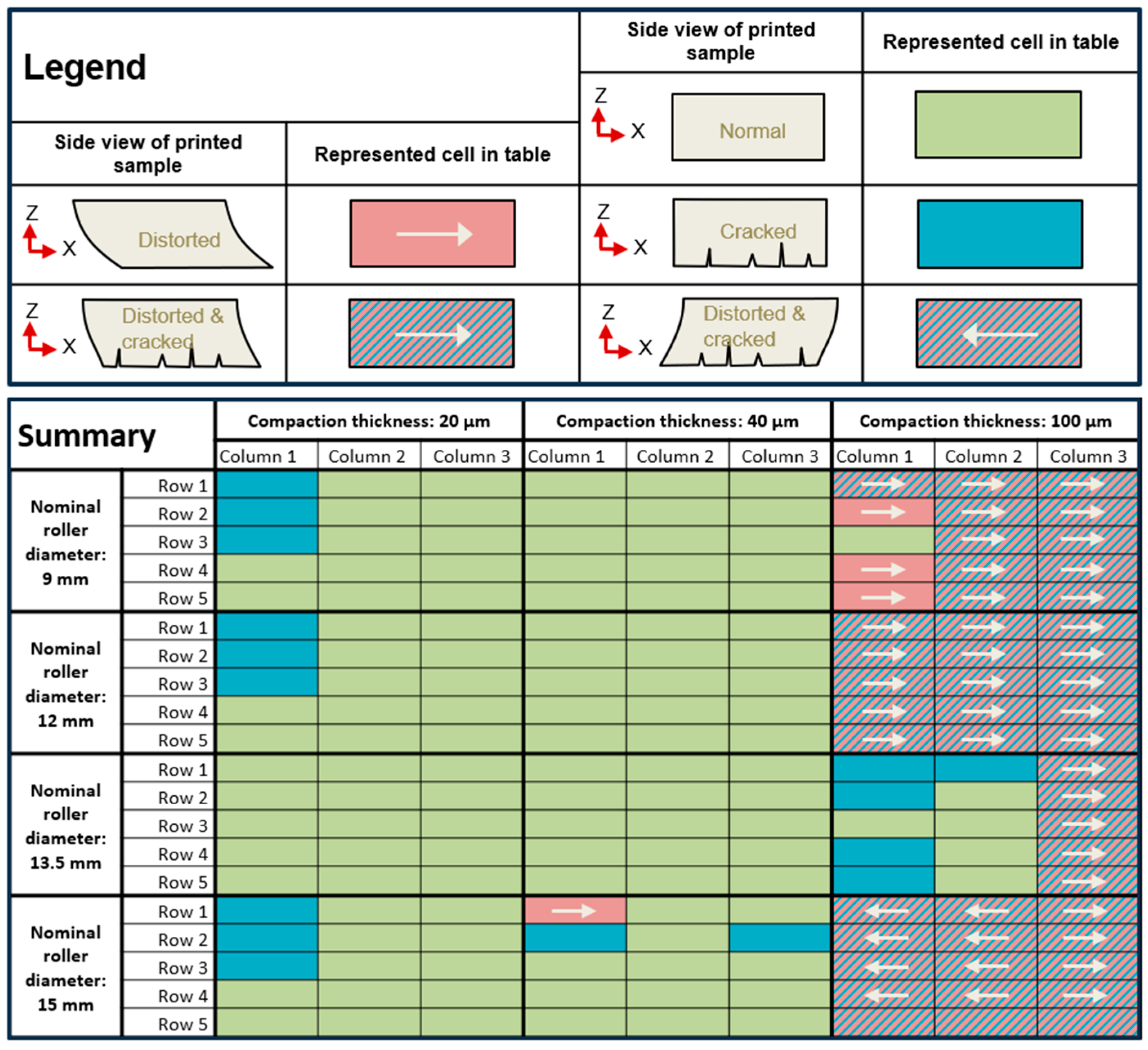
Based on the depowdering results, the quality (in terms of distortion and cracks) of all printed samples is summarized in Figure 7. There was no distortion or crack in most samples from the eight printings at a compaction thickness of 20 and 40 µm. Most samples in the four printings at a compaction thickness of 100 µm have both distortion and cracks, especially the bottom portion of the samples from the printings at a nominal roller diameter of 9, 12, and 15 mm. Some samples from the printing at a nominal roller diameter of 13.5 mm did not distort or crack. The resultant trends are consistent with a prior study in terms of the printed geometry integrity [18]. Future work will prioritize performing repeated experiments and incorporating statistical analyses.
Figure 6. Powder bed density from printings at different compaction thickness values ( t C ) and different nominal roller diameter values (i.e., different compaction rotation speed values).
Jmmp 10 00097 g006
Figure 7. Summary of quality (in terms of distortion and cracks) of all samples printed at different values of compaction thickness and nominal roller diameter.
Jmmp 10 00097 g007

3.4. Distortion and Cracks of Printed Samples

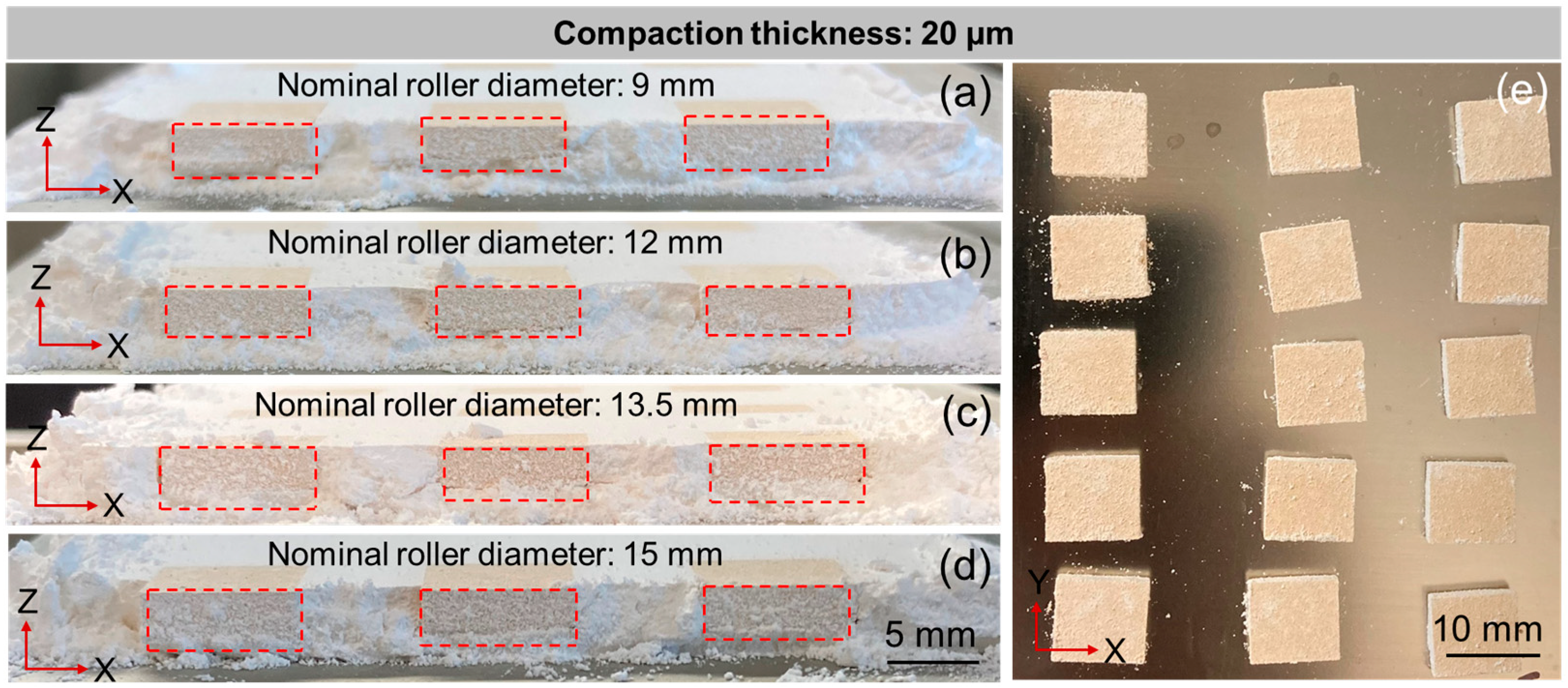
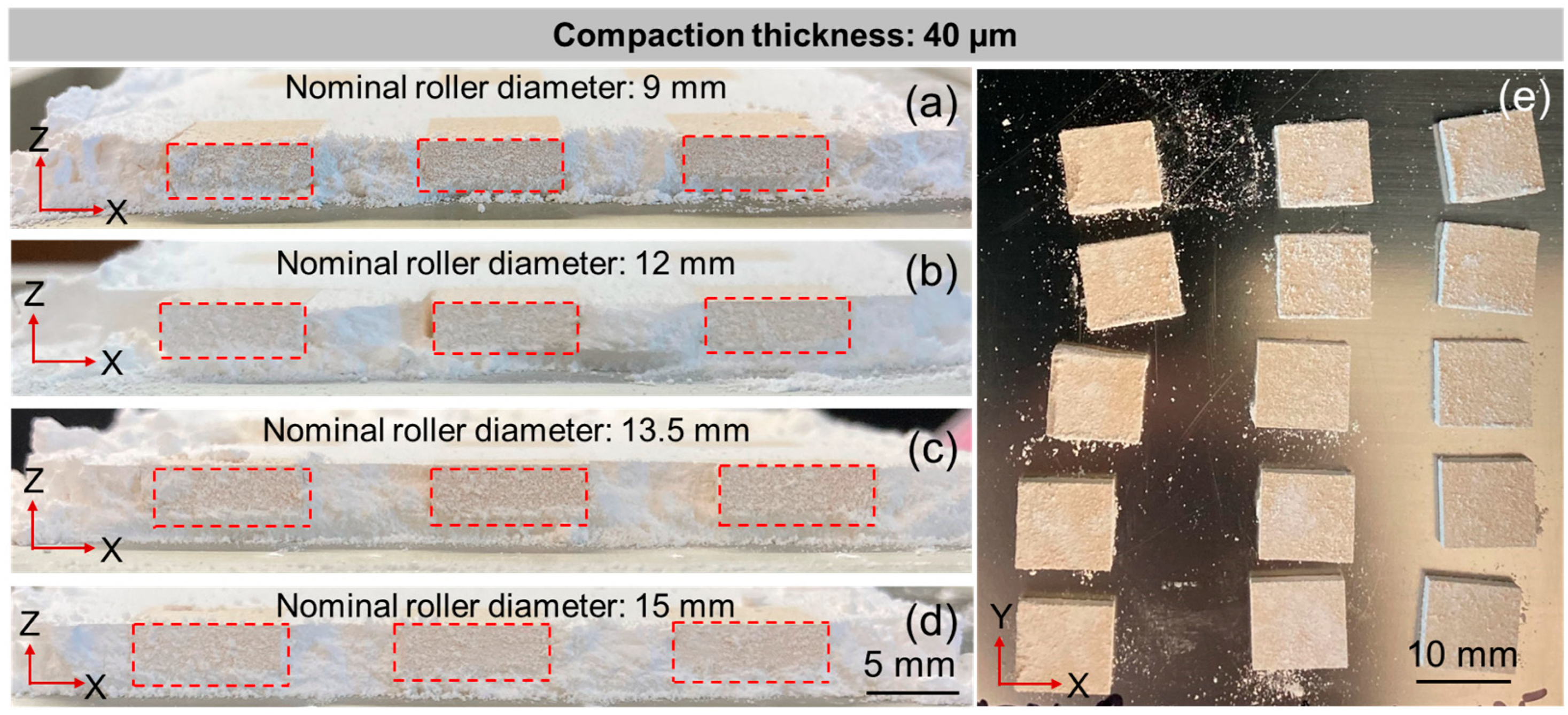
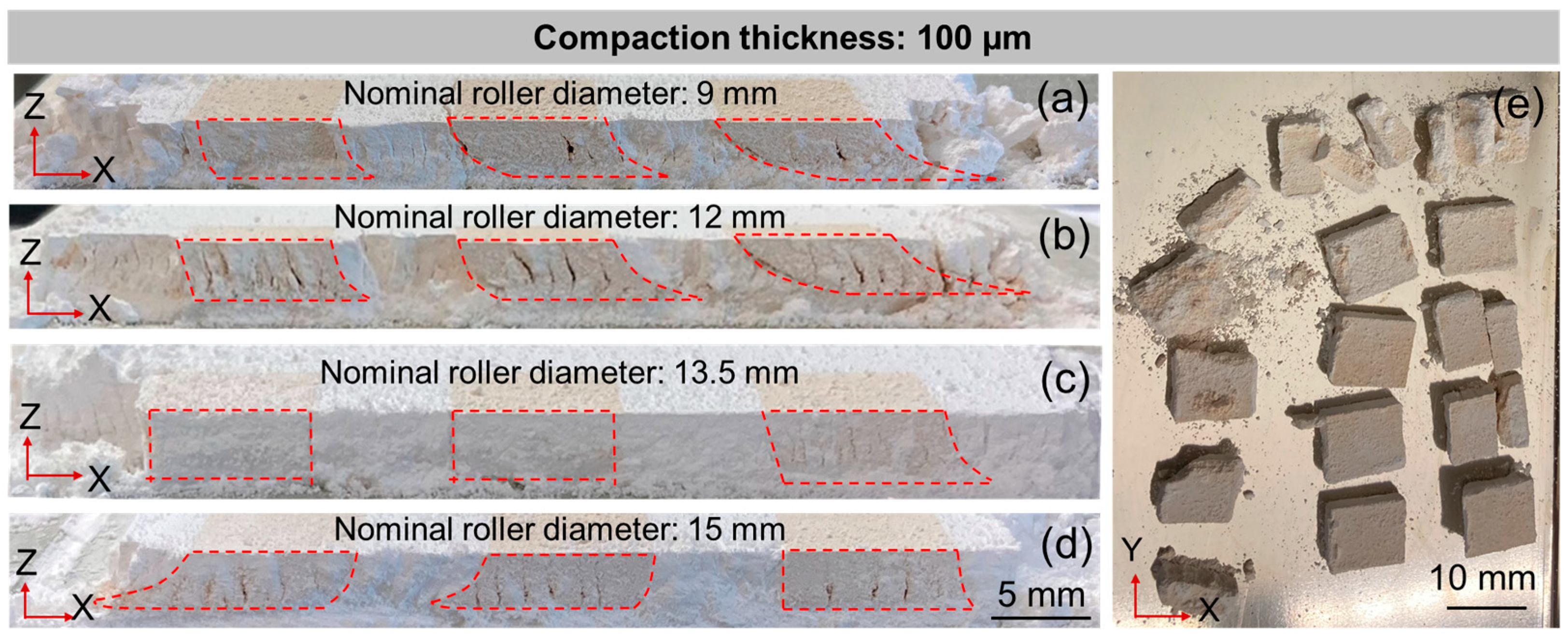
Figure 8 and Figure 9 show the samples printed at a compaction thickness of 20 µm and 40 µm, respectively. In these printings, the printed samples showed no observable distortion or cracks. Figure 10 shows the samples printed at a compaction thickness of 100 µm. Most of the samples in these printings have distortion along the X-axis. Some printed samples from the four printings with a compaction thickness of 100 µm have cracks. These cracks are parallel to the Y-axis, making the samples from those four printings very fragile. Cracks usually occurred in those distorted samples.
It should be noted that a clear interaction of the two parameters (compaction thickness and nominal roller diameter) has been observed for the printed sample integrity, necessitating a future ANOVA (analysis of variance) study for the interaction effects, especially from more values of compaction thickness in the range of 40 and 100 µm. A quantitative distortion metric (e.g., distortion angle, displacement, or a cracking index) could also be reported with statistics in future work.

4. Discussion

4.1. Direction of Printed Sample Distortion

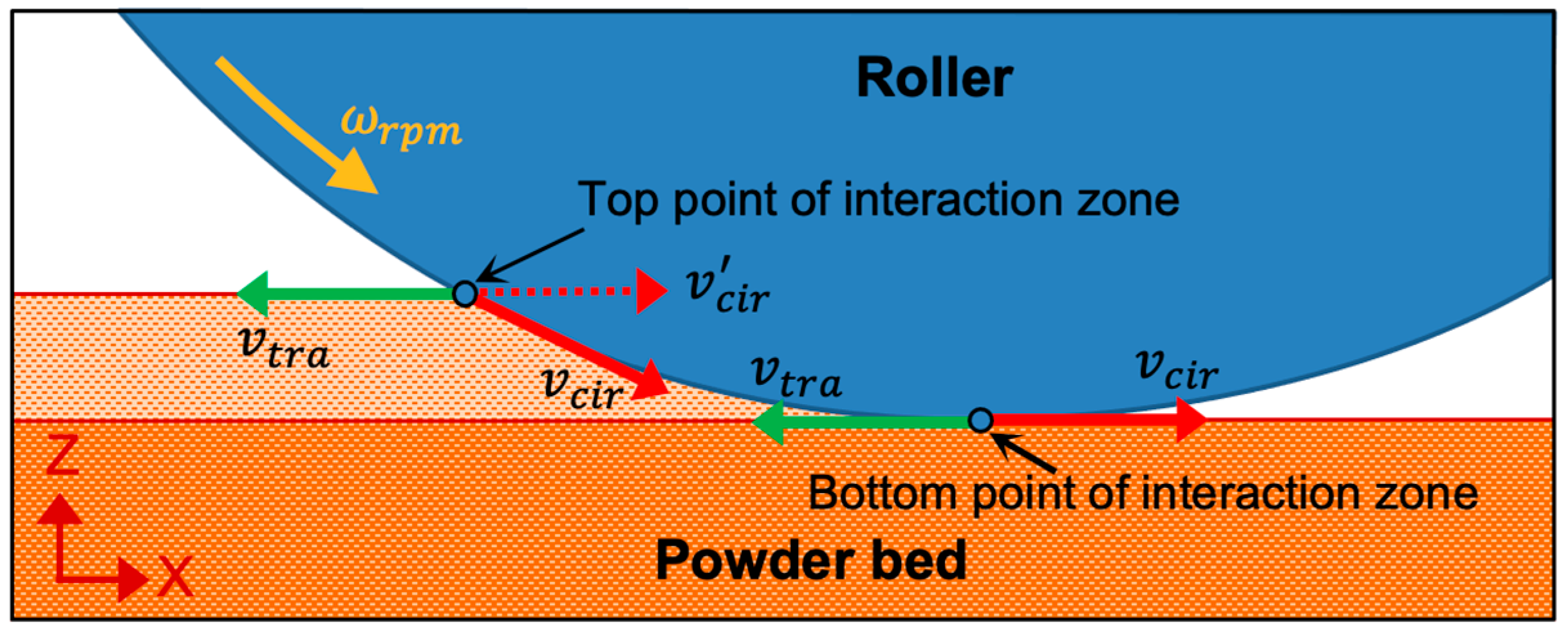
The distortion of printed samples only occurred when the compaction thickness was large (i.e., 100 µm), due to the much higher friction between the roller and powder bed in this case [18]. As shown in Figure 10, the bottom portions of printed samples at a nominal roller diameter of 9 and 12 mm have been distorted towards the positive X-axis direction, the printed samples in the printing at a nominal roller diameter of 13.5 mm showed much less distortion, while most printed samples in the printing at a nominal roller diameter of 15 mm showed a distortion toward the negative X-axis direction. To assist the discussion of the distortion direction, a schematic of the interaction line during the fourth compaction pass segment is shown in Figure 11. The interaction line is defined as the contacting curve between the top and bottom points. The calculations of the net horizontal speed at the top point of the interaction line are listed in Table 5, while the similar ones at the bottom point have been listed in Table 3.
It should be noted that the distortion is expected to only occur at the final compaction pass segment (i.e., the fourth segment in this case). The powder bed after the final compaction pass segment has a higher density than those after the previous three segments; therefore, the friction from the roller in the final compaction pass segment is larger, which could lead to powder bed shifting.
The samples in the first three rows of Figure 10 (with nominal roller diameters of 9, 12, and 13.5 mm) are discussed first. As shown in the first three rows of Table 3 and Table 5, both top and bottom points of the interaction line have positive values of net horizontal speed, indicating a relative movement towards the positive X-axis direction for the roller. Therefore, samples in all three rows were distorted towards the positive X-axis direction. The print with the nominal roller diameter of 13.5 mm had the lowest net horizontal speed (i.e., 0.54 and 0.55 mm/s at top and bottom points, respectively); only the third sample in the third row of Figure 10 has a slight distortion towards the positive X-axis direction.
The samples in the fourth row of Figure 10 (with the nominal roller diameter of 15 mm) are discussed as follows. As shown in the fourth row of Table 3 and Table 5, the bottom point of the interaction line has a zero value of net horizontal speed, but its top point has a negative value of net horizontal speed, indicating a roller movement towards the negative X-axis direction. Therefore, the three samples in this row were distorted towards the negative X-axis direction by the friction between the roller and the interaction line. It should be noted that the analysis in Figure 11 and Table 5 assumes that the amount of powder in front of the roller remains constant across the entire compaction pass segment. This assumption underestimates the magnitude of the net horizontal speed at top point of interaction line, i.e., in reality, the top point should have a more negative value of net horizontal speed, magnifying the effect discussed above.

4.2. Extent of Sample Distortion

In Figure 10, the lower portion of the distorted samples has a larger extent of distortion than the upper portion. The reason for this could be the accumulation of the distortion. Due to the jetted binder, irregular particle shape, and agglomeration, the bonding across powder layers can be strong, such that all powder layers can shift together. The lower portion of the printed samples could have experienced more shifting from the compaction of later powder layers than the higher portion.
Moreover, as shown in Figure 10a,b, samples in the first column have the least extent of distortion (or even no distortion), but samples in the third column have the largest extent of distortion. This may be due to the direction of the final (i.e., fourth) compaction pass segment. As the roller traversed from right to left in the fourth compaction pass segment, the right side of the powder bed was compacted and distorted first, and kept accumulating more distortion. A similar mechanism could be applied to Figure 10d, as the distortion was towards the negative X-axis direction, and consequently, the left side of the powder bed accumulated more distortions.
Comparing Figure 10b,c, it can be concluded that a higher compaction rotation speed (i.e., lower nominal roller diameter) could lead to a larger extent of distortion. The reason may be the reduced nominal roller diameter, which led to increased compaction rotation speed (i.e., increased roller-powder relative motion) during the final compaction pass segment and therefore larger friction from the roller.

4.3. Broader Implications

One alumina feedstock with a sub-micron particle size and agglomeration was solely used in this study. For other particle sizes of alumina feedstock or other materials, it is of high interest to discuss their performance in binder jetting with roller-assisted compaction, in terms of their flowability and compactibility.
Particle size is a critical parameter that affects inter-particle interactions. In this study, sub-micron size was studied, so the discussion will focus on two other sizes: a smaller size (i.e., nano size) and a larger size (i.e., micron size). Materials with a smaller particle size tend to have a stronger inter-particle bonding (i.e., van der Waals [25], electrostatic [26], hydrogen bonding [27], etc.) and a stronger friction between the powder bed and the roller compared with gravity. Therefore, at the same compaction level, the friction between the roller and powder bed could lead to more powder bed disturbance/distortion for materials with nano sizes once the compaction has reached its limit. The powder compactibility of nano-sized materials is expected to be larger [21] while their absolute powder bed density would be lower due to their poor flowability [24]. For micron-sized materials, due to the reduced powder-roller friction and inter-particle interactions, powder bed distortion would diminish with lower powder compactibility and higher absolute powder bed density.
Particle shape is another critical parameter that affects flowability. Powders with a spherical particle shape usually have a high flowability [24], leading to a high powder bed density. But their compactibility should be lower due to the low-level of inter-particle bonding. Powder bed distortion, on the other hand, should be lower than that from materials with irregular shapes.
Besides alumina, other ceramic or metal materials would follow a similar trend in terms of effects from different compaction thicknesses and compaction rotation speeds. However, some modeling and experimental work has demonstrated that their actual cohesive interaction forces could be different between metallic and non-metallic powders [28]. Moreover, different binder saturation levels could affect the bonding strength between powder layers [29] and consequently the ability of the printed samples to resist distortion and cracking under compaction stresses.

5. Conclusions

The combined effects of compaction rotation speed (tuned with nominal roller diameter) and compaction thickness on the powder bed density and printed sample quality (including distortion and cracks) were studied on a commercially available binder jetting printer equipped with a forward-rotating roller compaction system. Based on the results, the following conclusions can be drawn:
  • In the test domain, powder bed densities were not affected by changing compaction rotation speed but increased by increasing compaction thickness.
  • At the low compaction thicknesses of 20 and 40 µm, the printed samples had no observable distortion or cracks. The high compaction thickness of 100 µm resulted in distortions and cracks in printed samples.
  • The direction of distortion of the printed samples was affected by the compaction rotation speed (at the compaction thickness of 100 µm). At a high compaction rotation speed, the printed sample distorted towards the opposite direction of the roller traverse direction of the final compaction pass segment. At a low compaction rotation speed, the printed sample distorted towards the roller traverse direction of the final compaction pass segment. In this case, not only the bottom point of the interaction line, but also the whole line (including the top point) should be considered in terms of optimizing the roller rotation speed to achieve a high geometry integrity.
  • The extent of distortion of the printed samples was affected by the compaction rotation speed (at the compaction thickness of 100 µm). At a high compaction rotation speed, a larger extent of distortion occurred in the samples located closer to the starting position of the final compaction pass segment. At a low compaction rotation speed, a smaller extent of distortion occurred in the samples located closer to the starting position of the final compaction pass segment.
  • For the feedstock powder with a sub-micron particle size, a slightly higher compaction circumferential speed than the compaction traverse speed was recommended. For applications requiring higher compaction thickness (e.g., 100 µm in this study), it is critical to carefully tune the compaction rotation speed to mitigate distortion and cracking.
These findings provide valuable insights into optimizing roller-compaction-assisted binder jetting processes for enhanced printed sample quality and geometric integrity. Future work will focus on exploring a broader range of compaction rotation speeds, investigating the effects of varying particle sizes and feedstock materials, and developing models to understand compaction interactions between the powder bed and roller.

Author Contributions

Conceptualization, C.M. and W.D.; methodology, C.M., Z.P., M.M., and W.D.; formal analysis, W.D. and X.W.; investigation, W.D. and X.W.; resources, Z.P. and C.M.; writing—original draft preparation, W.D.; writing—review and editing, M.M., X.W., Z.P., and C.M.; visualization, W.D.; supervision, C.M.; project administration, C.M.; funding acquisition, Z.P. and C.M. All authors have read and agreed to the published version of the manuscript.

Funding

This material is based upon work supported by the National Science Foundation under Grant No. 2401277.

Data Availability Statement

The original contributions presented in this study are included in the article. Further inquiries can be directed to the corresponding authors.

Conflicts of Interest

The authors declare no conflicts of interest.

References

  1. Ben Said, L.; Ayadi, B.; Alharbi, S.; Dammak, F. Recent Advances in Additive Manufacturing: A Review of Current Developments and Future Directions. Machines 2025, 13, 813. [Google Scholar] [CrossRef]
  2. ISO/ASTM 52900:2015; Additive Manufacturing—General Principles—Terminology. ASTM International/International Standard: West Conshohocken, PA, USA.
  3. Mariani, M.; Beltrami, R.; Brusa, P.; Galassi, C.; Ardito, R.; Lecis, N. 3D Printing of Fine Alumina Powders by Binder Jetting. J. Eur. Ceram. Soc. 2021, 41, 5307–5315. [Google Scholar] [CrossRef]
  4. Miyanaji, H.; Rahman, K.M.; Da, M.; Williams, C.B. Effect of Fine Powder Particles on Quality of Binder Jetting Parts. Addit. Manuf. 2020, 36, 101587. [Google Scholar] [CrossRef]
  5. Maleksaeedi, S.; Eng, H.; Wiria, F.E.; Ha, T.M.H.; He, Z. Property Enhancement of 3D-Printed Alumina Ceramics Using Vacuum Infiltration. J. Mater. Process. Technol. 2014, 214, 1301–1306. [Google Scholar] [CrossRef]
  6. Gaytan, S.M.; Cadena, M.A.; Karim, H.; Delfin, D.; Lin, Y.; Espalin, D.; MacDonald, E.; Wicker, R.B. Fabrication of Barium Titanate by Binder Jetting Additive Manufacturing Technology. Ceram. Int. 2015, 41, 6610–6619. [Google Scholar] [CrossRef]
  7. Suwanprateeb, J.; Sanngam, R.; Suvannapruk, W.; Panyathanmaporn, T. Mechanical and in Vitro Performance of Apatite-Wollastonite Glass Ceramic Reinforced Hydroxyapatite Composite Fabricated by 3D-Printing. J. Mater. Sci. Mater. Med. 2009, 20, 1281–1289. [Google Scholar] [CrossRef]
  8. Bai, Y.; Wagner, G.; Williams, C.B. Effect of Bimodal Powder Mixture on Powder Packing Density and Sintered Density in Binder Jetting of Metals. In Proceedings of the International Solid Freeform Fabrication Symposium, Austin, TX, USA, 10–12 August 2015; pp. 758–771. [Google Scholar]
  9. Bose, S.; Tarafder, S.; Bandyopadhyay, A. Effect of Chemistry on Osteogenesis and Angiogenesis Towards Bone Tissue Engineering Using 3D Printed Scaffolds. Ann. Biomed. Eng. 2017, 45, 261–272. [Google Scholar] [CrossRef] [PubMed]
  10. Yoo, J.; Cima, M.J.; Khanuja, S.; Sachs, E.M. Structural Ceramic Components by 3D Printing. In Proceedings of the Solid Freeform Fabrication Symposium, Austin, TX, USA, 9–11 August 1993; pp. 40–50. [Google Scholar]
  11. Ziaee, M.; Hershman, R.; Mahmood, A.; Crane, N.B. Fabrication of Demineralized Bone Matrix/Polycaprolactone Composites Using Large Area Projection Sintering (LAPS). J. Manuf. Mater. Process. 2019, 3, 30. [Google Scholar] [CrossRef]
  12. Niino, T.; Sato, K. Effect of Powder Compaction in Plastic Laser Sintering Fabrication. In Proceedings of the Solid Freeform Fabrication Symposium, Austin, TX, USA, 3–5 August 2009; pp. 193–205. [Google Scholar]
  13. Díaz-Moreno, C.A.; Lin, Y.; Hurtado-Macías, A.; Espalin, D.; Terrazas, C.A.; Murr, L.E.; Wicker, R.B. Binder Jetting Additive Manufacturing of Aluminum Nitride Components. Ceram. Int. 2019, 45, 13620–13627. [Google Scholar] [CrossRef]
  14. Fleisher, A.; Zolotaryov, D.; Kovalevsky, A.; Muller-Kamskii, G.; Eshed, E.; Kazakin, M.; Popov, V.V. Reaction Bonding of Silicon Carbides by Binder Jet 3D-Printing, Phenolic Resin Binder Impregnation and Capillary Liquid Silicon Infiltration. Ceram. Int. 2019, 45, 18023–18029. [Google Scholar] [CrossRef]
  15. Moghadasi, M.; Miao, G.; Li, M.; Pei, Z.; Ma, C. Combining Powder Bed Compaction and Nanopowders to Improve Density in Ceramic Binder Jetting Additive Manufacturing. Ceram. Int. 2021, 47, 35348–35355. [Google Scholar] [CrossRef]
  16. Budding, A.; Vaneker, T.H.J. New Strategies for Powder Compaction in Powder-Based Rapid Prototyping Techniques. Procedia CIRP 2013, 6, 527–532. [Google Scholar] [CrossRef]
  17. Li, M.; Wei, X.; Pei, Z.; Ma, C. Binder Jetting Additive Manufacturing: Observations of Compaction-Induced Powder Bed Surface Defects. Manuf. Lett. 2021, 28, 50–53. [Google Scholar] [CrossRef]
  18. Du, W.; Li, M.; Pei, Z.; Ma, C. Roller-Compaction-Assisted Binder Jetting with Different Granulated Zirconia Powders. Manuf. Lett. 2023, 35, 576–582. [Google Scholar] [CrossRef]
  19. ASTM B417-22; Standard Test Method for Apparent Density of Non-Free-Flowing Metal Powders Using the Carney Funnel. ASTM International: West Conshohocken, PA, USA, 2022.
  20. ASTM B527-15; Standard Test Method for Tap Density of Metal Powders and Compounds. ASTM International: West Conshohocken, PA, USA, 2015.
  21. Du, W.; Caraway, B.C.; Li, M.; Miao, G.; Pei, Z.; Ma, C. Preparation of Granulated Powders via Freeze Drying at Different Levels of Slurry Solid Loading and Comparison of Their Powder Bed Quality in Roller-Compaction-Assisted Binder Jetting. Manuf. Lett. 2023, 35, 583–591. [Google Scholar] [CrossRef]
  22. Su, Z.; Zhao, K.; Ye, Z.; Cao, W.; Wang, X.; Liu, K.; Wang, Y.; Yang, L.; Dai, B.; Zhu, J. Overcoming the Penetration–Saturation Trade-off in Binder Jet Additive Manufacturing via Rapid In Situ Curing. Addit. Manuf. 2022, 59, 103157. [Google Scholar] [CrossRef]
  23. Rahaman, M.N. Ceramic Processing and Sintering; CRC Press: New York, NY, USA, 2003. [Google Scholar]
  24. Zegzulka, J.; Gelnar, D.; Jezerska, L.; Prokes, R.; Rozbroj, J. Characterization and Flowability Methods for Metal Powders. Sci. Rep. 2020, 10, 21004. [Google Scholar] [CrossRef]
  25. Li, Q.; Rudolph, V.; Weigl, B.; Earl, A. Interparticle van Der Waals Force in Powder Flowability and Compactibility. Int. J. Pharm. 2004, 280, 77–93. [Google Scholar] [CrossRef]
  26. Donald, D.K.; Watson, P.K. The Effects of Electric Fields on Toner-Carrier Adhesion in Xerographic Development. IEEE Trans. Electron Devices 1972, 19, 458–462. [Google Scholar] [CrossRef]
  27. Tahmasebpoor, M.; De Martín, L.; Talebi, M.; Mostoufi, N.; Van Ommen, J.R. The Role of the Hydrogen Bond in Dense Nanoparticle–Gas Suspensions. Phys. Chem. Chem. Phys. 2013, 15, 5788–5793. [Google Scholar] [CrossRef] [PubMed]
  28. Meier, C.; Weissbach, R.; Weinberg, J.; Wall, W.A.; John Hart, A. Modeling and Characterization of Cohesion in Fine Metal Powders with a Focus on Additive Manufacturing Process Simulations. Powder Technol. 2019, 343, 855–866. [Google Scholar] [CrossRef]
  29. Enneti, R.K.; Prough, K.C. Effect of Binder Saturation and Powder Layer Thickness on the Green Strength of the Binder Jet 3D Printing (BJ3DP) WC-12%Co Powders. Int. J. Refract. Met. Hard Mater. 2019, 84, 104991. [Google Scholar] [CrossRef]
Figure 1. Schematic illustration of forward-rotating roller compaction.
Jmmp 10 00097 g001
Figure 2. Schematic illustration of the first and fourth compaction pass segments (CPS) started at an arbitrary build platform (BP) position of −b, a layer thickness of t L , and a compaction thickness of t C . Detailed explanation of the powder spreading and compaction processes can be found in the authors’ previous publication [21].
Jmmp 10 00097 g002
Figure 3. Printing layout in reference to the build box and build platform of the printer, with the defined coordinate system (roller traverses along X-axis): (a) top view photo for the build platform, and (b) schematic of sample layout.
Jmmp 10 00097 g003
Figure 4. Side view of printed samples for assessment of distortion and cracks.
Jmmp 10 00097 g004
Figure 5. (a,b) SEM images of feedstock powder at different magnifications.
Jmmp 10 00097 g005
Figure 8. Samples printed at a compaction thickness of 20 µm: (ad) side view (X-Z plane) of printed samples in the first row from four printings using different compaction rotation speeds tuned with nominal roller diameter, and (e) all samples printed at the nominal roller diameter of 13.5 mm as an example.
Jmmp 10 00097 g008
Figure 9. Samples printed at a compaction thickness of 40 µm: (ad) side view (X-Z plane) of printed samples in the first row from four printings using different compaction rotation speeds tuned with nominal roller diameter, and (e) all samples printed at the nominal roller diameter of 13.5 mm as an example.
Jmmp 10 00097 g009
Figure 10. Samples printed at a compaction thickness of 100 µm: (ad) side view (X-Z plane) of printed samples in the first row from four printings using different compaction rotation speeds tuned with nominal roller diameter, and (e) all samples printed at the nominal roller diameter of 13.5 mm as an example.
Jmmp 10 00097 g010
Figure 11. Schematic of the interaction line between roller and powder bed during the final compaction pass segment with specified compaction rotation speed ( ω r p m ), compaction traverse speed ( v t r a ), and compaction circumferential speed ( v c i r ). The interaction line is the curve between the top and bottom points.
Jmmp 10 00097 g011
Table 1. Definition of terminologies for forward-rotating roller compaction.
TerminologyDefinition
Roller diameter (mm) d
Layer thickness (µm) t L
Compaction thickness (µm) t C
Compaction traverse speed (mm/s) v t r a
Compaction rotation speed (rpm) ω r p m
Compaction circumferential speed (mm/s) v c i r = π d ω r p m 60
Compaction net horizontal speed at the bottom point (mm/s) v n e t = π d ω r p m 60 v t r a
Table 2. Reported studies of forward-rotating roller compaction in the literature.
MaterialParticle (Granule) Size (µm)Layer Thickness (µm)Compaction Thickness (µm)Compaction Traverse Speed (mm/s)Compaction Circumferential Speed (mm/s)Reference
Alumina0.15 and 300, 5, 10, 15, 20, 60, 100, and 2003Not specifiedMoghadasi et al. [15]
Alumina75–150127Not specifiedNot specifiedNot specifiedYoo et al. [10]
Bone material and polycaprolactone<300300, 400, 500, 600, 750, 1000, and 12500, 250, 500, 650, 750, 850, and 95019Not specifiedZiaee et al. [11]
Polyamide581000, 100, and 20050 and 1000, 25, 50, and 100Niino and Sato [12]
Zirconia601200, 30, and 180Not specifiedNot specifiedLi et al. [17]
Table 3. Compaction rotation speed ( ω r p m ), compaction circumferential speed ( v c i r ), and compaction net horizontal speed at the bottom point ( v n e t ) for each value of nominal roller diameter ( d ) when actual roller diameter ( d ) is 15 mm and compaction traverse speed ( v t r a ) is 5 mm/s.
Nominal Roller Diameter ( d , mm)Compaction Rotation Speed ( ω r p m , rpm)Compaction Circumferential Speed ( v c i r , mm/s)Compaction Net Horizontal Speed at the Bottom Point ( v n e t , mm/s)
910.618.333.33
127.966.251.25
13.57.075.560.56
156.375.000
Table 4. Printing parameters.
ParameterValue
Layer thickness ( t L , µm)20
Compaction thickness ( t C , µm)20, 40, 100
Nominal roller diameter (mm)9, 12, 13.5, 15
Binder saturation (%)60
Powder packing rate (%)10
Spreading rotation speed (rpm)100
Spreading traverse speed (mm/s)5
Compaction traverse speed (mm/s)5
Dispense on delay (s)2.5
Ultrasonic intensity (%)100
Powder bed temperature (°C)50
Binder set time (s)5
Drying time (s)10
Number of foundation layers3
Table 5. Speeds at the top point of interaction during the final compaction pass segment of the forward-rotating compaction when the actual roller diameter ( d ) is 15 mm, compaction traverse speed ( v t r a ) is 5 mm/s.
Nominal Roller Diameter (mm)Horizontal Component of Compaction Circumferential Speed at Top Point of Interaction Line ( v c i r , mm/s)Net horizontal Speed at Top Point of Interaction Line ( v c i r v t r a , mm/s)Direction of Net Horizontal Speed at Top Point of Interaction Line (in Figure 11)
98.313.31
126.231.23
13.55.540.54
154.98−0.02
Disclaimer/Publisher’s Note: The statements, opinions and data contained in all publications are solely those of the individual author(s) and contributor(s) and not of MDPI and/or the editor(s). MDPI and/or the editor(s) disclaim responsibility for any injury to people or property resulting from any ideas, methods, instructions or products referred to in the content.