1. Introduction
Fused filament fabrication (FFF) is one of the most widely adopted additive manufacturing technologies due to its flexibility, cost-effectiveness, and capability to fabricate geometrically complex polymer components. Its industrial relevance has expanded rapidly as advances in printer architectures, extrusion systems, and material formulations have enabled the production of functional parts for automotive, aerospace, and medical applications [
1,
2,
3]. Among the thermoplastics compatible with FFF, PETG (polyethylene terephthalate glycol-modified) has gained increasing attention due to its balanced combination of strength, ductility, chemical resistance, and low moisture sensitivity compared to PLA and ABS [
4,
5,
6].
PETG exhibits tensile strengths typically ranging between 47 and 52 MPa and elongation at break values of approximately 20–25%, depending on processing conditions and testing methodology [
7,
8]. These properties, combined with its relatively low processing temperature (220–250 °C), allow PETG to be processed using open-frame, low-cost printers without requiring enclosed chambers or advanced thermal control systems. Consequently, PETG has been widely adopted for functional components, fixtures, and structural parts fabricated via FFF.
Despite its growing industrial use, the mechanical performance of FFF-printed PETG remains highly sensitive to process-related factors. Previous studies have demonstrated that raster orientation strongly influences tensile behavior due to the inherent anisotropy of layer-by-layer deposition [
9,
10,
11]. Similarly, extrusion temperature, printing speed, and infill strategy have been shown to affect interlayer bonding and load transfer mechanisms [
12,
13,
14]. In parallel, several works have investigated the influence of extrusion system architecture, comparing Bowden and direct-drive configurations in terms of extrusion stability, filament control, and mechanical performance [
15,
16,
17,
18].
However, although the individual effects of raster orientation and extrusion system type have been extensively reported, an unresolved gap remains regarding their combined and interacting influence under controlled and standardized conditions, particularly in terms of the reproducibility and transferability of mechanical properties across different FFF printing platforms, especially for PETG. In addition, fatigue behavior of FFF-printed polymers has been widely investigated, highlighting the strong dependence of cyclic performance on printing parameters, interlayer bonding, and filament architecture [
19,
20,
21]. However, most fatigue studies focus on single printer configurations or do not explicitly consider extrusion system architecture as a system-level factor, leaving a gap in understanding the comparability and reproducibility of mechanical performance across different FFF platforms. Many existing studies evaluate either orientation or extrusion architecture independently, use non-standardized specimen geometries, or focus on a single printer configuration, limiting direct comparability and industrial applicability of the reported results [
22,
23,
24].
In this context, the present study aims to address this gap by systematically evaluating the combined effects of extrusion system architecture and raster orientation on the tensile performance of PETG specimens manufactured via FFF. A full factorial experimental design was employed considering two printer architectures—Bowden extrusion (Ender 3 Pro) and direct-drive extrusion (Insol Printer 4)—and three raster orientations (0°, 45°, and 90°) defined relative to the tensile loading direction. These orientations were selected as representative cases of load-aligned, transverse, and shear-dominated filament arrangements, which are commonly used as reference configurations in anisotropy studies.
A layer height of 0.3 mm and 100% rectilinear infill were selected to minimize geometric variability and to promote load-bearing continuity within the gauge section. This configuration allows the mechanical response to be primarily governed by raster orientation and extrusion system behavior rather than infill density or pattern effects. All specimens were fabricated using ASTM D638 Type I geometry to ensure reproducibility and facilitate comparison with existing literature.
It is hypothesized that direct-drive extrusion will exhibit improved tensile performance relative to Bowden extrusion, particularly for orientations dominated by interlayer load transfer, due to enhanced filament control and more stable material deposition. By quantifying both main and interaction effects, this study provides a structured and reproducible framework for understanding how printer architecture and raster orientation jointly influence the mechanical behavior of PETG, offering practical guidance for process optimization in industrial FFF applications.
Experimental Design
The experimental design followed established principles of statistical design of experiments (DOE) to systematically evaluate the influence of manufacturing parameters on the tensile performance of PETG specimens fabricated by fused filament fabrication (FFF) [
17]. The primary objective was to quantify the individual and combined effects of printer architecture and raster orientation on tensile strength under controlled conditions.
A full factorial experimental design (2 × 3) was employed, considering two independent factors. The first factor was printer type, evaluated at two levels: an Ender 3 Pro equipped with a Bowden extrusion system, and an Insol Printer 4 featuring a direct-drive extrusion system. The second factor was raster orientation, defined relative to the tensile loading direction and evaluated at three levels (0°, 45°, and 90°). This design enabled the assessment of both main effects and first-order interaction effects between printer architecture and raster orientation.
Prior to the main experimental campaign, a pilot stage was conducted to verify printing process stability, dimensional consistency, and material quality. During this stage, ten ASTM D638 Type I tensile specimens were printed—five using each printer—under the selected printing parameters. These pilot specimens were used exclusively for process validation and to confirm compliance with dimensional tolerances; they were not included in the statistical analysis.
Following process validation, the main experimental campaign was carried out according to the defined factorial design. Each experimental condition was replicated twice (n = 2 per condition), resulting in a total of twelve tensile specimens. The chosen replication level was intended to capture first-order variability and identify dominant performance trends within the experimental scope, rather than to provide high-confidence predictive modeling.
Tensile test results were analyzed using analysis of variance (ANOVA) to evaluate the statistical significance of the main effects of printer type and raster orientation, as well as their interaction effect on tensile strength [
22]. This statistical approach allows for objective identification of process-related influences on mechanical performance while maintaining a controlled and reproducible experimental framework.
2. Materials and Methods
2.1. Material Used
Previous studies on fused filament fabrication (FFF) have demonstrated that mechanical performance and dimensional stability are strongly influenced by process parameters such as build orientation, layer thickness, and extrusion conditions, highlighting the importance of controlled manufacturing strategies to achieve reliable mechanical behavior [
23]. In parallel, investigations on recycled and recycled-feedstock filaments (e.g., blends and fully recycled PLA) have reported tensile performances comparable to virgin materials when processing parameters are properly optimized, highlighting the potential of circular-economy approaches for polymer filaments [
24].
Polyethylene terephthalate glycol-modified (PETG) was selected as the material for specimen fabrication due to its balanced combination of tensile strength, ductility, chemical resistance, and dimensional stability under FFF processing. Compared to commonly used thermoplastics such as PLA and ABS, PETG exhibits reduced shrinkage and warping tendency, improved interlayer adhesion, and lower susceptibility to brittle failure, while avoiding the strict enclosure requirements typically associated with ABS printing [
5,
8,
11,
25].
In contrast to PLA, PETG offers higher toughness and improved resistance to environmental degradation, making it more suitable for functional and load-bearing components. While ABS provides superior thermal resistance and impact performance, it is more sensitive to warping and volatile organic compound (VOC) emissions, often requiring heated chambers and controlled environments. These characteristics make PETG a practical compromise between mechanical performance, processability, and environmental robustness for applications where consistent mechanical response is required without complex thermal management.
Table 1 summarizes the main advantages, limitations, and typical applications of PETG in comparison with other widely used FFF materials, providing context for its selection in the present study.
2.2. ASTM D638 Type I Specimen
The specimens were manufactured in accordance with the dimensions and specifications of the ASTM D638 Type I standard for tensile testing of plastic materials (ASTM D638–14) [
29]. This standard establishes strict guidelines to ensure dimensional uniformity and comparability of tensile properties across different studies and laboratories. The use of this standardized geometry allows direct comparison of the results obtained in this study with previously reported data in the literature.
According to the ASTM D638 Type I standard, the specimen geometry consists of an overall length of 165 mm, a gauge length of 50 mm, and a reduced section width of 13 mm. The end sections have a width of 19 mm to ensure proper gripping during testing, while the nominal specimen thickness was approximately 3 mm. These geometric specifications were strictly followed to guarantee dimensional uniformity among specimens and to ensure the reproducibility and comparability of the tensile test results.
2.3. Layer Orientation
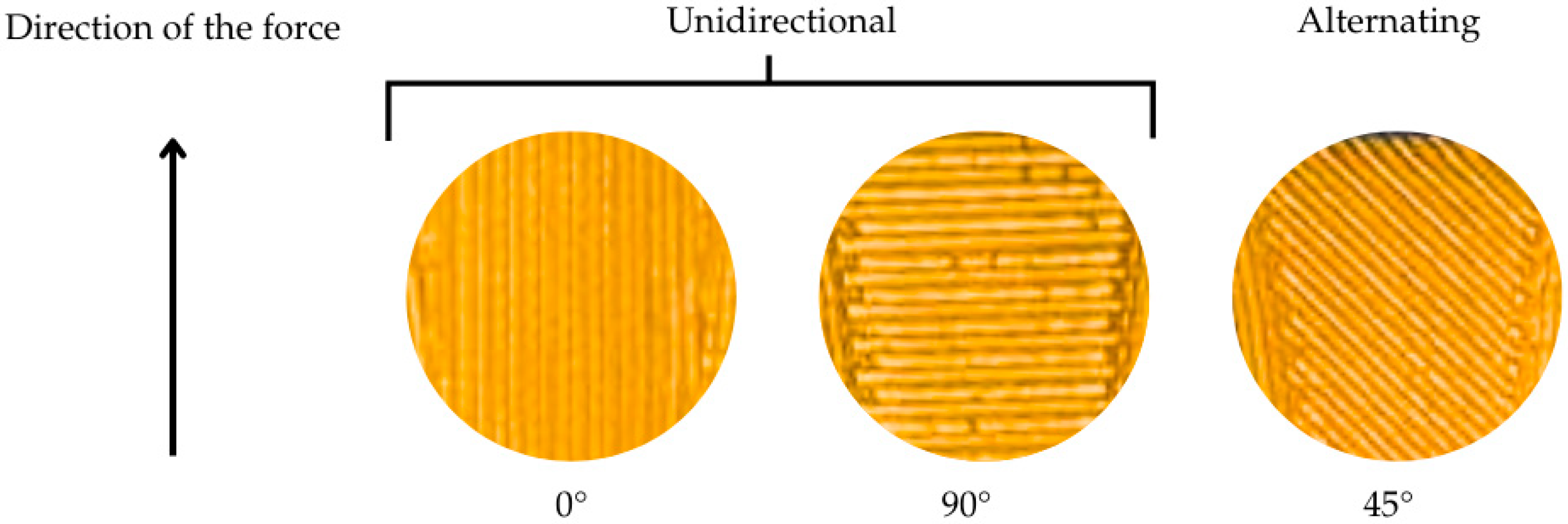
Layer orientation in 3D printing plays a fundamental role in the mechanical properties of the parts, as it determines how the applied forces are distributed during tensile testing. In this study, three-layer orientation configurations were evaluated, each with unique characteristics in relation to the applied stress, as shown in
Figure 1.
Unidirectional (0° y 90°):
At 0° orientation, the printing lines are aligned with the direction of the applied force, maximizing tensile strength due to the direct transfer of load through the material lines.
At 90° orientation, the lines are perpendicular to the applied stress, resulting in the weakest configuration because the force is concentrated at the interlayer joints, where adhesion is less effective.
Crossed (45°):
This orientation presents a crisscross pattern between layers, produced by an alternating +45°/−45° raster orientation between consecutive layers, allowing the applied load to be redistributed through combined filament alignment and interlayer bonding.
Layer orientation is a critical factor influencing the mechanical behavior of FFF-printed parts due to the anisotropic nature of the process. Previous studies have consistently reported that specimens printed with raster lines aligned with the loading direction (0° orientation) exhibit the highest tensile strength, as the applied load is mainly carried by the continuous filament strands rather than by interlayer bonds [
18,
27,
28,
30,
31].
2.4. 3D Printing Equipment
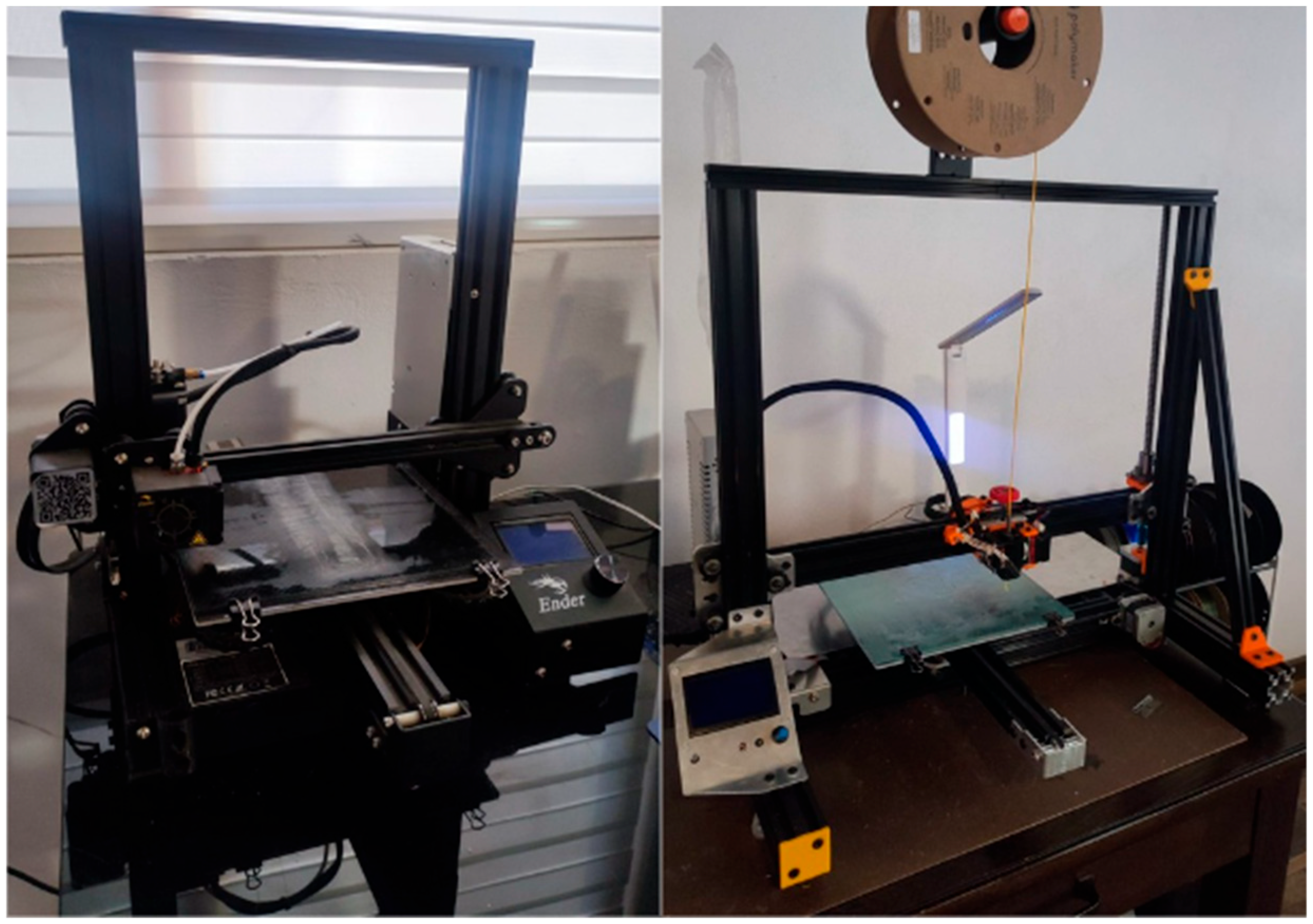
Two 3D printers with distinct characteristics were used: the Ender 3 Pro produced by Shenzhen Creality 3D Technology Co, Ltd. en Shenzhen, China. (left) and the Insol Printer 4produced by Insol- Industrial Solutions in Tijuana, Mexico (right) shown in
Figure 2. The Ender 3 Pro employs a Bowden extrusion system, in which the filament is pushed through a tube toward the hot end, reducing the weight of the print head and allowing higher speeds, but with limitations when working with flexible materials. In contrast, the Insol Printer 4 uses a direct-drive (DD) extrusion system, where the extruder is mounted directly on the hot end, providing greater precision and compatibility with flexible materials, although at the cost of increased head mass, which can affect print quality at higher speeds [
32].
The distinction between direct-drive and Bowden extruders has been widely described in the literature. Wu et al. [
33] explain that locating the feeding mechanism close to the hot end enables more precise control of flexible or composite filaments, whereas Bowden configurations reduce the moving mass of the print head but may introduce extrusion lag, building on these principles.
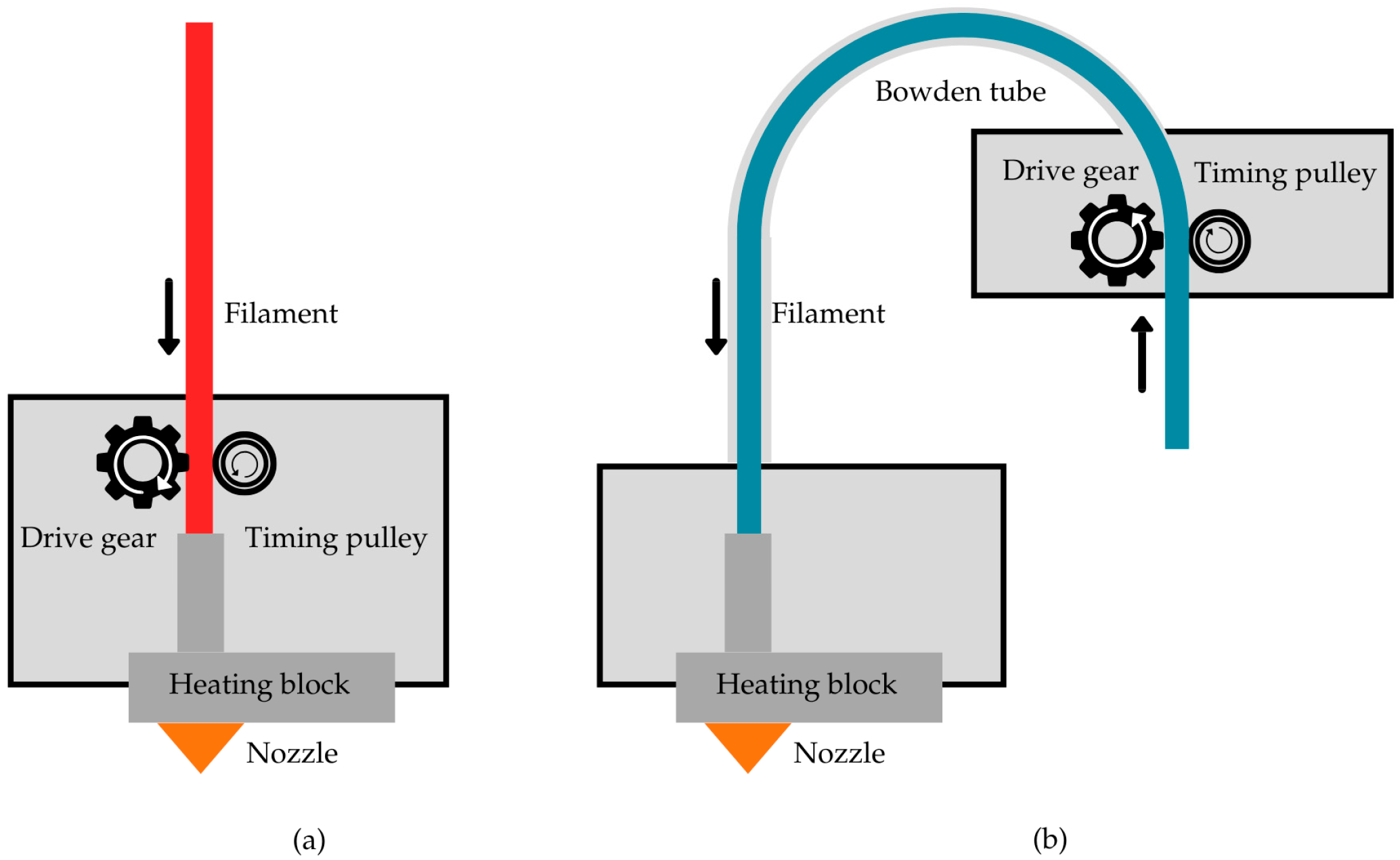
The diagram in
Figure 3a compares two common extrusion configurations in 3D printing: the direct-drive extruder, in which the filament is pushed directly toward the hot end by feed gears located close to the print head. This design allows precise control of material flow and is ideal for working with flexible or composite filaments. On the other hand,
Figure 3b illustrates a Bowden system, in which the filament is guided through a Bowden tube from a feeder motor located on the printer frame. Although the Bowden setup reduces the weight of the print head—enabling faster movements—it may result in less precision during extrusion, especially when processing more flexible materials.
Both printers evaluated in this study operate as open-frame FFF systems (i.e., without an enclosed build chamber). The scope of this work was limited to the comparative mechanical performance of PETG specimens as a function of printer architecture (Bowden vs. direct-drive) and layer orientation under comparable processing conditions. Environmen-tal impact metrics (e.g., VOC/ultrafine particle emissions) were not measured; therefore, no claims are made regarding emission reduction or indoor air exposure. Nevertheless, the literature reports that enclosed and/or filtered FFF systems can mitigate user exposure to emissions, particularly when printing higher-emission polymers such as ABS (including styrene-related VOCs).
A multi-scale characterization mindset—routinely applied in nanoscale property studies—underscores the value of linking process settings to structure and performance across scales, a perspective that also benefits extrusion hardware evaluation in AM [
32].
The Ender 3 Pro and the Insol Printer 4 are both open-frame FFF systems supporting common thermoplastics such as PLA, PETG, and ABS. The Ender 3 Pro employs a Bowden extrusion system, while the Insol Printer 4 uses a direct-drive extruder. Both printers offer comparable nominal printing accuracy (±0.1 mm) and minimum layer height (0.1 mm), but differ in several hardware-related characteristics. The Insol Printer 4 provides a higher maximum nozzle temperature (270 °C versus 250 °C) and an automatic bed leveling system, whereas the Ender 3 Pro relies on manual leveling. Differences are also observed in maximum printing speed and build volume, with the Insol Printer 4 offering slightly higher limits. Despite these distinctions, both systems operate without a build enclosure and use tempered glass heated beds, allowing a controlled comparison of extrusion architecture effects under similar printing conditions.
Table 2 presents the complete set of 3D printing parameters used for manufacturing the PETG specimens. All printing conditions were kept constant throughout the experiments in order to isolate the effect of printing orientation on the mechanical properties.
2.5. Mechanical Testing
To ensure inter-study comparability and reliable stress–strain data, mechanical tests were performed following established standards and tightly controlled instrumentation. Dog-bone geometry, strain rate, and specimen conditioning were selected in accordance with ASTM D638-14 to enable cross-laboratory comparability [
29]. Specimen preparation and handling followed practical guidelines for 3D-printed coupons (e.g., light edge finishing and grip protection) to reduce jaw-induced premature failures [
34]. Tests were conducted on a Shimadzu AGS-X frame that meets verified specifications for load accuracy and crosshead control [
35], and data acquisition/post-processing used Trapezium X modules for stress–strain reduction and compliance correction [
36].
All printed PETG specimens were stored and tested under laboratory ambient conditions (temperature 23 ± 2 °C and relative humidity 45–55%). No additional conditioning or active drying procedure was applied prior to mechanical testing. Tensile tests were per-formed within 24 h after specimen fabrication to minimize aging and moisture absorption effects.
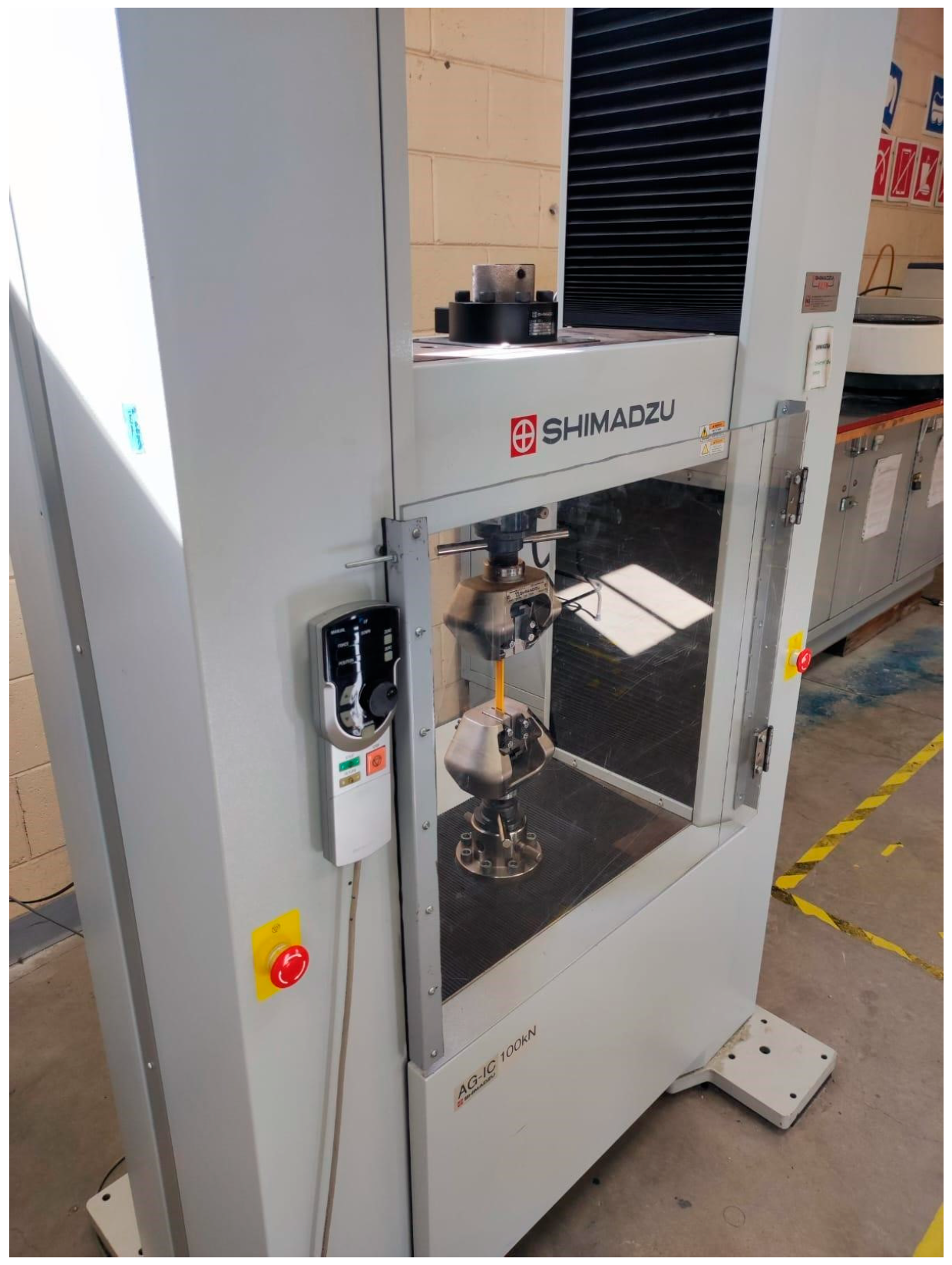
Tensile tests were performed on a Shimadzu AGS-X 100 kN universal testing machine, equipped with Trapezium X software for data analysis (see
Figure 4). Each specimen was subjected to a uniaxial load at a deformation speed of 5 mm/min, and key parameters such as stress–strain behavior, ultimate tensile strength (UTS), and elongation were recorded.
The test was conducted using the Shimadzu AGS-X 100 kN universal testing machine, which is well regarded for its high precision and reliability in mechanical testing [
2]. This model belongs to the AGS-X series, a line of precision universal testers featuring a guaranteed precision range from 1/500 to 1/1 of the nominal load cell capacity and a high-speed data sampling rate of 1 ms (1000 Hz). The system was operated with the Trapezium X software, which enables automated test control and comprehensive stress–strain data collection [
37]. This combination provided accurate determination of maximum stress, elastic modulus, and elongation at fracture.
Technical specifications of the Shimadzu AGS-X 100 kN:
Maximum load capacity: 100 kN
Load cell accuracy: ±0.5% (for 1/500 to 1/1 of capacity)
Crosshead speed (stepless): 0.001 to 800 mm/min (expandable up to 1000 mm/min depending on configuration)
Maximum return speed: ~1100 mm/min
Crosshead position detection: digital, resolution 0.001 mm; positional accuracy ±0.1% or ±0.01 mm, whichever is larger
Sampling rate: up to 1000 Hz
Compliance with standards: EN 10002-2 Grade 0.5 [
38], ISO 7500-1 Class 0.5 [
39], ASTM E4 [
40]
Dimensions (frame): W945 × D725 × H2164 mm
Standard features: auto-tuning control (force/strain), automatic force zeroing/calibration, break detection and return, overload detection, external input/output channels
The material evaluated in this study was PETG (polyethylene terephthalate glycol). Specimen preparation and testing parameters followed the ASTM D638 standard [
41], ensuring consistency and comparability with previous studies. All tensile tests were performed at a crosshead speed of 5 mm/min, in accordance with the guidelines for Type I specimens. The design of the specimens was based on ASTM D638 Type I geometry, and printing orientations were configured according to the full factorial matrix considered in this work.
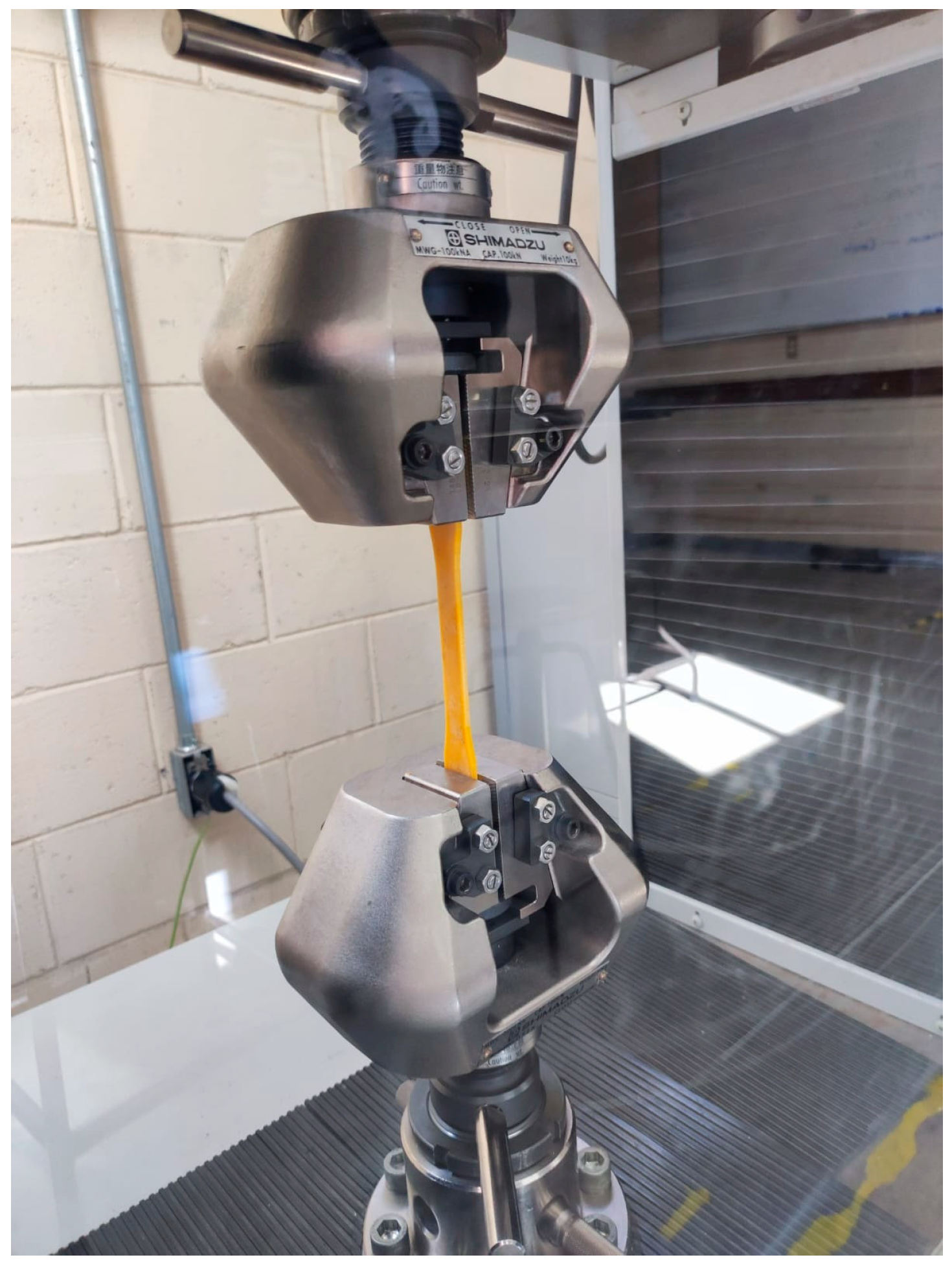
Figure 5 shows a representative PETG specimen mounted on the Shimadzu AGS-X 100 kN universal testing machine using manual non-shift wedge grips, which guaranteed proper alignment and minimized slippage during testing.
2.6. Software Used
The following programs were employed in this study for the design, printing, and statistical analysis of the specimens:
CAD Design: The specimens were designed using SolidWorks 2022, ensuring that dimensions and geometries strictly complied with the ASTM D638 Type I standard.
Slicer: IdeaMaker 5.0.6.8380 software was used to generate the G-code required for 3D printing. This program allowed the configuration of key parameters such as layer height, infill density, and layer orientation.
Statistical analysis: Minitab 19 was used first to generate the randomized factorial design and then to statistically analyze the data.
Tensile testing software: Trapezium X, integrated into the Shimadzu AGS-X testing machine, was used to record and analyze the results of the tensile tests, obtaining parameters such as ultimate tensile strength, elongation, and elastic modulus.
To ensure traceability and repeatability, instrument control, data preprocessing, and post-processing were executed through scripted workflows with versioned configuration files, minimizing operator bias and enabling exact reruns across batches [
42].
To statistically evaluate the influence of printing layer orientation and printer type on the mechanical strength of the specimens, an analysis of variance (ANOVA) was performed to identify not only the statistical significance of the main effects but also their interaction effect on this response variable. These analyses are shown below.
3. Results
3.1. Pilot Test
Before running the main experiment, a pilot test was performed to assess the stability of the printing process and the dimensional consistency of the specimens. For this pilot test, 10 specimens were printed (five per printer), ensuring that the dimensions complied with ASTM D638 Type I specifications.
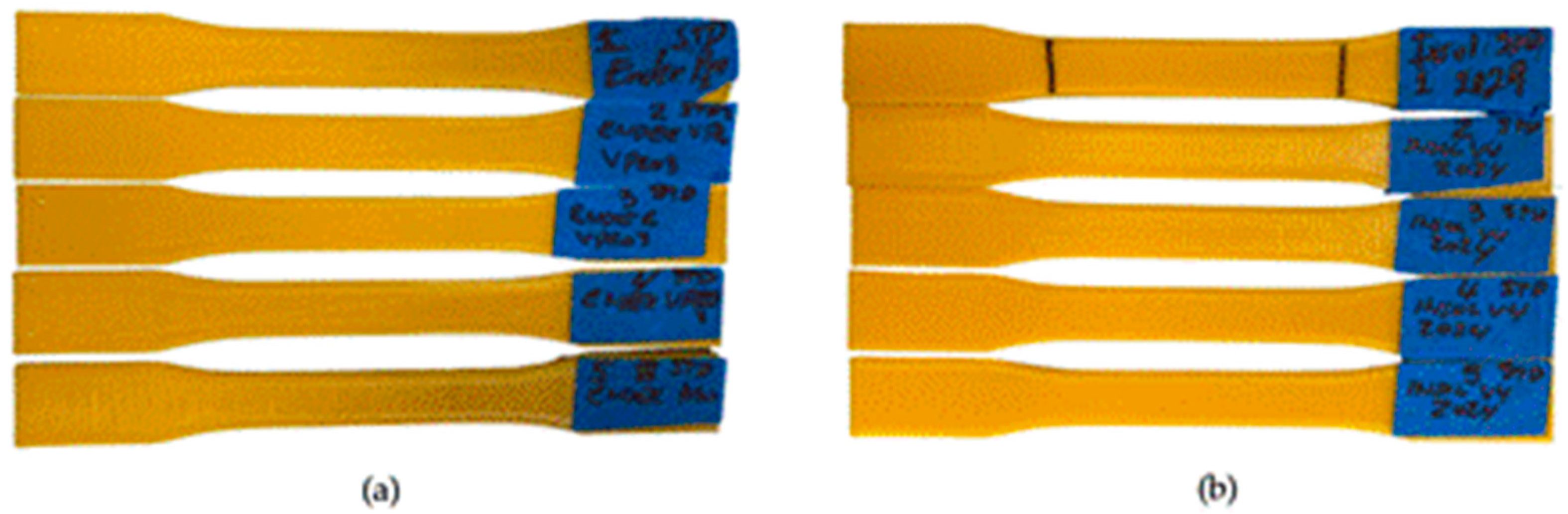
Figure 6 shows the 10 trial specimens before the tensile test. After the visual inspection, the pilot specimens were subjected to tensile testing to quantify their mechanical response under standard printing conditions (STD).
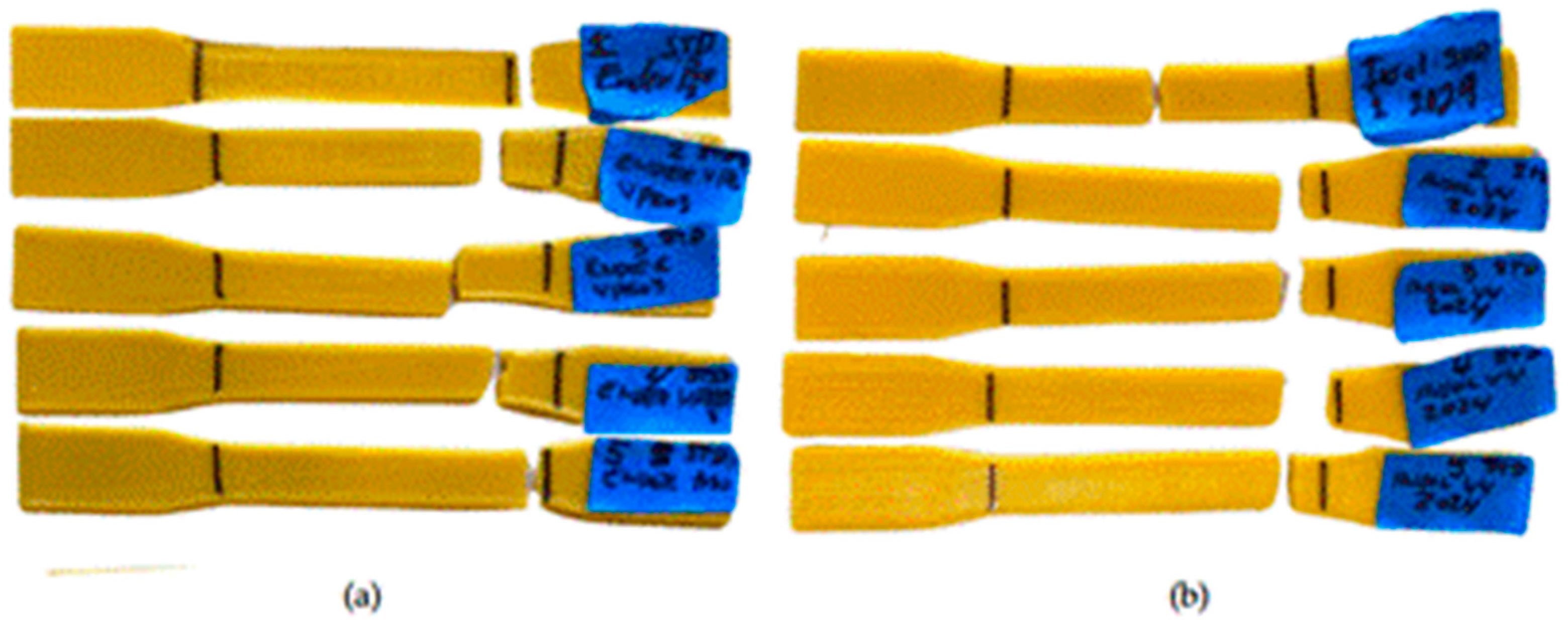
Figure 7 shows the 10 trial specimens after the tensile test, while the resulting dimensional measurements, strains, applied forces, and Ultimate tensile strength (MPa) are summarized in
Table 3.
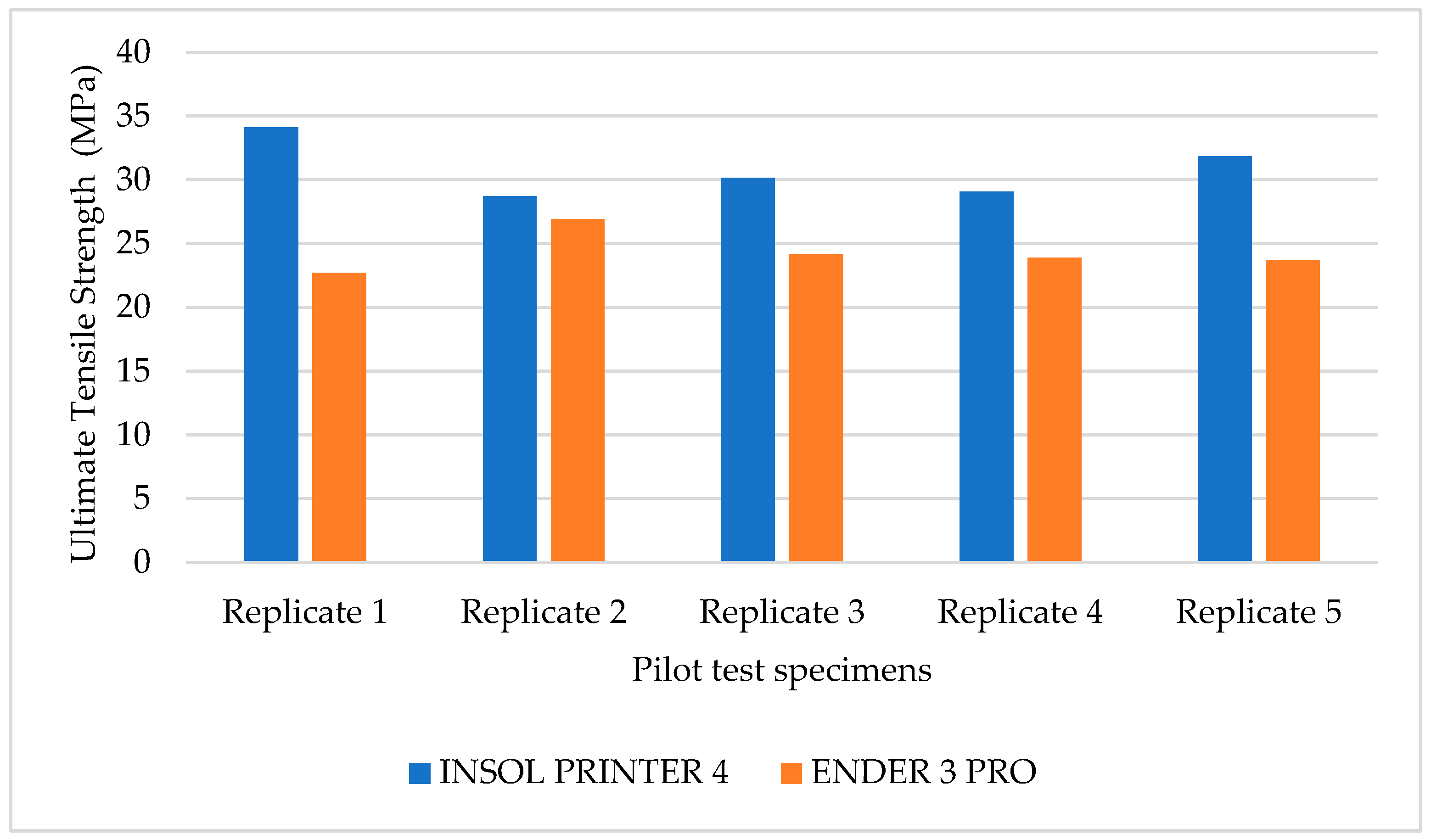
Figure 8 depicts the ultimate tensile strength (UTS) results obtained for the five specimens printed using each printer. As observed, Insol Printer 4 consistently exhibited higher UTS values across all replicates, suggesting improved layer adhesion and extrusion stability associated with its direct-drive extrusion system. In contrast, the Ender 3 Pro showed lower UTS values, which may be attributed to the Bowden extrusion configuration. Based on the confirmed process stability and dimensional consistency observed during the pilot test, the full factorial experimental design was subsequently conducted.
3.2. Main Study
After the pilot test, a full-factorial experimental design was conducted to verify whether the printer type, the layer orientation, or their interaction had a significant effect on the tensile stress. According to the design matrix for a full factorial 2 × 3 design with two replicates, the study focused on printing 12 specimens. These specimens were printed at three layer orientations. Each factorial combination of printer and layer orientation was replicated only twice due to equipment availability constraints. Thus, the 12 experimental runs were executed randomly, as recommended by [
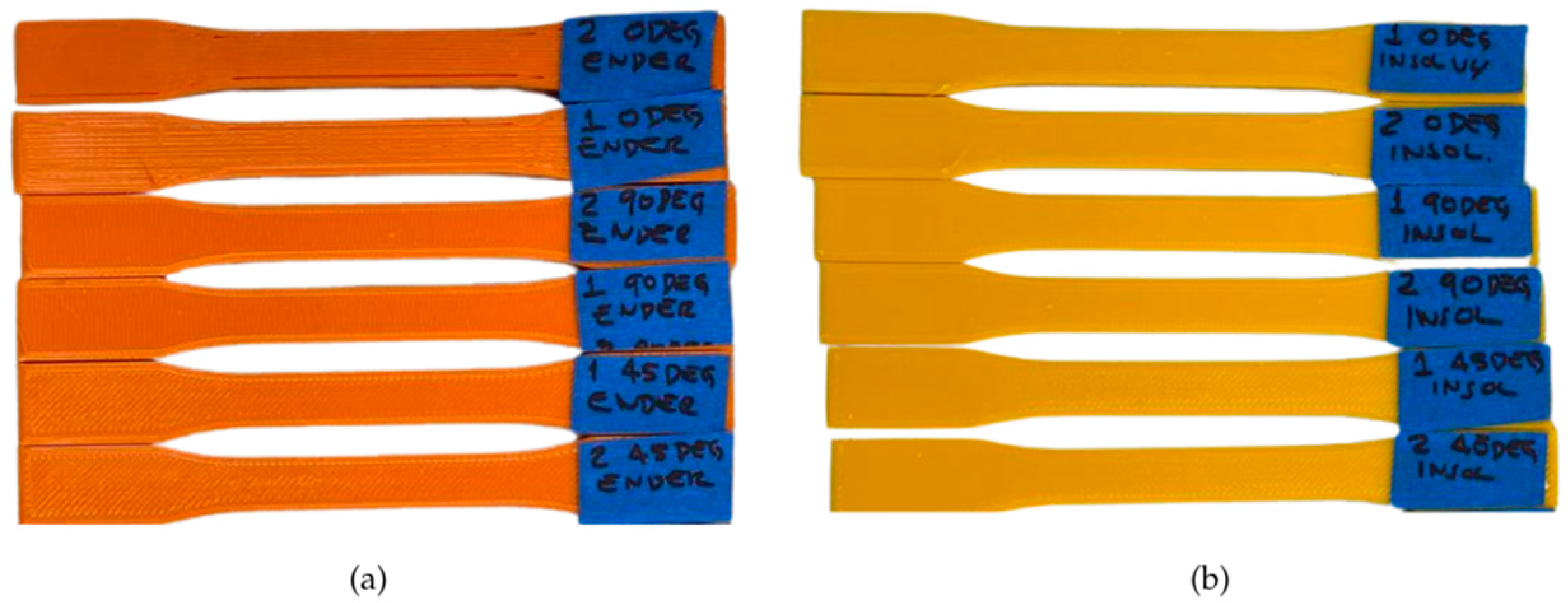
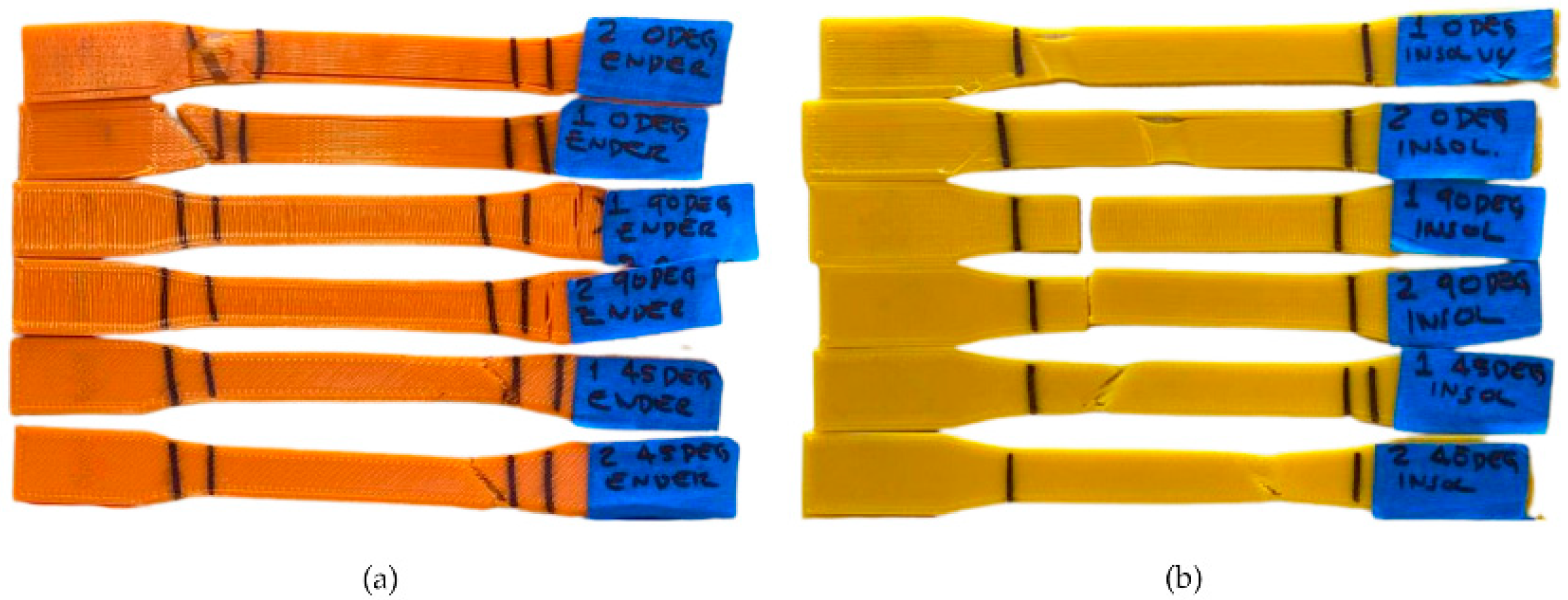
26]. The printed specimens are shown in
Figure 9 and
Figure 10, before and after tensile testing, respectively.
To ensure randomization and minimize bias in the data analysis, the order of the experimental runs was generated using the software Minitab 19. This randomized order included the six factorial combinations between printers and layer orientations with two replicates, and was used to define the manufacturing and testing sequence.
All specimens were produced with 100% infill density and a linear infill pattern, ensuring that the tensile strength results were directly attributable to the evaluated parameters.
3.3. Data Collected
During tensile testing, a set of mechanical response variables was recorded to comprehensively characterize the behavior of the printed specimens under uniaxial loading. The collected data included both global mechanical responses and values associated with the fracture point, as detailed below:
Table 4 and
Table 5 present the detailed results of the tensile strength tests, including specimen dimensions, strain, breaking force, and tensile stress values measured for different layer orientations.
3.4. Ultimate Tensile Strength (UTS) Results
To contextualize the observed orientation-driven trends, we compare our findings with prior reports on PETG/FDM. PETG processed by FDM exhibits property trends dominated by interlayer diffusion and cooling kinetics; prior PETG-specific characterizations report similar sensitivities to build orientation and raster arrangement [
27]. Moreover, independent studies on layer height and thermal treatments corroborate that enhancing inter-bead bonding can increase ultimate tensile strength and stiffness, aligning with the outcomes reported here [
28].
Table 6 presents the ultimate tensile strength for each factorial combination of printers and the layer orientations (0°, 45°, and 90°). These results are taken from
Table 5 and
Table 6, but column 1 now indicates the randomized order in which the tests were performed, as generated by the software Minitab.
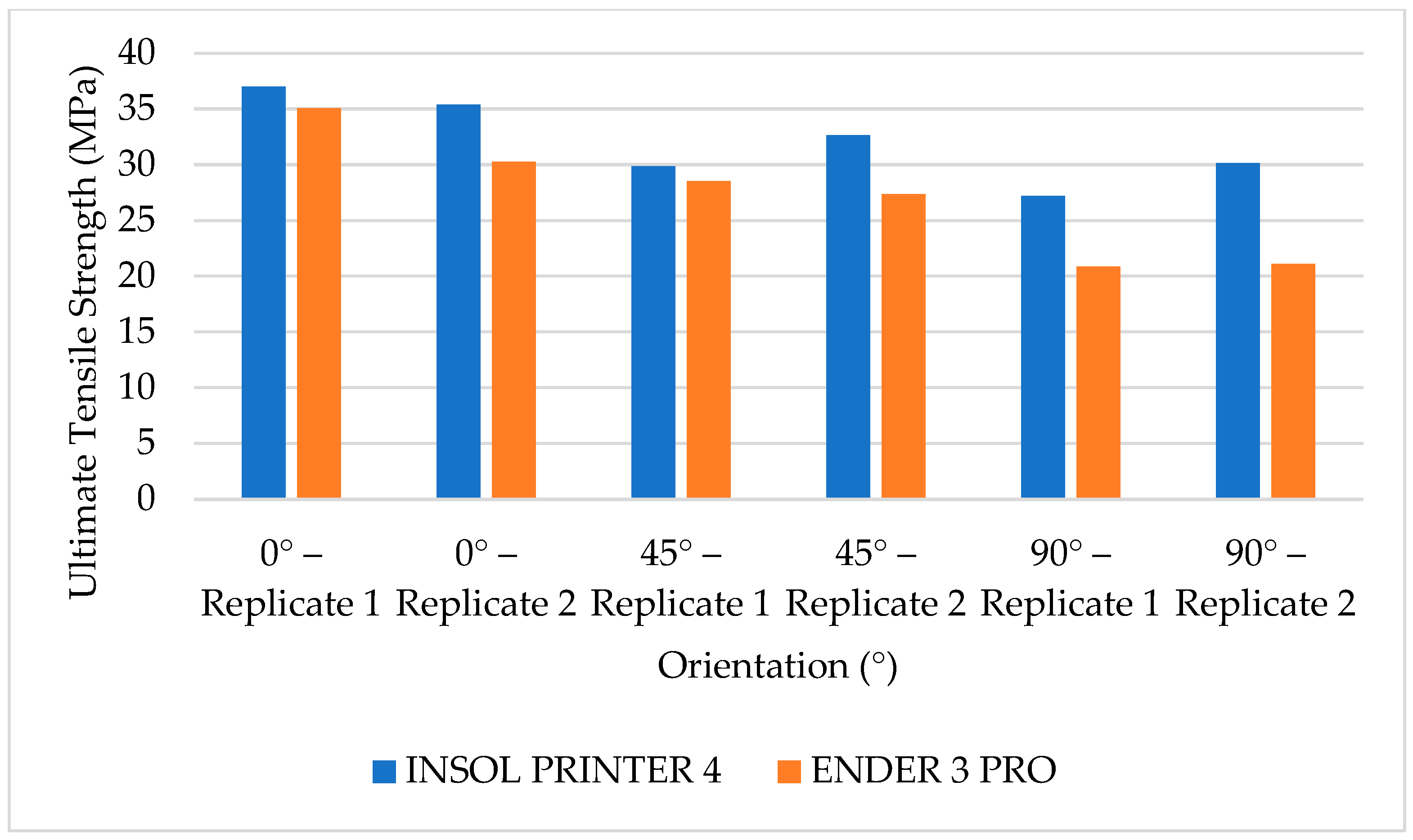
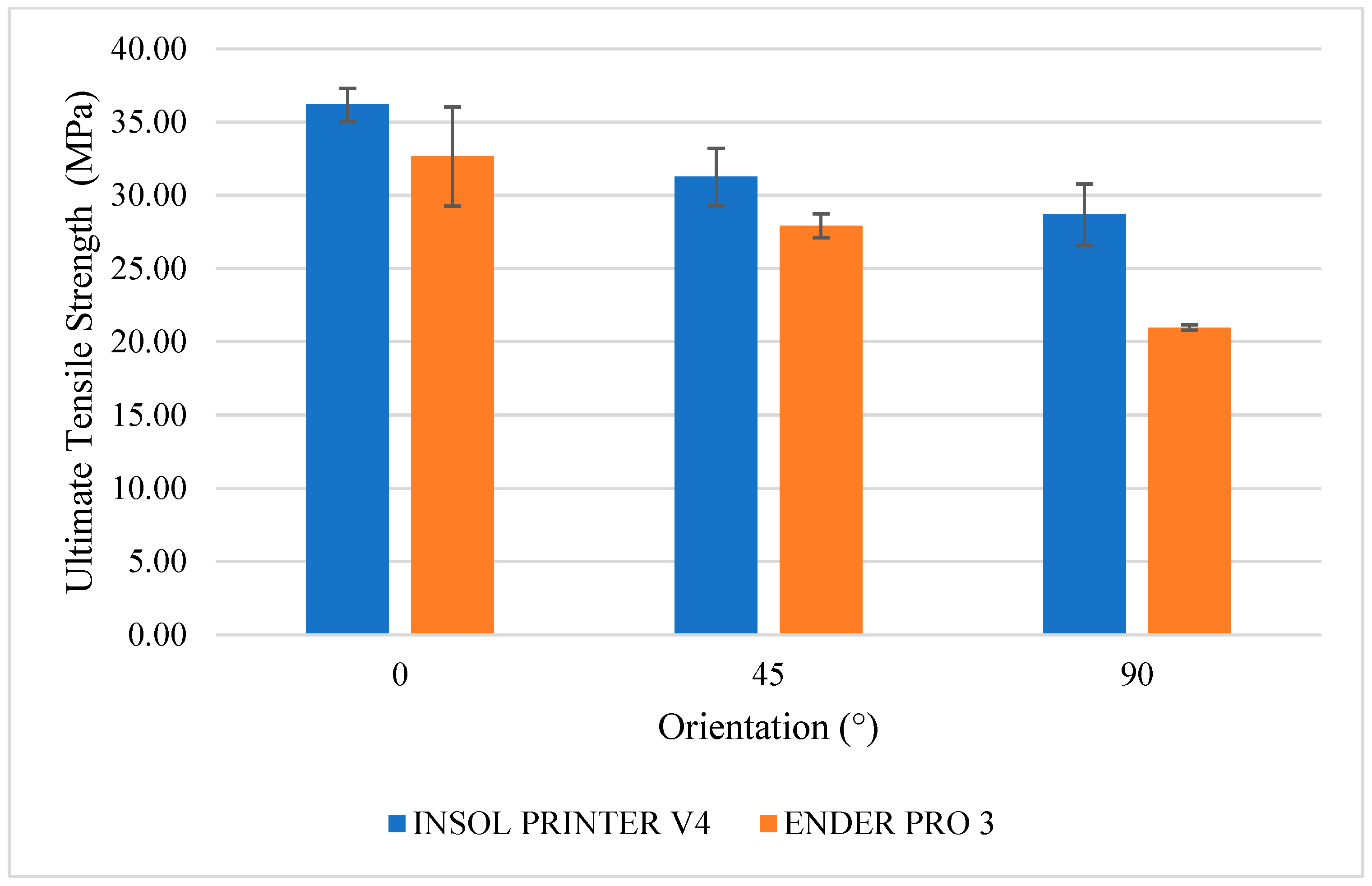
Figure 11 shows differences in ultimate tensile strength (UTS) between the two printers and the three layer orientations. Specimens printed at 0° and 90° exhibited higher UTS values compared to those printed at 45°, which is consistent with previous studies on anisotropy in 3D-printed materials [
3]. Differences between printers were also observed across all orientations. Statistical analysis was subsequently performed to determine whether the effects of printer type and layer orientation on UTS were statistically significant.
3.5. Quantitative Comparison of UTS (% Variation)
To provide explicit quantitative comparisons, percentage increases in ultimate tensile strength (UTS) were calculated as a function of raster orientation and printer architecture. These relative differences are summarized in
Table 7 and
Table 8.
3.6. Young’s Modulus and Strain Results
Table 9 summarizes the tensile properties of PETG specimens as a function of printer architecture and raster orientation. Across both printer configurations, raster orientation was the dominant factor influencing tensile behavior. Specimens printed at 0° exhibited the highest ultimate tensile strength (UTS) and Young’s modulus, reflecting effective load transfer along filament paths aligned with the loading direction. In contrast, 90° specimens showed a pronounced reduction in tensile strength and stiffness, consistent with interlayer-dominated failure mechanisms. The 45° orientation resulted in intermediate mechanical performance, indicating a mixed contribution of filament alignment and interlayer bonding.
When comparing printer architectures under matched printing parameters, differences in tensile response were observed. For the 0° orientation, the Ender 3 Pro (Bowden extrusion) exhibited higher average UTS than the Insol Printer 4 (direct-drive extrusion), whereas the direct-drive system showed comparable or higher stiffness values. At 45° and 90°, increased variability was observed for both printers, particularly in UTS, highlighting the sensitivity of off-axis orientations to extrusion stability and interlayer adhesion. Although these differences were identified as first-order trends rather than statistically predictive outcomes, the results indicate that printer architecture may introduce secondary variability in mechanical performance when raster orientation and process parameters are held constant.
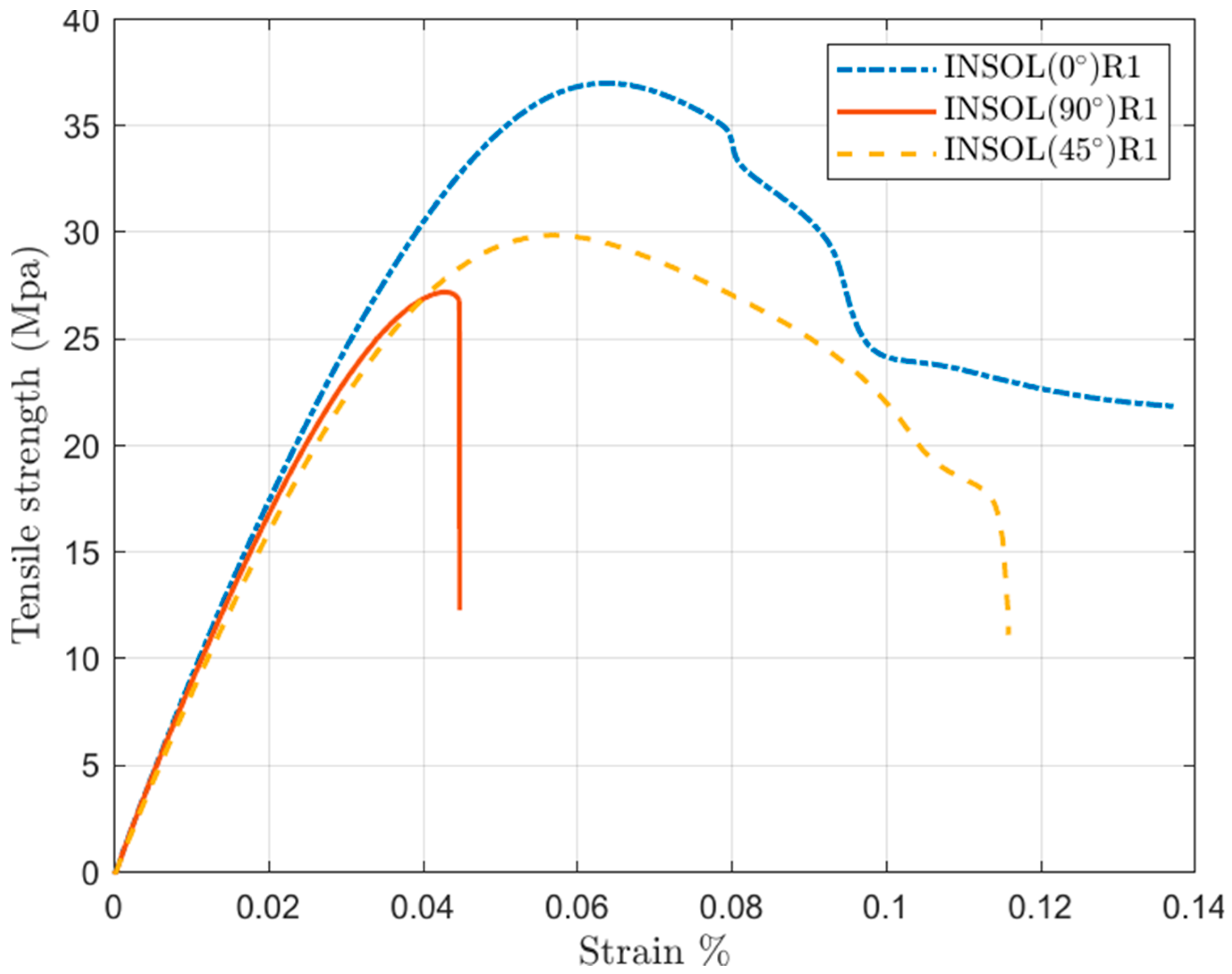
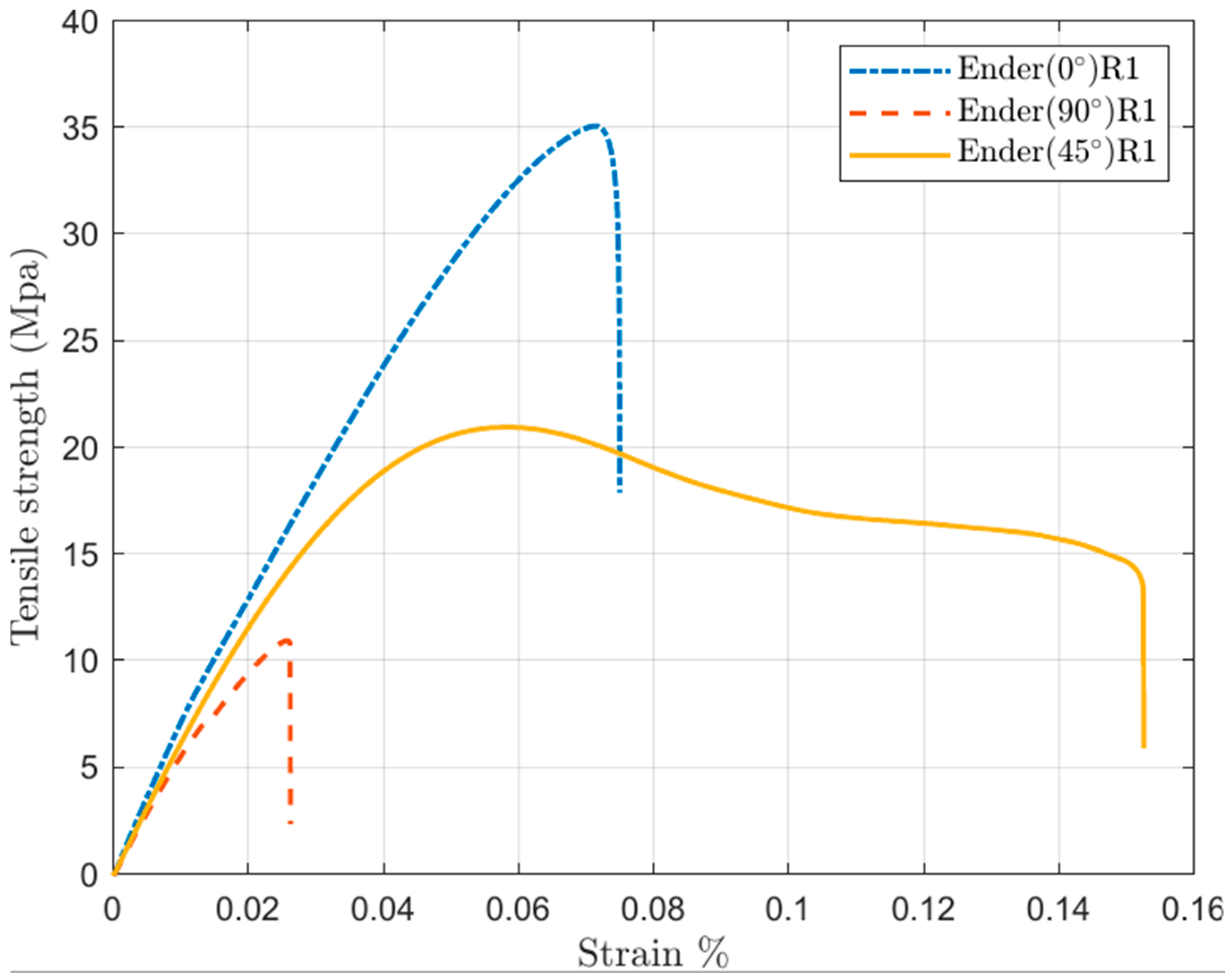
3.7. Stress–Strain Behavior
The stress–strain results confirm that layer orientation is the dominant factor responsible of the tensile response for the printed PETG specimens, while printer type also contributes significantly to the observed mechanical behavior.
Figure 12 and
Figure 13 present the stress–strain curves obtained for specimens printed at 0°, 45°, and 90° using the Insol Printer 4 and the Ender 3 Pro, respectively.
For both printers, specimens printed at 0° exhibited the highest tensile strength, reflecting favorable load alignment with the filament deposition direction. Specimensprinted at 45° showed intermediate mechanical behavior, characterized by reduced peak stress and altered post-yield response. In contrast, specimens printed at 90°consistently recorded the lowest tensile strength values, regardless of the printer used, indicating a dominant influence of interlayer bonding on failure. The observed trends are consistent across both printers, highlighting the primary role of raster orientation in determining tensile performance.
The complete stress–strain curves for all tested specimens are provided in the
Supplementary Materials to ensure full transparency and allow independent inspection of the mechanical response.
3.8. Dimensional Variability and Regression Analysis
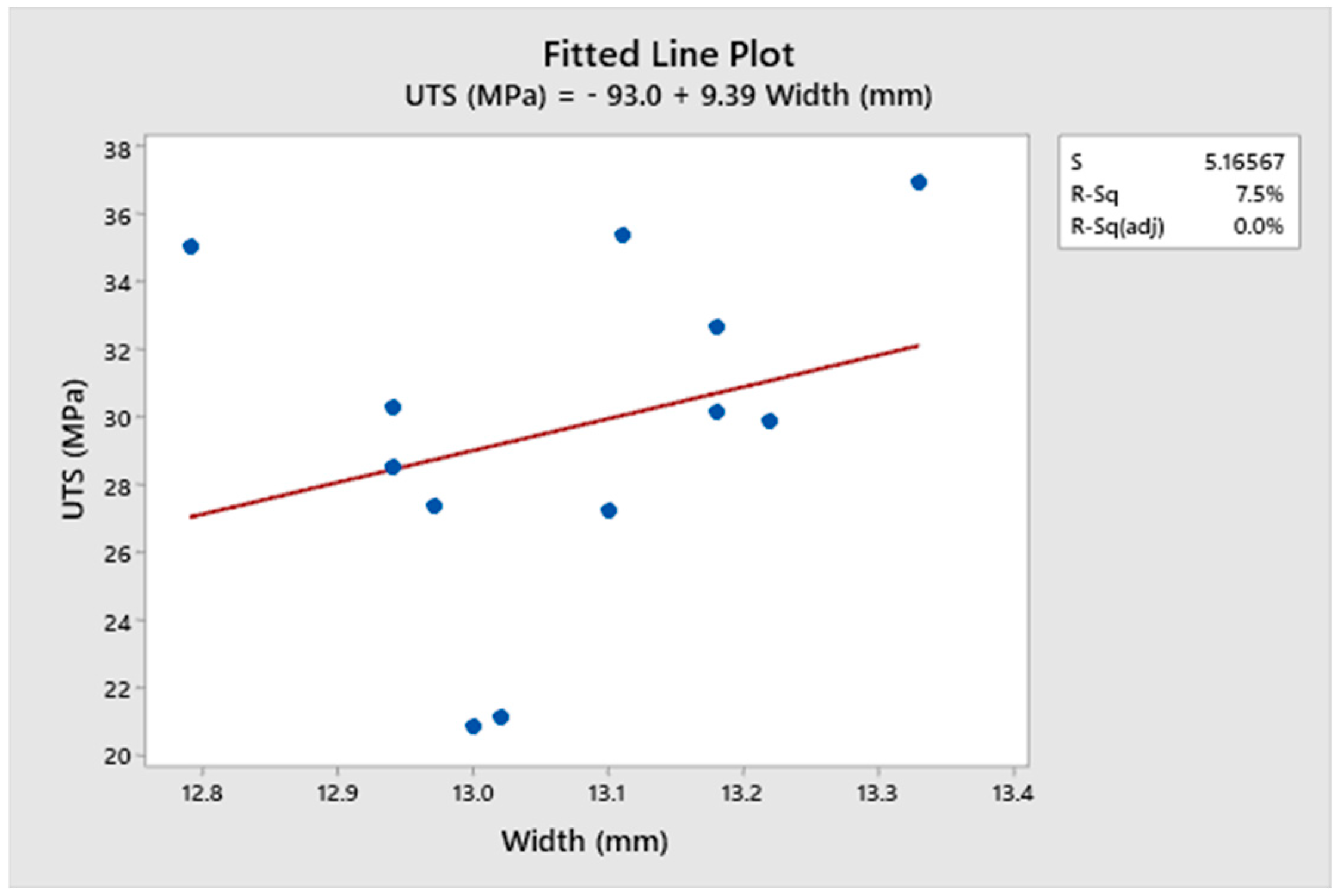
To evaluate whether small dimensional variations in specimen geometry contributed to the scatter observed in the tensile strength results. Linear regression analyses were performed between ultimate tensile strength (UTS) and the measured specimen width and thickness (
Figure 14 and
Figure 15).
As shown in
Figure 14, specimen width exhibited a weak and statistically insignificant relationship with UTS (R
2 = 7.52%,
p = 0.388), indicating a negligible influence within the measured width range (12.8–13.3 mm). As shown in
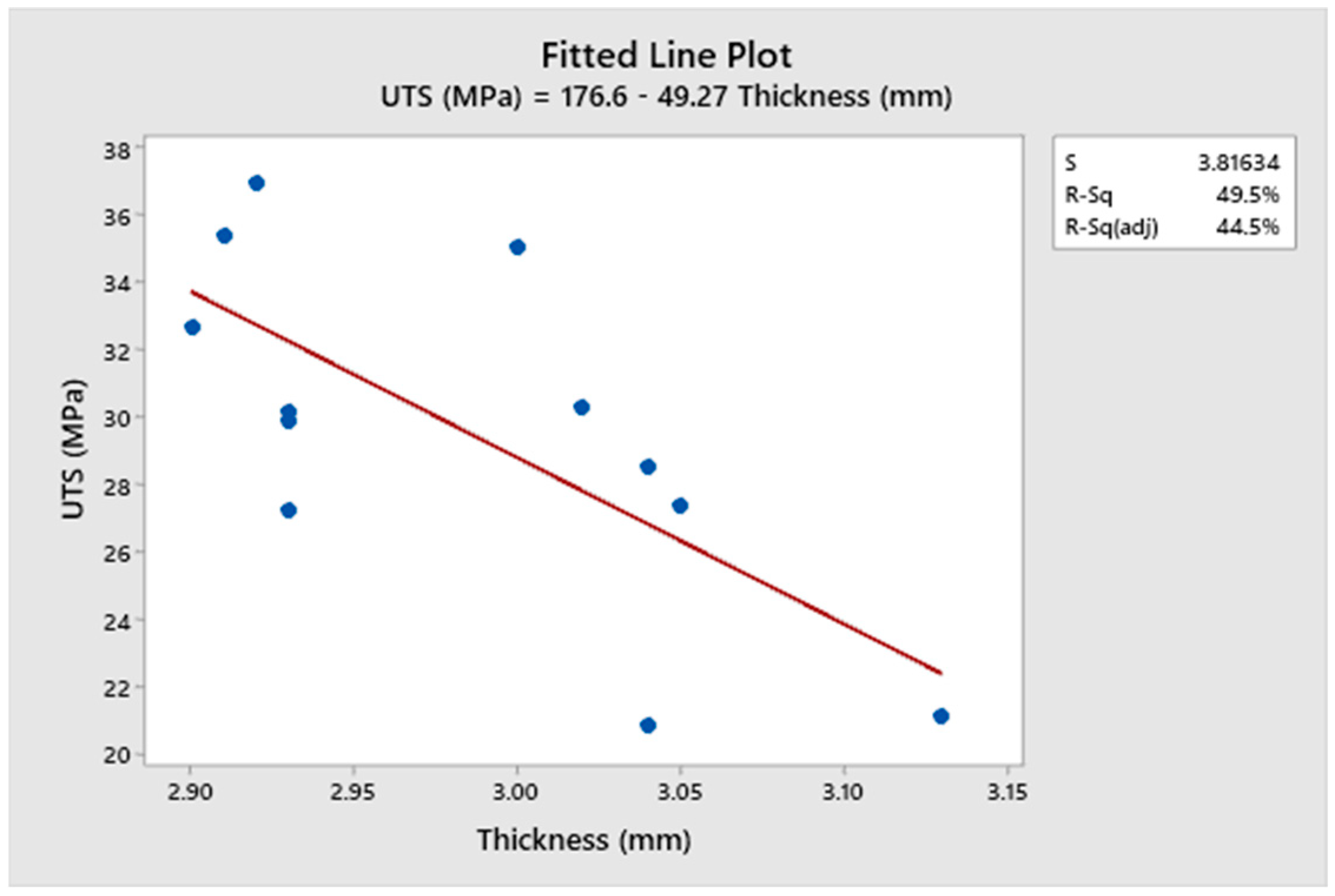
Figure 15, specimen thickness showed a moderate negative correlation with UTS (R
2 = 49.52%,
p = 0.011). However, this result must be interpreted with caution, as thickness was not independently controlled in the experimental design and varied within a narrow range (2.9–3.1 mm). Moreover, thickness is partially coupled with printer type and raster orientation.
Therefore, while statistical associations were observed for thickness within this dataset, dimensional variability alone cannot explain the tensile strength trends, which are primarily governed by process-related factors addressed in the subsequent ANOVA analysis.
3.9. Analysis of Variance (ANOVA)
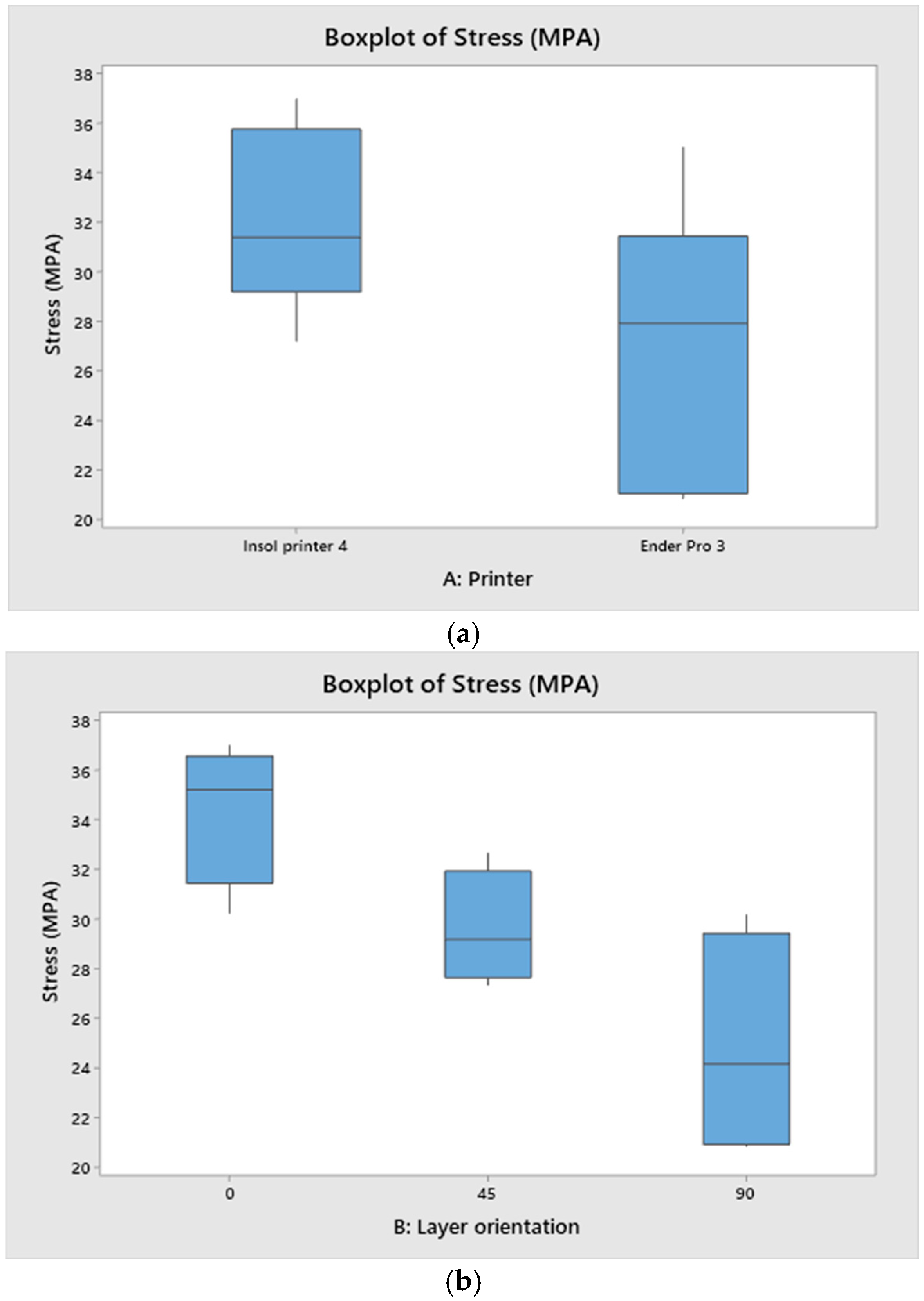
Before conducting the analysis of variance, descriptive statistics and graphical tools were used to provide an initial overview of the tensile strength response as a function of printer type and layer orientation. Boxplots were generated to visualize data dispersion and central tendency for each factor level.
Figure 16 presents comparative boxplots of tensile strength grouped by printer type and layer orientation. The boxplots indicate higher median tensile strength values for specimens manufactured with the Insol Printer 4 compared to those printed with the Ender Pro 3. In addition, a consistent reduction in tensile strength is observed as the layer orientation changes from 0° to 45° and 90°, for both printers.
The ANOVA results are summarized in
Table 10. Both printer type and layer orientation exhibited statistically significant main effects on tensile strength (
p < 0.01). In contrast, the interaction between printer type and layer orientation was not statistically significant (
p = 0.263). However, due to the limited degrees of freedom associated with the error term (DF = 6), the statistical power to detect interaction effects is restricted.
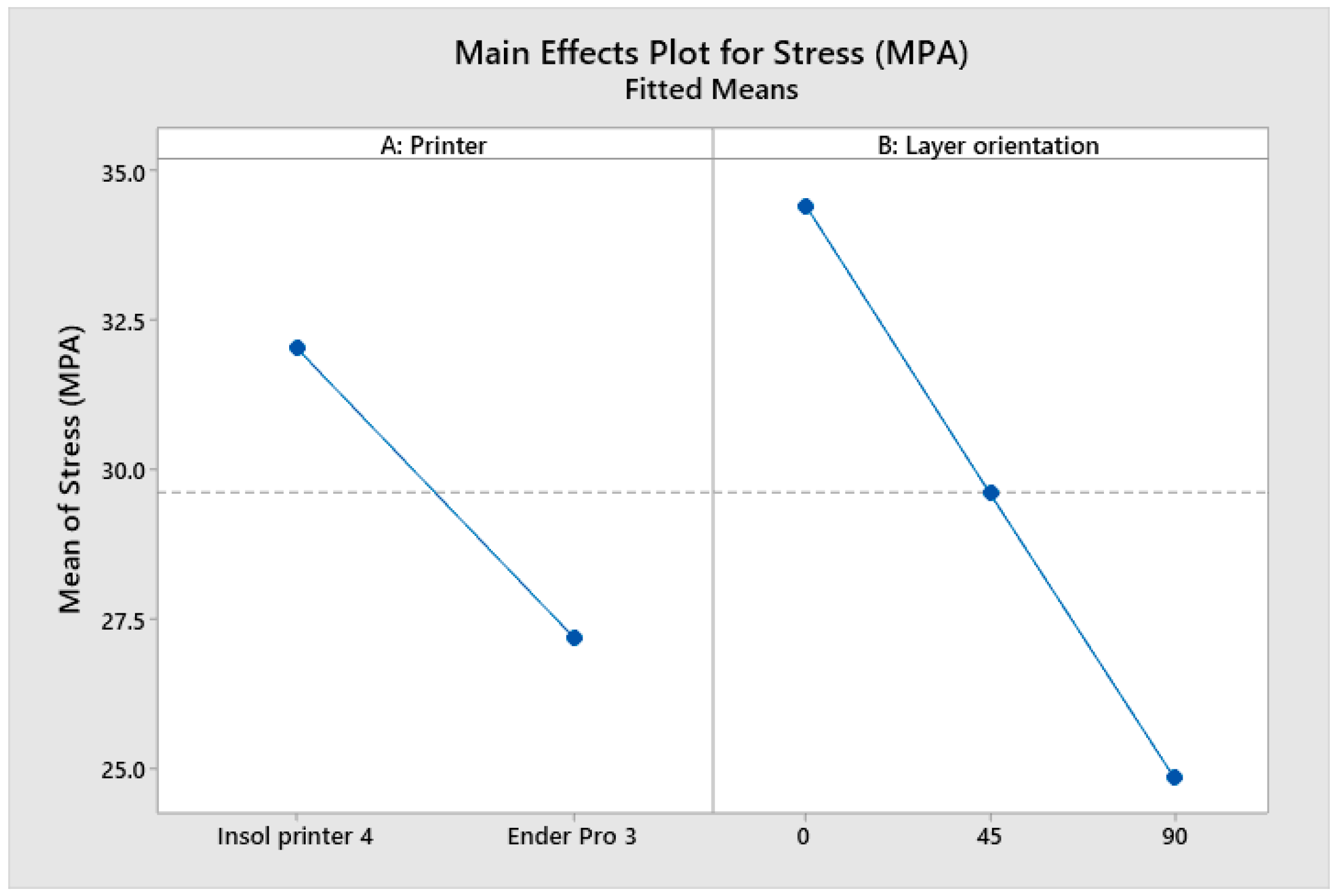
The main effects plot shows that both printer type and layer orientation have a clear influence on tensile stress. Specimens printed with the Insol Printer 4 exhibited higher mean stress values than those printed with the Ender 3 Pro. Regarding layer orientation, the tensile strength decreased progressively as the angle increased: specimens printed at 0° showed the highest strength, those at 45° displayed intermediate values, and those at 90° recorded the lowest strength (see
Figure 17).
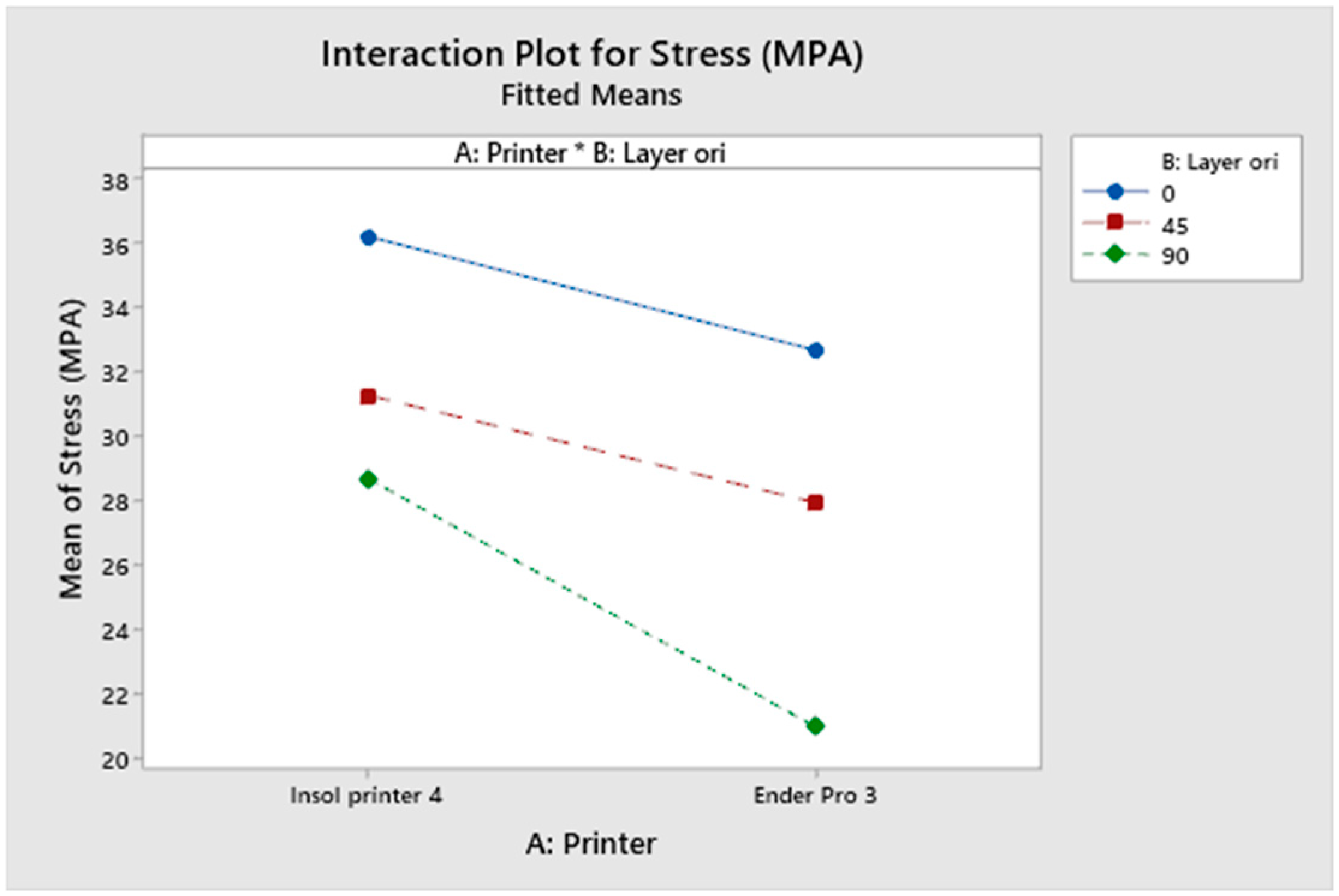
In the interaction plot, the lines corresponding to the layer orientation angles exhibit approximately parallel trends across both printers, indicating the absence of a strong interaction effect (see
Figure 18). This suggests that the influence of layer orientation on tensile strength is consistent across printers, which corresponds with the non-significant interaction term from the ANOVA analysis (
p = 0.263).
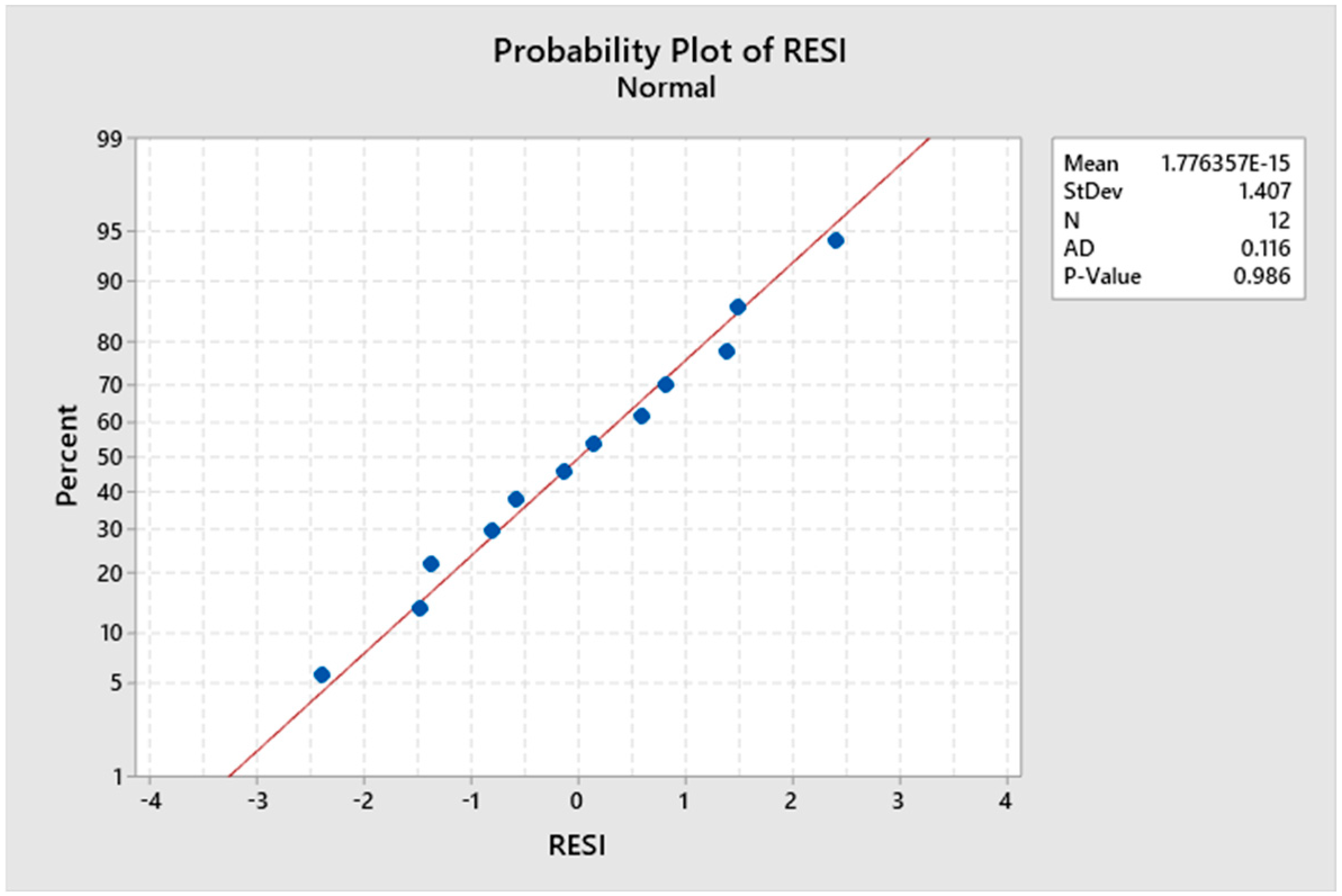
To ensure the validity of the ANOVA results, the model assumptions were evaluated by the examination of residuals, as suggested by [
32]. The assumptions were verified using plots and tests in Minitab. Thus, the normality assumption was examined using the normal probability plot in
Figure 19. The residuals closely follow the reference line, and no significant deviations from normality were observed. Moreover, the Anderson-Darlin (AD) test for normality verifies this assumption (
p = 0.986).
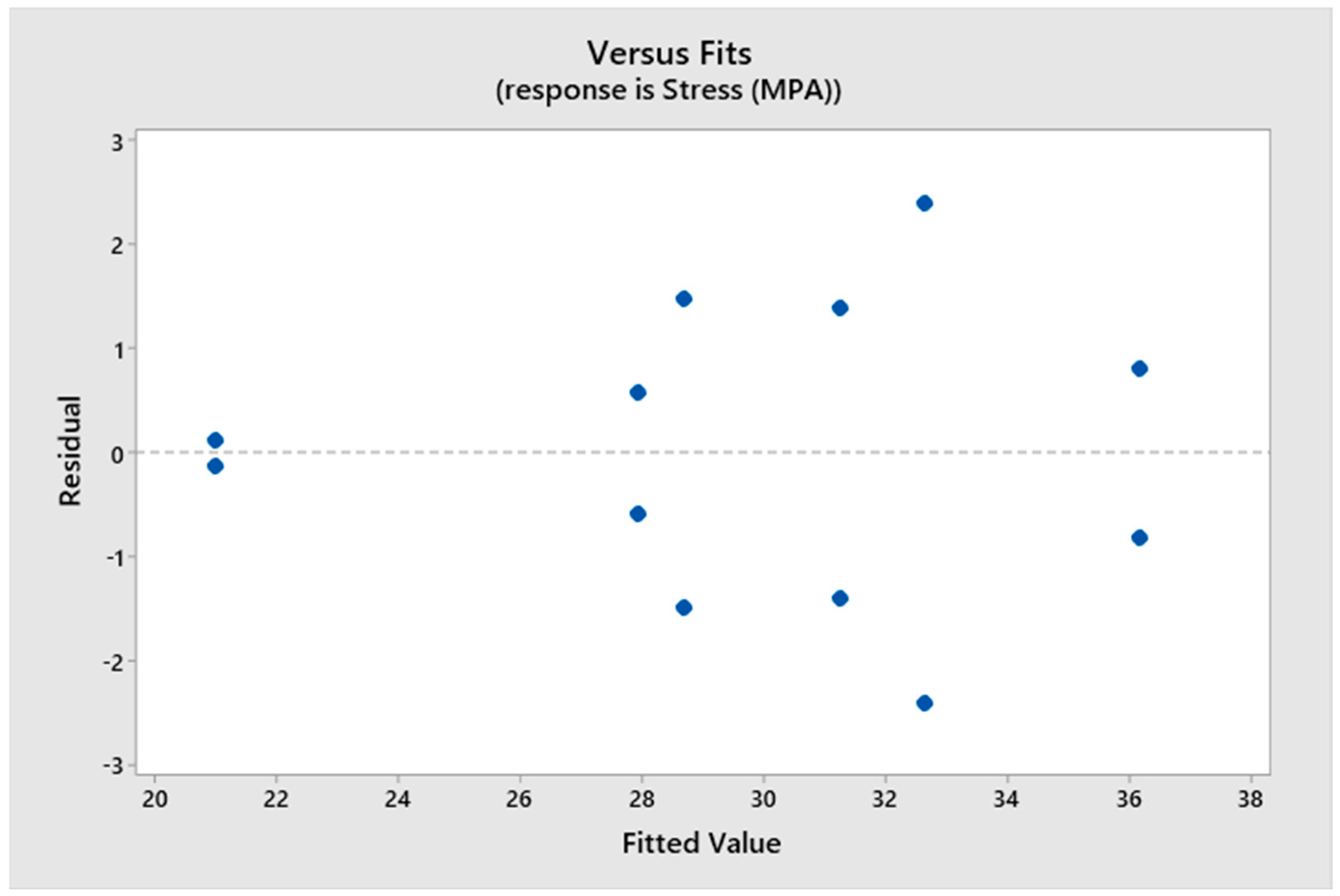
Figure 20 shows the residuals-versus-fitted-values plot, where concern arises because an apparent nonconstant variance pattern is evident, with variance increasing in the middle of the plot. However, Bartlett’s test supported the null hypothesis of equal variances (
p = 0.507), indicating that the assumption of homoscedasticity is satisfied.
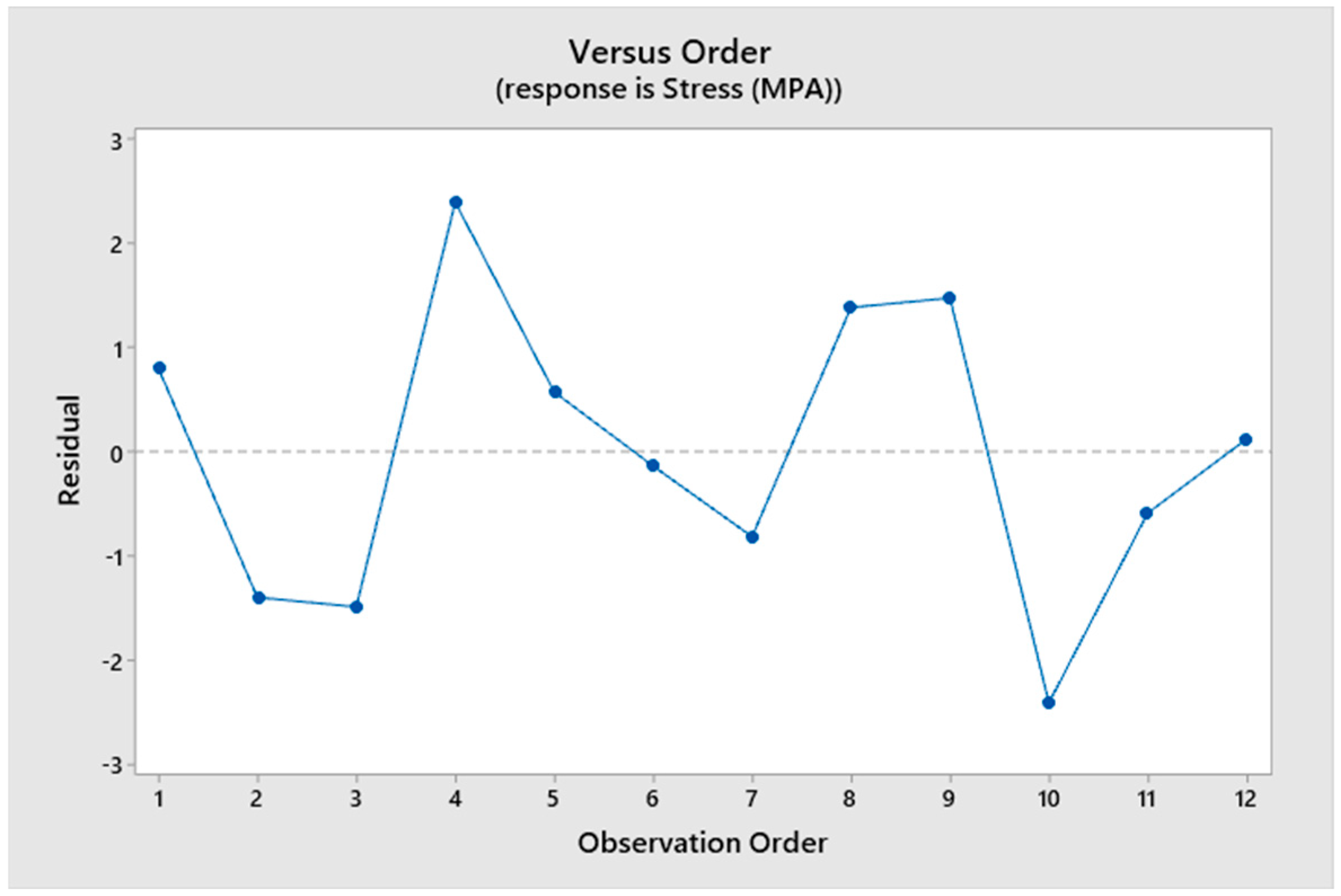
Finally, the independence of the residuals was assessed using a plot of residuals versus observation order (
Figure 21). In this plot, the absence of systematic trends, cycles, or correlations in the residuals in time order of data collection supports the assumption of independence of the observations.
Thus, with the residual diagnostics confirming that the assumptions of normality, homoscedasticity, and independence required for the ANOVA model are reasonably satisfied, the conclusions are considered reliable and statistically valid.
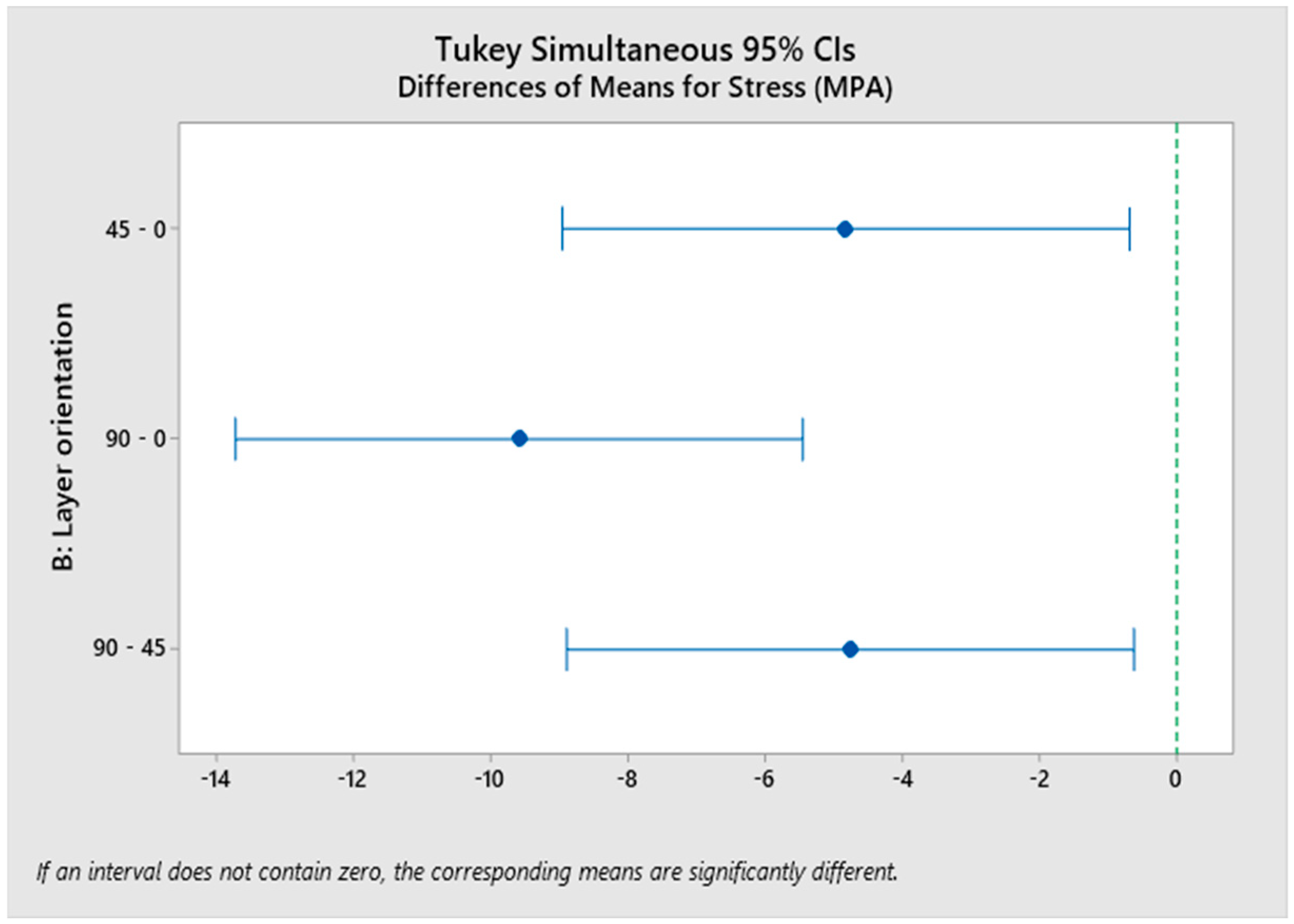
Once the ANOVA test showed a significant effect of layer orientation angle, a post hoc multiple-comparison test was conducted to identify which angle means for tensile strength were statistically different, comparing the three angles tested.
Figure 22 depicts this comparison using Tukey’s test in the statistical software Minitab 19. The result is consistent with the visual analysis in the box plot and the factorial plot for this factor, finding significant differences in stress tensile associated with the angle of layer orientation, with the average at 0 degrees statistically exceeding those at 45 and 90 degrees.
Table 11 reports the mean tensile strength values and associated standard deviations for each printer–orientation combination, while
Figure 23 visualizes these results using mean values with error bars corresponding to one standard deviation. These representations facilitate comparison of central tendency and variability across experimental conditions and support the trends identified through the ANOVA.
4. Discussion
The regression analysis performed on specimen thickness indicated a weak and statistically insignificant relationship with tensile strength, accounting for only 9.46% of the observed variability. This result is consistent with previous studies [
7,
12,
31], which report that small geometric deviations typically play a secondary role compared to dominant process parameters such as raster orientation, infill density, and layer height. Although minor variations in specimen thickness (2.90–3.13 mm) were observed, these deviations fall within expected dimensional tolerances for material extrusion processes and are unlikely to independently govern mechanical performance.
The observed thickness variability likely reflects cumulative effects of printer calibration, extrusion stability, and thermal history during layer deposition, as reported in [
5]. Similar studies on compressive and tensile behavior have shown that internal filament arrangement, interlayer bonding quality, and load alignment strongly influence stress transfer mechanisms, cautioning against attributing strength variations solely to minor thickness differences [
31,
43]. Together, these findings support the interpretation that specimen thickness plays a secondary role in tensile performance when compared to layer orientation-dominated failure mechanisms, particularly in fused filament fabrication processes.
The results of this study partially agree with previously reported findings in the literature. While the dominant influence of raster orientation on tensile behavior observed here aligns with well-established load transfer mechanisms in FFF, the present results extend this understanding by demonstrating how these orientation-dependent trends are modulated by printer extrusion architecture under matched processing conditions. Specimens printed at 0°, where filaments are aligned with the loading direction, exhibited the highest tensile strength and stiffness, while 90° orientations showed pronounced reductions due to interlayer-dominated failure. These orientation-dependent trends are consistent with previously reported findings on PETG specimens, which highlight the significant influence of printing orientation on tensile behavior in fused filament fabrication processes [
18].
From a quantitative perspective, the ultimate tensile strength (UTS) values obtained in this study are consistent with ranges reported in the literature for PETG processed by fused filament fabrication. Previous studies on FFF-printed PETG report UTS values typically ranging from approximately 30 to 40 MPa for specimens printed with raster orientations aligned with the loading direction, while lower values—commonly between 20 and 30 MPa—are reported for inclined or transverse orientations, depending on processing conditions and printer configuration [
5,
7,
10,
11,
18,
26,
44,
45]. The UTS values measured in the present work fall within these reported ranges, supporting the validity of the experimental results and indicating that the observed differences are quantitative in magnitude rather than indicative of atypical mechanical behavior. This comparison confirms that the measured values are representative of typical PETG tensile behavior and that the observed differences reflect relative trends rather than anomalous material performance.
However, partial disagreement arises not in the orientation-dependent trends themselves, but in their magnitude when comparing results obtained from different printing platforms. While previous studies often report similar orientation trends across different FFF systems, the present results show consistently higher tensile strength values for specimens printed with the Insol Printer 4 compared to the Ender 3 Pro under nominally identical processing parameters. This discrepancy suggests that printer-specific factors—such as extrusion architecture, filament feeding mechanisms, and machine kinematics—can influence interlayer bonding efficiency and mechanical consistency beyond what is typically captured by process parameters alone.
The primary contribution of this study lies in demonstrating the role of extrusion system architecture as a relevant system-level factor affecting tensile performance and experimental reproducibility. Across all orientations, specimens printed with the Insol Printer 4 exhibited higher tensile strength than those produced with the Ender 3 Pro. A plausible contributing factor may be associated with differences in extrusion system architecture: the direct-drive system employed by the Insol Printer 4 may promote more stable filament feeding and deposition than the Bowden configuration used in the Ender 3 Pro. However, this interpretation is based on mechanical response alone. No microstructural analysis, porosity quantification, or real-time extrusion diagnostics were performed; therefore, claims regarding enhanced interlayer cohesion should be regarded as mechanistic hypotheses rather than experimentally verified causes.
Consequently, printer-dependent differences should be interpreted as comparative trends that may partially reflect uncontrolled machine-specific variables rather than definitive indicators of intrinsic extrusion superiority.
Several sources of uncertainty must be acknowledged when interpreting these results. Printing was conducted in an open-frame environment under ambient laboratory conditions, without active control of temperature or humidity. PETG is sensitive to moisture uptake and thermal history, and such factors may influence extrusion behavior and interlayer bonding. In addition, filament material characterization (e.g., moisture content, thermal properties, or batch variability) was not performed, and the limited number of specimens per condition restricts statistical power and generalizability.
From an application-oriented perspective, the results support conservative design guidance rather than broad prescriptions. Aligning filament paths with primary load directions remains the most effective strategy for maximizing tensile performance in PETG components. Printer-dependent effects appear to introduce secondary variability that may be relevant in applications requiring improved mechanical consistency; however, such effects should be validated for each specific printer–material–parameter combination.
Although no direct quantitative measurements of extrusion stability, flow rate fluctuations, or thermal uniformity were performed, the higher tensile strength observed for specimens printed with the direct-drive system is consistent with previous studies reporting improved filament control and reduced extrusion lag in such configurations. Therefore, the improved mechanical performance is interpreted as an indirect indicator of enhanced interlayer bonding rather than as direct experimental evidence of increased layer cohesion.
The primary contribution of this study lies in demonstrating the role of extrusion system architecture as a relevant system-level factor affecting tensile performance and experimental reproducibility.
5. Conclusions
This study investigated the combined influence of printer architecture and raster orientation on the tensile behavior of PETG specimens manufactured by fused filament fabrication using ASTM D638 Type I geometry and controlled processing conditions. While the dominant role of raster orientation on tensile strength is well established in the literature, the present work contributes additional insight by systematically examining how printer extrusion architecture acts as a system-level variable that modulates orientation-dependent tensile behavior under matched printing parameters. To this end, analysis of variance (ANOVA) was employed to statistically determine whether printer architecture, raster orientation, and their interaction exert a significant influence on tensile strength, allowing systematic effects to be distinguished from experimental variability.
The results confirm that raster orientation remains the primary factor governing tensile performance. Specimens printed at 0°, where filament paths are aligned with the loading direction, exhibited the highest tensile strength, whereas 90° orientations showed markedly reduced performance due to failure mechanisms dominated by interlayer bonding. These findings are consistent with prior studies and reinforce the critical importance of filament alignment in load-bearing FFF applications.
Beyond orientation effects, this study provides exploratory evidence that the mechanical properties of FFF-printed PETG are not necessarily transferable between printing platforms with different extrusion architectures, even when nominal printing parameters are held constant. Differences observed between the Bowden and direct-drive systems suggest that extrusion configuration may influence filament deposition quality and interlayer load transfer. Although the underlying mechanisms were not directly measured, the controlled factorial design allowed these effects to be isolated as first-order trends rather than anecdotal observations.
The conclusions of this work must be interpreted within the defined experimental scope. The study was limited to a single polymer (PETG), a single infill pattern and density (100% rectilinear), a fixed layer height (0.3 mm), two desktop open-frame printers, and uniaxial tensile loading, with two replicates per experimental condition. As a result, the findings are not intended to be generalized to other materials, infill strategies, layer heights, printer architectures, or loading modes. Instead, they provide controlled, comparative insight into orientation–architecture interactions for PETG under tensile loading.
From a practical standpoint, the results support conservative and well-established design practices: aligning critical load paths with filament direction remains the most effective strategy for maximizing tensile strength in PETG components. Additionally, the observed printer-dependent variability indicates that printer selection may play a secondary role in mechanical performance and should be considered during process qualification rather than assumed negligible when using nominally identical parameters. These recommendations are intended as qualitative guidance rather than universal design rules and should be validated for each specific material–printer–parameter combination. More importantly, the results demonstrate that matching nominal printing parameters alone does not guarantee equivalent mechanical performance across different FFF platforms, underscoring the need for printer-specific process qualification when mechanical reliability is required.
Future work should expand upon this exploratory framework by increasing replication levels, incorporating additional materials and printer architectures, and evaluating a broader range of processing parameters and loading conditions. Complementary characterization techniques, such as fracture surface analysis, in situ thermal monitoring, and cyclic or fatigue testing, would further clarify the mechanisms underlying printer-dependent behavior and improve the transferability of the results to industrial applications.
6. Limitations of the Study and Future Research Work
The present study focused on first-order tensile behavior under static loading to enable a controlled comparison between printer architectures and layer orientations. Impact testing and artificial aging protocols were not included in the experimental scope in order to limit the number of variables and maintain a consistent baseline for comparison. However, these tests are highly relevant for assessing interlayer adhesion sensitivity and long-term performance. Accordingly, all conclusions drawn in this study are specific to the tested material (PETG), printer configurations, and processing parameters, and should not be extrapolated to other FFF systems without additional validation.
The experimental design was restricted to two open-frame printers (Ender 3 Pro and Insol Printer 4), a single material (PETG), and three-layer orientations (0°, 45°, and 90°), with two specimens per condition. This limited sample size reduces statistical power and restricts the generalizability of the findings. Second, the analysis focused exclusively on uniaxial tensile behavior under static loading; other relevant mechanical responses such as flexural strength, impact resistance, and fatigue performance were not evaluated. Third, processing was conducted under ambient laboratory conditions without active control of humidity, temperature, or aging effects, which may influence the mechanical response of PETG.
In addition, no direct process-level measurements were performed. Thermal histories, extrusion stability, and flow-rate fluctuations were not monitored, and no microstructural or cross-sectional analyses were conducted. While such analyses could provide valuable insight into filament arrangement, void distribution, and interlayer bonding, the scope of this work was intentionally limited to identifying first-order mechanical trends associated with printer architecture and layer orientation.
Future work should address these limitations by increasing replication and expanding the experimental space to include additional materials (e.g., PLA, ABS, and fiber-reinforced filaments), raster configurations, layer heights, and infill strategies. Complementary mechanical testing—such as flexural, impact, and low- and high-cycle fatigue—would provide a more comprehensive assessment of performance and durability. Expanding the experimental space to include continuous process variables such as layer height, nozzle temperature, and print speed would also enable the application of Response Surface Methodology (RSM), allowing predictive modeling and optimization of mechanical performance across printer architectures. Incorporating cross-sectional imaging, thermal monitoring, and controlled environmental conditions would enable direct correlation between process conditions, internal structure, and mechanical behavior. Finally, extending the analysis to enclosed-chamber printers and incorporating emission measurements (VOCs and ultrafine particles) would allow evaluation of both mechanical performance and environmental exposure. Potential variability in filament diameter, although not directly measured, may also contribute to extrusion consistency and is acknowledged as a source of uncertainty.




 ,
,