1. Introduction
Flexible process automation is playing an increasingly decisive role in the economic competitiveness and sustainability of modern production systems [
1]. Due to global market volatility, rising production costs and demographic changes, the use of robots is becoming progressively more important to ensure efficiency gains and production reliability. This is reflected in the continuously rising annual installation rate of robots. This amounted to over 500,000 units each year from 2021 to 2023, and further acceleration of this growth is forecast for the coming years [
2]. Collaborative robots (cobots), in particular, are gaining importance due to their unique advantages, the most significant of which is their capability for direct and safe human–robot interaction—a key distinction from industrial robots [
3]. This is also reflected in their steadily increasing market share, which reached almost 10% of total robot sales in 2023 [
2].
Despite these advantages, the comparably low structural stiffness k of cobots remains one of the major challenges for their application in high-precision machining processes and assembly work with high process forces F
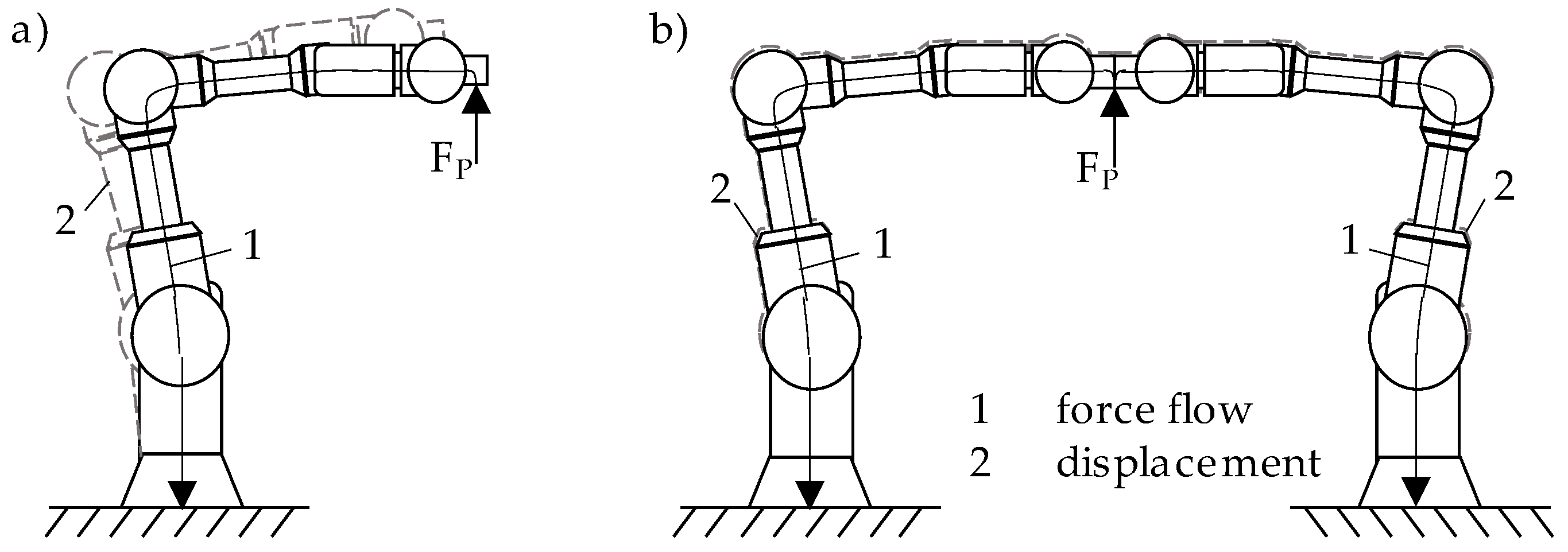
P. Low structural stiffness k can lead to deformations that negatively impact machining speed, process stability and energy efficiency. The open kinematic chain of a serial six-axis cobot causes the structure to bend, similar to a machine tool frame in C-design, which leads to a deterioration in the pose accuracy T at the tool center point (TCP) and, thus, to errors in the execution of the cobot’s task, see
Figure 1a.
Higher structural stiffness k not only improves the pose accuracy T, payload capacity and process stability but also extends the range of industrial tasks that cobots can reliably perform, and thus, facilitates a more flexible and safe production. Numerous research projects, therefore, focus on increasing structural stiffness k, where a distinction can be made between design and compensatory measures. Design measures focus on increasing structural stiffness k by modifying the robot structure. Implementation of these measures is generally only possible retrospectively or iteratively, if at all, by means of extensive conversion work. According to Brecher et al. [
4], the differentiation of robots in terms of their kinematics can be categorized into three distinct classifications: open, closed and partially closed chains. The serial arrangement of arm members and the resulting long, cantilevered arm structure result in open kinematic chains that exhibit low structural stiffness k. Integration of a parallelogram mechanism between axes two and three alleviates the load on the drive of axis two, thereby enhancing the structural stiffness k and positional accuracy T of the robot [
5]. However, the closed kinematic sub-chain imposes constraints on flexibility and working space. Completely closed kinematic chains are also characterized by high structural stiffness k with lower flexibility and mobility. In this context, Tanev, Yeshmukhametov et al., and Fang et al. investigated hybrid serial–parallel kinematic chains [
6,
7,
8]. Wang et al. [
9] present an elastostatic-stiffness modeling approach for hybrid robotic structures, in which the parallel and serial modules can be analyzed separately. In contrast, numerous robot manufacturers prioritize increasing the robot arm’s cross-section to enhance its structural stiffness, as evidenced by the findings of Wu et al. [
10]. However, an increase in the arm’s cross-section results in an elevated dead weight, concurrently compromising the robot’s dynamic performance. Chen et al. [
11] present a modeling approach that simulates robot stiffness considering joint flexibility through a rigid–flexible coupling. Time-varying stiffness models are developed and applied for trajectory planning. An alternative approach was presented by Lai et al. [
12], where two serial 3-axis industrial robots were permanently connected. The main structure is equipped with a spindle at the end effector. The support structure is attached to the end effector of the main structure. During the machining process, the support structure is anchored to a fixed point within in the working space. In this configuration, the system employs parallel kinematics with serial arms. In this coupled operating state, a parallel connection of the two Cartesian stiffnesses k
kart of the serial arms has been postulated in regard to the structural stiffness k. Conversely, compensatory measures are intended to enhance positional accuracy T without the need for structural modifications. The prevailing focus of research in this field is the development of globally applicable compensation measures. These measures are based on models that describe the causes of error in the robot’s kinematic model [
13,
14,
15]. Depending on the complexity of the models under consideration, Roth et al. [
16] introduced a distinction between three calibration categories:
Level-1 calibration:
- →
Compensation for joint axis angle errors,
Level-2 calibration:
- →
Compensation for geometric errors (regarding angle errors and arm lengths),
Level-3 calibration:
- →
Compensation for non-geometric errors (e.g., elastic and thermal deformations, friction, gear backlash, gear ratio errors).
As demonstrated in numerous studies, the implementation of a level-2 calibration results in a 90% enhancement in positional accuracy T [
17]. However, it proves inadequate for processes characterized by high process forces F
P and accuracy requirements due to the low structural stiffness k. While the gradual increase in model complexity enhances model quality, it concurrently complicates parameter identification. Furthermore, the complexity of the model is constrained by the necessity of a sufficiently brief calculation time.
In light of the aforementioned context, this paper proposes an innovative approach to improving the stiffness k by means of situational coupling of two six-axis cobots. Due to the optimized force flow in the coupled operating state, a significant increase in stiffness k is expected, similar to a machine tool in O-design, seen in
Figure 1b. Coupling of industrial robots is proposed by Goebels et al. [
18], Neusser et al. [
19], Mühlbeier et al. [
20] and Ye et al. [
21]. Notably, Ye et al. [
21] demonstrated experimentally that stiffness-oriented cooperative placement and motion planning for physically coupled industrial robots is feasible and beneficial in manufacturing contexts. However, these studies are limited to conventional industrial robots. The systematic coupling of cobots has not yet been explored, and the characteristic features of cobots fundamentally impose different requirements for achieving safe and fully synchronized cobot coupling [
22]. Most importantly, the lightweight and compliant design, driven by safety requirements, is a key characteristic of cobots and should be preserved. Therefore, it is essential to specifically enhance the structural stiffness k through the coupling of two cobots in order to ensure precise and stable collaboration without compromising their fundamental safety advantages.
2. Concept for the Situational Coupling
From the results of the aforementioned studies concerning the coupling of conventional industrial robots, it is assumed that situational coupling in the overlapping workspace of two cobots offers the opportunity of direct integration of tasks with high process force F
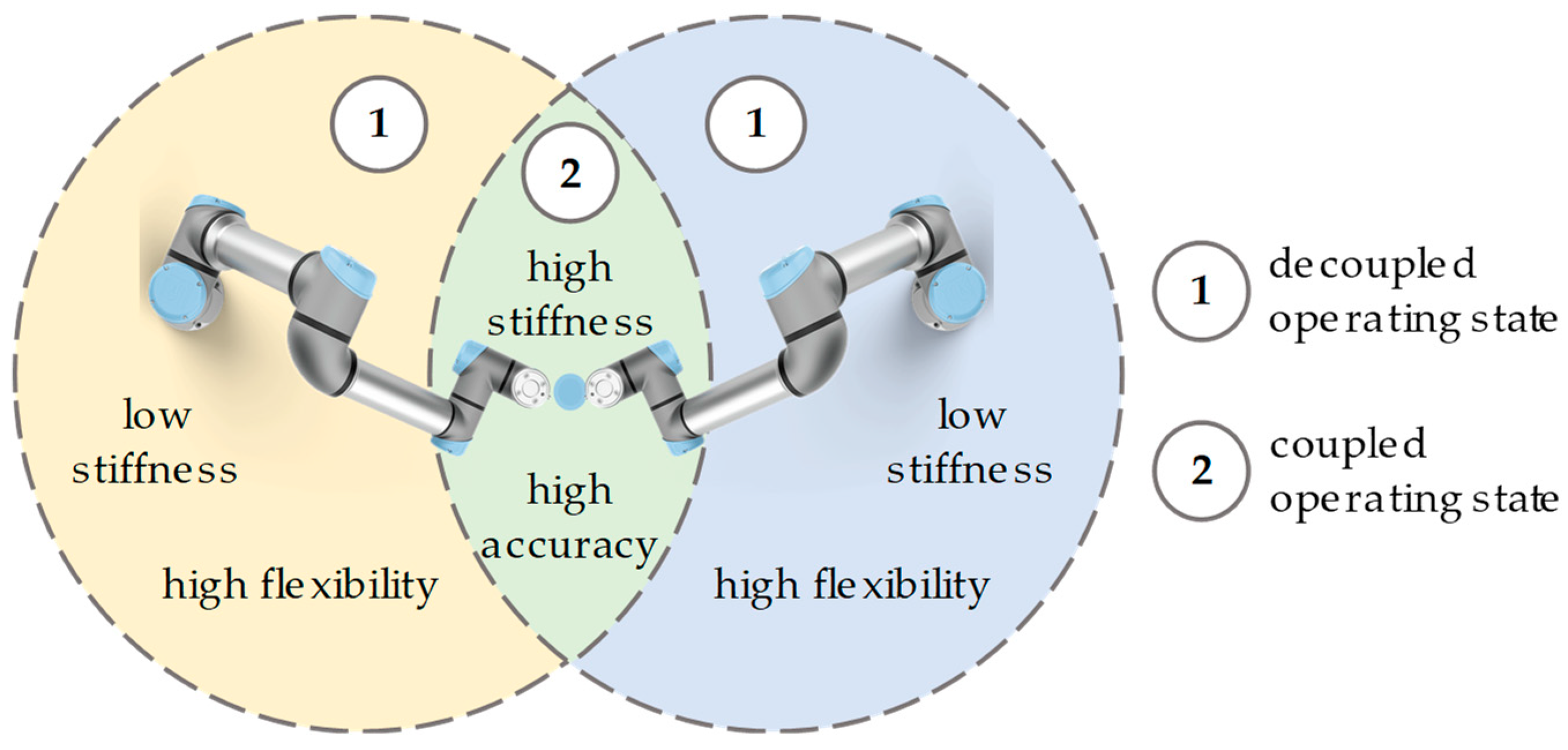
P and accuracy requirements. Therefore, it is hypothesized that such a configuration will enhance flexibility in cobot-based process chains, thereby facilitating automation and increasing productivity, even with small batch sizes. The concept investigated in this paper is based on two cobots working independently in a decoupled mode while remaining within mutual reach. Since such configurations are already present in many industrial cobot-based process chains, the proposed approach can be readily integrated into existing industrial environments. When a process task requires a stiffness exceeding the achievable stiffness of a single cobot, mechanical coupling is activated to form a serial–parallel system. The switching criterion is defined by a task-dependent stiffness requirement k
req, which is compared to the estimated single-cobot stiffness k
single in the current configuration. Coupling is initiated when k
req > k
single and released once k
req ≤ k
single. This strategy ensures that mechanical coupling is applied only when necessary, providing high stiffness k during force-critical phases, while maintaining the advantages of collaborative operation during all other phases. The stiffness requirement k
req is derived from the task description and online process monitoring. When the condition k
req > k
single is detected, the system automatically triggers the coupling mechanism. After completing its current task, the secondary cobot moves into position and establishes the mechanical connection, forming a coupled system. Once the force-critical phase is completed and the stiffness required k
req falls below the single cobot stiffness k
single, the system autonomously decouples and returns to compliant single-cobot operation. This way, the approach ensures that both cobots maintain their inherent high degree of flexibility and dynamics in the decoupled operating state, see
Figure 2.
This requires the use of a flexible coupling interface, which enables a fully automated coupling and decoupling process of both cobots and fulfills the conflicting requirements of lightweight construction, high stiffness, high precision and low costs. Furthermore, the native control system of both cobots has to be adapted. It is essential to ensure that both cobots follow a synchronized trajectory.
The proposed situational coupling strategy is particularly well-suited for robotic tasks that are characterized by alternating phases of high compliance and high stiffness demand. Typical examples include contact-rich operations such as surface finishing, grinding, or precision assembly. In these tasks, high stiffness k is required only during specific process phases, while flexible behavior remains advantageous, e.g., during approach and positioning. However, tasks that demand high positioning accuracy at high dynamic speeds may be limited by the dynamic coupling effects introduced by the second robot and the coupling interface.
3. Kinematic Model for the Coupled Operating State
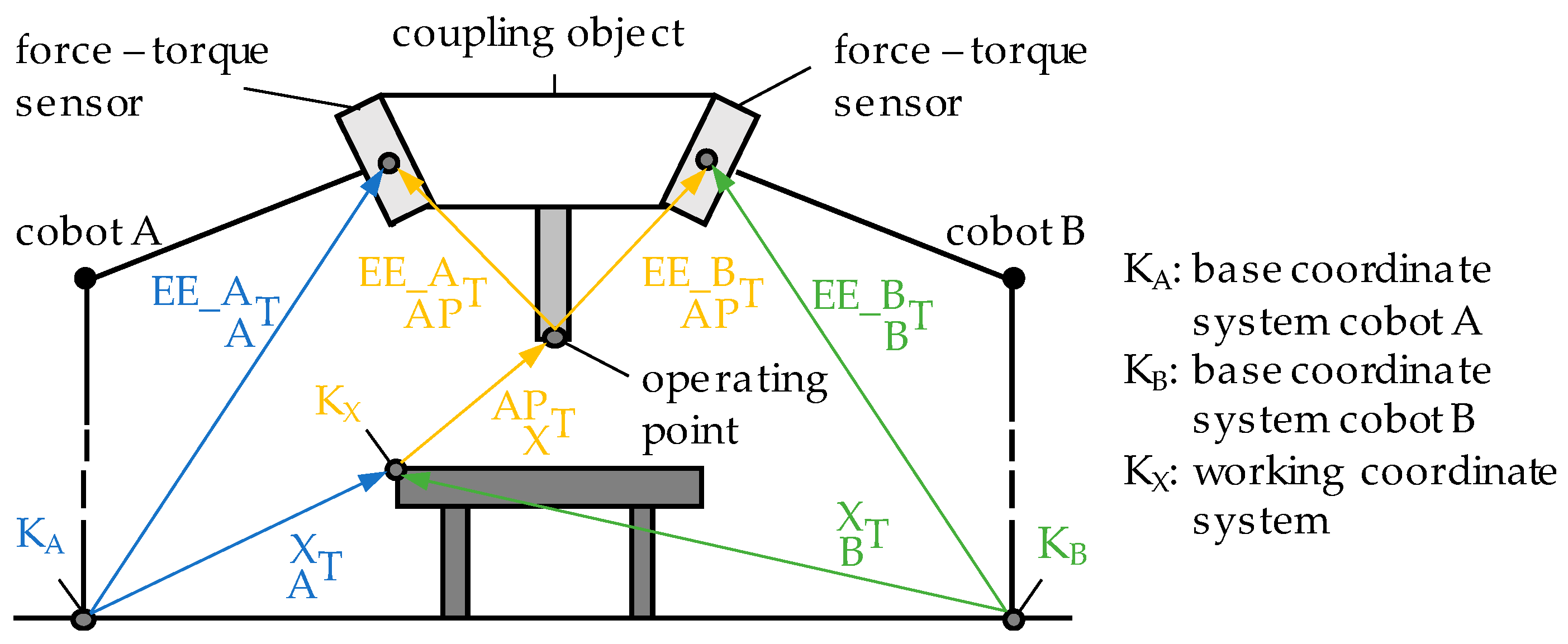
In order to both coordinate the cobots in the coupled operating state and to generate possible joint angle configurations for the stiffness model, a mathematical representation of the coupled kinematics is required. The cooperative cobot system is considered a combination of two serial cobots, I, I ϵ {A|B}. In addition to the two Cartesian base coordinate systems K
I, I ϵ {A|B}, a working coordinate system K
x is introduced. The constant homogeneous transformation matrix
represents the rotation and displacement of K
x relative to K
I. The homogeneous transformation matrix between the base coordinate system and the end effector flange
can be determined according to Formula (1).
In Formula (1),
represents the homogeneous transformation matrix between the working coordinate system and the working point, while
represents the homogeneous transformation matrix between the working point and the end effector flange of the cobot.
Figure 3 illustrates the definitions of the homogeneous transformation matrices.
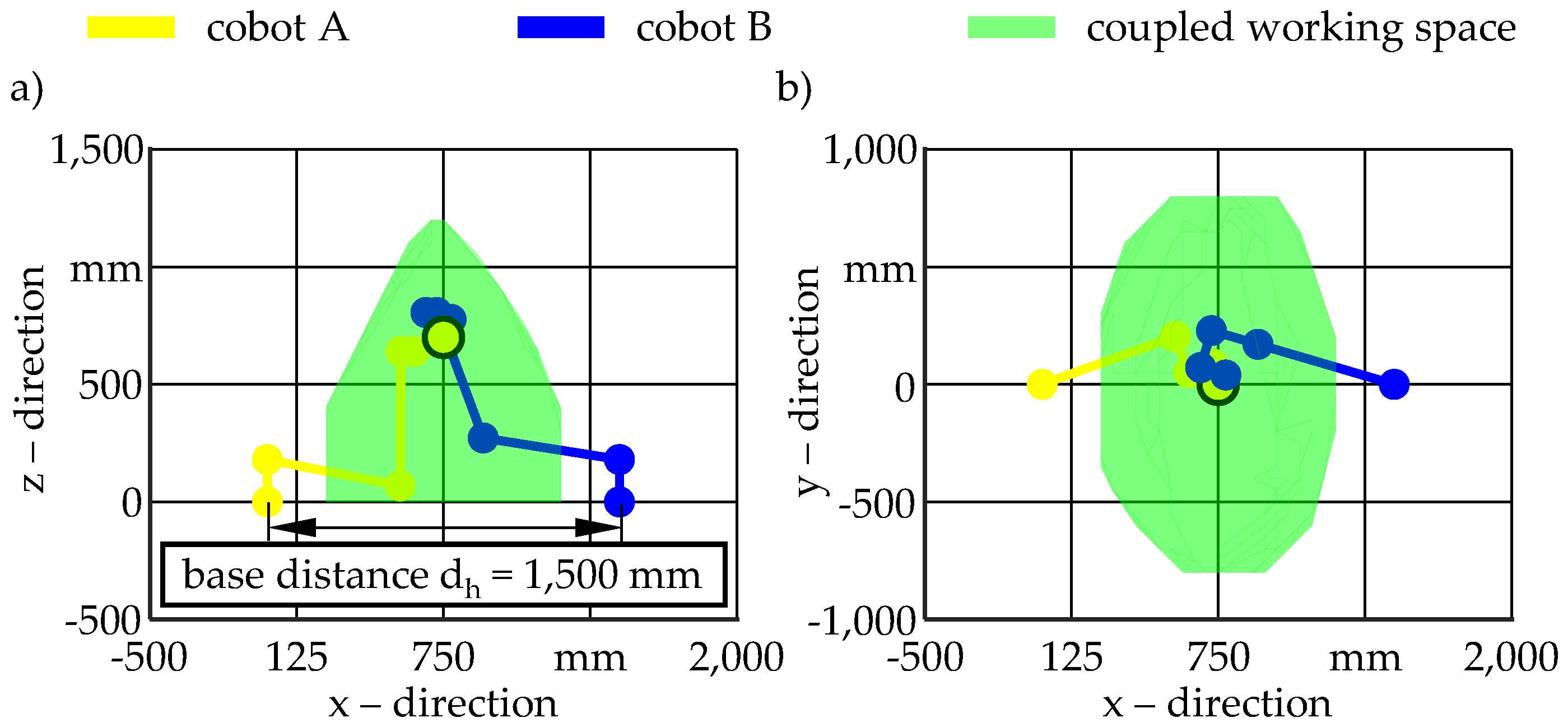
The so-defined coupled kinematics was implemented in the software MATLAB R2023b of the company The Mathworks Inc., Natick, MA, USA.
Figure 4 exemplifies the resulting coupled working space given a base distance d
h = 1500 mm.
For modeling purposes, the forward and backward kinematics of the cobot of type UR10e from the company Universal Robots A/S, Odense, Denmark, were implemented. For the sake of simplicity, it will be referred to as UR10e from here on out. Since the end effectors of the cobots should be connected to each other, preventing any relative motion, a point constraint was defined accordingly. The distance between the base coordinate systems of the cobots was set to dh = 1500 mm, as this provides the optimal ratio of workspace to installation area. The maximum working space between the cobots corresponds to the maximum reach of the cobots, which is lUR10e = 1300 mm. Evidently, due to inherent structural limitations, including the diameter of the cobot’s base db = 190 mm, a base distance dh = 1300 mm is infeasible. To ensure sufficient space, this results in a base distance of dh = 1500 mm. Consequently, the resulting working space volume is determined to be VA,coup = 1.06 m3. Comparing the usable working space volume of a single UR10e, VA,UR10e ≈ 3.50 m3, with that of the coupled cobots reveals that the latter is only about 30.23%. In order to avoid noticeable loss of flexibility through permanent coupling, the implementation of fully automated coupling mechanisms is of crucial importance. This enables either a high degree of flexibility or high stiffness k to be achieved, depending on the requirements of the application.
5. Conclusions
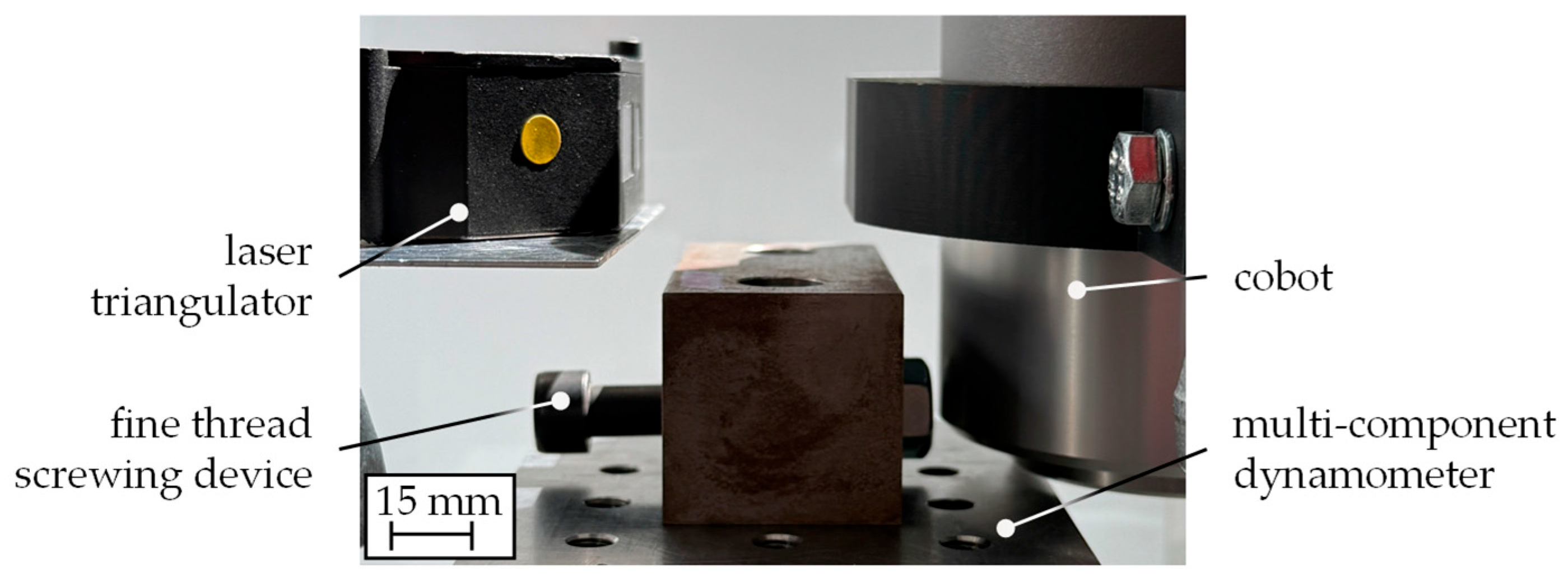
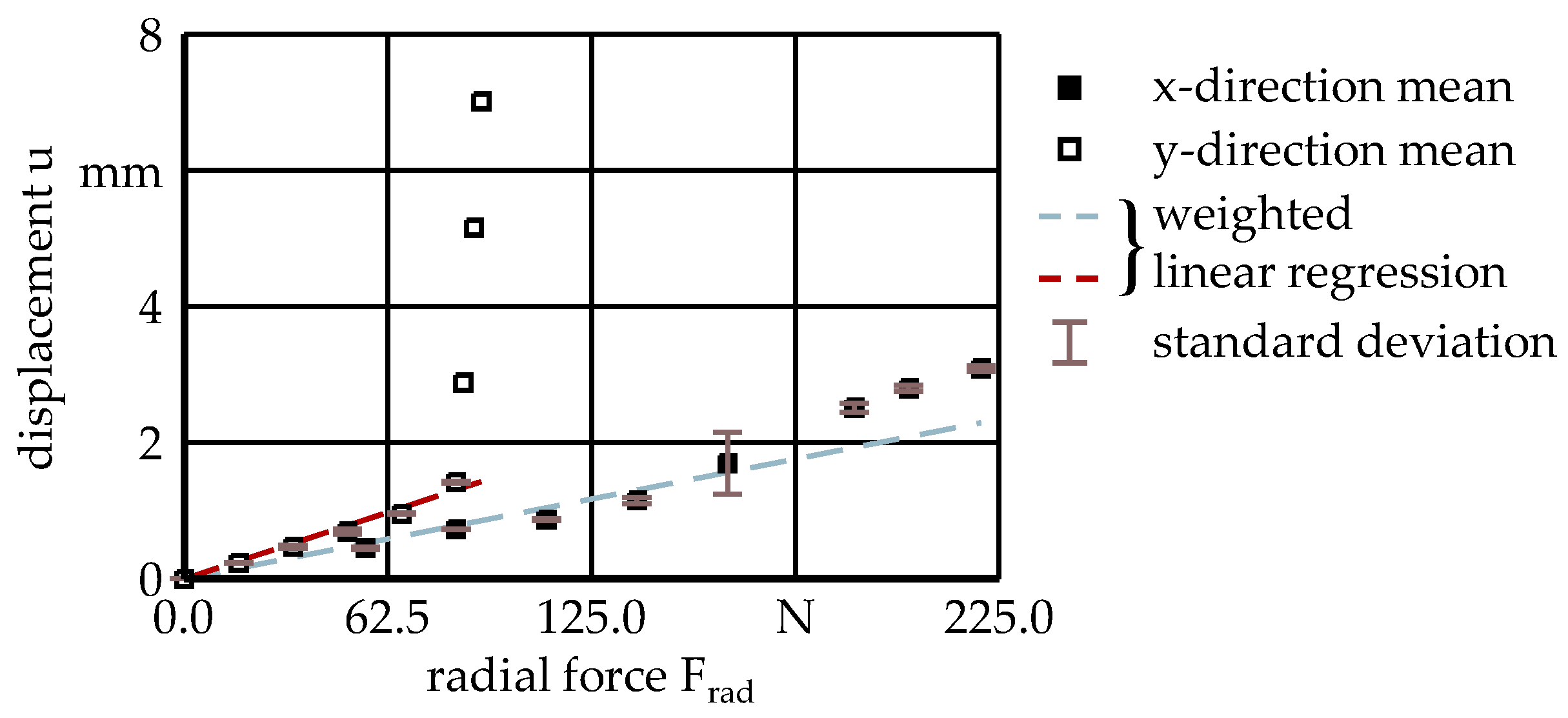
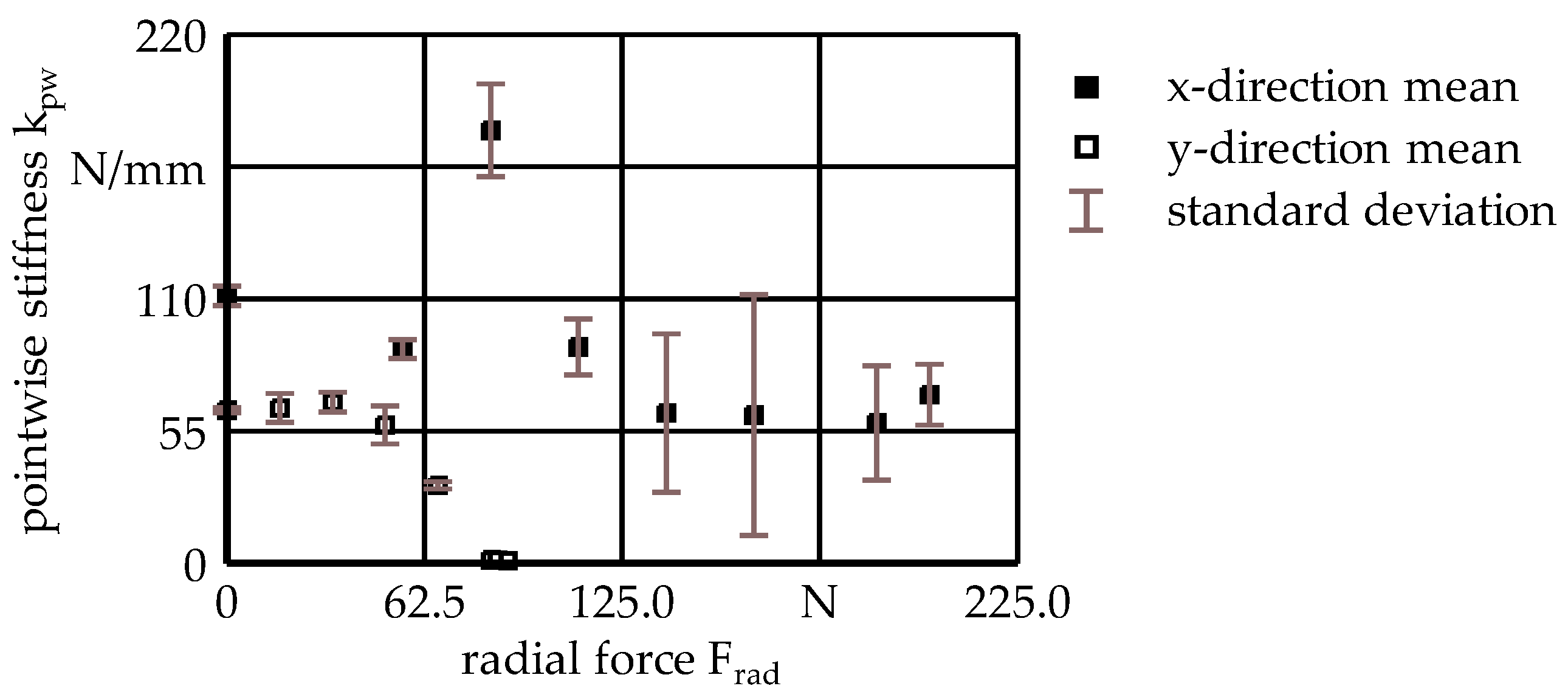
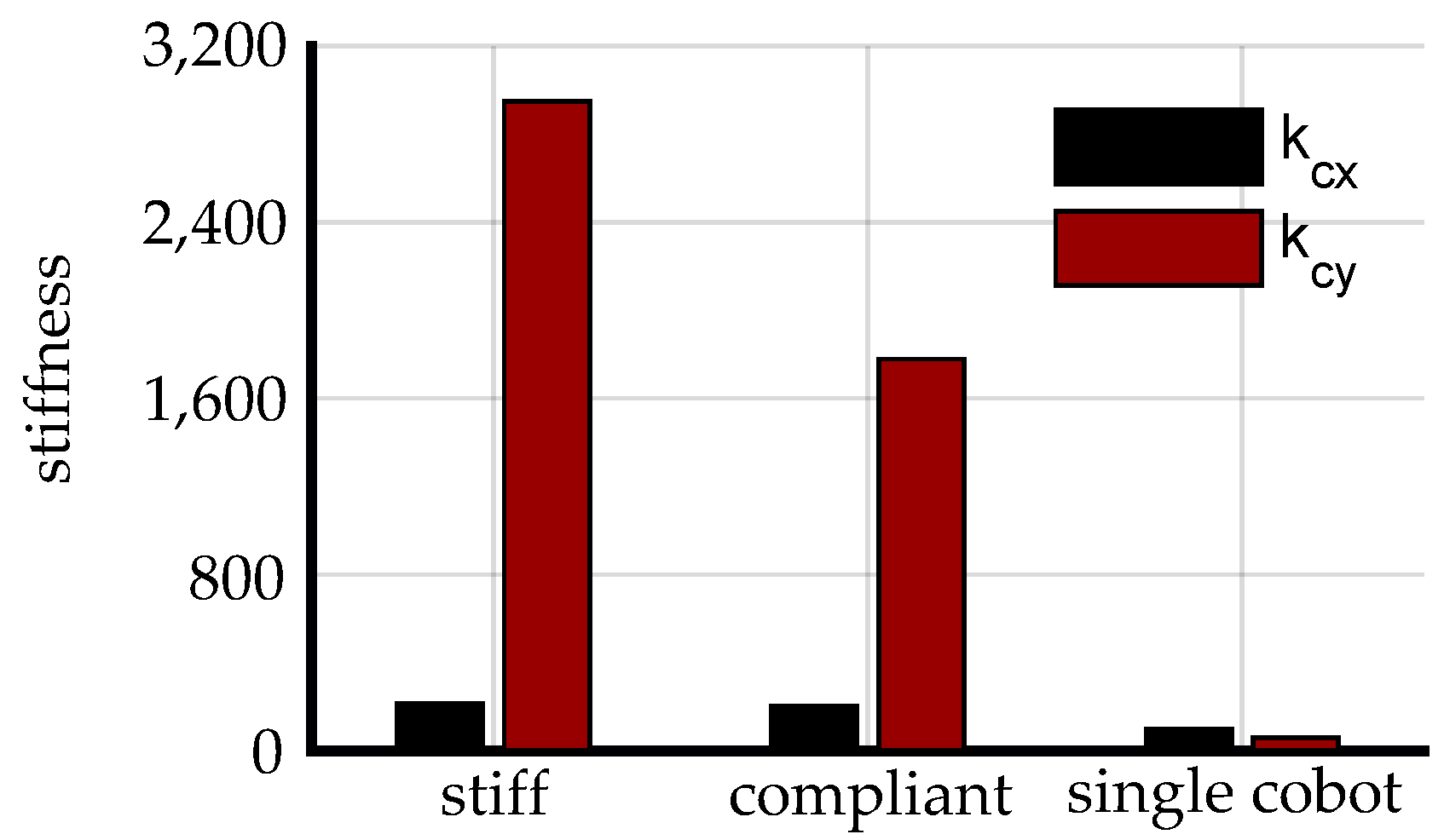
In this paper, the concept of situational coupling of two cobots was presented. For this purpose, the resulting working space of the coupled cobots was determined by a kinematic model. Furthermore, pose-related stiffness in the planar main-axis system of a single cobot of type UR10e was investigated experimentally. Therefore, radial forces Frad,i in the x- and y-directions were applied to the UR10e’s end effectors, and the resulting displacement ui was measured. The results of the analysis yield a stiffness ratio of η ≔ kx/ky ≈ 1.67 with respect to the UR10e’s base coordinate system.
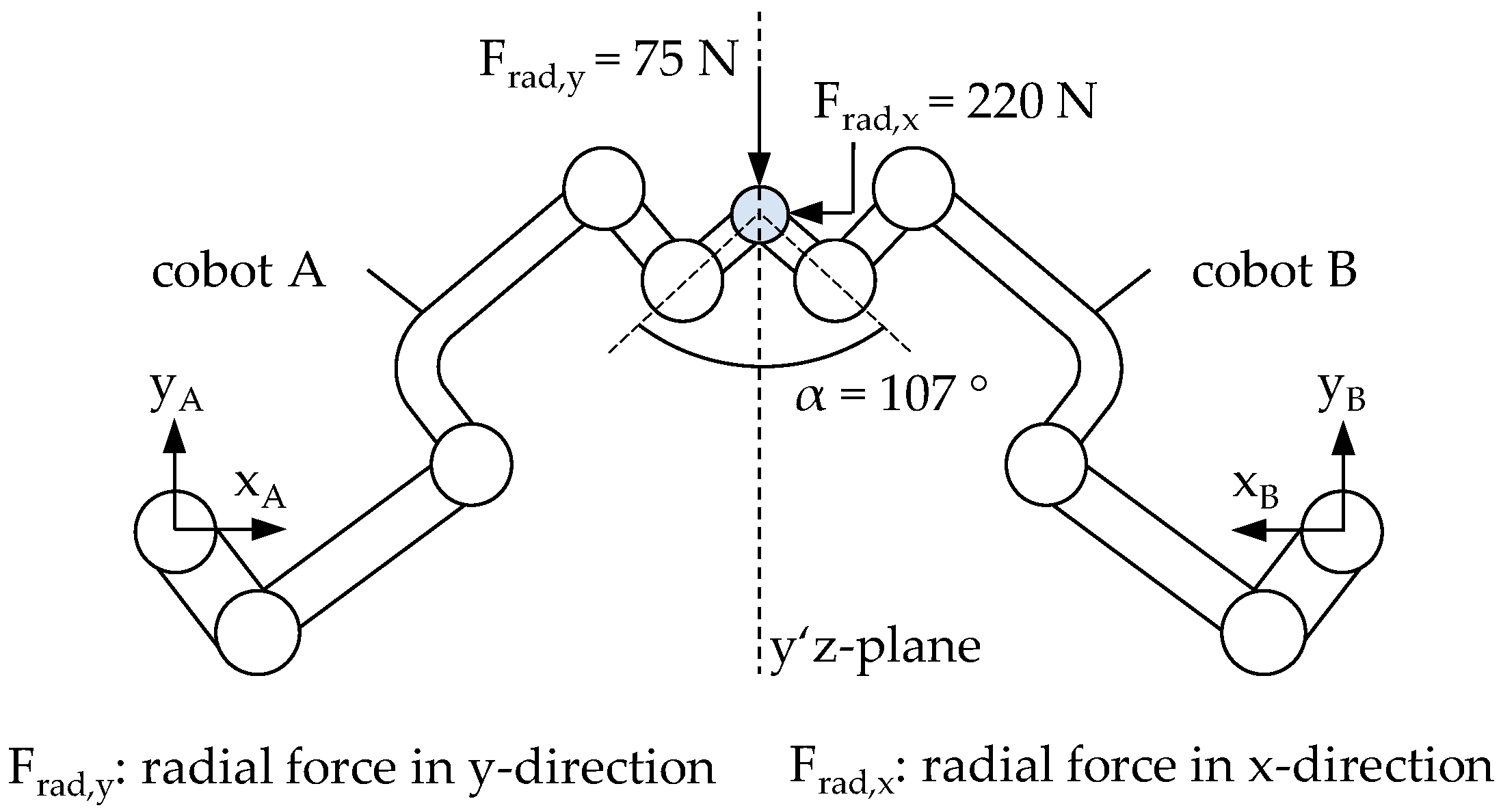
Next, a multibody simulation model of the UR10e was implemented and parameterized digitally, utilizing experimentally obtained measurement data. The adapted parameter values then were used to numerically investigate the coupling of two UR10e. The compound stiffnesses kC,i exhibited an enhancement in comparison to the single operating state, with an increase of approximately 200% in the x-direction and approximately 5940% in the y-direction. In light of these findings, an angular arrangement of the two cobots was found to be advantageous in terms of compensating for the respective more compliant direction of movement. These findings substantiate the conceptual viability of situationally coupled cobots and indicate the necessity for further research to investigate the scope of applications in which the structural advantages of collaborative industrial robots can be leveraged. Future research, therefore, may aim to extend this investigation throughout the entire working space, incorporating stiffness characteristics of the cobots’ arm segments. Furthermore, the determination of an optimal angle α in the coupled operating state with regard to compound stiffness kC and optimal pre-tension of the end effectors represent potential subjects for further investigation.