
Effect of Precise TIG Welding Pool Temperature Control on Microstructure and Mechanical Properties of 7072 Aluminum Alloy Joints



Abstract
1. Introduction
2. Materials and Methods
2.1. Experimental Material and Setup
2.2. Experimental Process
3. Results
3.1. Macro-Morphology of TIG Welded Joints

3.2. Micro-Morphology of TIG Welded Joints
3.3. Mechanical Properties of Welded Joints
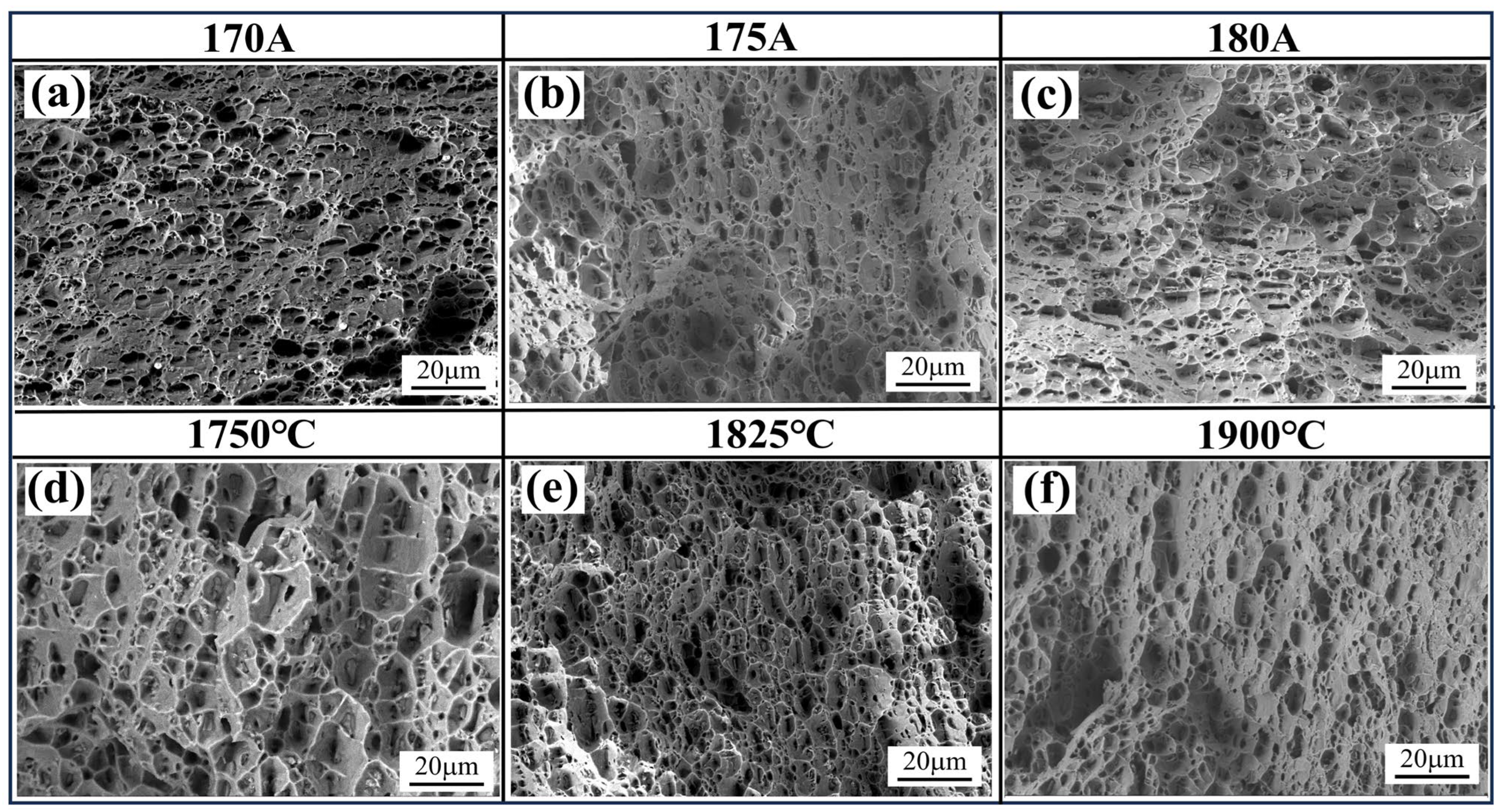
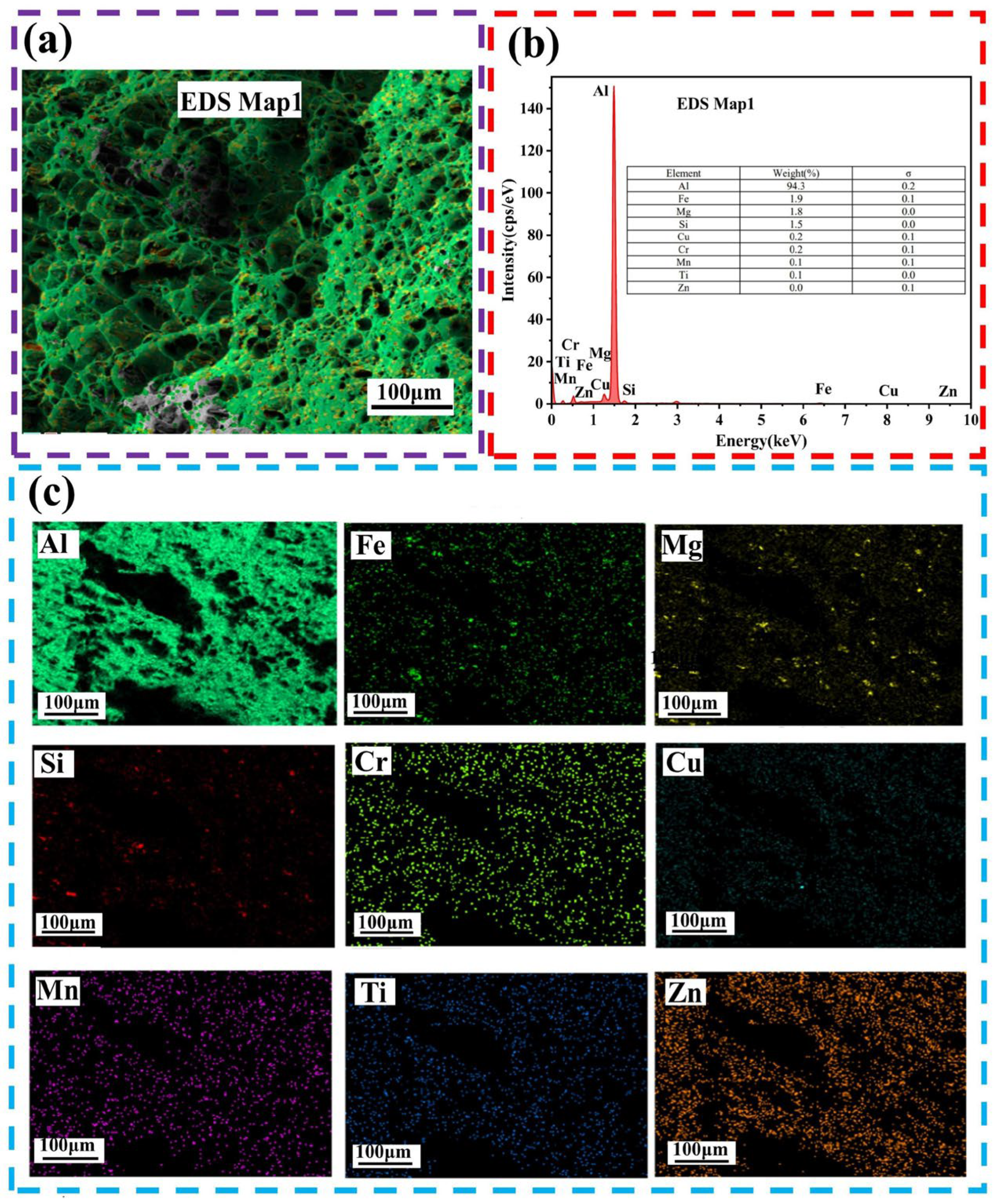
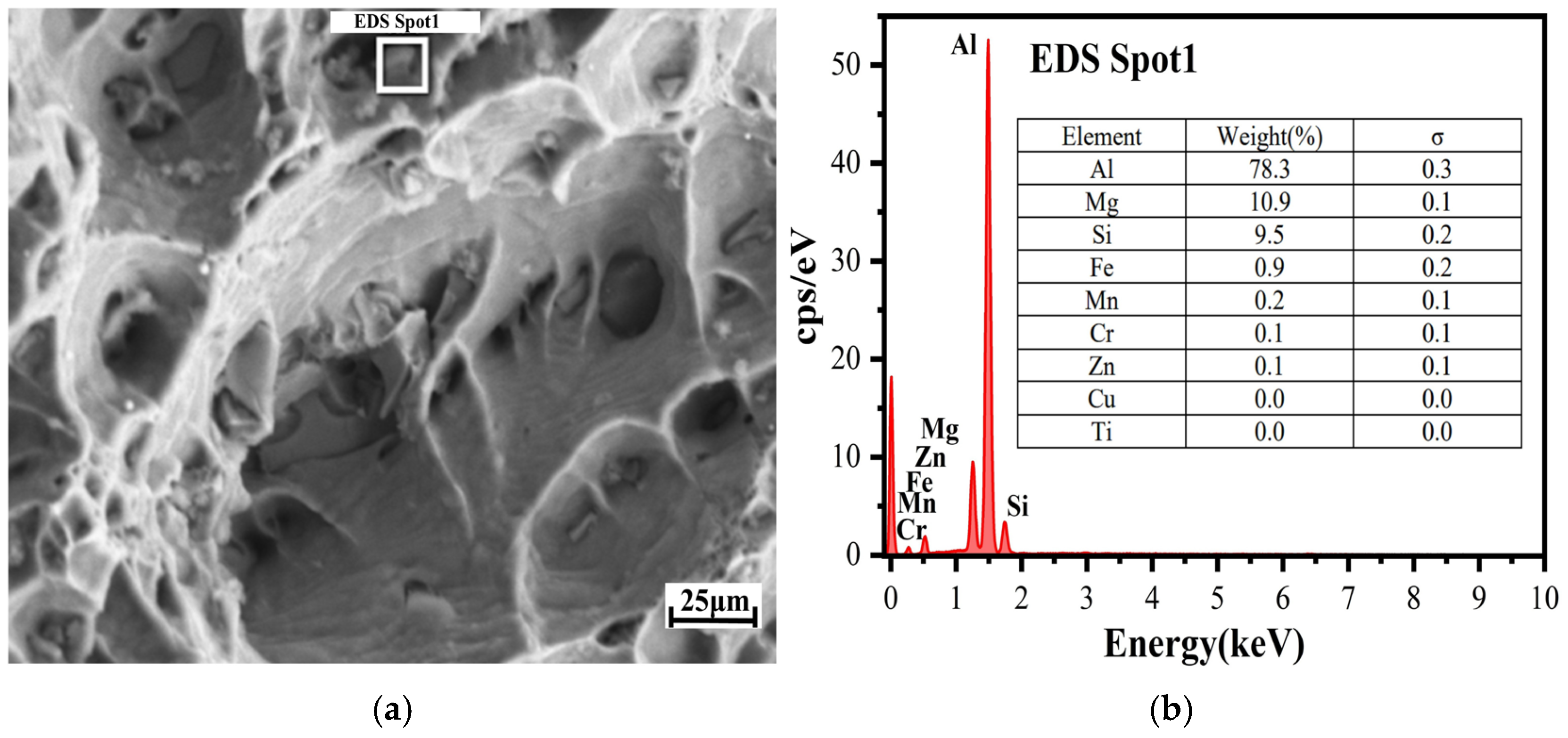
3.4. Tensile Fracture Analysis
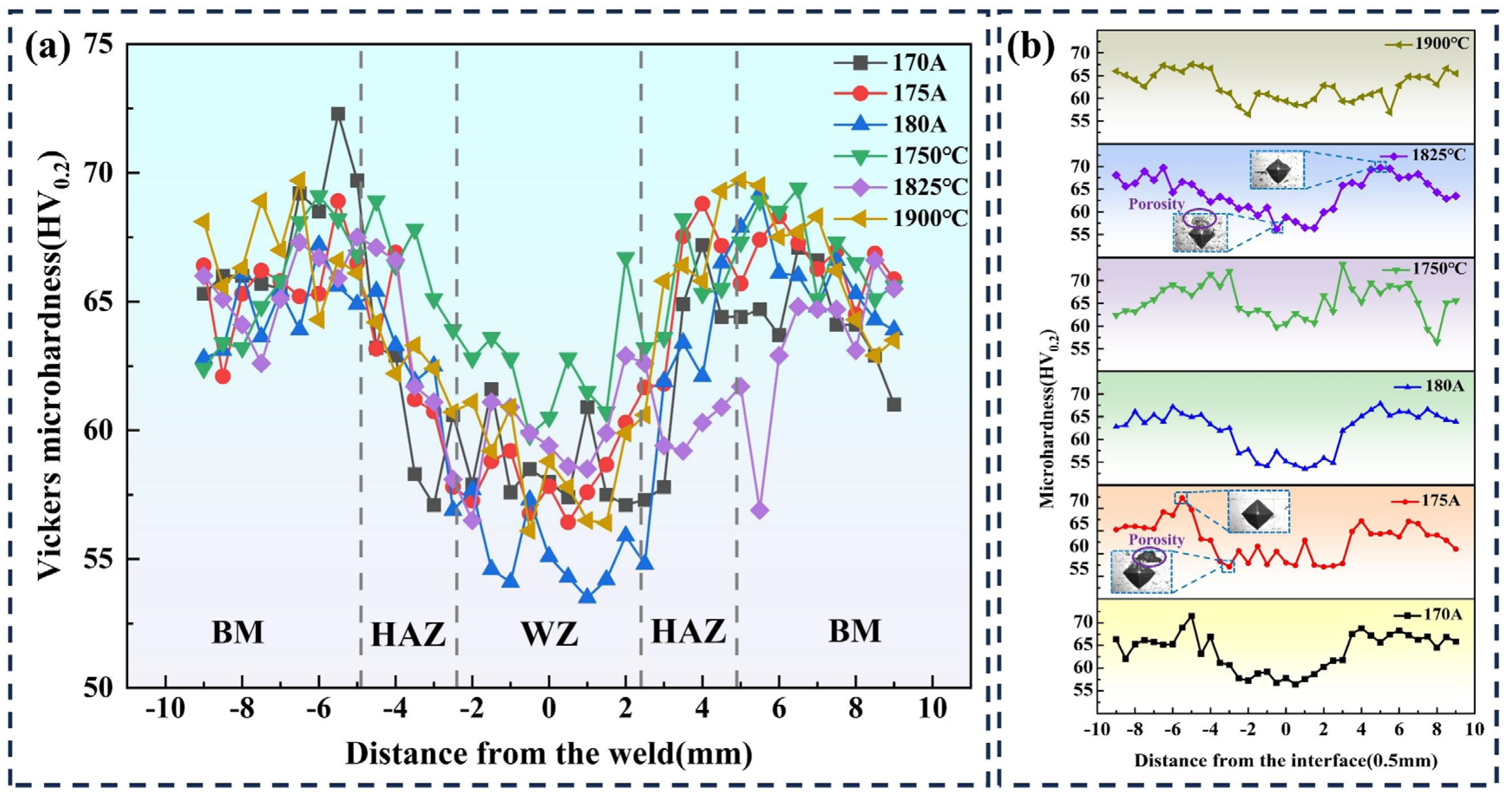
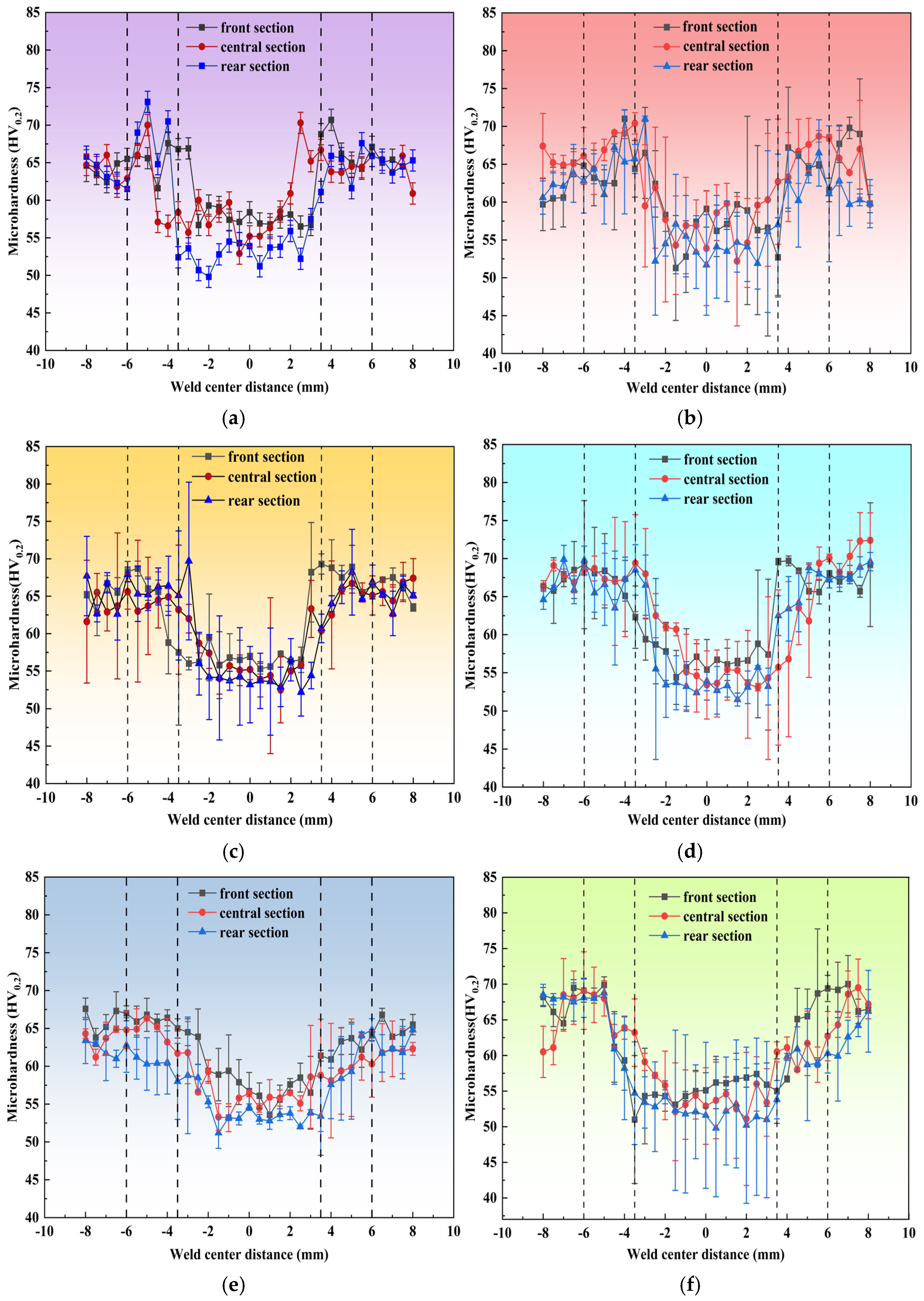
3.5. Microhardness
4. Conclusions
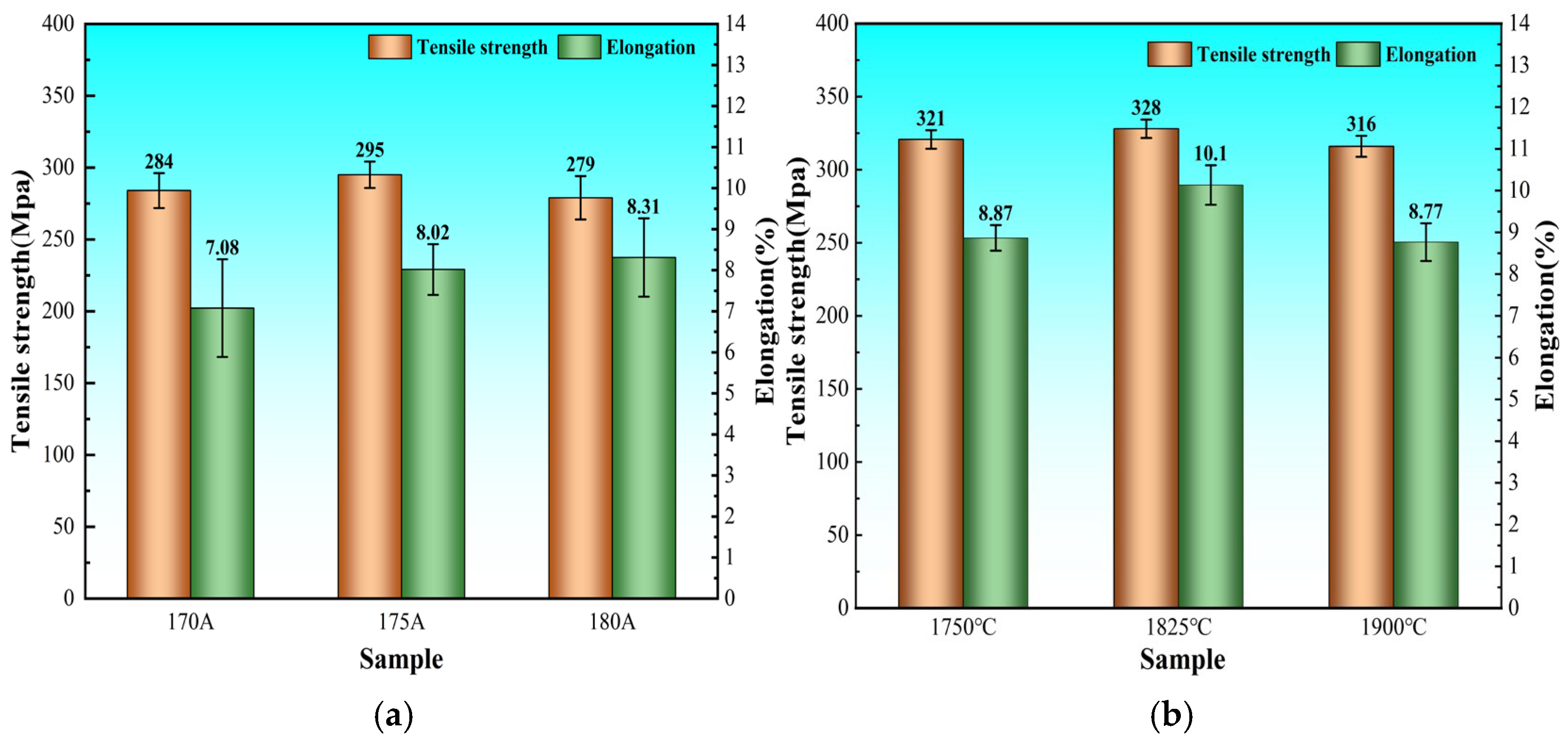
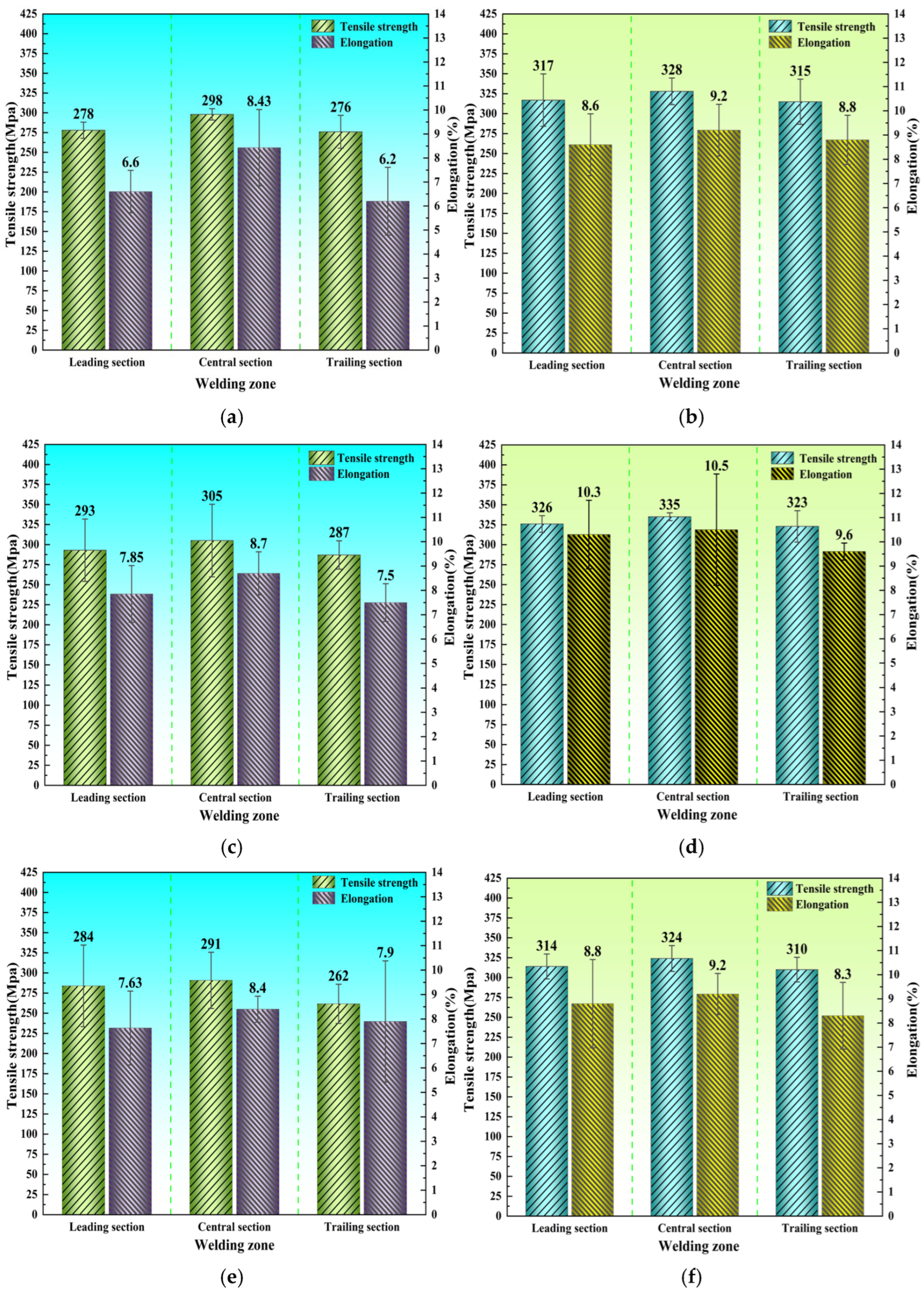
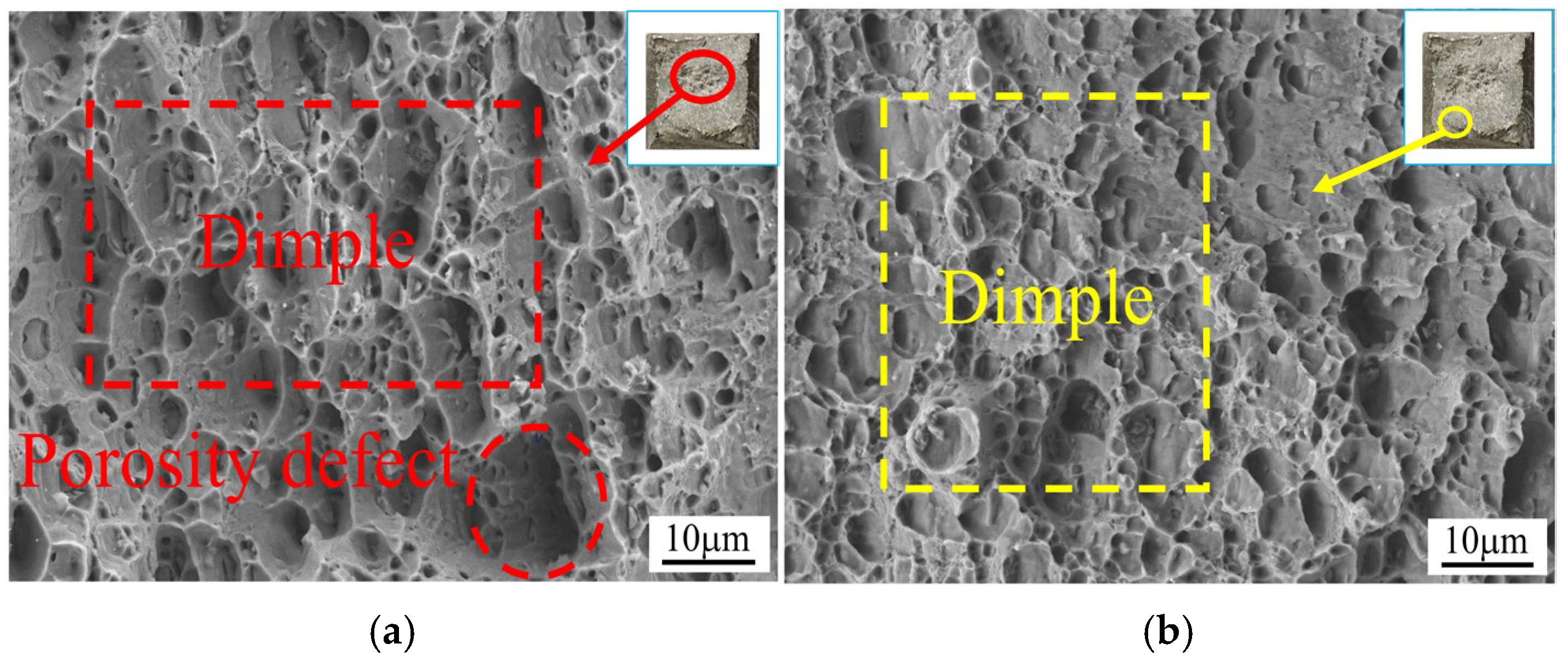
- Under controlled-temperature welding conditions, the closed-loop feedback control system for molten pool temperature effectively stabilized heat input, significantly improving the joint’s overall performance. The optimal comprehensive mechanical properties were achieved at 1825 °C. Under such conditions, reduced porosity, enhanced fracture morphology, and refined and homogenized microstructure were achieved. These structural optimizations lead to comprehensive improvements in mechanical properties: the weld zone exhibits higher average hardness with significantly reduced hardness variation across different positions; the tensile strength and elongation are also enhanced, demonstrating consistent mechanical properties along the welding direction.
- By contrast, non-temperature-controlled welding cannot regulate heat input effectively. Prolonged heat accumulation pushes the temperature in the middle and rear of the joint to an excessively high level. It triggers defects like grain coarsening and increased porosity. The macroscopic morphology and microstructural uniformity of the joint along the welding direction are both degraded by these issues. This instability shows that stable welding quality cannot be guaranteed only by finding the optimal current settings. It further highlights the necessity of molten pool temperature control.
- From an engineering perspective, the molten-pool-temperature-based closed-loop TIG welding strategy helps stabilize the heat input during welding. It effectively reduces microstructural non-uniformity, porosity, and property dispersion caused by local overheating. As a result, the consistency and reliability of welded joints are improved. This makes the method suitable for industrial manufacturing and component repair applications. It should be noted that, in practical industrial environments, the performance of this strategy may still be affected by environmental disturbances, increased workpiece size, and system response characteristics. Therefore, the control parameters need to be further optimized and calibrated for specific working conditions. Overall, the proposed temperature control strategy provides a feasible engineering approach for achieving high-quality and stable welding.
Author Contributions
Funding
Data Availability Statement
Conflicts of Interest
References
- Arhumah, Z.; Pham, X.-T. Microstructure and Thermal Mechanical Behavior of Arc-Welded Aluminum Alloy 6061-T6. JMMP 2024, 8, 110. [Google Scholar] [CrossRef]
- Dixit, S.; Liu, S. Laser Additive Manufacturing of High-Strength Aluminum Alloys: Challenges and Strategies. JMMP 2022, 6, 156. [Google Scholar] [CrossRef]
- Neto, A.F.; Dias, E.X.; Freitas, F.H.C.; Fukugauchi, C.S.; Guidi, E.S.; Martins, M.S.; Abdalla, A.J.; Pereira, M.d.S. Study of Corrosion Resistance of Hybrid Structure of DP980 Two-Phase Steel and Laser-Welded 6013-T4 Aluminum Alloy. JMMP 2025, 9, 237. [Google Scholar] [CrossRef]
- Zerbst, U.; Hensel, J. Application of Fracture Mechanics to Weld Fatigue. Int. J. Fatigue 2020, 139, 105801. [Google Scholar] [CrossRef]
- Adisa, S.B.; Loginova, I.; Khalil, A.; Solonin, A. Effect of Laser Welding Process Parameters and Filler Metals on the Weldability and the Mechanical Properties of AA7020 Aluminium Alloy. JMMP 2018, 2, 33. [Google Scholar] [CrossRef]
- Acherjee, B. Hybrid Laser Arc Welding: State-of-Art Review. Opt. Laser. Technol. 2018, 99, 60–71. [Google Scholar] [CrossRef]
- Park, J.H.; Kim, Y.H.; Baek, H.J.; Cho, S.M. A Study on Process Development of Super-TIG Welding for 9% Nickel Steel with Alloy 625. J. Manuf. Process. 2019, 40, 140–148. [Google Scholar] [CrossRef]
- Zong, R.; Chen, J.; Wu, C. A Comparison of TIG-MIG Hybrid Welding with Conventional MIG Welding in the Behaviors of Arc, Droplet and Weld Pool. J. Mater. Process. Technol. 2019, 270, 345–355. [Google Scholar] [CrossRef]
- Alzahrani, B.; Ahmed, M.M.Z.; Habba, M.I.A.; Fouad, R.A.; Elshaghoul, Y.G.Y.; Gadallah, E.A. TIG Welding of EN AW-6082 Al Alloy: A Comparative Analysis of Filler Rods on Microstructural and Mechanical Performance. JMMP 2025, 9, 21. [Google Scholar] [CrossRef]
- Kumar, P.; Sinha, A.N.; Hirwani, C.K.; Murugan, M.; Saravanan, A.; Singh, A.K. Effect of Welding Current in TIG Welding 304L Steel on Temperature Distribution, Microstructure and Mechanical Properties. J. Braz. Soc. Mech. Sci. Eng. 2021, 43, 369. [Google Scholar] [CrossRef]
- Faraji, A.H.; Goodarzi, M.; Seyedein, S.H.; Maletta, C. Effects of Welding Parameters on Weld Pool Characteristics and Shape in Hybrid Laser-TIG Welding of AA6082 Aluminum Alloy: Numerical and Experimental Studies. Weld. World 2015, 60, 137–151. [Google Scholar] [CrossRef]
- Yu, R.; Han, J.; Bai, L.; Zhao, Z. Identification of Butt Welded Joint Penetration Based on Infrared Thermal Imaging. J. Mater. Res. Technol. 2021, 12, 1486–1495. [Google Scholar] [CrossRef]
- Yu, P.; Xu, G.; Gu, X.; Zhou, G.; Tian, Y. A Low-Cost Infrared Sensing System for Monitoring the MIG Welding Process. Int. J. Adv. Manuf. Technol. 2017, 92, 4031–4038. [Google Scholar] [CrossRef]
- Xiao, L.; Chenyang, W.; Xiaoping, L.; Bin, Z.; Runzhou, L. Investigation of 7075 Aluminum Alloy TIG Welding Joint Using 7075 Aluminum Alloy Wire before and after Heat Treatment. Mater. Res. Express 2023, 10, 046512. [Google Scholar] [CrossRef]
- Song, G.; Wang, Z.; Liu, Z.; Liu, L. Effect of Partial Rolling on the Microstructure and Mechanical Properties of Laser-TIG Hybrid Welded Joints of 7075-T6 Aluminum Alloy. Int. J. Adv. Manuf. Technol. 2022, 121, 589–599. [Google Scholar] [CrossRef]
- ISO 6892-1:2019; Metallic Materials—Tensile Testing—Part 1: Method of Test at Room Temperature. International Organization for Standardization: Geneva, Switzerland, 2019.
- Zhang, Z.; Xue, J. Profile Map of Weld Beads and Its Formation Mechanism in Gas Metal Arc Welding. Metals 2019, 9, 146. [Google Scholar] [CrossRef]
- Chen, C.; Sun, G.; Du, W.; Li, Y.; Fan, C.; Zhang, H. Influence of Heat Input on the Appearance, Microstructure and Microhardness of Pulsed Gas Metal Arc Welded Al Alloy Weldment. J. Mater. Res. Technol. 2022, 21, 121–130. [Google Scholar] [CrossRef]
- Wang, L.; Wei, Y.; Chen, J.; Zhao, W. Macro-Micro Modeling and Simulation on Columnar Grains Growth in the Laser Welding Pool of Aluminum Alloy. Int. J. Heat Mass Transf. 2018, 123, 826–838. [Google Scholar] [CrossRef]
- Li, W.; Qian, F.; Li, J.; Zhu, Y.; Liang, Y.; Xu, S.; Li, Y.; Cheng, X. Design Strategy for Eliminating Cracking and Improving Mechanical Properties of Al-Mg-Si Alloys Fabricated by Laser Melting Deposition. Addit. Manuf. 2023, 68, 103513. [Google Scholar] [CrossRef]
- Yang, J.; Yu, Q.; Zhao, Y.; Liu, Y.; Gao, X.; Li, H.; Han, B. The Influence of Predefined Grooves on the Gas Tungsten Arc Welding Performance of 7072 Aluminum Alloy. J. Mater. Eng. Perform. 2024, 34, 17460–17471. [Google Scholar] [CrossRef]
- Huang, L.; Hua, X.; Wu, D.; Jiang, Z.; Li, F.; Wang, H.; Shi, S. Microstructural Characterization of 5083 Aluminum Alloy Thick Plates Welded with GMAW and Twin Wire GMAW Processes. Int. J. Adv. Manuf. Technol. 2017, 93, 1809–1817. [Google Scholar] [CrossRef]
- Zhu, C.; Cheon, J.; Tang, X.; Na, S.-J.; Cui, H. Molten Pool Behaviors and Their Influences on Welding Defects in Narrow Gap GMAW of 5083 Al-Alloy. Int. J. Heat Mass Transfer 2018, 126, 1206–1221. [Google Scholar] [CrossRef]
- Edberg, J.; Andersson, J. Use of Indicators for Hot and Warm Cracking in Welded Structures. Procedia Manuf. 2017, 7, 145–150. [Google Scholar] [CrossRef]
- Liu, X.; Zhang, S.Y.; Liu, Z.T.; Wang, H.Y. Effect of Mg/Si Ratio on Synergistic Improvement of Formability and Yield Strength in Al-Mg-Si-Zn Alloys. Mater. Charact. 2024, 214, 114095. [Google Scholar] [CrossRef]
- Wang, Z.; Jiang, S.; Liu, T.; Ban, C. The Effect of Fe Content on Crystal Phase and Mechanical Properties of 6061 Aluminium Alloy. J. Phys. Conf. Ser. 2023, 2566, 012025. [Google Scholar] [CrossRef]
- Khalifa, W.; Samuel, A.M.; Samuel, F.H.; Doty, H.W.; Valtierra, S. Metallographic Observations ofβ-AlFeSi Phase and Its Role in Porosity Formation in Al–7%Si Alloys. Int. J. Cast Met. Res. 2006, 19, 156–166. [Google Scholar] [CrossRef]
- Li, C.; Zhao, W.; Zhang, T.; Li, X.; Liu, Z.; Li, Y.; Yan, L.; Xu, P.; Wen, K.; Zhang, Y.; et al. Effect of Fe and Si Content on Microstructure, Mechanical Properties, and Corrosion Resistance of 7050 Alloy. Materials 2026, 19, 135. [Google Scholar] [CrossRef]
- Cui, X.; Chen, J.; Xia, C.; Han, X.; Su, H.; Wu, C. The Mechanism Study of TIG-MIG Hybrid Welding Process Based on Simulation. Vacuum 2023, 215, 112341. [Google Scholar] [CrossRef]
- Wei, H.L.; Elmer, J.W.; DebRoy, T. Three-Dimensional Modeling of Grain Structure Evolution during Welding of an Aluminum Alloy. Acta Materialia 2017, 126, 413–425. [Google Scholar] [CrossRef]
- Liu, T.; Zhan, X.; Kang, Y. The Influence of Thermal Distribution on Macro Profile and Dendrites Morphology Based on Temperature Field Simulation of 6061 Aluminum Alloy Laser Welded Joint. J. Adhes. Sci. Technol. 2020, 34, 2144–2160. [Google Scholar] [CrossRef]
- Zhou, J.; Shu, F.; Zhao, H.; Lv, Y.; Liu, Y.; He, P. Microstructure and Mechanical Properties of Heat Affected Zone in Multi-Pass GMA Welded Al–Zn–Mg–Cu Alloy. Trans. Nonferrous Met. Soc. China 2019, 29, 2273–2280. [Google Scholar] [CrossRef]
- Wang, H.; Liu, X.; Liu, L. Research on Laser-TIG Hybrid Welding of 6061-T6 Aluminum Alloys Joint and Post Heat Treatment. Metals 2020, 10, 130. [Google Scholar] [CrossRef]
- Guo, W.; Zhao, X.; Zhao, Y.; Liu, Y.; Li, H.; Han, B. Research on Optimal Heat Input Parameter for TIG Welding of Thin Plate 5083 Aluminum Alloy. Sci. Rep. 2025, 15, 15593. [Google Scholar] [CrossRef]
- Goriparthi, V.; N., R.; Sudhakar, I.; K., V. Influence of AC-TIG Weld Current on Dissimilar AA5083 and AA 7075 Aluminium Alloy. Adv. Mater. Process. Technol. 2022, 8, 4095–4105. [Google Scholar] [CrossRef]
- Yang, Z.; Sheng, L.; Xie, Y. Microstructure and Mechanical Properties of Laser-MIG Hybrid Multi-Layer Welded Joints for 20-Mm Thick Aluminum Alloy Plates. Weld World 2024, 68, 1539–1548. [Google Scholar] [CrossRef]
- Zhang, D.; Wang, G.; Wu, A.; Zhao, Y.; Li, Q.; Liu, X.; Meng, D.; Song, J.; Zhang, Z. Study on the Inconsistency in Mechanical Properties of 2219 Aluminium Alloy TIG-Welded Joints. J. Alloys Compd. 2019, 777, 1044–1053. [Google Scholar] [CrossRef]
- Yan, S.; Chen, H.; Zhu, Z.; Gou, G. Hybrid Laser-Metal Inert Gas Welding of Al–Mg–Si Alloy Joints: Microstructure and Mechanical Properties. Mater. Des. 2014, 61, 160–167. [Google Scholar] [CrossRef]
- Kamikawa, N.; Hirooka, T.; Furuhara, T. Yielding Behaviour and Hall–Petch Relationship in Ultrafine-Grained Al–Mg Binary Alloys. Mater. Sci. Technol. 2021, 37, 210–223. [Google Scholar] [CrossRef]
- Zhang, H.; Zhang, X. Hall–Petch Relationship in Electrically Pulsed Al–Zn–Mg Alloys. Adv. Eng. Mater. 2019, 21, 1900638. [Google Scholar] [CrossRef]



| Materials | Si | Fe | Cu | Mn | Mg | Zn | Ti | Cr | Al |
|---|---|---|---|---|---|---|---|---|---|
| 7072 | 0.1 | 0.33 | 1.5 | 0.03 | 2.68 | 5.8 | 0.03 | 0.23 | Bal. |
| ER5356 | ≤0.25 | ≤0.1 | ≤0.1 | 0.05~0.2 | 4.5~5.5 | ≤0.1 | — | 0.05~0.2 | Bal. |
| Parameters | Non-Temperature-Controlled | Temperature-Controlled |
|---|---|---|
| Welding current/A | 170, 175, 180 | / |
| Welding temperature/°C | / | 1750, 1825, 1900 |
| Wire feeding speed/(cm·min−1) | 260 | |
| Welding speed/(mm·s−1) | 3 | |
| Argon flow rate/(L·min−1) | 15 | |
| Tungsten electrode height/mm | 3 | |
| Experiments | Parameters | Welding Position | ||
|---|---|---|---|---|
| Front | Central | Rear | ||
| Non-temperature-controlled | 170 A | 1.24% | 0.35% | 0.56% |
| 175 A | 1.12% | 0.32% | 0.45% | |
| 180 A | 0.96% | 0.31% | 0.20% | |
| Temperature-controlled | 1750 °C | 0.27% | 0.11% | 0.12% |
| 1825 °C | 0.21% | 0.05% | 0.04% | |
| 1900 °C | 0.09% | 0.05% | 0.14% | |
Disclaimer/Publisher’s Note: The statements, opinions and data contained in all publications are solely those of the individual author(s) and contributor(s) and not of MDPI and/or the editor(s). MDPI and/or the editor(s) disclaim responsibility for any injury to people or property resulting from any ideas, methods, instructions or products referred to in the content. |
© 2026 by the authors. Licensee MDPI, Basel, Switzerland. This article is an open access article distributed under the terms and conditions of the Creative Commons Attribution (CC BY) license.
Share and Cite
Wang, Y.; Li, Y.; Zhang, W.; Zhao, Y.; Liu, C. Effect of Precise TIG Welding Pool Temperature Control on Microstructure and Mechanical Properties of 7072 Aluminum Alloy Joints. J. Manuf. Mater. Process. 2026, 10, 53. https://doi.org/10.3390/jmmp10020053
Wang Y, Li Y, Zhang W, Zhao Y, Liu C. Effect of Precise TIG Welding Pool Temperature Control on Microstructure and Mechanical Properties of 7072 Aluminum Alloy Joints. Journal of Manufacturing and Materials Processing. 2026; 10(2):53. https://doi.org/10.3390/jmmp10020053
Chicago/Turabian StyleWang, Yan, Yang Li, Wenhui Zhang, Yonglin Zhao, and Chao Liu. 2026. "Effect of Precise TIG Welding Pool Temperature Control on Microstructure and Mechanical Properties of 7072 Aluminum Alloy Joints" Journal of Manufacturing and Materials Processing 10, no. 2: 53. https://doi.org/10.3390/jmmp10020053
APA StyleWang, Y., Li, Y., Zhang, W., Zhao, Y., & Liu, C. (2026). Effect of Precise TIG Welding Pool Temperature Control on Microstructure and Mechanical Properties of 7072 Aluminum Alloy Joints. Journal of Manufacturing and Materials Processing, 10(2), 53. https://doi.org/10.3390/jmmp10020053