
Development and Validation of a Custom Stochastic Microscale Wind Model for Urban Air Mobility Applications

 , , , and
Highlights
- A Stochastic Microscale Wind Model (SWM) has been developed and validated to support the operation and certification flight testing of Urban Air Mobility (UAM) aircraft, including drones, RPAs, and piloted VTOL vehicles.
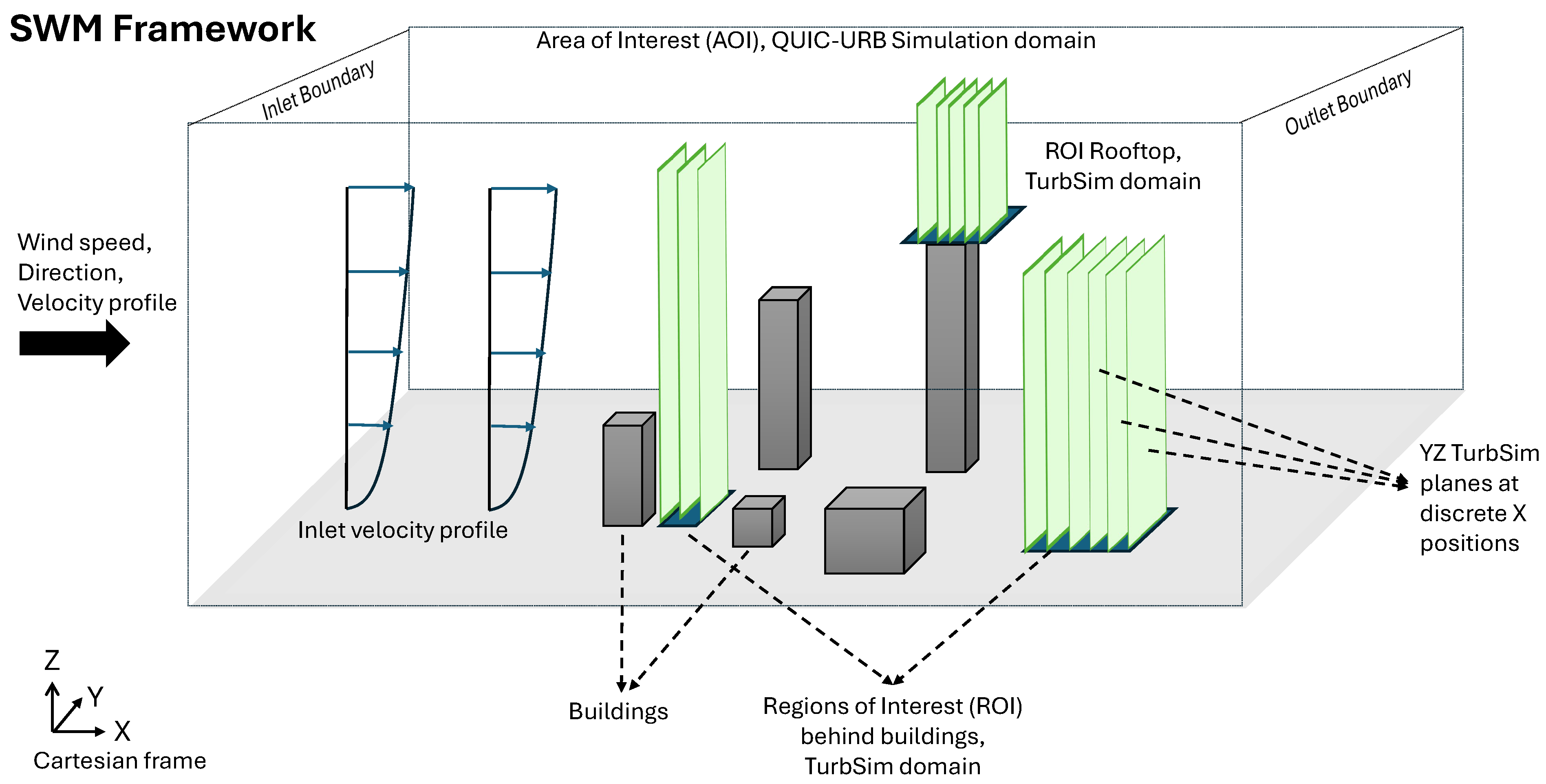
- SWM can rapidly generate high-resolution, quasi-non-stationary urban wind fields, delivering mid-fidelity performance that bridges the gap between spectral models and CFD-based approaches.
- SWM delivers realistic, low-cost microscale wind simulations using open-source terrain data and standard wind solvers, with straightforward mesoscale integration and a clear pathway toward real-time wind prediction.
- SWM-generated wind data can support preliminary flight dynamics, performance, control, safety, and operational risk assessments for drones and VTOL aircraft, as well as vertiport siting studies, helping accelerate the development and deployment of UAM.
Abstract
1. Introduction
2. Overview of Custom Stochastic Microscale Wind Model
3. SWM Validation Using Wind Tunnel Case Studies and Measurements
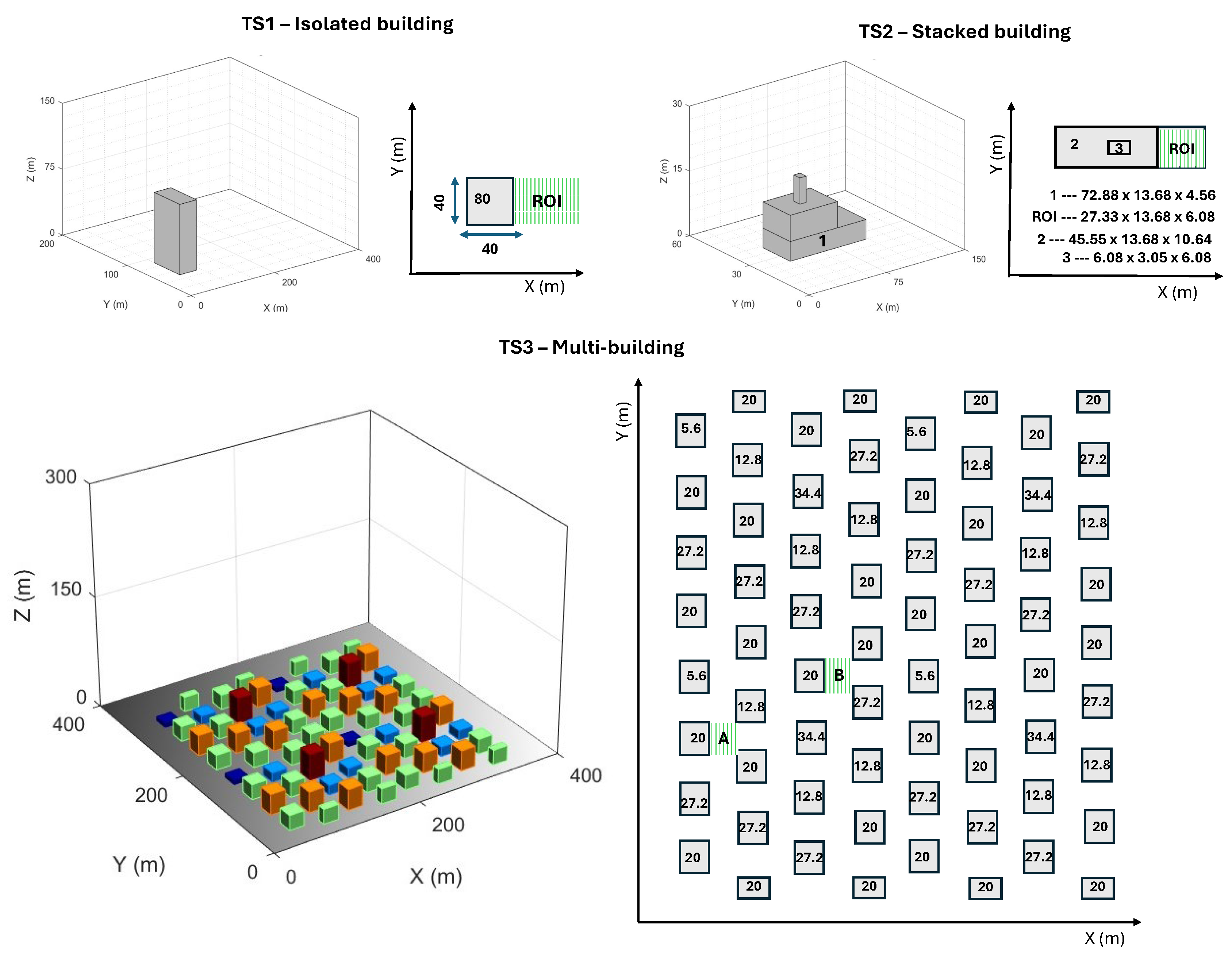
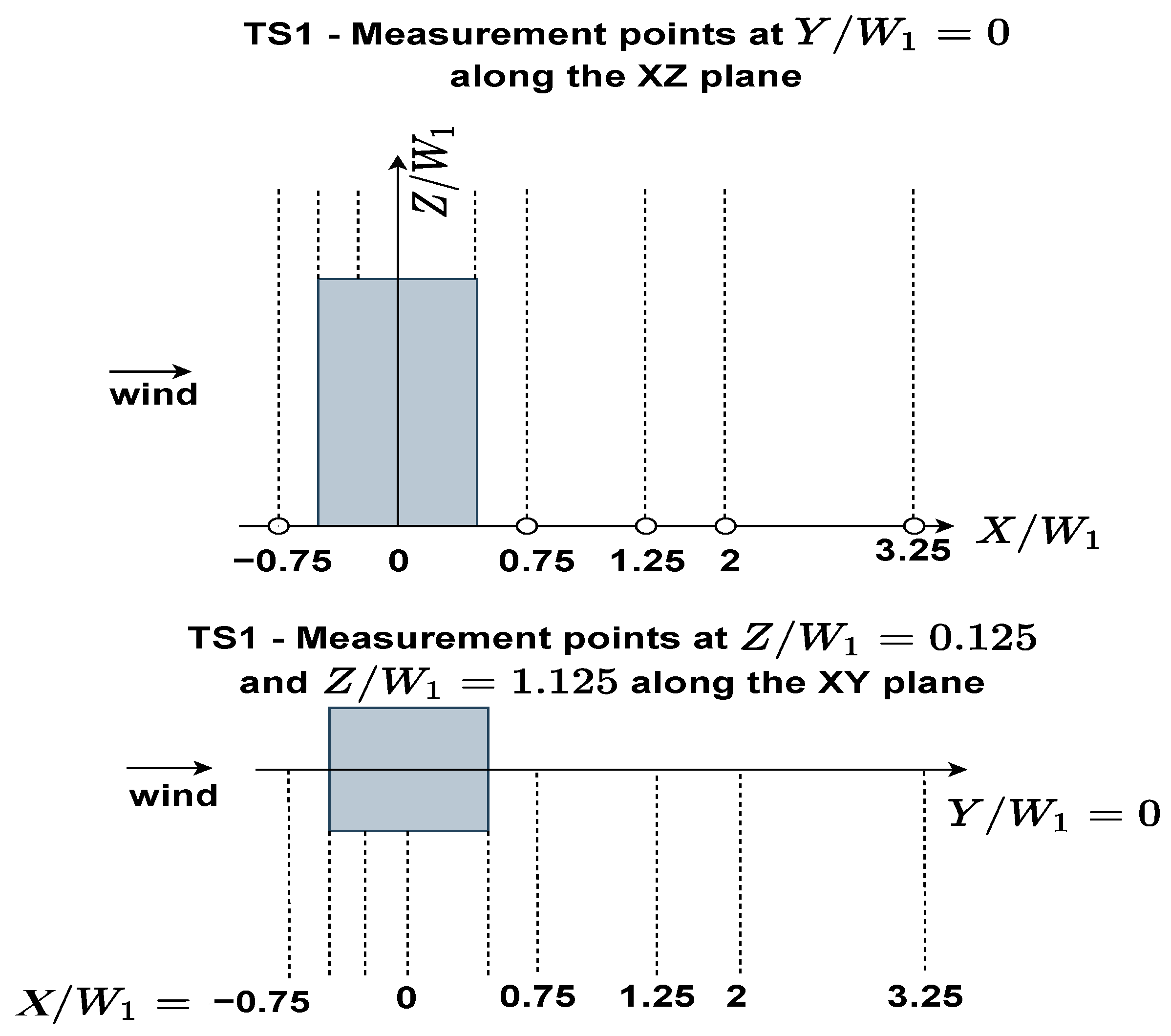
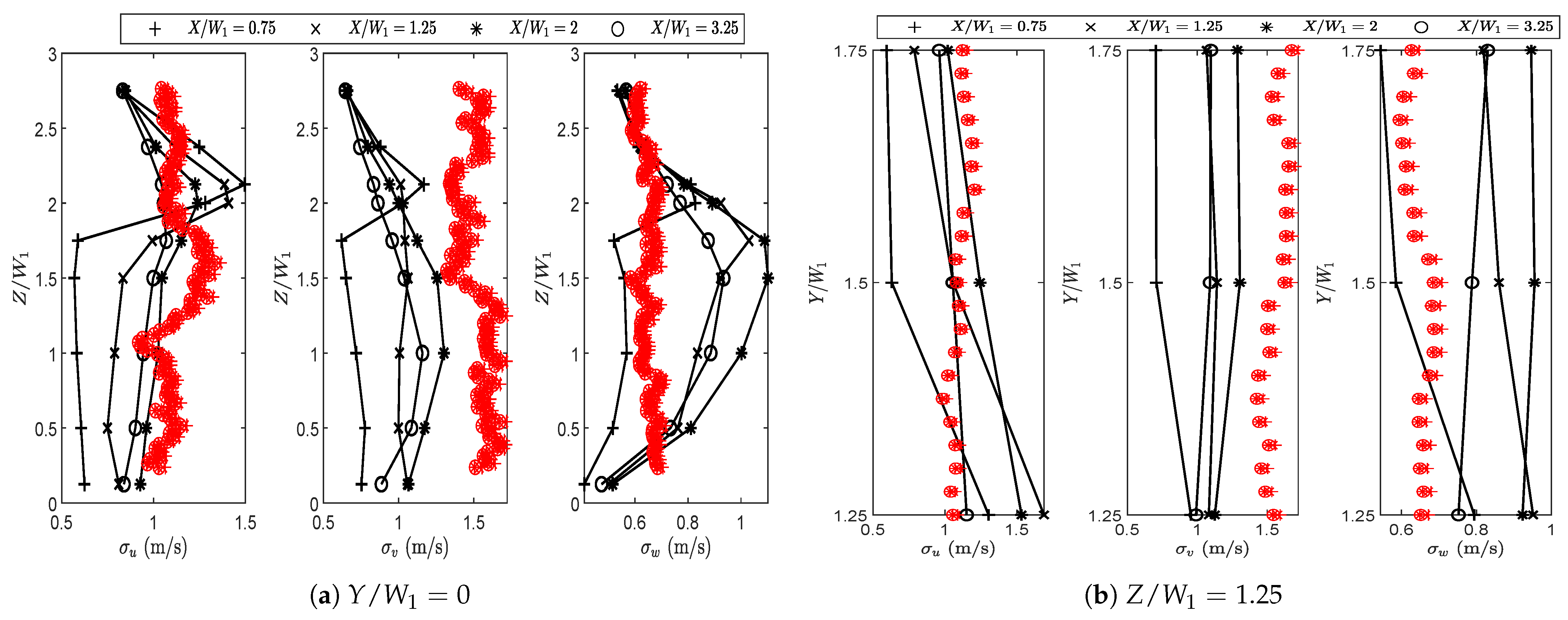
- TS1 recreates the experiments by Meng and Hibi [32], conducted in a reflow wind tunnel using split fiber probes to study flow over an isolated cuboid representing an tall building.
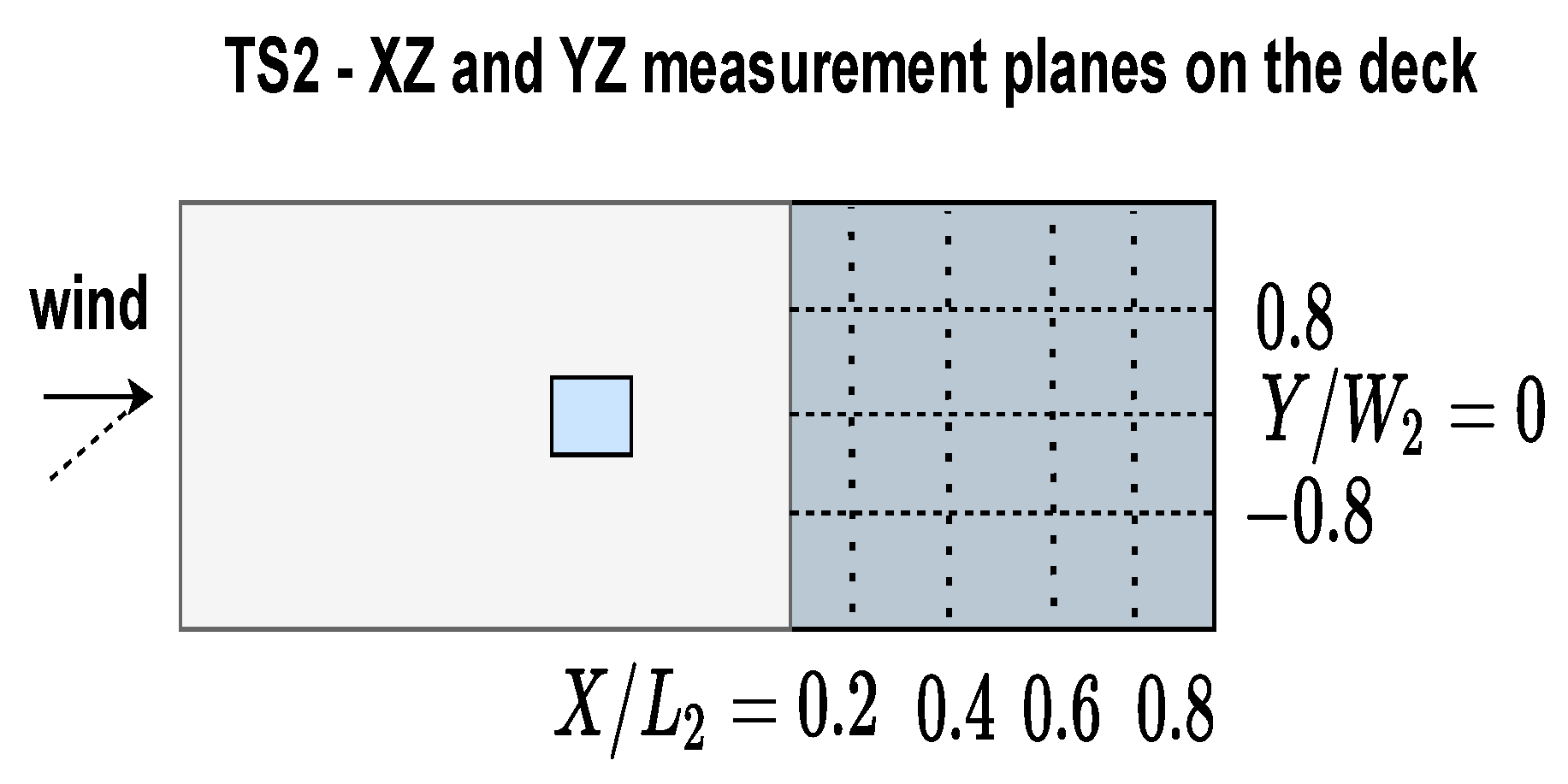
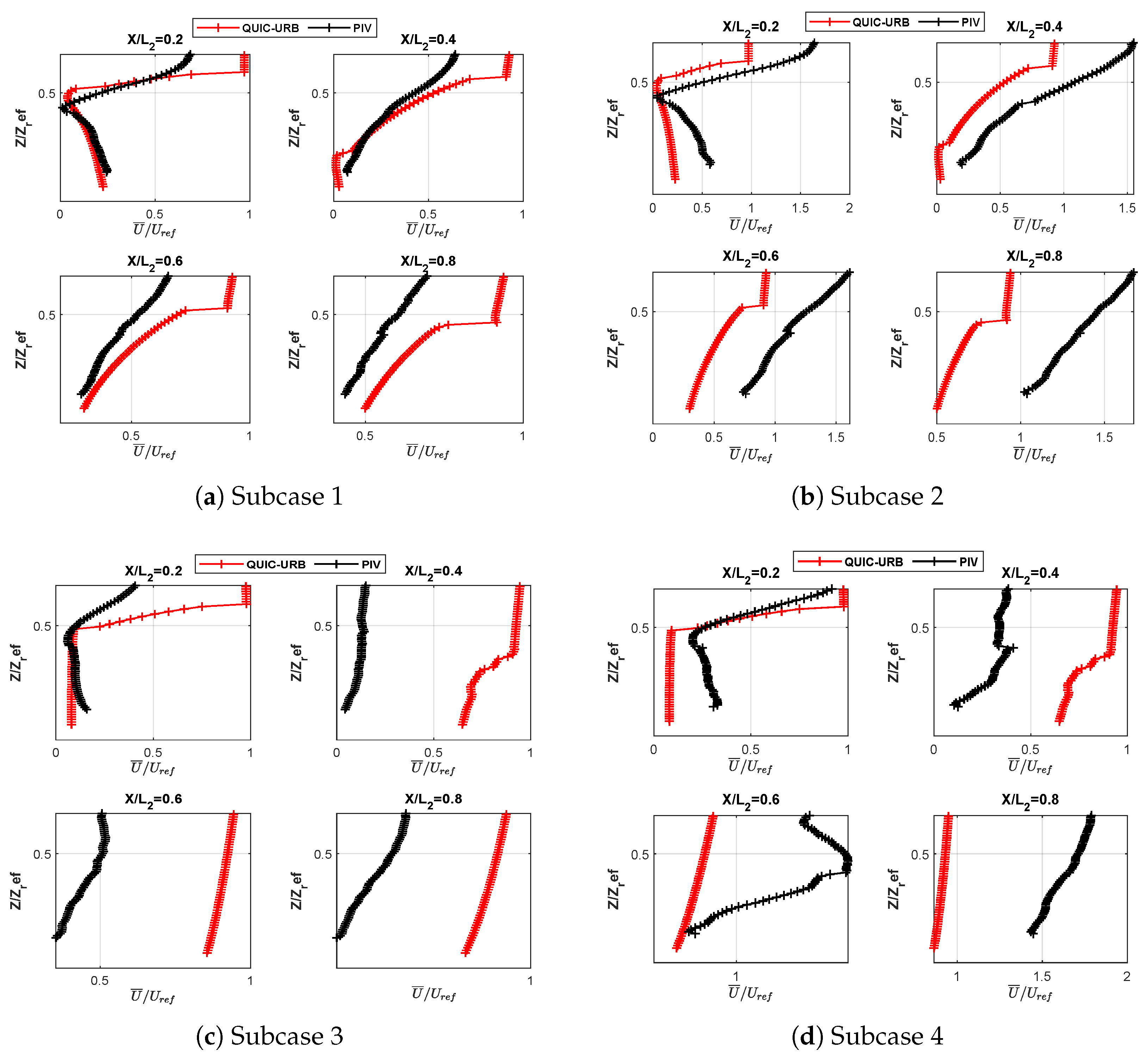
- TS2 is derived from the PhD thesis of Neda Taymourtash [33], who employed an ABL wind tunnel and Particle Image Velocimetry (PIV) to measure time-averaged wind velocity components over a simplified frigate model representing a stacked building configuration.
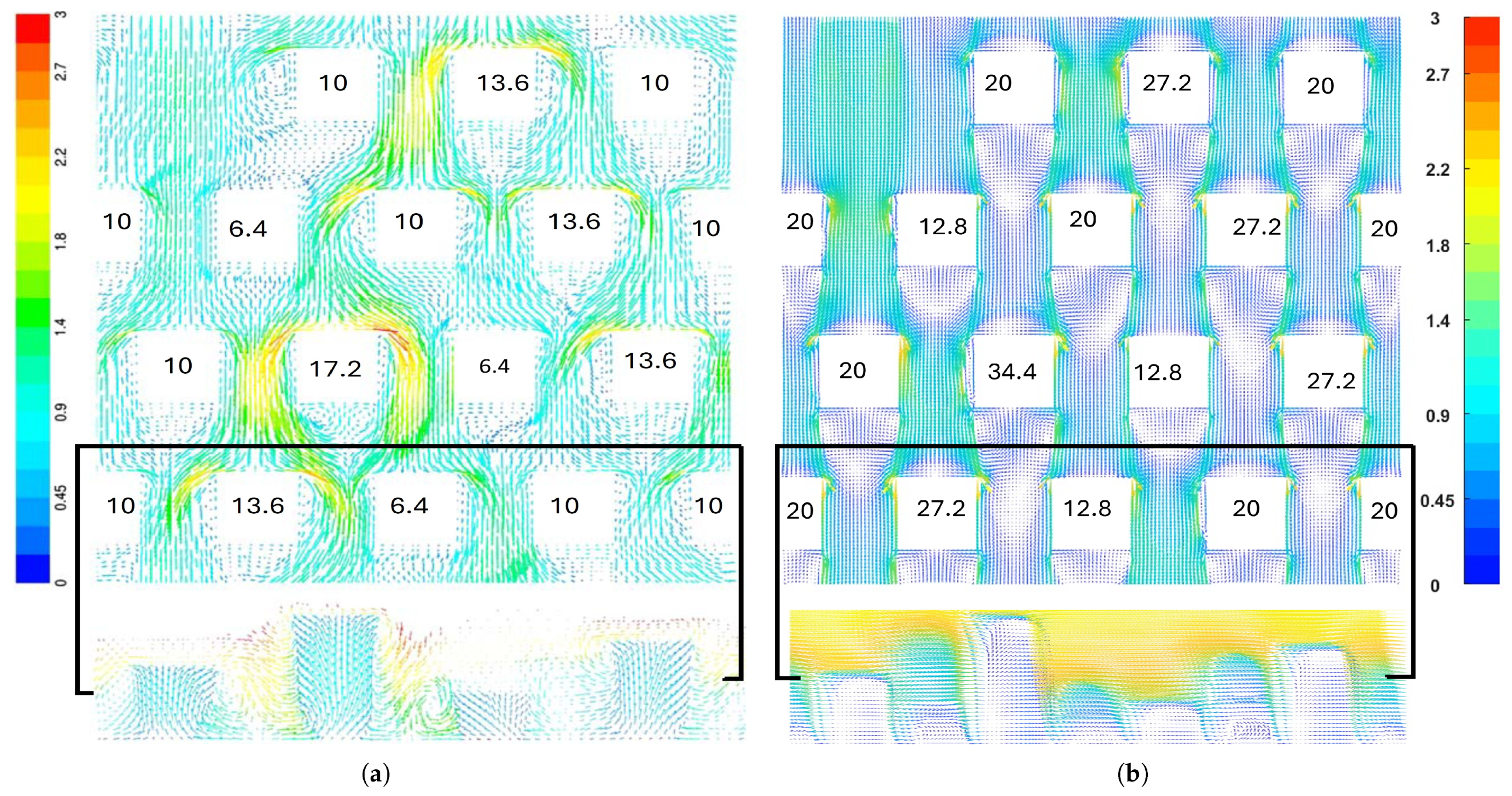
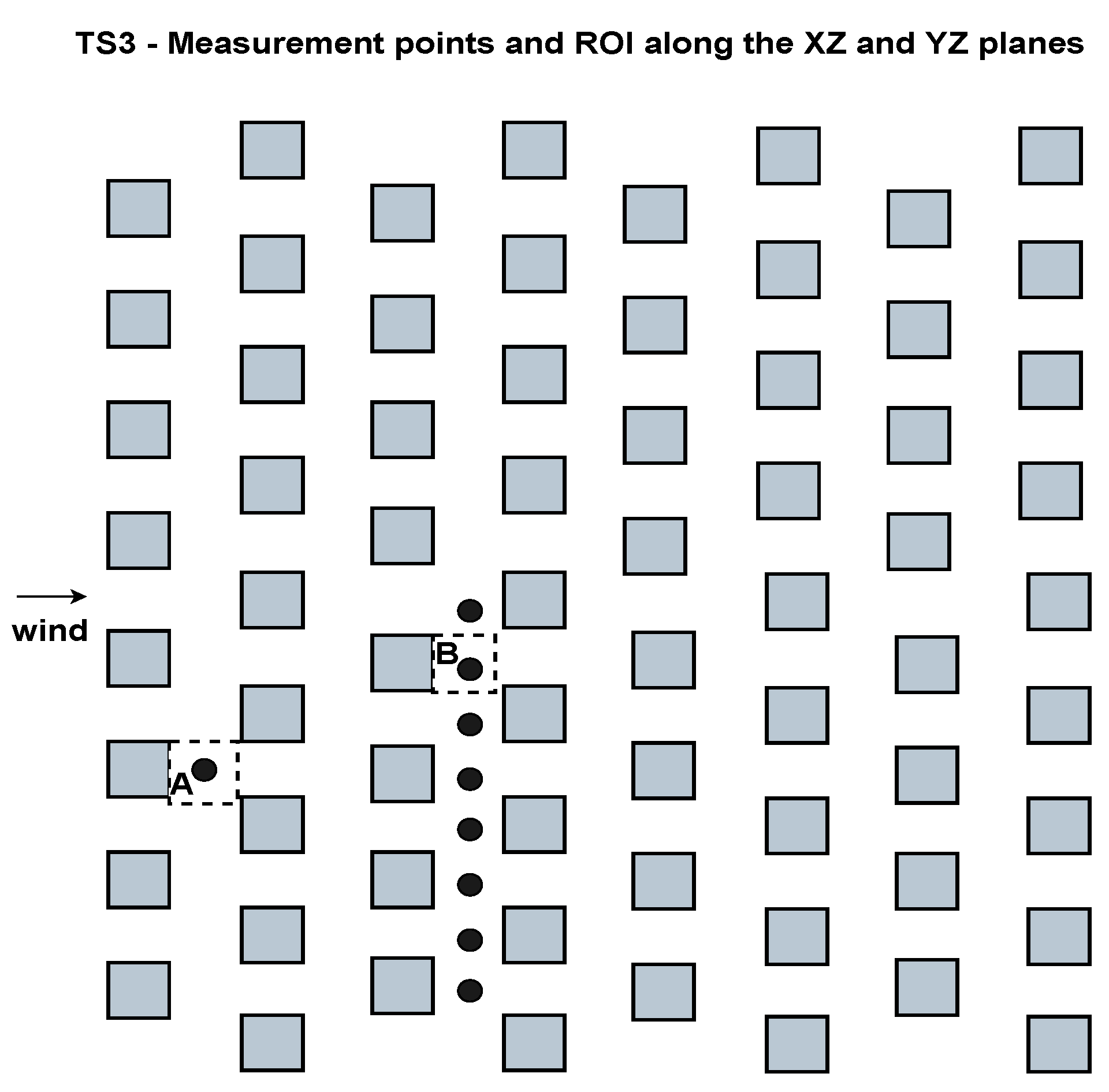
- TS3 follows the setup by Cheng et al. [34], which investigated wind flow over urban topographies using randomly arranged building blocks in a low-speed open-circuit wind tunnel, with measurements obtained via hot-wire anemometry.
3.1. SWM Simulation Configuration for Replication
3.2. SWM Performance Validation
3.2.1. TS1 Isolated Building-Results Analysis
3.2.2. TS2 Stacked Building Results Analysis
3.2.3. TS3 Multi-Building Results Analysis
4. WRF–SWM Integrated Simulation
4.1. Potential Vertiport Site Identification
4.2. WRF-SWM Integration and Simulation Setup
4.3. Simulated Wind Conditions Around the Proposed Vertiport Site
5. Conclusions and Recommendations for Future Research
- 1.
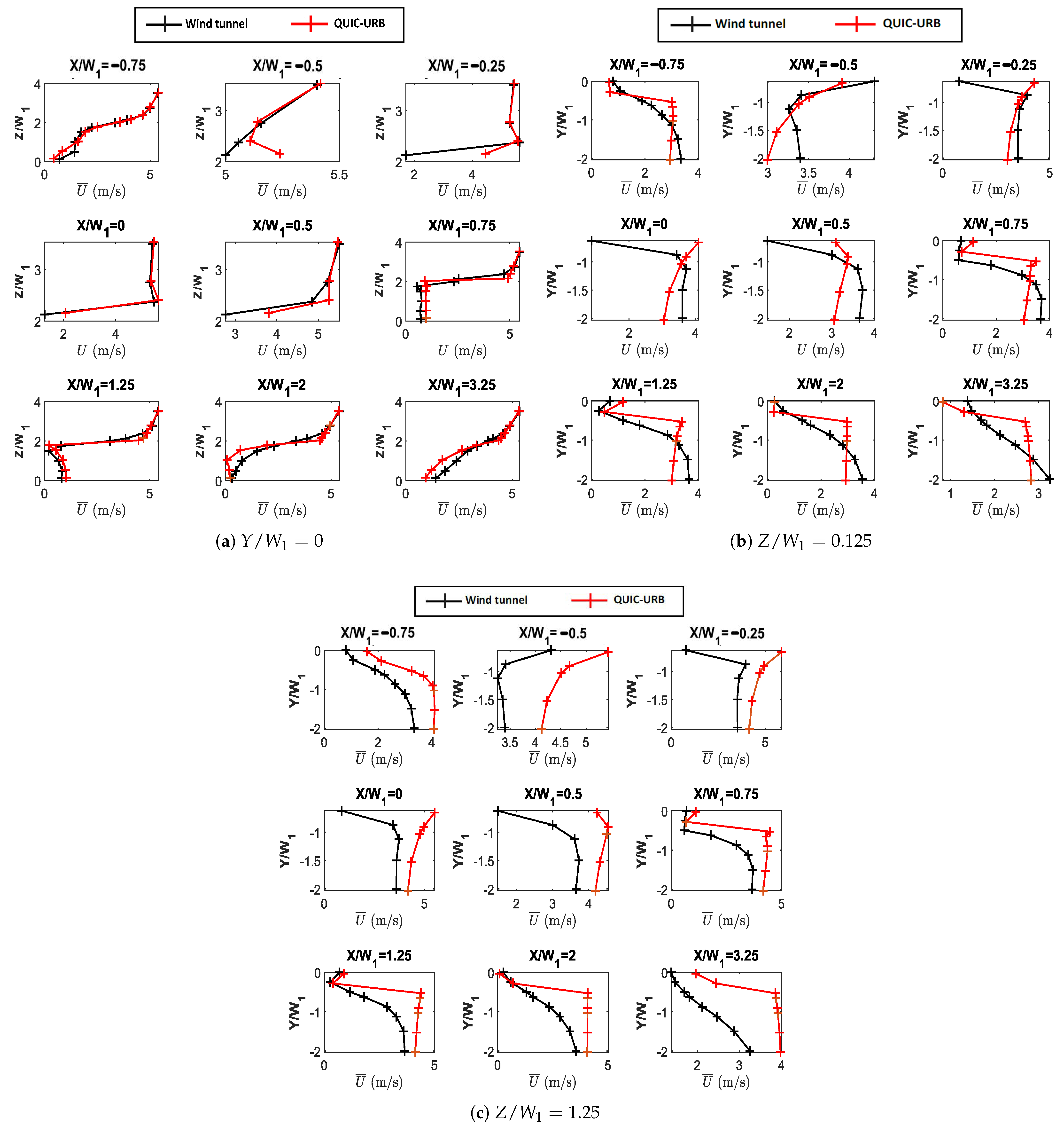
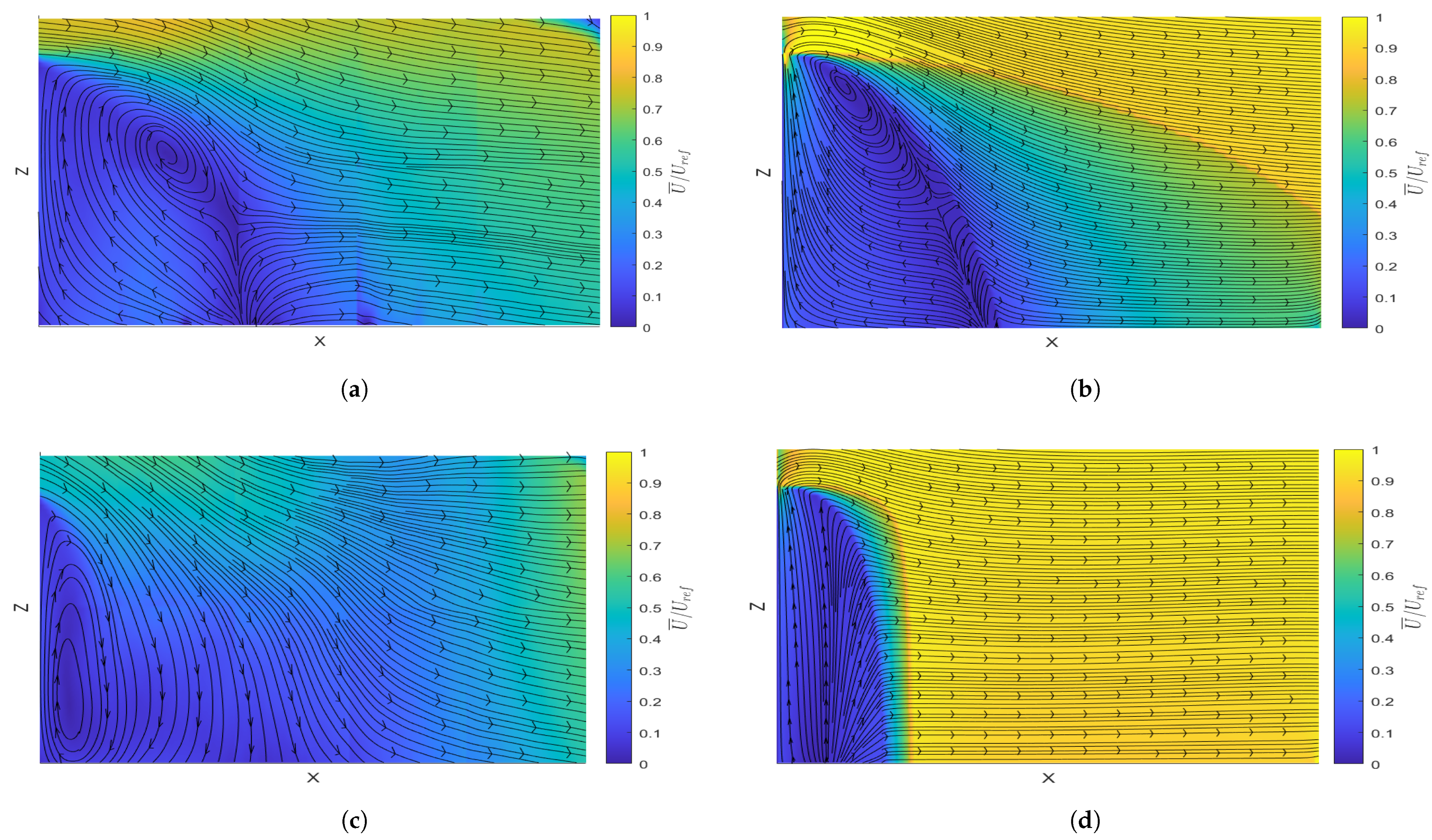
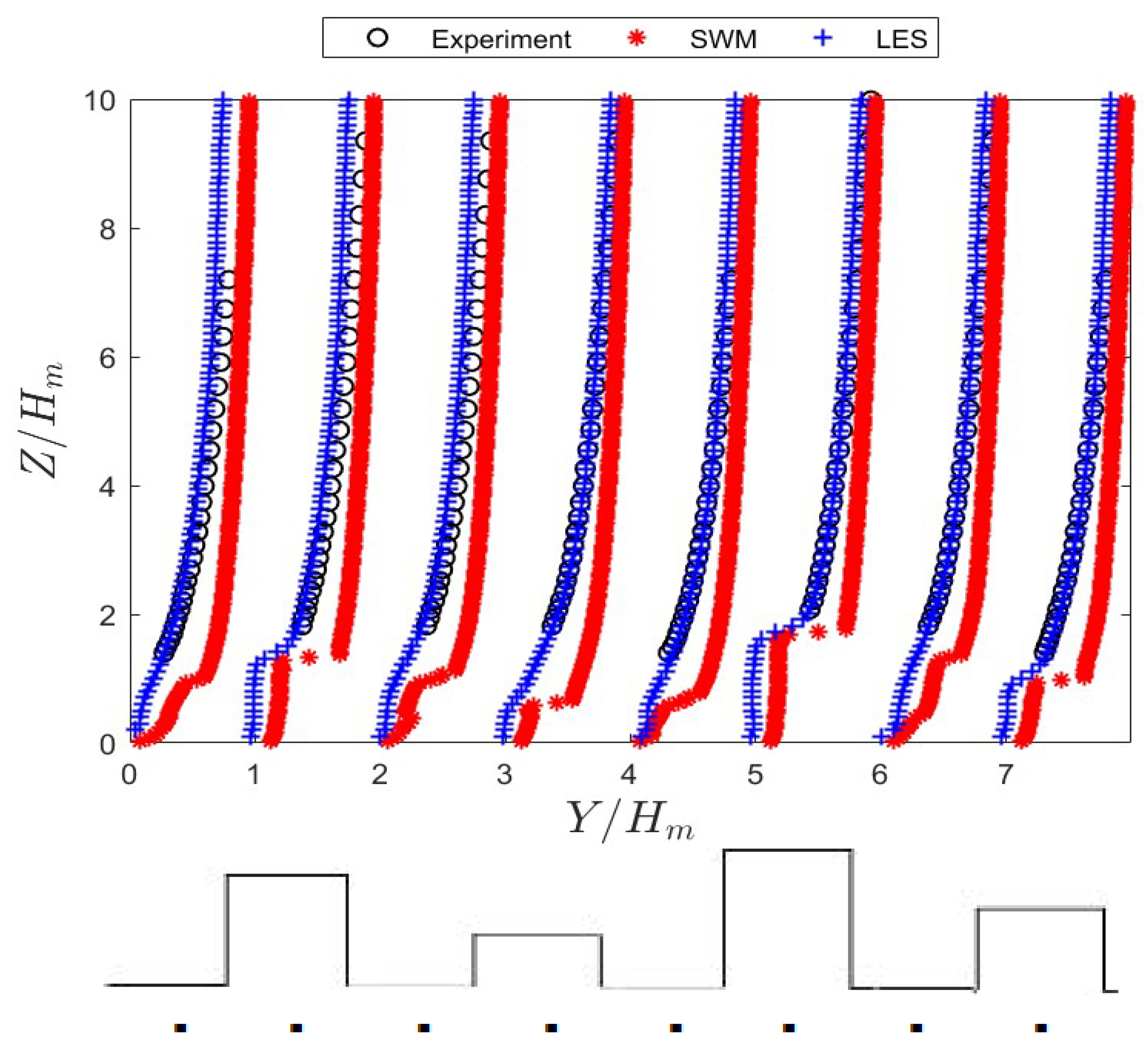
- In all test cases, QUIC consistently captured the fundamental mean flow patterns around buildings or obstacles within the domain, including rooftop shear layers, upwind recirculation zones, and wake regions, albeit with an expected degree of inaccuracy. For example, in TS1, the steady-state vertical velocity profiles exhibited strong agreement with experimental measurements, whereas lateral flow profiles showed discrepancies, with velocity magnitudes either over- or under-estimated at increasing heights within the rear wake region. TS2 analysis indicated that the predictive accuracy of QUIC diminishes with increasing inflow wind speeds and oblique inflow angles. Subcases with lower wind speeds showed trends closer to experimental measurements, whereas higher wind speed scenarios exhibited significant over-prediction. Likewise, subcases with a 270° wind approach angle showed better agreement, while those with a 240° approach angle were under-predicted. Lateral flow disparities, consistent with those observed in TS1 and TS3, were also present. In TS3, QUIC captured the overall flow topology; however, the solution was overly smooth with excessive symmetry. That is, the solver was unable to resolve the complex interactions between the upstream and downstream flows around buildings of varying heights, producing minimal to no lateral flow variations.
- 2.
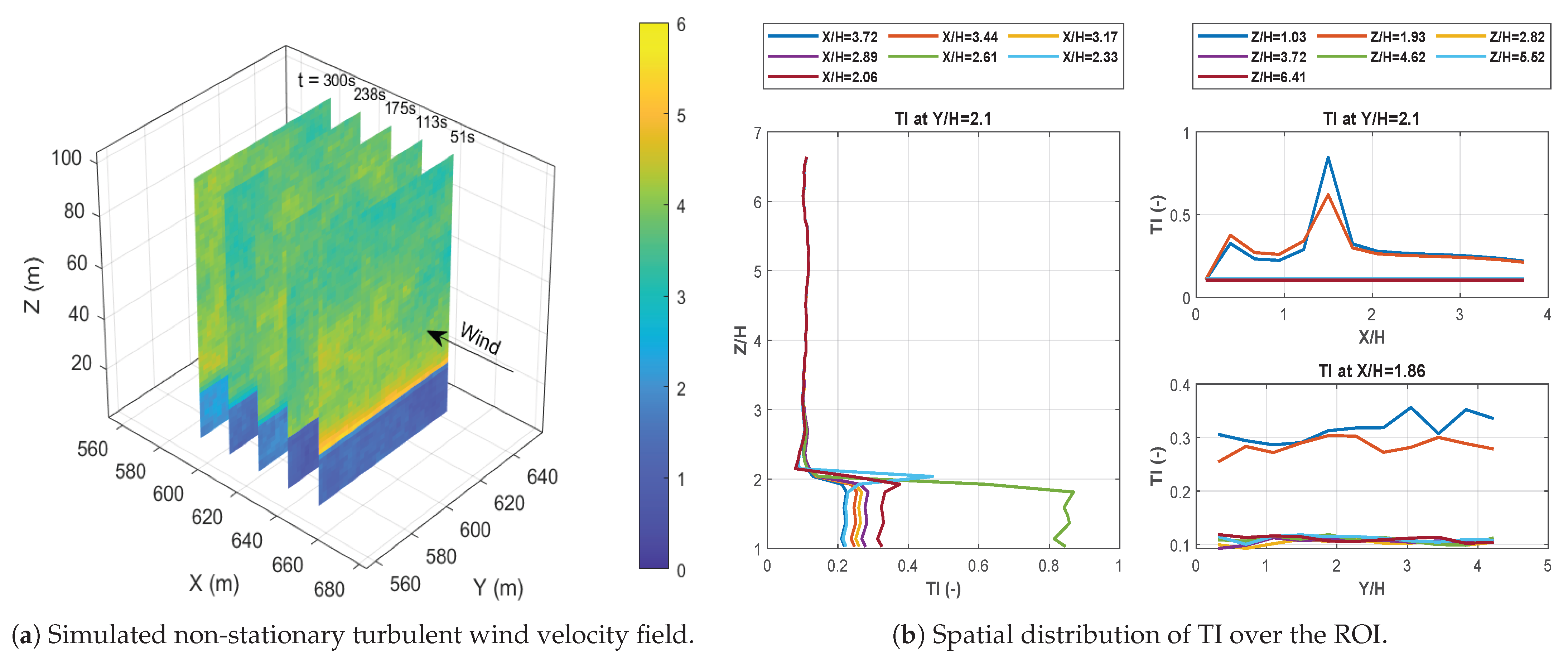
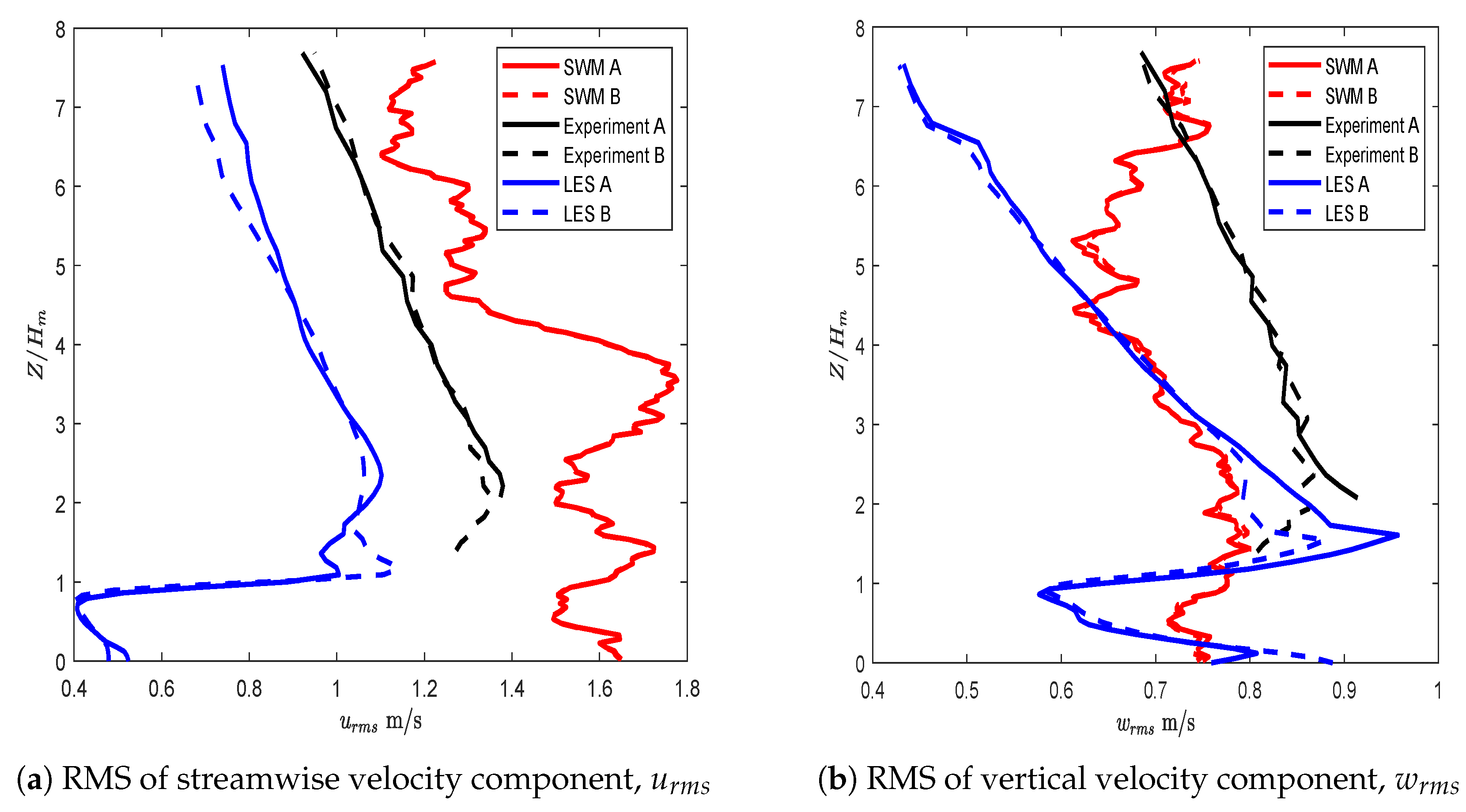
- Validation of the TS1 and TS3 unsteady wind flow fields shows that TurbSim can generate wind velocity magnitudes roughly comparable with experimental measurements. However, this can be achieved only when key parameters—such as time step size (with smaller steps improving accuracy), TI at the reference height, and coherence settings—are carefully tuned. Despite these input parameter adjustments, the synthesized turbulence still fails to reproduce the coherent structures and localized flow patterns that naturally develop behind buildings, highlighting the inherent limitations of TurbSim in representing urban microscale turbulence.
- 3.
- Notwithstanding the limitations, SWM maintains relatively good computational efficiency. Steady-state simulations with QUIC typically complete in under 10 min, while TurbSim-based unsteady realizations require less than 2 h. This provides a substantial reduction in computational cost while achieving a balanced trade-off between efficiency and accuracy compared with high-fidelity CFD or LES.
Author Contributions
Funding
Data Availability Statement
Acknowledgments
Conflicts of Interest
Abbreviations
| ABL | Atmospheric Boundary Layer |
| AD | Atmospheric Disturbance |
| AOI | Area Of Interest |
| CFD | Computational Fluid Dynamics |
| ConOps | Concept of Operations |
| DNS | Direct Numerical Simulation |
| EASA | European Aviation Safety Agency |
| eVTOLs | Electric Vertical Take-Off and Landing Aircraft |
| FATO | Final Approach and Take-Off area |
| IEC | International Electrotechnical Commission |
| LES | Large Eddy Simulation |
| MRE | Mean Relative Error |
| NCEP | National Centers for Environment Prediction |
| NetCDF | NETwork Common Dataform |
| PIV | Particle Image Velocimetry |
| QES | Quick Environmental Simulation |
| QUIC-URB (or) QUIC | Quick Urban and Industrial Complex - URBan |
| RAM | Random Access Memory |
| RMSE | Root Mean Square Error |
| RMS | Root Mean Square |
| ROI | Region(s) of Interest |
| RPAs | Remotely Piloted Aircraft |
| SWM | Stochastic Microscale Wind Model |
| TI | Turbulence Intensity |
| TS | Test Scenario |
| UAM | Urban Air Mobility |
| UAVs | Uncrewed Aerial Vehicles |
| UBL | Urban Boundary Layer |
| VTOL | Vertical Take-Off and Landing aircraft |
| WRF | Weather Research and Forecasting |
References
- Global Industry Analysts, Inc. eVTOL Aircrafts-Global Strategic Business Report. Research and Markets Report, 2024. Available online: https://www.researchandmarkets.com/reports/5997780/evtol-aircrafts-global-market-report. (accessed on 1 December 2025).
- Federal Aviation Administration. Urban Air Mobility (UAM) Concept of Operations v2.0; Technical Report; Federal Aviation Administration (FAA): Washington, DC, USA, 2023. Available online: https://www.faa.gov/air-taxis/uam_blueprint (accessed on 1 December 2025).
- Gregory, I.M. Urban Air Mobility: A Control-Centric Approach to Addressing Technical Challenges. In Presentation NTRS Document ID: 20210015453, National Aeronautics and Space Administration; Langley Research Center: Hampton, VA, USA, 2021. [Google Scholar]
- Connors, M.M. Understanding Risk in Urban Air Mobility: Moving Towards Safe Operating Standards; NASA Technical Memorandum NASA/TM–20205000604; NASA Ames Research Center: Moffett Field, CA, USA, 2020. Available online: https://ntrs.nasa.gov/citations/20205000604 (accessed on 1 December 2025).
- Hamilton, B.A. Urban Air Mobility (UAM) Market Study-Final Report. In Final Report NASA NTRS Document ID: 20190001472; NASA Aeronautics Research Mission Directorate: Washington, DC, USA, 2018. Available online: https://ntrs.nasa.gov/api/citations/20190001472/downloads/20190001472.pdf (accessed on 1 December 2025).
- Hill, B.P.; DeCarme, D.; Metcalfe, M.; Griffin, C.; Wiggins, S.; Metts, C.; Bastedo, B.; Patterson, M.D.; Mendonca, N.L. UAM Vision Concept of Operations (ConOps) UAM Maturity Level (UML) 4; Technical Report NASA NTRS Document ID: 20205011091; NASA Aeronautics Research Mission Directorate: Washington, DC, USA, 2020. [Google Scholar]
- European Union Aviation Safety Agency (EASA). Prototype Technical Specifications for the Design of VFR Vertiports for Operation with Manned VTOL-Capable Aircraft Certified in the Enhanced Category (PTS-VPT-DSN); Technical Report; European Union Aviation Safety Agency: Cologne, Germany, 2024; Available online: https://www.easa.europa.eu/en/document-library/general-publications/prototype-technical-design-specifications-vertiports (accessed on 1 December 2025).
- Federal Aviation Administration (FAA); Airport Engineering Division. Engineering Brief No. 105, Vertiport Design; Engineering Brief EB-105; Federal Aviation Administration: Washington, DC, USA, 2022; Available online: https://acconline.org/wp-content/uploads/Engineering-Brief-105-1.pdf (accessed on 1 December 2025).
- Federal Aviation Administration (FAA). Flight Operational Quality Assurance (FOQA)-Advisory Circular AC 120-82; Advisory Circular AC 120-82; Federal Aviation Administration: Washington, DC, USA, 2004. Available online: https://www.faa.gov/documentLibrary/media/Advisory_Circular/AC_120-82.pdf (accessed on 1 December 2025).
- European Union Aviation Safety Agency (EASA). Means of Compliance with the Special Condition VTOL (MOC SC-VTOL); Issue 2. Technical Report; European Union Aviation Safety Agency: Cologne, Germany, 2023; Available online: https://www.easa.europa.eu/sites/default/files/dfu/MOC-3_SC-VTOL_-_Issue_2_-_21_Jun_2023_-_FINAL.pdf (accessed on 1 December 2025).
- Anderson, J.D. Aircraft Performance and Design, 1st ed.; McGraw-Hill: New York, NY, USA, 1999. [Google Scholar]
- Cook, M.V. Flight Dynamics Principles: A Linear Systems Approach to Aircraft Stability and Control, 3rd ed.; Butterworth-Heinemann: Oxford, UK, 2013. [Google Scholar]
- Nithya, D.S.; Quaranta, G.; Muscarello, V.; Liang, M. Review of Wind Flow Modelling in Urban Environments to Support the Development of Urban Air Mobility. Drones 2024, 8, 123. [Google Scholar] [CrossRef]
- Giersch, S.; Guernaoui, O.E.; Raasch, S.; Sauer, M.; Palomar, M. Atmospheric flow simulation strategies to assess turbulent wind conditions for safe drone operations in urban environments. J. Wind. Eng. Ind. Aerodyn. 2022, 229, 105136. [Google Scholar] [CrossRef]
- Kaimal, J.C.; Finnigan, J.J. Atmospheric Boundary Layer Flows: Their Structure and Measurement, 1st ed.; Oxford University Press: New York, NY, USA, 1994. [Google Scholar]
- Pinus, N.Z. Low-Level Atmospheric Turbulence Affecting Aircraft Flight; Technical Report; Trudy (Central Aerological Observatory): Moscow, Russia, 1967. [Google Scholar]
- Pope, S.B. Turbulent Flows, 1st ed.; Cambridge University Press: Cambridge, UK, 2000. [Google Scholar]
- Stull, R.B. An Introduction to Boundary Layer Meteorology, 1st ed.; Atmospheric and Oceanographic Sciences Library, Springer: Dordrecht, The Netherlands, 1988; Volume 13. [Google Scholar]
- Nelson, M.; Brown, M. The QUIC Start Guide v6.01: The Quick Urban and Industrial Complex (QUIC-URB) Dispersion Modeling System; Technical Report; Los Alamos National Laboratory: Los Alamos, NM, USA, 2013. Available online: https://cdn.lanl.gov/files/quic-startguide_7c182.pdf (accessed on 1 December 2025).
- Kelley, N.D.; Jonkman, B.J. Overview of the TurbSim Stochastic Inflow Turbulence Simulator; Technical Report NREL/TP-500-39796; Version 1.10; National Renewable Energy Laboratory (NREL): Golden, CO, USA, 2006; Available online: https://digital.library.unt.edu/ark:/67531/metadc886250/ (accessed on 1 December 2025).
- Rökle, R. Bestimmung der Strömungsverhältnisse im Bereich Komplexer Bebauungsstrukturen. Ph.D. Thesis, Technische Hochschule Darmstadt, Darmstadt, Germany, 1990. Available online: https://www.deutsche-digitale-bibliothek.de/item/LRKWIGQI4A37AMOLZQDIBS3BQOU32CTU (accessed on 1 December 2025).
- Brown, M.J.; Williams, M.D.; Nelson, M.A.; Werley, K.A. QUIC transport and dispersion modeling of vehicle emissions in cities for better public health assessments. Environ. Health Insights 2015, 9, 1–11. [Google Scholar] [CrossRef] [PubMed]
- Singh, B.; Hansen, B.S.; Brown, M.J.; Pardyjak, E.R. Evaluation of the QUIC-URB fast response urban wind model for a cubical building array and wide building street canyon. Environ. Fluid Mech. 2008, 8, 521–540. [Google Scholar] [CrossRef]
- Pardyjak, E.R.; Brown, M.J. Evaluation of a Fast-Response Urban Wind Model—Comparison to Single-Building Wind Tunnel Data; Technical Report LA-UR-01-4028. Los Alamos National Laboratory: Los Alamos, NM, USA, 2001. Available online: https://digital.library.unt.edu/ark:/67531/metadc718282/ (accessed on 1 December 2025).
- Gowardhan, A.A.; Brown, M.J.; Williams, M.D.; Pardyjak, E.R. Evaluation of the QUIC Urban Dispersion Model using the Salt Lake City URBAN 2000 Tracer Experiment Data—IOP 10. In Proceedings of the 6th Symposium on the Urban Environment, 86th AMS Annual Meeting, Atlanta, GA, USA, 29 January–2 February 2006; Los Alamos National Laboratory Report LA-UR-05-9017. Available online: https://ams.confex.com/ams/pdfpapers/104237.pdf (accessed on 1 December 2025).
- Jonkman, J.E.; Butterfield, S.; Musial, W.; Scott, G. TurbSim User’s Guide v2.00.00; National Renewable Energy Laboratory (NREL): Golden, CO, USA, 2006. Available online: https://www.nrel.gov/docs/libraries/wind-docs/turbsim_v2-00-pdf.pdf (accessed on 1 December 2025).
- Nithya, D.S.; Quaranta, G.; Muscarello, V.; Liang, M. Assessment of a Highly Parameterized Steady-State Microscale Wind Simulator for Urban Air Mobility Applications. In Proceedings of the 34th International Congress of the Aeronautical Sciences (ICAS 2024), Florence, Italy, 9–13 September 2024; Available online: https://www.icas.org/ICAS_ARCHIVE/ICAS2024/data/papers/ICAS2024_0379_paper.pdf (accessed on 1 December 2025).
- Civil Aviation Safety Authority (CASA). ADVISORY CIRCULAR AC 139.V-01 v1.0: Guidance for Vertiport Design; Civil Aviation Safety Authority: Canberra, Australia, 2023. Available online: https://www.casa.gov.au/sites/default/files/2023-07/advisory-circular-139.v-01-guidance-vertiport-design.pdf (accessed on 1 December 2025).
- Johnson, M. High-Density Automated Vertiport Concept of Operations; Technical Report NASA/CR-20210010603; National Aeronautics and Space Administration (NASA): Washington, DC, USA, 2021. Available online: https://ntrs.nasa.gov/api/citations/20210010603/downloads/20210010603_MJohnson_VertiportAtmtnConOpsRprt_final.pdf (accessed on 1 December 2025).
- Utah Environmental Fluid Dynamics (UtahEFD) Group. UtahEFD/QES-Public: Quick Environmental Simulation (QES) for Urban Wind and Dispersion Modeling; Zenodo/GitHub: Salt Lake City, UT, USA, 2024; Version 2.2.0; Available online: https://github.com/UtahEFD/QES-Public (accessed on 1 December 2025).
- Bozorgmehr, B.; Willemsen, P.; Margairaz, F.; Gibbs, J.A.; Patterson, Z.; Stoll, R.; Pardyjak, E.R. QES-Winds v2.2.0: Theory and User’s Guide; University of Utah/Zenodo: Salt Lake City, UT, USA, 2024. [Google Scholar] [CrossRef]
- Meng, Y.; Hibi, K. Turbulent measurements of the flow field around a high-rise building. J. Wind. Eng. 1998, 76, 55–64. [Google Scholar] [CrossRef]
- Taymourtash, N. Experimental Investigation of Helicopter-Ship Dynamic Interface. Ph.D. Thesis, Politecnico di Milano, Milan, Italy, 2022. Available online: https://hdl.handle.net/20.500.14242/207136 (accessed on 1 December 2025).
- Cheng, H.; Castro, I.P. Near Wall Flow Over Urban-Like Roughness. Bound.-Layer Meteorol. 2002, 104, 229–259. [Google Scholar] [CrossRef]
- Xie, Z.T.; Coceal, O.; Castro, I.P. Large-Eddy Simulation of Flows over Random Urban-like Obstacles. Bound.-Layer Meteorol. 2008, 129, 1–23. [Google Scholar] [CrossRef]
- Zou, J.; Yu, Y.; Liu, J.; Niu, J.; Chauhan, K.; Lei, C. Field measurement of the urban pedestrian level wind turbulence. Build. Environ. 2021, 194, 107713. [Google Scholar] [CrossRef]
- U.S. Department of Defense. Flying Qualities of Piloted Aircraft; Military Standard MIL-STD-1797A; U.S. Department of Defense: Arlington County, VA, USA, 1982. [Google Scholar]
- International Electrotechnical Commission (IEC). IEC 61400-1:2019-Wind Energy Generation Systems—Part 1: Design Requirements. Standard IEC 61400-1:2019; International Electrotechnical Commission: London, UK, 2019. Available online: https://webstore.iec.ch/en/publication/26423 (accessed on 1 December 2025).
- Smith, O.E.; Adelfang, S.I. A Compendium of Wind Statistics and Models for the NASA Space Shuttle and Other Aerospace Vehicle Programs; Technical Report NASA/CR-1998-208859; NASA Marshall Space Flight Center: Madison County, AL, USA, 1998. Available online: https://ntrs.nasa.gov/citations/19990008476 (accessed on 1 December 2025).
- Barlow, J.F.; Coceal, O. A Review of Urban Roughness Sublayer Turbulence; Technical Report 527; Met Office: Exeter, UK, 2009; Available online: https://centaur.reading.ac.uk/38572/1/2009BarlowCocealMETOFF_reviewurbRSL.pdf (accessed on 1 December 2025).
- Bernard, J.; Lindberg, F.; Oswald, S. URock 2023a: An open-source GIS-based wind model for complex urban settings. Geosci. Model Dev. 2023, 16, 5703–5724. [Google Scholar] [CrossRef]
- Hansen, A.C.; Peterka, J.A.; Cermak, J.E. Wind-Tunnel Measurements in the Wake of a Simple Structure in a Simulated Atmospheric Flow. Contractor Report NASA-CR-2540; NASA: Washington, DC, USA, 1975. Available online: https://ntrs.nasa.gov/citations/19750012586/downloads/19750012586.pdf (accessed on 1 December 2025).
- Woo, H.G.C.; Peterka, J.A.; Cermak, J.E. Wind Tunnel Measurements in the Wakes of Structures; Contractor Report NASA-CR-2806; NASA: Washington, DC, USA, 1977. Available online: https://ntrs.nasa.gov/api/citations/19770012772/downloads/19770012772.pdf (accessed on 1 December 2025).
- Xie, Z.T.; Coceal, O.; Castro, I.P. Dataset for Large-Eddy Simulation of Flows over Random Urban-Like Obstacles; Institutional Repository; University of Southampton: Hampshire, UK, 2019. [Google Scholar] [CrossRef]
- SESAR Joint Undertaking. U-Space ConOps and Architecture, 4th ed.; Technical Report; SESAR Joint Undertaking: Brussels, Belgium, 2023; Available online: https://www.sesarju.eu/node/4544 (accessed on 1 December 2025).
- Piano Urbano della Mobilità Sostenibile della Città Metropolitana di Milano: Documento di Piano. Technical Report, Città Metropolitana di Milano, 2021. Available online: https://www.cittametropolitana.mi.it/PUMS/Pums (accessed on 1 December 2025).
- UIC2–UAM Initiative Cities Community, EU’s Smart Cities Marketplace. Urban Air Mobility and Sustainable Urban Mobility Planning–Practitioner Briefing, 2021. Available online: https://urban-mobility-observatory.transport.ec.europa.eu/system/files/2023-11/urban_air_mobility_and_sump.pdf (accessed on 27 November 2025).
- Coppola, P.; Fabiis, F.D.; Silvestri, F. Urban Air Mobility (UAM): Airport shuttles or city-taxis? Transp. Policy 2024, 150, 24–34. [Google Scholar] [CrossRef]
- Giunta Regionale della Lombardia. Delibera N.4962, XII Legislatura: Approvazione dello Schema di Accordo tra Regione Lombardia, Città Metropolitana di Milano, Comune di Milano, Comune di Segrate, Rete Ferroviaria Italiana S.p.A., Con l’Adesione di Westfield Milan S.p.A., per il Coordinamento Degli Interventi Previsti Nell’Ambito Dell’Hub Porta Est (di Concerto Con l’Assessore Lucente). Available online: https://www.regione.lombardia.it/wps/portal/istituzionale/HP/istituzione/Giunta/sedute-delibere-giunta-regionale/DettaglioDelibere/delibera-4962-legislatura-12 (accessed on 1 December 2025).
- Balasubramanian, A. Milan East Gate Hub: An Urbanlink: Multimodal transportation hub in Segrate. Master’s Thesis, Politecnico di Milano, Milan, Italy, 2023. Available online: https://hdl.handle.net/10589/230852 (accessed on 1 December 2025).
- Skamarock, W.C.; Klemp, J.B.; Dudhia, J.; Gill, D.O.; Barker, D.M.; Wang, M.; Powers, J.G. A Description of the Advanced Research WRF Model Version 4; Technical Report NCAR/TN-556+STR; National Center for Atmospheric Research (NCAR): Boulder, CO, USA, 2019; Available online: https://www2.mmm.ucar.edu/wrf/users/docs/technote/v4_technote.pdf (accessed on 1 December 2025).
- Kochanski, A.K.; Pardyjak, E.R.; Stoll, R.; Gowardhan, A.; Brown, M.J.; Steenburgh, W.J. One-Way Coupling of the WRF–QUIC Urban Dispersion Modeling System. J. Appl. Meteorol. Climatol. 2015, 54, 2119–2139. [Google Scholar] [CrossRef]
- National Centers for Environmental Prediction (NCEP), NOAA. NCEP GFS 0.25° Global Forecast Grids Historical Archive (Updated daily). Available online: https://rda.ucar.edu/datasets/ds084.1/ (accessed on 15 September 2025).
- WRF Development Team, NCAR/UCAR. WRF Users’ Guide, Version 4.5; National Center for Atmospheric Research (NCAR): Boulder, CO, USA, 2024; Available online: https://www2.mmm.ucar.edu/wrf/users/docs/user_guide_v4/contents.html (accessed on 1 December 2025).
- Monin, A.S.; Obukhov, A.M. Basic laws of turbulent mixing in the surface layer of the atmosphere. Tr. Geophys. Inst. Akad. Nauk. SSSR 1954, 24, 163–187. [Google Scholar]
- Bougeault, P.; Lacarrère, P. Parameterization of Orography-Induced Turbulence in a Mesobeta–Scale Model. Mon. Weather. Rev. 1989, 117, 1872–1890. [Google Scholar] [CrossRef]
- Tewari, M.; Chen, F.; Wang, W.; Dudhia, J.; LeMone, M.A.; Mitchell, K.; Ek, M.; Gayno, G.; Wegiel, J.; Cuenca, R.H. Implementation and Verification of the Unified NOAH Land Surface Model in the WRF Model. In Proceedings of the 84th American Meteorological Society Annual Meeting—20th Conference on Weather Analysis and Forecasting/16th Conference on Numerical Weather Prediction, Seattle, WA, USA, 11–15 January 2004; Available online: https://ams.confex.com/ams/84Annual/webprogram/Paper69061.html (accessed on 1 December 2025).
- OpenStreetMap contributors. OpenStreetMap. Available online: https://www.openstreetmap.org (accessed on 1 December 2025).
- Morrison, M.J.; Kopp, G.A. Effects of turbulence intensity and scale on surface pressure fluctuations on the roof of a low-rise building in the atmospheric boundary layer. J. Wind. Eng. Ind. Aerodyn. 2018, 183, 140–151. [Google Scholar] [CrossRef]
- Tominaga, Y.; Wang, L.L.; Zhai, Z.J.; Stathopoulos, T. Accuracy of CFD simulations in urban aerodynamics and microclimate: Progress and challenges. Build. Environ. 2023, 243, 110723. [Google Scholar] [CrossRef]
- Paladin, G.; Jensen, M.H.; Vulpiani, A. Predictability. In Turbulence: A Tentative Dictionary; Tabeling, P., Cardoso, O., Eds.; Springer: Boston, MA, USA, 1994; pp. 75–79. [Google Scholar] [CrossRef]
- Nithya, D.S.; Rylko, A.; Muscarello, V.; Liang, M.; Quaranta, G. Effects of Microscale Wind Disturbance on eVTOL Aircraft Performance During Landing. In Proceedings of the 50th European Rotorcraft Forum, Marseille, France, 10–12 September 2024; pp. 1–8. [Google Scholar]
- Nithya, D.S.; Rylko, A.; Muscarello, V.; Liang, M.; Quaranta, G. Sensitivity Analysis of Urban Air Mobility Aircraft Landing Trajectory Deviation to Microscale Wind Disturbances. In Proceedings of the 81st Annual Forum & Technology Display, eVTOL Technical Session, Philadelphia, PA, USA, 20–22 May 2025; pp. 320–328. [Google Scholar] [CrossRef]
- Nithya, D.S.; Rylko, A.; Muscarello, V.; Liang, M.; Quaranta, G. Towards Determining Wind Disturbance Levels for an Urban Air Mobility Aircraft Through Simulation-Based Flight Testing. In Proceedings of the 51st European Rotorcraft Forum, Venice, Italy, 9–12 September 2025; pp. 1–9. [Google Scholar]
- Banerjee, P.; Corbetta, M.; Jarvis, K.; Smalling, K.; Turner, A. Probability of Trajectory Deviation of Unmanned Aerial Vehicle in Presence of Wind. J. Air Transp. 2023, 31, 128–139. [Google Scholar] [CrossRef]
- Vuppala, R.K.S.S.; Krawczyk, Z.; Paul, R.; Kara, K. Modeling Advanced Air Mobility Aircraft in Data-Driven Reduced Order Realistic Urban Winds. Sci. Rep. 2024, 14, 383. [Google Scholar] [CrossRef]
- Krammer, C.; Holzapfel, F. Estimation of Probability of Exceeding SC-VTOL Performance Requirements During Automatic Landing Using Subset Simulation. In Proceedings of the Vertical Flight Society 79th Annual Forum & Technology Display, West Palm Beach, FL, USA, 16–18 May 2023. Paper 80, Modeling and Simulation session. [Google Scholar] [CrossRef]
- Larose, G.L.; Schajnoha, S.; Al Labbad, M. Development of Turbulence Based Design Criteria for Vertiports. In Proceedings of the Vertical Flight Society 80th Annual Forum & Technology Display, Montréal, QC, Canada, 7–9 May 2024. eVTOL technical session. [Google Scholar] [CrossRef]
- Schajnoha, S.; Larose, G.L.; Al-Labbad, M.; Barber, H.; Wall, A. The Safety of Advanced Air Mobility and The Effects of Wind in the Urban Canyon. In Proceedings of the Vertical Flight Society 78th Annual Forum & Technology Display, Fort Worth, TX, USA, 10–12 May 2022. [Google Scholar] [CrossRef]
- Zyadat, Z.; Horri, N.; Innocente, M.; Statheros, T. Observer-Based Optimal Control of a Quadplane with Active Wind Disturbance and Actuator Fault Rejection. Sensors 2023, 23, 1954. [Google Scholar] [CrossRef]
- Pradeep, P.; Chatterji, G.B.; Sridhar, B.; Edholm, K.; Lauderdale, T.A.; Sheth, K.; Lai, C.F.; Erzberger, H. Wind-Optimal Trajectories for Multirotor eVTOL Aircraft on UAM Missions. In Proceedings of the 2020 AIAA Aviation Forum, Online, 15–19 June 2020. [Google Scholar] [CrossRef]
- Waanders, D.; Salins, S.; Rauleder, J.; Smith, M. A Real-Time Reduced-Order Model for the Atmospheric Boundary Layer Including Roughness Sublayer. In Proceedings of the Vertical Flight Society 81st Annual Forum & Technology Display, Virginia Beach, VA, USA, 20–22 May 2025. Modeling & Simulation IV session, Lichten Runner-Up. [Google Scholar] [CrossRef]
- Shah, T.A.; Stanley, M.C.; Warner, J.E. Generative Modeling of Microweather Wind Velocities for Urban Air Mobility. In Proceedings of the IEEE Aerospace Conference, Big Sky, MT, USA, 1–8 March 2025. [Google Scholar] [CrossRef]
- Chrit, M.; Majdi, M. Operational wind and turbulence nowcasting capability for advanced air mobility. Neural Comput. Appl. 2024, 36, 10637–10654. [Google Scholar] [CrossRef]
- Bae, J.; Lee, Y.; Rho, J.H.; Kang, G.; Kim, J.J.; Son, R. CFD-quality nowcasting for urban air mobility with a deep learning-based emulator. Environ. Res. Lett. 2025, 20, 074001. [Google Scholar] [CrossRef]
- Li, W.; Giometto, M.G. The structure of turbulence in unsteady flow over urban canopies. J. Fluid Mech. 2024, 985, A5. [Google Scholar] [CrossRef]
- Thedin, R.; Quon, E.; Churchfield, M.; Veers, P. Investigations of correlation and coherence in turbulence from a large-eddy simulation. Wind. Energy Sci. 2023, 8, 487–502. [Google Scholar] [CrossRef]





| Input Variables | TS1 | TS2 | TS3 |
|---|---|---|---|
| QUIC-URB † | |||
| Sub-cases | 1 | 4 * | 1 |
| Domain size, (m) | |||
| Grid size (m) and type | 1, Uniform | , Uniform | 1, Uniform |
| Grid resolution, | |||
| Cell count | 12 million | 2.16 million | 48 million |
| Position offset 1, (m) | (base) (mid) (mast) | (first column) | |
| Input wind profile type | Single profile 2 | Single profile | Single profile |
| Wind profile | Discrete points 3 | Power law | Logarithmic |
| Wind direction (°) | 270 | 240 and 270 | 270 |
| Reference wind speed, (m/s) | and 12 | 10 | |
| Reference height, (m) | 300 | 274 | |
| Wind profile parameters | |||
| Input Variables | TS1 | TS2 | TS3 |
|---|---|---|---|
| TurbSim | |||
| No. of ROIs | 1 | 1 | 2 ** |
| ROI size, (m) | (A, B) | ||
| Grid size (m) | 1 | 0.5 | 1 |
| No. of TurbSim planes in ROI | 50 | 54 | 20 (A, B) |
| Grid resolution 1, | (A, B) | ||
| Reference wind speed, (m/s) | 6.75 | 4.8 & 12 | 10 |
| Reference height, (m) | 300 | 18.96 | 274 |
| TI 2 (%) | 30 | 30 | 15 |
| Time step (seconds) | 0.5 | ||
| Total analysis time (seconds) | 300 | ||
| Turbulence spectral model 3 | Kaimal | ||
| Wind profile | User-defined 4 | ||
| Coherence model | General (for all 3 wind velocity components—u, v, w and test scenarios) | ||
| Coherence parameters 5 | ; ; | ||
| Wind Flow Zone | ||||||||||
|---|---|---|---|---|---|---|---|---|---|---|
| MRE | RMSE (m/s) | Bias | MRE | RMSE (m/s) | Bias | MRE | RMSE (m/s) | Bias | ||
| Upwind | −0.75 | 0.008 | 0.25 | 0.02 | 0.065 | 1.73 | 0.15 | 0.48 | 2.04 | 1.09 |
| Rooftop or Side wake † | −0.5 | 0.01 | 0.12 | 0.07 | −0.06 | 0.65 | −0.17 | 0.39 | 1.28 | 1.05 |
| −0.25 | 0.2 | 1.37 | 0.68 | 0.15 | 1.12 | 0.47 | 0.56 | 2.01 | 1.72 | |
| 0 | 0.06 | 0.41 | 0.27 | 0.16 | 1 | 0.48 | 0.56 | 1.91 | 1.70 | |
| 0.5 | 0.08 | 0.56 | 0.37 | 0.04 | 0.78 | 0.12 | 0.41 | 1.47 | 1.26 | |
| Leeside near wake | 0.75 | 0.11 | 0.9 | 0.27 | 0.22 | 2.14 | 0.48 | 0.58 | 2.84 | 1.28 |
| Leeside far wake | 1.25 | 0.11 | 0.56 | 0.28 | 0.20 | 2.1 | 0.44 | 0.55 | 2.83 | 1.20 |
| 2 | −0.01 | 0.56 | −0.02 | 0.16 | 2.18 | 0.32 | 0.60 | 2.82 | 1.18 | |
| 3.25 | −0.03 | 0.39 | −0.11 | 0.09 | 1.35 | 0.20 | 0.63 | 1.90 | 1.35 | |
Disclaimer/Publisher’s Note: The statements, opinions and data contained in all publications are solely those of the individual author(s) and contributor(s) and not of MDPI and/or the editor(s). MDPI and/or the editor(s) disclaim responsibility for any injury to people or property resulting from any ideas, methods, instructions or products referred to in the content. |
© 2025 by the authors. Licensee MDPI, Basel, Switzerland. This article is an open access article distributed under the terms and conditions of the Creative Commons Attribution (CC BY) license (https://creativecommons.org/licenses/by/4.0/).
Share and Cite
Nithya, D.S.; Monteleone, F.; Quaranta, G.; Liang, M.; Muscarello, V. Development and Validation of a Custom Stochastic Microscale Wind Model for Urban Air Mobility Applications. Drones 2025, 9, 863. https://doi.org/10.3390/drones9120863
Nithya DS, Monteleone F, Quaranta G, Liang M, Muscarello V. Development and Validation of a Custom Stochastic Microscale Wind Model for Urban Air Mobility Applications. Drones. 2025; 9(12):863. https://doi.org/10.3390/drones9120863
Chicago/Turabian StyleNithya, D S, Francesca Monteleone, Giuseppe Quaranta, Man Liang, and Vincenzo Muscarello. 2025. "Development and Validation of a Custom Stochastic Microscale Wind Model for Urban Air Mobility Applications" Drones 9, no. 12: 863. https://doi.org/10.3390/drones9120863
APA StyleNithya, D. S., Monteleone, F., Quaranta, G., Liang, M., & Muscarello, V. (2025). Development and Validation of a Custom Stochastic Microscale Wind Model for Urban Air Mobility Applications. Drones, 9(12), 863. https://doi.org/10.3390/drones9120863