1. Introduction
Santorini lies at the eastern extremity of the active South Aegean Volcanic Arc—formed by the subduction of the African Plate beneath the Aegean microplate—which generates frequent shallow seismicity and volcanic unrest in the region. Historically, Santorini has exhibited both explosive and effusive eruptive behavior during the Holocene, including multiple eruptions from Nea Kameni between 1928 and 1950 that are well documented (
https://volcano.si.edu/volcano.cfm?vn=212040&utm (accessed on 10 October 2025)).
More recently, in early 2025, Santorini experienced a heightened seismic swarm. Between January and February 2025, over 1200 earthquakes, with magnitudes up to local magnitude (ML) 5.2, were registered in the area between Santorini and Amorgos, primarily at depths of 10–15 km. These events prompted a state of emergency and mobilization of emergency services [
1]. Geophysical analysis suggests this swarm may have been driven by upward migration of magmatic fluids and interactions between tectonic and volcanic processes, including a complex seismo-volcanic sequence with fluid and crack-opening mechanisms at depth. These findings underscore the importance of high-resolution, real-time seismic monitoring in volcanic areas, as prior to large eruptions, we hypothesize [
2] that plume gas will have high CO
2, like in the summit of Stromboli. Understanding this relationship requires consideration of the subsurface processes that control volatile release and migration. During magma ascent [
3], the solubility of volatile compounds decreases with pressure, causing early exsolution of CO
2 long before other major gases such as sulfur dioxide (SO
2) or water vapor (H
2O). Because CO
2 is released at greater depths within the conduit, it often serves as an early and reliable indicator of magmatic movement toward the surface. Elevated CO
2 fluxes are therefore commonly observed hours to days before eruptive activity, reflecting degassing from deeper magma reservoirs. Seismic swarms, crack propagation, and fluid migration facilitate this gas escape through faults and fractures, linking mechanical deformation and volatile emission as coupled precursory processes in volcanic unrest. Monitoring CO
2 concentration and spatial variability thus provides critical insights into the timing, intensity, and source depth of magmatic degassing, making it a suitable leading parameter for automated early warning systems.
Volcanic eruptions are often preceded by changes in gas emissions [
4], including elevated carbon dioxide (CO
2), over time scales of hours to days. Detecting these changes with sufficient spatial and temporal resolution is challenging on island volcanoes, where steep caldera walls, strong seasonal winds and heterogeneous surface conditions complicate access and sampling. Fixed ground stations [
5] provide valuable continuity but lack the spatial agility to resolve evolving plumes or to search efficiently for new emission hotspots. Unmanned Aerial Vehicles (UAVs) offer an alternative [
6,
7], namely rapid deployment, altitude control and targeted transects that can transform dispersed gas measurements into operational maps for early warning and response. Moreover, recent UAV-based photogrammetric approaches have been successfully applied for geological, tectonic, and volcanic investigations, showing how high-resolution 3D models and GIS analysis can support the characterization of deformation processes and hazard assessment [
8,
9]. Recent works have demonstrated the potential of multi-UAV coordination for rapid environmental mapping and emergency response, supporting the feasibility of the proposed framework [
10,
11]
Despite these advantages, most UAV deployments in volcanology remain manual or rely on preplanned routes, limiting responsiveness to sudden unrest. End-to-end systems that autonomously trigger from seismic activity and then adapt flight behavior [
12] based on incoming gas data are rare, especially in complex terrain where wind shear and cliff-driven turbulence must be accounted for in real time [
13]. There is a clear gap in methods that connect real-time earthquake information to autonomous mission generation, adaptive plume mapping and formal safety envelopes suitable for island caldera environments.
An additional challenge in the Santorini caldera arises from anthropogenic emissions, particularly those produced by cruise ships and other maritime traffic. During the touristic season, large vessels frequently anchor or maneuver within the inner bay, releasing significant amounts of CO
2 [
14] and other exhaust gases near the surface. These plumes can be advected by local winds and occasionally overlap with natural degassing zones, leading to transient spikes in concentration that may be misinterpreted by fixed ground-based sensors as volcanic anomalies. The resulting signal contamination complicates both the detection of genuine pre-eruptive trends and the calibration of long-term CO
2 baselines. Distinguishing ship-derived emissions from volcanic sources therefore requires measurements with higher spatial resolution and mobility—capabilities that autonomous UAV surveys can provide by sampling multiple altitudes and transects across the caldera atmosphere combined with ship detection capabilities.
This work addresses that gap with a concept of operations for Santorini that links earthquake alerts to autonomous UAV campaigns for early CO2 anomaly detection. The approach uses a two-stage sensing strategy: (i) a rapid scan to produce a coarse CO2 heatmap and quantify uncertainty, followed by (ii) targeted high-precision sampling at candidate hotspots to refine localization and reduce false positives. Mission planning incorporates wind- and geofenced flight volumes that define safe three-dimensional operating corridors within regulatory and terrain constraints and a practical landing-site network sized to meet time-to-detection and coverage goals.
The main contributions are (i) an earthquake-API-triggered campaign generator that translates seismic events into flyable missions; (ii) a two-stage CO2 sensing concept that couples fast discovery with precision holds; (iii) a landing-site selection and fleet-sizing method framed by coverage and latency constraints; (iv) wind/turbulence-aware planning with conservative safety envelopes for caldera operations; and (v) an end-to-end software stack and metrics to evaluate operational performance.
The remainder of the article first outlines the study area and overall system architecture. It then describes the earthquake-triggering logic, mission-planning process, and data-processing components that support autonomous operation. Next, it presents a set of candidate landing and launch zones with wind-contingent usage profiles designed to ensure safe and efficient coverage of the Santorini caldera.
2. Methodological Framework
2.1. Study Area: Santorini Volcanic Caldera
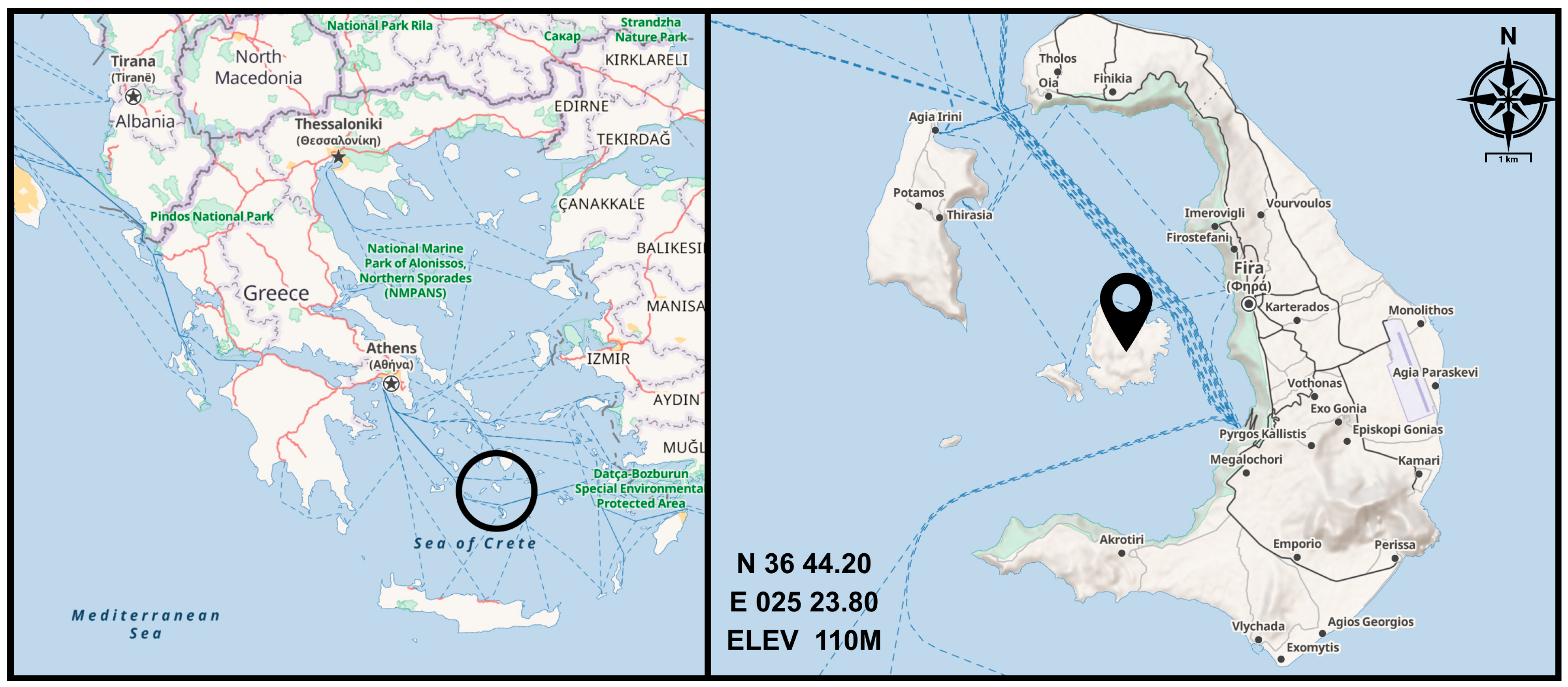
The Santorini Volcanic Complex is a mostly submerged, multi-cyclic caldera whose rim forms the present-day island arc of Thera (Santorini), Therasia and Aspronisi, with the Kameni islets occupying the center [
Figure 1]. The most recent major caldera-forming event is the Late Bronze Age “Minoan” eruption (~1600 BCE), followed by historical dome-building and minor explosive activity that constructed Nea and Palea Kameni; the last confirmed eruptive episode occurred in 1950. More recently, the system experienced notable unrest in 2011–2012 [
15] (inflation and increased seismicity), prompting renewed interest in real-time, multi-parameter monitoring. These characteristics make Santorini a representative testbed for autonomous, rapid-deployment gas mapping in complex island terrain.
Operationally, the caldera features steep cliffs (order ~300 m) that frame a deep marine basin and can channel or disrupt low-level winds—relevant for UAV routing and loiter choices. The main air gateway, Santorini International Airport (JTR), lies on the island’s east side near Kamari/Monolithos and is a mixed civil–military field. Any UAV operations require coordination with the Hellenic Civil Aviation Authority and airport authorities for Control Traffic Region (CTR)/proximity considerations, especially given seasonal traffic peaks. These geographic and airspace constraints inform our landing-site network and wind-contingent launch preferences presented later in the paper.
2.2. Volcanic Gas Emissions and Pre-Eruptive Indicators
Volcanic gases represent one of the most important indicators of magmatic activity and impending eruptions. During periods of unrest and pre-eruption, rising magma begins to release volatile components as pressure decreases, forming a complex mixture of gases that escape through vents, fractures, and fumaroles. The dominant constituents are water vapor (H2O), often accounting for more than 70% of total emissions, followed by carbon dioxide (CO2) and sulfur dioxide (SO2). These gases reflect the composition and oxidation state of the magma and its depth within the conduit. Minor species such as hydrogen sulfide (H2S), hydrogen (H2), carbon monoxide (CO), and halogen compounds like hydrogen chloride (HCl) and hydrogen fluoride (HF) also occur in varying proportions, influenced by magma type and the interaction with hydrothermal systems.
The release of these gases produces a volcanic plume, visible or invisible depending on its temperature, humidity, and aerosol content. Pre-eruptive plumes are often dominated by water vapor, but elevated concentrations of CO
2 and SO
2 are critical warning signs of magma ascent [
16,
17]. Changes in the SO
2/H
2S ratio, total gas flux, and plume temperature are routinely monitored using ground-based (DOAS, FTIR) and satellite instruments (e.g., TROPOMI, OMI) to detect shifts in degassing behavior. As the magma approaches the surface, volatile exsolution intensifies, leading to stronger and more chemically diverse emissions. This progressive increase in gas output and alteration of gas ratios provides essential insights into the pressurization of the volcanic conduit and the likelihood of an impending eruption.
2.3. System Architecture and Workflow Design
The system is organized as an event-driven workflow that links earthquake activity to UAV-based gas monitoring. A listener continuously receives real-time seismic alerts, and when events meet simple filters such as magnitude, depth, and proximity to the Santorini caldera, it automatically prepares a mission and selects a suitable launch site. Each mission follows a two-stage sensing concept: an initial rapid scan produces a coarse CO2 heatmap, followed by a slower, higher-precision sampling phase focused on areas of interest. Flight execution and telemetry are handled through the standard ArduPilot/MAVLink framework, while a ground application displays the planned route, live readings, and an evolving heatmap for operator supervision.
For simplicity, the caldera area is divided into four predefined sectors. Depending on wind direction and available UAVs, the software assigns one or more sectors per mission, allowing partial or full coverage as needed. Wind information is used only to select the preferred launch direction and to set conservative speed and altitude values. If unstable flight conditions or link interruptions occur, the mission can be shortened or aborted to ensure safety.
At this stage, the system operates entirely in a Simulator-in-the-Loop (SITL) environment with synthetic wind and CO2 data, allowing the workflow—from trigger reception to mission execution—to be tested and validated before future field deployment in Santorini.
2.4. Earthquake Triggering Mechanism and Event Filters
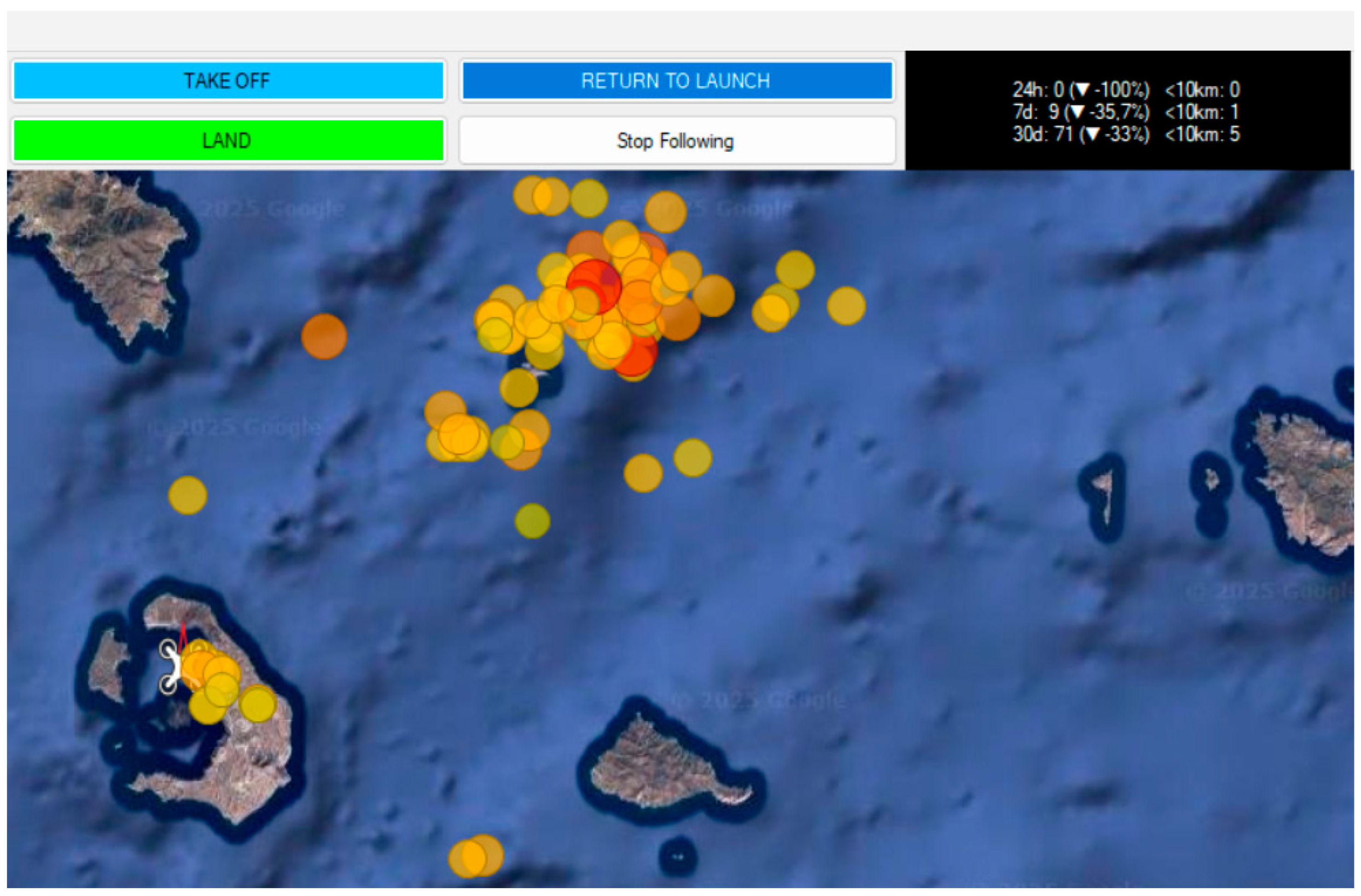
To monitor potential pre-eruptive seismic activity, the system queries earthquake event data from the EMSC/Seismic Portal API on a regular schedule. Each request retrieves the last 60 days of events within a circular search area of approximately 100 km radius around the Santorini caldera. This spatial filter is chosen to capture both local microseismicity and regional tectonic events that could be associated with volcanic unrest, while excluding distant, unrelated earthquakes that could otherwise trigger false operational alerts. The temporal filter ensures that the system maintains a rolling archive of recent activity for statistical analysis and trend detection.
The retrieved event dataset includes magnitude, epicenter coordinates, timestamp, and descriptive location information. Magnitude values are used to visually encode the event markers on the mission map, with larger circles representing stronger earthquakes [
Figure 2]. By restricting the query to a defined spatial and temporal window around the caldera, the system ensures that any automatic mission triggers—such as launching UAVs for targeted CO
2 measurements—are based on seismic activity most likely to have a causal connection to the Santorini volcanic system. This focused filtering approach reduces false positives, conserves operational resources, and aligns with the mission’s objective of detecting early indicators of volcanic reactivation.
2.5. Safety Framework and Regulatory Compliance
The operation of UAVs within the Santorini region requires strict adherence to national and European aviation regulations, particularly due to the proximity of Santorini National Airport (LGSR) and its associated CTR. The airport’s control zone covers much of the island and adjacent sea areas, meaning that any UAV flights within this zone, regardless of altitude, require prior coordination with Air Traffic Control (ATC). Even missions conducted over water at altitudes below the airport elevation (150 ft AMSL) fall under CTR rules if they are within the lateral boundaries.
Greece implements the European Union Aviation Safety Agency (EASA) framework for UAV operations, and the requirements described here reflect the rules in force as of 2025. Under this framework, volcanic monitoring missions within Santorini’s CTR would generally fall into the Specific category, necessitating:
Submission of a flight plan and operational authorization via the Hellenic Civil Aviation Authority (HCAA).
Compliance with equipment requirements such as GNSS positioning, failsafe Return-to-Home and electronic conspicuity where applicable.
Maintaining separation from manned aircraft, adhering to ATC instructions and incorporating geo-fencing to prevent inadvertent entry into restricted areas.
Before each mission, the operator must file a detailed flight plan including launch and recovery points, intended flight paths, maximum altitudes, emergency procedures and coordination contacts. To streamline emergency deployments—particularly in response to volcanic or seismic events—a set of preplanned, ATC-approved flight routes and altitude profiles can be established in advance. These routes, integrated into the mission planning system, would minimize bureaucratic delays by allowing rapid activation without the need for repeated full approvals, while still ensuring airspace safety and regulatory compliance.
In the context of emergency volcanic response, such preplanned routes could be complemented by predefined coordination protocols with ATC. Building on current operational practice, a feasible future implementation would include the establishment of NOTAM-based activation zones, VFR emergency corridors, and standardized procedures agreed upon in advance with the HCAA and the Santorini control tower. Under such a framework, an automated notification—transmitted via email or VOIP alert—could serve as formal confirmation that a seismic trigger has occurred, enabling ATC to authorize immediate deployment. Although existing regulations do not yet explicitly support fully autonomous takeoff following an earthquake, the proposed workflow anticipates this evolution and outlines a realistic pathway for integrating automated UAV missions within a controlled, pre-authorized airspace structure.
2.6. Pre-Mission Validation and Simulation Environment
To validate mission logic, communication protocols and trigger-response workflows without the risks and constraints of real-world flight, the system will be tested extensively using SITL environment. This setup replicates the full autopilot firmware and flight dynamics of the drones in a software environment, allowing mission scenarios to be executed with high fidelity and without hardware deployment.
The test configuration in our implementation comprises four parallel UAV instances in SITL, each representing one of the proposed landing zones (LZ Alpha, LZ Bravo, LZ Charlie and LZ Delta) around the Santorini caldera. These instances will be connected to the mission control software via the same communication stack intended for real operations, ensuring that data flows, mission uploads and telemetry handling are validated end-to-end.
Simulated earthquake events will be injected into the system using the same EMSC/Seismic Portal API data pipeline used in operations. By artificially generating seismic events within the 100 km alert radius, the system can test its ability to detect qualifying events, apply filtering logic and automatically trigger mission execution for the appropriate UAV(s). The SITL environment then simulates the drones’ autonomous launch, navigation to the volcano center, on-station CO2 measurement and recovery or diversion according to the mission plan.
This approach allows the development team to stress-test the system under controlled but realistic conditions, including simultaneous multi-UAV deployments, network delays, GPS dropouts [
18] and varying wind models. By verifying mission readiness and safety procedures in SITL before field deployment, the likelihood of operational errors or unanticipated failures during live missions is significantly reduced.
3. Landing-Site Planning
For the purposes of this study, four LZs were identified to support drone operations for CO2 monitoring in the Santorini caldera. The selection process prioritized proximity to the volcano’s center while ensuring easy ground access and operational support through nearby government infrastructure such as ports, roads and electrical utilities. Each site was chosen to minimize transit time while providing safe and practical staging areas for launch, recovery and contingency landings.
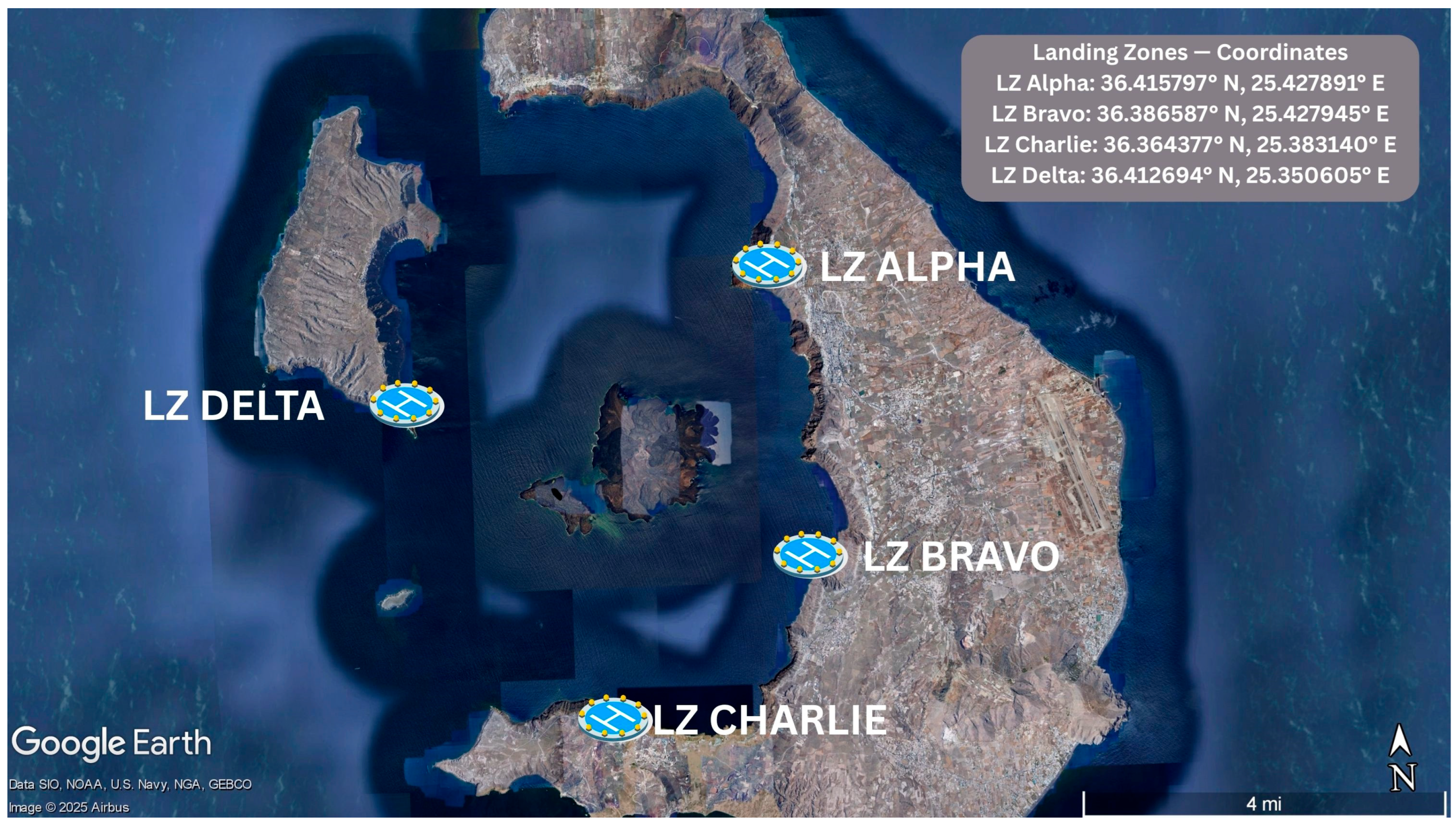
The designated landing zones are distributed around the caldera to provide full directional coverage [
Figure 3]. LZ Alpha (36.415797° N, 25.427891° E) lies northeast of the volcano center, close to port facilities and accessible road networks. LZ Bravo (36.386587° N, 25.427945° E) is positioned to the east, adjacent to utility infrastructure, making it suitable for sustained operations. LZ Charlie (36.364377° N, 25.383140° E) is in the south, on low, flat terrain near sea level, offering a sheltered recovery point during prevailing northern winds. LZ Delta (36.412694° N, 25.350605° E) is located west of the volcano, with an elevation of approximately 100 ft and benefits from open access and stable ground.
All four sites feature level surfaces suitable for drone launch and recovery, with elevations ranging from sea level to about 100 ft in the southern and western positions. They were also selected for their open surroundings, free from tall structures, cliffs or other obstacles that could generate turbulence during take-off and landing. This diversity in orientation, altitude and environmental exposure allows mission planners to adapt to changing weather conditions—particularly the summer (locally called “Meltemi”) winds—and to select the most favorable operational base or backup recovery point for each mission scenario.
3.1. Landing-Zone Range Calculations
Based on the geospatial analysis, all four designated LZs fall within a 3–4.6 km radius from the Santorini caldera’s volcanic center. This proximity enables each site to serve as a viable launch and recovery point for CO2 monitoring missions, even when factoring in a 25% battery reserve. The shortest approach is from LZ ALPHA (3.01 km to target), resulting in a round-trip of approximately 6.0 km, while the longest is from LZ CHARLIE (4.62 km to target, 9.25 km round-trip). Even in the longest case, total flight time at a typical multirotor cruise speed remains well within safe endurance limits, allowing for a two-minute hover over the vent for sampling before returning.
Operationally, the analysis demonstrates that diverting to an alternate landing sites such as in the case of weather changes, LZ congestion or emergency—adds only marginal distance and time penalties. For example, a diversion from LZ ALPHA to LZ BRAVO after sampling adds roughly 0.37 km over the direct return, translating to less than one minute of additional flight time at 10–12 m/s cruise speeds. The highest diversion demand is from LZ CHARLIE to LZ ALPHA, which increases the post-sampling flight distance by about 3 km, still within endurance margins for a 35 min battery-equipped multirotor.
Seasonal meteorological conditions further enhance the strategic value of certain LZs. Due to the statistical prevalence of strong northern (
Meltemi) winds in the Aegean during summer months, southern LZs—particularly LZ CHARLIE—offer sheltered recovery options when northern sites become operationally challenging. This makes LZ CHARLIE not only a primary launch site for southern operations but also a valuable backup for missions originating from LZ ALPHA, LZ BRAVO or LZ DELTA during adverse wind conditions, thereby increasing mission resilience and safety. In the unlikely event that pre-established LZs become unreachable, the system can invoke contingency search modes that exploit onboard machine vision (e.g., semantic segmentation of hazards, texture/roughness and slope estimation, obstacle/void detection) and satellite/terrestrial geodata (orthophotos, DEM/DSM layers) to detect and rank ad hoc safe landing zones in real time, following techniques surveyed in [
19]. The selected site would then be validated by short-range sensors (lidar/UWB) during the final meters of descent to guarantee terrain suitability.
These results confirm that the distributed LZ layout provides strong operational redundancy. Missions can be planned with primary and secondary recovery points without significant compromises on-station time or safety margins. In practical terms, this flexibility allows simultaneous drone deployments from different LZs or dynamic in-flight redirection based on real-time conditions, enhancing both the resilience and efficiency of the volcanic gas monitoring campaign.
3.2. Landing-Site Design and Wind-Contingent Usage
The proposed LZ network is designed to enable sustained, autonomous drone operations in the Santorini caldera, with an emphasis on resilience in adverse environmental conditions and rapid redeployment during emergency scenarios such as seismic unrest. The concept includes autonomous charging capabilities to support multi-sortie daily operations without human intervention [
20,
21]. Primary charging would use conductive contact rails or plates for rapid turnaround, supported by onboard clamps or guides to secure the UAV during high winds. Precision landing in variable wind conditions would combine RTK GNSS for approach with visual fiducials (e.g., AprilTags) and short-range UWB beacons for final alignment, ensuring consistent touchdown even under gusty or turbulent conditions. LZ pads should be equipped with low-profile guide funnels or V-rails to improve landing accuracy and mechanical latches to stabilize the UAV during charging [
22].
To ensure operational continuity, each LZ should be equipped with a hybrid power system combining grid connection (where available), solar arrays sized between 800–1200 W and local LiFePO
4 battery storage (1–2 kWh) for backup. Communication infrastructure should use dual-path connectivity, with 5G/LTE as the primary link and satellite broadband (e.g., Starlink) at selected LZs for redundancy. Each site should also host an environmental sensing package, including ultrasonic anemometers, barometric sensors and MEMS-based seismic monitors to provide continuous ground motion data. This dual role—supporting both UAV operations and scientific data collection—could expand the operational value of the LZ network. Off-grid resilience is provided by PV-backed stations and cabinet-level base isolation, as proposed in solar docking concepts for remote sites [
23].
Construction of the LZ pads should emphasize seismic resilience, using reinforced concrete slabs with elastomeric base-isolation for critical equipment enclosures. All components would be specified for marine and volcanic environments, with corrosion-resistant materials, dust-sealed electronics and active purge systems to remove ash. The distributed layout, autonomous systems and environmental monitoring capabilities proposed here provide a robust and adaptable foundation for autonomous aerial sampling missions, ensuring mission continuity even in the face of strong winds, power interruptions or seismic activity.
4. Prototype Implementation and Results
4.1. IERAX Mission Control—Maritime Baseline
The initial IERAX [
24,
25,
26] Mission Control (IERAX_MC) application introduced an autonomous framework for maritime gas emission monitoring using UAVs. The system leveraged ArduPilot and MAVLink to enable autonomous vessel interception, plume mapping and targeted measurements. A fast-response CO
2 sensor was employed to conduct grid-pattern surveys around ship exhausts, generating real-time heatmaps that highlighted emission dispersion. These maps informed the deployment of a high-precision multi-gas analyzer, which provided accurate quantification of pollutants, particularly sulfur compounds, thereby supporting compliance with international maritime regulations.
To ensure robustness and repeatability, the software integrated AIS-based vessel tracking, wind-aware trajectory adaptation and automated waypoint generation. Validation was performed through SITL environment combined with a Python-based sensor payload emulator (version 1.0), which enabled realistic testing of navigation and data processing workflows prior to field deployment. By minimizing operator input and enabling consistent, high-quality measurements, the IERAX MC application demonstrated the feasibility of UAV-based autonomous emission monitoring as an effective complement to existing enforcement and sustainability strategies.
4.2. IERAX Mission Control—Caldera Fork
Building on the foundation of the initial IERAX MC application, the IERAX MC Caldera fork introduces a set of targeted enhancements to extend the system’s applicability beyond maritime emission monitoring. The Caldera variant is designed to support coordinated swarm control of multiple UAVs, thereby enabling larger-scale and faster coverage of areas of interest. Furthermore, it incorporates integration with seismic activity providers to deliver earthquake and volcanic eruption alerts, transforming the system into a versatile emergency response tool.
A key objective of this fork is the enhancement of the graphical user interface (GUI) to better support time-critical operations. In addition to interface improvements, the fork introduces several software extensions, including real-time earthquake event integration, multi-UAV (swarm) coordination features, and workflow automation for rapid mission generation and data visualization. By redesigning the interface for clarity and situational awareness, operators can more effectively utilize the system in high-pressure scenarios such as seismic or volcanic crises in regions like Santorini. These improvements align the Caldera fork with dual-use missions, extending its utility from environmental compliance monitoring to broader disaster preparedness and emergency management applications.
4.2.1. Development Environment and Tools
The development of IERAX MC Caldera builds upon a robust environment centered on Visual Studio 2022, which provides the foundation for C#. NET 8 and Windows Presentation Foundation (WPF) desktop application development. GitHub (version 1.0) is employed for version control and collaboration, ensuring traceability between the initial IERAX MC branch and the Caldera fork. Simulation and validation are conducted through ArduPilot’s SITL framework running on Ubuntu, combined with MAVProxy for communication management. To further replicate real-world conditions, Python-based sensor emulators were implemented to simulate CO2 and multi-gas payloads, enabling end-to-end testing of both navigation and data-handling algorithms prior to field trials.
4.2.2. Core Functional Modules
The system integrates several open-source libraries to extend functionality and streamline development. GMap.NET provides geospatial visualization and mapping capabilities, forming the core of real-time situational awareness. MAVLink protocol libraries in both C# and Python enable seamless interaction with UAVs, supporting autonomous mission planning and telemetry exchange. The graphical interface is built using WPF/XAML, with modern UI components designed to handle high-information-density scenarios such as seismic alerts or swarm missions. For data management and visualization, libraries such as Newtonsoft.Json are employed for configuration parsing, while ScottPlot [
27] for WPF is used to present sensor readings, heatmaps and mission data in a clear and dynamic format.
4.2.3. Control Logic and Trigger Integration
The Caldera fork extends the baseline IERAX functionality by introducing dedicated modules for swarm control, emergency integration and advanced visualization. The swarm control module enables coordinated multi-UAV missions, allowing synchronized waypoint management and mission deconfliction, which is particularly critical when monitoring large areas such as the Santorini caldera. Emergency integration adds the ability to process seismic and volcanic alerts from external providers via API connections, ensuring real-time responsiveness to natural disasters. In parallel, adaptive autonomous guidance algorithms adjust mission planning dynamically based on wind vectors, vessel or terrain data and live environmental inputs. Visualization modules integrate these data streams into intuitive overlays, enhancing operator decision-making in time-sensitive scenarios.
4.2.4. Framework for Volcanic Monitoring
The control logic is implemented as an operator-centric state machine that emulates the way pilots plan flights on a map. The system first calculates great-circle distances from the active UAV’s current GPS position to the four predefined quadrant corner points and automatically selects the nearest corner to minimize transit time. The sorted distances and selected corner are displayed to the operator for transparency. Each quadrant contains a predefined flight-lane pattern; once a corner is selected, the workflow proceeds deterministically. The sequence includes switching to GUIDED mode, arming, performing a controlled takeoff to a safe relative altitude, and navigating to the quadrant’s entry point using streamed position targets. Upon arrival, the corresponding mission plan is uploaded and executed in AUTO mode to perform the survey.
Each step is telemetry-gated—arming, mode transitions, and takeoff are acknowledgment-checked and confirmed via heartbeat messages before proceeding—ensuring that errors are detectable and recoverable rather than silent. The graphical interface displays only the state of the active vehicle, providing stable and meaningful operator feedback throughout the mission.
4.2.5. Swarm-Operation Extensions in SITL
The Caldera fork was validated using ArduPilot’s SITL running inside an Ubuntu virtual machine (VM) hosted on Windows. To emulate multi-UAV operations, we launched parallel SITL instances with sim_vehicle.py, leveraging the -I index to isolate ports and state per vehicle. Each instance transmitted MAVLink over UDP directly to the Windows host, enabling native use of Mission Planner without additional routing [
Table 1].
To ensure reliable host–guest transport, the VM was configured in Bridged mode so that the SITL processes could address the Windows NIC directly via Windows Host Ip. On the host side, multiple Mission Planner instances attached to TCP 5672, 5772, 5872, etc., providing independent telemetry, parameter and map views for each simulated UAV. This arrangement allowed reproducible swarm experiments—coordinated waypointing, deconfliction and GUI overlays—while preserving strict process isolation and minimizing dependency on intermediate proxies (e.g., MAVProxy or mavlink-router).
4.3. Mission Flow
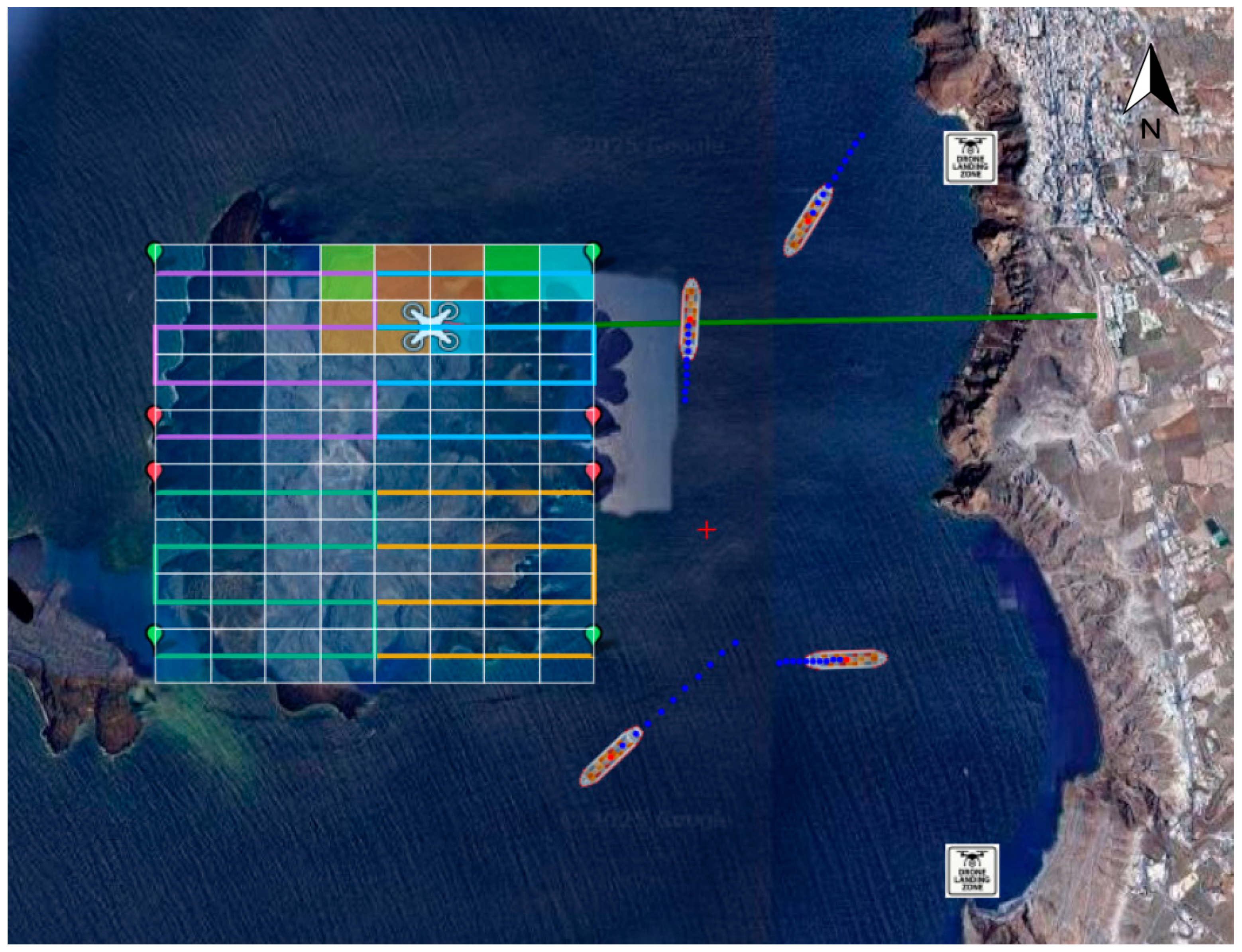
Through the GUI, the operator has a complete situational overview of the Santorini caldera, including active UAV positions, nearby maritime traffic derived from AIS data, and recent earthquake events obtained from EMSC seismic feed. Once the system confirms readiness, the operator can initiate a coordinated launch sequence for all available UAVs—in the present simulation, four units—by a single command. The drones then execute a rapid survey to generate an initial CO
2 heatmap of the area [
Figure 4]. This first stage provides a coarse representation of the gas distribution, allowing the identification of potential volcanic emission zones.
The heatmap is dynamically updated as new sensor readings arrive [
Figure 5]. Each new measurement modifies the grid in real time, continuously comparing current concentration values with those of adjacent cells. This live feedback highlights emerging regions of elevated CO
2 and visually guides the operator toward areas showing increasing emission intensity.
After the initial scan, the software automatically analyzes the collected data to locate the grid cell with the highest CO
2 concentration. The corresponding UAV assigned to that sector is then redeployed to the hotspot to perform detailed, time-resolved measurements with the high resolution gas analyzer. During this second stage, the drone employs slower, denser sampling patterns and activates additional gas sensors (e.g., SO
2) to refine the chemical profile of the plume. This hierarchical workflow—broad detection followed by targeted confirmation—enables the system to efficiently discriminate genuine volcanic degassing from transient atmospheric or anthropogenic CO
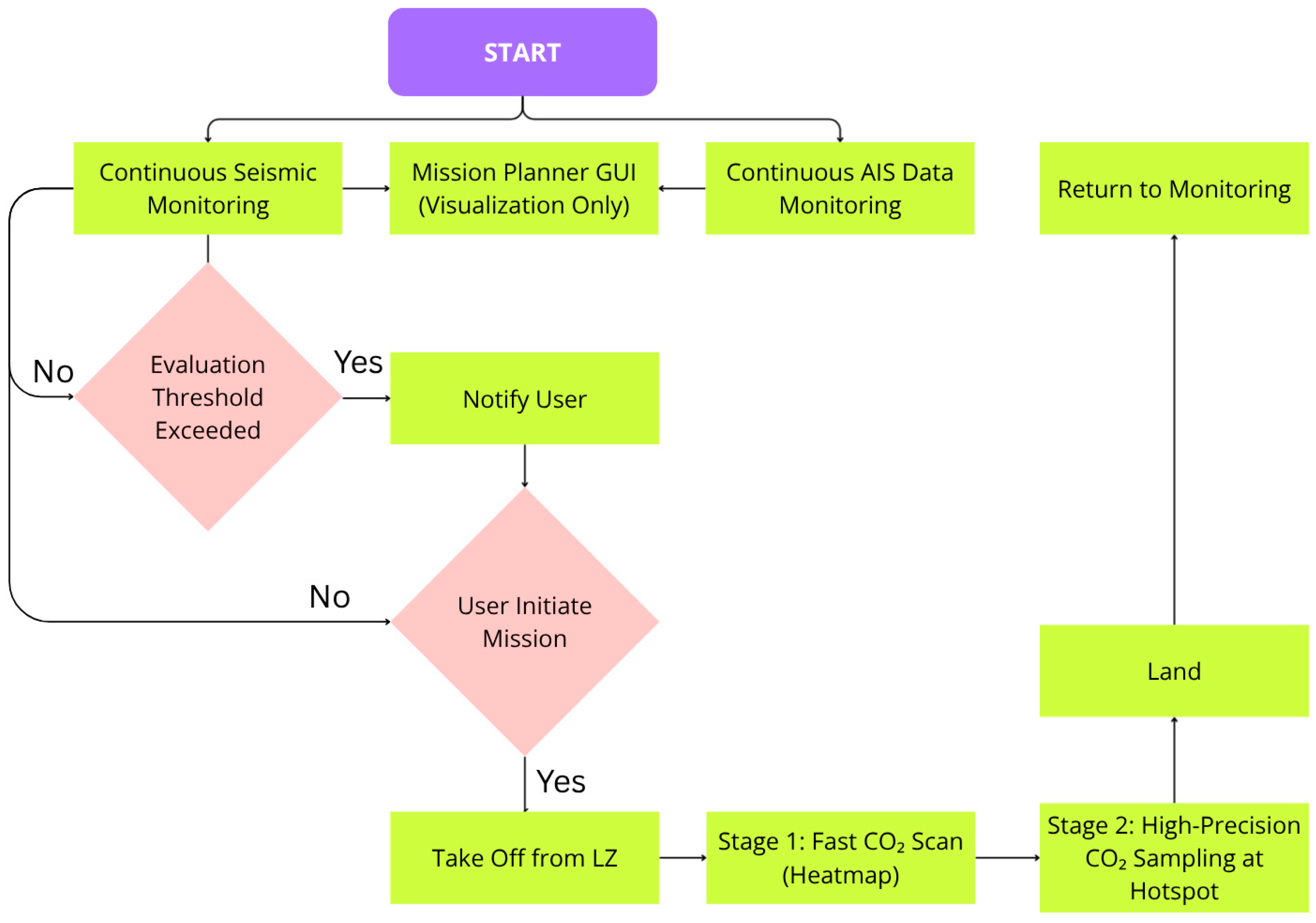
2 sources. A schematic overview of this end-to-end workflow is provided in
Figure 6, summarizing the trigger logic, mission execution stages, and return-to-monitoring cycle.
4.4. Multi-UAV Grid Planning and Visualization
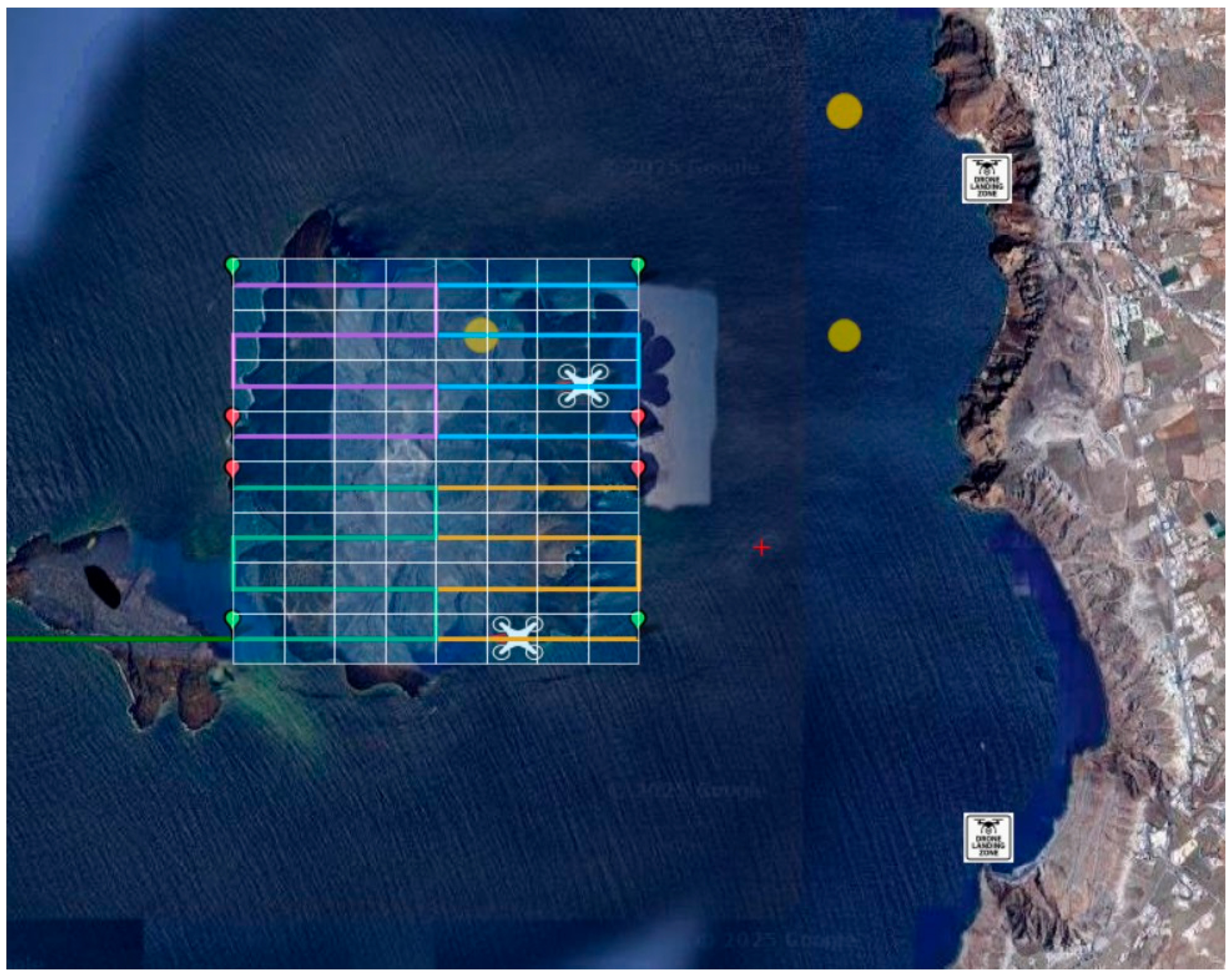
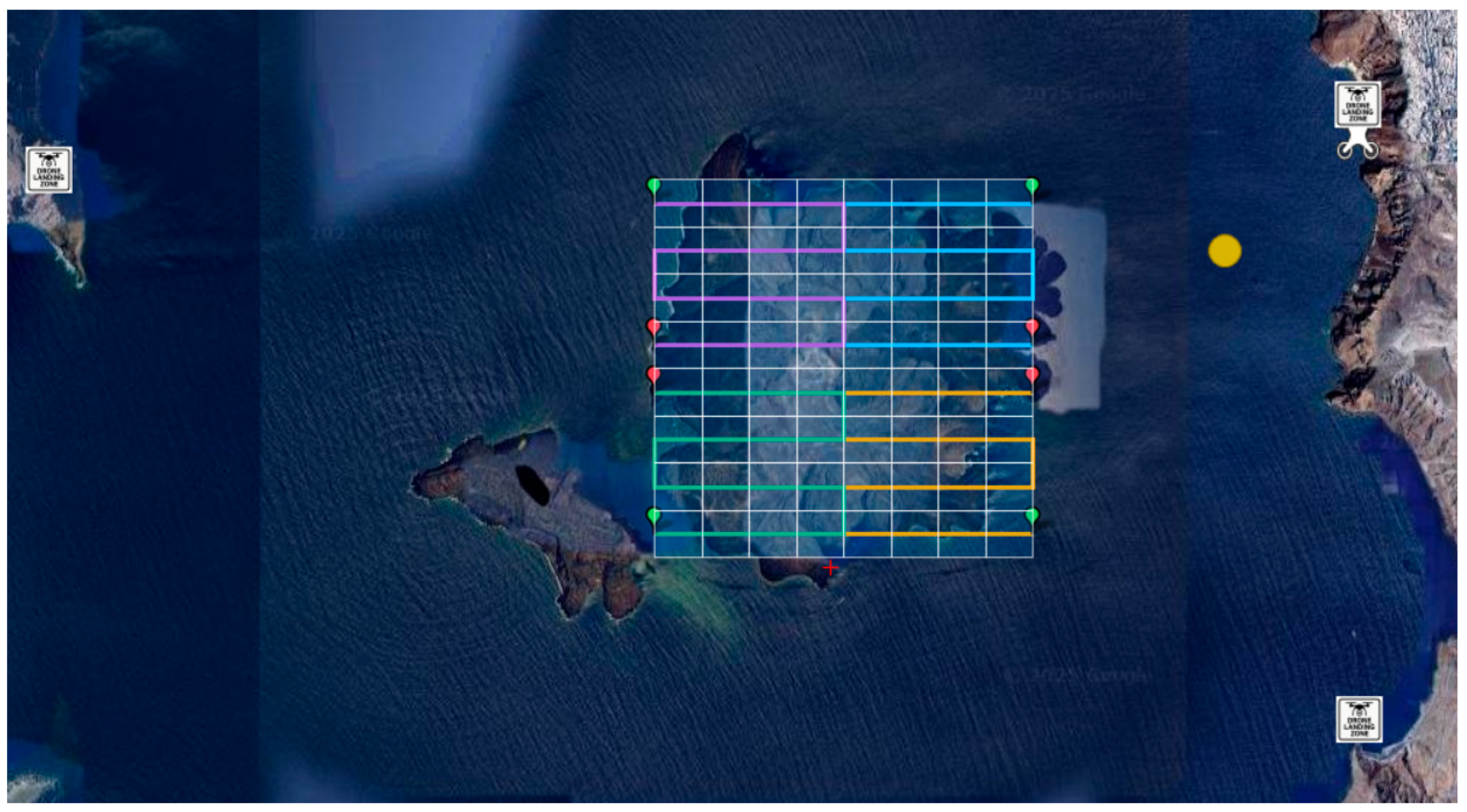
The GUI features a dynamic grid overlay tool for structured survey planning. For the Nea Kameni mission, a 2 km × 2 km survey area centered at 36.4044° N, 25.3975° E is generated and divided into 250 m cells (8 × 8) using geodesic conversion to maintain equal ground spacing in both latitude and longitude directions. The mission planning interface incorporates a quadrant-based survey mode, splitting the caldera into four equal 1 × 1 km sectors. Each sector is assigned to a dedicated UAV, launched from one of four pre-selected landing zones positioned strategically around the island. Within its quadrant, each UAV executes an east–west “lawnmower” scan pattern with 250 m lane spacing, starting from the midline of its first lane to optimize coverage efficiency. The grid, sector boundaries and planned flight paths are rendered directly on the satellite map, using distinct colors for each quadrant, ensuring clear visual separation, efficient coverage monitoring and precise alignment for CO
2 data mapping without obscuring underlying imagery. In the GUI visualization, the survey grid is divided into four quadrants, each outlined with a distinct color (purple, blue, green, yellow) corresponding to its assigned UAV. Green corner markers indicate the entry for each drone, while red markers denote exit points. The central white grid lines represent the 250 m lane spacing used for the east–west “lawnmower” scan pattern [
Figure 7].
4.5. Data Acquisition
Each observation is recorded as a geotagged tuple in the form (lat, lon, value, t) with optional fields for altitude above ground level (AGL), ground speed and sensor state. Positions are WGS-84, timestamps are UTC, and all measurements are stored in calibrated engineering units (e.g., °C, ppm). Sampling runs at a fixed cadence (typically 1 Hz) with software time stamps when storing. Each sample is bound to a flight identifier and platform ID to prevent cross-sortie mixing and to support audit trails across missions.
4.6. Context Logging and Post-Flight Interpretation
To support noise attribution and comparative analyses, the same CSV row captures environmental and anthropogenic context at the time of measurement. The drone’s onboard wind estimate (speed and direction) is recorded as a vector field, enabling plume alignment checks and cross-wind sensitivity analyses. In parallel, nearby maritime traffic is summarized from AIS: number of vessels within a configurable radius, range/bearing to the nearest vessel and (where available) vessel class and speed-over-ground. These covariates are time-aligned with the measurements, providing a lightweight but powerful basis for post-flight interpretation—e.g., distinguishing true hotspots from transient spikes due to wind shifts or ship emissions—while keeping the data format simple and portable for statistical or GIS workflows.
5. Discussion
The Santorini caldera presents one of the most complex environments for autonomous UAV operations. Steep caldera walls generate localized turbulence, shear layers, and strong updrafts or downdrafts that can alter plume dispersion and challenge flight stability. These aerodynamics, coupled with seasonal Aegean winds that can shift rapidly in strength and direction, create conditions where predictive models must be complemented by real-time adaptation. In addition, the maritime setting introduces high humidity and salt-laden air, both of which can affect sensor calibration, UAV endurance, and data reliability.
Another layer of complexity arises from anthropogenic emissions. Santorini receives significant maritime traffic, including cruise ships and cargo vessels, whose exhaust plumes contain CO2 and other gases that can interfere with volcanic signal detection. Differentiating ship emissions from volcanic sources is therefore essential to avoid false positives and requires careful integration of auxiliary data such as AIS ship-tracking feeds. The combination of natural variability and anthropogenic noise makes the caldera a uniquely demanding site, underscoring the need for adaptive sensing strategies and robust uncertainty quantification.
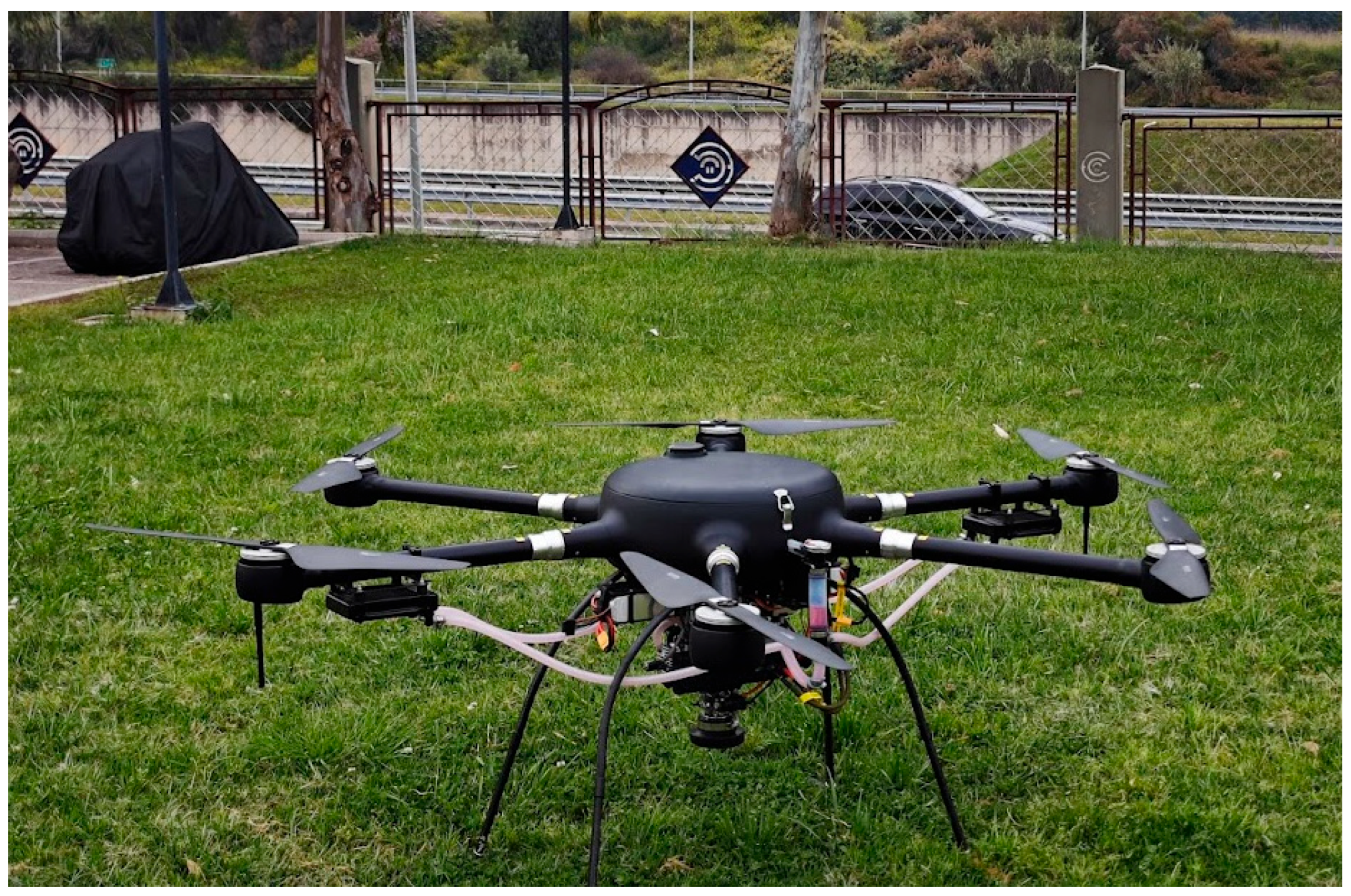
While the current prototype focuses on compact multirotor UAVs, future work could explore the use of hybrid fixed-wing–multirotor platforms capable of flight durations of two to three hours. Such systems could simplify mission planning and expand coverage without requiring multiple coordinated sorties; however, this gain in endurance comes at the expense of temporal resolution, as longer survey cycles delay plume re-sampling. The DSMC Laboratory of the Hellenic Open University currently possesses a hybrid UAV [
Figure 8] suitable for this purpose, offering a valuable opportunity to experimentally verify the proposed methodology in future studies of this work.
Future implementations could also benefit from the integration of a radio altimeter to maintain a constant distance from the ground during low-altitude surveys. This addition would ensure more stable gas-concentration readings, particularly in areas with steep or irregular terrain, where GPS-derived altitude alone may introduce fluctuations. Maintaining a consistent sensor-to-surface separation would enhance the repeatability and precision of plume measurements, leading to more reliable CO2 and SO2 profiles across successive missions.
These environmental and operational realities highlight the value of a staged approach: while simulation provides a baseline for mission design, only field validation can fully capture the interplay of turbulence, humidity, ship traffic, and volcanic emissions. Santorini thus serves as both a challenge and an opportunity—if UAV-based systems can be made reliable here, they can likely be extended to other island volcanoes with similar maritime and meteorological constraints.
Although the simulation results demonstrate the feasibility of linking seismic triggers to autonomous UAV-based CO2 monitoring, several practical limitations must be acknowledged. Real-world operations in the Santorini caldera will face strong turbulence, wind shear, and humidity effects that are not fully represented in simulation. These environmental factors can influence both UAV stability and gas-sensor performance, introducing calibration drift or measurement uncertainty. Additionally, distinguishing volcanic CO2 from anthropogenic emissions remains nontrivial, particularly in a basin with heavy maritime traffic, where exhaust plumes may temporarily mimic natural hotspots.
Future work will address these constraints through incremental field validation, enhanced wind-aware navigation, and more robust sensor integration. Redundant communication links, on-board airspeed sensing, and improved environmental compensation models will strengthen operational resilience. Incorporating multispecies gas sensing, radio altimetry for consistent plume sampling height, and hybrid long-endurance UAV platforms will further expand the system’s capability. As these developments progress, the Santorini caldera will remain an ideal testbed for evaluating and refining the workflow under demanding atmospheric and operational conditions.
6. Conclusions
This article presents a simulation-validated framework for integrating UAV-based CO2 monitoring with earthquake-triggered autonomous mission planning in the Santorini caldera. By testing the concept of operations within a controlled simulation environment, key components—such as two-stage sensing, adaptive mission logic, and landing-site allocation—were evaluated without the immediate risks of real-world deployment. The simulated framework structures the operational problem, identifies critical variables, and highlights potential bottlenecks before significant resources are committed to field campaigns.
Santorini offers a particularly challenging yet high-value test site due to its steep caldera walls, intense wind shear, and complex maritime setting. These features make it both a priority for continuous monitoring and a rigorous benchmark for autonomous UAV operations. The present framework allows mission-planning algorithms to be tested against realistic contingencies, enabling performance assessment through metrics such as time-to-detection, coverage efficiency, and communication stability.
Nevertheless, the transition from simulation to operational deployment cannot be assumed to be straightforward. Environmental variability, sensor reliability under plume conditions, and national airspace regulations introduce uncertainties that must be addressed through incremental testing. This calls for a staged research approach—from simulation to controlled pilot trials and, ultimately, full-scale autonomous missions.
Future development could also benefit from the inclusion of a radio altimeter to maintain constant altitude above the surface and from the use of long-endurance hybrid UAVs capable of 2–3 h flights, both of which could enhance data stability and coverage. As the DSMC Laboratory of the Hellenic Open University already possesses such a platform, future work can experimentally validate the proposed methodology under real conditions.
Advancing from simulation to field demonstration remains resource-intensive, requiring specialized UAVs, high-frequency multi-gas sensors, and the logistical infrastructure for island operations. Despite these challenges, the framework developed here provides a strong foundation for future funded research. With dedicated support, Santorini could serve as both a national and European testbed for autonomous volcano monitoring, linking seismic early warning with adaptive gas-mapping technologies that enhance situational awareness and public safety.
Overall, this study demonstrates a complete end-to-end workflow, from real-time seismic event detection to autonomous UAV mission generation, multi-drone coordination, CO2 data acquisition, and live visualization through the IERAX Mission Control software. This seamless integration of triggering, planning, execution, and data interpretation distinguishes the proposed framework from earlier studies that addressed these components in isolation. By bridging the gap between seismic early warning and adaptive environmental sensing, the system provides a practical blueprint for future autonomous volcanic monitoring operations capable of immediate, data-driven response in real conditions.