Article

Reinforcement Learning-Based Formation Pinning and Shape Transformation for Swarms
1
Advanced Research Institute of Multidisciplinary Sciences, Beijing Institute of Technology, Beijing 100081, China
2
School of Automation Science and Electrical Engineering, Beihang University, Beijing 100191, China
3
Yangtze Delta Region Academy of Beijing Institute of Technology, Jiaxing 314000, China
*
Author to whom correspondence should be addressed.
These authors contributed equally to this work.
Drones 2023, 7(11), 673; https://doi.org/10.3390/drones7110673
Submission received: 9 October 2023 / Revised: 6 November 2023 / Accepted: 8 November 2023 / Published: 13 November 2023
(This article belongs to the Special Issue Distributed Control, Optimization, and Game of UAV Swarm Systems)

Abstract

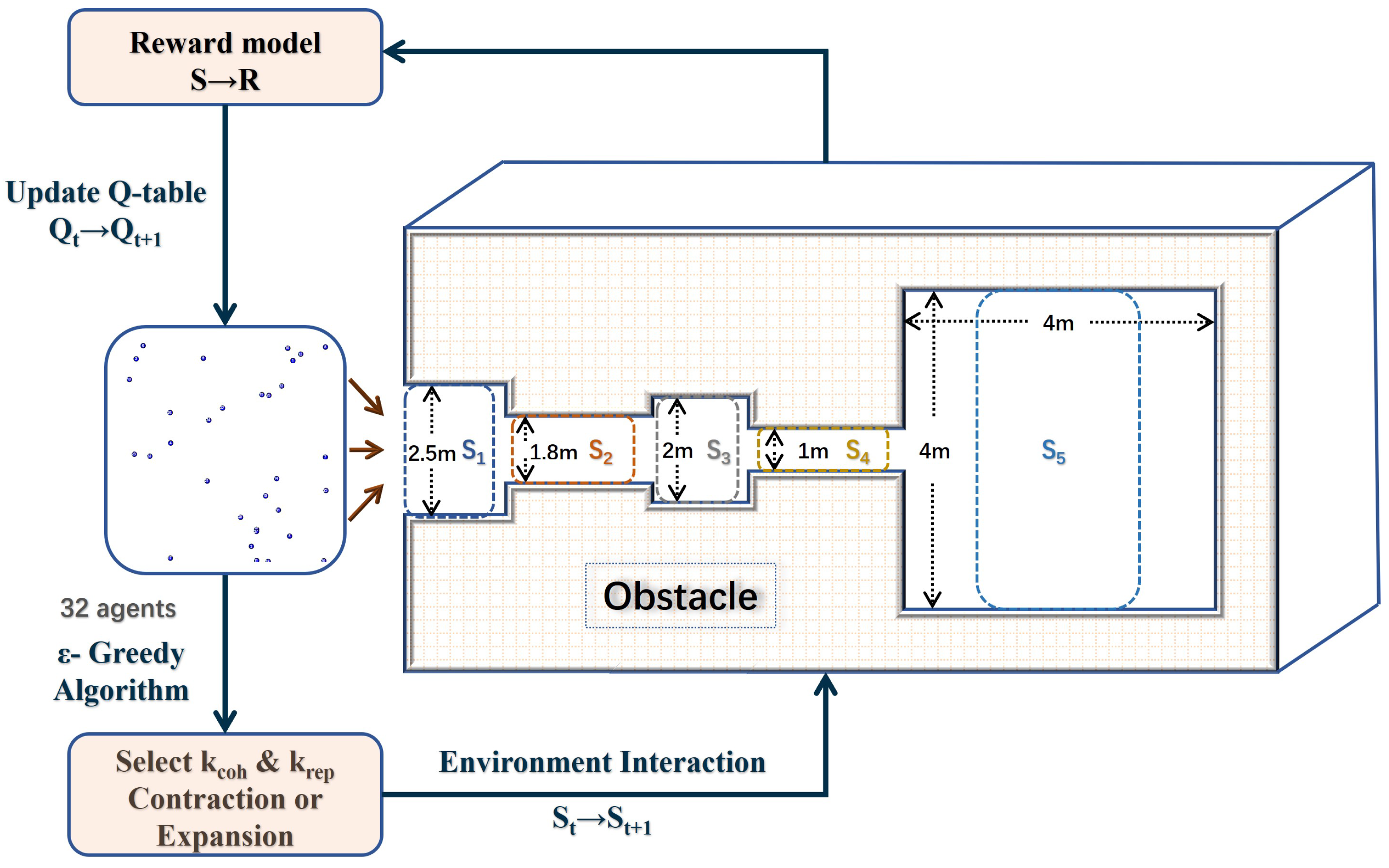
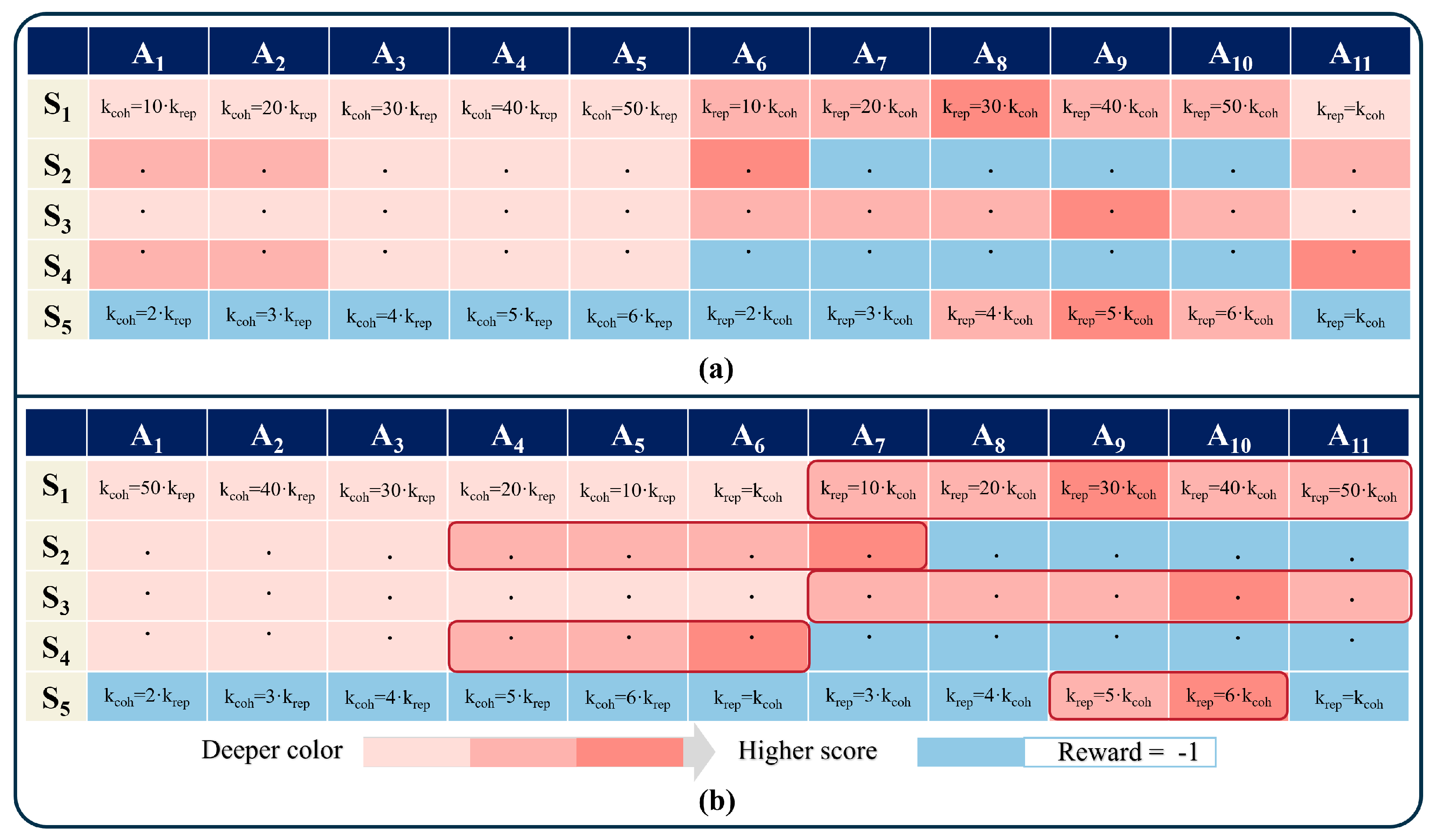
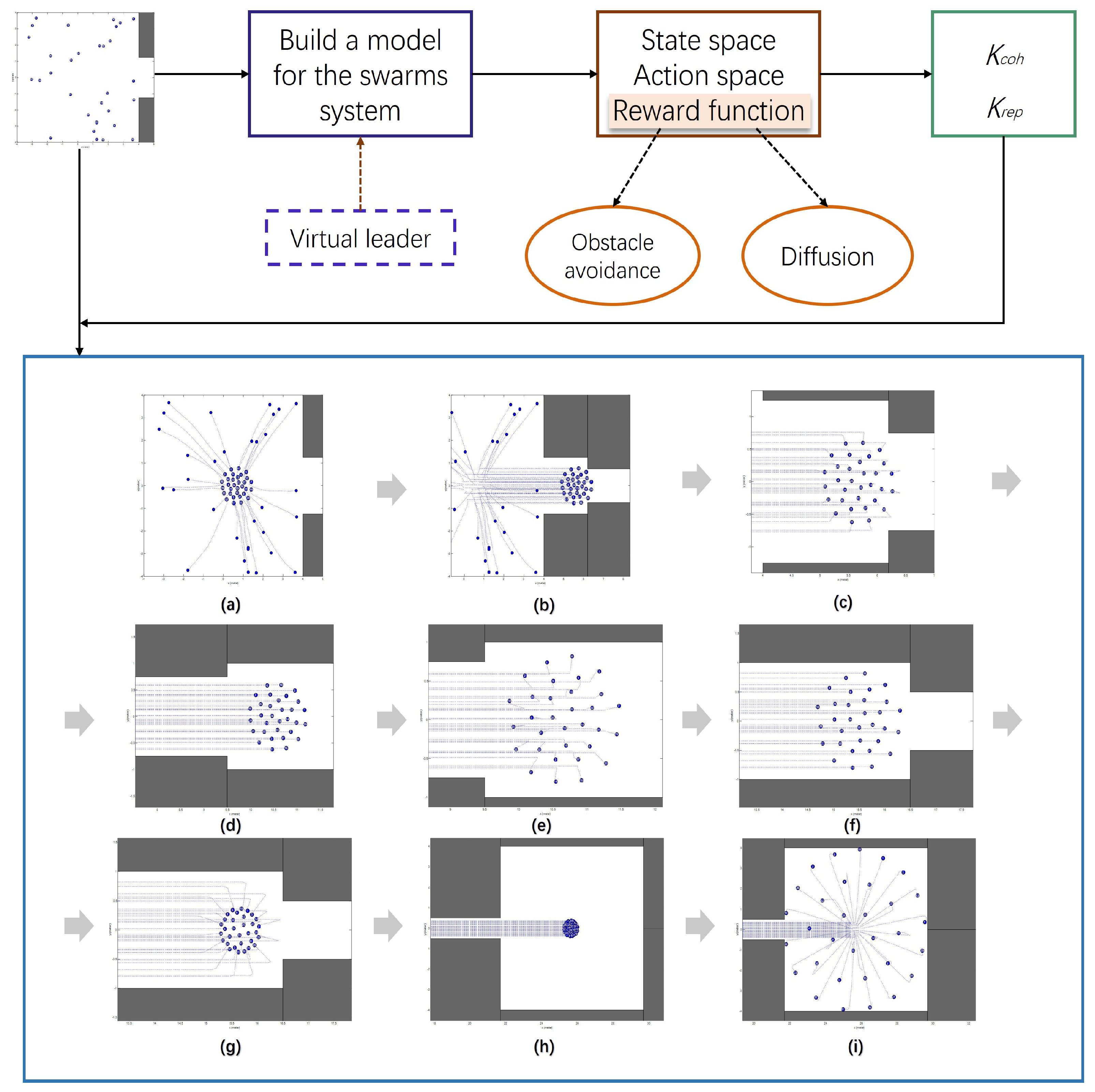
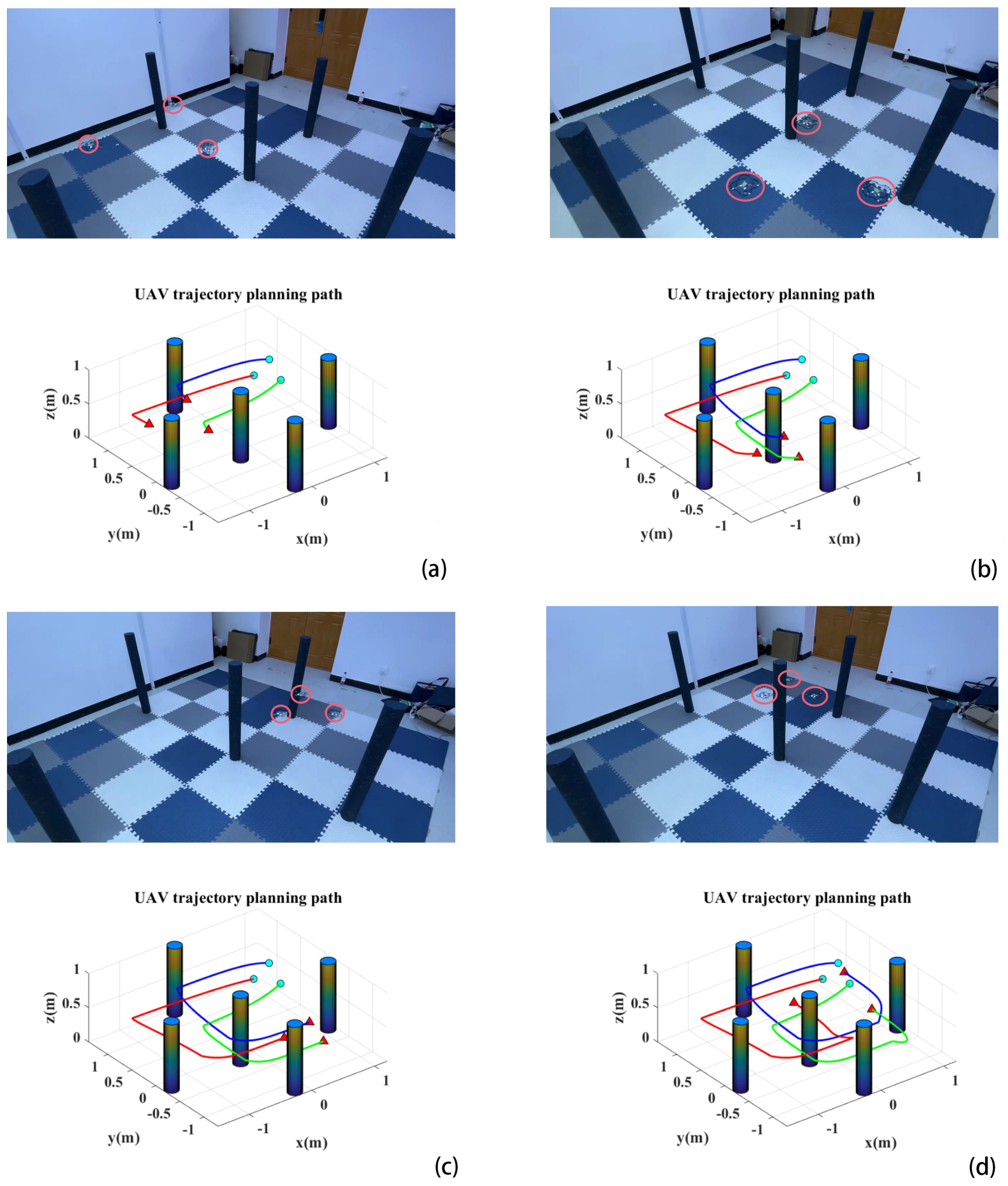
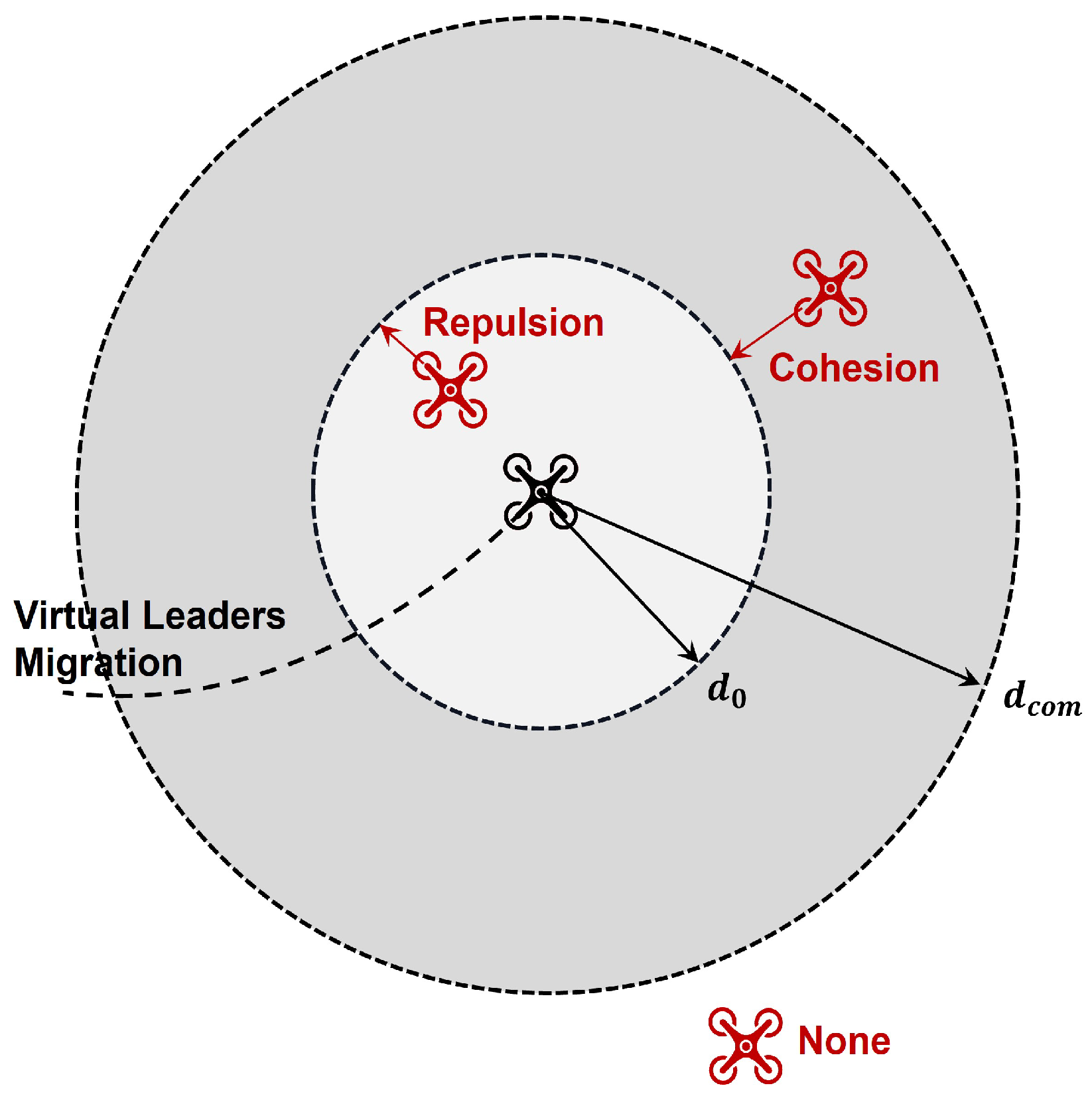
Swarm models hold significant importance as they provide the collective behavior of self-organized systems. Boids model is a fundamental framework for studying emergent behavior in swarms systems. It addresses problems related to simulating the emergent behavior of autonomous agents, such as alignment, cohesion, and repulsion, to imitate natural flocking movements. However, traditional models of Boids often lack pinning and the adaptability to quickly adapt to the dynamic environment. To address this limitation, we introduce reinforcement learning into the framework of Boids to solve the problem of disorder and the lack of pinning. The aim of this approach is to enable drone swarms to quickly and effectively adapt to dynamic external environments. We propose a method based on the Q-learning network to improve the cohesion and repulsion parameters in the Boids model to achieve continuous obstacle avoidance and maximize spatial coverage in the simulation scenario. Additionally, we introduce a virtual leader to provide pinning and coordination stability, reflecting the leadership and coordination seen in drone swarms. To validate the effectiveness of this method, we demonstrate the model’s capabilities through empirical experiments with drone swarms, and show the practicality of the RL-Boids framework.
Keywords: reinforcement learning; Boids model; virtual leader; obstacle avoidance; drone swarms reinforcement learning; Boids model; virtual leader; obstacle avoidance; drone swarms