Article

UAV Icing: Experimental Characterization of the Performance Impact of Ice Accretion on a Propeller


by
Nicolas Carlo Müller
1,2,*,
Eric Villeneuve
3 and
Richard Hann
1,2,*
1
UAV Icing Lab, Department of Engineering Cybernetics, Norwegian University of Science and Technology (NTNU), 7011 Trondheim, Norway
2
Ubiq Aerospace AS, 7011 Trondheim, Norway
3
Department of Mathematics, Informatics and Engineering, University of Quebec in Rimouski (UQAR), Rimouski, QC G5L 3A1, Canada
*
Authors to whom correspondence should be addressed.
Drones 2026, 10(3), 166; https://doi.org/10.3390/drones10030166
Submission received: 12 December 2025 / Revised: 11 February 2026 / Accepted: 13 February 2026 / Published: 28 February 2026
(This article belongs to the Section Drone Design and Development)

Highlights

What are the main findings?
  • Propeller performance degradation increases with higher liquid water content, larger droplet diameters, and higher ambient temperatures, driven by both increased ice mass and changes in ice shape from rime to glaze ice.
  • The impact of icing on propeller torque is most strongly correlated with droplet diameter. Small droplet diameters can result in negligible torque increase despite ice accretion due to streamwise ice shapes.
What is the implication of the main finding?
  • Ice shape morphology and ice density, rather than ice mass alone, are critical drivers of aerodynamic performance degradation and should be considered in icing assessments.
  • Discrepancies between experimental and numerical results highlight the need to improve icing wind tunnel characterization and numerical models, particularly regarding droplet size spectra and ice density effects.

Abstract

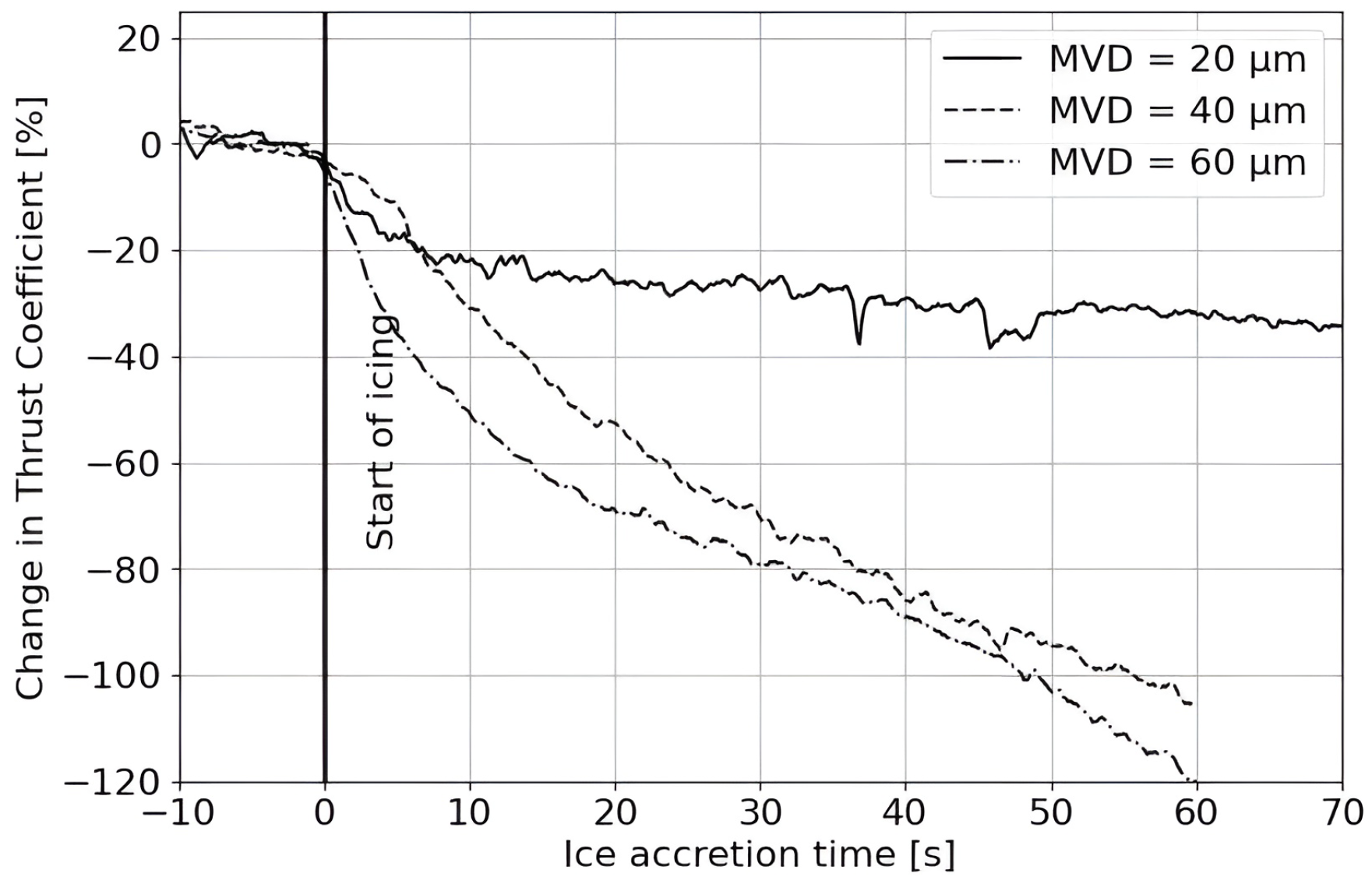
Ice accretion is a significant threat to the operation of UAVs in cold climates. This study analyzed the performance degradation caused by ice accretion on a propeller with a diameter of 0.53 m for a small UAV in an icing wind tunnel. Three different droplet diameters of 20, 40, and 60 µm were tested along with three liquid water contents between 0.28 g/m3 and 1.12 g/m3 along with temperatures of −5 °C, −10 °C, and −15 °C. Additionally, the influence of the variation in the rotation rate was measured. The droplet diameter was observed to have the strongest influence on the propeller’s performance. An increase in the median volume diameter from 20 µm to 40 µm was correlated with a significant decrease in the propeller’s performance. After a minute of icing, the experiment at 20 µm showed a reduction in thrust of 25% compared to a decrease in thrust by 100% for the 40 µm case and 120% for the 60 µm case, meaning that the propeller is not generating thrust, but is generating drag. The temperature influences the propeller’s performance, with the most substantial performance degradation at −5 °C and a decrease in the performance impact with a temperature reduction. Analyzing the performance impact is an important step for deploying UAVs in icing conditions by detecting the most critical conditions for the performance of a UAV propeller. The analysis shows that the most critical conditions are at −5 °C and that an increase in droplet diameter and liquid water content leads to more severe icing conditions. The results show the need for future analysis comparing the performance impact of a propeller at different icing wind tunnels and the validation of numerical methods for predicting the performance degradation of a UAV propeller.

1. Introduction

The use of uncrewed aerial vehicles (UAVs), also called uncrewed aerial systems (UASs), drones or remotely piloted aerial systems (RPASs), in commercial and military applications is growing [1,2]. The increased use of UAVs, in turn, leads to the need to operate UAVs reliably, even in potential adverse weather conditions to provide dependable services [3,4]. UAVs struggle due to their small size to operate in adverse weather conditions, and thus their applications are currently limited to areas with predominantly good weather. Thus, there is a need to develop UAVs that can operate in adverse weather conditions to ensure that the UAVs can deliver the services reliably in more areas [5]. One adverse weather condition that limits the operation of UAVs in cold weather is in-flight icing [6].
The ice accretion on rotating components has been studied in detail for manned aircraft [7,8,9,10], wind turbines, and helicopter rotors, e.g., [11,12,13,14,15], but only limited research is available for the ice accretion on UAVs [6]. Icing affects all types of UAVs, but for those with rotors, ice accumulation directly reduces lift and thrust, increases drag and torque, induces severe rotor vibrations, and can lead to potential crashes [5,16]. Rotary-wing UAVs are particularly vulnerable to icing conditions compared to their fixed-wing counterparts, because due to the high rotational speed, ice accumulates faster on the rotors than on the stationary wings [17]. Additionally, the compact size and limited battery capacity increase the adverse effect of icing on UAVs [6]. When exposed to icing conditions in flight, UAVs are at risk of loss of control and crash [6,18]. The risk of adverse weather on UAVs thus needs to be studied to enable the operation of UAVs in such weather conditions. But the influence of the ice accretion on the performance of UAVs is dependent on the operational and meteorological conditions [6]. The severity of icing-induced performance degradation strongly depends on the prevailing meteorological and operational conditions, including droplet size, liquid water content, ambient temperature, and rotor speed. However, the individual influence of these parameters and their role in determining ice morphology and transient performance degradation have not yet been systematically studied for UAV propellers.
Liu et al. performed experimental investigations in an icing wind tunnel (IWT) to examine transient ice accretion on UAV propellers, quantifying variations in thrust, torque, and power consumption under a wide range of icing conditions [19]. The ice buildup was monitored across numerous atmospheric icing scenarios, with corresponding measurements of rotor aerodynamic performance. The results showed that ice accretion can cause thrust reductions of up to 70% and increases in power consumption of up to 250% relative to clean conditions. In addition, the authors assessed the effects of hydrophobic and superhydrophobic surface coatings on ice accretion, demonstrating that superhydrophobic coatings substantially limited ice buildup, prevented thrust degradation, and required less additional power than hydrophilic coatings [20].
For manned aviation, Chenet et al. [21] conducted computational fluid dynamics (CFD) simulations and optimization analyses for rotor anti-icing strategies by analyzing big datasets. However, the available research on icing on small UAVs remains limited. Currently, multiple research groups have started researching the topic [2,6,17,19,20,22,23].
Müller et al. [24,25] analyzed the ice accretion on a propeller with a diameter of 533 mm or 21 inches at 4200 rpm and a flight velocity of 25 m/s. They performed experiments in an IWT to analyze the performance degradation, backed up with numerical simulations of the ice accretion on the propeller [25]. They found a rapid reduction in the propeller’s thrust along with a significant decrease in thrust for a droplet diameter of 24 µm and a liquid water content (LWC) of 0.44 g/m3, leading to a reduction in the propeller efficiency of 60% after 60 s of ice accretion at −10 °C [24]. The experiments were performed within the continuous maximum envelope of the FAA Part 25 App. C [26]. The numerical calculations, performed both for the continuous maximum envelope and the intermittent maximum envelope of the FAA Part 25 App. C [26], predict a strong correlation of the performance degradation with the LWC, but only a limited influence of the median volume diameter (MVD) on the performance of the propeller [25].
For the propeller used in the studies by Müller et al., an electro-thermal ice protection system was developed that can prevent ice accretion at temperatures down to −15 °C [27,28,29]. The system was based on a heated carbon-fiber-based heating element in the leading edge of the propeller.
Harvey et al. [30] analyzed the ice accretion on a UAV rotor with 0.66 m or 26 inches diameter in forward flight. Villeneuve et al. tested the same rotor in hover mode in the same IWT as used in this paper [17,31]. They found that the performance degradation of the propeller in an IWT increases with an increase in the droplet diameter, the LWC, and decreases with an increase in the rotation rate of the propeller and the pitch angles of the propeller. They proposed the collection efficiency as the cause for the observed effects.
Kozomara et al. [32] investigated a quadcopter equipped with a fluid-based de-icing system under FAA Appendix C icing conditions, demonstrating that targeted fluid application could delay ice accumulation and mitigate thrust loss on individual rotors. Ercan and Dalkın [33] performed full-vehicle icing experiments on a hovering quadcopter, quantifying the reduction in thrust and increase in power consumption due to propeller icing, and highlighting the importance of rotor-level ice accretion for overall vehicle performance. Samad et al. [34] examined dynamic ice formation on a multirotor UAV rotor in forward flight, revealing that transient ice growth and shedding events produce significant unsteady aerodynamic loads, with variations in droplet size, liquid water content, and flight speed strongly affecting rotor efficiency. Together, these studies emphasize the need for systematic, parametric experimental investigations to understand UAV propeller performance under icing conditions. An Icing-Related Decision-Making System has been developed by Armanini et al. [35]. This monitors aircraft performance parameters and environmental conditions in-flight to optimize the operation of the ice protection system operation.
The research paper at hand analyzes the influence of changes in the meteorological conditions on the performance of fixed-wing UAV propellers in an icing wind tunnel. A propeller with a diameter of 0.53 m or 21 inches is subjected to three different temperatures of −5 °C, −10 °C, and −15 °C. The MVD varies from 20 µm to 60 µm, and the LWC is varied between 0.28 g/m3 to 1.12 g/m3. The thrust and torque of the propeller are measured during the ice accretion process. Based on these data, the propeller’s efficiency change during the ice accretion process is measured. This study aims to increase the understanding of the influence of changes in meteorological conditions and serve as a basis for future numerical analysis of the impact of ice accretion on the propeller’s performance of a UAV. In this study, first, the influence of performance degradation of a propeller in baseline conditions is shown. The repeatability, the influence of variations in MVD, LWC, temperature, and rotation rate on the performance of a propeller in icing conditions are analyzed. Second, the trends in the propeller efficiency changes with varying LWC and MVD are highlighted. This is the first experimental study highlighting the influence of variations in the temperature, LWC, and MVD on the thrust and torque of the propeller of a UAV. Existing analyses have focused only on a subset of the parameters, and the choice of different operational conditions makes it challenging to compare performance degradation figures in the existing literature.

2. Materials and Methods

2.1. Icing Wind Tunnel

The experimental campaign was conducted in Anti-Icing Materials International Laboratory (AMIL)’s icing wind tunnel. The AMIL’s icing wind tunnel is a low-speed refrigerated closed-loop IWT. The test section has a circular cross-section and a diameter of 0.9 m [30]. The test section with the installed system is shown in Figure 1. The temperature in the IWT can be set to −40 °C to 22 °C. The maximal air velocity in the test section is 50 m/s in the 0.64 m2 cross-sectional area.
The icing wind tunnel includes a spray system to reproduce atmospheric icing conditions. The spray system has 25 spray nozzles mounted on three horizontal spray bars: eight on the top and bottom bars and nine on the middle bar. The horizontal spray bars are moved vertically in an oscillation motion to generate an even LWC distribution in the test section. The spray water is deionized, and supplied from a pressurized and refrigerated tank. The LWC can be varied from 0.2 to 8.0 g/m3 and MVDs of water droplets from 20 µm to 100 µm [30].
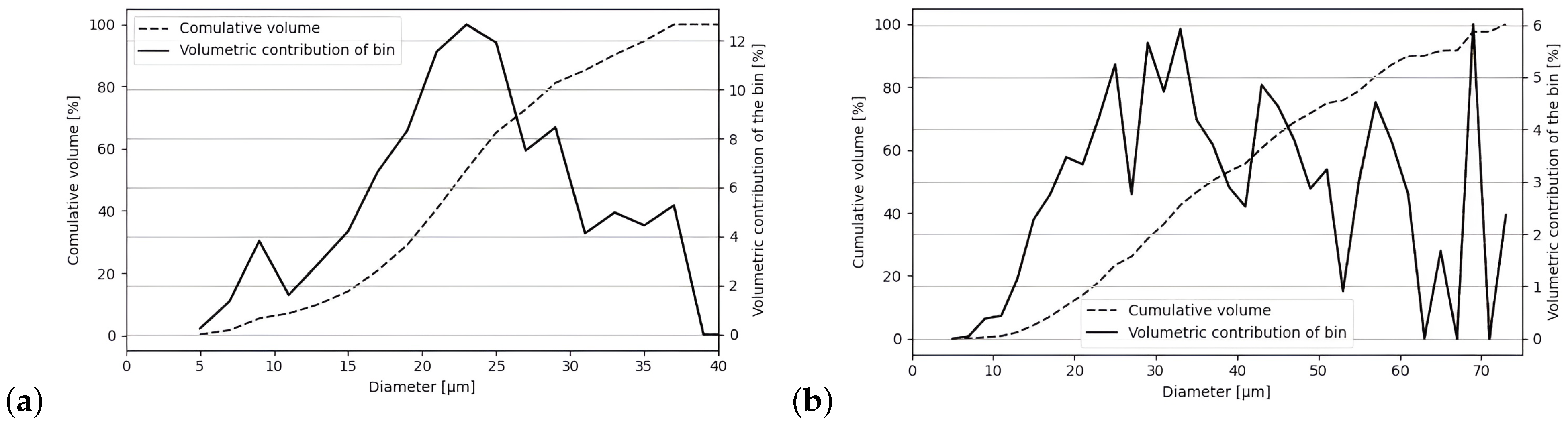
The wind tunnel complies with the Society of Automotive Engineers (SAE) Aerospace Recommended Practice ARP5905 for icing wind tunnels [36] and Aerospace Information Report for droplet sizing AIR4906 [37]. The test section is surrounded by a cold room, which enables access to the test samples inside and outside the wind tunnel after each testing run. This enables 3D scanning of the ice shapes. An LWC-200 hot-wire probe (Droplet Measurement Technologies, Longmont, CO, USA) was used to measure the icing cloud uniformity and the LWC values in an older testing campaign [30]. The measured droplet distribution for a target MVD of 20 µm can be seen in Figure 2a). It can be seen that the droplet distribution is narrow, with the largest droplet recorded at a diameter of 35 µm at a target MVD of 20 µm and 73 µm for the target MVD of 40 µm. The droplet distribution for an MVD of 20 µm shows close to the expected Gaussian distribution, while the droplet distribution at 40 µm in Figure 2b) has less of a Gaussian distribution, caused by a few large droplets. As a consequence, we consider the MVD of a 20 µm droplet spectrum much narrower than the MVD 40 µm spectrum. In order to improve this, longer measurements would be necessary, but are not available.

2.2. UAV Drone Propeller Test Setup

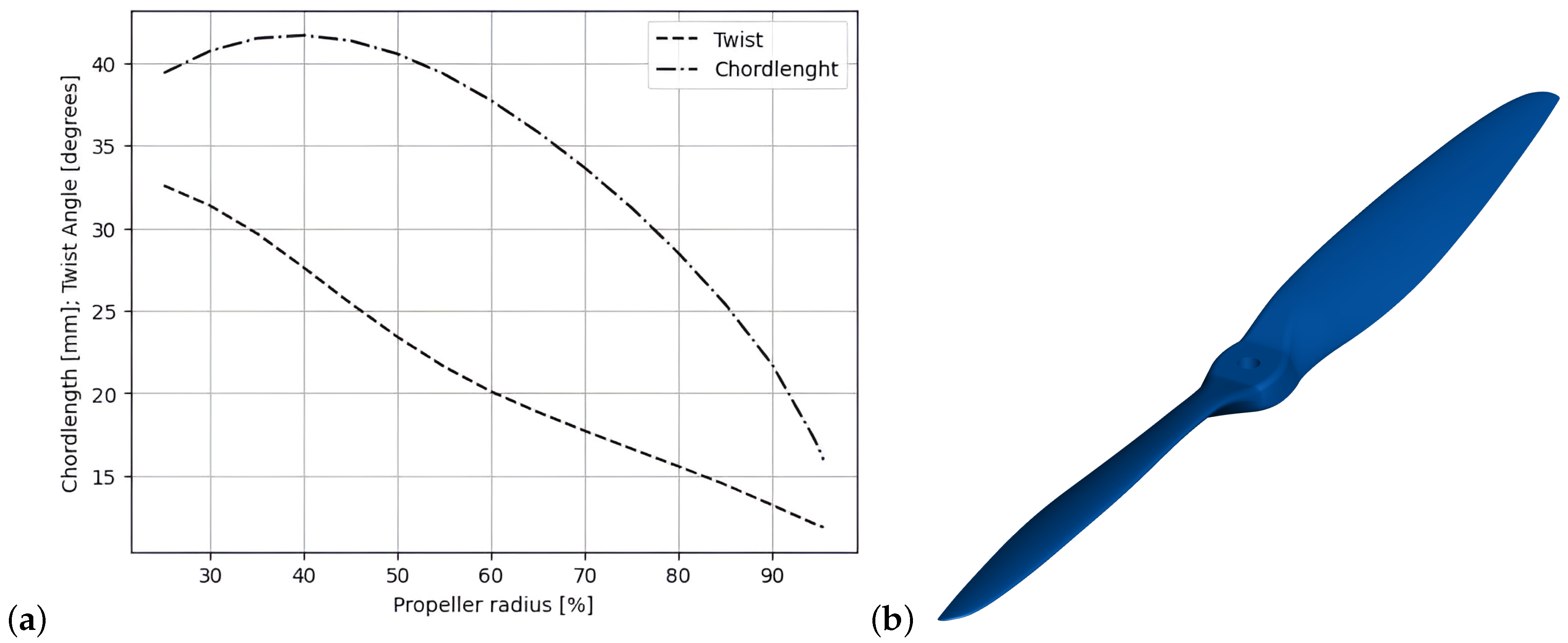
The test object in this study is a Mejzlik 21x13 E propeller by Mejzlik s.r.o (Brno, Czech Republic). The propeller has a diameter of 533 mm (21 inches) and a pitch of 216 mm (13 inches). It is manufactured from carbon fiber with an epoxy resin matrix. The twist and chord distribution of the propeller can be found in Figure 3. The geometry file is included in the supplementary data section of this paper. This leads to a blockage ratio of 35.1% of the wind tunnel, and 37% effective blockage.
A Hacker Q80 9M motor [38] spins the propeller, and the motor is controlled by a Master Spin Pro 165 opto electronic speed controller (ESC) [39], supplied with 48 V through a direct current (DC) power supply.
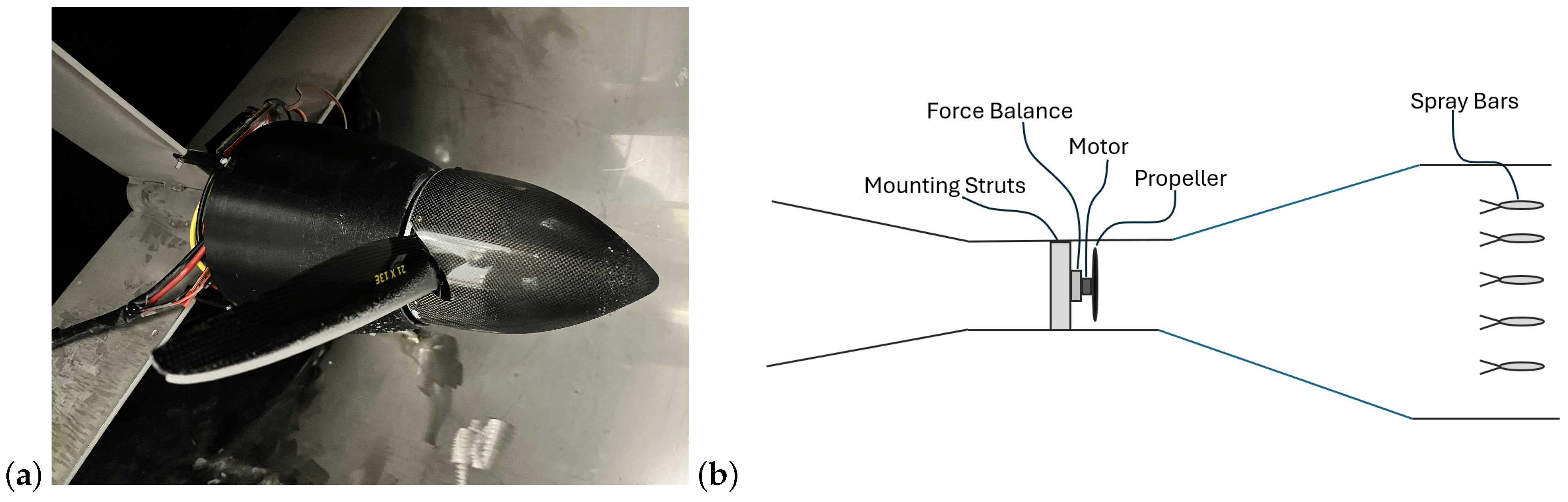
The motor is mounted to a Flight Stand 15 dynamometer from Tyto Robotics (Montreal, QC, Canada) [40], which records the propeller’s thrust and torque at 50 Hz. Additionally, the dynamometer contains a three-axis accelerometer, mounted between the mounting bracket and the force balance. The accelerometer records the vibration levels at 500 Hz. Any recording of accelerations in excess of 10 g will automatically stop the experiment to protect the force cell. An infrared sensor reads the propeller’s rotation rate via a reflective patch on the motor spindle. The motor and the dynamometer are covered with an aerodynamic cover to prevent water from impinging on the electronic parts. The dynamometer is mounted in the centre of the test section using a welded plate and four radial arms that keep the setup stable. The test setup can be seen in Figure 4.
The data are transferred to a Python script, which is used to manage the experimental setup and to record the data. The script uses a proportional integral derivative (PID) controller to enable testing with a constant propeller rotation rate or constant thrust.

2.3. Test Parameters

For this experiment, the test conditions were selected to align with the intermittent icing envelope described in the FAA Part 25 App. C [26] for the certification of transport category rotorcraft.
The selection of the conditions aimed to cover the envelope, with three different values for the temperature, LWC, and MVD. To enable the separation of the effects of MVD, LWC, and temperatures, all three values were varied separately, which leads to a few experimental points outside the FAA Part 25 App. C envelopes. The central conditions are a temperature of −10 °C, an MVD of 40 µm, and an LWC of 0.72 g / m 3 . The influence of the variation of the parameter was tested against this central condition. An overview of the test conditions can be seen in Table 1, and a full list of all experimental runs is given in Table A1.
During the variation of the MVD for a given condition, the LWC was kept constant. This leads to certain conditions outside the envelope in the intermittent maximum conditions but allows for an analysis of the influence of the MVD and LWC variations independent of each other.
The airspeed for the experiments with the smaller propeller was selected at 25 m/s to align with existing literature [24] and numerical analysis performed with the propeller [24,25,27,29,41]. The rotation rate of the propeller was set to 4200 rpm to correspond to the literature data. This generates a thrust in clean conditions suitable for the cruise flight of a fixed-wing UAV with 25 kg of weight.

2.4. Test Procedure

For the ice accretion experiments, the wind and the propeller rotation were started first. The system was given 30 s to stabilize the rotor rotation rate and airflow. The thrust and torque are recorded 10 s before the spray system is activated and the icing conditions started to generate a clean reference value. After this period, the spray system is activated. The spray system is activated for the test duration, during which the rotation rate of the motor is kept constant. All tests are performed with a target run duration. Most experiments were performed for 60 s to evaluate the influence of the ice on the performance without ice shedding, with some experiments extended to 120 s and 240 s if no ice shedding had been observed earlier. Experiments were also stopped after ice-shedding events, when the measured vibrations exceeded a maximum value of 10 g as measured by an accelerometer on the force balance behind the motor and the force cell. All truncated runs were truncated to the time the ice shedding was detected.

2.5. Post-Processing and Non-Dimensional Coefficients

For the analysis of the experiments, multiple non-dimensional parameters are used: The advance ratio J describes the ratio between the rotation rate n of a propeller and the flow velocity v normalized by the propeller diameter D:
J = v n D
For the analysis of the efficiency of the propeller, the relative efficiency η rel of the iced propeller to the clean propeller is calculated, based on the thrust of the clean T clean and iced propeller T iced , as well as the torque of the clean Q clean and the iced propeller Q iced .
η rel = T iced / T clean Q iced / Q clean .
The power coefficient C P is used to evaluate the performance differences of propellers with different sizes. The power coefficient can be calculated using the following equation based on the input power P and the air density ρ :
C P = P ρ n 3 D 5 .
The thrust coefficient C T is used to evaluate the thrust differences. It can be calculated using the following equation based on the measured thrust T:
C T = T ρ n 2 D 4 .
The ice accretion experiments were repeated three times for each condition, and thus multiple data points were obtained. The performance degradation was evaluated after a set amount of time to enable a comparison between the different data points. This time was 60 s for the baseline condition to avoid ice shedding. However, it was not possible to avoid ice-shedding for all the cases; this is discussed in the relevant sections.
Ice shapes are analyzed in three cross-sections on the propeller radius. The sections are at 30%, 50%, and 75% of the propeller. To generate a 3D representation of the ice shapes, a Handyscan 700 [42] was used. The propeller was coated with a reflective coating to reflect the laser better. This improved the quality of the 3D scans.
The maximum combined cross section (MCCS) of the ice shapes were calculated to analyze the scans. To calculate the MCCS, 25 slices of the ice shape on the propeller were taken at a width of 1% or 2.5 mm of the propeller radius around the target radial position. The outer envelope of all the cross-sections was calculated and is shown as an ice shape in the paper.

3. Results

During the experimental campaign, different experiments were performed, with a focus on the performance degradation of the propeller during the initial ice accretion process until ice shedding occurred. First, the repeatability of the results is analyzed in a baseline experiment, and then experiments are conducted to evaluate the influence of the MVD, LWC, temperature, and the rotation rate. Lastly a comparison of the different influences on the efficiency change is performed.

3.1. Baseline Condition

First, the impact of icing on the performance of the propeller is analyzed for a single condition. The chosen condition had an MVD of 40 µm, an LWC of 0.72 g/m3, and a temperature of −5 °C. The condition was chosen as the condition is inside the intermittent maximum envelope for the certification of manned aviation [26]. The three runs at this condition were performed on different days during the testing campaign.
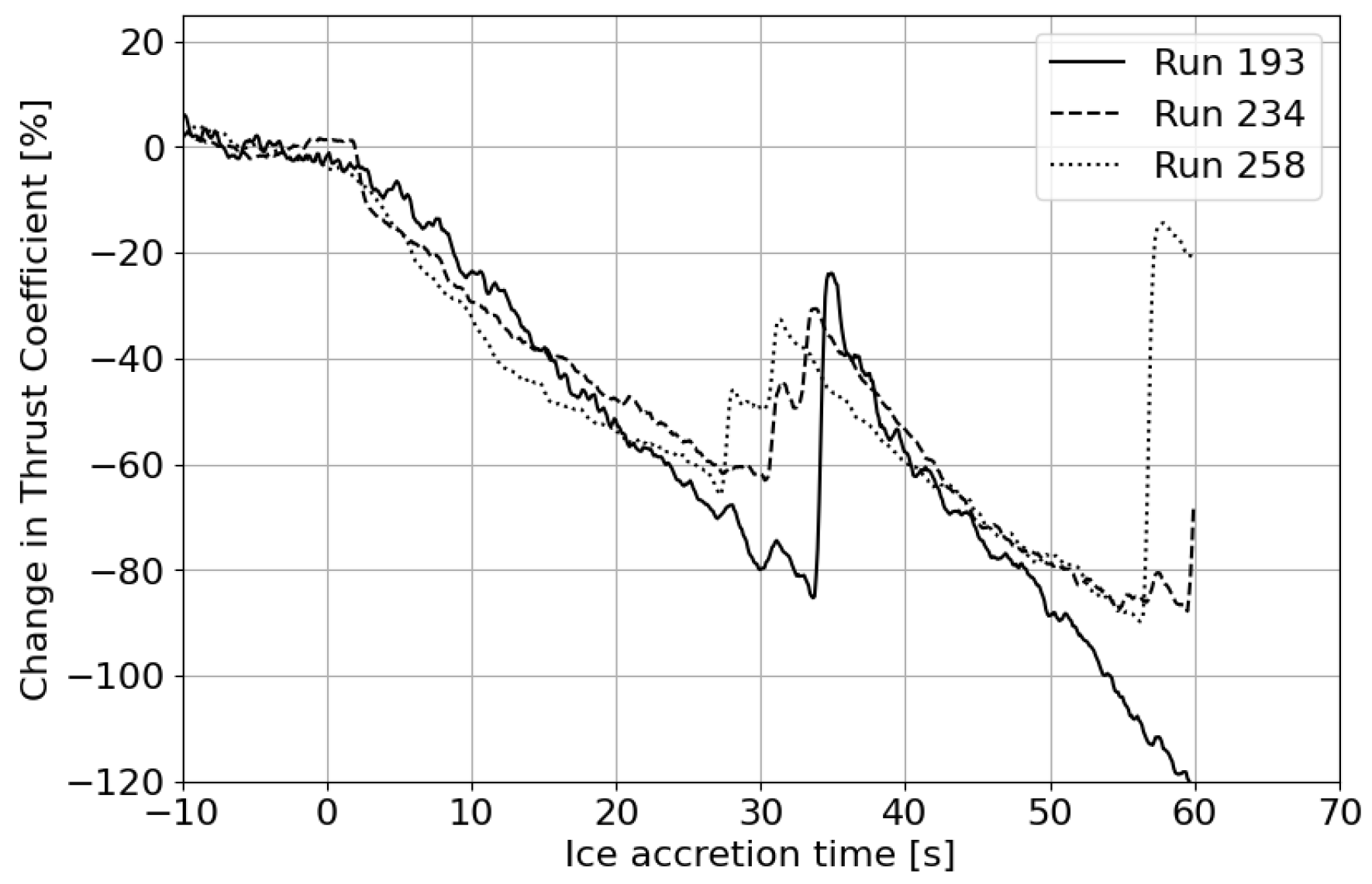
The change in the thrust coefficient is shown in Figure 5. The change in the thrust coefficient is shown as relative loss compared to the clean thrust of the propeller. It can be seen that all three experimental runs show a reduction in the thrust coefficient as soon as the spray system is activated. After between 25 s and 35 s, all the experiments show a recovery of the generated thrust, which is caused by the shedding of ice off the propeller. After the ice-shedding event, the thrust of the propellers is reduced again. Runs 234 and 258 show an intermediate step in the performance recovery after 30 s, generated when the ice is shedding off one of the propellers before the other propeller blade.
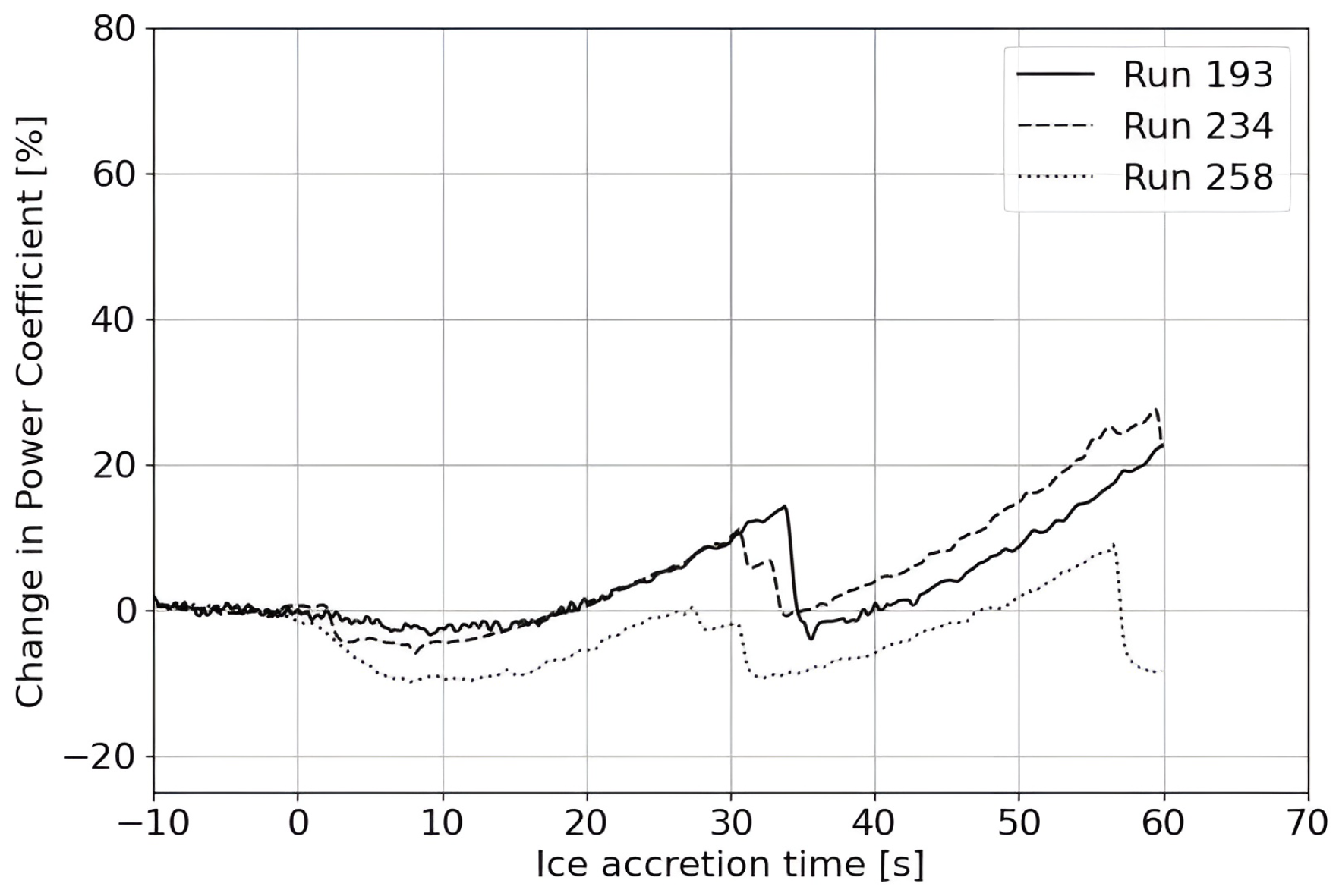
The change in the power coefficient is shown in Figure 6. Immediately after the start of the spray, the power coefficient decreases for all three runs, with the steepest decrease in run 258. This initial reduction in the power coefficient is unexpected, as the previously published research has shown that the ice accretion should increase the power coefficient if the propeller experiences icing conditions [43,44]. This behavior is also not observed in numerical simulations [25] but it has been observed in previous experiments with propellers from the same manufacturer [45]. The most likely source for this behavior is a separation bubble observed on the pressure side of the propeller in numerical simulations [28] but assessing the performance effect of this would require high-fidelity CFD simulations. The initial development of surface roughness during the beginning of the ice accretion might remove this bubble by triggering the transition of the boundary layer, and thus reduce the power coefficient temporarily. After enough ice has accumulated, the drag increase due to the ice accumulation is larger than the reduction due to the removal of the separation bubble. Therefore, the power coefficient rises.
The difference between the three runs is the most pronounced after the ice shedding after 36 s and might be related to vibrations caused by asymmetric ice shedding affecting the measurements in Run 258. After the initial power coefficient loss, the power coefficient increases for all three runs.
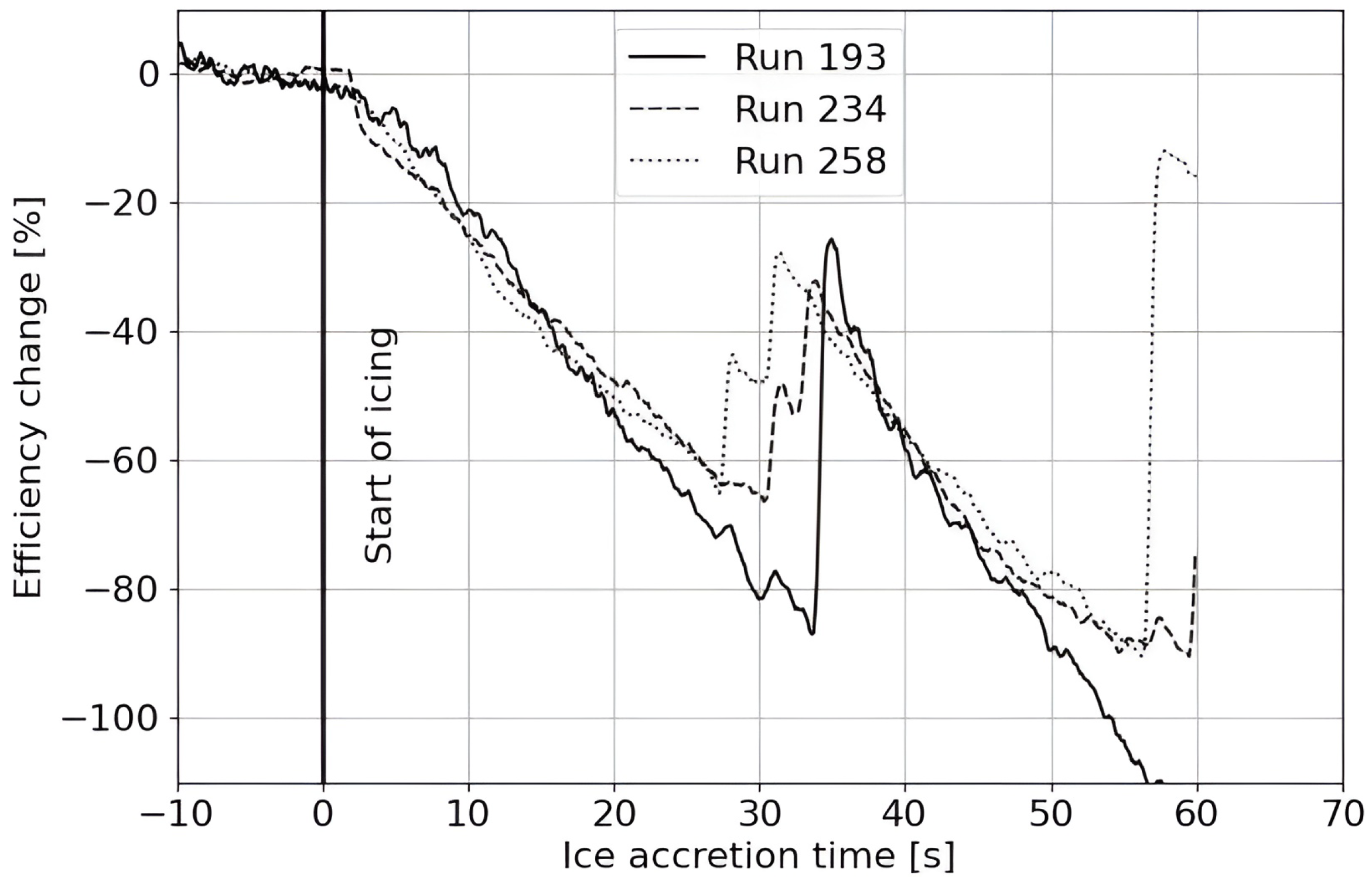
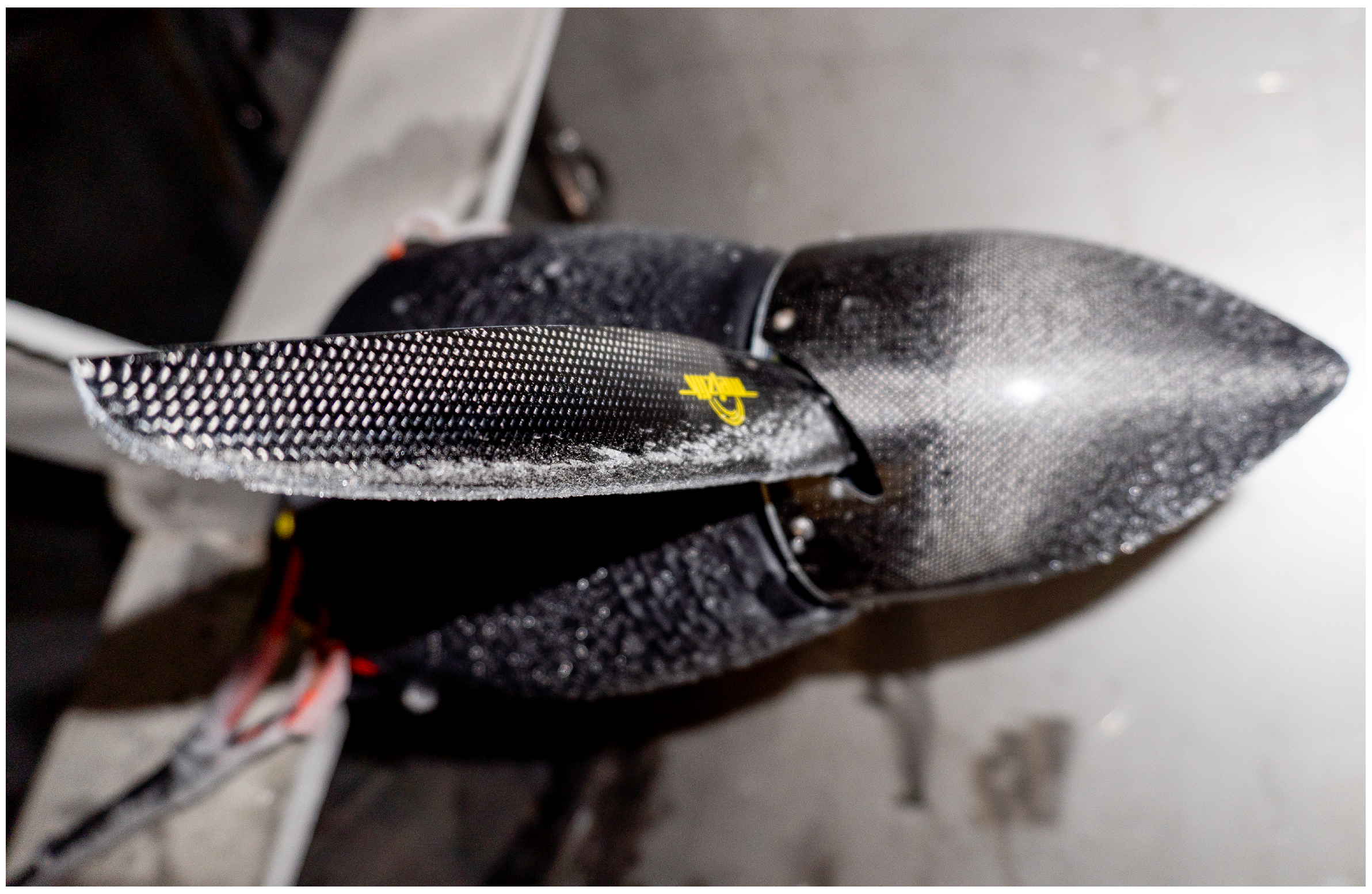
By combining the thrust and power coefficients, the overall efficiency of the propeller is calculated and shown in Figure 7. It can be seen that thrust degradation dominates efficiency degradation, and the change in the power coefficient only has a secondary effect on overall propeller efficiency. The three different runs show a good agreement, and thus it can be assumed that the experiments are consistent and repeatable. An image of the ice accretion on the propeller can be seen in Figure 8. Ice accretion on the leading edge of the propeller over the entire radius can be seen here. A small step is visible close to the center of the propeller, indicating that during the ice-shedding process, this part of the ice of the propeller did not shed. This is due to the reduced centrifugal forces acting on the center of the propeller.

3.2. Variation of the MVD

The influence of variations in the MVD is analyzed by changing the MVD from the baseline of 40 µm to 20 µm and 60 µm. In Figure 9, the change in the thrust coefficient is shown during the ice accretion period. For each condition, the median run is shown. It can be seen that all three conditions show an initial drop in the thrust during the first 4 s of ice accretion. After this, the change in the thrust coefficient diverges. The experiments at an MVD of 20 µm show a slight reduction in the thrust coefficient, while the experiments at an MVD of 60 µm show a steep and continuous decrease in the thrust coefficient. After 60 s of icing, the experiments at an MVD of 20 µm show a thrust reduction of 28%, the experiments at an MVD of 40 µm show a thrust reduction of 100%, and the experiments at 60 µm, a thrust coefficient reduction of 120%, meaning that the propeller is not generating thrust, but is generating drag.
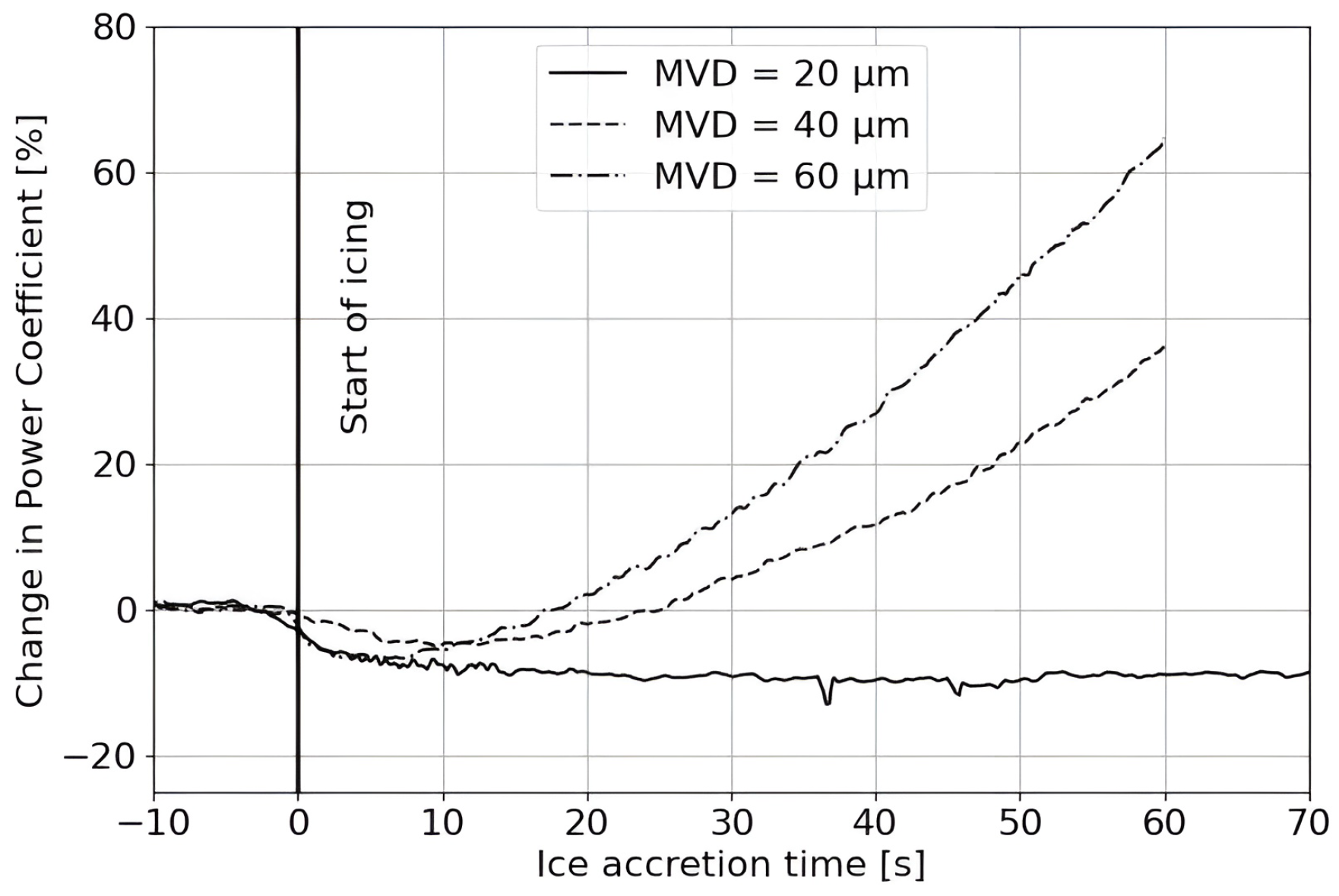
The change in the power coefficient is shown in Figure 10. Again, all three conditions show a similar drop in the initial ice accretion period, followed by diverging behavior. The power coefficient for the MVD of 20 µm shows a slow continuous decline after the initial drop, while the power coefficient for the two other experiments increases with the ice accretion time. The two spikes at t = 37 s and 46 s visible for the MVD of 20 µm are caused by a temporary disruption in the rotation rate measurement. Again, the larger droplet diameter shows a steeper increase in the power coefficient. After 60 s of ice accretion, the power coefficient for the MVD of 20 µm is lower than the clean propeller by 10%, while the MVD of 40 µm shows an increase of 40% and the MVD of 60 µm shows an increase of 60%.
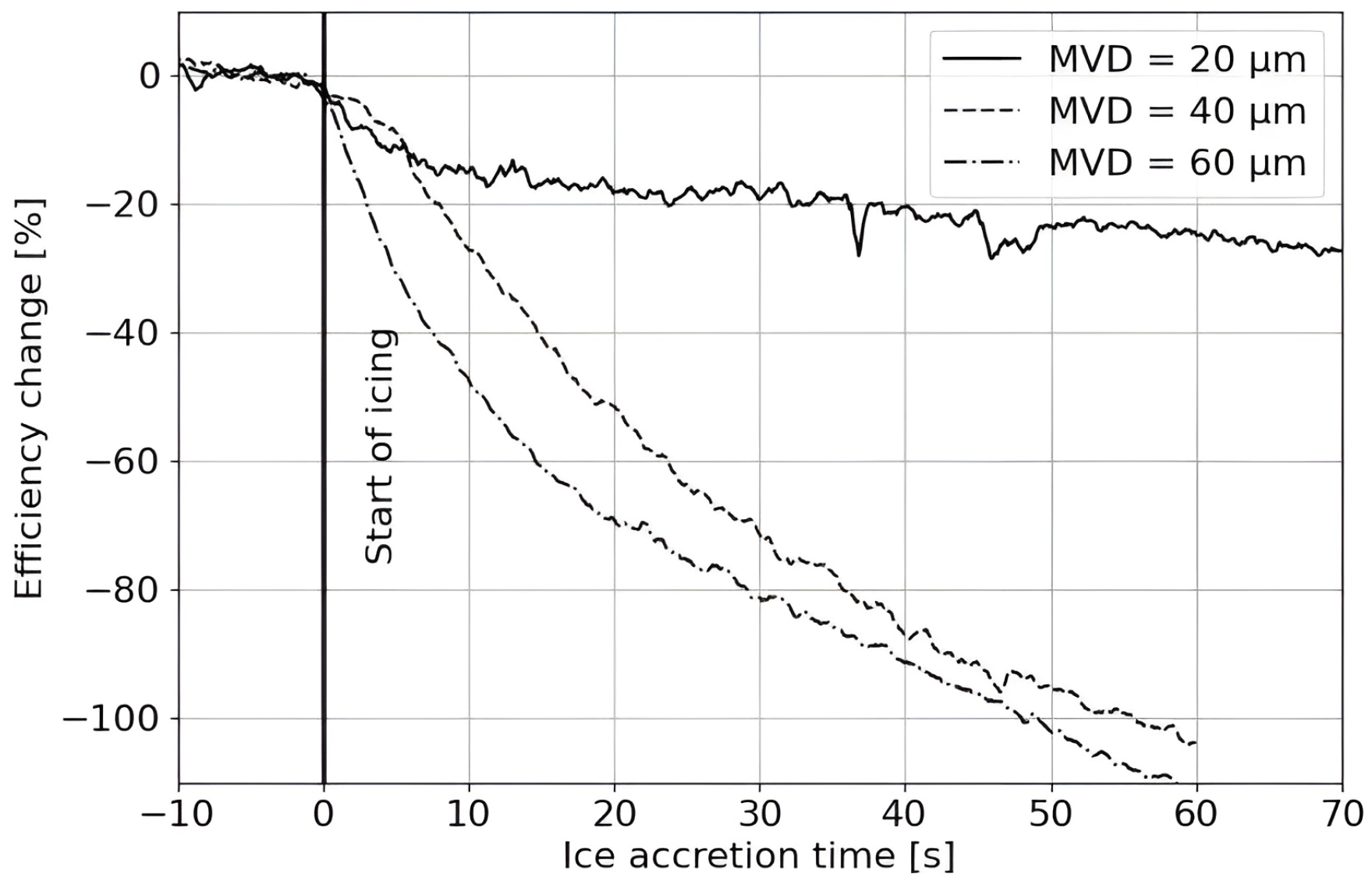
The combination of the thrust and the power coefficient shows the overall propeller efficiency, shown in Figure 11. Combining the two earlier plots indicates that the larger droplet diameter significantly increases performance degradation compared to the smallest droplet diameters. The droplet diameter of 20 µm shows an initial reduction in efficiency, followed by a low-efficiency loss gradient of 10% per minute, finishing the run with an efficiency loss of 21%. The droplet diameter of 40 µm shows a steeper performance loss gradient of about 80% per minute, leading to a final efficiency loss of 100% after 60 s. The large droplet diameter of 60 µm has the most significant performance degradation, finishing with a negative efficiency measurement, as the propeller generates drag at the end of the ice accretion time.
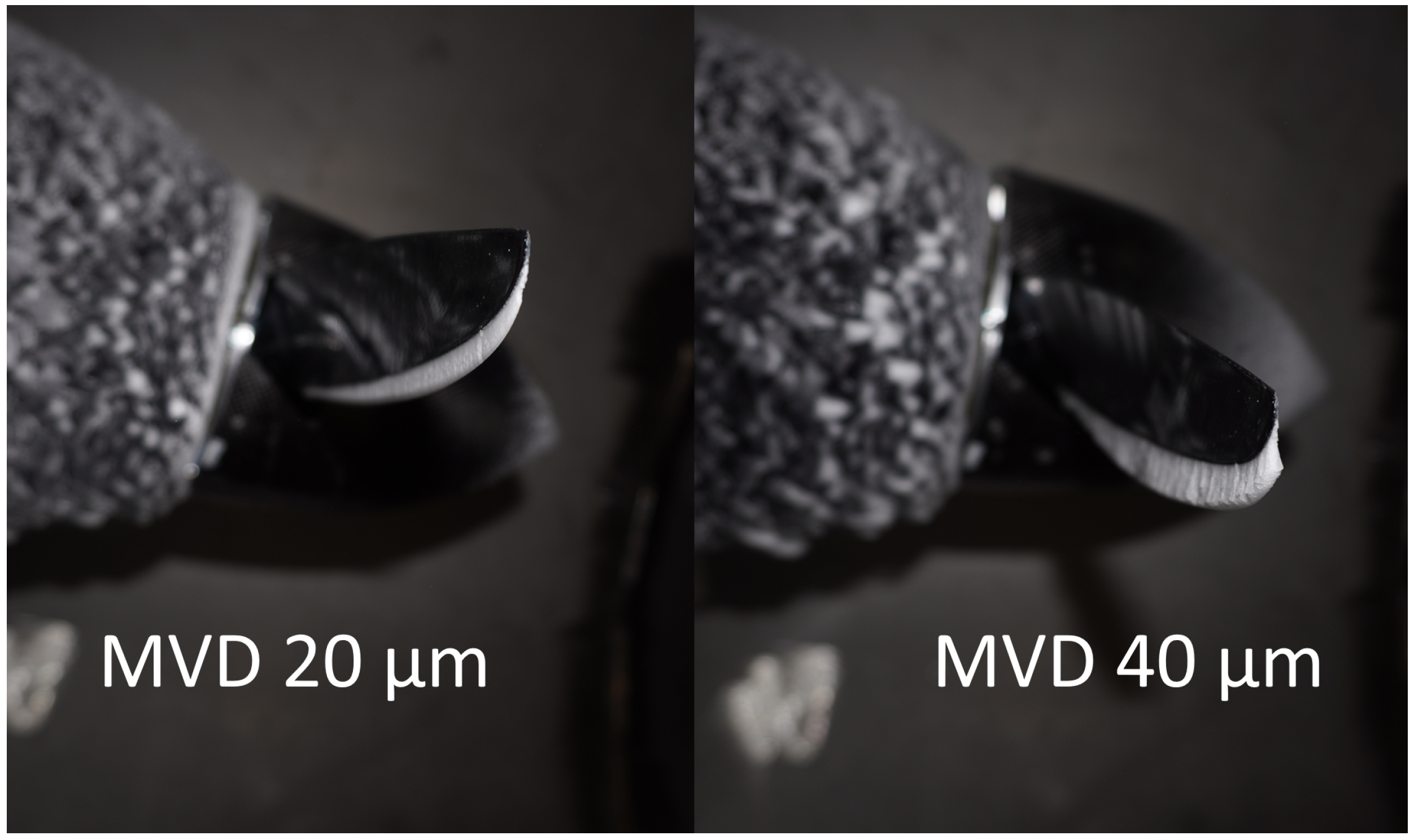
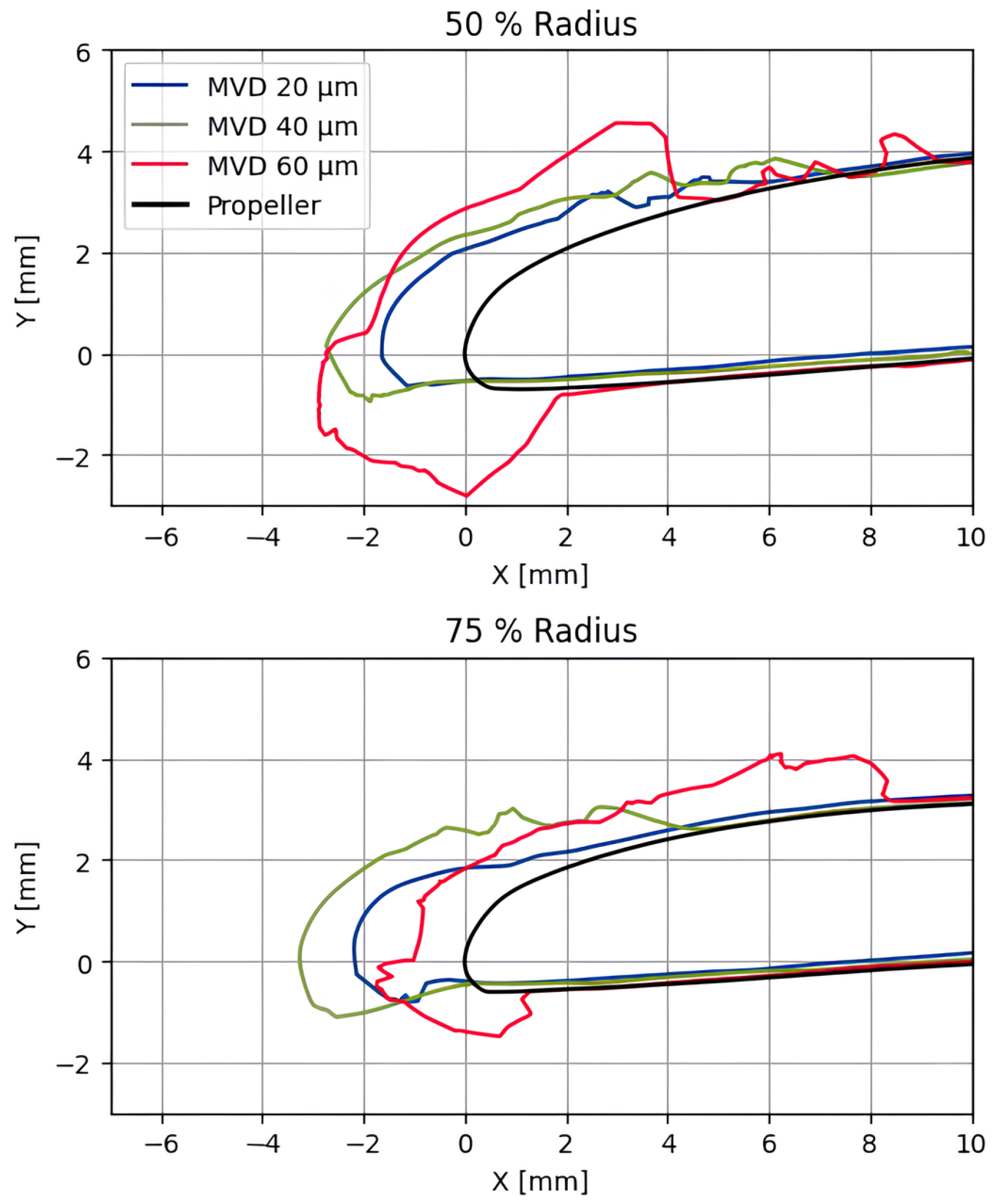
The different droplet diameters influence the ice shapes accumulated on the propeller more significantly than predicted by numerical simulations, which do not indicate a strong correlation between the performance degradation and the MVD [25]. Images of the ice on the propeller are shown in Figure 12. It can be seen that the ice shapes for the 20 µm droplet diameter are narrower than for the 40 µm MVD. The ice shape for 60 µm is not shown, as a large part of the ice shed after the run when the IWT got stopped. Enough ice remained to make a cross-section at 50% of the radius and parts of the ice shape remained at 75% of the radius. Cross-sections of the ice shapes at different sections are shown in Figure 13. At the 50% radial cross-section of the propeller, the ice shapes between the 20 µm and 40 µm droplet diameter are similar, but the ice thickness of the 40 µm ice shape is greater. The ice shape at 60 µm shows a very different ice shape, with a significantly larger icing extent, especially on the lower surface. At 75% of the radius, a similar effect can be observed for MVDs of 20 µm and 40 µm. But the ice shape after 60 s at 60 µm is not complete, as parts of the ice shed off the propeller when the test was stopped. The increased ice extent can still be seen on the top and bottom surfaces, but the leading edge ice is no longer on the propeller.
The small decrease in the power coefficient seen in Figure 10 during the ice accretion is in contrast to existing research [24,25], where a strong increase in the power coefficient has been observed. The first initial drop in the power coefficient appears to be a feature of the specific propeller design, likely caused by the shape of the leading edge of the airfoil. Due to manufacturing limitations, there is a sharp corner on the leading edge of the airfoil, as can be seen in Figure 13 on the lower corner of the leading edge. This has been shown to lead to a separation bubble on the lower surface of the propeller as seen in a previous CFD analysis of the propeller in another work [28], and thus a higher drag of the clean airfoil. When ice accretes on the airfoil, it smoothes out the leading edge and leads to a reduction in the separation bubble, ultimately reducing the power. This remains consistent between all observed test runs. This very likely explains why the power coefficient after one minute is lower than the initial one. This behavior has been observed in another study, where the effects of ice accretion on two different propellers were compared to analyze the effect on a propulsion system of a UAV [45]. In that study, only the Mejzlik propeller showed this behavior, while the other propeller did not show this behavior. This indicates that it is a feature of the specific propeller design, and it might indicate the potential to improve the efficiency of the clean propeller design.
Still, a steeper increase in the power coefficient would be expected for an MVD of 20 µm. When the ice shapes at 75% in Figure 13 of the radius are observed, it can be seen that the ice thickness for an MVD of 20 µm is reduced compared to an MVD of 40 µm. The ice shape for an MVD of 20 µm displays a smoother surface without horns. One reason for the lower ice thickness at an MVD of 20 µm is that the spatial LWC distribution seemed to be linked to the MVD. Anecdotal observations showed that the outer parts of the mounting struts, which extend across the entire test section, accumulated less ice at an MVD of 20 µm than at 40 µm. This indicates that the spatial LWC distribution depends on the MVD. As a result, there is likely a lesser ice accumulation rate for the MVD of 20 µm, therefore smaller ice shapes. This is backed up by ANSYS FENSAP-ICE simulations that predict a reduction in the ice thickness of 15% [25]. The larger difference in the ice thickness than would be expected by the numerical analysis is likely due to changes in the LWC distribution in the IWT with changes in the MVD, which leads to a slightly reduced LWC at the radial position of the propeller. This is likely caused by the lower velocity of the droplets at lower MVDs due to the reduced air pressure in the nozzles, affecting the mixing of the droplets in the airflow.
The smaller and very streamlined ice shapes that result at an MVD of 20 µm apparently generate very little additional drag. This may explain why the power stays near-constant in Figure 10. It should be noted that this behavior is somewhat surprising and could not fully be explained with the data available from this project.
As the ice shape for MVD = 20 µm in this study is streamwise, this could explain the low measured power coefficient compared to the MVD of 20 µm tests in previous experiments [27], which showed an ice shape with stronger developed horns. The divergence in the ice shapes between this study and the existing research might be caused by the narrower droplet spectrum of the IWT used in this study compared to the existing experimental research on this propeller [46].
Within this experimental campaign, a few longer runs were performed to study the long-term performance degradation in icing conditions over multiple ice-shedding cycles. During a 10-minute-long ice accretion test, the power coefficient did start to increase after 4 min of ice accretion time, but still the lack of drag increase is surprising. The best explanation is the very narrow streamwise ice shape observed. This streamwise ice shape will have a smaller aerodynamic performance degradation, as shown in a numerical analysis of the performance degradation of the propeller [25].
The power curve for an MVD of 20 µm in Figure 10 showed a minimal drag increase. Another possible explanation could be that the streamlined geometry at an MVD of 20 µm delays the laminar–turbulent transition, whereas transition occurs earlier for the higher MVD cases. This could occur, especially at the low Reynolds number (max. 200,000), but could not be confirmed further.
The aerodynamic performance degrades with an increase in the droplet diameter and the aerodynamic efficiency of the propeller. This cannot be explained by the difference in the collection efficiency and thus the ice mass. The lack of an increase in the power coefficient at a droplet diameter of 20 µm indicates that the aerodynamic impact is caused by a different ice shape compared to the performance degradation at larger droplet diameters. This could explain the difference between a streamwise ice shape at 20 µm and a horn ice shape at 40 µm. As shown in Figure 2, the MVD of 20 µm and MVD of 40 µm droplet size distributions look quite different, with substantial larger droplets at an MVD of 40 µm. This likely leads to different ice shapes as the impingement areas are substantially larger for an MVD of 40 µm. This can also be observed in Figure 13, especially in the 75% case. The larger ice shapes at an MVD of 40 µm would lead to higher performance degradations. A possible reason for the differences in the ice shape might also be in a difference in the ice density of the accumulated ice. Larger droplets lead to a higher ice density, and thus might affect the ice growth and might thus generate more horns.

3.3. Variation of the LWC

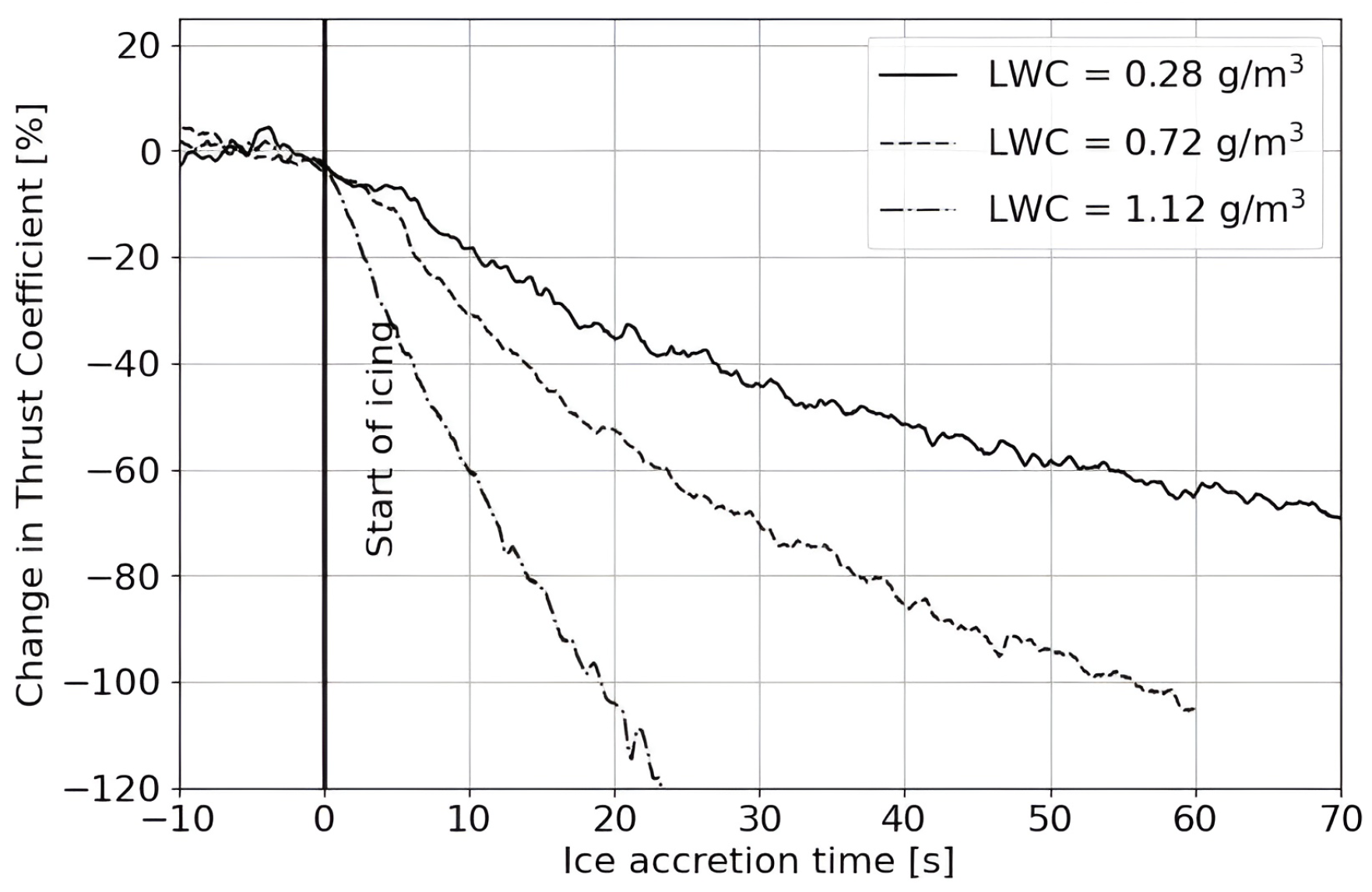
When comparing the influence of different LWCs, their impact on the thrust coefficient is very severe and shown in Figure 14. It can be seen that the thrust coefficient is decreasing for all three cases, with the steepest decrease at an LWC of 1.12 g/m3, and the lowest decrease at 0.28 g/m3. The experiment at 1.12 g/m3 had to be aborted after 40 s because of a severe ice-shedding event. The thrust plot for the highest LWC is cutoff to enable the readability of the other plots.
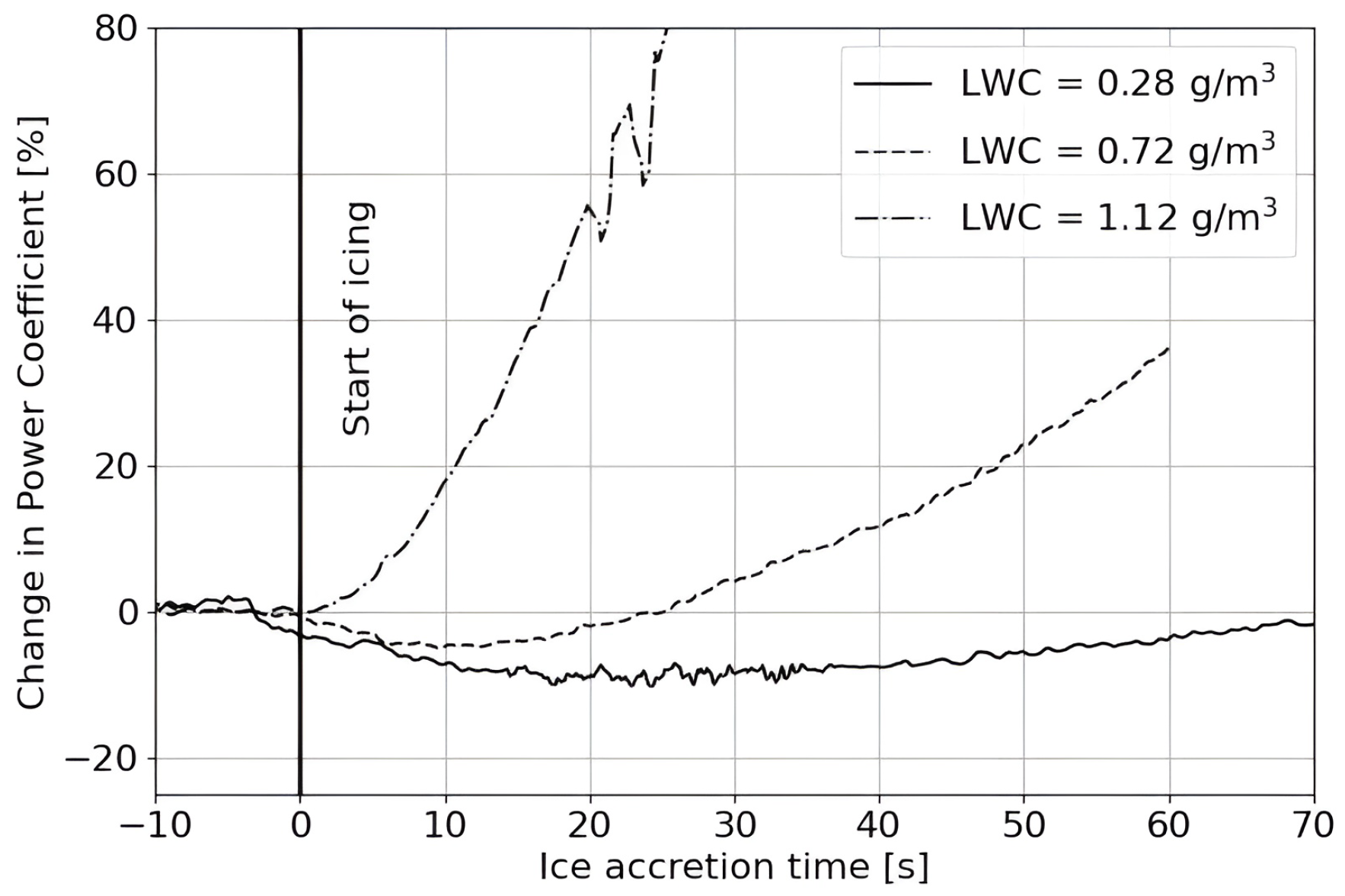
The change in the power coefficient during the experiments is shown in Figure 15. The change in the power coefficient is significantly different for the three LWCs used in the experiment. An increase in the LWC is correlated with a significant increase in the power coefficient. For the smallest LWC of 0.28 g/m3, the power coefficient is still less than the power coefficient at the start of the experiment, but is rising and thus showing the same behavior as the LWC of 0.72 g/m3, but slower. The initial drop is consistent with the earlier results. At the same time, the run with the largest droplet diameter shows a rapid increase in the power coefficient.
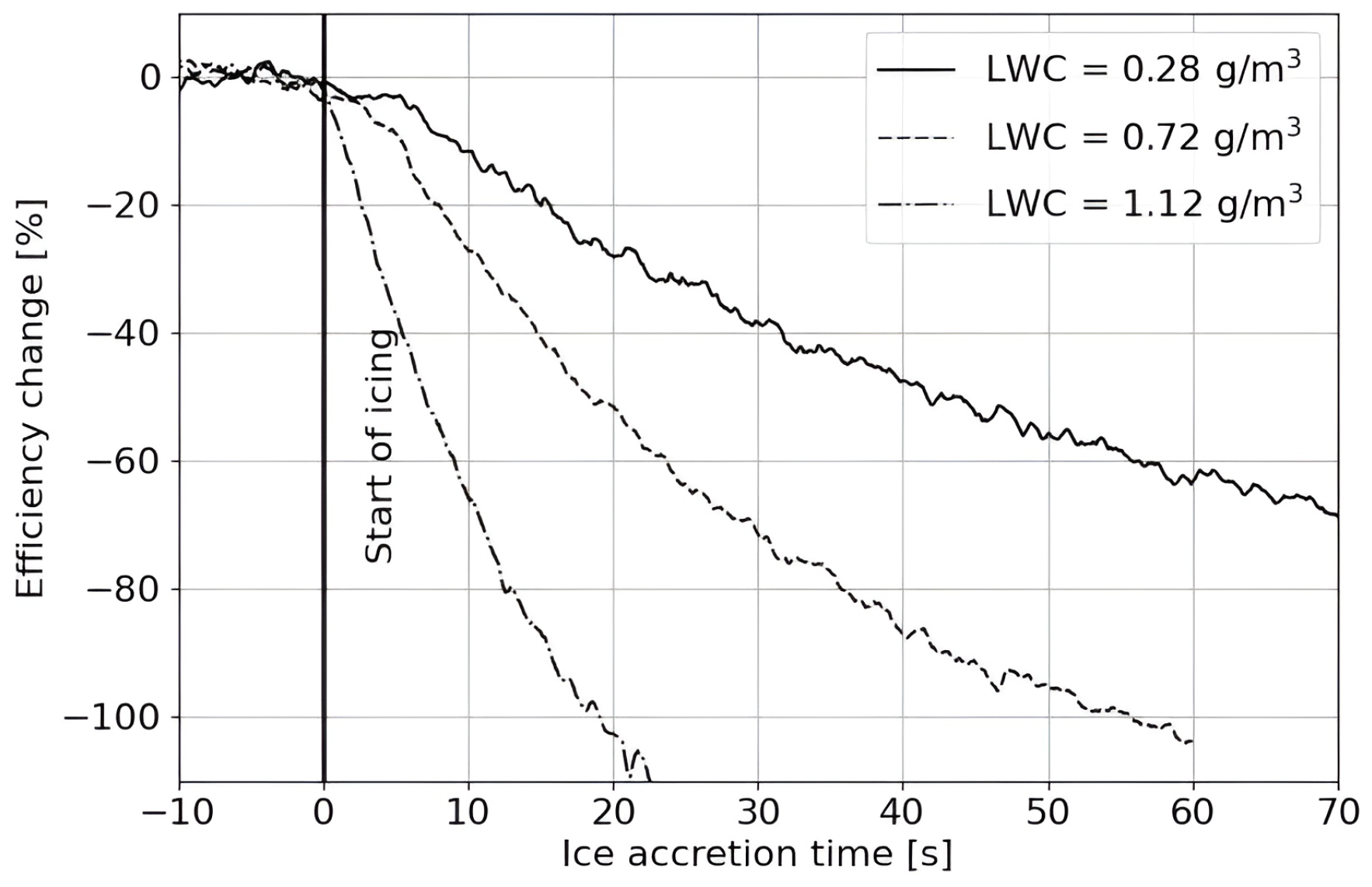
When the influence of the icing is analyzed on the overall propeller performance in Figure 16, the largest performance degradation was correlated with the largest liquid water content of 1.12 g/m3 and the smallest performance degradation with the smallest liquid water content of 0.28 g/m3.
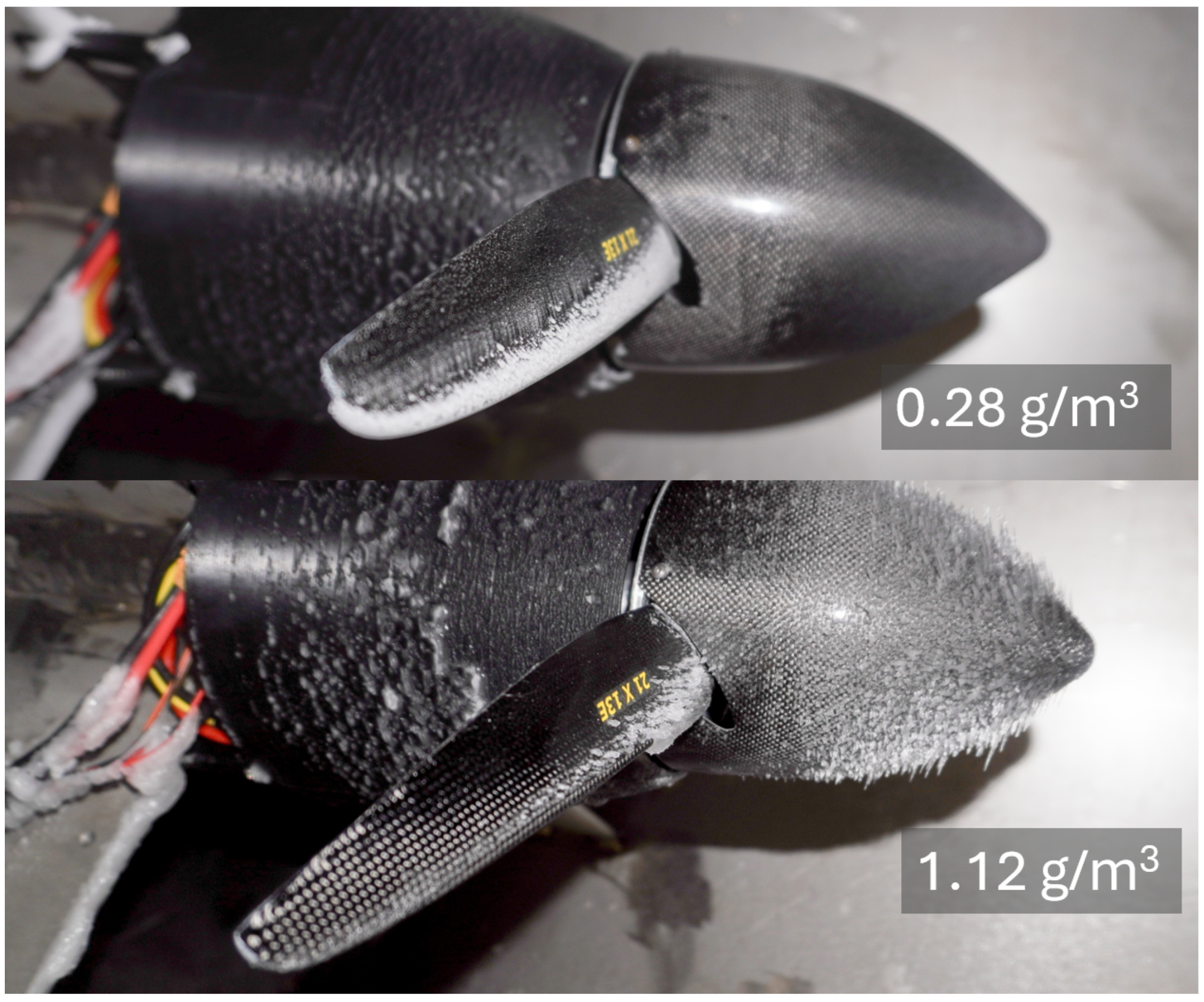
The ice shapes for the LWC of 0.28 g/m3 and 1.12 g/m3 are shown in Figure 17. A white ice shape can be seen at an LWC of 0.28 g/m3, indicating a rime ice growth. At an LWC of 1.12 g/m3, the majority of the ice had shed before the test was stopped. On the remaining ice on the propeller, the ice shape is clear, and thus mixed or glaze ice is present.
The correlation between the lowest LWC of 0.28 g/m3 and the medium LWC of 0.72 g/m3 shows a linear increase in the performance degradation, which will be discussed in Section 3.6. The highest LWC of 1.12 g/m3 meanwhile shows a higher reduction in the efficiency of the propeller than the increase in the LWC would suggest. This may be explained by a higher LWC leading to a different ice shape, due to a lower freezing fraction of the ice on the propeller blade, and thus a change in the ice shape towards a glaze ice shape with a higher performance impact [25]. The change in the freezing fraction and the resulting ice shapes can be seen in the ice shapes generated in a numerical analysis of the ice accretion on the propeller [25].

3.4. Variation of the Temperature

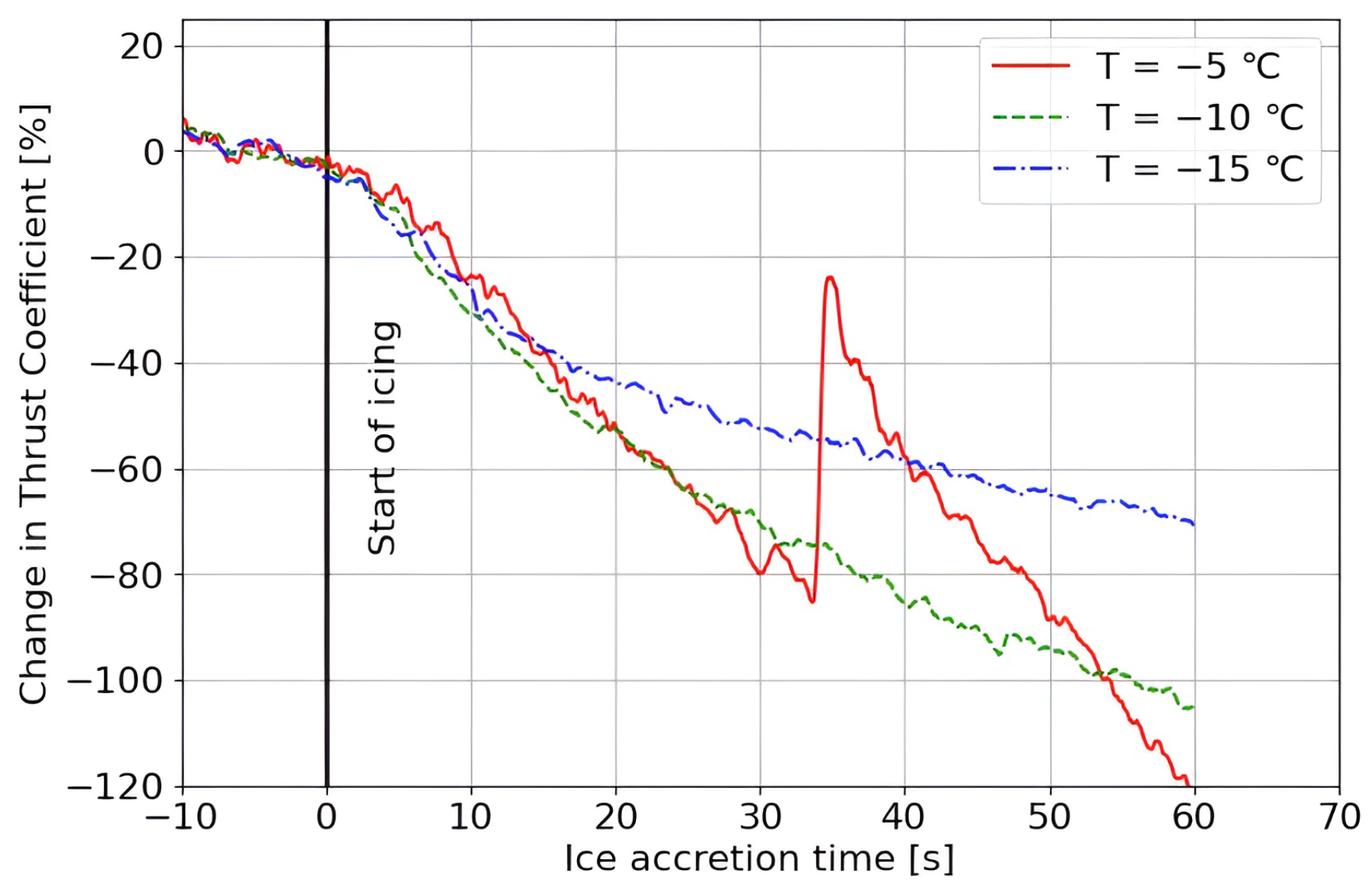
The influence of temperature changes on the ice accretion is shown in Figure 18. The different temperatures seem to affect the thrust differently. At a temperature of −5 °C, the initial thrust reduction is substantial, and after 35 s, the ice is shedding off the propeller partially, which leads to a recovery of the propeller performance. After the ice-shedding event, the performance degrades quickly, and the thrust becomes negative after 55 s. At −10 °C, the thrust curve starts similarly, without ice shedding. The time until the thrust is reduced to 0 N is also 55 s. When the ambient temperature is −15 °C, the lowest reduction in the thrust is observed, compared to the other cases.
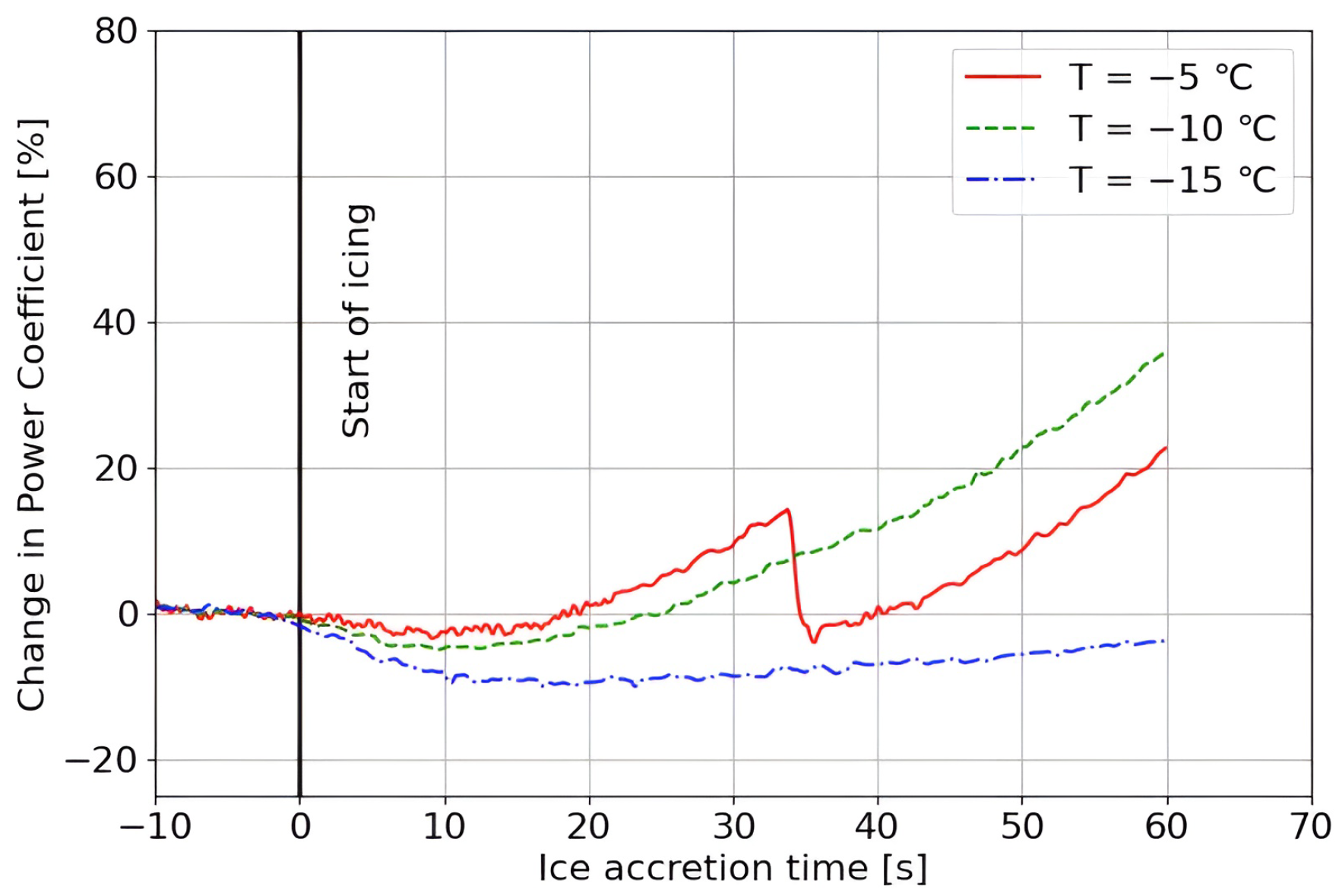
The changes in the power coefficient are shown in Figure 19. A more significant difference between the temperatures is observed for the changes in the thrust. At −5 °C, the quickest increase in power is shown. After the ice-shedding event, the power is reduced to the initial value and continues climbing with the same gradient. The case at −10 °C shows less increase in the power, but after the ice-shedding event, it has a higher power than the case at −5 °C and is the case with the highest power increase. For the ice shape at −15 °C, the power does reduce initially, and while the power starts to rise again after 22 s of ice accretion, the power does not reach the initial power value. This behavior is not expected and is discussed in Section 3.6.
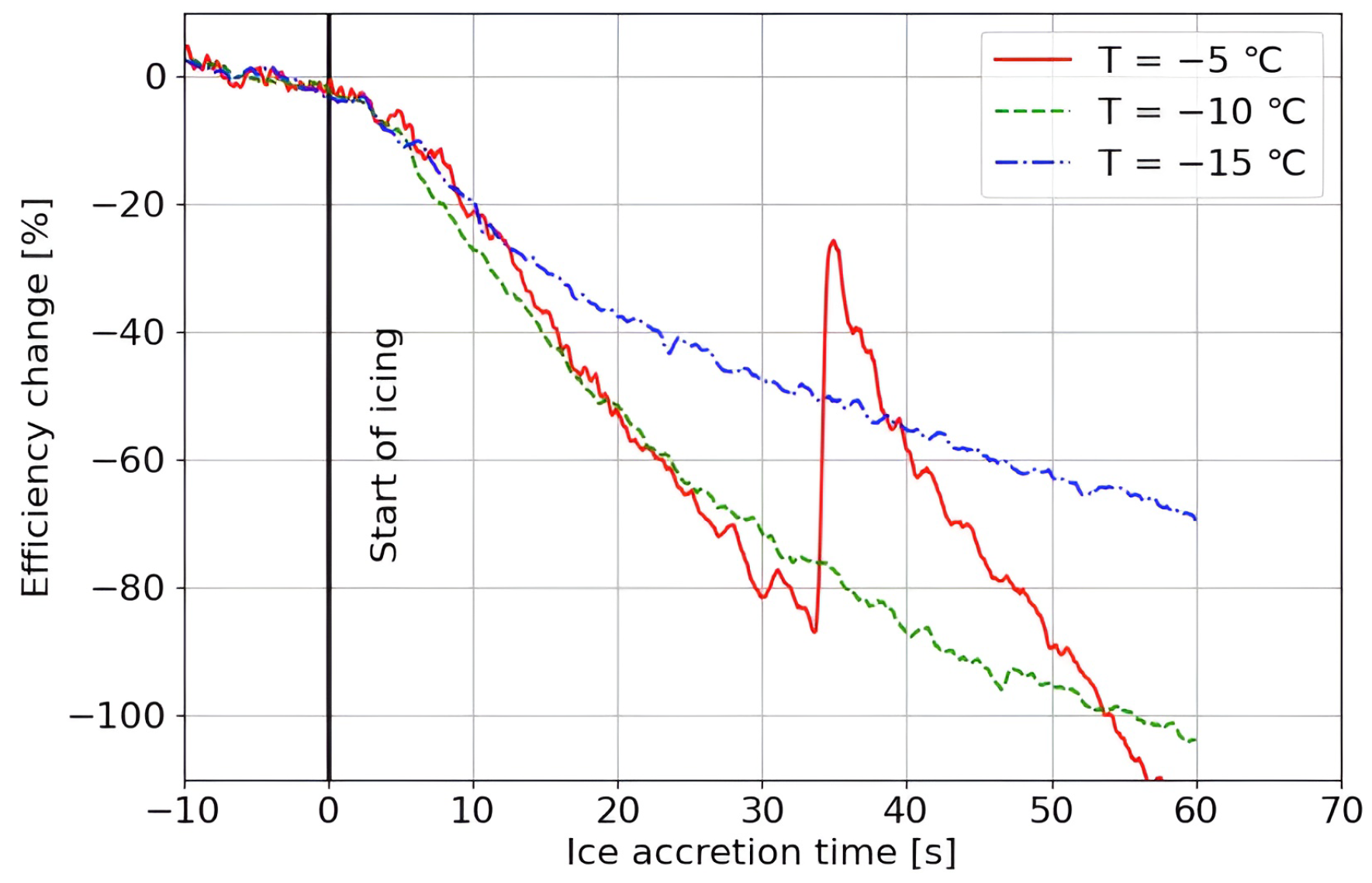
By combining the power and the thrust value in Figure 20, the overall efficiency shows similar performance degradation for the ice accretion cases at −5 °C and −10 °C. After the ice-shedding event, the performance of the ice accretion case at −5 °C quickly dropped below the performance of the case at −10 °C. Overall, the efficiency is most strongly influenced by the thrust loss of the propeller.
The results are similar to data collected in a different icing wind tunnel [24,47], but differ in some key points. The literature data indicated a stronger temperature dependency of the power coefficient, and showcased a stronger increase in the power coefficient at −15 °C and a larger reduction in the thrust coefficient. A reduction in the performance degradation of the propeller with a reduced temperature is observed from −10 °C to −15 °C. In the literature data, only the experiment at −20 °C showed a better efficiency compared to the experiment at −10 °C, while at −15 °C, a performance reduction was observed. The difference might be caused by the difference in the droplet diameter and the LWC. While the old study was performed at 24 µm, this analysis was performed at 40 µm. This increase in MVD can affect the freezing fraction, and thus the accumulated ice shapes. Additionally, the experiments in this paper were performed at an LWC of 0.72 g/m3, which is a higher LWC than the one used in the previous experiment of 0.44 g/m3. Both parameters can change the amount of water impinging on the propeller, and thus the freezing fraction at different temperatures. The change in the freezing fraction will lead to a different ice shape, as lower freezing fractions are correlated with glaze ice shapes. The glaze ice shapes have a more complex geometry and thus will affect the performance more strongly.
But numerical simulations of the ice accretion of the propeller have shown that the variation in the collection efficiency is limited, as an MVD of 20 µm already has a peak collection efficiency of greater than 90% [25]. Thus, a change in the collection efficiency is unlikely to affect the performance degradation. Changes in the freezing fraction can change the ice shapes and therefore, the performance impact. The previous experiment [25] was performed in a different wind tunnel, in which the droplet spectrum is different [46], including significantly larger droplets. The change in the droplet spectrum could influence the freezing fraction, and thus the ice accretion and the subsequent performance degradation. Larger droplets can lead to a larger icing extent and thus lead to a larger degradation in the performance of the propeller.

3.5. Variation in the Rotation Rate

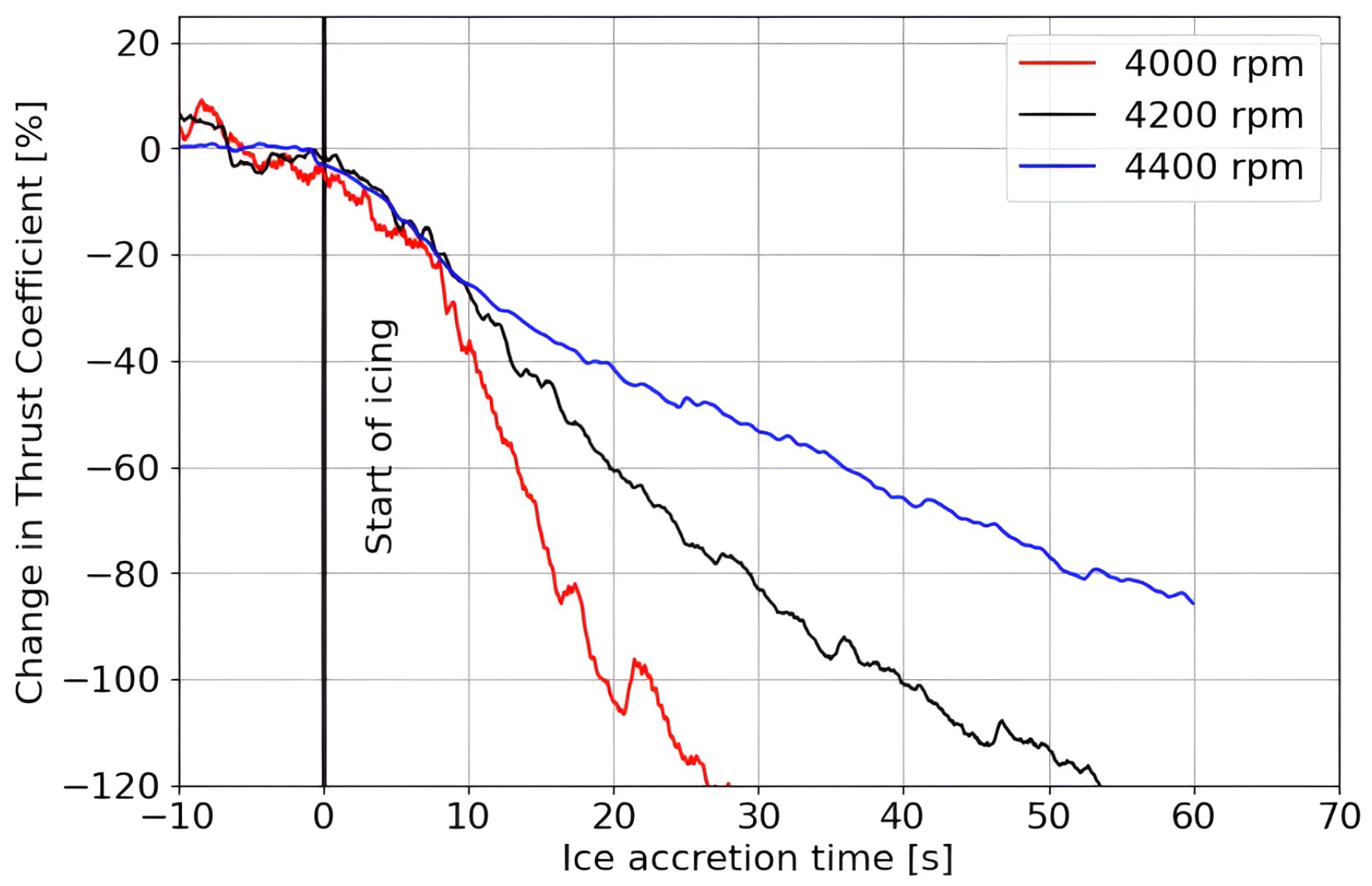
The influence of the change in the rotation rates on the thrust generated by the propeller is shown in Figure 21. The lower the rotation rate of the propeller, the more is the thrust reduced. This leads to a total loss of thrust after 20 s at 4000 rpm and after 40 s at 4200 rpm. At 4400 rpm, the thrust is not reduced to 0 within the 60 s of the ice accretion but is reduced by 80% of the original value at the end of the run.
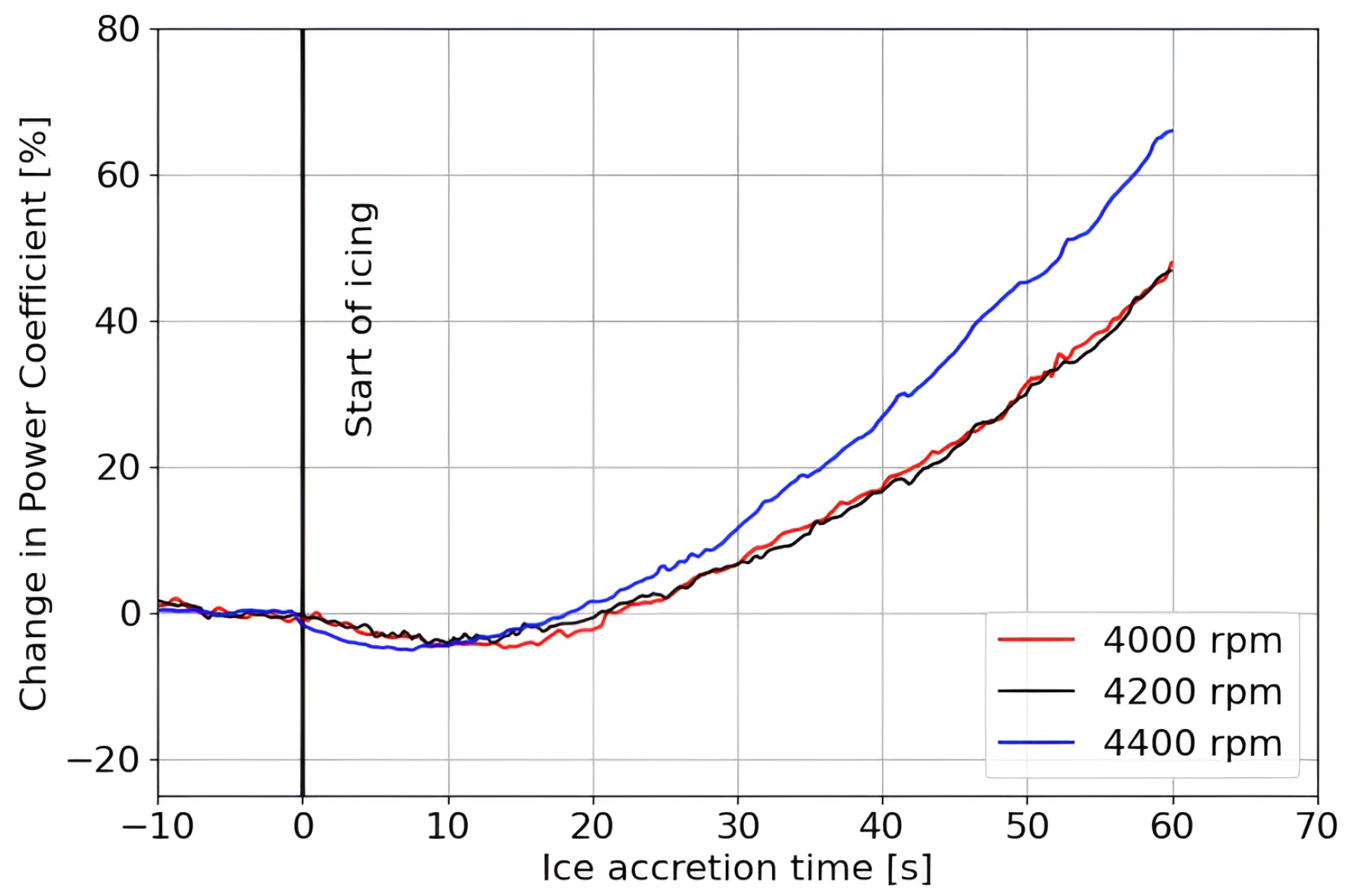
The influence of the rotation rate on the power is shown in Figure 22. The measured power increase between 4000 rpm and 4200 rpm is identical at an increase of 48% after 60 s, but the power increase of the propeller at 4400 rpm is slightly higher, reaching 65% after 60 s.
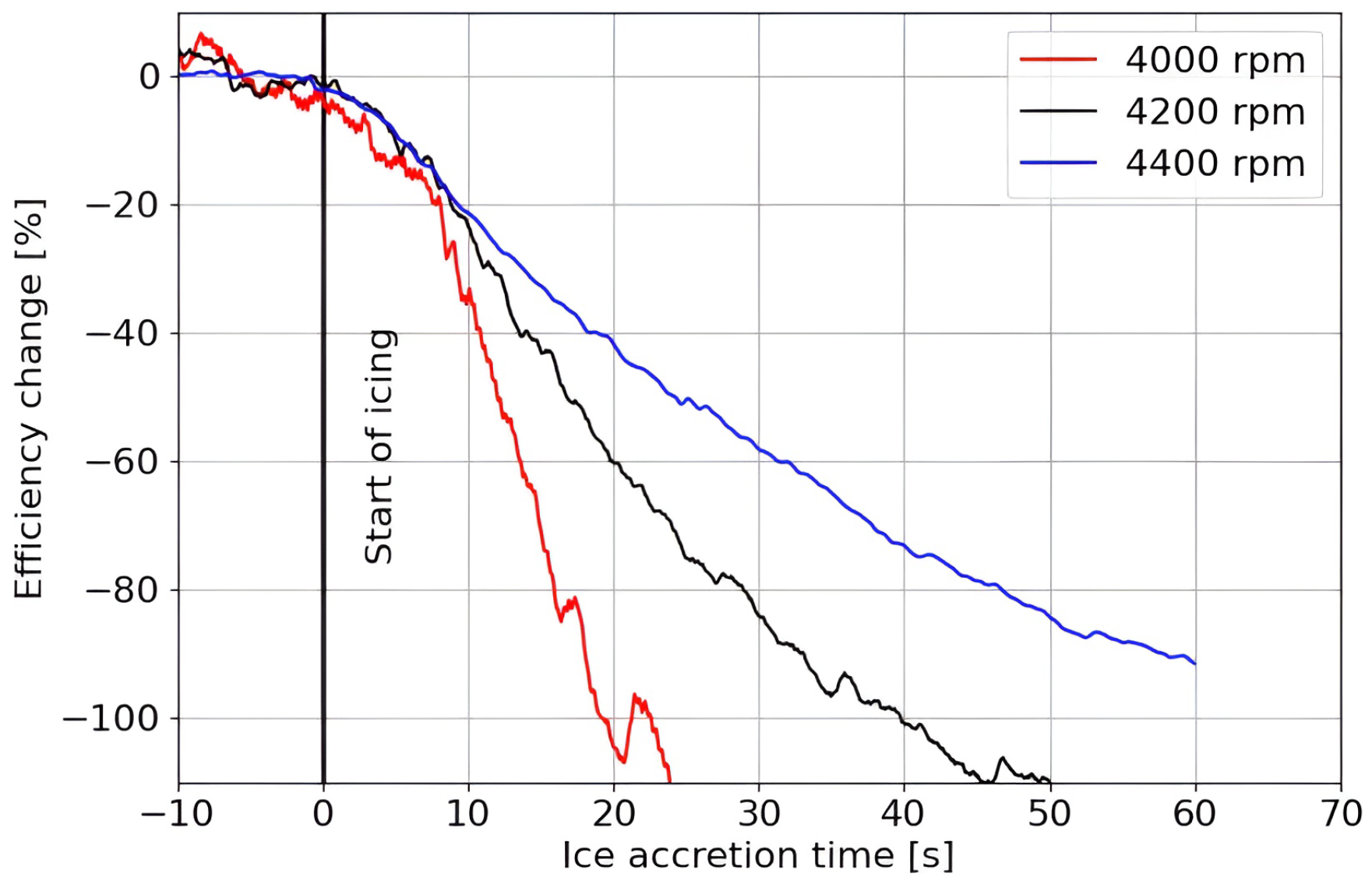
Finally, the resulting change in the efficiency is shown in Figure 23. The change in the efficiency is most strongly correlated to the change in the thrust, and thus the measured propeller efficiency becomes negative after 20 s for a rotation rate of 4000 rpm and after 40 s for a rotation rate of 4200 rpm. The efficiency of the propeller after 60 s at 4400 rpm is reduced to 10% of the original value, based on the reduction in thrust and the increase in the torque.
The influence of the rotation rate on the performance degradation, where the slower rotation leads to more performance degradation, can be explained by a few factors. Firstly, the absolute thrust is significantly lower at 4000 rpm with 4 N compared to 4200 rpm at 15 N and 4400 rpm at 25 N, which means that a small absolute decrease in thrust does have a significant influence on the relative change in the thrust coefficient. The absolute degradation of 4 N in 20 s between the rotation rates is similar. Secondly, the power coefficient is increasing more steeply at 4400 rpm compared to 4000 rpm and 4200 rpm. The increase in the power coefficient could be indicative of a change in the ice shapes from a rime ice shape to glaze ice, which could be caused by a reduced freezing fraction at the higher rotation rate. The change in the freezing fraction is caused both by the increased stagnation point temperature, which is increased from −3.2 °C to −2.4 °C at the higher rotation rate, and the increased water collection of the propeller blade according to numerical simulations in ANSYS FENSPAP-ICE. For the performance change between 4000 rpm and 4200 rpm, a linear correlation in the performance could be identified. For the run at 4400 rpm, the increase in the power coefficient would not be captured by the correlation.

3.6. Performance Degradation Trends

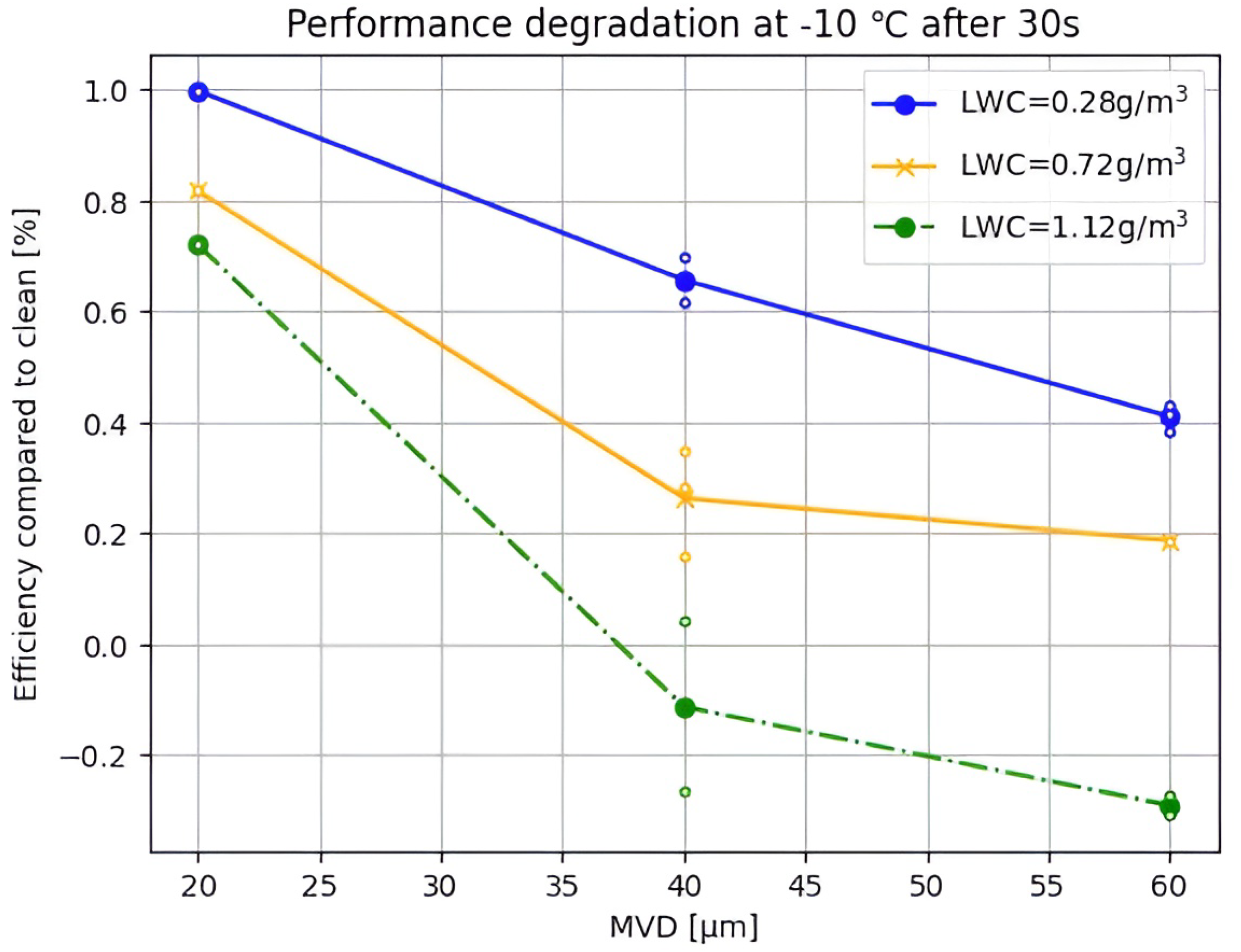
To evaluate the combined influence of the LWC and MVD variation on the propeller’s performance, experiments were performed for three different LWCs and MVDs. The resulting thrust coefficients are shown in Figure 24. The average result at each point is highlighted with a large marker, the results of a single run with a dot. It can be seen that, in general, the impact of the ice accretion on the performance of the propeller is increased with an increase in LWC and an increase in the MVD. For the shown condition, the effect of the droplet size is significantly higher than the influence of the LWC. The highest LWC of 1.12 g/m3 shows a performance degradation to 75% of the original value for an MVD of 20 µm, which represents a better performance than the lower LWC at the highest droplet diameter of 60 µm. The combination of the smallest MVD of 20 µm and LWC of 0.28 g/m3 only has an insignificant influence on the propeller performance after 30 s. The combination of the largest MVD of 60 µm and LWC of 1.12 g/m3 shows a negative efficiency, as the propeller will generate drag at this condition. A linear increase in the performance degradation of the propeller with the LWC is expected and consistent with previous findings [17]. The lack of performance degradation of the propeller at an MVD of 20 µm and an LWC of 0.28 g/m3 is caused by the initial drop in the power coefficient, which compensates for the loss of thrust. This behavior is unusual and would not be expected. But the initial reduction in the power coefficient has been observed in previous experimental campaigns with the same propeller design and also different propellers of the same manufacturer. It appears that the specific shape of the propeller leads to a power coefficient reduction with small amounts of ice accretion. This might indicate an opportunity to increase the efficiency of the clean propeller design to reduce the power coefficient of the propeller without ice accretion.
The significant correlation of the performance degradation with the MVD has not been predicted by a numerical analysis of the propeller [25] and can not only be explained by the increase in the collection efficiency and thus increase in the mass of the ice on the propeller. This indicates that at the small scales of the propeller, the performance degradation is affected by the MVD even if the collection efficiencies predicted by the numerical analysis are similar.
Numerical simulations do not predict the reduction in the performance degradation with the MVD [25]. This is likely caused by the limited number of numerical models available for the prediction of the ice density for numerical simulations. All existing ice density models have been validated for manned aircraft, and thus both much higher geometric scales and air speeds than UAV propellers. Changes in the ice density affect the ice geometry, especially the development of horn features which have a significant influence on the performance degradation of propellers in icing conditions. Thus, further research into the ice density models for numerical simulations on UAV propellers might be required. For this research, data about the ice density distribution are required, which could, for example, be collected using a CT scan of the ice shapes.
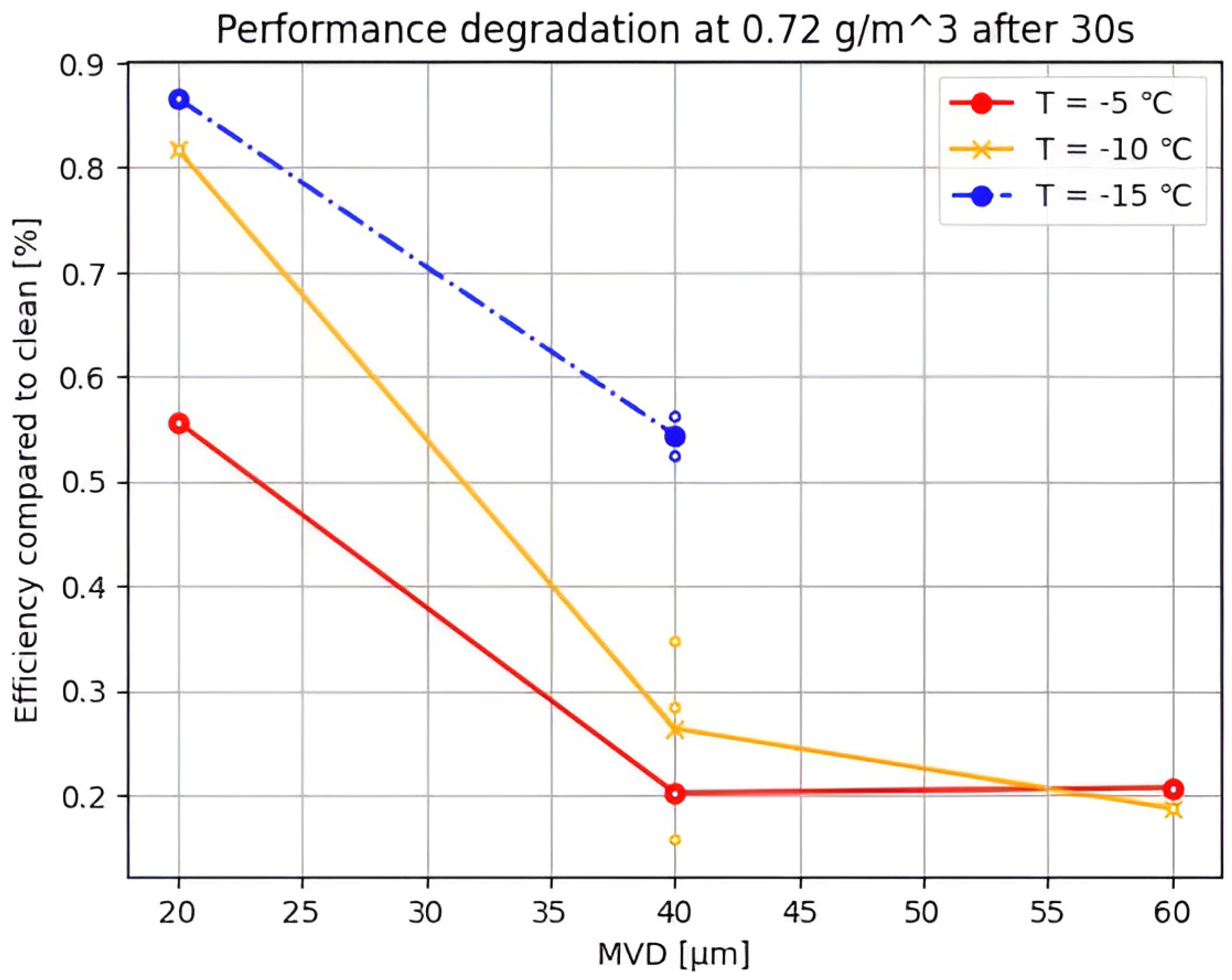
The dependency of the temperature variations is shown in Figure 25. The performance degradation of the propeller increases with an increase in the temperature. None of the experiments in this dataset have ice shedding after 30 s, which would limit the performance degradation of the higher temperatures. For all three temperatures of −5 °C, −10 °C, and −15 °C, the reduced ice performance degradation trend is observed with a droplet diameter of 20 µm, and an increase in the droplet diameter to 40 µm leads to increased performance degradation. At a temperature of −5 °C, no significant further performance degradation is observed with an increase in the droplet diameter from 40 to 60 µm. At −15 °C, the performance degradation increased by 5%. In contrast, at −5 °C, the performance is better at the higher MVD. The measurement at −15 °C for an MVD of 60 µm is missing due to ice shedding before the 30 s are reached. The variation in the propeller efficiency with the temperature is likely caused by the changes in the ice morphology, with glaze ice observed on warmer temperatures, and rime ice on colder temperatures. As the same correlation was observed with more glaze ice at higher droplet diameter, small droplets and low temperatures will lead to low performance penalties, and large droplets and high temperatures lead to the highest performance degradation. There seems to exist a maximum performance degradation at 20% of the clean performance, which is reached at −5 °C at 40 µm and at −10 °C at 60 µm. This is likely the case at which glaze ice conditions are present.

4. Conclusions

This paper presents the performance degradation of the Mejzlik 21x13 E propeller. Experimental analyses of the propeller were performed by analyzing the ice accretion on the propeller and developing an ice protection system for the propeller.
This study analyzed the influence of different liquid water contents, temperatures and droplet diameters, and rotation rates. It could be shown that an increase in the liquid water content, the droplet diameter, and the ambient temperature leads to an increase in performance degradation. Based on the images and 3D scans of the ice shape, this increase in performance degradation is likely due to two different factors. One factor is the accumulated ice mass, and the second is changes in the ice shapes. For rime ice shapes, an increase in the droplet diameter is correlated to an ice shape that generates thicker ice shapes on the leading edge. The second factor is the change from a rime ice shape to a glaze ice shape, which can occur if the temperature is increased or the water collection is increased. This finding is consistent with older analyses of the ice accretion of a rotor of a UAV in forward flight by Harvey et al. [30]. However, the findings of the reduced collection efficiency at the propeller tip were not observed with the smaller propeller in this study.
Additional analysis of the impact of icing on the torque of the propeller has shown that the influence of icing is most strongly correlated to the droplet diameter. Thus, it could be observed that in conditions with a small droplet diameter, the propeller’s torque will not increase with the ice accretion. This could be caused by the ice shapes generated at this droplet diameter, which do not lead to the generation of separation areas on the propeller. This behavior has not been observed in older experimental campaigns with this propeller.
Future work needs to be performed to analyze the changes between the analyzed ice shapes in this experimental campaign and existing results obtained at the same conditions from a different icing wind tunnel by Müller et al. [24], which, at similar droplet diameters of 24 µm, generated ice shapes closer to the ice shapes observed at 40 µm in this campaign. This disparity might be due to the difference in the droplet diameter spectra. If the AMIL IWT generates a droplet spectrum with fewer large droplets for the same median diameter, this could explain the difference in the observed ice shapes. Additionally, recording the spatial droplet distribution of the AMIL icing wind tunnel facility would enable the studies to more closely recreate the ice shapes numerically. Further differences emerge between the numerical prediction of the performance degradation of the propeller by Müller et al. [25], which predicted only a limited influence of the variation of the MVD. This difference might be caused by differences in the ice densities observed at the different droplet diameters, which are not captured by numerical simulations and are an important future research area. This highlights the need to evaluate the influence of droplet size and impingement parameters on the ice accretion models currently used in numerical ice accretion codes. Especially, the prediction of the freezing fraction for large droplet diameters seems to over-predict the freezing fraction and thus generate streamwise ice shapes where glaze ice shapes are observed.

Author Contributions

Conceptualization, N.C.M. and E.V.; methodology, N.C.M. and E.V.; software, N.C.M.; validation, N.C.M. and E.V.; formal analysis, N.C.M., R.H. and E.V.; investigation, N.C.M.; resources, R.H. and E.V.; data curation, N.C.M. and E.V.; writing—original draft preparation, N.C.M., R.H. and E.V.; writing—review and editing, N.C.M., R.H. and E.V.; visualization, N.C.M.; supervision, R.H. and E.V.; project administration, R.H. and E.V.; funding acquisition, R.H. and E.V. All authors have read and agreed to the published version of the manuscript.

Funding

This work is partly sponsored by the Research Council of Norway and Ubiq Aerospace through projects 316425, 350469, and 321667. The Mitacs Globalink Award IT41033 supported the research. The numerical simulations were performed on resources provided by the National Infrastructure for High-Performance Computing and Data Storage in Norway (UNINETT Sigma2) on the Fram supercomputer, under project code NN9613K Notur/NorStore.

Data Availability Statement

The data presented in this study are available on request from the corresponding authors due to restrictions of the rotor geometry.

Acknowledgments

The authors would like to thank the team at the AMIL-LIMA laboratory for their support with the research.

Conflicts of Interest

Authors Nicolas Carlo Müller and Richard Hann are employed by the Ubiq Aerospace AS. The remaining author declares that the research was conducted in the absence of any commercial or financial relationships that could be construed as a potential conflict of interest.

Abbreviations

The following abbreviations are used in this manuscript:
AMILAnti-icing Materials International Laboratory
CFDcomputational fluid dynamics
DCdirect current
ESCelectronic speed controller
IWTicing wind tunnel
LWCliquid water content
MCCSmaximum combined cross-section
MVDmedian volume diameter
PIDproportional integral derivative
RPASremotely piloted aerial system
SAESociety of Automotive Engineers
TWCtotal water collection
UASuncrewed aerial system
UAVuncrewed aerial vehicle

Appendix A. Table of Experiments

Table A1. Test conditions in the IWT during the test campaign. All runs were performed at a velocity of 25 m/s and a rotation rate of 4200 rpm.
Run NumberTemperatureLWCMVDVelocityRotation Rate
162−5 °C0.72 g/m320 µm25 m/s4200 rpm
193−5 °C0.72 g/m340 µm25 m/s4200 rpm
187−5 °C0.72 g/m360 µm25 m/s4200 rpm
247−10 °C0.28 g/m320 µm25 m/s4200 rpm
216−10 °C0.28 g/m340 µm25 m/s4200 rpm
248−10 °C0.28 g/m340 µm25 m/s4200 rpm
276−10 °C0.28 g/m340 µm25 m/s4200 rpm
249−10 °C0.28 g/m360 µm25 m/s4200 rpm
250−10 °C0.28 g/m360 µm25 m/s4200 rpm
251−10 °C0.28 g/m360 µm25 m/s4200 rpm
170−10 °C0.28 g/m320 µm25 m/s4200 rpm
171−10 °C0.28 g/m320 µm25 m/s4200 rpm
172−10 °C0.28 g/m320 µm25 m/s4200 rpm
173−10 °C0.72 g/m340 µm25 m/s4200 rpm
174−10 °C0.72 g/m340 µm25 m/s4200 rpm
175−10 °C0.72 g/m340 µm25 m/s4200 rpm
178−10 °C0.72 g/m360 µm25 m/s4200 rpm
202−10 °C1.12 g/m340 µm25 m/s4200 rpm
203−10 °C1.12 g/m340 µm25 m/s4200 rpm
204−10 °C1.12 g/m340 µm25 m/s4200 rpm
278−10 °C1.12 g/m360 µm25 m/s4200 rpm
279−10 °C1.12 g/m360 µm25 m/s4200 rpm
282−10 °C1.12 g/m340 µm25 m/s4200 rpm
179−15 °C0.72 g/m320 µm25 m/s4200 rpm
182−15 °C0.72 g/m340 µm25 m/s4200 rpm
185−15 °C0.72 g/m360 µm25 m/s4200 rpm
242−10 °C0.72 g/m340 µm25 m/s4000 rpm
239−10 °C0.72 g/m340 µm25 m/s4400 rpm

References

  1. Shakhatreh, H.; Sawalmeh, A.H.; Al-Fuqaha, A.; Dou, Z.; Almaita, E.; Khalil, I.; Othman, N.S.; Khreishah, A.; Guizani, M. Unmanned aerial vehicles (UAVs): A survey on civil applications and key research challenges. IEEE Access 2019, 7, 48572–48634. [Google Scholar] [CrossRef]
  2. Villeneuve, E.; Karmouch, E.; Boulerice, X. Development of a small and transportable de-icing/anti-icing drone-mounted system. Part 1: System design. Drone Syst. Appl. 2022, 10, 155–177. [Google Scholar] [CrossRef]
  3. Cao, Y.; Tan, W.; Wu, Z. Aircraft icing: An ongoing threat to aviation safety. Aerosp. Sci. Technol. 2018, 75, 353–385. [Google Scholar] [CrossRef]
  4. Peck, L.; Ryerson, C.C.; Martel, C.J. Army Aircraft Icing; Cold Regions Research and Engineering Laboratory Report; Defense Technical Information Center: Fort Belvoir, VA, USA, 2002. [Google Scholar]
  5. Siquig, R. Impact of Icing on Unmanned Aerial Vehicle (UAV) Operations; Technical Report; Naval Environmental Prediction Research Facility: Monterey, CA, USA, 1990. [Google Scholar]
  6. Hann, R.; Johansen, T.A. Unsettled Topics in Unmanned Aerial Vehicle Icing; SAE Research Report EPR2020008; SAE International: Warrendale, PA, USA, 2020. [Google Scholar] [CrossRef]
  7. Potapczuk, M.G. Aircraft Icing Research at NASA Glenn Research Center. J. Aerosp. Eng. 2013, 26, 260–276. [Google Scholar] [CrossRef]
  8. Dukhan, N.; De Witt, K.J.; Masiulaniec, K.C.; Van Fossen, G.J. Experimental Frossling Numbers for Ice-Roughened NACA 0012 Airfoils. J. Aircr. 2003, 40, 1161–1167. [Google Scholar] [CrossRef]
  9. Fortin, G.; Laforte, J.L.; Beisswenger, A. Prediction of Ice Shapes on NACA0012 2D Airfoil. In Proceedings of the FAA In-flight Icing/Ground De-icing International Conference and Exhibition, Chicago, IL, USA, 16–20 June 2003. [Google Scholar] [CrossRef]
  10. Liu, Y.; Hu, H. An experimental investigation on the unsteady heat transfer process over an ice accreting airfoil surface. Int. J. Heat Mass Transf. 2018, 122, 707–718. [Google Scholar] [CrossRef]
  11. Palacios, J.; Han, Y.; Brouwers, E.; Smith, E. Icing environment rotor test stand liquidwater content measurement procedures and ice shape correlation. J. Am. Helicopter Soc. 2012, 57, 29–40. [Google Scholar] [CrossRef]
  12. Wright, J.D.; Aubert, R.J. Icing Wind Tunnel Test of a Full Scale Heated Tail Rotor Model. In Proceedings of the Vertical Flight Society 70th Annual Forum, Montréal, QC, Canada, 20–22 May 2014. [Google Scholar] [CrossRef]
  13. Li, Y.; Sun, C.; Jiang, Y.; Feng, F. Scaling Method of the Rotating Blade of a Wind Turbine for a Rime Ice Wind Tunnel Test. Energies 2019, 12, 627. [Google Scholar] [CrossRef]
  14. Wang, Z.; Zhu, C.; Zhao, N. Experimental Study on the Effect of Different Parameters on Rotor Blade Icing in a Cold Chamber. Appl. Sci. 2020, 10, 5884. [Google Scholar] [CrossRef]
  15. Fortin, G.; Perron, J. Spinning Rotor Blade Tests in Icing Wind Tunnel. In Proceedings of the 1st AIAA Atmospheric and Space Environments Conference, San Antonio, TX, USA, 22–25 June 2009. AIAA 2009-4260. [Google Scholar] [CrossRef]
  16. Yamazaki, M.; Jemcov, A.; Sakaue, H. A Review on the Current Status of Icing Physics and Mitigation in Aviation. Aerospace 2021, 8, 188. [Google Scholar] [CrossRef]
  17. Villeneuve, E.; Samad, A.; Volat, C.; Béland, M.; Lapalme, M. Experimental Investigation of Icing Effects on a Hovering Drone Rotor Performance. Drones 2022, 6, 345. [Google Scholar] [CrossRef]
  18. Von Hardenberg, P.H.; Flack, C.A. Icing Performance Degradation of an eVTOL Propeller at the NASA Glenn Icing Research Tunnel. In Proceedings of the AIAA Aviation Forum and ASCEND 2025, Las Vegas, NV, USA, 21–25 July 2025. AIAA 2025-3300. [Google Scholar] [CrossRef]
  19. Liu, Y.; Li, L.; Ning, Z.; Tian, W.; Hu, H. Experimental investigation on the dynamic icing process over a rotating propeller model. J. Propuls. Power 2018, 34, 933–946. [Google Scholar] [CrossRef]
  20. Liu, Y.; Li, L.; Li, H.; Hu, H. An experimental study of surface wettability effects on dynamic ice accretion process over an UAS propeller model. Aerosp. Sci. Technol. 2018, 73, 164–172. [Google Scholar] [CrossRef]
  21. Chen, L.; Zhang, Y.; Wu, Q.; Chen, Z.; Peng, Y. Numerical Simulation and Optimization Analysis of Anti-/De-Icing Component of Helicopter Rotor Based on Big Data Analytics. In Theory, Methodology, Tools and Applications for Modeling and Simulation of Complex Systems; Springer: Singapore, 2016; pp. 585–601. [Google Scholar]
  22. Villeneuve, É.; Samad, A.; Volat, C.; Béland, M.; Lapalme, M. Experimental assessment of the ice protection effectiveness of icephobic coatings for a hovering drone rotor. Cold Reg. Sci. Technol. 2023, 210, 103858. [Google Scholar] [CrossRef]
  23. Harvey, D.; Villeneuve, E.; Volat, C.; Beland, M.; Lapalme, M. Experimental Evaluation of Icephobic Coatings on a UAV Propeller Operated in an Icing Wind Tunnel; SAE Technical Paper 2023-01-1443; SAE International: Warrendale, PA, USA, 2023. [Google Scholar] [CrossRef]
  24. Müller, N.C.; Hann, R. UAV Icing: A Performance Model for a UAV Propeller in Icing Conditions. In Proceedings of the AIAA Aviation 2022 Forum, Chicago, IL, USA, 27 June–1 July 2022. AIAA 2022-3903. [Google Scholar] [CrossRef]
  25. Müller, N.C.; Hann, R. UAV Icing: 3D Simulations of Propeller Icing Effects and Anti-Icing Heat Loads; SAE Technical Paper 2023-01-1383; SAE International: Warrendale, PA, USA, 2023. [Google Scholar] [CrossRef]
  26. Federal Aviation Administration (FAA). Part I—Atmospheric Icing Conditions; Title 14 CFR Part 25 Appendix C, Doc. No. 4080, 29 FR 17955, Amdt. 25-140, 79 FR 65528; FAA: Washington, DC, USA, 2014.
  27. Müller, N.C.; Løw-Hansen, B.; Borup, K.T.; Hann, R. UAV icing: Development of an ice protection system for the propeller of a small UAV. Cold Reg. Sci. Technol. 2023, 213, 103938. [Google Scholar] [CrossRef]
  28. Frey, M.; Müller, N.C.; Wallisch, J.; Hann, R. UAV Icing: Experimental Investigation and Numerical CHT Simulations of a Propeller Ice Protection System. In Proceedings of the AIAA SCITECH 2024 Forum, Orlando, FL, USA, 8–12 January 2024. AIAA 2024-0871. [Google Scholar] [CrossRef]
  29. Müller, N.C.; Hann, R. UAV Icing: Validation of an Ice Protection System Design for a Propeller. In Proceedings of the AIAA Aviation Forum and ASCEND 2024, Las Vegas, NV, USA, 29 July–2 August 2024. AIAA 2024-3568. [Google Scholar] [CrossRef]
  30. Harvey, D.; Villeneuve, E.; Béland, M.; Lapalme, M. Wind Tunnel Investigation of the Icing of a Drone Rotor in Forward Flight. Drones 2024, 8, 380. [Google Scholar] [CrossRef]
  31. Villeneuve, E.; Samad, A.; Volat, C.; Béland, M.; Lapalme, M. An Experimental Apparatus for Icing Tests of Low Altitude Hovering Drones. Drones 2022, 6, 68. [Google Scholar] [CrossRef]
  32. Kozomara, D.; Amon, J.R.; Puffing, R.; Moser, R.; Breitfuss, W.; Neubauer, T.; Schweighart, S.; Bednar, I.; Thein, S. Experimental Investigation of a Quadcopter UAS with a Fluid-Based De-Icing System in Appendix C Icing Conditions. In Proceedings of the AIAA Aviation Forum and ASCEND 2024, Las Vegas, NV, USA, 29 July–2 August 2024. AIAA 2024-4072. [Google Scholar] [CrossRef]
  33. Ercan, H.; Dalkın, A. Full-Vehicle Experimental Investigation of Propeller Icing on a Hovering Quadcopter. Drones 2025, 9, 729. [Google Scholar] [CrossRef]
  34. Samad, A.; Dhulipalla, A.; Bowers, K.; Rodriguez, J.; Hu, H. An Experimental Investigation of the Dynamic Icing Process on a Multirotor UAV Rotor in Forward Flight. In Proceedings of the AIAA Science and Technology Forum and Exposition (SciTech) 2025, Las Vegas, NV, USA, 6–10 January 2025. AIAA 2025-1446. [Google Scholar] [CrossRef]
  35. Armanini, S.F.; Polak, M.; Gautrey, J.E.; Lucas, A.; Whidborne, J.F. Decision-making for unmanned aerial vehicle operation in icing conditions. CEAS Aeronaut. J. 2016, 7, 663–675. [Google Scholar] [CrossRef]
  36. SAE Standard ARP5905; Calibration and Acceptance of Icing Wind Tunnels. SAE International: Warrendale, PA, USA, 2003. [CrossRef]
  37. SAE Standard AIR4906; Droplet Sizing Instrumentation Used in Icing Facilities. SAE International: Warrendale, PA, USA, 1995. [CrossRef]
  38. Hacker Motor GmbH. Q80-9M V2 kv160. 2024. Available online: https://www.hacker-motor-shop.com/Brushless-Motors/Hacker-Outrunner/Hacker-Q80/Q80-9M-V2-kv160.htm?shop=hacker_e&a=article&ProdNr=37418022&p=2986 (accessed on 11 February 2025).
  39. Hacker Motor GmbH. MASTERSPIN 165 PRO OPTO. 2024. Available online: https://www.hacker-motor-shop.com/MASTERSPIN-165-PRO-OPTO.htm?shop=hacker_e&SessionId=&a=article&ProdNr=51007012&p=10675 (accessed on 11 February 2025).
  40. Tyto Robotics Inc. RcBenchmark Series 1780 Test Stand—Tyto Robotics. 2021. Available online: https://www.tytorobotics.com/pages/series-1780 (accessed on 17 January 2024).
  41. Müller, N.C.; Hann, R.; Lutz, T. UAV Icing: Numerical Simulation of Propeller Ice Accretion. In Proceedings of the AIAA Aviation 2021 Forum, Virtual, 2–6 August 2021. AIAA 2021-2673. [Google Scholar] [CrossRef]
  42. Creaform. HandySCAN 3D. 2024. Available online: https://www.creaform3d.com/-/media/project/oneweb/oneweb/creaform3d/promotional-documentation/en/handyscan-3d_silver-series_brochure_en_hq_20240409.pdf?la=en&revision=c4aa3dbd-c9ca-48df-ad8d-fa1eb0382963 (accessed on 11 February 2025).
  43. Karpen, N.; Diebald, S.; Dezitter, F.; Bonaccurso, E. Propeller-integrated airfoil heater system for small multirotor drones in icing environments: Anti-icing feasibility study. Cold Reg. Sci. Technol. 2022, 201, 103616. [Google Scholar] [CrossRef]
  44. Kozomara, D.; Neubauer, T.; Puffing, R.; Bednar, I.; Breitfuss, W. Experimental investigation on the effects of icing on multicopter UAS operation. In Proceedings of the AIAA Aviation 2021 Forum, Virtual, 2–6 August 2021. AIAA 2021-2676. [Google Scholar] [CrossRef]
  45. Løw-Hansen, B.; Coates, E.M.L.; Müller, N.C.; Johansen, T.A.; Hann, R. Identification of an Electric UAV Propulsion System in Icing Conditions; SAE Technical Paper 2023-01-1378; SAE International: Warrendale, PA, USA, 2023. [Google Scholar] [CrossRef]
  46. Müller, N.C.; Hann, R. UAV Icing: Experimental and Numerical Ice Accretion on a Propeller of a UAV. 2025, submitted. [Google Scholar]
  47. Tiihonen, M.; Jokela, T.; Makkonen, L.; Bluemink, G.J. VTT icing wind tunnel 2.0. In Proceedings of the Winterwind International Wind Energy Conference, Are, Sweden, 9–10 February 2016. [Google Scholar]
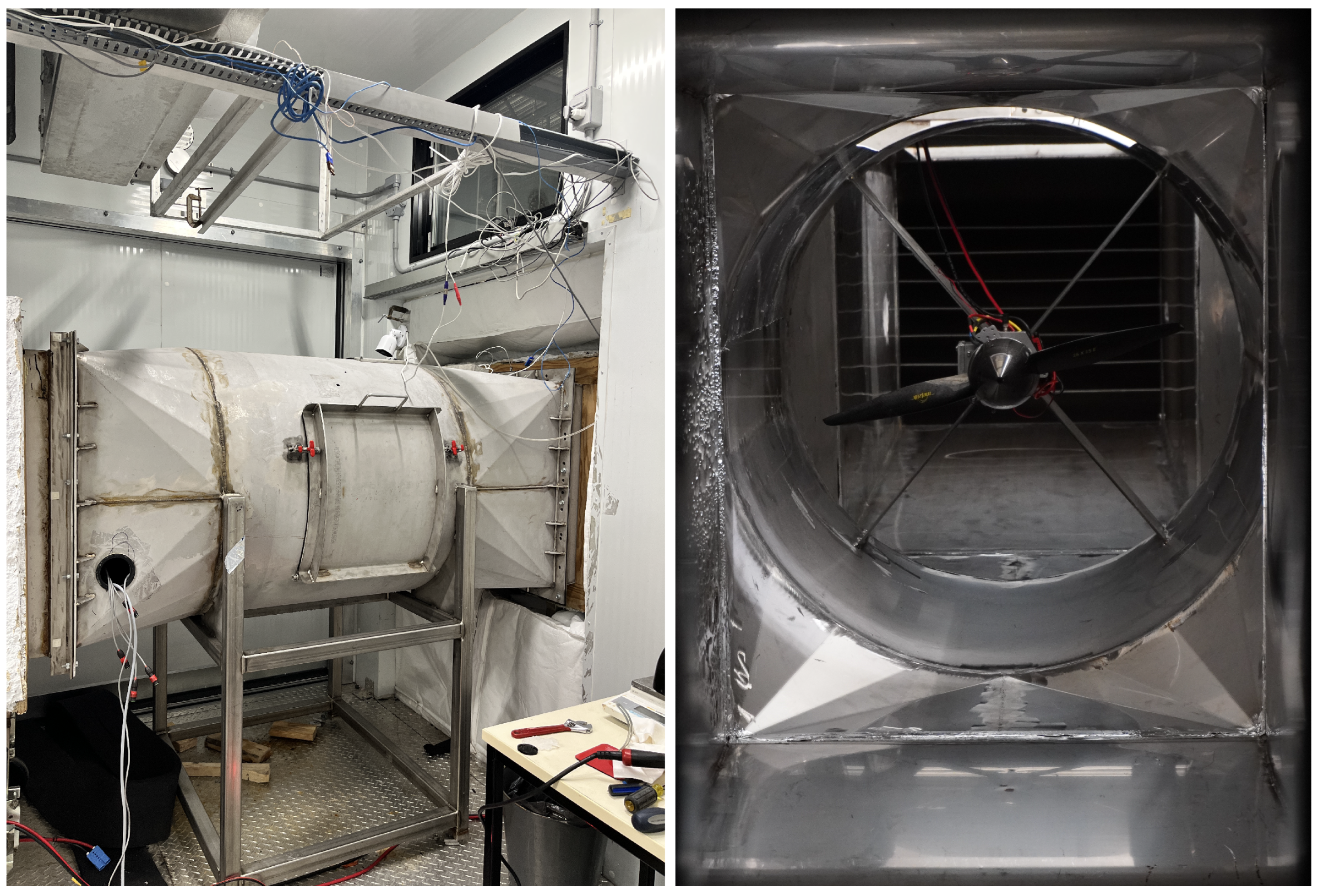
Figure 1. Round test section at the AMIL/LIMA IWT.
Drones 10 00166 g001
Figure 2. Droplet distribution at the AMIL/LIMA IWT for a target MVD of (a) 20 µm and (b) 40 µm.
Drones 10 00166 g002
Figure 3. (a) Twist and chord distribution and (b) geometry of the 21x13E propeller.
Drones 10 00166 g003
Figure 4. Image (a) and schematic (b) of the test setup mounted in the wind tunnel with the 21x13E propeller mounted.
Drones 10 00166 g004
Figure 5. Change in the thrust coefficient at a temperature of −5 °C, a rotation rate of 4200 rpm for the 533 mm (21 inch) propeller, and a velocity of 25 m/s with an LWC of 0.72 g/m3.
Drones 10 00166 g005
Figure 6. Change in the power coefficient at a temperature of −5 °C, a rotation rate of 4200 rpm for the 533 mm (21 inch) propeller, and a velocity of 25 m/s with an LWC of 0.72 g/m3 at an MVD of 40 µm.
Drones 10 00166 g006
Figure 7. Change in the propeller efficiency at a temperature of −5 °C, a rotation rate of 4200 rpm for the 533 mm (21 inch) propeller, and a velocity of 25 m/s with an LWC of 0.72 g/m3 at an MVD of 40 µm.
Drones 10 00166 g007
Figure 8. Ice on the propeller after 60 s of ice accretion time at a temperature of −5 °C, a rotation rate of 4200 rpm for the 533 mm (21 inch) propeller, and a velocity of 25 m/s with an LWC of 0.72 g/m3 at an MVD of 40 µm in Run 193 after 60 s of ice accretion time.
Drones 10 00166 g008
Figure 9. Change in the thrust coefficient at a temperature of −10 °C, a rotation rate of 4200 rpm for the 533 mm (21 inch) propeller, and a velocity of 25 m/s with an LWC of 0.72 g/m3.
Drones 10 00166 g009
Figure 10. Change in the power coefficient at a temperature of −10 °C, a rotation rate of 4200 rpm for the 533 mm (21 inch) propeller, and a velocity of 25 m/s with an LWC of 0.72 g/m3 with an MVD of 20, 40 and 60 µm.
Drones 10 00166 g010
Figure 11. Change in the propeller efficiency at a temperature of −10 °C, a rotation rate of 4200 rpm for the 533 mm (21 inch) propeller, and a velocity of 25 m/s with an LWC of 0.72 g/m3.
Drones 10 00166 g011
Figure 12. Ice shapes at −10 °C, a rotation rate of 4200 rpm for the 533 mm (21 inch) propeller, a velocity of 25 m/s with an LWC of 0.72 g/m3 after 60 s of ice accretion time.
Drones 10 00166 g012
Figure 13. Ice shapes at −10 °C, a rotation rate of 4200 rpm for the 533 mm (21 inch) propeller, a velocity of 25 m/s with an LWC of 0.72 g/m3 after 60 s of ice accretion time.
Drones 10 00166 g013
Figure 14. Change in the thrust coefficient at a temperature of −10 °C, a rotation rate of 4200 rpm for the 533 mm (21 inch) propeller, and a velocity of 25 m/s with an MVD of 40 µm.
Drones 10 00166 g014
Figure 15. Change in the power coefficient at a temperature of −10 °C, a rotation rate of 4200 rpm for the 533 mm (21 inch) propeller, and a velocity of 25 m/s with an MVD of 40 µm.
Drones 10 00166 g015
Figure 16. Change in the efficiency with different LWCs at a temperature of −10 °C, a rotation rate of 4200 rpm for the 533 mm (21 inch) propeller, and a velocity of 25 m/s with an MVD of 40 µm.
Drones 10 00166 g016
Figure 17. Ice shapes at −10 °C, a rotation rate of 4200 rpm for the 533 mm (21 inch) propeller, a velocity of 25 m/s with an MVD of 40 µm after 120 s of ice accretion time.
Drones 10 00166 g017
Figure 18. Change in the thrust coefficient for the temperatures of −5 °C, −10 °C, and −15 °C, a rotation rate of 4200 rpm for the 533 mm (21 inch) propeller, and a velocity of 25 m/s with an LWC of 0.72 g/m3 at an MVD of 40 µm.
Drones 10 00166 g018
Figure 19. Change in the power coefficient for the temperatures of −5 °C, −10 °C, and −15 °C, a rotation rate of 4200 rpm for the 533 mm (21 inch) propeller, and a velocity of 25 m/s with an LWC of 0.72 g/m3 at an MVD of 40 µm.
Drones 10 00166 g019
Figure 20. Change in the propeller efficiency for the temperatures of −5 °C, −10 °C, and −15 °C, at a rotation rate of 4200 rpm for the 533 mm (21 inch) propeller, and a velocity of 25 m/s with an LWC of 0.72 g/m3 and an MVD of 40 µm.
Drones 10 00166 g020
Figure 21. Change in the measured thrust coefficient at a temperature of −10 °C for the 533 mm (21 inch) propeller and a velocity of 25 m/s with an LWC of 0.72 g/m3 at an MVD of 40 µm.
Drones 10 00166 g021
Figure 22. Change in the measured power coefficient at a temperature of −10 °C for the 533 mm (21 inch) propeller, and a velocity of 25 m/s with an LWC of 0.72 g/m3 at an MVD of 40 µm.
Drones 10 00166 g022
Figure 23. Change in the measured propeller efficiency at a temperature of −10 °C for the 533 mm (21 inch) propeller and a velocity of 25 m/s with an LWC of 0.72 g/m3 at an MVD of 40 µm.
Drones 10 00166 g023
Figure 24. Change in the propeller’s efficiency for a temperature of −10 °C and a rotation rate of 4200 rpm after 30 s of ice accretion. The average result at each point is highlighted with a large marker, the results of a single run with a dot.
Drones 10 00166 g024
Figure 25. Efficiency of the propeller at an LWC of 0.72 g/m3 after 30 s of ice accretion. The average result at each point is highlighted with a large marker, the results of a single run with a dot.
Drones 10 00166 g025
Table 1. Range of test conditions in the IWT during the test campaign.
VariableMinimumMaximumVariability
T−15 °C−5 °C+/−0.3 °C
Runtime60 s-+/−5 s
Rotation rate4200 rpm-+/−10 rpm
LWC0.28  g / m 3 1.12  g / m 3 +/−0.05  g / m 3
MVD20 µm60 µm+/−0.4 µm
Air velocity25.0 m/s-+/−2.5 m/s
Disclaimer/Publisher’s Note: The statements, opinions and data contained in all publications are solely those of the individual author(s) and contributor(s) and not of MDPI and/or the editor(s). MDPI and/or the editor(s) disclaim responsibility for any injury to people or property resulting from any ideas, methods, instructions or products referred to in the content.