
S-HSFL: A Game-Theoretic Enhanced Secure-Hybrid Split-Federated Learning Scheme for UAV-Assisted Wireless Networks


Highlights
- What are the main findings?
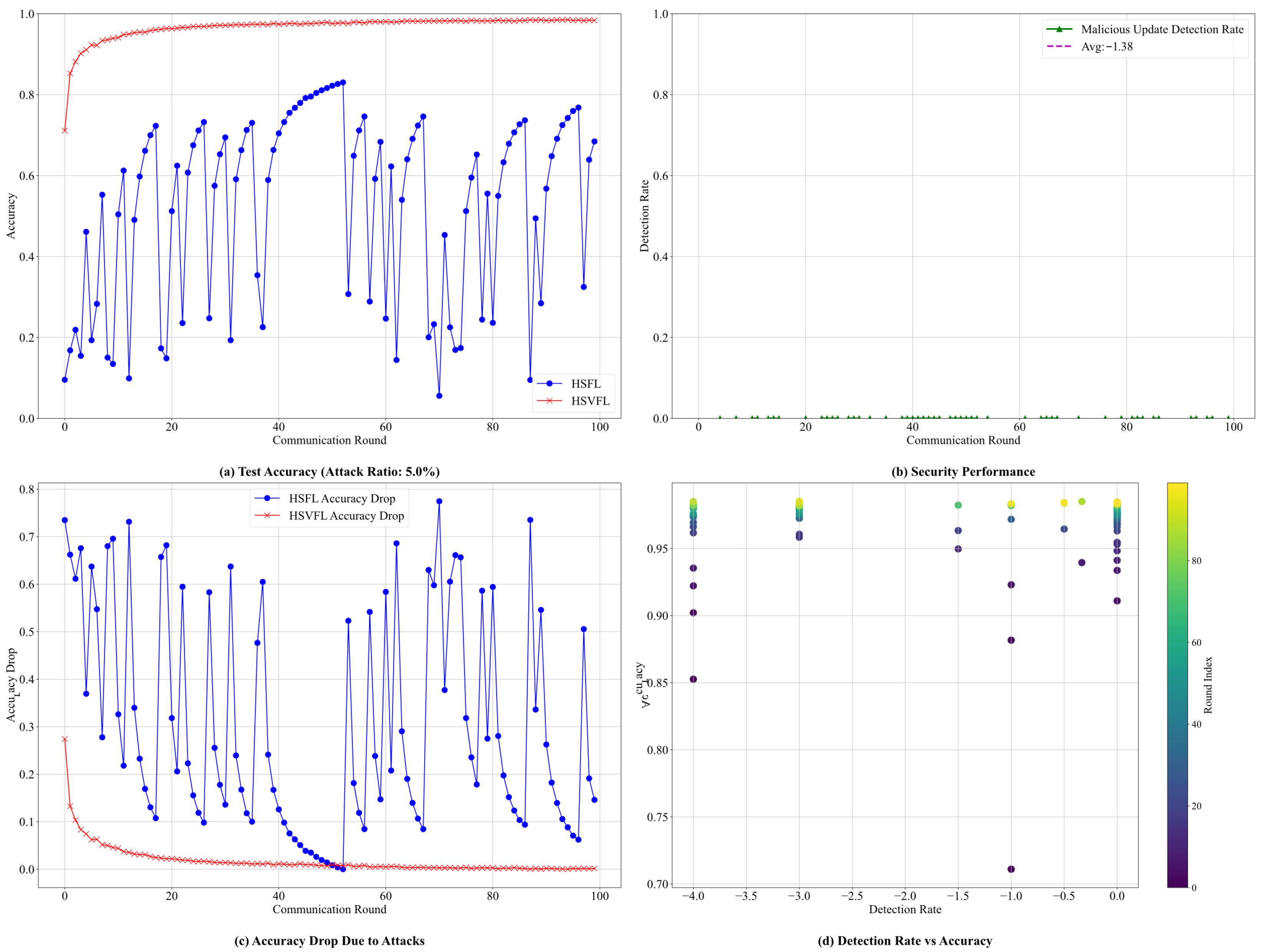
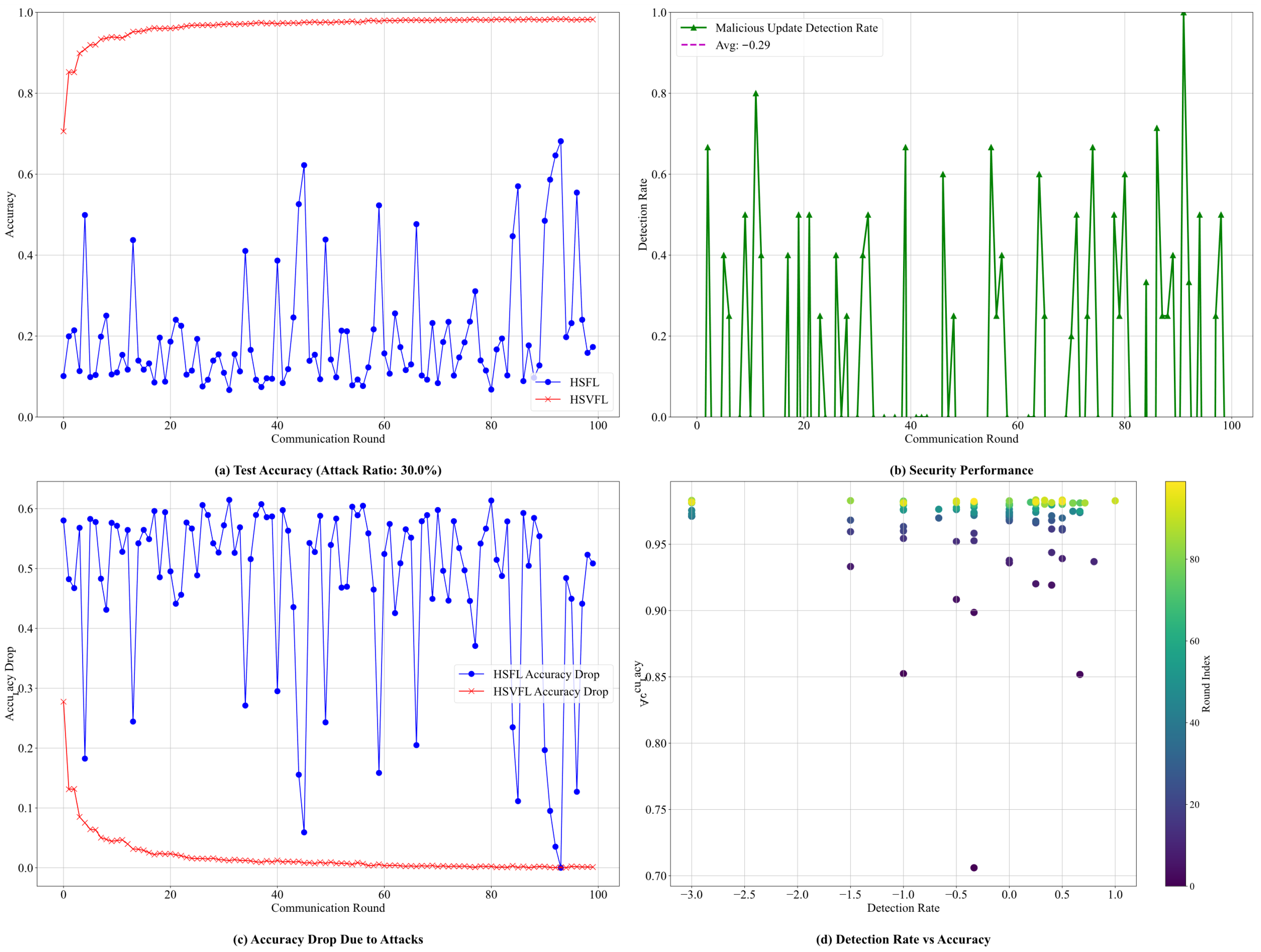
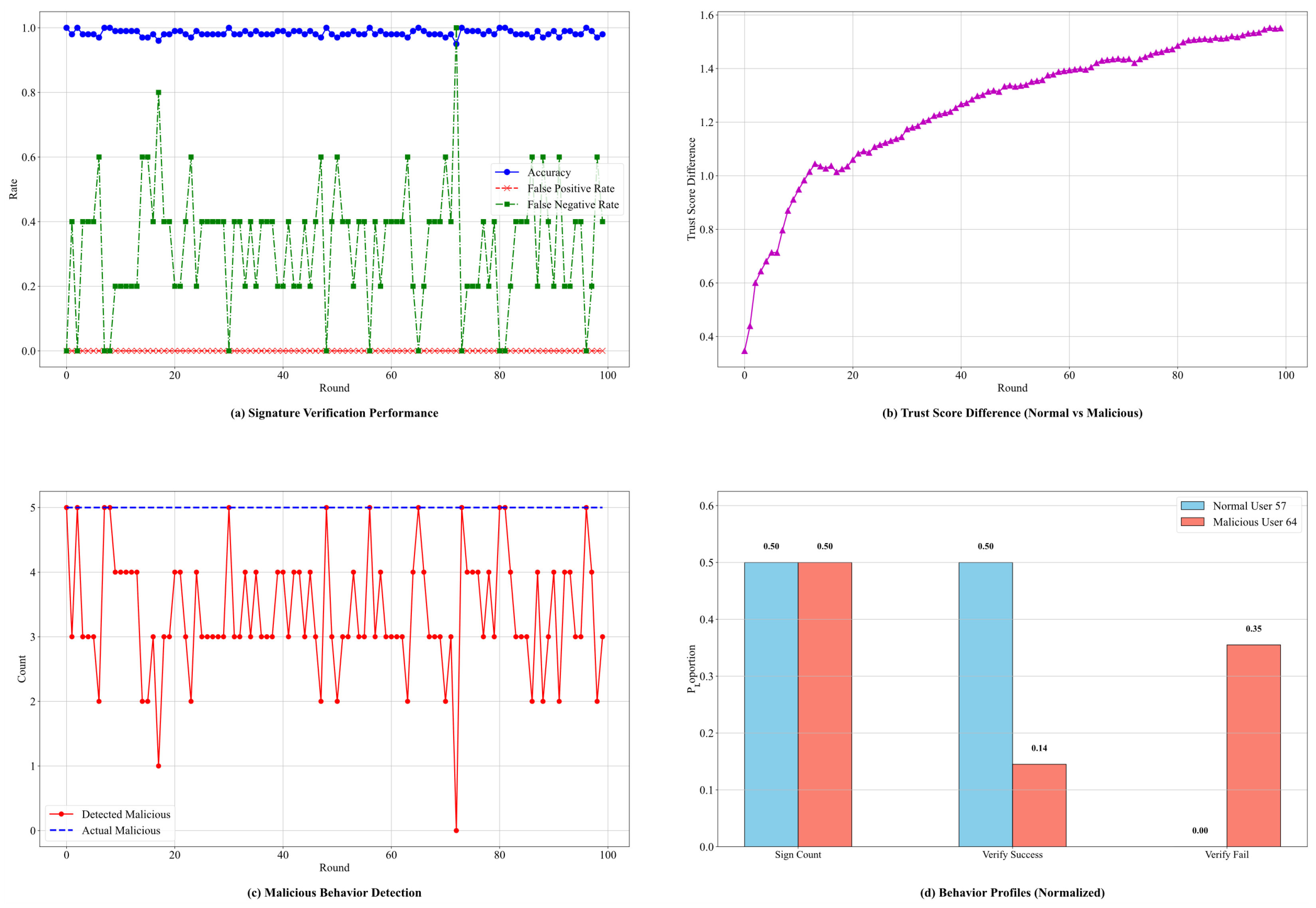
- Proposed S-HSFL, a game-theoretic enhanced secure hybrid split-federated learning framework for 6G UAV networks, achieving over 99% defense success rate against model tampering and maintaining 97% accuracy even with 30% adversarial UAVs.
- Developed the MAB-GT device selection strategy, which mitigates non-IID data impacts and reduces free-riding behavior while controlling communication overhead increase to 10–30%.
- What are the implications of the main findings?
- Addresses critical gaps in 6G UAV networks and provides the first solution resisting collusion attacks among malicious UAVs.
Abstract
1. Introduction
- Security and model integrity vulnerabilities: Existing hybrid split federated learning schemes lack robust verification mechanisms for model uploads, rendering the framework vulnerable to adversarial manipulations such as model tampering and forgery during the transmission and aggregation phases [6].
- Insufficient device trust and incentive mechanisms: Unmanned aerial vehicles act as rational agents with heterogeneous resource commitments. Current device selection strategies are often optimized solely for short-term performance, failing to guarantee sustained collaborative participation. In the absence of effective incentive mechanisms, UAVs may reduce their engagement intensity, withdraw from the collaboration, or engage in free-riding behaviors, which ultimately leads to unstable and inefficient training processes [7].
- Accuracy and robustness constraints: Under scenarios involving malicious interference, intermittent UAV connectivity, or highly non-independent and identically distributed data distributions, HSFL still struggles to maintain fast convergence speed, satisfactory model accuracy, and strong robustness against data heterogeneity [8].
- We integrate verifiable federated learning techniques into the HSFL pipeline and employ digital-signature–based authentication during device selection and model submission [9]. This design provides strong protection against model tampering and forgery, ensuring the authenticity and integrity of contributions from participating UAVs.
- Incentive-optimized device selection: We develop a Multi-Armed Bandit and Game-Theory–driven(MAB-GT) strategy that combines adaptive exploration with multi-stage strategic interactions. This mechanism accounts for both instantaneous performance and long-term cooperative behavior, effectively incentivizing high-quality UAVs to participate consistently [10].
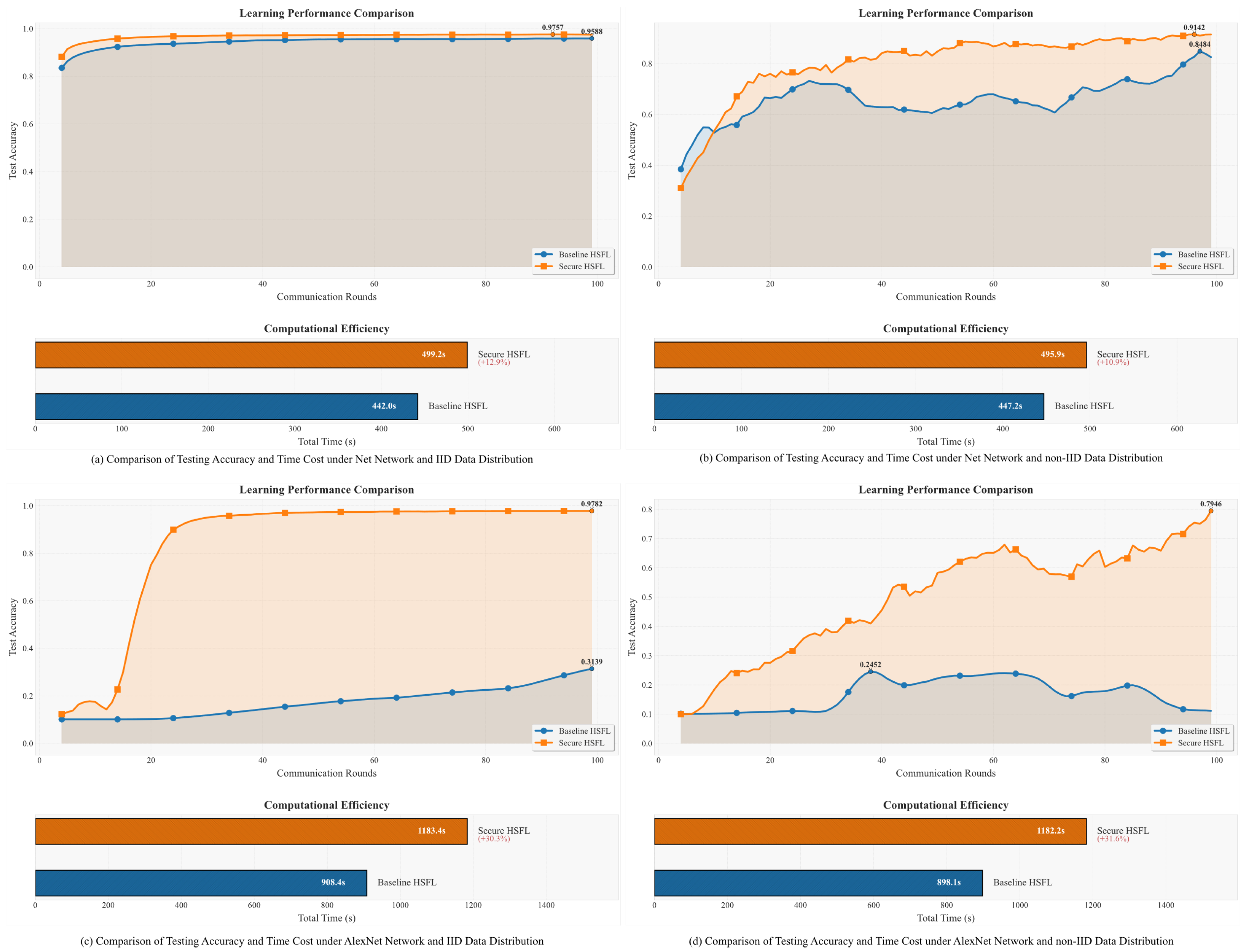
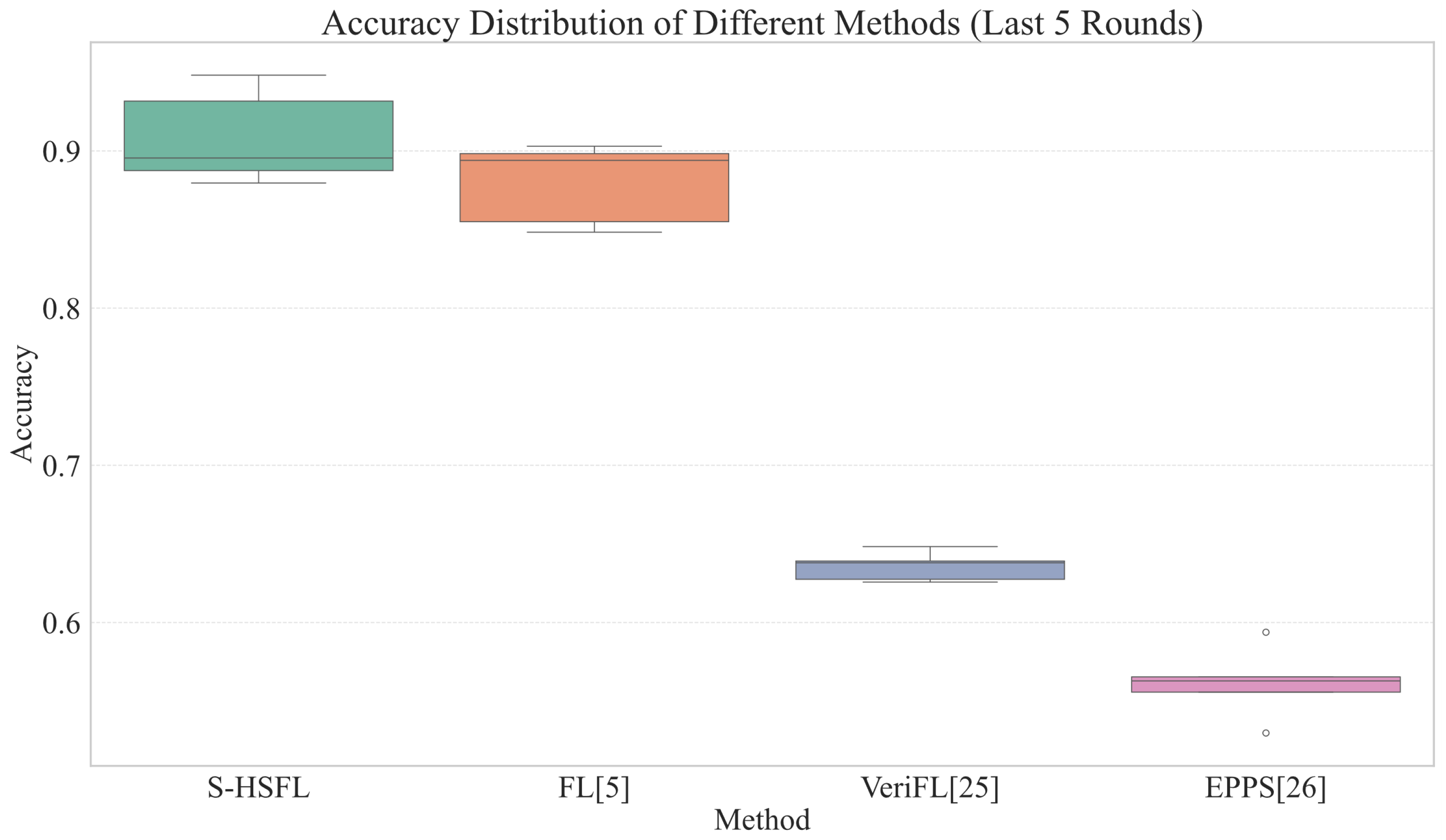
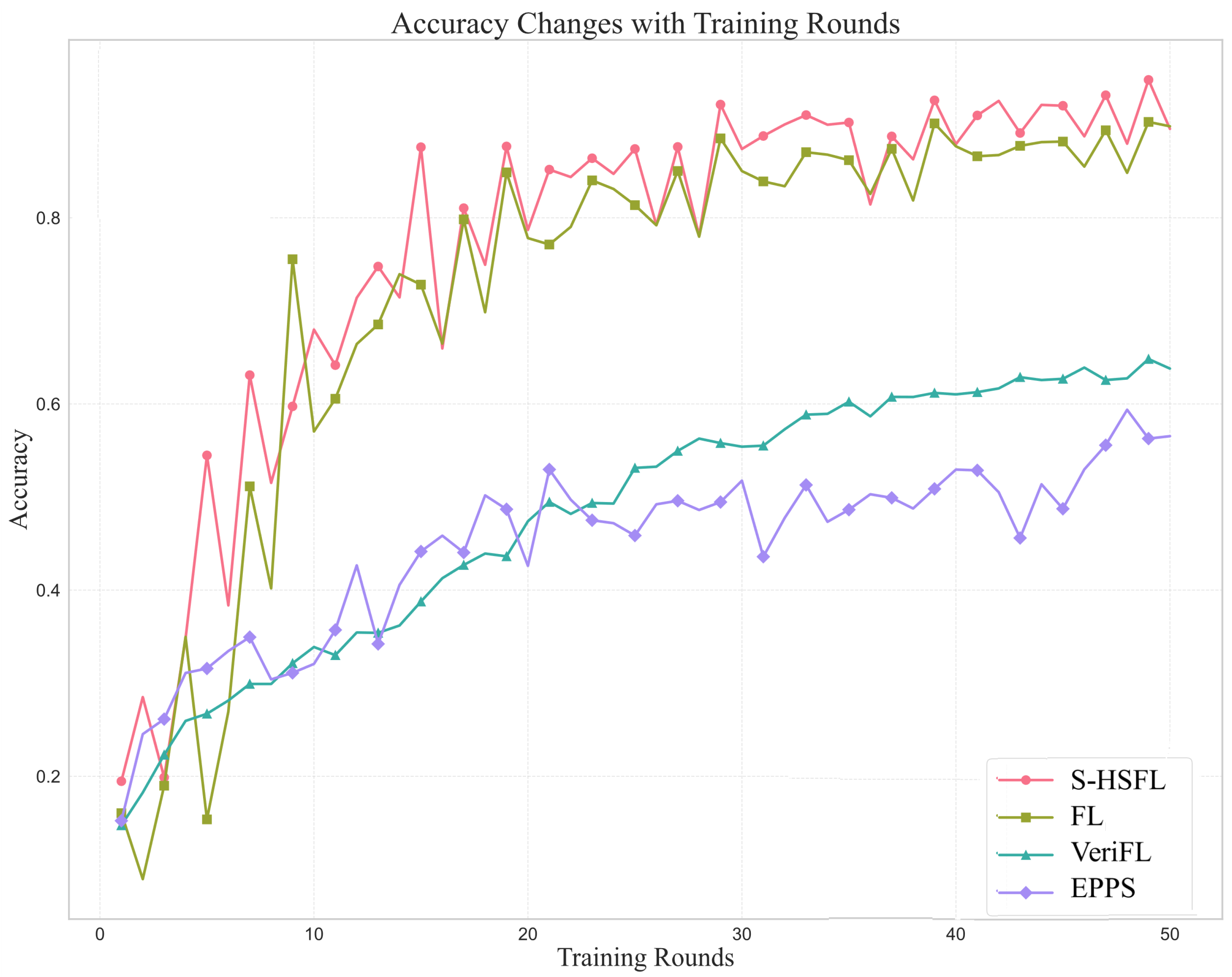
- Comprehensive experiments using the MNIST dataset under IID and Non-IID distributions demonstrate the advantages of S-HSFL in defense robustness, convergence behavior, long-term participation incentives, and communication-efficiency trade-offs.
2. Related Work
2.1. Comparison of Distributed Learning Paradigms: From FL to HSFL to S-HSFL
2.2. Verifiable Federated Learning and Model Security Protection
2.3. MultiArmed Bandit and Evolution of Device Selection Mechanisms
- The proposed unified MAB-GT structure enhances device selection by improving adaptability and promoting fairness.
- The incorporation of digital signatures into the authentication process helps to mitigate risks of identity forgery and opportunistic participation.
- The proposed verifiable closed-loop training framework effectively enhances robustness, fortifies network security, and boosts the final model performance in UAV-enabled 6G systems.
3. Our Construction
3.1. System Model and Notations
- UAVs are resource-constrained (limited computing power and battery capacity) and exhibit high mobility, leading to time-varying channel conditions ( fluctuates dynamically).
- Local datasets are non-IID, i.e., for , and follow heterogeneous distributions.
- Malicious UAVs (up to 30% of ) may launch attacks such as model tampering, forgery, or free-riding (uploading invalid updates without local training).
- UAVs act as rational agents, seeking to maximize their own utility (trade-off between participation benefits and energy costs).
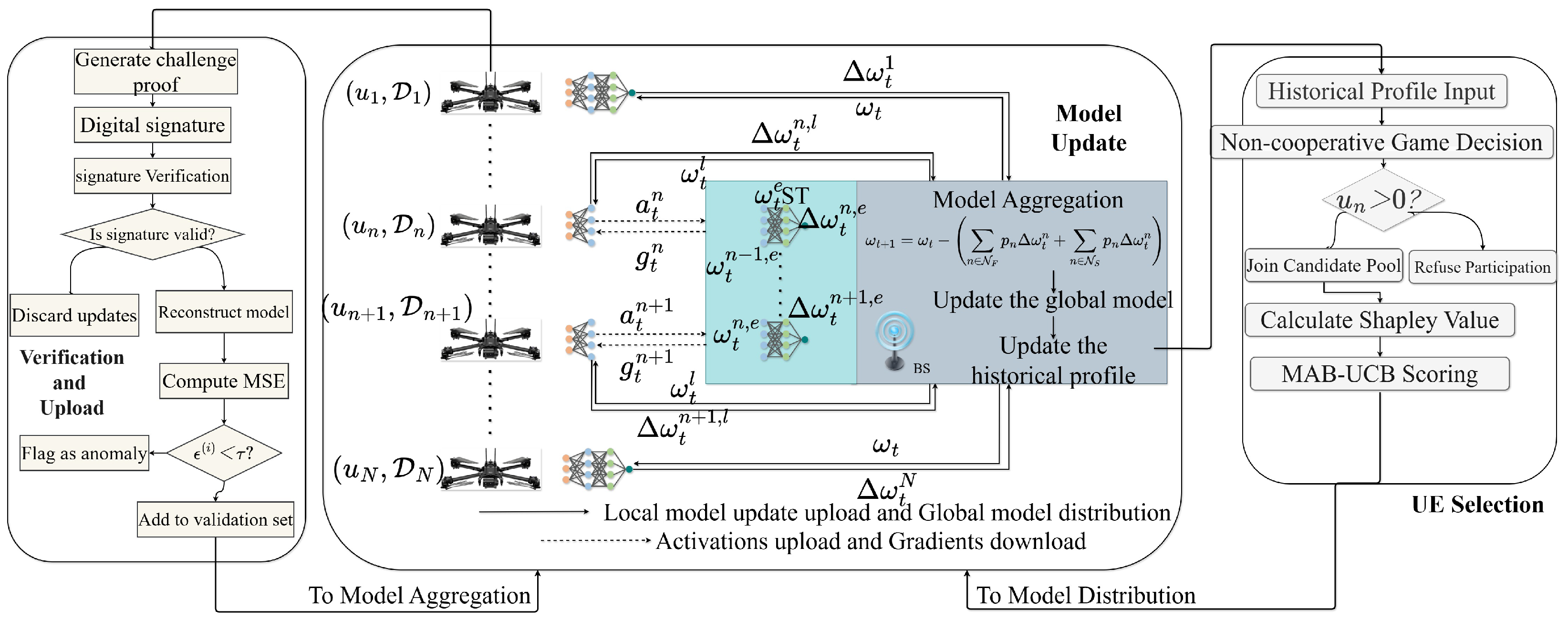
3.2. The S-HSFL Scheme
| Algorithm 1 MAB-GT for user equipment Selection |
| Input: K, β, λl, λc, α, βg, γshapley, δhistorical Output: Kt with game-theoretic and security enhancements
|
3.3. Non-Cooperative Game Model Design
3.3.1. Utility Function Design
3.3.2. Nash Equilibrium Implementation
- (1)
- Before each training round, devices receive the global model ωt and current channel states {SNRn};
- (2)
- Device un independently calculates the expected utility Un for participating in training;
- (3)
- Participates when , otherwise refuses;
- (4)
- The base station collects participation decisions to form candidate device pool Kcandidate.
3.4. Cooperative Game and Coalition Formation
3.4.1. Coalition Construction Strategy
- (1)
- Initialization: Perform K-means clustering based on device feature vectors [SNRn, ‖Δωn‖2] to form initial coalitions.
- (2)
- Update: Re-evaluate coalition structure every T rounds: After every T rounds of updates, merge high-contribution devices with Shapley value Top-K to form super-coalitions and share channel resources; conversely, when intra-coalition contribution differences measured by Shapley value variance exceed the threshold, i.e., Var(φn) > θsplit, split coalitions and reorganize by contribution tiers [20].
- (3)
- Scaling Control: Limit coalition members to the [minsize, maxsize] interval to prevent overfitting or communication bottlenecks.
3.4.2. Contribution Quantification
3.4.3. Deep Integration with MAB
3.5. Repeated Games and Long-Term Strategies
3.5.1. Multi-Dimensional Historical Profiles
3.5.2. Reputation Mechanism Design
3.5.3. Historical Contribution Integration
3.6. A PKI-Based Full-Lifecycle Certificate Management
3.6.1. Behavioral Security Profiles
3.6.2. Trust Score Integration
- State space consists of the signal-to-noise ratio of UAV node n at round t, the norm of gradient update , trust score, coalition index, and the device’s historical contribution trajectory (see Equation (7)). These state dimensions comprehensively characterize UAV mobility, data quality, and operational reliability.
- Action space is defined as the decision-making process of selecting K UAVs from the candidate pool to participate in the current training round, based on the Upper Confidence Bound score in Equation (15).
- Reward function is composed of weighted model improvement, channel quality, and coalition contribution, which organically unifies the short-term rewards of the multi-armed bandit algorithm with the long-term strategic contributions under the game-theoretic framework.
- Update rules include the following core mechanisms: dynamic adjustment of UCB score with trust correction (Equation (15)), Shapley-value-driven reinforcement update of contribution, time-decayed calculation of historical contribution, and coalition restructuring strategy executed every T rounds.
3.7. UAV-Specific Characteristics Adaptation
3.7.1. Mobility-Aware Channel Modeling
3.7.2. Energy-Constrained Participation
4. Verifiable Hybrid Split Federated Learning Algorithm
4.1. Hybrid Split Federated Learning
- Federated learning user subset:
- Split learning user subset:
4.2. Verifiable Mechanism Design
| Algorithm 2 HSVFL Algorithm |
Input: T, η, K, Dchal, global model ωt, UE-side model , BS-side model
|
4.2.1. Data Preparation
4.2.2. Proof Generation
4.2.3. Verification Process
- (1)
- Model Reconstruction: For federated learning users, reconstruct model as M(i); for split learning users, reconstruct model as , where (user upload), (server part in current round global model).Prediction Output Computation:The server applies the reconstructed model to the challenge dataset Dchal to obtain the predicted outputs:
- (2)
- Mean Squared Error (MSE, Mean Squared Error) Calculation:where is the prediction vector for the j-th challenge sample provided by user i, and is the corresponding prediction vector computed by the server using the reconstructed model. If ϵ(i) < τ (a predefined threshold, e.g., 10−4), the user’s upload is accepted; otherwise, it is rejected.
4.2.4. Dynamic Challenge Updates
4.3. Aggregation Strategy
- (1)
- Valid model parameter updates by federated learning participants .
- (2)
- Valid user-side model parameter sets from split learning users: .
5. Formal SecurityAnalysis
5.1. Correctness
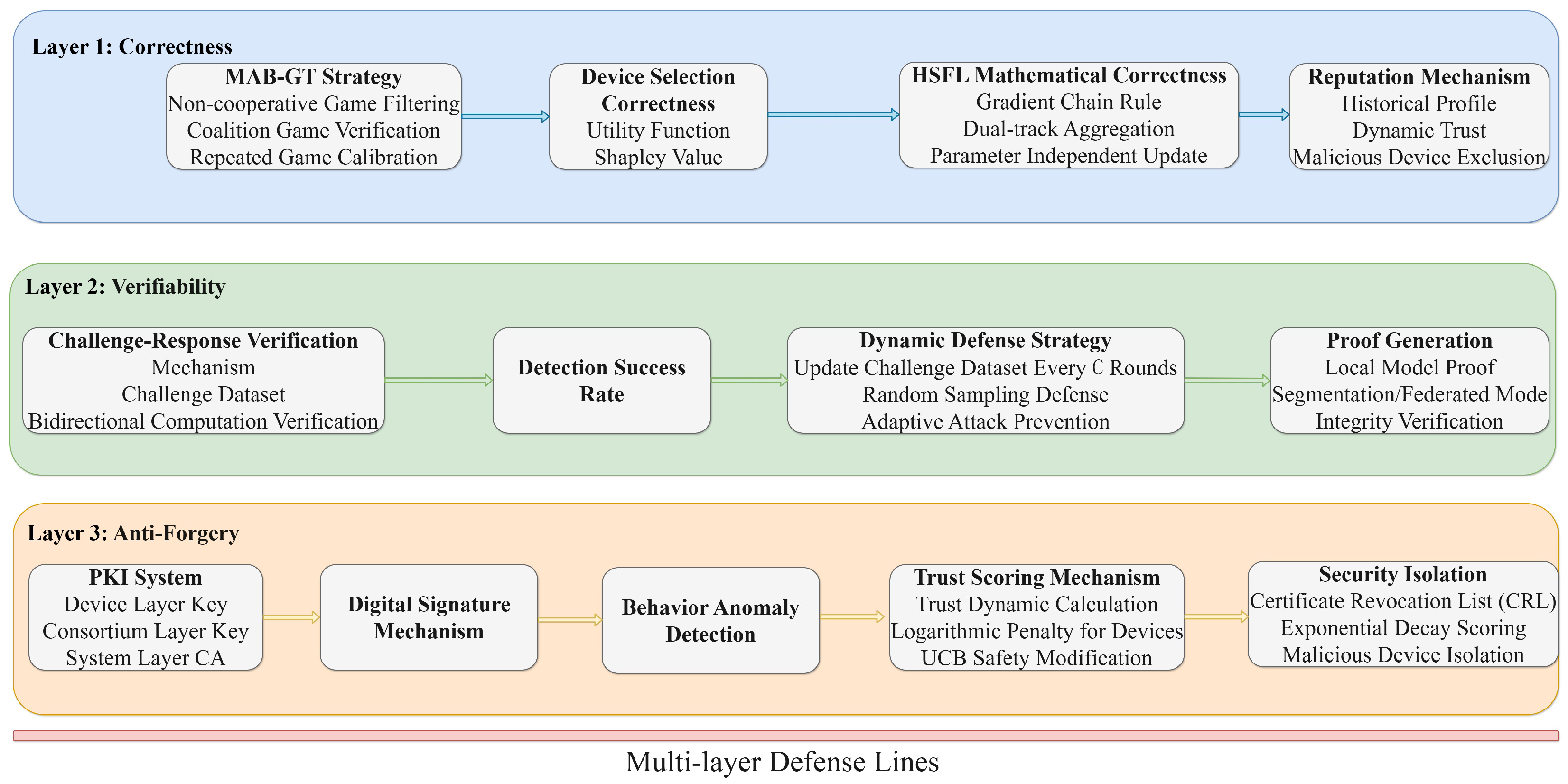
- Non-cooperative game screening. Each device engages in autonomous decision-making through its utility function Un, joining the training process only when its expected payoff satisfies . This rule effectively filters out low-utility or unreliable devices, thereby preventing unnecessary consumption of computational resources.
- Coalition-formation verification. In the subsequent cooperative-game phase, device contributions are quantified using the Shapley value φn. This metric strictly satisfies the axioms of efficiency, symmetry, and additivity from cooperative game theory, ensuring mathematically sound and interpretable contribution evaluation.
- Repeated-game correction. A repeated game mechanism maintains a historical performance profile Profilen for each device [20]. Together with a dynamic trust metric Trustn updated in real time according to device behavior, the system can reliably identify and exclude devices demonstrating inconsistent or adversarial patterns over time.
5.2. Verifiability
5.3. Unforgeability
5.4. Security Comparison
6. Performance Analysis
6.1. Experimental Setup
6.2. Performance Comparison
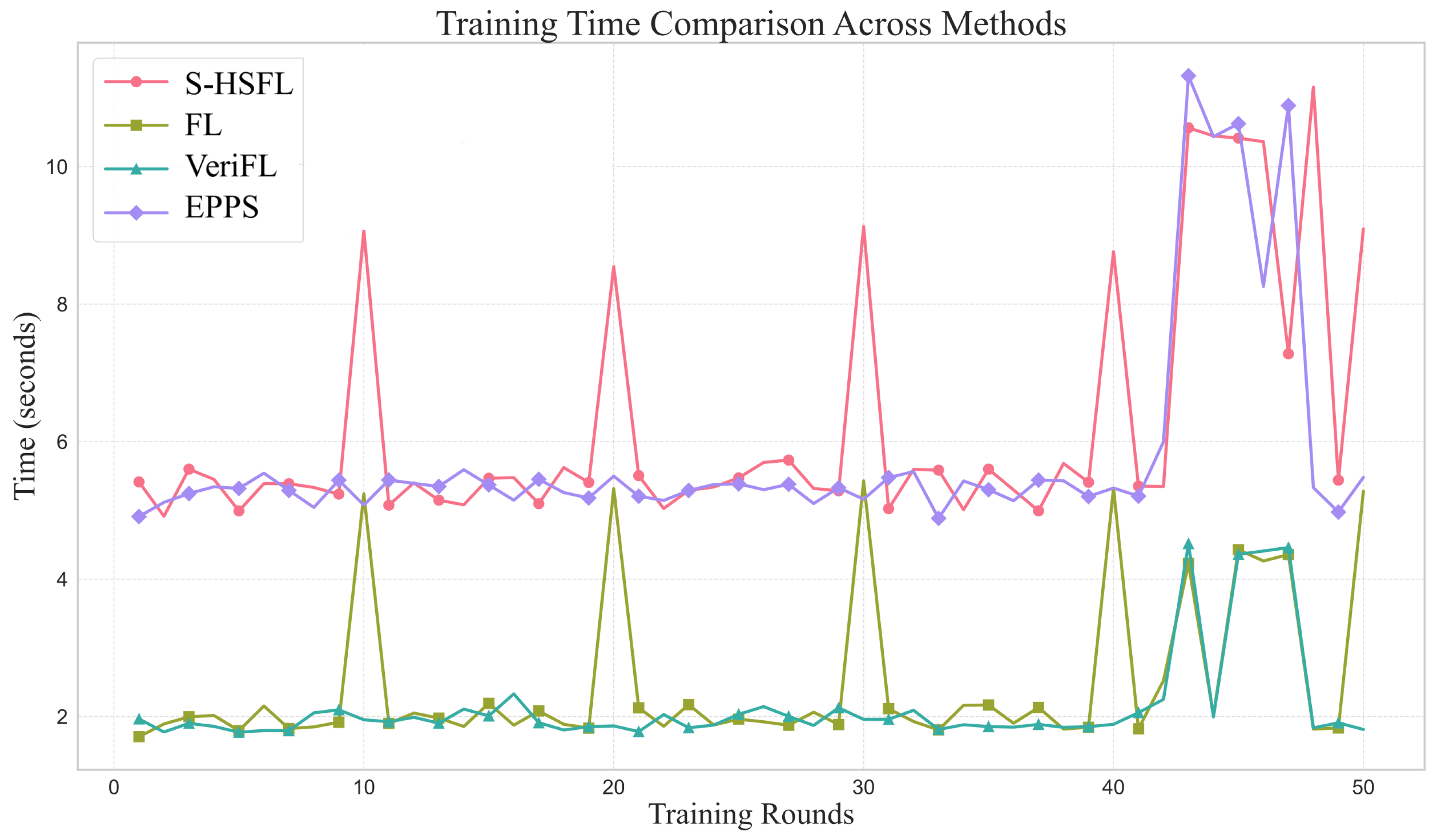
Time Overhead Analysis
6.3. Other Security Analysis
6.3.1. Security Verification
6.3.2. Attack Methods Analysis
6.3.3. Robustness on Complex Datasets and Large-Scale Models
6.4. Application Case
7. Conclusions
Author Contributions
Funding
Data Availability Statement
Conflicts of Interest
References
- Challita, U.; Saad, W.; Bettstetter, C. Interference management for cellular-connected UAVs: A deep reinforcement learning approach. IEEE Trans. Wirel. Commun. 2019, 18, 2125–2140. [Google Scholar] [CrossRef]
- Shenvi Nadkarni, V.B.; Joshi, S.; Lakshmi, L.R. An efficient federated transfer learning approach for multi-UAV systems. In Proceedings of the 2025 National Conference on Communications, New Delhi, India, 6–9 March 2025; pp. 1–6. [Google Scholar]
- Solat, F.; Lee, J.; Niyato, D. Split Federated Learning-Empowered Energy-Efficient Mobile Traffic Prediction Over UAVs. IEEE Wirel. Commun. Lett. 2024, 13, 3064–3068. [Google Scholar] [CrossRef]
- Lyu, Z.; Gao, Y.; Chen, J.; Du, H.; Xu, J.; Huang, K.; Kim, D.I. Empowering Intelligent Low-altitude Economy with Large AI Model Deployment. arXiv 2025, arXiv:2505.22343. [Google Scholar] [CrossRef]
- Liu, X.; Deng, Y.; Mahmoodi, T. Wireless distributed learning: A new hybrid split and federated learning approach. IEEE Trans. Wirel. Commun. 2023, 22, 2650–2665. [Google Scholar] [CrossRef]
- Vakili, S.; Liu, K.; Zhao, Q. Deterministic Sequencing of Exploration and Exploitation for Multi-Armed Bandit Problems. IEEE J. Sel. Top. Signal Process. 2013, 7, 759–767. [Google Scholar] [CrossRef]
- McMahan, B.; Moore, E.; Ramage, D.; Hampson, S.; Arcas, B.A.Y. Communication-efficient learning of deep networks from decentralized data. In Proceedings of the 20th International Conference on Artificial Intelligence and Statistics, Fort Lauderdale, FL, USA, 20–22 April 2017; pp. 1273–1282. [Google Scholar]
- Wu, Q.; Fu, X.; Yang, X.; Zhao, R.; Wu, C.; Zhang, T. Semi-asynchronous Federated Learning Optimized for NON-IID Data Communication based on Tensor Decomposition. In Proceedings of the 2023 IEEE Intl Conf on Parallel & Distributed Processing with Applications, Wuhan, China, 21–24 December 2023; pp. 524–530. [Google Scholar]
- He, Y.; Zhou, D.; Zhang, Q.; Tan, Z. VSAFL: Verifiable and secure aggregation with (Poly) logarithmic overhead in federated learning. IEEE Internet Things J. 2024, 11, 38552–38568. [Google Scholar] [CrossRef]
- Ma, C.Y.T.; Yau, D.K.; Lou, X.; Rao, N.S. Markov game analysis for attack-defense of power networks under possible misinformation. IEEE Trans. Power Syst. 2013, 28, 1676–1686. [Google Scholar] [CrossRef]
- Yang, H.H.; Liu, Z.; Quek, T.Q.S.; Poor, H.V. Scheduling policies for federated learning in wireless networks. IEEE Trans. Commun. 2020, 68, 317–333. [Google Scholar] [CrossRef]
- Ayad, A.; Renner, M.; Schmeink, A. Improving the Communication and Computation Efficiency of Split Learning for IoT Applications. In Proceedings of the 2021 IEEE Global Communications Conference, Madrid, Spain, 7–11 December 2021; pp. 1–6. [Google Scholar]
- Bian, Y.; Hu, J.; Zhang, P.; Wang, S.; Wang, Y.; Cong, J.; Fu, C. Joint Trajectory Control, Power Control, and Collection Schedule in UAV-Assisted Anti-Jamming Wireless Data Collection with Imperfect CSI. IEEE Commun. Lett. 2024, 28, 2839–2843. [Google Scholar] [CrossRef]
- Nishio, T.; Yonetani, R. Client selection for federated learning with heterogeneous resources in mobile edge. In Proceedings of the IEEE International Conference on Communications, Shanghai, China, 20–24 May 2019; pp. 1–7. [Google Scholar]
- Chu, W.; Li, L.; Reyzin, L.; Schapire, R. Contextual bandits with linear payoff functions. J. Mach. Learn. Res. 2011, 12, 1–20. [Google Scholar]
- Diffie, W.; Hellman, M. New directions in cryptography. IEEE Trans. Inf. Theory 1976, 22, 644–654. [Google Scholar] [CrossRef]
- Alrabaee, S.; Agarwal, A.; Anand, D.; Khasawneh, M. Game Theory for Security in Cognitive Radio Networks. In Proceedings of the 2012 International Conference on Advances in Mobile Network, Communication and Its Applications, Bangalore, India, 11–12 August 2012; pp. 60–63. [Google Scholar]
- Nash, J.F. Equilibrium points in N-person games. Proc. Natl. Acad. Sci. USA 1950, 36, 48–49. [Google Scholar] [CrossRef] [PubMed]
- Bouneffouf, D. Finite-time analysis of the multi-armed bandit problem with known trend. In Proceedings of the IEEE Congress on Evolutionary Computation (CEC), Vancouver, BC, Canada, 24–29 July 2016; pp. 1–8. [Google Scholar]
- Guruacharya, S.; Niyato, D.; Bennis, M.; Kim, D.I. Dynamic coalition formation for network MIMO in small cell networks. IEEE Trans. Wirel. Commun. 2013, 12, 5360–5372. [Google Scholar] [CrossRef]
- Song, H.; Yang, Z.; Du, H.; Zhang, Y.; Zeng, J.; He, X. LLM-LCSA: LLM for Collaborative Control and Decision Optimization in UAV Cluster Security. Drones 2025, 9, 779. [Google Scholar] [CrossRef]
- Friedman, J.W. A non-cooperative equilibrium for supergames: A correction. Rev. Econ. Stud. 1973, 40, 1–12. [Google Scholar] [CrossRef]
- Aissaoui, R.; Deneuville, J.C.; Guerber, C.; Pirovano, A. Authenticating civil UAV communications with post-quantum digital signatures. In Proceedings of the 42nd Digital Avionics Systems Conference, Barcelona, Spain, 1–5 October 2023; pp. 1–9. [Google Scholar]
- Feige, U.; Fiat, A.; Shamir, A. Zero-knowledge proofs of identity. J. Cryptol. 1988, 1, 77–94. [Google Scholar] [CrossRef]
- Guo, X.; Liu, Z.; Li, J.; Gao, J.; Hou, B.; Dong, C.; Baker, T. VeriFL: Communication-Efficient and Fast Verifiable Aggregation for Federated Learning. IEEE Trans. Inf. Forensics Secur. 2021, 16, 1736–1751. [Google Scholar] [CrossRef]
- Niu, S.; Zhou, X.; Wang, N.; Kong, W.; Chen, L. Privacy-Preserving and Efficient Verifiable Federated Learning Scheme Based on Proxy Re-signature. Expert Syst. Appl. 2025, 290, 128422–128432. [Google Scholar] [CrossRef]
- Ning, B.; Han, Q.L.; Zuo, Z.; Jin, J.; Zheng, J. Collective Behaviors of Mobile Robots Beyond the Nearest Neighbor Rules With Switching Topology. IEEE Trans. Cybern. 2018, 48, 1577–1590. [Google Scholar] [CrossRef] [PubMed]
- Liu, Y.; Jia, Y.; Jia, J.; Song, D.; Gong, N.Z. DataSentinel: A game-theoretic detection of prompt injection attacks. In Proceedings of the 2025 IEEE Symposium on Security and Privacy (SP), San Francisco, CA, USA, 12–15 May 2025; pp. 2190–2208. [Google Scholar]
- Huang, X.; Zuo, C.; Shao, J.; Duan, J.; Wang, W.; Meng, Y.; Wang, L. Timed anonymous ring signature with application to bidding systems. IEEE Trans. Inf. Forensics Secur. 2025, 20, 8210–8223. [Google Scholar] [CrossRef]







| Notation | Description |
|---|---|
| Set of UAV nodes, | |
| Local dataset of UAV n | |
| M | Global hybrid split-federated learning model, M = (Mue, Mserver) |
| Mue | User equipment (UE)-side sub-model (deployed on UAVs) |
| Mserver | Server-side sub-model (deployed on edge server) |
| θue, θserver | Parameters of Mue and Mserver, respectively |
| Signal-to-Noise Ratio (SNR) of UAV n at round t | |
| Local model update of UAV n at round t | |
| Federated/split learning user subsets at round t | |
| τ | Threshold for verification mechanism |
| φn | Shapley value (marginal contribution) of UAV n |
| T[n] | Trust score of UAV n |
| Function Scheme | Privacy Preserving | Client Offline | Aggregation Verifiability | Resistance to Collusion |
|---|---|---|---|---|
| FL [7] | ✓ | × | ✓ | × |
| VeriFL [25] | ✓ | ✓ | ✓ | × |
| EPPS [26] | ✓ | ✓ | × | × |
| HSFL [5] | ✓ | ✓ | × | × |
| S-HSFL | ✓ | ✓ | ✓ | ✓ |
| Architecture | Number of Parameters | Layers | Kernel Size |
|---|---|---|---|
| Net | 60 thousand | 4 | (5 × 5), (5 × 5) |
| AlexNet | 60 million | 8 | (3 × 3), (3 × 3), (3 × 3), (3 × 3), (3 × 3) |
| Parameters | Value |
|---|---|
| Environmental parameter a | 12.08 |
| Environmental parameter b | 0.11 |
| LOS path loss index | 2.8 |
| NLOS path loss index | 4.0 |
| LOS additional loss | 2.3 dB |
| NLOS additional loss | 34.0 dB |
| Carrier Frequency | 2.4 GHz |
| Transmission power | 20 dBm |
| Noise coefficient | 7 dB |
Disclaimer/Publisher’s Note: The statements, opinions and data contained in all publications are solely those of the individual author(s) and contributor(s) and not of MDPI and/or the editor(s). MDPI and/or the editor(s) disclaim responsibility for any injury to people or property resulting from any ideas, methods, instructions or products referred to in the content. |
© 2026 by the authors. Licensee MDPI, Basel, Switzerland. This article is an open access article distributed under the terms and conditions of the Creative Commons Attribution (CC BY) license.
Share and Cite
Gao, Q.; Zhang, X.; Dong, G.; Tang, B.; Liu, J. S-HSFL: A Game-Theoretic Enhanced Secure-Hybrid Split-Federated Learning Scheme for UAV-Assisted Wireless Networks. Drones 2026, 10, 37. https://doi.org/10.3390/drones10010037
Gao Q, Zhang X, Dong G, Tang B, Liu J. S-HSFL: A Game-Theoretic Enhanced Secure-Hybrid Split-Federated Learning Scheme for UAV-Assisted Wireless Networks. Drones. 2026; 10(1):37. https://doi.org/10.3390/drones10010037
Chicago/Turabian StyleGao, Qiang, Xintong Zhang, Guishan Dong, Bo Tang, and Jinhui Liu. 2026. "S-HSFL: A Game-Theoretic Enhanced Secure-Hybrid Split-Federated Learning Scheme for UAV-Assisted Wireless Networks" Drones 10, no. 1: 37. https://doi.org/10.3390/drones10010037
APA StyleGao, Q., Zhang, X., Dong, G., Tang, B., & Liu, J. (2026). S-HSFL: A Game-Theoretic Enhanced Secure-Hybrid Split-Federated Learning Scheme for UAV-Assisted Wireless Networks. Drones, 10(1), 37. https://doi.org/10.3390/drones10010037