Proceeding Paper

Total, Dissolved and Particulate N:P Stoichiometry in Canadian Prairie Streams in Relation to Land Cover and Hydrologic Variability †

by
Kim J. Rattan
* and
Patricia A. Chambers
Environment and Climate Change Canada, Centre for Inland Waters, Burlington, ON L7S 1A1, Canada
*
Author to whom correspondence should be addressed.
Presented at the 2nd International Electronic Conference on Water Sciences, 16–30 November 2017; Available online: http://sciforum.net/conference/ecws-2.
Proceedings 2018, 2(5), 183; https://doi.org/10.3390/ecws-2-04952
Published: 16 November 2017
(This article belongs to the Proceedings of The 2nd International Electronic Conference on Water Sciences)

Abstract

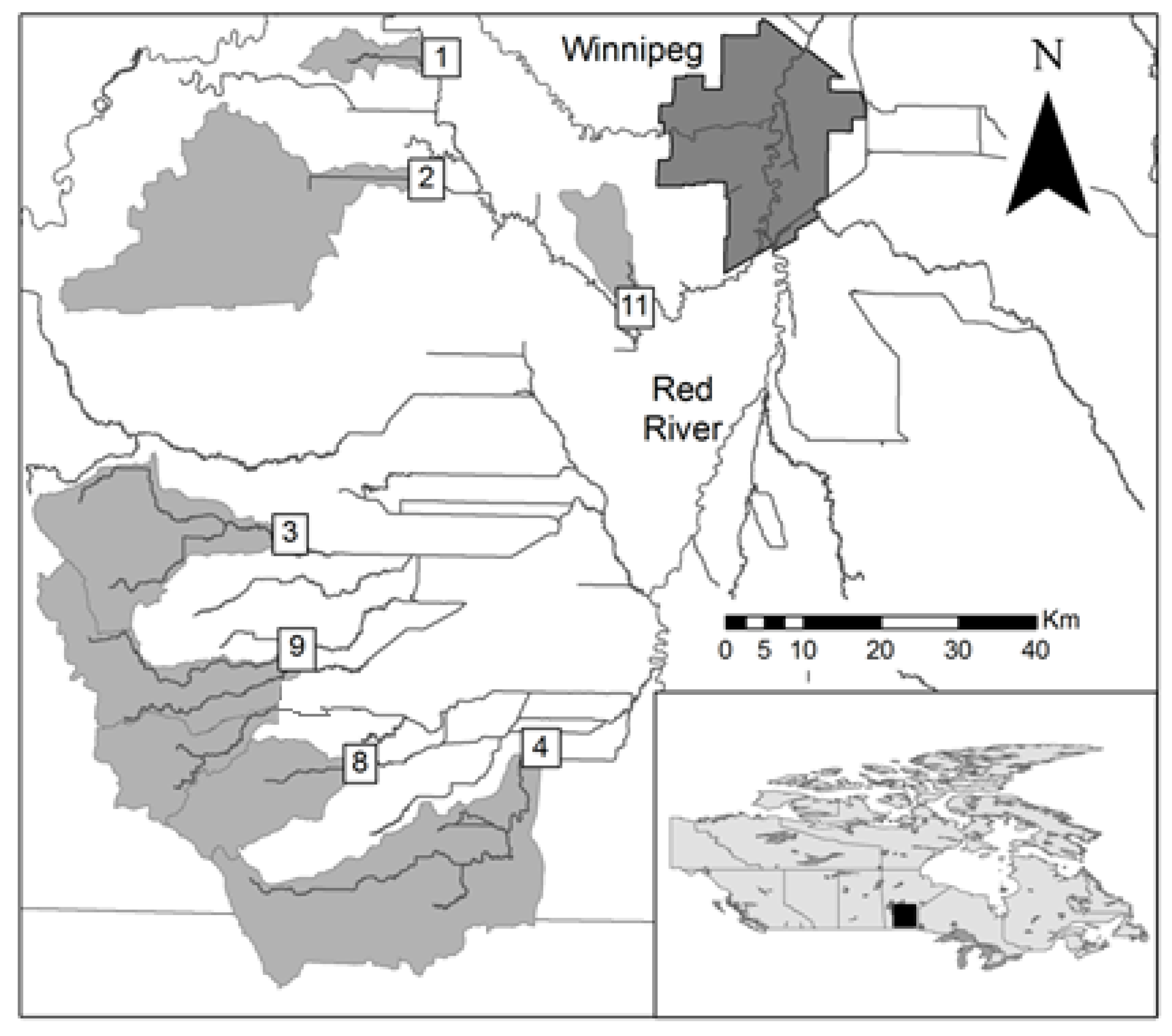
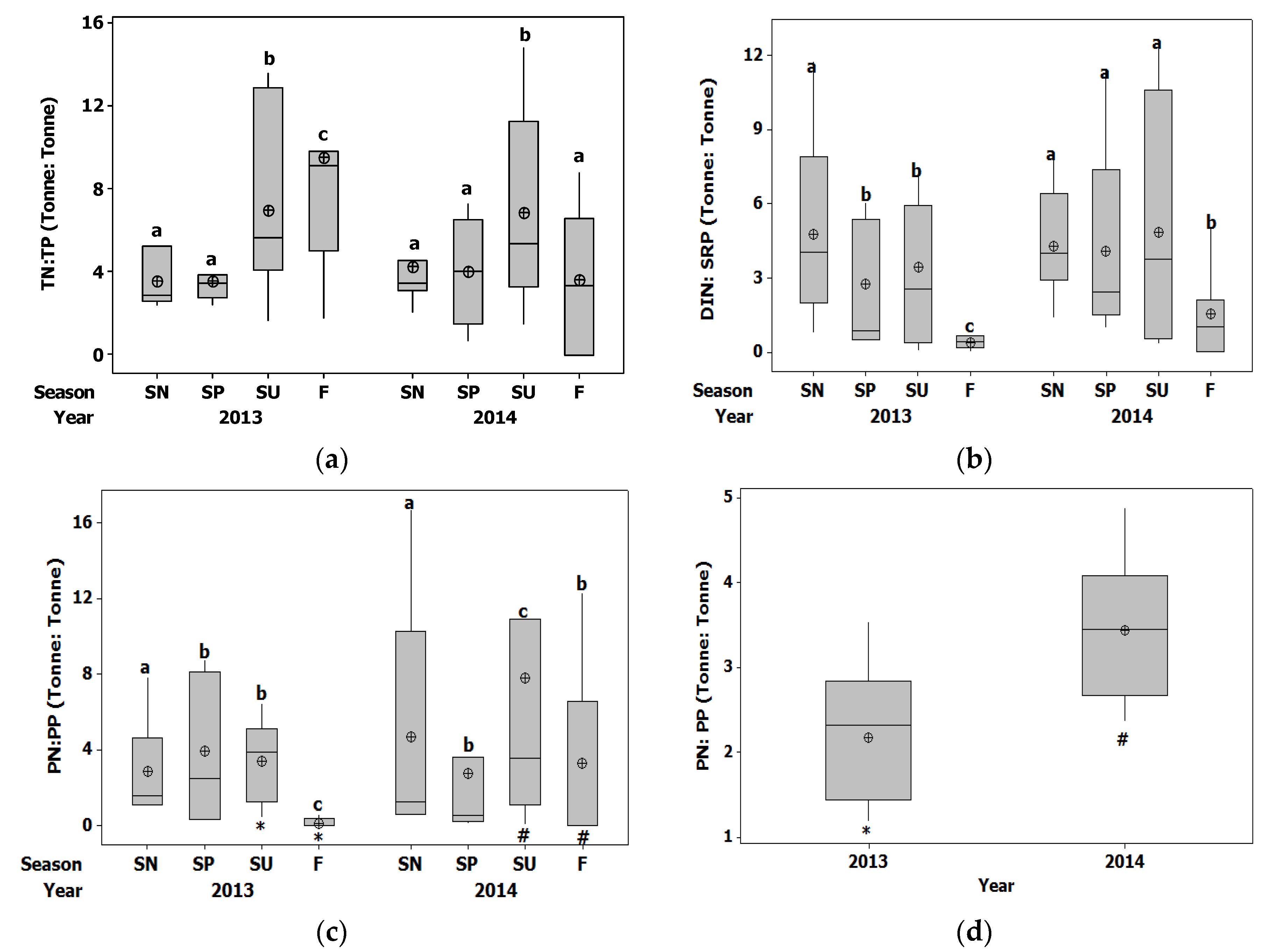
Riverine concentrations and loads of nitrogen (N) and phosphorus (P), in both dissolved and particulate fractions, are influenced by land cover and hydrologic variability. Previous studies on relationships between watershed characteristics and stream chemistry have focused on the response of individual N and P fractions. However, marine and lakes studies have shown the value of using individual nutrient fractions as well as nutrient ratios (e.g., N:P) to assess ecosystem condition. This study examined variation in total, dissolved, and particulate N:P ratios in response to changes in crop cover and hydrologic variability in agricultural catchments in the Red River Basin, southern Manitoba, Canada. For both study years (2013 and 2014), discharge was greatest during snowmelt; however, flow ceased in early June 2013 due to lack of precipitation whereas discharge peaks were observed during summer and fall 2014 in response to persistent multi-day rain events. Despite hydrologic differences between the two years, total, dissolved, and particulate N:P concentration ratios did not differ (p > 0.05) between years (expressed as either annual or seasonal means) or vary with crop cover. In contrast, N:P load ratios were associated with watershed characteristics: total N:P and dissolved load ratios differed (p < 0.05) both seasonally and with extent of crop cover whereas particulate N:P load ratios differed (p < 0.05) among seasons and between years. These findings suggest that dissolved load ratios are more closely linked to land use activities whereas particulate load ratios are largely influenced by climate and discharge variability. Improved knowledge of dominant nutrient fractions and their transport pathways will assist in determining appropriate mitigation practices to reduce nutrient loads under a changing climate.
Keywords: eutrophication; contaminants; agriculture; nutrients; tributaires eutrophication; contaminants; agriculture; nutrients; tributaires