1. Introduction: The Media Ecosystem and the Need for Resilience
The current media ecosystem is characterized by unprecedented complexity, exposing information flows to the constant risk of misinformation and disinformation [
1,
2]. This phenomenon does not represent mere “background noise,” but a structural threat to liberal democracies. The logic of digital platforms [
3] favors the creation of what have been defined as filter bubbles [
4] and echo chambers, mechanisms that isolate individuals in self-referential information bubbles, making them more vulnerable to cognitive biases [
5] and a fragmented view of the public sphere [
6].
Faced with these challenges, part of the broader crisis of representation and the “democratic deficit” [
7,
8], the concept of democratic resilience becomes crucial. It is not simply a system’s capacity to withstand shocks, but its ability to adapt, learn, and strengthen itself [
9]. Cultivating it requires new proactive strategies that go beyond the simple deconstruction of fake news, focusing instead on the development of critical and participatory skills, as argued by decades of research on media education [
10,
11,
12]. Approaches such as “psychological inoculation” [
13] demonstrate the effectiveness of a proactive approach.
This contribution examines the role academic institutions can play in this process, acting as agents for the reconstruction of a deliberative public sphere [
14] and new forms of civic participation [
15,
16]. We propose an operational model in which the University, through European Cooperation Partnerships, activates applied research laboratories. These generate communication prototypes that act as catalysts for digital and media literacy [
17], transforming users into conscious producers within a “spreadable” media culture [
18]. The central thesis is that such an approach can trigger a process of virtuous isomorphism, promoting the diffusion of best practices that strengthen democracy.
2. Theoretical Framework
Building prototypes of democratic resilience requires a solid theoretical architecture. Our model is based on the integration of four conceptual pillars: institutional isomorphism, democratic resilience, and the MIL and DigComp 2.2 operational frameworks.
The first pillar is the theory of institutional isomorphism. Rooted in neo-institutionalist thought [
19], DiMaggio and Powell’s theory [
20] argues that organizations tend to become similar through coercive, mimetic, and normative mechanisms. We reinterpret the mimetic mechanism in a proactive key, proposing the concept of virtuous isomorphism wherein university laboratories create “successful prototypes” that other actors are incentivized to imitate due to their evident social effectiveness.
This process is functional to the second pillar, democratic resilience. As defined by Merkel and Lührmann [
9], resilience is a dynamic process the laboratories aim to strengthen by transforming students from passive consumers into critical content producers, acting on the community’s capacity to resist manipulation and participate constructively [
21,
22].
We utilize two frameworks. The third pillar is, in fact, UNESCO’s Media and Information Literacy (MIL) [
17], a holistic approach providing the pedagogical basis for developing a critical understanding of the media ecosystem [
12].
Finally, the fourth pillar is the Digital Competence Framework for Citizens (DigComp 2.2) [
23]. While MIL provides the vision, DigComp offers a detailed and measurable grid of competencies, ensuring recognition and transferability.
3. Research Methodology
To investigate the proposed model, a mixed-methods research design was adopted, an approach integrating qualitative depth with quantitative breadth [
24]. The research is articulated around the analysis of two emblematic case studies.
3.1. The Case Studies: RespectNet and DigiFunCollab
The selected case studies are two European Erasmus+ KA2 Cooperation Partnership projects: RespectNet and DiGiFunCollab [
25,
26]. RespectNet laid the foundations for media literacy, while DiGiFunCollab represents a thematic scale-up on social entrepreneurship, offering a complementary view of the model. The latter builds upon the structural backbone of the former, which provides a multimedia competency matrix [
27] and an evaluation survey [
28] with the ultimate goal to foster a dialogue with civil society that is both scientifically rigorous and attentive to different targets and media. The true experimentation lay in applying the design framework to the social entrepreneurship sector reinforcing the approach and providing additional value to the previous findings.
The data presented refer to the applied research within the DiGiFunCollab Project.
3.2. Research Phases and Data Collection Tools
The research was structured in three phases:
Preliminary Phase (Ex-ante): Preparatory to intervention design, it included a context analysis carried out through focus groups with national stakeholders, and a desk analysis resulting in a National Report containing regulatory analysis, needs assessment, and SWOT analysis.
Implementation and Monitoring Phase: This concerned the production of digital modules for course delivery, an online course in self-learning mode with Certification and EU Badges, including mentoring specific training for further knowledge transfer, and university project works with digital outputs (video, pitch, business plan), followed by the public presentation of results.
Evaluation Phase (Ex-post): The quantitative phase was based on a set of predefined indicators (number of participants, certifications, projects developed, recognition, engagement levels). The qualitative phase utilized a post-event questionnaire administered at the end of the final Multiplier Event.
4. Results and Discussion
Data analysis yielded significant results confirming the validity of the model.
4.1. Quantitative Impact: Participation, Production, and Recognition
As shown in
Table 1, quantitative data reveal a tangible impact. Among the four participating countries, the high level of engagement recorded suggests the creation of active communities of practice and encourages further scaling of the research framework to other areas, as well as further strengthening moments of inter-institutional dialogue with stakeholders to favor placement, match supply and demand in the labor market, and create concrete start-ups based on the project works designed during the course.
4.2. Qualitative Transformation: From Passive Users to Conscious Creators
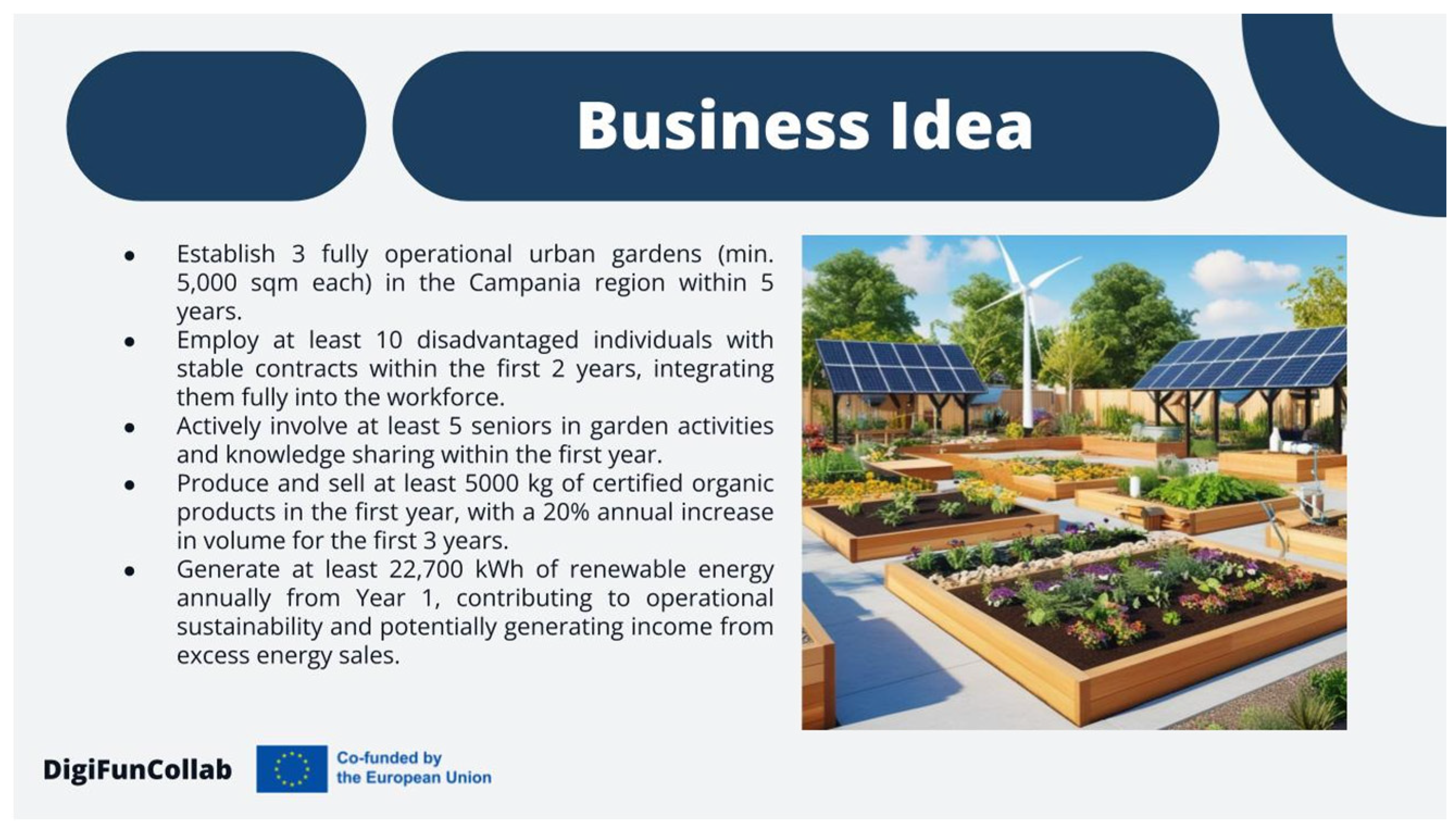
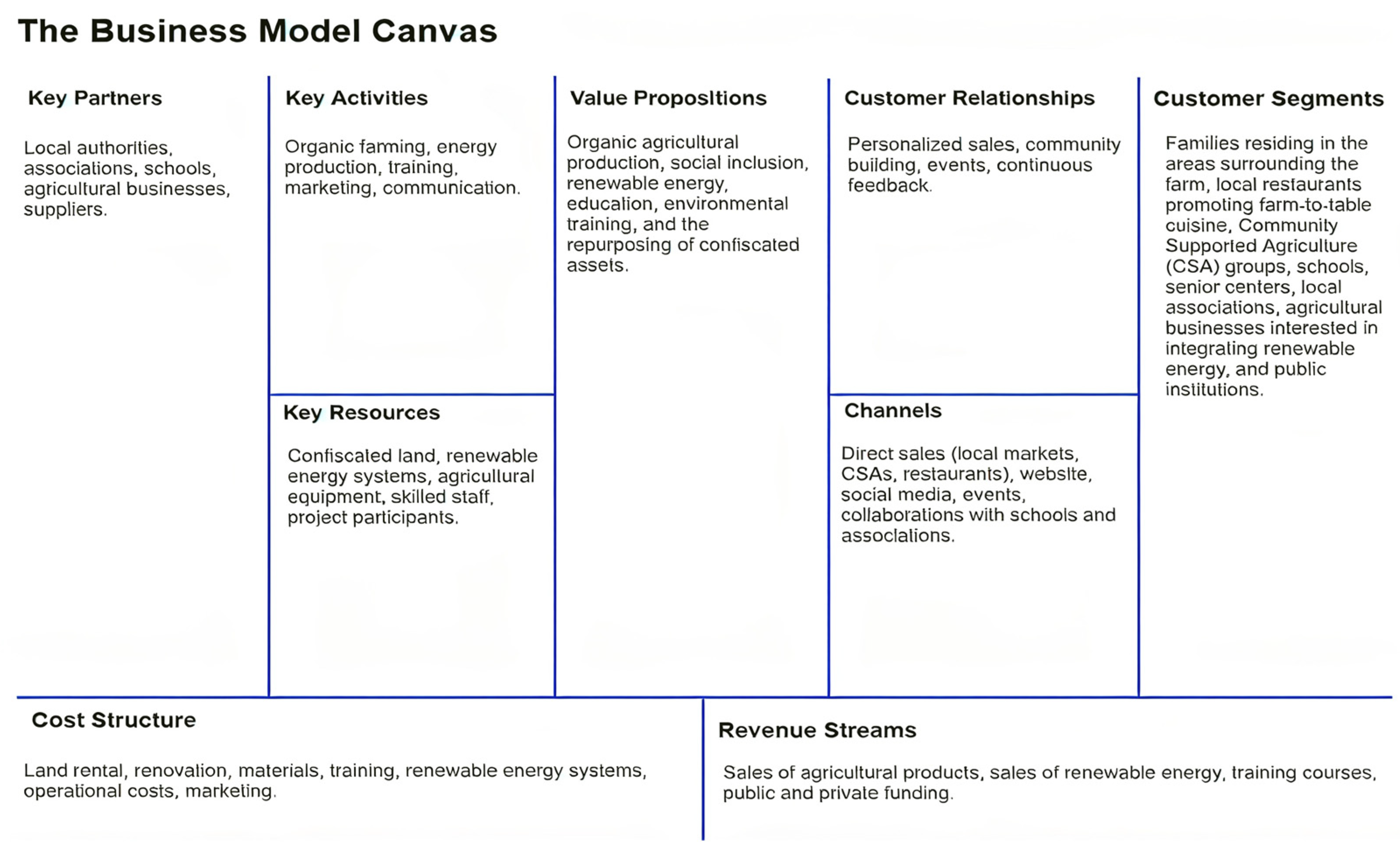
Beyond the numbers, the deepest results emerge from the qualitative analysis. The digital prototypes created by students reveal mature critical competence, as per
Figure 1,
Figure 2 and
Figure 3.
This transformation from passive users to conscious creators is the core of our result. Through the practice of content creation, students internalize the mechanisms of effective communication, developing a rich set of crucial transversal skills: from critical thinking and problem-solving to teamwork and project management, through to communication and entrepreneurship skills. This process embodies the essence of Media and Information Literacy [
17] and develops key competencies of the DigComp 2.2 framework [
23].
4.3. Triggering Virtuous Isomorphism and Strengthening Democratic Resilience
Data collected during the Multiplier Events provide evidence of the triggering of a virtuous isomorphism. External stakeholders showed strong interest in replicating the experience, confirming DiMaggio and Powell’s hypothesis [
20] regarding imitation under conditions of uncertainty. The imitative diffusion of these practices represents a tangible contribution to democratic resilience [
9]. Our model, therefore, does not act only at the individual level (micro), but triggers a change at the system level (meso and macro). The project also systematized research outcomes into a policy recommendations document [
29], which is useful for the design of public and private interventions by stakeholders and policy makers to favor the convergence of interests and strengthen civil partnerships.
5. Conclusions: Cooperation Partnerships as Laboratories of Democratic Resilience
In conclusion, this article has validated an operational model in which the University, acting through transnational Cooperation Partnerships, transforms into a permanent laboratory of applied research for democratic resilience.
The main element of originality and added value of our work lies precisely in the strategic use of the Cooperation Partnership framework. These instruments are reconfigured as social innovation ecosystems, offering a unique context in which research co-creates reality together with diverse stakeholders, where students develop not only technical skills but a wide range of soft skills, from teamwork to public speaking, essential for active citizenship and employability. This transnational dimension allows for constant comparison between different cultural contexts, enriching the analysis and ensuring that the developed “prototypes” are robust, adaptable, and scalable.
The implications of this study are manifold. Practically, the model offers a blueprint for designing effective media literacy interventions. Theoretically, the contribution enriches the literature on democratic resilience with a proactive approach and the notion of “virtuous isomorphism.”
Despite the limitations of a study restricted to two projects, this work demonstrates that universities can and must be central actors in building democratic resilience. Through applied research mediated by Cooperation Partnerships, the Academy can strengthen the democratic capacity of communities, confirming Visual Education as a strategic tool to face the challenges of our time.
Author Contributions
Conceptualization, A.S. and M.C.; methodology, A.S. and M.C.; validation, A.S. and M.C.; formal analysis, A.S.; investigation, A.S.; resources, A.S. and M.C.; data curation, A.S.; writing—original draft preparation, A.S.; writing—review and editing, A.S. and M.C.; visualization, A.S.; supervision, M.C.; project administration, A.S. and M.C.; funding acquisition (only for the study), M.C. All authors have read and agreed to the published version of the manuscript.
Funding
This research received no external funding for its publication. The study was conducted within the framework of the Erasmus+ project “DigiFunCollab” (Grant Number 2023-1-IT02-KA220-HED-000158730).
Institutional Review Board Statement
The study was conducted in accordance with the Declaration of Helsinki. Ethical review and approval were waived for this study because it involved standard educational evaluation activities and the monitoring of project outputs and did not involve medical or sensitive personal information. Participation was voluntary, integrated into the learning pathways, and all data were collected and processed in an anonymized form without the collection of sensitive personal data, in full compliance with GDPR regulations.
Informed Consent Statement
Informed consent was obtained from all subjects involved in the study in the form of information provided prior to participation. Formal written informed consent was waived due to the study’s nature as an anonymous educational assessment and project monitoring activity. All participants were informed that their activities within the project framework would be evaluated for dissemination purposes in an aggregated and anonymized form.
Data Availability Statement
Conflicts of Interest
The authors declare no conflicts of interest. The authors were members of the research team for the Erasmus+ Project “DigiFunCollab” cited in this study. The project data were used for independent academic analysis and the funding body of the study had no role in the design of the present research, in the collection, analyses, or interpretation of data, in the writing of the manuscript, or in the decision to publish the results. This article is the English improved version of a paper entitled “Prototipi di resilienza democratica: Isomorfismo virtuoso e laboratori di ricerca applicata”, presented at the Visual Education ASTERA 2025 Conference (Bari, Italy, 2 October 2025) and published in the local Italian proceedings (Book of Abstracts, ISBN 979-12-985275-8-4; Proceedings ISBN 979-12-985275-9-1). This submission is intended for international dissemination and the conference organizers are aware of and promoted the publication of the conference results in English for the international scientific community.
References
- Lewandowsky, S.; Ecker, U.K.H.; Cook, J. Beyond misinformation: Understanding and coping with the “post-truth” era. J. Appl. Res. Mem. Cogn. 2017, 6, 353–369. [Google Scholar] [CrossRef]
- Tucker, J.A.; Guess, A.; Barberá, P.; Vaccari, C.; Siegel, A.; Sanovich, S.; Stukal, D.; Nyhan, B. Social Media, Political Polarization, and Political Disinformation: A Review of the Scientific Literature; Hewlett Foundation: Menlo Park, CA, USA, 2018. [Google Scholar]
- Van Dijck, J.; Poell, T.; De Waal, M. The Platform Society: Public Values in a Connective World; Oxford University Press: Oxford, UK, 2018. [Google Scholar]
- Pariser, E. The Filter Bubble: How the New Personalized Web is Changing What We Read and How We Think; Penguin Press: New York, NY, USA, 2012. [Google Scholar]
- Kahneman, D. Thinking, Fast and Slow; Farrar, Straus and Giroux: New York, NY, USA, 2011. [Google Scholar]
- Sunstein, C.R. #Republic: Divided Democracy in the Age of Social Media; Princeton University Press: Princeton, NJ, USA, 2017. [Google Scholar]
- Diamond, L. In Search of Democracy; Routledge: London, UK, 2015. [Google Scholar]
- Norris, P. Democratic Deficit: Critical Citizens Revisited; Cambridge University Press: Cambridge, UK, 2011. [Google Scholar]
- Merkel, W.; Lührmann, A. Resilience of democracies: Responses to illiberal and authoritarian challenges. Democratization 2021, 28, 869–884. [Google Scholar] [CrossRef]
- Buckingham, D. The Media Education Manifesto; Polity Press: Cambridge, UK, 2019. [Google Scholar]
- Hobbs, R. Digital and Media Literacy: A Plan of Action; Aspen Institute: Washington, DC, USA, 2010. [Google Scholar]
- Livingstone, S. Media Literacy and the Challenge of New Information and Communication Technologies. Commun. Rev. 2004, 7, 3–14. [Google Scholar] [CrossRef]
- Roozenbeek, J.; van der Linden, S. The fake news game: Actively inoculating against misinformation. J. Risk Res. 2019, 22, 570–580. [Google Scholar] [CrossRef]
- Habermas, J. The Structural Transformation of the Public Sphere: An Inquiry into a Category of Bourgeois Society; MIT Press: Cambridge, MA, USA, 1989. [Google Scholar]
- Putnam, R.D. Bowling Alone: The Collapse and Revival of American Community; Simon & Schuster: New York, NY, USA, 2000. [Google Scholar]
- Bennett, W.L.; Segerberg, A. The Logic of Connective Action: Digital Media and the Personalization of Contentious Politics. Inf. Commun. Soc. 2012, 15, 739–768. [Google Scholar] [CrossRef]
- UNESCO. Media and Information Literacy Curriculum for Educators and Learners; UNESCO Publishing: Paris, France, 2021. [Google Scholar]
- Jenkins, H.; Ford, S.; Green, J. Spreadable Media: Creating Value and Meaning in a Networked Culture; New York University Press: New York, NY, USA, 2013. [Google Scholar]
- Meyer, J.W.; Rowan, B. Institutionalized Organizations: Formal Structure as Myth and Ceremony. Am. J. Sociol. 1977, 83, 340–363. [Google Scholar] [CrossRef] [PubMed]
- DiMaggio, P.J.; Powell, W.W. The Iron Cage Revisited: Institutional Isomorphism and Collective Rationality in Organizational Fields. Am. Sociol. Rev. 1983, 48, 147–160. [Google Scholar] [CrossRef]
- Castells, M. Networks of Outrage and Hope: Social Movements in the Internet Age; Polity Press: Cambridge, UK, 2012. [Google Scholar]
- Zuckerman, E. Rewire: Digital Cosmopolitans in the Age of Connection; W. W. Norton & Company: New York, NY, USA, 2013. [Google Scholar]
- Vuorikari, R.; Kluzer, S.; Punie, Y. DigComp 2.2: The Digital Competence Framework for Citizens; Publications Office of the European Union: Luxembourg, 2022. [Google Scholar]
- Creswell, J.W.; Plano Clark, V.L. Designing and Conducting Mixed Methods Research; SAGE Publications: Los Angeles, CA, USA, 2017. [Google Scholar]
- RespectNET. Available online: https://respectnet.eu/ (accessed on 1 March 2025).
- DIGIFUN. Available online: https://digifuncollab.eu/ (accessed on 1 March 2025).
- RespectNET. Matrix of Competencies. Available online: https://respectnet.eu/matrix-of-competencies/ (accessed on 1 March 2025).
- RespectNET. Competency Matrix Survey. Available online: https://surveys.elearningproject.eu/respectnet-competency-matrix/ (accessed on 1 March 2025).
- DIGIFUN. Policy Recommendations. Available online: https://digifuncollab.eu/policy-recommendations/ (accessed on 1 March 2025).
| Disclaimer/Publisher’s Note: The statements, opinions and data contained in all publications are solely those of the individual author(s) and contributor(s) and not of MDPI and/or the editor(s). MDPI and/or the editor(s) disclaim responsibility for any injury to people or property resulting from any ideas, methods, instructions or products referred to in the content. |