Article

Preliminary Evaluation of Sustainable Treatment of Landfill Leachate Using Phosphate Washing Sludge for Green Spaces Irrigation and Nitrogen Recovery

Laboratory of Pharmacology, Neurobiology, Anthropobiology and Environment, Faculty of Sciences Semlalia, Cadi Ayyad University, Marrakech 40000, Morocco
*
Author to whom correspondence should be addressed.
Nitrogen 2025, 6(4), 113; https://doi.org/10.3390/nitrogen6040113

Submission received: 15 October 2025 / Revised: 20 November 2025 / Accepted: 8 December 2025 / Published: 11 December 2025

Abstract

Water scarcity is an increasingly critical global issue, particularly in arid regions like Morocco. Innovative approaches, such as the use of alternative water sources like landfill leachate, offer promising solutions. In this study, phosphate washing sludge was used to treat landfill leachate with the aim of producing irrigation-quality water and recovering nitrogen from the resulting sediment. A total of 40 L of raw leachate was treated with three concentrations of phosphate washing sludge (25%, 37%, and 50%). This volume was processed at the laboratory scale as a proof of concept for potential larger-scale applications. After 24 to 36 h of mixing and agitation, the mixture underwent sedimentation, yielding clear supernatants and nitrogen-rich sludge pellets. These pellets showed a significant increase in organic matter content, from 6.4% to 13.5%, representing an enhancement of 110.9%, thus demonstrating partial leachate depollution and organic matter enrichment. Microbiological analyses revealed a 98.9% reduction in fecal streptococci. The supernatants met irrigation water standards in terms of pH and electrical conductivity, and phytotoxicity tests on maize seeds confirmed their suitability for irrigation. Additionally, the recovered nitrogen-rich sediment presents a valuable input for composting and soil amendment.

1. Introduction

Unprecedented rates of urbanization and worldwide consumption will produce ever-increasing amounts of municipal solid waste (MSW). According to UNEP’s Global Waste Management Outlook 2024, if things go unchecked, MSW volumes will rise from 2.3 billion tons in 2023 to almost 3.8 billion tons by 2050. This boom in waste generation has huge environmental consequences; not only does it lead to the waste of land and increase emissions, but, together with production, it can cause more landfills to seep leachate, a hazardous liquid generated from decomposing waste, enriched with dissolved and suspended pollutants [1]. The development of new nitrogen-removal systems demonstrates an increasing focus on environmentally friendly, low-energy treatment methods, including anaerobic ammonium oxidation (anammox), which reduces oxygen requirements, waste generation, and operational expenses in industrial wastewater management [2]. More recently, the scientific community has come to view leachate as a global pollutant problem that is no longer simply a waste problem localized to a specific region of Earth. Leachate presents as a continuous source of ammonia and heavy metals, per- and polyfluoroalkyl substances (PFASs), pharmaceuticals, and microplastics, as well as other compounds associated with climate change. Leachate contaminants remain embedded in the environment and freely travel through groundwater and surface water systems, posing prolonged threats to ecosystems and human health [3]. The leachate from the Bandhwari landfill located near Gurugram, India, has contaminated the area and created toxic black water, which fouled significant aquifers in this important ecological region [4]. The environmental and social crisis of leachate disposal at landfills demands an immediate interdisciplinary response, as the problem is not purely technical in nature. Leachate containing these pollutants from landfills creates various environmental problems with diverse sources. Due to extensive garbage disposal, liquid pollution from landfills consists of a plethora of hazardous substances that originate from the numerous wastes disposed of in the waste system. The mix of contaminants found in leachate is based on what is in the landfill, its age, and the way in which management was conducted, which means that they contain ammonium, chloride, sulfate, heavy metals, organic compounds, pharmaceuticals, microplastics, and PFAS compounds that are not biodegradable [5,6]. High concentrations of ammonium found in young leachate lead to soil quality and groundwater contamination and make ecosystems less capable of biocapitalization. The danger becomes even more apparent when hazardous heavy metals are involved. Acidic as well as oxygen-deficient soil conditions in landfills lead to the mobile development of heavy metals, which causes environmental pollution affecting food chains and microbes, and affects soil fertility [7,8]. Microplastics have begun to appear in leachate and in ocean waters, and they are causing as much concern among scientists. Plastic fragments created from nylon, polypropylene, and polystyrene become contaminants in young landfills that act as substance carriers, harming fish, mammals, and human food sources [9]. It is increasingly recognized that modern landfills are also sources of new contaminants such as antibiotics, drug residues, and genes that promote antibiotic resistance. These chemicals have important biological properties that can damage microbial communities, cannot be eliminated easily, and may be a factor in the worldwide response to the antimicrobial resistance epidemic, even at low concentrations [10]. Leachate from landfills, as a whole, should be called more than a waste disposal by-product. Leachate composition changes over time, affected by various parameters, including the age of the landfill, the nature of the waste products, the climate, and the presence of microbes in the region. Most scientists agree that leachate can generally be classified into three types: young (less than 5 years old), intermediate (5 to 10 years), and stabilized (over 10 years), which together constitute the most common leachate categories [11,12]. Each stage has its own fingerprint. Young leachates tend to be acidic, with a relatively large fraction of biodegradable organic matter and very high chemical oxygen demand (COD) and biochemical oxygen demand (BOD5) values. Over time, the leachate becomes more difficult to treat, more mineralized, and less biodegradable [13]. Other studies in Africa and Southeast Asia highlight that salinity levels, conductivity, and the Leachate Pollution Index (LPI)–a composite numerical indicator that integrates multiple physicochemical parameters to quantify the overall pollution potential of landfill leachate–are usually high in some areas, particularly in arid regions [14,15]. Common biological treatments, such as lagoons or activated-sludge systems, are available, less expensive, and simpler than those currently in use. However, their efficiency depends strongly on the age and characteristics of the leachate. Such approaches are effective for young leachates containing large amounts of biodegradable organics. With increasing land-fill age and higher chemical stability, biological systems lose effectiveness [16,17]. Physicochemical-based processes—such as coagulation-flocculation or Fenton oxidation are faster and can react with a wider array of pollutants but have disadvantages: They are expensive, require specific conditions, and produce large quantities of sludge requiring independent disposal. Membrane filtration methods such as nanofiltration or reverse osmosis can achieve considerable removal; however, they are energy-intensive, prone to fouling, and produce concentrated reject streams rich in salts, ammonium, heavy metals, and organic contaminants. Safe management of these concentrates remains problematic, especially in regions where landfill infrastructure is limited [18]. Conversely, advanced oxidation processes (AOPs), including ozonation or UV/H2O2, are also applied to remove persistent organic pollutants. Although these technologies can be efficient, their high cost and operational complexity prevent their application beyond research contexts [19]. Handling landfill leachate is not only technically challenging, but it is also often cost-prohibitive. Most traditional treatment techniques, while effective, are energy-intensive and require continuous technical monitoring. For many regions, especially those most affected by landfill pollution, such infrastructure is simply not available. In our laboratory, previous research investigated the use of phosphate washing sludge (PWS), a typical by-product of the phosphate industry that is usually disposed of in landfills. It tested its potential in composting leachate from landfills. The findings were encouraging: It contributed to enhancing the microbial safety of the compost and improving its organic matter content and quality [20]. PWS, often perceived as a disposable byproduct of phosphate beneficiation, is in fact a resource with profound unexplored potential. Produced following the extraction of phosphates by washing with water, it is generated in large quantities, particularly in countries like Morocco, home to some of the world’s richest phosphate reserves. This waste is primarily made up of fine clay grains, calcium carbonate, and remnants of phosphate minerals. According to Haouas et al., phosphate-washing sludge typically contains around 20% P2O5 on a dry-weight basis [21]. Instead of being discarded, this nutrient-rich composition makes it potentially useful for environmental applications. Its natural alkalinity and high calcium content allow it to sequester and detoxify pollutants [21]. This dual functionality—pollutant removal and nutrient recovery—presents a sustainable, low-cost solution in a world increasingly seeking to close the loop on waste. What was once viewed as an industrial residue is now being refashioned as a potentially valuable resource for the circular economy [22]. The methodology adopted in this study was largely inspired by our previous work on the treatment of landfill leachate using sugar lime sludge (SLS) [23]. In that study, we demonstrated the effectiveness of sugar industry waste in reducing the organic and microbial load of landfill leachate while also enhancing nutrient recovery during composting. Building on this validated protocol, we applied a similar experimental design—this time replacing sugar lime sludge with phosphate washing sludge. This approach allows for a direct comparison of the performance of both materials under comparable conditions of concentration, treatment time, and subsequent valorization through irrigation and composting. Thus, the aim of the current study is to explore the potential of phosphate washing sludge (PWS), an abundant by-product of the phosphate industry, in the treatment and valorization of landfill leachate. Extending our work with sugar lime sludge, the present study focuses on: (i) assessing the ability of PWS to enhance the physicochemical and microbiological quality of landfill leachate for its potential reuse in the irrigation of green spaces; (ii) evaluating phytotoxicity reduction via germination bioassays; and (iii) enabling nutrients, mainly nitrogen, to be recovered by composting the sediment fraction with green waste. Whereas our previous work related solely to residues from the sugar industry, this study offers a window into previously uninvestigated phosphate washing sludge potential, linking pollution control to circular-economy objectives and playing a role in sustainable waste and water management in Morocco.

2. Materials and Methods

2.1. Materials: Characterization of Phosphate-Washing Sludge and Leachate

The materials used in this study included phosphate-washing sludge (PWS) and raw leachate (L), both collected in Morocco. The phosphate-washing sludge was obtained from a local phosphate-washing plant. This by-product, generated during the wet processing of phosphate ores, is fine, alkaline, and rich in calcium and other trace minerals.
The leachate was collected from the Marrakech municipal landfill in February 2024.

2.2. Methods

2.2.1. Treatment Procedure

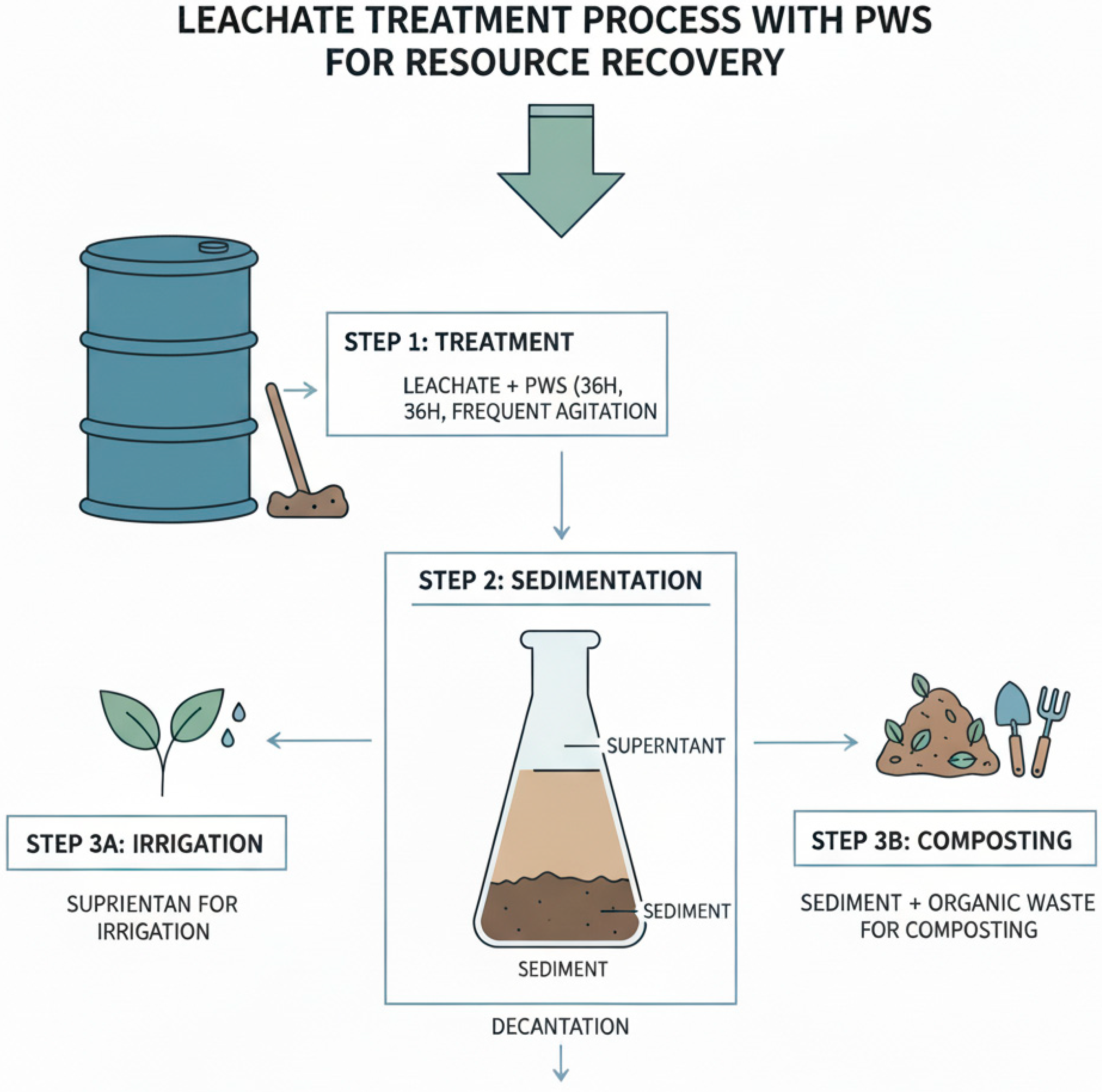
Three concentrations of phosphate washing sludge were tested: 25%, 37%, and 50% (w/v). A proportion of 25% was considered a lower practical limit, sufficient to highlight treatment effects while maintaining good composting conditions. The upper boundary of 50% was selected to maximize sludge contribution without negatively affecting compost texture, color, or overall quality. The intermediate concentration of 37% was included to observe potential variations between these two extremes. This range provided enough compost material, ensured adequate coverage, and preserved its desirable physical and visual properties for subsequent use. Each concentration was added to 40 L plastic barrels containing the landfill leachate. The mixtures were stirred manually for 5 min every hour over a 24–36 h period to ensure proper contact. After treatment, the mixtures were left to settle naturally for 48 h. This resulted in the formation of two distinct phases: a supernatant, intended for irrigation testing, and a sediment, which was further composted with green waste.

2.2.2. Bacteriological Analyses

Bacteriological assessments were conducted on both raw and treated leachate samples, following the ISO 6887-1 protocol for dilution preparation. The analyses focused on several microbial indicators using standardized methods:
  • Total Aerobic Mesophilic Flora (TAMF) was measured according to ISO 4833, using Plate Count Agar (Biokar Diagnostics, Allone, France) and incubated at 30 °C for 72 h.
  • Fecal Streptococci were determined following ISO 7899-2 using BEA agar (Biokar Diagnostics, Allone, France),
  • Total and Fecal Coliforms were analyzed using NF ISO 9308-1, applying lactose agar supplemented with tergitol 7 and TTC (Biokar Diagnostics, Allone, France).
Each test was performed in three replicates, and the results were expressed in colony-forming units per milliliter (CFU/mL).

2.2.3. Phytotoxicity Test

Phytotoxicity was evaluated using the Zucconi test, which employs maize (Zea mays) seeds as bioindicators [24]. This test involves calculating the Germination Index (GI), which combines both the germination percentage and root elongation after a 7-day incubation period. The GI serves as a reliable indicator of the potential toxicity of the leachate and its suitability for irrigation or composting applications.
Germination percentage (G%), defined as the ratio of germinated seeds in the sample relative to the control, expressed as a percentage
G(%) = (Number of germinated seeds in sample/Number of germinated seeds in control) × 100
Germination Index (GI), a composite indicator that integrates both the germination percentage and root elongation relative to the control. It is calculated as follows [24]:
GI(%) = (G(%)/100 × Mean root length in sample/Mean root length in control) × 100.

2.2.4. Composting of the Sediment

The sediment from the best-performing treatment (determined by supernatant quality and microbial reduction) was mixed with green waste at a 1:2 ratio (W, PS) and composted for 90 days. Another windrow containing only green waste (W, GW) was used as a control. The compost was monitored for temperature, humidity, and total nitrogen recovery using the Kjeldahl method. Organic matter was analyzed by calcination at 600 °C.

2.2.5. Chemical Analyses and Suitability for Irrigation

The supernatant was analyzed for the following:
  • pH AFNOR NF ISO 10-390 (BioBase 900 multiparameter, Jinan, China);
  • Electrical conductivity (BioBase 900 multiparameter, Jinan, China);
  • Organic matter (OM) by calcination at 600 °C;
  • Total Kjeldahl Nitrogen (TKN): The five windrows were evaluated using conventional physicochemical parameters commonly monitored during composting. Moisture content was measured on 100 g of fresh material after oven-drying at 105 °C for 24 h, and pH was determined in a 1:10 (w/v) water extract. Organic matter (OM) was quantified by ignition at 650 °C for 6 h according to the AFNOR NF V18-101 (1988) standard, and total organic carbon (TOC) was calculated from OM according to the empirical equation:
TOC (%) = OM (%)/1.8
This conversion factor (1.8) is commonly used to estimate the carbon fraction of organic matter in compost and soils AFNOR NF U44-160. It assumes that organic matter contains approximately 55% organic carbon, providing a reliable estimate of TOC when direct measurement is not performed.
Total Kjeldahl nitrogen (TKN) and available phosphorus (P2O5) were analyzed using the Kjeldahl digestion method and the Olsen procedure. Heavy metal concentrations (Pb, Cu, Zn, Cr, As, Ni) were determined by Inductively Coupled Plasma Mass Spectrometry (ICP-MS) following ISO 17294-2. All measurements were performed in triplicate to ensure analytical accuracy.
  • Chemical Oxygen Demand (COD): COD was analyzed using the dichromate reflux method (APHA Standard Methods 5220D).
  • Biochemical Oxygen Demand (BOD5): BOD5 was determined by incubating samples at 20 °C for 5 days, and oxygen consumption was measured following APHA Standard Methods 5210B.

2.2.6. Statistical Analysis

Statistical analysis was performed using Jamovi 2.6.45 software. One-way ANOVA was applied to compare treatment groups. A Student’s t-test was used to assess differences between treated and raw leachate, with significance set at p < 0.05.

3. Results

3.1. Physico-Chemical Characteristics of Supernatants

3.1.1. pH Values After Leachate Treatment with Three Concentrations of Phosphate Washing Sludge

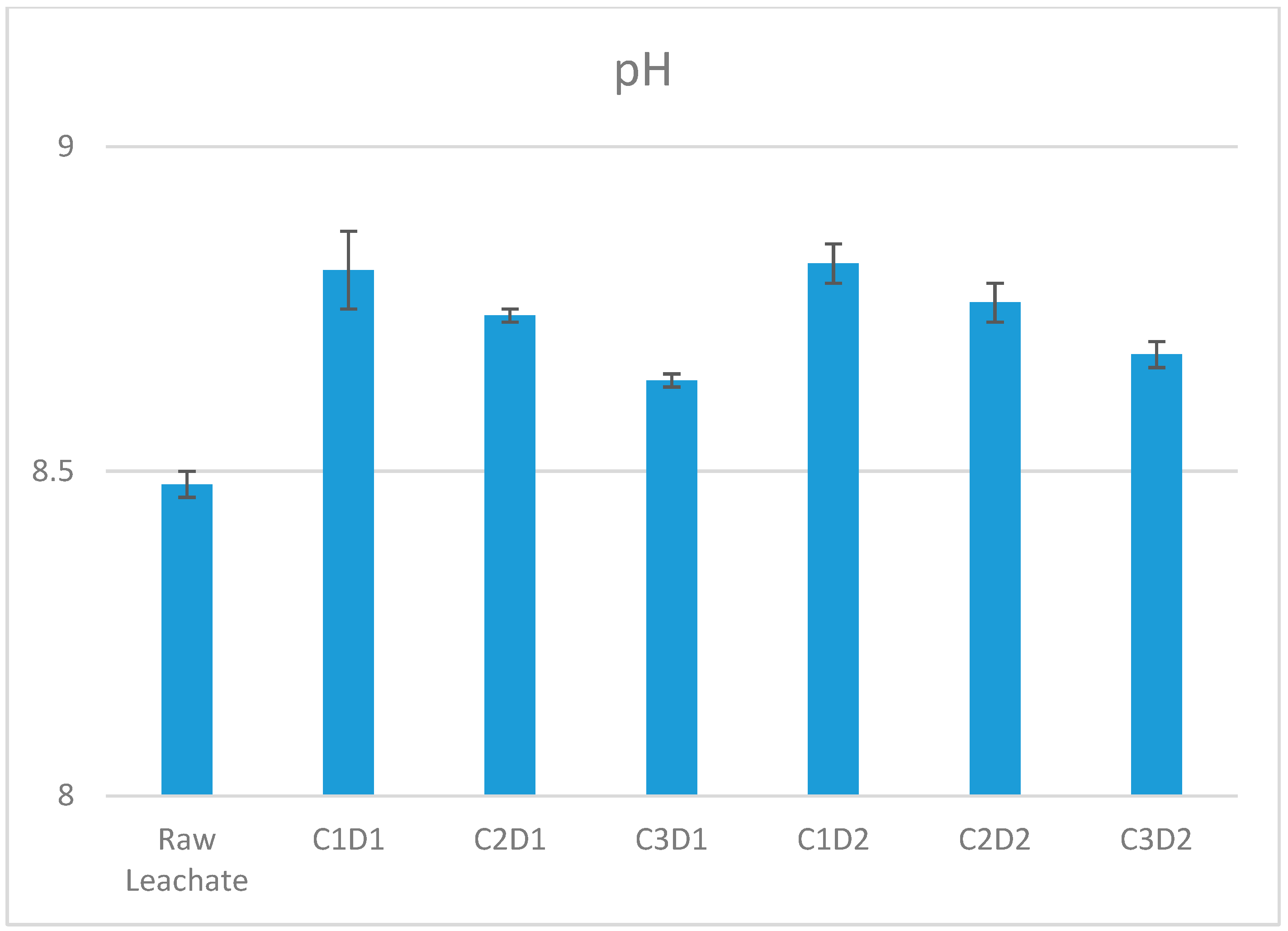
The raw leachate has a pH of 8.48, which is slightly alkaline, categorizing it as young leachate. The alkaline nature of phosphate-washing sludge, when added to the leachate, gives an alkaline supernatant with pH values ranging from 8.64 to 8.82 (Figure 1). These pH levels exceeded the upper limit set by the Moroccan standard for irrigation water (6.5–8.4). However, these values remain moderately alkaline and could be adjusted by dilution, making the use of such effluents feasible, particularly for green space irrigation.

3.1.2. Electrical Conductivity After Treatment with Phosphate Washing Sludge

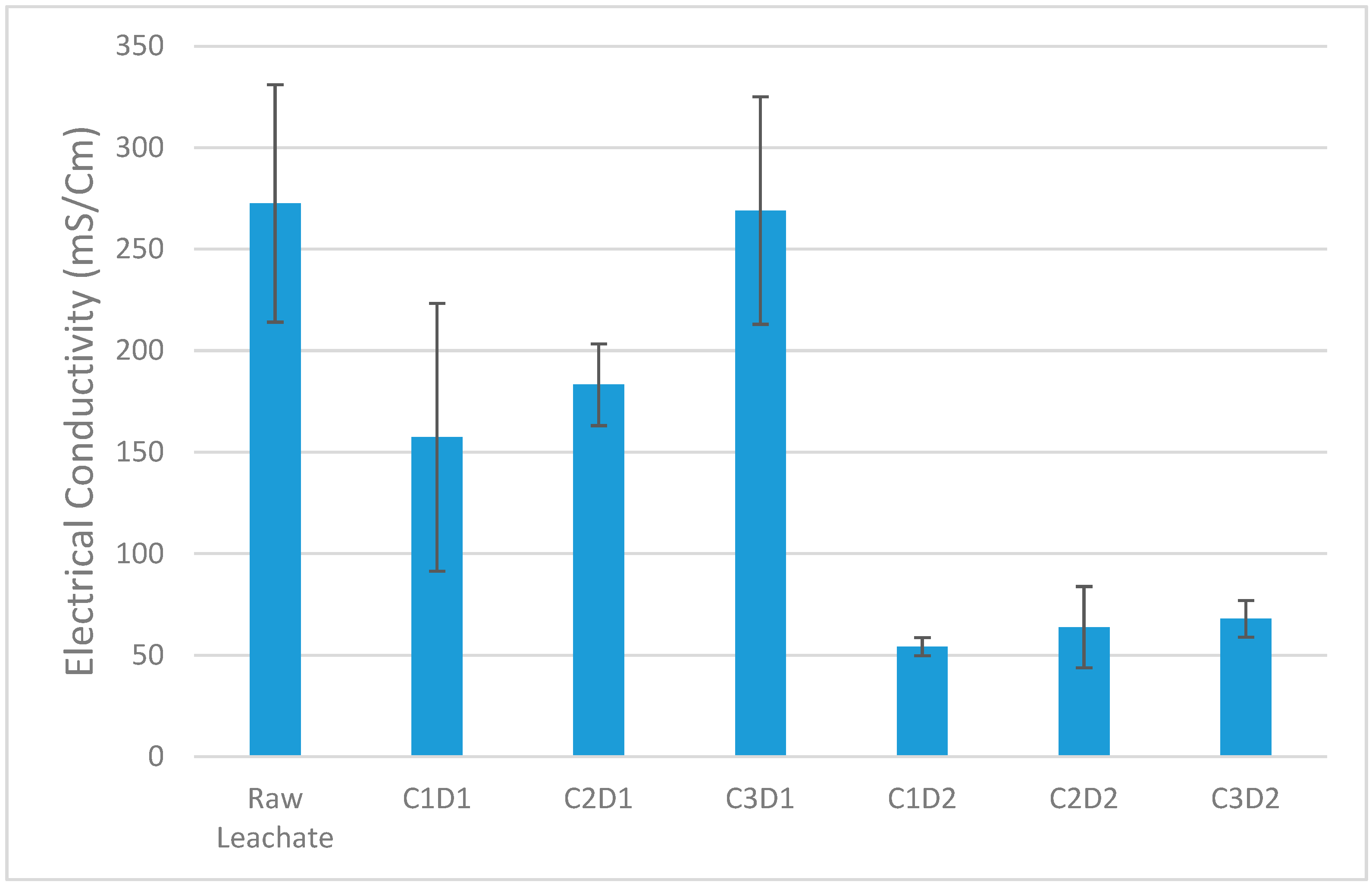
The raw leachate initially showed a very high electrical conductivity, with values approaching 270 mS/cm, reflecting its high ionic load and salinity—typical of untreated landfill effluent. After treatment with phosphate washing sludge (PWS), a notable decrease in conductivity was observed, particularly with longer contact durations. As shown in Figure 2, the electrical conductivity of the supernatants decreased progressively with increasing sludge concentrations and more significantly with extended contact times. The most substantial drop was observed in the C3D2 condition (50% PWS for 36 h), reaching approximately 66 mS/cm, representing a reduction of nearly 75% compared to the raw leachate. This improvement highlights the sludge’s ability to capture or bind certain soluble ions, possibly due to its calcium and magnesium content, which favors the precipitation of salts and suspended solids. However, despite this improvement, the resulting conductivity remains above the Moroccan standard for irrigation (12 mS/cm), indicating that further dilution may be necessary. Statistical analysis confirmed that the differences between treatments were highly significant (ANOVA, p < 0.001), confirming that both concentration and contact time are critical factors influencing conductivity reduction. The interaction between these two variables appears synergistic, with the highest efficiency obtained under the longest duration and the highest dose.

3.2. Organic Matter Content in the Sediment After Leachate Treatment

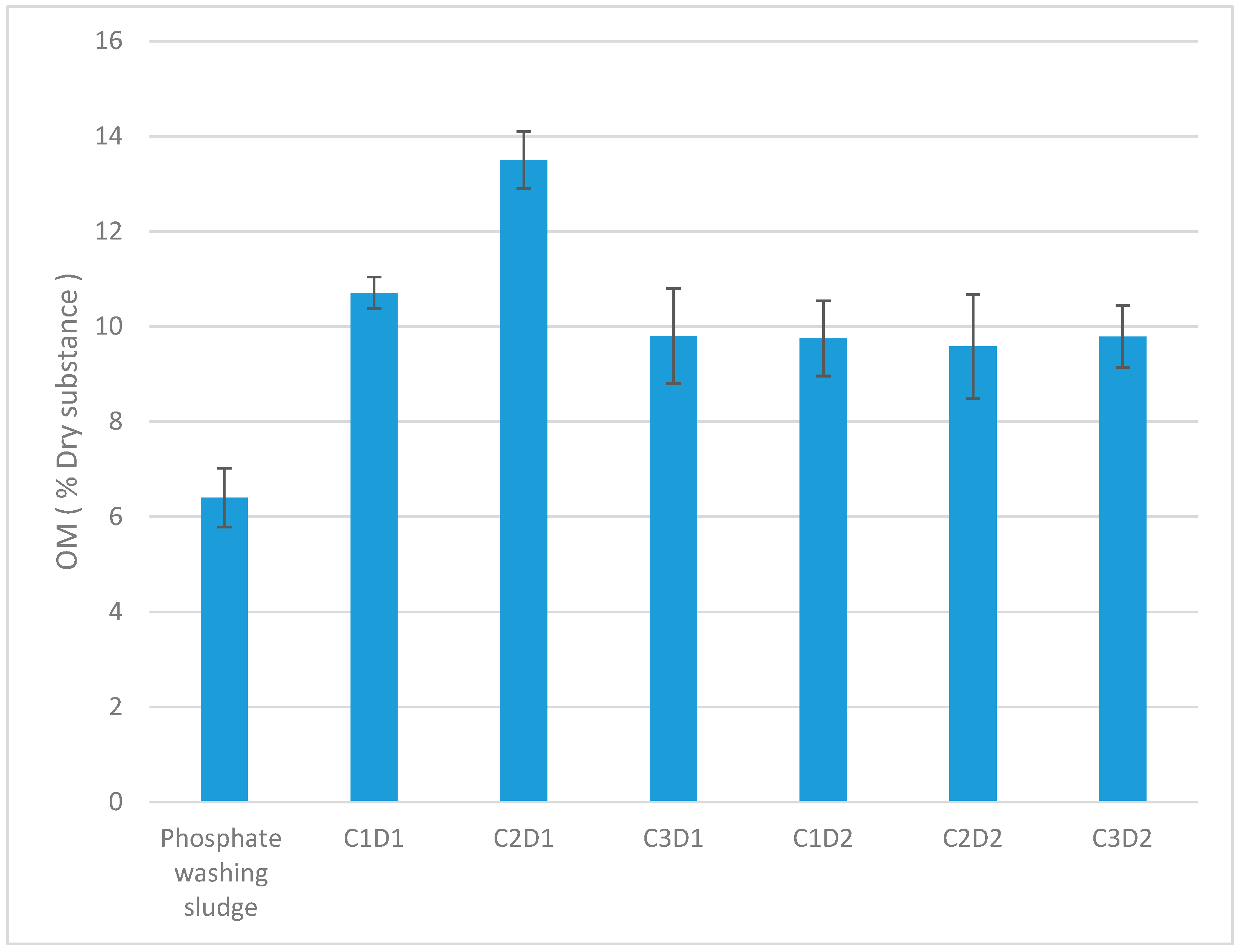
The percentage of organic matter (OM) in the sediment plays a crucial role in determining the depollution impact of phosphate sludge and also the suitability of the sediment for composting and resource recovery. As shown in Figure 3, the initial OM content of the phosphate washing sludge alone was relatively low (6.4% DS), which is expected given its mineral nature. However, once mixed with leachate, a clear improvement in OM retention was observed, especially under certain treatment conditions. The most notable increase occurred under the C2D1 condition (37% PWS, 24 h contact), where the OM content reached nearly 14%, more than doubling the initial value. This suggests that this intermediate concentration and duration favor the aggregation and sedimentation of organic particles.
Interestingly, treatments involving a longer contact time (36 h) did not necessarily yield higher OM in the sediment. In fact, most 36 h conditions (C1D2, C2D2, C3D2) stabilized around 9.8–10%, suggesting that prolonged exposure may promote partial solubilization or diffusion of organics back into the supernatant. This depollution process improves the quality of the supernatant by reducing its organic matter concentration, making it more suitable for reuse in irrigation.

3.3. Phytotoxicity Assessment of Treated Leachate for Irrigation Potential

3.3.1. Germination Percentage

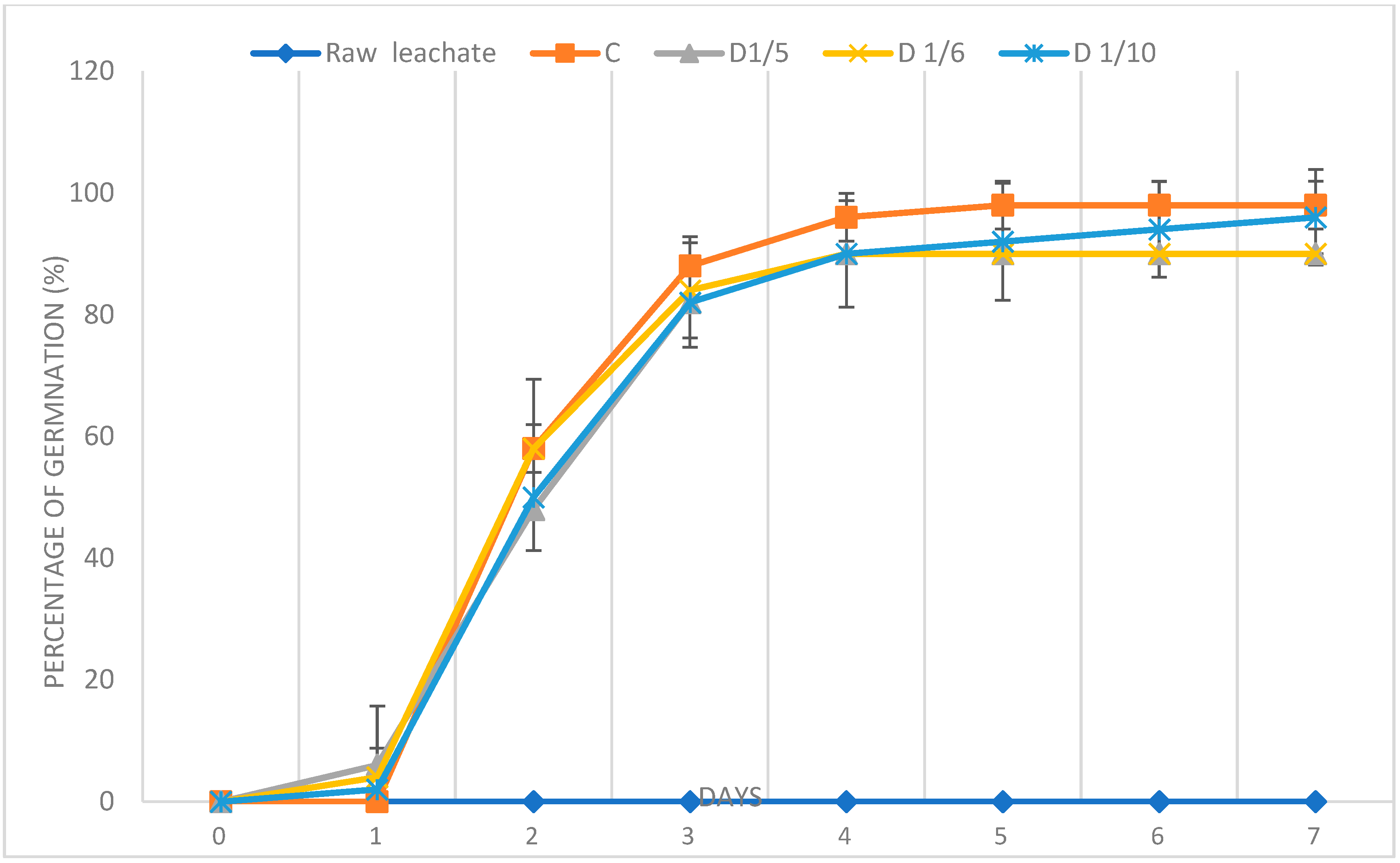
Seed germination tests are a sensitive bioindicator for evaluating the toxicity of treated leachate. As illustrated in Figure 4, the raw leachate exhibited complete inhibition of maize seed germination throughout the 7-day monitoring period, with a germination percentage remaining at 0%. This confirms the acute phytotoxic nature of untreated landfill leachate, likely due to its high salinity and presence of organic pollutants.
In contrast, leachates treated with phosphate-washing sludge showed a drastic improvement in seed germination rates, particularly after dilution. Among all treatments, the 1/5 and 1/6 dilutions achieved germination rates of about 90% by the end of the experiment, while the 1/10 dilution reached 96%. Although slightly lower than the control (98%), these values demonstrate that dilution of the treated leachate effectively eliminates phytotoxicity.

3.3.2. Germination Index

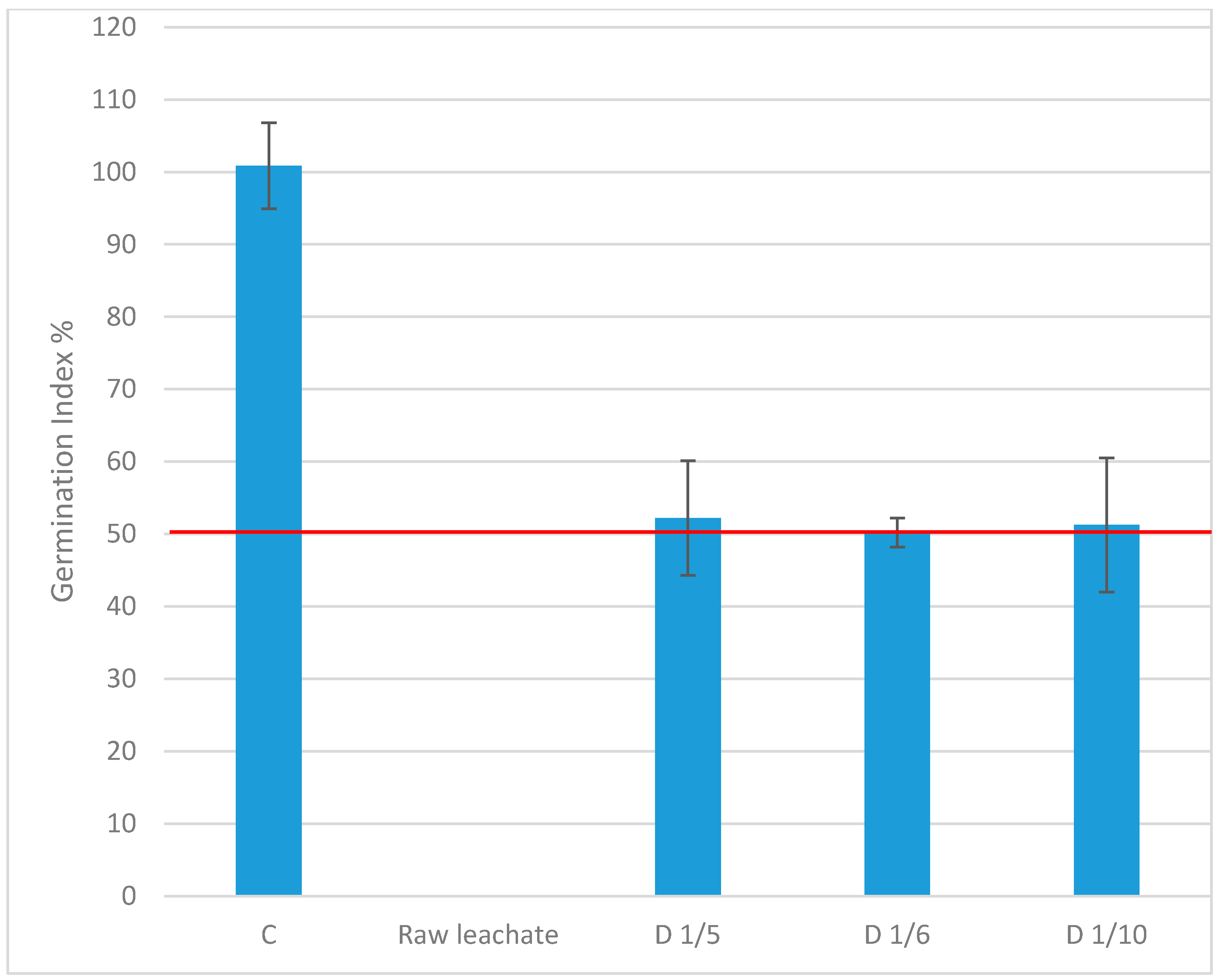
The Germination Index (GI) provides a more integrative view of phytotoxicity, as it combines both seed germination rate and root elongation. In this study, the raw landfill leachate clearly demonstrated severe phytotoxicity, with a GI close to 0%, confirming its toxic effect on plant development (Figure 5).
In contrast, leachates treated with phosphate-washing sludge showed a remarkable reduction in phytotoxicity. Although the GI values for the dilutions (1/5, 1/6, and 1/10) were slightly above the critical 50% threshold (as shown in red on the Figure 6), this still represents a substantial improvement compared to the untreated leachate. According to Zucconi’s criteria, a GI above 50% indicates a substrate that is no longer phytotoxic and can be considered moderately safe for reuse. Among all treatments, the 1/5 dilution yielded the highest GI (52.2%), closely followed by the 1/10 and 1/6 dilutions. While none of the treated leachates reached the performance of the control (distilled water, 100%), these results highlight the potential of phosphate sludge treatment to significantly detoxify leachate and make it safer for environmental reuse.
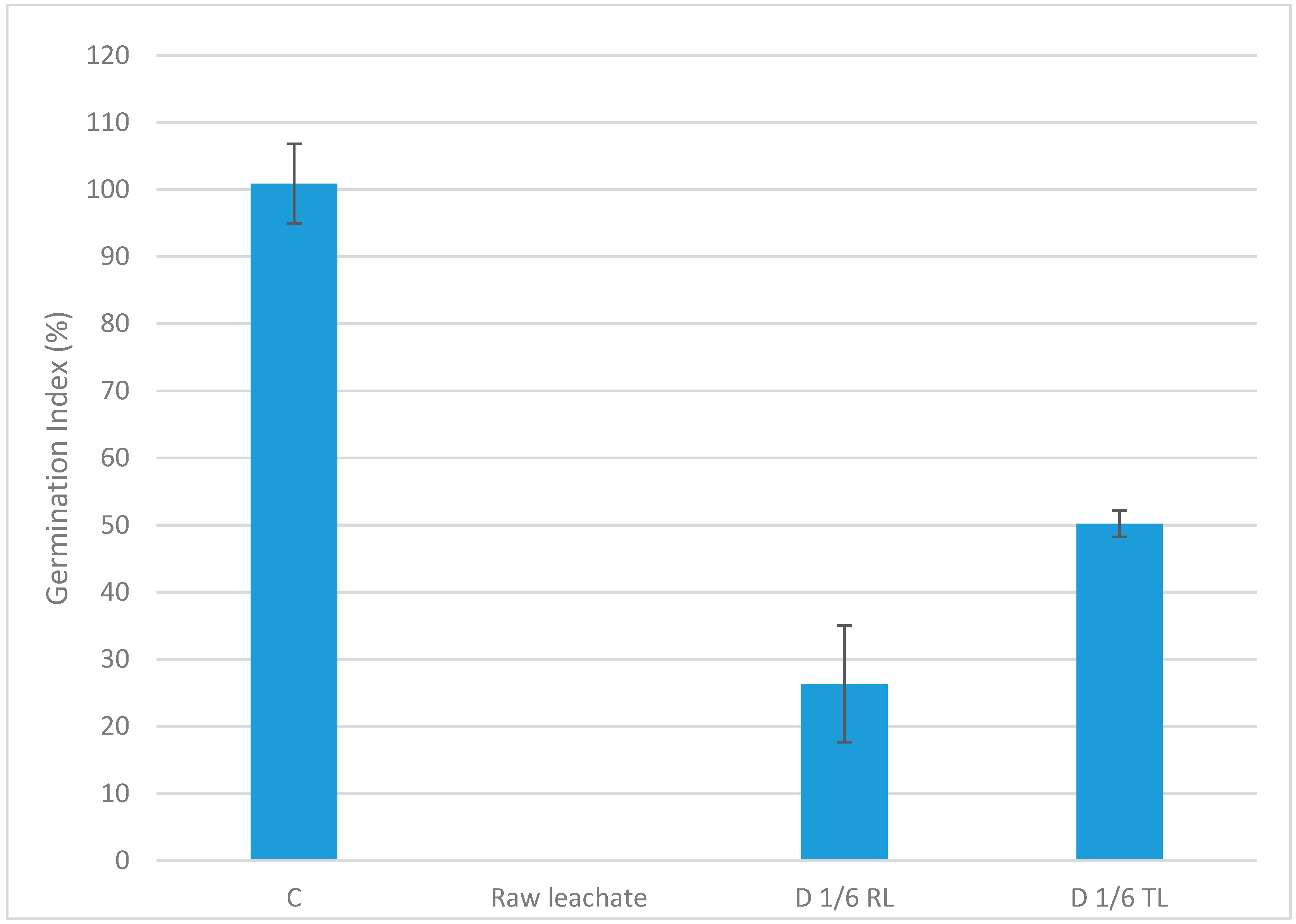
The germination test results offer a clear visual of the toxic load carried by raw leachate, which completely inhibited seed germination (GI = 0%). This aligns with the expectations, given its high salinity and organic load. The treatment is important: When the leachate is diluted but not treated (1/6 RL), only a partial recovery was observed, with a germination index of approximately 26.5%, confirming that dilution alone is not sufficient to ensure phytocompatibility (Figure 7). The treated and diluted leachate (1/6 TL) achieved a germination index close to 53%, surpassing the critical 50% threshold generally accepted as the minimum for non-phytotoxic materials.

3.4. Microbiological Findings

3.4.1. Raw Leachate

The microbiological analysis of the raw leachate revealed the exclusive presence of fecal streptococci, with an absence of both fecal and total coliforms (Table 3). This observation aligns with the findings of Mobaligh et al. [20], who studied leachate from the same landfill. The absence of coliforms may suggest that the environmental conditions in the leachate were not conducive to their survival or proliferation. However, the fecal streptococci count was significantly elevated, reaching 40,000 CFU/mL, which clearly points to fecal contamination and confirms that the untreated leachate poses a potential health risk, making it unsuitable for irrigation or any agricultural reuse. In addition, the mesophilic bacterial load was extremely elevated, with a concentration of approximately 1.67 × 10⁶ CFU/mL. These organisms, which thrive in moderate temperature ranges, reflect a high level of general microbial pollution in the leachate and are often used as indicators of overall sanitary quality.

3.4.2. Fecal Streptococci After Treatment with Phosphate-Washing Sludge

A clear decline in fecal streptococci levels was observed in all samples treated with phosphate-washing sludge compared to the raw leachate, which initially contained 40,000 CFU/mL (Table 4). The extent of reduction varied depending on the treatment conditions, ranging from 85.5% to 98.9%. A plausible explanation for the microbial removal is that the phosphate-washing sludge contains significant amounts of calcium hydroxide (or similar alkaline compounds), which raises the pH and releases hydroxyl ions, creating a strongly alkaline environment that disrupts bacterial membranes and metabolic processes. This mechanism has been demonstrated in sludge stabilization studies [25] and in agriculture barrier treatments [26]. The most effective treatment condition, represented by C1D2 (430 CFU/mL), achieved a 98.9% reduction in fecal streptococci. Even the least effective case, C1D1 (5800 CFU/mL), still reached a reduction rate of 85.5%, indicating that all treatments contributed significantly to the improvement of microbiological quality.
Overall, the treatment with phosphate washing sludge proved effective in reducing pathogenic indicators, although further optimization could enhance consistency across different treatment conditions.
A one-way analysis of variance (ANOVA) was performed to evaluate the significance of differences in fecal streptococci concentrations among the different treatment conditions with phosphate-washing sludge. The results revealed a highly significant difference between groups), indicating that the applied treatments had a statistically meaningful effect on bacterial load reduction. This confirms that the type and conditions of treatment, including sludge concentration and contact time, play a critical role in microbial removal efficiency.

3.5. Composting of Sediment with Green Waste

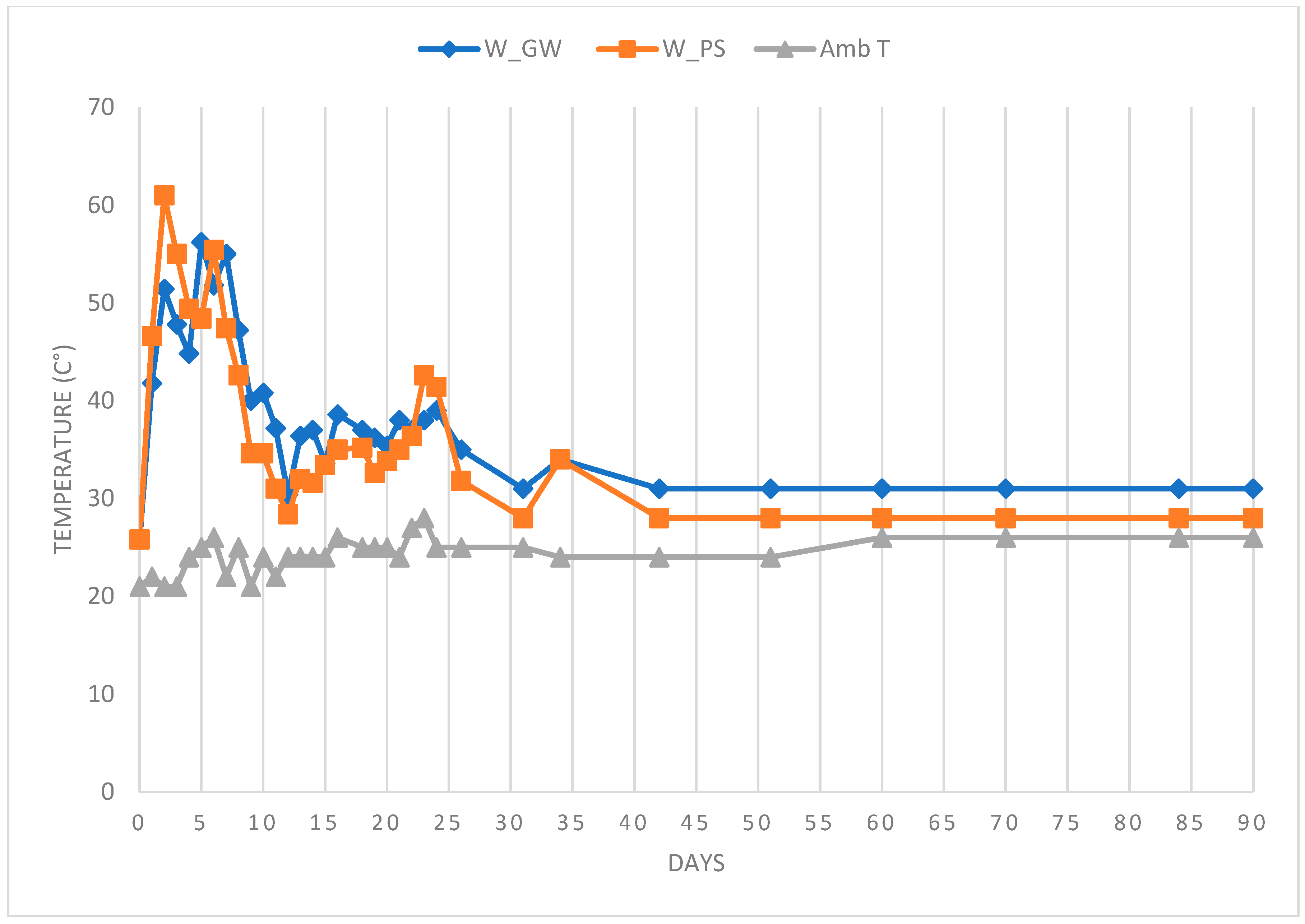
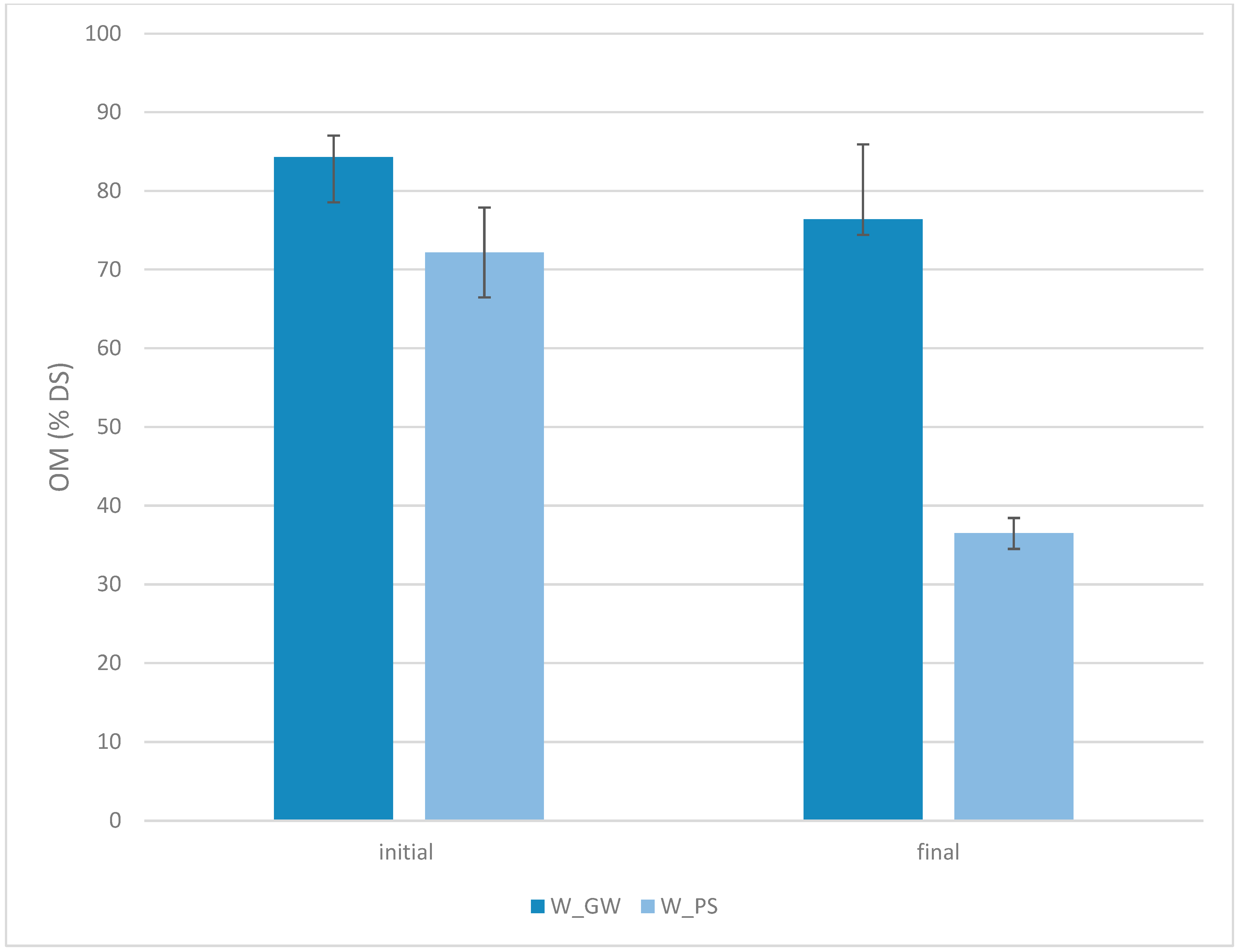
The composting process was closely monitored and followed a dynamic that reflects a well-functioning biological degradation. The temperature evolution (Figure 8) displayed the classic composting profile: an initial rapid increase during the thermophilic phase, associated with vigorous microbial activity, followed by a progressive cooling during the maturation phase. In addition to the temperature trend, the variation in organic matter content (Figure 9) further confirms the efficiency of the composting process. Initially, OM content was around 85% for W_GW and 72% for W_PS. Over time, W_PS exhibited a sharp decrease of about 50% (from 72% to 36%), while W_GW showed only a slight reduction of nearly 11% (from 85% to 76%). This substantial decline in W_PS highlights an intense microbial degradation of easily biodegradable organic fractions, whereas W_GW remained comparatively stable, indicating slower organic matter turnover.

3.6. Evolution of Total Nitrogen Content Throughout the Treatment and Composting Process

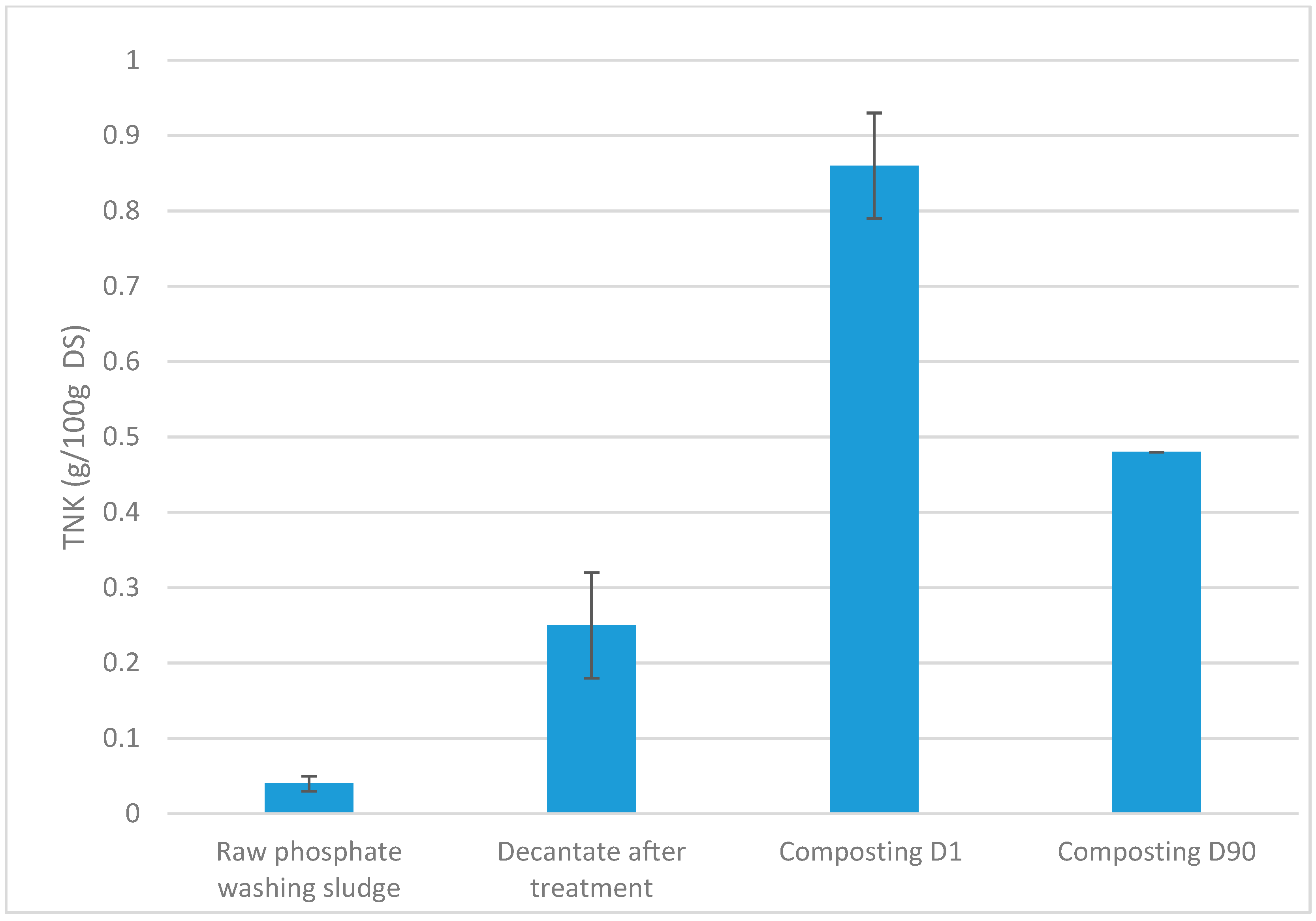
The observed differences in total Kjeldahl nitrogen (TKN) measurements suggest that mineral precipitation mechanisms might have converted some nitrogen into nitrogen-containing phosphate minerals, which remained in the sediment. The treatment conditions, which included calcium and magnesium and phosphate ions from phosphate washing sludge and ammonium from raw leachate, led to the formation of struvite (MgNH4PO4·6H2O) and other ammonium–phosphate compounds [27]. The formation of struvite and its related ammonium–phosphate species occurs frequently in systems containing Mg2+ and NH4+ and PO43− ions under alkaline conditions during leachate treatment and sludge stabilization processes. The sludge-induced pH increase, together with increased ionic strength, created conditions that led to struvite nucleation through supersaturation. The nitrogen content in sediment increased after treatment (0.25 g/100 g DS), which indicates that dissolved ammonium converted into mineral crystals instead of staying in solution. The high TKN reading at Day 1 (0.85 g/100 g DS) followed by a decrease to 0.47 g/100 g DS at Day 90 indicates that ammonium volatilization and microbial assimilation and nitrification processes occurred (Figure 10).
Overall, the combined evidence supports the hypothesis that nitrogen speciation in the sludge likely included ammonium bound within mineral phases, such as struvite, contributing to both the retention of nitrogen during treatment and its gradual transformation during composting, thereby enhancing the agronomic value of the final product.

4. Discussion

The research demonstrates that phosphate washing sludge (PWS) shows promise as an affordable, sustainable material for treating landfill leachate. The treatment process with PWS achieved two main goals by improving water quality through reduced electrical conductivity and stable pH levels, and by reaching safe irrigation standards for microbial contamination. Research indicates that alkaline mineral waste materials, including limestone and fly ash, create similar pH-stabilizing and disinfecting effects, which reduce microbial contaminants through pH adjustments and ionic strength changes [28]. The process transforms dangerous leachate into a treated effluent which can be safely used for irrigation of non-food crops and urban green spaces.
The research achieved a major success by extracting nitrogen from the treated sediment. The treatment process led to nitrogen compound enrichment, which resulted in their conversion into stable compounds during composting. The results from nutrient recovery research confirm these findings because solutions become stable through chemical precipitation when they become alkaline, and their ionic strength increases [14].
The addition of green waste during the composting process helped stabilize organic nitrogen while maintaining proper nutrient levels in the final product. The PWS treatment method achieved better results for pH control and microbial reduction than our previous system, which used sugar lime sludge (SLS). The main reason for this difference stems from the different chemical makeup of SLS and PWS because SLS contains mostly calcium carbonate, but PWS contains calcium carbonate and phosphate minerals (≈20% P2O5). The combination of substances in PWS enables detoxification and phosphate extraction during composting.
The sugar industry generates SLS in limited quantities during specific seasons, but PWS production in Morocco occurs at a larger scale because of phosphate processing activities. The characteristics of PWS make it an excellent solution for leachate treatment and resource recovery because it provides quick, practical solutions. The nitrogen content and organic matter levels in the composting process follow identical synergistic patterns. The composted material contained elevated nitrogen levels, while its labile organic matter content decreased substantially, which proves its stability for agricultural and landscaping applications. Research has shown that composting mineral waste with green biomass leads to similar improvements in compost maturity [20].
The research did not assess PFAS, heavy metals, or microplastics, which are common pollutants in landfill leachates. The study focused on microbial, physicochemical, and phytotoxicity parameters rather than on evaluating these specific priority pollutants. Future research should focus on assessing these particular pollutants to determine the effectiveness of PWS-based treatment for detoxification purposes.

5. Conclusions

In this study, phosphate-washing sludge was effectively used for the treatment and partial detoxification of landfill leachate. Results showed a substantial improvement in microbial safety, physicochemical stability, and nutrient recovery of the leachate after simple sedimentation and composting. Key outcomes include the following:
≈99% decrease in fecal streptococci, which indicates a better microbial safety;
≈111% increase in organic matter content of the sediment after treatment;
a germination index >50%, confirming no phytotoxicity;
improved nitrogen retention in the compost, promoting agronomic value.
These findings suggest that phosphate washing sludge, often considered an industrial residue, can be successfully recycled for environmental remediation and resource recovery. More polishing steps may be necessary to satisfy rigid irrigation specifications, but this approach demonstrates a cost-effective and scalable solution for adopting a circular economy approach. Since Morocco is a leading producer of phosphate, the valorization of PWS can be considered a sustainable solution for leachate treatment and a potential candidate for nutrient recycling in agriculture. This will be followed by pilot-scale validation and monitoring for other contaminants (PFAS, heavy metals, microplastics) to comply with international safety standards.

Author Contributions

Conceptualization, K.F. and T.B.; methodology, T.B.; software, T.B.; validation, T.B., A.C. and M.S.; formal analysis, T.B. and M.S.; investigation, T.B. and M.S.; resources, K.F.; data curation, T.B.; writing—original draft preparation, T.B.; writing—review and editing, A.C., M.S. and K.F.; visualization, T.B.; supervision, K.F.; project administration, K.F.; funding acquisition, A.C. All authors have read and agreed to the published version of the manuscript.

Funding

This research was financially supported by Cadi Ayyad University (UCA). The authors gratefully acknowledge their support. The funders had no role in the design of the study; in the collection, analyses, or interpretation of data; in the writing of the manuscript; or in the decision to publish the results.

Data Availability Statement

The data presented in this study are available on request from the corresponding author.

Conflicts of Interest

The authors declare no conflicts of interest.

References

  1. UNEP. Global Waste Management Outlook 2024. United Nations Environment Programme, 2024. Available online: https://www.unep.org/resources/global-waste-management-outlook-2024 (accessed on 7 December 2025).
  2. Singh, P.; Bisen, M.; Kulshreshtha, S.; Kumar, L.; Choudhury, S.R.; Nath, M.J.; Mandal, M.; Kumar, A.; Patel, S.K.S. Advancement in anaerobic ammonia oxidation technologies for industrial wastewater treatment and resource recovery: A comprehensive review and perspectives. Bioengineering 2025, 12, 330. [Google Scholar] [CrossRef] [PubMed]
  3. Xiang, R.; Wei, W.; Mei, T.; Wei, Z.; Yang, X.; Liang, J.; Zhu, J. A Review on Landfill Leachate Treatment Technologies: Comparative Analysis of Methods and Process Innovation. Appl. Sci. 2025, 15, 3878. [Google Scholar] [CrossRef]
  4. Times of India. Leachate from Bandhwari Spills into Aravalis, Forms Toxic Puddles. Available online: https://timesofindia.indiatimes.com/city/gurgaon/leachate-from-bandhwari-spills-into-aravalis-forms-toxic-puddles/articleshow/122305718.cms (accessed on 7 December 2025).
  5. Gunarathne, V.; Phillips, A.J.; Zanoletti, A.; Rajapaksha, A.U.; Vithanage, M.; Di Maria, F.; Pivato, A.; Korzeniewska, E.; Bontempi, E. Environmental pitfalls and associated human health risks and ecological impacts from landfill leachate contaminants: Current evidence, recommended interventions and future directions. Sci. Total Environ. 2024, 912, 169026. [Google Scholar] [CrossRef] [PubMed]
  6. Neill, P.; Megson, D. Landfill leachate treatment process is transforming and releasing banned per- and polyfluoroalkyl substances to UK water. Front. Water 2024, 6, 1480241. [Google Scholar] [CrossRef]
  7. Dagwar, P.P.; Dutta, D. Landfill leachate: A potential challenge towards sustainable environmental management. Sci. Total Environ. 2024, 926, 171668. [Google Scholar] [CrossRef]
  8. Njewa, J.B.; Mweta, G.; Sumani, J.; Biswick, T.T. The impact of dumping sites on air, soil and water pollution in selected Southern African countries: Challenges and recommendations. Water Emerg. Contam. Nanoplastics 2025, 4, 3. [Google Scholar] [CrossRef]
  9. Goukeh, M.N.; Ssekimpi, D.; Asefaw, B.K.; Zhang, Z. Occurrence of per- and polyfluorinated substances, microplastics, pharmaceuticals and personal care products as emerging contaminants in landfill leachate: A review. Total Environ. Eng. 2025, 3, 100019. [Google Scholar] [CrossRef]
  10. Teng, C.; Chen, W. Technologies for the treatment of emerging contaminants in landfill leachate. Curr. Opin. Environ. Sci. Health 2023, 31, 100409. [Google Scholar] [CrossRef]
  11. Lindamulla, L.; Nanayakkara, N.; Othman, M.; Jinadasa, S.; Herath, G.; Jegatheesan, V. Municipal solid waste landfill leachate characteristics and treatment options in tropical countries. Water Pollut. 2022, 8, 273–287. [Google Scholar] [CrossRef]
  12. Jamrah, A.; Al-Zghou, T.M.; Al-Qodah, Z. An extensive analysis of combined processes for landfill leachate treatment. Water 2024, 16, 1640. [Google Scholar] [CrossRef]
  13. Abdel-Shafy, H.I.; Ibrahim, A.M.; Al-Sulaiman, A.M.; Okasha, R.A. Landfill leachate: Sources, nature, organic composition, and treatment—An environmental overview. Ain Shams Eng. J. 2024, 15, 102293. [Google Scholar] [CrossRef]
  14. Bisht, T.S.; Kumar, D.; Alappat, B.J. Revised leachate pollution index (r-LPI): A tool to quantify contamination potential. Process Saf. Environ. Prot. 2022, 168, 1142–1154. [Google Scholar] [CrossRef]
  15. Abunama, T.; Moodley, T.; Abualqumboz, M.; Kumari, S.; Bux, F. Variability of leachate quality and polluting potentials in light of the leachate pollution index (LPI): A global perspective. Chemosphere 2021, 282, 131119. [Google Scholar] [CrossRef]
  16. Qiao, W.; Wang, X. Comprehensive review of landfill leachate treatment technologies. Front. Environ. Sci. 2024, 12, 1439128. [Google Scholar] [CrossRef]
  17. Hui, K.; Song, J.; Xi, B.; Yuan, Y.; Tan, W. Generation mechanisms, environmental behaviors, and treatment technologies of conventional and emerging contaminants in landfill leachate: A review. Environ. Ecol. Contam. 2026, 8, 319–338. [Google Scholar] [CrossRef]
  18. Kumar, A.; Rana, R.; Shukla, P. Characteristics and treatability of landfill leachate in aging landfills. Sci. Total Environ. 2025, 901, 1675872. [Google Scholar]
  19. Clemente, E.; Domingues, E.; Quinta-Ferreira, R.M.; Leitão, A.; Martins, R.C. European and African landfilling practices: An overview on MSW management, leachate characterization and treatment technologies. J. Water Process Eng. 2024, 66, 105931. [Google Scholar] [CrossRef]
  20. Mobaligh, M.; Meddich, A.; Imziln, B.; Fares, K. The use of phosphate washing sludge to recover by composting the leachate from the controlled landfill. Processes 2019, 9, 1735. [Google Scholar] [CrossRef]
  21. Haouas, A.; El Modafar, C.; Douira, A.; Ibnsouda-Koraichi, S.; Filali-Maltouf, A.; Moukhli, A.; Amir, S. Phosphate sludge: Opportunities for use as a fertilizer in deficient soils. Detritus 2021, 16, 82–93. [Google Scholar] [CrossRef]
  22. Hakkou, R.; Benzaazoua, M.; Bussière, B. Valorization of Phosphate Waste Rocks and Sludge from the Moroccan Phosphate Mines: Challenges and Perspectives. Procedia Eng. 2016, 138, 110–118. [Google Scholar] [CrossRef]
  23. Baganna, T.; Choukri, A.; Fares, K. Sustainable treatment of landfill leachate using sugar lime sludge for irrigation and nitrogen recovery. Nitrogen 2025, 6, 37. [Google Scholar] [CrossRef]
  24. Zucconi, F. Evaluating toxicity of immature compost. Biocycle 1981, 22, 54–57. [Google Scholar]
  25. Siqueira, J.F.; Lopes, H.P. Mechanisms of antimicrobial activity of calcium hydroxide: A critical review. Int. Endod. J. 1999, 32, 361–369. [Google Scholar] [CrossRef] [PubMed]
  26. Matsuzaki, S.; Azuma, K.; Lin, X.; Kuragano, M.; Uwai, K.; Yamanaka, S.; Tokuraku, K. Farm use of calcium hydroxide as an effective barrier against pathogens. Sci. Rep. 2021, 11, 7941. [Google Scholar] [CrossRef] [PubMed]
  27. Sea, Y.F.; Chua, A.S.M.; Ngoh, G.C.; Rabuni, M.F. Integrated struvite precipitation and Fenton oxidation for nutrient recovery. Water 2024, 16, 1788. [Google Scholar] [CrossRef]
  28. Jadaa, W. Wastewater Treatment Utilizing Industrial Waste Fly Ash as a Low-Cost Adsorbent for Heavy Metal Removal: Literature Review. Clean Technol. 2024, 6, 221–279. [Google Scholar] [CrossRef]
Figure 1. Schematic representation of the leachate treatment process using PWS, followed by phase separation for irrigation and composting applications.
Nitrogen 06 00113 g001
Figure 2. pH of raw leachate and supernatants after treatment with phosphate-washing sludge. C1: 25%, C2: 37%, C3: 50%, D1 = 24 h, D2 = 36 h. Values are mean ± SD (n = 3). Statistical significance assessed by one-way ANOVA (p < 0.05).
Nitrogen 06 00113 g002
Figure 3. Electrical Conductivity of Raw Leachate and Supernatants after Treatment with Phosphate Washing Sludge. C1: 25%, C2: 37%, C3: 50%, D1 = 24 h, D2 = 36 h. Values are mean ± SD (n = 3). ANOVA test indicated highly significant differences between treatments (p < 0.001).
Nitrogen 06 00113 g003
Figure 4. Organic matter content (% dry substance) in the raw phosphate washing sludge and in the sediment obtained after leachate treatment. C1: 25%, C2: 37%, C3: 50%, D1 = 24 h, D2 = 36 h. Values are mean ± SD (n = 3). Differences between treatments were analyzed using one-way ANOVA (p < 0.05).
Nitrogen 06 00113 g004
Figure 5. Seed germination percentage over time for raw leachate and diluted supernatants after treatment with phosphate washing sludge. Control C = Distilled water. Values are mean ± SD (n = 3). Statistical significance was tested using one-way ANOVA (p < 0.05).
Nitrogen 06 00113 g005
Figure 6. Germination index of raw leachate and diluted supernatants after treatment with phosphate washing sludge. Control C = Distilled water. The red line represents the 50% phytotoxicity threshold according to Zucconi’s criteria, below which a substrate is considered phytotoxic. Values are mean ± SD (n = 3). Statistical significance was tested using one-way ANOVA (p < 0.05).
Nitrogen 06 00113 g006
Figure 7. Germination index of diluted raw leachate and diluted supernatants after treatment with phosphate-washing sludge (Control C = Distilled water, RL = Raw leachate, TL = Treated leachate). Values are mean ± SD (n = 3). Statistical significance was tested using one-way ANOVA (p < 0.05).
Nitrogen 06 00113 g007
Figure 8. Temperature evolution during composting: W_GW (windrow with green waste only), W_PS (windrow with green waste with phosphate sludge), and ambient temperature (Amb_T).
Nitrogen 06 00113 g008
Figure 9. Reduction in organic matter content during composting: initial vs. final for W_GW (windrow with green waste only) and W_PS (windrow with green waste with phosphate sludge). Values are mean ± SD (n = 3). Statistical significance was tested using one-way ANOVA (p < 0.05).
Nitrogen 06 00113 g009
Figure 10. Evolution of total nitrogen by Kjeldahl (TNK) in the sediment after treatment with phosphate washing sludge and composting with green waste (D = day). Values are mean ± SD (n = 3). Statistical significance was tested using one-way ANOVA (p < 0.05).
Nitrogen 06 00113 g010
Table 1. Chemical composition of phosphate washing sludge. OM = Organic Matter; DS = Dry Solids; TKN = Total Kjeldahl Nitrogen; Pb = Lead; Cr = Chromium; Cu = Copper; As = Arsenic.
ElementsValue
Humidity (%)1.5 ± 0.3
OM (%DS)6.4 ± 0.5
TNK (g/100 g DS)0.04 ± 0.1
pH7.98 ± 0.02
Pb (mg/kg DS)1.1 ± 0.01
Cr (mg/kg DS)51.4 ± 1
Cu (mg/kg DS)32.4 ± 0.6
As (mg/kg DS)19.4 ± 0.4
Table 2. Characterization of raw leachate: Landfill of Marrakech, Morocco. BOD5 = Biochemical Oxygen Demand over 5 days; COD = Chemical Oxygen Demand.
ParameterValue
pH8.48 ± 0.02
Conductivity(mS/cm)272.5 ± 56.62
BOD (mg O2/L)1400 ± 0.0
COD (mg O2/L)25.750 ± 403.7
BOD5/COD Ratio0.05
Ni (mg/L)0.07 ± 0.01
Cu (mg/L)0
Pb (mg/L)0.01 ± 0.0
Zn (mg/L)0.04 ± 0.0
Cr (mg/L)0.07 ± 0.0
As (mg/L)0.5 ± 0.1
Table 3. Microbiological contamination of raw leachate.
MicroorganismsCFU/mL
Fecal streptococci40,000
Fecal coliforms0
Total coliforms0
Total mesophilic flora1,666,666.7
Table 4. Fecal streptococci reduction analysis. For the supernatants after leachate treatment.
SampleCFU/mLReduction (%)
Raw leachate40,000-
C1D1580085.5
C2D1105097.38
C3D192697.68
C1D243098.93
C2D293697.66
C3D287097.82
Disclaimer/Publisher’s Note: The statements, opinions and data contained in all publications are solely those of the individual author(s) and contributor(s) and not of MDPI and/or the editor(s). MDPI and/or the editor(s) disclaim responsibility for any injury to people or property resulting from any ideas, methods, instructions or products referred to in the content.