
Article

On Multiparameter Post-Quantum Fractional Quadrature Inequalities with Simulation

1
Department of Basic Sciences and Humanities (Mathematics), MNS University of Engineering and Technology, Multan 60000, Pakistan
2
Department of Mathematics, University of Engineering and Technology, Lahore 54890, Pakistan
3
Department of Mathematics, Dong-A University, Busan 49315, Republic of Korea
*
Authors to whom correspondence should be addressed.
Fractal Fract. 2026, 10(4), 242; https://doi.org/10.3390/fractalfract10040242
Submission received: 20 February 2026 / Revised: 28 March 2026 / Accepted: 3 April 2026 / Published: 6 April 2026

Abstract

This paper introduces a comprehensive class of multiparameter post-quantum fractional quadrature inequalities, unifying classical error bounds within the setting of the post-quantum Riemann–Liouville fractional integral. By incorporating multiple parameters, we derive a flexible family of inequalities that generalize well-known quadrature rules such as the Boole-type, Bullen–Simpson-type, Maclaurin-type, corrected Euler–Maclaurin-type, 3 8 -Simpson-type, and companion Ostrowski-type estimates. Under assumptions of s-convexity, log-convexity, power mean inequality, and Holder inequality, we establish novel error bounds. Our results provide a unified framework for designing and analyzing post-quantum fractional quadrature inequalities. Applications to special means and numerical and graphic examples are presented to illustrate the applicability and generality of the derived inequalities. This work lays a theoretical foundation for the development of post-quantum fractional quadrature inequalities and offers new tools for error estimation in post-quantum fractional-order models arising in applied sciences and engineering.

1. Introduction

The classical calculus of Newton and Leibniz, built upon the foundational concept of the limit, has long been the principal language for modeling continuous change. However, many contemporary problems in mathematics and physics, from quantum mechanical systems to digital signal processing, inherently involve discrete or quantized structures. This necessity inspired the development of quantum calculus (or q-calculus), a transformative framework that redefines differentiation and integration without recourse to limits. By replacing infinitesimal ratios with finite q-differences, it constructs a parallel mathematical universe for non-continuous domains. The pioneering work of F. H. Jackson, who first systematized q-derivatives and integrals [1,2], demonstrated that this is not merely a discrete approximation but a genuine extension of classical calculus; as the parameter q 1 , all classical results are recovered. The utility of this framework is vast, providing essential tools in fields as diverse as number theory and combinatorics through q-series and q-polynomials and mathematical physics [3,4,5]. Notably, its application extends to core scientific models, such as Fock’s [6] use of q-difference equations to analyze the symmetry of the hydrogen atom, underscoring its relevance beyond pure abstraction.
The natural progression of this generalization is post-quantum calculus, or ( p , q ) -calculus, which introduces a second independent parameter p. This bifactorial framework offers a richer and more flexible structure for "quantization," allowing for finer control and more nuanced generalizations of classical operators. It has become an instrumental language in the study of special functions, orthogonal polynomials, and operator theory. The definitions of ( p , q ) -derivative and ( p , q ) -integral in finite intervals and their fundamental properties were provided by Tunc and Gov [7,8]. Later, Soontharanon and Sitthiwirattham [9] defined ( p , q ) -difference operators with interval [ 0 , T ] for T > 0 and established basic properties of fractional ( p , q ) -calculus in this interval. In particular, they developed Riemann–Liouville and Caputo-type fractional ( p , q ) -integral operators. In this regard, Neang et al. [10] developed a new definition of the Riemann–Liouville fractional ( p , q ) integral with respect to the q-shifting operator.
Numerical integration, the cornerstone of computational mathematics, provides indispensable tools for approximating definite integrals when exact analytic solutions are intractable. Classical quadrature rules, such as the midpoint, trapezoidal, Simpson, and Boole, supply efficient approximations accompanied by well-understood error estimates. These error bounds, often expressed as inequalities under smoothness or convexity assumptions, have been extensively studied and form a rich body of results known as quadrature inequalities. Notable among them are the Hermite–Hadamard inequality, Bullen–Simpson-type bounds, companion Ostrowski inequalities, and corrected Euler–Maclaurin formulas, each refining our understanding of how discrete sums relate to continuous integrals. In recent years, many quadrature inequalities have been constructed using various new strategies. Franjic and Pecaric [11] proved the corrected Euler–Maclaurin formulas and utilized the derived formulas to obtain inequalities for various classes of functions. Guessab and Schmeisser [12] proved companion Ostrowski-type integral inequalities under several regularity conditions by introducing the best constants in bounds of error and the remainder of the trapezoidal rule. Krukowski [13] introduced a natural successor to Simpson’s rule, which included Boole’s rule and provided novel error bounds for it. Meftah and Samoudi [14] established Bullen–Simpson-type inequalities for functions whose local fractional derivatives are s-convex functions and proved theorems when the first derivatives are bounded and Holderian. They also applied their results to numerical integration and special means. Sitthiwirattham et al. [15,16] determined error bounds related to Maclaurin’s formula using q-differentiable convex functions.
The integral inequalities related to Riemann–Liouville integrals have proven to be very valuable instruments in analysis in fractional calculus. These inequalities have enabled researchers to express stability conditions and constraints of fractional differential equations in a very effective manner and have also allowed researchers to shed ample light on the behavior of fractional equations in practical situations. It is also worth mentioning integral inequalities, which are obtained through the use of the Riemann–Liouville integral. Demir and Unes [17] developed corrected Euler–Maclaurin-type inequalities for differentiable convex functions, bounded functions, Lipschitzian functions, and bounded variation functions and demonstrated the precision of the developed results with numerical and graphical examples. Erden et al. [18] established fractional Ostrowski-type inequalities and obtained midpoint versions as a special case. Nasir et al. [19] studied a new type of Simpson-type inequalities using first-order locally differentiable convex functions and applied them to beta functions, q-digamma functions, and Bessel functions. Nasri et al. [20] derived the error estimates of fractional 3 8 Simpson-type inequalities for functions whose absolute values of the first derivative are s-convex in the second sense and applied these findings to quadrature formulas, special means, and random variables. Samraiz et al. in [21] obtained fractional Bullen-type inequalities under the concept of h-convexity of twice-differentiable functions and applied these findings to special means and presented graphical examples. For further studies on integral inequalities involving the Riemann–Liouville integral, we recommend [22,23,24].
Post-quantum fractional integral inequalities represent a novel and rapidly evolving frontier in mathematical analysis, forging a critical connection between two profound areas of study: the geometric framework of quantum calculus and the nonlocal nature of fractional operators. This emerging discipline seeks to generalize classical analytic inequalities into a unified framework that incorporates both the discrete, parameter-dependent calculus of quantum operators and the continuous memory effects inherent to fractional integration and differentiation. Our main contributions to this paper include the following.
  • Develop a new multiparameter identity that brings together ( p , q ) -derivative, ( p , q ) -Riemann–Liouville fractional integral, q-shifting operator, and q-Pochhammer symbol into one unified framework;
  • Show that by simply choosing different parameter values, this single identity generates a wide family of known identities, such as the Boole-type, Bullen–Simpson-type, Maclaurin-type, corrected Euler–Maclaurin-type, 3 8 Simpson-type, and companion Ostrowski-type;
  • Successfully extend the classical work of B. Meftah and C. Menai to the broader world of post-quantum calculus, with their original results appearing as special cases;
  • Create new integral inequalities using key mathematical tools such as modulus properties, s-convexity, log-convexity, power mean inequality, and Hölder’s inequality;
  • Confirm all results with concrete numerical examples and graphs, visually proving that the inequalities hold for any choice of parameters;
  • Showcase the application of the work through special means.

2. Preliminaries

Throughout the discussion R is considered to be the set of real numbers, and 0 < q < p 1 . Furthermore, in this section, it is assumed that [ ε 1 , ε 3 ] R for ε 1 < ε 3 . The ( p , q ) -number is defined as [10]
[ m ] p , q = p m q m p q = p m 1 q 0 + p m 2 q + + p q m 2 + p 0 q m 1 , ( m N ) .
More generally [25],
[ υ ] p , q = p υ q υ p q , ( υ R ) .
A q-shifting operator is defined as [10]
ε 1 Φ q ( υ ) = q υ + ( 1 q ) ε 1 , ( υ R ) .
Further, we have
ε 1 Φ q 0 ( υ ) = υ and ε 1 Φ q m ( υ ) = ε 1 Φ q m 1 ( ε 1 Φ q ( υ ) ) = ε 1 Φ q m ( υ ) , m N .
The q-Pochhammer symbol is defined as [26]
( υ ; q ) 0 = 1 , ( υ ; q ) k : = τ = 0 k 1 1 q τ υ , ( υ R , k N { } ) ,
and the q-power function in the form of q-shifting operator is defined as
( c υ ) ε 1 ( 0 ) = 1 , ( c υ ) ε 1 ( k ) : = τ = 0 k 1 c ε 1 Φ q τ ( υ ) , ( υ , c R , k N { } ) .
More generally, for k = ϕ R
( c υ ) ε 1 ( ϕ ) = c ϕ τ = 0 1 υ c q τ 1 υ c q ϕ + τ , ( c 0 ) .
Definition 1  
([27]). Let : [ ε 1 , ε 3 ] R be a continuous function. Then, the ( p , q ) ε 1 -derivative of ℵ at σ is given by
ε 1 D p , q ( σ ) = ( p σ + ( 1 p ) ε 1 ) ( q σ + ( 1 q ) ε 1 ) ( p q ) ( σ ε 1 ) , σ ε 1 ; lim σ ε 1 ε 1 D p , q ( σ ) , σ = ε 1 .
The function ℵ is called ( p , q ) ε 1 -differentiable on [ ε 1 , ε 3 ] if ε 1 D p , q ( σ ) exists for all σ [ ε 1 , ε 1 + ε 3 ε 1 p ] .
Definition 2 
([27]). Let : [ ε 1 , ε 3 ] R be a continuous function. Then, the ( p , q ) ε 1 -integral of ℵ at σ is given by
ε 1 ε 3 ( σ ) ε 1 d p , q σ = ( p q ) ( ε 3 ε 1 ) τ = 0 q τ p τ + 1 q τ p τ + 1 ε 3 + 1 q τ p τ + 1 ε 1 .
The function ℵ is called ( p , q ) ε 1 -integrable on [ ε 1 , ε 3 ] if ε 1 ε 3 ( σ ) ε 1 d p , q σ exists for all σ [ ε 1 , ε 1 + p ( ε 3 ε 1 ) ] .
The ( p , q ) -power function is defined by [10]
ε 1 ( υ c ) p , q ( 0 ) : = 1 , ε 1 ( υ c ) p , q ( k ) : = τ = 0 k 1 ε 1 Φ p τ ( υ ) ε 1 Φ q τ ( c ) , υ , c R , k N 0 .
It can be observed that
ε 1 ( υ c ) p , q ( k ) = ( υ ε 1 ) k τ = 0 k 1 p τ 1 c ε 1 υ ε 1 q p τ .
More generally, for k = ϕ R ,
ε 1 ( υ c ) p , q ( ϕ ) = ( υ ε 1 ) ϕ τ = 0 p τ p ϕ + τ 1 c ε 1 υ ε 1 q p τ 1 c ε 1 υ ε 1 q p ϕ + τ = ( υ ε 1 ) ϕ p ϕ 2 τ = 0 1 c ε 1 υ ε 1 q p τ 1 c ε 1 υ ε 1 q p ϕ + τ ,
particularly for ϕ > 0 ,
ε 1 υ ε 1 Φ q / p k ( υ ) p , q ( ϕ ) = ( υ ε 1 ) ϕ τ = 0 p τ p ϕ + τ 1 q p k + τ 1 q p k + ϕ + τ = ( υ ε 1 ) ϕ 1 q p k p , q ( ϕ ) .
The ( p , q ) -gamma function is defined by [10]
Γ p , q ( ϰ ) = ( p q ) p , q ( ϰ 1 ) ( p q ) ϰ 1 , ϰ R { 0 , 1 , 2 , 3 , } .
P. N. Sadjang [28] provided the equivalent definition of (3) as follows:
Γ p , q ( ϰ ) = p ϰ ( ϰ 1 ) 2 0 σ ϰ 1 E p , q q σ d p , q σ ,
provided that
E p , q q σ = τ = 0 q τ 2 ( q σ ) τ [ τ ] p , q .
Obviously, Γ p , q ( ϰ + 1 ) = [ ϰ ] p , q Γ p , q ( ϰ ) . The ( p , q ) -beta function is defined by [10]
B p , q ( ϱ , ϰ ) = 0 1 σ ϱ 1 0 1 0 Φ q ( σ ) p , q ( ϰ 1 ) 0 d p , q σ , ( ϱ , ϰ > 0 ) ,
and another way to write (4) is as follows:
B p , q ( ϱ , ϰ ) = p ( ϰ 1 ) ( 2 ϱ + ϰ 2 ) 2 Γ p , q ( ϱ ) Γ p , q ( ϰ ) Γ p , q ( ϱ + ϰ ) .
Definition 3  
([26]). Let ℵ be defined on [ ε 1 , ε 3 ] , and let ϕ > 0 . The Riemann–Liouville fractional q ε 1 -integral is defined by
ε 1 J q ϕ ( ψ ) : = 1 Γ q ( ϕ ) ε 1 ψ ε 1 ψ ε 1 Φ q ( σ ) q ( ϕ 1 ) ( σ ) ε 1 d q σ = ( 1 q ) ( ψ ε 1 ) Γ q ( ϕ ) τ = 0 q τ ε 1 ψ ε 1 Φ q τ + 1 ( ψ ) q ( ϕ 1 ) ε 1 Φ q τ ( ψ ) .
Definition 4  
([10]). Let ℵ be defined on [ ε 1 , ε 3 ] , and let ϕ > 0 . The Riemann–Liouville fractional ( p , q ) ε 1 -integral is defined by
ε 1 K p , q ϕ ( ψ ) : = 1 p ϕ 2 Γ p , q ( ϕ ) ε 1 ψ ε 1 ψ ε 1 Φ q ( σ ) p , q ( ϕ 1 ) ε 1 Φ p 1 ϕ ( σ ) ε 1 d p , q σ = ( p q ) ( ψ ε 1 ) p ϕ 2 Γ p , q ( ϕ ) τ = 0 q τ p τ + 1 ε 1 ψ ε 1 Φ q / p τ + 1 ( ψ ) p , q ( ϕ 1 ) × q τ p ϕ + τ ψ + 1 q τ p ϕ + τ ε 1 ,
provided that ψ [ ε 1 , ε 1 + p ϕ ( ε 3 ε 1 ) ] .
Remark 1.  
When p = 1 , the Definition 4 coincides with the Definition 3.

3. Main Results

Lemma 1.  
Let : [ ε 1 , ε 3 ] R R be ( p , q ) ε 1 , ( p , q ) ε 2 , ( p , q ) ε 1 + ε 3 2 and ( p , q ) ε 1 + ε 3 ε 2 differentiable function on I 1 , I 2 , I 3 and I 4 , respectively, such that ε 1 D p , q , ε 2 D p , q , ε 1 + ε 3 2 D p , q and ε 1 + ε 3 ε 2 D p , q are continuous and integrable, respectively, on J 1 , J 2 , J 3 and J 4 and ϕ > 0 , ε 2 ε 1 , ε 1 + ε 3 2 , and α , β [ 0 , 1 ] , then
( ε 2 ε 1 ) 2 ε 3 ε 1 0 1 1 + β α 1 + β ( 1 0 Φ q ( σ ) ) p , q ( ϕ ) p ϕ 2 ε 1 D p , q ( 1 σ ) ε 1 + σ ε 2 0 d p , q σ + ( ε 1 + ε 3 2 ε 2 ) 2 4 ( ε 3 ε 1 ) 0 1 β ( ε 3 ε 1 ) ( 1 + β ) ( ε 1 + ε 3 2 ε 2 ) ( 1 0 Φ q ( σ ) ) p , q ( ϕ ) p ϕ 2 × ε 2 D p , q ( 1 σ ) ε 2 + σ ε 1 + ε 3 2 0 d p , q σ + ( ε 1 + ε 3 2 ε 2 ) 2 4 ( ε 3 ε 1 ) 0 1 ε 3 + ε 1 + 2 ( β ε 1 β ε 2 ε 2 ) ( 1 + β ) ( ε 1 + ε 3 2 ε 2 ) ( 1 0 Φ q ( σ ) ) p , q ( ϕ ) p ϕ 2 × ε 1 + ε 3 2 D p , q ( 1 σ ) ε 1 + ε 3 2 + σ ( ε 1 + ε 3 ε 2 ) 0 d p , q σ + ( ε 2 ε 1 ) 2 ε 3 ε 1 0 1 α 1 + β ( 1 0 Φ q ( σ ) ) p , q ( ϕ ) p ϕ 2 × ε 1 + ε 3 ε 2 D p , q ( 1 σ ) ( ε 1 + ε 3 ε 2 ) + σ ε 3 0 d p , q σ = α ( ε 2 ε 1 ) ( ε 3 ε 1 ) ( 1 + β ) ( ε 1 ) + ( ε 3 ) + β 1 + β ε 1 + ε 3 2 + ε 3 ε 1 2 α ( ε 2 ε 1 ) 2 ( ε 3 ε 1 ) ( 1 + β ) ( ε 2 ) + ( ε 1 + ε 3 ε 2 ) ( ε 2 ε 1 ) 1 ϕ Γ p , q ( ϕ + 1 ) ( ε 3 ε 1 ) p ϕ 2 + 4 ϕ 3 2 ε 1 K p , q ϕ ε 1 Φ p ϕ ( ε 2 ) + ε 1 + ε 3 ε 2 K p , q ϕ ε 1 + ε 3 ε 2 Φ p ϕ ( ε 3 ) ( ε 1 + ε 3 2 ε 2 ) 1 ϕ Γ p , q ( ϕ + 1 ) 2 1 ϕ ( ε 3 ε 1 ) p ϕ 2 + 4 ϕ 3 2 ε 2 K p , q ϕ ε 2 Φ p ϕ ε 1 + ε 3 2 + ε 1 + ε 3 2 K p , q ϕ ε 1 + ε 3 2 Φ p ϕ ( ε 1 + ε 3 ε 2 ) ,
where
I 1 : = ε 1 , ε 1 + ε 2 ε 1 p , I 2 : = ε 2 , ε 2 + ε 1 + ε 3 2 ε 2 2 p ,
I 3 : = ε 1 + ε 3 2 , ε 1 + ε 3 2 + ε 1 + ε 3 2 ε 2 2 p , I 4 : = ε 1 + ε 3 ε 2 , ε 1 + ε 3 ε 2 + ε 2 ε 1 p ,
J 1 : = ε 1 , ε 1 + p ( ε 2 ε 1 ) , J 2 : = ε 2 , ε 2 + p ε 1 + ε 3 2 ε 2 2 ,
J 3 : = ε 1 + ε 3 2 , ε 1 + ε 3 2 + p ε 1 + ε 3 2 ε 2 2 , J 4 : = ε 1 + ε 3 ε 2 , ε 1 + ε 3 ε 2 + p ( ε 2 ε 1 ) .
Proof. 
According to Definition 1,
ε 1 D p , q ( 1 σ ) ε 1 + σ ε 2 = ( 1 q σ ) ε 1 + σ q ε 2 ( 1 p σ ) ε 1 + σ p ε 2 σ ( p q ) ( ε 1 ε 2 ) .
Using (6) and keeping ε 1 D p , q , continuous and integrable in J 1 = ε 1 , ε 1 + p ( ε 2 ε 1 ) in Definition 2, produce the following:
J 0 : = 1 p ϕ 2 0 1 ( 1 0 Φ q ( σ ) ) p , q ( ϕ ) ε 1 D p , q ( 1 σ ) ε 1 + σ ε 2 0 d p , q σ = 1 ( p q ) ( ε 1 ε 2 ) p ϕ 2 0 1 ( 1 0 Φ q ( σ ) ) p , q ( ϕ ) ( 1 q σ ) ε 1 + q σ ε 2 ( 1 p σ ) ε 1 + p σ ε 2 0 d p , q σ σ = 1 ( p q ) ( ε 1 ε 2 ) p ϕ 2 0 1 1 q σ p , q ( ϕ ) ( 1 q σ ) ε 1 + q σ ε 2 0 d p , q σ σ 0 1 1 q σ p , q ( ϕ ) ( 1 p σ ) ε 1 + p σ ε 2 0 d p , q σ σ = 1 ( ε 1 ε 2 ) p ϕ 2 τ = 0 q τ p τ + 1 1 q q τ p τ + 1 p , q ( ϕ ) 1 q q τ p τ + 1 ε 1 + q q τ p τ + 1 ε 2 q τ p τ + 1 1 p q τ p τ + 1 ε 1 + p q τ p τ + 1 ε 2 q τ p τ + 1 = 1 ( ε 1 ε 2 ) p ϕ 2 τ = 0 1 q p τ + 1 p , q ( ϕ ) 1 q τ + 1 p τ + 1 ε 1 + q τ + 1 p τ + 1 ε 2 1 q τ p τ ε 1 + q τ p τ ε 2 .
Utilizing (1) and (2) along with the q-Pochhammer symbol definition, produce the following:
J 0 = 1 ( ε 1 ε 2 ) p ϕ 2 τ = 0 p ϕ 2 k = 0 1 q p τ + k + 1 1 q p τ + ϕ + k + 1 1 q τ + 1 p τ + 1 ε 1 + q τ + 1 p τ + 1 ε 2 1 q τ p τ ε 1 + q τ p τ ε 2 = 1 ε 1 ε 2 τ = 0 q τ + 1 p τ + 1 ; q p q τ + 1 + ϕ p τ + 1 + ϕ ; q p 1 q τ + 1 p τ + 1 ε 1 + q τ + 1 p τ + 1 ε 2 τ = 0 q τ + 1 p τ + 1 ; q p q τ + 1 + ϕ p τ + 1 + ϕ ; q p 1 q τ p τ ε 1 + q τ p τ ε 2 = 1 ε 1 ε 2 τ = 0 1 q τ + ϕ p τ + ϕ q τ + 1 p τ + 1 ; q p q τ + ϕ p τ + ϕ ; q p 1 q τ p τ ε 1 + q τ p τ ε 2 + τ = 0 1 q τ + 1 p τ + 1 q τ + 2 p τ + 2 ; q p q τ + 1 + ϕ p τ + 1 + ϕ ; q p 1 q τ + 1 p τ + 1 ε 1 + q τ + 1 p τ + 1 ε 2 = 1 ε 1 ε 2 τ = 0 q τ + 1 p τ + 1 ; q p q τ + ϕ p τ + ϕ ; q p 1 q τ p τ ε 1 + q τ p τ ε 2 + τ = 0 q τ + 2 p τ + 2 ; q p q τ + 1 + ϕ p τ + 1 + ϕ ; q p 1 q τ + 1 p τ + 1 ε 1 + q τ + 1 p τ + 1 ε 2 + 1 ε 1 ε 2 τ = 0 q τ + ϕ p τ + ϕ q τ + 1 p τ + 1 ; q p q τ + ϕ p τ + ϕ ; q p 1 q τ p τ ε 1 + q τ p τ ε 2 τ = 0 q τ + 1 p τ + 1 q τ + 2 p τ + 2 ; q p q τ + 1 + ϕ p τ + 1 + ϕ ; q p 1 q τ + 1 p τ + 1 ε 1 + q τ + 1 p τ + 1 ε 2 = 1 ε 1 ε 2 ε 1 q p ; q p q ϕ p ϕ ; q p ( ε 2 ) + 1 ε 1 ε 2 τ = 0 q τ + ϕ p τ + ϕ q τ + 1 p τ + 1 ; q p q τ + ϕ p τ + ϕ ; q p 1 q τ p τ ε 1 + q τ p τ ε 2 τ = 1 q τ p τ q τ + 1 p τ + 1 ; q p q τ + ϕ p τ + ϕ ; q p 1 q τ p τ ε 1 + q τ p τ ε 2 = 1 ε 1 ε 2 ε 1 q p ; q p q ϕ p ϕ ; q p ( ε 2 ) + 1 ε 1 ε 2 τ = 0 q τ + ϕ p τ + ϕ q τ + 1 p τ + 1 ; q p q τ + ϕ p τ + ϕ ; q p 1 q τ p τ ε 1 + q τ p τ ε 2 τ = 0 q τ p τ q τ + 1 p τ + 1 ; q p q τ + ϕ p τ + ϕ ; q p 1 q τ p τ ε 1 + q τ p τ ε 2 + q p ; q p q ϕ p ϕ ; q p ( ε 2 ) = ε 1 ε 1 ε 2 1 ε 1 ε 2 1 q ϕ p ϕ τ = 0 q τ p τ q τ + 1 p τ + 1 ; q p q τ + ϕ p τ + ϕ ; q p 1 q τ p τ ε 1 + q τ p τ ε 2 = ε 1 ε 1 ε 2 + [ ϕ ] p , q ( p q ) ( ε 2 ε 1 ) p ϕ τ = 0 q τ p τ q τ + 1 p τ + 1 ; q p q τ + ϕ p τ + ϕ ; q p 1 q τ p τ ε 1 + q τ p τ ε 2 = ε 1 ε 1 ε 2 + p 1 + ϕ 2 Γ p , q ( ϕ + 1 ) p ϕ 2 + ϕ + ϕ 1 2 ( ε 2 ε 1 ) ϕ + 1 × ( p q ) [ p ϕ ( ε 2 ε 1 ) ] p ϕ 2 Γ p , q ( ϕ ) × τ = 0 q τ p τ + 1 q τ + 1 p τ + 1 ; q p q τ + ϕ p τ + ϕ ; q p p ϕ 1 2 p ϕ ( ε 2 ε 1 ) ϕ 1 1 q τ p τ ε 1 + q τ p τ ε 2 = ε 1 ε 1 ε 2 + Γ p , q ( ϕ + 1 ) ( ε 2 ε 1 ) 1 + ϕ p ϕ 2 + 4 ϕ 3 2 ( p q ) p ϕ ( ε 2 ε 1 ) p ϕ 2 Γ p , q ( ϕ ) τ = 0 q τ p τ + 1 q τ + 1 p τ + 1 ; q p q τ + ϕ p τ + ϕ ; q p × p ϕ 1 2 p ϕ ( ε 2 ε 1 ) ϕ 1 1 q τ p τ ε 1 + q τ p τ ε 2 = ε 1 ε 1 ε 2 + Γ p , q ( ϕ + 1 ) ( ε 2 ε 1 ) 1 + ϕ p ϕ 2 + 4 ϕ 3 2 × 1 p ϕ 2 Γ p , q ( ϕ ) ε 1 ε 1 Φ p ϕ ( ε 2 ) ε 1 ε 1 Φ p ϕ ( ε 2 ) ε 1 Φ q ( s ) p , q ( ϕ 1 ) × s p ϕ 1 + 1 1 p ϕ 1 ε 1 ε 1 d p , q s = ε 1 ε 1 ε 2 + Γ p , q ( ϕ + 1 ) ( ε 2 ε 1 ) 1 + ϕ p ϕ 2 + 4 ϕ 3 2 ε 1 K p , q ϕ ε 1 Φ p ϕ ( ε 2 ) .
Similarly,
J 1 : = 1 p ϕ 2 0 1 ( 1 0 Φ q ( σ ) ) p , q ( ϕ ) ε 2 D p , q ( 1 σ ) ε 2 + σ ε 1 + ε 3 2 0 d p , q σ = 2 ( ε 2 ) 2 ε 2 ε 1 ε 3 + 2 1 + ϕ Γ p , q ( ϕ + 1 ) ( ε 1 + ε 3 2 ε 2 ) 1 + ϕ p ϕ 2 + 4 ϕ 3 2 ε 2 K p , q ϕ ε 2 Φ p ϕ ε 1 + ε 3 2 .
J 2 : = 1 p ϕ 2 0 1 ( 1 0 Φ q ( σ ) ) p , q ( ϕ ) ε 1 + ε 3 2 D p , q ( 1 σ ) ε 1 + ε 3 2 + σ ( ε 1 + ε 3 ε 2 ) 0 d p , q σ = 2 ( ε 1 + ε 3 2 ) 2 ε 2 ε 1 ε 3 + 2 1 + ϕ Γ p , q ( ϕ + 1 ) ( ε 1 + ε 3 2 ε 2 ) 1 + ϕ p ϕ 2 + 4 ϕ 3 2 ε 1 + ε 3 2 K p , q ϕ ε 1 + ε 3 2 Φ p ϕ ( ε 1 + ε 3 ε 2 ) .
J 3 : = 1 p ϕ 2 0 1 ( 1 0 Φ q ( σ ) ) p , q ( ϕ ) ε 1 + ε 3 ε 2 D p , q ( 1 σ ) ( ε 1 + ε 3 ε 2 ) + σ ε 3 0 d p , q σ = ( ε 1 + ε 3 ε 2 ) ε 1 ε 2 + Γ p , q ( ϕ + 1 ) ( ε 2 ε 1 ) 1 + ϕ p ϕ 2 + 4 ϕ 3 2 ε 1 + ε 3 ε 2 K p , q ϕ ε 1 + ε 3 ε 2 Φ p ϕ ( ε 3 ) .
Now,
L 0 : = 1 + β α 1 + β 0 1 ε 1 D p , q ( 1 σ ) ε 1 + σ ε 2 0 d p , q σ = 1 + β α ( 1 + β ) ( p q ) ( ε 1 ε 2 ) 0 1 ( 1 q σ ) ε 1 + q σ ε 2 ( 1 p σ ) ε 1 + p σ ε 2 0 d p , q σ σ = 1 + β α ( 1 + β ) ( ε 1 ε 2 ) τ = 0 q τ p τ + 1 1 0 Φ q / p τ + 1 ( 1 ) ε 1 + 0 Φ q / p τ + 1 ( 1 ) ε 2 q τ p τ + 1 1 0 Φ q / p τ ( 1 ) ε 1 + 0 Φ q / p τ ( 1 ) ε 2 q τ p τ + 1 = 1 + β α ( 1 + β ) ( ε 1 ε 2 ) ( ε 1 ) ( ε 2 ) .
Similarly,
L 1 : = β ( ε 3 ε 1 ) ( 1 + β ) ( ε 1 + ε 3 2 ε 2 ) 0 1 ε 2 D p , q ( 1 σ ) ε 2 + σ ε 1 + ε 3 2 0 d p , q σ = 2 β ( ε 3 ε 1 ) ( 1 + β ) ( ε 1 + ε 3 2 ε 2 ) 2 ε 1 + ε 3 2 ( ε 2 ) .
L 2 : = ε 3 + ε 1 + 2 β ε 1 2 β ε 2 2 ε 2 ( 1 + β ) ( ε 1 + ε 3 2 ε 2 ) 0 1 ε 1 + ε 3 2 D p , q ( 1 σ ) ε 1 + ε 3 2 + σ ( ε 1 + ε 3 ε 2 ) 0 d p , q σ = 2 ( ε 3 + ε 1 + 2 β ε 1 2 β ε 2 2 ε 2 ) ( 1 + β ) ( ε 1 + ε 3 2 ε 2 ) 2 ( ε 1 + ε 3 ε 2 ) ε 1 + ε 3 2 .
L 3 : = α 1 + β 0 1 ε 1 + ε 3 ε 2 D p , q ( 1 σ ) ( ε 1 + ε 3 ε 2 ) + σ ε 3 0 d p , q σ = α ( 1 + β ) ( ε 1 ε 2 ) ( ε 1 + ε 3 ε 2 ) ( ε 3 ) .
Subtracting (7) from (8)
L 0 J 0 = α ( ε 1 ) + ( 1 + β α ) ( ε 2 ) ( 1 + β ) ( ε 2 ε 1 ) Γ p , q ( ϕ + 1 ) ( ε 2 ε 1 ) 1 + ϕ p ϕ 2 + 4 ϕ 3 2 ε 1 K p , q ϕ ε 1 Φ p ϕ ( ε 2 ) .
Equivalently,
( ε 2 ε 1 ) 2 ) ε 3 ε 1 ( L 0 J 0 ) = ( ε 2 ε 1 ) α ( ε 1 ) + ( 1 + β α ) ( ε 2 ) ( 1 + β ) ( ε 3 ε 1 ) ( ε 2 ε 1 ) 1 ϕ Γ p , q ( ϕ + 1 ) ( ε 3 ε 1 ) p ϕ 2 + 4 ϕ 3 2 ε 1 K p , q ϕ ε 1 Φ p ϕ ( ε 2 ) .
Similarly,
( ε 1 + ε 3 2 ε 2 ) 2 4 ( ε 3 ε 1 ) ( L 1 J 1 ) = ( ε 1 + ε 3 2 ε 2 + 2 β ε 1 2 β ε 2 ) ( ε 2 ) + β ( ε 3 ε 1 ) ε 1 + ε 3 2 2 ( ε 3 ε 1 ) ( 1 + β ) ( ε 1 + ε 3 2 ε 2 ) 1 ϕ Γ p , q ( ϕ + 1 ) 2 1 ϕ ( ε 3 ε 1 ) p ϕ 2 + 4 ϕ 3 2 ε 2 K p , q ϕ ε 2 Φ p ϕ ε 1 + ε 3 2 .
( ε 1 + ε 3 2 ε 2 ) 2 4 ( ε 3 ε 1 ) ( L 2 J 2 ) = β ( ε 3 ε 1 ) ε 1 + ε 3 2 + ( ε 1 + ε 3 + 2 β ε 1 2 β ε 2 2 ε 2 ) ε 1 + ε 3 ε 2 2 ( ε 3 ε 1 ) ( 1 + β ) ( ε 1 + ε 3 2 ε 2 ) 1 ϕ Γ p , q ( ϕ + 1 ) 2 1 ϕ ( ε 3 ε 1 ) p ϕ 2 + 4 ϕ 3 2 ε 1 + ε 3 2 K p , q ϕ ε 1 + ε 3 2 Φ p ϕ ( ε 1 + ε 3 ε 2 ) .
( ε 2 ε 1 ) 2 ε 3 ε 1 ( L 3 J 3 ) = ( ε 2 ε 1 ) ( 1 + β α ) ( ε 1 + ε 3 ε 2 ) + α ( ε 3 ) ( 1 + β ) ( ε 3 ε 1 ) ( ε 2 ε 1 ) 1 ϕ Γ p , q ( ϕ + 1 ) ( ε 3 ε 1 ) p ϕ 2 + 4 ϕ 3 2 ε 1 + ε 3 ε 2 K p , q ϕ ε 1 + ε 3 ε 2 Φ p ϕ ( ε 3 ) .
Addition of (9)–(12) yields the identity (5). □
Remark 2. 
•      For p = 1 , identity (5) reduces to Riemann–Liouville fractional quantum identity:
( ε 2 ε 1 ) 2 ε 3 ε 1 0 1 1 + β α 1 + β ( 1 0 Φ q ( σ ) ) q ( ϕ ) ε 1 D q ( 1 σ ) ε 1 + σ ε 2 0 d q σ + ( ε 1 + ε 3 2 ε 2 ) 2 4 ( ε 3 ε 1 ) 0 1 β ( ε 3 ε 1 ) ( 1 + β ) ( ε 1 + ε 3 2 ε 2 ) ( 1 0 Φ q ( σ ) ) q ( ϕ ) × ε 2 D q ( 1 σ ) ε 2 + σ ε 1 + ε 3 2 0 d q σ + ( ε 1 + ε 3 2 ε 2 ) 2 4 ( ε 3 ε 1 ) 0 1 ε 3 + ε 1 + 2 ( β ε 1 β ε 2 ε 2 ) ( 1 + β ) ( ε 1 + ε 3 2 ε 2 ) ( 1 0 Φ q ( σ ) ) q ( ϕ ) × ε 1 + ε 3 2 D q ( 1 σ ) ε 1 + ε 3 2 + σ ( ε 1 + ε 3 ε 2 ) 0 d q σ + ( ε 2 ε 1 ) 2 ε 3 ε 1 × 0 1 α 1 + β ( 1 0 Φ q ( σ ) ) q ( ϕ ) ε 1 + ε 3 ε 2 D q ( 1 σ ) ( ε 1 + ε 3 ε 2 ) + σ ε 3 0 d q σ = α ( ε 2 ε 1 ) ( ε 3 ε 1 ) ( 1 + β ) ( ε 1 ) + ( ε 3 ) + β 1 + β ε 1 + ε 3 2 + ε 3 ε 1 2 α ( ε 2 ε 1 ) 2 ( ε 3 ε 1 ) ( 1 + β ) ( ε 2 ) + ( ε 1 + ε 3 ε 2 ) ( ε 2 ε 1 ) 1 ϕ Γ q ( ϕ + 1 ) ( ε 3 ε 1 ) ε 1 J q ϕ ( ε 2 ) + ε 1 + ε 3 ε 2 J q ϕ ( ε 3 ) ( ε 1 + ε 3 2 ε 2 ) 1 ϕ Γ q ( ϕ + 1 ) 2 1 ϕ ( ε 3 ε 1 ) ε 2 J q ϕ ε 1 + ε 3 2 + ε 1 + ε 3 2 J q ϕ ( ε 1 + ε 3 ε 2 ) .
Moreover, for ϕ = 1 , it reduces to
( ε 2 ε 1 ) 2 ε 3 ε 1 0 1 q σ α 1 + β ε 1 D q ( 1 σ ) ε 1 + σ ε 2 0 d q σ + ( ε 1 + ε 3 2 ε 2 ) 2 4 ( ε 3 ε 1 ) 0 1 q σ ε 1 + ε 3 + 2 ( β ε 1 β ε 2 ε 2 ) ( 1 + β ) ( ε 1 + ε 3 2 ε 2 ) × ε 2 D q ( 1 σ ) ε 2 + t ε 1 + ε 3 2 0 d q σ + ( ε 1 + ε 3 2 ε 2 ) 2 4 ( ε 3 ε 1 ) 0 1 q σ β ( ε 3 ε 1 ) ( 1 + β ) ( ε 1 + ε 3 2 ε 2 ) × ε 1 + ε 3 2 D q ( 1 σ ) ε 1 + ε 3 2 + σ ( ε 1 + ε 3 ε 2 ) 0 d q σ + ( ε 2 ε 1 ) 2 ε 3 ε 1 0 1 q σ 1 + α 1 + β ε 1 + ε 3 ε 2 D q ( 1 σ ) ( ε 1 + ε 3 ε 2 ) + σ ε 3 0 d q σ = α ( ε 2 ε 1 ) ( ε 3 ε 1 ) ( 1 + β ) ( ε 1 ) + ( ε 3 ) + β 1 + β ε 1 + ε 3 2 + ε 3 ε 1 2 α ( ε 2 ε 1 ) 2 ( ε 3 ε 1 ) ( 1 + β ) ( ε 2 ) + ( ε 1 + ε 3 ε 2 ) 1 ε 3 ε 1 ε 1 ε 2 ( s ) ε 1 d q s + ε 2 ε 1 + ε 3 2 ( s ) ε 2 d q s + ε 1 + ε 3 2 ε 1 + ε 3 ε 2 ( s ) ε 1 + ε 3 2 d q s + ε 1 + ε 3 ε 2 ε 3 ( s ) ε 1 + ε 3 ε 2 d q s ,
hence for q 1 , it reduces to Lemma 2.1 [29]:
( ε 2 ε 1 ) 2 ε 3 ε 1 0 1 σ α 1 + β ( 1 σ ) ε 1 + σ ε 2 d σ + ( ε 1 + ε 3 2 ε 2 ) 2 4 ( ε 3 ε 1 ) 0 1 σ ε 1 + ε 3 + 2 ( β ε 1 β ε 2 ε 2 ) ( 1 + β ) ( ε 1 + ε 3 2 ε 2 ) × ( 1 σ ) ε 2 + σ ε 1 + ε 3 2 d σ + ( ε 1 + ε 3 2 ε 2 ) 2 4 ( ε 3 ε 1 ) 0 1 σ β ( ε 3 ε 1 ) ( 1 + β ) ( ε 1 + ε 3 2 ε 2 ) × ( 1 σ ) ε 1 + ε 3 2 + σ ( ε 1 + ε 3 ε 2 ) d σ + ( ε 2 ε 1 ) 2 ε 3 ε 1 0 1 σ 1 + α 1 + β ( 1 σ ) ( ε 1 + ε 3 ε 2 ) + σ ε 3 d σ = α ( ε 2 ε 1 ) ( ε 3 ε 1 ) ( 1 + β ) { ( ε 1 ) + ( ε 3 ) } + β 1 + β ε 1 + ε 3 2 + ε 3 ε 1 2 α ( ε 2 ε 1 ) 2 ( ε 3 ε 1 ) ( 1 + β ) ( ε 2 ) + ε 1 + ε 3 ε 2 1 ε 3 ε 1 ε 1 ε 3 ( s ) d s .
•      For α = 14 39 , β = 2 13 and ε 2 = 3 ε 1 + ε 3 4 , identity (5) reduces to a post-quantum Boole-type identity:
ε 3 ε 1 16 0 1 31 p ϕ 2 45 ( 1 0 Φ q ( σ ) ) p , q ( ϕ ) 45 p ϕ 2 ε 1 D p , q ( 1 σ ) ε 1 + σ 3 ε 1 + ε 3 4 0 d p , q σ + 0 1 4 p ϕ 2 15 ( 1 0 Φ q ( σ ) ) p , q ( ϕ ) 15 p ϕ 2 3 ε 1 + ε 3 4 D p , q ( 1 σ ) 3 ε 1 + ε 3 4 + σ ε 1 + ε 3 2 0 d p , q σ + 0 1 11 p ϕ 2 15 ( 1 0 Φ q ( σ ) ) p , q ( ϕ ) 15 p ϕ 2 ε 1 + ε 3 2 D p , q ( 1 σ ) ε 1 + ε 3 2 + σ ε 1 + 3 ε 3 4 0 d p , q σ + 0 1 14 p ϕ 2 45 ( 1 0 Φ q ( σ ) ) p , q ( ϕ ) 45 p ϕ 2 ε 1 + 3 ε 3 4 D p , q ( 1 σ ) ε 1 + 3 ε 3 4 + σ ε 3 0 d p , q σ = 7 ( ε 1 ) + 32 3 ε 1 + ε 3 4 + 12 ε 1 + ε 3 2 + 32 ε 1 + 3 ε 3 4 + 7 ( ε 3 ) 90 Γ p , q ( ϕ + 1 ) 4 1 ϕ ( ε 3 ε 1 ) ϕ p ϕ 2 + 4 ϕ 3 2 3 ε 1 + ε 3 4 K p , q ϕ 3 ε 1 + ε 3 4 Φ p ϕ ε 1 + ε 3 2 + ε 1 + ε 3 2 K p , q ϕ ε 1 + ε 3 2 Φ p ϕ ε 1 + 3 ε 3 4 + ε 1 K p , q ϕ ε 1 Φ p ϕ 3 ε 1 + ε 3 4 + ε 1 + 3 ε 3 4 K p , q ϕ ε 1 + 3 ε 3 4 Φ p ϕ ( ε 3 ) .
•      For α = 2 5 , β = 1 5 and ε 2 = 3 ε 1 + ε 3 4 , identity (5) reduces to a post-quantum Bullen–Simpson-type identity:
ε 3 ε 1 16 0 1 2 p ϕ 2 3 ( 1 0 Φ q ( σ ) ) p , q ( ϕ ) 3 p ϕ 2 ε 1 D p , q ( 1 σ ) ε 1 + σ 3 ε 1 + ε 3 4 0 d p , q σ + 0 1 p ϕ 2 3 ( 1 0 Φ q ( σ ) ) p , q ( ϕ ) 3 p ϕ 2 3 ε 1 + ε 3 4 D p , q ( 1 σ ) 3 ε 1 + ε 3 4 + σ ε 1 + ε 3 2 0 d p , q σ + 0 1 2 p ϕ 2 3 ( 1 0 Φ q ( σ ) ) p , q ( ϕ ) 3 p ϕ 2 ε 1 + ε 3 2 D p , q ( 1 σ ) ε 1 + ε 3 2 + σ ε 1 + 3 ε 3 4 0 d p , q σ + 0 1 p ϕ 2 3 ( 1 0 Φ q ( σ ) ) p , q ( ϕ ) 3 p ϕ 2 ε 1 + 3 ε 3 4 D p , q ( 1 σ ) ε 1 + 3 ε 3 4 + t ε 3 0 d p , q σ = ( ε 1 ) + 4 3 ε 1 + ε 3 4 + 2 ε 1 + ε 3 2 + 4 ε 1 + 3 ε 3 4 + ( ε 3 ) 12 Γ p , q ( ϕ + 1 ) 4 1 ϕ ( ε 3 ε 1 ) ϕ p ϕ 2 + 4 ϕ 3 2 3 ε 1 + ε 3 4 K p , q ϕ 3 ε 1 + ε 3 4 Φ p ϕ ε 1 + ε 3 2 + ε 1 + ε 3 2 K p , q ϕ ε 1 + ε 3 2 Φ p ϕ ε 1 + 3 ε 3 4 + ε 1 K p , q ϕ ε 1 Φ p ϕ 3 ε 1 + ε 3 4 + ε 1 + 3 ε 3 4 K p , q ϕ ε 1 + 3 ε 3 4 Φ p ϕ ( ε 3 ) .
•      For α = 0 , β = 1 3 and ε 2 = 5 ε 1 + ε 3 6 , identity (5) reduces to a post-quantum Maclaurin-type identity:
ε 3 ε 1 36 0 1 p ϕ 2 ( 1 0 Φ q ( σ ) ) p , q ( ϕ ) p ϕ 2 ε 1 D p , q ( 1 σ ) ε 1 + σ 5 ε 1 + ε 3 6 0 d p , q σ + ε 3 ε 1 9 0 1 3 p ϕ 2 8 ( 1 0 Φ q ( σ ) ) p , q ( ϕ ) 8 p ϕ 2 × 5 ε 1 + ε 3 6 D p , q ( 1 σ ) 5 ε 1 + ε 3 6 + σ ε 1 + ε 3 2 0 d p , q σ + ε 3 ε 1 9 0 1 5 p ϕ 2 8 ( 1 0 Φ q ( σ ) ) p , q ( ϕ ) 8 p ϕ 2 × ε 1 + ε 3 2 D p , q ( 1 σ ) ε 1 + ε 3 2 + σ ε 1 + 5 ε 3 6 0 d p , q σ ε 3 ε 1 36 0 1 ( 1 0 Φ q ( σ ) ) p , q ( ϕ ) p ϕ 2 ε 1 + 5 ε 3 6 D p , q ( 1 σ ) ε 1 + 5 ε 3 6 + σ ε 3 0 d p , q σ = 3 5 ε 1 + ε 3 6 + 3 ε 1 + 5 ε 3 6 + 2 ε 1 + ε 3 2 8 Γ p , q ( ϕ + 1 ) 6 1 ϕ ( ε 3 ε 1 ) ϕ p ϕ 2 + 4 ϕ 3 2 × 2 1 ϕ 5 ε 1 + ε 3 6 K p , q ϕ 5 ε 1 + ε 3 6 Φ p ϕ ε 1 + ε 3 2 + 2 1 ϕ ε 1 + ε 3 2 K p , q ϕ ε 1 + ε 3 2 Φ p ϕ ε 1 + 5 ε 3 6 + ε 1 K p , q ϕ ε 1 Φ p ϕ 5 ε 1 + ε 3 6 + ε 1 + 5 ε 3 6 K p , q ϕ ε 1 + 5 ε 3 6 Φ p ϕ ( ε 3 ) .
•      For α = 0 , β = 13 27 and ε 2 = 5 ε 1 + ε 3 6 , identity (5) reduces to a post-quantum corrected Euler–Maclaurin-type identity:
ε 3 ε 1 36 0 1 p ϕ 2 ( 1 0 Φ q ( σ ) ) p , q ( ϕ ) p ϕ 2 ε 1 D p , q ( 1 σ ) ε 1 + σ 5 ε 1 + ε 3 6 0 d p , q σ + ε 3 ε 1 9 0 1 39 p ϕ 2 80 ( 1 0 Φ q ( σ ) ) p , q ( ϕ ) 80 p ϕ 2 × 5 ε 1 + ε 3 6 D p , q ( 1 σ ) 5 ε 1 + ε 3 6 + σ ε 1 + ε 3 2 0 d p , q σ + ε 3 ε 1 9 0 1 41 p ϕ 2 80 ( 1 0 Φ q ( σ ) ) p , q ( ϕ ) 80 p ϕ 2 × ε 1 + ε 3 2 D p , q ( 1 σ ) ε 1 + ε 3 2 + σ ε 1 + 5 ε 3 6 0 d p , q σ ε 3 ε 1 36 0 1 ( 1 0 Φ q ( σ ) ) p , q ( ϕ ) p ϕ 2 ε 1 + 5 ε 3 6 D p , q ( 1 σ ) ε 1 + 5 ε 3 6 + σ ε 3 0 d p , q σ = 27 5 ε 1 + ε 3 6 + 27 ε 1 + 5 ε 3 6 + 26 ε 1 + ε 3 2 80 Γ p , q ( ϕ + 1 ) 6 1 ϕ ( ε 3 ε 1 ) ϕ p ϕ 2 + 4 ϕ 3 2 × 2 1 ϕ 5 ε 1 + ε 3 6 K p , q ϕ 5 ε 1 + ε 3 6 Φ p ϕ ε 1 + ε 3 2 + 2 1 ϕ ε 1 + ε 3 2 K p , q ϕ ε 1 + ε 3 2 Φ p ϕ ε 1 + 5 ε 3 6 + ε 1 K p , q ϕ ε 1 Φ p ϕ 5 ε 1 + ε 3 6 + ε 1 + 5 ε 3 6 K p , q ϕ ε 1 + 5 ε 3 6 Φ p ϕ ( ε 3 ) .
•      For β = 0 , α = 3 8 and ε 2 = 2 ε 1 + ε 3 3 , identity (5) reduces to a post quantum 3 8 -Simpson-type identity:
ε 3 ε 1 9 0 1 5 p ϕ 2 8 ( 1 0 Φ q ( σ ) ) p , q ( ϕ ) 8 p ϕ 2 ε 1 D p , q ( 1 σ ) ε 1 + σ 2 ε 1 + ε 3 3 0 d p , q σ ε 3 ε 1 36 0 1 ( 1 0 Φ q ( σ ) ) p , q ( ϕ ) p ϕ 2 2 ε 1 + ε 3 3 D p , q ( 1 σ ) 2 ε 1 + ε 3 3 + σ ε 1 + ε 3 2 0 d p , q σ + ε 3 ε 1 36 0 1 p ϕ 2 ( 1 0 Φ q ( σ ) ) p , q ( ϕ ) p ϕ 2 × ε 1 + ε 3 2 D p , q ( 1 σ ) ε 1 + ε 3 2 + σ ε 1 + 2 ε 3 3 0 d p , q σ + ε 3 ε 1 9 0 1 3 p ϕ 2 8 ( 1 0 Φ q ( σ ) ) p , q ( ϕ ) 8 p ϕ 2 ε 1 + 2 ε 3 3 D p , q ( 1 σ ) ε 1 + 2 ε 3 3 + σ ε 3 0 d p , q σ = ( ε 1 ) + 3 2 ε 1 + ε 3 3 + 3 ε 1 + 2 ε 3 3 + ( ε 3 ) 8 Γ p , q ( ϕ + 1 ) 6 1 ϕ ( ε 3 ε 1 ) ϕ p ϕ 2 + 4 ϕ 3 2 × 2 ε 1 + ε 3 3 K p , q ϕ 2 ε 1 + ε 3 3 Φ p ϕ ε 1 + ε 3 2 + ε 1 + ε 3 2 K p , q ϕ ε 1 + ε 3 2 Φ p ϕ ε 1 + 2 ε 3 3 + 2 1 ϕ ε 1 K p , q ϕ ε 1 Φ p ϕ 2 ε 1 + ε 3 3 + 2 1 ϕ ε 1 + 2 ε 3 3 K p , q ϕ ε 1 + 2 ε 3 3 Φ p ϕ ( ε 3 ) .
•      For α = 0 = β , identity (5) reduces to a post-quantum companion Ostrowski-type identity:
( ε 2 ε 1 ) 2 ε 3 ε 1 0 1 p ϕ 2 ( 1 0 Φ q ( σ ) ) p , q ( ϕ ) p ϕ 2 ε 1 D p , q ( 1 σ ) ε 1 + σ ε 2 0 d p , q σ ( ε 1 + ε 3 2 ε 2 ) 2 4 ( ε 3 ε 1 ) 0 1 ( 1 0 Φ q ( σ ) ) p , q ( ϕ ) p ϕ 2 ε 2 D p , q ( 1 σ ) ε 2 + σ ε 1 + ε 3 2 0 d p , q σ + ( ε 1 + ε 3 2 ε 2 ) 2 4 ( ε 3 ε 1 ) 0 1 p ϕ 2 ( 1 0 Φ q ( σ ) ) p , q ( ϕ ) p ϕ 2 × ε 1 + ε 3 2 D p , q ( 1 σ ) ε 1 + ε 3 2 + σ ( ε 1 + ε 3 ε 2 ) 0 d p , q σ ( ε 2 ε 1 ) 2 ε 3 ε 1 0 1 ( 1 0 Φ q ( σ ) ) p , q ( ϕ ) p ϕ 2 ε 1 + ε 3 ε 2 D p , q ( 1 σ ) ( ε 1 + ε 3 ε 2 ) + σ ε 3 0 d p , q σ = ( ε 2 ) + ε 1 + ε 3 ε 2 2 Γ p , q ( ϕ + 1 ) ( ε 1 + ε 3 2 ε 2 ) 1 ϕ 2 1 ϕ ( ε 3 ε 1 ) p ϕ 2 + 4 ϕ 3 2 × ε 2 K p , q ϕ ε 2 Φ p ϕ ε 1 + ε 3 2 + ε 1 + ε 3 2 K p , q ϕ ε 1 + ε 3 2 Φ p ϕ ( ε 1 + ε 3 ε 2 ) ( ε 2 ε 1 ) 1 ϕ Γ p , q ( ϕ + 1 ) ( ε 3 ε 1 ) p ϕ 2 + 4 ϕ 3 2 × ε 1 K p , q ϕ ε 1 Φ p ϕ ( ε 2 ) + ε 1 + ε 3 ε 2 K p , q ϕ ε 1 + ε 3 ε 2 Φ p ϕ ( ε 3 ) .
To make the presentation concise, we adopt the following assumptions in our subsequent results.
φ 1 : = ( ε 2 ε 1 ) 2 ε 3 ε 1 , φ 2 : = ( ε 1 + ε 3 2 ε 2 ) 2 4 ( ε 3 ε 1 ) , ζ : = α 1 + β ,
γ : = β ( ε 3 ε 1 ) ( 1 + β ) ( ε 1 + ε 3 2 ε 2 ) , δ : = ε 3 + ε 1 + 2 ( β ε 1 β ε 2 ε 2 ) ( 1 + β ) ( ε 1 + ε 3 2 ε 2 ) ,
p a 1 q : = ε 1 D p , q ( ε 2 ) ε 1 D p , q ( ε 1 ) ϑ , p a 2 q : = ε 2 D p , q ε 1 + ε 3 2 ε 2 D p , q ( ε 2 ) ϑ , p a 3 q : = ε 1 + ε 3 2 D p , q ( ε 1 + ε 3 ε 2 ) ε 1 + ε 3 2 D p , q ε 1 + ε 3 2 ϑ ,
p a 4 q : = ε 1 + ε 3 ε 2 D p , q ( ε 3 ) ε 1 + ε 3 ε 2 D p , q ( ε 1 + ε 3 ε 2 ) ϑ ,
[ θ ω A φ , p ϕ ] θ : = 0 1 ( 1 σ ) ω φ ( 1 0 Φ q ( σ ) ) p , q ( ϕ ) p ϕ 2 θ 0 d p , q σ ,
[ θ ω B φ , p ϕ ] θ : = 0 1 σ ω φ ( 1 0 Φ q ( σ ) ) p , q ( ϕ ) p ϕ 2 θ 0 d p , q σ ,
[ θ a i C φ , p ϕ ] θ : = 0 1 p a i q σ φ ( 1 0 Φ q ( σ ) ) p , q ( ϕ ) p ϕ 2 θ 0 d p , q σ ,
S 1 κ : = 0 1 45 σ 14 45 κ σ d σ = 1157 4050 , κ = 1 , 90 κ 14 45 + ( 31 κ 14 ) ln κ 45 ( 1 + κ ) 45 ( ln κ ) 2 , κ 1 .
S 2 κ : = 0 1 15 σ 11 15 κ σ d σ = 137 450 , κ = 1 , 30 κ 11 15 + ( 4 κ 11 ) ln κ 15 ( 1 + κ ) 15 ( ln κ ) 2 , κ 1 .
S 3 κ : = 0 1 15 σ 4 15 κ σ d σ = 137 450 , κ = 1 , 30 κ 4 15 + ( 11 κ 4 ) ln κ 15 ( 1 + κ ) 15 ( ln κ ) 2 , κ 1 .
S 4 κ : = 0 1 45 σ 31 45 κ σ d σ = 1157 4050 , κ = 1 , 90 κ 31 45 + ( 14 κ 31 ) ln κ 45 ( 1 + κ ) 45 ( ln κ ) 2 , κ 1 .
T 1 κ : = 0 1 8 σ 3 8 κ σ d σ = 17 64 , κ = 1 , 16 κ 3 8 + ( 5 κ 3 ) ln κ 8 ( 1 + κ ) 8 ( ln κ ) 2 , κ 1 .
T 2 κ : = 0 1 | σ 1 | κ σ d σ = 1 2 , κ = 1 , κ 1 ln κ ( ln κ ) 2 , κ 1 .
T 3 κ : = 0 1 σ κ σ d σ = 1 2 , κ = 1 , 1 κ + κ ln κ ( ln κ ) 2 , κ 1 .
T 4 κ : = 0 1 8 σ 5 8 κ σ d σ = 17 64 , κ = 1 , 16 κ 5 8 + ( 3 κ 5 ) ln κ 8 ( 1 + κ ) 8 ( ln κ ) 2 , κ 1 .
In our subsequent results, we have used the definition of s-convexity and log-convexity.
Definition 5  
([30]). The function : [ 0 , ) R is said to be s-convex in the second sense if
( σ ε 1 + ( 1 σ ) ε 3 ) σ s ( ε 1 ) + ( 1 σ ) s ( ε 3 ) ; ε 1 , ε 3 [ 0 , ) , σ [ 0 , 1 ] , s ( 0 , 1 ] .
Definition 6  
([31]). The function : I R ( 0 , ) is said to be log-convex if
( σ ε 1 + ( 1 σ ) ε 3 ) [ ( ε 1 ) ] σ [ ( ε 3 ) ] 1 σ ; ε 1 , ε 3 I , σ [ 0 , 1 ] .
Theorem 1.  
Assume that conditions of Lemma 1 are satisfied for ε 1 , ε 3 [ 0 , ) . Further, if | ε 1 D p , q | , | ε 2 D p , q | , ε 1 + ε 3 2 D p , q and | ε 1 + ε 3 ε 2 D p , q | are s-convex functions on ( ε 1 , ε 3 ) , then
φ 1 ( ζ 1 ) ( 2 ε 2 ε 3 ε 1 ) 2 φ 2 δ ( ε 1 ε 2 ) ( ε 1 ε 2 ) ( 2 ε 2 ε 3 ε 1 ) ( ε 2 ) + ( ε 1 + ε 3 ε 2 ) φ 1 ζ ε 1 ε 2 ( ε 1 ) + ( ε 3 ) + γ ( ε 1 + ε 3 2 ε 2 ) ε 3 ε 1 ε 1 + ε 3 2 φ 1 Γ p , q ( ϕ + 1 ) ( ε 2 ε 1 ) 1 + ϕ p ϕ 2 + 4 ϕ 3 2 ε 1 K p , q ϕ ε 1 Φ p ϕ ( ε 2 ) + ε 1 + ε 3 ε 2 K p , q ϕ ε 1 + ε 3 ε 2 Φ p ϕ ( ε 3 ) 2 1 + ϕ φ 2 Γ p , q ( ϕ + 1 ) ( ε 1 + ε 3 2 ε 2 ) 1 + ϕ p ϕ 2 + 4 ϕ 3 2 × ε 2 K p , q ϕ ε 2 Φ p ϕ ε 1 + ε 3 2 + ε 1 + ε 3 2 K p , q ϕ ε 1 + ε 3 2 Φ p ϕ ( ε 1 + ε 3 ε 2 ) φ 1 ε 1 D p , q ε 1 1 s A 1 ζ , p ϕ + φ 1 ε 1 D p , q ε 2 1 s B 1 ζ , p ϕ + φ 2 ε 2 D p , q ε 2 1 s A γ , p ϕ + φ 2 ε 2 D p , q ε 1 + ε 3 2 1 s B γ , p ϕ + φ 2 ε 1 + ε 3 2 D p , q ε 1 + ε 3 2 1 s A δ , p ϕ + φ 2 ε 1 + ε 3 2 D p , q ε 1 + ε 3 ε 2 1 s B δ , p ϕ + φ 1 ε 1 + ε 3 ε 2 D p , q ε 1 + ε 3 ε 2 1 s A ζ , p ϕ + φ 1 ε 1 + ε 3 ε 2 D p , q ε 3 1 s B ζ , p ϕ .
Proof. 
By properties of modulus and s-convexities of | ε 1 D p , q | , | ε 2 D p , q | , ε 1 + ε 3 2 D p , q and | ε 1 + ε 3 ε 2 D p , q | , the following holds:
φ 1 ( ζ 1 ) ( 2 ε 2 ε 3 ε 1 ) 2 φ 2 δ ( ε 1 ε 2 ) ( ε 1 ε 2 ) ( 2 ε 2 ε 3 ε 1 ) ( ε 2 ) + ( ε 1 + ε 3 ε 2 ) φ 1 ζ ε 1 ε 2 ( ε 1 ) + ( ε 3 ) + γ ( ε 1 + ε 3 2 ε 2 ) ε 3 ε 1 ε 1 + ε 3 2 φ 1 Γ p , q ( ϕ + 1 ) ( ε 2 ε 1 ) 1 + ϕ p ϕ 2 + 4 ϕ 3 2 ε 1 K p , q ϕ ε 1 Φ p ϕ ( ε 2 ) + ε 1 + ε 3 ε 2 K p , q ϕ ε 1 + ε 3 ε 2 Φ p ϕ ( ε 3 ) 2 1 + ϕ φ 2 Γ p , q ( ϕ + 1 ) ( ε 1 + ε 3 2 ε 2 ) 1 + ϕ p ϕ 2 + 4 ϕ 3 2 × ε 2 K p , q ϕ ε 2 Φ p ϕ ε 1 + ε 3 2 + ε 1 + ε 3 2 K p , q ϕ ε 1 + ε 3 2 Φ p ϕ ( ε 1 + ε 3 ε 2 ) φ 1 0 1 1 ζ ( 1 0 Φ q ( σ ) ) p , q ( ϕ ) p ϕ 2 ε 1 D p , q ( 1 σ ) ε 1 + σ ε 2 0 d p , q σ + φ 2 0 1 γ ( 1 0 Φ q ( σ ) ) p , q ( ϕ ) p ϕ 2 ε 2 D p , q ( 1 σ ) ε 2 + σ ε 1 + ε 3 2 0 d p , q σ + φ 2 0 1 δ ( 1 0 Φ q ( σ ) ) p , q ( ϕ ) p ϕ 2 ε 1 + ε 3 2 D p , q ( 1 σ ) ε 1 + ε 3 2 + σ ( ε 1 + ε 3 ε 2 ) 0 d p , q σ + φ 1 0 1 ζ ( 1 0 Φ q ( σ ) ) p , q ( ϕ ) p ϕ 2 ε 1 + ε 3 ε 2 D p , q ( 1 σ ) ( ε 1 + ε 3 ε 2 ) + σ ε 3 0 d p , q σ φ 1 0 1 1 ζ ( 1 0 Φ q ( σ ) ) p , q ( ϕ ) p ϕ 2 ( 1 σ ) s | ε 1 D p , q ε 1 | + σ s | ε 1 D p , q ε 2 | 0 d p , q σ + φ 2 0 1 γ ( 1 0 Φ q ( σ ) ) p , q ( ϕ ) p ϕ 2 ( 1 σ ) s | ε 2 D p , q ε 2 | + σ s ε 2 D p , q ε 1 + ε 3 2 0 d p , q σ + φ 2 0 1 δ ( 1 0 Φ q ( σ ) ) p , q ( ϕ ) p ϕ 2 ( 1 σ ) s ε 1 + ε 3 2 D p , q ε 1 + ε 3 2 + σ s | ε 1 + ε 3 2 D p , q ε 1 + ε 3 ε 2 | 0 d p , q σ + φ 1 0 1 ζ ( 1 0 Φ q ( σ ) ) p , q ( ϕ ) p ϕ 2 ( 1 σ ) s | ε 1 + ε 3 ε 2 D p , q ε 1 + ε 3 ε 2 | + σ s | ε 1 + ε 3 ε 2 D p , q ε 3 | 0 d p , q σ = φ 1 ε 1 D p , q ε 1 0 1 ( 1 σ ) s 1 ζ ( 1 0 Φ q ( σ ) ) p , q ( ϕ ) p ϕ 2 0 d p , q σ + φ 1 ε 1 D p , q ε 2 0 1 σ s 1 ζ ( 1 0 Φ q ( σ ) ) p , q ( ϕ ) p ϕ 2 0 d p , q σ + φ 2 ε 2 D p , q ε 2 0 1 ( 1 σ ) s γ ( 1 0 Φ q ( σ ) ) p , q ( ϕ ) p ϕ 2 0 d p , q σ + φ 2 ε 2 D p , q ε 1 + ε 3 2 0 1 σ s γ ( 1 0 Φ q ( σ ) ) p , q ( ϕ ) p ϕ 2 0 d p , q σ + φ 2 ε 1 + ε 3 2 D p , q ε 1 + ε 3 2 0 1 ( 1 σ ) s δ ( 1 0 Φ q ( σ ) ) p , q ( ϕ ) p ϕ 2 0 d p , q σ + φ 2 ε 1 + ε 3 2 D p , q ε 1 + ε 3 ε 2 0 1 σ s δ ( 1 0 Φ q ( σ ) ) p , q ( ϕ ) p ϕ 2 0 d p , q σ + φ 1 ε 1 + ε 3 ε 2 D p , q ε 1 + ε 3 ε 2 0 1 ( 1 σ ) s ζ ( 1 0 Φ q ( σ ) ) p , q ( ϕ ) p ϕ 2 0 d p , q σ + φ 1 ε 1 + ε 3 ε 2 D p , q ε 3 0 1 σ s ζ ( 1 0 Φ q ( σ ) ) p , q ( ϕ ) p ϕ 2 0 d p , q σ .
Corollary 1.  
For p = 1 , in Theorem 1, the following Riemann–Liouville fractional quantum inequality holds:
φ 1 ( ζ 1 ) ( 2 ε 2 ε 3 ε 1 ) 2 φ 2 δ ( ε 1 ε 2 ) ( ε 1 ε 2 ) ( 2 ε 2 ε 3 ε 1 ) ( ε 2 ) + ( ε 1 + ε 3 ε 2 ) φ 1 ζ ε 1 ε 2 ( ε 1 ) + ( ε 3 ) + γ ( ε 1 + ε 3 2 ε 2 ) ε 3 ε 1 ε 1 + ε 3 2 φ 1 Γ q ( ϕ + 1 ) ( ε 2 ε 1 ) 1 + ϕ ε 1 J q ϕ ( ε 2 ) + ε 1 + ε 3 ε 2 J q ϕ ( ε 3 ) 2 1 + ϕ φ 2 Γ q ( ϕ + 1 ) ( ε 1 + ε 3 2 ε 2 ) 1 + ϕ ε 2 J q ϕ ε 1 + ε 3 2 + ε 1 + ε 3 2 J q ϕ ( ε 1 + ε 3 ε 2 ) φ 1 ε 1 D q ε 1 1 s A 1 ζ , 1 ϕ + φ 1 ε 1 D q ε 2 1 s B 1 ζ , 1 ϕ + φ 2 ε 2 D q ε 2 1 s A γ , 1 ϕ + φ 2 ε 2 D q ε 1 + ε 3 2 1 s B γ , 1 ϕ + φ 2 ε 1 + ε 3 2 D q ε 1 + ε 3 2 1 s A δ , 1 ϕ + φ 2 ε 1 + ε 3 2 D q ε 1 + ε 3 ε 2 1 s B δ , 1 ϕ + φ 1 ε 1 + ε 3 ε 2 D q ε 1 + ε 3 ε 2 1 s A ζ , 1 ϕ + φ 1 ε 1 + ε 3 ε 2 D q ε 3 1 s B ζ , 1 ϕ .
Theorem 2.  
Assume that conditions of Lemma 1 are satisfied for ε 1 , ε 3 [ 0 , ) . Further, if | ε 1 D p , q | μ , | ε 2 D p , q | μ , ε 1 + ε 3 2 D p , q μ and | ε 1 + ε 3 ε 2 D p , q | μ are s-convex functions on ( ε 1 , ε 3 ) , for μ > 1 such that ϑ = μ μ 1 , then
φ 1 ( ζ 1 ) ( 2 ε 2 ε 3 ε 1 ) 2 φ 2 δ ( ε 1 ε 2 ) ( ε 1 ε 2 ) ( 2 ε 2 ε 3 ε 1 ) ( ε 2 ) + ( ε 1 + ε 3 ε 2 ) φ 1 ζ ε 1 ε 2 ( ε 1 ) + ( ε 3 ) + γ ( ε 1 + ε 3 2 ε 2 ) ε 3 ε 1 ε 1 + ε 3 2 φ 1 Γ p , q ( ϕ + 1 ) ( ε 2 ε 1 ) 1 + ϕ p ϕ 2 + 4 ϕ 3 2 ε 1 K p , q ϕ ε 1 Φ p ϕ ( ε 2 ) + ε 1 + ε 3 ε 2 K p , q ϕ ε 1 + ε 3 ε 2 Φ p ϕ ( ε 3 ) 2 1 + ϕ φ 2 Γ p , q ( ϕ + 1 ) ( ε 1 + ε 3 2 ε 2 ) 1 + ϕ p ϕ 2 + 4 ϕ 3 2 × ε 2 K p , q ϕ ε 2 Φ p ϕ ε 1 + ε 3 2 + ε 1 + ε 3 2 K p , q ϕ ε 1 + ε 3 2 Φ p ϕ ( ε 1 + ε 3 ε 2 ) φ 1 ϑ 0 A 1 ζ , p ϕ [ s + 1 ] p , q μ ε 1 D p , q ε 1 μ + ε 1 D p , q ε 2 μ μ + φ 2 ϑ 0 A γ , p ϕ [ s + 1 ] p , q μ ε 2 D p , q ε 2 μ + ε 2 D p , q ε 1 + ε 3 2 μ μ + φ 2 ϑ 0 A δ , p ϕ [ s + 1 ] p , q μ ε 1 + ε 3 2 D p , q ε 1 + ε 3 2 μ + ε 1 + ε 3 2 D p , q ε 1 + ε 3 ε 2 μ μ + φ 1 ϑ 0 A ζ , p ϕ [ s + 1 ] p , q μ ε 1 + ε 3 ε 2 D p , q ε 1 + ε 3 ε 2 μ + ε 1 + ε 3 ε 2 D p , q ε 3 μ μ .
Proof. 
By properties of modulus, s-convexities of | ε 1 D p , q | μ , | ε 2 D p , q | μ , ε 1 + ε 3 2 D p , q μ , | ε 1 + ε 3 ε 2 D p , q | μ and the Hölder’s inequality, the following holds:
φ 1 ( ζ 1 ) ( 2 ε 2 ε 3 ε 1 ) 2 φ 2 δ ( ε 1 ε 2 ) ( ε 1 ε 2 ) ( 2 ε 2 ε 3 ε 1 ) ( ε 2 ) + ( ε 1 + ε 3 ε 2 ) φ 1 ζ ε 1 ε 2 ( ε 1 ) + ( ε 3 ) + γ ( ε 1 + ε 3 2 ε 2 ) ε 3 ε 1 ε 1 + ε 3 2 φ 1 Γ p , q ( ϕ + 1 ) ( ε 2 ε 1 ) 1 + ϕ p ϕ 2 + 4 ϕ 3 2 ε 1 K p , q ϕ ε 1 Φ p ϕ ( ε 2 ) + ε 1 + ε 3 ε 2 K p , q ϕ ε 1 + ε 3 ε 2 Φ p ϕ ( ε 3 ) 2 1 + ϕ φ 2 Γ p , q ( ϕ + 1 ) ( ε 1 + ε 3 2 ε 2 ) 1 + ϕ p ϕ 2 + 4 ϕ 3 2 × ε 2 K p , q ϕ ε 2 Φ p ϕ ε 1 + ε 3 2 + ε 1 + ε 3 2 K p , q ϕ ε 1 + ε 3 2 Φ p ϕ ( ε 1 + ε 3 ε 2 ) φ 1 0 1 1 ζ ( 1 0 Φ q ( σ ) ) p , q ( ϕ ) p ϕ 2 ε 1 D p , q ( 1 σ ) ε 1 + σ ε 2 0 d p , q σ + φ 2 0 1 γ ( 1 0 Φ q ( σ ) ) p , q ( ϕ ) p ϕ 2 ε 2 D p , q ( 1 σ ) ε 2 + σ ε 1 + ε 3 2 0 d p , q σ
+ φ 2 0 1 δ ( 1 0 Φ q ( σ ) ) p , q ( ϕ ) p ϕ 2 ε 1 + ε 3 2 D p , q ( 1 σ ) ε 1 + ε 3 2 + σ ( ε 1 + ε 3 ε 2 ) 0 d p , q σ + φ 1 0 1 ζ ( 1 0 Φ q ( σ ) ) p , q ( ϕ ) p ϕ 2 ε 1 + ε 3 ε 2 D p , q ( 1 σ ) ( ε 1 + ε 3 ε 2 ) + σ ε 3 0 d p , q σ φ 1 0 1 1 ζ ( 1 0 Φ q ( σ ) ) p , q ( ϕ ) p ϕ 2 ϑ 0 d p , q σ 1 ϑ 0 1 ε 1 D p , q ( 1 σ ) ε 1 + σ ε 2 μ 0 d p , q σ 1 μ + φ 2 0 1 γ ( 1 0 Φ q ( σ ) ) p , q ( ϕ ) p ϕ 2 ϑ 0 d p , q σ 1 ϑ × 0 1 ε 2 D p , q ( 1 σ ) ε 2 + σ ε 1 + ε 3 2 μ 0 d p , q σ 1 μ + φ 2 0 1 δ ( 1 0 Φ q ( σ ) ) p , q ( ϕ ) p ϕ 2 ϑ 0 d p , q σ 1 ϑ × 0 1 ε 1 + ε 3 2 D p , q ( 1 σ ) ε 1 + ε 3 2 + σ ( ε 1 + ε 3 ε 2 ) μ 0 d p , q σ 1 μ + φ 1 0 1 ζ ( 1 0 Φ q ( σ ) ) p , q ( ϕ ) p ϕ 2 ϑ 0 d p , q σ 1 ϑ × 0 1 ε 1 + ε 3 ε 2 D p , q ( 1 σ ) ( ε 1 + ε 3 ε 2 ) + σ ε 3 μ 0 d p , q σ 1 μ φ 1 0 1 1 ζ ( 1 0 Φ q ( σ ) ) p , q ( ϕ ) p ϕ 2 ϑ 0 d p , q σ 1 ϑ × 0 1 ( 1 σ ) s ε 1 D p , q ε 1 μ + σ s ε 1 D p , q ε 2 μ 0 d p , q σ 1 μ + φ 2 0 1 γ ( 1 0 Φ q ( σ ) ) p , q ( ϕ ) p ϕ 2 ϑ 0 d p , q σ 1 ϑ × 0 1 ( 1 σ ) s ε 2 D p , q ε 2 μ + σ s ε 2 D p , q ε 1 + ε 3 2 μ 0 d p , q σ 1 μ + φ 2 0 1 δ ( 1 0 Φ q ( σ ) ) p , q ( ϕ ) p ϕ 2 ϑ 0 d p , q σ 1 ϑ × 0 1 ( 1 σ ) s ε 1 + ε 3 2 D p , q ε 1 + ε 3 2 μ + σ s ε 1 + ε 3 2 D p , q ε 1 + ε 3 ε 2 μ 0 d p , q σ 1 μ + φ 1 0 1 ζ ( 1 0 Φ q ( σ ) ) p , q ( ϕ ) p ϕ 2 ϑ 0 d p , q σ 1 ϑ
× 0 1 ( 1 σ ) s ε 1 + ε 3 ε 2 D p , q ε 1 + ε 3 ε 2 μ + σ s ε 1 + ε 3 ε 2 D p , q ε 3 μ 0 d p , q σ 1 μ = φ 1 0 1 1 ζ ( 1 0 Φ q ( σ ) ) p , q ( ϕ ) p ϕ 2 ϑ 0 d p , q σ 1 ϑ × ε 1 D p , q ε 1 μ 0 1 ( 1 σ ) s 0 d p , q σ + ε 1 D p , q ε 2 μ 0 1 σ s 0 d p , q σ 1 μ + φ 2 0 1 γ ( 1 0 Φ q ( σ ) ) p , q ( ϕ ) p ϕ 2 ϑ 0 d p , q σ 1 ϑ × ε 2 D p , q ε 2 μ 0 1 ( 1 σ ) s 0 d p , q σ + ε 2 D p , q ε 1 + ε 3 2 μ 0 1 σ s 0 d p , q σ 1 μ + φ 2 0 1 δ ( 1 0 Φ q ( σ ) ) p , q ( ϕ ) p ϕ 2 ϑ 0 d p , q σ 1 ϑ ε 1 + ε 3 2 D p , q ε 1 + ε 3 2 μ 0 1 ( 1 σ ) s 0 d p , q σ + ε 1 + ε 3 2 D p , q ε 1 + ε 3 ε 2 μ 0 1 σ s 0 d p , q σ 1 μ + φ 1 0 1 ζ ( 1 0 Φ q ( σ ) ) p , q ( ϕ ) p ϕ 2 ϑ 0 d p , q σ 1 ϑ × ε 1 + ε 3 ε 2 D p , q ε 1 + ε 3 ε 2 μ 0 1 ( 1 σ ) s 0 d p , q σ + ε 1 + ε 3 ε 2 D p , q ε 3 μ 0 1 σ s 0 d p , q σ 1 μ .
Corollary 2.  
For p = 1 , in Theorem 2, the following Riemann–Liouville fractional quantum inequality holds:
φ 1 ( ζ 1 ) ( 2 ε 2 ε 3 ε 1 ) 2 φ 2 δ ( ε 1 ε 2 ) ( ε 1 ε 2 ) ( 2 ε 2 ε 3 ε 1 ) ( ε 2 ) + ( ε 1 + ε 3 ε 2 ) φ 1 ζ ε 1 ε 2 ( ε 1 ) + ( ε 3 ) + γ ( ε 1 + ε 3 2 ε 2 ) ε 3 ε 1 ε 1 + ε 3 2 φ 1 Γ q ( ϕ + 1 ) ( ε 2 ε 1 ) 1 + ϕ ε 1 J q ϕ ( ε 2 ) + ε 1 + ε 3 ε 2 J q ϕ ( ε 3 ) 2 1 + ϕ φ 2 Γ q ( ϕ + 1 ) ( ε 1 + ε 3 2 ε 2 ) 1 + ϕ ε 2 J q ϕ ε 1 + ε 3 2 + ε 1 + ε 3 2 J q ϕ ( ε 1 + ε 3 ε 2 ) φ 1 ϑ 0 A 1 ζ , 1 ϕ [ s + 1 ] q μ ε 1 D q ε 1 μ + ε 1 D q ε 2 μ μ + φ 2 ϑ 0 A γ , 1 ϕ [ s + 1 ] q μ ε 2 D q ε 2 μ + ε 2 D q ε 1 + ε 3 2 μ μ + φ 2 ϑ 0 A δ , 1 ϕ [ s + 1 ] q μ ε 1 + ε 3 2 D q ε 1 + ε 3 2 μ + ε 1 + ε 3 2 D q ε 1 + ε 3 ε 2 μ μ
+ φ 1 ϑ 0 A ζ , 1 ϕ [ s + 1 ] q μ ε 1 + ε 3 ε 2 D q ε 1 + ε 3 ε 2 μ + ε 1 + ε 3 ε 2 D q ε 3 μ μ .
Theorem 3.  
Assume that conditions of Lemma 1 are satisfied for ε 1 , ε 3 [ 0 , ) . Further, if | ε 1 D p , q | ϑ , | ε 2 D p , q | ϑ , ε 1 + ε 3 2 D p , q ϑ and | ε 1 + ε 3 ε 2 D p , q | ϑ are s-convex functions on ( ε 1 , ε 3 ) , for ϑ 1 , then
φ 1 ( ζ 1 ) ( 2 ε 2 ε 3 ε 1 ) 2 φ 2 δ ( ε 1 ε 2 ) ( ε 1 ε 2 ) ( 2 ε 2 ε 3 ε 1 ) ( ε 2 ) + ( ε 1 + ε 3 ε 2 ) φ 1 ζ ε 1 ε 2 ( ε 1 ) + ( ε 3 ) + γ ( ε 1 + ε 3 2 ε 2 ) ε 3 ε 1 ε 1 + ε 3 2 φ 1 Γ p , q ( ϕ + 1 ) ( ε 2 ε 1 ) 1 + ϕ p ϕ 2 + 4 ϕ 3 2 ε 1 K p , q ϕ ε 1 Φ p ϕ ( ε 2 ) + ε 1 + ε 3 ε 2 K p , q ϕ ε 1 + ε 3 ε 2 Φ p ϕ ( ε 3 ) 2 1 + ϕ φ 2 Γ p , q ( ϕ + 1 ) ( ε 1 + ε 3 2 ε 2 ) 1 + ϕ p ϕ 2 + 4 ϕ 3 2 × ε 2 K p , q ϕ ε 2 Φ p ϕ ε 1 + ε 3 2 + ε 1 + ε 3 2 K p , q ϕ ε 1 + ε 3 2 Φ p ϕ ( ε 1 + ε 3 ε 2 ) φ 1 1 0 A 1 ζ , p ϕ ϑ 1 ϑ 1 s A 1 ζ , p ϕ ε 1 D p , q ε 1 ϑ + 1 s B 1 ζ , p ϕ ε 1 D p , q ε 2 ϑ 1 ϑ + φ 2 1 0 A γ , p ϕ ϑ 1 ϑ 1 s A γ , p ϕ ε 2 D p , q ε 2 ϑ + 1 s B γ , p ϕ ε 2 D p , q ε 1 + ε 3 2 ϑ 1 ϑ + φ 2 1 0 A δ , p ϕ ϑ 1 ϑ 1 s A δ , p ϕ ε 1 + ε 3 2 D p , q ε 1 + ε 3 2 ϑ + 1 s B δ , p ϕ ε 1 + ε 3 2 D p , q ε 1 + ε 3 ε 2 ϑ 1 ϑ + φ 1 1 0 A ζ , p ϕ ϑ 1 ϑ 1 s A ζ , p ϕ ε 1 + ε 3 ε 2 D p , q ε 1 + ε 3 ε 2 ϑ + 1 s B ζ , p ϕ ε 1 + ε 3 ε 2 D p , q ε 3 ϑ 1 ϑ .
Proof. 
By properties of modulus, s-convexities of | ε 1 D p , q | ϑ , | ε 2 D p , q | ϑ , ε 1 + ε 3 2 D p , q ϑ , | ε 1 + ε 3 ε 2 D p , q | ϑ and the power mean inequality, the following holds:
φ 1 ( ζ 1 ) ( 2 ε 2 ε 3 ε 1 ) 2 φ 2 δ ( ε 1 ε 2 ) ( ε 1 ε 2 ) ( 2 ε 2 ε 3 ε 1 ) ( ε 2 ) + ( ε 1 + ε 3 ε 2 ) φ 1 ζ ε 1 ε 2 ( ε 1 ) + ( ε 3 ) + γ ( ε 1 + ε 3 2 ε 2 ) ε 3 ε 1 ε 1 + ε 3 2 φ 1 Γ p , q ( ϕ + 1 ) ( ε 2 ε 1 ) 1 + ϕ p ϕ 2 + 4 ϕ 3 2 ε 1 K p , q ϕ ε 1 Φ p ϕ ( ε 2 ) + ε 1 + ε 3 ε 2 K p , q ϕ ε 1 + ε 3 ε 2 Φ p ϕ ( ε 3 ) 2 1 + ϕ φ 2 Γ p , q ( ϕ + 1 ) ( ε 1 + ε 3 2 ε 2 ) 1 + ϕ p ϕ 2 + 4 ϕ 3 2 × ε 2 K p , q ϕ ε 2 Φ p ϕ ε 1 + ε 3 2 + ε 1 + ε 3 2 K p , q ϕ ε 1 + ε 3 2 Φ p ϕ ( ε 1 + ε 3 ε 2 )
φ 1 0 1 1 ζ ( 1 0 Φ q ( σ ) ) p , q ( ϕ ) p ϕ 2 ε 1 D p , q ( 1 σ ) ε 1 + σ ε 2 0 d p , q σ + φ 2 0 1 γ ( 1 0 Φ q ( σ ) ) p , q ( ϕ ) p ϕ 2 ε 2 D p , q ( 1 σ ) ε 2 + σ ε 1 + ε 3 2 0 d p , q σ + φ 2 0 1 δ ( 1 0 Φ q ( σ ) ) p , q ( ϕ ) p ϕ 2 ε 1 + ε 3 2 D p , q ( 1 σ ) ε 1 + ε 3 2 + σ ( ε 1 + ε 3 ε 2 ) 0 d p , q σ + φ 1 0 1 ζ ( 1 0 Φ q ( σ ) ) p , q ( ϕ ) p ϕ 2 ε 1 + ε 3 ε 2 D p , q ( 1 σ ) ( ε 1 + ε 3 ε 2 ) + σ ε 3 0 d p , q σ φ 1 0 1 1 ζ ( 1 0 Φ q ( σ ) ) p , q ( ϕ ) p ϕ 2 0 d p , q σ 1 1 ϑ × 0 1 1 ζ ( 1 0 Φ q ( σ ) ) p , q ( ϕ ) p ϕ 2 ε 1 D p , q ( 1 σ ) ε 1 + σ ε 2 ϑ 0 d p , q σ 1 ϑ + φ 2 0 1 γ ( 1 0 Φ q ( σ ) ) p , q ( ϕ ) p ϕ 2 0 d p , q σ 1 1 ϑ × 0 1 γ ( 1 0 Φ q ( σ ) ) p , q ( ϕ ) p ϕ 2 ε 2 D p , q ( 1 σ ) ε 2 + σ ε 1 + ε 3 2 ϑ 0 d p , q σ 1 ϑ + φ 2 0 1 δ ( 1 0 Φ q ( σ ) ) p , q ( ϕ ) p ϕ 2 0 d p , q σ 1 1 ϑ × 0 1 δ ( 1 0 Φ q ( σ ) ) p , q ( ϕ ) p ϕ 2 ε 1 + ε 3 2 D p , q ( 1 σ ) ε 1 + ε 3 2 + σ ( ε 1 + ε 3 ε 2 ) ϑ 0 d p , q σ 1 ϑ + φ 1 0 1 ζ ( 1 0 Φ q ( σ ) ) p , q ( ϕ ) p ϕ 2 0 d p , q σ 1 1 ϑ × 0 1 ζ ( 1 0 Φ q ( σ ) ) p , q ( ϕ ) p ϕ 2 ε 1 + ε 3 ε 2 D p , q ( 1 σ ) ( ε 1 + ε 3 ε 2 ) + σ ε 3 ϑ 0 d p , q σ 1 ϑ φ 1 0 1 1 ζ ( 1 0 Φ q ( σ ) ) p , q ( ϕ ) p ϕ 2 0 d p , q σ 1 1 ϑ × 0 1 1 ζ ( 1 0 Φ q ( σ ) ) p , q ( ϕ ) p ϕ 2 ( 1 σ ) s ε 1 D p , q ε 1 ϑ + σ s ε 1 D p , q ε 2 ϑ 0 d p , q σ 1 ϑ + φ 2 0 1 γ ( 1 0 Φ q ( σ ) ) p , q ( ϕ ) p ϕ 2 0 d p , q σ 1 1 ϑ 0 1 γ ( 1 0 Φ q ( σ ) ) p , q ( ϕ ) p ϕ 2
× ( 1 σ ) s ε 2 D p , q ε 2 ϑ + σ s ε 2 D p , q ε 1 + ε 3 2 ϑ 0 d p , q σ 1 ϑ + φ 2 0 1 δ ( 1 0 Φ q ( σ ) ) p , q ( ϕ ) p ϕ 2 0 d p , q σ 1 1 ϑ 0 1 δ ( 1 0 Φ q ( σ ) ) p , q ( ϕ ) p ϕ 2 × ( 1 σ ) s ε 1 + ε 3 2 D p , q ε 1 + ε 3 2 ϑ + σ s ε 1 + ε 3 2 D p , q ε 1 + ε 3 ε 2 ϑ 0 d p , q σ 1 ϑ + φ 1 0 1 ζ ( 1 0 Φ q ( σ ) ) p , q ( ϕ ) p ϕ 2 0 d p , q σ 1 1 ϑ 0 1 ζ ( 1 0 Φ q ( σ ) ) p , q ( ϕ ) p ϕ 2 × ( 1 σ ) s ε 1 + ε 3 ε 2 D p , q ε 1 + ε 3 ε 2 ϑ + σ s ε 1 + ε 3 ε 2 D p , q ε 3 ϑ 0 d p , q σ 1 ϑ = φ 1 0 1 1 ζ ( 1 0 Φ q ( σ ) ) p , q ( ϕ ) p ϕ 2 0 d p , q σ 1 1 ϑ × ε 1 D p , q ε 1 ϑ 0 1 1 ζ ( 1 0 Φ q ( σ ) ) p , q ( ϕ ) p ϕ 2 ( 1 σ ) s 0 d p , q σ + ε 1 D p , q ε 2 ϑ 0 1 1 ζ ( 1 0 Φ q ( σ ) ) p , q ( ϕ ) p ϕ 2 σ s 0 d p , q σ 1 ϑ + φ 2 0 1 γ ( 1 0 Φ q ( σ ) ) p , q ( ϕ ) p ϕ 2 0 d p , q σ 1 1 ϑ × ε 2 D p , q ε 2 ϑ 0 1 γ ( 1 0 Φ q ( σ ) ) p , q ( ϕ ) p ϕ 2 ( 1 σ ) s 0 d p , q σ + ε 2 D p , q ε 1 + ε 3 2 ϑ 0 1 γ ( 1 0 Φ q ( σ ) ) p , q ( ϕ ) p ϕ 2 σ s 0 d p , q σ 1 ϑ + φ 2 0 1 δ ( 1 0 Φ q ( σ ) ) p , q ( ϕ ) p ϕ 2 0 d p , q σ 1 1 ϑ × ε 1 + ε 3 2 D p , q ε 1 + ε 3 2 ϑ 0 1 δ ( 1 0 Φ q ( σ ) ) p , q ( ϕ ) p ϕ 2 ( 1 σ ) s 0 d p , q σ + ε 1 + ε 3 2 D p , q ε 1 + ε 3 ε 2 ϑ 0 1 δ ( 1 0 Φ q ( σ ) ) p , q ( ϕ ) p ϕ 2 σ s 0 d p , q σ 1 ϑ + φ 1 0 1 ζ ( 1 0 Φ q ( σ ) ) p , q ( ϕ ) p ϕ 2 0 d p , q σ 1 1 ϑ × ε 1 + ε 3 ε 2 D p , q ε 1 + ε 3 ε 2 ϑ 0 1 ζ ( 1 0 Φ q ( σ ) ) p , q ( ϕ ) p ϕ 2 ( 1 σ ) s 0 d p , q σ + ε 1 + ε 3 ε 2 D p , q ε 3 ϑ 0 1 ζ ( 1 0 Φ q ( σ ) ) p , q ( ϕ ) p ϕ 2 σ s 0 d p , q σ 1 ϑ .
Corollary 3.  
For p = 1 , in Theorem 3, the following Riemann–Liouville fractional quantum inequality holds:
φ 1 ( ζ 1 ) ( 2 ε 2 ε 3 ε 1 ) 2 φ 2 δ ( ε 1 ε 2 ) ( ε 1 ε 2 ) ( 2 ε 2 ε 3 ε 1 ) ( ε 2 ) + ( ε 1 + ε 3 ε 2 ) φ 1 ζ ε 1 ε 2 ( ε 1 ) + ( ε 3 ) + γ ( ε 1 + ε 3 2 ε 2 ) ε 3 ε 1 ε 1 + ε 3 2 φ 1 Γ q ( ϕ + 1 ) ( ε 2 ε 1 ) 1 + ϕ ε 1 J q ϕ ( ε 2 ) + ε 1 + ε 3 ε 2 J q ϕ ( ε 3 ) 2 1 + ϕ φ 2 Γ q ( ϕ + 1 ) ( ε 1 + ε 3 2 ε 2 ) 1 + ϕ ε 2 J q ϕ ε 1 + ε 3 2 + ε 1 + ε 3 2 J q ϕ ( ε 1 + ε 3 ε 2 ) φ 1 1 0 A 1 ζ , 1 ϕ ϑ 1 ϑ 1 s A 1 ζ , 1 ϕ ε 1 D q ε 1 ϑ + 1 s B 1 ζ , 1 ϕ ε 1 D q ε 2 ϑ 1 ϑ + φ 2 1 0 A γ , 1 ϕ ϑ 1 ϑ 1 s A γ , 1 ϕ ε 2 D q ε 2 ϑ + 1 s B γ , 1 ϕ ε 2 D q ε 1 + ε 3 2 ϑ 1 ϑ + φ 2 1 0 A δ , 1 ϕ ϑ 1 ϑ 1 s A δ , 1 ϕ ε 1 + ε 3 2 D q ε 1 + ε 3 2 ϑ + 1 s B δ , 1 ϕ ε 1 + ε 3 2 D q ε 1 + ε 3 ε 2 ϑ 1 ϑ + φ 1 1 0 A ζ , 1 ϕ ϑ 1 ϑ 1 s A ζ , 1 ϕ ε 1 + ε 3 ε 2 D q ε 1 + ε 3 ε 2 ϑ + 1 s B ζ , 1 ϕ ε 1 + ε 3 ε 2 D q ε 3 ϑ 1 ϑ .
Remark 3.  
For ϕ = 1 and q 1 , Theorems 2.1, 2.2 and 2.3 [29] are retrieved from Corollaries 1, 2 and 3, respectively. For different choices of parameters discussed in Remark 2, several error bounds of the well-known Newton–Cotes quadrature rules can be obtained involving at most five points.
Theorem 4.  
Assume that conditions of Lemma 1 are satisfied. Further, if | ε 1 D p , q | ϑ , | ε 2 D p , q | ϑ , ε 1 + ε 3 2 D p , q ϑ and | ε 1 + ε 3 ε 2 D p , q | ϑ are log-convex functions on ( ε 1 , ε 3 ) , for ϑ 1 , then
φ 1 ( ζ 1 ) ( 2 ε 2 ε 3 ε 1 ) 2 φ 2 δ ( ε 1 ε 2 ) ( ε 1 ε 2 ) ( 2 ε 2 ε 3 ε 1 ) ( ε 2 ) + ( ε 1 + ε 3 ε 2 ) φ 1 ζ ε 1 ε 2 ( ε 1 ) + ( ε 3 ) + γ ( ε 1 + ε 3 2 ε 2 ) ε 3 ε 1 ε 1 + ε 3 2 φ 1 Γ p , q ( ϕ + 1 ) ( ε 2 ε 1 ) 1 + ϕ p ϕ 2 + 4 ϕ 3 2 ε 1 K p , q ϕ ε 1 Φ p ϕ ( ε 2 ) + ε 1 + ε 3 ε 2 K p , q ϕ ε 1 + ε 3 ε 2 Φ p ϕ ( ε 3 ) 2 1 + ϕ φ 2 Γ p , q ( ϕ + 1 ) ( ε 1 + ε 3 2 ε 2 ) 1 + ϕ p ϕ 2 + 4 ϕ 3 2 × ε 2 K p , q ϕ ε 2 Φ p ϕ ε 1 + ε 3 2 + ε 1 + ε 3 2 K p , q ϕ ε 1 + ε 3 2 Φ p ϕ ( ε 1 + ε 3 ε 2 ) φ 1 ε 1 D p , q ε 1 1 0 A 1 ζ ϕ ϑ 1 ϑ 1 a 1 C 1 ζ ϕ 1 ϑ + φ 2 ε 2 D p , q ε 2 1 0 A γ ϕ ϑ 1 ϑ 1 a 2 C γ ϕ 1 ϑ + φ 2 ε 1 + ε 3 2 D p , q ε 1 + ε 3 2 1 0 A δ ϕ ϑ 1 ϑ 1 a 3 C δ ϕ 1 ϑ + φ 1 ε 1 + ε 3 ε 2 D p , q ( ε 1 + ε 3 ε 2 ) 1 0 A ζ ϕ ϑ 1 ϑ 1 a 4 C ζ ϕ 1 ϑ .
Proof. 
By properties of modulus, log-convexities of | ε 1 D p , q | ϑ , | ε 2 D p , q | ϑ , ε 1 + ε 3 2 D p , q ϑ , | ε 1 + ε 3 ε 2 D p , q | ϑ and the power mean inequality, the following holds:
φ 1 ( ζ 1 ) ( 2 ε 2 ε 3 ε 1 ) 2 φ 2 δ ( ε 1 ε 2 ) ( ε 1 ε 2 ) ( 2 ε 2 ε 3 ε 1 ) ( ε 2 ) + ( ε 1 + ε 3 ε 2 ) φ 1 ζ ε 1 ε 2 ( ε 1 ) + ( ε 3 ) + γ ( ε 1 + ε 3 2 ε 2 ) ε 3 ε 1 ε 1 + ε 3 2 φ 1 Γ p , q ( ϕ + 1 ) ( ε 2 ε 1 ) 1 + ϕ p ϕ 2 + 4 ϕ 3 2 ε 1 K p , q ϕ ε 1 Φ p ϕ ( ε 2 ) + ε 1 + ε 3 ε 2 K p , q ϕ ε 1 + ε 3 ε 2 Φ p ϕ ( ε 3 ) 2 1 + ϕ φ 2 Γ p , q ( ϕ + 1 ) ( ε 1 + ε 3 2 ε 2 ) 1 + ϕ p ϕ 2 + 4 ϕ 3 2 × ε 2 K p , q ϕ ε 2 Φ p ϕ ε 1 + ε 3 2 + ε 1 + ε 3 2 K p , q ϕ ε 1 + ε 3 2 Φ p ϕ ( ε 1 + ε 3 ε 2 ) φ 1 0 1 1 ζ ( 1 0 Φ q ( σ ) ) p , q ( ϕ ) p ϕ 2 ε 1 D p , q ( 1 σ ) ε 1 + σ ε 2 0 d p , q σ + φ 2 0 1 γ ( 1 0 Φ q ( σ ) ) p , q ( ϕ ) p ϕ 2 ε 2 D p , q ( 1 σ ) ε 2 + σ ε 1 + ε 3 2 0 d p , q σ + φ 2 0 1 δ ( 1 0 Φ q ( σ ) ) p , q ( ϕ ) p ϕ 2 ε 1 + ε 3 2 D p , q ( 1 σ ) ε 1 + ε 3 2 + σ ( ε 1 + ε 3 ε 2 ) 0 d p , q σ + φ 1 0 1 ζ ( 1 0 Φ q ( σ ) ) p , q ( ϕ ) p ϕ 2 ε 1 + ε 3 ε 2 D p , q ( 1 σ ) ( ε 1 + ε 3 ε 2 ) + σ ε 3 0 d p , q σ φ 1 0 1 1 ζ ( 1 0 Φ q ( σ ) ) p , q ( ϕ ) p ϕ 2 0 d p , q σ 1 1 ϑ × 0 1 1 ζ ( 1 0 Φ q ( σ ) ) p , q ( ϕ ) p ϕ 2 ε 1 D p , q ( 1 σ ) ε 1 + σ ε 2 ϑ 0 d p , q σ 1 ϑ + φ 2 0 1 γ ( 1 0 Φ q ( σ ) ) p , q ( ϕ ) p ϕ 2 0 d p , q σ 1 1 ϑ × 0 1 γ ( 1 0 Φ q ( σ ) ) p , q ( ϕ ) p ϕ 2 ε 2 D p , q ( 1 σ ) ε 2 + σ ε 1 + ε 3 2 ϑ 0 d p , q σ 1 ϑ + φ 2 0 1 δ ( 1 0 Φ q ( σ ) ) p , q ( ϕ ) p ϕ 2 0 d p , q σ 1 1 ϑ × 0 1 δ ( 1 0 Φ q ( σ ) ) p , q ( ϕ ) p ϕ 2 ε 1 + ε 3 2 D p , q ( 1 σ ) ε 1 + ε 3 2 + σ ( ε 1 + ε 3 ε 2 ) ϑ 0 d p , q σ 1 ϑ + φ 1 0 1 ζ ( 1 0 Φ q ( σ ) ) p , q ( ϕ ) p ϕ 2 0 d p , q σ 1 1 ϑ × 0 1 ζ ( 1 0 Φ q ( σ ) ) p , q ( ϕ ) p ϕ 2 ε 1 + ε 3 ε 2 D p , q ( 1 σ ) ( ε 1 + ε 3 ε 2 ) + σ ε 3 ϑ 0 d p , q σ 1 ϑ φ 1 0 1 1 ζ ( 1 0 Φ q ( σ ) ) p , q ( ϕ ) p ϕ 2 0 d p , q σ 1 1 ϑ × 0 1 1 ζ ( 1 0 Φ q ( σ ) ) p , q ( ϕ ) p ϕ 2 ε 1 D p , q ε 1 ϑ ( 1 σ ) ε 1 D p , q ε 2 ϑ σ 0 d p , q σ 1 ϑ + φ 2 0 1 γ ( 1 0 Φ q ( σ ) ) p , q ( ϕ ) p ϕ 2 0 d p , q σ 1 1 ϑ × 0 1 γ ( 1 0 Φ q ( σ ) ) p , q ( ϕ ) p ϕ 2 ε 2 D p , q ε 2 ϑ ( 1 σ ) ε 2 D p , q ε 1 + ε 3 2 ϑ σ 0 d p , q σ 1 ϑ + φ 2 0 1 δ ( 1 0 Φ q ( σ ) ) p , q ( ϕ ) p ϕ 2 0 d p , q σ 1 1 ϑ × 0 1 δ ( 1 0 Φ q ( σ ) ) p , q ( ϕ ) p ϕ 2 × ε 1 + ε 3 2 D p , q ε 1 + ε 3 2 ϑ ( 1 σ ) ε 1 + ε 3 2 D p , q ( ε 1 + ε 3 ε 2 ) ϑ σ 0 d p , q σ 1 ϑ + φ 1 0 1 ζ ( 1 0 Φ q ( σ ) ) p , q ( ϕ ) p ϕ 2 0 d p , q σ 1 1 ϑ × 0 1 ζ ( 1 0 Φ q ( σ ) ) p , q ( ϕ ) p ϕ 2 × ε 1 + ε 3 ε 2 D p , q ( ε 1 + ε 3 ε 2 ) ϑ ( 1 σ ) ε 1 + ε 3 ε 2 D p , q ( ε 3 ) ϑ σ 0 d p , q σ 1 ϑ = φ 1 ε 1 D p , q ε 1 0 1 1 ζ ( 1 0 Φ q ( σ ) ) p , q ( ϕ ) p ϕ 2 0 d p , q σ 1 1 ϑ × 0 1 1 ζ ( 1 0 Φ q ( σ ) ) p , q ( ϕ ) p ϕ 2 p a 1 q σ 0 d p , q σ 1 ϑ + φ 2 ε 2 D p , q ε 2 0 1 γ ( 1 0 Φ q ( σ ) ) p , q ( ϕ ) p ϕ 2 0 d p , q σ 1 1 ϑ × 0 1 γ ( 1 0 Φ q ( σ ) ) p , q ( ϕ ) p ϕ 2 p a 2 q σ 0 d p , q σ 1 ϑ + φ 2 ε 1 + ε 3 2 D p , q ε 1 + ε 3 2 0 1 δ ( 1 0 Φ q ( σ ) ) p , q ( ϕ ) p ϕ 2 0 d p , q σ 1 1 ϑ × 0 1 δ ( 1 0 Φ q ( σ ) ) p , q ( ϕ ) p ϕ 2 p a 3 q σ 0 d p , q σ 1 ϑ + φ 1 ε 1 + ε 3 ε 2 D p , q ( ε 1 + ε 3 ε 2 ) 0 1 ζ ( 1 0 Φ q ( σ ) ) p , q ( ϕ ) p ϕ 2 0 d p , q σ 1 1 ϑ × 0 1 ζ ( 1 0 Φ q ( σ ) ) p , q ( ϕ ) p ϕ 2 p a 4 q σ 0 d p , q σ 1 ϑ .
Corollary 4.  
For α = 14 39 , β = 2 13 , ε 2 = 3 ε 1 + ε 3 4 , p = 1 = ϕ , and q 1 , in Theorem 4, the following inequality in classical calculus holds:
7 ( ε 1 ) + 32 3 ε 1 + ε 3 4 + 12 ε 1 + ε 3 2 + 32 ε 1 + 3 ε 3 4 + 7 ( ε 3 ) 90 1 ε 3 ε 1 ε 1 ε 3 ( σ ) d σ ε 3 ε 1 16 1157 4050 ϑ 1 ϑ ( ε 1 ) S 1 1 a 1 1 ϑ + ε 1 + 3 ε 3 4 S 4 1 a 4 1 ϑ + ε 3 ε 1 16 137 450 ϑ 1 ϑ 3 ε 1 + ε 3 4 S 2 1 a 2 1 ϑ + ε 1 + ε 3 2 S 3 1 a 3 1 ϑ ε 3 ε 1 16 1157 4050 ϑ 1 ϑ ( ε 1 ) S 1 1 a 1 1 ϑ + ( ε 1 ) 4 ( ε 3 ) 3 4 S 4 1 a 4 1 ϑ + ε 3 ε 1 16 137 450 ϑ 1 ϑ ( ε 3 ) 4 ( ε 1 ) 3 4 S 2 1 a 2 1 ϑ + ( ε 1 ) ( ε 3 ) S 3 1 a 3 1 ϑ .
Corollary 5.  
For α = 3 8 ,   β = 0 , ε 2 = 2 ε 1 + ε 3 3 , p = 1 = ϕ , and q 1 , in Theorem 4, the following inequality in classical calculus holds:
( ε 1 ) + 3 2 ε 1 + ε 3 3 + 3 ε 1 + 2 ε 3 3 + ( ε 3 ) 8 1 ε 3 ε 1 ε 1 ε 3 ( σ ) d σ ε 3 ε 1 9 17 64 ϑ 1 ϑ ( ε 1 ) T 1 1 a 1 1 ϑ + ε 1 + 2 ε 3 3 T 4 1 a 4 1 ϑ + ε 3 ε 1 36 ( 2 ) ϑ 1 ϑ 2 ε 1 + ε 3 3 T 2 1 a 2 1 ϑ + ε 1 + ε 3 2 T 3 1 a 3 1 ϑ ε 3 ε 1 9 17 64 ϑ 1 ϑ ( ε 1 ) T 1 1 a 1 1 ϑ + ( ε 1 ) 3 ( ε 3 ) 2 3 T 4 1 a 4 1 ϑ + ε 3 ε 1 36 ( 2 ) ϑ 1 ϑ ( ε 3 ) 3 ( ε 1 ) 2 3 T 2 1 a 2 1 ϑ + ( ε 1 ) ( ε 3 ) T 3 1 a 3 1 ϑ .

4. Numerical and Graphical Analysis

This section presents the key findings of our study both graphically and numerically, making it easier to comprehend the theoretical conclusions. The figures and tables in each example are not related to each other. The statistical sets were selected at random. For example, when q and p are close and far apart, we have attempted to take all the conceivable values in each selection. In each example, we first explain the parameters in a specific table and then the parameters in a specific graph by mentioning the table and graph. In our computation, we determine the values independently for the left and right sides of each pertinent inequality of the related theorem. For the purposes of this section, let ( σ ) = σ 2 .
Example 1.  
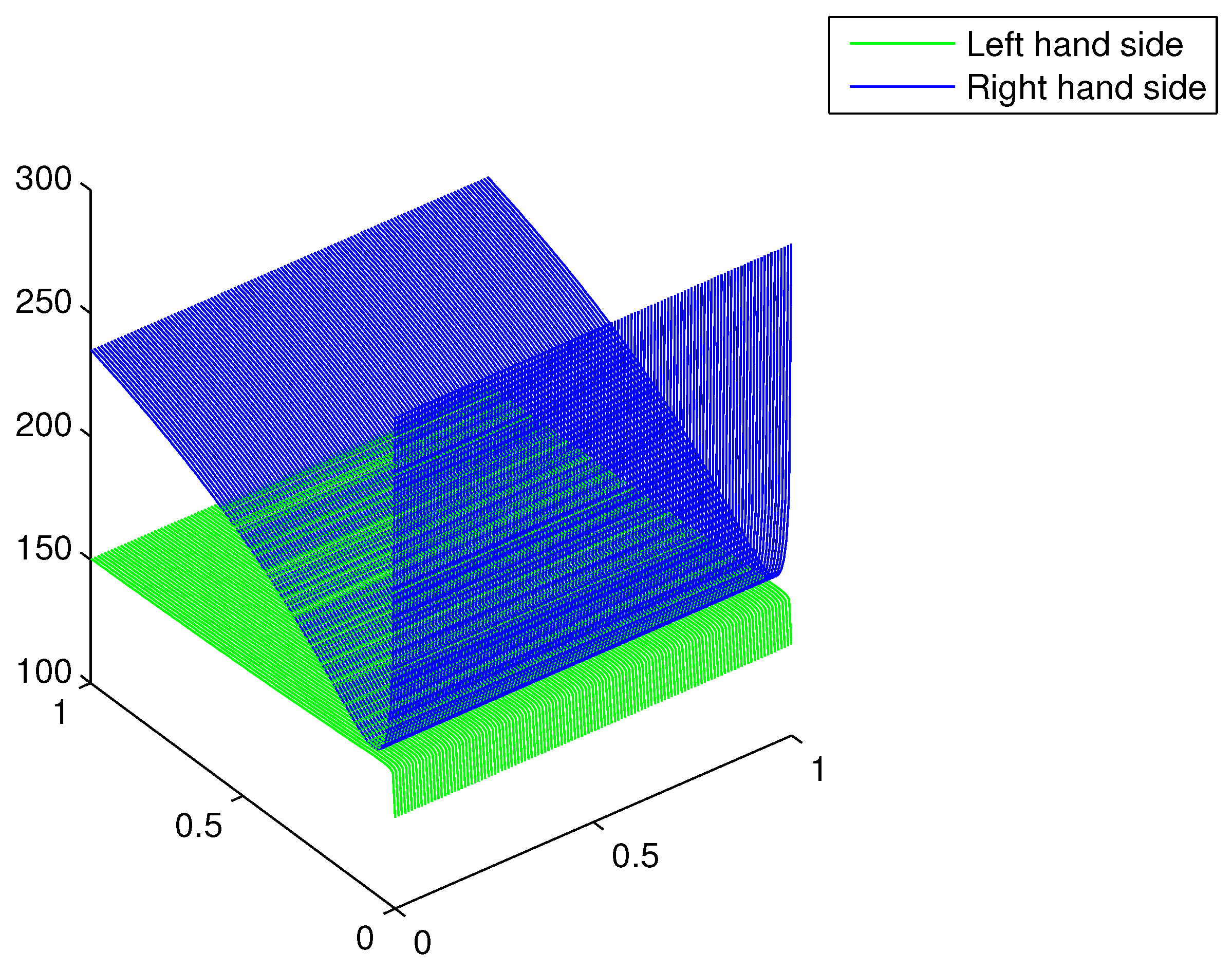
The inequality (13) of Theorem 1 is numerically analyzed in Table 1, where ϕ = 1 , ε 1 = 10 , ε 2 = 16.7 , ε 3 = 29 , and q = 0.0001 . Assuming 0.001 p 1 , 0 β 1 , α = 0.99 , s = 0.22 ,  Figure 1 offers a graphic representation of the validity of inequality (13) with the same values for ϕ , ε 1 , ε 2 , ε 3 , and q .
Example 2.  
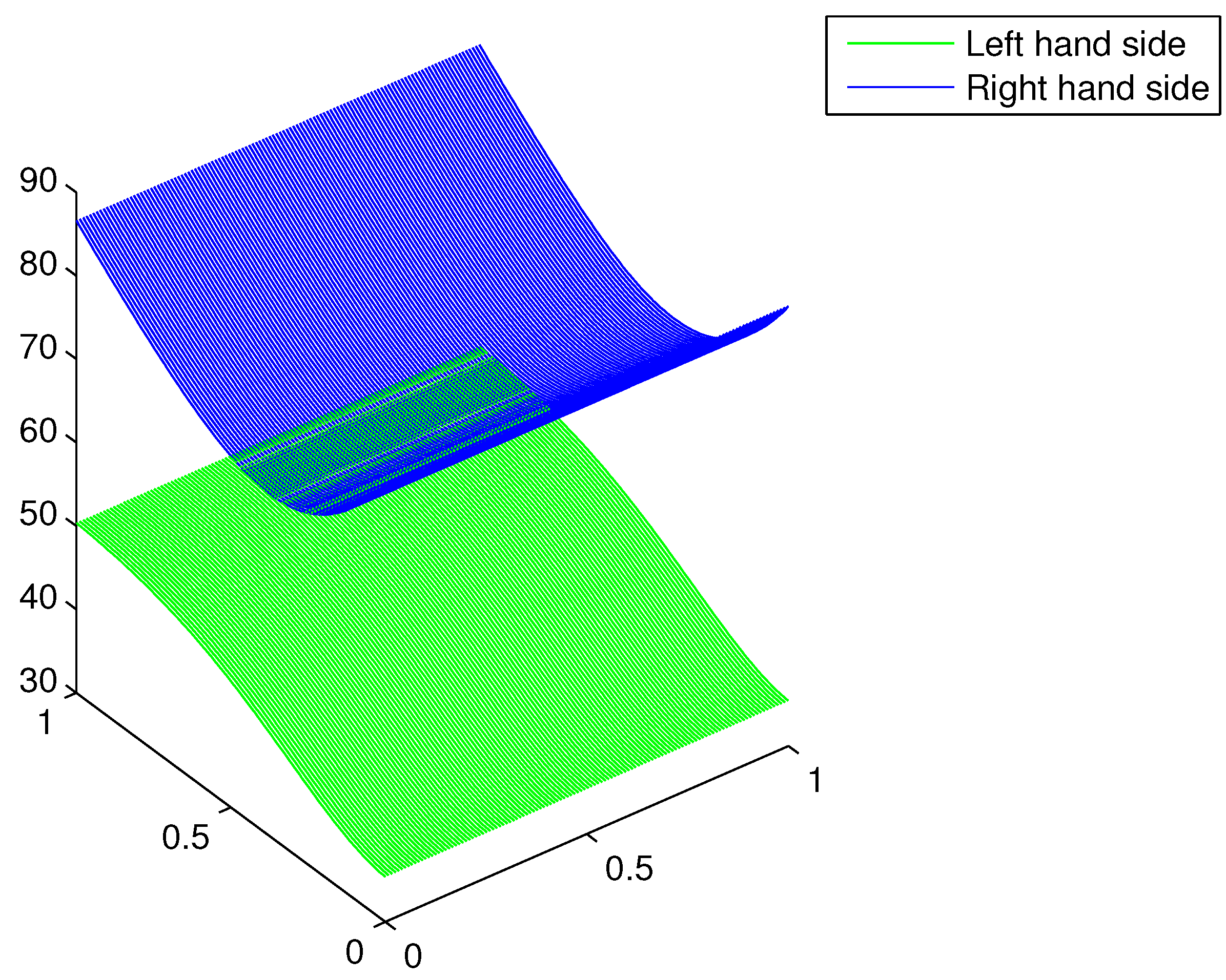
The inequality (14) of Theorem 2 is numerically analyzed in Table 2, where ϕ = 2 = μ , ε 1 = 10 , ε 2 = 9 , and ε 3 = 10 . Assuming 0.0001 q 0.999 , 0 α 1 , p = 1 , β = 0.001 , s = 0.01 ,  Figure 2 offers a graphic representation of the validity of inequality (14) with the same values for ϕ , μ , ε 1 , ε 2 , and ε 3 .
Example 3.  
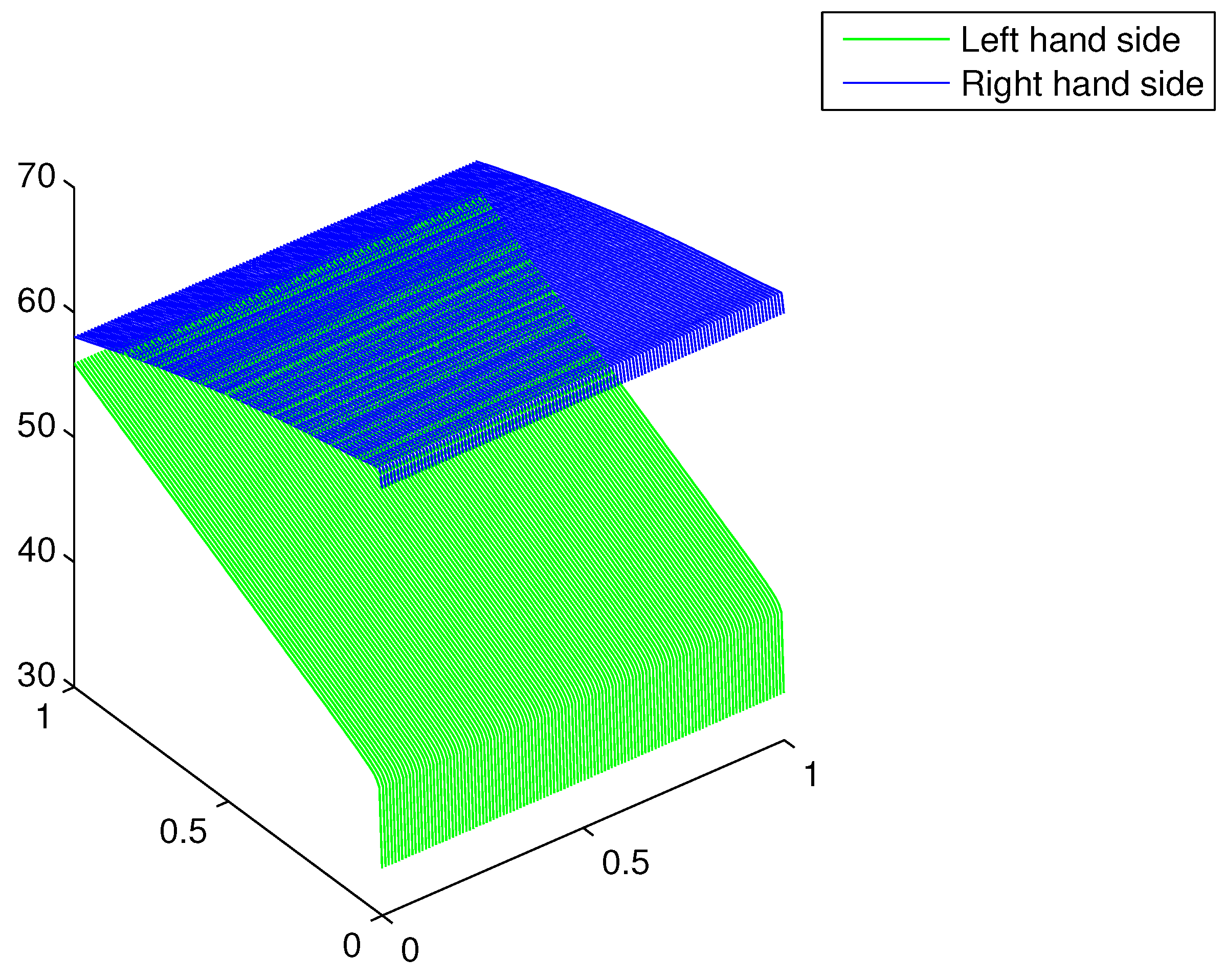
The inequality (15) of Theorem 3 is numerically analyzed in Table 3, where ϕ = 1 , ε 1 = 20 , ε 2 = 22 , ε 3 = 25 , and q = 0.0001 . Assuming 0.001 p 1 , 0 α 1 , β = 1 , ϑ = 2 , s = 0.01 ,  Figure 3 offers a graphic representation of the validity of inequality (15) with the same values for ϕ , ε 1 , ε 2 , ε 3 , and q .

Discussion on the Tightness of the Bounds

In addition to verifying that the left-hand side is less than or equal to the right-hand side of the obtained inequalities in theorems for the chosen parameters, we also examine the gap between these two sides to assess the informativeness of the bounds. For each example, we compute both the absolute difference R H S L H S and the relative ratio R H S / L H S . The results show that for most parameter choices, the ratio lies between 1 and 2, indicating reasonably tight bounds. However, at extreme parameter values such as q = 0.0001 and p = 0.01 , the ratio becomes larger, i.e., 95.2987. This behavior is expected, as such extreme parameters lie far from the classical regime and represent boundary cases in the post-quantum framework. The primary contribution of this work remains the unification and generalization of integral inequalities within post-quantum calculus, and the numerical examples serve to validate the analytical results across the parameter domain.

5. Application to Special Means

1.
Arithmetic mean
A ( ε 1 , ε 3 ) = ε 1 + ε 3 2 , ε 1 , ε 3 ( , ) .
2.
Geometric mean
G ( ε 1 , ε 3 ) = ε 1 ε 3 , ε 1 , ε 3 [ 0 , ) .
Proposition 1.  
Let ε 1 , ε 3 [ 0 , ) such that ε 1 < ε 3 , then
A ε 2 + ε 1 + 2 ( ε 3 ε 2 ) ζ φ 1 , ( γ + δ + 2 ) ε 1 + ε 3 2 + ε 2 ( γ δ ) φ 2 p 4 [ 2 ] p , q [ 3 ] p , q [ 4 ] p , q A 2 ( ε 2 ε 1 ) φ 1 , ( ε 1 + ε 3 2 ε 2 ) φ 2 p 2 [ 3 ] p , q A 2 ( 2 ε 1 + ε 3 ε 2 ) φ 1 , ( ε 1 + ε 3 + 2 ε 2 ) φ 2 φ 1 [ s + 1 ] p , q A ( 1 ζ ) 2 , p 2 G 2 ( 1 ζ , p ) + A q 6 [ 5 ] p , q , q 2 ( q + p ) 2 [ 3 ] p , q + ( 1 ζ p ) G 2 q [ 2 ] p , q , q + p G 2 1 [ 3 ] p , q , q 3 G 2 q 4 [ 4 ] p , q , q + p 1 2 × 8 ε 1 2 + [ 2 ] p , q 2 ( ε 2 ε 1 ) [ 2 ] p , q ( ε 2 ε 1 ) + 4 ε 1 1 2 + φ 2 [ s + 1 ] p , q A γ 2 , p 2 G 2 ( γ , p ) + A q 6 [ 5 ] p , q , q 2 ( q + p ) 2 [ 3 ] p , q + ( γ p ) G 2 q [ 2 ] p , q , q + p G 2 1 [ 3 ] p , q , q 3 G 2 q 4 [ 4 ] p , q , q + p 1 2 × 4 ε 2 2 + [ 2 ] p , q 4 ( ε 1 + ε 3 2 ε 2 ) [ 2 ] p , q ε 1 + ε 3 2 ε 2 2 + 4 ε 2 1 2 + φ 2 [ s + 1 ] p , q A δ 2 , p 2 G 2 ( δ , p ) + A q 6 [ 5 ] p , q , q 2 ( q + p ) 2 [ 3 ] p , q + ( δ p ) G 2 q [ 2 ] p , q , q + p G 2 1 [ 3 ] p , q , q 3 G 2 q 4 [ 4 ] p , q , q + p 1 2 × ( ε 1 + ε 3 ) 2 + [ 2 ] p , q 4 ( ε 1 + ε 3 2 ε 2 ) [ 2 ] p , q ε 1 + ε 3 2 ε 2 2 + 2 ( ε 1 + ε 3 ) 1 2 + φ 1 [ s + 1 ] p , q A ζ 2 , p 2 G 2 ( ζ , p ) + A q 6 [ 5 ] p , q , q 2 ( q + p ) 2 [ 3 ] p , q + ( ζ p ) G 2 q [ 2 ] p , q , q + p G 2 1 [ 3 ] p , q , q 3 G 2 q 4 [ 4 ] p , q , q + p 1 2 × 4 ( ε 1 + ε 3 ε 2 ) 2 + [ 2 ] p , q 2 ( ε 2 ε 1 ) [ 2 ] p , q ( ε 2 ε 1 ) + 4 ( ε 1 + ε 3 ε 2 ) 1 2 .
Proof. 
Let ( σ ) = σ 2 in Theorem 2, with ϕ = 2 = ϑ , then
ε 1 D p , q ( σ ) = [ 2 ] p , q ( σ ε 1 ) + 2 ε 1 ,
2 0 A φ , p 2 = ( φ p ) 2 + q 2 ( q + p ) 2 [ 3 ] p , q + q 6 [ 5 ] p , q + 2 q ( φ p ) ( q + p ) [ 2 ] p , q 2 q 3 ( φ p ) [ 3 ] p , q 2 q 4 ( q + p ) [ 4 ] p , q ,
0 1 1 ζ ( 1 0 Φ q ( σ ) ) p , q ( ϕ ) p ϕ 2 ε 1 D p , q ( 1 σ ) ε 1 + σ ε 2 0 d p , q σ = ( ε 2 ε 1 ) ( 1 ζ ) + 2 ε 1 ( 1 ζ ) ( ε 2 ε 1 ) p 4 [ 2 ] p , q [ 3 ] p , q [ 4 ] p , q 2 ε 1 p 2 [ 3 ] p , q ,
0 1 γ ( 1 0 Φ q ( σ ) ) p , q ( ϕ ) p ϕ 2 ε 2 D p , q ( 1 σ ) ε 2 + σ ε 1 + ε 3 2 0 d p , q σ = ε 1 + ε 3 2 ε 2 2 γ + 2 ε 2 γ ( ε 1 + ε 3 2 ε 2 ) p 4 [ 2 ] p , q 2 [ 3 ] p , q [ 4 ] p , q 2 ε 2 p 2 [ 3 ] p , q ,
0 1 δ ( 1 0 Φ q ( σ ) ) p , q ( ϕ ) p ϕ 2 ε 1 + ε 3 2 D p , q ( 1 σ ) ε 1 + ε 3 2 + σ ( ε 1 + ε 3 ε 2 ) 0 d p , q σ = ε 1 + ε 3 2 ε 2 2 δ + ( ε 1 + ε 3 ) δ ( ε 1 + ε 3 2 ε 2 ) p 4 [ 2 ] p , q 2 [ 3 ] p , q [ 4 ] p , q ( ε 1 + ε 3 ) p 2 [ 3 ] p , q , 0 1 ζ ( 1 0 Φ q ( σ ) ) p , q ( ϕ ) p ϕ 2 ε 1 + ε 3 ε 2 D p , q ( 1 σ ) ( ε 1 + ε 3 ε 2 ) + σ ε 3 0 d p , q σ = ( ε 2 ε 1 ) ζ + 2 ( ε 1 + ε 3 ε 2 ) ζ ( ε 2 ε 1 ) p 4 [ 2 ] p , q [ 3 ] p , q [ 4 ] p , q 2 ( ε 1 + ε 3 ε 2 ) p 2 [ 3 ] p , q .
Substituting the previously given values in inequality (14) of Theorem 2 yields the required result. □
Remark 4.  
The derivation of the inequality obtained in Proposition 1 involving the arithmetic and geometric means is not a mere substitution. Expressing the results in terms of special means is nontrivial, particularly when dealing with multiparameters, q-shifting operators, s-convexity, ( p , q ) -derivative, and the Riemann–Liouville fractional ( p , q ) ε 1 -integrals. Each condition must be carefully verified, and the parameters must be appropriately selected to ensure compatibility with the domain of the special means. This application serves to illustrate that the general theoretical framework developed in this paper is capable of producing concrete inequalities involving classical functions, thereby demonstrating its practical reach beyond abstract theory.

6. Conclusions

In this article, we identified a broad class of new post-quantum multiparameter integral inequalities involving the Riemann–Liouville fractional integral, successfully unifying the Boole-type, Bullen–Simpson-type, Maclaurin-type, corrected Euler–Maclaurin-type, 3 8 -Simpson-type, and companion Ostrowski-type frameworks. Using a variety of analytical tools, including s-convexity, logarithmic convexity, properties of the modulus, the Holder inequality, and the power mean inequality, we have established bounds that are both rigorous and adaptable to various function behaviors. Such theoretical developments are supported by meticulously crafted numerical and graphical examples, which show the accuracy and usefulness of the obtained estimates. In addition, the use of these inequalities in special means theory establishes a concrete connection between post-quantum fractional analysis and the classical mean values. The results given here add to the ever-increasing literature on post-quantum fractional integral inequalities while offering scope for future research in related areas under generalized convexity assumptions.

Author Contributions

Conceptualization, S.R., S.H. and Y.S.; methodology, S.R., S.H. and M.A.; software, S.R.; validation, S.R. and S.H.; formal analysis, S.H. and Y.S.; investigation, S.R., S.H. and M.A.; resources, Y.S.; writing—original draft preparation, S.R. and M.A.; writing—review and editing, S.R. and S.H.; visualization, S.R. and Y.S. All authors have read and agreed to the published version of the manuscript.

Funding

This work was supported by the Dong-A University research fund. This research was supported by the Global-Learning Academic Research Institution for Master’s–PhD Students and Postdocs (LAMP) Program of the National Research Foundation of Korea (NRF) grant funded by the Ministry of Education (RS-2025-25440216).

Data Availability Statement

The original contributions presented in this study are included in the article material. Further inquiries can be directed to the corresponding authors.

Conflicts of Interest

The authors declare no conflicts of interest.

References

  1. Jackson, F.H. On q-definite integrals. Quart. J. Pure Appl. Math. 1910, 41, 193–203. [Google Scholar]
  2. Jackson, F.H. q-difference equations. Amer. J. Math. 1910, 32, 305–314. [Google Scholar] [CrossRef]
  3. Aral, A.; Gupta, V.; Agarwal, R.P. Applications of q-Calculus in Operator Theory; Springer: New York, NY, USA, 2013. [Google Scholar]
  4. Kac, V.; Cheung, P. Symmetric Quantum Calculus; Springer: New York, NY, USA, 2002. [Google Scholar]
  5. Kunt, M.; Aljasem, M. Fractional quantum Hermite-Hadamard type inequalities. Konuralp J. Math. 2020, 8, 122–136. [Google Scholar]
  6. Fock, V. Zur theorie des wasserstoffatoms. Z. Physik 1935, 98, 145–154. [Google Scholar] [CrossRef]
  7. Tunc, M.; Gov, E. Some integral inequalities via (p,q)-calculus on finite intervals. Filomat 2021, 35, 1421–1430. [Google Scholar] [CrossRef]
  8. Tunc, M.; Gov, E. (p,q)-integral inequalities. RGMIA Res. Rep. Coll. 2016, 19, 97. [Google Scholar]
  9. Soontharanon, J.; Sitthiwirattham, T. On fractional (p,q)-calculus. Adv. Differ. Equ. 2020, 2020, 35. [Google Scholar] [CrossRef]
  10. Neang, P.; Nonlaopon, K.; Tariboon, J.; Ntouyas, S.K. Fractional (p,q)-calculus on finite intervals and some integral inequalities. Symmetry 2021, 13, 504. [Google Scholar] [CrossRef]
  11. Franjic, I.; Pecaric, J. Corrected Euler-Maclaurin’s formulae. Rend. Circ. Mat. Palermo. 2005, 54, 259–272. [Google Scholar] [CrossRef]
  12. Guessab, A.; Schmeisser, G. Sharp integral inequalities of the Hermite–Hadamard type. J. Approx. Theory 2002, 115, 260–288. [Google Scholar] [CrossRef]
  13. Krukowski, M. New error bounds for Boole’s rule. arXiv 2018, arXiv:1808.02803. [Google Scholar]
  14. Meftah, B.; Samoudi, S. Some Bullen-Simpson type inequalities for differentiable s-convex functions. Math. Moravica 2024, 28, 63–85. [Google Scholar] [CrossRef]
  15. Sitthiwirattham, T.; Ali, M.A.; Soontharanon, J. On some error bounds of Maclaurin’s formula for convex functions in q-calculus. Filomat 2023, 37, 5883–5894. [Google Scholar] [CrossRef]
  16. Sitthiwirattham, T.; Ali, M.A.; Budak, H. On some new Maclaurin’s type inequalities for convex functions in q-calculus. Fractal Fract. 2023, 7, 572. [Google Scholar] [CrossRef]
  17. Demir, I.; Unes, E. Fractional integral approaches to weighted corrected Euler–Maclaurin-type inequalities for different classes of functions. Chaos Solitons Fractals 2025, 200, 116936. [Google Scholar] [CrossRef]
  18. Erden, S.; Ozdemir, B.G.; Kılıçer, S.; Demır, C. Ostrowski type inequalities including Riemann-Liouville fractional integrals for two variable functions. Konuralp J. Math. 2024, 12, 62–73. [Google Scholar]
  19. Nasir, J.; Qaisar, S.; Butt, S.I.; Khan, K.A.; Mabela, R.M. Some Simpson’s Riemann-Liouville fractional integral inequalities with applications to special functions. J. Funct. Spaces 2022, 2022, 2113742. [Google Scholar] [CrossRef]
  20. Nasri, N.; Meftah, B.; Moumen, A.; Saber, H. Fractional 3/8-Simpson type inequalities for differentiable convex functions. AIMS Math. 2024, 9, 5349–5375. [Google Scholar] [CrossRef]
  21. Samraiz, M.; Hassan, Z.; Naheed, S.; Vivas-Cortez, M.; Ali, R.; Lamoudan, T. Advancements in Bullen-type inequalities via fractional integral operators and their applications. Heliyon 2024, 10, e37246. [Google Scholar] [CrossRef]
  22. Asawasamrit, S.; Sudprasert, C.; Ntouyas, S.K.; Tariboon, J. Some results on quantum Hahn integral inequalities. J. Inequal Appl. 2019, 2019, 154. [Google Scholar] [CrossRef]
  23. Hussain, S.; Khaliq, R.; Rafeeq, S.; Ali, A.; Ro, J.S. Some fractional integral inequalities involving extended Mittag-Leffler function with applications. AIMS Math. 2024, 9, 35599–35625. [Google Scholar] [CrossRef]
  24. Rafeeq, S.; Hussain, S.; Mansab, D.; Ahmad, H.; Radwan, T. On post quantum multiparameter Riemann-Liouville fractional integral inequalities with application. J. Inequal. Appl. 2025, 2025, 93. [Google Scholar] [CrossRef]
  25. Oussi, L. A Note on the (p,q)-derivative operator. Int. J. Appl. Comput. Math. 2024, 10, 172. [Google Scholar] [CrossRef]
  26. Tariboon, J.; Ntouyas, S.K.; Agarwal, P. New concepts of fractional quantum calculus and applications to impulsive fractional q-difference equations. Adv. Differ. Equ. 2015, 2015, 18. [Google Scholar] [CrossRef]
  27. Luangboon, W.; Nonlaopon, K.; Tariboon, J.; Ntouyas, S.K.; Budak, H. Some (p,q)-integral inequalities of Hermite-Hadamard inequalities for (p,q)-differentiable convex functions. Mathematics 2022, 10, 826. [Google Scholar] [CrossRef]
  28. Sadjang, P.N. On two (p,q)-analogues of the Laplace transform. J. Differ. Equ. Appl. 2017, 23, 1562–1583. [Google Scholar]
  29. Meftah, B.; Menai, C. Error bounds of Newton-Cotes quadrature rules involving at most five points via extended s-convexity. Turkish J. Ineq. 2024, 8, 1–15. [Google Scholar]
  30. Yildiz, C.; Yergoz, B.; Yergoz, A. On new general inequalities for s-convex functions and their applications. J. Inequal. Appl. 2023, 2023, 11. [Google Scholar] [CrossRef]
  31. Tunc, M. Some integral inequalities for logarithmically convex functions. J. Egypt. Math. Soc. 2013, 22, 177–181. [Google Scholar] [CrossRef]
Figure 1. LHS and RHS of (13) with 0.001 p 1 , and 0 β 1 .
Fractalfract 10 00242 g001
Figure 2. LHS and RHS of (14) with 0.0001 q 0.999 , and 0 α 1 . .
Fractalfract 10 00242 g002
Figure 3. LHS and RHS of (15) with 0.001 p 1 , and 0 α 1 . .
Fractalfract 10 00242 g003
Table 1. Statistical analysis of Theorem 1.
p α β sLHS of (13)RHS of (13)RHS-LHSRHS/LHS
0.10.990.11155.3487965.0222809.67356.21197
0.30.80.20.7151.2356325.0792173.84362.1495
0.50.60.50.4147.0268275.2382128.21141.8720
0.70.30.90.2143.1058291.3878148.28202.0362
0.90.00110.1140.0466304.3630164.31642.1733
Table 2. Statistical analysis of Theorem 2.
qp α β sLHS of (14)RHS of (14)RHS-LHSRHS/LHS
0.010.2010.00015.016639.030534.01397.7803
0.30.40.70.50.221.155632.950511.79491.5575
0.50.610.80.412.887136.422523.53542.8263
0.70.80.40.30.629.656939.47189.81491.3309
0.9910.90150.187761.464511.27681.2247
Table 3. Statistical analysis of Theorem 3.
p α β s ϑ LHS of (15)RHS of (15)RHS-LHSRHS/LHS
0.010.90.10.99164.76276.1718 × 10 3 6107.037395.2987
0.20.70.990.21.551.404685.773234.36861.6686
0.40.510.5248.330978.489430.15851.6240
0.80.30.30.01347.688548.22510.53661.0112
10.10.70.8442.508552.43639.92781.2335
Disclaimer/Publisher’s Note: The statements, opinions and data contained in all publications are solely those of the individual author(s) and contributor(s) and not of MDPI and/or the editor(s). MDPI and/or the editor(s) disclaim responsibility for any injury to people or property resulting from any ideas, methods, instructions or products referred to in the content.