Abstract
Artificial intelligence (AI) offers a promising avenue for developing sustainable reconfigurable manufacturing systems. Although there has been significant progress in these research areas, there seem to be no studies devoted to exploring and evaluating AI techniques for such systems. To address this gap, the current study aims to present a deliberation on the subject matter, with a particular focus on assessing AI techniques. For this purpose, an AI-enabled methodological approach is developed in Python, integrating fuzzy logic to effectively navigate the uncertainties inherent in evaluating the performance of techniques. The incorporation of sensitivity analysis further enables a thorough evaluation of how input variations impact decision-making outcomes. To conduct the assessment, this study provides an AI-powered decision-making application using large language models in the field of natural language processing, which has emerged as an influential branch of artificial intelligence. The findings reveal that machine learning and big data analytics as well as fuzzy logic and programming stand out as the most promising AI techniques for sustainable reconfigurable manufacturing systems. The application confirms that using fuzzy logic programming in Python as the computational foundation significantly enhances precision, efficiency, and execution time, offering critical insights that enable more timely and informed decision-making in the field. Thus, this study not only addresses a critical gap in the literature but also offers an AI-driven approach to support complex decision-making processes.
1. Introduction
In recent years, the fusion of reconfigurable manufacturing systems (RMSs) with sustainable manufacturing (SM) has sparked growing global research interest, leading to the emergence of sustainable reconfigurable manufacturing systems (SRMSs). As the manufacturing landscape evolves, SRMSs stand at the forefront of innovation, blending the adaptive capabilities of RMSs with the principles of SM to create a forward-thinking production paradigm. RMSs, introduced in the late 1990s as the next-generation manufacturing system, involve the development of a production system at the frontier of flexible manufacturing systems and dedicated lines in response to sudden changes in the market and/or regulatory requirements [1,2,3]. SM, viewed as a practice of circularity in manufacturing under the circular economy concept [4], entails developing more sustainable products—those that are energy-efficient, eco-friendly, and socially responsible—using sustainable processes and systems, i.e., those that produce minimal adverse environmental effects, conserve energy and natural resources, are harmless to people and are viable for profit [5,6,7]. The SRMS concept brings together the adaptability of RMSs and the sustainability considerations of SM. RMSs are characterized by six core characteristics—modularity, integrability, diagnosability, customization, convertibility, and scalability—enabling rapid reconfiguration of manufacturing systems to accommodate varying tasks [8]. By embedding these characteristics within an SM framework, SRMSs support the development of manufacturing systems that respond to the dual demands of sustainability and reconfigurability [9,10]. By definition, SRMSs are designed to quickly adapt to changes in product types and volumes through the modular and flexible arrangement of resources, while simultaneously ensuring that operations are conducted in an environmentally responsible and socially beneficial manner.
Artificial intelligence (AI) techniques, categorized by four key features—human thinking, human acting, rational thinking, and rational acting—are utilized to enable systems (machines and equipment) to acquire knowledge from information and data collected from their external environment [11,12]. These techniques allow systems to apply cognitive capabilities that support humans in performing complex tasks [13,14,15,16]. AI algorithms are generally inspired by the functioning of human cognitive systems and natural organisms, processing information through mechanisms such as learning, adaptation, reproduction, and survival [17,18,19]. Numerous prior studies have highlighted the significant potential of AI techniques to enhance intelligent decision-making processes and to develop proactive and predictive capabilities within supply chain and production systems [16,20]; however, there seems to be a leveling off in the adoption of AI techniques for enhancing system resiliency and intelligent decision-making across many companies [21]. As evidenced by the literature, research integrating AI techniques with intelligent decision-making to build resilient systems is still in its early stages, with most studies adopting case-study approaches to investigate specific problems [12,22]. To this end, the existing research landscape on SRMSs and their integration with AI reveals a significant gap. This gap highlights a crucial research opportunity and stresses the need for pioneering studies to explore how AI techniques can contribute to this understudied context. Motivated by addressing the recognized gap, this study aims to present a deliberation on the subject matter, with a particular focus on assessing AI techniques for SRMSs.
To achieve this, I developed an AI-enabled methodological approach using fuzzy logic programming in Python as the computational foundation. Belhadi et al. [12] provided valuable insight into the potential of AI techniques like fuzzy logic programming, big data analytics, machine learning, agent-based systems, etc., in enhancing supply chain systems’ resiliency. They highlighted the importance of these techniques but also acknowledged a gap in research, particularly in applying fuzzy logic programming. Thus, this study reveals that developing fuzzy logic programming solutions in Python for decision-making problems in SRMSs could be a promising avenue for research and practical application. Fuzzy logic provides a framework for handling uncertainty and imprecision, which are common in sustainability- and resiliency-related decision-making processes. Python’s simplicity and flexibility make it well suited for prototyping, experimenting with different algorithms, and integrating with concepts. However, the literature lacks such AI-driven approaches, and only a few scholars have consistently advocated for enhancing decision-making processes with these AI techniques [12,23]. The contribution of this research also entails uniquely presenting an AI-powered decision-making application using large language models (LLMs) in the field of natural language processing (NLP), which has become a dominant branch of artificial intelligence [24,25]. Marking a first in measurement/decision science, this research leverages LLMs to conduct assessments, introducing an innovative approach that incorporates unbiased expert judgment even in the context of limited knowledge and expert availability.
To expound upon my research’s contribution, this paper is organized as follows: Section 2 provides insights into the core domains for the sake of the research aim. Section 3 presents the AI-enabled methodological approach. Section 4 clarifies the approach developed in this study through an AI-powered decision-making application to accomplish the purpose of the research. Next, Section 5 delves into a thorough discussion of the findings and implications. Finally, Section 6 outlines the conclusions and recommendations.
2. Literature Review
2.1. Sustainable Reconfigurable Manufacturing Systems
According to Koren et al. [10], to manufacture sustainable products through sustainable processes, production systems must have capabilities that enhance economic, environmental, and societal sustainability—RMSs’ characteristics not only facilitate rapid system responsiveness at a low cost but also play an important role in promoting overall system sustainability. The academic conversation around SRMSs is continuously evolving, with researchers delving into a wide range of elements related to RMSs. This exploration spans from foundational theories to real-world applications that aim to enhance the principles of SM. Mekid et al. [26] initially played a role in shaping this discourse by investigating the advancements in RMSs, which set the stage for the development of SRMSs. Their research stressed the necessity of embedding intelligence and adaptability within manufacturing systems, enabling them to respond effectively to shifting market conditions while aligning with sustainability goals.
Bi [27] further explored the system paradigms from the viewpoint of SM, providing an abstract representation and conceptualization that enriches the discourse on SRMSs by advocating for a paradigm shift toward more sustainable manufacturing practices. Azab et al. [28] proposed a mechanics-of-change framework to reconfigure manufacturing systems, incorporating sustainability objectives into RMSs, thereby contributing to the conceptualization of SRMSs by highlighting the importance of adaptability and sustainability. Garbie [29,30] presents a comprehensive framework and methodology that advances the integration of sustainability into RMSs. In 2013, Garbie [29] introduced the design of a sustainable manufacturing enterprises (DFSMEs) framework, outlining design principles that align RMSs with SM objectives, thereby setting the stage for SRMSs. Building on this foundation, Garbie’s [30] study proposed a methodology for RMSs, focusing on enhancing both adaptability and sustainability—key tenets of SRMSs—by detailing actionable steps toward embedding sustainable practices within RMSs’ operations. Copani and Urgo [31] presented innovative, flexibility-oriented business models and system configuration approaches for industrial applications, underpinning the essence of RMSs. Their work emphasized the importance of adaptable production systems to maintain competitiveness and sustainability, contributing to the SRMSs dialog. Peukert et al. [32] addressed sustainability and flexibility in manufacturing through smart modular machine tool frames, extending the RMSs concept. This approach placed crucial emphasis on sustainability within RMSs, thereby advocating for the development of SRMSs that support sustainable value creation. Lee et al. [33] developed a simulation model for a self-reconfigurable manufacturing system that incorporated sustainability factors. Their research represented a convergence between self-reconfigurability and SM, offering valuable insights into the interplay between manufacturing system adaptability and sustainability, thus forwarding the SRMSs narrative.
Ribeiro and Bjorkman [34], in their examination of the transition from standard automation to cyber-physical production systems, underlined the potential of enhanced system reconfigurability to make production activities more sustainable. This work indirectly supports the SRMSs concept by highlighting the role of advanced technologies in achieving SM. Huang et al. [9] set forth a discussion on developing SRMSs by using SM metrics to evaluate RMSs’ performance. Their analytical approach to quantifying convertibility and its impact on sustainable performance signifies a methodical advancement in SRMSs research. Koren et al. [10] introduced the concept of sustainable living factories for next-generation manufacturing, which resonates with the ethos of SRMSs. They examined the integration and implementation of RMSs’ characteristics with SM principles, paving the way for living factories that embody the SRMSs model. Touzout and Benyoucef [35] explored multi-objective sustainable process plan generation within an RMSs environment. They presented exact and adapted evolutionary approaches that incorporate environmental considerations, pushing forward the understanding of SRMSs in a practical context. Huang et al. [36] discussed reconfigurable machine tools (RMTs) design for multi-part families, highlighting modularity and sustainability issues. Their philosophy aligns with the RMSs framework and implicitly supports the pursuit of SM by emphasizing the reusability and sustainability of machine tool structures. Salah et al. [37] leveraged virtual reality-based engineering education to enhance manufacturing sustainability in the Industry 4.0 context. Focusing on educational tools for RMSs, their work promotes an understanding of sustainability within RMSs, contributing to the body of knowledge on SRMS.
In more recent studies, Massimi et al. [38] proposed a heuristic-based non-linear approach aimed at optimizing the modularity and integrability of SRMSs. Their work explicitly intertwines sustainability with RMSs, strengthening the theoretical foundations of SRMSs. Mesa et al. [39] explored the application of modular architecture principles in designing sustainable open-architecture products. By emphasizing modularity, a core feature of RMSs, their research contributed to the discourse on SM and, consequently, to the further development of SRMSs. Ghanei and Algeddawy [40] developed a model for layout planning and scheduling within SRMSs, integrating energy sustainability into decisions on system configuration. Their research highlighted the economic and environmental aspects of SRMSs by underscoring the importance of energy efficiency within RMSs. Battaïa et al. [41] examined RMSs as a foundation for sustainable manufacturing, proposing research directions aimed at extending a system’s lifespan, considering end-of-life strategies, and reducing energy consumption and emissions. Gordon [42] took a different approach by analyzing IoT-based real-time logistics in cyber-physical manufacturing systems, focusing on automation and sustainability within RMSs and SRMSs. This work demonstrated how technology, particularly automation, plays a vital role in advancing SM. Gao et al. [43], Khezri et al. [44], and Kurniadi and Ryu [45] contributed to the SRMSs discourse by developing models that integrate process planning, scheduling, and layout optimization with sustainability metrics in RMSs. Collectively, their research offers practical solutions to enhance sustainability in manufacturing. Furthering this line of inquiry, Khettabi et al. [46] introduced a multi-objective evolutionary-based model for SRMSs design that balances environmental considerations with traditional manufacturing objectives. Pedro [47] critically examined the role of flexibility and adaptability in RMSs design, advocating for the integration of sustainability into the design process, thus aligning with the SRMS paradigm. Lee and Ryu [48] developed methods for reconfiguring smart, self-optimizing, and self-organizing RMSs, advancing the concept of autonomous manufacturing operations, a key aspect of SRMSs. Kombaya Touckia et al. [49] addressed the challenges of modern manufacturing environments, exacerbated by the COVID-19 pandemic, by developing a digital twin framework for RMSs. This framework enhances reconfigurability and aligns with SRMSs’ goals.
Vavrík et al. [50] examined the incorporation of backup machines in RMSs, emphasizing the importance of system reliability and adaptability. Napoleone et al. [51] extended the strategic potential of RMSs to the supply chain level, investigating how RMSs can improve resilience and sustainability within supply chains. Their methodology, which includes a machine reusability index and a mixed-integer programming algorithm, facilitates the identification of reusable and reconfigurable machines during network design. Yazdani et al. [52] tackled process and production planning within SRMSs by focusing on the three pillars of sustainability—social, environmental, and economic. Through the development of a linear mixed-integer model and a Lagrangian relaxation-based approach, they offered practical methodologies for integrating SRMSs into the broader context of sustainable manufacturing. Hariyani and Mishra [53] conducted a descriptive statistical analysis identifying key enablers of integrated sustainable manufacturing systems within Indian industries. Their findings highlighted the critical impact of SRMSs enablers on improving organizational performance. Pansare et al. [54] assessed the role of Industry 4.0 and RMSs practices in achieving sustainable development goals (SDGs). They developed a comprehensive framework that integrates RMSs practices with sustainability objectives, facilitating the attainment of these global targets. Delorme et al. [3] took a more technical approach, focusing on balancing and planning within RMSs under uncertain demand and fluctuating energy costs. Their bi-level optimization model emphasized both productivity and energy efficiency, which directly aligns with SRMSs’ goals of optimizing resource use in manufacturing. Zidi et al. [55] provided a literature review on the selection of reconfigurable supply chains, outlining a research roadmap that identifies key criteria and methods for efficient supply chain configuration. This work serves as a foundational step toward realizing SRMSs in supply chain systems. Milisavljevic-Syed et al. [56] tackled the realization of responsive and sustainable reconfigurable manufacturing systems. They developed a decision engineering framework for RMS, with a focus on energy efficiency, thereby bridging the gap between RMS and sustainable manufacturing practices. In another study, Pansare et al. [57] explored the key factors driving the adoption of RMS in manufacturing industries. Through the validation of a structural model, they emphasized practices that enhance RMS adoption and performance, which are essential for fostering sustainability and flexibility in modern manufacturing settings.
In general, these studies demonstrate the ongoing efforts to align RMS with SM goals, thereby advancing the concept of SRMSs. They reflect the growing commitment to integrating SM principles with RMSs’ core characteristics, as described in Table 1. The extensive body of work on SRMSs, encompassing theoretical explorations, practical methodologies, and innovative applications, has established a solid foundation for future research focused on enhancing sustainability and adaptability in the manufacturing sector. However, a review of the existing literature reveals that, although a wide range of topics has been covered, there is a noticeable gap in research specifically centered on the application of AI techniques for SRMSs. This lack of focus points to a critical need for further investigations aimed at developing frameworks, models, and decision-making tools that integrate AI into SRMSs. Addressing this gap would not only enrich the existing body of knowledge but would also provide practical guidance for stakeholders looking to improve the sustainability and resiliency of their manufacturing systems through the use of AI.
Table 1.
RMS characteristics [2,8].
2.2. Artificial Intelligence Techniques
Based on the work of Russell and Norvig [11], researchers have explored various interpretations of AI. Some define intelligence based on how closely it mimics human performance, while others adopt a more abstract, formal definition centered on rationality—essentially, the ability to consistently make the “right” decisions. Perspectives on AI also differ in terms of focus: some view intelligence as an attribute of internal cognitive processes and reasoning, while others emphasize intelligent behavior, assessing it from an external, observable standpoint. In the production context, Dhamija and Bag [16] describe AI as machine-driven manufacturing systems that replicate human behaviors, aiming to resemble original human practices. AI algorithms are often modeled after the cognitive processes of humans and natural organisms, enabling machines to process information through mechanisms such as learning, adaptation, reproduction, and survival [17,18,19]. The expansive field of AI encompasses a diverse range of tools and techniques, including artificial neural networks, fuzzy logic, agent-based systems, genetic algorithms, machine learning, and deep learning [13]. According to Russell and Norvig [11], AI techniques can be characterized by four key attributes: thinking like humans, acting like humans, reasoning, and acting rationally. These attributes allow AI techniques to be categorized into four groups [12], as described in Table 2.
Table 2.
AI techniques [11,12].
Human thinking techniques encompass a range of AI methods designed to mimic human cognitive processes, particularly with regard to recognizing and understanding information patterns [11]. These techniques include network-based algorithms such as artificial neural networks [58,59], Bayesian networks [60,61], and Markov processes [62]. Tree-based clustering is a common technique in AI literature within the operations and supply chain context, which is used to identify patterns and predict trends [63]. Zanjani et al. [64] applied tree clustering for supply chain planning under uncertainty, while Thomassey [65] used k-means clustering for sales forecasting in the clothing industry. Rough set theory has also been applied in several studies, e.g., for inventory control [66], supply chain evaluation [67], and supplier selection [68]. Inspired by the collective decision-making observed in natural swarms like fish schools and bird flocks, artificial swarm intelligence applies these principles to networked human groups through AI algorithms. Known also as “human swarming,” it connects users in real time to function as a closed-loop system, enhancing group intelligence and decision-making accuracy [69]. This technology has proven effective across various applications, from financial forecasting to medical diagnoses, by amplifying collective insights and optimizing group decisions in manufacturing and beyond [70,71]. Human acting techniques encompass a variety of AI approaches designed to emulate human behavior during interactions with people, adhering to established conventions of human communication [11]. The most prevalent method in this category is machine learning, often coupled with big data analytics [12,23,72], e.g., researchers [73,74,75] have employed machine learning algorithms for prescriptive decision-making in operations and supply chain management. Techniques such as reinforcement learning [76] and natural language processing [63,77] are less common in these contexts. Furthermore, genetic algorithms have been applied to enhance interactions in virtual environments, as demonstrated by [78,79,80]. Expert systems have also been utilized (e.g., [81,82]) to facilitate efficient interconnections between production entities.
Rational thinking techniques involve AI methods that model thinking as a logical, structured process, where conclusions are derived from symbolic logic [11]. Among the most commonly used approaches are fuzzy logic and fuzzy programming [83,84], stochastic programming [85,86], and robust optimization [23,79]. In addition to these, less frequently used techniques have also been explored in the literature, such as knowledge representation and reasoning [21,63]. Rational acting techniques encompass AI approaches that, based on specific beliefs, enable the achievement of particular goals through rational actions [11]. These methods primarily focus on the rational agent approach, which utilizes agent-based systems [23,87,88,89] to simulate logical actions within given constraints. These techniques also incorporate more advanced approaches such as model predictive control [90,91], robotic process automation [92], and computer vision [16,22]. These techniques allow AI systems to perform tasks in a manner that mirrors human rationality.
3. AI-Enabled Methodological Approach
Rooted in the foundational work of Bellman and Zadeh [93], fuzzy logic has evolved into an AI-driven approach for addressing multicriteria decision-making problems [12,83,84]. In 1970, Bellman and Zadeh [93] introduced a framework in which a decision criterion is represented as a fuzzy subset within a set of decision alternatives, denoted as X. In this framework, the membership function of an alternative x in a given criterion Cr, expressed as Cr (x), measures the degree to which x satisfies the criterion Cr. When dealing with multiple criteria labeled Crj, where j ranges from 1 to q, these authors proposed a method for constructing an aggregate decision function , such that . This aggregate function, which is also a fuzzy subset of X, is defined by , reflecting the extent to which x simultaneously satisfies all of the criteria. Since the development of this foundational model, subsequent research has explored the use of alternative operators to combine satisfaction levels across various criteria. These studies have investigated different methods for aggregating criteria, moving beyond the original approach, to improve decision-making processes in complex multicriteria environments. The integration of these alternative operators provides more flexibility and precision in determining how well alternatives meet the combined requirements of multiple criteria.
Building on the concept of ‘technique for order performance by similarity to ideal solution’, initially formulated by Hwang and Yoon [94], this study developed an AI-driven decision-making model using Python to facilitate decision-making in complex scenarios. These scenarios often involve intricate analysis and assortment across multiple characteristics, criteria, and stakeholders, all within a fuzzy environment. To address the uncertainty present in decision data and group decision-making processes, linguistic or artificial variables were employed to assess both the weights of the criteria and the ratings of each alternative against each criterion. Triangular fuzzy numbers (TFNs) were primarily utilized as artificial variables for preference assessment due to their ease of use and simplicity in calculation, which aids decision-makers in fuzzy environments. A TFN is defined by a triplet (A, B, C), where A represents the smallest possible value, B is the most likely or probable value, and C denotes the largest possible value. This structure enables decision-makers to account for uncertainty and variability, encapsulating a range of values that reflect the imprecision inherent in assessments or measurements within a fuzzy system.
Definition 1.
Let Y = (A, B, C) and Z = (A1, B1, C1) be two triangular fuzzy numbers. Then, the basic operations of TFNs are defined as follows:
The distance between fuzzy numbers Y and Z is computed:
In the case of a group consisting of P decision makers, where each decision-maker (for p = 1, 2, 3, …, P) provides a fuzzy rating in the form of a positive triangular fuzzy number and the membership function represents the degree to which a given value x belongs to the fuzzy set. The aggregated fuzzy rating R = (A, B, C) is determined by applying a chosen aggregation operator, which combines the fuzzy ratings provided by the group of decision-makers. This aggregation process integrates the varying assessments of each decision-maker into a unified representation. The aggregation operators frequently used in this study include a variety of methods, which are outlined as follows:
- Arithmetic Mean of TFNs—this is a method that is commonly used to aggregate fuzzy ratings by calculating the average values of the parameters that define the fuzzy numbers across multiple inputs or data points. This method assumes that all inputs are of equal weight (importance). It is computed as follows:
- Weighted Arithmetic Mean of TFNs—this method extends the basic arithmetic mean by incorporating weights that represent the relative importance or reliability of each input. This method is particularly beneficial in situations where certain decision-makers or criteria are considered more influential or significant than others. The weighted arithmetic mean allows for a sounder aggregation by assigning different weights to the inputs. The following formula is applied accordingly:where wp is the weight assigned to the p-th decision-maker’s rating and is the total weight. This method ensures that the aggregated fuzzy rating reflects the varying levels of significance or trust placed in the inputs, thereby offering a more accurate and context-sensitive representation of the group’s overall assessment.
- Min–Max–Mean Method—this method calculates the minimum, mean, and maximum values of the parameters defining the fuzzy numbers across a set of inputs. This method is designed to capture a broad range of perspectives, from the most conservative to the most optimistic evaluations. By considering these three distinct points—minimum, mean, and maximum—the method provides a more comprehensive view of potential outcomes, reflecting the full spectrum of uncertainty in decision-making. The approach ensures that decision-makers account for the lowest possible, most likely, and highest possible scenarios, offering a balanced representation of the varying degrees of confidence in the input data.
Each of these aggregation methods serves a distinct purpose and may be applied in specific decision-making contexts. Given these considerations, the following algorithm summarizes the main steps used in the proposed approach.
# Step 1: Define criteria (characteristics) and their types, i.e., benefit and cost criteria.
# Step 2: Design TFNs corresponding to the importance of the criteria and the AI techniques’ performance.
# Step 3: Determine criteria weights and performance ratings using TFNs assigned by the AI models. Equations (6), (7) or (8) can be used to aggregate.
# Step 4: Normalize fuzzy decision matrix:
where m and n represent the number of alternatives and criteria, respectively, and , which represents the normalized fuzzy rating of alternative i for criterion j, is calculated as follows:
where J and J′ are associated with benefit and cost criteria, respectively.
# Step 5: Formulate the weighted normalized fuzzy decision matrix for all AI techniques:
where and is the weight of the jth criterion.
# Step 6: Compute the fuzzy positive optimal outcome (FPO) and fuzzy negative optimal outcome (FNO) for all AI techniques:
# Step 7: Compute the distances from FPO and FNO following Equation (5).
# Step 8: Calculate the closeness coefficient (CC) and order the AI techniques based on values:
# Step 9: Sensitivity analysis (SA), regarded as the hermeneutics of mathematical modeling [95], systematically alters input parameters, such as weights, to assess their impact on the model’s outcomes. This approach helps confirm the robustness of the results [96], examining how changes in the criteria weights wj affect CCi. For each experiment, a new set of CCi values for all AI techniques is programmatically calculated:
where and are the distances from the FPO and FNO, respectively, recalculated for the k-th set of weights. Thus, in each experiment, the weights assigned to the criteria wj are varied to observe how these changes impact CCi, providing insights into the robustness of the outcomes.
The validation of this proposed method, coined as the Fuzzy set Technique for Order Performance using Python (FuTOPy), is detailed in Appendix A, showcasing the algorithm’s practical applicability and providing scientific evidence of its validity. It includes a comprehensive analysis of a real-world scenario, offering empirical evidence that demonstrates the method’s effectiveness and reliability in practical settings. It introduces researchers to the essential aspects of how the method can be applied to tackle complex decision-making problems. The employment of varied data and operators in the case study highlights the adaptability and robustness of the methodological approach, emphasizing its capability to address diverse decision-making challenges effectively. Therefore, it can serve as a pedagogical tool, enhancing understanding and providing valuable insights, particularly for researchers who are new to the concept.
4. AI-Powered Decision-Making Application
Natural language processing (NLP) has become a fundamental branch within the broader field of artificial intelligence (AI), as discussed in Section 2. NLP combines computational linguistics—rule-based modeling of human language—with statistical and machine learning models. It is used in a myriad of applications: more advanced uses involve interactive conversational agents, such as chatbots and personal assistants, that can engage in human-like dialogs, make decisions, and offer recommendations based on contextual understanding [15,19]. According to Chowdhary [24], a growing volume of natural language text makes it difficult for humans to extract knowledge efficiently, a task which automated NLP aims to accomplish with accuracy and speed.
ChatGPT, an artificial intelligence-generated content model developed by OpenAI [18], has gained worldwide attention for its ability to manage complex language understanding and generation tasks in conversational form. This large language model (LLM) utilizes advanced technologies like deep learning, unsupervised learning, instruction fine-tuning, multi-task learning, in-context learning, and reinforcement learning, all of which are highly effective in processing sequential data and have been revolutionary in the field of NLP [18,25]. Built upon the original GPT (generative pre-trained transformer) model, which has evolved from GPT-1 in 2018 to GPT-4, an LLM capable of processing both image and text inputs and generating text outputs, ChatGPT demonstrates human-level performance across various professional and academic benchmarks [97].
Advanced ChatGPT can process extensive prompts and maintain context over longer interactions, allowing for more coherent and contextually relevant responses, which is a critical feature for applications in complex domains such as SRMSs. Although it does not dynamically learn during interaction, it can be fine-tuned on specific datasets to better perform in niche areas like sustainable manufacturing, providing insights based on the vast array of data it was trained on. With the ability to understand and generate multiple languages, ChatGPT can serve a range of geographical locations, making it a valuable tool for global operations. The model excels in generating informative, accurate, and engaging content, which is useful for reports, summaries, and analysis in decision-making processes. The study aimed to leverage the unique capabilities of its advanced models, i.e., ChatGPT-4, which is known for its robust performance in generating contextual and responses, making it suitable for analyzing complex system interactions and sustainability criteria; ChatGPT-40mini (while hypothetical, if assumed to be a scaled-down version, it could be ideal for rapid, less computationally intensive queries, allowing for quick hypothesis testing or preliminary analysis); and ChatGPT-40—this model represents a significant upscale in processing power and knowledge base, potentially providing deeper insights and more comprehensive analyses.
Incorporating multiple LLMs in a decision support system offers a promising avenue for enhancing decision-making processes by leveraging diverse computational perspectives and capabilities. Therefore, the initial step involved an assessment of each model across three critical dimensions: accuracy—the precision with which models respond to queries related to SRMSs; relevance—the degree to which each model’s training and fine-tuning align with the specific requirements of SRMSs; and consistency—the reliability with which each model provides dependable outputs across a range of inputs. These assessments can be derived from a combination of preliminary testing phases, where models’ outputs are benchmarked against known datasets. Based on the evaluation, differential weights are assigned: ChatGPT-4, with a weight of 0.5, is recognized for its extensive training database and proven effectiveness across a wide range of scenarios, indicating high reliability and accuracy. ChatGPT-40, with a weight of 0.3, is presumed to incorporate newer algorithms that may offer fresh insights or enhanced computational methods, warranting a substantial but cautiously optimistic weighting. ChatGPT-40mini, with a weight of 0.2, likely a scaled-down version, is designated for less complex or highly specific tasks within the SRMSs, reflecting its focused utility and narrower scope of application.
Thus, due to the scarcity of available knowledge and experts in the field, this study utilized the advanced capabilities of these LLMs to explore a range of AI techniques (T1–T17, discussed in Table 2) for the sake of SRMSs. The core characteristics (criteria) of these systems (C1–C6; discussed in Table 1) were examined in depth. The application of these LLMs was primarily due to the scarcity of available knowledge and experts in the field, positioning these AI tools as essential resources for filling knowledge gaps and providing expert-level insights. The primary objective was to ascertain the contribution of various AI techniques to the core characteristics essential for sustainable manufacturing. Each LLM was queried based on the weights and performance ratings of the criteria and AI techniques, e.g., applied to each criterion: “how would you weight the importance of modularity in sustainable manufacturing on a scale from “very low (VL)” to “very high (VH)”, and why?”, etc.; applied to each AI technique performance rating: “how would you rate the performance of network-based algorithms for modularity in sustainable reconfigurable manufacturing systems on a scale from “very poor (VP)” to “very good (VG)”, and why?”, etc. Using this template ensures that all questions are aligned in their structure, making it straightforward for LLMs to understand what is being asked and providing a uniform basis on which to give their insights. This structured approach not only aids in collecting detailed feedback (data) on the specific contributions of each AI technique to RMS core characteristics but also helps to synthesize comprehensive insights that can be crucial for strategic decision-making within sustainable manufacturing contexts.
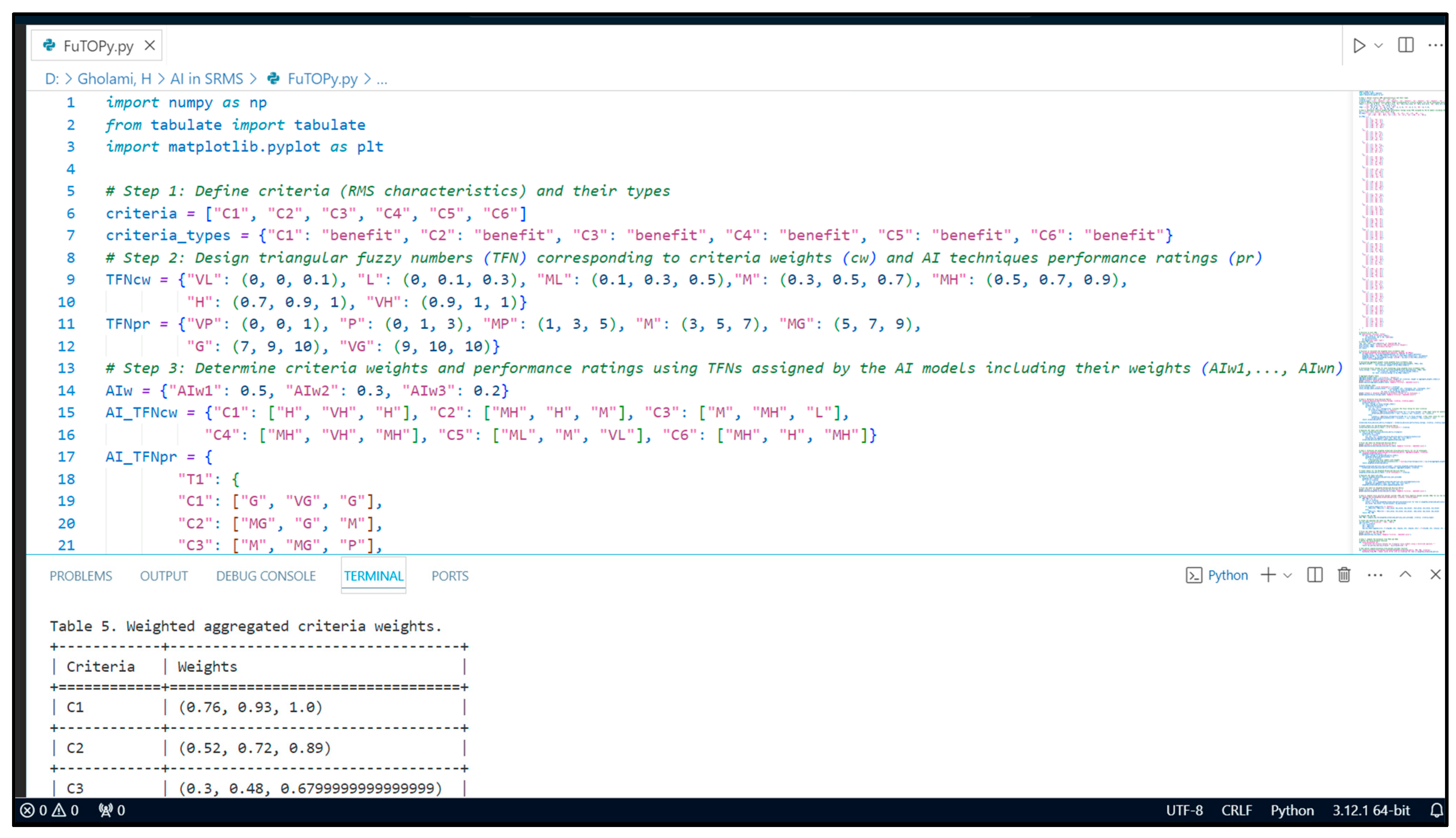
To this end, the proposed method (FuTOPy) is applied to solve such decision-making problems following the steps defined in Section 3. This approach is particularly well suited for situations in which decisions are complex and involve uncertainty or vagueness, allowing for a more intelligent analysis compared to traditional crisp decision-making models. As shown in Figure 1, the script was executed in a Python 3.12.1 environment using Visual Studio Code (VS Code). This version of Python provides advanced features and improved performance, ensuring efficient handling of complex calculations involved in fuzzy logic processing. vs. Code is a highly popular, free, open-source integrated development environment (IDE) developed by Microsoft. It is widely recognized for its versatility, user-friendly interface, and robust support for a wide range of programming languages, including Python [98]. It effortlessly integrates with Python 3.12.1, allowing us to write, execute, and debug the script to solve multicriteria decision-making problems in fuzzy environments.
Figure 1.
The application’s inputs.
As revealed in Figure 1, several key libraries play a crucial role in facilitating the intelligent fuzzy set decision support models. NumPy, a fundamental package for scientific computing in python, is instrumental for handling numerical operations, especially arrays and matrix manipulations [99,100], which are essential for processing and calculating triangular fuzzy numbers (TFNs). Matplotlib, a versatile plotting library, is utilized to visualize these TFNs, offering a clear graphical representation that aids in understanding the shades of fuzzy logic evaluations. It enables the creation of intuitive plots [101] that illustrate the range and distribution of linguistic assessments converted into fuzzy numerical values. Lastly, Tabulate, a library for generating structured tables, is crucial for presenting the aggregated data, normalized matrices, and final decision-making results in an easily interpretable format. Together, these libraries form the backbone of the script, providing the necessary tools for numerical computation, data visualization, and result presentation, thereby enhancing the efficiency and clarity of the decision-making process.
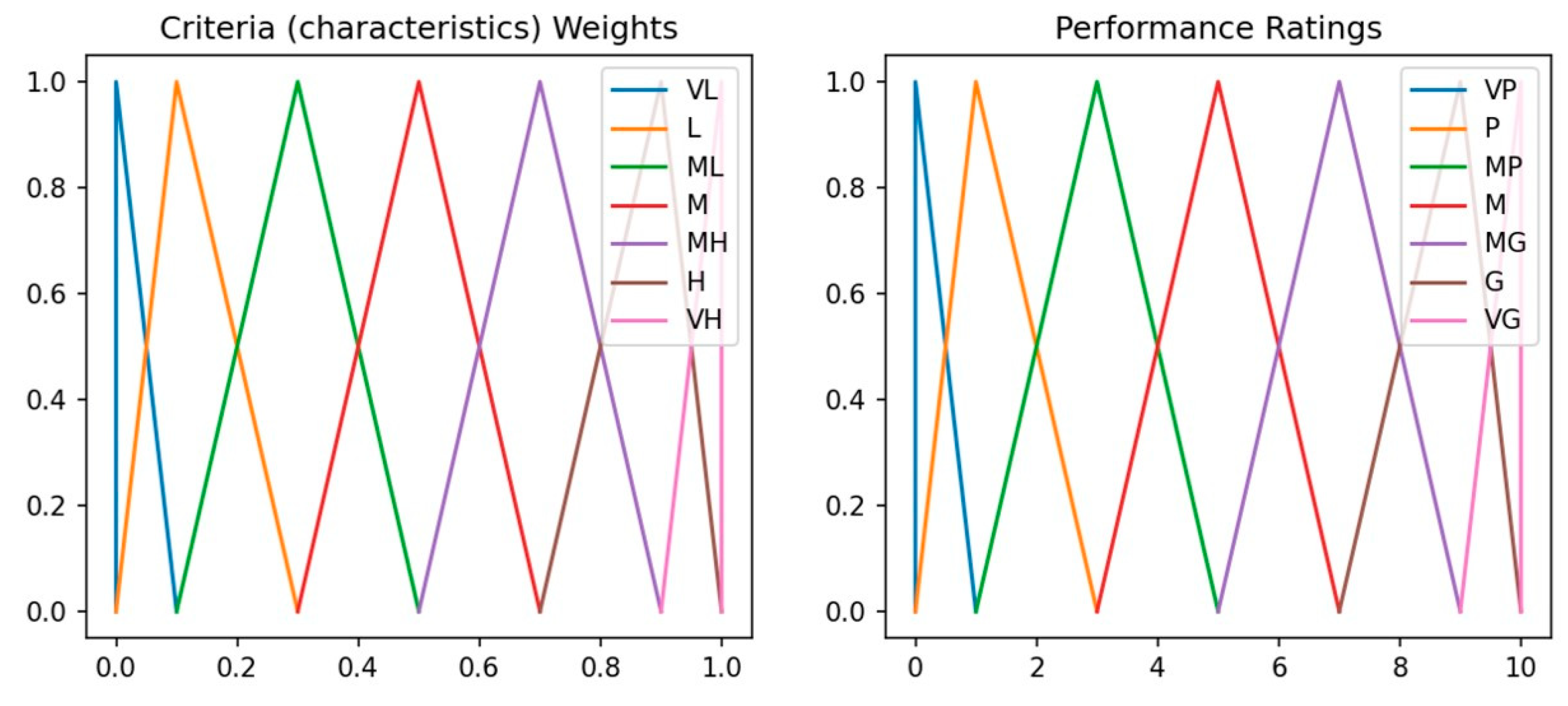
Reviewing the inputs (Figure 1) reveals that six criteria (C1–C6) were defined for evaluation, with each criterion categorized as either a “cost” or a “benefit” in # Step 1. This classification is crucial, as it impacts how the criteria are normalized and weighted during the analytical process. Figure 2 illustrates TFNs designed in # Step 2. The linguistic terms (ranging from “Very Low (VL)” to “Very High (VH)”) are translated into TFNs. This mapping allows LLMs to express their feedback in an effective manner, acknowledging the inherent uncertainty and subjectivity in assessing the importance of criteria. Similarly to weights, the performance ratings are expressed in linguistic terms (ranging from “Very Poor (VP)” to “Very Good (VG)”) and converted into TFNs. In # Step 3 (Figure 1), the AI_TFNcw represents the aggregated feedback of three LLMs (ChatGPT-4, ChatGPT-40, and ChatGPT-40mini) on the importance of each criterion. Each criterion’s weight (cw) is expressed in linguistic terms, later to be converted into TFNs using the TFNcw. Next, these TFNs are aggregated to form a consensus or average representation of each model’s feedback based on the weights given to the LLMs (AIw1, AIw2, AIw3) by using Equation (8). A similar process is conducted for the AI techniques ratings across all criteria. Table 3 and Table 4 show the criteria weights and the performance ratings of the 17 AI techniques given by the LLMs, respectively.
Figure 2.
Artificial variables for criteria weights and performance ratings.
Table 3.
Criteria weights given by the LLMs.
Table 4.
Performance ratings of AI techniques based on criteria.
# Step 3: Criteria weights and performance ratings using TFNs assigned by the LLMs were determined and aggregated following Equation (8). Table 5 and Table 6, which are screenshots of outcomes displayed in the terminal (see Figure 1), illustrate the aggregated weights of the criteria and the aggregated performance ratings for AI techniques based on criteria, respectively.
Table 5.
Weighted aggregated criteria weights.
Table 6.
Weighted aggregated performance ratings for AI techniques.
# Step 4: The normalized fuzzy decision matrix is presented in Table 7.
Table 7.
Normalized decision matrix.
# Step 5: The weighted normalized fuzzy decision matrix is shown in Table 8.
Table 8.
Weighted normalized decision matrix.
# Step 6: The fuzzy positive optimal outcome (FPO) and fuzzy negative optimal outcome (FNO) for all AI techniques are displayed in Table 9.
Table 9.
FPO and FNO.
# Step 7: The distances from FPO and FNO are provided in Table 10.
Table 10.
(a) Distances from FPO; (b) distances from FNO.
# Step 8: The closeness coefficient (CC), presented in Table 11, is finally calculated to rank the performance of AI techniques. A higher CC value is desirable, as it signifies that the AI technique is closer to achieving the optimal outcome based on the assessed criteria. As shown in Table 11, the AI techniques ranked from most to least preferable based on the closeness coefficient are T5, T10, T12 and T15 (tied), T14, T17, T7, T16, T6, T13, T11, T4, T1, T8, T9, T2, and T3.
Table 11.
Closeness coefficients.
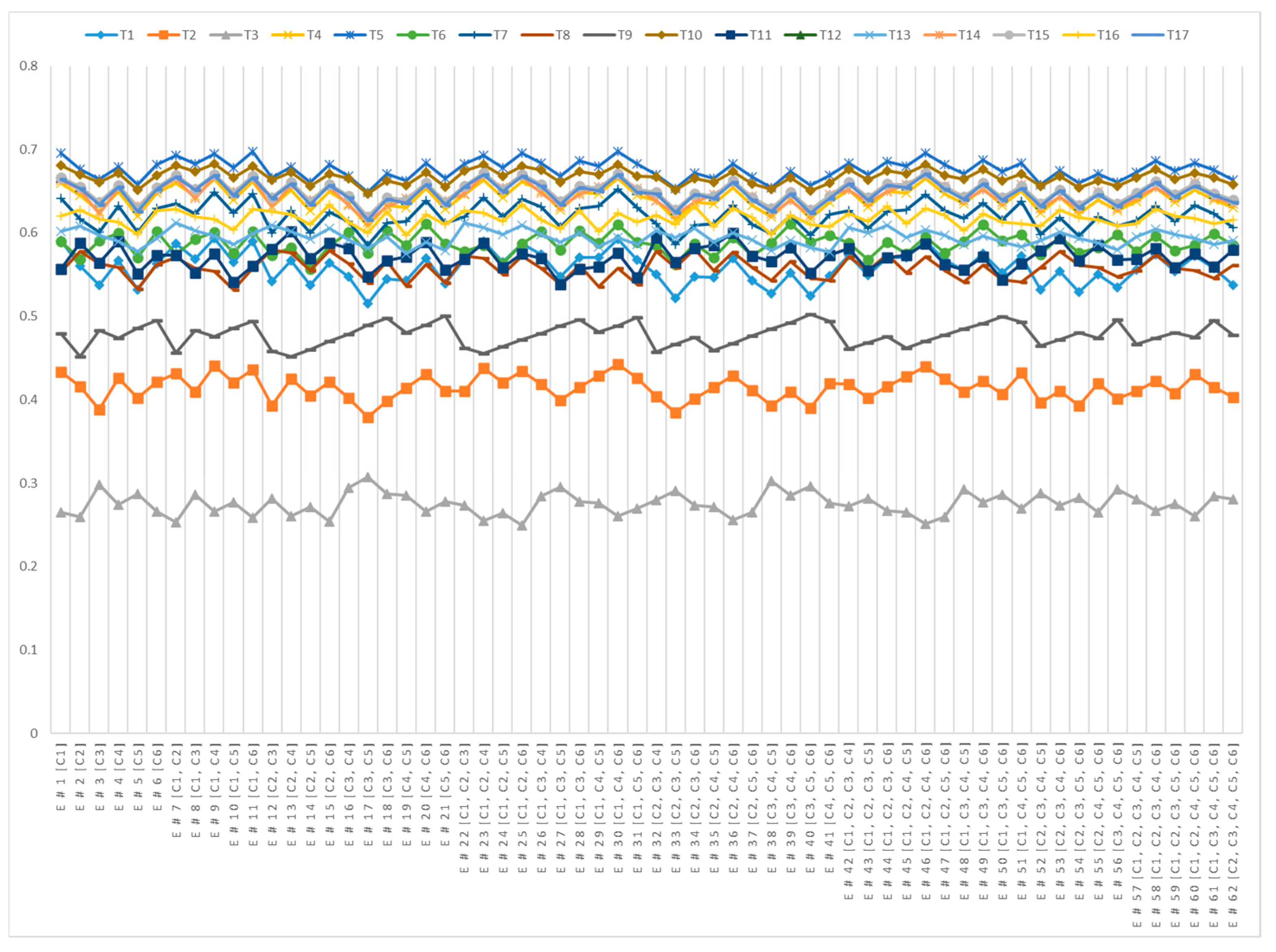
# Step 9: This study conducted a sensitivity analysis (SA) by varying major criteria weights to evaluate the performance of AI techniques for SRMSs. In this regard, 62 experiments were conducted, each representing a different condition, to evaluate the various combinations of the six criteria/characteristics. For each experiment, a new set of CC values for all AI techniques using Equation (18) through the AI-enabled methodology was programmatically calculated. Figure 3 shows the SA of the current study, revealing the performance of AI techniques across 62 experiments. Consequently, AI techniques “T5” and “T10” consistently exhibit higher closeness coefficients across most experiments, indicating their robust applicability and effectiveness in enhancing multiple core characteristics of SRMSs.
Figure 3.
AI-driven sensitivity analysis.
5. Discussion on Findings and Implications
This study provides valuable insights into essential AI techniques for SRMSs, aiding policymakers and decision-makers in understanding and adopting these technologies. It proposes an AI-enabled methodology, outlined in Section 3, that effectively addresses the uncertainties in decision-making processes. More significantly, it showcases the use of AI in decision-making through the application of large language models (Section 4), i.e., ChatGPT-4, ChatGPT-40, and ChatGPT-40mini, which have proven to be powerful tools in the realm of artificial intelligence. Marking a first in decision science, this research leverages these large language models to provide expert-like assessments, introducing an innovative approach that incorporates unbiased expert judgment despite the limited availability of knowledge and specialists in the field. This aligns with the observations of Choi et al. [23] and Belhadi et al. [12], who noted a gap in the literature for such intelligent approaches, with only a few scholars consistently advocating for the enhancement of decision-making processes through these AI techniques.
Table 1 outlines the six core characteristics (criteria), serving as a foundation for the thorough investigation. According to Koren et al. [10], to manufacture sustainable products through sustainable processes, production systems must have capabilities that enhance economic, environmental, and societal sustainability—these criteria not only facilitate rapid system responsiveness at a low cost but also play an important role in promoting overall system sustainability. As noted by Huang et al. [9], the characteristics impacting emission metrics include modularity, customization, and convertibility, which are crucial for controlling hazardous gasses and total GHG generation. Modularity and customization are key to managing waste generation and recovery, including liquid, solid, and hazardous waste. Customization and convertibility contribute significantly to reducing water consumption and increasing reuse/recycling. Several characteristics, particularly customization, convertibility, and scalability, are linked to improving energy usage and efficiency, including the reduction in idle energy losses. Nearly all characteristics impact operational metrics like the lead time, productivity, labor utilization, and percentage of on-time delivery. Labor costs, material costs, transportation, and maintenance costs are heavily influenced by customization, convertibility, and scalability. Diagnosability also plays a role, mainly in minimizing equipment-related and maintenance costs. This indicates how these characteristics play a critical role in enhancing sustainability on various fronts—environmental (emission, waste, water/energy efficiency) and economic (operational performance, manufacturing costs). Customization, modularity, and convertibility seem to be the most influential characteristics affecting multiple sustainability metrics.
To this end, this study developed an AI-enabled methodological approach to appraise the performance of AI techniques based on these characteristics (criteria) using Python programming that integrates fuzzy logic to effectively navigate uncertainties inherent in the investigation. The choice of Python as the computational backbone ensures access to an extensive ecosystem of libraries and tools that facilitate sophisticated data manipulation, optimization, and analysis, thus enhancing the model’s computational capabilities. The findings revealed that machine learning and big data analytics (T5) as well as fuzzy logic and programming (T10) stand out as the most promising AI techniques for SRMSs. The AI techniques ranked from most to least preferable based on the closeness coefficient were T5, T10, T12, and T15 (tied), T14, T17, T7, T16, T6, T13, T11, T4, T1, T8, T9, T2, and T3. This demonstrates that human acting and rational thinking techniques are the most important categories for SRMSs, with T5 and T10 standing out as the top performers. The application also confirmed that using fuzzy logic programming in Python as the computational foundation significantly enhances precision, efficiency, and execution time, offering critical insights that enable more timely and informed decision-making in the field.
The incorporation of sensitivity analysis further enabled a thorough evaluation of how input variations impact decision-making outcomes. This examination is instrumental in understanding the robustness of decisions against uncertainties, offering stakeholders a deeper insight into the implications of their decisions. As shown in Figure 3, T5 is consistently one of the top-performing techniques across all experiments, e.g., in E#1 (C1), it has a CC of 0.6952, and in E#9 (C1, C4), it scores 0.695. This suggests that T5 is highly suitable for addressing the dynamic requirements of SRMSs. T10 is another high-ranking technique, performing particularly well in contexts involving uncertainty. In E#5 (C5), it has a CC of 0.6515, while in E#12 (C2, C3), it scores 0.6631. This indicates that fuzzy logic is effective when dealing with variability and imprecision in SRMSs. T12 and T15 both perform well across several experiments, e.g., in E#12 (C2, C3), T12 has a CC of 0.6426, and T15 also performs consistently with values like 0.6523 in E#24 (C1, C2, C5). These techniques are critical for optimization and control in uncertain and complex SRMSs environments. T14 and T17 show varying performance but are still among the more effective AI techniques for SRMSs, e.g., in E#16 (C3, C4), T14 has a CC of 0.6327, and T17 achieves 0.6424 in the same experiment. Both techniques offer adaptability and automation, making them useful in specific contexts, such as simulation and automated decision-making. T2 and T3 consistently rank lower across most experiments, e.g., T2 has a CC of 0.4333 in E#1 (C1) and T3 scores 0.2654 in the same experiment. This suggests that these techniques are less suitable for SRMSs, which may be due to their limitations in handling dynamic, real-time manufacturing environments.
Going through the criteria analysis indicates that C1 has high alignment with techniques like T5 (0.6952 in E#1) and T10 (0.6807 in E#1). Modularity requires flexibility [2,8,38], and AI techniques that support data-driven decision-making and adaptability seem to be the most effective. Regarding C2, T5 and T10 perform well under this characteristic, as seen in E#2, with CCs of 0.6767 and 0.6694, respectively. Integrability requires effective communication between different systems [2,8,38], making AI techniques that enhance system integration highly relevant. Techniques like T5 and T10 also perform well under C3, e.g., in E#3, T5 scores 0.6639 and T10 achieves 0.6602. Diagnosability benefits from AI techniques that can handle complex diagnostics and provide predictive capabilities. T5 and T10 continue to rank highly under C4, with T5 scoring 0.6787 and T10 scoring 0.6713 in E#4. Convertibility requires adaptability [2,8,9], for which machine learning and fuzzy logic provide effective support. In E#5, T5 and T10 maintain strong performance under C5, with CCs of 0.6576 and 0.6515, respectively. Customization in SRMSs benefits from AI techniques that can handle variability and offer tailored solutions for specific product families. Techniques like T5, T10, and T15 perform well in experiments focusing on C6, e.g., in E#6, T5 scores 0.6816, and T10 scores 0.6689. Scalability demands AI techniques that can manage increasing or decreasing production capacities while maintaining system efficiency. In general, the analyses demonstrated that T5 and T10 are the most effective AI techniques for SRMSs, providing robust solutions across different characteristics such as modularity, integrability, and scalability. Techniques like T12 and T15 also rank highly, offering strong support for optimization and control in dynamic and uncertain environments. Lower-ranking techniques, such as T2 and T3 found to be less suitable for SRMSs. The purpose of considering all combinations of criteria in this analysis has important practical implications for understanding the effects and interactions among criteria under different scenarios, especially in the context of SRMSs. By running experiments with various combinations of the criteria, ranging from single-criterion experiments to experiments involving all six criteria together, the analysis becomes comprehensive and highly informative. This approach yields insights into how different criteria interact with each other and how these interactions impact decision-making. By analyzing the full spectrum of criteria combinations, such analyses ensure that no critical interaction is overlooked, offering data that highlight both macro and micro-level impacts of decisions.
6. Conclusions and Recommendations
Despite substantial research efforts advancing the fields of artificial intelligence (AI) and sustainable reconfigurable manufacturing systems (SRMSs), a notable gap remains in the current landscape: no comprehensive study has been conducted to explore and evaluate AI techniques toward SRMSs. This gap highlights critical research opportunities; as such, this study aimed to present a deliberation on the subject matter, with a particular focus on assessing AI techniques for the sake of SRMSs.
To achieve the aim, an AI-enabled methodological approach was developed to appraise the performance of techniques using Python programming, which integrates fuzzy logic to effectively navigate uncertainties inherent in the assessment. More significantly, this study demonstrated the use of AI in assessing and decision-making through the application of large language models, i.e., ChatGPT-4, ChatGPT-40, and ChatGPT-40mini, which have proven to be powerful tools in the context of artificial intelligence. Thus, this research represents a breakthrough in decision science by utilizing large language models to deliver expert-level assessments, offering an innovative approach that brings unbiased expert judgment to fields where knowledge and specialist availability are limited. This approach aligns with earlier studies that identified a significant gap in the literature regarding intelligent decision-making methods, with only a handful of scholars consistently promoting the use of AI techniques to improve these processes. Additionally, the integration of sensitivity analysis allowed for a comprehensive evaluation of how variations in input affect decision-making outcomes. Consequently, the findings revealed that machine learning and big data analytics, as well as fuzzy logic and programming, stand out as the most promising AI techniques for SRMSs. The application further demonstrated that employing fuzzy logic programming in Python as the computational backbone significantly improves precision, efficiency, and execution speed, providing key insights that facilitate more timely and informed decision-making. As a result, this study not only fills a crucial gap in the literature but also presents an intelligent approach to support complex decision-making processes. This is especially beneficial in situations requiring careful analysis and assortment among multiple characteristics, criteria, and stakeholders in uncertain environments.
Future research could explore the application of the proposed approach across various industries and domains to assess its versatility and effectiveness in different contexts; the method’s scalability and its ability to handle increasingly complex decision-making scenarios, including those with multiple stakeholders and uncertainties; the usability of the method, focusing on how intuitive and accessible it can be for decision-makers with varying levels of expertise; and the performance of the proposed model via comparative analyses with existing decision-making frameworks to identify areas of improvement and potential synergies.

Funding
The Article Processing Charge (APC) was funded by MDPI.
Data Availability Statement
The data supporting the findings of this research are contained within the paper.
Acknowledgments
This research was supported by “Carnot M.I.N.E.S. Project Industrie responsible”.
Conflicts of Interest
The author declares no conflict of interest.
Appendix A
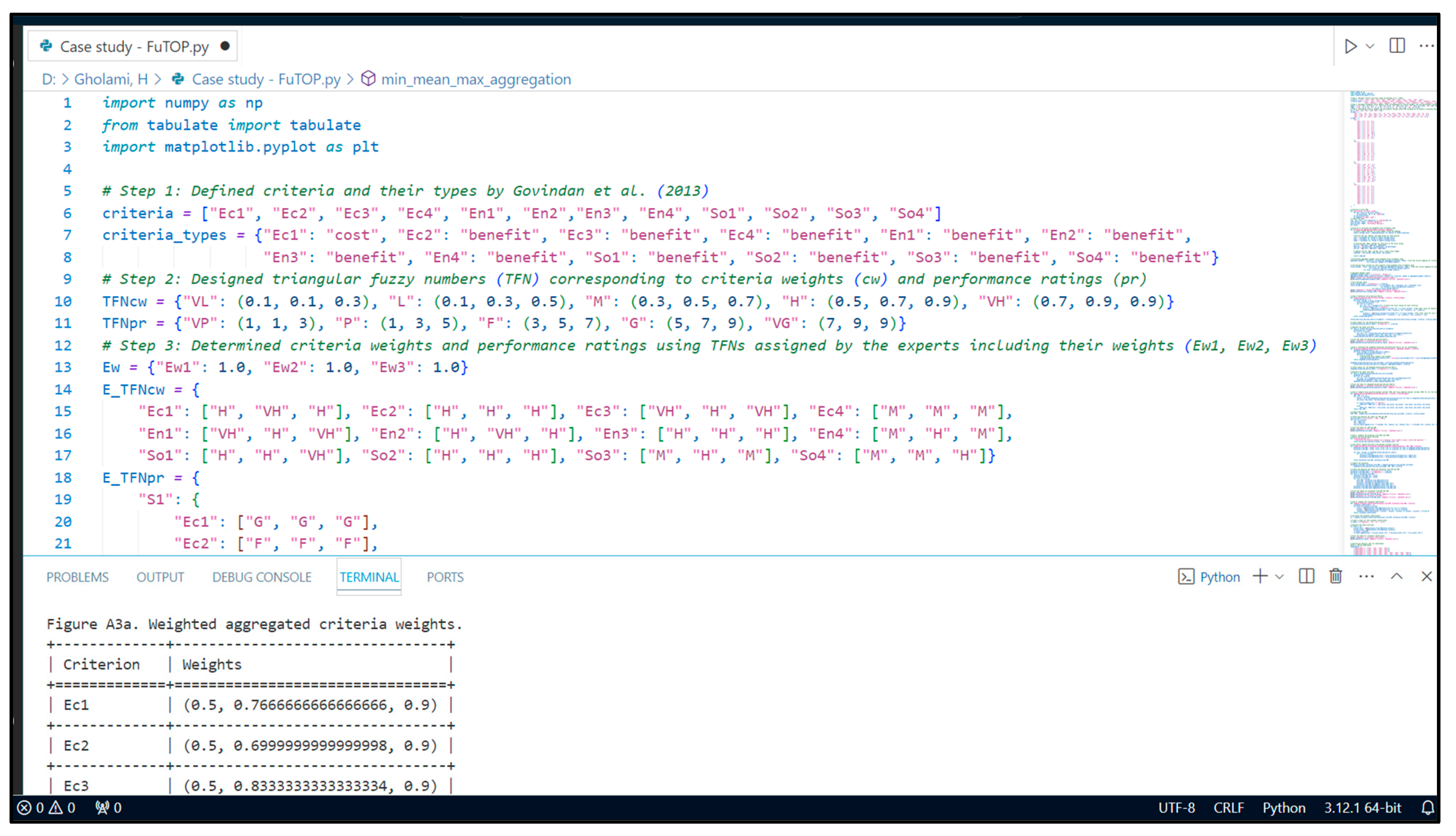
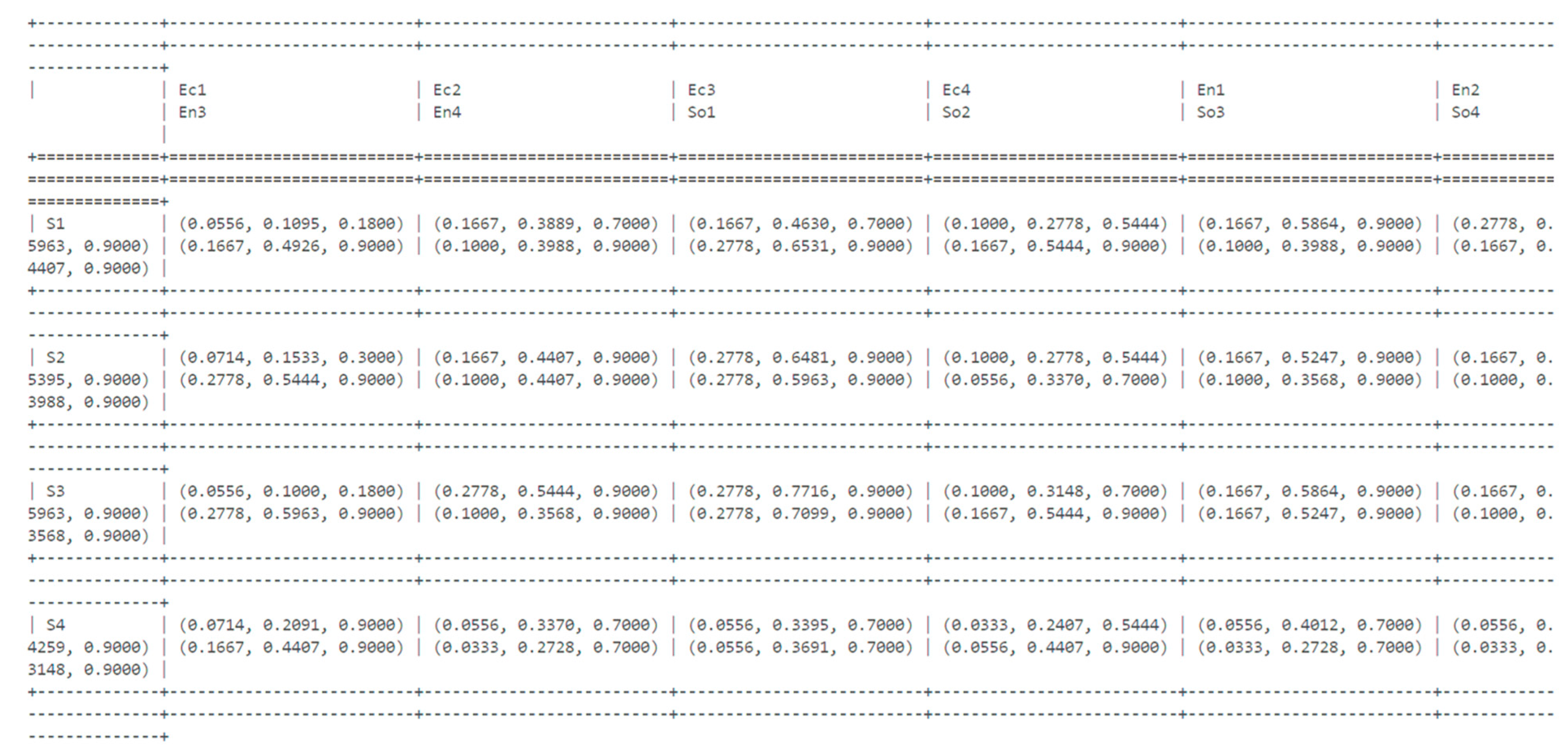
To validate the proposed methodological approach, i.e., FuTOPy, this section applied the dataset from the seminal work by Govindan et al. [102], which was deemed appropriate for this analysis due to its emphasis on complex decision-making scenarios and associated uncertainties. The initial study determined that alternative 3 (S3) was the most effective in terms of its performance, based on evaluations by three decision-makers. The results using the proposed method corroborate this finding, confirming its accuracy and reliability in effectively capturing the performance of alternatives. In doing so, the proposed methodological approach was executed following the steps described in Section 3, utilizing their dataset as detailed in Figure A1.
# Step 1: An examination of the inputs shown in Figure A1 reveals 12 specified criteria (Ec1-So4), where Ec1 is classified as a “cost” criterion and the rest as “benefit” criteria.
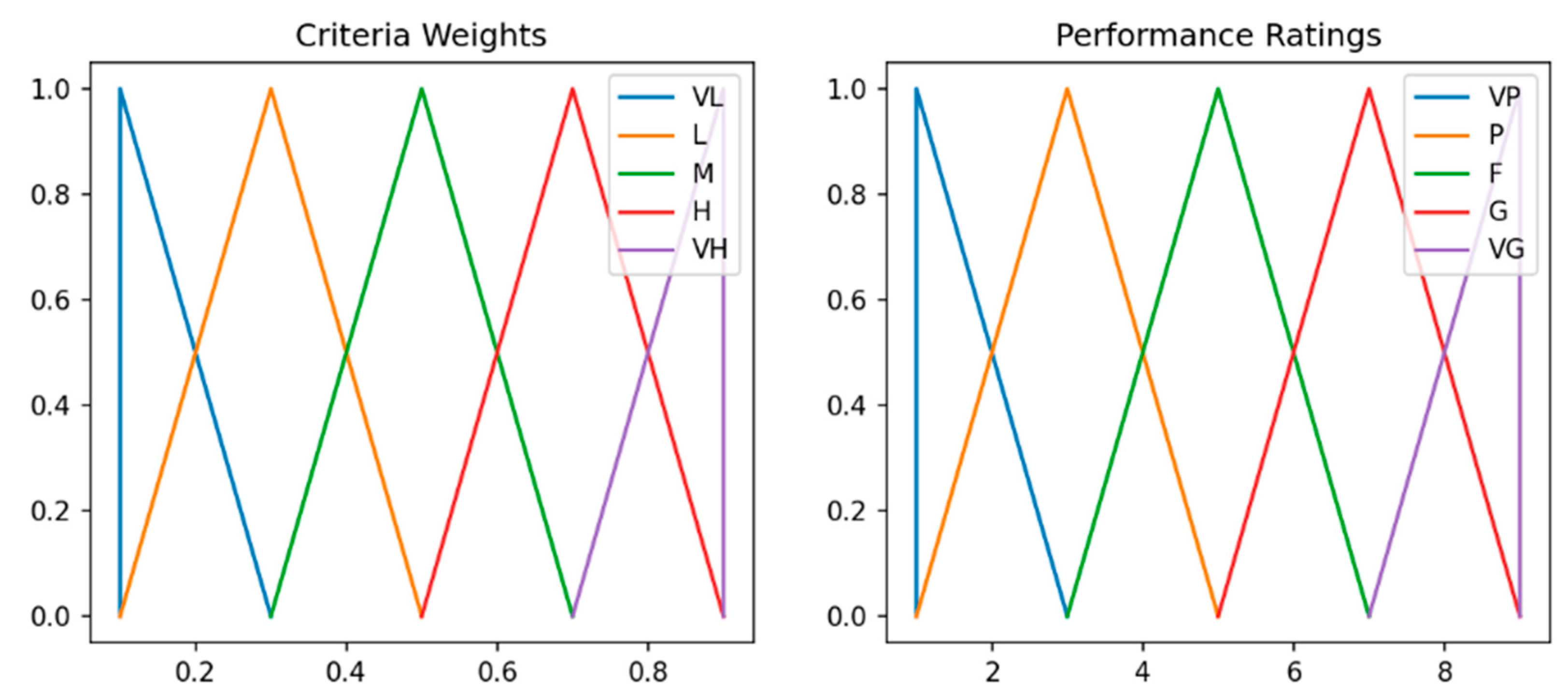
# Step 2: Figure A2 displays the designed triangular fuzzy numbers (TFNs) based on a five-point Likert scale.
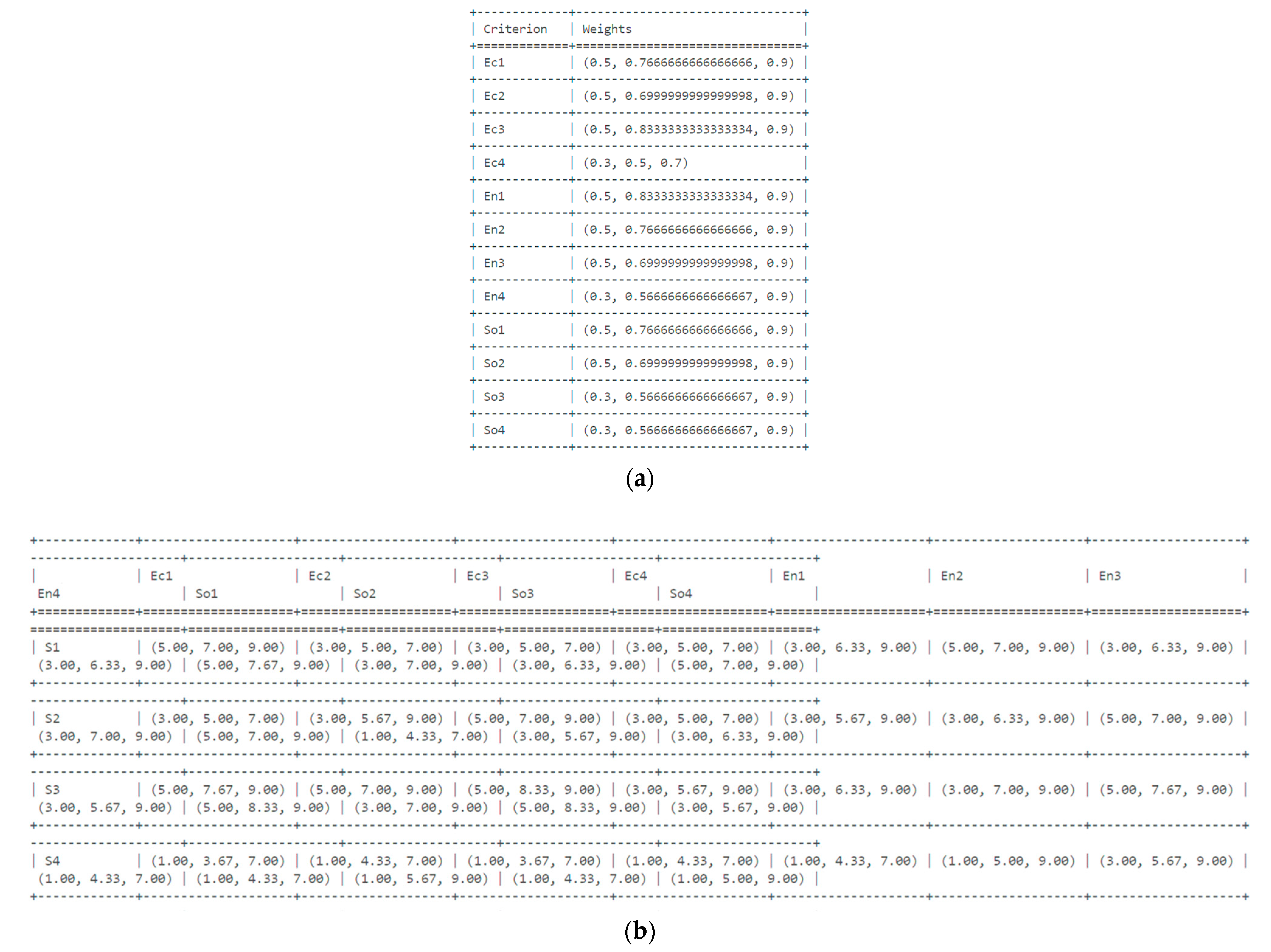
# Step 3: The criteria weights and performance ratings of the alternatives were established and combined by three decision-makers using TFNs. Figure A3a,b present detailed representations of the aggregated criteria weights and the performance ratings of the alternatives, respectively, including screenshots of the results, as shown in the terminal in Figure A1. It is crucial to acknowledge that the methodological approach uncovered slight inconsistencies in Table 8 and Table 9 on page 349 of Govindan et al.’s [102] study. For example, Table 8 erroneously listed “M” instead of the correct “F” in the cell for En1-S4. Furthermore, Table 9 incorrectly noted the weight for En4 as (0.3, 0.57, “0.7”) instead of the accurate (0.3, 0.57, “0.9”), which aligns with the data in cell C8 of Figure A3b. This error stemmed from the Min–Max–Mean aggregation method used by Govindan et al., as detailed in Equation (8). These corrections underscore the reliability of the proposed approach and confirm its efficacy and precision.
Figure A1.
Dataset used for validation.
Figure A2.
Designed artificial variables.
Figure A3.
(a). Weighted aggregated criteria weights. (b) Weighted aggregated performance ratings.
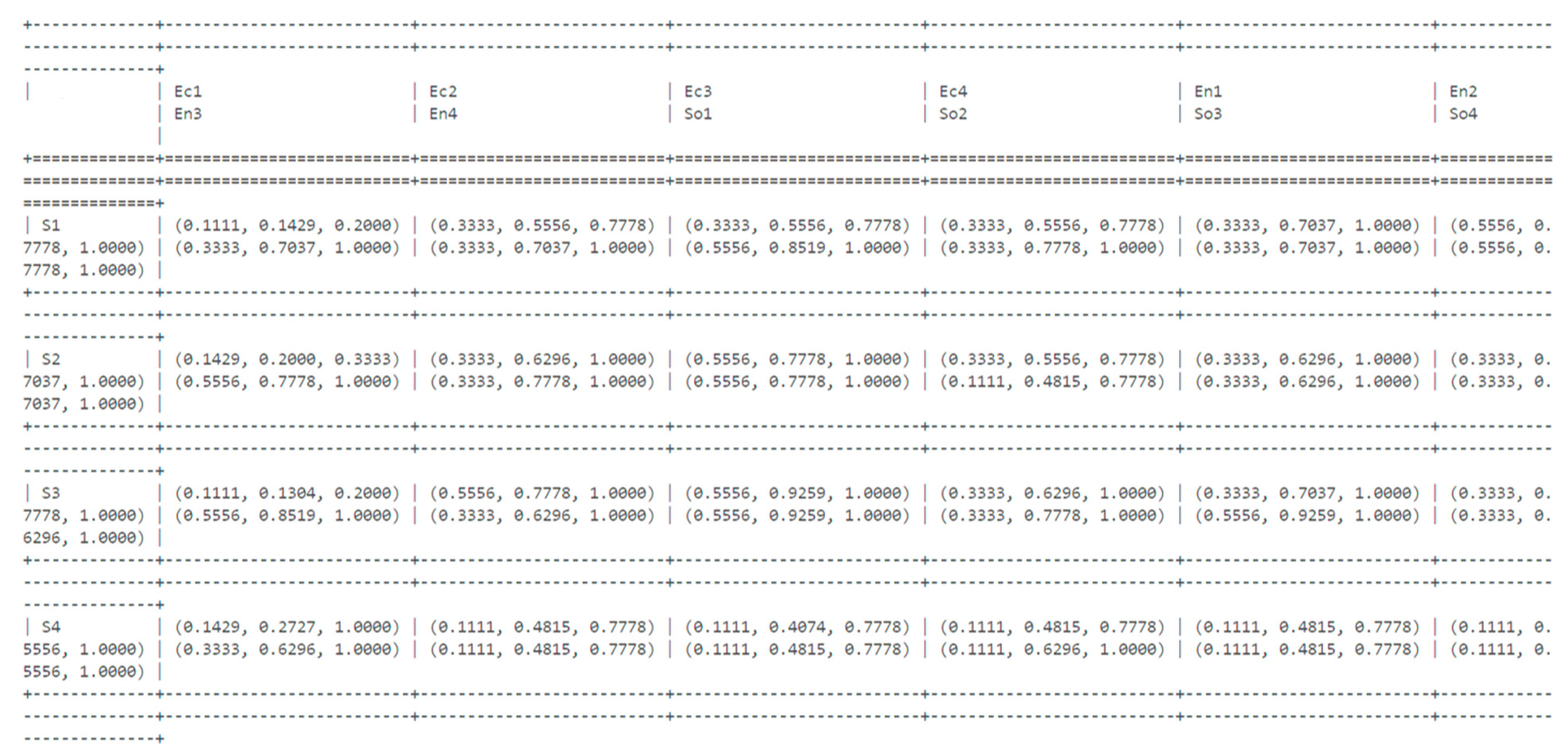
# Step 4: The normalized fuzzy decision matrix, presented in Figure A4, exhibits minor deviations from its original form. These differences stem from the methodological enhanced precision in managing decimal points, which leads to more accurate calculations.
Figure A4.
Normalized decision matrix.
# Step 5: The application of the weighted normalized fuzzy decision matrix is documented in Figure A5.
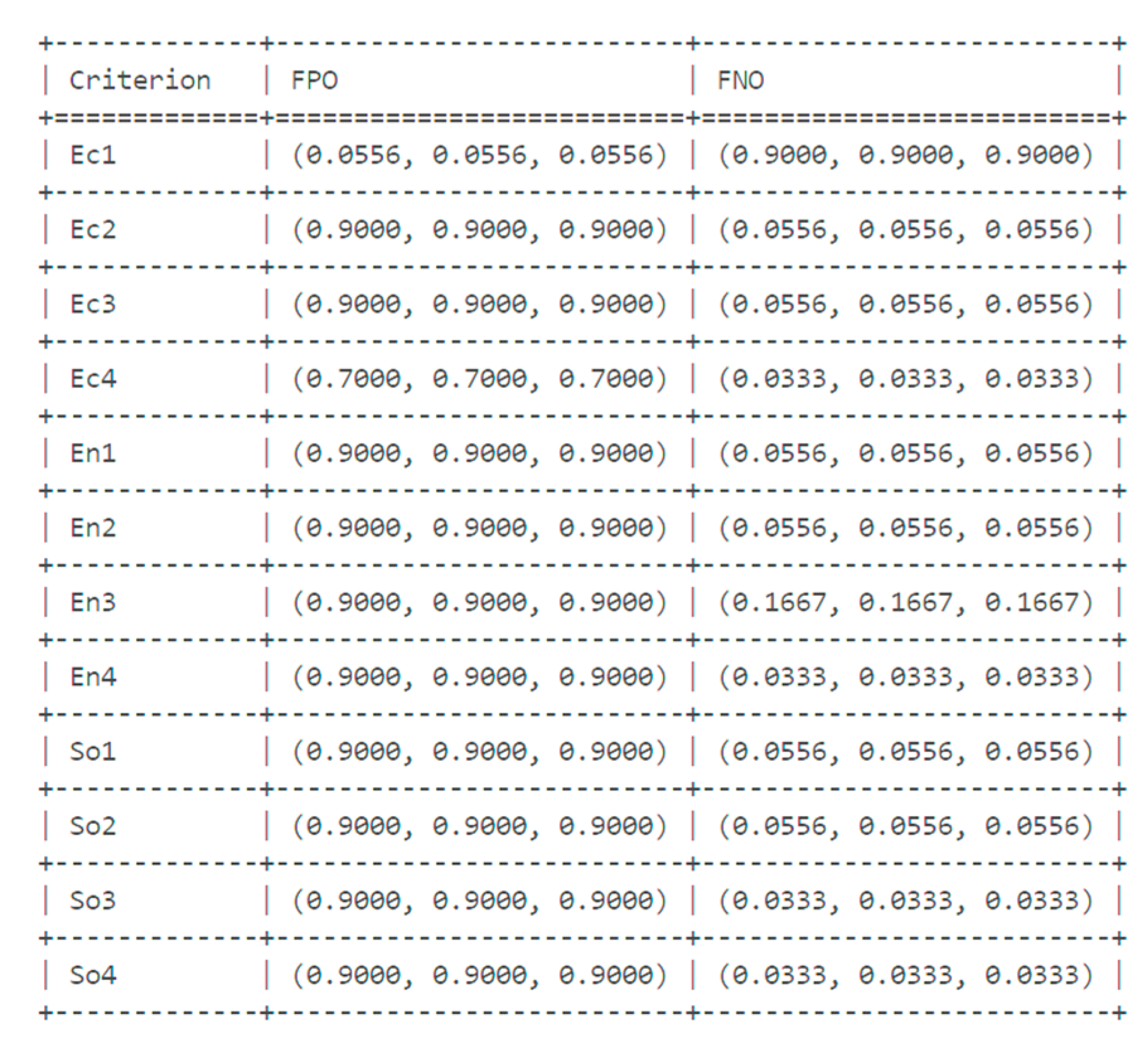
# Step 6: The fuzzy positive optimal outcome (FPO) and fuzzy negative optimal outcome (FNO) for all alternatives are described in detail in Figure A6, based on Equations (13) and (14). This additional information, which is absent in Govindan et al.’s study, introduces complexities in analysis and comparison in later stages. The provision of these details in the methodological framework increases the transparency of each step in the process.
Figure A5.
Weighted normalized decision matrix.
Figure A6.
FPO and FINO.
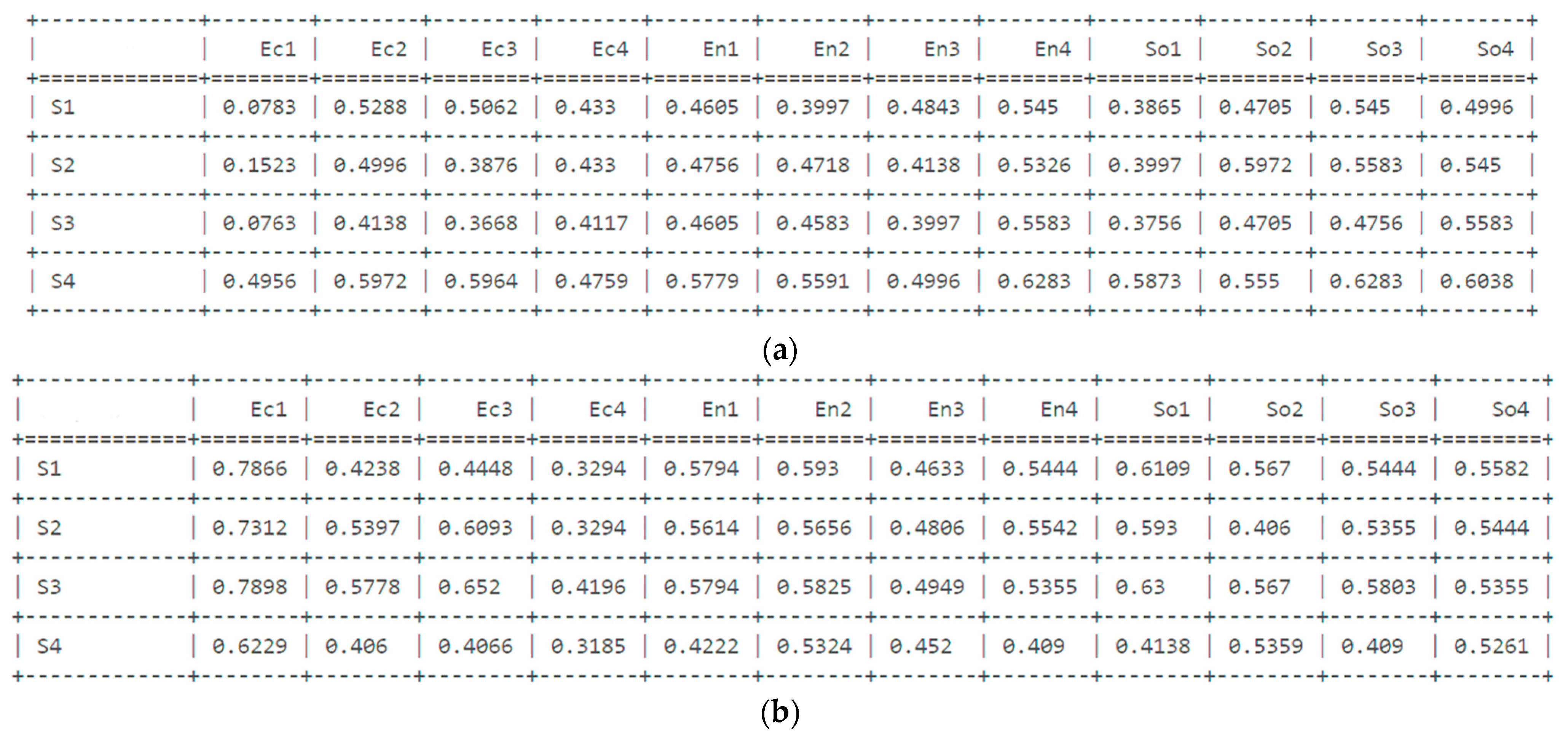
# Step 7: Figure A7a,b detail the distances computed from the FPO and FNO.
Figure A7.
(a). Distances from FPO. (b) Distances from FNO.
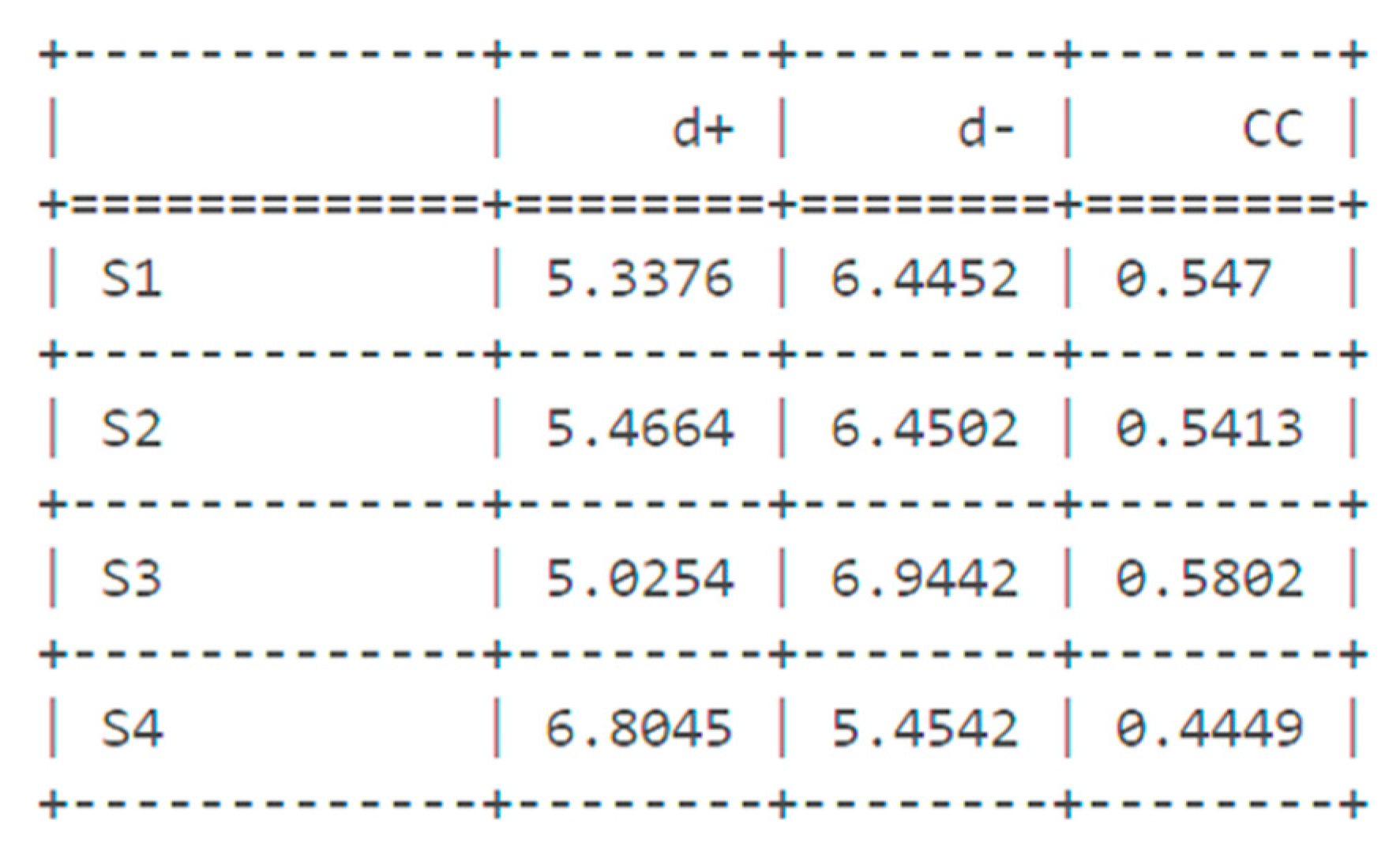
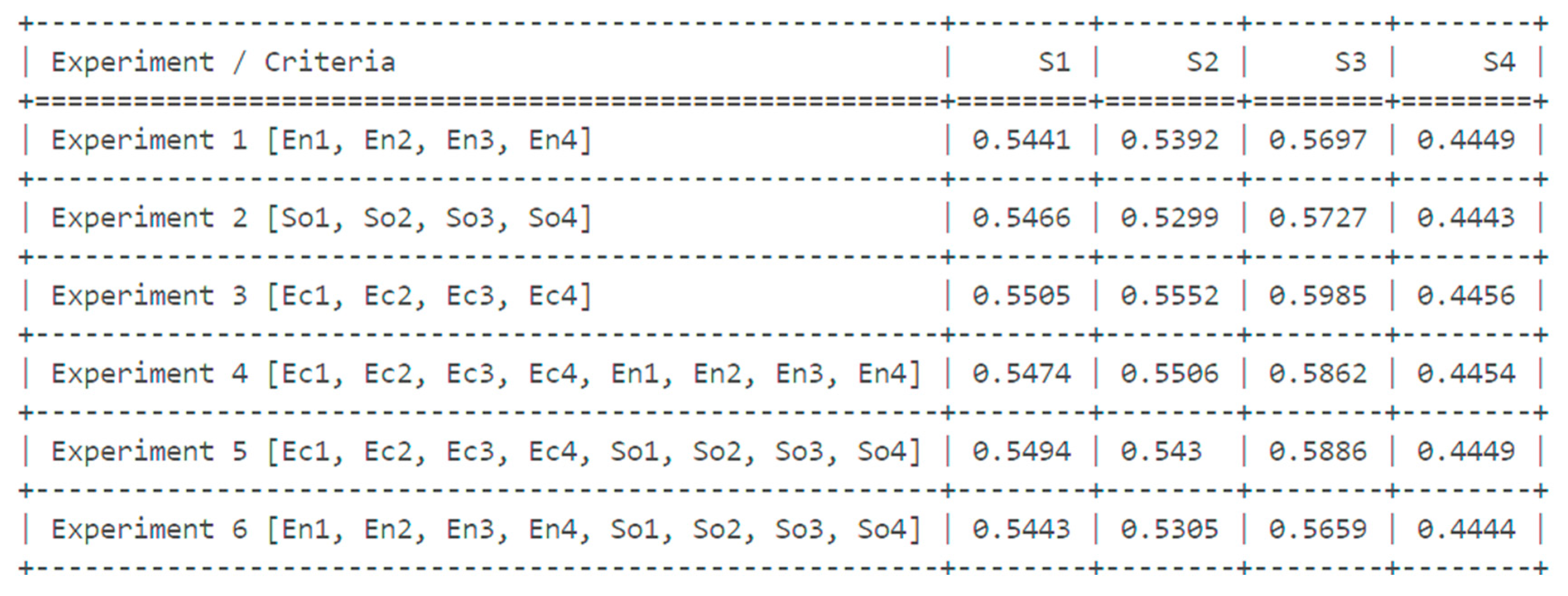
# Step 8: The calculation of the closeness coefficient (CC), detailed in Figure A8, aids in ranking the performance of alternatives. Govindan et al.’s approach shows peak performance at S3 with a score of 0.525, indicating that this alternative was the best performer among the four. The performance then drops for S4, which is the worst-performing alternative with a score of 0.436. The scores for S1 and S2 are relatively close, at 0.485 and 0.496, respectively. The proposed approach registers higher performance scores across all alternatives. Similarly to Govindan et al.’s approach, S3 is the top performer, with a significantly higher score of 0.5802, which not only confirms its superiority but also highlights a more pronounced advantage in the approach. The lowest score here is for S4 at 0.4449, slightly higher than its counterpart in the previous approach. The scores for S1 and S2 are 0.547 and 0.5413, respectively, indicating more effective performance in these alternatives compared to Govindan et al.’s. Thus, both approaches agree on the ranking of alternatives, with S3 as the top performer and S4 as the least effective. Nonetheless, the proposed approach not only rates all alternatives higher but also amplifies the performance gap, particularly for S3, suggesting a possible improvement in sensitivity or precision in evaluating alternatives. The upward shift in scores across all alternatives in the proposed approach indicates an enhanced evaluation mechanism, which might be more effective when it comes to capturing shades in performance metrics. This suggests that the proposed approach could provide more discerning and detailed assessments of alternative performances, which can be particularly beneficial in decision-making scenarios where finer distinctions between choices are critical.
Figure A8.
Closeness coefficients.
# Step 9: Despite the noted variations and precise computational methods, the sensitivity analysis, as outlined in Figure A9, was somewhat affected. Notably, alternative 3 (S3) consistently emerges as the top choice, echoing the findings of Govindan et al.’s study, which also accentuated S3’s dominance under various conditions through multiple decision-makers. However, the proposed approach allows for a decimal-precise assessment, providing a more refined analysis that captures the shades of alternative performance with enhanced accuracy and detail. This evaluation shows that alternative 3 (S3) is nearest to the optimal outcome, while alternative 4 (S4) is the most distant, aligning with the conclusions of Govindan et al. [102]. This alignment with the original study validates the proposed approach and confirms the accuracy of the methodological calculations. However, slight variations in the rankings of alternatives 1 (S1) and 2 (S2) underline the impact of advanced computational techniques and detailed decimal management on decision-making results. These findings emphasize the critical role of precise data handling in multicriteria decision-making, particularly in contexts fraught with uncertainties.
Figure A9.
Closeness coefficients across experiments.
References
- Koren, Y.; Heisel, U.; Jovane, F.; Moriwaki, T.; Pritschow, G.; Ulsoy, G.; Van Brussel, H. Reconfigurable manufacturing systems. CIRP Ann. 1999, 48, 527–540. [Google Scholar] [CrossRef]
- Bortolini, M.; Galizia, F.G.; Mora, C. Reconfigurable manufacturing systems: Literature review and research trend. J. Manuf. Syst. 2018, 49, 93–106. [Google Scholar] [CrossRef]
- Delorme, X.; Cerqueus, A.; Gianessi, P.; Lamy, D. RMS balancing and planning under uncertain demand and energy cost considerations. Int. J. Prod. Econ. 2023, 261, 108873. [Google Scholar] [CrossRef]
- Jawahir, I.S.; Bradley, R. Technological elements of circular economy and the principles of 6R-based closed-loop material flow in sustainable manufacturing. Procedia CIRP 2016, 40, 103–108. [Google Scholar] [CrossRef]
- Gholami, H.; Abdul-Nour, G.; Sharif, S.; Streimikiene, D. (Eds.) Sustainable Manufacturing in Industry 4.0: Pathways and Practices; Springer Nature: Singapore, 2023. [Google Scholar]
- Gholami, H.; Hashemi, A.; Lee, J.K.Y.; Abdul-Nour, G.; Salameh, A.A. Scrutinizing state-of-the-art I4.0 technologies toward sustainable products development under fuzzy environment. J. Clean. Prod. 2022, 377, 134327. [Google Scholar] [CrossRef]
- Lee, J.Y.K. Sustainable Manufacturing in Industry 4.0: Pathways and Practices: A book review. J. Clean. Prod. 2023, 430, 139458. [Google Scholar] [CrossRef]
- Koren, Y.; Shpitalni, M. Design of reconfigurable manufacturing systems. J. Manuf. Syst. 2010, 29, 130–141. [Google Scholar] [CrossRef]
- Huang, A.; Badurdeen, F.; Jawahir, I.S. Towards developing sustainable reconfigurable manufacturing systems. Procedia Manuf. 2018, 17, 1136–1143. [Google Scholar] [CrossRef]
- Koren, Y.; Gu, X.; Badurdeen, F.; Jawahir, I.S. Sustainable living factories for next generation manufacturing. Procedia Manuf. 2018, 21, 26–36. [Google Scholar] [CrossRef]
- Russell, S.; Norvig, P. Artificial Intelligence: A Modern Approach; Prentice-Hall: Upper Saddle River, NJ, USA, 2010. [Google Scholar]
- Belhadi, A.; Kamble, S.; Fosso Wamba, S.; Queiroz, M.M. Building supply-chain resilience: An artificial intelligence-based technique and decision-making framework. Int. J. Prod. Res. 2022, 60, 4487–4507. [Google Scholar] [CrossRef]
- Jarrahi, M.H. Artificial Intelligence and the Future of Work: Human-AI Symbiosis in Organizational Decision Making. Bus. Horiz. 2018, 61, 577–586. [Google Scholar] [CrossRef]
- Dubey, R.; Gunasekaran, A.; Childe, S.J.; Bryde, D.J.; Giannakis, M.; Foropon, C.; Roubaud, D.; Hazen, B.T. Big Data Analytics and Artificial Intelligence Pathway to Operational Performance Under the Effects of Entrepreneurial Orientation and Environmental Dynamism: A Study of Manufacturing Organisations. Int. J. Prod. Econ. 2020, 226, 107599. [Google Scholar] [CrossRef]
- Fanni, S.C.; Febi, M.; Aghakhanyan, G.; Neri, E. Natural Language Processing. In Introduction to Artificial Intelligence. Imaging Informatics for Healthcare Professionals; Klontzas, M.E., Fanni, S.C., Neri, E., Eds.; Springer: Cham, Switzerland, 2023. [Google Scholar]
- Dhamija, P.; Bag, S. Role of Artificial Intelligence in Operations Environment: A Review and Bibliometric Analysis. TQM J. 2020, 32, 869–896. [Google Scholar] [CrossRef]
- Min, H. Artificial Intelligence in Supply Chain Management: Theory and Applications. Int. J. Logist. Res. Appl. 2009, 13, 13–39. [Google Scholar] [CrossRef]
- Wu, T.; He, S.; Liu, J.; Sun, S.; Liu, K.; Han, Q.L.; Tang, Y. A brief overview of ChatGPT: The history, status quo and potential future development. IEEE/CAA J. Autom. Sin. 2023, 10, 1122–1136. [Google Scholar] [CrossRef]
- Khurana, D.; Koli, A.; Khatter, K.; Singh, S. Natural language processing: State of the art, current trends and challenges. Multimed. Tools Appl. 2023, 82, 3713–3744. [Google Scholar] [CrossRef] [PubMed]
- Wamba, S.F.; Bawack, R.E.; Guthrie, C.; Queiroz, M.M.; Carillo, K.D.A. Are we Preparing for a Good AI Society? A Bibliometric Review and Research Agenda. Technol. Forecast. Soc. Change 2020, 164, 120482. [Google Scholar] [CrossRef]
- Baryannis, G.; Validi, S.; Dani, S.; Antoniou, G. Supply Chain Risk Management and Artificial Intelligence: State of the Art and Future Research Directions. Int. J. Prod. Res. 2019, 57, 2179–2202. [Google Scholar] [CrossRef]
- Grover, P.; Kar, A.K.; Dwivedi, Y.K. Understanding Artificial Intelligence Adoption in Operations Management: Insights from the Review of Academic Literature and Social Media Discussions. Ann. Oper. Res. 2020, 308, 177–213. [Google Scholar] [CrossRef]
- Choi, T.; Wallace, S.W.; Wang, Y. Big Data Analytics in Operations Management. Prod. Oper. Manag. 2018, 27, 1868–1883. [Google Scholar] [CrossRef]
- Chowdhary, K.R. Natural Language Processing. In Fundamentals of Artificial Intelligence; Springer: New Delhi, India, 2020. [Google Scholar]
- Alawida, M.; Mejri, S.; Mehmood, A.; Chikhaoui, B.; Isaac Abiodun, O. A comprehensive study of ChatGPT: Advancements, limitations, and ethical considerations in natural language processing and cybersecurity. Information 2023, 14, 462. [Google Scholar] [CrossRef]
- Mekid, S.; Pruschek, P.; Hernandez, J. Beyond intelligent manufacturing: A new generation of flexible intelligent NC machines. Mech. Mach. Theory 2009, 44, 466–476. [Google Scholar] [CrossRef]
- Bi, Z. Revisiting system paradigms from the viewpoint of manufacturing sustainability. Sustainability 2011, 3, 1323–1340. [Google Scholar] [CrossRef]
- Azab, A.; ElMaraghy, H.; Nyhuis, P.; Pachow-Frauenhofer, J.; Schmidt, M. Mechanics of change: A framework to reconfigure manufacturing systems. CIRP J. Manuf. Sci. Technol. 2013, 6, 110–119. [Google Scholar] [CrossRef]
- Garbie, I.H. DFSME: Design for sustainable manufacturing enterprises (An economic viewpoint). Int. J. Prod. Res. 2013, 51, 479–503. [Google Scholar] [CrossRef]
- Garbie, I.H. A methodology for the reconfiguration process in manufacturing systems. J. Manuf. Technol. Manag. 2014, 25, 891–915. [Google Scholar] [CrossRef]
- Copani, G.; Urgo, M. Innovative flexibility-oriented business models and system configuration approaches: An industrial application. CIRP J. Manuf. Sci. Technol. 2015, 11, 10–17. [Google Scholar] [CrossRef]
- Peukert, B.; Benecke, S.; Clavell, J.; Neugebauer, S.; Nissen, N.F.; Uhlmann, E.; Lang, K.-D.; Finkbeiner, M. Addressing sustainability and flexibility in manufacturing via smart modular machine tool frames to support sustainable value creation. Procedia CIRP 2015, 29, 514–519. [Google Scholar] [CrossRef]
- Lee, S.; Ryu, K.; Shin, M. The development of simulation model for self-reconfigurable manufacturing system considering sustainability factors. Procedia Manuf. 2017, 11, 1085–1092. [Google Scholar] [CrossRef]
- Ribeiro, L.; Björkman, M. Transitioning from standard automation solutions to cyber-physical production systems: An assessment of critical conceptual and technical challenges. IEEE Syst. J. 2018, 12, 3816–3827. [Google Scholar] [CrossRef]
- Touzout, F.A.; Benyoucef, L. Multi-objective sustainable process plan generation in a reconfigurable manufacturing environment: Exact and adapted evolutionary approaches. Int. J. Prod. Res. 2019, 57, 2531–2547. [Google Scholar] [CrossRef]
- Huang, S.; Xu, Z.; Wang, G.; Zeng, C.; Yan, Y. Reconfigurable machine tools design for multi-part families. Int. J. Adv. Manuf. Technol. 2019, 105, 813–829. [Google Scholar] [CrossRef]
- Salah, B.; Abidi, M.H.; Mian, S.H.; Krid, M.; Alkhalefah, H.; Abdo, A. Virtual reality-based engineering education to enhance manufacturing sustainability in industry 4.0. Sustainability 2019, 11, 1477. [Google Scholar] [CrossRef]
- Massimi, E.; Khezri, A.; Benderbal, H.H.; Benyoucef, L. A heuristic-based non-linear mixed integer approach for optimizing modularity and integrability in a sustainable reconfigurable manufacturing environment. Int. J. Adv. Manuf. Technol. 2020, 108, 1997–2020. [Google Scholar] [CrossRef]
- Mesa, J.A.; Esparragoza, I.; Maury, H. Modular architecture principles–MAPs: A key factor in the development of sustainable open architecture products. Int. J. Sustain. Eng. 2020, 13, 108–122. [Google Scholar] [CrossRef]
- Ghanei, S.; AlGeddawy, T. An integrated multi-period layout planning and scheduling model for sustainable reconfigurable manufacturing systems. J. Adv. Manuf. Syst. 2020, 19, 31–64. [Google Scholar] [CrossRef]
- Battaïa, O.; Benyoucef, L.; Delorme, X.; Dolgui, A.; Thevenin, S. Sustainable and energy efficient reconfigurable manufacturing systems. In Reconfigurable Manufacturing Systems: From Design to Implementation; Springer: Cham, Switzerland, 2020; pp. 179–191. [Google Scholar]
- Gordon, A. Internet of things-based real-time production logistics, big data-driven decision-making processes, and industrial artificial intelligence in sustainable cyber-physical manufacturing systems. J. Self-Gov. Manag. Econ. 2021, 9, 61–73. [Google Scholar]
- Gao, S.; Daaboul, J.; Le Duigou, J. Process planning, scheduling, and layout optimization for multi-unit mass-customized products in sustainable reconfigurable manufacturing system. Sustainability 2021, 13, 13323. [Google Scholar] [CrossRef]
- Khezri, A.; Benderbal, H.H.; Benyoucef, L. Towards a sustainable reconfigurable manufacturing system (SRMS): Multi-objective based approaches for process plan generation problem. Int. J. Prod. Res. 2021, 59, 4533–4558. [Google Scholar] [CrossRef]
- Kurniadi, K.A.; Ryu, K. Development of multi-disciplinary green-BOM to maintain sustainability in reconfigurable manufacturing systems. Sustainability 2021, 13, 9533. [Google Scholar] [CrossRef]
- Khettabi, I.; Benyoucef, L.; Boutiche, M.A. Sustainable multi-objective process planning in reconfigurable manufacturing systems. Int. J. Adv. Manuf. Technol. 2021, 115, 3741–3759. [Google Scholar] [CrossRef]
- Pedro, F. Design for Sustainability and Reconfigurable Manufacturing Systems-An Critical Analysis. J. Mach. Comput. 2021, 1, 11–19. [Google Scholar] [CrossRef]
- Lee, S.; Ryu, K. Development of the architecture and reconfiguration methods for the smart, self-reconfigurable manufacturing system. Appl. Sci. 2022, 12, 5172. [Google Scholar] [CrossRef]
- Kombaya Touckia, J.; Hamani, N.; Kermad, L. Digital twin framework for reconfigurable manufacturing systems (RMSs): Design and simulation. Int. J. Adv. Manuf. Technol. 2022, 120, 5431–5450. [Google Scholar] [CrossRef] [PubMed]
- Vavrík, V.; Fusko, M.; Bučková, M.; Gašo, M.; Furmannová, B.; Štaffenová, K. Designing of machine backups in reconfigurable manufacturing systems. Appl. Sci. 2022, 12, 2338. [Google Scholar] [CrossRef]
- Napoleone, A.; Bruzzone, A.; Andersen, A.L.; Brunoe, T.D. Fostering the reuse of manufacturing resources for resilient and sustainable supply chains. Sustainability 2022, 14, 5890. [Google Scholar] [CrossRef]
- Yazdani, M.A.; Khezri, A.; Benyoucef, L. Process and production planning for sustainable reconfigurable manufacturing systems (SRMSs): Multi-objective exact and heuristic-based approaches. Int. J. Adv. Manuf. Technol. 2022, 119, 4519–4540. [Google Scholar] [CrossRef]
- Hariyani, D.; Mishra, S. A descriptive statistical analysis of enablers for integrated sustainable-green-lean-six sigma-agile manufacturing system (ISGLSAMS) in Indian manufacturing industries. Benchmarking Int. J. 2023, 31, 824–865. [Google Scholar] [CrossRef]
- Pansare, R.; Yadav, G.; Garza-Reyes, J.A.; Raosaheb Nagare, M. Assessment of Sustainable Development Goals through Industry 4.0 and reconfigurable manufacturing system practices. J. Manuf. Technol. Manag. 2023, 34, 383–413. [Google Scholar] [CrossRef]
- Zidi, S.; Kermad, L.; Hamani, N.; Zidi, H. Reconfigurable Supply Chain Selection: Literature Review, Research Roadmap and New Trends. Appl. Sci. 2023, 13, 4561. [Google Scholar] [CrossRef]
- Milisavljevic-Syed, J.; Li, J.; Xia, H. Realisation of responsive and sustainable reconfigurable manufacturing systems. Int. J. Prod. Res. 2024, 62, 2725–2746. [Google Scholar] [CrossRef]
- Pansare, R.B.; Nagare, M.R.; Narwane, V.S. Exploring the significant factors of reconfigurable manufacturing system adoption in manufacturing industries. J. Model. Manag. 2024, 19, 630–657. [Google Scholar] [CrossRef]
- Elhoone, H.; Zhang, T.; Anwar, M.; Desai, S. Cyber-based Design for Additive Manufacturing Using Artificial Neural Networks for Industry 4.0. Int. J. Prod. Res. 2020, 58, 2841–2861. [Google Scholar] [CrossRef]
- Bottani, E.; Centobelli, P.; Gallo, M.; Kaviani, M.A.; Jain, V.; Murino, T. Modelling Wholesale Distribution Operations: An Artificial Intelligence Framework. Ind. Manag. Data Syst. 2019, 119, 698–718. [Google Scholar] [CrossRef]
- Wang, K.; Yang, Y.; Zhou, J.; Goh, M. Fuzzy Belief Propagation in Constrained Bayesian Networks with Application to Maintenance Decisions. Int. J. Prod. Res. 2020, 58, 2885–2903. [Google Scholar] [CrossRef]
- Ojha, R.; Ghadge, A.; Tiwari, M.K.; Bititci, U.S. Bayesian Network Modelling for Supply Chain Risk Propagation. Int. J. Prod. Res. 2018, 56, 5795–5819. [Google Scholar] [CrossRef]
- Hosseini, S.; Ivanov, D. Bayesian Networks for Supply Chain Risk, Resilience and Ripple Effect Analysis: A Literature Review. Expert Syst. Appl. 2020, 161, 113649. [Google Scholar] [CrossRef] [PubMed]
- Hellingrath, B.; Lechtenberg, S. Applications of Artificial Intelligence in Supply Chain Management and Logistics: Focusing Onto Recognition for Supply Chain Execution. In The Art of Structuring; Springer: Cham, Switzerland, 2019; pp. 283–296. [Google Scholar]
- Zanjani, M.K.; Bajgiran, O.S.; Nourelfath, M. A Hybrid Scenario Cluster Decomposition Algorithm for Supply Chain Tactical Planning Under Uncertainty. Eur. J. Oper. Res. 2016, 252, 466–476. [Google Scholar] [CrossRef]
- Thomassey, S. Sales Forecasts in Clothing Industry: The Key Success Factor of the Supply Chain Management. Int. J. Prod. Econ. 2010, 128, 470–483. [Google Scholar] [CrossRef]
- Mehdizadeh, M. Integrating ABC Analysis and Rough Set Theory to Control the Inventories of Distributor in the Supply Chain of Auto Spare Parts. Comput. Ind. Eng. 2020, 139, 105673. [Google Scholar] [CrossRef]
- Li, J.; Fang, H.; Song, W. Sustainability Evaluation via Variable Precision Rough Set Approach: A Photovoltaic Module Supplier Case Study. J. Clean. Prod. 2018, 192, 751–765. [Google Scholar] [CrossRef]
- Shidpour, H.; Cunha, C.D.; Bernard, A. Group Multi-Criteria Design Concept Evaluation Using Combined Rough Set Theory and Fuzzy Set Theory. Expert Syst. Appl. 2016, 64, 633–644. [Google Scholar] [CrossRef]
- Bonabeau, E.; Dorigo, M.; Theraulaz, G. From Natural to Artificial Swarm Intelligence; Oxford University Press, Inc.: Oxford, UK, 1999. [Google Scholar]
- Rosenberg, L.; Willcox, G. Artificial Swarm Intelligence. In Intelligent Systems and Applications. IntelliSys 2019. Advances in Intelligent Systems and Computing; Bi, Y., Bhatia, R., Kapoor, S., Eds.; Springer: Cham, Switzerland, 2020; Volume 1037. [Google Scholar]
- Hashemi, A.; Gholami, H.; Venkatadri, U.; Salameh, A.A.; Jafari, M.; Abdul-Nour, G. A Novel Approach to Solve Cell Formation Problems with Alternative Routing Using Particle Swarm Optimisation. Transform. Bus. Econ. 2022, 21, 313. [Google Scholar]
- Gholami, H.; Lee, J.K.Y.; Ali, A. Big Data Analytics for Sustainable Products: A State-of-the-Art Review and Analysis. Sustainability 2023, 15, 12758. [Google Scholar] [CrossRef]
- Priore, P.; Ponte, B.; Rosillo, R.; de la Fuente, D. Applying Machine Learning to the Dynamic Selection of Replenishment Policies in Fast-Changing Supply Chain Environments. Int. J. Prod. Res. 2019, 57, 3663–3677. [Google Scholar] [CrossRef]
- Cavalcante, I.M.; Frazzon, E.M.; Forcellini, F.A.; Ivanov, D. A Supervised Machine Learning Approach to Data-Driven Simulation of Resilient Supplier Selection in Digital Manufacturing. Int. J. Inf. Manag. 2019, 49, 86–97. [Google Scholar] [CrossRef]
- Min, Q.; Lu, Y.; Liu, Z.; Su, C.; Wang, B. Machine learning based digital twin framework for production optimization in petrochemical industry. Int. J. Inf. Manag. 2019, 49, 502–519. [Google Scholar] [CrossRef]
- Chien, C.-F.; Lin, Y.-S.; Lin, S.-K. Deep Reinforcement Learning for Selecting Demand Forecast Models to Empower Industry 3.5 and an Empirical Study for a Semiconductor Component Distributor. Int. J. Prod. Res. 2020, 58, 2784–2804. [Google Scholar] [CrossRef]
- Wichmann, P.; Brintrup, A.; Baker, S.; Woodall, P.; McFarlane, D. Extracting Supply Chain Maps from News Articles Using Deep Neural Networks. Int. J. Prod. Res. 2020, 58, 5320–5336. [Google Scholar] [CrossRef]
- Rostami, A.; Paydar, M.M.; Asadi-Gangraj, E. A Hybrid Genetic Algorithm for Integrating Virtual Cellular Manufacturing with Supply Chain Management Considering New Product Development. Comput. Ind. Eng. 2020, 145, 106565. [Google Scholar] [CrossRef]
- Gholizadeh, H.; Fazlollahtabar, H. Robust Optimization and Modified Genetic Algorithm for a Closed Loop Green Supply Chain Under Uncertainty: Case Study in Melting Industry. Comput. Ind. Eng. 2020, 147, 106653. [Google Scholar] [CrossRef]
- Hashemi, A.; Gholami, H.; Venkatadri, U.; Karganroudi, S.S.; Khouri, S.; Wojciechowski, A.; Streimikiene, D. A New Direct Coefficient-Based Heuristic Algorithm for Set Covering Problems. Int. J. Fuzzy Syst. 2022, 24, 1131–1147. [Google Scholar] [CrossRef]
- Golpîra, H. Optimal Integration of the Facility Location Problem Into the Multi-Project Multi-Supplier Multi-Resource Construction Supply Chain Network Design Under the Vendor Managed Inventory Strategy. Expert Syst. Appl. 2020, 139, 112841. [Google Scholar] [CrossRef]
- Shokouhyar, S.; Seifhashemi, S.; Siadat, H.; Ahmadi, M.M. Implementing a Fuzzy Expert System for Ensuring Information Technology Supply Chain. Expert Syst. 2019, 36, e12339. [Google Scholar] [CrossRef]
- Lima-Junior, F.R.; Carpinetti, L.C.R. An Adaptive Network-Based Fuzzy Inference System to Supply Chain Performance Evaluation Based on SCOR® Metrics. Comput. Ind. Eng. 2020, 139, 106191. [Google Scholar] [CrossRef]
- Leung, K.; Luk, C.; Choy, K.; Lam, H.; Lee, C.K. A B2B Flexible Pricing Decision Support System for Managing the Request for Quotation Process Under e-Commerce Business Environment. Int. J. Prod. Res. 2019, 57, 6528–6551. [Google Scholar] [CrossRef]
- Sabet, E.; Yazdani, B.; Kian, R.; Galanakis, K. A Strategic and Global Manufacturing Capacity Management Optimisation Model: A Scenario-Based Multi-Stage Stochastic Programming Approach. Omega 2020, 93, 102026. [Google Scholar] [CrossRef]
- Joshi, D.; Gholami, H.; Mohapatra, H.; Ali, A.; Streimikiene, D.; Satpathy, S.K.; Yadav, A. The Application of Stochastic Mine Production Scheduling in the Presence of Geological Uncertainty. Sustainability 2022, 14, 9819. [Google Scholar] [CrossRef]
- Giannakis, M.; Louis, M. A Multi-Agent Based System with Big Data Processing for Enhanced Supply Chain Agility. J. Enterp. Inf. Manag. 2016, 29, 706–727. [Google Scholar] [CrossRef]
- Muravev, D.; Hu, H.; Rakhmangulov, A.; Mishkurov, P. Multi-agent Optimization of the Intermodal Terminal Main Parameters by Using AnyLogic Simulation Platform: Case Study on the Ningbo-Zhoushan Port. Int. J. Inf. Manag. 2020, 57, 102133. [Google Scholar] [CrossRef]
- Zekhnini, K.; Chaouni Benabdellah, A.; Cherrafi, A. A multi-agent based big data analytics system for viable supplier selection. J. Intell. Manuf. 2023. [Google Scholar] [CrossRef]
- Nawaz, F.; Janjua, N.K.; Hussain, O.K. PERCEPTUS: Predictive Complex Event Processing and Reasoning for IoT-Enabled Supply Chain. Knowl.-Based Syst. 2019, 180, 133–146. [Google Scholar] [CrossRef]
- Zhang, Q.; Liu, P.; Pannek, J. Combining MPC and Integer Operators for Capacity Adjustment in job-Shop Systems with RMTs. Int. J. Prod. Res. 2019, 57, 2498–2513. [Google Scholar] [CrossRef]
- Schniederjans, D.G.; Curado, C.; Khalajhedayati, M. Supply Chain Digitisation Trends: An Integration of Knowledge Management. Int. J. Prod. Econ. 2020, 220, 107439. [Google Scholar] [CrossRef]
- Bellman, R.E.; Zadeh, L.A. Decision-making in a fuzzy environment. Manag. Sci. 1970, 17, 141–164. [Google Scholar] [CrossRef]
- Hwang, C.L.; Yoon, K. Multiple Attribute Decision Making; Springer: Berlin/Heidelberg, Germany, 1981. [Google Scholar]
- Saltelli, A.; Jakeman, A.; Razavi, S.; Wu, Q. Sensitivity analysis: A discipline coming of age. Environ. Model. Softw. 2021, 146, 105226. [Google Scholar] [CrossRef]
- Razavi, S.; Jakeman, A.; Saltelli, A.; Prieur, C.; Iooss, B.; Borgonovo, E.; Plischke, E.; Piano, S.L.; Iwanaga, T.; Becker, W.; et al. The future of sensitivity analysis: An essential discipline for systems modeling and policy support. Environ. Model. Softw. 2021, 137, 104954. [Google Scholar] [CrossRef]
- OpenAI. Gpt-4 Technical Report. 2023. Available online: https://cdn.openai.com/papers/gpt-4.pdf (accessed on 17 July 2024).
- Del Sole, A.; Sole, D. Visual Studio Code Distilled; Apress: Berkeley, CA, USA, 2021. [Google Scholar]
- Millman, K.J.; Aivazis, M. Python for scientists and engineers. Comput. Sci. Eng. 2011, 13, 9–12. [Google Scholar] [CrossRef]
- Harris, C.R.; Millman, K.J.; van der Walt, S.J.; Gommers, R.; Virtanen, P.; Cournapeau, D.; Wieser, E.; Taylor, J.; Berg, S.; Smith, N.J.; et al. Array programming with NumPy. Nature 2020, 585, 357–362. [Google Scholar] [CrossRef] [PubMed]
- Hunter, J.D. Matplotlib: A 2D graphics environment. Comput. Sci. Eng. 2007, 9, 90–95. [Google Scholar] [CrossRef]
- Govindan, K.; Khodaverdi, R.; Jafarian, A. A fuzzy multi criteria approach for measuring sustainability performance of a supplier based on triple bottom line approach. J. Clean. Prod. 2013, 47, 345–354. [Google Scholar] [CrossRef]
Disclaimer/Publisher’s Note: The statements, opinions and data contained in all publications are solely those of the individual author(s) and contributor(s) and not of MDPI and/or the editor(s). MDPI and/or the editor(s) disclaim responsibility for any injury to people or property resulting from any ideas, methods, instructions or products referred to in the content. |
© 2024 by the author. Licensee MDPI, Basel, Switzerland. This article is an open access article distributed under the terms and conditions of the Creative Commons Attribution (CC BY) license (https://creativecommons.org/licenses/by/4.0/).