
Article

Person Re-Identification via Pyramid Multipart Features and Multi-Attention Framework
by
Randa Mohamed Bayoumi
1,*,
Elsayed E. Hemayed
2,3,
Mohammad Ehab Ragab
1 and
Magda B. Fayek
2
1
Informatics Research Department, Electronics Research Institute, Giza 12622, Egypt
2
Computer Engineering Department, Faculty of Engineering, Cairo University, Giza 12613, Egypt
3
Zewail City of Science and Technology, University of Science and Technology, Giza 12578, Egypt
*
Author to whom correspondence should be addressed.
Big Data Cogn. Comput. 2022, 6(1), 20; https://doi.org/10.3390/bdcc6010020
Submission received: 31 December 2021 / Revised: 27 January 2022 / Accepted: 29 January 2022 / Published: 9 February 2022
(This article belongs to the Topic Machine and Deep Learning)

Abstract

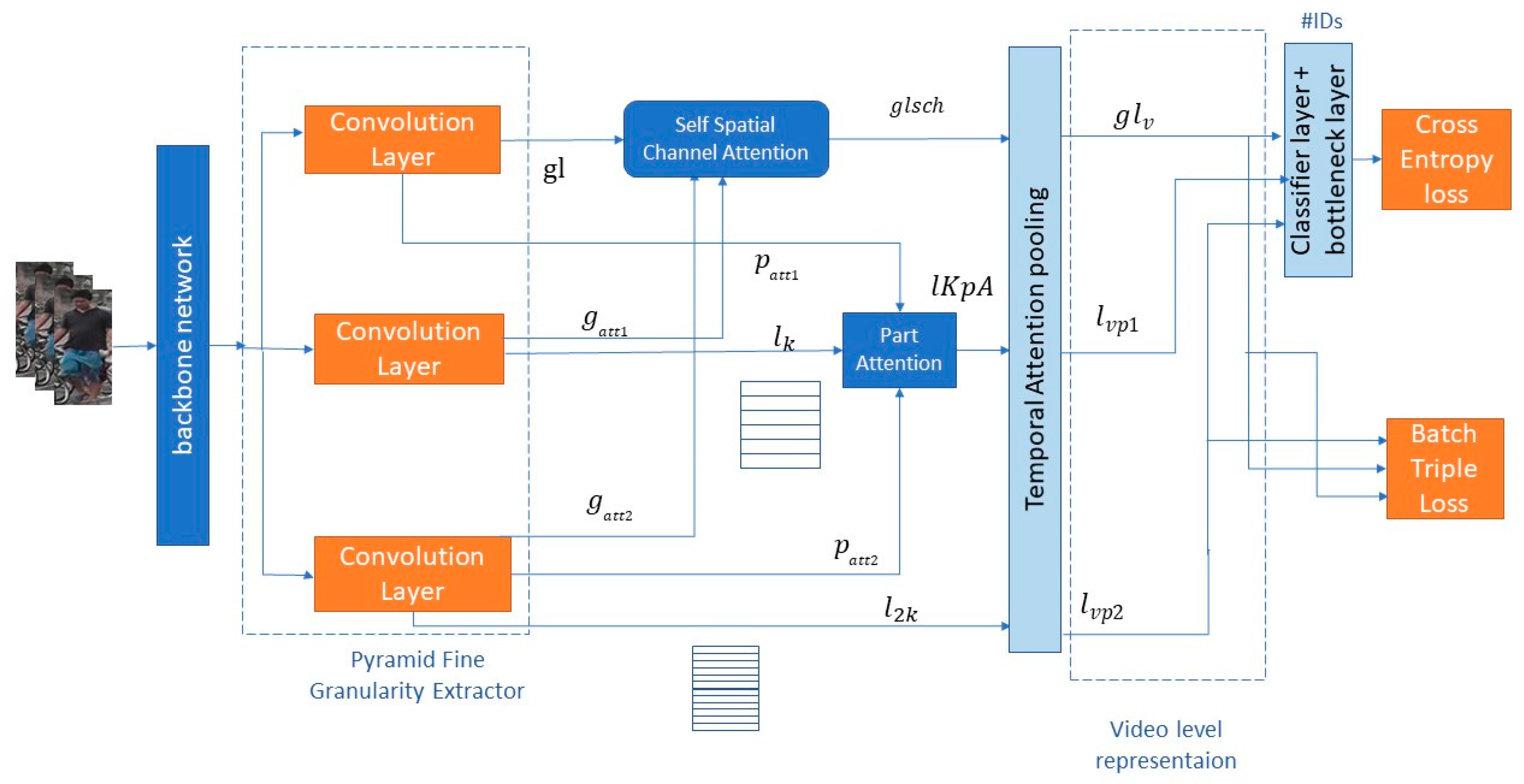
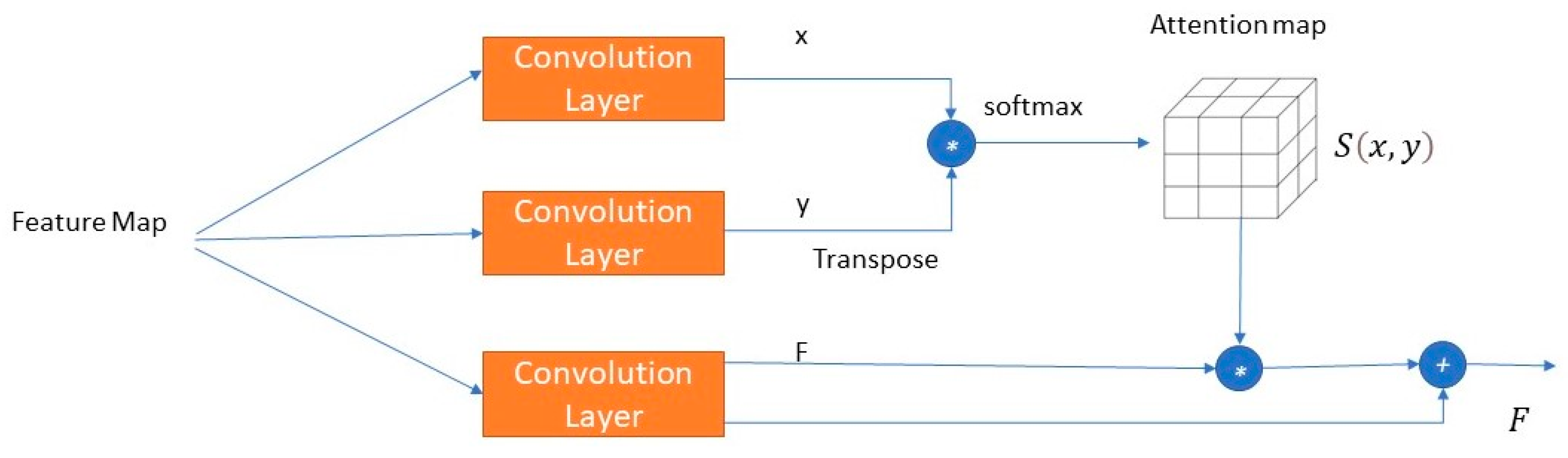
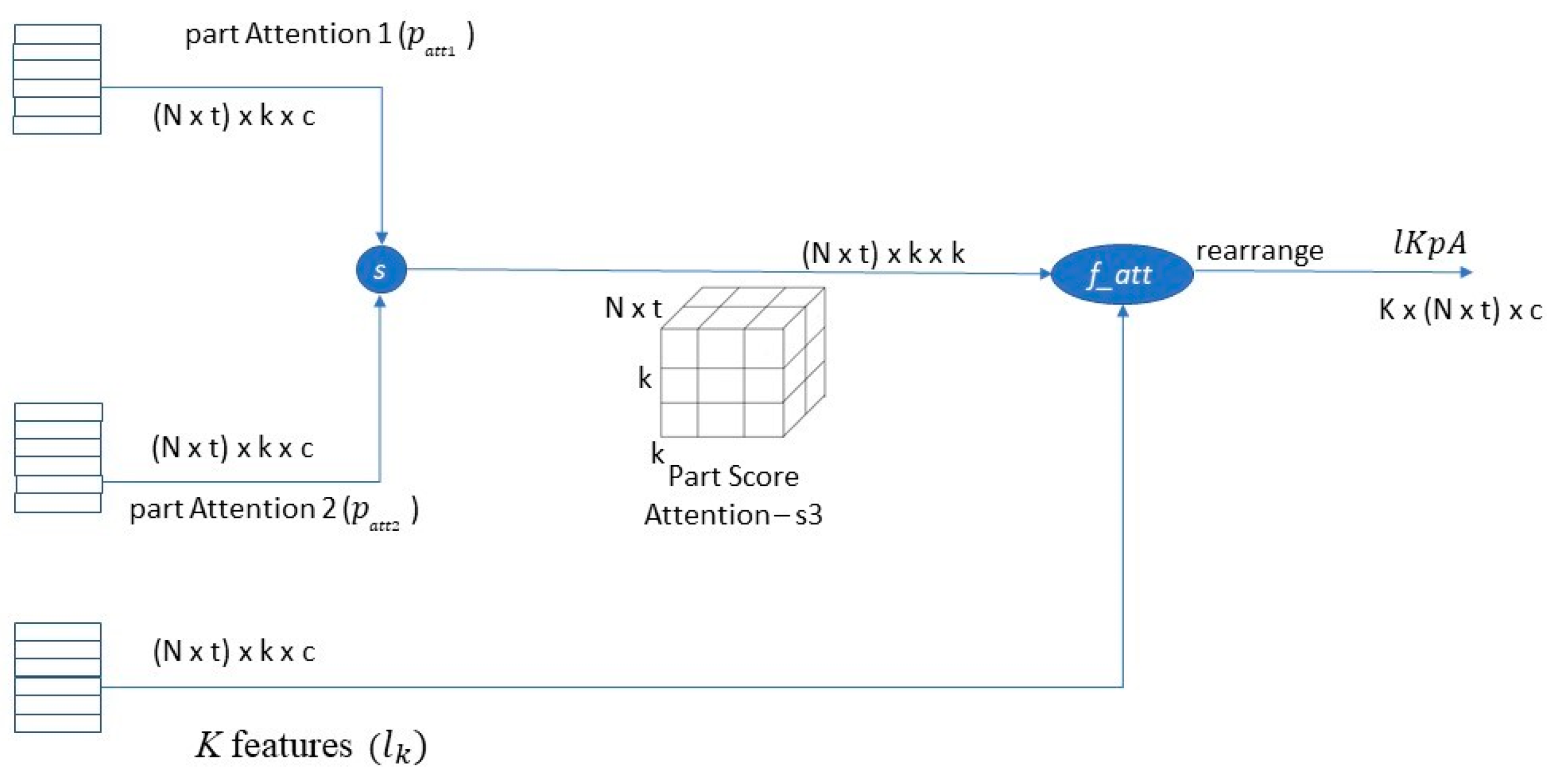
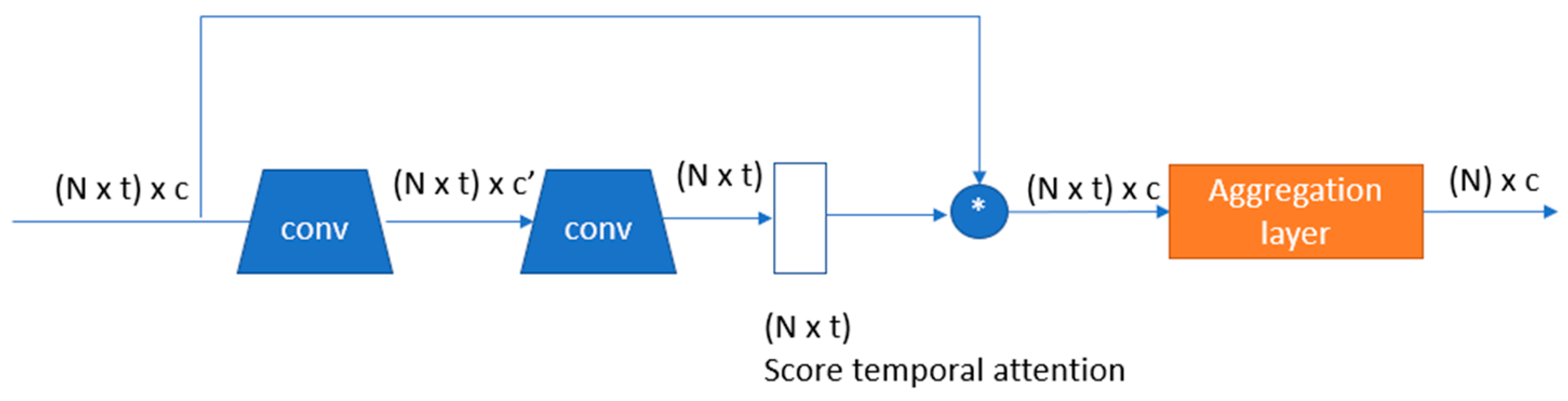
Video-based person re-identification has become quite attractive due to its importance in many vision surveillance problems. It is a challenging topic due to the inter/intra changes, occlusion, and pose variations involved. In this paper, we propose a pyramid-attentive framework that relies on multi-part features and multiple attention to aggregate features of multi-levels and learns attention-based representations of persons through various aspects. Self-attention is used to strengthen the most discriminative features in the spatial and channel domains and hence capture robust global information. We propose the use of part-relation attention between different multi-granularities of features’ representation to focus on learning appropriate local features. Temporal attention is used to aggregate temporal features. We integrate the most robust features in the global and multi-level views to build an effective convolution neural network (CNN) model. The proposed model outperforms the previous state-of-the art models on three datasets. Notably, using the proposed model enables the achievement of 98.9% (a relative improvement of 2.7% on the GRL) top1 accuracy and 99.3% mAP on the PRID2011, and 92.8% (a relative improvement of 2.4% relative to GRL) top1 accuracy on iLIDS-vid. We also explore the generalization ability of our model on a cross dataset.
Keywords: computer vision; deep learning; person re-identification; attention; temporal aggregation; multi-granularities computer vision; deep learning; person re-identification; attention; temporal aggregation; multi-granularities