
Article

Integrative Machine Learning Framework for Epigenetic Biomarker Discovery and Disease Severity Prediction in Childhood Atopic Dermatitis
1
Institute for Translational Research in Biomedicine, Chang Gung Memorial Hospital, Kaohsiung 83301, Taiwan
2
Liver Transplantation Center, Department of Surgery, Chang Gung Memorial Hospital, Kaohsiung 83301, Taiwan
3
Department of Computer Science and Engineering, National Sun Yat-Sen University, Kaohsiung 80424, Taiwan
4
Artificial Intelligence Research and Promotion Center, National Sun Yat-Sen University, Kaohsiung 80424, Taiwan
*
Authors to whom correspondence should be addressed.
Big Data Cogn. Comput. 2026, 10(4), 101; https://doi.org/10.3390/bdcc10040101
Submission received: 23 December 2025 / Revised: 8 March 2026 / Accepted: 19 March 2026 / Published: 24 March 2026

Abstract

Atopic dermatitis (AD) is a chronic inflammatory skin disorder that is significantly contributed to by epigenetics. We developed a machine learning-based framework to identify DNA methylation biomarkers associated with AD classification and severity. Genome-wide methylation data from peripheral blood were processed using four feature selection algorithms: coarse approximation linear function (CALF), elastic net (EN), minimum redundancy maximum relevance (mRMR), and recursive feature elimination with cross-validation (RFECV). The integrative framework identified a central panel of 8 CpG sites that achieved an area under the curve (AUC) of 1.00 in the test set. This panel demonstrated high disease specificity, showing poor classification performance for systemic lupus erythematosus (AUC = 0.46), Crohn’s disease (AUC = 0.50), and oral squamous cell carcinoma (AUC = 0.58). Severity prediction using RFECV-selected 63 CpG sites (RFE63) achieved high accuracy across classifiers, with Random Forest (accuracy = 0.94) outperforming the others. The functional enrichment of CpG-associated genes highlighted key immune-related transcriptional regulators, including STAT5A, RUNX1, MEIS1, and PAX4. These genes are linked to chromatin remodeling, T helper cell differentiation, and interleukin-2 regulation, which are critical in AD pathogenesis and severity. Our findings demonstrate the utility of machine learning-integrated epigenomics in identifying robust, disease-specific biomarkers for AD diagnosis and monitoring, offering new insights into the molecular mechanisms underlying childhood AD. However, further validation in large-scale independent cohorts is required to confirm their clinical robustness and generalizability.

1. Introduction

Atopic dermatitis (AD) is a chronic inflammatory skin disease characterized by intense pruritus, relapsing eczema, and immune dysregulation, often associated with allergic comorbidities such as asthma and allergic rhinitis [1]. The global prevalence of AD ranges from 5% to 20%, with higher incidence rates in urbanized regions, including Taiwan, where the prevalence is reported to be 21.6% [2,3]. The onset of AD frequently occurs during infancy and early childhood, and while some cases resolve with age, a significant proportion of patients experience persistent or recurrent symptoms into adulthood [4,5]. The underlying pathophysiology of AD involves a complex interplay between skin barrier dysfunction, immune dysregulation, and environmental factors. A key aspect of barrier dysfunction is filaggrin deficiency, which disrupts corneocyte tight junctions, leading to increased transepidermal water loss and heightened skin permeability to allergens and microbial agents [6]. Immunologically, AD is characterized by an imbalance favoring type 2 helper T (Th2) cell responses, with increased production of cytokines such as interleukin-4 (IL-4), interleukin-13 (IL-13), and interleukin-31 (IL-31), which drive allergic inflammation and further impair skin integrity [7]. Notably, IL-33, produced by keratinocytes in lesional AD skin, serves as a potent activator of Th2 cytokine production, exacerbating disease severity [8,9].
Epigenetic modifications, particularly DNA methylation, have been increasingly recognized as key regulators in AD pathogenesis. Epigenetic changes influence gene expression in immune and epidermal cells, contributing to disease onset and severity [10,11]. Our previous study demonstrated that DNA methylation profiling can identify disease-specific epigenetic signatures in childhood AD, highlighting golli-MBP as a novel biomarker associated with disease severity [12]. This study provided crucial insights into how methylation alterations at key immune-related loci contribute to AD pathophysiology, reinforcing the role of epigenetic regulation in disease progression. Further supporting the involvement of epigenetics in AD, our recent study (accepted, Experimental Dermatology) identified semaphorin 7a (SEMA7A) as a key player in neuroimmune interactions in AD, demonstrating that increased SEMA7A expression correlates with elevated IL-4 and IL-33 levels in immune cells and keratinocytes. These findings reinforce the concept that AD has a unique epigenetic fingerprint, influencing immune signaling and neuronal sensitivity. Despite these findings, the integration of machine learning approaches in epigenetic AD research remains in its early stages.
Machine learning algorithms, particularly feature selection methods, offer powerful tools for identifying robust disease biomarkers. The traditional detection of epigenetic biomarkers has primarily relied on methods such as methylation-specific PCR and epigenome-wide association studies (EWAS) to identify individual differentially methylated positions. While foundational, these approaches often fall short in predictive accuracy for clinical diagnostics due to the high dimensionality and complexity of epigenomic data. Recent technological advancements, including miniaturized biosensor systems and high-throughput analytical platforms, have significantly improved the sensitivity and detection fidelity of epigenetic signals [13,14]. Moreover, the integration of machine learning into these workflows enables the identification of multi-locus methylation signatures, allowing for disease-specific classification with greater precision than traditional univariate methods [15]. By leveraging high-dimensional DNA methylation datasets, these methods can enhance the precision of disease classification and prognostic prediction [16,17,18]. In this study, we implemented a machine learning-based framework that integrates multiple algorithms, including coarse approximation linear function (CALF), elastic net (EN), minimum redundancy maximum relevance (mRMR), and recursive feature elimination with cross-validation (RFECV), to perform comprehensive feature selection for identifying and validating CpG methylation biomarkers associated with AD classification and severity. By leveraging multiple feature selection techniques, we aimed to identify key epigenetic signatures that distinguish AD from healthy controls and correlate disease severity. Additionally, we explored the cross-disease relevance of these markers by comparing methylation patterns in AD with those in other inflammation-related diseases. Our findings provide novel insights into the molecular mechanisms underlying AD and highlight the potential of epigenetic biomarkers for disease diagnosis, monitoring, and personalized therapeutic strategies.

2. Materials and Methods

2.1. Study Design and Data Collection

This study employed a machine learning-based approach to identify and validate DNA methylation biomarkers associated with atopic dermatitis (AD) classification and severity. DNA methylation data were obtained from previously published datasets and publicly available repositories, with the primary cohort consisting of whole-blood methylation profiles from 24 healthy controls and 24 AD patients (GSE152084). Within the AD group, patients were stratified using the SCORing Atopic Dermatitis (SCORAD) index to ensure a balanced distribution for severity prediction, resulting in 9 patients with mild disease (SCORAD < 25), 9 with moderate disease (SCORAD 25–50), and 6 with severe disease (SCORAD > 50). For cross-disease comparisons, additional whole-blood and tissue datasets were included from patients with Crohn’s disease (GSE103027), systemic lupus erythematosus (GSE59250), and oral squamous cell carcinoma (GSE234379) (Table 1). Ethical approval was obtained for all patient samples where applicable, and data were preprocessed following standard protocols to ensure consistency across different datasets.

2.2. Preprocessing of Methylation Data

To ensure high-quality data for downstream analysis, a stringent preprocessing pipeline was employed. The quality control (QC) measures included removing CpG probes with detection p-values greater than 0.05 or missing values in more than 30% of samples. Beta-mixture quantile (BMIQ) normalization was performed to correct for technical biases inherent to the Illumina Infinium platform. Probes located on sex chromosomes, within known single-nucleotide polymorphisms (SNPs), or in non-CpG contexts were excluded to reduce potential confounding. Following filtering, CpG sites were pre-selected based on an adjusted p-value below 0.05 and an absolute methylation difference exceeding 0.1 between atopic dermatitis patients and healthy controls.

2.3. Feature Selection and Machine Learning Models

To ensure robust model validation and prevent overfitting, the dataset was divided into a training set and an independent test set at a 7:3 ratio. Feature selection was conducted solely on the training data using four distinct algorithms: coarse approximation linear function (CALF), elastic net (EN), minimum redundancy maximum relevance (mRMR), and recursive feature elimination with cross-validation (RFECV). The selection of our feature selection framework was strategically designed to handle the complexity of genome-wide methylation data. CALF was utilized to prioritize markers with high frequency and stability, whereas Elastic Net provided a balanced approach to feature sparsity. To ensure that the final panel was not only relevant but also efficient, mRMR was applied to minimize feature redundancy. Finally, RFECV was implemented to identify the optimal number of features specifically for severity prediction, ensuring that the resulting signature was robust enough to maintain high accuracy across different classification algorithms. The test set remained entirely independent and was not utilized at any stage of feature selection or model development. CpG sites consistently selected across multiple methods were designated as core biomarkers and used for downstream classification.

2.4. Classification and Performance Evaluation

The selected CpG biomarkers were then used to train Random Forest (RF), k-nearest neighbors (KNN), decision tree (DT), and support vector classifier (SVC) models to distinguish AD from healthy controls. Classifiers were optimized through cross-validation, and their predictive performance was assessed using Area Under the Curve-Receiver Operating Characteristic Curve (AUC-ROC), accuracy, precision, recall, and F1-score. AUC-ROC provided a measure of discriminatory power, while accuracy and F1-score balanced sensitivity and specificity. The results showed that both RF and SVC consistently achieved the highest accuracy in classifying disease severity, demonstrating the robustness and predictive value of the selected CpG features.
To evaluate the cross-disease relevance of AD-specific CpG sites, a comparative methylation analysis was performed across multiple inflammatory diseases, including SLE, Crohn’s disease, and oral squamous cell carcinoma (OSCC). This cross-disease comparison assessed whether the identified CpG sites were exclusive to AD or indicative of broader immune dysregulation. The mean methylation levels of AD-specific features were compared across diseases, and AD-trained classification models were tested on non-AD datasets to examine predictive transferability.

2.5. Functional Enrichment Analysis

To explore the biological significance of the identified CpG markers, functional enrichment analysis was performed using the Database for Annotation, Visualization, and Integrated Discovery (DAVID). This analysis aimed to determine whether the selected CpG sites were associated with key immune-related pathways and transcriptional regulatory networks implicated in AD pathogenesis. CpG sites were mapped to their corresponding genes, and pathway enrichment was conducted to identify significant biological functions linked to these epigenetic modifications.

2.6. Statistical Analysis

All statistical analyses were performed using R (version 4.2.1) and Python (version 3.12) to ensure accuracy and reproducibility. Wilcoxon rank-sum tests were used to compare methylation levels between AD and control groups, while Bonferroni correction was used to adjust for multiple comparisons to minimize false discovery rates. Machine learning models were implemented using scikit-learn, with hyperparameter tuning conducted via grid search and cross-validation. AUC-ROC curves were generated to evaluate the classification efficacy, and confidence intervals were calculated for all the performance metrics to assess model stability. To further confirm disease specificity, ROC curve analysis was extended to non-AD datasets, reinforcing the reliability of the selected CpG biomarkers.
This rigorous statistical framework ensured the robustness and reproducibility of the findings. We implemented our validation on a comprehensive suite of metrics designed to account for class distribution and small sample sizes, including Balanced Accuracy, F1-scores, and the Matthews Correlation Coefficient. The integration of machine learning with stringent statistical validation provided a solid foundation for the identification of epigenetic biomarkers in AD, supporting their clinical relevance in diagnosis and disease monitoring.

3. Results

3.1. Feature Selection Identifies Robust CpG Biomarkers for AD Classification

The comprehensive pipeline for identifying epigenetic markers and using them for classification tasks in AD is illustrated in Figure 1. The workflow started with the raw feature set, which was first filtered through a pre-selection step based on statistical significance (adjusted p-value < 0.05) and effect size (methylation difference > 0.1). Features failing to meet these criteria were dropped, ensuring that only statistically relevant and biologically meaningful markers were retained for subsequent analysis. A total of 13,116 CpG clusters that passed the pre-selection step were further processed through two distinct feature selection models. The first set of models—CALF, Elastic Net, and mRMR—prioritizes features for the binary classification of patient versus control groups. The selected features were mapped back to the raw dataset and used to train multiple classifiers for distinguishing between patients and controls. A second feature selection approach, recursive feature elimination with cross-validation (RFECV) combined with RF, was applied to identify markers associated with atopic dermatitis (AD) severity. These severity-related features were similarly mapped to the raw dataset and used to train a separate RF classifier dedicated to severity classification. This workflow integrates statistical filtering, advanced feature selection techniques, and machine learning-based classification to establish a robust framework for distinguishing AD patients from controls and stratifying patients by disease severity.
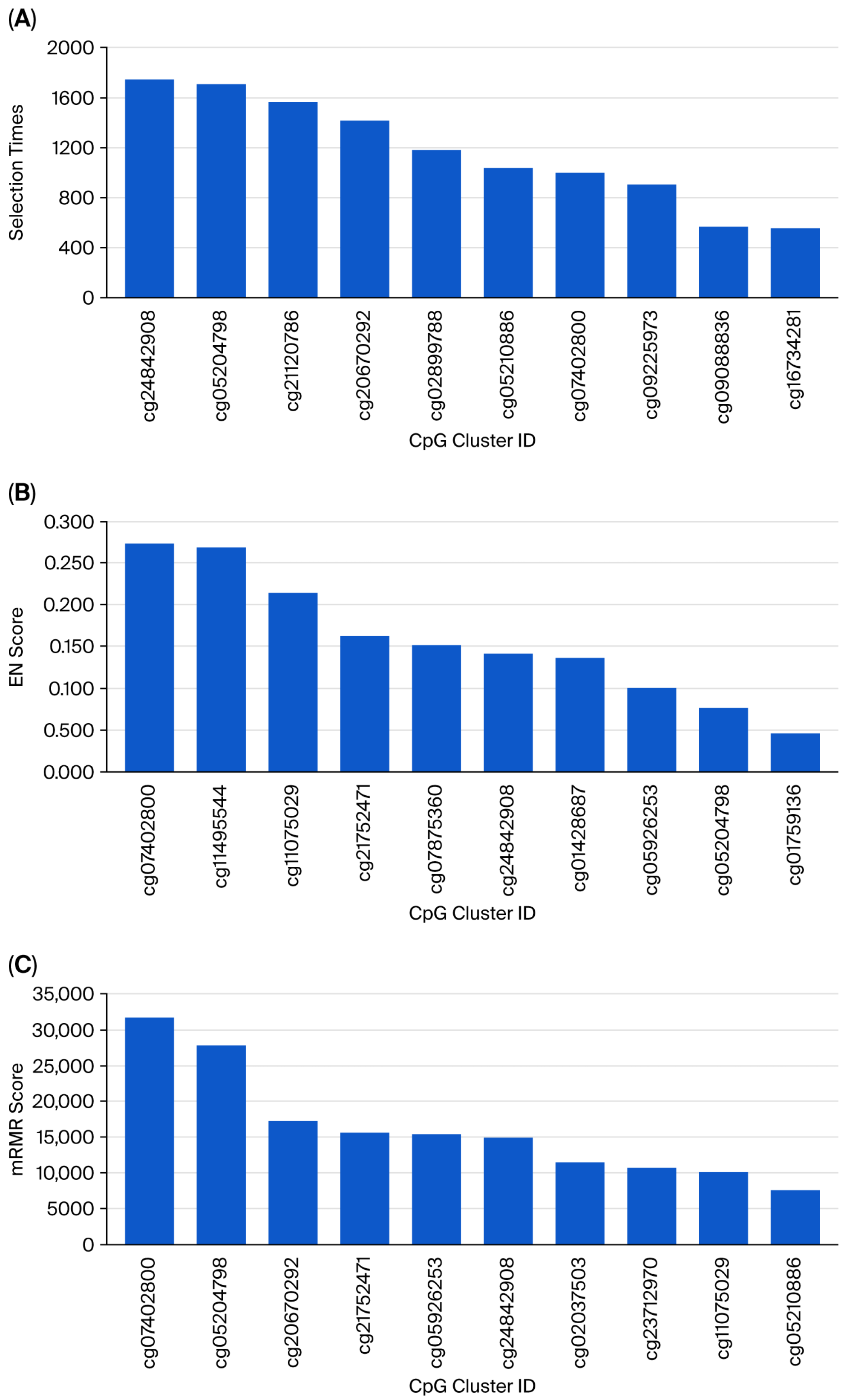
Figure 2 shows the results of using three feature selection methods (CALF, EN, and mRMR) to identify key CpG sites for distinguishing atopic dermatitis (AD) patients from controls. The CALF method identified the most significant CpG sites based on their frequency of selection across multiple iterations. The top-ranking CpG site, “cg24842609”, was selected 1747 times, indicating its consistent importance in distinguishing atopic dermatitis (AD) patients from controls (Figure 2A). It was closely followed by “cg05204198” and “cg12270778”, selected 1710 and 1568 times, respectively. These results demonstrated CALF’s capability to consistently prioritize key features across multiple modeling iterations, strengthening confidence in the reliability of the identified CpG sites. The EN method assigned importance scores to CpG sites based on their contributions to model performance. We found that CpG site “cg07402060” exhibited the highest EN score (0.300), followed by “cg11965644” (0.273) and “cg01107529” (0.268) (Figure 2B). These scores suggest that these sites have significant predictive value in the model, with diminishing contributions from lower-ranked sites. Moreover, the mRMR method ranked CpG sites using scores that balance feature relevance and redundancy. We found that the CpG site “cg07402060” achieved the highest score (31664.01), followed by “cg05204198” (27745.01) and “cg12270778” (17212.13) (Figure 2C). These scores represented the combined relevance and uniqueness of the selected features in the context of AD classification.

3.2. A Shared CpG Signature Panel Demonstrates High Specificity for AD

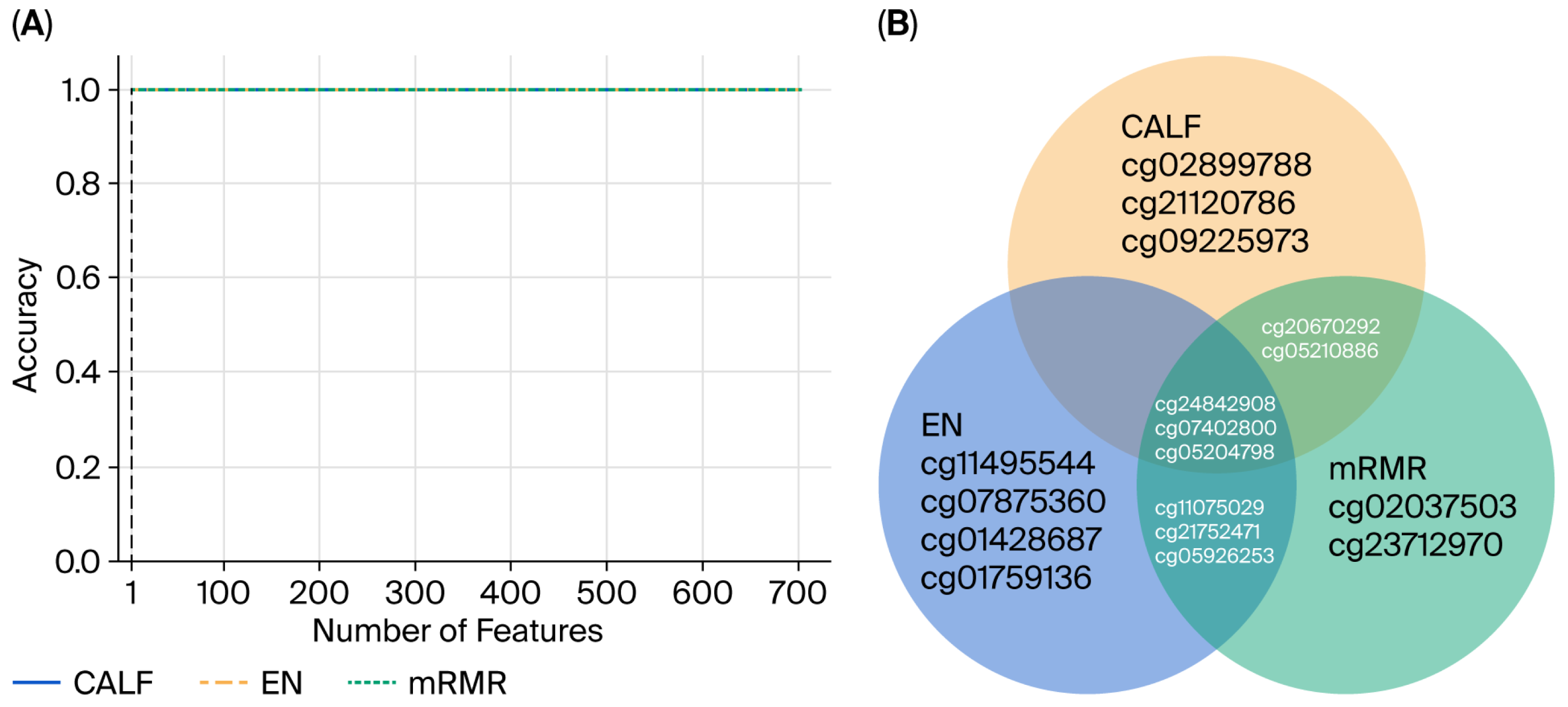
The classification accuracy based on features selected by CALF, Elastic Net (EN), and mRMR was evaluated using a Random Forest model and plotted against the number of features included (Figure 3A). The x-axis represents the number of features, while the y-axis shows the accuracy of predicting AD. All three methods achieve perfect accuracy with a minimal number of features (e.g., fewer than 10), as indicated by the flat performance curve. This finding demonstrates the high predictive value of the selected CpG sites and the efficiency of the feature selection process in achieving robust classification performance with a parsimonious model. We further illustrated the overlap among the three feature selection methods (CALF, EN, and mRMR) in identifying critical CpG sites for distinguishing AD patients from controls. As shown in Figure 3B, each circle represents the unique set of features selected by one method, with intersections highlighting commonly identified CpG sites. The central overlap panel consists of eight CpG sites, representing consistently identified markers of high importance across all three feature selection methods. In contrast, the non-overlapping regions of the Venn diagram demonstrated method-specific features—for example, “cg02899788” uniquely selected by CALF, “cg11495544” by Elastic Net, and “cg2037503” by mRMR—demonstrating the complementary nature of these approaches in capturing diverse yet informative biomarkers.

3.3. Disease-Specificity of AD Biomarkers Validated Across Multiple Immune Disorders

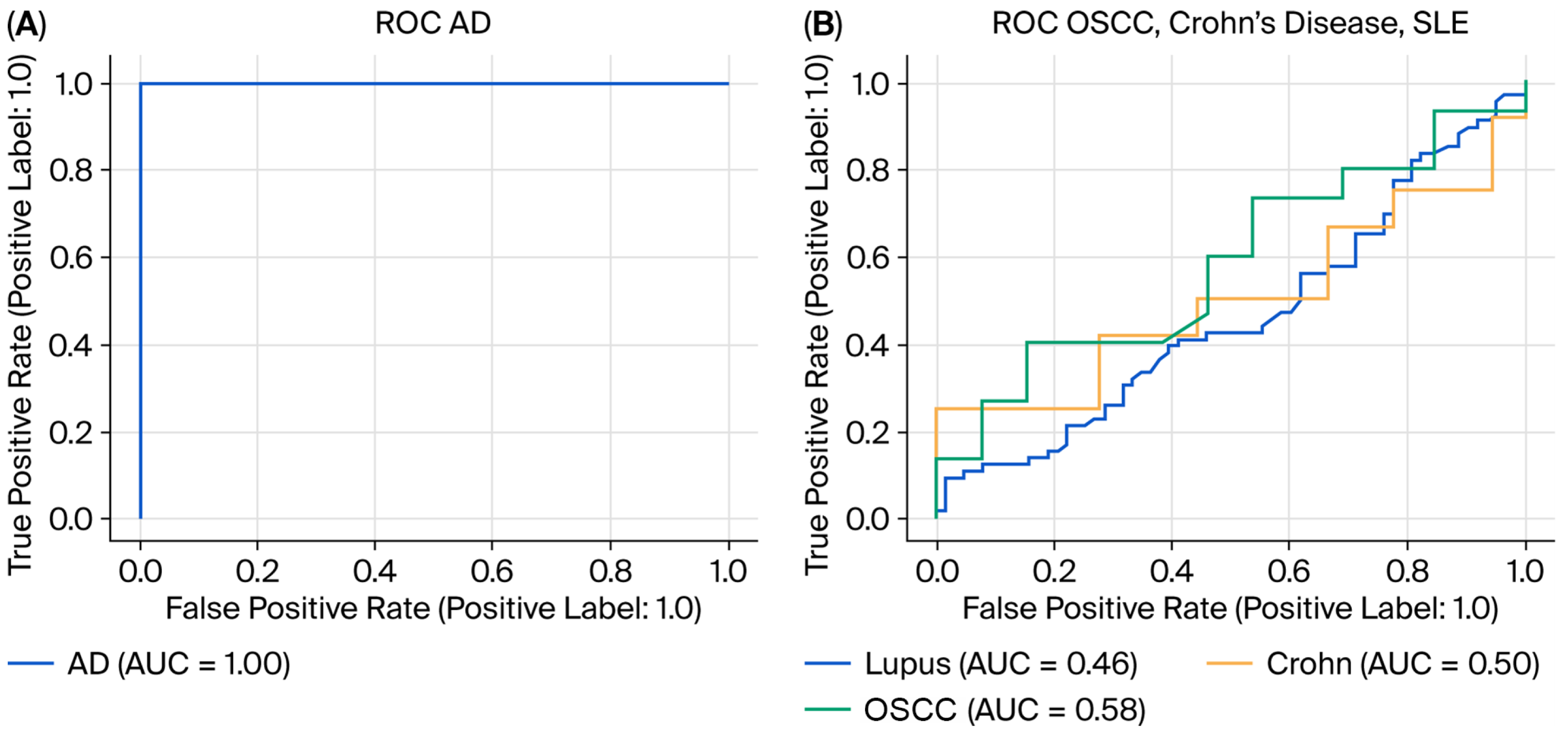
When evaluated using a Random Forest classifier, the CpG sites in the central overlap panel achieved perfect classification performance, with a receiver operating characteristic (ROC) curve showing an area under the curve (AUC) of 1.0, reflecting 100% sensitivity and specificity (Figure 4A). This result validated the robustness of the selected features and the predictive power of the panel in distinguishing AD cases from controls with absolute accuracy. Furthermore, the ROC curves assessing the performance of the CpG-based classifier, originally trained for AD, were applied to other disease cohorts. As shown in Figure 4B, the classifier demonstrated poor performance in distinguishing Crohn’s disease (AUC = 0.50), systemic lupus erythematosus (SLE; AUC = 0.46), and OSCC (AUC = 0.58), underscoring its limited applicability beyond AD. This poor cross-disease performance emphasizes the high specificity of the selected CpG features for AD. Overall, these results suggest that the identified CpG sites are uniquely informative for AD classification, reinforcing their potential as disease-specific epigenetic biomarkers.

3.4. RFECV-Derived Signature Accurately Predicts AD Severity

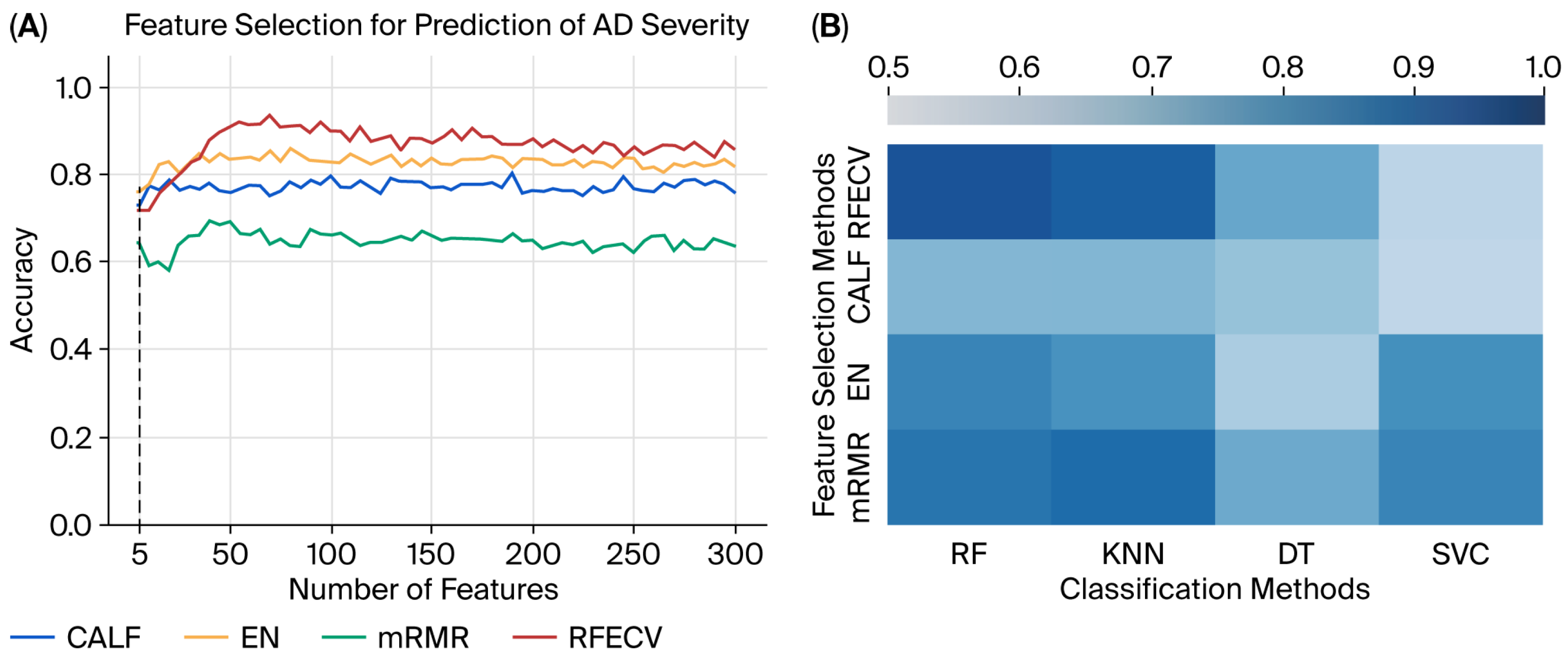
The accuracy of different feature selection methods, including CALF, EN, mRMR, and RFECV, in predicting AD severity was evaluated as a function of the number of features included in the model. The x-axis represents the number of features, while the y-axis shows the accuracy of the classification (Figure 5A). We found that RFECV demonstrated the highest accuracy across a range of feature numbers, maintaining superior performance as the number of features increases, peaking with smaller feature sets. Elastic Net and CALF also achieve relatively high accuracy but perform slightly worse than RFECV. mRMR, while performing reasonably well with smaller feature sets, demonstrated overall lower accuracy compared to the other methods. In contrast, RFECV consistently identified an optimal subset of features that achieved high accuracy in predicting AD severity, effectively balancing model performance and complexity. Then, the performance of the RFECV-selected feature set (RFE63) across different classification algorithms—Random Forest (RF), k-Nearest Neighbors (KNN), Decision Tree (DT), and Support Vector Classifier (SVC)—was also evaluated. The heatmap depicts the classification accuracy, with darker shades representing better performance. Both RF and KNN consistently achieved high accuracy across all the feature selection methods, with RF showing especially strong performance when using features selected by RFECV. The overall classification accuracy of the RF model reached up to 0.94, highlighting the robustness of ensemble-based methods for high-dimensional methylation data. While the RFECV-derived panel achieved an impressive AUC in discriminating between severity levels, we performed a more granular evaluation to account for the smaller sample size of the severe AD cohort. This high performance likely reflects a distinct underlying biological difference between the groups in this specific cohort, but it should be interpreted with caution. The balanced accuracy reached 0.88, indicating good sensitivity across classes despite class distribution differences. The per-class F1-scores for non-disease, mild, moderate, and severe categories were 1.00, 0.94, 0.75, and 0.82, respectively, demonstrating strong discrimination for non-disease and mild cases, with comparatively lower but still acceptable performance for moderate and severe cases. Furthermore, the multiclass Matthews Correlation Coefficient (MCC) was 0.85, reflecting a high level of overall predictive agreement while accounting for class imbalance. In contrast, DT and SVC showed moderate to lower accuracy, depending on the feature selection method used (Figure 5B).
To support clinical translation, the CpG sites identified from the Infinium array were confirmed to reside in genomic regions with high probe reliability. All markers passed stringent quality-control filtering, including the exclusion of probes overlapping known cross-reactive sequences. A complete list of the refined 8-core diagnostic CpG sites and the 63 CpG sites used for severity prediction, together with their probe IDs, genomic coordinates, and associated gene annotations, is provided in Supplementary Table S1.

3.5. Functional Annotation Reveals Immune-Related Regulatory Networks

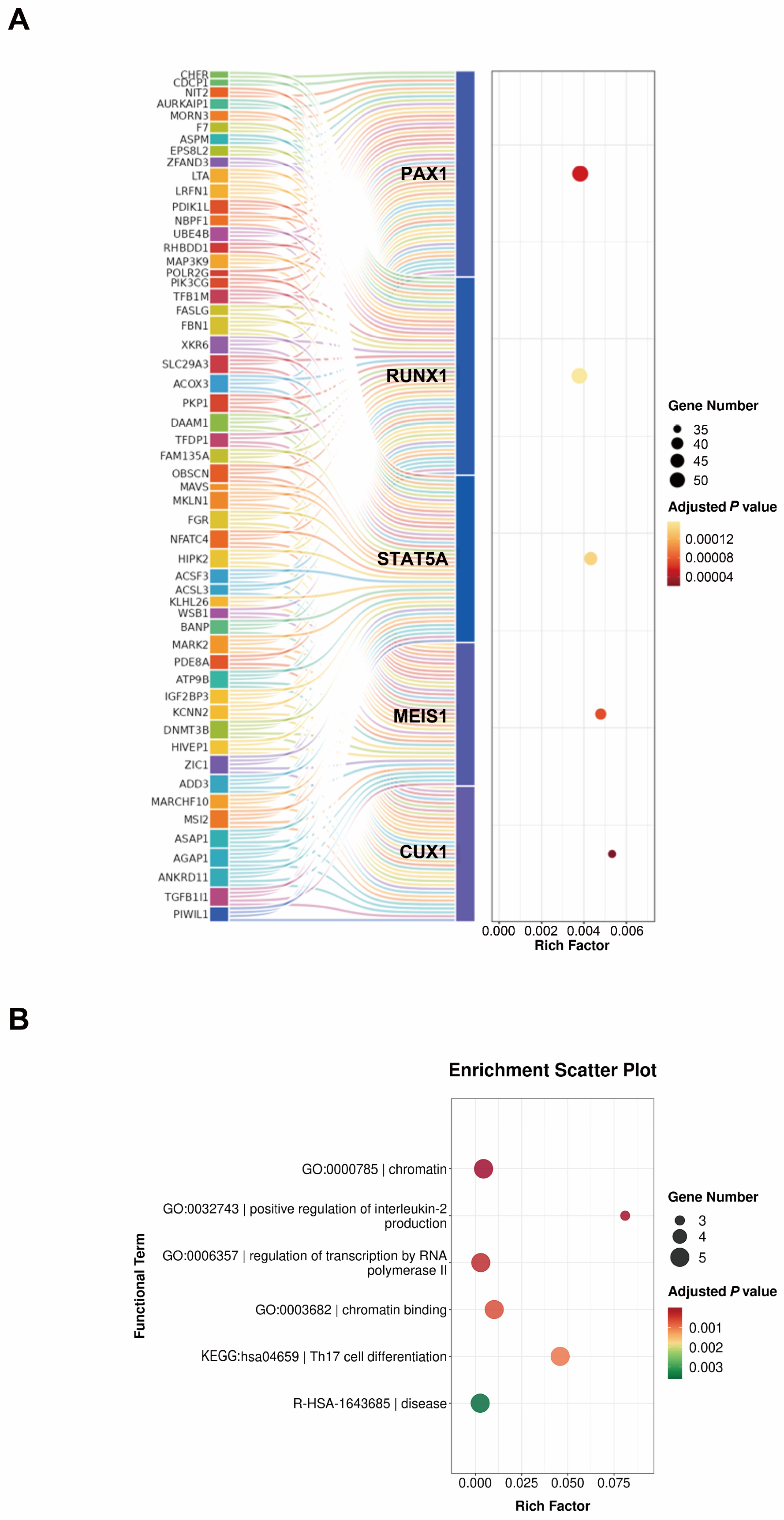
We further explored the potential biological significance of the 63 RFECV-selected features (RFE63) through DAVID overrepresentation analysis. A Sankey diagram was constructed to illustrate the functional enrichment of CpG-associated genes categorized into key transcription regulatory networks, including CUX1, PAX4, MEIS1, STAT5A, and RUNX1 (Figure 6A). This visual representation demonstrated the relationships between individual genes and their assigned transcription factor categories, revealing both unique and overlapping associations. Complementing this, the enrichment scatter plot in Figure 6B identifies significantly overrepresented biological functions and pathways among the CpG-associated genes. Enriched terms include the GO terms chromatin organization (GO:0000785), positive regulation of interleukin-2 production (GO:0032743), transcriptional regulation by RNA polymerase II (GO:0006357), and KEGG pathway analysis-identified Th17 cell differentiation (hsa04659). These findings emphasize the functional relevance of the selected gene panel in chronic inflammatory responses, transcriptional activity, and epigenetic remodeling, which are newly identified key hallmarks associated with disease severity in pediatric atopic dermatitis.

4. Discussion

Our study utilized a machine learning-driven approach to identify and validate CpG methylation biomarkers associated with atopic dermatitis (AD), providing novel insights into the epigenetic landscape specific to this disease. The results demonstrate that AD possesses a unique and highly specific epigenetic signature, allowing for clear distinction from other immune-mediated and inflammatory conditions. The feature selection methods CALF, Elastic Net, mRMR, and RFECV identified a set of key CpG sites that achieved exceptional classification accuracy. Specifically, the central overlap panel of eight CpG features demonstrated perfect classification performance, with an area under the curve (AUC) of 1.00. This high level of specificity is further confirmed by the panel’s limited applicability to other systemic inflammatory diseases such as systemic lupus erythematosus (SLE) and Crohn’s disease, where classification performance was significantly lower with AUC values ranging from 0.46 to 0.50. However, its perfect classification on a small holdout set is an initial finding that requires confirmation in more diverse and larger datasets. Furthermore, a study by Rodríguez and colleagues revealed significant methylation differences in the epidermis of AD patients compared to healthy controls, particularly in genes related to epidermal differentiation and immune responses, reinforcing the role of epigenetic modifications in AD pathogenesis [11]. Furthermore, a review by Nedoszytko et al. highlighted how epigenetic alterations, including DNA methylation and histone modifications, contribute to immune dysregulation and barrier dysfunction in AD [10]. Our observations align with these findings, as the distinct methylation patterns identified in our study provide pivotal evidence that AD possesses a unique epigenetic signature, potentially serving as a reliable biomarker for diagnosis and disease monitoring. Future studies should explore how these epigenetic markers interact with environmental factors and genetic predisposition to influence disease progression.
Our findings indicate that RFECV-selected features (RFE63) demonstrated strong predictive capability for AD severity. Among classification algorithms, Random Forest classifier consistently achieved the highest accuracy, supporting their effectiveness in handling high-dimensional epigenetic data [19,20,21]. The ability to accurately stratify AD patients based on disease severity has significant clinical implications, enabling personalized treatment approaches tailored to individual epigenetic profiles [10]. The integration of epigenetic markers with clinical and demographic data may further enhance predictive models and improve treatment response predictions. There is increasing evidence that the immune and nervous systems undergo tightly coordinated development during childhood. Immune signaling molecules such as cytokines and innate mediators not only are crucial for host defense but also participate in shaping neurodevelopmental processes including neurogenesis, synaptic pruning, and circuit refinement [22,23]. Microglia, the resident immune cells of the central nervous system, are particularly influential in early life, regulating axonal outgrowth and synaptic remodeling [24]. Moreover, immune activation in the absence of infection has been shown to alter behavioral and cognitive trajectories through the modulation of neuronal development [25]. These findings point toward a shared molecular landscape between immune and neuronal pathways. In this study, functional enrichment analysis of the RFE63 CpG markers identified significant enrichment in genes involved in transcriptional regulation. Although our DNA methylation analysis was performed on peripheral blood cells, we identified a panel of transcription factors—CUX1, RUNX1, MEIS1, PAX4, and STAT5A—that are known or suspected to play critical roles in sensory neuron function, potentially within the dorsal root ganglion (DRG). The DRG is a key site of neuroimmune interaction in atopic dermatitis (AD), where chronic pruritus is not only a hallmark symptom but also a major contributor to disease severity [26,27]. Persistent itch leads to repeated scratching, which exacerbates skin barrier dysfunction, promotes inflammation, and perpetuates a vicious itch–scratch cycle that intensifies the disease burden [28,29]. DRG neurons express receptors for type 2 cytokines such as IL-4, IL-13, and IL-31, which are elevated in AD and have been shown to directly modulate neuronal excitability and gene expression, contributing to sensory sensitization [27,30,31]. As such, uncovering molecular regulators associated with pruritus offers critical insight into the mechanisms driving AD’s progression and severity. The identification of DRG-associated transcription factors in our peripheral epigenetic dataset suggests a systemic reflection of neuroimmune dysregulation in AD. CUX1 and RUNX1, which regulate transcriptional programs in nociceptive neurons [32,33], and MEIS1 and PAX4, which contribute to neuronal differentiation and plasticity [34,35], may reflect broader systemic epigenetic responses linked to chronic itch and inflammation. Moreover, while the exact intracellular mediators of type 2 cytokine signaling in sensory neurons have yet to be fully characterized, our epigenetic analysis identified STAT5A, a molecule already recognized for its role in downstream transcriptional responses to type 2 cytokines [36,37]. However, the theoretical link between peripheral blood DNA methylation and transcription factors associated with the dorsal root ganglion is currently speculative. Although identifying these systemic reflections of neuroimmune dysregulation offers novel insights into chronic pruritus, the biological connectivity between peripheral markers and neural regulatory networks requires direct experimental evidence in neural tissues. Notably, our recent work also demonstrated that Semaphorin 7A regulates IL-4 and IL-33 expression in an in vitro model of AD and is associated with disease severity, further reinforcing the importance of cytokine–neuron signaling axes in AD pathophysiology [38]. These insights support the view that systemic immune dysregulation, reflected in peripheral blood DNA methylation profiles, may influence neuroimmune mechanisms relevant to disease symptoms. These findings demonstrate the promise of peripheral blood DNA methylation as a non-invasive tool for examining neuroimmune pathways involved in AD, especially those linked to sensory neuron regulators that drive chronic pruritus. Furthermore, the high diagnostic accuracy observed in this study must be interpreted within the context of the specific biological matrix and technical platform utilized. While whole blood is an ideal matrix for non-invasive biomarker discovery due to its clinical accessibility, it is important to note that DNA methylation signatures can vary significantly between tissue types and even within specific cell-type compositions. Furthermore, technical noise inherent to the Illumina Infinium platform and the sensitivity of the analytical sensors used for detection can impact the reproducibility of identified CpG sites. Recent advances in integrated biosensing and analytical frameworks have highlighted the necessity of accounting for these matrix effects to ensure that biomarkers remain robust across different detection systems. By employing BMIQ normalization and stringent quality control, our framework sought to minimize these technical variations, prioritizing markers that demonstrate stability despite the inherent complexity of high-dimensional epigenetic data.
The findings from this study demonstrate the utility of integrating machine learning with epigenetic data to discover disease biomarkers. The identified CpG features hold promise for clinical applications in AD diagnosis, disease monitoring, and severity stratification. Despite the robust performance of our machine learning framework, several limitations of this study should be acknowledged. First, the findings are based entirely on in silico analyses of peripheral blood methylation data. While these computational results provide a statistically rigorous foundation for biomarker discovery, the absence of direct experimental validation remains a primary constraint. Moreover, such performance in a single-center cohort may reflect over-optimization of the GSE152084 dataset or spectrum bias, where the distinction between cases and controls is more distinct than in real-world clinical settings. Further validation in larger, multi-center cohorts, including borderline clinical cases, is essential to confirm the generalizability of these markers. Future studies employing targeted techniques, such as bisulfite sequencing or quantitative PCR in independent clinical cohorts, are necessary to confirm these epigenetic signatures. While our cohort demonstrates a relatively balanced distribution across severity levels, the overall sample size is modest. The observation of perfect classification performance warrants careful interpretation, as such results may be influenced by the specific characteristics of the current dataset. Future research should focus on validating these biomarkers in larger, independent cohorts and exploring their potential in guiding therapeutic strategies. Additionally, to establish the generalizability and clinical utility of these biomarkers across diverse pediatric populations, larger multi-center and longitudinal studies are essential. Tracking how these epigenetic changes evolve over time in response to treatment may also provide valuable insights into the progression of atopic dermatitis and treatment responses.

5. Conclusions

In summary, this study highlights the power of machine learning in uncovering disease-specific epigenetic markers for AD. The identified CpG sites exhibit high specificity and predictive power, distinguishing AD from other immune-mediated conditions. These results lay the foundation for further investigations into the role of epigenetics in AD pathogenesis and its application in precision medicine. Expanding this research to include multi-omics data integration, such as transcriptomics and proteomics, may provide an even more comprehensive understanding of AD and improve personalized treatment approaches.

Supplementary Materials

The following supporting information can be downloaded at: https://www.mdpi.com/article/10.3390/bdcc10040101/s1, Table S1: Characteristics of AD Diagnostic and Severity-Associated CpG Biomarkers.

Author Contributions

Conceptualization, Y.-N.C. and D.-W.C.; methodology, Y.-N.C. and D.-W.C.; software, Y.-N.C. and D.-W.C.; validation, Y.-N.C.; formal analysis, Y.-N.C. and D.-W.C.; investigation, Y.-N.C. and D.-W.C.; resources, Y.-N.C. and D.-W.C.; data curation, D.-W.C.; writing—original draft preparation, Y.-N.C. and D.-W.C.; writing—review and editing, Y.-N.C.; visualization, Y.-N.C. and D.-W.C.; supervision, Y.-N.C. and D.-W.C.; project administration, Y.-N.C. and D.-W.C.; funding acquisition, Y.-N.C. and D.-W.C. All authors have read and agreed to the published version of the manuscript.

Funding

This study was supported by CGMH-NSYSU Joint Research Program 113-P09 and funded by the following grants from Chang Gung Memorial Hospital—CORPG8P0111, CMRPG8M0681, CMRPG8M0682, and CMRPG80683—and the National Science and Technology Council: NCRPG8P0011 and NCRPG8PS011.

Institutional Review Board Statement

Not applicable.

Informed Consent Statement

Not applicable.

Data Availability Statement

All data generated or analyzed during this study are included in this published article. The raw DNA methylation datasets utilized for the discovery and validation of biomarkers are publicly accessible through the NCBI Gene Expression Omnibus (GEO) under the following accession numbers: GSE152084 (childhood atopic dermatitis), GSE103027 (Crohn’s disease), GSE59250 (systemic lupus erythematosus), and GSE234379 (oral squamous cell carcinoma).

Conflicts of Interest

The authors declare no conflicts of interest in this article.

Abbreviations

The following abbreviations are used in this manuscript:
ADAtopic dermatitis
CpGCytosine–phosphate–guanine dinucleotide
AUCArea under the curve
RFECVRecursive feature elimination with cross-validation
RFRandom forest
mRMRMinimum redundancy maximum relevance
ENElastic net
CALFConstrained analysis of linear functions
DAVIDDatabase for annotation, visualization and integrated discovery

References

  1. Eichenfield, L.F.; Tom, W.L.; Chamlin, S.L.; Feldman, S.R.; Hanifin, J.M.; Simpson, E.L.; Berger, T.G.; Bergman, J.N.; Cohen, D.E.; Cooper, K.D.; et al. Guidelines of care for the management of atopic dermatitis: Section 1. Diagnosis and assessment of atopic dermatitis. J. Am. Acad. Dermatol. 2014, 70, 338–351. [Google Scholar] [CrossRef] [PubMed]
  2. Williams, H.; Robertson, C.; Stewart, A.; Ait-Khaled, N.; Anabwani, G.; Anderson, R.; Asher, I.; Beasley, R.; Bjorksten, B.; Burr, M.; et al. Worldwide variations in the prevalence of symptoms of atopic eczema in the International Study of Asthma and Allergies in Childhood. J. Allergy Clin. Immunol. 1999, 103, 125–138. [Google Scholar] [CrossRef] [PubMed]
  3. Woon, P.Y.; Chang, W.C.; Liang, C.C.; Hsu, C.H.; Klahan, S.; Huang, Y.H.; Chang, W.P.; Kuo, H.C. Increased risk of atopic dermatitis in preschool children with kawasaki disease: A population-based study in taiwan. Evid. Based Complement. Altern. Med. eCAM 2013, 2013, 605123. [Google Scholar] [CrossRef]
  4. Gerner, T.; Haugaard, J.H.; Vestergaard, C.; Deleuran, M.; Jemec, G.B.; Mortz, C.G.; Agner, T.; Egeberg, A.; Skov, L.; Thyssen, J.P. Disease severity and trigger factors in Danish children with atopic dermatitis: A nationwide study. J. Eur. Acad. Dermatol. Venereol. JEADV 2021, 35, 948–957. [Google Scholar] [CrossRef]
  5. Mortz, C.G.; Andersen, K.E.; Dellgren, C.; Barington, T.; Bindslev-Jensen, C. Atopic dermatitis from adolescence to adulthood in the TOACS cohort: Prevalence, persistence and comorbidities. Allergy 2015, 70, 836–845. [Google Scholar] [CrossRef]
  6. Drislane, C.; Irvine, A.D. The role of filaggrin in atopic dermatitis and allergic disease. Ann. Allergy Asthma Immunol. Off. Publ. Am. Coll. Allergy Asthma Immunol. 2020, 124, 36–43. [Google Scholar] [CrossRef]
  7. Leung, D.Y.; Guttman-Yassky, E. Deciphering the complexities of atopic dermatitis: Shifting paradigms in treatment approaches. J. Allergy Clin. Immunol. 2014, 134, 769–779. [Google Scholar] [CrossRef]
  8. Imai, Y. Interleukin-33 in atopic dermatitis. J. Dermatol. Sci. 2019, 96, 2–7. [Google Scholar] [CrossRef]
  9. Louten, J.; Rankin, A.L.; Li, Y.; Murphy, E.E.; Beaumont, M.; Moon, C.; Bourne, P.; McClanahan, T.K.; Pflanz, S.; de Waal Malefyt, R. Endogenous IL-33 enhances Th2 cytokine production and T-cell responses during allergic airway inflammation. Int. Immunol. 2011, 23, 307–315. [Google Scholar] [CrossRef]
  10. Nedoszytko, B.; Reszka, E.; Gutowska-Owsiak, D.; Trzeciak, M.; Lange, M.; Jarczak, J.; Niedoszytko, M.; Jablonska, E.; Romantowski, J.; Strapagiel, D.; et al. Genetic and Epigenetic Aspects of Atopic Dermatitis. Int. J. Mol. Sci. 2020, 21, 6484. [Google Scholar] [CrossRef]
  11. Rodriguez, E.; Baurecht, H.; Wahn, A.F.; Kretschmer, A.; Hotze, M.; Zeilinger, S.; Klopp, N.; Illig, T.; Schramm, K.; Prokisch, H.; et al. An integrated epigenetic and transcriptomic analysis reveals distinct tissue-specific patterns of DNA methylation associated with atopic dermatitis. J. Investig. Dermatol. 2014, 134, 1873–1883. [Google Scholar] [CrossRef] [PubMed]
  12. Chen, K.D.; Huang, Y.H.; Guo, M.M.; Chang, L.S.; Chu, C.H.; Bu, L.F.; Chu, C.L.; Lee, C.H.; Liu, S.F.; Kuo, H.C. DNA Methylation Array Identifies Golli-MBP as a Biomarker for Disease Severity in Childhood Atopic Dermatitis. J. Investig. Dermatol. 2022, 142, 104–113. [Google Scholar] [CrossRef] [PubMed]
  13. Liu, H.; Zheng, Z.; Zhou, C.; Chen, Z.; Peng, K.; Li, C.; Huang, H.; Wang, L.; Liu, Y.; Li, L.; et al. Photoelectrochemical detection of epigenetic 5-hydroxymethylcytosine based on Cu(2)O@CuO@Ag and self-triggered isothermal amplification. Anal. Chim. Acta 2026, 1384, 344968. [Google Scholar] [CrossRef] [PubMed]
  14. Feng, Y.; Xu, Q.; Ouyang, C.; Wei, Y.; Gan, Z.; Liu, Y.; Yu, L.; Xiao, Y. Dual-Enhanced Lanthanide MOF-Based Fluorescent Bio-Barcode via Conformational Regulation for Ultrasensitive Detection of DNA Epigenetic Biomarker. Small 2025, 21, e04246. [Google Scholar] [CrossRef]
  15. Lin, X.; Wu, H.; Zeng, S.; Peng, T.; Zhang, P.; Wan, X.; Lang, Y.; Zhang, B.; Jia, Y.; Shen, R.; et al. A self-designed device integrated with a Fermat spiral microfluidic chip for ratiometric and automated point-of-care testing of anthrax biomarker in real samples. Biosens. Bioelectron. 2023, 230, 115283. [Google Scholar] [CrossRef]
  16. Bedon, L.; Dal Bo, M.; Mossenta, M.; Busato, D.; Toffoli, G.; Polano, M. A Novel Epigenetic Machine Learning Model to Define Risk of Progression for Hepatocellular Carcinoma Patients. Int. J. Mol. Sci. 2021, 22, 1075. [Google Scholar] [CrossRef]
  17. Lee, N.Y.; Hum, M.; Tan, G.P.; Seah, A.C.; Ong, P.Y.; Kin, P.T.; Lim, C.W.; Samol, J.; Tan, N.C.; Law, H.Y.; et al. Machine learning unveils an immune-related DNA methylation profile in germline DNA from breast cancer patients. Clin. Epigenetics 2024, 16, 66. [Google Scholar] [CrossRef]
  18. Qiu, J.; Peng, B.; Tang, Y.; Qian, Y.; Guo, P.; Li, M.; Luo, J.; Chen, B.; Tang, H.; Lu, C.; et al. CpG Methylation Signature Predicts Recurrence in Early-Stage Hepatocellular Carcinoma: Results From a Multicenter Study. J. Clin. Oncol. Off. J. Am. Soc. Clin. Oncol. 2017, 35, 734–742. [Google Scholar] [CrossRef]
  19. Johann, P.D.; Jager, N.; Pfister, S.M.; Sill, M. RF_Purify: A novel tool for comprehensive analysis of tumor-purity in methylation array data based on random forest regression. BMC Bioinform. 2019, 20, 428. [Google Scholar] [CrossRef]
  20. Toth, R.; Schiffmann, H.; Hube-Magg, C.; Buscheck, F.; Hoflmayer, D.; Weidemann, S.; Lebok, P.; Fraune, C.; Minner, S.; Schlomm, T.; et al. Random forest-based modelling to detect biomarkers for prostate cancer progression. Clin. Epigenetics 2019, 11, 148. [Google Scholar] [CrossRef]
  21. Wu, S.P.; Cooper, B.T.; Bu, F.; Bowman, C.J.; Killian, J.K.; Serrano, J.; Wang, S.; Jackson, T.M.; Gorovets, D.; Shukla, N.; et al. DNA Methylation-Based Classifier for Accurate Molecular Diagnosis of Bone Sarcomas. JCO Precis. Oncol. 2017, 2017, PO.17.00031. [Google Scholar] [CrossRef] [PubMed]
  22. Bilbo, S.D.; Schwarz, J.M. The immune system and developmental programming of brain and behavior. Front. Neuroendocrinol. 2012, 33, 267–286. [Google Scholar] [CrossRef] [PubMed]
  23. Zengeler, K.E.; Lukens, J.R. Innate immunity at the crossroads of healthy brain maturation and neurodevelopmental disorders. Nat. Rev. Immunol. 2021, 21, 454–468. [Google Scholar] [CrossRef] [PubMed]
  24. Squarzoni, P.; Oller, G.; Hoeffel, G.; Pont-Lezica, L.; Rostaing, P.; Low, D.; Bessis, A.; Ginhoux, F.; Garel, S. Microglia modulate wiring of the embryonic forebrain. Cell Rep. 2014, 8, 1271–1279. [Google Scholar] [CrossRef]
  25. Monet, M.C.; Quan, N. Complex Neuroimmune Involvement in Neurodevelopment: A Mini-Review. J. Inflamm. Res. 2023, 16, 2979–2991. [Google Scholar] [CrossRef]
  26. Mollanazar, N.K.; Smith, P.K.; Yosipovitch, G. Mediators of Chronic Pruritus in Atopic Dermatitis: Getting the Itch Out? Clin. Rev. Allergy Immunol. 2016, 51, 263–292. [Google Scholar] [CrossRef]
  27. Oetjen, L.K.; Mack, M.R.; Feng, J.; Whelan, T.M.; Niu, H.; Guo, C.J.; Chen, S.; Trier, A.M.; Xu, A.Z.; Tripathi, S.V.; et al. Sensory Neurons Co-opt Classical Immune Signaling Pathways to Mediate Chronic Itch. Cell 2017, 171, 217–228.e13. [Google Scholar] [CrossRef]
  28. Silverberg, J.I. Public Health Burden and Epidemiology of Atopic Dermatitis. Dermatol. Clin. 2017, 35, 283–289. [Google Scholar] [CrossRef]
  29. Weidinger, S.; Novak, N. Atopic dermatitis. Lancet 2016, 387, 1109–1122. [Google Scholar] [CrossRef]
  30. Oeser, K.; Maxeiner, J.; Symowski, C.; Stassen, M.; Voehringer, D. T cells are the critical source of IL-4/IL-13 in a mouse model of allergic asthma. Allergy 2015, 70, 1440–1449. [Google Scholar] [CrossRef]
  31. Takahashi, S.; Ochiai, S.; Jin, J.; Takahashi, N.; Toshima, S.; Ishigame, H.; Kabashima, K.; Kubo, M.; Nakayama, M.; Shiroguchi, K.; et al. Sensory neuronal STAT3 is critical for IL-31 receptor expression and inflammatory itch. Cell Rep. 2023, 42, 113433. [Google Scholar] [CrossRef] [PubMed]
  32. Chen, C.L.; Broom, D.C.; Liu, Y.; de Nooij, J.C.; Li, Z.; Cen, C.; Samad, O.A.; Jessell, T.M.; Woolf, C.J.; Ma, Q. Runx1 determines nociceptive sensory neuron phenotype and is required for thermal and neuropathic pain. Neuron 2006, 49, 365–377. [Google Scholar] [CrossRef] [PubMed]
  33. Cubelos, B.; Sebastian-Serrano, A.; Beccari, L.; Calcagnotto, M.E.; Cisneros, E.; Kim, S.; Dopazo, A.; Alvarez-Dolado, M.; Redondo, J.M.; Bovolenta, P.; et al. Cux1 and Cux2 regulate dendritic branching, spine morphology, and synapses of the upper layer neurons of the cortex. Neuron 2010, 66, 523–535. [Google Scholar] [CrossRef] [PubMed]
  34. Owa, T.; Taya, S.; Miyashita, S.; Yamashita, M.; Adachi, T.; Yamada, K.; Yokoyama, M.; Aida, S.; Nishioka, T.; Inoue, Y.U.; et al. Meis1 Coordinates Cerebellar Granule Cell Development by Regulating Pax6 Transcription, BMP Signaling and Atoh1 Degradation. J. Neurosci. Off. J. Soc. Neurosci. 2018, 38, 1277–1294. [Google Scholar] [CrossRef]
  35. Rath, M.F.; Bailey, M.J.; Kim, J.S.; Coon, S.L.; Klein, D.C.; Moller, M. Developmental and daily expression of the Pax4 and Pax6 homeobox genes in the rat retina: Localization of Pax4 in photoreceptor cells. J. Neurochem. 2009, 108, 285–294. [Google Scholar] [CrossRef]
  36. Herath, K.; Cho, J.; Kim, H.J.; Dinh, D.T.T.; Kim, H.S.; Ahn, G.; Jeon, Y.J.; Jee, Y. Polyphenol containing Sargassum horneri attenuated Th2 differentiation in splenocytes of ovalbumin-sensitised mice: Involvement of the transcription factors GATA3/STAT5/NLRP3 in Th2 polarization. Pharm. Biol. 2021, 59, 1464–1472. [Google Scholar] [CrossRef]
  37. Komatsuda, A.; Wakui, H.; Iwamoto, K.; Togashi, M.; Masai, R.; Maki, N.; Sawada, K. GATA-3 is upregulated in peripheral blood mononuclear cells from patients with minimal change nephrotic syndrome. Clin. Nephrol. 2009, 71, 608–616. [Google Scholar] [CrossRef]
  38. Guo, M.M.; Chen, K.D.; Kuo, H.C. Semaphorin 7a Regulates the Expression of IL-4 and IL-33 in a Cell Model of Atopic Dermatitis and Is Associated With Disease Severity. Exp. Dermatol. 2025, 34, e70087. [Google Scholar] [CrossRef]
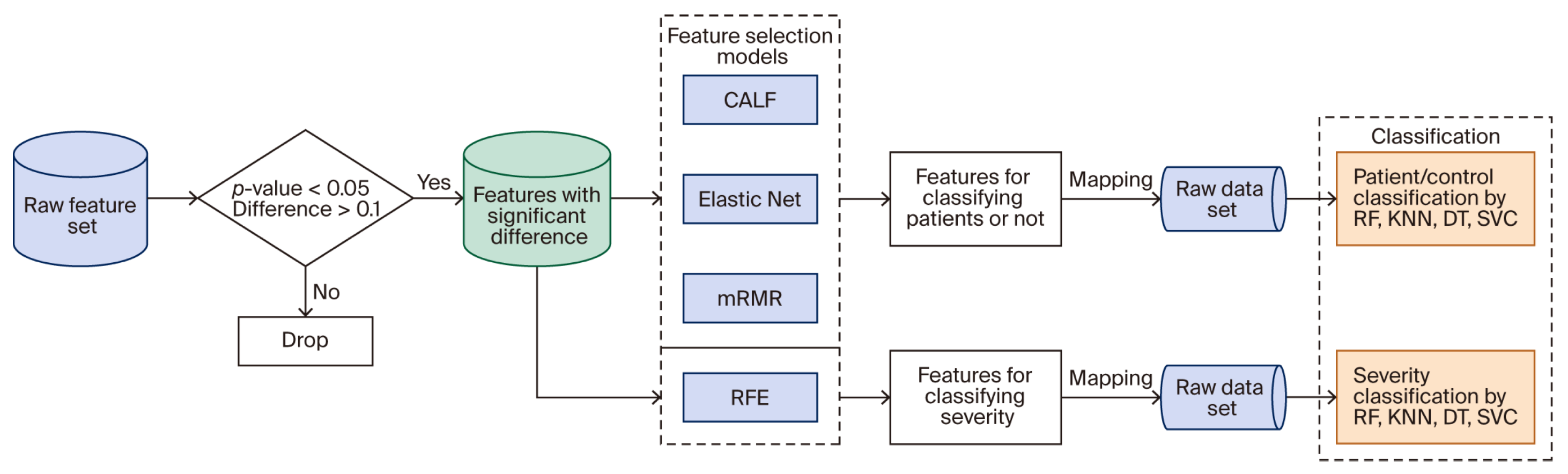
Figure 1. Overview of the analytical framework for epigenetic biomarker discovery and classification in atopic dermatitis. The schematic summarizes the integrated workflow used to identify CpG methylation signatures for AD classification and severity prediction. Genome-wide methylation features were first filtered by statistical significance and effect size, followed by feature selection using multiple complementary algorithms. Selected CpG sets were subsequently applied to machine learning models for binary disease classification and severity stratification.
Bdcc 10 00101 g001
Figure 2. Feature selection outcomes across three algorithms. Top-ranked CpG clusters were identified using (A) CALF, (B) Elastic Net, and (C) mRMR methods. Each panel summarizes the relative importance or selection frequency of CpG features prioritized by these models for AD classification.
Bdcc 10 00101 g002
Figure 3. Key CpG features identified across multiple selection methods. (A) Single-feature classification accuracy achieved by top-ranked CpG sites from CALF, EN, and mRMR, each reaching a perfect AUC in AD prediction. (B) Venn diagram showing overlap among the top 10 CpG features from the three methods, with eight consensus sites identified across two or more approaches.
Bdcc 10 00101 g003
Figure 4. Disease specificity of the central CpG feature panel. (A) ROC curve illustrating the performance of the central CpG panel in distinguishing atopic dermatitis (AD) from controls. (B) ROC curves showing limited discriminative performance of the same panel when applied to non-AD disease cohorts, supporting its disease specificity.
Bdcc 10 00101 g004
Figure 5. Performance of feature selection methods for AD severity prediction. (A) Classification accuracy across increasing feature counts for four selection methods. RFECV consistently outperformed others across the range. (B) Heatmap showing classifier performance using different combinations of feature selection methods and machine learning algorithms. The RFECV–Random Forest pairing achieved the highest overall accuracy.
Bdcc 10 00101 g005
Figure 6. Regulatory and functional insights from RFE-selected CpG-associated genes. (A) Sankey diagram visualizing transcription factor–gene associations among RFE63 features, with STAT5A and RUNX1 showing broad regulatory connectivity. (B) GO and KEGG enrichment analysis highlighting pathways related to chromatin remodeling, IL-2 signaling, transcriptional control, and Th17 differentiation. Dot size indicates gene count per term; color reflects statistical significance.
Bdcc 10 00101 g006
Table 1. Characteristics of discovery and external validation datasets.
Disease CategoryGEO AccessionTissue SourcePatient Group (N)Control Group (N)Age GroupSeverity Stratification
Atopic Dermatitis (AD)GSE152084Whole Blood2424Children(SCORAD)
Mild: 9;
Moderate: 9;
Severe: 6
Crohn’s DiseaseGSE103027Whole Blood12510AdultsN/A
Systemic Lupus (SLE)GSE59250Whole Blood1020AdultsN/A
Oral Cancer (OSCC)GSE234379Tissue/Blood6220AdultsN/A
Disclaimer/Publisher’s Note: The statements, opinions and data contained in all publications are solely those of the individual author(s) and contributor(s) and not of MDPI and/or the editor(s). MDPI and/or the editor(s) disclaim responsibility for any injury to people or property resulting from any ideas, methods, instructions or products referred to in the content.