
Article

Interference Effect of Shock Wave on Tip Leakage Vortex in a Transonic Variable Nozzle Turbine

1
Wuhan Xunqi Technology Co., Ltd., Wuhan 430074, China
2
School of Electrical and Information Engineering, Hunan University of Technology, Zhuzhou 412007, China
3
School of Mechanical Engineering, Beijing Institute of Technology, Beijing 100081, China
*
Author to whom correspondence should be addressed.
Int. J. Turbomach. Propuls. Power 2025, 10(4), 49; https://doi.org/10.3390/ijtpp10040049 (registering DOI)
Submission received: 20 April 2025 / Revised: 22 July 2025 / Accepted: 13 November 2025 / Published: 1 December 2025

Abstract

The tip leakage flow at both sides of the nozzle vane is an important factor for the reduction in turbine aerothermal performance. A strong shock wave is generated at the trailing edge of the nozzle vane under transonic condition, which can interfere with the tip leakage vortex and further aggravate the complexity of the flow field. The primary purpose of this study is to obtain a deeper understanding of the interference mechanism of shock waves on the leakage vortex. Three-dimensional Reynolds averaged Navier–Stokes calculations were performed to investigate the transonic flow fields in the nozzle vane cascade. The flow structure of the tip leakage flow, interference of the shock wave on the tip leakage vortex, and influence of the expansion ratio on the interference effect were analyzed and discussed. The authors found that the tip leakage vortex expanded and broke owing to the reverse pressure gradient under the interference of the shock wave, resulting in a significant increase in flow losses. As the expansion ratio increased, the expansion position of the tip leakage vortex shifted to the trailing edge, and the size of the tip leakage vortex significantly increased initially but remained unchanged at the vane rear part. Additionally, the schematic diagram of a model for interference between the shock wave and leakage vortex is presented to describe the shape of the shock wave and leakage vortex. The numerical results provide a better understanding of the complex flow field phenomena in variable nozzle turbines.

1. Introduction

The environmental impacts of emissions and rising fuel costs are very important for vehicle or aircraft piston engines. It is well known that adopting an effective turbocharging system is an important technical measure to improve the thermal efficiency of a piston engine. A turbocharger equipped with a radial flow variable nozzle turbine (VNT) can achieve a good match between the turbocharger and engine in the full operating range, which greatly improves the power and economy of the piston engine. As a result, VNTs have been widely used in vehicles and aircraft engines and have attracted increasing attention [1,2,3]. To further improve the thermal efficiency of a piston engine, it is necessary to improve the isentropic efficiency of the VNT.
Compared with the non-variable geometry turbine, the VNT has a strong tip leakage flow at both the hub and shroud regions of the nozzle vane owing to the influence of tip clearance [4,5]. The leakage flow mixes with the main flow and forms a vortex filament [6,7], which dominates the aero-thermodynamic behavior of the flow in the tip region [8], decreasing both the vane aerodynamic throat [9] and vane outlet flow angle [10]. Meanwhile, tip leakage flow can cause serious flow loss, which accounts for one-third of the overall loss in the turbine stage [11,12,13]. In short, tip leakage flow is an important reason for the performance degradation of the turbine. Therefore, investigating the tip leakage flow is of great significance for improving the aerothermal performance of the turbine, and a large amount of work on tip leakage flow has been performed. Bindon et al. [14] established a flow model of tip leakage flow, and Han et al. [15] drew a sketch of the leakage vortex structure. Tamaki et al. [16], Hayami et al. [17], and Hu et al. [18] studied the influence of tip leakage flow on the performance of a radial turbine. The influences of the tip clearance height [19,20,21] and nozzle opening [22,23] on the tip leakage flow and turbine efficiency were also investigated by experimental and numerical methods. Kawakubo et al. [24] found that tip leakage flow results in high unsteadiness in blade loading. Ramakrishna et al. [25] conducted numerical studies in a low-speed axial flow compressor and found that the effect of tip clearance is more predominant in the swept rotor than unswept rotor in terms of the change in total pressure rise and efficiency. Guo et al. [26] designed an effective self-recirculating casing treatment (SRCT) by the design of experiment method and found that the SRCT improves the quality of the tip flow field by sucking out low-energy fluid and restrains the spillage of the tip leakage flow by the jet effect from the injection port. In addition, the effect of non-uniform clearance on the tip leakage flow [27] has been studied. Furthermore, the shock-tip leakage interaction topic has been studied in the case of the axial turbine. Yang et al. [28] investigated the shock wave structures and vortex unsteadiness in the tip region of a transonic turbine cascade. The unsteady flow features such as the spatial-temporal dynamic evolution of tip leakage vortices and the periodic oscillation of shock waves inside the tip gap are revealed and discussed systematically under different incidence angles and heights of tip clearance. Wei et al. [29] numerically investigated the influence of a shock wave on the loss and breakdown of the tip-leakage vortex in the turbine rotor with varying backpressure. The results showed that the loss of the leakage vortex has an approximate exponential growth up to about 10 times as the outlet Mach number increases from 0.67 to 1.15 and the corresponding proportion in the total loss increases sharply to 30.2%, indicating a significant influence of the shock wave on the loss and breakdown of the tip-leakage vortex.
For the VNT, in addition to the wake, the shock wave is an important flow phenomenon in the nozzle vane, except for the wake and the tip leakage flow [30,31], which is easily produced on the suction side near the vane trailing edge owing to the influence of the expansion ratio, vane opening and other factors [24]. The tip leakage flow not only interferes with the wake but also with the shock wave. When they interfere with each other, they have a significant influence on flow behavior and load distribution. Zhao et al. [9] and Liu et al. [32] investigated the effect of tip leakage flow on the shock wave in a VNT. The results showed that the tip leakage flow reduced the shock wave region along the blade span direction, and their interference had a significant impact on the impeller performance.
This work began with the study of the flow characteristics of a VNT under pulsating flow conditions using a numerical simulation method [33]. Research shows that the pulse intake has a significant influence on the shock wave and tip leakage vortex of the nozzle vane, resulting in an increase in unsteady flow characteristics in the turbine. To further study the shock wave and tip leakage flow inside the turbine with different expansion ratios, the schlieren test was adopted to investigate the flow field characteristics in a plane cascade [34]. A strong shock wave is generated at the trailing edge of the vane under a large expansion ratio, and the shock wave interferes with the tip leakage vortex. In this study, the influence of the leakage vortex on the shock wave has been primarily investigated. Based on the above research work, on the one hand, the authors studied shock wave weakening by using the groove structure to reduce the impact of shock waves on turbine performance [35]. On the other hand, the authors carried out the sensitivity study of nozzle vane clearance and rotor clearance on turbine performance. The results show that the influence of the nozzle vane clearance on the VNT performance is greater than that of the rotor clearance, and it dominates the variation in VNT performance compared with the rotor clearance [36]. Therefore, it is necessary to conduct an in-depth study on tip leakage flow and its influence on the nozzle vane, which is of great significance in improving the efficiency and reliability of the VNT. Two research objectives were set up in this study: (1) the interference mechanism of the shock wave on the tip leakage flow and (2) the influence of the expansion ratio on the interference effect.
The objectives were achieved by researching and discussing the flow field characteristics of the vane tip region in steady cases. The remainder of this paper is organized as follows. The authors first describe the configuration of the turbine nozzle vane and numerical simulation methods, including the computational grid and verification of the solution procedure. This paper continues to describe the investigation of the flow features of tip leakage flow, as well as the interference mechanism of the shock wave on the leakage vortex. Then, the influence of the expansion ratio on the shock wave and tip leakage flow was investigated to explain the change in the interference effect. Finally, the main conclusions of this study are summarized.

2. Research Object and Numerical Method

2.1. Geometric Models

As a type of radial turbine, the VNT includes a nozzle vane and an impeller, as shown in Figure 1. Because the nozzle vane can be adjusted freely, clearance is present on both sides of the nozzle vane. Therefore, a strong tip leakage flow was produced.
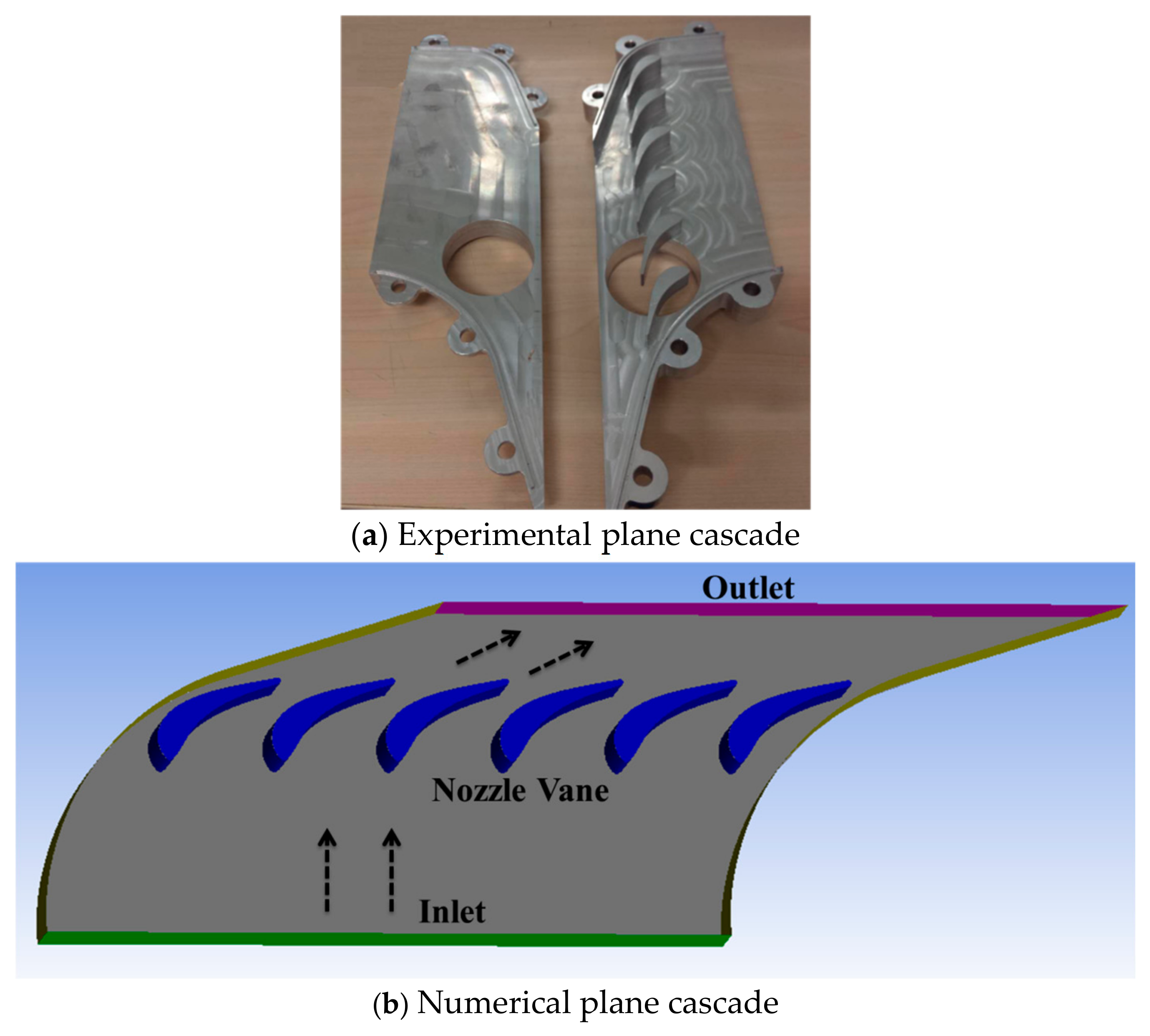
To facilitate a detailed investigation of the tip leakage flow structure and its interaction with shock waves, a simplified plane cascade configuration was designed to represent the nozzle vane geometry. This approach offers significant advantages for fundamental flow analysis while maintaining the essential flow characteristics. In the following section, the CFD method description and result analysis were carried out for the plane cascade. The plane cascade was designed with a vane profile in the early stage [34], as shown in Figure 2a. On this basis, the tip leakage flow characteristics of the nozzle vane, especially the interference of the shock wave on the tip leakage vortex, were further studied by numerical simulation. The investigation was conducted on a nozzle vane plane cascade that was similar to the experimental equipment, and a single-sided clearance was designed, as shown in Figure 2b. The geometric parameters of the nozzle vane plane cascade are presented in Table 1.

2.2. Numerical Method

In this present study, numerical simulations were performed using the commercial software ANSYS CFX 19.0 based on the finite volume method to solve the three-dimensional Reynolds Averaged Navier–Stokes (RANS) equations. A double precision solver is used. A high-resolution scheme was used to discretize the equations for the flow, turbulent kinetic energy, and specific dissipation rate. The overall computational accuracy was of the second order. Ideal air is used as the working fluid. The standard k-ω two-equation turbulence model was selected based on Menter’s results [37].
For the boundary conditions, the total pressure and temperature were uniformly prescribed at the inlet of the computational domain, and average static pressure is applied at the outlet. The inlet total temperature was set to 350 K and the inlet total pressure was set from 0.15 to 0.35 MPa to obtain the corresponding expansion ratio cases from 1.5 to 3.5. A static pressure value of 0.1 MPa was applied at the outlet. To investigate the heat transfer characteristics, the isothermal wall condition was employed on the vane top surface, and other domain walls were set as adiabatic wall conditions. The convergence criteria for these numerical computations were based on the reduction in root mean square residuals to less than 1 × 10⁻⁵, and the relative mass flow deviation between the inlet and outlet of the computational domain was less than 0.05%.
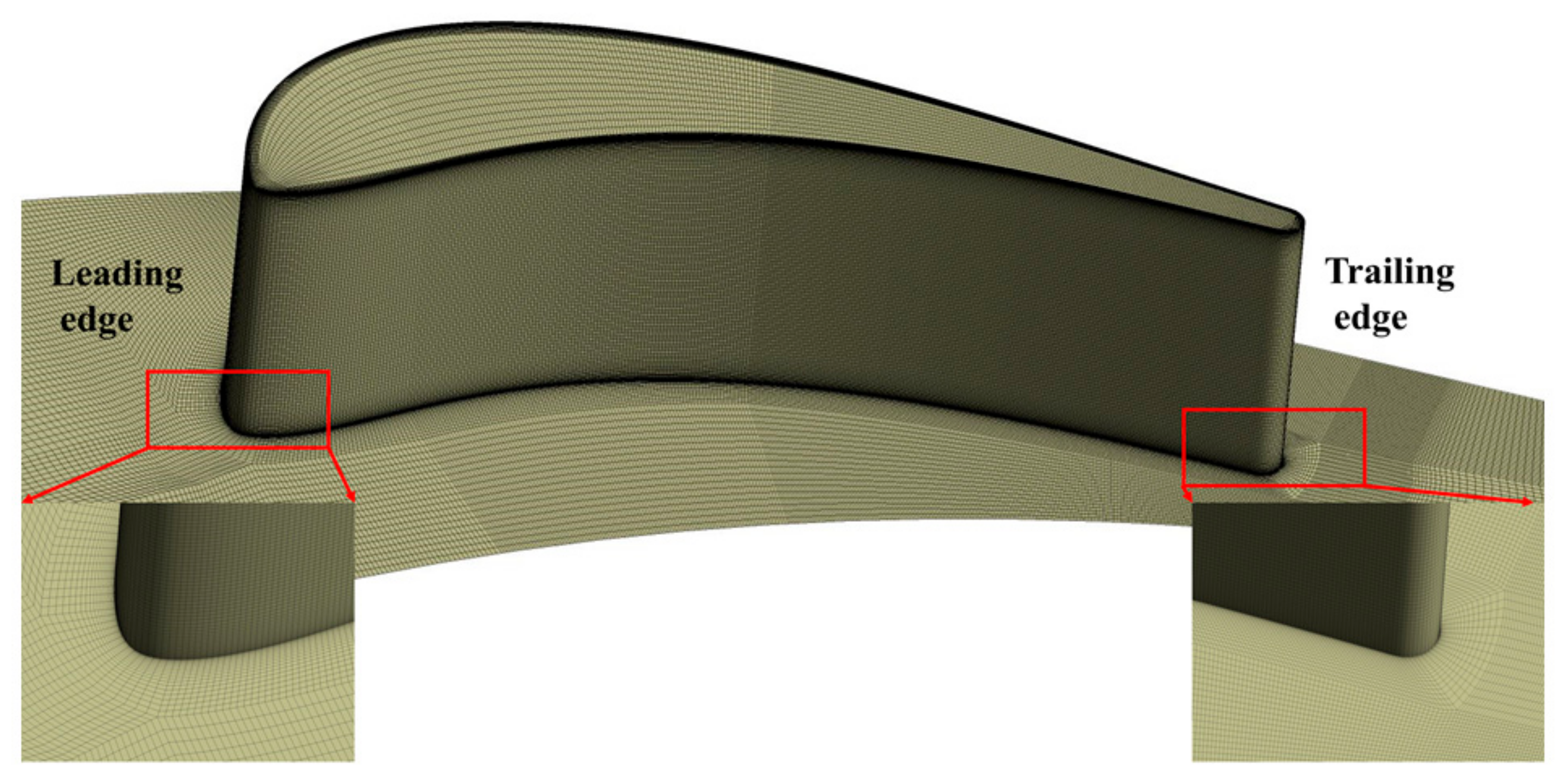
The ICEM software 19.0 was used to generate HOH-type structure grids. The passage was discretized into H-type grids, and regions around the blade surface, and the clearance was discretized into O-type grids to produce a high-quality grid. An un-matching grid was adopted for the periodic boundary. A grid of 77 × 60 × 295 points for each nozzle vane passage was employed in the spanwise, pitchwise, and streamwise directions. In the tip region, grid points were clustered near the tip and end wall to accurately model the flow in this region, and 21 spanwise grid points were used for clearance. Figure 3 shows the grid system of the vane. The wall y+ value was controlled to within five to satisfy the computational requirements.
To eliminate the influence of the grid number on the numerical results, a grid independent study was performed on a single vane passage to reduce the computational cost. Seven grid systems were tested by varying the grid number of the calculation model. The mesh refinement is also mainly concentrated in the nozzle vane tip region and shock wave produced region. The computations were conducted using six different meshes by imposing the same boundary conditions.
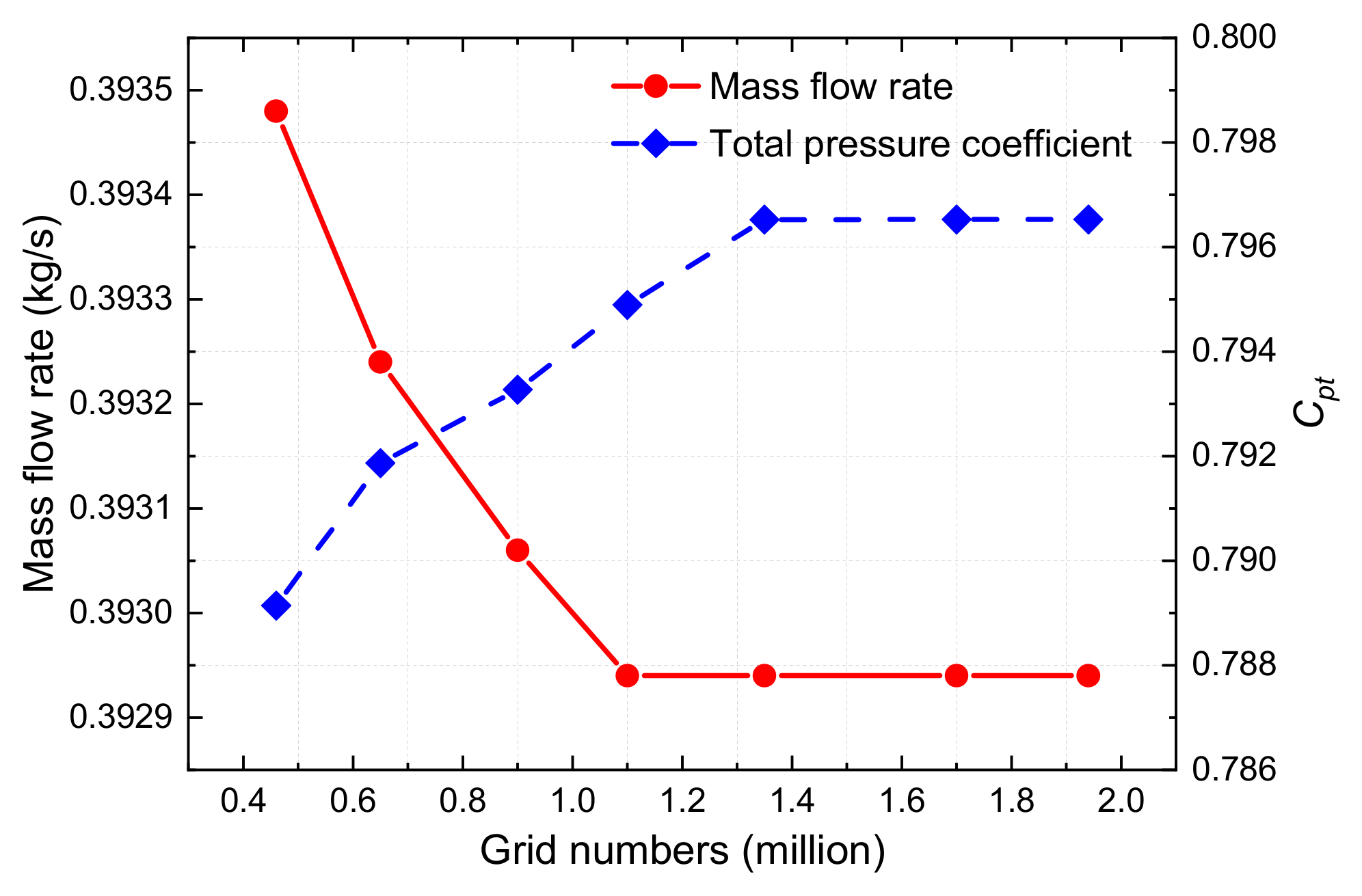
The computed area averaged total pressure coefficient and mass flow rate at the vane outlet section are shown in Figure 4. The total pressure coefficient C p t is defined as follows:
C p t = P t , e x i t P s , e x i t P t , i n l e t P s , e x i t
where P t , e x i t is the mass average total pressure at the outlet, P s , e x i t is the mass average static pressure at the outlet, and P t , i n l e t is the mass average total pressure at the inlet.
As shown in Figure 4, as the grid number increased, the deviation in the total pressure coefficient and mass flow rate decreased. When the grid number increases to 1.35 million, the total pressure coefficient and mass flow rate remain unchanged. Overall, considering the computational cost and accurately capturing the flow characteristics of the leakage flow and shock wave, a relatively dense grid with a total number of 1.7 million grid nodes was set to predict the flow fields.

2.3. Boundary Condition and Validation

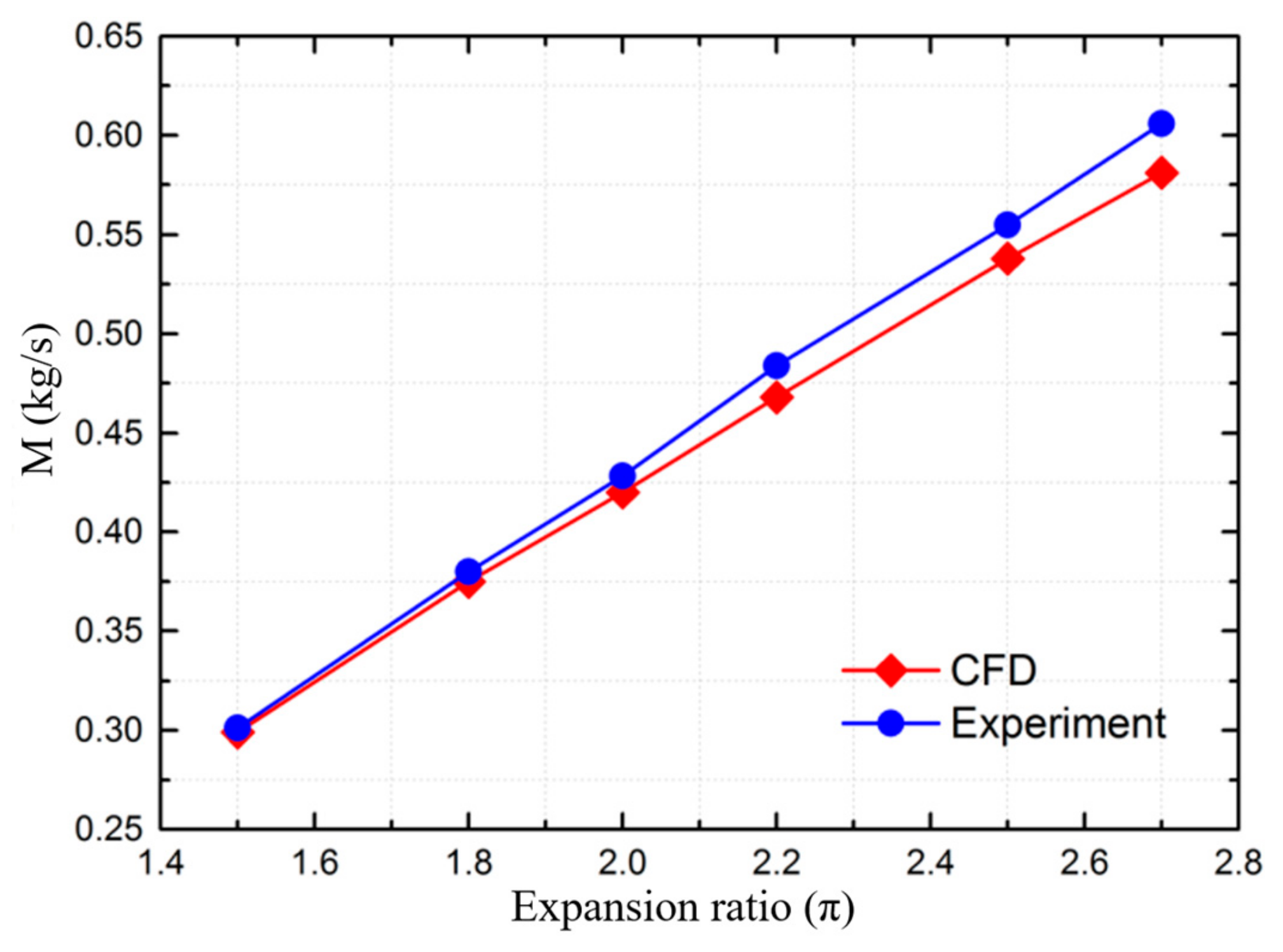
Before studying the flow field characteristics inside the vane plane cascade, a numerical computational method should first be validated. For a fair comparison, the working condition of the numerical calculation was the same as that of the experiment. The variations in the mass flow rate with the expansion ratio for the numerical and experimental results are presented in Figure 5. The mass flow rate in the numerical calculation increases with an increase in the expansion ratio, which is the same as that in the experimental results. At the same time, the data errors between the numerical and experimental results were very small, with a maximum error of approximately about 4%. The reason for the deviation in error between the experimental and numerical results was explained in detail by Lei [34].
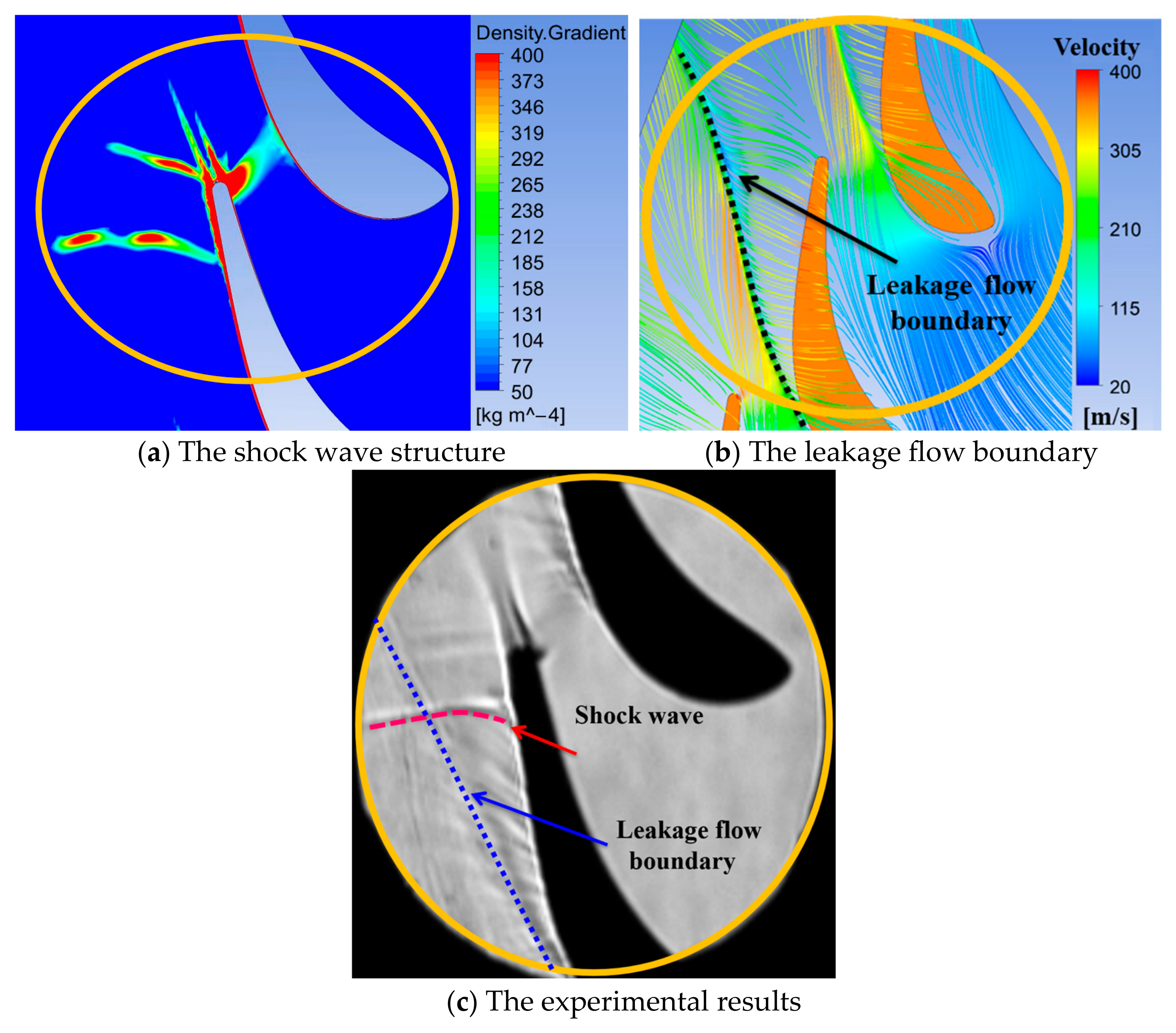
In addition, the purpose of this study was to investigate the influence of shock waves on tip leakage flow; thus, the shock wave characteristics were validated using the Schlieren experimental results, as shown in Figure 6. A strong shock wave is generated near the trailing edge of the nozzle vane. Although there were some small differences between the numerical and experimental results, the shock wave structure and leakage flow boundary of the numerical results agreed well with the experimental results.
With respect to other researchers, Li et al. [38] studied the leakage flow and heat transfer characteristics of rotor blade tip by software CFX11.0, and the heat transfer coefficient of the numerical results agreed well with the experimental results. In addition, Gao et al. [39] also reported a good agreement between the isentropic Mach number distribution and Nusselt number distribution of the turbine cascade between the numerical results based on the software CFX14.5 and the experiment. Based on the above analyses, it can be concluded that the agreement between the numerical and experimental results was reasonable. This also proves that the numerical method can be used to predict the flow field in a turbine nozzle with reasonable fidelity.

3. Results and Discussion

To better understand the interference effect of the shock wave on the tip leakage vortex, numerical calculations were performed. According to the logical relationships within the research content, this section is divided into three major parts. First, the numerical results are analyzed to study the flow structure of the tip leakage flow. Based on this, the interference of the shock wave on the tip leakage vortex is investigated. Finally, the influence of the expansion ratio on the interference effect is studied.

3.1. The Flow Structure of Tip Leakage Flow Without the Effect of Shock Wave

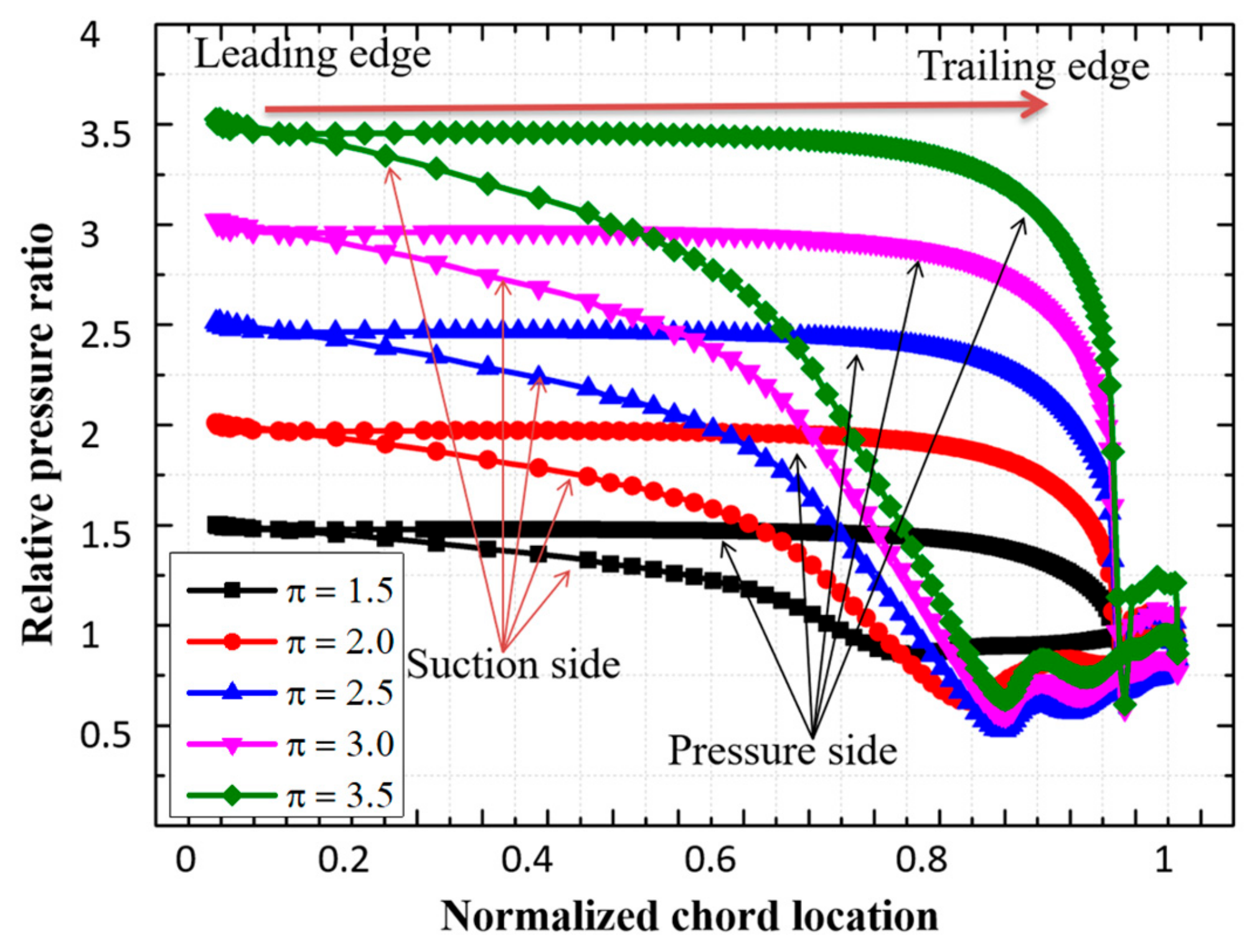
We first investigated the flow structure of the tip leakage flow without the effect of the shock wave, and the static pressure distributions at 95% vane span with different expansion ratios are shown in Figure 7. The ordinate of Figure 7 is relative pressure ratio, which defined by the vane inlet total pressure divided by the outlet static pressure. It can be observed that there is a significant static pressure difference between the pressure and suction sides of the nozzle vane. Under the action of the lateral pressure gradient at both sides of the nozzle vane, a tip leakage flow is formed when the fluid passes through the tip clearance, and a tip leakage vortex is generated owing to the interference between the tip leakage flow and the mainstream. The lateral pressure gradient provides the power of the tip leakage flow migration, and the tip clearance provides a channel for the formation of the tip leakage flow.
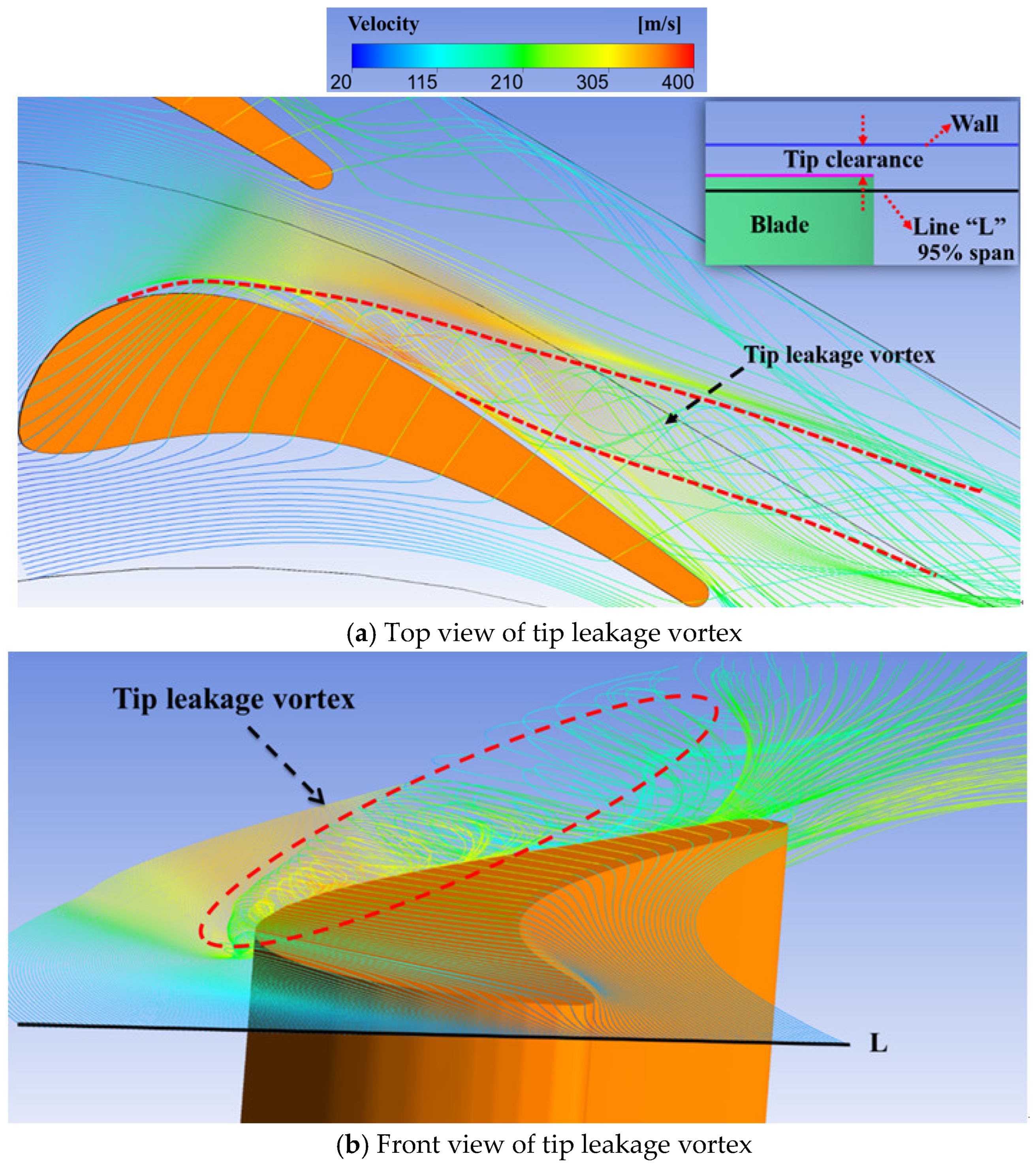
To investigate the flow structure of tip leakage flow, Figure 8 shows the velocity streamlines from a line that is in front of the nozzle vane leading edge and marked as “L” in the figure. It is worth noting that the line lies outside the tip clearance region. It can be clearly observed from Figure 8a that the streamline flows through the tip clearance and forms a tip leakage vortex. Initially, the tip leakage vortex developed along the suction side from the initial position to approximately 60% of the axial chord position and then gradually moved away from the suction side and developed downstream. Although the initial position of the streamline was lower than the height of the tip clearance, the streamline gradually deflected towards the nozzle vane tip and flowed through the clearance towing to the lateral pressure gradient on both sides of the nozzle vane, as shown in Figure 8b.
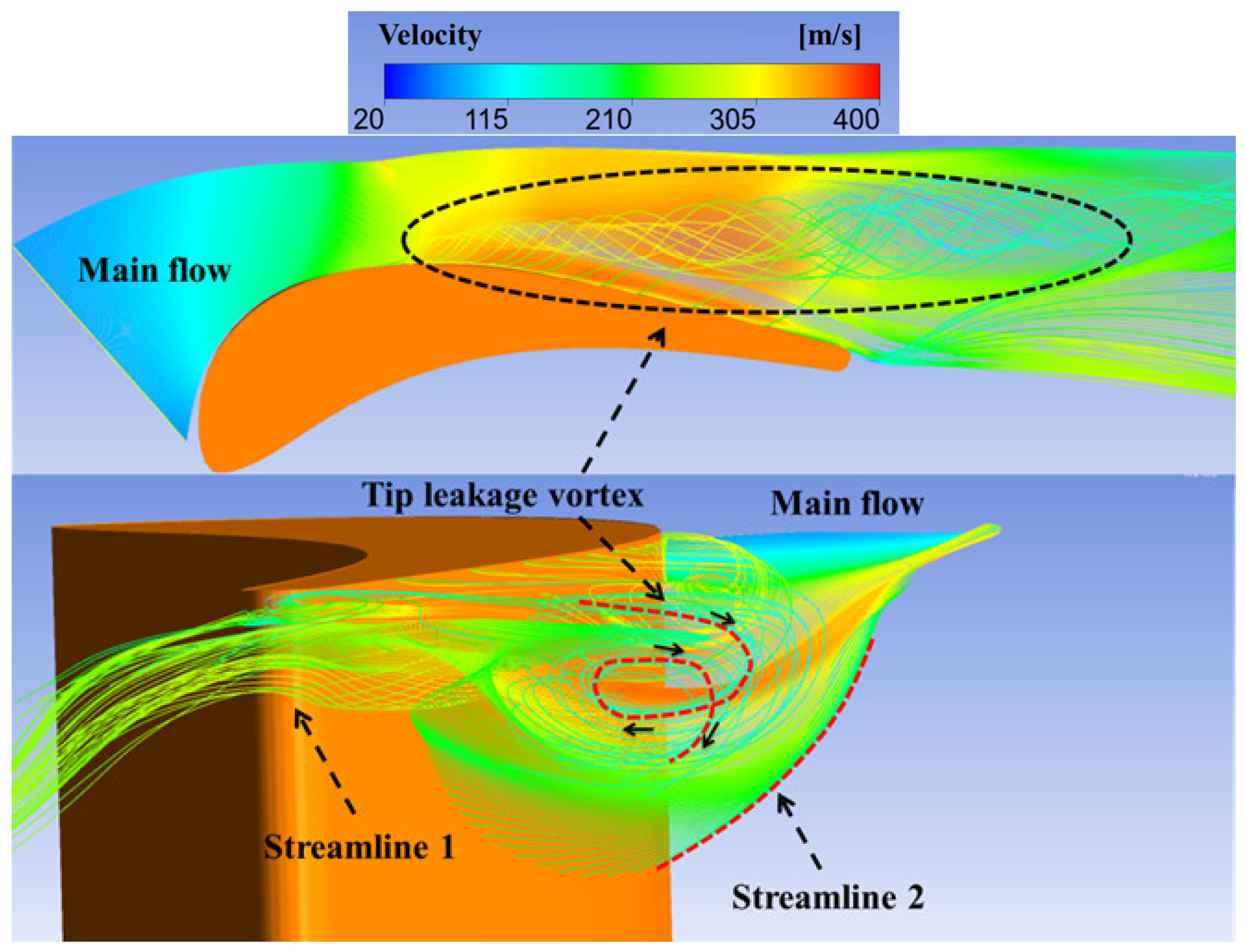
When the tip leakage flow exits the tip clearance, it interferes with the mainstream flow and forms a tip leakage vortex. The tip leakage vortex squeezes the mainstream passage and significantly affects the main streamline near it. The main streamline near the suction side is convoluted by the tip leakage vortex and becomes part of the tip leakage vortex from the position of the 40% axial chord location, as shown in Figure 9. Meanwhile, a small part of the mainstream streamline passes through the bottom of the tip leakage vortex and transmits downstream along the suction side due to the lateral pressure gradient, as marked by “streamline 1” in the figure. During the development of the tip leakage vortex, part of the mainstream is squeezed and deformed; this part is located at the bottom of the tip leakage vortex. From the plot, the main streamline below the tip leakage vortex is tightly curled around the vortex core, which enlarges the range of influence of the tip leakage vortex, as marked by “streamline 2” in the figure.

3.2. The Interference of Shock Wave on Tip Leakage Vortex

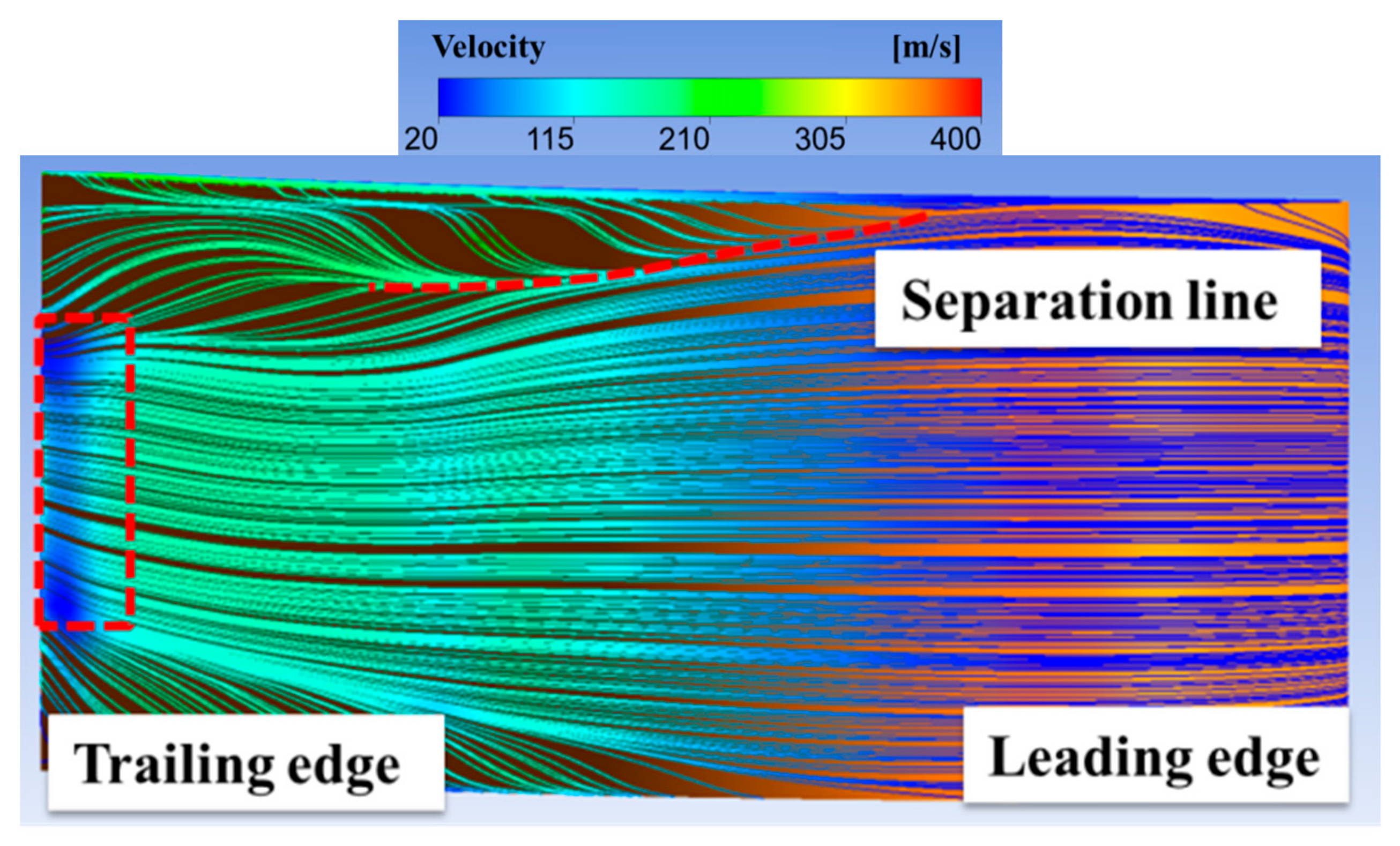
It is generally known that the flow behavior is very complicated in the tip region because of tip leakage flow. In addition, the VNT is often in the condition of a high expansion ratio or a small vane opening, which leads to a transonic flow in the nozzle vane. Consequently, a strong shock wave was generated at the suction side near the trailing edge, which had a significant influence on the VNT aerodynamic performance. Figure 10 shows the limiting streamline on the nozzle vane suction surface when the expansion ratio and tip clearance size equal 2.0 and 2%, respectively. One can see that a separation line is generated near the top wall on the suction side. The limiting streamline is forced to migrate in the radial direction owing to the convolution of the tip leakage vortex. Meanwhile, an obvious low-speed region is found near the trailing edge region, as shown in the red box marker location in the figure, which is mainly affected by the shock wave. It should be noted that the low-speed region failed to cover the nozzle vane tip. This is because the shock wave structure was interrupted in the tip region owing to the influence of the tip leakage vortex. Previous studies have shown that tip leakage flow has a strong interference effect on shock waves [34]. At the same time, the shock wave also has a significant influence on the tip leakage flow.
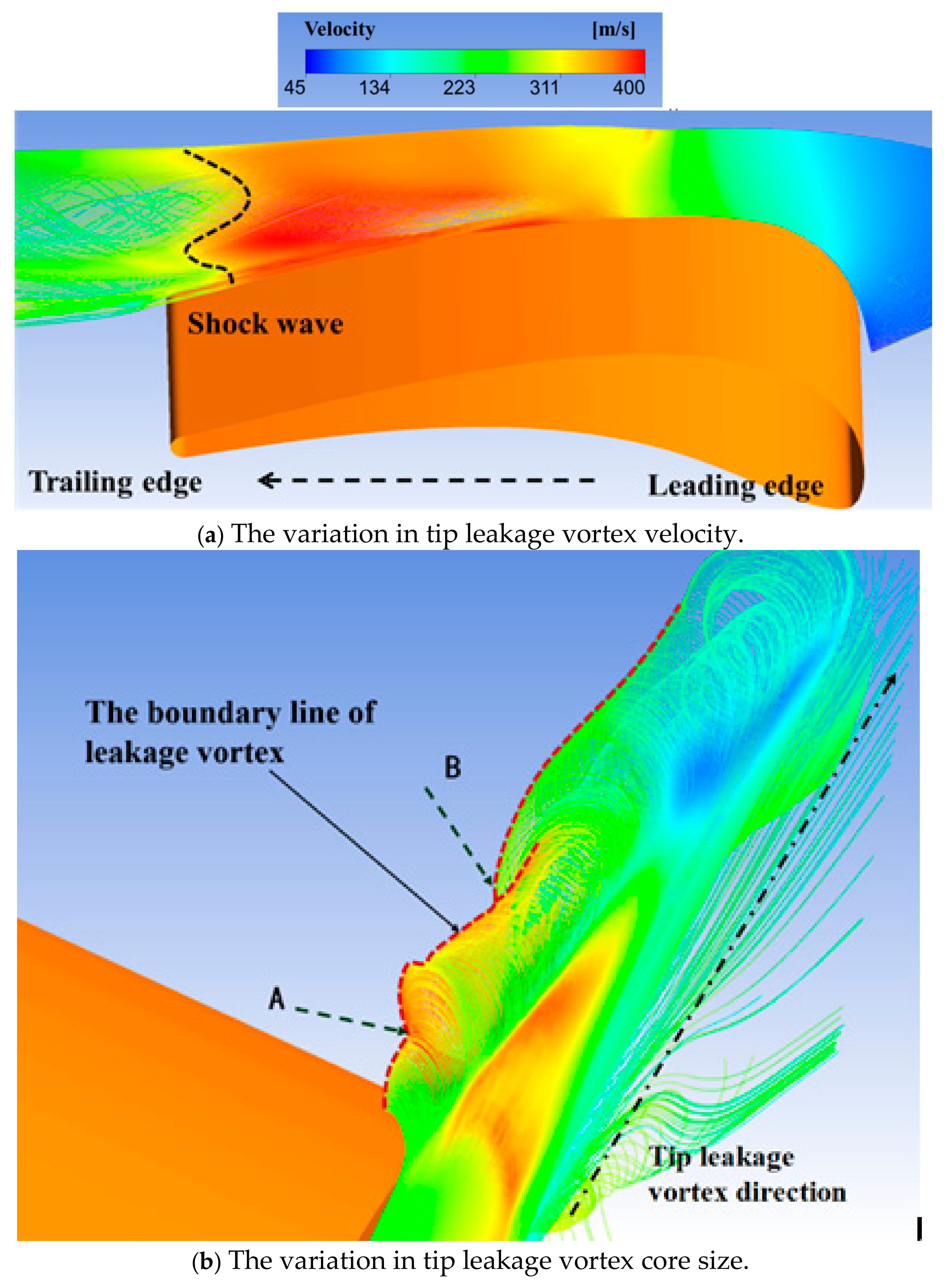
To investigate the interference of the shock wave on the tip leakage vortex, the streamlines of the tip leakage vortex from different perspectives were obtained under high-expansion-ratio conditions (π = 2.5), as shown in Figure 11. From Figure 11a, one can see that the streamline velocity of the tip leakage vortex is high when it flows out of the tip clearance and the velocity changes slightly during tip leakage vortex development. When the shock wave interferes with the tip leakage vortex, the velocity of the tip leakage vortex decreases owing to the action of the reverse pressure gradient caused by the shock wave, which results in an obvious low-speed region.
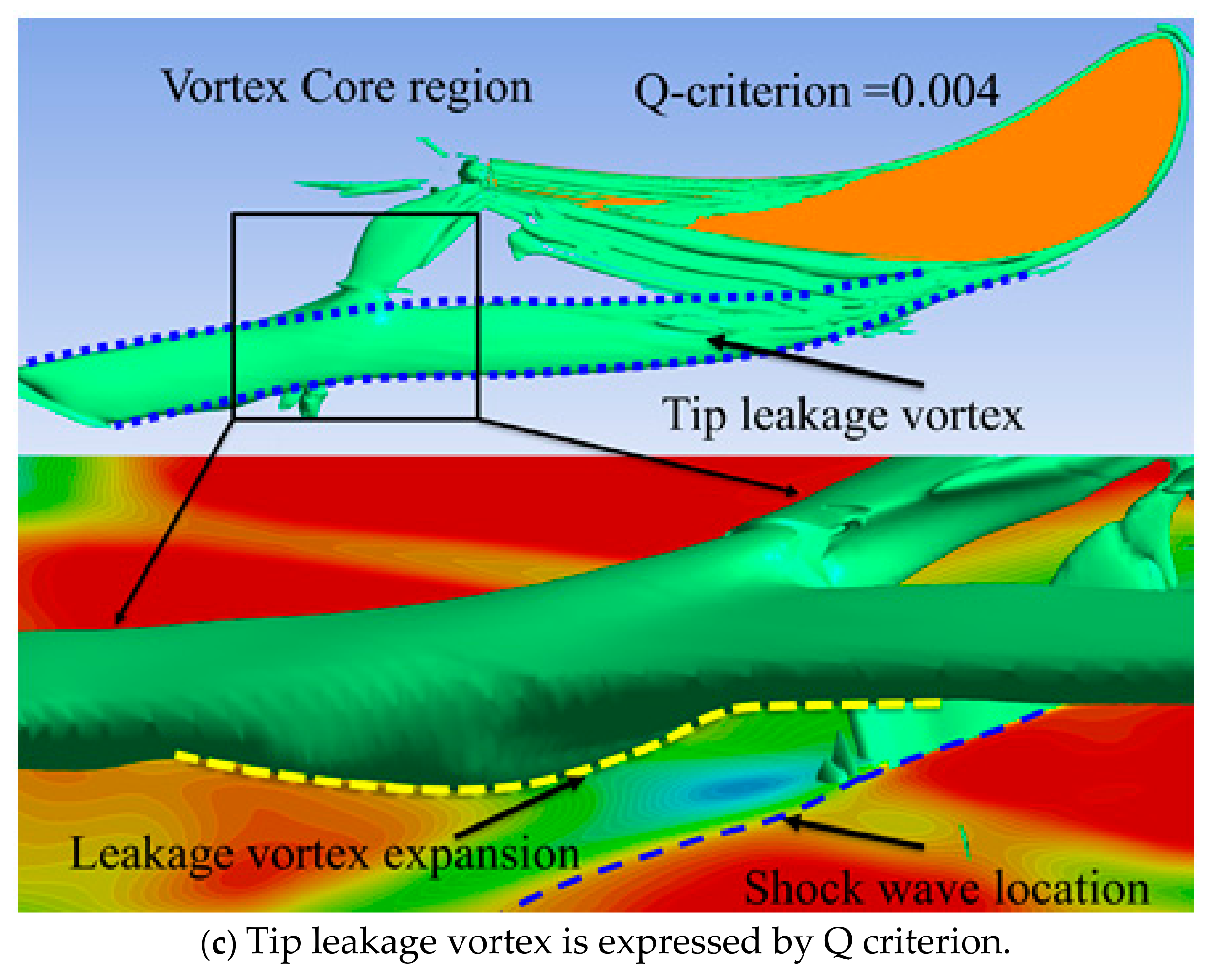
Figure 11b shows the flow structure of the tip leakage vortex. The dotted line in the figure represents the boundary of the tip leakage vortex, which reflects the change in the leakage vortex size. From Figure 11b, there are two changes in the boundary line of the tip leakage vortex, which are marked as “A” and “B” in the figure. In region B, the boundary line of the tip leakage vortex suddenly changes because of the strong shock wave generated at the trailing edge on the suction surface. The tip leakage vortex core size was enlarged owing to the reverse pressure gradient caused by the shock wave. However, in A, there was a small change in the boundary line, which was affected by the incident shock wave originating from the trailing edge of the pressure side in the adjacent vane. The size of the tip leakage vortex in region A changes slightly because the intensity of the incident shock wave is weak. For further clarification, the shape of the leakage vortex is given by the Q-criterion method, as shown in Figure 11c. It can be clearly observed that the structure of the leakage vortex expands at the position where the shock wave is generated.
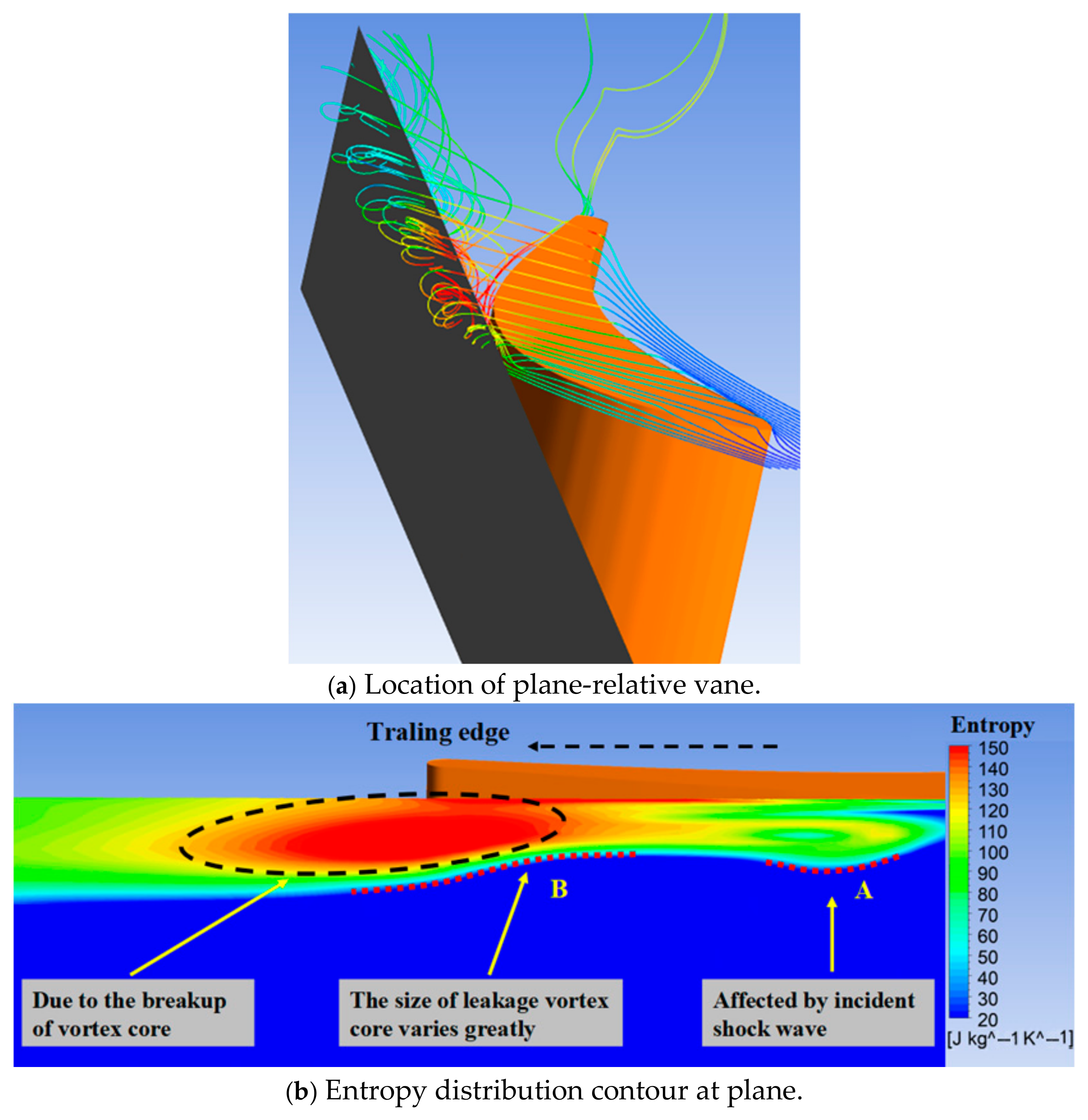
To further study the effect of the shock wave on the tip leakage vortex, Figure 12 shows the entropy distribution contour at the plane (as shown in Figure 12a) that passes through the tip leakage vortex. The high-entropy region can represent the range of influence of the tip leakage vortex. From the entropy distribution contour, combined with Figure 11c, we can clearly see the effect of the incident shock wave and strong shock wave on the size of the tip leakage vortex core. Owing to the influence of the shock wave, the size of the tip leakage vortex core changes significantly, as shown in regions A and B. Particularly, in area B, the size of the tip leakage vortex core increases significantly, which proves the above analysis in Figure 11b. In addition, an obvious high-entropy region appears behind the interference location between the shock wave and the tip leakage vortex, which means that the interference causes the leakage vortex to produce a large flow loss.
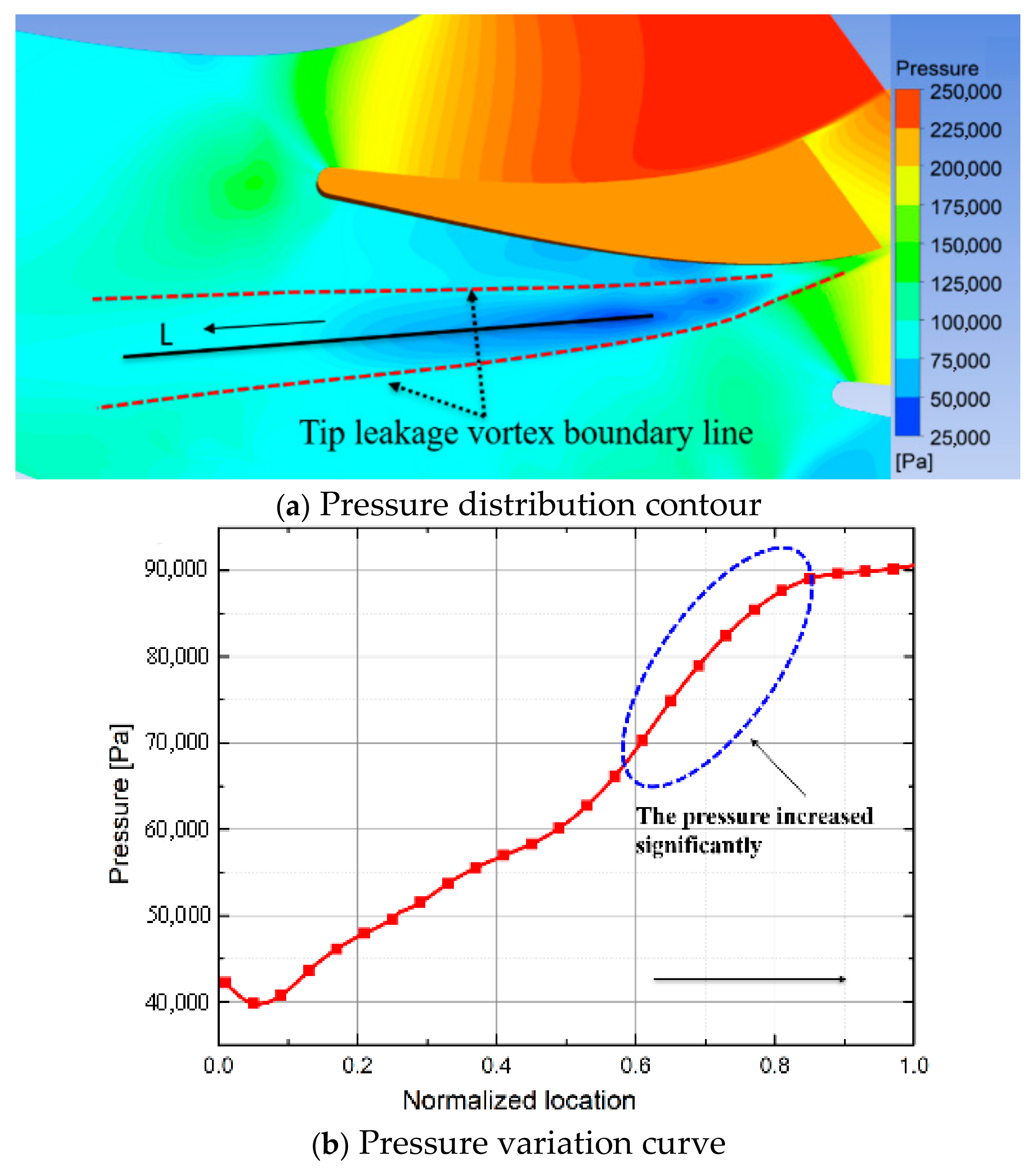
To illustrate this phenomenon, Figure 13a shows the pressure distribution contour of the plane where the tip leakage vortex core is located. The figure shows that the pressure in the front part of the leakage vortex is low, whereas it is high in the rear part. To quantitatively analyze the pressure variation at the leakage vortex core, Figure 13b shows the pressure distribution characteristics at line “L”, which is marked using a dark line in Figure 13a. It can be clearly seen that the pressure increased slowly during the initial stage of the leakage vortex. However, in the latter part of the leakage vortex, the pressure increases sharply until it remains stable. Combined with the previous analysis, the high-pressure region was almost at the position where the shock wave was generated. Owing to the reverse pressure gradient caused by the shock wave, the tip leakage vortex expanded and broke, which resulted in a significant increase in the flow loss.
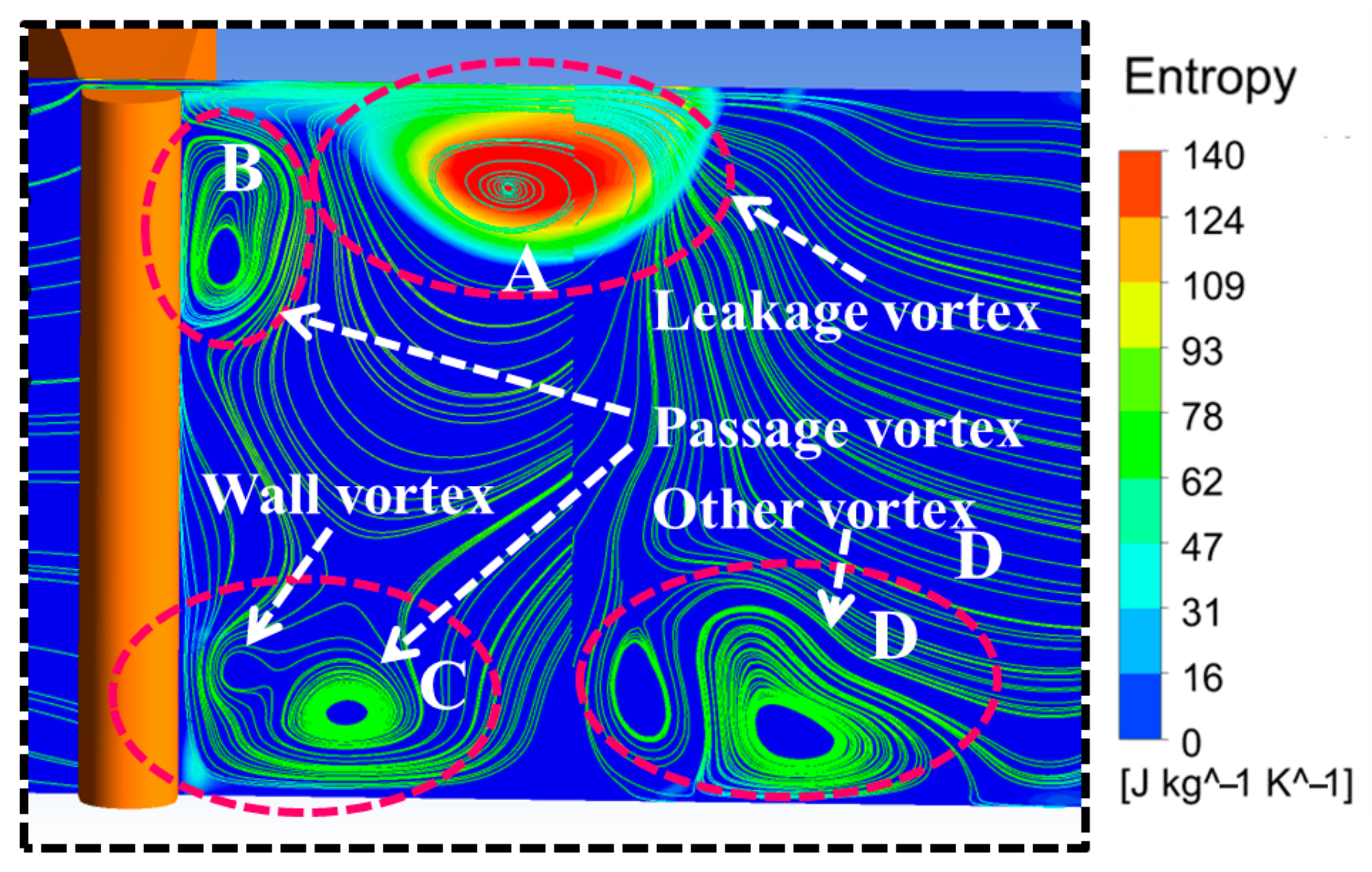
To further illustrate the close-wall vortex structure interaction with tip leakage and shock wave, Figure 14 shows the vortex system structure at vane exit plane. From streamline distribution, a very complex vortex system is produced at the exit section of the vane blade. The vortex system includes tip leakage vortex, passage vortex, wall vortex and others. The tip leakage vortex is in the middle of the blade top, which is the biggest among all the vortexes, as shown in region A. The upper passage vortex is located between the leakage vortex and the suction surface, and it is close to the suction surface due to the extrusion of the leakage vortex, as shown in region B. Meanwhile, there is also a passage vortex at the bottom suction surface of the blade. It is worth noting that there is a small wall vortex beside the passage vortex in region C. The wall vortex is located above the passage vortex, which forms a new vortex pair with the passage vortex. In addition, a new pair of vortexes is also generated in region D, which is mainly caused by the interaction of the end-wall boundary layer, wake and shock wave. Although many vortexes are generated in the flow field, the tip leakage vortex is dominant in the vortex system from the entropy distribution contour, which leads to lager flow losses than other vortexes.

3.3. Influence of Expansion Ratio on the Interference Effect

The pulsating flow conditions of the diesel engine exhaust induced significant pulsations in the inlet flow of the VNT. Therefore, the total pressure at the VNT inlet pulsates periodically at a low frequency, resulting in a change in the expansion ratio of the VNT. The expansion ratio is an important factor that has a significant influence on the shock wave and the tip leakage flow. When the expansion ratio was changed, the interference between the tip leakage flow and shock wave changed accordingly. To clarify the influence of the expansion ratio on the interference between the tip leakage flow and the shock wave, we briefly analyze the influence of expansion ratio on the shock wave.
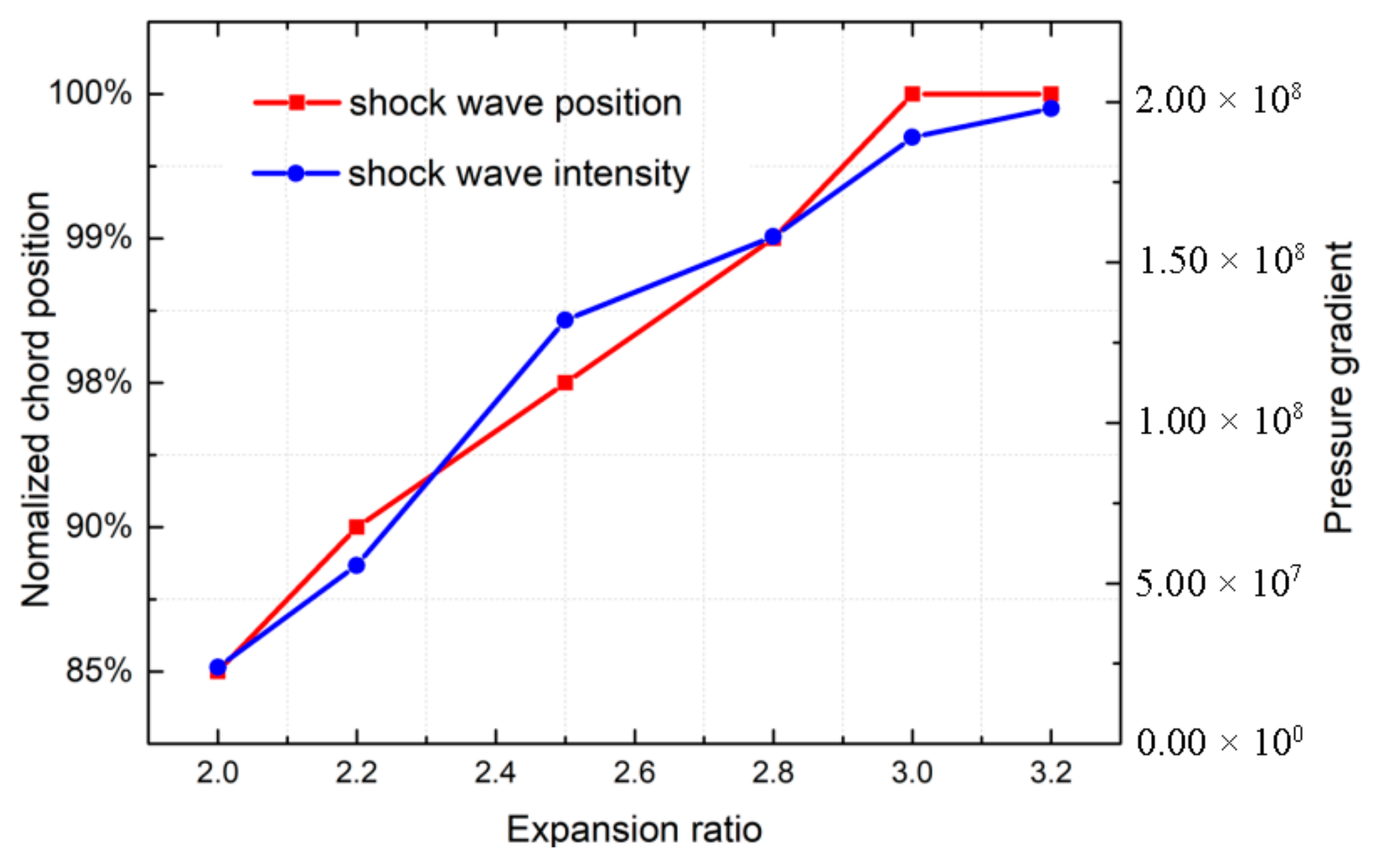
The results of reference [34] show that, as the expansion ratio increases, the shock wave location at the 50% nozzle vane span is significantly moved to the trailing edge, and the region of high Mach number in front of the shock wave increases significantly, which proves that the expansion ratio has a significant effect on the shock wave characteristics. To quantitatively analyze the effect of the expansion ratio on the shock wave, we used the axial chord as the reference for the shock wave position change. In addition, the change in the shock wave intensity was measured by the pressure gradient. It can be observed from Figure 15 that as the expansion ratio increases, the shock wave location shifts from nearly 85% chord to 100% chord, and the pressure gradient reflecting the shock wave intensity increases significantly from 2.4 × 10⁷ to 2 × 10⁸. It should be noted that the position of the shock wave determines the position of the interference between the shock wave and tip leakage flow, and the intensity of the shock wave also affects the intensity of the interference effect.
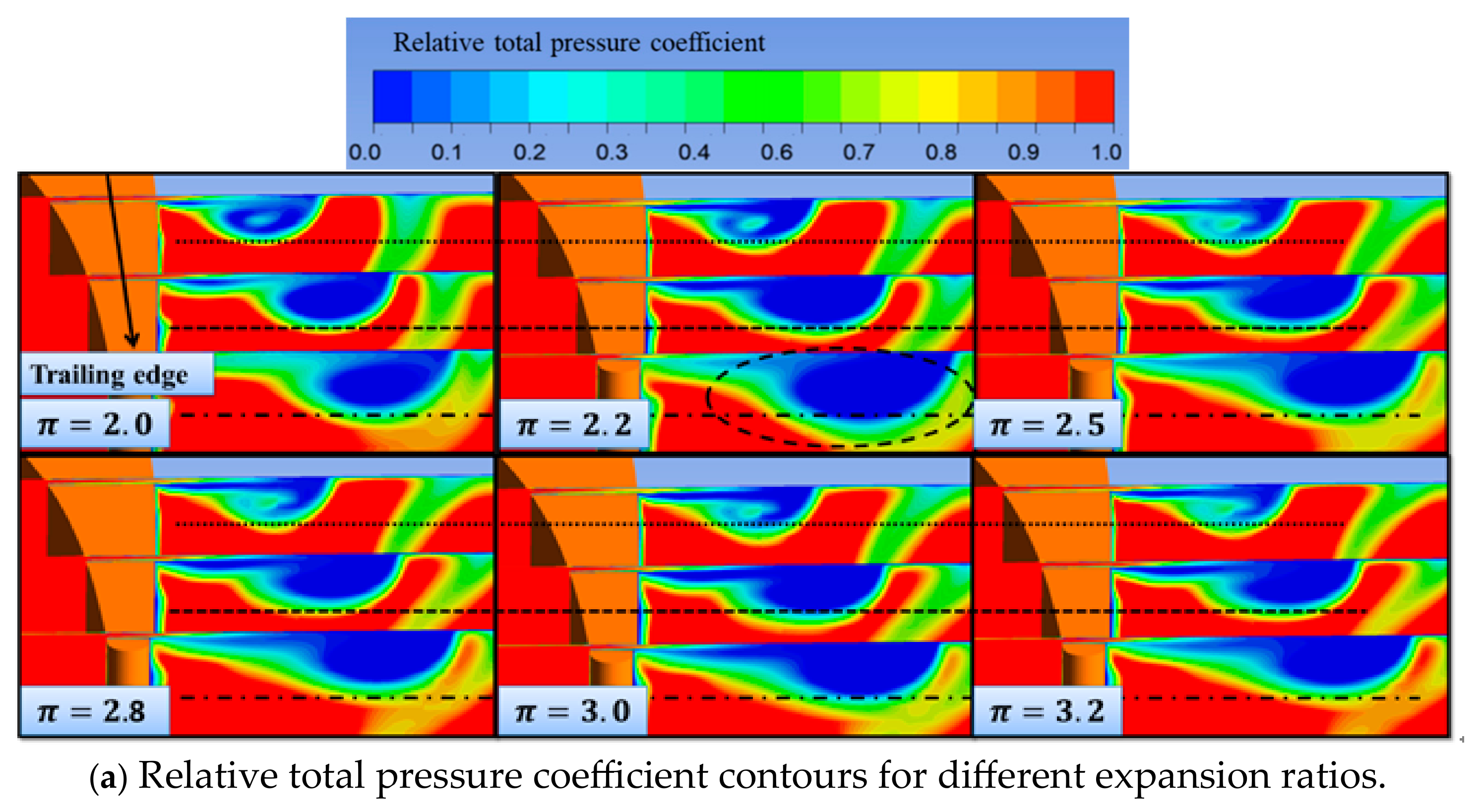
However, it can be seen from Figure 7 that with an increase in the expansion ratio, the static pressure difference on both sides of the vane increases significantly, which means that the expansion ratio is directly related to the vane load. What is the relationship between the expansion ratio and tip leakage flow? To answer this question, Figure 16a shows the relative total pressure coefficient contours for three sections with different expansion ratios. The relative total pressure coefficient was defined as the total local pressure divided by the highest total pressure of the section. The three sections were located at 78%, 88%, and 95% of the axial chord position, respectively. With an increase in the expansion ratio, the influence range of the tip leakage vortex core increases slightly at the initial stage of the tip leakage vortex, as shown in Section 1 (78% chord location), which is mainly due to the increase in pressure difference at both ends of the vane. However, the characteristic difference in the tip leakage vortex is not obvious in Section 2 and Section 3 (88% chord location and 95% chord location), except for the case of an expansion ratio equal to 2.2 in Section 3.
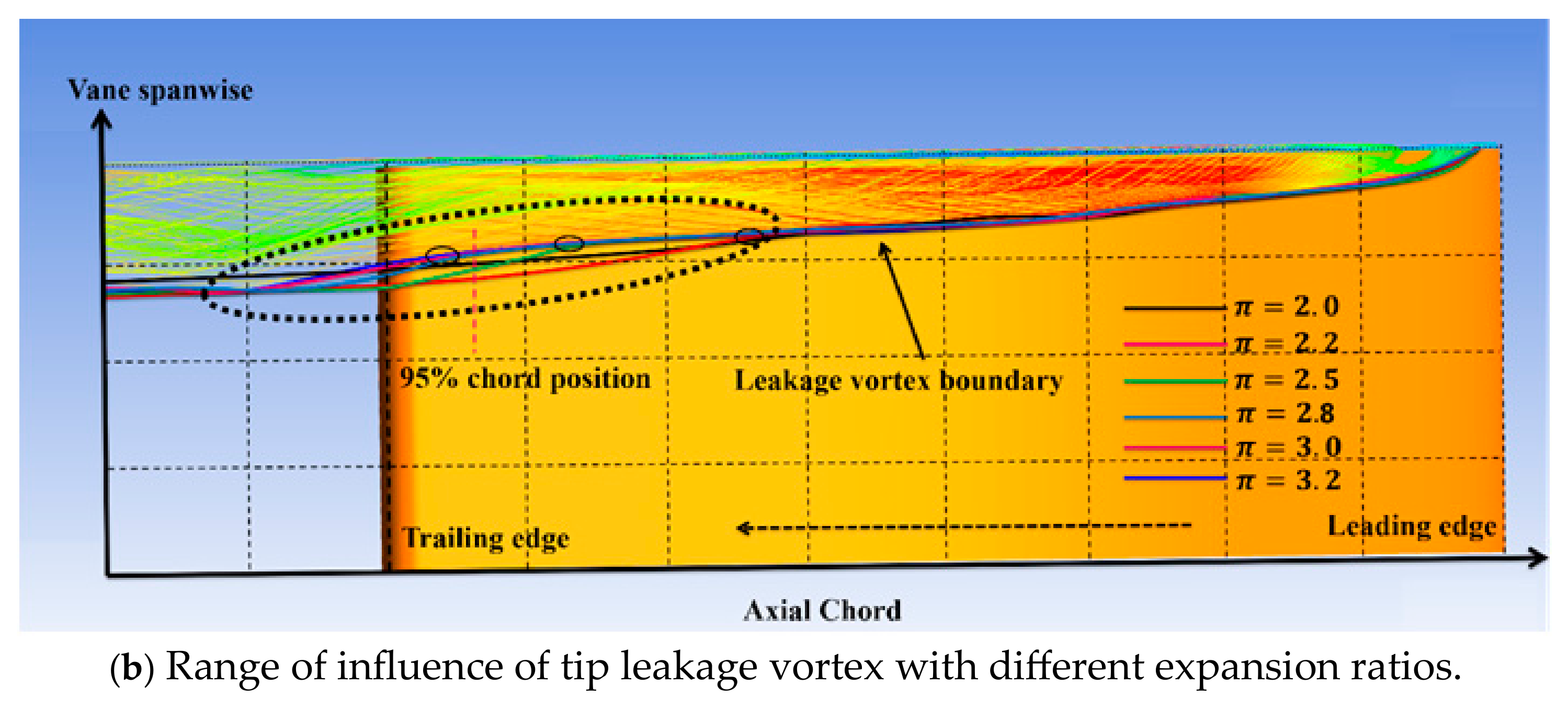
To illustrate this phenomenon, the influence range of the tip leakage vortex at the vane spanwise direction with different expansion ratios is shown in Figure 16b. It was found that the boundary line of the tip leakage vortex changed little at the leading-edge region with an increase in the expansion ratio. In other words, the expansion ratio has little effect on the range of influence of the tip leakage vortex in the leading-edge region. In contrast, the boundary line of the tip leakage vortex varies greatly at the trailing edge region with the change in the expansion ratio, as shown in the circle-marked area in the figure. Combined with Figure 16a,b, we can see that the expansion ratio has little effect on the structural morphology and the range of tip leakage vortex in a certain range of expansion ratio (such as 2.0–3.2 studied in this paper). However, the influence ranges of the tip leakage vortex change significantly in the circular mark area at the rear part of the vane, which is mainly caused by the interference between the shock wave and the tip leakage vortex. A shock wave can cause the structural form of the leakage vortex to expand suddenly, and its position is determined by the shock wave. It can be seen from the marked area in the figure that for the case when the expansion ratio is equal to 2.2, the influence range of the tip leakage vortex is significantly larger spanwise than that of 2.0, which is mainly because of the higher shock wave strength. In addition, when the expansion ratio is equal to 2.2, the range of influence of the tip leakage vortex is the largest at the 95% chord position, which is consistent with the previous conclusion. With an increase in the expansion ratio, the expansion position of the tip leakage vortex structure shifted to the trailing edge, and the shape size of the tip leakage vortex significantly increased. When the leakage vortex was fully developed, the shape of the tip leakage vortex did not increase and remained unchanged after the outlet of the vane trailing edge.
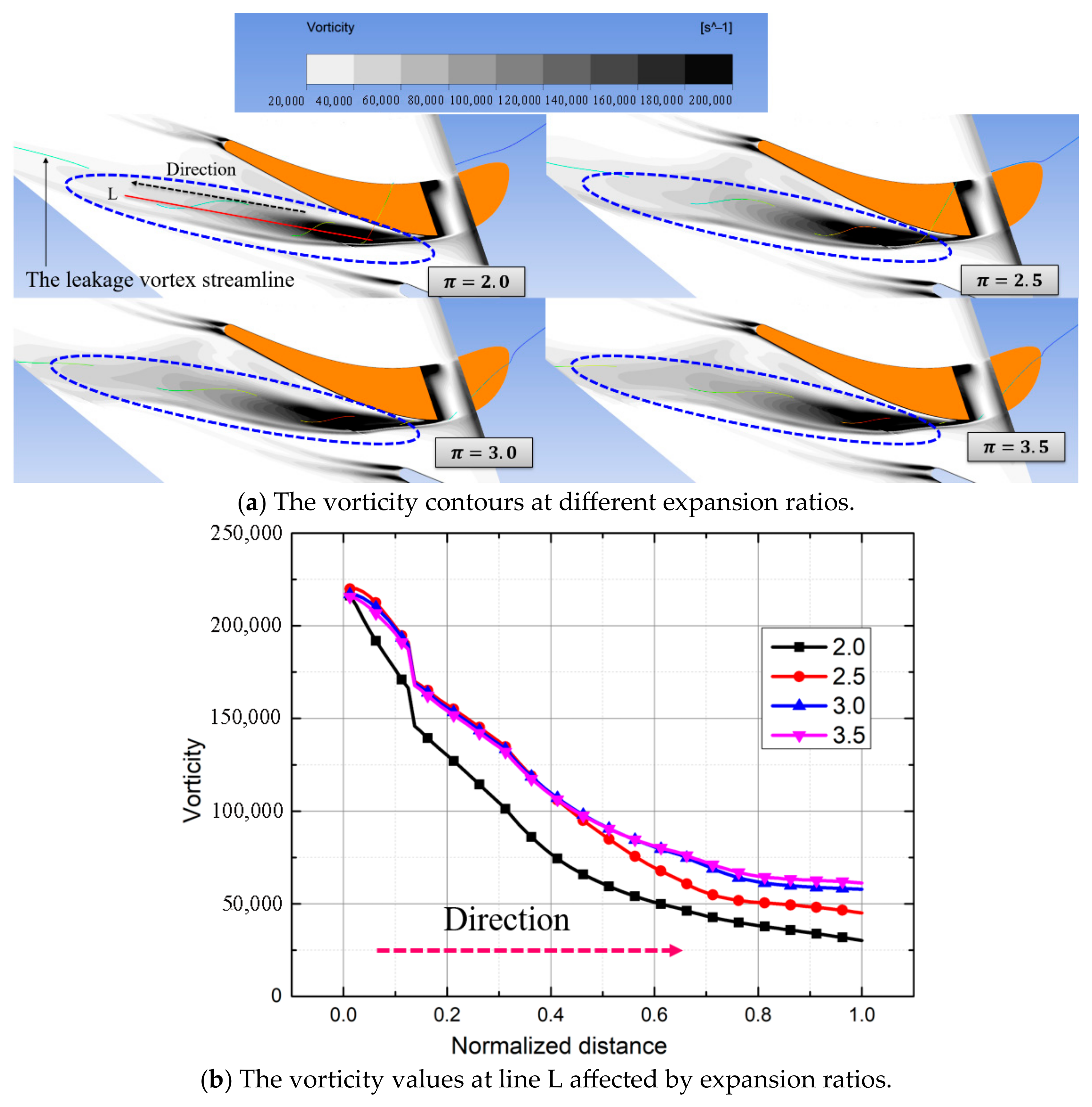
In addition, the expansion ratio is directly related to nozzle vane loading, which determines the leakage vortex intensity. To elaborate on the influence of the expansion ratio on the leakage vortex intensity, Figure 17 shows the variation in the vorticity in the plane where the leakage vortex core is located with different expansion ratios. It can be seen from Figure 17a that with an increase in the expansion ratio, the vorticity increases gradually in the rear region of the leakage vortex. This implies that the intensity of the leakage vortex increases with an increase in the expansion ratio.
To quantitatively analyze the influence of expansion ratio on leakage vorticity, Figure 17b shows the vorticity distribution with different expansion ratios at the line marked “L.” When the expansion ratio increased from 2.0 to 2.5, the vorticity increased significantly. As the expansion ratio increased further, the vorticity increased in the rear part of the line; in contrast, the vorticity decreased in the front part of the line. This is mainly because the position of the line “L” remains unchanged, whereas the position of the leakage vortex in the front part changes slightly with an increase in the expansion ratio. In addition, it can be seen from the figure that when the expansion ratio increases to a certain extent (for example, from 3.0 to 3.5), the change in vorticity is small, which means that the intensity of the tip leakage vortex will not increase infinitely with an increase in the expansion ratio.
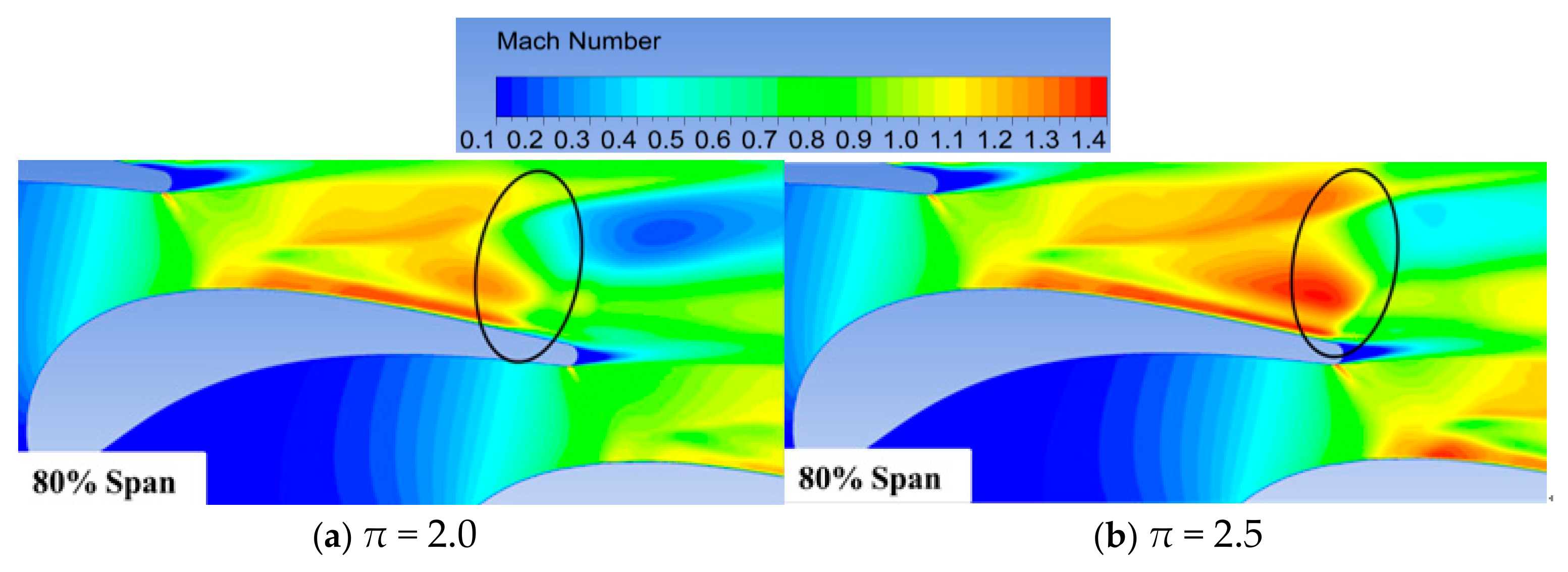
According to the above analysis, the intensity of the shock wave and leakage vortex increased gradually with an increase in the expansion ratio. Therefore, the question arises as to whether the interference intensity between the shock wave and the leakage vortex increases with an increase in the expansion ratio. To answer this question, Figure 18 shows the Mach number contours at the 80% span section for different expansion ratios. As the expansion ratio increased, the interference location between the tip leakage vortex and shock wave shifted to the trailing edge owing to the change in the shock wave position. It can be observed from the interference region that when the expansion ratio is equal to 2.5, the variation amplitude of the Mach number distribution is much larger than that when the expansion ratio is equal to 2.0. Therefore, it can be inferred that the interference intensity between the shock wave and the leakage vortex increases as the expansion ratio increases.
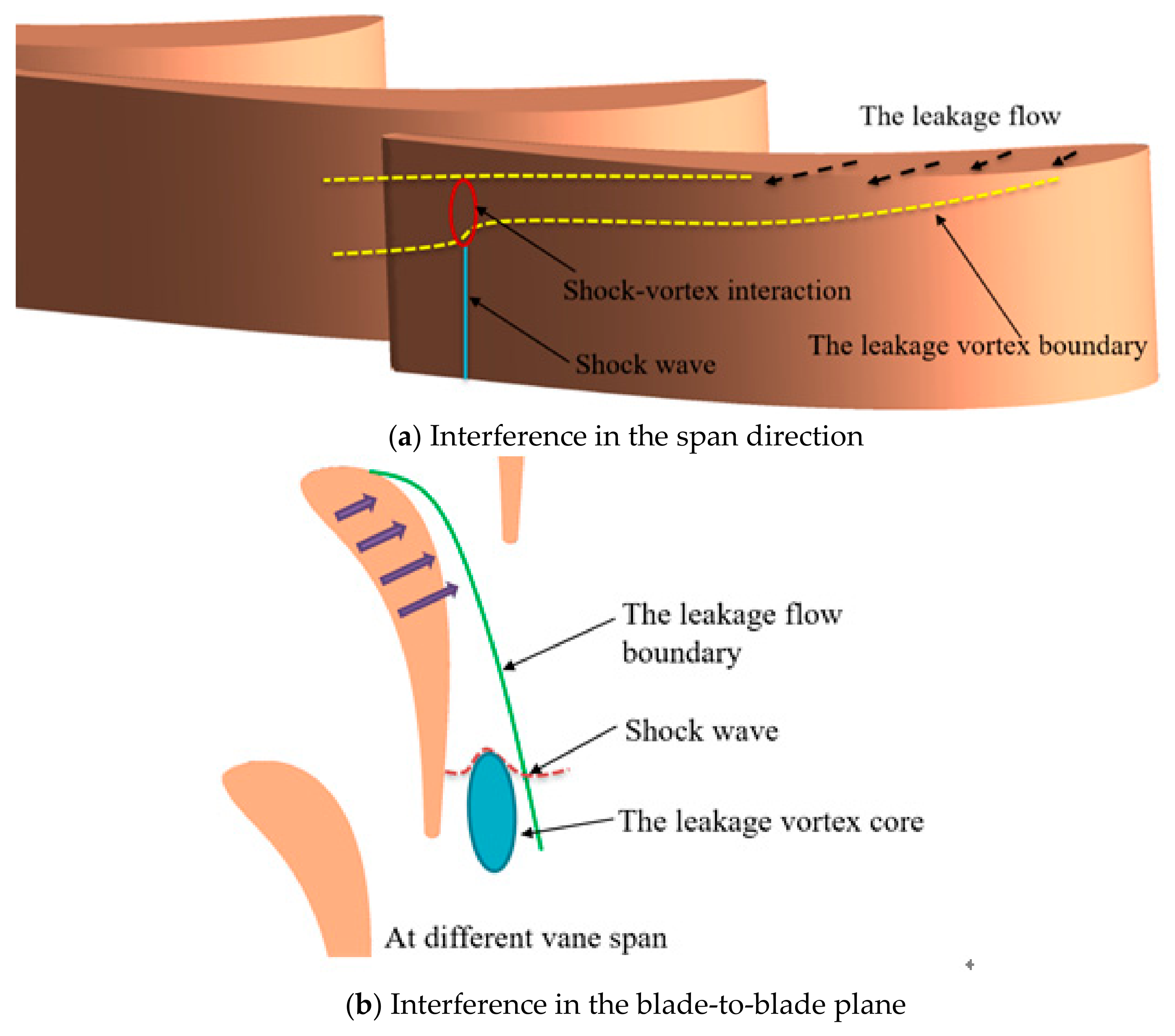
To illustrate the flow field structure characteristics of the interference between the shock wave and leakage vortex, Figure 19 shows the interference model of the shock wave and leakage vortex. The model revealed that the shock wave produces a large reverse pressure gradient on the leakage vortex, which leads to a sudden expansion of the leakage vortex in the span direction and an increase in the boundary contour of the leakage vortex. In addition, in the inner plane of the leakage vortex, the shock wave bent against the flow direction, and its strength was weakened by the extrusion of the leakage vortex core. The interference position depends mainly on the shock wave. It should be noted that we only discuss the physical phenomenon of the interference between the shock wave and the leakage vortex, and the dynamic mechanism of their interference has not been clearly determined.

4. Conclusions

To better understand the flow physics of the vane tip region under transonic conditions, three-dimensional numerical simulations of the vane cascade were performed to investigate the aerothermal performance with different expansion ratios. By analyzing the numerical results, some important conclusions can be summarized as follows:
  • The mainstream streamline near the suction side is convoluted by the tip leakage vortex at the 40% axial chord location, which enlarges the influence range of the tip leakage vortex. Under the influence of the shock wave, the tip leakage vortex core size was enlarged, and this vortex was finally broken, resulting in a significant increase in flow losses.
  • With an increase in the expansion ratio, the expansion position of the tip leakage vortex is shifted to the trailing edge, and the vortex size is first significantly increased and then remains unchanged under the action of the shock wave. In addition, the interference intensity between the shock wave and the leakage vortex increased due to both the intensities of the shock wave and leakage vortex increasing gradually with the increase in the expansion ratio.
  • A schematic diagram of the interference model between the shock wave and the leakage vortex is presented. Due to the interference, the shock wave bent against the flow direction, and its strength was weakened by the extrusion of the leakage vortex core. This interference not only leads to significant changes in the flow-field structure but also increases the flow loss. In addition, this interference can lead to an inhomogeneous distribution of the temperature load, which causes thermal stress concentration in the vane and impeller. Therefore, the effect of interference between the shock wave and leakage vortex on the thermal transfer characteristics under different influencing factors should be studied in detail in the future.
Furthermore, the effect of variable expansion ratio is related to pulsating inlet flow conditions. A more appropriate approach would be to assign unsteady total pressure and temperature at the turbine inlet to capture the transient flow field. These in-depth investigations need to be considered in future work. The other issues left unaddressed, i.e., the effects of the stator leakage flow and shock losses on the stator-rotor interaction, should also be studied for the complete stator and rotor stage in future work.

Author Contributions

Conceptualization, X.L.; methodology, X.L.; software, X.L.; validation, Q.L.; formal analysis, Q.L.; investigation, X.L.; resources, H.Z.; data curation, Q.L.; writing—original draft preparation, X.L.; writing—review and editing, H.Z.; visualization, Q.L.; supervision, H.Z.; project administration, H.Z.; funding acquisition, H.Z. All authors have read and agreed to the published version of the manuscript.

Funding

This research was funded by the NATIONAL NATURAL SCIENCE FOUNDATION OF CHINA, grant number 52276028.

Data Availability Statement

The original contributions presented in this study are included in the article. Further inquiries can be directed to the corresponding author.

Acknowledgments

The experiment of this study was undertaken at the Turbomachinery Institute of Beijing Institute of Technology, China.

Conflicts of Interest

Author Xinguo Lei was employed by the company Wuhan Xunqi Technology Co., Ltd. The remaining authors declare that the research was conducted in the absence of any commercial or financial relationships that could be construed as a potential conflict of interest.

Abbreviations

The following abbreviations are used in this manuscript:
VNTVariable Nozzle Turbine
MMass flow ratio
RANSReynolds-averaged Navier–Stokes
CptTotal pressure coefficient
π Expansion ratio
Pt,exitThe total pressure of outlet
Ps,exitThe static pressure of outlet
Pt,inletThe total pressure of inlet

References

  1. Lauriau, P.-T.; Binder, N.; Cros, S.; Roumeas, M.; Carbonneau, X. Preliminary Design Considerations for Variable Geometry Radial Turbines with Multi-Points Specifications. Int. J. Turbomach. Propuls. Power 2018, 3, 22. [Google Scholar] [CrossRef]
  2. Novak, O.; Bobcik, M.; Luxa, M.; Fort, J.; Rudas, B.; Synac, J.; Simurda, D.; Furst, J.; Halama, J.; Hric, V.; et al. Turbine Cascades of Last Stage Blades for Wide Range of Operating Conditions. Int. J. Turbomach. Propuls. Power 2019, 4, 33. [Google Scholar] [CrossRef]
  3. Łuczyński, P.; Giesen, M.; Gier, T.-S.; Wirsum, M. Uncoupled CFD-FEA Methods for the Thermo-Structural Analysis of Turbochargers. Int. J. Turbomach. Propuls. Power 2019, 4, 39. [Google Scholar] [CrossRef]
  4. Walkingshaw, J.R.; Spence, S.W.T.; Ehrard, J.; Thornhill, D. A Numerical Study of the Flow Fields in a Highly Off-Design Variable Geometry Turbine. In Proceedings of the ASME Turbo Expo 2010: Power for Land, Sea, and Air, Glasgow, UK, 14–18 June 2010. [Google Scholar] [CrossRef]
  5. Putra, M.A.; Joss, F. Investigation of Secondary Flow Behavior in a Radial Turbine Nozzle. J. Turbomach. 2013, 135, 061003. [Google Scholar] [CrossRef]
  6. Sailesh, C.; Dahlhaug, O.G.; Neopane, H.P. Numerical investigation of the effect of leakage flow through erosion-induced clearance gaps of guide vanes on the performance of Francis turbines. Eng. Appl. Comput. Fluid. Mech. 2018, 12, 662–678. [Google Scholar]
  7. Zhao, B.; Qi, M.; Zhang, H.; Shi, X. Investigation on effects of shock wave on vortical wake flow in a turbine nozzle cascade. Aerosp. Sci. Technol. 2020, 98, 105690. [Google Scholar] [CrossRef]
  8. Yamamoto, A.; Minmura, F. Interaction mechanisms between Tip Leakage Flow and the Passage vortex in a linear turbine rotor cascade. J. Turbomach. 1988, 110, 329–338. [Google Scholar] [CrossRef]
  9. Zhao, B.; Yang, C.; Hu, L.; Sun, H.; Yi, J.; Eric, C.; Shi, X.; Engeda, A. Understanding of the interaction between clearance leakage flow and main passage flow in a VGT turbine. Adv. Mech. Eng. 2015, 7, 652769. [Google Scholar] [CrossRef]
  10. Roumeas, M.; Cros, S. Aerodynamic Investigation of a Nozzle Clearance Effect on Radial Turbine Performance. In Proceedings of the ASME Turbo Expo 2012: Turbine Technical Conference and Exposition, Copenhagen, Denmark, 11–15 June 2012. [Google Scholar] [CrossRef]
  11. Li, D.; Lu, H.; Yang, Z.; Pan, T.; Li, Q. Optimization of a transonic axial-flow compressor under inlet total pressure distortion to enhance aerodynamic performance. Eng. Appl. Comput. Fluid. Mech. 2020, 14, 1002–1022. [Google Scholar] [CrossRef]
  12. Rao, N.M.; Camci, C. Axial Turbine Tip Desensitization by Injection from a Tip Trench: Part 1—Effect of Injection Mass Flow Rate. In Proceedings of the ASME Turbo Expo 2004: Power for Land, Sea, and Air, Vienna, Austria, 14–17 June 2004. [Google Scholar] [CrossRef]
  13. Rao, N.M.; Camci, C. Axial Turbine Tip Desensitization by Injection from a Tip Trench: Part 2—Leakage Flow Sensitivity to Injection Location. In Proceedings of the ASME Turbo Expo 2004: Power for Land, Sea, and Air, Vienna, Austria, 14–17 June 2004. [Google Scholar] [CrossRef]
  14. Bindon, J.P. The Measurement and formation of tip clearance loss. J. Turbomach. 1989, 111, 257–263. [Google Scholar] [CrossRef]
  15. Han, W.J.; Yang, Q.H.; Huang, H.Y.; Jia, L. Topology and Vortex Structures of Turbine Cascade with Different Tip Clearances. Chin. J. Aeronaut. 2002, 15, 18–26. [Google Scholar] [CrossRef]
  16. Tamaki, H.; Goto, S.; Unno, M.; Iwakami, A. The Effect of Clearance Flow of Variable Area Nozzles on Radial Turbine Performance. In Proceedings of the ASME Turbo Expo 2008: Power for Land, Sea, and Air, Berlin, Germany, 9–13 June 2008. [Google Scholar] [CrossRef]
  17. Hayami, H.; Senoo, Y.; Hyun, Y.I.; Yamaguchi, M. Effects of tip clearance of nozzle vanes on performance of radial turbine rotor. J. Turbomach. 1990, 112, 58–63. [Google Scholar] [CrossRef]
  18. Hu, L.; Sun, H.; Yi, J.; Curtis Eric, W.; Morelli, A.; Zhang, J.; Zhao, B.; Yang, C.; Shi, X.; Liu, S. Investigation of Nozzle Clearance Effects on a Radial Turbine: Aerodynamic Performance and Forced Response; SAE Technical Paper; SAE International: Detroit, MI, USA, 2013. [Google Scholar] [CrossRef]
  19. Rao, N.M.; Camci, C. Visualization of Rotor End-Wall, Tip Clearance, and Outer Casing Surface Flows in a Rotating Axial Turbine Rig. In Proceedings of the ASME Turbo Expo 2005: Power for Land, Sea, and Air, Reno, NV, USA, 6–9 June 2005. [Google Scholar] [CrossRef]
  20. Tallman, J.; Lakshminarayana, B. Numerical simulation of tip leakage flows in axial flow turbines, with emphasis on flow physics: Part 1: Effect of tip clearance height. J. Turbomach. 2001, 123, 314–323. [Google Scholar] [CrossRef]
  21. Tallman, J.; Lakshminarayana, B. Numerical simulation of tip leakage flows in axial flow turbines, with emphasis on flow physics: Part II: Effect of out casing relative motion. J. Turbomach. 2001, 123, 324–333. [Google Scholar] [CrossRef]
  22. Spence, S.W.T.; O’neill, J.W.; Cunningham, G. An investigation of the flow field through a variable geometry turbine stator with Vane end-wall clearance. J. Power Energy 2006, 220, 899–910. [Google Scholar] [CrossRef]
  23. Hideaki, T.; Masaru, U. Study on flow fields in variable area nozzles for radial turbines. Int. J. Fluid Mach. Syst. 2008, 1, 47–56. [Google Scholar] [CrossRef]
  24. Kawakubo, T. Unsteady Rotor-Stator Interaction of a Radial-Inflow Turbine with Variable Nozzle Vanes. In Proceedings of the ASME Turbo Expo 2010: Power for Land, Sea, and Air, Glasgow, UK, 14–18 June 2010. [Google Scholar] [CrossRef]
  25. Ramakrishna, P.V.; Govardhan, M. Aerodynamic Performance of Low Speed Axial Flow Compressor Rotors with Sweep and Tip Clearance. Eng. Appl. Comput. Fluid. Mech. 2019, 3, 195–206. [Google Scholar] [CrossRef]
  26. Guo, Y.; Mao, X.; Gao, L.; Yu, Y. Numerical study on the stability enhancement mechanism of self-recirculating casing treatment in a counter-rotating axial-flow compressor. Eng. Appl. Comput. Fluid. Mech. 2022, 16, 1111–1130. [Google Scholar] [CrossRef]
  27. Lu, H.; Li, Q. Cantilevered stator hub leakage flow control and loss reduction using non-uniform clearances. Aerosp. Sci. Technol. 2016, 51, 1–10. [Google Scholar] [CrossRef]
  28. Yang, Y.; Ma, H.; Xiao, A.; Shi, L. Shock wave structures and vortex unsteadiness in the tip region of a transonic turbine cascade under different conditions. Phys. Fluids 2024, 36, 106117. [Google Scholar] [CrossRef]
  29. Wei, Z.; Ren, G.; Gan, X.; Ni, M.; Chen, W. Influence of shock wave on loss and breakdown of tip-leakage vortex in turbine rotor with varying backpressure. Appl. Sci. 2021, 11, 4991. [Google Scholar] [CrossRef]
  30. Chen, H. Turbine wheel design for Garrett advanced variable geometry turbines for commercial vehicle applications. In Proceedings of the 8th International Conference of Turbochargers and Turbocharging, London, UK, 12 May 2006; Woodhead Publishing: Cambridge, UK, 2006. [Google Scholar] [CrossRef]
  31. Saavedra, J.; Paniagua, G.; Saracoglu, B.H. Experimental characterization of the vane heat flux under pulsating trailing-edge blowing. J. Turbomach. 2016, 139, 061004. [Google Scholar] [CrossRef]
  32. Liu, Y.; Yang, C.; Qi, M.; Zhang, H.; Zhao, B. Shock, Leakage Flow and Wake Interactions in a Radial Turbine with Variable Guide Vanes. In Proceedings of the ASME Turbo Expo 2014: Turbine Technical Conference and Exposition, Düsseldorf, Germany, 16–20 June 2014. [Google Scholar] [CrossRef]
  33. Qi, M.; Lei, X.; Wang, Z.; Ma, C. Investigation on the flow characteristics of a VNT turbine under pulsating flow conditions. Proc. Inst. Mech. Eng. Part D J. Automob. Eng. 2019, 233, 396–412. [Google Scholar] [CrossRef]
  34. Lei, X.; Qi, M.; Sun, H.; Hu, L. Study on the Interaction of Clearance Flow and Shock Wave in a Turbine Nozzle; SAE Technical Paper; SAE International: Detroit, MI, USA, 2017. [Google Scholar] [CrossRef]
  35. Lei, X.; Qi, M.; Sun, H.; Hu, L. Investigation on the Shock Control Using Grooved Surface in a Linear Turbine Nozzle. J. Turbomach. 2017, 139, 121008. [Google Scholar] [CrossRef]
  36. Lei, X.; Li, R.; Xi, Z.; Yang, C. Study on the effect of nozzle vane and rotor clearance on the performance of variable nozzle turbine. J. Therm. Sci. 2022, 31, 1745–1758. [Google Scholar] [CrossRef]
  37. Menter, F.R. Two-equation Eddy-viscosity Turbulence Models for Engineering Applications. AIAA J. 1994, 32, 1598–1605. [Google Scholar] [CrossRef]
  38. Jun, L.; Sun, H.; Wang, J.; Feng, Z. Numerical investigations on the steady and unsteady leakage flow and heat transfer characteristics of rotor blade squealer tip. J. Therm. Sci. 2011, 20, 304–311. [Google Scholar] [CrossRef]
  39. Gao, J.; Zheng, Q.; Niu, X.; Yue, G. Aerothermal characteristics of a transonic tip flow in a turbine cascade with tip clearance variations. Appl. Therm. Eng. 2016, 107, 271–283. [Google Scholar] [CrossRef]
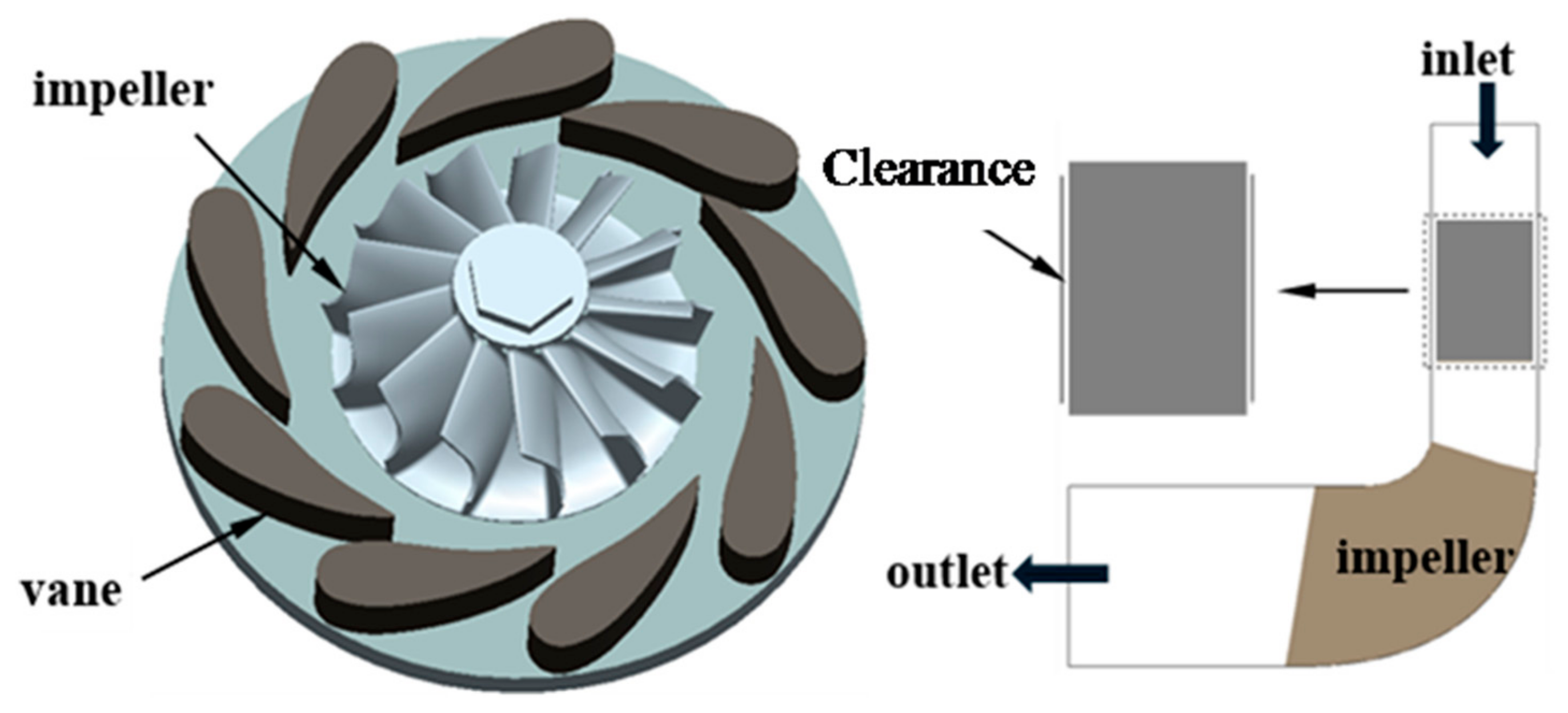
Figure 1. Schematic of VNT.
Ijtpp 10 00049 g001
Figure 2. Schematic of the vane plane cascade: (a) Experimental plane cascade; (b) Numerical plane cascade.
Ijtpp 10 00049 g002
Figure 3. Computational meshes.
Ijtpp 10 00049 g003
Figure 4. Numerical results with different grid numbers.
Ijtpp 10 00049 g004
Figure 5. Validation results on vane mass flow rate.
Ijtpp 10 00049 g005
Figure 6. Validation results of the numerical method: (a) The shock wave structure; (b) The leakage flow boundary; (c) The experimental results.
Ijtpp 10 00049 g006
Figure 7. Static pressure distribution at 95% vane span.
Ijtpp 10 00049 g007
Figure 8. Streamline from the “L” in front of the nozzle vane leading edge: (a) Top view of tip leakage vortex; (b) Front view of tip leakage vortex.
Ijtpp 10 00049 g008
Figure 9. Influence of tip leakage vortex on mainstream streamline.
Ijtpp 10 00049 g009
Figure 10. The limiting streamline on nozzle vane suction surface.
Ijtpp 10 00049 g010
Figure 11. Interference of shock wave on tip leakage vortex under high-expansion-ratio conditions (π = 2.5): (a) The variation in tip leakage vortex velocity; (b) The variation in tip leakage vortex core size; (c) Tip leakage vortex is expressed by Q criterion.
Ijtpp 10 00049 g011aIjtpp 10 00049 g011b
Figure 12. The effect of shock wave on leakage vortex core size: (a) Location of plane-relative vane; (b) Entropy distribution contour at plane.
Ijtpp 10 00049 g012
Figure 13. Leakage vortex is broken due to the influence of the reverse pressure gradient: (a) Pressure distribution contour, (b) Pressure variation curve.
Ijtpp 10 00049 g013
Figure 14. Vortex system structure at vane exit plane in vane cascade.
Ijtpp 10 00049 g014
Figure 15. Influence of expansion ratio on shock wave.
Ijtpp 10 00049 g015
Figure 16. Influence of expansion ratio on tip leakage vortex shape: (a) Relative total pressure coefficient contours for different expansion ratios; (b) Range of influence of tip leakage vortex with different expansion ratios.
Ijtpp 10 00049 g016aIjtpp 10 00049 g016b
Figure 17. Influence of expansion ratio on tip leakage vortex intensity: (a) The vorticity contours at different expansion ratios; (b) The vorticity values at line L affected by expansion ratios.
Ijtpp 10 00049 g017
Figure 18. Mach number contours of nozzle vane section with different conditions.
Ijtpp 10 00049 g018
Figure 19. Schematic diagram of shock wave and leakage vortex interaction: (a) Interference in the span direction; (b) Interference in the blade-to-blade plane.
Ijtpp 10 00049 g019
Table 1. Vane geometrical parameters.
ParametersValue
Cascade solidity1.25
Cascade aspect ratio (The ratio of span to chord)0.3
Axial chord (mm)50
Throat opening (mm)9.6
Inlet vane angle (degree)0
Outlet vane angle (degree)77
Designed attack angle (degree)0
Setup angle (degree)34.6
Disclaimer/Publisher’s Note: The statements, opinions and data contained in all publications are solely those of the individual author(s) and contributor(s) and not of MDPI and/or the editor(s). MDPI and/or the editor(s) disclaim responsibility for any injury to people or property resulting from any ideas, methods, instructions or products referred to in the content.