

A Review of Interaction Between Sleep Apnea and APOE e4 on the Risk of Dementia

 , ,
, ,
Abstract
1. Introduction
2. Method
2.1. Search Strategy
2.2. Selection Criteria
- Original research examining the interaction between sleep apnea and APOE on cognition, cognitive decline, and dementia/AD.
- Studies conducted with human adults.
- Studies that used polysomnography or clinical diagnosis to identify sleep apnea.
2.3. Reviewing Procedure, Data Extraction
2.4. Quality Assessment and Analysis
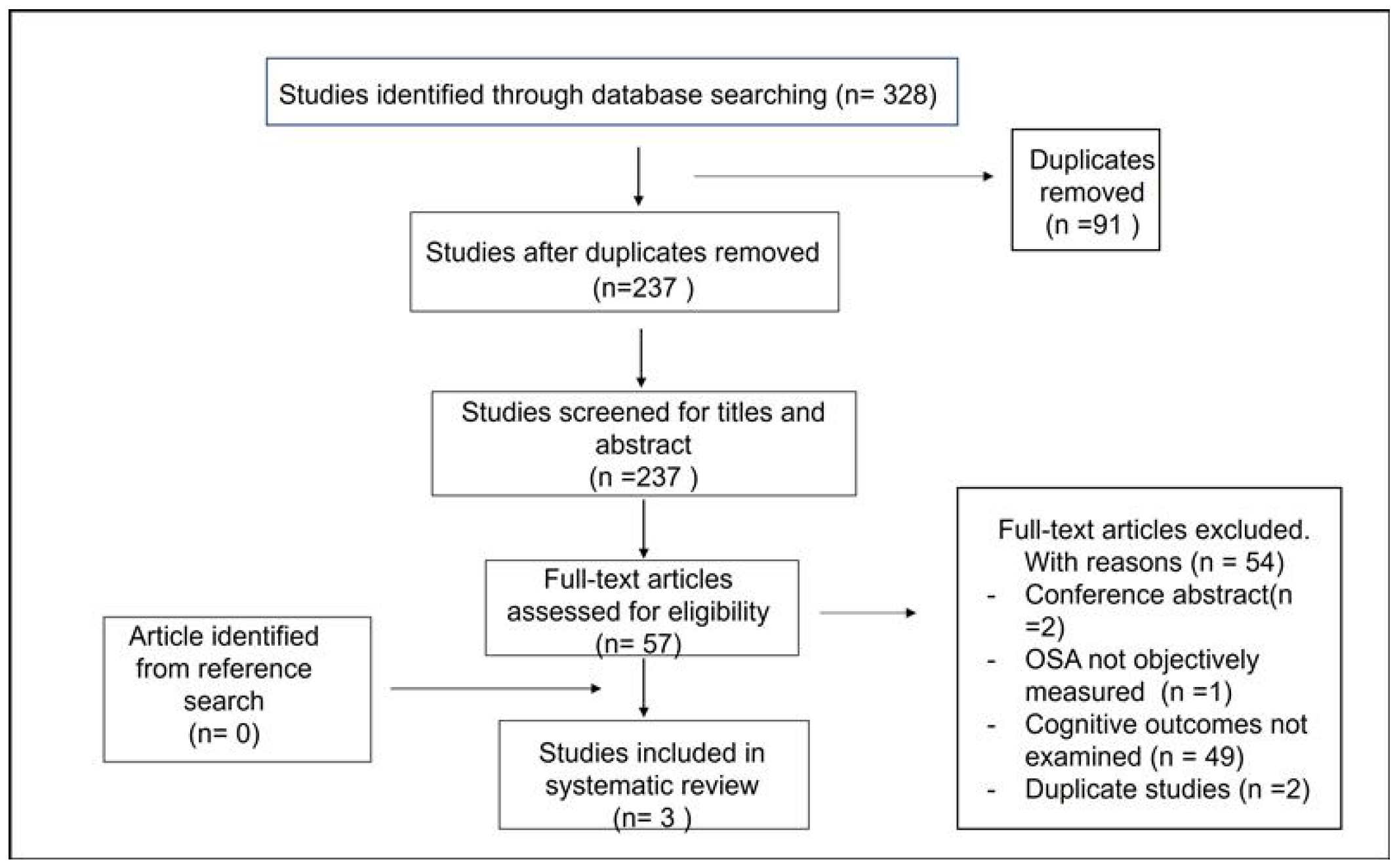
3. Results
4. Discussion
5. Conclusions
Supplementary Materials
Author Contributions
Funding
Data Availability Statement
Conflicts of Interest
References
- WHO. Dementia Fact sheet and Details; WHO: Geneva, Switzerland, 2025. [Google Scholar]
- Better, M.A. Alzheimer’s disease facts and figures. Alzheimer’s Dement. 2024, 20, 3708–3821. [Google Scholar]
- Matthews, K.A.; Xu, W.; Gaglioti, A.H.; Holt, J.B.; Croft, J.B.; Mack, D.; McGuire, L.C. Racial and ethnic estimates of Alzheimer’s disease and related dementias in the United States (2015–2060) in adults aged ≥65 years. Alzheimer’s Dement. 2019, 15, 17–24. [Google Scholar] [CrossRef]
- Alzheimer’s Association. New Alzheimer’s Association Report Reveals Sharp Increases in Alzheimer’s Prevalence, Deaths, Cost of Care; Alzheimer’s Association: Chicago, IL, USA, 2018. [Google Scholar]
- Serrano-Pozo, A.; Das, S.; Hyman, B.T. APOE and Alzheimer’s disease: Advances in genetics, pathophysiology, and therapeutic approaches. Lancet Neurol. 2021, 20, 68–80. [Google Scholar] [CrossRef]
- Shang, L.; Dong, L.; Huang, X.; Wang, T.; Mao, C.; Li, J.; Wang, J.; Liu, C.; Gao, J. Association of APOE ε4/ε4 with fluid biomarkers in patients from the PUMCH dementia cohort. Front. Aging Neurosci. 2023, 15, 1119070. [Google Scholar] [CrossRef] [PubMed]
- Liu, C.C.; Liu, C.C.; Kanekiyo, T.; Bu, G. Apolipoprotein E and Alzheimer disease: Risk, mechanisms and therapy. Nat. Rev. Neurol. 2013, 9, 106–118. [Google Scholar] [CrossRef]
- Bateman, R.M.; Sharpe, M.D.; Jagger, J.E.; Ellis, C.G.; Solé-Violán, J.; López-Rodríguez, M.; Herrera-Ramos, E.; Ruíz-Hernández, J.; Borderías, L.; Horcajada, J.; et al. 36th International Symposium on Intensive Care and Emergency Medicine: Brussels, Belgium. 15–18 March 2016. Crit. Care 2016, 20, 94. [Google Scholar] [CrossRef] [PubMed]
- Corder, E.H.; Saunders, A.M.; Strittmatter, W.J.; Schmechel, D.E.; Gaskell, P.C.; Small, G.W.; Roses, A.D.; Haines, J.L.; Pericak-Vance, M.A. Gene dose of apolipoprotein E type 4 allele and the risk of Alzheimer’s disease in late onset families. Science 1993, 261, 921–923. [Google Scholar] [CrossRef]
- Gonzales, P.N.G.; Villaraza, S.G.; Rosa, J.C.D. The association between sleep and Alzheimer’s disease: A systematic review. Dement. Neuropsychol. 2024, 18, e20230049. [Google Scholar] [CrossRef]
- Ju, Y.-E.S.; McLeland, J.S.; Toedebusch, C.D.; Xiong, C.; Fagan, A.M.; Duntley, S.P.; Morris, J.C.; Holtzman, D.M. Sleep quality and preclinical alzheimer disease. JAMA Neurol. 2013, 70, 587–593. [Google Scholar] [CrossRef]
- Jiang, Q.; Lee, C.D.; Mandrekar, S.; Wilkinson, B.; Cramer, P.; Zelcer, N.; Mann, K.; Lamb, B.; Willson, T.M.; Collins, J.L.; et al. ApoE promotes the proteolytic degradation of Abeta. Neuron 2008, 58, 681–693. [Google Scholar] [CrossRef]
- Ancoli-Israel, S.; Kripke, D.F.; Klauber, M.R.; Mason, W.J.; Fell, R.; Kaplan, O. Sleep-disordered breathing in community-dwelling elderly. Sleep 1991, 14, 486–495. [Google Scholar] [CrossRef]
- Phillips, B.; Cook, Y.; Schmitt, F.; Berry, D. Sleep apnea: Prevalence of risk factors in a general population. South Med. J. 1989, 82, 1090–1092. [Google Scholar] [CrossRef]
- Tseng, C.-Y.; Morris, E.J.; Sekhon, V.K.; Albrecht, J.S.; Wickwire, E.M.; Spira, A.P.; Gross, A.L.; Malhotra, A.; Blinka, M.D.; Kaufmann, C.N. Clinical characteristics and medication use patterns of middle-aged and older adults with sleep apnea with and without comorbid insomnia. Sleep Breath. 2025, 29, 167. [Google Scholar] [CrossRef]
- Grandner, M.A.; Martin, J.L.; Patel, N.P.; Jackson, N.J.; Gehrman, P.R.; Pien, G.; Perlis, M.L.; Xie, D.; Sha, D.; Weaver, T.; et al. Age and sleep disturbances among American men and women: Data from the U.S. Behavioral Risk Factor Surveillance System. Sleep 2012, 35, 395–406. [Google Scholar] [CrossRef]
- Peppard, P.E.; Young, T.; Barnet, J.H.; Palta, M.; Hagen, E.W.; Hla, K.M. Increased prevalence of sleep-disordered breathing in adults. Am. J. Epidemiol. 2013, 177, 1006–1014. [Google Scholar] [CrossRef]
- Osorio, R.S.; Ayappa, I.; Mantua, J.; Gumb, T.; Varga, A.; Mooney, A.M.; Burschtin, O.E.; Taxin, Z.; During, E.; Spector, N.; et al. The interaction between sleep-disordered breathing and apolipoprotein E genotype on cerebrospinal fluid biomarkers for Alzheimer’s disease in cognitively normal elderly individuals. Neurobiol. Aging 2014, 35, 1318–1324. [Google Scholar] [CrossRef] [PubMed]
- Bixler, E.O.; Vgontzas, A.N.; Lin, H.M.; Ten Have, T.; Rein, J.; Vela-Bueno, A.; Kales, A. Prevalence of sleep-disordered breathing in women: Effects of gender. Am. J. Respir. Crit. Care Med. 2001, 163, 608–613. [Google Scholar] [CrossRef]
- Durán, J.; Esnaola, S.; Rubio, R.; Iztueta, Á. Obstructive sleep apnea–hypopnea and related clinical features in a population-based sample of subjects aged 30 to 70 yr. Am. J. Respir. Crit. Care Med. 2001, 163, 685–689. [Google Scholar] [CrossRef] [PubMed]
- Ip, M.S.; Lam, B.; Lauder, I.J.; Tsang, K.W.; Chung, K.-F.; Mok, Y.-W.; Lam, W.-K. A community study of sleep-disordered breathing in middle-aged Chinese men in Hong Kong. Chest 2001, 119, 62–69. [Google Scholar] [CrossRef] [PubMed]
- Spira, A.P.; Blackwell, T.; Stone, K.L.; Redline, S.; Cauley, J.A.; Ancoli-Israel, S.; Yaffe, K. Sleep-disordered breathing and cognition in older women. J. Am. Geriatr. Soc. 2008, 56, 45–50. [Google Scholar] [CrossRef]
- Martin, M.S.; Sforza, E.; Roche, F.; Barthélémy, J.C.; Thomas-Anterion, C. Sleep breathing disorders and cognitive function in the elderly: An 8-year follow-up study. the proof-synapse cohort. Sleep 2015, 38, 179–187. [Google Scholar]
- Rosenzweig, I.; Glasser, M.; Crum, W.R.; Kempton, M.J.; Milosevic, M.; McMillan, A.; Leschziner, G.D.; Kumari, V.; Goadsby, P.; Simonds, A.K.; et al. Changes in Neurocognitive Architecture in Patients with Obstructive Sleep Apnea Treated with Continuous Positive Airway Pressure. EBioMedicine 2016, 7, 221–229. [Google Scholar] [CrossRef] [PubMed]
- Ungvari, Z.; Fekete, M.; Lehoczki, A.; Munkácsy, G.; Fekete, J.T.; Zábó, V.; Purebl, G.; Varga, P.; Ungvari, A.; Győrffy, B. Sleep disorders increase the risk of dementia, Alzheimer’s disease, and cognitive decline: A meta-analysis. GeroScience 2025, 47, 4899–4920. [Google Scholar] [CrossRef] [PubMed]
- Guay-Gagnon, M.; Vat, S.; Forget, M.; Tremblay-Gravel, M.; Ducharme, S.; Nguyen, Q.D.; Desmarais, P. Sleep apnea and the risk of dementia: A systematic review and meta-analysis. J. Sleep Res. 2022, 31, e13589. [Google Scholar] [CrossRef] [PubMed]
- Lim, A.S.P.; Kowgier, M.; Yu, L.; Buchman, A.S.; Bennett, D.A. Sleep Fragmentation and the Risk of Incident Alzheimer’s Disease and Cognitive Decline in Older Persons. Sleep 2013, 36, 1027–1032. [Google Scholar] [CrossRef]
- Nikodemova, M.; Finn, L.; Mignot, E.; Salzieder, N.; Peppard, P.E. Association of sleep disordered breathing and cognitive deficit in APOEε4 carriers. Sleep 2013, 36, 873–880. [Google Scholar] [CrossRef]
- O’Hara, R.; Schröder, C.M.; Kraemer, H.C.; Kryla, N.; Cao, C.; Miller, E.; Schatzberg, A.F.; Yesavage, J.A.; Murphy, G.M., Jr. Nocturnal sleep apnea/hypopnea is associated with lower memory performance in APOE epsilon4 carriers. Neurology 2005, 65, 642–644. [Google Scholar] [CrossRef]
- Ding, X.; Kryscio, R.J.; Turner, J.; Jicha, G.A.; Cooper, G.; Caban-Holt, A.; Schmitt, F.A.; Abner, E.L. Self-Reported Sleep Apnea and Dementia Risk: Findings from the Prevention of Alzheimer’s Disease with Vitamin E and Selenium Trial. J. Am. Geriatr. Soc. 2016, 64, 2472–2478. [Google Scholar] [CrossRef]
- Yiallourou, S.; Baril, A.-A.; Wiedner, C.; Misialek, J.R.; E Kline, C.; Harrison, S.; Cannon, E.; Yang, Q.; Bernal, R.; Bisson, A.; et al. Sleep architecture and dementia risk in adults: An analysis of 5 cohorts from the Sleep and Dementia Consortium. Sleep 2025, 48, zsaf129. [Google Scholar] [CrossRef]
- Sun, H.; Milton, S.; Fang, Y.; Taha, H.B.; Shiju, S.; Thomas, R.J.; Ganglberger, W.; Pase, M.P.; Hughes, T.; Purcell, S.; et al. Dementia Risk and Machine Learning-Derived Brain Age Index from Sleep Electroenceph-alography: A Pooled Cohort Analysis of Over 7000 Individuals Across Five Community Cohorts. medRxiv 2025, Preprint. [Google Scholar]
- Fonseca, L.M.; Finlay, M.G.; Chaytor, N.S.; Morimoto, N.G.; Buchwald, D.; Van Dongen, H.P.A.; Quan, S.F.; Suchy-Dicey, A. Mid-life sleep is associated with cognitive performance later in life in aging American Indians: Data from the Strong Heart Study. Front. Aging Neurosci. 2024, 16, 1346807. [Google Scholar] [CrossRef]
- Marchi, N.A.; Berger, M.; Solelhac, G.; Bayon, V.; Haba-Rubio, J.; Legault, J.; Thompson, C.; Gosselin, N.; Vollenweider, P.; Marques-Vidal, P.; et al. Obstructive sleep apnea and cognitive functioning in the older general population: The moderating effect of age, sex, ApoE4, and obesity. J. Sleep Res. 2024, 33, e13938. [Google Scholar] [CrossRef]
- Gara, E.M.; Goya, T.T.; Ferreira-Silva, R.; Matheus, L.; Jordão, R.M.; Araújo, M.L.; Silva, A.J.; Guerra, R.S.; Lorenzi-Filho, G.; Ueno-Pardi, L.M. APOE Polymorphism, Obstructive Sleep Apnea, and Cognitive Function. Sleep Sci. 2024, 18, e17–e24. [Google Scholar] [CrossRef] [PubMed] [PubMed Central]
- Strittmatter, W.J.; Saunders, A.M.; Schmechel, D.; Pericak-Vance, M.; Enghild, J.; Salvesen, G.S.; Roses, A.D. Apolipoprotein E: High-avidity binding to beta-amyloid and increased frequency of type 4 allele in late-onset familial Alzheimer disease. Proc. Natl. Acad. Sci. USA 1993, 90, 1977–1981. [Google Scholar] [CrossRef]
- Poirier, J.; Bertrand, P.; Kogan, S.; Gauthier, S.; Davignon, J.; Bouthillier, D. Apolipoprotein E polymorphism and Alzheimer’s disease. Lancet 1993, 342, 697–699. [Google Scholar] [CrossRef]
- Saunders, A.M.; Strittmatter, W.J.; Schmechel, D.; George-Hyslop, P.H.S.; Pericakvance, M.A.; Joo, S.H.; Rosi, B.L.; Gusella, J.F.; Crapper-MacLachlan, D.R.; Alberts, M.J.; et al. Association of apolipoprotein E allele epsilon 4 with late-onset familial and sporadic Alzheimer’s disease. Neurology 1993, 43, 1467–1472. [Google Scholar] [CrossRef] [PubMed]
- Suri, S.; Emir, U.; Stagg, C.J.; Near, J.; Mekle, R.; Schubert, F.; Zsoldos, E.; Mahmood, A.; Singh-Manoux, A.; Kivimäki, M.; et al. Effect of age and the APOE gene on metabolite concentrations in the posterior cingulate cortex. NeuroImage 2017, 152, 509–516. [Google Scholar] [CrossRef] [PubMed]
- Blackwell, T.; Yaffe, K.; Ancoli-Israel, S.; Schneider, J.L.; Cauley, J.A.; Hillier, T.A.; Fink, H.A.; Stone, K.L.; Study of Osteoporotic Fractures Group. Poor sleep is associated with impaired cognitive function in older women: The study of osteoporotic fractures. J. Gerontol. Ser. A 2006, 61, 405–410. [Google Scholar] [CrossRef]
- Blackwell, T.; Yaffe, K.; Ancoli-Israel, S.; Redline, S.; Ensrud, K.E.; Stefanick, M.L.; Laffan, A.; Stone, K.L.; Osteoporotic Fractures in Men Study Group. Associations between sleep architecture and sleep-disordered breathing and cognition in older community-dwelling men: The Osteoporotic Fractures in Men Sleep Study. J. Am. Geriatr. Soc. 2011, 59, 2217–2225. [Google Scholar] [CrossRef]
- Yaffe, K.; Laffan, A.M.; Harrison, S.L.; Redline, S.; Spira, A.P.; Ensrud, K.E.; Ancoli-Israel, S.; Stone, K.L. Sleep-disordered breathing, hypoxia, and risk of mild cognitive impairment and dementia in older women. JAMA 2011, 306, 613–619. [Google Scholar] [CrossRef]
- Lim, A.S.P.; Yu, L.; Costa, M.D.; Leurgans, S.E.; Buchman, A.S.; Bennett, D.A.; Saper, C.B. Increased fragmentation of rest-activity patterns is associated with a characteristic pattern of cognitive impairment in older individuals. Sleep 2012, 35, 633–640. [Google Scholar] [CrossRef]
- Kang, J.-E.; Lim, M.M.; Bateman, R.J.; Lee, J.J.; Smyth, L.P.; Cirrito, J.R.; Fujiki, N.; Nishino, S.; Holtzman, D.M. Amyloid-beta; dynamics are regulated by orexin and the sleep-wake cycle. Science 2009, 326, 1005–1007. [Google Scholar] [CrossRef] [PubMed]
- Holtzman, D.M.; Morris, J.C.; Goate, A.M. Alzheimer’s disease: The challenge of the second century. Sci. Transl. Med. 2011, 3, 77sr1. [Google Scholar] [CrossRef]
- Huynh, T.-P.V.; Davis, A.A.; Ulrich, J.D.; Holtzman, D.M. Apolipoprotein E and Alzheimer’s disease: The influence of apolipoprotein E on amyloid-β and other amyloidogenic proteins. J. Lipid Res. 2017, 58, 824–836. [Google Scholar] [CrossRef]
- Kim, J.; Lee, S.; In, K.; Kim, J.; You, S.; Kang, K.; Sim, J.; Lee, S.; Yoon, D.; Lee, J.; et al. Increase in serum haptoglobin and apolipoprotein M in patients with obstructive sleep apnoea. J. Sleep Res. 2009, 18, 313–320. [Google Scholar] [CrossRef]
- Rebeck, G.W.; Reiter, J.S.; Strickland, D.K.; Hyman, B.T. Apolipoprotein E in sporadic Alzheimer’s disease: Allelic variation and receptor interactions. Neuron 1993, 11, 575–580. [Google Scholar] [CrossRef]
- Morris, J.C.; Roe, C.M.; Xiong, C.; Fagan, A.M.; Goate, A.M.; Holtzman, D.M.; Mintun, M.A. APOE predicts amyloid-beta but not tau Alzheimer pathology in cognitively normal aging. Ann. Neurol. 2010, 67, 122–131. [Google Scholar] [CrossRef] [PubMed]
- Reiman, E.M.; Chen, K.; Liu, X.; Bandy, D.; Yu, M.; Lee, W.; Ayutyanont, N.; Keppler, J.; Reeder, S.A.; Langbaum, J.B.S.; et al. Fibrillar amyloid-beta burden in cognitively normal people at 3 levels of genetic risk for Alzheimer’s disease. Proc. Natl. Acad. Sci. USA 2009, 106, 6820–6825. [Google Scholar] [CrossRef] [PubMed]
- Bales, K.R.; Verina, T.; Dodel, R.C.; Du, Y.; Altstiel, L.; Bender, M.; Hyslop, P.; Johnstone, E.M.; Little, S.P.; Cummins, D.J.; et al. Lack of apolipoprotein E dramatically reduces amyloid beta-peptide deposition. Nat. Genet. 1997, 17, 263–264. [Google Scholar] [CrossRef]
- Bubu, O.M.; Andrade, A.G.; Umasabor-Bubu, O.Q.; Hogan, M.M.; Turner, A.D.; de Leon, M.J.; Ogedegbe, G.; Ayappa, I.; Jean-Louis G, G.; Jackson, M.L.; et al. Obstructive sleep apnea, cognition and Alzheimer’s disease: A systematic review integrating three decades of multidisciplinary research. Sleep Med. Rev. 2020, 50, 101250. [Google Scholar] [CrossRef]
- Duan, H.; Sun, Y.; Liu, Q.; Fu, J.; Huang, L.; Wang, Z.; Zhao, J.; Li, Z.; Li, W.; Liu, H.; et al. Apolipoprotein E polymorphism ε4-stratified longitudinal association between daytime naps, sleep apnea and mild cognitive impairment: A prospective cohort study. Eur. J. Neurol. 2022, 29, 1385–1393. [Google Scholar] [CrossRef]
- Turner, A.D.; Locklear, C.E.; Oruru, D.; Briggs, A.Q.; Bubu, O.M.; Seixas, A. Exploring the combined effects of sleep apnea and APOE-e4 on biomarkers of Alzheimer’s disease. Front. Aging Neurosci. 2022, 14, 1017521. [Google Scholar] [CrossRef]
- Sanchez-Espinosa, M.P.; Atienza, M.; Cantero, J.L. Sleep deficits in mild cognitive impairment are related to increased levels of plasma amyloid-β and cortical thinning. NeuroImage 2014, 98, 395–404. [Google Scholar] [CrossRef] [PubMed]
- Olsson, M.; Ärlig, J.; Hedner, J.; Blennow, K.; Zetterberg, H. Sleep deprivation and cerebrospinal fluid biomarkers for Alzheimer’s disease. Sleep 2018, 41, zsy025. [Google Scholar] [CrossRef]
- Lucey, B.P.; Hicks, T.J.; McLeland, J.S.; Toedebusch, C.D.; Boyd, J.; Elbert, D.L.; Patterson, B.W.; Baty, J.; Morris, J.C.; Ovod, V.; et al. Effect of sleep on overnight cerebrospinal fluid amyloid β kinetics. Ann. Neurol. 2018, 83, 197–204. [Google Scholar] [CrossRef] [PubMed]
- Xie, L.; Kang, H.; Xu, Q.; Chen, M.J.; Liao, Y.; Thiyagarajan, M.; O’Donnell, J.; Christensen, D.J.; Nicholson, C.; Iliff, J.J.; et al. Sleep drives metabolite clearance from the adult brain. Science 2013, 342, 373–377. [Google Scholar] [CrossRef] [PubMed] [PubMed Central]
- Winer, J.R.; Mander, B.A.; Kumar, S.; Reed, M.; Baker, S.L.; Jagust, W.J.; Walker, M.P. Sleep Disturbance Forecasts β-Amyloid Accumulation across Subsequent Years. Curr. Biol. 2020, 30, 4291–4298.e3. [Google Scholar] [CrossRef]
- Guglielmotto, M.; Tamagno, E.; Danni, O. Oxidative stress and hypoxia contribute to Alzheimer’s disease pathogenesis: Two sides of the same coin. Sci. World J. 2009, 9, 781–791. [Google Scholar] [CrossRef]
- Zhang, X.; Zhou, K.; Wang, R.; Cui, J.; Lipton, S.A.; Liao, F.-F.; Xu, H.; Zhang, Y.-W. Hypoxia-inducible factor 1alpha (HIF-1alpha)-mediated hypoxia increases BACE1 expression and beta-amyloid generation. J. Biol. Chem. 2007, 282, 10873–10880. [Google Scholar] [CrossRef]
- Paola, D.; Domenicotti, C.; Nitti, M.; Vitali, A.; Borghi, R.; Cottalasso, D.; Zaccheo, D.; Odetti, P.; Strocchi, P.; Marinari, U.M.; et al. Oxidative stress induces increase in intracellular amyloid beta-protein production and selective activation of betaI and betaII PKCs in NT2 cells. Biochem. Biophys. Res. Commun. 2000, 268, 642–646. [Google Scholar] [CrossRef]
- Misonou, H.; Morishima-Kawashima, M.; Ihara, Y. Oxidative stress induces intracellular accumulation of amyloid beta-protein (Abeta) in human neuroblastoma cells. Biochemistry 2000, 39, 6951–6959. [Google Scholar] [CrossRef]
- Ng, K.-M.; Lau, C.-F.; Fung, M.-L. Melatonin reduces hippocampal beta-amyloid generation in rats exposed to chronic intermittent hypoxia. Brain Res. 2010, 1354, 163–171. [Google Scholar] [CrossRef]
- Shiota, S.; Takekawa, H.; Matsumoto, S.-E.; Takeda, K.; Nurwidya, F.; Yoshioka, Y.; Takahashi, F.; Hattori, N.; Tabira, T.; Mochizuki, H.; et al. Chronic intermittent hypoxia/reoxygenation facilitate amyloid-β generation in mice. J. Alzheimer’s Dis. 2013, 37, 325–333. [Google Scholar] [CrossRef]
- Varga, A.W.; Wohlleber, M.E.; Giménez, S.; Romero, S.; Alonso, J.F.; Ducca, E.L.; Kam, K.; Lewis, C.; Tanzi, E.B.; Tweardy, S.; et al. Reduced Slow-Wave Sleep Is Associated with High Cerebrospinal Fluid Aβ42 Levels in Cognitively Normal Elderly. Sleep 2016, 39, 2041–2048. [Google Scholar] [CrossRef]
- Ngo, H.-V.V.; Claassen, J.; Dresler, M. Sleep: Slow Wave Activity Predicts Amyloid-β Accumulation. Curr. Biol. 2020, 30, R1371–R1373. [Google Scholar] [CrossRef]
- Andrade, A.G.; Bubu, O.M.; Varga, A.W.; Osorio, R.S. The Relationship between Obstructive Sleep Apnea and Alzheimer’s Disease. J. Alzheimer’s Dis. 2018, 64, S255–S270. [Google Scholar] [CrossRef] [PubMed]
- Ju, Y.-E.S.; Ooms, S.J.; Sutphen, C.; Macauley, S.L.; Zangrilli, M.A.; Jerome, G.; Fagan, A.M.; Mignot, E.; Zempel, J.M.; Claassen, J.A.; et al. Slow wave sleep disruption increases cerebrospinal fluid amyloid-β levels. Brain 2017, 140, 2104–2111. [Google Scholar] [CrossRef] [PubMed]
- Ju, Y.S.; Zangrilli, M.A.; Finn, M.B.; Fagan, A.M.; Holtzman, D.M. Obstructive sleep apnea treatment, slow wave activity, and amyloid-β. Ann. Neurol. 2019, 85, 291–295. [Google Scholar] [CrossRef] [PubMed]


| Study | Design & Setting | Key Strengths | Key Limitations | Overall Quality/Risk of Bias |
|---|---|---|---|---|
| Lim et al., 2013 [27] | Cohort, community-based | Prospective design allows temporal interpretation; Objective sleep apnea assessment (e.g., PSG); APOE genotyping clearly defined. | Potential residual confounding; Attrition and follow-up details not fully reported. | Moderate |
| Nikodemova et al., 2013 [28] | Cross-sectional, clinic-based | Large clinical sample; Detailed sleep apnea severity data; Laboratory-confirmed APOE genotyping | Clinic-based samples reduce generalizability; Cross-sectional design limits causal inference; Dementia/cognitive impairment may be incompletely assessed | Moderate to High |
| O’Hara et al., 2005 [29] | Cross-sectional, community-based | Community-based sampling increases representativeness; Standardized cognitive assessments likely used; APOE genotyping method described | Sleep apnea assessment may rely on cross-sectional self-reports; Limited causal interpretation; Possible residual confounding. | Moderate |
| Study | Study Design & Study Setting | n | Age in Years | Gender | Sleep Apnea | APOE | Outcome | Adjusted Variables | Key Findings |
|---|---|---|---|---|---|---|---|---|---|
| Lim et al., 2013 [27] | Cohort, Community | 698 | 81.7 | 536 Female; 162 Male | Sleep consolidation KRA by actigraphy | e4carriersvs. e4 non-carriers | Incident cases of AD | Age, sex, education | Better sleep consolidation attenuated the effect of the e4 allele on the risk of incident. For each allele corresponding to a 1 SD increase in sleep consolidation, the risk of AD decreases by 33% |
| Nikodemova et al., 2013 [28] | Cross-sectional, Clinic setting | 1843 | 53.9 | 810 Female; 1033 Male | AHI < 5 5 ≤ AHI < 15 AHI ≥ 15 | e4carriers vs. e4 non-carriers | Cognitive Test score | Age, Sex, Education, BMI | No significance in the full model, but some significant results in stratified analysis. Moderate-to-severe disordered breathing while asleep was associated with poorer performance on memory and executive function for APOE-e4 positive individuals. |
| O’Hara et al., 2005 [29] | Cross-sectional, Community | 36 | 70.6 | 24 Female; 12 Male | AHI: the average number of apneas or hypopneas per hour of estimated sleep | e4 carriers vs. e4 non-carriers | Cognitive test scores | N/A | The relationship between AHI and delayed recall and short-term recall is significantly different in e4 carriers vs. e4 non-carriers. |
Disclaimer/Publisher’s Note: The statements, opinions and data contained in all publications are solely those of the individual author(s) and contributor(s) and not of MDPI and/or the editor(s). MDPI and/or the editor(s) disclaim responsibility for any injury to people or property resulting from any ideas, methods, instructions or products referred to in the content. |
© 2026 by the authors. Published by MDPI on behalf of the Italian Society of Gerontology and Geriatrics (SIGG). Licensee MDPI, Basel, Switzerland. This article is an open access article distributed under the terms and conditions of the Creative Commons Attribution (CC BY) license.
Share and Cite
Ding, X.; Watwood, C.; Patel, A.; Hegde, K.; Mahanna, B.; Escudero, L.; Neils-Strunjas, J. A Review of Interaction Between Sleep Apnea and APOE e4 on the Risk of Dementia. J. Gerontol. Geriatr. 2026, 74, 4. https://doi.org/10.3390/jgg74010004
Ding X, Watwood C, Patel A, Hegde K, Mahanna B, Escudero L, Neils-Strunjas J. A Review of Interaction Between Sleep Apnea and APOE e4 on the Risk of Dementia. Journal of Gerontology and Geriatrics. 2026; 74(1):4. https://doi.org/10.3390/jgg74010004
Chicago/Turabian StyleDing, Xiuhua, Carol Watwood, Amit Patel, Krupa Hegde, Brooke Mahanna, Lindsey Escudero, and Jean Neils-Strunjas. 2026. "A Review of Interaction Between Sleep Apnea and APOE e4 on the Risk of Dementia" Journal of Gerontology and Geriatrics 74, no. 1: 4. https://doi.org/10.3390/jgg74010004
APA StyleDing, X., Watwood, C., Patel, A., Hegde, K., Mahanna, B., Escudero, L., & Neils-Strunjas, J. (2026). A Review of Interaction Between Sleep Apnea and APOE e4 on the Risk of Dementia. Journal of Gerontology and Geriatrics, 74(1), 4. https://doi.org/10.3390/jgg74010004