Relationship between oral rehabilitation and nutrients intake in the independent elderly: a systematic review of the literature

Objective
Methods
Results
Conclusions
INTRODUCTION
AIM OF THE STUDY
MATERIALS AND METHODS
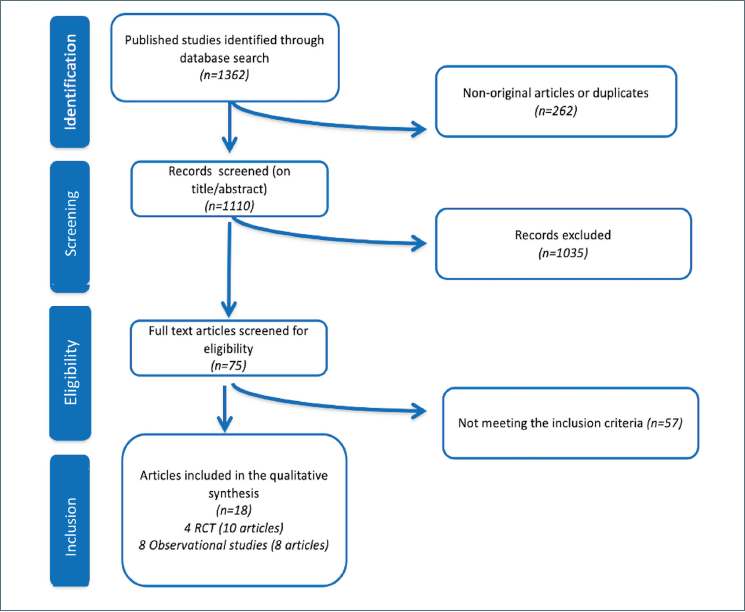
RESULTS
DISCUSSION
CONCLUSIONS
Acknowledgments
Conflict of interest statement
Funding
Author contributions
Figures and tables


| Inclusion criteria | Exclusion criteria | |
|---|---|---|
| Sample | Age > 65 yrs | Maxillofacial surgery |
| Radiotherapy | ||
| Self-sufficient | Institutionalized patients | |
| Systemic diseases | ||
| Outcome: nutritional status | Self-declaration or interview about nutritional intake | Declaration regarding food intake that was not obtained |
| Food diary | ||
| Blood exams | ||
| Analysis | Every association between oral status/masticatory function and food and nutrients intake | Studies that do not search for an association between oral status/masticatory function and food and nutrients intake |
| Author (year) | Participants, location | Intervention (IG)/comparator (CG) | Outcomes and measurements | Synthesis of main results | Comments |
|---|---|---|---|---|---|
| Amagai (2017)/Suzuki (2018)/Kanazawa (2019)/Suzuki (2019) | edentulous elderly patients requiring new complete dentures IG: 75.3 yrs CG: 78.6 yrs 70 randomized, 62 finished the trial at 3 months 59 finished the trial at 6 months Location: Tokyo (Japan) Period: 2015-2016 | IG: (n.31 at 3 months, 30 at 6 months) complete denture treatment + dietary advice in a pamphlet form (indicating “what” and “how much” should be eaten in a day) CG: (n.31 at 3 months, 29 at 6 months) complete denture treatment + advice pertaining to the care and maintenance of the dentures | Food intake: brief-type self-administered diet history questionnaire (BDHQ). Self reported MNA-SF Oral health related quality of life: Japanese version of the Oral Health Impact Profile for edentulous people (OHIP-EDENT-J) Masticatory function:color-changeable chewing gum and a test gummy jelly Outcome assessment at baseline, at 3 and 6 months post-treatment | Between groups At 3 months:
At 3 months: Both groups improved in the OHIP-EDENT-J scores and in masticatory function | At baseline, protein intake met the recommended dietary reference intakes for Japanese in both groups Incomplete blinding Nutrient intake based on self-reported questionnaire |
| Awad (2012) | Edentulous for a minimum of 5 years, aged > 65 yrs 255 randomized, 219 completed 12 months follow up Location: Montreal (Canada) Period: NR | IG: (n.110) IOD and maxillary CD CG: (n.109) CD | Primary outcome: blood serum concentration of homocysteine Secondary outcomes: a range of haematological markers, BMI. Self reported chewing ability (Likert scale questionnaire) Outcome assessment at baseline and at 12 months post-treatment | Between groups
| Self-reported chewing ability Incomplete blinding |
| Hamdan (2013) | Same population as Awad 2012 255 randomized, 217 finished the trial for the investigated outcome at 12 months. Same Location and period as Awad 2012 | IG: (n.103) IOD and maxillary CD CG: (n.114) complete CD | Three standard 24-hour dietary recalls by telephone interview Outcome assessment at baseline and at 12 months post-treatment | Between groups
| Nutrient intake based on self-reported questionnaire Incomplete blinding Same Trial Registration Number as Awad 2012 |
| McKenna (2014 and 2015)/Wallace (2018) | Partially dentate patients aged >65 yrs 132 randomized, 89 finished the trial at 12 months Location: Cork (Ireland) Period: NR | IG: (n.45) functionally orientated treatment (shortened dental arch) CG: (n.44) (conventional treatment) removable partial dentures | Food intake: self reported MNA and MNA-SF A range of haematological markers Chewing ability: two coloured chewing gum. Outcome assessment at baseline and at 1,6 and 12 months post-treatment | Between groups
| Self-reported dietary intake Incomplete blinding |
| Morais (2003) | Edentulous for a minimum of 5 years, aged 65-75 yrs 60 randomized, 56 finished the trial at 6 months Location: Montreal (Canada) Period: NR | IG: (n.29) IOD and maxillary CD CG: (n.27) conventional CD | Food diary. BMI, various anthropometric measures A range of haematological markers. Self reported chewing ability Outcome assessment at baseline and at 1and 6 months post-treatment | Between groups
Some hematological markers (B12, Albumin), some anthropometric measures and some questions on masticatory functions improved post-treatment, more frequently in the IG | Self-reported dietary intake Incomplete blinding |
| NR: not reported; IOD: mandibular implant overdenture; CD: complete denture; MNA: mini nutritional assessment; MNA-SF: mini nutritional assessment-short form; BMI: body mass index; SDA: shortened dental arch; RPD: removable partial denture. | |||||
| Author (year) | Participants, location and period | Objective | Outcomes and measurements | Synthesis of main results | Comments |
|---|---|---|---|---|---|
| Prospective cohort studies | |||||
| Nabeshima (2018) | Partially dentate patients scheduled to receive new removable partial dentures (RPD) at a dental hospital N.38 selected, 32 analysed Mean age 73.2 yrs (SD 7.7) Women: 65.8% Location: Tokyo (Japan) Period: 2015-2017 | Evaluate if a dietary counselling (aimed at increasing dietary fruit and vegetable intake and improving dietary habits) administered in conjunction with RPDs would increase fruit and vegetable intake. Patients received dietary counseling provided by a dentist twice, directly after treatment and at 1 month follow-up evaluation | Included only patients who were scheduled to receive RPD and were currently eating < 350 g of vegetables per day (i.e.the daily intake recommended in Japan). Food and nutrient intake: estimated from self-administered BDHQ Blood samples: carotenoids and vitamin C in 6-hour fasting blood samples Questionnaire and blood samples at baseline (before RPD), and at 1 and 3 months after RPD | At univariate analysis:
| Self-reported food intake Small sample size The authors report that at baseline mean fruit intake (162 g/day) of the study population was greater than in the Japanese population as a whole (109 g/day) |
| Tanasić (2017) | Patients partially or completely edentulous with a need for rehabilitation, aged >= 65 yrs N.150 analyzed Location: Belgrade (Serbia) Period: 2011-2015 | To test if prosthetic restorations improve the nutritional status of patients | BMI and MNA recorded before and at 6 and 12 months after prosthetic rehabilitation 34.7% and 30.7% of patients received an implant supported maxillary and mandibular overdentures, respectively; 65.3% and 69.3% of patients received maxillary and mandibular RDB, respectively | At baseline:
| Self-reported dietary intake Information on comorbidities, educational level, socio-economic status not collected |
| Cross-sectional surveys | |||||
| Choi (2014) | Subjects aged >= 65 years N. 722 Median age: nr Women: 58.2 Location: Korea Period: 2007 | To examine the relationship between the oral health and nutritional intake of people aged 65 and older | Study based on the results from 4th Korea National Health and Nutrition Examination Survey (KNHANES), for subjects aged >= 65 yrs and who answered both the health check-up and nutrition questionnaire 24-h dietary recall method Prosthodontic status evaluated during health examination | At a multivariate analysis adjusted for gender and income, daily nutritional intakes of energy, protein, fat, ash, calcium, phosphorus and thiamine were decreased significantly in elderly with partial or full dentures compared with those with no prosthesis or with a fixed prosthesis | Self-reported dietary intake |
| Inomata (2017) | Individuals 79-81 yrs residing close to the visit venue, from an ongoing cohort study N.760 Age 79-81 yrs Women: 52.1% Location: two regions of Japan Period: 2011-2012 | To determine the association of dietary intake with the number of teeth and occlusal force in community dwelling 80-y-old Japanese people | Data obtained from the baseline visit of Japanese octogenarians included in the prospective cohort study “SONIC” Oral examination to evaluate:
| Response rate = 17.5% (941/5378) 181 subjects further excluded (extremely low or high reported energy intake, those currently receiving dietary counseling, or with intentional dietary change during the preceding year) In multivariate analysis adjusted for gender, educational level, financial status, area of residence, family structure and BMI:
| The average number of teeth of the study participants (15.2) was higher than the data for Japanese aged 80 y to 84 y (12.2) Self-reported dietary intake |
| Natapov (2018) | Individuals > 65 yrs living in the community and insured medically with two of the four health funds. N.1776 Mean age NR Women: NR Location: Israel Period: 2005-2006 | To assess the impact of dental status and visits on dietary intake of the Israeli elderly | Study based on data collected from those interviewed for the first National Health and Nutrition Survey of the Elderly (Mabat Zahav), carried out in 2005-6. Patients interviewed in their homes by trained interviewers.Food intake: 24 h dietary recall method. Questionnaire: demographic, socio-economic, behavioral and general health conditions, and subjective dental health status, including owning removable (partial or full) dentures | Response rate (questionnaire filled) = 96% (1776/ 1852) At a multivariate analysis adjusted for education, interest in association between nutrition and health and reading nutrition labels:
| Self-report of both outcomes and main exposures (nutritional status, eating habits, dental status) |
| Okamoto (2019) | Volunteers from the Nara prefecture aged >= 65 years at the baseline survey, who were living in their own homes and were able to walk independently N. 3134 Median age:71.0 yr Women: 49.2 Location: Japan Period: 2007 | Hypotheses tested: (i) A smaller number of teeth is associated with lower maximum occlusal force, fewer masticable foods, lower serum albumin levels, and a lower BMI. (ii) Among people with approximately the same numbers of teeth, people without occlusal support in the molar region have a lower masticatory ability, serum albumin levels, and BMI than people with such support | Data retrieved from the baseline data of the 2007 Fujiwara-kyo study (prospective cohort study on elderly), for subjects with available data on occlusal force The baseline health examination included a dental examination, measurement of occlusal force, measurement of height and body weight, blood collection, and a questionnaire about lifestyle Nutritional indices: serum albumin and BMI | At multivariate analyses with serum albumin levels below the lower quartile (< 4.4g/dL) and a BMI below the lower quartile (< 21 kg/m2) as dependent variables, and number of teeth, maximal occlusal force, age, education length, alcohol consumption, smoking status, grip strength, and disease history as explanatory variables
In both males and females, the maximum occlusal force decreased significantly with the number of teeth | |
| Stoffel (2018) | Individuals 65-74 yrs residing in households N.287 Mean age 69.3 yrs (SD 3.52) Women: 64.5% Location: Cruz Alta (Brasil) Period: July-August 2016 | To assess nutritional status and associated factors in elderly individuals | Nutritional status: self reported MNA Demographic, socio-economic, behavioral and general health conditions: self completed questionnaire (PCA Tool-SB Brazil) Clinical visit: dental status (including need of prosthesis), anthropometric measurements | 48.4% at nutritional risk (45.3% at risk of malnutrition and 3.1% malnourished) In a multivariate analysis including as predictors the use of prosthesis and access to a dentist, compared to persons complete or partially dentate, those edentulous wearing no or only one prosthesis were at higher nutritional risk, while no increased nutritional risk was observed for those edentulous wearing two prosthesis. A higher nutritional risk was also observed for those reporting no access to a dentist in the previous 12 months | Self-reported dietary intake |
| Su (2020) | Attendees of two elderly welfare centers aged ≥ 65 years, able to walk without help N.294 Mean age 75.8 yrs (SD 5.8) Women: 71.1% Location: Sapporo (Japan) Period: August-September 2018 | To determine if older adults wearing complete or partial dentures have a higher risk of malnutrition | Nutritional status: self reported MNA-SF Demographic characteristics, eating habits, dental status (complete denture:CD, partial denture: PD, no denture:ND) and health status: self completed questionnaire Taste sensitivity: salt-impregnated taste paper test BMI and protein mass: bioelectrical impedance analysis | Response rate = 95% (294/310) 64.3% wore PD, 9.9% wore CD 23.5% at risk of malnutrition (MNA-SF < 12) At the multivariate analysis, including age, gender, suspected dysphagia, frailty, protein mass, and awareness of salt restriction, the risk of malnutrition was positively associated with suspected dysphagia and frailty, and negatively associated with protein mass, awareness of salt restriction and wearing PD compared to ND (OR 0.39, 95% CI, 0.20-0.77); wearing a CD compared to ND showed a lower risk of malnutrition, although not statistically significant (OR 0.63, 95% CI 0.22-1.83) | Small number of persons wearing a CD Self-report of both outcomes and main exposures (nutritional status, eating habits, dental status) |
| NR: not reported; IOD: mandibular implant overdenture; CD: complete denture; MNA: mini nutritional assessment; MNA-SF: mini nutritional assessment-short form; BMI: body mass index; RPD: removable partial denture. | |||||
APPENDIX
| Author | Random sequence generation | Allocation concealment | Blinding | Incomplete outcome data | Selective reporting | Free of other bias |
|---|---|---|---|---|---|---|
| Amagai (2017)/Suzuki (2018)/Kanazawa (2019)/Suzuki (2019) | L | L | U | L | L | U |
| Awad (2012) | L | U | U | L | L | L |
| Hamdan (2013)* | L | U | U | L | L | L |
| McKenna (2014/2015) Wallace (2017) | L | L | U | L | L | L |
| Morais (2003) | L | U | U | L | L | U |
| H: high risk of bias; L: low risk of bias; U: unclear or unrevealed risk of bias. *Same Trial Registration Number as Awad 2012. | ||||||
| N | First author | Journal, year | Title | Reasons for exclusion |
|---|---|---|---|---|
| 1 | Amaral | Braz. Dent. J. vol. 30 no.1 Ribeirão Preto Jan/Feb 2019 Epub Mar 11 | Sensorial ability, mastication and nutrition of single-implant overdentures wearers | 2 |
| 2 | Banerjee | Indian J Dent Res 2018;29(5):562-567. | Evaluation of relationship between nutritional status and oral health related quality of life in complete denture wearers. | 2 |
| 3 | Beck A.M | Nutrition 2008;24(11-12):1073-1080. | Multifaceted nutritional intervention among nursing-home residents has a positive influence on nutrition and function | 1 |
| 4 | Bori | J Oral Rehabil 2020;47(9):1142-1149 | The relationship between masticatory performance and intakes of foods and nutrients in Japanese male workers: a cross-sectional study | 2 |
| 5 | Carletti | Spec Care Dentist 2019;39:471-477 | Prostheses satisfaction and diet of elderly wearing a single implant overdenture: a six-month assessment | 2 |
| 6 | Cho | Gerodontology 2019;36(2):99-106 | Subjective chewing ability and health-related quality of life among the elderly | 1 |
| 7 | Damayanthi | Annals of Global Health 2017 83:1(77) | Malnutrition and associated factors among community- dwelling elderly in Sri Lanka | 1 |
| 8 | De Almeida | Clinical Nutrition 2016;35 Supplement 1 (S57) | Handgrip strength, mini nutritional assessment and swallowing findings in the elderly without swallowing complaints | 1 |
| 9 | El Osta | Clin Nutr ESPEN 2017;18:49-54. | Impact of implant-supported prostheses on nutritional status and oral health perception in edentulous patients | 2 |
| 10 | Fukutake | J prosthodont Res 2019;63(1):105-109 | Relationship between oral stereognostic ability and dietary intake in older Japanese adults with complete dentures | 1 |
| 11 | Garrett | J Prosthet Dent 1997;77(2):153-161 | Veterans Administration Cooperative Dental Implant Study-comparisons between fixed partial dentures supported by blade-vent implants and removable partial dentures. Part V: comparisons of pretreatment and posttreatment dietary intakes | 2 |
| 12 | Gjengedal | Int J Prosthodont 2012;25:340-347 | Randomized clinical trial comparing dietary intake in patients with implant-retained overdentures and conventionally relined denture. | 2 |
| 13 | Goncalves | Int J Oral Maxillofac Implants, 2015;30(2):391-396 | Effects of implant-based prostheses on mastication, nutritional intake, and oral health-related quality of life in partially edentulous patients: a paired clinical trial | 2 |
| 14 | Hama | J Oral Rehabil 2020;47(8):998-1006. | Factors related to removable denture use in independent older people: a cross-sectional study | 1 |
| 15 | Hamada | J Prosthet Dent 2001;85:53-60. | A randomized clinical trial comparing the efficacy of mandibular implant-supported overdentures and conventional dentures in diabetic patients. Part IV: comparisons of dietary intake. | 2,4 |
| 16 | Hatta | Geriatrics and Gerontology International 2017 17:1 (177-179) | Correlation between nutritional status and frailty regarding saliva secretion and occlusal force in community-dwelling older people | 1 |
| 17 | Hearne | Age and Ageing 2017 46 Supplement 3 (iii13) | A snapshot of dental health among inpatients on a geriatric ward | 3 |
| 18 | Huppertz | Journal of the American Medical Directors Association 2017;18:11 (948-954) | Association between malnutrition and oral health in dutch nursing home residents: results of the LPZ Study | 3,4 |
| 19 | Iwasa | Nihon Koshu Eisei Zassh 2019;66(3):151-160 | Psychometric properties of the diet-related quality of life (DRQOL) scale and its short version among older adults | 5 (full article is available in Japanese only) |
| 20 | Iwasaki | Geriatr Gerontol Int 2018;18(6):860-866 | Association between objectively measured chewing ability and frailty: a cross-sectional study in central Thailand | 1 |
| 21 | Iwasaki | Geriatrics and Gerontology International 2016;16:4 (500-507) | Hyposalivation and dietary nutrient intake among community-based older Japanese | 1 |
| 22 | Jauhiainen | J Nutr Health Aging 2017;21(5):492-500. | Food consumption and nutrient intake in relation to denture use in 55- to 84-year-old men and women – results of a population based survey | 2 |
| 23 | Kalaykova | J Dent 2019;88:103159 | Impact of restorative treatment of tooth wear upon masticatory performance | 1 |
| 24 | Kang | Int J Environ Res Public Health 2020;17(2):547 | Association between dental treatment, quality of life, and activity limitation according to masticatory discomfort: evidence from the Korean National Health and Nutrition Examination Survey (2013-2015) | 1 |
| 25 | Khandelwal | Annals of Nutrition and Metabolism 2017;71 Supplement 2 (1074) | Prevalence and factors associated with underweight, overweight and obesity amongst elderly population living at high altitude regions of rural Uttarakhand, India | 1 |
| 26 | Kikutani | Gerodontology 2006;23(2):93-98 | Effects of oral functional training for nutritional improvement in Japanese older people requiring long-term care | 3 |
| 27 | Kim | Sci Rep 2020 Jul 17;10(1):11859 | Did expanded access to denture services improve chewing ability in the Korean older population? Results of a regression discontinuity analysis | 1 |
| 28 | Kimura | Geriatr Gerontol Int 2019;19(12):1290-1292 | Association between anorexia and poor chewing ability among community-dwelling older adults in Japan | 1 |
| 29 | Kito | J Nutr Health Aging 2019;23(7):669-676 | Positive effects of “textured lunches” gatherings and oral exercises combined with physical exercises on oral and physical function in older individuals: a cluster randomized controlled trial | 1 |
| 30 | Komagamine | Trials 2016 17:1 | Combined effect of new complete dentures and simple dietary advice on nutritional status in edentulous patients: study protocol for a randomized controlled trial | 5 (the article presents the registered protocol of the RCT of Amagai 2017) |
| 31 | Konopka | Dental and Medical Problems 2017;54:4 (369-382) | Oral health parameters in the regional study among young seniors in an urban area of Wrocław | 1 |
| 32 | Krzyminska-Siemaszko | Eur Rev Med Pharmacol Sci 2016;20(21):4565-4573. | Health status correlates of malnutrition in the polish elderly population. Results of the Polsenior Study | 1 |
| 33 | Lee | Geriatr Gerontol Int 2018;18(4):592-598 | Association between number of teeth, use of dentures and musculoskeletal frailty among older adults | 2 |
| 34 | Matsuo | J Oral Rehabil 2020;47(2):180-186 | Effects of textured foods on masticatory muscle activity in older adults with oral hypofunction | 1 |
| 35 | Mitri | Gerodontology 2020;37(2):200-207 | Factors associated with oral health-related quality of life among Lebanese community-dwelling elderly | 1 |
| 36 | McKenna G | Irish Journal of Medical Science 2012;181;191-299. | The effect of tooth replacement strategies on the nutritional status of older patients | 5 (the article regarded a topic that was further discussed in others, more recent articles that have been included in our review) |
| 37 | McKenna G | Gerodontology 2012;29(2):E883-890. | Impact of tooth replacement strategies on the nutritional status of partially-dentate elders. | 5 (the article regarded a topic that was further discussed in others, more recent articles that have been included in our review) |
| 38 | McKenna G | European Geriatric Medicine 2011;2(Suppl 2):S1-S23 (7th Congress of the EUGMS, Màlaga, 28th-30th September 2011) | Comparison of tooth replacement strategies on the nutritional status of older patients: a randomised controlled clinical trial | 5 (the text was not a full article but a conference abstract, regarding a topic that was further published in an article with a similar title, that was included in our review) |
| 39 | Moynihan | J Dent, 2000;28(8):557-563 | Nutrient intake in partially dentate patients: the effect of prosthetic rehabilitation. | 2 |
| 40 | Muller | J Dent Res 2013;92(12 Suppl):154S-1560S | Implant-supported mandibular overdentures in very old adults: a randomized controlled trial | 3 |
| 41 | Muller | Braz Dent J 2008;19(2):145-150 | Nutritional and anthropometric analysis of edentulous patients wearing implant overdentures or conventional dentures | 2 |
| 42 | Nanri | Eur J Clin Nutr 2019;73(4):577-584. | Frequency of fruit and vegetable consumption and the oral health-related quality of life among Japanese elderly: a cross-sectional study from the Kyoto-Kameoka study | 1 |
| 43 | Oh | European Geriatric Medicine 2017;8(Suppl 1) (S124) | Factors associated with vitamin d deficiency in the elderly: the korean national health and nutrition examinationsurvey 2010-2012 | 1 |
| 44 | Ohkubo | Bull Tokyo Dent Coll 2020;4;61(3):161-168 | Differences in elderly and non-elderly outpatient subjective evaluation of “Easy-to-Eat Meals” after dental treatment | 1 |
| 45 | Okabe | J Nutr Health Aging 2016;20(7):697-704 | Swallowing function and nutritional status in japanese elderly people receiving home-care services: a 1-year longitudinal study | 2 |
| 46 | Park | Geriatr Gerontol Int 2017;17(1):78-84 | Predictors of chewing ability among community-residing older adults in Korea | 1 |
| 47 | Petry | Codas, 2019;31(3) | Autoperception of food conditions of elderly dental prosthetic users | 1 |
| 48 | Peyron | Food Funct 2018;9(2):1112-1122 | Oral declines and mastication deficiencies cause alteration of food bolus properties | 1 |
| 49 | Puri | J Prosthet Dent 2016;116(6):867-873 | Evaluation of correlations between frequencies of complete denture relines and serum levels of 3 bone metabolic markers: a cross-sectional pilot study | 1 |
| 50 | Sebring | J Prosthet Dent 1995;74:358-363 | Nutritional adequacy of reported intake of edentulous subjects treated with new conventional or implant-supported mandibular dentures | 2 |
| 51 | Shiohama | Clin Nutr 2018;37(1):406-407 | No clinically significant effect of new complete denture fabrication and simple dietary advice on nutrient intake and masticatory function of edentulous older people | 5 (not an original article, but a letter to the editor, complaining about the validity of other previously published studies, regarding the investigated topic) |
| 52 | Suzuki | J Oral Rehabil, 2019 Dec;46(12):1100-1106. | Influence of simplified dietary advice combined with new complete denture fabrication on masticatory function of complete denture wearers | 1 |
| 53 | Tanasić | Int J Prosthodont 2016;29(5):484-486. | Association between dentition status and malnutrition risk in Serbian elders | 5 (patients partially included in a further publication already included in our review) |
| 54 | van der Glas | J Texture Stud, 2020;51(1):169-184. | Optimizing a determination of chewing efficiency using a solid test food | 1 |
| 55 | van der Meij | Journal of the American Geriatrics Society 2017;65:10 (2190-2197) | Poor appetite and dietary intake in community-dwelling older adults | 1 |
| 56 | Watanabe | Int J Environ Res Public Health 2020;17(12):4555 | Association between mixing ability of masticatory functions measured using color-changing chewing gum and frailty among japanese older adults: the Kyoto-Kameoka Study | 1 |
| 57 | Wostmann | PLoS One 2016;11(1) | Pilot study on the influence of nutritional counselling and implant therapy on the nutritional status in dentally compromised patients | 2 |
Reasons for Exclusion Legend:
| ||||
| Author (year) | Type of review | Main clinical question | Studies includeded | Study participants’ characteristics | Main results | Main conclusions |
|---|---|---|---|---|---|---|
| Association between tooth loss and nutritional status | ||||||
| Gaewkhiew (2017) | Systematic review | Explore whether tooth loss affects dietary intake and nutritional status among adults | 8 Longitudinal studies Population-based or clinical samples of adults | Mostly (6/8) aged >= 65yrs Mostly (6/8) living in community dwelling | Out of the 4 studies investigating the association between tooth loss and nutritional status 3 studies showed significant results. However, most results were contradicting. The quality of the evidence was weak | There is at present no strong evidence on the effect of tooth loss on diet and nutrition, with inconsistent results among the few studies identified. Additional high-quality longitudinal studies should address the limitations of previous studies identified in this review |
| Zelig (2020) | Systematic review and meta-analysis (MA) | Among adults aged ≥60 y living in developed countries, what are the associations between tooth loss and nutritional status as assessed by a validated nutrition screening or assessment tool? | 7 studies published 2009-2019 6 included in MA 6 cross-sectional, 1 cohort All studies judged as having a moderate risk of bias | Subjects aged >= 60 yrs Living in any setting Living in developed countries | Individuals who were completely edentulous or who lacked functional dentition had a 21% increased likelihood of being at risk of malnutrition or being malnourished, as compared with those who were dentulous or had functionally adequate dentition | Findings suggest that older adults with tooth loss are at greater risk of malnutrition than those with functionally adequate dentition |
| Association between oral rehabilitation and nutritional status | ||||||
| Yamazaki (2016) | Systematic review and meta-analysis | Investigate whether treatment with a mandibular implant supported overdenture improves nutrient intake and markers of nutritional status better than a conventional complete denture in edentulous patients | 8 studies (6 RCT and 2 prospective cohorts) 3 RCT included in MA (all with patients aged >= 65yrs) | No selection by age | Four studies reported changes in markers of nutritional status and nutrient intake after treatment with a prosthetic, regardless of type. In a meta-analysis of 322 participants aged 65 years or older from 3 studies, pooled analysis suggested no significant difference in change in BMI between an overdenture and conventional denture 6 months after treatment, and no significant difference in change in albumin or vitamin B12 between the two treatments | The modifying effect of overdenture treatment on nutritional status might be limited. Further studies are needed to evaluate the effectiveness and efficacy of denture treatments |
| Bezzerra (2021) | Systematic review and meta-analysis | Do complete and partial edentulous patients, using implant-supported prostheses, present better nutritional and masticatory functions when compared to those using conventional rehabilitations? | 14 studies (8 RCT, 5 paired clinical trials, 1 cohort study) 2 or 3 RCT included in the MAs for specific nutrients | Included only studies evaluating both masticatory and nutritional outcomes No selection by age | Patients wearing implant overdentures (IOD) presented better masticatory function in comparison to conventional complete denture (CD) wearers. However, bioavailability of several nutrients remained within the same range, except for serum folate that was lower in IOD patients after 6 and 12 months of rehabilitation | Current evidence indicates significant masticatory improvements for dental fixed implant supported prostheses in comparison to conventional removable prostheses. However, bioavailability remained stable for most of the nutrients, especially for complete edentulous patients |
| Association between dietary interventions coupled with oral rehabilitation and nutritional status | ||||||
| McGowan (2020) | Systematic review and meta-analysis | Synthesize literature relating to oral rehabilitation coupled with dietary intervention in adults | 9 studies (3 RCT, 1 parallel-group cohort, 5 single-arm before-after) 3 studies included in MA | No selection by age Living in any setting Most studies (6/9) included less than 60 participants | Fruit/vegetables intake results were pooled for 3 RCT studies using MA, resulting in a non significant difference between intervention and control group, with marked heterogeneity (p = 0.0007). Few interventions were theory-based and intervention components were poorly described. | Overall, narrative synthesis indicated support for dietary intervention coupled with oral rehabilitation on diet. Meta-analysis was only possible with three studies highlighting limitations. Large-scale, appropriately described trial methodologies are needed |
References
- Buckner DM, Wagner EH. Preventing frail healt. Clin Geriatr Med 1992;8:1-17.
- De Jong N. Nutrition and senescence: health aging for all in the new millennium. Nutrition 2000;16:537-549. https://doi.org/10.1016/s0899-9007(00)00317-8 10.1016/s0899-9007(00)00317-8
- Santilli V, Bernetti A, Mangone M, et al. Clinical definition of sarcopenia. Clin Cases Miner Bone Metab 2014;11:177-180.
- Cooper C, Dere W, Evans W, et al. Frailty and sarcopenia: definitions and outcome parameters. Osteoporos Int 2012;23:1839-1848. https://doi.org/10.1007/s00198-012-1913-1 10.1007/s00198-012-1913-1
- Kim JS, Wilson JM, Lee SR. Dietary implications on mechanisms of sarcopenia: roles of protein, amino acids and antioxidants. J Nutr Biochem 2010;21:1-13. https://doi.org/10.1016/j.jnutbio.2009.06.014 10.1016/j.jnutbio.2009.06.014
- Douglass CW, Shih A, Ostry L. Will there be a need for complete dentures in the United States in 2020? J Prosthet Dent 2002;87:5-8. https://doi.org/10.1067/mpr.2002.121203 10.1067/mpr.2002.121203
- Feine JS, Carlsson GE, Awad MA, et al. The McGill consensus statement on overdentures. Mandibular two-implant overdentures as first choice standard of care for edentulous patients. Gerodont 2002;19:3-4.
- Hutton B, Feine J, Morais J. Is there an association between edentulism and nutritional state? J Can Dent Assoc 2002;68:182-187.
- N’gom PI, Woda A. Influence of impaired mastication on nutrition. J Prosthet Dent 2002;87:667-673. https://doi.org/10.1067/mpr.2002.123229 10.1067/mpr.2002.123229
- Walls AW, Steele JG. The relationship between oral health and nutrition in older people. Mech Ageing Dev 2004;125:853-857. https://doi.org/10.1016/j.mad.2004.07.011 10.1016/j.mad.2004.07.011
- Awad MA, Morais JA, Wollin S, et al Implant overdentures and nutrition: a randomized controlled trial. J Dent Res 2012;91:39-46. https://doi.org/10.1177/0022034511423396 10.1177/0022034511423396
- Hamdan NM, Gray-Donald K, Awad MA, et al. Do implant overdentures improve dietary intake? A randomized clinical trial. J Dent Res 2013;92(12 Suppl):146S-153S. https://doi.org/10.1177/0022034513504948 10.1177/0022034513504948
- Morais JA, Heydecke G, Pawliuk J, et al. The effects of mandibular two-implant overdentures on nutrition in elderly edentulous individuals. J Dent Res 2003;82:53-58. https://doi.org/10.1177/154405910308200112 10.1177/154405910308200112
- McKenna G, Allen PF, O’Mahony D, et al. Comparison of functionally orientated tooth replacement and removable partial dentures on the nutritional status of partially dentate older patients: a randomised controlled clinical trial. J Dent 2014;42:653-659. https://doi.org/10.1016/j.jdent.2014.03.005 10.1016/j.jdent.2014.03.005
- McKenna G, Allen PF, O’Mahony D, et al. Impact of tooth replacement on the nutritional status of partially dentate elders. Clin Oral Investig 2015;19:1991-1998. https://doi.org/10.1007/s00784-015-1409-4 10.1007/s00784-015-1409-4
- Wallace S, Samietz S, Abbas M, et al. Impact of prosthodontic rehabilitation on the masticatory performance of partially dentate older patients: Can it predict nutritional state? Results from a RCT. J Dent 2018;68:66-71. https://doi.org/10.1016/j.jdent.2017.11.003 10.1016/j.jdent.2017.11.003
- Amagai N, Komagamine Y, Kanazawa M, et al. The effect of prosthetic rehabilitation and simple dietary counseling on foodintake and oral health related quality of life among the edentulous individuals: a randomized controlled trial. J Dent 2017;65:89-94. https://doi.org/10.1016/j.jdent.2017.07.011 10.1016/j.jdent.2017.07.011
- Suzuki H, Kanazawa M, Komagamine Y, et al. The effect of new complete denture fabrication and simplified dietary advice on nutrient intake and masticatory function of edentulous elderly: a randomized-controlled trial. Clin Nutr 2018;37:1441-1447. https://doi.org/10.1016/j.clnu.2017.07.022 10.1016/j.clnu.2017.07.022
- Kanazawa M, Suzuki H, Komagamine Y, et al. Combined effects of new complete denture fabrication and simplified dietary advice on nutrient intake in edentulous elderly patients for 6 months. Clin Oral Investig 2019;23:2245-2252. https://doi.org/10.1007/s00784-018-2669-6 10.1007/s00784-018-2669-6
- Suzuki H, Kanazawa M, Komagamine Y, et al. Influence of simplified dietary advice combined with new complete denture fabrication on masticatory function of complete denture wearers. J Oral Rehabil 2019;46:1100-1106. https://doi.org/10.1111/joor.12844 10.1111/joor.12844
- Tanasić I, Radakoví T, Tihaˇcek-Sˇojí L, et al. Effect of Prosthetic Rehabilitation on Nutritional Status in Older Adults. Top Clin Nutr 2017;32:330-339.
- Nabeshima G, Fueki K, Inamochi Y, et al. Effect of dietary counselling with prosthetic restoration on fruit and vegetable intake in partially dentate patients: a prospective study. J Oral Rehabil 2018;45:618-626. https://doi.org/10.1111/joor.12647 10.1111/joor.12647
- Choi YK, Park DY, Kim Y. Relationship between prosthodontic status and nutritional intake in the elderly in Korea: National Health and Nutrition Examination Survey (NHANES IV). Int J Dent Hyg 2014;12:285-290. https://doi.org/10.1111/idh.12066 10.1111/idh.12066
- Inomata C, Ikebe K, Okubo H, et al. Dietary intake is associated with occlusal force rather than number of teeth in 80-y-old Japanese. JDR Clin Trans Res 2017;2:187-197. https://doi.org/10.1177/2380084416673963 10.1177/2380084416673963
- Natapov L, Kushnir D, Goldsmith R, et al. Dental status, visits, and functional ability and dietary intake of elderly in Israel. Isr J Health Policy Res 2018;7:58. https://doi.org/10.1186/s13584-018-0252-x 10.1186/s13584-018-0252-x
- Okamoto N, Amano N, Nakamura T, et al. Relationship between tooth loss, low masticatory ability, and nutritional indices in the elderly: a cross-sectional study. BMC Oral Health 2019;19:110. https://doi.org/10.1186/s12903-019-0778-5 10.1186/s12903-019-0778-5
- Stoffel L, Muniz F, Colussi P, et al. Nutritional assessment and associated factors in the elderly: a population-based cross-sectional study. Nutrients 2018;55-56:104-110. https://doi.org/10.1016/j.nut.2018.03.053 10.1016/j.nut.2018.03.053
- Su Y, Yuki M, Hirayama K, et al. Denture wearing and malnutrition risk among community-dwelling older adults. Nutrients 2020;12:151. https://doi.org/10.3390/nu12010151 10.3390/nu12010151
- Gaewkhiew P, Sabbah W, Bernabé E. Does tooth loss affect dietary intake and nutritional status? A systematic review of longitudinal studies. J Dent 2017;67:1-8. https://doi.org/10.1016/j.jdent.2017.10.012 10.1016/j.jdent.2017.10.012
- Di Francesco V, Zamboni M, Zoico E, et al. Unbalanced serum leptin and ghrelin dynamics prolong postprandial satiety and inhibit hunger in healthy elderly: another reason for the “anorexia of aging. Am J Clin Nutr 2006;83:1149-1152. https://doi.org/10.1093/ajcn/83.5.1149 10.1093/ajcn/83.5.1149
- Nieuwenhuizen WF, Weenen H, Rigby P, et al. Older adults and patients in need of nutritional support: review of current treatment options and factors influencing nutritional intake. Clin Nutr 2010;29:160-169. https://doi.org/10.1016/j.clnu.2009.09.003 10.1016/j.clnu.2009.09.003
- Wysokinski A, Sobow T, Kłoszewska I, et al. Mechanisms of the anorexia of aging: a review. Age (Dordr) 2015;37:9821. https://doi.org/10.1007/s11357-015-9821-x 10.1007/s11357-015-9821-x
- Stewart R, Sabbah W, Tsakos G, et al. Oral health and cognitive function in the Third National Health and Nutrition Examination Survey (NHANES III). Psychosom. Medicine 2008;70:936-941. https://doi.org/10.1097/PSY.0b013e3181870aec 10.1097/PSY.0b013e3181870aec
- Whitelock E, Ensaff H. On your own: older adults’ food choice and dietary habits. Nutrients 2018;10:413. https://doi.org/10.3390/nu10040413 10.3390/nu10040413
- Jones N, Bartlett HE. Comparison of the eating behaviour and dietary consumption in older adults with and without visual impairment. B J Nutr 2020;123:712-720. https://doi.org/10.1017/S000711451900312X 10.1017/S000711451900312X
- Ortinau LC, Culp JM, Hoertel HA, et al. The effects of increased dietary protein yogurt snack in the afternoon on appetite control and eating initiation in healthy women. Nutr J 2013;12:71. https://doi.org/10.1186/1475-2891-12-71 10.1186/1475-2891-12-71
- Vandenberghe-Descamps M, Laboure H, Prot A, et al. Salivary flow decreases in healthy elderly people independently of dental status and drug intake. J Tex Stud 2016;47:353-360.
- Matsuo R. Role of saliva in the maintenance of taste sensitivity. Crit Rev Oral Biol Med 2000;11:216-229. https://doi.org/10.1177/10454411000110020501 10.1177/10454411000110020501
- Pflipsen M, Zenchenko Y. Nutrition for oral health and oral manifestations of poor nutrition and unhealthy habits. Gen Dent 2017;65:36-43.
- Bezerra AP, Gama LT, Pereira LJ, et al. Do implant-supported prostheses affect bioavailability of nutrients of complete and partially edentulous patients? A systematic review with meta-analysis. Clin Nutr 2021;40:3235-3249. https://doi.org/10.1016/j.clnu.2021.02.018 10.1016/j.clnu.2021.02.018
- Yamazaki T, Martiniu AL, Irie K, et al. Does a mandibular overdenture improve nutrient intake and markers of nutritional status better than conventional complete denture? A systematic review and meta-analysis. BMJ Open 2016;6:E011799. https://doi.org/10.1136/bmjopen-2016-011799 10.1136/bmjopen-2016-011799
- McGowan L, McCrum LA, Watson S, et al. The impact of oral rehabilitation coupled with healthy dietary advice on the nutritional status of adults: a systematic review and meta-analysis. Crit Rev Food Sci Nutr 2020;60:2127-2147. https://doi.org/10.1080/10408398.2019.1630600 10.1080/10408398.2019.1630600
- de Oliveira Simões M, Carvalho Dumith S, Vitola Gonçalves C. Adults and the elderly who received nutritional counseling in a city of southern Brazil: a population-based study Rev Bras Epidemiol 2019;22:E190060. https://doi.org/10.1590/1980-549720190060 10.1590/1980-549720190060
- Antoniadou M, Varzakas T. Breaking the vicious circle of diet, malnutrition and oral health for the independent elderly. Crit Rev Food Sci Nutr 2020;20:1-23. https://doi.org/10.1080/10408398.2020.1793729 10.1080/10408398.2020.1793729
- Baugreet S, Hamill RM, Kerry JP, et al. Mitigating nutrition and health deficiencies in older adults: a role for food innovation? J Food Sci 2017;82:848-855. https://doi.org/10.1111/1750-3841.13674 10.1111/1750-3841.13674
- Schwartz C, Vandenberghe-Descamps M, Sulmont-Rosse C, et al. Behavioral and physiological determinants of food choice and consumption at sensitive periods of the life span, a focus on infants and elderly. Innov Food Sci Emerg Tech 2018;46:91-106.
- Houston DK, Nicklas BJ, Ding J, et al. Dietary protein intake is associated with lean mass change in older, community-dwelling adults: the Health, Aging, and Body Composition (Health ABC) study. Am J Clin Nutr 2008;87:150-155. https://doi.org/10.1093/ajcn/87.1.150 10.1093/ajcn/87.1.150
- Yanai H. Nutrition for sarcopenia. J Clin Med Res 2015;7:926-931. https://doi.org/10.14740/jocmr2361w 10.14740/jocmr2361w
- Paddon-Jones D, Campbell WW, Jacques PF, et al. Protein and healthy aging. Am J Clin Nutr 2015;101. https://doi.org/10.3945/ajcn.114.084061 10.3945/ajcn.114.084061
- Mahdavi-Roshan M, Ebrahimi M, Ebrahimi A. Magnesium, zinc and calcium status in osteopenic and osteoporotic post-menopausal women. Clin Cases Min Bone Metab 2015;12:18-21. https://doi.org/10.11138/ccmbm/2015.12.1.018 10.11138/ccmbm/2015.12.1.018
- Higgs J, Derbyshire E, Styles K. Nutrition and osteoporosis prevention for the orthopaedic surgeon: a wholefoods approach. EFORT Open Rev 2017;2:300-308. https://doi.org/10.1302/2058-5241.2.160079 10.1302/2058-5241.2.160079
- Gennari C. Calcium and vitamin D nutrition and bone disease of the elderly. Public Health Nutr 2001;4:547-559. https://doi.org/10.1079/phn2001140 10.1079/phn2001140
- Ilesanmi-Oyelere BL, Kruger MC. Nutrient and dietary patterns in relation to the pathogenesis of postmenopausal osteoporosis – a literature review. Life (Basel) 2020;10:220. https://doi.org/10.3390/life10100220 10.3390/life10100220
- Melse-Boonstra A. Bioavailability of micronutrients from nutrient-dense whole foods: zooming in on dairy, vegetables, and fruits. Front Nutr 2020;7:101. https://doi.org/10.3389/fnut.2020.00101 10.3389/fnut.2020.00101
Società Italiana di Gerontologia e Geriatria (SIGG) This is an open access article distributed in accordance with the CC-BY-NC-ND (Creative Commons Attribution-NonCommercial-NoDerivatives 4.0 International) license. The article can be used by giving appropriate credit and mentioning the license, but only for non-commercial purposes and only in the original version. For further information: https://creativecommons.org/licenses/by-nc-nd/4.0/deed.en
Share and Cite
Bellia, E.; Monagheddu, C.; Notaro, V.; Ceruti, P.; Bassi, F. Relationship between oral rehabilitation and nutrients intake in the independent elderly: a systematic review of the literature. J. Gerontol. Geriatr. 2023, 71, 187-205. https://doi.org/10.36150/2499-6564-N561
Bellia E, Monagheddu C, Notaro V, Ceruti P, Bassi F. Relationship between oral rehabilitation and nutrients intake in the independent elderly: a systematic review of the literature. Journal of Gerontology and Geriatrics. 2023; 71(3):187-205. https://doi.org/10.36150/2499-6564-N561
Chicago/Turabian StyleBellia, Elisabetta, Chiara Monagheddu, Vincenzo Notaro, Paola Ceruti, and Francesco Bassi. 2023. "Relationship between oral rehabilitation and nutrients intake in the independent elderly: a systematic review of the literature" Journal of Gerontology and Geriatrics 71, no. 3: 187-205. https://doi.org/10.36150/2499-6564-N561
APA StyleBellia, E., Monagheddu, C., Notaro, V., Ceruti, P., & Bassi, F. (2023). Relationship between oral rehabilitation and nutrients intake in the independent elderly: a systematic review of the literature. Journal of Gerontology and Geriatrics, 71(3), 187-205. https://doi.org/10.36150/2499-6564-N561