

Transmission Interruption of Leprosy in the Philippines: An Update on the Current Program Priorities and Interventions

 , ,
, ,
Abstract
1. Introduction
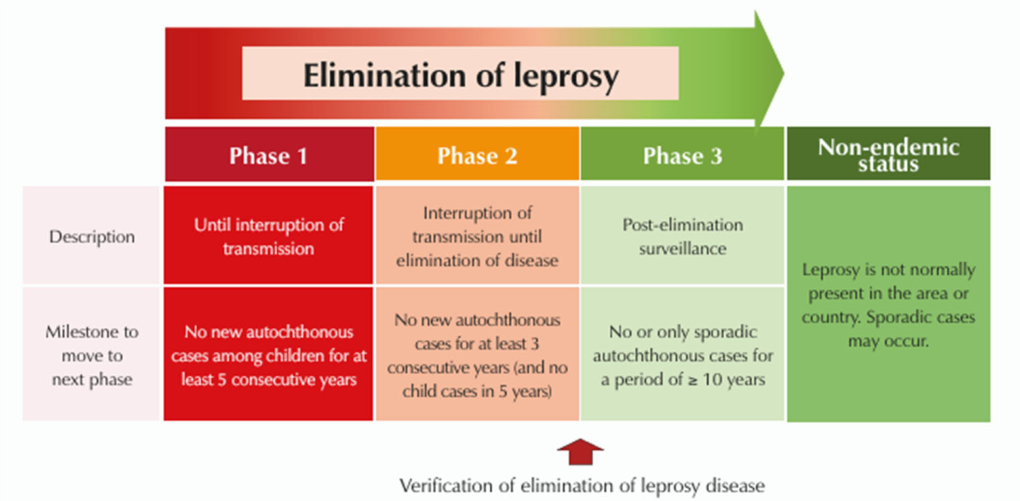
1.1. Review of Evidence on Leprosy Transmission Interruption
1.1.1. Post-Exposure Prophylaxis (PEP) and Chemoprophylaxis
1.1.2. Active Case-Finding and Contact Tracing
1.2. Implementation Framework for Zero Transmission of Leprosy in the Philippines
- Stop leprosy and its complications.
- Stop discrimination and promote inclusion.
- Strengthen government ownership and partnerships.
1.3. Collaboration and Partnerships
2. Methods
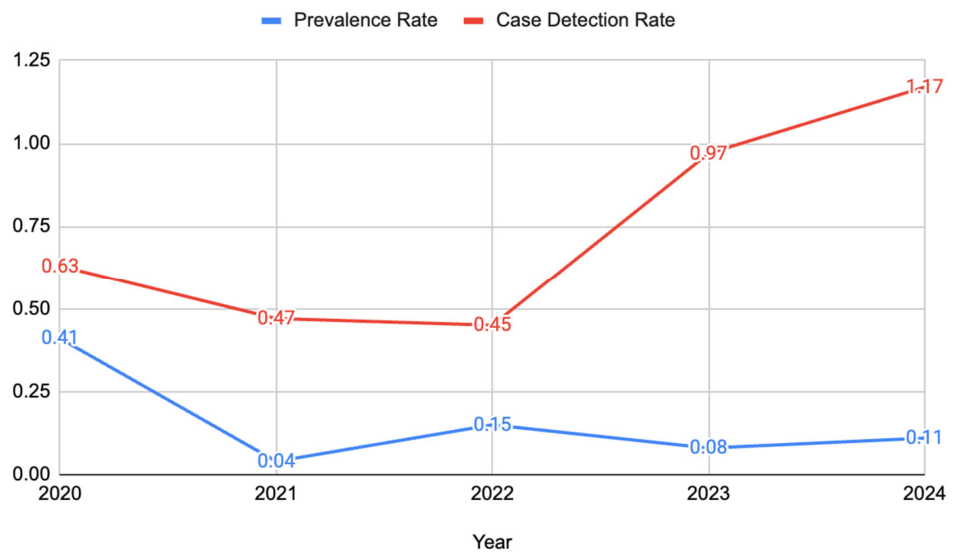
3. Results
4. Discussions
5. Study Limitations
6. Conclusions
Author Contributions
Funding
Institutional Review Board Statement
Informed Consent Statement
Data Availability Statement
Acknowledgments
Conflicts of Interest
References
- Department of Health Philippines. Guidelines on the Institutionalization of the Leprosy Alert and Response Network System (LEARNS) of the National Leprosy Control Program Administrative Order 2021-23. Available online: https://law.upd.edu.ph/wp-content/uploads/2021/06/DOH-Administrative-Order-No-2021-0023.pdf (accessed on 21 May 2026).
- World Health Organization. Global Leprosy Programme (2024): WHO | World Health Organization. Available online: https://www.who.int/publications/i/item/9789290228509 (accessed on 21 May 2026).
- Department of Health Philippines: Leprosy Control Program. Available online: https://doh.gov.ph/uhc/health-programs/leprosy-control-program/ (accessed on 21 May 2026).
- Jong Atmosfera. Leprosy and Modern Medicine: How Far We’ve Come Since Biblical Times Leprosy and Modern Medicine. 2011. Available online: https://filipinofreethinkers.org/2011/06/09/leprosy-and-modern-medicine/ (accessed on 21 May 2026).
- Senate of the Philippines Legislative Digital Resources (1907): Act No. 1711. Available online: https://issuances-library.senate.gov.ph/legislative-issuance/act-no-1711 (accessed on 21 May 2026).
- Republic of the Philippines Supreme Court E-Library. REPUBLIC ACT NO. 753, 18 June 1952. 1952. Available online: https://elibrary.judiciary.gov.ph/thebookshelf/showdocs/2/11501 (accessed on 21 May 2026).
- Cochrane, R.G.; Davey, T.F. Leprosy in Theory and Practice. J. Coll. Gen. Pract. 1964, 8, 382–383. [Google Scholar] [PubMed Central]
- Republic of the Philippines Supreme Court E-Library. Republic Act No. 4073, 18 June 1964. 1965. Available online: https://elibrary.judiciary.gov.ph/thebookshelf/showdocs/2/7294 (accessed on 21 May 2026).
- Department of Health Philippines. Multi-Diseases Elimination Plan (MDEP). 2024. Available online: https://drive.google.com/file/d/14e9aK_FRxUETfD6x17IBLBOcNFTvG_27/view (accessed on 21 May 2026).
- The 13 MDEP Diseases: Leprosy, Lymphatic Filariasis, Malaria, Maternal and Neonatal Tetanus (MNT), Measles, Mother-to-Child Transmission of HIV, Syphilis, and Hepatitis B, Poliomyelitis, Rabies, Rubella, Schistosomiasis (SCH), and Yaws. Available online: https://drive.google.com/file/d/14e9aK_FRxUETfD6x17IBLBOcNFTvG_27/view (accessed on 21 May 2026).
- Moet, F.J.; Pahan, D.; Oskam, L.; Richardus, J.H. Effectiveness of single dose rifampicin in preventing leprosy in close contacts of patients with newly diagnosed leprosy: Cluster randomised controlled trial. BMJ 2008, 336, 761–764. [Google Scholar] [CrossRef] [PubMed]
- Richardus, J.H.; Tiwari, A.; Barth-Jaeggi, T.; A Arif, M.; Banstola, N.L.; Baskota, R.; Blaney, D.; Blok, D.J.; Bonenberger, M.; Budiawan, T.; et al. Leprosy post-exposure prophylaxis with single-dose rifampicin (LPEP): An international feasibility programme. Lancet Glob. Health 2021, 9, e81–e90. [Google Scholar] [CrossRef] [PubMed]
- Hasker, E.; Assoumani, Y.; Randrianantoandro, A.; Ramboarina, S.; Braet, S.M.; Cauchoix, B.; Baco, A.; Mzembaba, A.; Salim, Z.; Amidy, M.; et al. Post-exposure prophylaxis in leprosy (PEOPLE): A cluster randomised trial. Lancet Glob. Health 2024, 12, e1017–e1026. [Google Scholar] [CrossRef] [PubMed]
- World Health Organization. Towards Zero Leprosy: Global Leprosy (Hansen’s Disease) Strategy 2021–2030; WHO: Geneva, Switzerland, 2021. [Google Scholar]
- Department of Health (DOH) Administrative Order No. 2021-0004. 2021. Available online: https://www.scribd.com/document/598792895/DOH-LEPROSY-Administrative-Order-No-2021-0004 (accessed on 21 May 2026).
- Richardus, J.H.; Meima, A.; van Marrewijk, C.J.; Croft, R.P.; Smith, T.C. Close contacts with leprosy in newly diagnosed leprosy patients in a high and low endemic area: Comparison between Bangladesh and Thailand. Int. J. Lepr. Other Mycobact. Dis. 2005, 73, 249–257. [Google Scholar] [PubMed]
- Smith, W.C.S.; Aerts, A. Role of contact tracing and prevention strategies in the interruption of leprosy transmission. Lepr. Rev. 2014, 85, 2–17. [Google Scholar] [CrossRef]
- Sakamuri, R.M.; Kimura, M.; Li, W.; Kim, H.-C.; Lee, H.; Kiran, M.D.; Black, W.C.; Balagon, M.; Gelber, R.; Cho, S.-N.; et al. Population-Based Molecular Epidemiology of Leprosy in Cebu, Philippines. J. Clin. Microbiol. 2009, 47, 2844–2854. [Google Scholar] [CrossRef] [PubMed][Green Version]
- Scheelbeek, P.F.D.; Balagon, M.V.F.; Orcullo, F.M.; A Maghanoy, A.; Abellana, J.; Saunderson, P.R. A Retrospective Study of the Epidemiology of Leprosy in Cebu: An Eleven-Year Profile. PLoS Neglected Trop. Dis. 2013, 7, e2444. [Google Scholar] [CrossRef] [PubMed]
- World Health Organization. Interruption of Transmission and Elimination of Leprosy Disease—Technical Guidance; WHO: Geneva, Switzerland, 2023; Available online: https://www.who.int/publications/i/item/9789290210467 (accessed on 21 May 2026).
- World Health Organization. Leprosy Elimination Monitoring Tool (LEMT); WHO: Geneva, Switzerland, 2023; Available online: https://www.who.int/publications/i/item/9789290210474 (accessed on 21 May 2026).
- World Health Organization. Leprosy Programme and Transmission Assessment (LPTA); WHO: Geneva, Switzerland, 2023; Available online: https://www.who.int/publications/i/item/9789290210481 (accessed on 21 May 2026).
- Department of Health Philippines and Novartis Gather Stakeholders to Achieve Zero Leprosy Transmission in Philippines. 2017. Available online: https://www.novartis.com/ph-en/news/media-releases/doh-novartis-gather-stakeholders-achieve-zero-leprosy-transmission-ph (accessed on 21 May 2026).
- Department of Health Philippines Field Health Services Information System Annual Report (2020–2024). Available online: https://doh.gov.ph/information-resources/publications/?__cf_chl_f_tk=o_yRGComh.q5dH3615eErbhMLKncJBL5I5tTAAPLdC4-1782828372-1.0.1.1-k0H6tzBSzky3rxHu_b7PhurPZNSejBKIjjrirrTFVYo (accessed on 21 May 2026).
- World Health Organization. WHO Weekly Epidemiological Record: Weekly Epidemiological Record, 2021, Vol. 96, 37. Available online: https://iris.who.int/items/72261456-e940-485a-8140-7a44a35c2d99 (accessed on 21 May 2026).
- Costa, I.L.V.; da Costa, P.F.; da Silva, S.M.; Gobbo, A.R.; Pinto, P.D.D.C.; Spencer, J.S.; da Silva, M.B.; Salgado, C.G. Leprosy among children in an area without primary health care coverage in Caratateua Island, Brazilian Amazon. Front. Med. 2023, 10, 1218388. [Google Scholar] [CrossRef] [PubMed]
- Carvalho, A.M.; Almeida, P.S.; Magalhães, R.G.; Clara, P.; Silva, J.; Cunha, J.; Carvalho, A.M., Sr. Presumed Very Late Relapse of Lepromatous Leprosy 35 Years After Treatment: A Diagnostic Challenge in a Non-endemic Setting. Cureus 2026, 18. [Google Scholar] [CrossRef] [PubMed]
- World Health Organization. Integrated Approaches to Skin NTDs: Guidance for Implementation; WHO: Geneva, Switzerland, 2022; Available online: https://www.who.int/publications/i/item/9789240051423 (accessed on 21 May 2026).
- Ghunawat, S.; Relhan, V.; Mittal, S.; Sandhu, J.; Garg, V.K. Childhood Leprosy: A Retrospective Descriptive Study from Delhi. Indian J. Dermatol. 2018, 63, 455–458. [Google Scholar] [PubMed] [PubMed Central]
- Reveiz, L.; Buendía, J.A.; Téllez, D. Chemoprophylaxis in contacts of patients with leprosy: Systematic review and meta-analysis. Rev. Panam. Salud Publica Pan Am. J. Public Health 2009, 26, 341–349. [Google Scholar] [CrossRef] [PubMed]
- World Health Organization. Global Leprosy (Hansen’s Disease) Update, 2023: Beyond Zero Cases—What Elimination Really Means. Wkly. Epidemiol. Rec. 2024, 99, 501–521. Available online: https://www.who.int/publications/i/item/who-wer9937-501-521 (accessed on 21 May 2026).
- Sermrittirong, S.; Van Brakel, W.H. Stigma in leprosy: Concepts, causes and determinants. Lepr. Rev. 2014, 85, 36–47. [Google Scholar] [CrossRef]
- Kumar, V.; Cheng, S.Y.C. Examining the Factors Impacting Integrated Service Delivery in Leprosy Elimination Programs in Bihar. Soc. Dev. Issues 2023, 45. [Google Scholar] [CrossRef]
- Ferreira, S.M.B.; Ignotti, E.; Gamba, M.A. Fatores associados à recidiva em hanseníase em Mato Grosso. Rev. Saude Publica 2011, 45, 756–764. [Google Scholar] [CrossRef] [PubMed]



| Sectoral Primary Health Care Strategy 2023–2038 | Integrated Disease Prevention and Control Through Primary Care Strategic Plan 2023–2028 | ||||||
|---|---|---|---|---|---|---|---|
| MDEP Strategic Pillar | Healthy and Safe Policies & Settings | Accessible, Comprehensive Primary Care for Every Life Stage | Evidence and Data-Informed Response at All Levels | Quality | Access | Self-Sufficient Primary Care | Enabling Mechanism |
| Surveillance and Information Systems | ✓ | ✓ | ✓ | ||||
| Access to Laboratory Services | ✓ | ✓ | ✓ | ||||
| Service Delivery | ✓ | ✓ | ✓ | ||||
| Safe and Quality Medicines, Vaccines, and Technology | ✓ | ✓ | ✓ | ✓ | |||
| Human Resource and Capacity Building | ✓ | ✓ | ✓ | ||||
| Environment and Social Determinants of Health | ✓ | ✓ | |||||
| Stewardship and Finance | ✓ | ✓ | ✓ | ✓ | ✓ | ||
| Research | ✓ | ✓ | ✓ | ||||
| Strategic Pillar | Enablers | Barriers |
|---|---|---|
| 1. Implement integrated, country-owned zero leprosy roadmaps | Alignment of national and subnational plans with the WHO Global Leprosy Strategy and NTD Roadmap 2021–2030. Ongoing policy integration through the Administrative Order and Manual of Procedure on Integrated Skin NTDs (Leprosy, Yaws, and Scabies). Strengthened leadership and inter-program collaboration within DOH and Centers for Health Development. | Variability in local program ownership and implementation capacity across regions. Limited domestic funding for surveillance and case management. Weak data feedback between national and subnational levels. |
| 2. Scale up leprosy prevention alongside integrated active case detection | Integration of leprosy screening in skin NTD activities (Kilatis Kutis) and school health programs. Expansion of contact tracing and active surveillance in endemic provinces. Support from WHO and partners for logistics, training, and IEC development. | Gaps in early detection and underreporting due to stigma and limited trained manpower. Inconsistent implementation and integration of chemoprophylaxis (SDR) and post-exposure interventions. Logistical constraints in remote and conflict-affected areas. |
| 3. Manage leprosy and its complications and prevent new disability | Availability of multi-drug therapy (MDT) and supportive commodities through WHO donations. Initiatives on Morbidity Management and Disability Prevention (MMDP) integrated with LF and skin NTDs. Capacity-building of regional and provincial coordinators on case management and treatment. | Insufficient rehabilitation and reconstructive surgery services. Limited follow-up systems for patients’ post-treatment. Unequal access to physiotherapy and self-care support, especially in rural areas. |
| 4. Combat stigma and ensure human rights are respected | Advocacy and health education campaigns led by CHDs and NGOs. Inclusion of leprosy champions and cured persons in awareness events. Communication materials promote inclusion and dignity. | Persistent social stigma and misconceptions about transmission. Limited mainstreaming of human-rights–based approaches in local policies. Lack of sustainable livelihood and reintegration programs for affected persons. |
| Year | Population | 0–9 Years | 10–19 Years | 20–59 Years | 60 YearsAbove | Total | Total Both Sexes | ||||||
|---|---|---|---|---|---|---|---|---|---|---|---|---|---|
| Male | Female | Male | Female | Male | Female | Male | Female | Male | Female | Number | Rate | ||
| 2020 | 108,771,978 | 0.41 | |||||||||||
| 2021 | 110,198,654 | 67 | 80 | 64 | 42 | 107 | 116 | 20 | 15 | 258 | 253 | 511 | 0.46 |
| 2022 | 111,572,254 | 8 | 6 | 11 | 8 | 136 | 87 | 33 | 23 | 188 | 124 | 312 | 0.28 |
| 2023 | 111,638,549 | 35 | 17 | 32 | 25 | 128 | 78 | 24 | 24 | 219 | 144 | 363 | 0.33 |
| 2024 | 112,079,845 | 4 | 2 | 23 | 11 | 165 | 94 | 35 | 23 | 227 | 130 | 357 | 0.32 |
Disclaimer/Publisher’s Note: The statements, opinions and data contained in all publications are solely those of the individual author(s) and contributor(s) and not of MDPI and/or the editor(s). MDPI and/or the editor(s) disclaim responsibility for any injury to people or property resulting from any ideas, methods, instructions or products referred to in the content. |
© 2026 by the authors. Licensee MDPI, Basel, Switzerland. This article is an open access article distributed under the terms and conditions of the Creative Commons Attribution (CC BY) license.
Share and Cite
Fatunmbi, B.S.; Taruc, A.Y.; Sanikullah, K.H.; Garfin, A.M.C.; Belimac, J.G.; Gatchalian, A.C.; Valdez, M.R.D.J.; Buado, C.A.; Tejano, K.P.; Venida-Tablizo, A.; et al. Transmission Interruption of Leprosy in the Philippines: An Update on the Current Program Priorities and Interventions. Trop. Med. Infect. Dis. 2026, 11, 192. https://doi.org/10.3390/tropicalmed11070192
Fatunmbi BS, Taruc AY, Sanikullah KH, Garfin AMC, Belimac JG, Gatchalian AC, Valdez MRDJ, Buado CA, Tejano KP, Venida-Tablizo A, et al. Transmission Interruption of Leprosy in the Philippines: An Update on the Current Program Priorities and Interventions. Tropical Medicine and Infectious Disease. 2026; 11(7):192. https://doi.org/10.3390/tropicalmed11070192
Chicago/Turabian StyleFatunmbi, Bayo Segun, Alexander Yabes Taruc, Kazim Hizbullah Sanikullah, Anna Marie Celina Garfin, Jose Gerard Belimac, Almira Cruz Gatchalian, Ma. Regina De Jesus Valdez, Carmel Angela Buado, Kim Patrick Tejano, Abelaine Venida-Tablizo, and et al. 2026. "Transmission Interruption of Leprosy in the Philippines: An Update on the Current Program Priorities and Interventions" Tropical Medicine and Infectious Disease 11, no. 7: 192. https://doi.org/10.3390/tropicalmed11070192
APA StyleFatunmbi, B. S., Taruc, A. Y., Sanikullah, K. H., Garfin, A. M. C., Belimac, J. G., Gatchalian, A. C., Valdez, M. R. D. J., Buado, C. A., Tejano, K. P., Venida-Tablizo, A., Marquez-Protacio, F. V., Dofitas, B. L., Cunanan, A., Jr., Santos, R. A. R., Gajete, F. C., Dumawat, C. P., Caccam, E., Ko, E., & de Jesus, R. P. (2026). Transmission Interruption of Leprosy in the Philippines: An Update on the Current Program Priorities and Interventions. Tropical Medicine and Infectious Disease, 11(7), 192. https://doi.org/10.3390/tropicalmed11070192