

Deep Learning and Medical Diagnosis: A Review of Literature


Abstract
1. Introduction
- How diverse is the application of deep learning in the field of medical diagnosis?
- Can deep learning substitute the role of doctors in the future?
- Does deep learning have a future or will it become obsolete?
2. Method
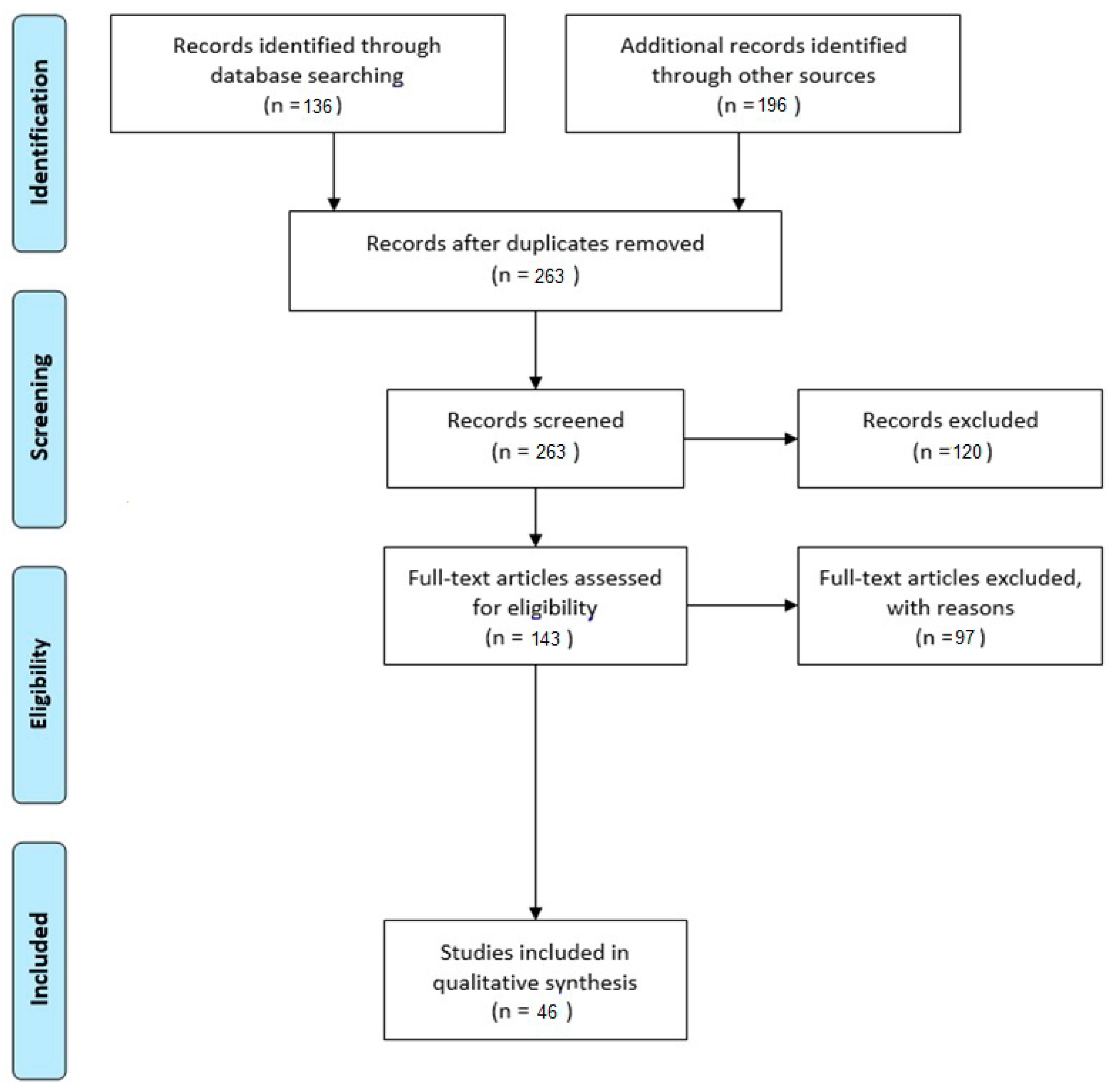
2.1. Flow Diagram of the Research
2.2. Literature Sources
2.3. Data Collection Process
- Phase 1: Searching articles in credible journals. This included the use of keywords presented under the Section 2.4 of this paper. At this point the articles were thoroughly analyzed.
- Phase 2: Analyzing the literature and excluding articles that do not fit the eligibility criteria. As there was no special screening during the search process, at this point the articles were analyzed and selected for further analysis.
- Phase 3: Thorough analysis of eligible articles conducted and the qualitative data classified in accordance with the aim of the review. At this stage there was a possibility of bias towards clearly written and conducted research articles.
- Phase 4: Qualitative data obtained and notes taken in order to concisely present the data in the results section of this paper. Data was collected in the form remarks and notes of what type of data and methods were used, and on what applications.
2.4. Obtained Literature and Eligibility Criteria
- deep learning practical applications
- deep learning and medical diagnosis
- deep learning and MRI
- deep learning CT
- deep learning segmentation in medicine
- deep learning classification in medicine
- deep learning diagnosis medicine
- deep learning application medicine
2.5. Risk of Bias in Individual Studies
3. Results
4. Discussion
Discussing the Results
5. Conclusions
5.1. Research Questions
5.2. Limitations and Future Research
Author Contributions
Funding
Conflicts of Interest
References
- Szegedy, C.; Wei, L.; Yang, J.; Sermanet, P.; Reed, S.; Anguelov, D.; Erhan, D.; Vanhoucke, V.; Rabinovich, A. Going deeper with convolutions. In Proceedings of the IEEE Conference on Computer Vision and Pattern Recognition, Boston, MA, USA, 7–12 June 2015; pp. 1–9. [Google Scholar]
- Abadi, M.; Chu, A.; Goodfellow, I.; McMahan, H.B.; Mironov, I.; Talwar, K.; Zhang, L. Deep Learning with Differential Privacy. In Proceedings of the 2016 ACM SIGSAC Conference on Computer and Communications Security, Vienna, Austria, 24–28 October 2016; pp. 308–318. [Google Scholar]
- LeCun, Y.; Bengio, Y.; Hinton, G. Deep learning. Nature 2015, 436–444. [Google Scholar] [CrossRef] [PubMed]
- Chen, X.-W.; Lin, X. Big data deep learning: Challenges and perspectives. IEEE Access 2014, 2, 514–525. [Google Scholar] [CrossRef]
- Miotto, R.; Wang, F.; Wang, S.; Jiang, X.; Dudley, J.T. Deep learning for healthcare: Review, opportunities and challenges. Brief Bioinform. 2017. [Google Scholar] [CrossRef] [PubMed]
- Wei, J.; He, J.; Chen, K.; Zhou, Y.; Tang, Z. Collaborative filtering and deep learning based recommendation system for cold start items. Expert Syst. Appl. 2017, 69, 29–39. [Google Scholar] [CrossRef]
- Shin, H.C.; Roth, H.R.; Gao, M.; Lu, L.; Xu, Z.; Nogues, I.; Summers, R.M. Deep Convolutional Neural Networks for Computer-Aided Detection: CNN Architectures, Dataset Characteristics and Transfer Learning. IEEE Trans. Med. Imaging 2016, 35, 1285–1298. [Google Scholar] [CrossRef] [PubMed]
- Song, J.; Qin, S.; Zhang, P. Chinese text categorization based on deep belief networks. In Proceedings of the 2016 IEEE/ACIS 15th International Conference on Computer and Information Science Computer and Information Science (ICIS), Okayama, Japan, 26–29 June 2016; pp. 1–5. [Google Scholar]
- Lee, J.G.; Jun, S.; Cho, Y.W.; Lee, H.; Kim, G.B.; Seo, J.B.; Kim, N. Deep Learning in Medical Imaging: General Overview. Korean J. Radiol. 2017, 18, 570–584. [Google Scholar] [CrossRef] [PubMed]
- Suzuki, K. Overview of deep learning in medical imaging. Radiol. Phys. Technol. 2017, 10, 257–273. [Google Scholar] [CrossRef] [PubMed]
- Ravì, D.; Wong, C.; Deligianni, F.; Berthelot, M.; Andreu-Perez, J.; Lo, B.; Yang, G.-Z. Deep learning for health informatics. IEEE J. Biomed. Health Inf. 2017, 21, 4–21. [Google Scholar] [CrossRef] [PubMed]
- Mamoshina, P.; Vieira, A.; Putin, E.; Zhavoronkov, A. Applications of Deep Learning in Biomedicine. Mol. Pharm. 2016, 13, 1445–1454. [Google Scholar] [CrossRef] [PubMed]
- Liu, J.; Pan, Y.; Li, M.; Chen, Z.; Tang, L.; Lu, C.; Wang, J. Applications of deep learning to MRI images: A survey. Big Data Mining Anal. 2018, 1, 1–18. [Google Scholar] [CrossRef]
- Moher, D.; Liberati, A.; Tetzlaff, J.; Altman, D.G.; Prisma Group. Preferred reporting items for systematic reviews and meta-analyses: The PRISMA statement. Int. J. Surg. 2010, 8, 336–341. [Google Scholar] [CrossRef] [PubMed]
- Greenspan, H.; Van Ginneken, B.; Summers, R.M. Guest editorial deep learning in medical imaging: Overview and future promise of an exciting new technique. IEEE Trans. Med. Imaging 2016, 35, 1153–1159. [Google Scholar] [CrossRef]
- Mezgec, S.; Koroušić Seljak, B. NutriNet: A Deep Learning Food and Drink Image Recognition System for Dietary Assessment. Nutrients 2017, 9, 657. [Google Scholar] [CrossRef] [PubMed]
- De Vos, B.D.; Wolterink, J.M.; de Jong, P.A.; Viergever, M.A.; Išgum, I. 2D image classification for 3D anatomy localization: Employing deep convolutional neural networks. In Proceedings of the Medical Imaging 2016: Image Processing, San Diego, CA, USA, 1–3 March 2016; Volume 9784. [Google Scholar]
- Dou, Q.; Yu, L.; Chen, H.; Jin, Y.; Yang, X.; Qin, J.; Heng, P.A. 3D deeply supervised network for automated segmentation of volumetric medical images. Med Image Anal. 2017, 41, 40–54. [Google Scholar] [CrossRef] [PubMed]
- Pan, Y.; Huang, W.; Lin, Z.; Zhu, W.; Zhou, J.; Wong, J.; Ding, Z. Brain tumor grading based on neural networks and convolutional neural networks. In Proceedings of the 2015 37th Annual International Conference of the IEEE Engineering in Medicine and Biology Society (EMBC), Milan, Italy, 25–29 August 2015; pp. 699–702. [Google Scholar]
- Chen, X.; Xu, Y.; Wong, D.W.K.; Wong, T.Y.; Liu, J. Glaucoma detection based on deep convolutional neural network. In Proceedings of the 2015 37th Annual International Conference of the IEEE, Engineering in Medicine and Biology Society (EMBC), Milan, Italy, 25–29 August 2015; pp. 715–718. [Google Scholar]
- Payan, A.; Montana, G. Predicting Alzheimer’s disease: A neuroimaging study with 3D convolutional neural networks. arXiv 2015, arXiv:1502.02506. [Google Scholar]
- Dubrovina, A.; Kisilev, P.; Ginsburg, B.; Hashoul, S.; Kimmel, R. Computational mammography using deep neural networks. Comput. Methods Biomech. Biomed. Eng. Imaging Vis. 2016, 6, 243–247. [Google Scholar] [CrossRef]
- Acharya, U.R.; Fujita, H.; Oh, S.L.; Hagiwara, Y.; Tan, J.H.; Adam, M. Application of deep convolutional neural network for automated detection of myocardial infarction using ECG signals. Inf. Sci. 2017, 415, 190–198. [Google Scholar] [CrossRef]
- Mehta, R.; Majumdar, A.; Sivaswamy, J. BrainSegNet: A convolutional neural network architecture for automated segmentation of human brain structures. J. Med. Imaging (Bellingham) 2017, 4, 024003. [Google Scholar] [CrossRef] [PubMed]
- Abdel-Zaher, A.M.; Eldeib, A.M. Breast cancer classification using deep belief networks. Expert Syst. Appl. 2016, 46, 139–144. [Google Scholar] [CrossRef]
- Cheng, J.Z.; Ni, D.; Chou, Y.H.; Qin, J.; Tiu, C.M.; Chang, Y.C.; Huang, C.S.; Shen, D.; Chen, C.M. Computer-Aided Diagnosis with Deep Learning Architecture: Applications to Breast Lesions in US Images and Pulmonary Nodules in CT Scans. Sci. Rep. 2016, 6, 24454. [Google Scholar] [CrossRef] [PubMed]
- Esteva, A.; Kuprel, B.; Novoa, R.A.; Ko, J.; Swetter, S.M.; Blau, H.M.; Thrun, S. Dermatologist-level classification of skin cancer with deep neural networks. Nature 2017, 542, 115–118. [Google Scholar] [CrossRef] [PubMed]
- Xu, Y.; Dai, Z.; Chen, F.; Gao, S.; Pei, J.; Lai, L. Deep Learning for Drug-Induced Liver Injury. J. Chem. Inf. Model. 2015, 55, 2085–2093. [Google Scholar] [CrossRef] [PubMed]
- Gao, X.; Lin, S.; Wong, T.Y. Automatic Feature Learning to Grade Nuclear Cataracts Based on Deep Learning. IEEE Trans. Biomed. Eng. 2015, 62, 2693–2701. [Google Scholar] [CrossRef] [PubMed]
- Bar, Y.; Diamant, I.; Wolf, L.; Greenspan, H. Deep learning with non-medical training used for chest pathology identification. In Proceedings of the Medical Imaging 2015: Computer-Aided Diagnosis, Orlando, FL, USA, 3–7 November 2015; Volume 9414. [Google Scholar]
- Masood, A.; Al-Jumaily, A.; Anam, K. Self-supervised learning model for skin cancer diagnosis. In Proceedings of the 2015 7th International IEEE/EMBS Conference Neural Engineering (NER), Montpellier, France, 22–24 April 2015; pp. 1012–1015. [Google Scholar]
- Han, Z.; Wei, B.; Zheng, Y.; Yin, Y.; Li, K.; Li, S. Breast Cancer Multi-classification from Histopathological Images with Structured Deep Learning Model. Sci. Rep. 2017, 7, 4172. [Google Scholar] [CrossRef] [PubMed]
- Havaei, M.; Davy, A.; Warde-Farley, D.; Biard, A.; Courville, A.; Bengio, Y.; Larochelle, H. Brain tumor segmentation with Deep Neural Networks. Med. Image Anal. 2017, 35, 18–31. [Google Scholar] [CrossRef] [PubMed]
- Kamnitsas, K.; Ledig, C.; Newcombe, V.F.J.; Simpson, J.P.; Kane, A.D.; Menon, D.K.; Glocker, B. Efficient multi-scale 3D CNN with fully connected CRF for accurate brain lesion segmentation. Med. Image Anal. 2017, 36, 61–78. [Google Scholar] [CrossRef] [PubMed]
- Mohamed, A.A.; Berg, W.A; Peng, H.; Luo, Y.; Jankowitz, R.C.; Wu, S. A deep learning method for classifying mammographic breast density categories. Med. Phys. 2018, 45, 314–321. [Google Scholar] [CrossRef] [PubMed]
- Zhang, Q.; Xiao, Y.; Dai, W.; Suo, J.; Wang, C.; Shi, J.; Zheng, H. Deep learning based classification of breast tumors with shear-wave elastography. Ultrasonics 2016, 72, 150–157. [Google Scholar] [CrossRef] [PubMed]
- Cha, K.H.; Hadjiiski, L.; Samala, R.K.; Chan, H.P.; Caoili, E.M.; Cohan, R.H. Urinary bladder segmentation in CT urography using deep-learning convolutional neural network and level sets. Med. Phys. 2016, 43, 1882. [Google Scholar] [CrossRef] [PubMed]
- Isensee, F.; Kickingereder, P.; Bonekamp, D.; Bendszus, M.; Wick, W.; Schlemmer, H.P.; Maier-Hein, K. Brain Tumor Segmentation Using Large Receptive Field Deep Convolutional Neural Networks. Bildverarb. Med. 2017, 86–91. [Google Scholar] [CrossRef]
- González, G.; Ash, S.Y.; Vegas-Sánchez-Ferrero, G.; Onieva Onieva, J.; Rahaghi, F.N.; Ross, J.C.; Washko, G.R. Disease staging and prognosis in smokers using deep learning in chest computed tomography. Am. J. Respir. Crit. Care Med. 2018, 197, 193–203. [Google Scholar] [CrossRef] [PubMed]
- Danaee, P.; Ghaeini, R.; Hendrix, D.A. A deep learning approach for cancer detection and relevant gene identification. Pac. Symp. Biocomput. 2017, 2017, 219–229. [Google Scholar]
- Looney, P.; Stevenson, G.N.; Nicolaides, K.H.; Plasencia, W.; Molloholli, M.; Natsis, S.; Collins, S.L. Automatic 3D ultrasound segmentation of the first trimester placenta using deep learning. In Proceedings of the 2017 IEEE 14th International Symposium on Biomedical Imaging, Biomedical Imaging (ISBI 2017), Melbourne, Australia, 18–21 April 2017; pp. 279–282. [Google Scholar]
- Choi, H.; Jin, K.H. Fast and robust segmentation of the striatum using deep convolutional neural networks. J. Neurosci. Methods 2016, 274, 146–153. [Google Scholar] [CrossRef] [PubMed]
- Ehteshami Bejnordi, B.; Veta, M.; Johannes van Diest, P.; van Ginneken, B.; Karssemeijer, N.; Litjens, G.; Venancio, R. Diagnostic Assessment of Deep Learning Algorithms for Detection of Lymph Node Metastases in Women With Breast Cancer. JAMA 2017, 318, 2199–2210. [Google Scholar] [CrossRef] [PubMed]
- Kleesiek, J.; Urban, G.; Hubert, A.; Schwarz, D.; Maier-Hein, K.; Bendszus, M.; Biller, A. Deep MRI brain extraction: A 3D convolutional neural network for skull stripping. Neuroimage 2016, 129, 460–469. [Google Scholar] [CrossRef] [PubMed]
- Kumar, D.; Wong, A.; Clausi, D.A. Lung nodule classification using deep features in CT images. In Proceedings of the 2015 12th Conference on Robot VisionComputer and Robot Vision (CRV), Halifax, NS, Canada, 3–5 June 2015; pp. 133–138. [Google Scholar]
- Sun, W.; Zheng, B.; Qian, W. Computer aided lung cancer diagnosis with deep learning algorithms. In Proceedings of the Medical Imaging 2016: Computer-Aided Diagnosis, San Diego, CA, USA, 27 February–3 March 2016; Volime 9785. [Google Scholar]
- Rasti, R.; Teshnehlab, M.; Phung, S.L. Breast cancer diagnosis in DCE-MRI using mixture ensemble of convolutional neural networks. Pattern Recognit. 2017, 72, 381–390. [Google Scholar] [CrossRef]
- Anirudh, R.; Thiagarajan, J.J.; Bremer, T.; Kim, H. Lung nodule detection using 3D convolutional neural networks trained on weakly labeled data. In Proceedings of the Medical Imaging 2016: Computer-Aided Diagnosis, San Diego, CA, USA, 27 February–3 March 2016; Volume 9785. [Google Scholar]
- Samala, R.K.; Chan, H.P.; Hadjiiski, L.M.; Cha, K.; Helvie, M.A. Deep-learning convolution neural network for computer-aided detection of microcalcifications in digital breast tomosynthesis. In Proceedings of the Medical Imaging 2016: Computer-Aided Diagnosis, San Diego, CA, USA, 27 February–3 March 2016; Volume 9785. [Google Scholar]
- Roth, H.R.; Farag, A.; Lu, L.; Turkbey, E.B.; Summers, R.M. Deep convolutional networks for pancreas segmentation in CT imaging. Med. Imaging Image Process. 2015, 9413, 94131G. [Google Scholar]
- Pratt, H.; Coenen, F.; Broadbent, D.M.; Harding, S.P.; Zheng, Y. Convolutional Neural Networks for Diabetic Retinopathy. Proced. Comput. Sci. 2016, 90, 200–205. [Google Scholar] [CrossRef]
- Dalmis, M.U.; Litjens, G.; Holland, K.; Setio, A.; Mann, R.; Karssemeijer, N.; Gubern-Merida, A. Using deep learning to segment breast and fibroglandular tissue in MRI volumes. Med. Phys. 2017, 44, 533–546. [Google Scholar] [CrossRef] [PubMed]
- Bayramoglu, N.; Kannala, J.; Heikkilä, J. Deep learning for magnification independent breast cancer histopathology image classification. In Proceedings of the 2016 23rd International Conference on Pattern Recognition (ICPR), Cancún, Mexico, 4–8 December 2016; pp. 2440–2445. [Google Scholar]
- Fu, H.; Xu, Y.; Wong, D.W.K.; Liu, J. Retinal vessel segmentation via deep learning network and fully-connected conditional random fields. In Proceedings of the Biomedical Imaging (ISBI), 2016 IEEE 13th International Symposium on Biomedical Imaging, Prague, Czech, 13–16 April 2016; pp. 698–701. [Google Scholar]
- Akkus, Z.; Galimzianova, A.; Hoogi, A.; Rubin, D.L.; Erickson, B.J. Deep Learning for Brain MRI Segmentation: State of the Art and Future Directions. J. Digit. Imaging 2017, 30, 449–459. [Google Scholar] [CrossRef] [PubMed]
- Moeskops, P.; Viergever, M.A.; Mendrik, A.M.; de Vries, L.S.; Benders, M.J.; Isgum, I. Automatic Segmentation of MR Brain Images With a Convolutional Neural Network. IEEE Trans. Med. Imaging 2016, 35, 1252–1261. [Google Scholar] [CrossRef] [PubMed]
- Ehteshami Bejnordi, B.; Mullooly, M.; Pfeiffer, R.M.; Fan, S.; Vacek, P.M.; Weaver, D.L.; Sherman, M.E. Using deep convolutional neural networks to identify and classify tumor-associated stroma in diagnostic breast biopsies. Mod. Pathol. 2018. [Google Scholar] [CrossRef] [PubMed]
- Li, Y.; Li, X.; Xie, X.; Shen, L. Deep learning based gastric cancer identification. In Proceedings of the 2018 IEEE 15th International Symposium on Biomedical Imaging, Biomedical Imaging (ISBI 2018), Washington, DC, USA, 4–7 April 2018; pp. 182–185. [Google Scholar]
- Chmelik, J.; Jakubicek, R.; Walek, P.; Jan, J.; Ourednicek, P.; Lambert, L.; Amadori, E.; Gavelli, G. Deep convolutional neural network-based segmentation and classification of difficult to define metastatic spinal lesions in 3D CT data. Med. Image Anal. 2018. [Google Scholar] [CrossRef] [PubMed]
- Wang, X.; Yang, W.; Weinreb, J.; Han, J.; Li, Q.; Kong, X.; Yan, Y.; Ke, Z.; Luo, B.; Liu, T.; et al. Searching for prostate cancer by fully automated magnetic resonance imaging classification: Deep learning versus non-deep learning. Sci. Rep. 2017, 7, 15415. [Google Scholar] [CrossRef] [PubMed]
- Causey, J.L.; Zhang, J.; Ma, S.; Jiang, B.; Qualls, J.A.; Politte, D.G.; Prior, F.; Zhang, S.; Huang, X. Highly accurate model for prediction of lung nodule malignancy with CT scans. Sci. Rep. 2018, 8, 9286. [Google Scholar] [CrossRef] [PubMed]
- Xu, J.; Xiang, L.; Liu, Q.; Gilmore, H.; Wu, J.; Tang, J.; Madabhushi, A. Stacked sparse autoencoder (SSAE) for nuclei detection on breast cancer histopathology images. IEEE Trans. Med. Imaging 2016, 35, 119–130. [Google Scholar] [CrossRef] [PubMed]
- Faust, O.; Hagiwara, Y.; Hong, T.J.; Lih, O.S.; Acharya, U.R. Deep learning for healthcare applications based on physiological signals: A review. Comput. Methods Programs Biomed. 2018. [Google Scholar] [CrossRef] [PubMed]
- Litjens, G.; Kooi, T.; Bejnordi, B.E.; Setio, A.A.A.; Ciompi, F.; Ghafoorian, M.; Sánchez, C.I. A survey on deep learning in medical image analysis. Med. Image Anal. 2017, 42, 60–88. [Google Scholar] [CrossRef] [PubMed]
- Schmidhuber, J. Deep learning in neural networks: An overview. Neural Netw. 2015, 61, 85–117. [Google Scholar] [CrossRef] [PubMed]
- Shen, D.; Wu, G.; Suk, H.I. Deep learning in medical image analysis. Annu. Rev. Biomed. Eng. 2017, 19, 221–248. [Google Scholar] [CrossRef] [PubMed]
- Hu, Z.; Tang, J.; Wang, Z.; Zhang, K.; Zhang, L.; Sun, Q. Deep Learning for Image-based Cancer Detection and Diagnosis—A Survey. Pattern Recognit. 2018. [Google Scholar] [CrossRef]
- Madu, C.N.; Kuei, C.-H.; Lee, P. Urban sustainability management: A deep learning perspective. Sustain. Cities Soc. 2017, 30, 1–17. [Google Scholar] [CrossRef]
- Fadlullah, Z.M.; Tang, F.; Mao, B.; Kato, N.; Akashi, O.; Inoue, T.; Mizutani, K. State-of-the-Art Deep Learning: Evolving Machine Intelligence Toward Tomorrow’s Intelligent Network Traffic Control Systems. IEEE Commun. Surv. Tutor. 2017, 19, 2432–2455. [Google Scholar] [CrossRef]
- Yousefi-Azar, M.; Hamey, L. Text summarization using unsupervised deep learning. Expert Syst. Appl. 2017, 68, 93–105. [Google Scholar] [CrossRef]
- Zhou, X.; Gong, W.; Fu, W.; Du, F. Application of deep learning in object detection. In Proceedings of the 2017 IEEE/ACIS 16th International Conference on Computer and Information Science (ICIS), Wuhan, China, 24–26 May 2017; pp. 631–634. [Google Scholar]
- Badjatiya, P.; Gupta, S.; Gupta, M.; Varma, V. Deep learning for hate speech detection in tweets. In Proceedings of the 26th International Conference on World Wide Web Companion, Perth, Australia, 3–7 April 2017; pp. 759–760. [Google Scholar]
- Deng, L. Deep learning: From speech recognition to language and multimodal processing. APSIPA Trans. Signal Inf. Process. 2016, 5. [Google Scholar] [CrossRef]
- Singh, S.P.; Kumar, A.; Darbari, H.; Singh, L.; Rastogi, A.; Jain, S. Machine translation using deep learning: An overview. In Proceedings of the 2017 International Conference on Computer, Communications and Electronics (Comptelix), Jaipur, India, 1–2 July 2017; pp. 162–167. [Google Scholar]

| Literature Source | ISSN |
|---|---|
| Briefings in Bioinformatics | 1477-4054 |
| Expert Systems with Application | 0957-4174 |
| IEEE Transactions Medical Imaging | 1558-254X |
| Medical Image Analysis | 1361-8423 |
| Molecular Pharmaceutics | 1543-8392 |
| Nature | 1476-4687 |
| Neural Computing and Applications | 0941-0643 |
| Neurocomputing | 0925-2312 |
| Reference | Method | Data Source | Application/Remarks |
|---|---|---|---|
| [17] | CNN | Computed tomography (CT) | Anatomical localization; the results indicate that 3D localization of anatomical regions is possible with 2D images. |
| [18] | CNN | MRI | Automated segmentation; liver, heart and great vessels segmentation; it was concluded that this approach has great potential for clinical applications. |
| [19] | CNN | MRI | Brain tumor grading; a 3-layered CNN has a 18% performance improvement over to the baseline neural network. |
| [20] | CNN | Fundus images | Glaucoma detection; the experiments were performed on SCES and ORIGA datasets; further, it was noted that this approach may be great for glaucoma detection. |
| [21] | CNN | MRI | Alzheimer’s disease prediction; the accuracy of this approach is far superior compared to 2D methods |
| [22] | CNN | Mammography | Automatic breast tissue classification; the pectoral muscles were detected with high accuracy (0.83) while nipple detection had lower accuracy (0.56). |
| [23] | CNN | ECG | Automatic detection of myocardial infarction; average accuracy was 93.53% with noise and 95.22% without noise. |
| [24] | CNN | CT | Automated segmentation of human brain structures. |
| [25] | DBN-NN | Mammography | Automatic diagnosis for detecting breast cancer; the accuracy of the overall neural network was 99.68%, the sensitivity was 100%, and the specificity was 99.47%. |
| [26] | SDAE | Ultrasound of breasts, and lung CT | Breast lesion and pulmonary nodule detection/diagnosis; the results indicated that there is a significant increase in performance. In addition, it was noted that deep learning techniques have the potential to change CAD systems, with ease, and without the need for structural redesign. |
| [27] | CNN | Clinical images | Classification of skin cancer; the results of the study were satisfactory, as the deep convolutional neural networks achieve performance similar to the expertise of 21 board-certified dermatologist. This can lead to mobile dermatology diagnosis, providing millions of people with universal diagnostic care. |
| [28] | UGRNN | Various medical data sets | Drug-induced liver injury (DILI) prediction. The model had an accuracy of 86.9%, sensitivity of 82.5%, and specificity of 92.9%. Overall, deep learning gave significantly better results in opposite to other DILI prediction models. In sum, deep learning can lower the health risk for humans when it comes to DILI. |
| [29] | CRNN | Fundus images | Automatic grading system for nuclear cataracts; this method improved the clinical management of this cataract disease, and it has a potential for other eye disease diagnosis. |
| [30] | CNN | X-ray | Chest pathology identification; the area under the curve for heart detection was 0.89, for right pleural effusion detection 0.93, and for the classification between a healthy and an abnormal chest X-ray was 0.79. It was concluded that it is possible for non-medical images, and datasets to be sufficient for recognition of medical images. |
| [31] | SA-SVM | Dermoscopic images | Skin cancer diagnosis; the results were promising, and there is a possibility to use this type of self -advised SVM method in cases where is limited labeled data. |
| [32] | CSDCNN | Mammography | Multi-classification of breast cancer; a great performance of 93.2% accuracy was achieved on large-scale datasets |
| [33] | DNN | MRI | Brain tumor segmentation; with this method the whole brain can be segmented in 25 s to 3 min, thus making it a great segmentation tool. |
| [34] | CNN | MRI | Brain lesion segmentation; this approach produced great results. |
| [35] | CNN | Mammography | Breast density classification; Radiologist have a problem to differentiate between the two types of density. A learning model was developed that helped radiologist in the diagnosis process. Deep learning was found to be useful when it comes to realistic diagnosis, and overall clinical needs. |
| [36] | RBM | Shear-wave elastography SWE | Breast tumor classification; the results indicated that the deep learning model achieved a remarkable accuracy rate of 93.4%, with 88.6% sensitivity, and 97.1% specificity. |
| [37] | DL-CNN | CT urography | Urinary bladder segmentation; this method can overcome strong boundaries between two regions that have large differences of gray levels. |
| [38] | U-Net | MRI | Glioblastoma segmentation; this approach allowed a large U-Net training with small datasets, without significant overfitting. Taken into consideration that patients move during the segmentation process, there may be performance increase switching to 3D convolutions. |
| [39] | CNN | CT | Disease staging and prognosis of smokers; this type of chronic lung illness prognosis is powerful for risk assessment. |
| [40] | SDAE | Various medical images | Cancer detection from gene data; the study was successful as this method managed to extract genes that are helpful when it comes to cancer prediction. |
| [41] | CNN | The 3D volumetric ultrasound data | Ultrasound segmentation of first trimester placenta; it was noted that this approach had similar performance compared to results that were acquired through MRI data. |
| [42] | CNN | MRI | Segmentation of the striatum; two serial CNN architectures were used; the speed and accuracy of this approach makes it adequate for application in neuroscience and other clinical fields. |
| [43] | CNN | Images produced with a digital slider | Lymph node metastases detection in breast cancer; the best performing algorithm achieved performance comparable to a pathologist. |
| [44] | CNN | MRI | Brain segmentation; the results are comparable of other state-of-the-art performance. |
| [45] | CAD classifier with deep features from autoencoder | CT | Lung nodule classification; this approach resulted an accuracy of 75.01% and sensitivity of 83.35%; false positive was 0.39 per patient over 10 cross validations. |
| [46] | CNN, DBN, SDAE | CT | Lung cancer diagnosis; highest accuracy was achieved with DBN (0.8119). |
| [47] | CNN | MRI | Breast cancer diagnosis; with this approach the achieved accuracy was 96.39%, the sensitivity was 97.73%, and the specificity was 94.87%. |
| [48] | CNN | CT | Lung nodule detection; the network was trained with weak label information; 3D segmentation could exclude air tracts in the lungs, thus reducing false positives. |
| [49] | DLCNN | Planar projection (PPJ) image | Microcalcifications detection in digital breast tomosynthesis; the best obtained AUC was 0.933. |
| [50] | CNN | CT | Pancreas segmentation; average dice scores were from 46.6% to 68.8%. |
| [51] | CNN | Fundus images | Diagnosis of diabetic retinopathy; on a dataset of 80,000 images the accuracy was 75% and the sensitivity is 95%. |
| [52] | U-Net | MRI | Breast and fibroglandular tissue segmentation; average Dice Similarity Coefficients (DSC) were 0.850 for 3C U-net, 0.811 for 2C U-net, and 0.671 for atlas-based method. |
| [53] | CNN | Histopathology images | Breast cancer histopathology classification; average recognition rate was 82.13% for classification tasks, and 80.10% accuracy when it comes to magnification estimation. |
| [54] | CNN | Fundus images | Retina vessel segmentation; this method reduces the number of false-positives. |
| [55] | CNN | MRI | Brain segmentation; the performance is dependent of several factors such as initialization, preprocessing, and post-processing. |
| [56] | CNN | MRI | Automatic brain segmentation; this approach can be used for accurate brain segmentation results. |
| [57] | CNN | Digital images | Identifying and classifying tumor-associated stroma from breast biopsies; the study revealed that this deep learning approach was able to define stromal features of ductal carcinoma in situ grade. |
| [58] | CNN | Gastric images | Gastric cancer identification; the accuracy of classification was 97.93%. |
| [59] | CNN | CT | Lytic and sclerotic metastatic spinal lesion detection, segmentation and classification; the obtained results were quantitatively compared to other methods and it was concluded that this approach can provide better accuracy even for small lesions (greater than 1.4 mm3 and diameter greater than 0.7 mm). |
| [60] | DCNN | MRI | In this study the predictive test was conducted both with deep learning and non-deep-learning. The deep learning approach had an accuracy of 84%, sensitivity of 69.6% and specificity of 83.9%. The non-deep-learning approach had 70% accuracy, 49.4% sensitivity, and 81.7% specificity. |
| [61] | CNN | CT | Lung cancer nodule malignancy classification; with this approach a high level of accuracy was achieved 99%. This is proportionate to the accuracy of an experienced radiologist. |
| [62] | SSAE | Digital pathology images | Nuclei detection of breast cancer; the stacked sparse autoencoder (SSAE) approach can outperform state of the art nuclear detection strategies. |
| Type of Deep Learning Method | Number of Articles |
| CNN | 32 |
| RBM | 1 |
| SA-SVM | 1 |
| CRNN | 1 |
| Other | 3 |
| DBN | 1 |
| SDAE | 2 |
| UGRNN | 1 |
| Multiple | 1 |
| U-Net | 2 |
| CSDCNN | 1 |
| Type of Data Source | Number of Articles |
| X-ray | 1 |
| Ultrasound | 2 |
| CT | 10 |
| MRI | 13 |
| Fundus photography | 4 |
| Mammography | 4 |
| Other data | 12 |
| Application Type | Number of Articles |
| Localization | 1 |
| Segmentation | 14 |
| Grading | 2 |
| Detection | 8 |
| Prediction | 4 |
| Classification | 8 |
| Diagnosis | 6 |
| Identification | 2 |
© 2018 by the authors. Licensee MDPI, Basel, Switzerland. This article is an open access article distributed under the terms and conditions of the Creative Commons Attribution (CC BY) license (http://creativecommons.org/licenses/by/4.0/).
Share and Cite
Bakator, M.; Radosav, D. Deep Learning and Medical Diagnosis: A Review of Literature. Multimodal Technol. Interact. 2018, 2, 47. https://doi.org/10.3390/mti2030047
Bakator M, Radosav D. Deep Learning and Medical Diagnosis: A Review of Literature. Multimodal Technologies and Interaction. 2018; 2(3):47. https://doi.org/10.3390/mti2030047
Chicago/Turabian StyleBakator, Mihalj, and Dragica Radosav. 2018. "Deep Learning and Medical Diagnosis: A Review of Literature" Multimodal Technologies and Interaction 2, no. 3: 47. https://doi.org/10.3390/mti2030047
APA StyleBakator, M., & Radosav, D. (2018). Deep Learning and Medical Diagnosis: A Review of Literature. Multimodal Technologies and Interaction, 2(3), 47. https://doi.org/10.3390/mti2030047

