Interactive Narratives and Serious Games in Oncology and Grief Support: A Systematic Literature Review



Abstract
1. Introduction
1.1. The Psychosocial Ecosystem of Cancer
1.2. From “Fighting” to “Feeling”: The Evolution of Games in Health
1.3. Objectives
1.4. Theoretical Background: Thanatosensitivity and Narrative Play
1.5. Paper Organization
2. Methodology
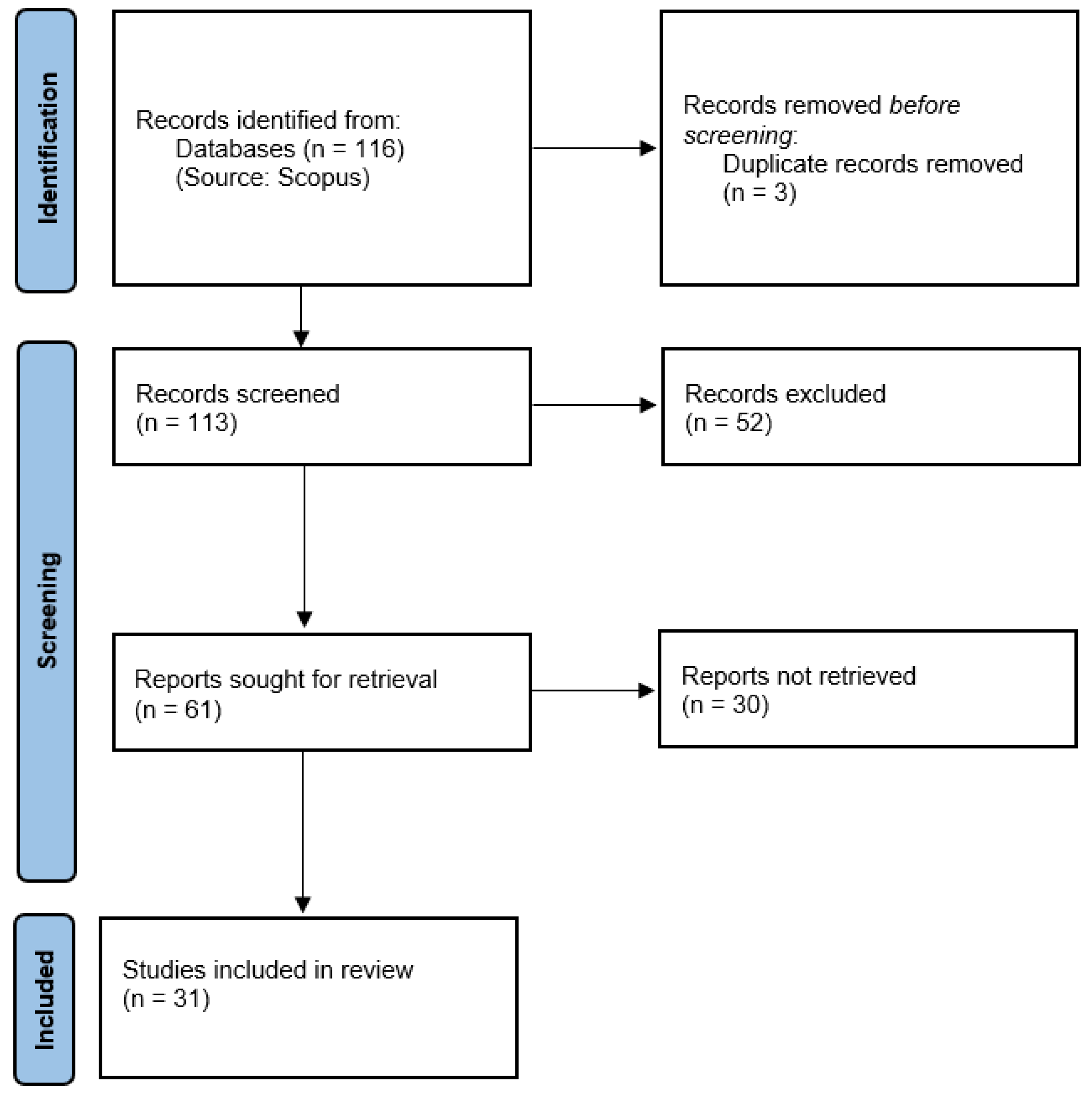
2.1. Search Strategy and Query
2.2. Inclusion and Exclusion Criteria
2.3. Data Collection
2.4. Justification for Systematic Review Methodology
2.5. Methodological Criteria
2.5.1. Serious Games
2.5.2. Games
2.5.3. Gamification
2.5.4. Handling Overlaps in Categorization
3. Results
3.1. Study Distribution and Research Activity
3.2. Types of Interventions Used
3.3. Mechanisms and Strategies
3.4. Interventions Considering the Care Continuum
3.5. Impact and Outcomes of Interventions
3.6. Summary of Key Findings
3.6.1. Dominance of Serious Games
3.6.2. The Caregiver Gap
3.6.3. Narrative as a Mechanism
4. Discussion and Identification of Research Gaps
4.1. Behavioral Approach and Theoretical Framework
4.1.1. Thanatosensitivity and Grief Processing
4.1.2. Behavior Change Models
4.1.3. Empathy and Social Support
4.2. Comparison with Existing Literature
4.2.1. Pediatric Versus Adult Focus
4.2.2. Medical Versus Psychosocial Goals
4.2.3. The Role of the Narrative
4.3. Interventions
4.3.1. Conversation and Card Games
4.3.2. Digital Narratives and Role-Playing Games
4.3.3. Virtual Reality and Biofeedback
4.4. Outcomes in Serious Games for Health
4.4.1. Readiness and Behavioral Change
4.4.2. Emotional Regulation and Anxiety Reduction
4.4.3. Empathy and Understanding
4.5. Identification of Research Gaps
4.5.1. The Volunteer Protagonist and the Battle Metaphor
4.5.2. Reconstruction Versus Loss (Dual Process Model)
4.5.3. Adult Non-Medical Caregivers
4.6. Answering the Research Questions
4.6.1. RQ1: Usage in Oncology, Palliative Care, and Grief
4.6.2. RQ2: Mechanics for Difficult Conversations and Emotional Processing
4.6.3. RQ3: Representation of the Volunteer and Caregiver Experience
5. Conclusions
6. Future Research and Work Directions
7. Limitations
Author Contributions
Funding
Institutional Review Board Statement
Informed Consent Statement
Data Availability Statement
Conflicts of Interest
References
- Fernandes, C.S.; Vale, M.B.M.; Lourenço, M. Exploring the use of games in palliative care: A scoping review. Palliat. Support. Care 2023, 21, 146–166. [Google Scholar] [CrossRef]
- Barrera, M.; Atenafu, E.G.; Schulte, F.; Nathan, P.C.; Hancock, K.; Saleh, A. A randomized controlled trial of a group intervention for siblings of children with cancer: Changes in symptoms of anxiety in siblings and caregivers. Psychooncology 2018, 27, 1629–1634. [Google Scholar] [CrossRef] [PubMed]
- Massimi, M. Thanatosensitively designed technologies for bereavement support. In Proceedings of the 28th International Conference on Human Factors in Computing Systems, CHI 2010, Extended Abstracts Volume, Atlanta, GA, USA, 10–15 April 2010; Volume 28, pp. 2951–2954. [Google Scholar]
- Loerzel, V.; Clochesy, J.; Geddie, P. Using a community advisory board to develop a serious game for older adults undergoing treatment for cancer. Appl. Nurs. Res. 2018, 39, 207–210. [Google Scholar] [CrossRef] [PubMed]
- Savaş, E.H.; Semerci, R.; Bayram, C. The effect of a biofeedback-based virtual reality game on pain, fear and anxiety levels during port catheter needle insertion in pediatric oncology patients: A randomized controlled study. Eur. J. Oncol. Nurs. 2024, 70, 102621. [Google Scholar] [CrossRef] [PubMed]
- Chai, C.W.E.; Lau, B.T.; Tee, M.K.T.; Al Mahmud, A. Evaluating a serious game to improve childhood cancer patients’ treatment adherence. Digit. Health 2022, 8, 20552076221134457. [Google Scholar] [CrossRef]
- Santos, D.B.D.; Pinheiro, T.S.M.; Maciel, C.; Rodrigues, K.R.H.; Nunes, E.P.S. Interpreting posts in empathic games: Assumptions for a conceptual framework. In Proceedings of the 19th Brazilian Symposium on Human Factors in Computing Systems, Diamantina, Brazil, 26–30 October 2020; Association for Computing Machinery: New York, NY, USA, 2020; Volume 19, pp. 231–240. [Google Scholar]
- Chen, A.; Kogan, J.R.; Schubert, C. Teaching Empathy: The Implementation of a Video Game into a Psychiatry Clerkship Curriculum. Acad. Psychiatry 2018, 43, 362–365. [Google Scholar] [CrossRef]
- Schott, G. That Dragon, Cancer: Contemplating life and death in a medium that has frequently trivialized both. In Proceedings of DiGRA 2017 Conference, Melbourne, Australia, 10 June 2017; DiGRA: Tampere, Finland, 2017; Volume 14, pp. 1–10. [Google Scholar]
- Lefèvre, V. Playing games to help deal with the end of life. Soins Pediatr. Pueric. 2011, 32, 24–25. [Google Scholar]
- Van Scoy, L.J.; Green, M.J.; Reading, J.M.; Scott, A.M.; Chuang, C.H.; Levi, B.H. Can Playing an End-of-Life Conversation Game Motivate People to Engage in Advance Care Planning? Am. J. Hosp. Palliat. Med. 2017, 34, 754–761. [Google Scholar] [CrossRef]
- Van Scoy, L.J.; Reading, J.M.; Scott, A.M.; Green, M.J.; Levi, B.H. Exploring the Topics Discussed During a Conversation Card Game About Death and Dying: A Content Analysis. J. Pain Symptom Manag. 2016, 52, 655–662. [Google Scholar] [CrossRef]
- Wilson, D.K.; Hutson, S.P.; Wyatt, T.H. Exploring the role of digital storytelling in pediatric oncology patients’ perspectives regarding diagnosis: A literature review. Sage Open 2015, 5, 1–10. [Google Scholar] [CrossRef]
- Hamilton, S.; Hao, X.; Andrews, S.; Roldan, E.; Martinez, C.; Hamilton, J.; Amith, M.; Cui, L. Designing a Narrative-Based Video Game for Adolescents Coping with a Parent’s Cancer. Commun. Comput. Inf. Sci. 2025, 2526, 72–78. [Google Scholar]
- Kalantari, M.; Downie, S.; Hashemi, A. Empathy and Communication: Developing a Mobile Game to Enhance Social Support for Young Adult Cancer Patients. Lect. Notes Comput. Sci. 2025, 15823, 247–263. [Google Scholar]
- Campioni, D.; Ehrler, F.; Berger, A.; Clavien, C. A Digital Serious Game (Anticipaction) to Support Advance Care Planning Discussions in the General Population: Usability Study. JMIR Aging 2025, 8, e73378. [Google Scholar] [CrossRef]
- Abraham, O.; McCarthy, T.J. An Introduction to the OutSMART Cancer Serious Game: Current and Future Directions. JMIR Cancer 2024, 10, e56168. [Google Scholar] [CrossRef] [PubMed]
- Fernandes, C.S.; Vale, M.B.; Magalhães, B.; Castro, J.P.; Azevedo, M.D.; Lourenço, M. Developing a Card Game for Assessment and Intervention in the Person and the Family in Palliative Care: “Pallium Game”. Int. J. Environ. Res. Public Health 2023, 20, 1449. [Google Scholar] [CrossRef]
- Carrion-Plaza, A.; Jaen, J.; Montoya-Castilla, I. HabitApp: New Play Technologies in Pediatric Cancer to Improve the Psychosocial State of Patients and Caregivers. Front. Psychol. 2020, 11, 157. [Google Scholar] [CrossRef] [PubMed]
- Meyerheim, M.; Karamanidou, C.; Payne, S.; Garani-Papadatos, T.; Sander, A.; Downing, J.; Stamatopoulos, K.; Ling, J.; Payne, C.; Scarfo, L.; et al. MyPal-Child study protocol: An observational prospective clinical feasibility study of the MyPal ePRO-based early palliative care digital system in paediatric oncology patients. BMJ Open 2021, 11, e045226. [Google Scholar] [CrossRef] [PubMed]
- Thomas, T.H.; McLaughlin, M.; Hayden, M.; Shumaker, E.; Trybus, J.; Myers, E.; Schenker, Y. Teaching patients with advanced cancer to self-advocate: Development and acceptability of the strong together™ serious game. Games Health J. 2019, 8, 55–63. [Google Scholar] [CrossRef]
- Van Scoy, L.J.; Reading, J.M.; Scott, A.M.; Green, M.J.; Levi, B.H. Conversation Game Effectively Engages Groups of Individuals in Discussions about Death and Dying. J. Palliat. Med. 2016, 19, 661–667. [Google Scholar] [CrossRef]
- Van Scoy, L.J.; Reading, J.M.; Hopkins, M.; Smith, B.; Dillon, J.; Green, M.J.; Levi, B.H. Community Game Day: Using an End-of-Life Conversation Game to Encourage Advance Care Planning. J. Pain Symptom Manag. 2017, 54, 680–691. [Google Scholar] [CrossRef]
- Auxier, J.W. That Dragon, Cancer Goes to Seminary: Using a Serious Video Game in Pastoral Training. Christ. Educ. J. 2018, 15, 105–117. [Google Scholar] [CrossRef]
- Rodrigues, K.R.H.; Conrado, D.B.F.; Neris, V.P.A. Lessons Learned in Designing a Digital Therapeutic Game to Support the Treatment and Well-Being of Children with Cancer. Lect. Notes Comput. Sci. 2018, 10920, 231–243. [Google Scholar]
- Bettini, A.; Amore, E.; Vagnoli, L.; Maffei, F.; Martin, R. Acceptability and feasibility of a therapeutic board game for children and adolescents with cancer: The Italian version of Shop Talk. Support. Care Cancer 2019, 27, 4479–4485. [Google Scholar] [CrossRef] [PubMed]
- Coward-Gibbs, M. Some Games You Just Can’t Win: Crowdfunded Memorialisation, Grief and That Dragon, Cancer. In Death, Culture & Leisure: Playing Dead; Emerald Publishing Limited: Bingley, UK, 2020; pp. 173–188. [Google Scholar]
- Lefuel, P.; Bollondi Pauly, C.; Dufey Teso, A.B.; Martin, P.Y.; Escher, M.; Sechaud, L.; Da Rocha, G. Serious game, a new approach for advance care planning with dialysis patients. Nephrol. Ther. 2022, 18, 263–269. [Google Scholar] [CrossRef]
- Yang, D.J.; Lu, M.Y.; Chen, C.W.; Liu, P.C.; Hou, I.C. Development of a Therapeutic Video Game With the MDA Framework to Decrease Anxiety in Preschool-Aged Children With Acute Lymphoblastic Leukemia: Mixed Methods Approach. JMIR Serious Games 2022, 10, e37079. [Google Scholar] [CrossRef]
- Verhalen, A.E.C.; Rodrigues, K.R.H. The use of serious digital games to talk about grief and finitude with children: Reports on the design and evaluation process of two games. J. Interact. Syst. 2024, 15, 926–941. [Google Scholar] [CrossRef]
- Anderson, T.; Prue, G.; McDowell, G.; Stark, P.; Brown Wilson, C.; Graham Wisener, L.; Kerr, H.; Caughers, G.; Rogers, K.; Cook, L.; et al. Co-design and evaluation of a digital serious game to promote public awareness about pancreatic cancer. BMC Public Health 2024, 24, 570. [Google Scholar] [CrossRef]


| Digital Library | Search Query |
|---|---|
| Scopus | ( “serious game*” OR “video game*” OR “videogame*” OR “digital game*” OR “interactive narrative*” OR “gamif*” OR “ludic” ) AND ( “cancer” OR “oncolog*” OR “neoplasm*” OR “tumor*” OR “palliative care” OR “end-of-life” OR “terminal illness” ) AND ( “caregiver*” OR “carer*” OR “family” OR “spouse*” OR “volunteer*” OR “grief” OR “bereave*” OR “mourning” OR “empathy” OR “compassion" ) AND NOT ( “surgical” OR “robot” OR “physical activity” OR “exercise” OR “fitness” ) |
| Criterion | Inclusion | Exclusion |
|---|---|---|
| Document Type | Journal Articles, Conference Papers. | Theses, Books, Editorials, Abstracts without data. |
| Intervention | Serious games, video games, board games, gamification, interactive narrative. | Pure exercise games (exergames), non-interactive media. |
| Context | Oncology, Palliative Care, Grief, Empathy, Emotions. | General health without oncology/grief focus; Biological/Genetic studies. |
| Population | Focus on patients, but with priority to caregivers, families, and volunteers. | Studies focusing solely on biological mechanisms (e.g., “Pokemon” gene). |
| Author (Year) | Behavioral Approach/Theoretical Framework |
|---|---|
| Massimi (2010) [3] | Thanatosensitive design, bereavement support systems. |
| Lefèvre (2011) [10] | Play therapy, psychological processing of finiteness. |
| Wilson et al. (2015) [13] | Narrative engagement, digital storytelling for sense-making. |
| Van Scoy et al. (2016) [11] | Heuristic learning, group dynamics in taboo conversations. |
| Van Scoy et al. (2016) [12] | Qualitative content analysis of value-based discussions. |
| Schott (2017) [9] | Narrative reflection, emotional processing of grief and mortality. |
| Van Scoy et al. (2017) [22] | Transtheoretical Model (TTM), readiness for end-of-life planning. |
| Van Scoy et al. (2017) [23] | Community-based intervention, social diffusion of health information. |
| Chen et al. (2018) [8] | Experiential learning, empathy cultivation in medical training. |
| Auxier (2018) [24] | Pastoral theology, simulation for empathetic counseling. |
| Loerzel et al. (2018) [4] | Community-Based Participatory Research (CBPR). |
| Barrera et al. (2018) [2] | Cognitive Behavioral Therapy (CBT) in group settings. |
| Rodrigues et al. (2018) [25] | Participatory design, adherence behavior modification. |
| Thomas et al. (2019) [21] | Self-advocacy theory, skill acquisition for patient empowerment. |
| Bettini et al. (2019) [26] | Therapeutic communication, projection of feelings. |
| Coward-Gibbs (2020) [27] | Digital memorialisation, communal grief expression. |
| Santos et al. (2020) [7] | Conceptual framework of empathy in digital interactions. |
| Carrion-Plaza et al. (2020) [19] | Emotional regulation through technology-mediated play. |
| Meyerheim et al. (2021) [20] | Patient-Reported Outcomes (PRO) monitoring. |
| Lefuel et al. (2022) [28] | Patient autonomy, decision-making support systems. |
| Yang et al. (2022) [29] | MDA (Mechanics, Dynamics, Aesthetics) framework for anxiety. |
| Chai et al. (2022) [6] | Gamification for treatment adherence and health literacy. |
| Fernandes et al. (2023) [1] | Game-based learning (GBL) in palliative care contexts. |
| Fernandes et al. (2023) [18] | Family Systems Nursing, assessment through play. |
| Verhalen & Rodrigues (2024) [30] | Thanatosensitivity, child-centered design for difficult conversations. |
| Anderson et al. (2024) [31] | Co-design, public health awareness and knowledge retention. |
| Savaş et al. (2024) [5] | Distraction therapy, biofeedback for physiological regulation. |
| Abraham & McCarthy (2024) [17] | Systems thinking, preventive health education. |
| Hamilton et al. (2025) [14] | Narrative therapy, family systems coping strategies. |
| Campioni et al. (2025) [16] | Usability engineering, behavior change regarding Advance Care Planning. |
| Kalantari et al. (2025) [15] | Social Support Theory, empathy enhancement. |
| Author (Year) | Comm. Game | Serious Game | Gamification | Other |
|---|---|---|---|---|
| Massimi (2010) [3] | X | |||
| Lefèvre (2011) [10] | X | |||
| Wilson et al. (2015) [13] | X | |||
| Van Scoy et al. (2016) [11] | X | |||
| Van Scoy et al. (2016) [12] | X | |||
| Schott (2017) [9] | X | |||
| Van Scoy et al. (2017) [22] | X | |||
| Van Scoy et al. (2017) [23] | X | |||
| Chen et al. (2018) [8] | X | |||
| Auxier (2018) [24] | X | |||
| Loerzel et al. (2018) [4] | X | |||
| Barrera et al. (2018) [2] | X | |||
| Rodrigues et al. (2018) [25] | X | |||
| Thomas et al. (2019) [21] | X | |||
| Bettini et al. (2019) [26] | X | |||
| Coward-Gibbs (2020) [27] | X | |||
| Santos et al. (2020) [7] | X | |||
| Carrion-Plaza et al. (2020) [19] | X | |||
| Meyerheim et al. (2021) [20] | X | |||
| Lefuel et al. (2022) [28] | X | |||
| Yang et al. (2022) [29] | X | |||
| Chai et al. (2022) [6] | X | |||
| Fernandes et al. (2023) [1] | X | |||
| Fernandes et al. (2023) [18] | X | |||
| Verhalen & Rodrigues (2024) [30] | X | |||
| Anderson et al. (2024) [31] | X | |||
| Savaş et al. (2024) [5] | X | |||
| Abraham & McCarthy (2024) [17] | X | |||
| Hamilton et al. (2025) [14] | X | |||
| Campioni et al. (2025) [16] | X | |||
| Kalantari et al. (2025) [15] | X |
| Author (Year) | Interventions |
|---|---|
| Massimi (2010) [3] | Exploration of “Thanatosensitive” technology design for bereavement support. |
| Lefèvre (2011) [10] | Use of play and games to assist children in processing end-of-life situations. |
| Wilson et al. (2015) [13] | Literature review on the use of digital storytelling interventions for pediatric oncology patients. |
| Van Scoy et al. (2016) [11] | “Hello” conversation card game used in group settings to discuss death and dying. |
| Van Scoy et al. (2016) [12] | Content analysis of the specific topics raised during “Hello” game sessions. |
| Schott (2017) [9] | Critical analysis of “That Dragon, Cancer”, an autobiographical game about a child’s terminal cancer. |
| Van Scoy et al. (2017) [22] | Use of the “Hello” conversation game to motivate patients to complete Advance Directives. |
| Van Scoy et al. (2017) [23] | “Community Game Day” intervention using games to normalize end-of-life planning. |
| Chen et al. (2018) [8] | Use of “That Dragon, Cancer” in psychiatry clerkships to teach empathy to medical students. |
| Auxier (2018) [24] | Implementation of a serious game in seminary curriculum for pastoral grief training. |
| Loerzel et al. (2018) [4] | Serious game co-designed with a community advisory board for older adults with cancer. |
| Barrera et al. (2018) [2] | Group intervention (Sib-Link) for siblings of children with cancer to reduce anxiety. |
| Rodrigues et al. (2018) [25] | Digital therapeutic game to support treatment adherence and well-being in children. |
| Thomas et al. (2019) [21] | “Strong Together”, a serious game teaching self-advocacy skills to advanced cancer patients. |
| Bettini et al. (2019) [26] | “Shop Talk”, a therapeutic board game adapted for Italian pediatric oncology patients. |
| Coward-Gibbs (2020) [27] | Investigation of crowdfunded memorialisation features within “That Dragon, Cancer”. |
| Santos et al. (2020) [7] | Study of empathic interactions and user comments related to gameplay in “That Dragon, Cancer”. |
| Carrion-Plaza et al. (2020) [19] | “HabitApp”, a play technology intervention to improve psychosocial states in pediatric patients. |
| Meyerheim et al. (2021) [20] | “MyPal-Child”, a gamified app for reporting symptoms in pediatric palliative care. |
| Lefuel et al. (2022) [28] | Serious game intervention to support dialysis patients in Advance Care Planning decisions. |
| Yang et al. (2022) [29] | Therapeutic video game designed to decrease anxiety in preschoolers with leukemia. |
| Chai et al. (2022) [6] | Serious game intervention to improve medication adherence in childhood cancer. |
| Fernandes et al. (2023) [1] | Scoping review of various analog and digital games applied in palliative care settings. |
| Fernandes et al. (2023) [18] | “Pallium Game”, a card game for assessing and intervening with families in palliative care. |
| Verhalen & Rodrigues (2024) [30] | Design and evaluation of two serious games to facilitate dialogue on grief and death with children. |
| Anderson et al. (2024) [31] | Digital serious game designed to increase public awareness of pancreatic cancer symptoms. |
| Savaş et al. (2024) [5] | Biofeedback-based VR game used during port catheter insertion to reduce pain. |
| Abraham & McCarthy (2024) [17] | “OutSMART Cancer”, a serious game for education on cancer prevention and biology. |
| Hamilton et al. (2025) [14] | Narrative-based video game designed to assist adolescents in coping with a parent’s cancer diagnosis. |
| Campioni et al. (2025) [16] | ”Anticip’action“, a digital serious game to promote Advance Care Planning discussions. |
| Kalantari et al. (2025) [15] | Mobile game featuring empathy-based mechanics to support young adult cancer patients. |
| Care Stage | Interventions from Reviewed Studies |
|---|---|
| Prevention, Diagnosis & Education | Simulated food system games [31], Prevention education games [17], Digital storytelling for diagnosis [13], Empathy training for diagnosis [8]. |
| Treatment, Adherence & Coping | Narrative coping games [14], Self-advocacy games [21], Treatment support games [4], Psychosocial support apps [19], Social support mobile games [15], Sibling interventions [2], Therapeutic board games [26], VR Biofeedback for pain [5], Anxiety reduction games [29], Treatment well-being games [25], Adherence games [6]. |
| Palliative Care, End-of-Life & Bereavement | Grief analysis in games [9], Games for grief conversations [30], Memorialisation [27], Empathy in grief [7], Thanatosensitive tech [3], Pastoral grief training [24], Advance Care Planning games [11,16,22,23,28], Palliative care reviews [1], Family assessment card games [18], Content analysis of EOL games [12], Early palliative care apps [20], End-of-life play [10]. |
| Author (Year) | Outcomes |
|---|---|
| Massimi (2010) [3] | Provided design principles for technology that respects the bereavement process. |
| Lefèvre (2011) [10] | Observed benefits in psychological processing of end-of-life for children. |
| Wilson et al. (2015) [13] | Digital storytelling helped patients process diagnosis and improved provider insight. |
| Van Scoy et al. (2016) [11] | Effectively engaged participants in high-quality discussions about end-of-life wishes. |
| Van Scoy et al. (2016) [12] | Identified key themes in end-of-life discussions, including values and fears. |
| Schott (2017) [9] | Demonstrated the medium’s capacity to handle complex, non-trivial themes of death. |
| Van Scoy et al. (2017) [22] | Significant increase in readiness to perform Advance Care Planning behaviors. |
| Van Scoy et al. (2017) [23] | Successful community engagement leading to completed living wills. |
| Chen et al. (2018) [8] | Increased medical student empathy and understanding of patient experience. |
| Auxier (2018) [24] | Enhanced pastoral students’ ability to empathize with grieving parents. |
| Loerzel et al. (2018) [4] | Validated the feasibility of game-based interventions for older adults with cancer. |
| Barrera et al. (2018) [2] | Reduced anxiety symptoms in siblings of children with cancer. |
| Rodrigues et al. (2018) [25] | Positive impact on patient well-being and engagement with therapeutic regimen. |
| Thomas et al. (2019) [21] | High acceptability and improvement in self-advocacy confidence among patients. |
| Bettini et al. (2019) [26] | Facilitated expression of feelings and worries in a non-threatening environment. |
| Coward-Gibbs (2020) [27] | Established games as persistent digital spaces for communal grief and memory. |
| Santos et al. (2020) [7] | Identified distinct categories of empathic responses in player communities. |
| Carrion-Plaza et al. (2020) [19] | Improved emotional state and reduced negative feelings in hospitalized children. |
| Meyerheim et al. (2021) [20] | Established protocol for feasible digital monitoring in pediatric palliative care. |
| Lefuel et al. (2022) [28] | Improved patient knowledge and engagement in discussing end-of-life preferences. |
| Yang et al. (2022) [29] | Reduction in anxiety levels in preschool children undergoing leukemia treatment. |
| Chai et al. (2022) [6] | Improvement in medication adherence and disease knowledge among children. |
| Fernandes et al. (2023) [1] | Mapped the growing utility of games in palliative care for education and therapy. |
| Fernandes et al. (2023) [18] | Validated a tool for systemic family assessment in palliative care contexts. |
| Verhalen & Rodrigues (2024) [30] | Facilitated difficult conversations about finiteness between children and caregivers. |
| Anderson et al. (2024) [31] | Increased public knowledge of pancreatic cancer symptoms and risk factors. |
| Savaş et al. (2024) [5] | Significantly lower pain and fear scores during medical procedures vs control. |
| Abraham & McCarthy (2024) [17] | Improved understanding of cancer complexity and prevention strategies. |
| Hamilton et al. (2025) [14] | Preliminary design indicated potential for improved family communication and coping. |
| Campioni et al. (2025) [16] | High usability scores and increased willingness to engage in Advance Care Planning. |
| Kalantari et al. (2025) [15] | Enhanced perceived social support and reduced isolation in young adult patients. |
Disclaimer/Publisher’s Note: The statements, opinions and data contained in all publications are solely those of the individual author(s) and contributor(s) and not of MDPI and/or the editor(s). MDPI and/or the editor(s) disclaim responsibility for any injury to people or property resulting from any ideas, methods, instructions or products referred to in the content. |
© 2026 by the authors. Licensee MDPI, Basel, Switzerland. This article is an open access article distributed under the terms and conditions of the Creative Commons Attribution (CC BY) license.
Share and Cite
Macieira, J.; Vale, M.; Vanica, E.; Carvalho, V. Interactive Narratives and Serious Games in Oncology and Grief Support: A Systematic Literature Review. Multimodal Technol. Interact. 2026, 10, 45. https://doi.org/10.3390/mti10050045
Macieira J, Vale M, Vanica E, Carvalho V. Interactive Narratives and Serious Games in Oncology and Grief Support: A Systematic Literature Review. Multimodal Technologies and Interaction. 2026; 10(5):45. https://doi.org/10.3390/mti10050045
Chicago/Turabian StyleMacieira, João, Marco Vale, Elena Vanica, and Vitor Carvalho. 2026. "Interactive Narratives and Serious Games in Oncology and Grief Support: A Systematic Literature Review" Multimodal Technologies and Interaction 10, no. 5: 45. https://doi.org/10.3390/mti10050045
APA StyleMacieira, J., Vale, M., Vanica, E., & Carvalho, V. (2026). Interactive Narratives and Serious Games in Oncology and Grief Support: A Systematic Literature Review. Multimodal Technologies and Interaction, 10(5), 45. https://doi.org/10.3390/mti10050045