1. Introduction
The Belt and Road Initiative (BRI), announced by Chinese President Xi Jinping in 2013 and officially launched in 2015, has emerged as one of the most ambitious infrastructure and development programs of the 21st century [
1]. Designed to strengthen connectivity between Asia, Europe, and Africa, the BRI combines maritime and land corridors that aim to foster regional integration, stimulate economic growth, and facilitate global trade [
2]. Beyond its economic objectives, the BRI also represents a strategic geopolitical project, consolidating China’s influence across Eurasia and promoting long-term partnerships with participating countries [
3].
At its core, the BRI is structured around two main components: the Silk Road Economic Belt, which encompasses land-based transport routes, and the 21st Century Maritime Silk Road, focused on sea lanes of trade [
4,
5]. These two pillars function in synergy, enabling China to consolidate its presence in key global trade corridors and secure access to markets across Eurasia and beyond [
6]. By 2020, more than 138 countries and 30 international organizations had signed cooperation agreements with China under the BRI framework, reflecting the initiative’s broad international appeal [
5,
7].
Among the six economic corridors defined within the BRI, the New Eurasia Land Bridge Economic Corridor (NELBEC) is one of the most strategically important. Unlike maritime routes, NELBEC relies predominantly on railway networks to connect China with Europe through Central Asia and Eastern Europe [
8,
9,
10]. The corridor passes through key transit countries such as Russia, Kazakhstan, Belarus, and Poland, making them critical nodes in the efficiency and sustainability of Eurasian connectivity.
The corridor traverses from Russia’s Far East and Siberia to the Urals and Central Russia, improving transport connectivity and economic output as it moves westward, then connecting East Asia to Europe [
11]. Kazakhstan is a key transit hub in Central Asia, focusing on international investment and integration projects to enhance its transport infrastructure and connectivity [
12]. Belarus along with Russia and Kazakhstan benefits from increased economic integration and trade facilitation through the Eurasian Economic Union (EEU), enhancing regional stability and economic growth, which supports the broader goals of the NELBEC [
13]. Poland’s strategic importance lies in its role as a gateway to the European Union (EU) and its involvement in projects like the Rail Baltica enhances cross-border connectivity, making it a crucial link between the NELBEC and the rest of the European logistics networks [
12,
14]. Given its role in reducing transit times and offering a cost-effective alternative to maritime transport, NELBEC has become a focal point for policymakers and scholars seeking to understand the dynamics of the BRI and its potential impacts on regional and global trade.
Although the BRI has been widely studied from economic, political, and infrastructural perspectives, the literature addressing logistics and railway readiness remains fragmented. Many authors have analyzed the BRI in terms of barriers to trade, improvements in transport infrastructure, or its broader economic implications [
6,
15,
16]. For example, Zeybek [
17] highlighted the role of railway transport as a faster alternative to maritime routes, while Uygun and Ahsan [
1] and Pató et al. [
18] emphasized the growing importance of rail freight in linking Asia and Europe. Other studies have assessed the potential of specific the six BRI economic corridors [
9], and apply a utility function composed of independent variables such as transportation cost, environmental impact, transit time, mode reliability, and mode safety, positioning rail transport as one of the means with the lowest carbon emissions, lowest cost, and highest safety in the event of cargo accidents [
8].
Despite these contributions, few studies have developed integrated frameworks to measure the preparedness of key nodes in the BRI. Most existing analyses rely heavily on the World Bank’s LPI, which, although widely used, does not specifically capture railway-related dimensions critical to the NELBEC [
19,
20]. As a result, there is a gap in the literature regarding how to evaluate the combined logistic and railway readiness of countries that play strategic roles in transcontinental corridors. Addressing this gap is particularly important given the increasing reliance on rail transport for long-distance trade between China and Europe, and the potential bottlenecks that may arise at border-crossing nodes such as Belarus–Poland [
6].
This study aims to address the identified research gap by proposing a new methodological framework to evaluate the readiness of countries for integration into the BRI through NELBEC. Specifically, the research develops a composite index that combines the World Bank’s LPI with railway-related indicators, such as infrastructure quality, border connectivity, terminal capacity, and customs procedures. By integrating these dimensions, the index provides a multidimensional measure of logistics and railway preparedness, tailored to the specific requirements of rail-based corridors.
Therefore, the contribution of this study is twofold. From a theoretical perspective, it introduces a novel index that advances the measurement of logistic readiness in the BRI context, going beyond existing single-source indicators. From a practical perspective, the findings offer actionable insights for policymakers, international organizations, and private investors by identifying bottlenecks and priority areas for infrastructure and institutional improvements. Ultimately, the study enhances understanding of how Eurasian countries can prepare more effectively for participation in the BRI and strengthen sustainable transcontinental trade integration.
3. Materials and Methods
To assess the logistic and railway readiness of countries along NELBEC, this study employs a composite index methodology. Composite indices are widely used to summarize multidimensional phenomena into a single measure, allowing for the integration of diverse variables in a structured and comparable framework [
29]. In this research, the index was designed to capture both general logistics performance and railway-specific dimensions that are critical for the BRI. The construction of the index followed four main stages: indicator selection, normalization, weighting, and aggregation.
3.1. Indicator Selection
We have chosen to apply the indicators offered by the World Bank’s Logistics Performance Index to make up the composite index. We have also adapted specific indicators to the needs of this study using proxy indicators, which allow for an adequate approximation of the variable being analyzed when data is scarce [
30]. This is useful in the context of the BRI, where railway infrastructure and logistics have unique characteristics. Using composite or proxy indicators offers flexibility and allows us to capture the multidimensionality of the phenomena under study. In this case, we are studying the capacity for integration of countries in the BRI.
The final set of indicators was determined by the research team according to their relevance, complementarity, and measurability. Indicators were selected to ensure a comprehensive assessment of both logistics and railway readiness, avoiding redundancy while capturing distinct aspects of corridor integration. Furthermore, data availability and comparability across the four selected countries were essential criteria, ensuring that the indicators could be measured consistently over time and across contexts. Indicators were chosen from two complementary sources, which are the World Bank’s LPI and railway-specific indicators from institutional reports and academic literature. By combining LPI indicators with railway-specific measures, the dataset enabled a multidimensional evaluation of readiness.
The LPI is a biannual index covering over 150 countries and evaluating logistics performance across six key dimensions related to customs efficiency, infrastructure quality, international shipments, logistics competence, tracking and tracing, and timeliness. Given its widespread use and methodological rigor, the LPI provided the baseline indicators for the logistics dimension of the index. Although limited in scope regarding railway-specific aspects, it remains the most recognized benchmark for cross-country logistics comparisons [
21,
22].
Table 2 presents the corresponding indicators adopted in this study based on the LPI.
Railway-specific indicators were incorporated from institutional reports (e.g., OECD, International Union of Railways, and national transport ministries) and academic literature, including rail network length and condition, terminal capacity, customs digitalization, and border connectivity. In this regard, logistics development, including railway development, is a key aspect of the new Silk Road that must be evaluated [
1,
37]. Guo et al. [
24] and Uygun and Ahsan [
1] examined the installed capacity of various rail ports in countries participating in the New Silk Road, emphasizing the importance of identifying bottlenecks and potential alternative routes. Furthermore, Nitsche [
6] and Chen [
15] identify and mention customs procedures as variables. Likewise, Zhang et al. [
19] and Yu et al. [
20] consider it relevant to evaluate the efficiency of the cross-border nodes or edges of different countries belonging to the New Silk Road. Together, these indicators directly affect the capacity of countries to serve as effective transit hubs within NELBEC and capture the multidimensional nature of readiness, combining general logistics with corridor-specific railway variables.
Table 3 summarizes the railway-specific indicators incorporated into the composite index, to complement the LPI-based logistics dimension.
The logistics indicators derived from the World Bank’s LPI were complemented with railway-specific data obtained from institutional sources such as The World Bank, PKP Polskie Linie Kolejowe S.A., Belarusian Railway, NC KTZ JSC, and Russian Railways, which provided detailed national-level statistics on rail infrastructure, network length, and operational capacity. The American Enterprise Institute was consulted for information on Chinese FDI inflows in rail infrastructure. Additional datasets were extracted from global repositories including The World Bank, Open Railway Map, and Mordor Intelligence, which offered comparative metrics on freight transport performance, border connectivity, terminal capacity and infrastructure conditions. Complementary information regarding customs digitalization, regulatory harmonization and cross-border procedures was gathered from the United Nations, the EEU, the EU, and the Ministry of Foreign Affairs of the Russian Federation. These sources ensured data consistency and comparability across the four case countries (Russia, Belarus, Kazakhstan, and Poland), while capturing both macro-level logistics trends and corridor-specific railway performance essential for the NELBEC assessment.
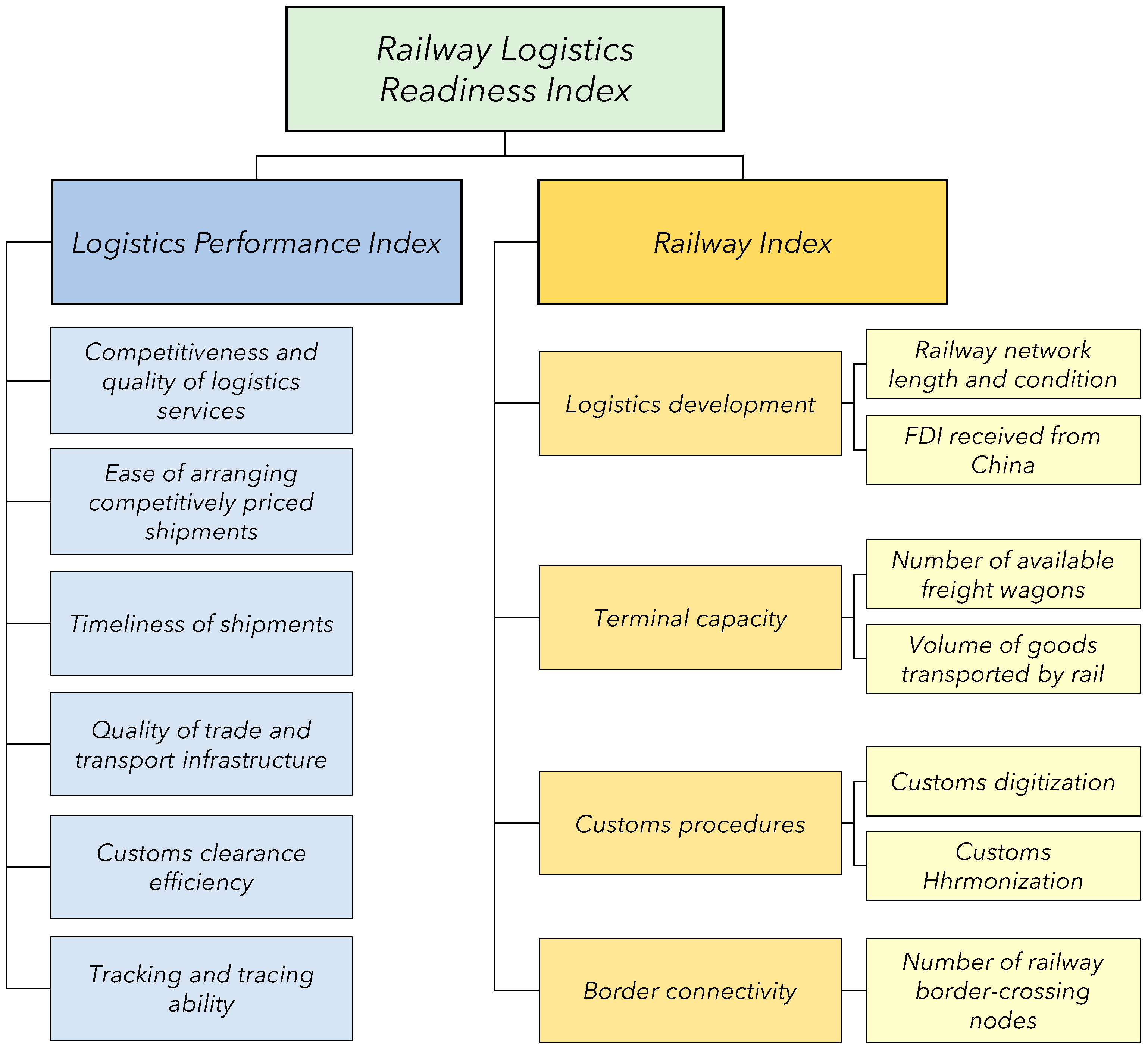
Figure 1 provides a visual representation of the proposed Railway Logistics Readiness Index (RLRI), which incorporates the six core LPI variables and the four key dimensions of the Railway Index into a unified composite framework, including specific indicators. This composite index captures both systemic logistics performance and railway-specific readiness.
This framework is used to construct the RLRI that evaluates NELBEC countries’ preparation for integration into the BRI, providing a comprehensive and measurable framework that captures both logistical efficiency and railway performance, forming the basis for composite index construction.
3.2. Normalization
Because the selected indicators are measured in different units (e.g., kilometers, percentages, categorical scores), a min–max rescaling method was applied to standardize values within the [0, 1] range [
44]. This ensured comparability across variables while preserving their relative magnitudes [
45]. The normalization process transformed each variable into a dimensionless value ranging from 0 to 1, where 1 represents the best observed performance and 0 the worst. Two normalization formulas were applied, depending on whether the indicator had a positive or negative relationship with readiness.
Equation (1) is used for a positive indicator and Equation (2) is used to represent a negative indicator, where
represents the original value of indicator
i for country
j;
and
are the minimum and maximum observed values of indicator i across all countries; and
is the normalized value of indicator
i for country
j, rescaled between 0 and 100. This normalization approach ensures that all indicators contribute proportionally to the composite index, preventing those with larger numerical scales from dominating the final results.
In this study, all variables were found to have a positive relationship with the RLRI, meaning that higher values indicate better performance in logistics and railway readiness. Therefore, the normalization process employed Equation (1) for all indicators. To compute normalized values, it was first necessary to define the minimum and maximum thresholds for each indicator, as shown in
Table 4. The minimum thresholds correspond to the lowest values in each indicator’s original measurement scale. For qualitative indicators derived from the World Bank’s LPI, the minimum score is 1 (very low performance) and the maximum is 5 (very high performance). For quantitative indicators, the minimum threshold of 0 indicates the absence of performance or measurable value in the respective variable. These thresholds represent the empirical range of observed data across the four case countries and serve as reference points for rescaling the indicators between 0 and 100.
The normalization process effectively eliminated scale bias, allowing each variable to contribute proportionally to the RLRI, allowing for consistent aggregation across dimensions and countries.
3.3. Weighting
To reflect the relative importance of each indicator within the RLRI, weights were determined using the Budget Allocation Point (BAP) approach. This method is based on expert judgment, allowing specialists to express their informed opinions regarding the significance of individual dimensions, variables, and indicators that compose the index [
46]. Experts in logistics, geopolitics, and research methodology were consulted through a structured survey. Each expert was provided with a hypothetical “budget” of 100 points to distribute among the components of the RLRI, according to their professional experience and perception of the relative importance of each element.
The process was conducted in three hierarchical stages. Experts first distributed 100 points between the two primary dimensions of the RLRI, which are LPI and Railway Readiness. Within each dimension, another allocation of 100 points was made among the corresponding variables. Finally, within each variable of the railway index, experts assigned 100 points among the specific indicators constituting that variable. Each expert completed the survey independently to prevent group influence and minimize cognitive or social bias. Participants were also encouraged to provide written justifications for their allocations, ensuring transparency and interpretability in the weighting rationale. Once the surveys were collected, the assigned weights were averaged across experts, yielding the final set of weights for each dimension, variable, and indicator.
The final weighting structure, summarized in
Table 5, presents the distribution of weights across the two principal dimensions and their respective variables and indicators. Expert assessments revealed that the LPI dimension was assigned to a higher overall weight (60%) than the Railway Index dimension (40%), highlighting the experts’ consensus that efficient logistics systems remain the backbone of NELBEC’s operational success. This prioritization reflects the understanding that improvements in logistics infrastructure, customs performance, and transport coordination are fundamental enablers for the effective integration of railway networks within the Belt and Road Initiative framework.
Within the LPI dimension, the variables receiving the highest weights were Timeliness of Shipments (22.2%), Quality of Trade and Transport Infrastructure (18.9%), and Customs Clearance Efficiency (17.2%). These results suggest that experts perceive punctual delivery, infrastructure quality, and border management efficiency as the most critical factors driving overall logistics readiness in the Eurasian corridor. Such emphasis aligns with previous studies identifying infrastructure modernization and time reliability as decisive contributors to competitiveness and supply chain resilience [
1,
6,
24].
Conversely, within the Railway Index dimension, the variable with the greatest influence was Terminal Capacity (38.3%), followed by Railway Development (25%), while Customs Procedures and Border Connectivity each accounted for 18.3%. At the indicator level, the most heavily weighted components were Railway Network Length and Condition (70%) under Railway Development, Volume of Goods Transported by Rail (63.3%) under Terminal Capacity, and Customs Digitalization (51.7%) under Customs Procedures. These results indicate that experts attribute high strategic value to the modernization and operational capacity of railway infrastructure, as well as to the digitalization and harmonization of customs processes, which are key elements for reducing border delays and enhancing corridor interoperability.
3.4. Aggregation
The aggregation of indicators into a composite index involves the systematic combination of multiple normalized and weighted variables into a single representative score. This procedure is fundamental for evaluating complex phenomena in a summarized way, allowing for comparisons among countries and the identification of specific areas for improvement [
26]. In the present study, the proposed RLRI integrates key indicators reflecting critical aspects of logistics and railway development. The first stage of the aggregation process consists of computing sub-indices for each dimension (logistics readiness and railway readiness). This is achieved by averaging the normalized and weighted indicators belonging to each dimension, as represented by Equation (3), where
represents the sub-index value for dimension
D (either logistics or railway readiness);
is the normalized weight assigned to indicator
i within dimension D (such that
);
is the normalized value of indicator
i within dimension
D; and
is the number of indicators included in dimension D. Once the sub-indices for both dimensions were obtained, they were combined into the final composite index using the aggregation formula expressed in Equation (4), where
represents the final composite index value for each country;
is the weight assigned to each dimension
D; and
is total number of dimensions.
This aggregation process produces a final index score ranging from 0 to 100, where higher values represent greater levels of logistical and railway readiness. The results allow both cross-country comparison and dimension-specific interpretation, supporting an in-depth understanding of each country’s strengths and weaknesses within NELBEC. To facilitate interpretation, the aggregated results were classified into five performance levels shown int
Table 6.
The five-level classification (Critical, Deficient, Moderate, Advanced, and Optimal) was defined by the authors following a structure comparable to a five-point Likert scale, which facilitates intuitive interpretation and comparability. Each interval covers 20 score points, ensuring uniform distribution and ease of use for policy evaluation. While nonlinear transformations such as logarithmic scaling were considered, a linear classification was preferred to maintain simplicity and interpretability of the index results.
3.5. Case Study Application: Russia, Belarus, Kazakhstan, and Poland
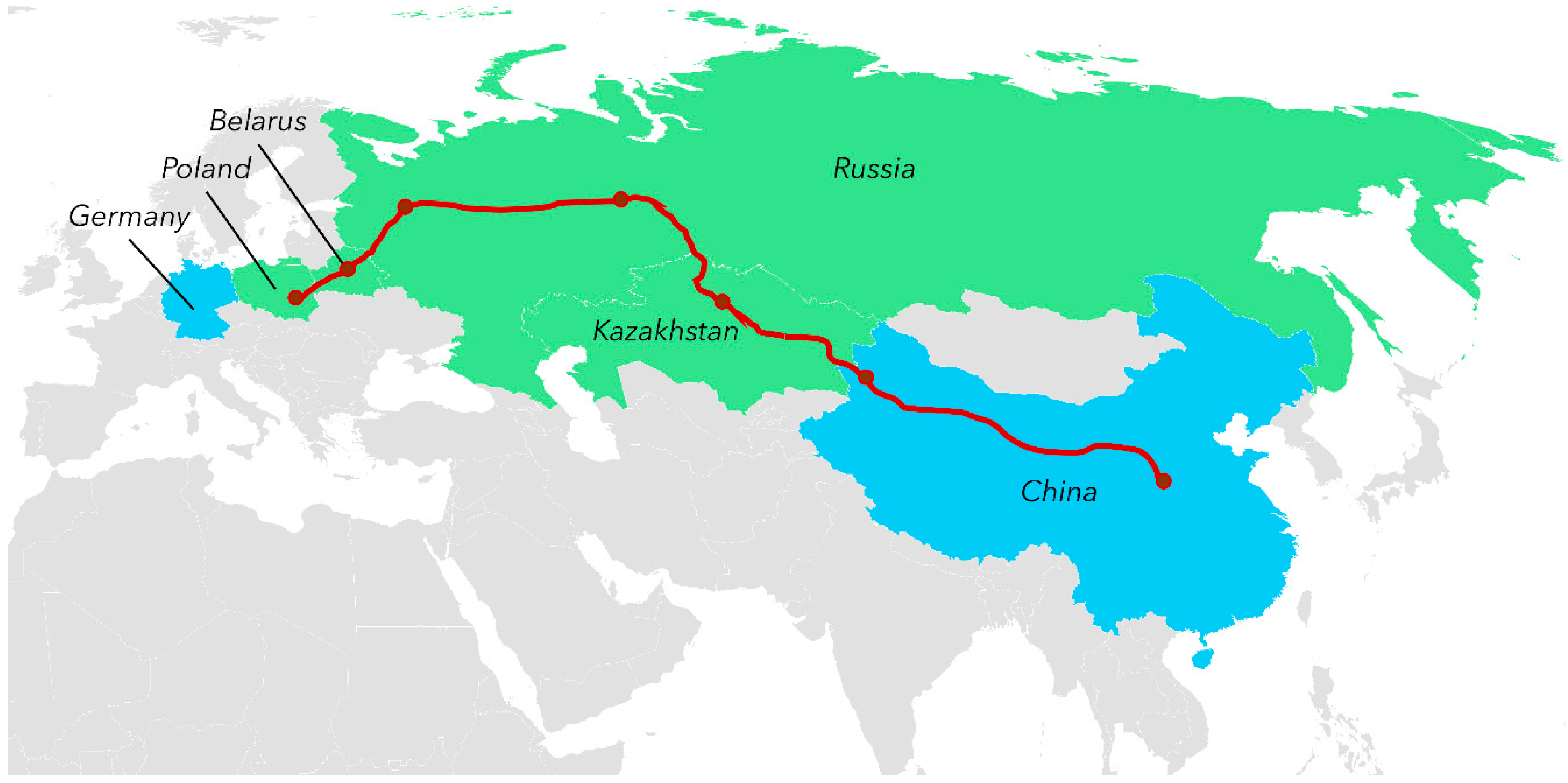
The empirical application of the RLRI focused on four countries that serve as critical transit nodes along the NELBEC, which are Russia, Belarus, Kazakhstan, and Poland. As shown in
Figure 2, these countries serve as strategic nodes for Eurasian connectivity, yet they differ significantly in their levels of infrastructure development, customs efficiency, and integration into global supply chains. Applying the RLRI to these cases allows for a comparative assessment of strengths and weaknesses, highlighting where investments and policy reforms are most urgently needed. These countries were selected based on three main criteria: geostrategic position, infrastructure and logistical relevance, and comparative assessment.
All four countries lie directly on the main railway route linking China to Europe. Kazakhstan serves as China’s primary gateway into Central Asia; Russia provides the longest transcontinental segment of the corridor; Belarus represents a key border-crossing state before entry into the EU; and Poland acts as the first EU member state and terminal hub for China–Europe trains [
6]. Each country has invested heavily in transport infrastructure in recent decades, although with varying degrees of modernization and efficiency. Russia and Kazakhstan rely on extensive but unevenly modernized networks; Belarus functions as a strategic bottleneck at the Brest–Małaszewicze crossing; and Poland has leveraged EU integration to modernize its logistics infrastructure and improve customs processes [
15,
22].
By applying the index to these cases, it was possible to evaluate relative strengths and weaknesses. The normalization and weighting procedures produced readiness scores for each dimension (logistics and railway), which were then aggregated into an overall index value (RLRI) for each country. This allowed for both cross-country comparison and intra-country analysis of performance gaps across the two dimensions. The single composite score, expressed on a 0–100 scale, provided the empirical basis for the results and discussion presented in the following sections.
4. Results
The RLRI results provide a comparative overview of the logistics and railway readiness levels of Russia, Belarus, Kazakhstan, and Poland. As shown in
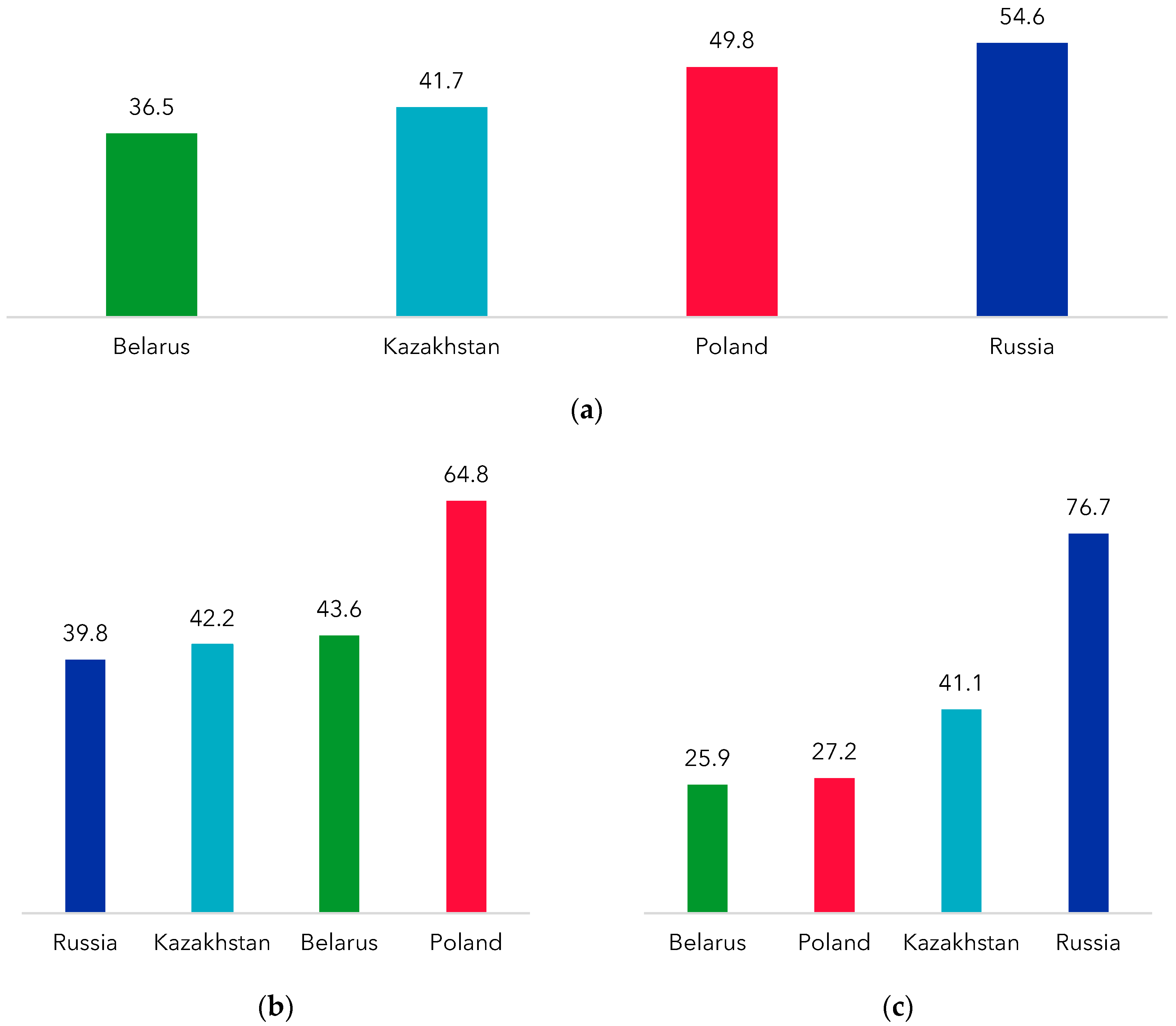
Figure 3, substantial variation exists among the four countries, underscoring structural asymmetries in logistics performance, railway development, and customs modernization within the NELBEC. The findings reveal that Russia achieved the highest readiness score (54.6), followed by Poland (49.8) and Kazakhstan (41.7), while Belarus (36.5) exhibited lower levels of readiness. According to the performance classification, Russia, Poland and Kazakhstan fall within the “moderate performance” range (41–60), whereas Belarus is categorized as “deficient performance” (21–40). It highlights the predominance of the railway dimension in Russia’s readiness profile.
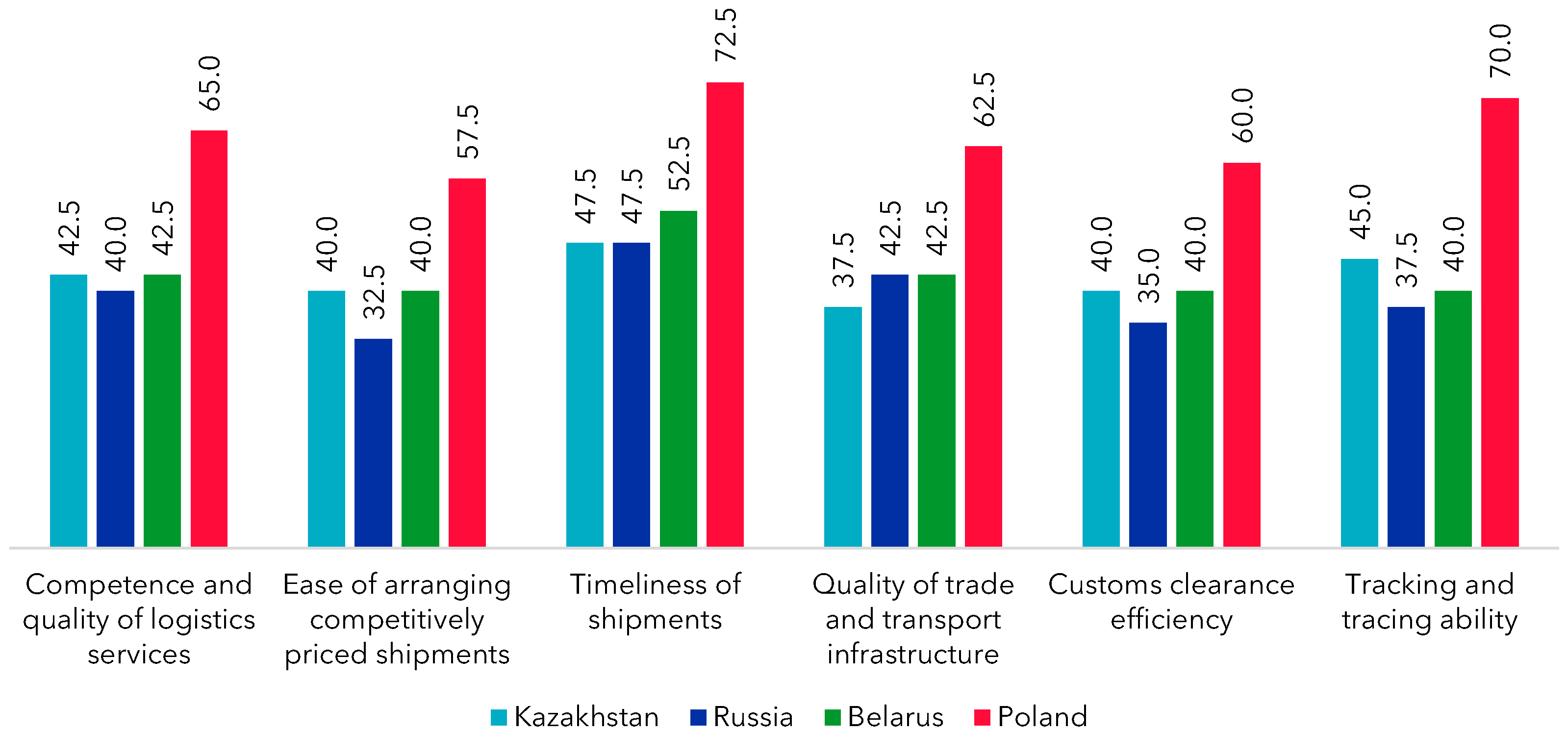
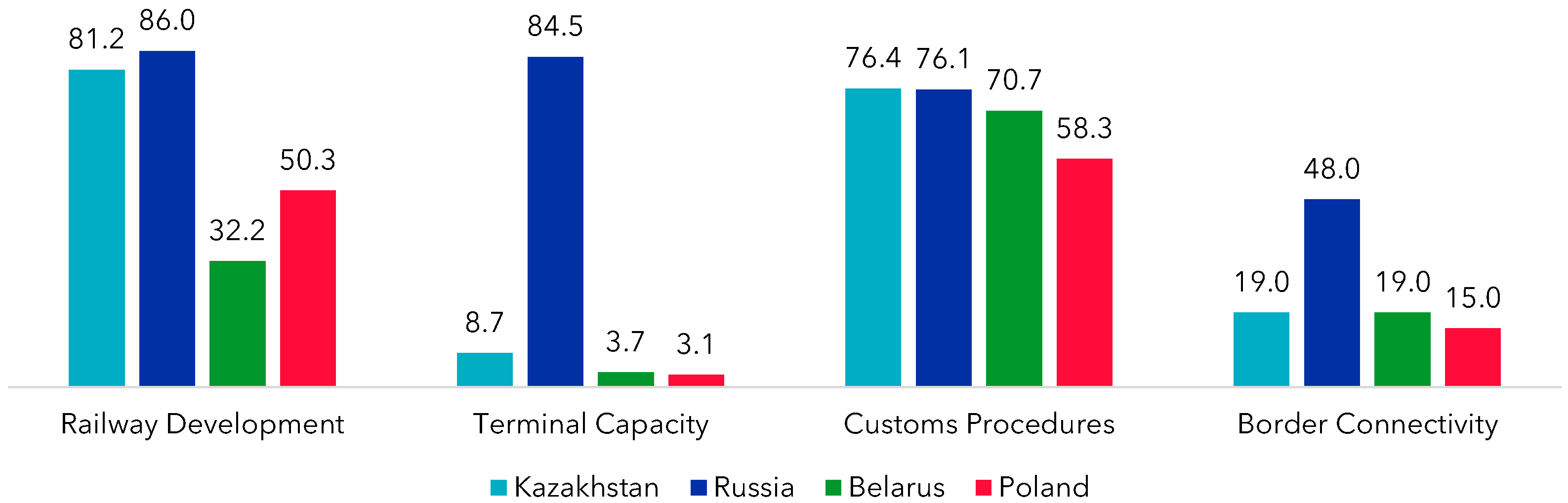
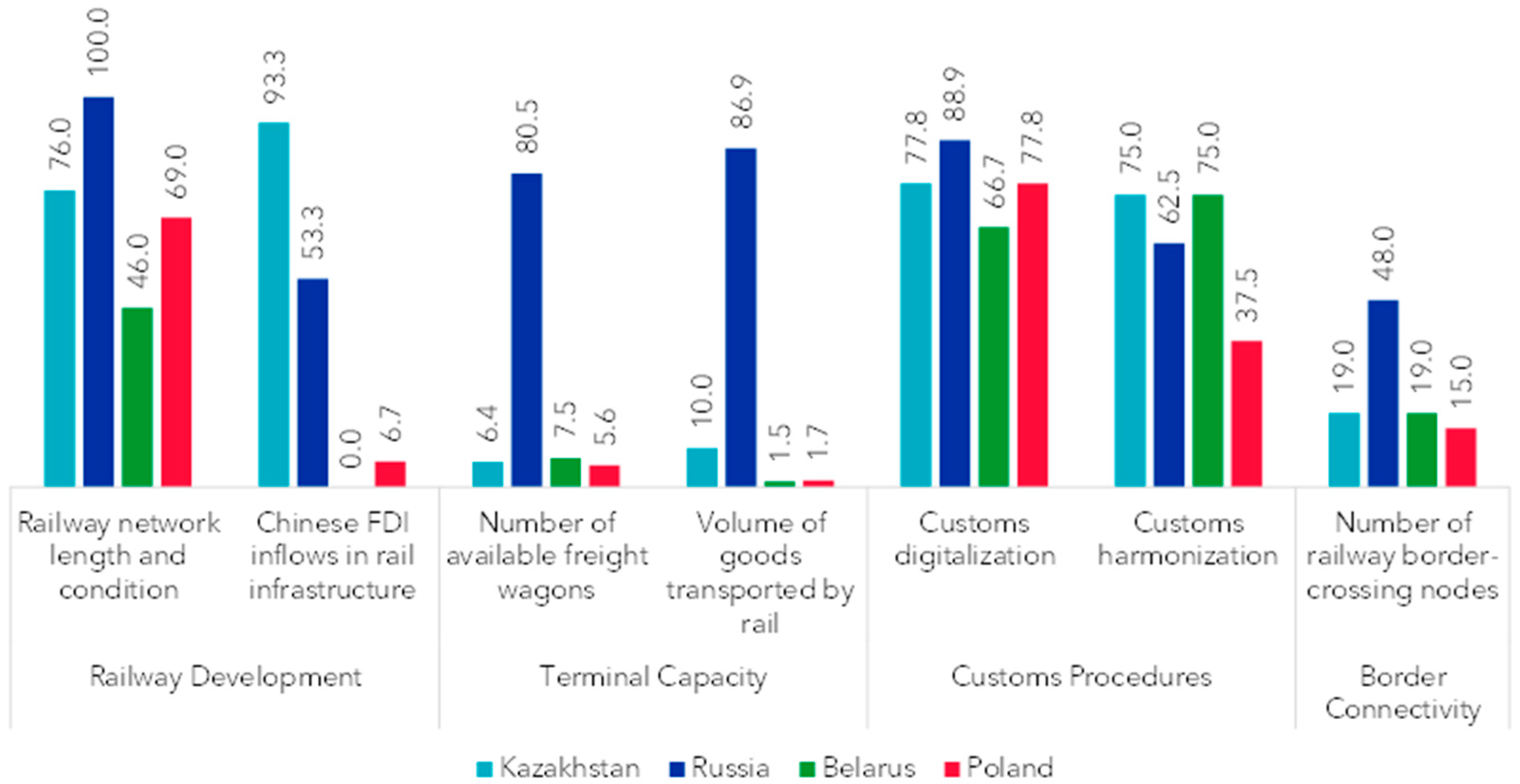
Breaking down the composite index into its two main dimensions (LPI and Railway Index) and respective indicators (see
Figure 4,
Figure 5 and
Figure 6) reveals distinct national patterns. Poland leads the logistics dimension, obtaining a score of 64.8, significantly above Belarus (43.6), Kazakhstan (42.2), and Russia (39.8). Poland’s superior logistics readiness is supported by its high-quality trade and transport infrastructure, efficient customs clearance, and strong integration into European supply chains. These results align with prior research emphasizing Poland’s pivotal role as the EU’s eastern logistics hub [
1,
6]. In contrast, Russia dominates the railway dimension with a score of 76.7, far exceeding Kazakhstan (41.1), Belarus (25.9), and Poland (27.2). This performance reflects Russia’s extensive and well-maintained rail network, large freight capacity, and progress in customs digitalization under the EEU framework. Nonetheless, Russia’s relatively weak logistics performance, particularly in customs efficiency and tracking systems, continues to constrain its overall integration potential.
Kazakhstan, positioned third overall, demonstrates balanced but moderate performance in both dimensions (LPI: 42.2; Railway Index: 41.1). The country benefits from substantial Chinese investment in rail infrastructure and its strategic geographic position as a gateway to Central Asia. However, limited terminal capacity (8.7) and slow progress in digital customs harmonization hinder its transition toward advanced performance levels. Belarus exhibits the lowest composite score, driven by severe limitations in railway capacity (25.9) and persistent bottlenecks at the Brest–Małaszewicze border crossing. Despite moderate logistics indicators such as competence of logistics services (42.5) and timeliness of shipments (52.5), Belarus’s infrastructure and customs challenges significantly reduce its readiness for deeper integration into the BRI.
6. Conclusions
This study developed a Railway Logistics Readiness Index to assess the preparedness of four key NELBEC countries, which are Poland, Russia, Kazakhstan, and Belarus, for integration into the BRI. By combining the World Bank’s LPI with newly proposed railway-specific indicators, the research provides a multidimensional view of logistical and infrastructural readiness. The results reveal marked disparities in performance with only Poland and Russia reaching moderate readiness levels. Russia emerged as the top performer, driven by its vast rail capacity but hindered by administrative inefficiencies; Poland followed, supported by EU-standard infrastructure and customs digitalization. Kazakhstan showed moderate readiness, benefiting from strategic positioning yet constrained by weak terminal capacity, infrastructure and cross-border nodes. Belarus ranked last, limited by outdated infrastructure and bottlenecks.
Methodologically, the study advances corridor assessment by integrating logistics and railway dimensions within a single composite index. The approach combines normalization, expert-based weighting, and additive aggregation to extend beyond conventional LPI analyses, offering a more context-specific framework that captures both structural capacity and operational efficiency. This provides a replicable tool for evaluating other BRI corridors or multimodal transport systems.
6.1. Practical and Policy Implications
The empirical results offer actionable insights for policymakers and international stakeholders. Russia’s performance illustrates how strong railway infrastructure can compensate for weaker logistics efficiency. Targeted improvements in customs procedures, digital systems, and intermodal infrastructure could further enhance Russia’s role as a central transit hub. Poland’s high readiness underscores the benefits of EU-funded infrastructure projects, customs harmonization, and technological modernization. The country can strengthen its position as the main European gateway of NELBEC by addressing rail congestion at Małaszewicze and expanding wagon capacity.
Kazakhstan, despite its strategic location and investments at Khorgos, still faces limitations in terminal capacity and customs transparency. Expanding handling capacity and accelerating digital integration are crucial for maintaining competitiveness. Belarus remains the most vulnerable node in the corridor, requiring urgent modernization of its logistics infrastructure and the elimination of administrative bottlenecks to prevent systemic delays.
Political factors play a decisive role in shaping the effective implementation of corridor strategies, beyond technical and logistical aspects. The success of NELBEC hinges on sustained cross-border cooperation, regional stability, and policy alignment among participating states. Ongoing geopolitical tensions and sanctions regimes affect railway flows between Russia, Belarus, and the European Union, influencing investment attractiveness and operational continuity. Institutional coordination through multilateral mechanisms, such as the EEU and the EU, can strengthen the corridor’s governance framework and ensure the practical application of the readiness index. These findings have clear policy implications regarding coordinated cross-border investments, digital harmonization, and diplomatic engagement aimed at improving corridor performance. Improved railway connectivity reduces transit costs and times, and strengthens regional economic integration, which is one of the BRI’s core objectives.
6.2. Limitations and Future Research
Despite its contributions, the study faces several limitations inherent to its data and methodological scope. First, the availability and consistency of national-level data remain uneven. Several indicators such as terminal handling capacity and customs digitalization required the use of proxy variables, which, while informative, may not fully capture the complexity of real-world logistics systems. Second, the weighting process based on expert judgment introduces an element of subjectivity, and results could vary whether different experts or weighting techniques (e.g., AHP, PCA or entropy methods) were employed.
Moreover, the analysis focuses exclusively on four NELBEC countries. Expanding the model to include additional BRI participants (e.g., China, Germany) could enhance comparative robustness and reveal broader regional patterns. Future research could integrate dynamic indicators such as investment flows over time, operational reliability metrics, and environmental performance, to assess how corridor readiness evolves. Moreover, linking this composite index with trade volume data could help quantify how improvements in logistics and railway systems translate into tangible economic gains.




 ,
,