Article

Challenges of Establishing Sustainable Logistics Urban Park in the Middle Eastern Countries

by
Mohammad Sharif Zami
1,2,3,*,
Sara Qwaider
1,
Jasim Azhar
4,
Mohammad A. Hassanain
3,5 and
Nicola Delledonne
6
1
Architecture and City Design Department, College of Design and Built Environment, King Fahd University of Petroleum and Minerals, Dhahran 31261, Saudi Arabia
2
Interdisciplinary Research Center for Construction and Building Materials, King Fahd University of Petroleum and Minerals, Dhahran 31261, Saudi Arabia
3
Interdisciplinary Research Center for Smart Mobility and Logistics, King Fahd University of Petroleum and Minerals, Dhahran 31261, Saudi Arabia
4
Department of Architecture and Urban Planning, College of Engineering, Qatar University, Doha 2713, Qatar
5
Architectural Engineering and Construction Management Department, King Fahd University of Petroleum and Minerals, Dhahran 31261, Saudi Arabia
6
The College of Architecture and Design, Department of Architecture, Alasala Colleges, Dammam 32324, Saudi Arabia
*
Author to whom correspondence should be addressed.
Urban Sci. 2025, 9(12), 510; https://doi.org/10.3390/urbansci9120510 (registering DOI)
Submission received: 16 October 2025 / Revised: 24 November 2025 / Accepted: 26 November 2025 / Published: 1 December 2025

Abstract

Urban parks improve the overall quality of life (QoL) by reducing CO2 emissions, depression, anxiety, and fatigue. Urban green spaces shape our lives by influencing our mental and physical well-being. High-income dwellers of low-density urban areas enjoy a wide range of health benefits because they have better access to sustainable logistics urban parks (SLUPs), while the economically disadvantaged sometimes have fewer chances to access parks in their high-density suburbs in Middle Eastern Countries (MECs). The disparity in accessibility to urban parks raises questions about the inclusivity of civic facilities. Therefore, this study seeks to answer the following question: What challenges do MECs face in the successful implementation of SLUPs? This study aimed to analyze and understand the challenges of establishing SLUPs in MECs. To achieve this aim, this study adopted a mixed-method approach, whereby in-depth interviews and questionnaire surveys were utilized to collect and validate the data. The study outcome shows that the gap in stakeholder collaboration and high land prices are the major challenges, whereas sociability issues, lack of awareness, and interest are the minor challenges in establishing SLUPs in MECs.

1. Introduction

The concept of logistics is not novel. It has long been recognized as both an art and a science that involves the movement and storage of goods throughout the supply chain [1]. User-friendly and sustainable park logistics offer significant environmental, social, and economic benefits. It integrates eco-friendly practices and technologies into park operations to minimize environmental impact and enhance the user experience. This includes using renewable energy sources, promoting waste reduction and recycling, optimizing transportation through electric vehicles and route planning, and incorporating green building designs [2,3]. According to Dargin, the Gulf region faces difficult challenges as it tackles the adverse effects of climate change and interrelated complex issues [4]. In the MECs (Kuwait, Oman, Saudi Arabia, UAE, and Qatar), the temperatures are already significantly higher than the global average, with extreme heatwaves exceeding 50 °C. If this trend continues, large parts of the region are expected to become uninhabitable by the end of the century. Climatologists have already cautioned that by 2050 the region’s temperature will increase by 4 °C if no action is taken. This is far beyond the 1.5 °C limit required to avoid a global environmental breakdown [4]. The Arab region has some of the oldest continuously inhabited cities and, therefore, possesses a rich urban history dating back thousands of years. It was predicted that by 2020, 74% of the population in Arab countries would live in cities, while in Qatar and Kuwait, the prediction was as high as 99–100% [5].
Urban parks are essential elements of the city landscape, offering health benefits, improving air quality, and providing relief from the pressures of urban living [6]. According to Edeigba et al., urban parks provide green spaces that support ecological balance and ease the negative influences of urbanization, such as air and water pollution. Therefore, access to urban green spaces influences health [7]. According to the ESCWA urban parks are increasingly recognized as critical components of sustainable urban systems, especially as cities seek to align with global frameworks such as Sustainable Development Goal 11 (Sustainable Cities and Communities), which emphasizes inclusive public spaces, efficient resource use, and resilient urban infrastructure [5].
In this context, integrating sustainable logistics operations into urban park development represents an emerging but under-explored dimension of urban governance. Concepts from the circular economy, such as closed-loop resource flows, waste reduction, and renewable material cycles, provide a theoretical foundation for understanding how parks can function as logistical nodes that support efficient maintenance regimes, optimized waste handling, and intelligent resource distribution. Similarly, smart city logistics theory highlights the role of digital technologies, data management, and automated systems in improving the environmental performance and operational efficiency of urban services [8,9,10]. Linking these concepts, SLUPs operate at the intersection of environmental sustainability, sociocultural well-being, and urban management, offering a platform for integrating smart technologies, environmentally responsible logistics, and socially inclusive design.
This study examines the knowledge gap connecting urban development sustainability to logistics facility management. Research on sustainability and urban green spaces is abundant, but there is a lack of studies focused on logistics operations, stakeholder management, and sustainability implementation in Middle Eastern urban parks. This study combines survey data from multiple Middle Eastern countries with expert interview findings to address the existing knowledge deficit in this specific area. This study helps scientists understand how socio-cultural and environmental elements and governance systems affect the development of SLUPs in hot, dry cities that experience rapid urban growth. Some Middle East and North Africa (MENA) countries are increasing the number of parks and improving access to sports facilities for their residents, but others are lagging because of a lack of social support and motivation and extreme weather conditions. These are the most common challenges to physical activity among people in the MENA region. Therefore, this study aims to analyze the challenges of SLUPs in MECs. The aim was achieved through a mixed-method approach, whereby in-depth interviews and a questionnaire survey were employed to collect and authenticate the data. The study results clarify the challenges, enablers, and their interrelationships toward the successful establishment of SLUPs in MECs.

2. Literature Review of Challenges of Urban Parks

According to UN Habitat, public spaces in 2016 constituted a mere 2% of Middle Eastern cities, compared with an average of 12% in Europe [5]. This can be partly attributed to the lack of urban planning in the face of rapid urbanization, which has seen the growth of informal human settlements on the outskirts of cities, often un-serviced by public infrastructure [5]. However, urban parks in developing countries are often challenged by limited resources, accessibility, sociability, comfort, image projection, effective design, inadequate planning, and poor maintenance and management [6]. The Arab region, particularly the Arabian Peninsula, is the world’s most water-scarce region. Traditional grassy green spaces require water resources, which is why green spaces are expensive and resource-demanding in this region [11]. A study on 12 zones in the Greater Doha area of Qatar found that only two zones met the World Health Organization’s (WHO) public park standard requirement (8 m2 of green space per 1000 inhabitants in Doha, which is lower than the WHO’s standard of 9 m2 per 1000 inhabitants) [12].
Spatial inequality is being combated in some cities with accessibility standards that delineate maximum travel distances between dwellings and public green spaces; however, retrospective greenification is especially challenging in cities with crowded and unplanned urban landscapes [13,14]. Researchers have shown that a substantial population of many Arab cities is discouraged from visiting public green spaces owing to accessibility challenges, including distance, absence of nearby public transport, lack of safety for women, harsh local climates, inappropriate architectural design, and inaccessibility for pedestrians with disabilities [15]. Kebede and Yücel Besim (2024) assessed major dimensions, such as accessibility, sociability, comfort, image projection, and management/maintenance challenges, to understand how well urban parks serve their communities and contribute to urban development [6].
Sustainable logistics in urban parks represents a critical intersection of environmental stewardship, operational efficiency, and visitor experience management. As urbanization intensifies and environmental concerns mount, parks face increasing pressure to balance accessibility and conservation goals [16]. Urban parks serve as essential green infrastructures that provide ecosystem services and require complex logistical operations for maintenance, waste management, and visitor services [17]. The challenge lies in developing logistic systems that support park operations without compromising ecological integrity or visitor experience. SLUPs combine green technologies, smart infrastructure, and stakeholder collaboration to create eco-friendly and resilient urban spaces [18,19]. This is salient in MECs, where rapid urbanization, unique climatic conditions, and cultural specificities introduce additional complexities in the implementing such systems. The key aspects of the SLUPs are listed in Table 1.
Bao et al. emphasized the importance of systematic performance evaluation of logistics parks, particularly in sustainable and user-friendly development [13]. This study developed a comprehensive evaluation index system, as shown in Table 2, to assess logistics park performance across multiple dimensions. The system includes indicators related to infrastructure quality, operational efficiency, environmental sustainability, service level, and policy support. By adopting such a multidimensional evaluation framework, stakeholders can better understand the effectiveness of SLUPs and identify areas for improvement in their implementation.
The challenges of establishing an SLUP are many and are summarized in Table 3.
Most studies on SLUPs focus on general urban logistics rather than park-specific applications, creating a gap in understanding unique parking requirements. Existing studies emphasize technological solutions while giving less attention to the social and cultural factors affecting their implementation. Many studies lack long-term impact assessments, making it difficult to evaluate sustainability. Some studies provide quantitative data and rigorous methodological approaches, whereas others rely primarily on theoretical frameworks or limited case studies. After an extensive review of the literature, few studies have been conducted on SLUPs in MECs, focusing particularly on the challenges.

3. Materials and Methods

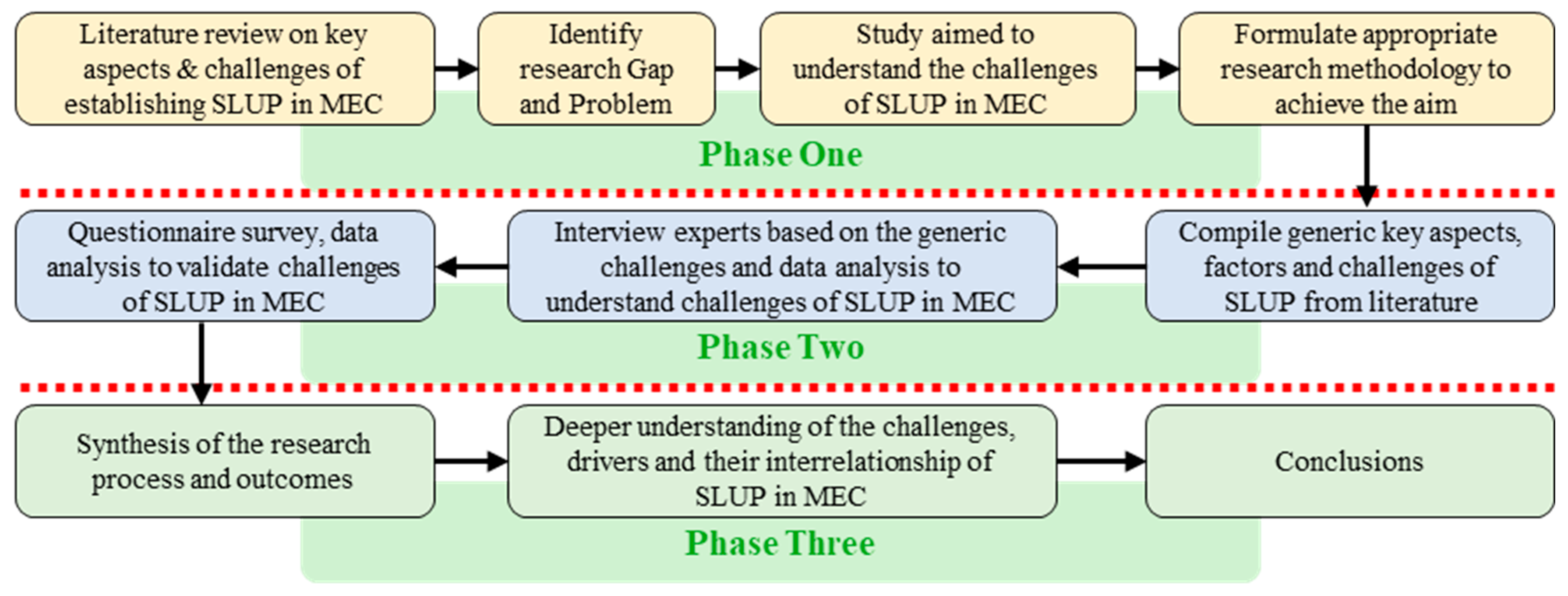
This section delineates the systematic approach employed to investigate the challenges associated with the SLUP in MEC. This study adopted an integrated qualitative and quantitative mixed-methods approach to comprehensively explore the challenges of designing SLUPs in MECs. The methodological framework illustrated in Figure 1 comprises three sequential phases. The triangulated approach ensured a deeper understanding of both expert and user perspectives, enhancing the reliability and validity of the findings.
An extensive literature review was conducted to identify the key aspects, factors, and challenges of SLUPs. The review guided the development of conceptual categories and the structure of the interviews used in the qualitative phase. To capture expert insights, semi-structured interviews were conducted with a purposive sample of 20 experts, whose profiles are summarized in Appendix A. In line with ethical requirements, the background information of the interviewed experts has been presented in an anonymized form using coded identifiers (A–T) to safeguard confidentiality while maintaining clarity about their professional roles, years of experience, and organizational backgrounds. According to the expert profiles, they were experienced in the urban planning and design issues of MECs and aptly represented MECs. The interview process followed saturation-based logic. Initially, ten interviews were conducted and then thematically analyzed. Although several overlapping themes emerged, the responses were not entirely repetitive. Five additional interviews increased similarity but still contributed to new insights. After conducting twenty interviews, thematic saturation was achieved, as no new concepts appeared in the final transcripts. The interview questions explored perceptions of logistics challenges in parks, sustainability integration, climate-responsive design, community engagement, and smart infrastructure adoption. All interviews were transcribed and thematically analyzed using a hybrid coding strategy that combined inductive codes with concepts derived from the literature. This qualitative phase contributed to the development of a contextualized analytical framework that illustrated the interrelationships among the key challenges and enablers of SLUP in the MEC.
Based on the literature and interviews, a questionnaire survey was conducted targeting community members and park users in the selected MECs. The primary aim was to validate the qualitative findings (the framework) and rank the perceived key aspects, evaluation index system, and challenges of the SLUP to identify key design priorities from specialists and users’ perspectives. The survey comprised five sections: demographic information, level of importance of parks’ key aspects and criteria, level of agreement on perceived challenges, priorities for design criteria, and open-ended feedback. All items were measured using a five-point Likert scale to enable descriptive and inferential statistical analyzes. The survey was administered online via Google Forms and was distributed through community channels and social media platforms to ensure broad public participation. A randomized sampling approach was adopted to reduce the response bias. A series of statistical techniques was employed to analyze and validate the data collected using Microsoft Excel and SPSS (Statistical Package for the Social Sciences). Weighted mean, rank, and Relative Importance Index (RII) values were used to evaluate the perceived significance of each challenge, key aspects, and evaluation index criteria. To assess the internal consistency and reliability of the measurement instrument, Cronbach’s alpha test and Pearson correlation analysis were performed to explore the interrelationships among the variables.
Given the exploratory nature of this study and the absence of prior models addressing SLUPs in the Middle Eastern context, exploratory factor analysis (EFA) was employed to identify the underlying latent dimensions of the collected data. This approach allowed the researchers to uncover patterns and conceptual structures grounded in stakeholder perceptions rather than imposing a predefined theoretical model. The suitability of the data for factor analysis was first verified using the Kaiser–Meyer–Olkin (KMO) measure and Bartlett’s Test of Sphericity. A KMO value above 0.60 and a statistically significant Bartlett’s test (p < 0.05) confirmed that the dataset had sufficient intercorrelations for factor analysis. Factor extraction followed the Kaiser criterion, keeping components with eigenvalues greater than 1.0, complemented by a visual inspection of the scree plot to identify the point of inflection. Principal Component Analysis (PCA) was chosen as the extraction method because the aim was to summarize the observed variables into a smaller set of composite factors suitable for subsequent multivariate techniques (cluster analysis), rather than to test a predefined theoretical model. For rotation, the Varimax orthogonal method was applied because the conceptual framework assumes that the dimensions of SLUPs, such as infrastructure quality, stakeholder collaboration, and mobility, represent relatively independent domains. Varimax enhances interpretability by maximizing the variance of the factor loadings and producing a simpler, more distinct factor structure. The combination of PCA extraction and Varimax rotation ensured that the resulting components were statistically robust, conceptually meaningful, and aligned with the study’s aim of identifying the key structural elements that influence the successful implementation of SLUP in the Middle Eastern context.
The factor scores generated from the final EFA solution were subsequently used as inputs for clustering. This sequential EFA–cluster approach enabled us to identify distinct stakeholder groups characterized by similar patterns of challenges and perceptions regarding SLUP implementation. Cluster analysis was then conducted to categorize respondents into homogeneous groups based on their responses to SLUPs (Key Aspects, Evaluation Index, and Challenges). To further validate the data, a one-way ANOVA and independent samples t-test were conducted to examine mean differences across demographic variables and factor scores.
The mixed-methods design combining expert interviews, a questionnaire survey, exploratory factor analysis, and clustering supported by ANOVA provided both depth and breadth in understanding the multidimensional challenges and stakeholder heterogeneity in SLUP development. Integrating qualitative insights with quantitative validation strengthens the robustness and applicability of the study’s conclusions.

4. Results

4.1. Data Analysis of the In-Depth Interviews and Developing a Framework to Understand the Challenges

Experts shared the lessons that they had learned from projects designing SLUPs. Their collective insights underscore the critical importance of integrating community engagement, climate-conscious design, efficient resource use, and ongoing evaluation in creating urban community parks. The interviewees were asked to state the challenges in establishing SLUPs in MECs. Experts A and C–S identified development funds and governance as key issues, besides the need for sufficient financial resources and effective management frameworks. Experts B–E and J highlighted the harsh climate of the arid region as a significant obstacle, along with the high costs of implementing sustainable features, such as advanced irrigation systems and shading structures. Experts F, S, and T highlighted funding and resource limitations as major constraints. Experts E–R raised concerns about the high costs associated with sustainable materials and technologies, the limited availability of native plants suitable for the local climate, water scarcity for irrigation, the creation of shaded areas to combat heat, and the design of flexible spaces that can adapt to evolving community needs. Other challenges included the resistance to changes in traditional park designs and the difficulty of balancing aesthetic appeal with sustainability goals in a hot urban environment.
Experts C–E, G–I, and M–Q criticized top-down strategies for often neglecting community input, emphasizing the importance of involving residents in the design process to ensure that parks fulfill their actual needs, preferences, sense of ownership, and responsibility. They recommended methods such as surveys, workshops, and focus groups to identify local needs and preferences, ensuring that the park reflects community values. Notably, the challenge associated with engaging residents during the design, management, and maintenance processes was specifically mentioned by over 60% of the interviewees, which was not found among the challenges collated in Table 3. Experts G–I and L–T noted that insufficient funding and inadequate maintenance quality could hinder effective park management. They also emphasized that the lack of public awareness might limit community engagement and suggested that municipalities should focus on initiatives to enhance funding opportunities and improve maintenance practices. Experts D and G–J emphasized the importance of public awareness and education about sustainability practices, particularly among government officials who, instead of recognizing the benefits of sustainable strategies, may be hesitant to adopt them.
According to Experts A, C, and I–P, lack of maintenance poses an ongoing challenge (e.g., cleanliness, proper lighting to ensure the park’s safety). They stated that integrating smart technologies can be problematic because of the lack of robust infrastructure and public awareness, particularly among older community members who may be unfamiliar with these innovations. Experts K–P highlighted the need for proper coordination between hardscape and softscape elements to achieve cohesive and functional park designs. Expert L summarized the key challenges, including managing the hot climate, ensuring efficient water usage, balancing budget constraints, integrating eco-friendly materials, and engaging the community throughout the park’s lifecycle. Experts I–M added that climate change could affect the effectiveness of current design strategies, emphasizing the importance of planning for adaptability and resilience in the SLUP design.
Experts C–H highlighted the need for user-friendly and accessible technological solutions. Experts F–P underscored the importance of monitoring and evaluation through feedback mechanisms to assess the effectiveness of park design and amenities. Experts A, C, D, and I–L emphasized that the built environment encompasses not only physical aspects but also socio-cultural factors that influence how people perceive and use space. Understanding these elements is critical for creating parks that meet community needs and for maintaining open communication with users throughout the development process. Experts D, L, and R advocated a top-down approach to sustainability initiatives, asserting that leaders and government officials must drive the transformation of parks into sustainable spaces. Delegating this responsibility solely to the community, they warned, could lead to uncertainty and delays in finding effective solutions to the SLUP.
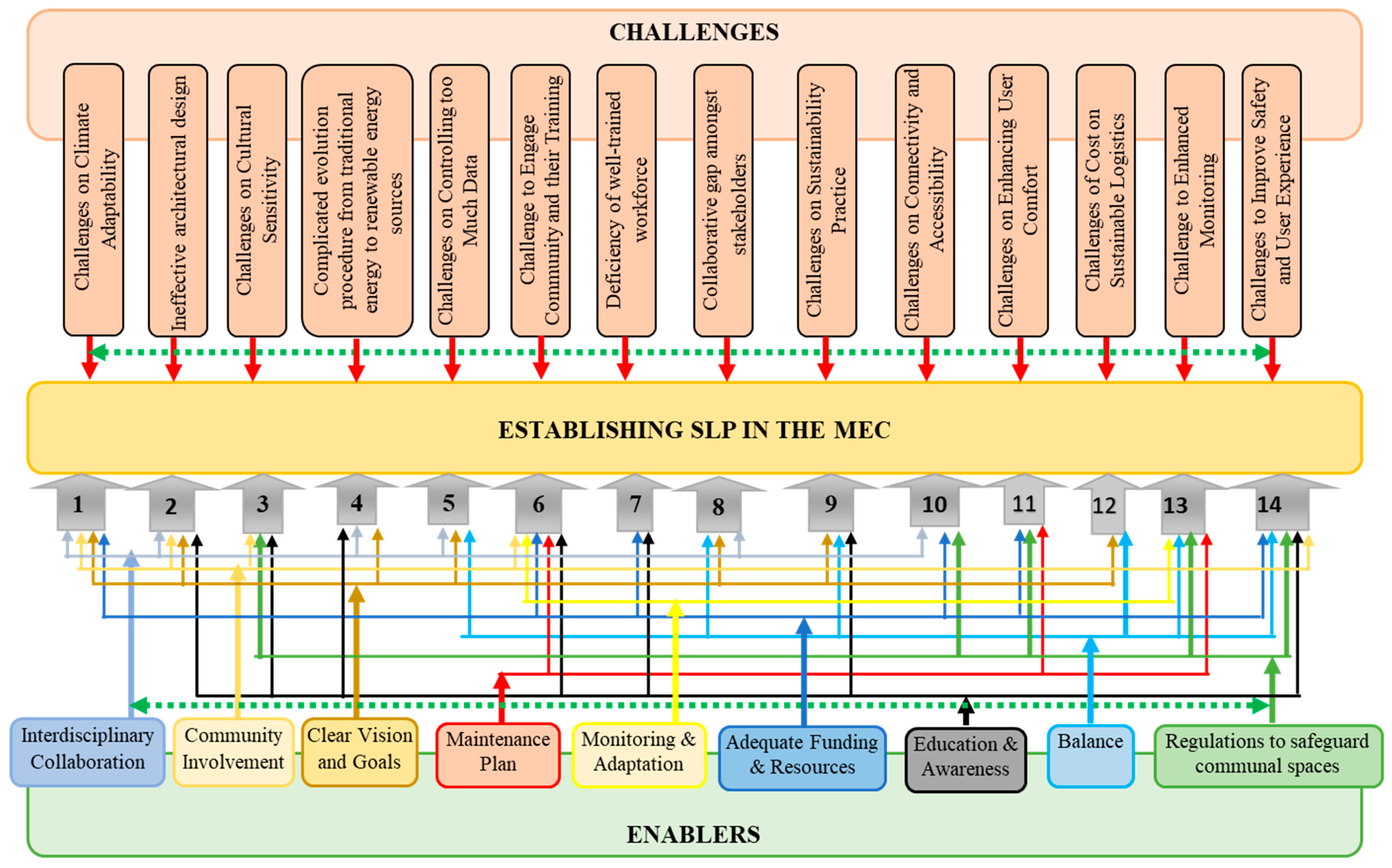
Experts A–D and J–O highlighted the benefits of utilizing local resources and materials, such as local stone, which are often better suited to regional climates. Experts provided valuable insights into designing parks in MECs that align with the region’s unique climate and cultural identity. Their collective insights emphasized the importance of integrating climate adaptability, cultural sensitivity, and community engagement in park designs, ensuring they meet environmental goals while enriching the social fabric of MECs. Experts were specifically asked how the incorporation of smart technologies would enhance the efficiency of SLUPs. Experts anonymously agreed that integrating smart technologies is beneficial for both operational efficiency and user experience. The experts’ insights into the challenges are summarized in Figure 2.
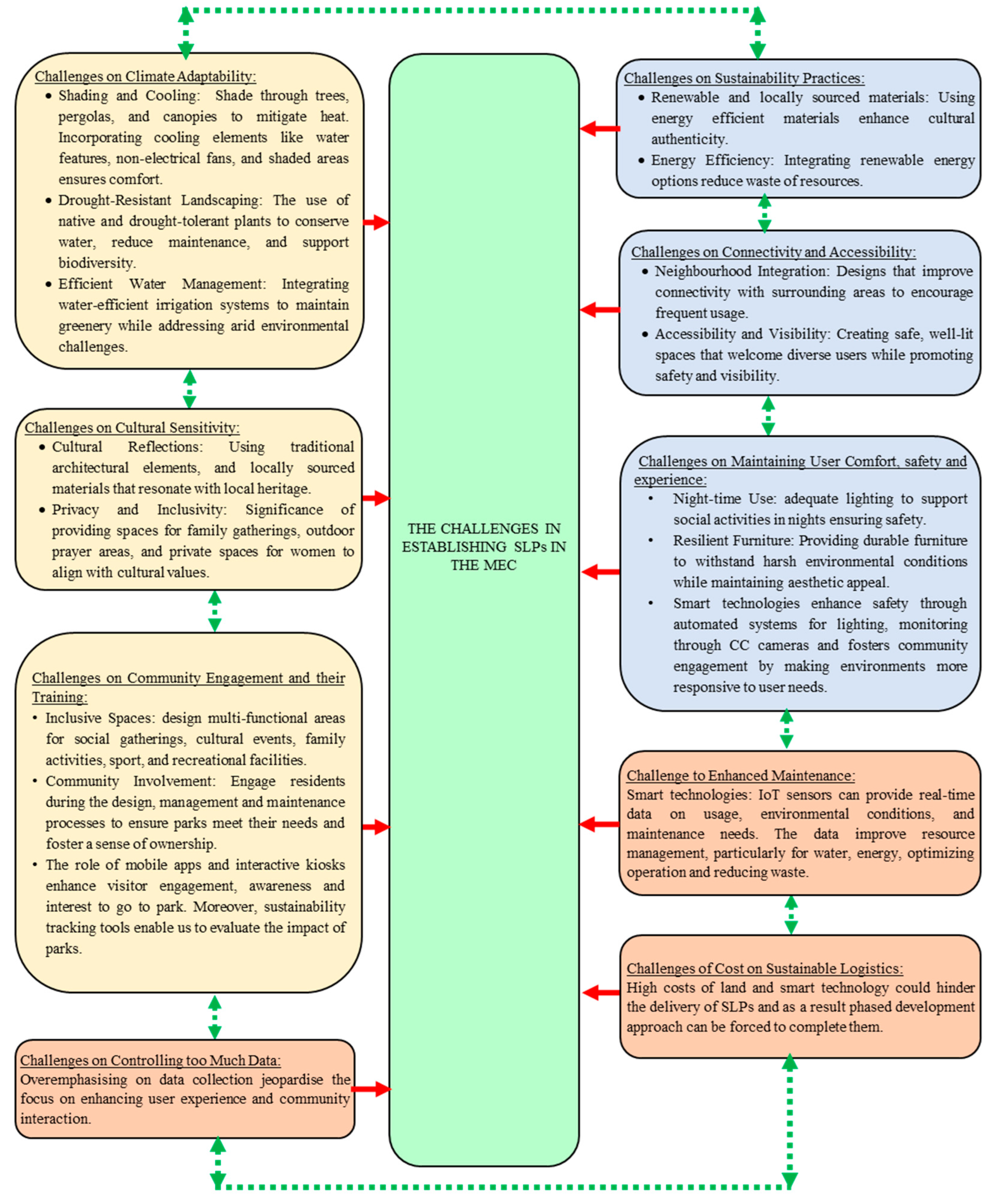
Experts were asked to elaborate on how to overcome the challenges for the successful establishment of SLUPs in MECs. All experts contributed various recommendations or enablers that would help tackle the challenge of implementing SLUPs in MECs. The key enablers drawn from the experts’ insights are:
  • Interdisciplinary collaboration among all professionals is essential.
  • Community involvement throughout the design, implementation, and maintenance processes.
  • Clear vision and goals for sustainability, biodiversity, and community engagement are required.
  • Maintenance plan.
  • Monitoring and adaptation.
  • Adequate funding and resources from public and private sources.
  • Education and awareness.
  • Balance between smart technology and sustainable practices—technology should support, not overshadow, environmental goals.
  • Enforcing regulations to safeguard communal spaces.
According to the experts, the challenges are diversified in nature, interrelated, and therefore, must be tackled with a group of enablers. Figure 3 illustrates a framework that was developed from the challenges (Figure 2) and enablers recommended by the experts. Figure 3 graphically shows that the challenges are interrelated and can be solved by a group of enablers.

4.2. Analysis of the Questionnaire Survey Data and Validation of the Challenges

This section presents the analysis of the data collected through the community-based questionnaire survey, which validated the findings derived from the semi-structured interviews. The survey aimed to assess park users’ opinions on the challenges and priorities related to the development of sustainable and user-friendly logistics urban parks in the Middle Eastern context. A five-point Likert scale was employed, with 5 showing the highest level of importance/agreement and 1 representing the lowest level/disagreement, to collect participants’ evaluations across a range of design, operational, environmental, and user experience-related factors. This survey was distributed to over 1047 participants, 600 of whom responded.
Understanding the demographic profiles of respondents is essential for assessing the inclusivity and representativeness of SLUPs in MECs. The collected data presented in Appendix B show a well-distributed sample across gender, age groups, and countries of residence. The gender composition of the survey participants (Appendix B) revealed a well-balanced representation and presented both male and female perspectives, which were adequately reflected in the dataset and reduced gender bias in the findings. In terms of age distribution, the largest proportion of participants fell within the 18–29 age group, while the 60+ group accounted for the smallest share. This distribution shows a notable dominance of younger adults, who may have different priorities for SLUP design, accessibility, and amenities than older demographics. However, the presence of older age groups underscores the relevance of designing parks that accommodate multigenerational needs. Geographically, the respondents represented ten MECs, reflecting substantial regional diversity that ensured the incorporation of perspectives from all Gulf Cooperation Countries (GCCs) and other parts of the Middle East, enhancing the high validity of the findings.
Table 4 presents the importance of the key aspects of SLUPs within the MEC context. The analysis was based on the mean scores and Relative Importance Index (RII) values derived from the survey responses, with higher values showing greater perceived significance. Of the six key aspects evaluated, Maintenance and Lifecycle Management ranked first. This finding highlights the critical importance of ensuring the long-term functionality, safety, and usability of SLUPs. This reflects a strong regional emphasis on asset preservation and operational sustainability. Stakeholder Collaboration and Community Engagement ranked second. This underscores the inclusive planning processes and active community participation that are fundamental to the design of SLUPs.
Smart Technology Integration ranked third, suggesting that digital tools and smart infrastructure are increasingly valued for enhancing park efficiency, user experience, and sustainability. Green Transportation and Mobility followed in fourth place, showing the importance of sustainable access options such as cycling, walking, and public transport connectivity to reduce environmental impact. Waste Management Systems and Recycling was ranked fifth, suggesting moderate recognition of its role in SLUP operations, although it was still seen as less critical than lifecycle management and stakeholder engagement. Finally, Sustainable Infrastructure and Construction were assigned the lowest ranking, which may indicate that respondents view physical infrastructure improvements as less urgent than operational and management-oriented strategies in the MEC.
Table 5 presents the Evaluation Index System for assessing the SLUP performance within the MEC context, incorporating three main criteria: State of the Logistics Park, Operation of Settled Enterprises, and Social and Environmental Contributions (found in Table 2). Facilities emerged as the most important factor across the entire index system, showing that well-developed and adequately maintained facilities are perceived as the backbone of effective SLUP operations. Service Level ranked second, emphasizing the importance of high-quality service provision in ensuring operational efficiency and satisfaction. Transportation accessibility and external environment ranked third and fourth, respectively, highlighting the value of efficient transport linkages and favourable environmental conditions. Impact Zone, Information Level, and Finance ranked lower, suggesting that while these aspects are relevant, they are considered less critical than core facilities and service quality.
For the Operation of Settled Enterprises criterion, enterprise activities ranked third overall and first within its category, reflecting the significance of active, diverse, and well-managed enterprise operations in enhancing the vitality. Enterprise Scale, however, received the lowest RII in the system, suggesting that the size of enterprises is less influential than the quality and scope of their activities. In the Social and Environmental Contributions criterion, Social Contribution ranked highest, underscoring the recognition of logistics parks as important social assets that foster community engagement and provide societal value. Environmental Contribution followed closely, indicating awareness of ecological considerations, whereas Economic Contribution ranked lower, suggesting that direct financial benefits are not perceived as the foremost priority compared to social and environmental outcomes.
Table 6 outlines the perceived level of agreement with the challenges of developing and managing SLUPs in MECs. The most critical challenge identified was the Stakeholder Collaboration Gap, highlighting a strong consensus that fragmented communication and a lack of coordination among relevant actors hinder effective park development and operations. This was closely followed by High Land Price, User-Friendliness, and Social Acceptance, emphasizing the financial constraints and importance of designing parks that align with community needs and cultural expectations. Complicated Energy Transition and Deficiency of Trained Workforce ranked fourth and fifth, respectively, indicating the dual challenges of transitioning to renewable or low-carbon energy systems and ensuring a skilled labor force to operate and maintain sustainable logistics infrastructure. Lack of government motivation and the harsh local climate also featured prominently, underscoring the combined influence of policy commitment and environmental constraints in shaping project viability.
Moderately ranked challenges were Expensive Sustainable Logistics and Poor Maintenance and Management, reflecting concerns over the operational and cost burdens of sustainable solutions. Ineffective Architectural Design and Socio-Cultural Barriers further pinpoint design inadequacies and social dynamics that may limit park use and functionality. Lower-ranked challenges, such as Limited Resources, Lack of Clear Guidelines, and Lack of Infrastructure, suggest that they are perceived as less pressing than strategic and socioeconomic factors. The least significant barriers were Lack of Awareness and Interest, Sociability Issues, and Accessibility Challenges in the MEC.
Cronbach’s alpha test is a widely used statistical measure that evaluates the internal reliability of a set of items within a survey instrument. It measures connection of a cluster of things and provides a sign of whether they measure the same underlying construct [42]. In this study, the trustworthiness of the survey device produced a Cronbach’s alpha value of 0.89, reflecting a high level of internal consistency among the assessed items.
Appendix C presents the correlation matrix analysis of the key aspects, evaluation index system, and challenges of SLUPs in the MEC context. This revealed a complex web of positive and negative relationships. Challenges related to environmental conditions, such as Harsh Local Climate, exhibit strong positive correlations with Smart Technology Integration (r = 0.98), showing that technology is critical in mitigating environmental constraints. Meanwhile, socio-cultural barriers and lack of awareness correlate positively with several evaluation criteria, emphasizing the need to address social factors in sustainable logistics development.
Strong positive correlations are observed between Finance and Waste Management Systems and Recycling (r = 0.82), as well as Information Level (r = 0.95), suggesting that the financial resources are closely linked to environmental management and information availability. Service Level shows an exceptionally strong positive correlation with Stakeholder Collaboration and Community Engagement (r = 0.98), emphasizing that active collaboration significantly enhances service quality. Challenges such as lack of infrastructure correlate highly with Waste Management Systems and Recycling (r = 0.97) and Finance (r = 0.85), indicating that inadequate infrastructure constrains financial investment and environmental efforts. Smart Technology Integration correlates moderately and positively with Impact Zone (r = 0.56) and Environmental Contribution (r = 0.56), highlighting the importance of technology for spatial and environmental improvements. In contrast, several notable negative correlations highlight potential conflicts or independent influences within the system. For instance, Smart Technology Integration negatively correlates with Stakeholder Collaboration & Community Engagement (r = −0.07), and Maintenance and Lifecycle Management also shows a negative correlation with Green Transportation and Mobility (r = −0.06). These negative associations suggest that certain technological or operational aspects might not align perfectly with social engagement or mobility efforts. User-Friendliness and social acceptance consistently show weak correlations with several operational and infrastructural challenges, including Maintenance and Lifecycle Management (r = −0.15) and Facilities (r = −0.14). This suggests that improving user experience may require addressing gaps in management and infrastructure.
An exploratory factor analysis (EFA) with oblimin rotation was conducted to identify the underlying dimensions influencing perceptions of SLUP. Before extracting factors, it is essential to verify data suitability using KMO > 0.6: Acceptable; >0.8 excellent and Bartlett Sig. < 0.05: indicates sufficient correlations for factor analysis.
As shown in Table 7, the KMO value of 0.542 indicates moderate sampling adequacy, which is just above the minimum acceptable threshold of 0.5. This means that while the sample is sufficient to extract meaningful factors, caution should be applied when interpreting weaker loadings. Bartlett’s test is highly significant (p < 0.001), confirming that the correlation matrix is not an identity matrix. This validates the use of factor analysis for this dataset, and we can proceed to extract meaningful components that represent the key aspects of SLUPs.
For the evaluation index system illustrated in Table 8, a KMO of 0.706 indicates good sampling adequacy, so the correlations between variables suffice for factor extraction. Bartlett’s test is highly significant, confirming that the inter-item correlations are strong. This suggests that the Evaluation Index items measure related constructs and can be effectively grouped into coherent factors. Strong sampling adequacy increases confidence in the reliability of the extracted factors.
Regarding the challenges of SLUPs, as shown in Table 9, the KMO value of 0.818 is excellent, showing that the sample size and inter-item correlations are highly suitable for factor analysis. Bartlett’s test is significant at p < 0.001, confirming that the correlation matrix is not an identity, and thus the items are related enough to be factorable. This provides strong assurance that the subsequent factors extracted will reflect the meaningful underlying challenges in implementing SLUPs.
Communalities reflect the proportion of each variable’s variance explained by the extracted factors. Values above 0.50 are strong indicators that the factor structure adequately represents the variables.
As shown in Table 10, all items of key aspects of SLUPs exceed the 0.50 threshold, except for some minor cross-loadings (e.g., Stakeholder Collaboration), which is theoretically justifiable because it impacts multiple aspects of SLUP implementation. High communalities for infrastructure and maintenance items suggest these are core pillars of SLUPs and strongly capture their underlying dimensions.
As shown in Table 11, most items have extraction >0.50, reflecting strong factor representation, with the exception of Facilities (Question 1) = 0.067 → very low, indicating weak factor contribution, which was retained for theoretical relevance, as it conceptually belongs to the operational and spatial performance factor. Low communalities for some variables are common in social research and do not invalidate the factor solution if theoretically justified. Keeping these items ensures the model aligns with practical aspects of urban logistics evaluation.
As shown in Table 12, most items >0.50, except for Lack of Resources (Q5), Cost Constraints (Q6), and Data Gaps (Q11) <0.50, were retained because of conceptual importance, as these are critical barriers in SLUP implementation despite weaker statistical representation.
The lower communalities for certain challenges suggest that they do not align strongly with the extracted factors but remain significant. This highlights areas where SLUP implementation faces unique obstacles that may not strongly correlate with other challenges.
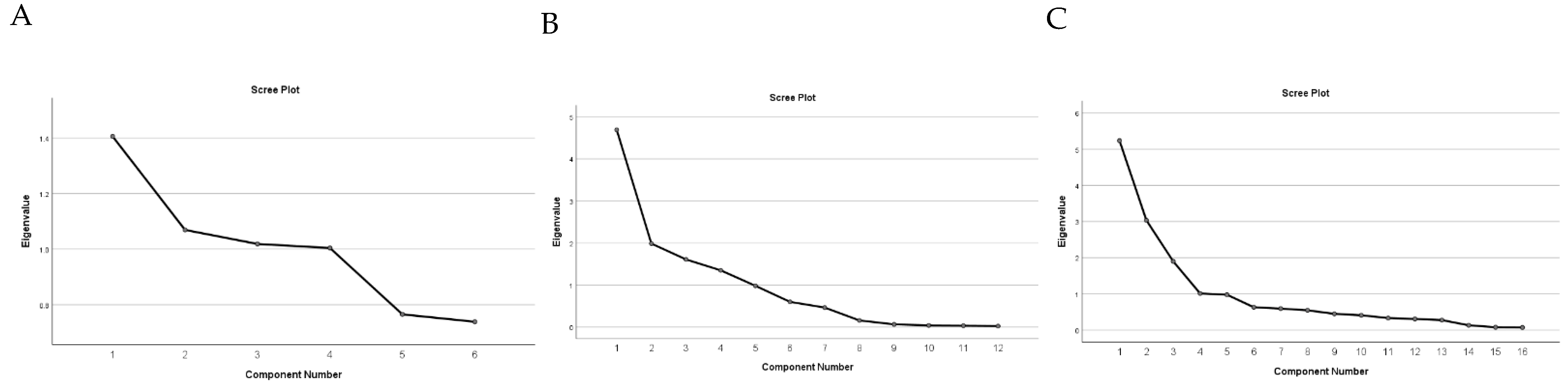
As shown in Table 13, factors with eigenvalues >1 were retained; the Scree Plot in Figure 4 visually confirms factor numbers, and retaining four factors in all sections ensures a balance between parsimony and explanatory power. The variance explained was between 70 and 80%, indicating that these factors successfully captured most of the information in the dataset. The scree plot confirmed the four-factor solution, with a clear “elbow” after the fourth component, supporting the decision to keep these factors.
As shown in Table 14, each factor was conceptually coherent. Eco-Friendly Operations combines environmental actions (waste, mobility), Technology Integration stands alone reflecting the digital transformation dimension, Maintenance and Lifecycle form a distinct operational factor, and infrastructure emerges as a structural pillar. The cross-loadings were minimal and theoretically justifiable.
As shown in Table 15, financial/economic items load strongly on Factor 1, forming a coherent dimension of resource impact. Operational/service performance is captured in Factor 2. Factor 3 combines social and environmental responsibilities, highlighting a social–external nexus. Factor 4 represents the spatial and environmental impact, which is essential for urban planning.
As illustrated in Table 16, Factor 1 captures governance and environmental issues. Factor 2 reflects technical and operational barriers. Factor 3 represents resource and cost limitations, and Factor 4 isolates infrastructure constraints. This breakdown allows researchers to target interventions specifically for each type of challenge faced.
The component transformation matrix shows the correlations between factors before and after rotation and verifies whether the extracted factors are orthogonal (independent) or correlated. This is important because
  • Low correlations indicate independence, validating the use of factor scores in clustering and regression analyzes.
  • High correlations would suggest an overlap between factors, requiring oblique rotation instead.
As shown in Table 17, all off-diagonal values are close to zero, confirming that the four factors are almost completely independent. Factor 1 (Eco-Friendly Operations) is weakly correlated with Factor 2 (Smart Technology Integration), which is conceptually reasonable since technology can support but is not identical to environmental operations. This orthogonality justifies using factor scores for cluster analysis without worrying about multicollinearity.
As shown in Table 18, the factors show very low correlations, confirming the independence of constructs. Factor 1 (Financial/Economic Contributions) is slightly correlated with Factor 2 (Operational Performance), which makes sense since financial resources often support operations. Factor 3 (Social/External Environment) and Factor 4 (Spatial/Environmental Impact) are nearly orthogonal, reflecting distinct conceptual dimensions.
As shown in Table 19, the factor correlations were extremely low, confirming that the four-factor solution separated distinct challenge types. Factor 1 (Institutional/Environmental) is slightly correlated with Factor 2 (Technical/Operational), which is reasonable because technical issues are often affected by institutional or regulatory constraints. This matrix confirms suitability for independent factor scores in clustering analysis, ensuring each challenge dimension contributes unique information.
As shown in Table 20, the factor scores condense multiple related survey items into a single numeric value for each respondent, representing their position on each latent factor. These scores are crucial for cluster analysis to group participants based on the SLUP dimensions. Each factor score was standardized and could be compared across respondents. These scores allow for grouping respondents who emphasize similar SLUP priorities (e.g., environmental and technical challenges). Factor scores are unbiased representations of latent constructs that support objective cluster classification.
Cluster analysis was conducted to categorize respondents into homogeneous groups based on their responses to SLUPs (key aspects, the evaluation index, and challenges). It identifies differing priorities among participants and provides practical insights for SLUP implementation.
As shown in Table 21, the age distribution across clusters reveals notable differences that can inform targeted SLUP strategies. Cluster 1 comprises of younger participants aged 18–29 (making up 38% of the group). This shows the youth-oriented priorities and engagement strategies that would be most effective for this cluster. Cluster 2 includes a wider age range, spanning younger to middle-aged respondents (18–44), suggesting the need for flexible approaches that accommodate diverse preferences and capacities. Cluster 3 shows a balanced distribution across all age categories, implying that its design and policy recommendations should be broadly inclusive rather than age-specific. In contrast, Cluster 4 contains a larger proportion of older participants (60+), highlighting the importance of designing interventions and support mechanisms tailored to the needs, limitations, and preferences of older users. These age-based distinctions reinforce the value of differentiated strategies that align with each cluster’s demographic profile.
As illustrated in Table 22, the gender distribution across the clusters reveals meaningful differences that can guide more targeted SLUP strategies. Clusters 1 and 2 show a slightly male-dominant composition, suggesting that communication and engagement strategies for these groups may benefit from approaches that account for male participation patterns and preferences. In contrast, Clusters 3 and 4 display a more balanced gender distribution, indicating the need for gender-neutral or inclusively designed strategies that address the needs and expectations of both male and female respondents.
As shown in Table 23, the geographic distribution across clusters indicates clear regional patterns that can inform context-sensitive SLUP strategies. Cluster 1 shows a strong presence of respondents from Saudi Arabia and the UAE, suggesting that Gulf-focused initiatives aligned with local planning practices and environmental priorities would be relevant. Cluster 2 presents a more diverse regional composition, with notable representation from Kuwait and Saudi Arabia, indicating the need for adaptable strategies that accommodate varying national contexts within the Gulf region. Cluster 3 includes a higher proportion of participants from Lebanon, Jordan, and Iraq, pointing to the importance of Levant-oriented approaches that consider differing socio-environmental challenges and institutional frameworks. Cluster 4 demonstrates a balanced mix of countries, with greater representation from Qatar and Oman, highlighting the need for broadly inclusive yet regionally attuned communication and design strategies.
As shown in Table 24, Cluster 1 (86 participants) places moderate emphasis on environmental initiatives and green operations (FAC4) but shows a low engagement with technical and financial aspects (FAC1-FAC3). These respondents may benefit from targeted training or support in operational and technical areas. Cluster 2 (229 participants) participants exhibit a balanced focus across all factors, showing readiness to engage with projects that combine technical operations, administrative tasks, and environmental concerns. Cluster 3 (127 participants) respondents emphasize technical and administrative aspects (FAC2) while showing limited interest in environmental initiatives and financial contributions. Strategies should target their environmental engagement. Cluster 4 (158 participants) respondents show low focus across all factors, with particularly negative scores in FAC4, suggesting the need for comprehensive support in green initiatives and awareness campaigns.
As shown in Table 25, Cluster 1 (66 participants) participants are highly engaged in operational and technical processes (FAC1 and FAC3), yet their institutional or organizational involvement is weak. They may need support in governance and procedural alignment. Cluster 2 (120 participants) focuses primarily on environmental initiatives and operational activities; technical challenges are not its main concern. This group can effectively contribute to sustainability-focused tasks. Cluster 3 (134 participants) places strong emphasis on institutional and administrative aspects, with a limited engagement in environmental and technical areas. Interventions could enhance their performance in green initiatives. Cluster 4 (280 participants), the largest group, demonstrates a balanced engagement across all factors, indicating readiness for diverse SLUP projects and operations.
As depicted in Table 26, Cluster 1 (158 participants) respondents face high technical challenges (FAC3) but maintain moderate engagement with operational and administrative aspects. Targeted technical support may improve their performance. Cluster 2 (164 participants) is primarily concerned with operational and institutional factors, while technical challenges are less critical. They can lead to administrative improvements effectively. Cluster 3 (130 participants) focuses on institutional/administrative aspects (FAC2), with low attention to technical and environmental challenges, suggesting the need for balanced interventions. Cluster 4 (148 participants) participants show low engagement across all challenge factors, especially institutional ones, showing the highest need for comprehensive support and capacity building.
The ANOVA results shown in Table 27 indicate that the p-values (Sig.) for all three dimensions are greater than 0.05, showing no statistically significant differences between age groups in their assessment of key aspects of SLUPs, performance evaluation, or perceived challenges. This implies that respondents across different age groups have similar perceptions regarding the critical components of sustainable land-use planning. These results also suggest a consistent understanding of SLUP across generations, reflecting shared awareness and perspectives among respondents.
As shown in Table 28, the analysis of mean scores indicates a high level of agreement across age groups regarding sustainable land-use planning in SLUP. For the key aspects of SLUPs, mean scores range from 4.1667 to 4.1905, demonstrating strong consensus on their importance. Similarly, the evaluation index system and performance scores are consistent, ranging from 4.0455 to 4.0853, suggesting comparable evaluations of performance among all age groups. Challenges associated with SLUPs also show equivalent results, with mean scores ranging from 3.7598 to 3.8200, indicating no significant differences in how challenges are considered. Overall, the Tukey HSD results support the ANOVA findings, reinforcing the consistency of perceptions across different age groups.
The ANOVA and Tukey HSD results demonstrate that age does not influence respondents’ evaluations of the three SLUP dimensions: key aspects, performance evaluation, or challenges. All age groups share a uniform perception of sustainable land-use planning, indicating balanced understanding and stable awareness across generations. These findings suggest that policies or training programs related to SLUP can target all age groups using the same approach without requiring age-specific adjustments, facilitating efficient planning and implementation.
As shown in Table 29, the independent samples t-test results indicate that mean scores for all three SLUP dimensions are very similar between males and females, reflecting comparable perceptions regarding key aspects, performance, and challenges. Furthermore, standard deviations are closely aligned, which indicates consistent response variability within each gender group.
Levene’s test indicates no significant differences in variance between genders (all p > 0.05), allowing the assumption of equal variances (Table 30). The independent samples T-test results show that all p-values (Sig. 2-tailed) exceed 0.05, indicating no statistically significant differences across genders in their assessment of key aspects of SLUPs, performance evaluation, or challenges.


5. Discussion

Experts emphasized the critical role of SLUPs in enhancing the QoL and well-being of the communities of MECs. Community involvement through surveys, workshops, direct engagement with the design process, decisions, and maintenance of SLUPs is considered to be the most vital recommendation by this study. The study highlighted that SLUPs contribute to improved air quality, urban resilience, and community pride, aligning with broader goals. Strategies for achieving SLUPs include the use of native and drought-tolerant plants, natural water management systems, renewable materials, and green infrastructure. In MEC’s hot and arid climate, microclimate-enhancing elements are prioritized to improve comfort and sustainability. This study advocates for combining functionality and aesthetic appeal through well-designed amenities and multifunctional spaces that support diverse activities. By fostering environmental awareness and ensuring ecological balance, SLUP can serve as vibrant, inclusive spaces that enhance overall well-being.
While validating the key aspects, factors, and challenges of SLUP, the key issues identified were the gaps in communication, collaboration, and sharing of ideas among various stakeholders, including professionals and the community. This shows the consensus of uneven communication and lack of coordination among relevant players that hinder SLUP development and operations in MECs. High land prices, user-friendliness, social acceptance, financial constraints, and community involvement throughout the implementation process of SLUPs were also validated as key challenges in the MEC context. Transparent policy, insufficient design guidelines, resources, and infrastructure were perceived as less persistent challenges compared to strategic and socio-economic factors. Lack of awareness, interest, sociability, and accessibility challenges were rated as the least significant issues in establishing SLUPs in MECs. To provide a clearer understanding of how this study’s insights build upon and extend existing knowledge, the challenges identified in the literature were systematically compared with the new challenges emerging from the in-depth interviews, as shown in Table 31. This comparison not only highlights areas of overlap but also reveals several context-specific challenges unique to the Middle Eastern region.

6. Conclusions

This study concludes that the successful development of SLUPs in MECs depends primarily on achieving operational sustainability, supported by coherent governance structures, climate-adaptive design strategies, and strong community engagement. The findings reveal four overarching categories of challenges and insights. First, strategic and governance-related issues, such as high land prices, limited inter-agency coordination, and weak stakeholder collaboration, remain the major barriers. Second, socio-cultural factors, including privacy concerns, cultural inclusivity, limited public awareness, and low community involvement, significantly influenced acceptance and long-term usability. Third, environmental and climatic challenges, particularly extreme heat, water scarcity, the need for drought-resistant landscaping, climate-responsive planning, and microclimate interventions, were significant. Fourth, operational and technological considerations, such as maintenance efficiency, workforce capacity, lifecycle management, and the adoption of smart technologies, determine the long-term performance and functionality of SLUPs in MECs. In response to these findings, the study identifies several core indicators essential for operational sustainability: high-quality maintenance and lifecycle management; reliable service delivery and user satisfaction; efficient water and resource management; appropriate integration of smart monitoring technologies; effective waste and recycling systems; and well-trained operational staff. Together, these insights provide a practical framework that strengthens the applicability of SLUP initiatives in MECs. This ensures that the future parks are resilient, user-centered, environmentally responsive, and operationally viable within the unique socio-climatic context of the Middle East.
While this study provides valuable insights into the challenges and enabling factors associated with establishing SLUPs in MECs, a limitation must be acknowledged to clarify the boundaries of the conclusions. The research relied on expert interviews and a community-based questionnaire survey conducted primarily within specific urban contexts, which may not fully capture the diversity of municipal capacities, cultural expectations, or governance structures across the broader region. Future research may examine real-world SLUP pilot projects to evaluate long-term performance, operational efficiency, and environmental impact using longitudinal or experimental methods. Future research could also replicate and test the proposed framework in different urban, cultural, and climatic contexts to evaluate its robustness and improve its generalizability beyond the Middle Eastern region.

Author Contributions

M.S.Z.: conceptualization, methodology, investigation, project administration, writing—original draft; S.Q.: data curation, statistical analysis, investigation, software, visualization, writing—review and editing; J.A.: formal analysis, visualization, writing—review and editing; M.A.H.: supervision, writing—review and editing; N.D.: writing—review and editing. All authors have read and agreed to the published version of the manuscript.

Funding

This research received no external funding.

Institutional Review Board Statement

Ethical review and approval were waived for this study by the Institution Committee because the study involved anonymous, voluntary surveys collecting no personal identifiers or sensitive information. It falls under the category of ethically exempted from IRB certification according to the Implementing Regulations of the Law of Ethics of Research on Living Creatures issued by the National Committee of Bioethics (NCBE, Saudi Arabia) (Article 10.33, Version 3—2025, Page 40).

Informed Consent Statement

Informed consent for participation was obtained from all subjects involved in the study.

Data Availability Statement

The data presented in this study are available on request from the corresponding author because of privacy and ethical restrictions.

Conflicts of Interest

The authors declare no conflicts of interest.

Appendix A

Table A1. Profiles of the experts who participated in the in-depth interviews.
NoExpertsNationalitiesYears of ExperienceType of ProfessionCountries of Work Experience
1ASaudi Arabia25Academician, researcher in city planningSaudi Arabia, USA, UAE, Kuwait
2BEgypt22Academician, researcher in city planning and designSaudi Arabia, Egypt
3CEgypt20Academician, researcher in city planningSaudi Arabia, Egypt
4DSaudi Arabia15Practitioner in Architecture, Urban planning and designSaudi Arabia, Bahrain
5ESaudi Arabia10Practitioner in Architecture, Urban planning and designSaudi Arabia, Bahrain
6FEgypt26Academician, researcher in Architecture, city planning and designSaudi Arabia, Egypt
7GEgypt25Academician, researcher in Architecture, city planning and designSaudi Arabia, Egypt, Jordan
8HSaudi Arabia12Practitioner in Architecture, Urban planning and designSaudi Arabia
9ISaudi Arabia14Practitioner in Architecture, Urban planning and designSaudi Arabia
10JQatar23Academician, researcher in Architecture, city planning and designUK, Qatar
11KEgypt25Academician, researcher in urban design and city planningSaudi Arabia, Qatar, Kuwait, Egypt
12LEgypt25Academician, researcher in Architecture, city planning and designSaudi Arabia, UAE, Egypt, Qatar
13MPalestine30Academician, researcher in urban design and city planningSaudi Arabia, UAE, Palestine, Bahrain
14NPalestine17Practitioner in Architecture, Urban planning and designSaudi Arabia, UAE
15OJordan15Practitioner in Architecture, Urban planning and designSaudi Arabia, Qatar, Jordan
16PPalestine10Practitioner in Architecture, Urban planning and designSaudi Arabia, Palestine
17QBahrain13Practitioner in Architecture, Urban planning and designSaudi Arabia, Bahrain
18RBahrain12Practitioner in Architecture, Urban planning and designSaudi Arabia, Bahrain
19SOman15Practitioner in Architecture, Urban planning and designSaudi Arabia, Oman
20TKuwait18Practitioner in Architecture, Urban planning and designSaudi Arabia, Kuwait

Appendix B

Table A2. Demographic analysis of users’ gender, age, and country of origin.
VariableOptionsN%
GenderFemale29048.33%
Male31051.67%
Age Group18–2921736.17%
30–4415125.17%
45–5912420.67%
60+10818.00%
CountryBahrain6210.33%
Egypt569.33%
Iraq345.67%
Jordan569.33%
Kuwait599.83%
Lebanon579.50%
Oman7111.83%
Qatar549.00%
Saudi Arabia8213.67%
United Arab Emirates6911.50%

Appendix C

Table A3. Correlation matrix of key aspects, evaluation index system, and challenges of sustainable logistics parks in the Middle Eastern context.
A1A2A3A4A5A6SC1.1.SC1.2.SC1.3.SC1.4.SC1.5.SC1.6.SC1.7.SC.2.1.SC.2.2.SC.3.1.SC.3.2.SC.3.3.CH.1CH.2CH.3CH.4CH.5CH.6CH.7CH.8CH.9CH.10CH.11CH.12CH.13CH14CH.15.CH.16CH.17
A11.00
A2−0.071.00
A30.190.041.00
A40.170.080.231.00
A50.010.00−0.010.071.00
A60.030.05−0.04−0.060.001.00
SC1.1.0.010.56−0.04−0.03−0.010.001.00
SC1.2.0.030.01−0.06−0.050.030.78−0.051.00
SC1.3.0.500.000.340.390.050.05−0.030.011.00
SC1.4.0.220.030.820.310.010.03−0.03−0.030.391.00
SC1.5.0.150.030.950.270.01−0.05−0.06−0.060.380.851.00
SC1.6.0.98−0.060.170.170.010.030.000.040.480.210.131.00
SC1.7.0.190.060.250.940.06−0.01−0.05−0.030.400.340.290.181.00
SC.2.1.0.310.070.500.460.100.020.040.030.520.530.530.300.461.00
SC.2.2.0.52−0.010.350.390.050.06−0.060.030.940.420.390.500.400.551.00
SC.3.1.0.230.050.870.330.010.01−0.03−0.020.410.950.890.220.340.550.441.00
SC.3.2.0.160.060.250.890.07−0.02−0.03−0.020.390.310.270.160.960.440.370.311.00
SC.3.3.−0.020.56−0.03−0.01−0.01−0.020.97−0.07−0.03−0.01−0.05−0.03−0.020.05−0.06−0.01−0.011.00
CH.10.170.030.970.270.00−0.06−0.05−0.070.370.850.980.150.290.510.380.900.28−0.041.00
CH.2−0.020.55−0.03−0.02−0.01−0.010.97−0.07−0.03−0.01−0.05−0.03−0.020.04−0.06−0.02−0.010.99−0.041.00
CH.30.02−0.09−0.05−0.10−0.03−0.12−0.04−0.09−0.05−0.09−0.030.04−0.13−0.05−0.04−0.08−0.11−0.04−0.03−0.041.00
CH.40.310.060.490.450.100.030.050.020.530.530.520.300.460.990.550.550.430.060.510.05−0.051.00
CH.50.52−0.020.360.390.040.06−0.090.030.920.430.410.500.400.560.980.450.37−0.080.40−0.09−0.030.551.00
CH.60.180.080.270.960.07−0.03−0.03−0.020.400.340.300.190.980.480.410.360.94−0.010.30−0.01−0.120.470.411.00
CH.70.230.050.890.330.010.01−0.02−0.010.420.940.900.220.350.550.440.980.33−0.010.92−0.02−0.090.540.450.361.00
CH.8−0.04−0.03−0.070.02−0.110.930.01−0.15−0.03−0.11−0.08−0.020.01−0.11−0.08−0.100.02−0.02−0.07−0.02−0.01−0.11−0.080.01−0.081.00
CH.9−0.030.00−0.080.03−0.08−0.180.02−0.17−0.05−0.11−0.10−0.010.00−0.12−0.09−0.100.00−0.01−0.08−0.01−0.02−0.13−0.090.00−0.100.921.00
CH.10−0.040.720.010.090.020.060.640.010.070.040.00−0.030.100.110.050.030.110.660.000.66−0.090.120.040.100.04−0.10−0.101.00
CH.110.250.110.340.37−0.01−0.040.04−0.040.390.370.360.250.370.460.390.400.350.060.370.06−0.030.460.390.380.40−0.03−0.040.121.00
CH.12−0.070.650.000.08−0.020.040.59−0.010.010.03−0.02−0.060.090.06−0.020.030.100.60−0.020.60−0.020.07−0.020.100.03−0.08−0.090.850.081.00
CH.130.250.070.500.440.03−0.050.02−0.080.450.500.510.260.440.660.470.520.410.020.510.01−0.030.660.470.460.51−0.05−0.050.110.490.051.00
CH14−0.070.980.040.080.000.050.560.010.000.030.03−0.060.060.07−0.010.050.060.560.030.55−0.090.06−0.020.080.05−0.030.000.720.110.650.071.00
CH.15.0.300.060.550.440.05−0.050.01−0.050.520.580.570.290.440.700.530.600.420.010.570.01−0.090.700.540.450.60−0.06−0.080.090.510.040.700.061.00
CH.160.270.020.520.460.050.02−0.070.000.480.550.530.260.490.600.500.560.47−0.030.51−0.04−0.110.600.520.500.55−0.08−0.090.090.500.050.630.020.641.00
CH.17−0.02−0.01−0.060.01−0.07−0.15−0.02−0.14−0.05−0.08−0.08−0.010.01−0.13−0.09−0.080.01−0.05−0.06−0.050.00−0.13−0.080.01−0.080.900.96−0.10−0.03−0.09−0.04−0.01−0.09−0.061.00

References

  1. Swamidass, P. Encyclopedia of Production and Manufacturing Management; Springer: Berlin/Heidelberg, Germany, 2000. [Google Scholar]
  2. Agility Sustainable Logistics Parks in the Middle East/GCC. 2025. Available online: https://www.agility.com/en/blog/sustainable-logistics-parks-in-the-middle-east-gcc/#link4 (accessed on 10 September 2025).
  3. Wang, C.; Liu, H.; Yu, L.; Wang, H. Study on the Sustainability Evaluation Method of Logistics Parks Based on Energy. Processes 2020, 8, 1247. [Google Scholar] [CrossRef]
  4. Dargin, J. Beyond “Green Pledges”: Saudi Arabia and Society-Centered Climate Reforms. Climate Change and Vulnerability in the Middle East. 2023. Available online: https://carnegieendowment.org/posts/2023/07/climate-change-and-vulnerability-in-the-middle-east?lang=en (accessed on 30 August 2025).
  5. ESCWA; United Nations. Social Development Bulletin, Disability and Sustainable Development Goal 11 in the Arab Region, E/ESCWA/SDD/2018/TP.2. 2018. Available online: https://www.unescwa.org/publications/disability-and-sdg-11-arab-region-social-development-bulletin-vol-7-no-1 (accessed on 4 September 2025).
  6. Kebede, B.G.; Yücel Besim, D. Urban Parks in Developing Countries: Challenges and Opportunities in Addis Ababa, Ethiopia. J. Des. Resil. Archit. Plan. 2024, 5, 269–286. [Google Scholar] [CrossRef]
  7. Edeigba, B.A.; Ashinze, U.K.; Umoh, A.A.; Biu, P.W.; Daraojimba, A.I. Urban Green Spaces and Their Impact on Environmental Health: A Global Review. World J. Adv. Res. Rev. 2024, 21, 917–927. [Google Scholar] [CrossRef]
  8. Savin, G. Smart City Logistics. E3S Web Conf. 2020, 208, 04005. [Google Scholar] [CrossRef]
  9. Girard, L.F.; Nocca, F. Moving Towards the Circular Economy/City Model: Which Tools for Operationalizing This Model? Sustainability 2019, 11, 6253. [Google Scholar] [CrossRef]
  10. Patier, D.; Routhier, J.L. Urban Logistics in the Light of Sustainable Development: Still a Long Way to Go. Proc. Transp. Res. Procedia 2020, 46, 93–100. [Google Scholar] [CrossRef]
  11. Everist, A. Revisiting Approaches to Water Management in Water-Scarce Gulf, IPI Global Observatory. 2018. Available online: https://theglobalobservatory.org/2018/05/revisiting-approaches-water-management-gulf/ (accessed on 12 September 2025).
  12. Hashem, N. Assessing Spatial Equality of Urban Green Spaces Provision: A Case Study of Greater Doha in Qatar. Local Environ. 2015, 20, 386–399. [Google Scholar] [CrossRef]
  13. Bao, Z.; Bai, Y.; Geng, T. Examining Spatial Inequalities in Public Green Space Accessibility: A Focus on Disadvantaged Groups in England. Sustainability 2023, 15, 13507. [Google Scholar] [CrossRef]
  14. Balfour, R.; Allen, J. Public Health England Local Action on Health Inequalities: Improving Access to Green Spaces. Health Equity Evid. Rev. 2014, 8. Available online: https://www.redfrogforum.org/wp-content/uploads/2019/11/68-Public-Health-England-Improving-green-space-access.pdf (accessed on 4 May 2025).
  15. Farah, J. Cities for People towards Vibrant Public Places (Third Issue: Mudununa). 2024. Available online: https://araburban.org/wp-content/uploads/2024/03/mudununa-issue3-en.pdf (accessed on 30 September 2025).
  16. Azari, M.; Jawab, F.; Arif, J.; Khaoua, Y.; El Jaouhari, A.; Moustabchir, H. From City Logistics to a Merger of Smart Cities and Smart Logistics. In Proceedings of the 2022 IEEE 14th International Conference of Logistics and Supply Chain Management, LOGISTIQUA 2022, ElJadida, Morocco, 25–27 May 2022. [Google Scholar]
  17. Sharma, S.; Kumar, S.; Singh, A. Assessment of Green Infrastructure for Sustainable Urban Water Management. Environ. Dev. Sustain. 2023, 27, 20735–20744. [Google Scholar] [CrossRef]
  18. European Union Sustainable Urban Logistics—A Policy Brief from the Policy Learning Platform on Low-Carbon Economy. 2020. Available online: https://www.interregeurope.eu/sites/default/files/inline/Sustainable_urban_logistics.pdf (accessed on 12 August 2025).
  19. Tetteh, F.K.; Owusu Kwateng, K.; Mensah, J. Green Logistics Practices: A Bibliometric and Systematic Methodological Review and Future Research Opportunities. J. Clean. Prod. 2024, 476, 143735. [Google Scholar] [CrossRef]
  20. Semanjski, I.; Gautama, S. A Collaborative Stakeholder Decision-Making Approach for Sustainable Urban Logistics. Sustainability 2019, 11, 234. [Google Scholar] [CrossRef]
  21. Adetiloye, T. Collaboration Planning of Stakeholders for Sustainable City Logistics Operations; Concordia University: Montreal, QC, Canada, 2021. [Google Scholar]
  22. Paché, G. Is Theme Park Logistics Inspired by City Logistics Practices and Strategies? J. Mark. Dev. Compet. 2024, 18, 37–47. [Google Scholar] [CrossRef]
  23. Elandheraiyan, P. Smart City Infrastructure for Sustainable Urban Logistics. Int. J. Innov. Res. Inf. Secur. 2024, 10, 147–150. [Google Scholar] [CrossRef]
  24. Dutta, S. Advancing Sustainability: The Impact of Green Logistics Technology and Smart Logistics Parks on Future Cities Development. Manag. Account. J. 2024, 59, 31–36. [Google Scholar] [CrossRef]
  25. Koman, G.; Krúpová, S. Integrating Logistics and Information Systems in Urban Waste Management: The Road to a Sustainable Smart City. LOGI—Sci. J. Transp. Logist. 2025, 16, 25–36. [Google Scholar] [CrossRef]
  26. Schliwa, G.; Armitage, R.; Aziz, S.; Evans, J.; Rhoades, J. Sustainable City Logistics—Making Cargo Cycles Viable for Urban Freight Transport. Res. Transp. Bus. Manag. 2015, 15, 50–57. [Google Scholar] [CrossRef]
  27. Mohsen, B.M. AI-Driven Optimization of Urban Logistics in Smart Cities: Integrating Autonomous Vehicles and IoT for Efficient Delivery Systems. Sustainability 2024, 16, 11265. [Google Scholar] [CrossRef]
  28. Gong, D.; Tian, J.; Hu, W.; Dong, J.; Chen, Y.; Ren, R.; Chen, Z. Sustainable Design and Operations Management of Metro-Based Underground Logistics Systems: A Thematic Literature Review. Buildings 2023, 13, 1888. [Google Scholar] [CrossRef]
  29. Wang, Y.; Li, Y.; Lu, C. Evaluating the Effects of Logistics Center Location: An Analytical Framework for Sustainable Urban Logistics. Sustainability 2023, 15, 3091. [Google Scholar] [CrossRef]
  30. Fauziah, L.; Mashudi, M.; Yuniningsih, T. Strategic Integration of Policy and Logistics: A Case Study of Copenhagen’s Model for Sustainable Urban Supply Chains. Khazanah Sos. 2024, 6, 481–499. [Google Scholar] [CrossRef]
  31. Qi, Y.; Sun, Y.; Lang, M. Evaluating the Performance of the Logistics Parks: A State-of-the-Art Review. In Proceedings of the Advances in Intelligent Systems and Computing, Hong Kong, China, 29–30 June 2018; Volume 686. [Google Scholar]
  32. da Silva, R.M.; Senna, E.T.P.; Lima Júnior, O.F.; Senna, L.A. dos S. A Framework of Performance Indicators Used in the Governance of Logistics Platforms: The Multiple-Case Study. J. Transp. Lit. 2015, 9, 5–9. [Google Scholar] [CrossRef]
  33. Suksri, J.; Raicu, R.; Yue, W.L. Towards Sustainable Urban Freight Distribution—A Proposed Evaluation Framework. In Proceedings of the Australasian Transport Research Forum, ATRF 2012–Proceedings, Perth, Australia, 26–28 September 2012. [Google Scholar]
  34. Zhang, J.; Tan, W. Research on the Performance Evaluation of Logistics Enterprise Based on the Analytic Hierarchy Process. Energy Procedia 2012, 14, 1618–1623. [Google Scholar] [CrossRef]
  35. Yue, H.; Yue, W.; Long, X. Engineering Evaluation System of Logistics Park Capability. Syst. Eng. Procedia 2011, 2, 295–299. [Google Scholar] [CrossRef]
  36. Abdulrahman, M.D.; Gunasekaran, A.; Subramanian, N. Critical Barriers in Implementing Reverse Logistics in the Chinese Manufacturing Sectors. Int. J. Prod. Econ. 2014, 147, 460–471. [Google Scholar] [CrossRef]
  37. Shaik, M.N.; Abdul-Kader, W. Comprehensive Performance Measurement and Causal-Effect Decision Making Model for Reverse Logistics Enterprise. Comput. Ind. Eng. 2014, 68, 87–103. [Google Scholar] [CrossRef]
  38. Sun, Y.; Lang, M.; Wang, D. Optimization and Integration Method for Railway Freight Stations Based on a Hybrid Neural Network Model. 2014. Available online: http://cmnt.lv/upload-files/ns_39art204.pdf (accessed on 7 June 2025).
  39. Mozart, R.; Senna, E.T.P.; Senna, L.A.S. Governance of Logistics Platforms: The Use of a Survey for Building a Framework of Performance Indicators. Afr. J. Bus. Manag. 2014, 8, 350. [Google Scholar]
  40. Chaabane, S.; Chaabna, K.; Doraiswamy, S.; Mamtani, R.; Cheema, S. Barriers and Facilitators Associated with Physical Activity in the Middle East and North Africa Region: A Systematic Overview. Int. J. Environ. Res. Public Health 2021, 18, 1647. [Google Scholar] [CrossRef]
  41. Public Health England Protecting and Improving the Nation’s Health. Improving Access to Greenspace: A New Review for 2020. 2020. Available online: https://assets.publishing.service.gov.uk/government/uploads/system/uploads/attachment_data/file/904439/Improving_access_to_greenspace_2020_review.pdf (accessed on 27 August 2025).
  42. Taber, K.S. The Use of Cronbach’s Alpha When Developing and Reporting Research Instruments in Science Education. Res. Sci. Educ. 2018, 48, 1273–1296. [Google Scholar] [CrossRef]
Figure 1. Procedural framework: a graphical illustration of the interconnections of the three phases and three methods used in this study.
Urbansci 09 00510 g001
Figure 2. Key challenges and sub -challenges to establishing SLUPs in MECs gathered from the interviews.
Urbansci 09 00510 g002
Figure 3. Based on in-depth interviews, relationships between the challenges and enablers influencing the establishment of SLUPs in MECs.
Urbansci 09 00510 g003
Figure 4. (A) Key aspects, (B) evaluation index system, and (C) challenges of the SLUP.
Urbansci 09 00510 g004
Table 1. Key aspects of SLUPs.
Key AspectsDescriptionsReference
Stakeholder Collaboration and Community Engagement
  • Working with park authorities and local communities.
  • Public awareness through educating visitors and residents.
[2,20,21,22,23,24,25,26,27,28,29,30,31]
Smart Technology Integration
  • Real-time monitoring, data-driven optimization, visitor flows, fine-tuning of logistical operations.
Waste Management Systems & Recycling
  • Integrating renewable energy, green building designs, smart sensors, monitoring systems, and analytical tools improves waste collection route planning, predicts area-specific needs, reduce landfill waste production, reduce operational costs, and minimizes negative environmental impacts.
Green Transportation &
Mobility
  • SLUPs ensure integration with urban planning, efficient route planning, minimizing fuel consumption, pedestrian and bike-friendly access, reducing car dependency, electric or low-emission vehicles for deliveries and maintenance.
Sustainable Infrastructure & Construction
  • Use of locally sourced, renewable, or recycled materials.
  • Energy-efficient lighting (e.g., LEDs).
  • Infrastructure planning: strategic location of logistics centers and operation to minimize environmental impact while maximizing efficiency.
Maintenance & Lifecycle
Management
  • Lifecycle planning for materials and infrastructure.
  • Regular monitoring, evaluation of logistics performance, staff training on sustainable operations and logistics.
  • Policy coordination: developing integrated policies that address environmental, economic, and social objectives.
Table 2. Evaluation index system for the SLUP performance.
Criteria/FactorsSub-CriteriaDescriptionReferences
1. State of the Logistics ParkImpact ZoneMeasures park utilization and market reach.[32,33,34,35,36,37,38,39]
FacilitiesEvaluates logistics infrastructure, including storage, handling, and transport facilities.
Transportation AccessibilityAssesses connectivity to roads, ports, airports, and other transit nodes.
FinanceRevenue, cost efficiency, government investment, and capital input.
Information LevelReviews the use and quality of information and communication technologies (ICT).
Service LevelBased on order accuracy, customer complaint frequency, and satisfaction levels.
External
Environment
Includes land and labor costs, industrial base diversity, and regional GDP.
2. Operation of Settled EnterprisesEnterprise ScaleIndicates the number and development level of businesses within the park.
Enterprise
Activities
Captures financing behavior, land ownership, and business property use.
3. Social and Environmental ContributionsEconomic contributionEvaluates revenue output and contribution to regional GDP.
Social contributionReflects employment rates, employee income and education, and traffic alleviation.
Environmental ContributionMeasures green coverage, emissions, waste, energy use, and environmental investment relative to GDP.
Table 3. Generic challenges of SLUPs gathered from the literature review.
TypeNoChallengesReferences
Tangible
elements
1Lack of infrastructure (toilets, benches, cafes, etc.)[2,5,6,11,12,14,15,29,40,41]
2Ineffective architectural design (functional solution, form, circulation, landscaping, good perception and public image)
3Limited resources (water, plants, sustainable material and technologies)
4Accessibility (barrier-free environment, way finding, proximity, lack of public/private transportation, parking cost, broken roads, topography)
5Poor maintenance and management
Intangible elements1Lack of clear guidelines, complicated and inefficient resource management planning
2lack of government motivation for sustainable development (funding)
3Deficiency of a well-trained workforce
4High land price
5Complicated evolution procedure from traditional energy to renewable energy sources
6Collaborative gap between shareholders/stakeholders
7Pricy sustainable logistics make it hard to realize long-term fiscal feasibility
8Sociability (variety of events/facilities offered to enhance social connections in the park)
9Harsh local climate
10Socio-cultural experiences/norms/values (users are afraid of bullying, racism; presence of dogs; user’s mistaken perceptions about green space, privacy, feel discomfort, unsafe, unwelcomed, out of place)
11Deficiency in awareness and interest (not aware of benefit, not interested with no specific reason)
12User-Friendliness and Social Acceptance (inclusivity and friendly design increases public attachment and acceptance, but requires ongoing feedback and adaptation to diverse user expectations)
Table 4. Importance of the key aspects of SLUPs in MECs.
NoKey AspectsMeanRankRII
A1Stakeholder Collaboration and Community Engagement4.5920.92
A2Smart Technology Integration4.2430.85
A3Waste Management Systems & Recycling3.8750.77
A4Green Transportation & Mobility4.1040.82
A5Sustainable Infrastructure & Construction3.6560.73
A6Maintenance & Lifecycle Management4.6410.93
Table 5. Evaluation Index System for SLUP performance in MECs.
CriteriaSub-CriteriaMeanRankRank in CriterionRII
C1. State of the Logistics ParkSC 1.1. Impact Zone3.99850.80
SC 1.2. Facilities4.67110.93
SC 1.3. Transportation Accessibility4.21430.84
SC 1.4. Finance3.691170.74
SC 1.5. Information Level3.86960.77
SC 1.6. Service Level4.60220.92
SC 1.7. External Environment4.13540.83
C2. Operation of Settled EnterprisesSC 2.1. Enterprise Scale3.531220.71
SC 2.2. Enterprise Activities4.28310.86
C3. Social and Environmental ContributionsSC 3.1. Economic Contribution3.741030.75
SC 3.2. Social Contribution4.09610.82
SC 3.3. Environmental Contribution4.04720.81
Table 6. Challenges of SLUPs in the Middle Eastern Context.
NoChallengesMeanRankRII
CH.1Poor Maintenance and management3.8490.77
CH.2Harsh Local Climate4.0370.81
CH.3Expensive Sustainable Logistics3.9180.78
CH.4Lack of Clear Guidelines3.52130.70
CH.5Stakeholder Collaboration Gap4.3110.86
CH.6Complicated Energy Transition4.1540.83
CH.7Ineffective Architectural Design3.75100.75
CH.8Limited Resources3.63110.73
CH.9Lack of Infrastructure3.49140.70
CH.10Lack of Government Motivation4.0960.82
CH.11Deficiency of Trained Workforce4.1250.82
CH.12User-Friendliness and Social Acceptance4.2230.84
CH.13Accessibility Challenges3.30150.66
CH.14High Land Price4.2420.85
CH.15Sociability Issues3.09170.62
CH.16Lack of Awareness and Interest3.15160.63
CH.17Socio-Cultural Barriers3.54120.71
Table 7. KMO & Bartlett’s Test of Sphericity (key aspects of SLUPs).
TestValue
Kaiser-Meyer-Olkin Measure of Sampling Adequacy0.542
Bartlett’s Test of Sphericity (Approx. Chi-Square)84.772
df15
Sig.0.000
Table 8. KMO & Bartlett’s Test of Sphericity (evaluation index system of SLUPs).
TestValue
KMO0.706
Bartlett’s Approx. Chi-Square7886.768
df66
Sig.0.000
Table 9. KMO & Bartlett’s Test of Sphericity (challenges of SLUPs).
TestValue
KMO0.818
Bartlett’s Approx. Chi-Square6276.814
df120
Sig.0.000
Table 10. Communalities (key aspects of SLUPs).
ItemExtractionComment
Stakeholder Collaboration0.639Well-represented; slight cross-loading reflects broad relevance.
Smart Technology Integration0.843Strong representation; key factor for technological dimension.
Waste Management Systems0.540Acceptable; aligns with eco-friendly operations factor.
Green Transportation0.573Adequate; part of the sustainable mobility factor.
Sustainable Infrastructure0.967Excellent; represents infrastructure factor strongly.
Maintenance & Lifecycle0.935Very high; critical for lifecycle management dimension.
Table 11. Communalities (evaluation index system of SLUPs).
ItemInitialExtraction
Impact Zone1.0000.984
Facilities1.0000.067
Transportation Accessibility1.0000.847
Finance1.0000.919
Information Level1.0000.895
Service Level1.0000.594
External Environment1.0000.965
Enterprise Scale1.0000.594
Enterprise Activities1.0000.873
Economic Contribution1.0000.951
Social Contribution1.0000.965
Environmental Contribution1.0000.984
Table 12. Communalities (challenges for SLUPs).
ItemInitialExtraction
Lack of Infrastructure1.0000.648
Ineffective Architectural Design1.0000.653
Limited Resources1.0000.819
Accessibility Challenges1.0000.665
Poor Maintenance and Management1.0000.484
Lack of Clear Guidelines1.0000.478
Lack of Government Motivation1.0000.669
Deficiency of Trained Workforce1.0000.955
High Land Price1.0000.958
Complicated Energy Transition1.0000.878
Stakeholder Collaboration Gap1.0000.430
Expensive Sustainable Logistics1.0000.808
Sociability Issues1.0000.650
Harsh Local Climate1.0000.704
Socio-Cultural Barriers1.0000.723
Lack of Awareness and Interest1.0000.663
Table 13. Total variance explained.
Section#FactorsTotal Variance Explained
Key Aspects of SLUP474.95%
Evaluation Index System480.31%
Challenges469.91%
Table 14. Rotated component matrix of the key aspects of SLUPs.
FactorQuestionsInterpretation
Factor 13. Waste Management Systems, 4. Green TransportationEco-Friendly Operations (Waste & Mobility)
Factor 22. Smart Technology IntegrationSmart Technology Integration
Factor 36. Maintenance & LifecycleMaintenance & Lifecycle Management
Factor 45. Sustainable InfrastructureGreen Construction Practices
Table 15. Rotated component matrix of the evaluation index system of the SLUPs.
FactorQuestionsInterpretation
Factor 14. Financial Contributions, 5. Economic Performance, 8. Environmental ImpactFinancial & Economic Contributions
Factor 26. Operational Performance, 2. Equipment, 3. WorkforceOperational & Service Performance
Factor 37. Social Responsibility, 9. Spatial PlanningSocial & External Environment
Factor 41. Facilities, 8. Environmental ImpactSpatial & Environmental Impact
Table 16. Rotated component matrix of SLUPs’ challenges.
FactorQuestionsInterpretation
Factor 11, 4, 5, 6, 7, 11, 13, 15, 16Institutional & Environmental Challenges
Factor 22, 10, 12, 14Technical & Operational Challenges
Factor 38, 9Resource & Cost Challenges
Factor 43Infrastructure & Spatial Challenges
Table 17. Component Transformation Matrix of Key Aspects of SLUP.
FactorFactor 1Factor 2Factor 3Factor 4
Factor 11.0000.1520.0410.018
Factor 20.1521.0000.0350.009
Factor 30.0410.0351.0000.004
Factor 40.0180.0090.0041.000
Table 18. Component Transformation Matrix of the Evaluation Index System of the SLUP.
FactorFactor 1Factor 2Factor 3Factor 4
Factor 11.0000.1020.0380.022
Factor 20.1021.0000.0440.019
Factor 30.0380.0441.0000.010
Factor 40.0220.0190.0101.000
Table 19. Component transformation matrix of the challenges of SLUPs.
FactorFactor 1Factor 2Factor 3Factor 4
Factor 11.0000.0780.0320.011
Factor 20.0781.0000.0270.009
Factor 30.0320.0271.0000.003
Factor 40.0110.0090.0031.000
Table 20. Generated factor scores.
SectionFactorSPSS VariableInterpretation
Key Aspects of SLUP1FAC1_2Eco-Friendly Operations (Waste & Mobility)
2FAC2_2Smart Technology Integration
3FAC3_2Maintenance & Lifecycle Management
4FAC4_2Green Construction Practices
Evaluation Index System1FAC1_3Financial & Economic Contributions
2FAC2_3Operational & Service Performance
3FAC3_3Social & External Environment
4FAC4_3Spatial & Environmental Impact
Challenges1FAC1_4Institutional & Environmental Challenges
2FAC2_4Technical & Operational Challenges
3FAC3_4Resource & Cost Challenges
4FAC4_4Infrastructure & Spatial Challenges
Table 21. Cluster characteristics: cluster × age group.
Cluster Number18–2930–4445–59+60Total
12714171371
% within Cluster38.0%19.7%23.9%18.3%100%
273593621189
% within Cluster38.6%31.2%19.0%11.1%100%
354413335163
% within Cluster33.1%25.2%20.2%21.5%100%
463373839177
% within Cluster35.6%20.9%21.5%22.0%100%
Table 22. Cluster characteristics: cluster × gender.
Cluster NumberMaleFemaleTotal
1403171
% within Cluster56.3%43.7%100%
210485189
% within Cluster55.0%45.0%100%
38083163
% within Cluster49.1%50.9%100%
48691177
% within Cluster48.6%51.4%100%
Table 23. Cluster characteristics: cluster × country.
Cluster NumberUAEEgyptLebanonKuwaitSaudi ArabiaQatarBahrainOmanJordanIraqTotal
110785117648571
% within Cluster14.1%9.9%11.3%7.0%15.5%9.9%8.5%5.6%11.3%7.0%100%
224171323301318261510189
% within Cluster12.7%9.0%6.9%12.2%15.9%6.9%9.5%13.8%7.9%5.3%100%
31317201521142020149163
% within Cluster8.0%10.4%12.3%9.2%12.9%8.6%12.3%12.3%8.6%5.5%100%
422151616202018211910177
% within Cluster12.4%8.5%9.0%9.0%11.3%11.3%10.2%11.9%10.7%5.6%100%
Table 24. Cluster analysis of key aspects of SLUPs.
ClusterNumber of ParticipantsFAC1FAC2FAC3FAC4Focus/Interpretation
186−0.16−1.12−1.350.46Focused primarily on environmental awareness/green initiatives (FAC4), with lower attention to technical and financial aspects.
22290.570.270.450.59Balanced focus across technical, operational, and environmental aspects.
3127−1.230.80−0.12−0.08Emphasis on technical/administrative aspects (FAC2), with lower focus on environmental awareness and financial aspects.
41580.25−0.410.18−1.05Low focus on all aspects except a negative orientation on environmental initiatives (FAC4), indicating need for support in green operations.
Table 25. Cluster analysis of the evaluation index system for SLUPs.
ClusterNumber of ParticipantsFAC1FAC2FAC3FAC4Focus/Interpretation
1660.30−1.940.270.15Emphasis on operational and technical aspects (FAC1 and FAC3), with weak institutional/organizational engagement (FAC2).
21200.13−0.03−1.560.11Focus on environmental and operational aspects, with low engagement in technical challenges.
3134−1.440.110.33−0.02Focus on institutional/organizational aspects (FAC2), weaker emphasis on environmental and technical issues.
42800.560.420.45−0.07Balanced focus across all factors, especially operational and technical areas.
Table 26. Cluster analysis of the challenges in SLUPs.
ClusterNumber of ParticipantsFAC1FAC2FAC3FAC4Focus/Interpretation
11580.420.570.890.28Strong focus on technical challenges (FAC3), with moderate attention to operational and institutional aspects.
21640.400.45−0.990.41Emphasis on operational and institutional aspects (FAC1 and FAC2), low engagement with technical challenges.
3130−1.100.390.06−0.78Focus on institutional/administrative aspects (FAC2), weaker attention to technical and environmental challenges.
41480.06−1.450.09−0.07Low focus on all aspects, particularly institutional challenges (FAC2), indicating need for comprehensive support.
Table 27. Differences in the three SLUP dimensions by age using ANOVA.
Dependent VariableBetween Groups (Sum of Squares)dfMean SquareFSig.
Key Aspects of SLUP0.05430.0180.1040.958
Evaluation Index System for SLUP/Performance0.15930.0530.1320.941
Challenges of SLUP0.32730.1090.3300.804
Table 28. Homogeneous subsets table (Tukey HSD).
Dependent VariableAge GroupNMean
Key Aspects of SLUP18–292174.1905
Key Aspects of SLUP30–441514.1865
Key Aspects of SLUP45–591244.1667
Key Aspects of SLUP+601084.1744
Evaluation Index System for SLUP/Performance18–292174.0853
Evaluation Index System for SLUP/Performance30–441514.0568
Evaluation Index System for SLUP/Performance45–591244.0820
Evaluation Index System for SLUP/Performance+601084.0455
Challenges of SLUP18–292173.7598
Challenges of SLUP30–441513.8200
Challenges of SLUP45–591243.7884
Challenges of SLUP+601083.7908
Table 29. Group statistics.
GenderNKey Aspects of SLUP Mean (SD)Evaluation Index System/Performance Mean (SD)Challenges Mean (SD)
Male3104.1780 (0.4148)4.0505 (0.6308)3.7746 (0.5801)
Female2904.1856 (0.4163)4.0914 (0.6362)3.7992 (0.5665)
Table 30. Independent samples test (t-test for equality of means).
Dependent VariableLevene’s FLevene Sig.tdfSig. (2-Tailed)Mean Difference95% CI of Difference
Key Aspects of SLUP0.2790.598−0.2265980.821−0.0077[−0.0743, 0.0590]
Evaluation Index System/Performance0.0900.765−0.7895980.430−0.0408[−0.1425, 0.0608]
Challenges of SLUP1.0420.308−0.5255980.600−0.0246[−0.1166, 0.0674]
Table 31. Comparison of challenges identified in the literature and new challenges identified from expert interviews.
Challenges of SLUP Extracted from LiteratureChallenges of SLUP Gathered from Interviews
Poor Maintenance and managementClimate Adaptability:
(Shading and Cooling, Drought-Resistant Landscaping, Efficient Water Management)
Harsh Local ClimateCultural Sensitivity:
(Cultural Reflections, Privacy and Inclusivity)
Expensive Sustainable LogisticsCommunity Engagement and Its Training:
(Inclusive Spaces, Community Involvement, The role of mobile apps and interactive kiosks enhance visitor engagement, awareness and interest to go to park)
Lack of Clear GuidelinesControlling Too Much Data:
(Overemphasizing data collection jeopardizes the focus on enhancing user experience and community interaction).
Stakeholder Collaboration GapSustainability Practices:
(Renewable and locally sourced materials, Energy Efficiency)
Complicated Energy TransitionConnectivity and Accessibility:
(Neighborhood Integration, Accessibility and Visibility)
Ineffective Architectural DesignChallenges in Maintaining User Comfort, Safety and Experience:
(Night-time Use, Resilient Furniture, Smart technologies enhance safety)
Limited Resources
Lack of InfrastructureChallenge to Enhanced Maintenance:
(Smart technologies)
Lack of Government MotivationChallenges of Cost on Sustainable Logistics:
(High costs of land and smart technology could hinder the delivery of SLPs and as a result phased development approach can be forced to complete them).
Deficiency of Trained Workforce
User-Friendliness and Social Acceptance
Accessibility Challenges
High Land Price
Sociability Issues
Lack of Awareness and Interest
Socio-Cultural Barriers
Disclaimer/Publisher’s Note: The statements, opinions and data contained in all publications are solely those of the individual author(s) and contributor(s) and not of MDPI and/or the editor(s). MDPI and/or the editor(s) disclaim responsibility for any injury to people or property resulting from any ideas, methods, instructions or products referred to in the content.