Article

Experimental Investigation of Hot Drilling and Their Effect on the Damage Mechanisms in CFRP Nanocomposites

1
Department of Mechanical Engineering, P.A. College of Engineering, Affiliated to Visvesvaraya Technological University, Belagavi 574153, Karnataka, India
2
Department of Aeronautical Engineering, Srinivas Institute of Technology, Affiliated to Visvesvaraya Technological University, Belagavi 574143, Karnataka, India
3
Nitte (Deemed to be University), NMAM Institute of Technology (NMAMIT), Department of Information Science and Engineering, Nitte 574110, Karnataka, India
4
Manipal Institute of Technology, Manipal Academy of Higher Education, Manipal 576104, Karnataka, India
*
Authors to whom correspondence should be addressed.
Submission received: 5 December 2025 / Revised: 16 January 2026 / Accepted: 20 January 2026 / Published: 9 February 2026

Abstract

Carbon fiber-reinforced polymer (CFRP) composites modified with alumina (Al2O3) and silicon carbide (SiC) nanoparticles were developed to produce hybrid nanocomposites with improved mechanical and thermal characteristics. This study investigates the hot drilling behavior of unidirectional CFRP and hybrid nanocomposites by examining the effects of spindle speed, feed rate, drill diameter, and drill geometry (step, core, and twist). Response Surface Methodology (RSM) and Analysis of Variance (ANOVA) were used to identify the most influential parameters governing drilling-induced damage. ANOVA results revealed that drill geometry was the most dominant factor, contributing more than 89% to delamination, burr formation, and surface roughness, followed by drill diameter with over 7% contribution. For temperature rise, drill geometry accounted for more than 50% of the total variation, while drill diameter contributed over 17%. Among the tools evaluated, the step drill produced the minimum drilling-induced damage, followed by the twist drill. In terms of material performance, the Al2O3-reinforced hybrid nanocomposite exhibited superior drilling behavior compared to the SiC-reinforced and neat CFRP laminates. Overall, the results demonstrate that drilling-induced damage under hot drilling conditions can be effectively minimized through appropriate selection of tool geometry and process parameters, confirming the suitability of hot drilling for machining aerospace-grade CFRP hybrid nanocomposites.

1. Introduction

Carbon fiber-reinforced polymer (CFRP) composites have become increasingly essential in aerospace, automotive, and marine industries due to their superior strength-to-weight ratio, corrosion resistance, and fatigue durability [1]. Recent studies have further highlighted their excellent specific stiffness, tailorability, and damage tolerance, making them suitable for primary load-bearing structures in aircraft, wind turbine blades, and high-performance automotive components [2,3]. These composites enable the production of lightweight yet high-performance structures crucial for advancing modern engineering applications [4,5]. Although CFRP components are typically fabricated to near net shape, precise secondary machining operations, such as drilling, are invariably required to form holes for mechanical fastening using rivets and bolts.
Drilling CFRP composites presents significant manufacturing challenges due to their heterogeneous, anisotropic microstructure and abrasive carbon fibers. Several investigations report that interlaminar delamination, fiber pull-out, matrix cracking, and rapid tool wear remain the most critical issues limiting hole quality and structural reliability during drilling of CFRP laminates [6,7]. These factors lead to rapid tool wear and machining defects, that include delamination, fiber pull-out, poor surface finish and burr formation [8,9]. These issues adversely affect the mechanical integrity and longevity of the final assembly [6,10]. Therefore, it is crucial to understand and optimize drilling parameters to minimize damage and ensure the production of reliable, high-quality CFRP components.
The quality of drilling is significantly influenced by tool design, machining conditions, and environmental factors. The studies have shown that drill geometry, such as step drills and twist drills, plays a crucial role in determining the thrust forces and damage mechanisms. Advanced drill designs have been reported to reduce thrust force by modifying chisel edge length and improving chip evacuation, thereby suppressing exit delamination and surface damage in CFRP laminates [11,12]. For example, step drills can reduce delamination by minimizing the contact area and distributing stress more evenly at the hole exit [12]. Additionally, the thermal effects generated during drilling affect the behavior of the polymer matrix. Higher temperatures tend to soften the resin, making it more susceptible to cracking. To counteract these thermal effects, cooling techniques such as cryogenic machining have been explored. However, these methods add to the complexity and overall manufacturing cost [13,14].
Since the advancements in machining technology, the reinforcement of CFRP composites with nanoparticles such as alumina (Al2O3) and silicon carbide (SiC) has emerged as a promising method to enhance their mechanical and thermal properties. This potentially improves the machinability and drilling performance. However, most current literature primarily focuses on CFRP composites without nanoparticle additions or evaluates machining under wet conditions. There is a significant gap in comprehensive studies evaluating the hot drilling performance of these hybrid nanocomposites, which are highly important due to the environmental and economic advantages of hot drilling [15]. At higher temperatures, the epoxy matrix in CFRP becomes softer, which weakens the fiber–matrix bonding and increases the chances of delamination during drilling. Hot drilling introduces controlled external heat during the cutting process, and while this can lower cutting resistance, it may also promote heat-related damage if not properly managed.
This study addresses the above-mentioned gaps by systematically investigating the hot drilling behavior of unidirectional CFRP composites reinforced with Al2O3 and SiC nanoparticles. This work employs Design of Experiments (DOEs) using Response Surface Methodology (RSM) and Analysis of Variance (ANOVA) to evaluate the effects of spindle speed, feed, drill geometry and drill diameter on critical quality metrics, including delamination factor, surface roughness and burr area. The results provide clear insights into optimizing hot drilling parameters and drill geometries for hybrid nanocomposites, which have significant implications for aerospace manufacturing, where precision and minimal damage are crucial.

2. Materials and Methods

2.1. Fabrication of Composites

The fabrication of CFRP nanocomposites was performed using the wet layup method, followed by compression molding. The nanoparticles Al2O3 and SiC were added in the resin solution by the combination of ultrasonication and magnetic stirring method to achieve homogeneous dispersion. The detailed fabrication procedure is described in the authors’ previous works, where the dispersion of nanoparticles at different weight percentages was systematically examined using scanning electron microscopy (SEM) coupled with energy-dispersive X-ray spectroscopy (EDS) [16]. For the fabrication of composite laminates, a unidirectional carbon fabric with a 200 GSM weight was used, along with epoxy resin and an amine-based hardener, for the layup process. Both carbon fiber and resin were procured from Bhor Chemicals and Plastics Pvt. Ltd., Maharashtra, India, whereas alumina (Al2O3) and silicon carbide (SiC) nanoparticles were obtained from Sisco Research Laboratories Pvt. Ltd. (Mumbai, India), for preparing hybrid nanocomposites. For the drilling experiments, three types of drill bits were used (twist, step and core drill) made of silicon carbide with physical vapor deposition (PVD) coating; a detailed description of the drill material is provided in the authors’ previous work [17].

2.2. Experimental Designs for Drilling Using DOE

Statistical Tools
In the present work, the drilling experiments were formulated by using Response Surface Methodology (RSM) based on a Central Composite Design (CCD) in Minitab V15 software. The following process parameters such as spindle speed, feed rate, drill diameter, and drill type as listed in Table 1 were selected for the experiment-whereas the CCD experimental matrix used during the experiment is presented in Table 2.
A second-order regression model of the CCD form as represented in Equation (1) was employed to establish a relationship between the process parameters and the output responses including delamination factor, burr area, surface roughness, and hole temperature. In the equation below, A, B, C, and D represent the coded values of the process parameters, namely, spindle speed (A), feed rate (B), drill diameter (C), and drill type (D), respectively. The response variable y denotes the output responses, including delamination factor, burr area, surface roughness, and hole temperature.
y = β o + β 1 A + β 2 B + β 3 C + β 4 D +   β 5 A 2 + β 6 B 2 + β 7 C 2 + β 8 D 2 + β 9 A B + β 10 A C + β 11 A D + β 12 B C + β 13 B D + β 14 C D   + ε
where β0, β1, β2, …, β13, β14 represent the regression coefficient and the random error is represented as ε.
Analysis of Variance (ANOVA) was conducted to identify statistically significant parameters and interactions at a 95% confidence level. Main effects and contour plots are also generated to assess the influence of individual and combined factors on the measured responses that are discussed in the results and discussion section.
In addition to ANOVA, a multi-response optimization was carried out using the desirability function approach. Individual and overall desirability indices were computed as per Equation (2) and Equation (3), respectively. The desirability function converts the output variable that includes delamination factor, burr area, surface roughness, and hole temperature into a dimensionless metric known as desirability index di. The di assumes values in the closed interval range of (0, 1). A higher value of the di indicates a higher contribution towards the product performance by the certain output variable. The di is expressed as a function of the output variable (yi). Through the individual desirability function, each output variable is mapped to a number between 0 and 1, where 0 represents undesirable outcome and 1 represents a desirable outcome [18].
d i = ( y y m i n y t a r g e t y m i n ) q y min < y < y target
The calculation of the product performance is achieved by using the geometric mean of all the desirability indices to obtain an aggregate (global or composite) desirability index D, as shown in Equation (3) [19].
D = (d1 × d2 × d3……dm)1/m
where m is the desired output variable.

2.3. Drilling Experimental Setup

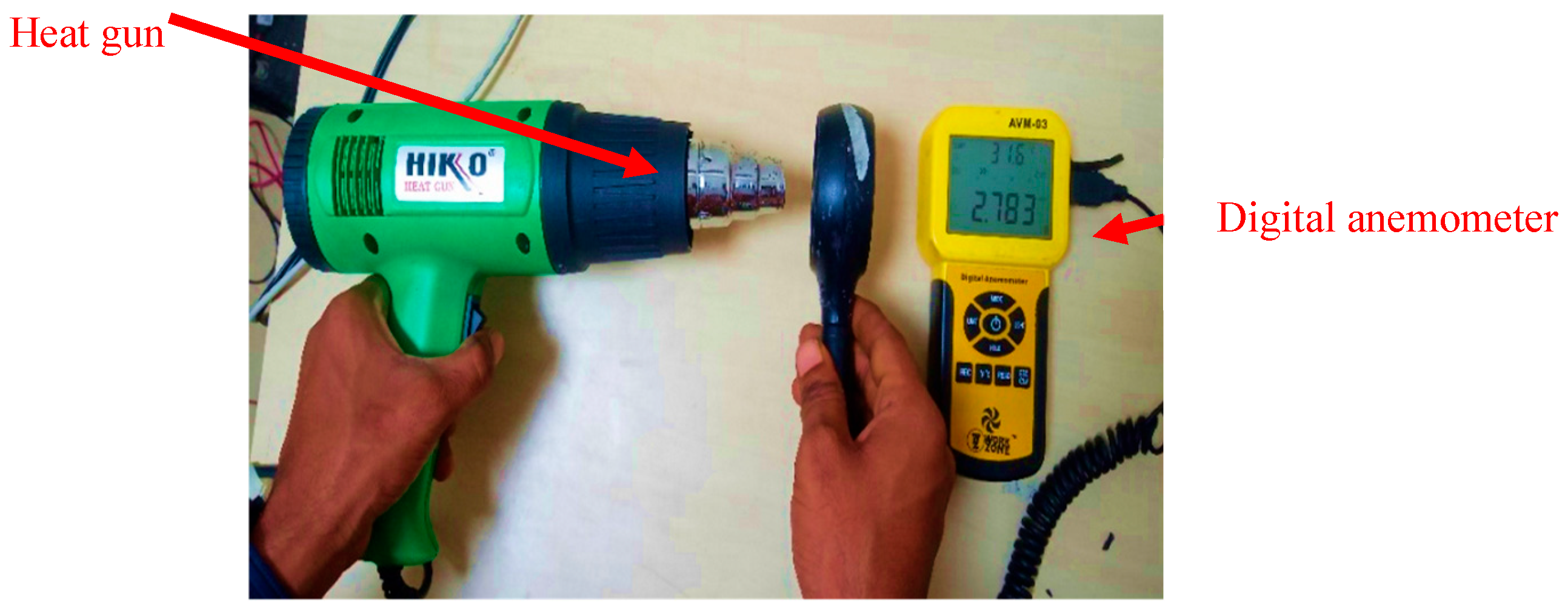
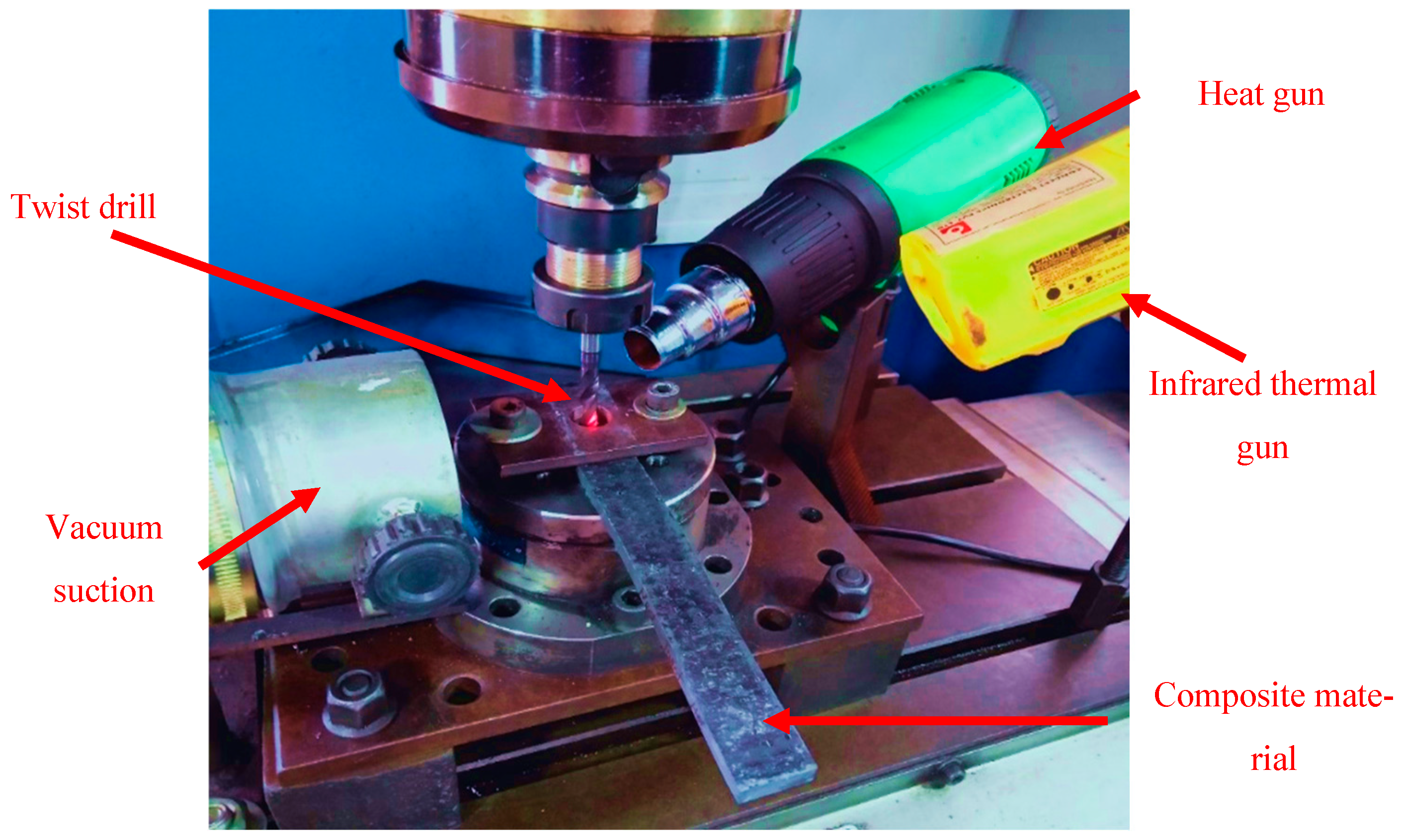
A vertical machining center (Model: TRIAC VMC) obtained from DENFORD, UK with a computer numerical control (CNC) was used to perform the drilling experiment. The 6 ± 0.2 mm thick neat and hybrid nanocomposites were cut into strips of dimension 250 mm × 25 mm using a water jet cutting machine. The hot air drilling was performed using a heat gun that supplies hot air at a flow rate range from 2 m/s to 4 m/s. The initial hot air temperature measured was 60 °C. The flow rate was measured using a digital anemometer at a distance of 20 mm from the nozzle, as shown in Figure 1. To maintain a constant flow rate of hot air, the distance between the nozzle and the surface of the composite strip was also maintained at 20 mm. Hot air was continuously supplied for an in-depth heat penetration throughout the thickness of the composite during drilling. A vacuum suction was placed near the drilling surface to remove the dust during the drilling operation. The infra-red thermal gun with digital indicator was used to measure the output temperature of the drilled hole at the end of the drilling operation. The experimental setup for hot air drilling using a heat gun and a thermal infrared gun is shown in Figure 2. A total of 180 holes were drilled during the experiment.

2.4. Measurements of Drilling-Induced Damages

2.4.1. Delamination Factor and Burr Area Measurement

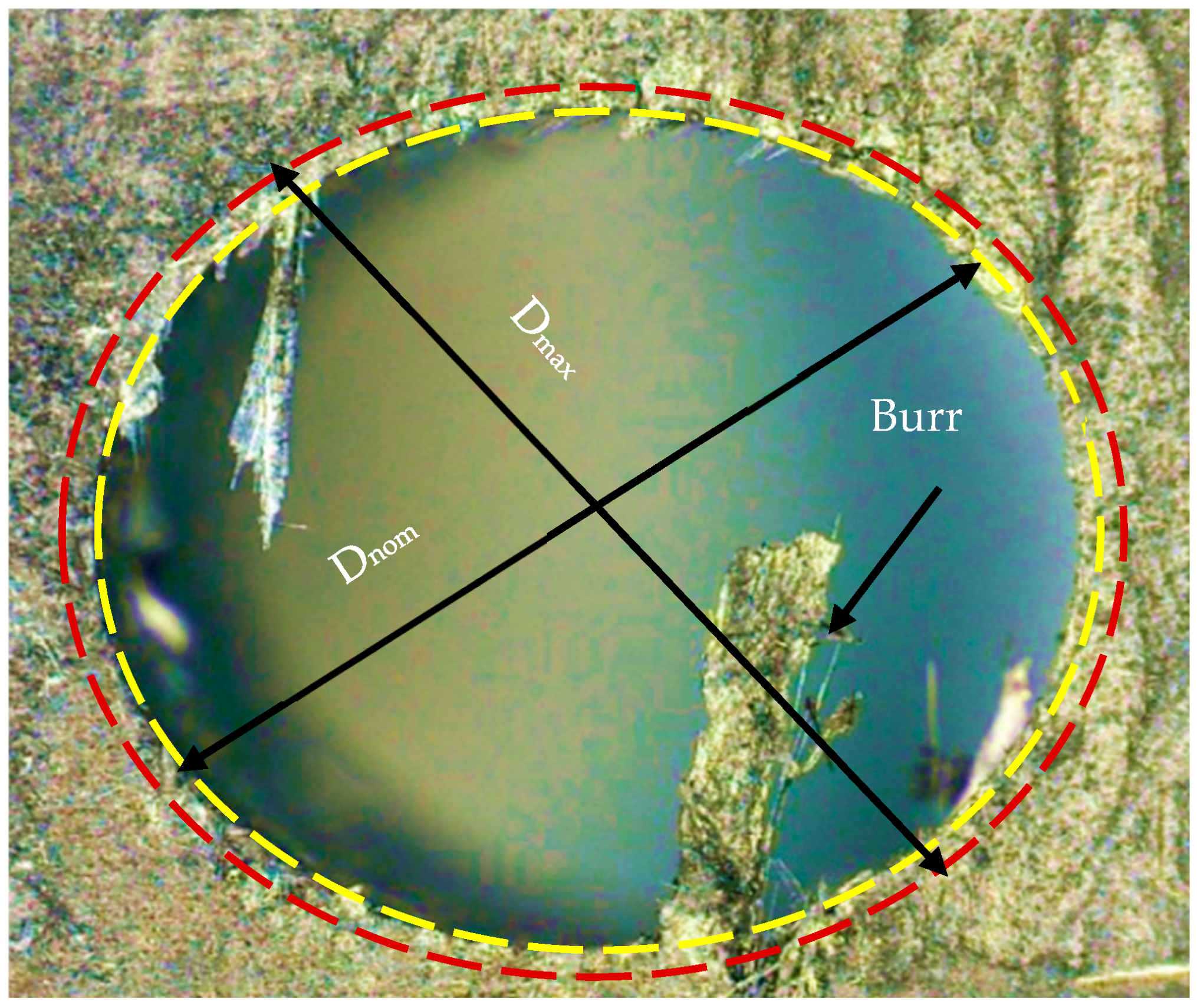
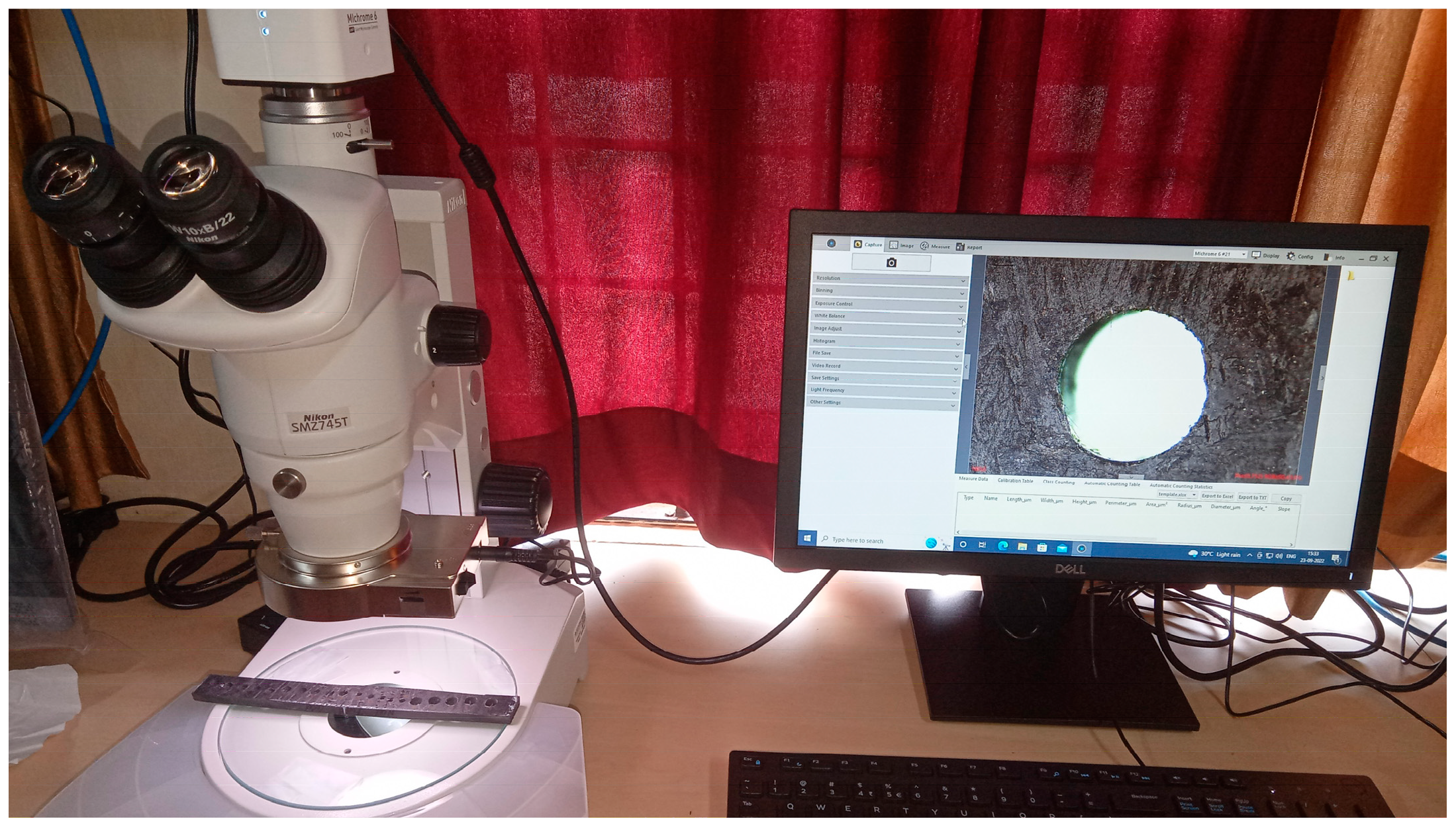
Maximum delamination and burr formation are observed at the exit side (push-down delamination) after the drilling operation; therefore, in the present work, surface area damages are analyzed at the exit hole as shown in Figure 3. Using the Nikon Stereo Zoom Microscope (SMZ745T series from Nishioi, Shinagawa-ku, Tokyo, Japan) (Figure 4), the drilled image was added to Image-J software, version 1.54r and by the proper selection of threshold, the outputs’ delamination and burr area were measured. The delamination factor (Fd) was calculated using Equation (4), whereas the exit burr area (Ab) was calculated using Equation (5) [19,20].
Delamination   factor = D m a x D n o m
Burr area = Anom − Afree
where Dmax—maximum diameter of hole (mm)
Dnom—nominal hole diameter (mm)
Anom—nominal hole area (mm2)
Afree—burr free area (mm2)

2.4.2. Measurement of Surface Roughness

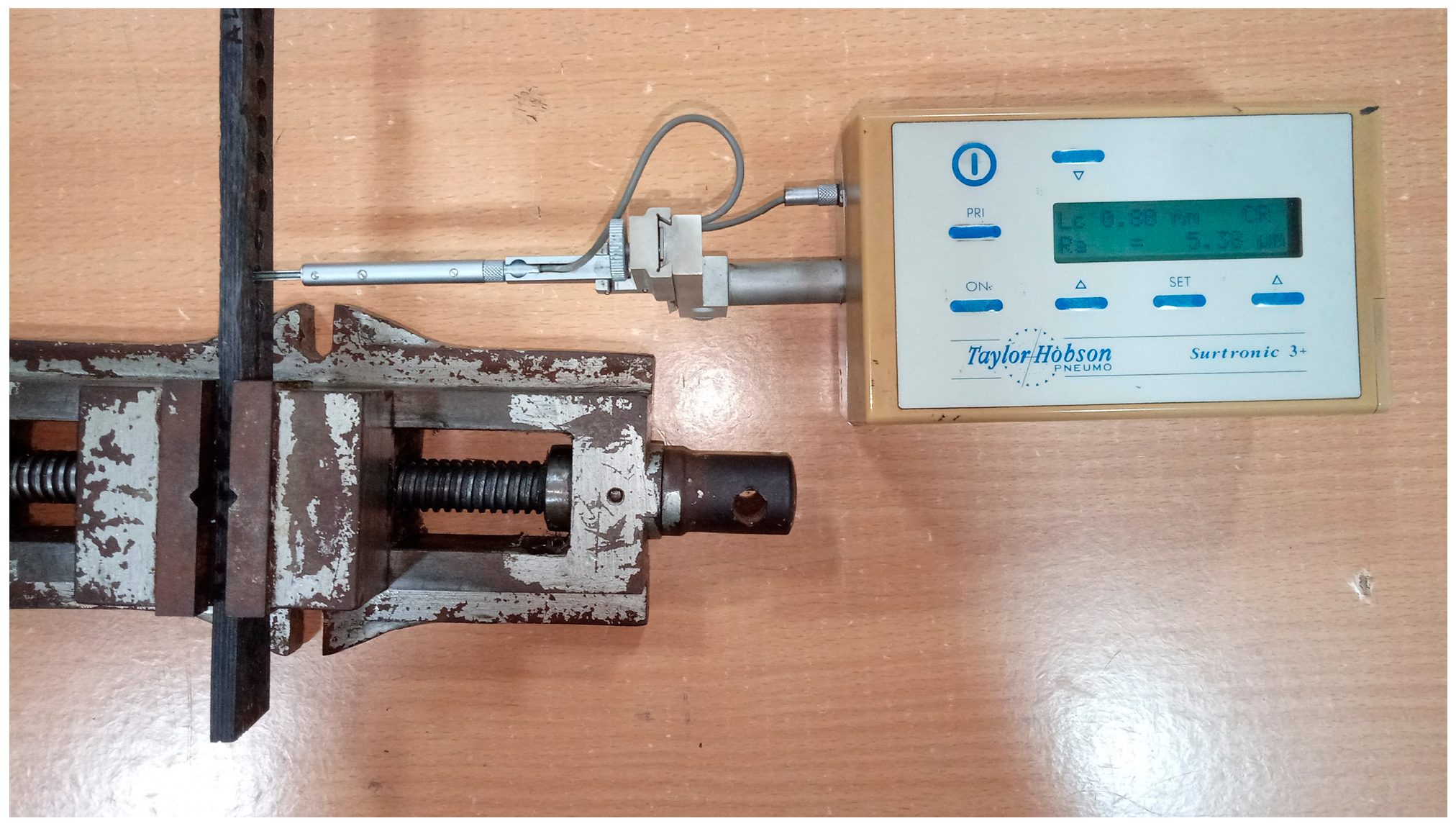
The surface roughness (Ra) was measured using a Taylor–Hobson Surtronic 3+ instrument, as represented in Figure 5 below. The measurement was performed at six different locations in the transverse direction at 0.5 mm/s as the probe speed setting, for a length range of 4 mm.

2.4.3. Output Hole Temperature

The output hole temperature was measured for hot drilling conditions using the infrared thermal gun. The measurement was performed at the inner side of the hole immediately after the tool’s exit to capture the immediate temperature.

3. Results and Discussion

3.1. Thermogravimetric Analysis

TGA is a thermal analysis technique that investigates the change in weight of a substance when subjected to a constant heat flow rate, as a function of time or temperature. Absorption, adsorption, decomposition, oxidation, and reduction can be studied using this technique. In addition to the above thermal events, TGA is used for studying the kinetics of chemical reactions under various conditions [21]. Before conducting the drilling operation, thermogravimetric analysis (TGA) was performed to study the thermal stability of the composite, where above the glass transition temperature of the polymer matrix, fiber-reinforced composite materials tend to display extreme reduction in mechanical properties, consequently leading to the matrix reducing the distribution of forces to the fiber [22,23].
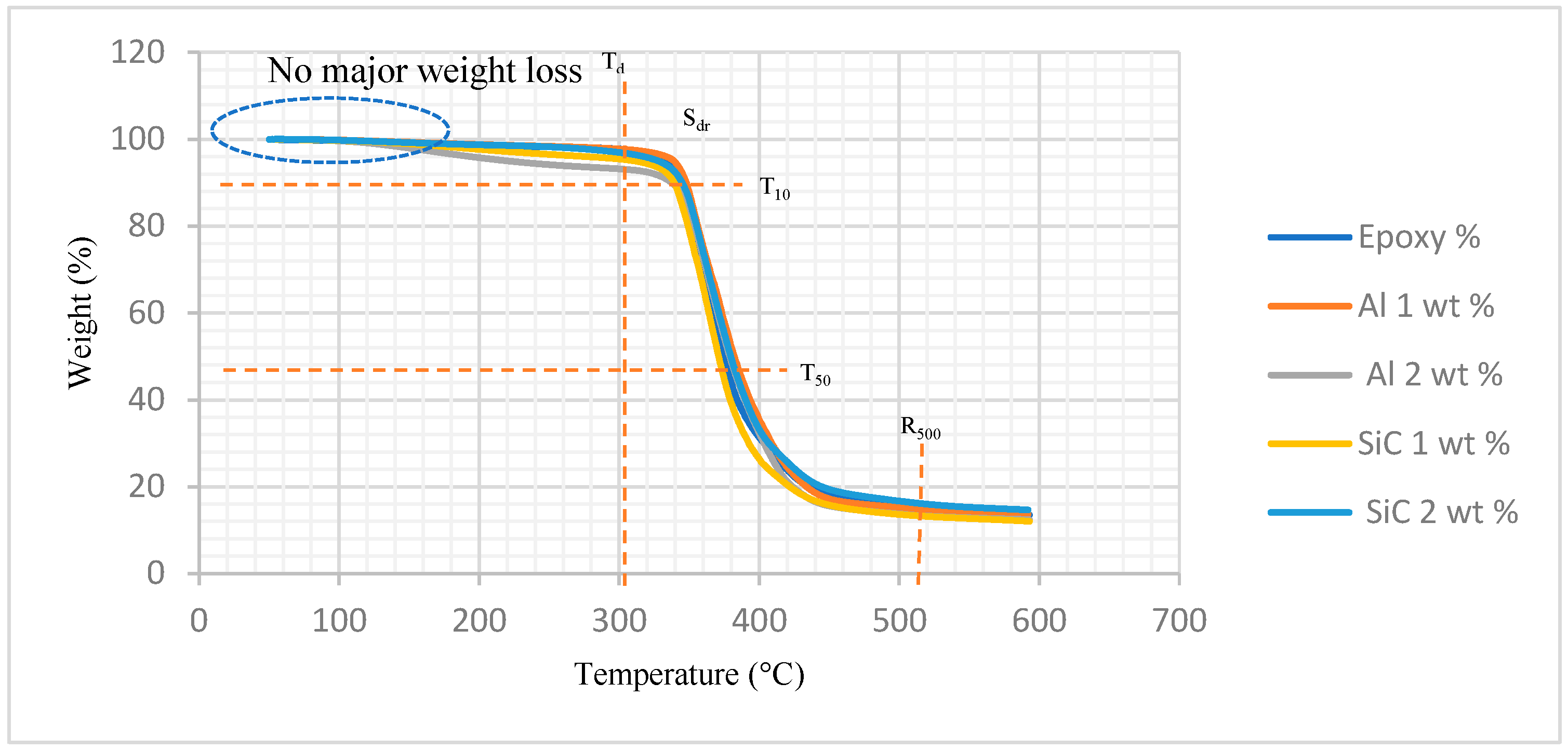
Figure 6 represents the thermal characteristics evaluated as per the conventional standards, for neat composite and hybrid nanocomposites with varying weight percent of Al2O3 and SiC nanoparticles [24].
In Table 3, as shown below, Td signifies the decomposition initiating temperature at the mass loss of 2%; T10 is the temperature at 10% mass loss; similarly, T50 is the temperature corresponding to 50% of mass loss; Sdr is the threshold value of rapid decomposition taking place; R500 denotes residue mass remaining at a temperature of 500 °C.
From the above results, it can be clearly stated that the hybrid nanocomposites exhibit thermal stability, which is attributed to the formation of high cross-linked networks. From the thermogram shown above, the epoxy nanocomposite is thermally stable in the temperature range from 50 °C to 260 °C. It can be observed that the significant weight loss is initiated at 340 °C temperature for neat epoxy, which is similar to the decomposition temperature reported by Grich et al. [25,26]. From the above results, it can be concluded that the nanoparticles have been dispersed uniformly, as there is a very slight deviation in terms of the rapid degradation of the polymer matrix with and without nanoparticles. This behavior can be attributed to the low nanoparticle loading levels (1–2 wt%), which are insufficient to significantly modify the intrinsic thermal degradation mechanism of the epoxy matrix. At these concentrations, Al2O3 and SiC nanoparticles primarily act as inert fillers, not substantially altering the cross-linked network degradation processes that govern epoxy decomposition. Similar observations have been reported in previous studies on ceramic nanoparticle-reinforced epoxy composites, where low filler contents resulted in negligible changes in thermal stability and decomposition temperatures [27,28]. With the addition of nanoparticles of Al2O3 and SiC, there is no major phase change up to 260 °C, proposing that the composites fabricated can be subjected to a temperature range from 0 °C to 100 °C, which is required for the drilling operation of neat and hybrid nanocomposites. The thermal stability observed from TGA is relevant to this study because hot drilling involves elevated temperatures that can affect matrix softening and fiber–matrix bonding.

3.2. Analysis of Delamination

3.2.1. Effect of Drilling Parameters and Drill Type on Delamination Factor

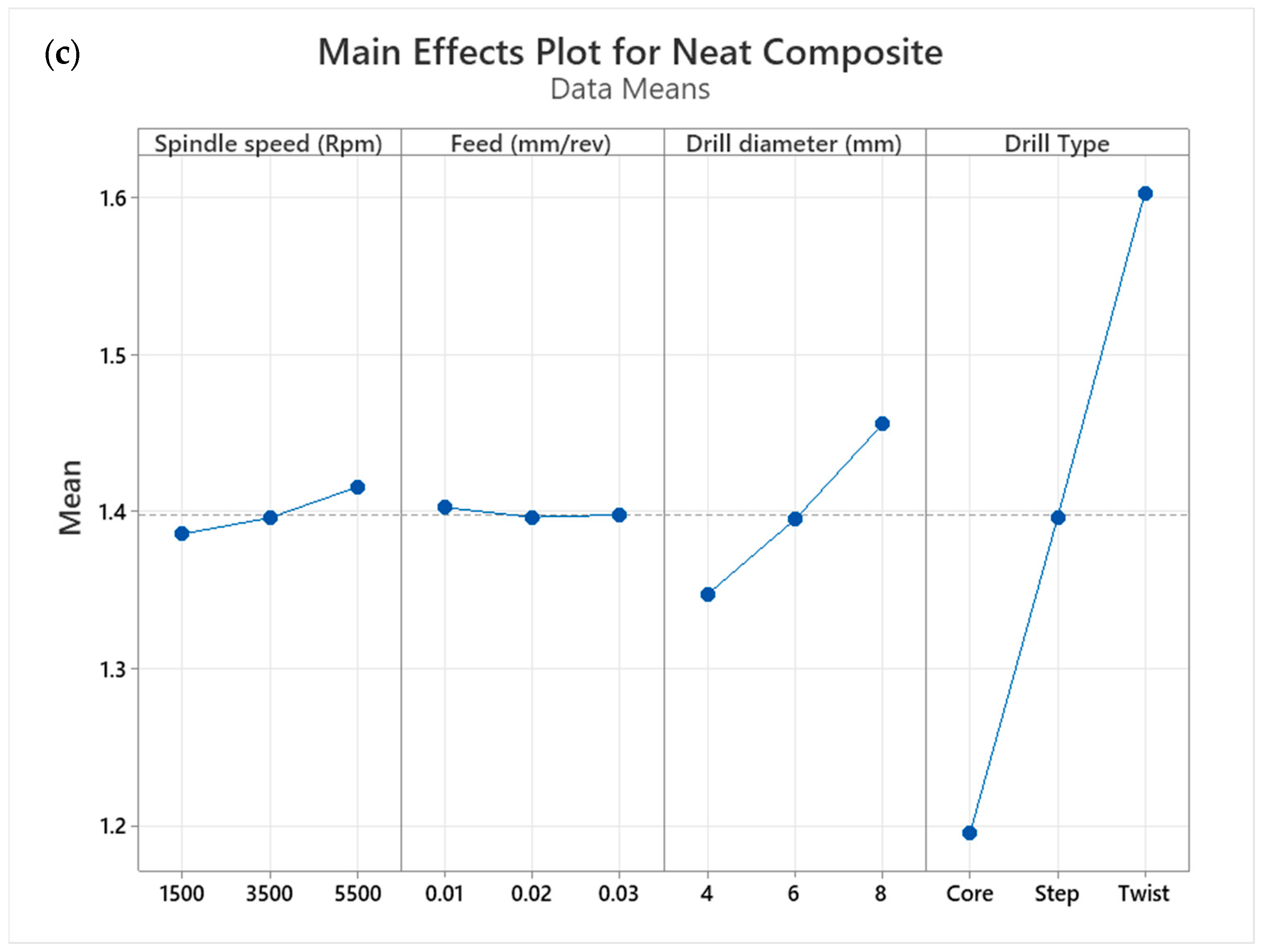
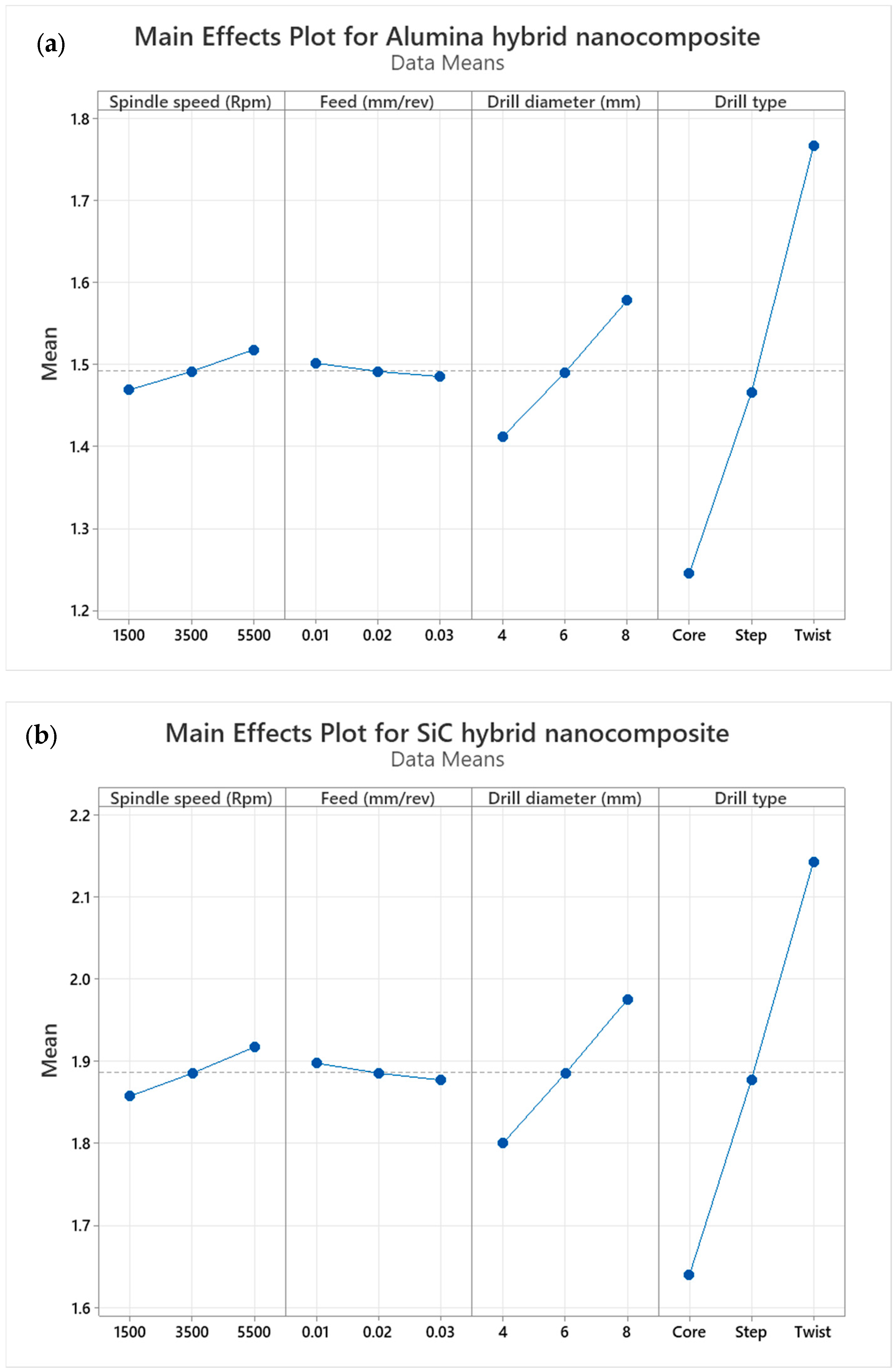
The delamination factor was evaluated by studying the effects of drill diameter, drill type, spindle speed, and feed on hot drilling conditions. It can be observed from the main effects plot (Figure 7) that the delamination factor rises with increasing spindle speed and drill diameter. The contribution of feed on delamination is almost constant/low for both hybrid and neat composites. This is because, as there is already a temperature increase due to the high contact surface area of the core with the composite, the additional heat applied from the heat gun further softens the matrix. As a result, the fibers cannot support the drilling force applied by the drill. Hence, for the core drill, the delamination factor is less compared to other drill types in hot conditions [29]. Similar results were obtained by Krishnaraj et al. [30] and Kumaran [31]. The main effect plots also show that by varying the spindle speed, the delamination factor can be reduced and feed can be set to an optimum range, i.e., 0.02 mm/rev. The lowest delamination factor was noted for the core drill at 4 mm drill diameter, lower spindle speed of 1500 rpm and moderate feed of 0.02 mm/rev, followed by step and twist drills.
ANOVA analysis for the delamination factor was determined as shown in Table 4. The complete regression equations corresponding to the developed models are provided in the Supplementary Materials (S1). From the analysis, it is noted that the drill diameter and drill type, followed by spindle speed, showed a prominent influence on delamination. The contribution of drill type showed 94.68%, 94.04%, and 94.03% for the delamination factor in hybrid (Al2O3, SiC) and neat composites, respectively. Additionally, the drill diameter contribution was 4.46, 5.07, and 5.02% for hybrid (Al2O3, SiC) and neat composites, respectively, whereas the contribution of spindle speed was 0.26, 0.32, and 0.38%. However, the feed affecting the delamination is less than 0.1%, respectively. This indicates that the feed has less influence on delamination and can be kept constant in the case of hot drilling conditions. Additionally, it can be observed from Table 4 that the adjusted R-squared value is very close to the R-squared value, and both are high (exceeding 99%). This signifies that the model is fitting the data extremely well. The dominance of drill type can be attributed to its strong influence on chip evacuation and thrust force generation during the drilling process. Compared with the conventional twist drill, step and core drills generate lower thrust forces due to their reduced effective chisel edge length, which facilitates progressive material removal. In addition, drill diameter is the next significant factor influencing the output response (delamination), as larger diameters increase the tool–workpiece contact area, thereby enhancing friction. The increased contact area leads to higher thrust force and heat generation, which in turn aggravates surface damage.

3.2.2. Analysis of the Delamination Factor Using Contour Plots

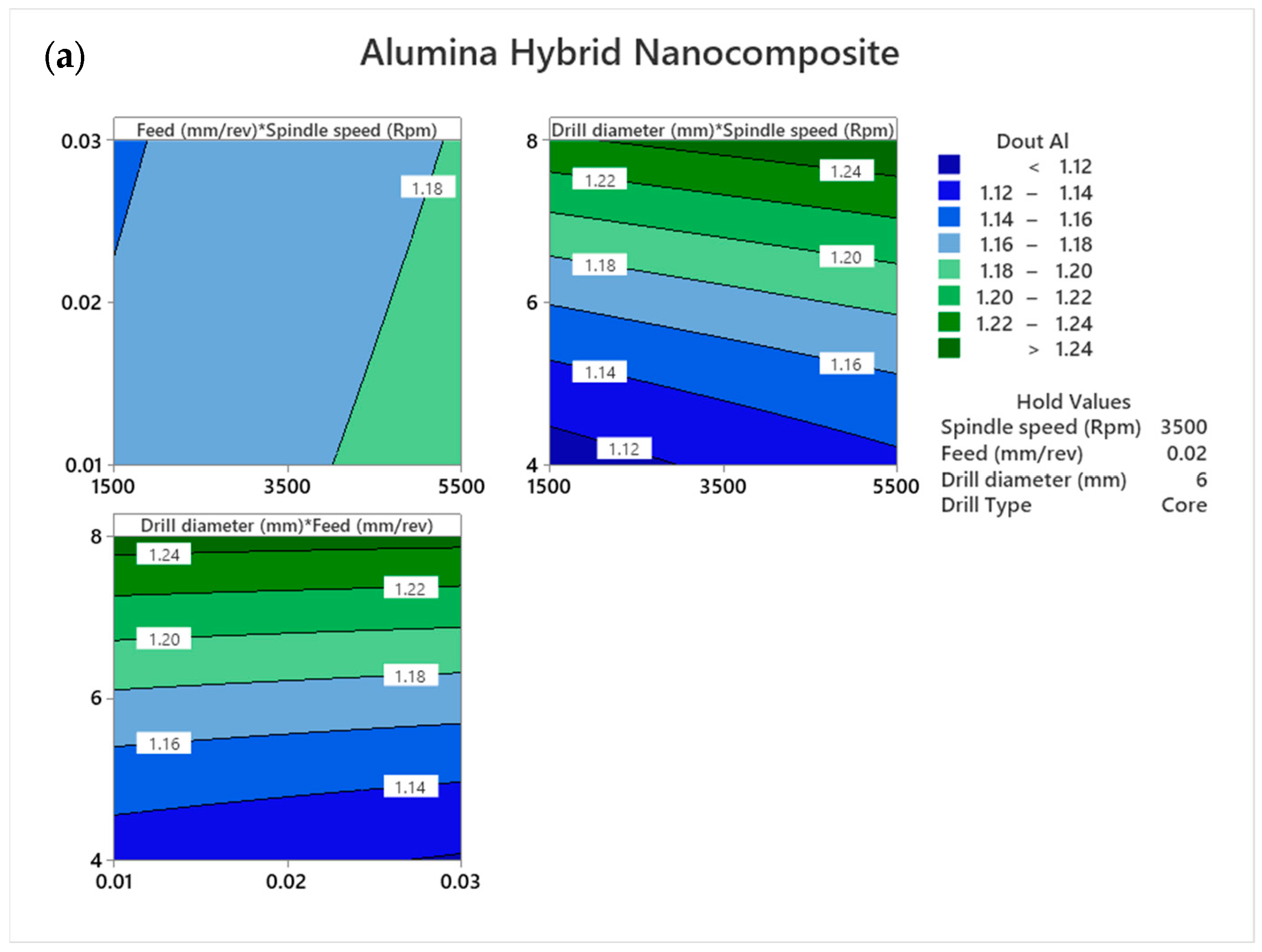
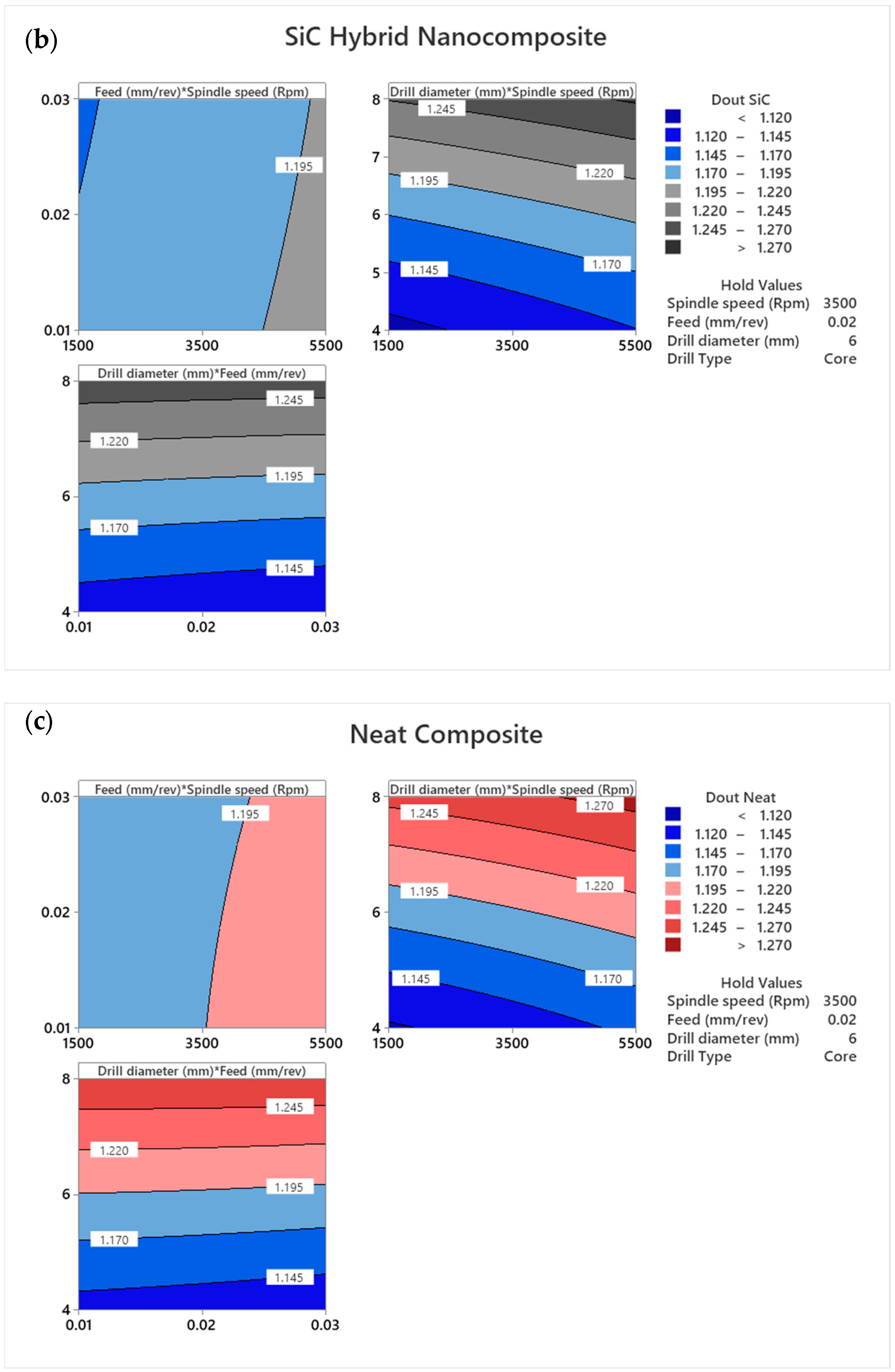
The contour plot for the delamination factor under hot drilling conditions is shown in Figure 8. The plot illustrates the interaction effects of spindle speed, feed rate, drill diameter and drill type on delamination for the neat, Al2O3, and SiC hybrid nanocomposites. From the contour map, it can be observed that higher spindle speeds, combined with larger drill diameters, lead to higher delamination values due to the increased thrust force acting on the heat-softened matrix. Regions corresponding to lower delamination are obtained at lower spindle speeds, moderate feed rates, and smaller drill diameters. This behavior is attributed to reduced thermal softening of the resin and lower thrust loading in these parameter zones. The core drill consistently exhibits lower delamination regions in the contour plot compared to step and twist drills under hot drilling. The pilot section of the core drill stabilizes the cutting zone and minimizes fiber push-out, which becomes increasingly important when the matrix softens under elevated temperature. The contour plot clearly highlights the parameter combinations that minimize delamination during hot drilling for hybrid and neat composites.

3.3. Analysis of Burr Area

3.3.1. Effect of Drilling Parameters and Drill Type on Burr Area

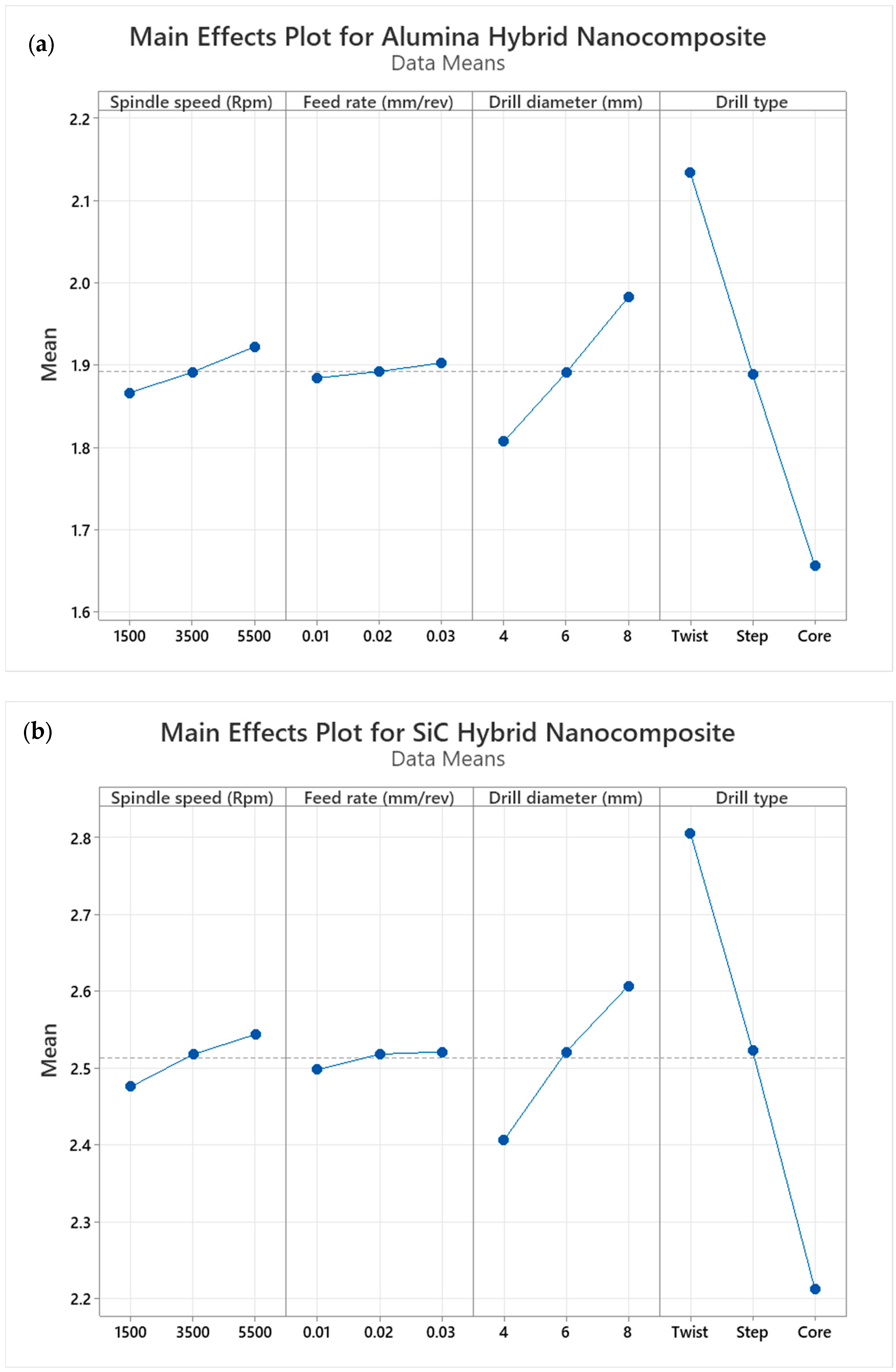
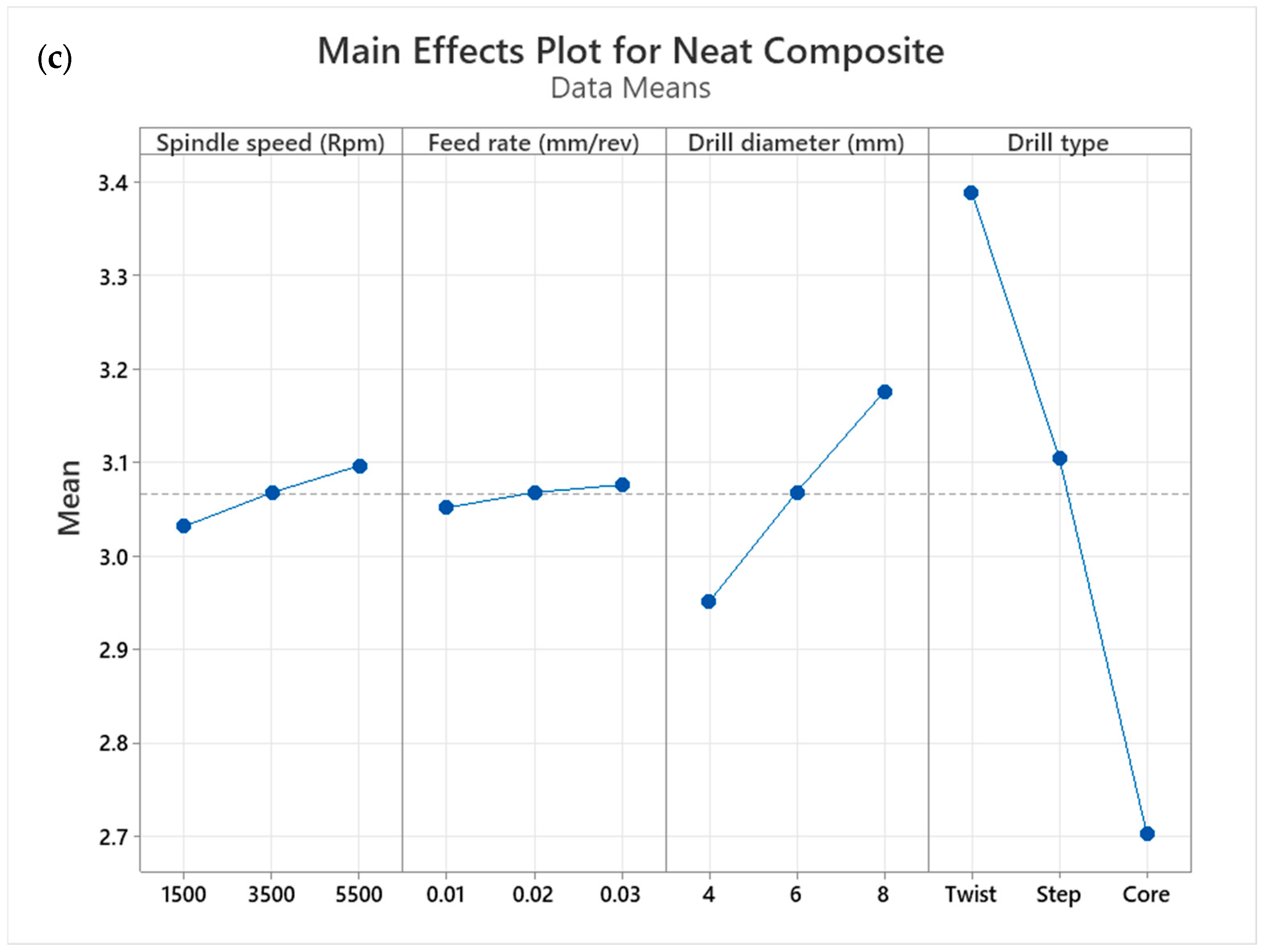
The main effects plot of different drilling parameters and drill type on burr formation are shown in Figure 9. It is noted that from Figure 9a–c, the burr area increases for both Al2O3 and SiC hybrid nanocomposites and neat composites, and the maximum burr occurs at higher spindle speed (3000 rpm), higher feed (0.03 mm/rev), and lower drill diameter (4 mm). This is due to the thermal softening of the matrix caused by the externally applied heat, which weakens the fiber–matrix interface and results in increased fiber breakout at the hole exit. The core drill exhibits lower burr compared to the twist and step drills under hot drilling because the pilot portion stabilizes the cutting zone and reduces fiber displacement during tool exit. The nanoparticles are found to reduce burr formation even under hot drilling conditions, as Al2O3 and SiC help in distributing heat at the tool–work interface and limit excessive thermal damage. The significance of each drilling parameter on burr formation under hot drilling is shown in Table 5. Among the composites, the Al2O3 hybrid nanocomposite recorded the lowest burr area, followed by the SiC hybrid, while the neat composite recorded the maximum burr area.

3.3.2. Analysis of the Burr Area Using Contour Plots

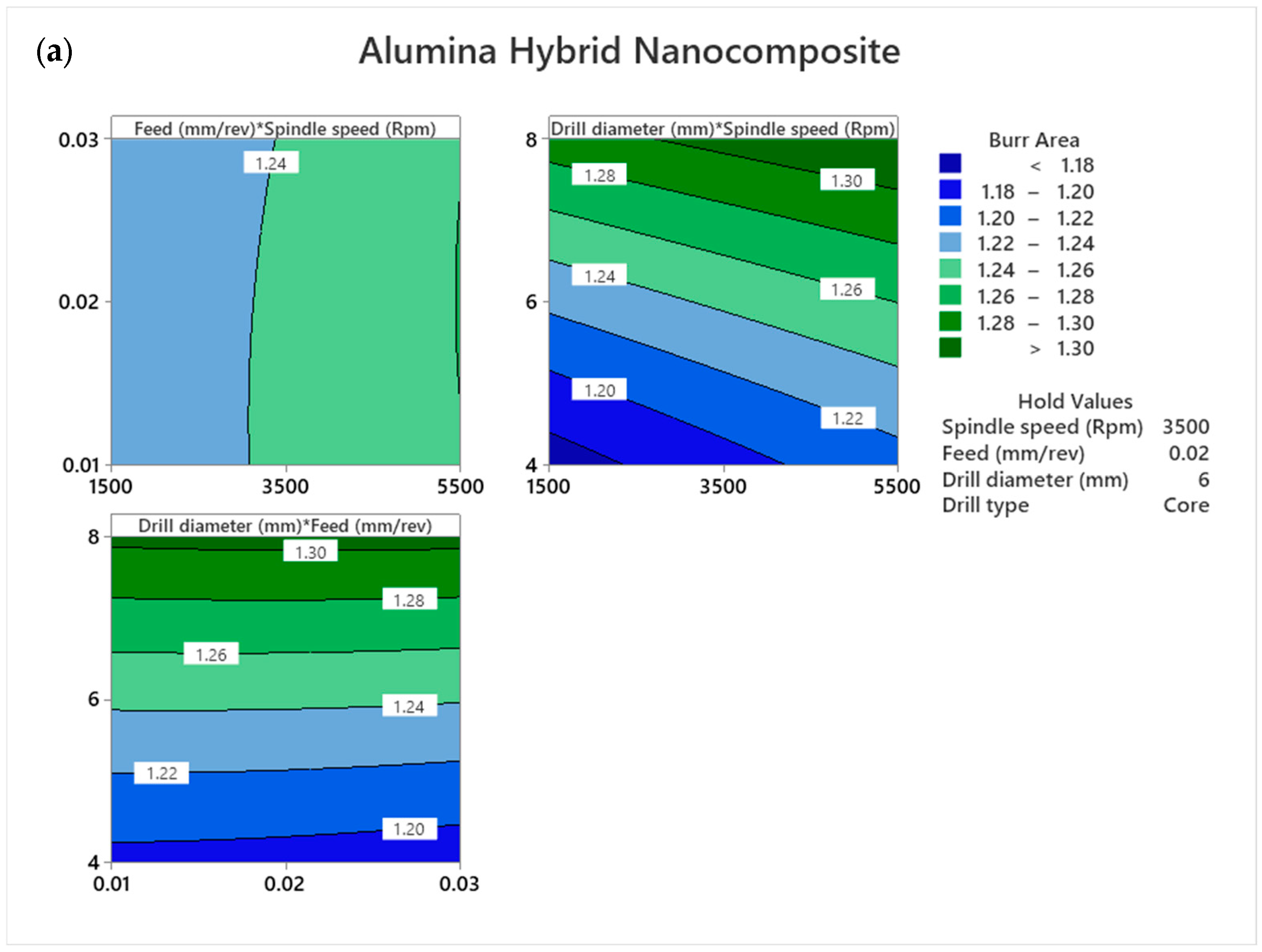
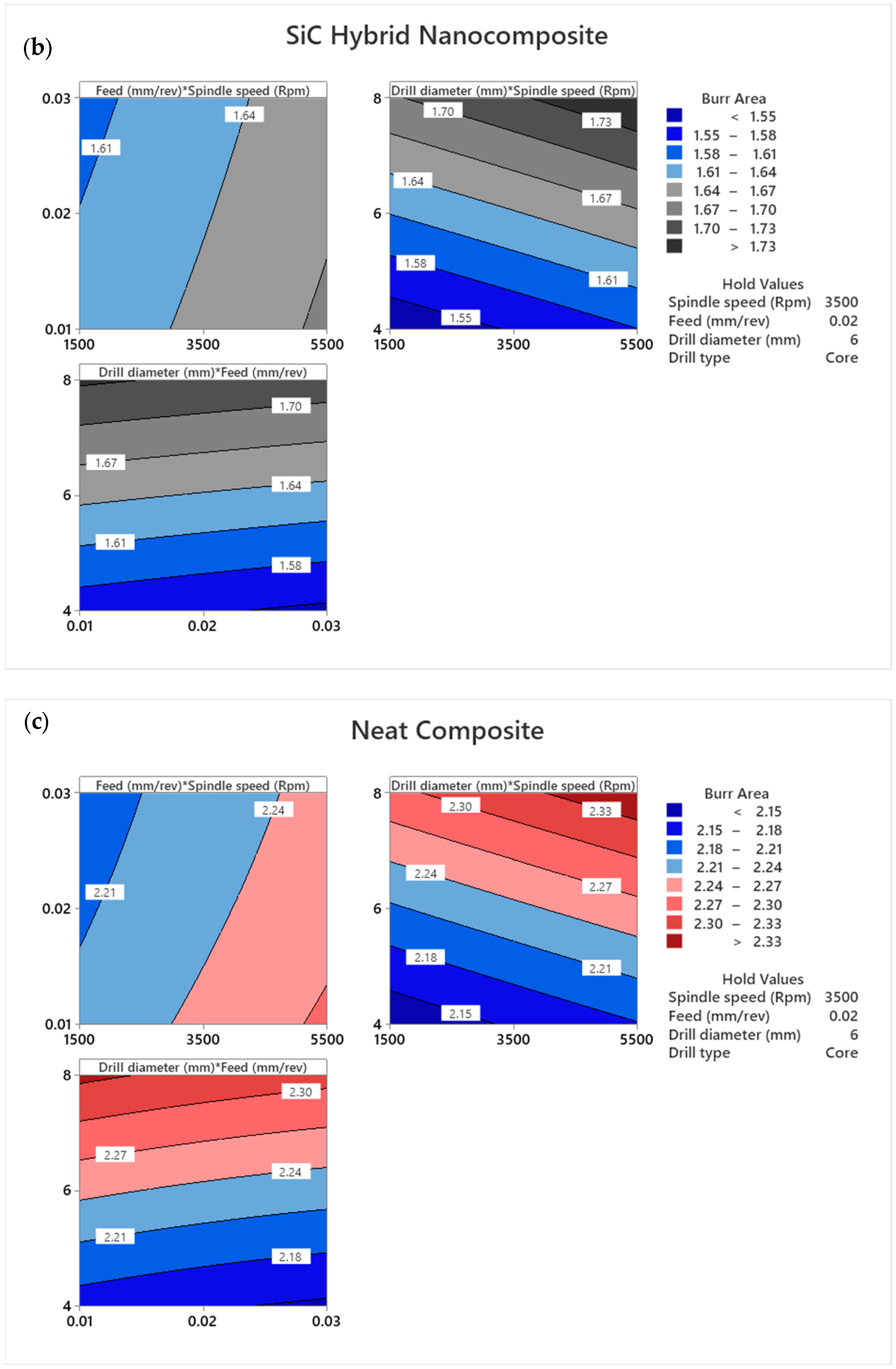
The contour plots for hot drilling conditions are illustrated, showing the combined effects of feed rate, spindle speed, drill diameter, and drill type on burr. From Figure 10a–c, it is seen that the burr area rises with increasing feed and spindle speed due to enhanced thermal softening of the matrix. Higher temperatures weaken the fiber–matrix interface, resulting in fiber breakout and larger burr formation. Regions corresponding to lower burr area appear at lower spindle speeds, moderate feed rates, and smaller drill diameters. The core drill consistently shows lower burr formation compared to twist and step drills under hot drilling conditions due to better stabilization of the cutting zone. These contour plots clearly identify the parameter ranges that minimize burr formation during hot drilling for neat and hybrid nanocomposites.

3.4. Analysis of Surface Roughness

3.4.1. Effect of Drilling Parameters and Drill Type on Surface Roughness

Surface roughness is one of the key parameters that determines the quality of drilled holes in composite laminates. It is primarily influenced by drilling parameters, tool geometry, and the cutting forces produced during drilling.
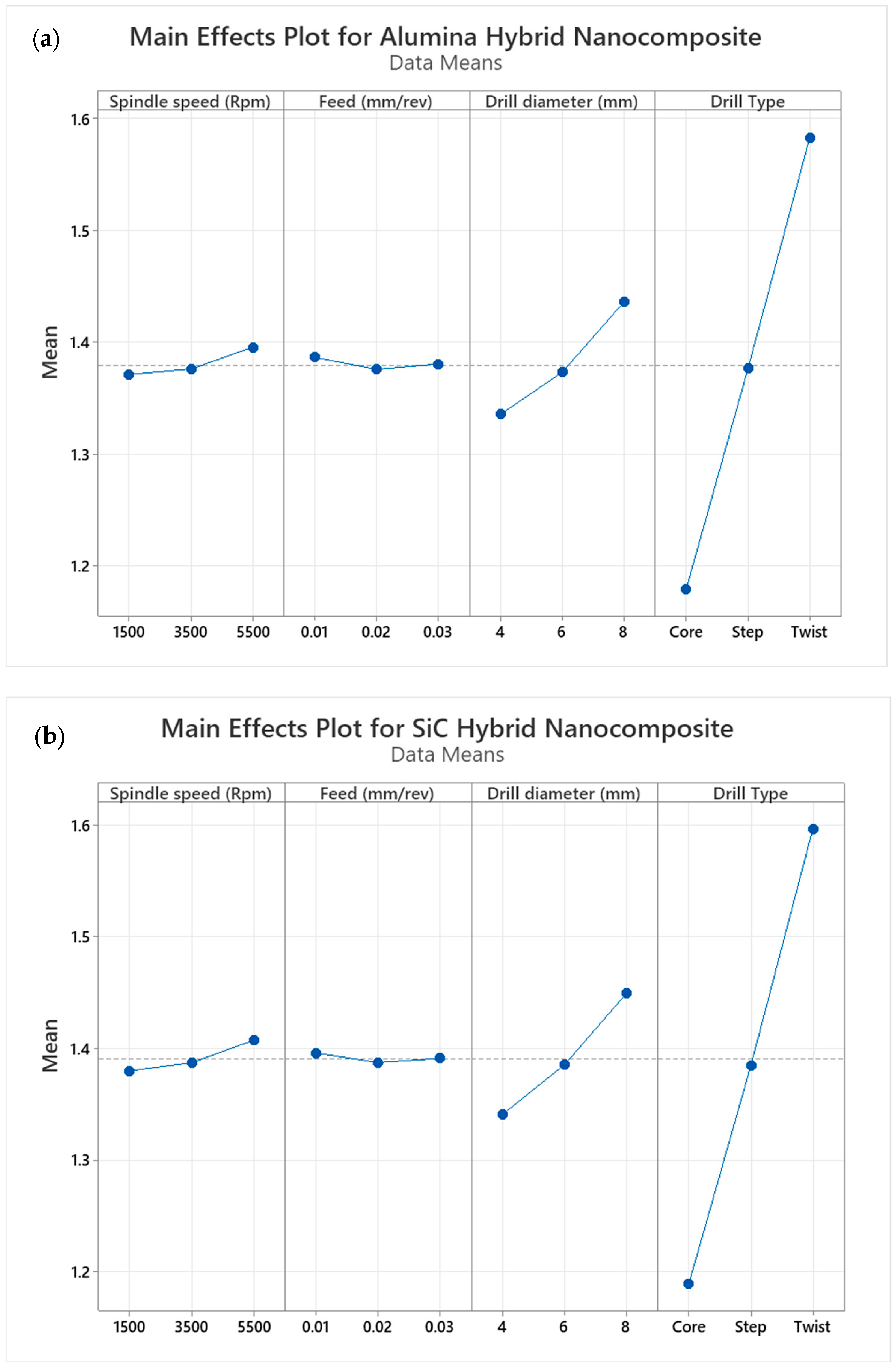
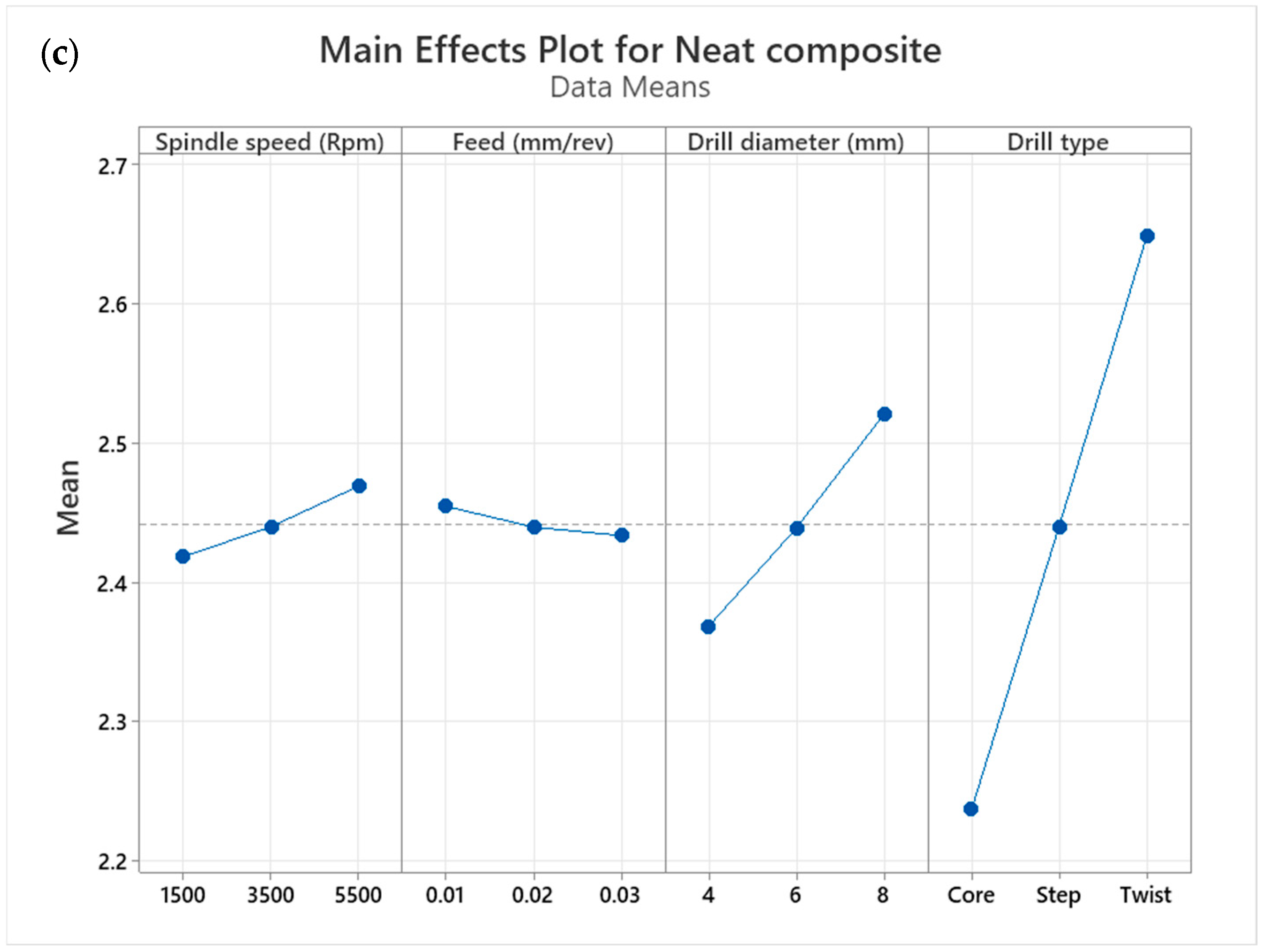
The effect of drilling parameters is represented below by a main effects plot for hybrid nanocomposites and neat composites, as shown in Figure 11. It can be seen that (Figure 11a–c), the surface roughness increases with increasing spindle speed and feed. Surface roughness decreases with increasing drill diameter due to reduced thrust loading and improved chip evacuation. The lowest surface roughness is found for the core drill as compared to the step and twist drill. The statistical significance of the drilling parameters on surface roughness under hot drilling is shown in Table 6. From Table 6, the contribution of drill type on surface roughness is 89.60, 90.79, 91.51% for hybrid Al2O3, SiC and neat CFRP composites.

3.4.2. Analysis of the Surface Roughness Using Contour Plots

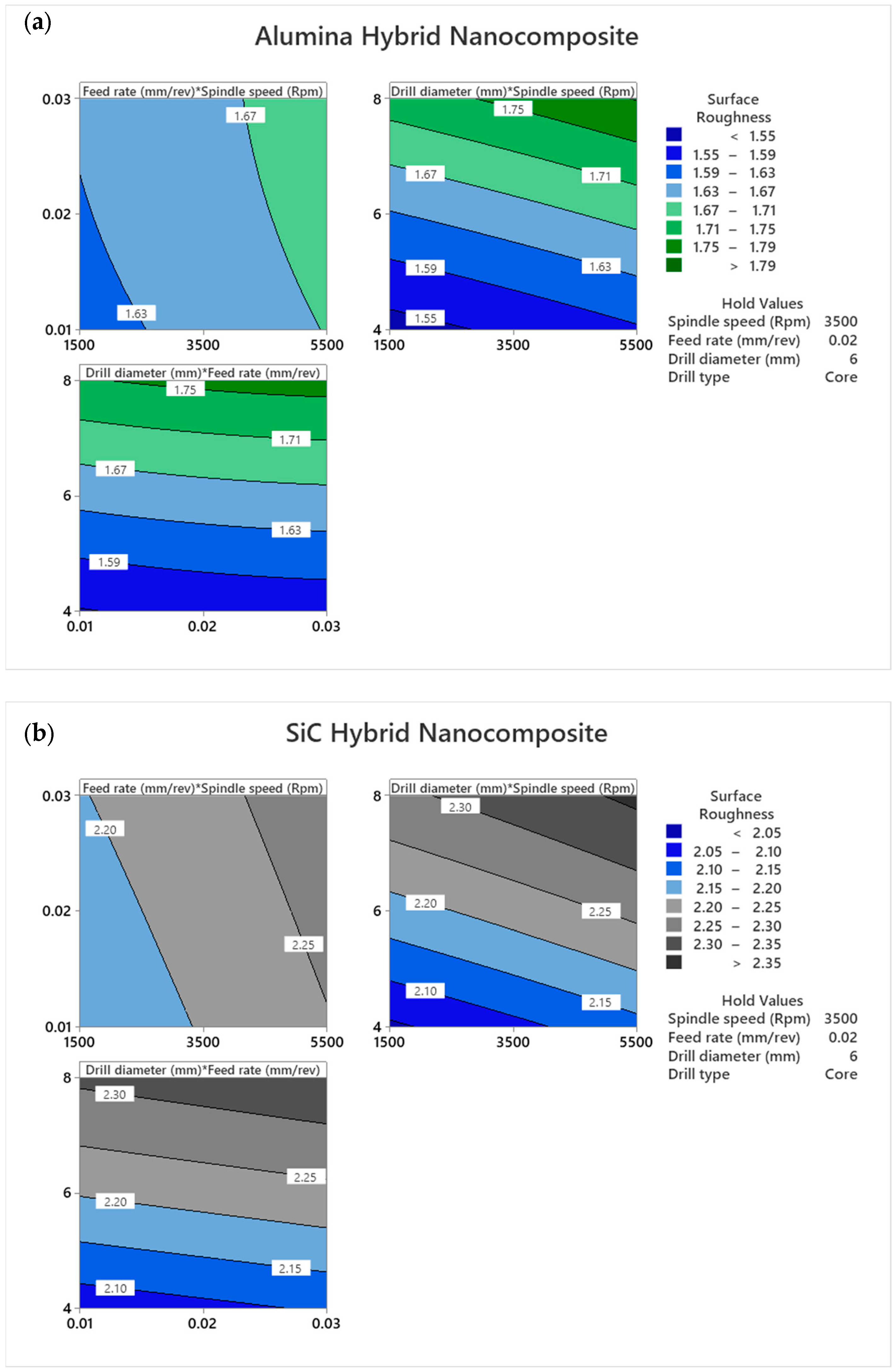
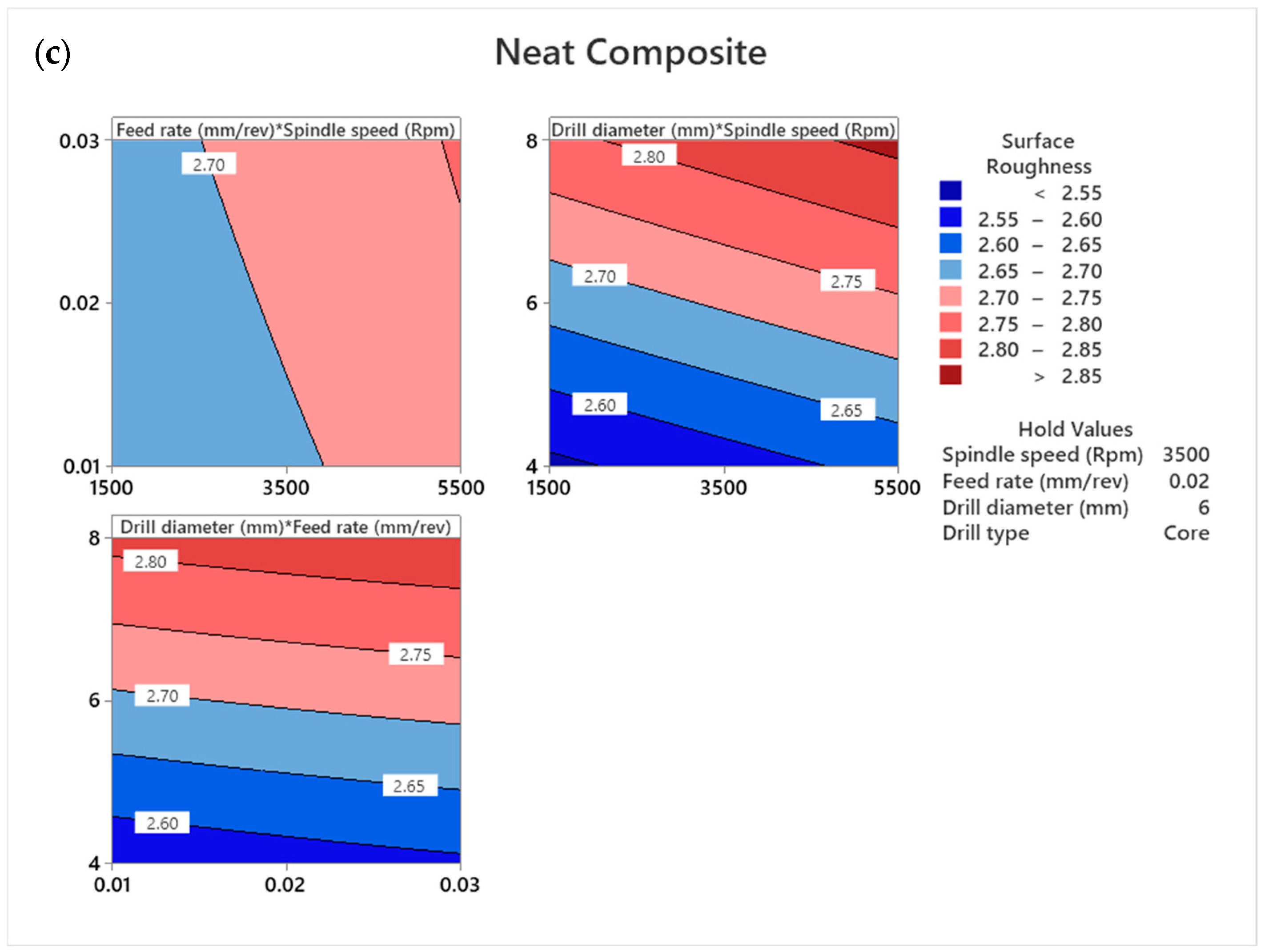
Similar to the above contour plots, the contour plots were created for surface roughness under various thermal conditions for hybrid nanocomposites and the neat composite (Figure 12). Under hot drilling conditions (Figure 12a), Al2O3 hybrid nanocomposites exhibit superior surface finish at feed below 0.02 mm/rev, spindle speeds under 3500 rpm, and a 4 mm drill diameter. In SiC hybrid nanocomposites (Figure 12b), an improved surface finish is observed with drill diameter of 4 mm, 3000 rpm spindle speed, and a feed below 0.015 mm/rev, whereas for neat composite (Figure 12c), minimizing surface roughness requires a drill diameter (4 mm), spindle speeds of 2000 rpm, and a feed less than 0.03 mm/rev.

3.5. Analysis of Hole Temperature

3.5.1. Effect of Drilling Parameters and Drill Type on Hole Temperature

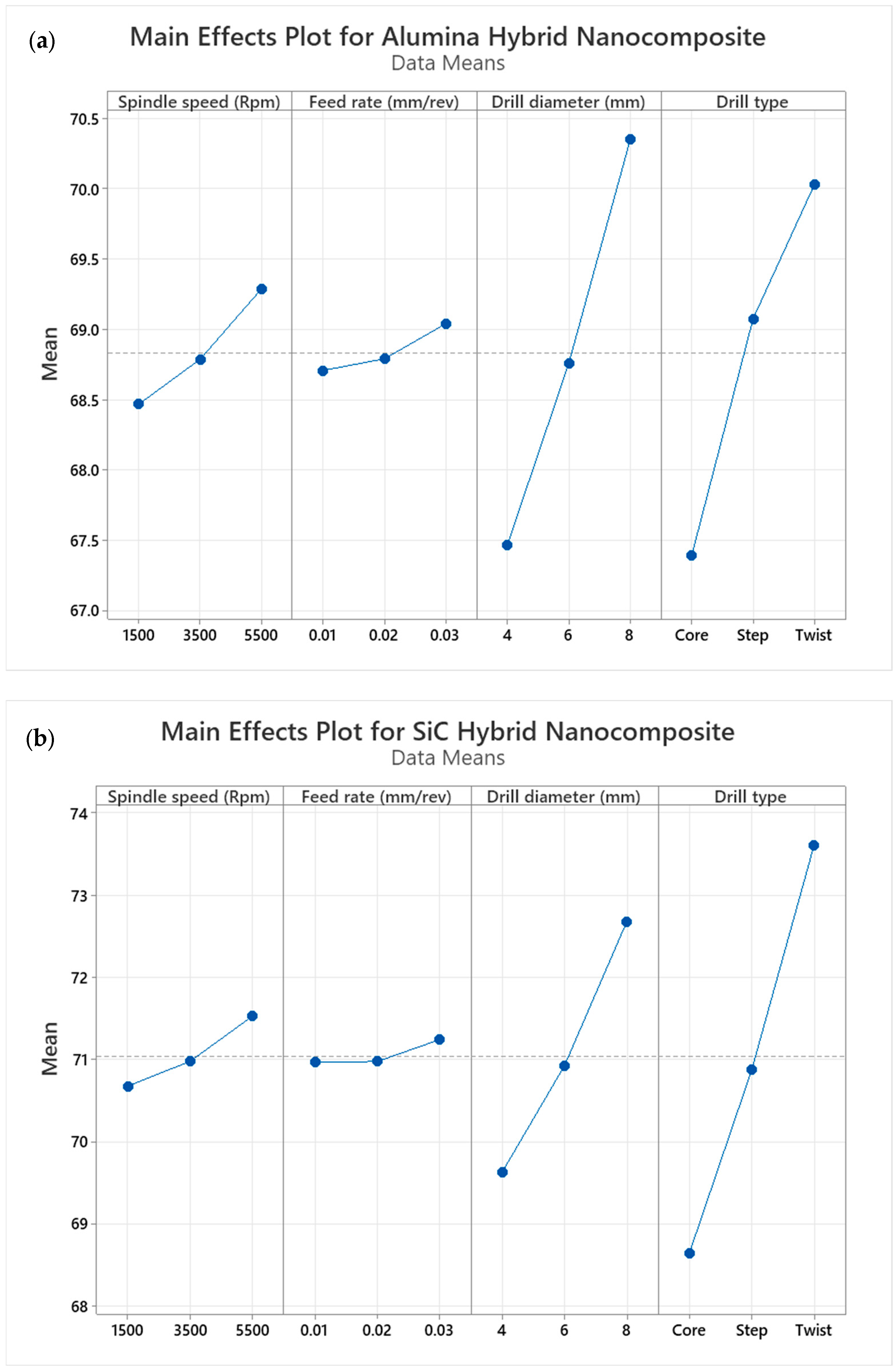
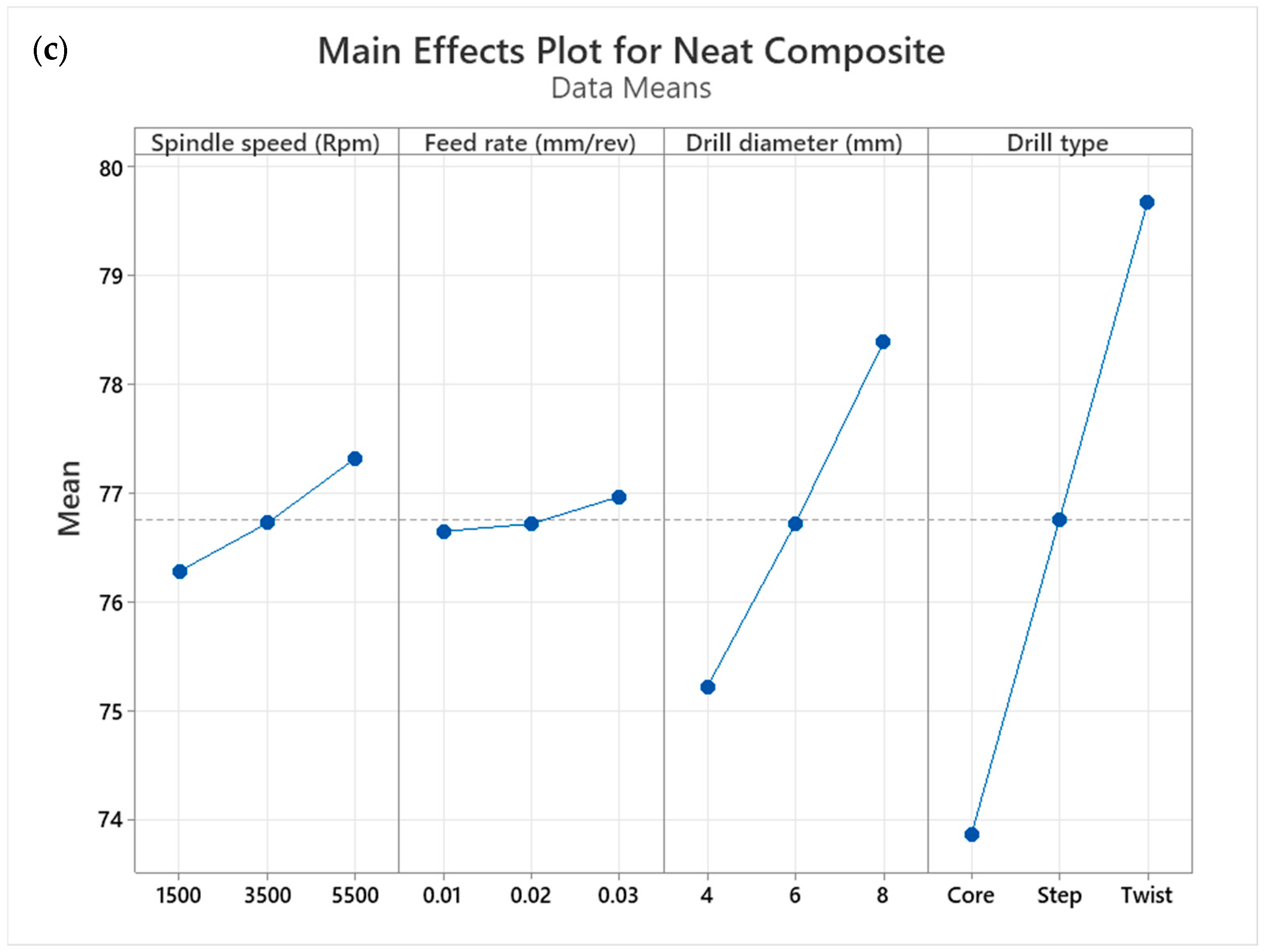
Similar to the above output factors, the main effects plot (Figure 13a–c) was plotted to determine the effect of drilling parameters and drill type on output hole temperature. The main effects plot shows that hole temperature maximizes with spindle speed, feed rate, and drill diameter. Also, the externally applied heat combined with mechanical friction results in a higher temperature rise as these parameters increase. Among the drill geometries, the core drill produces the lowest hole temperature, followed by the step drill and twist drill, due to its improved chip evacuation and stabilized cutting action.
The ANOVA results presented in Table 7 indicate that drill type contributes the most to hole temperature, with contributions of 50.45%, 75.19%, and 78.94% for Al2O3, SiC, and neat composites, respectively. Drill diameter is the next major contributing factor, with 43.91%, 21.25%, and 17.59% contributions. The contribution of spindle speed is comparatively small (3.56%, 1.66%, and 1.90%), and feed rate contributes less than 1% for all materials. These results confirm that drill type and drill diameter are the dominant parameters influencing temperature rise under hot drilling conditions. The spindle speed contribution is 3.56, 1.66 and 1.90%, respectively for hybrid and neat composites. The feed contribution towards the hole temperature is noted to be less than 1%, respectively.

3.5.2. Analysis of the Hole Temperature Using Contour Plots

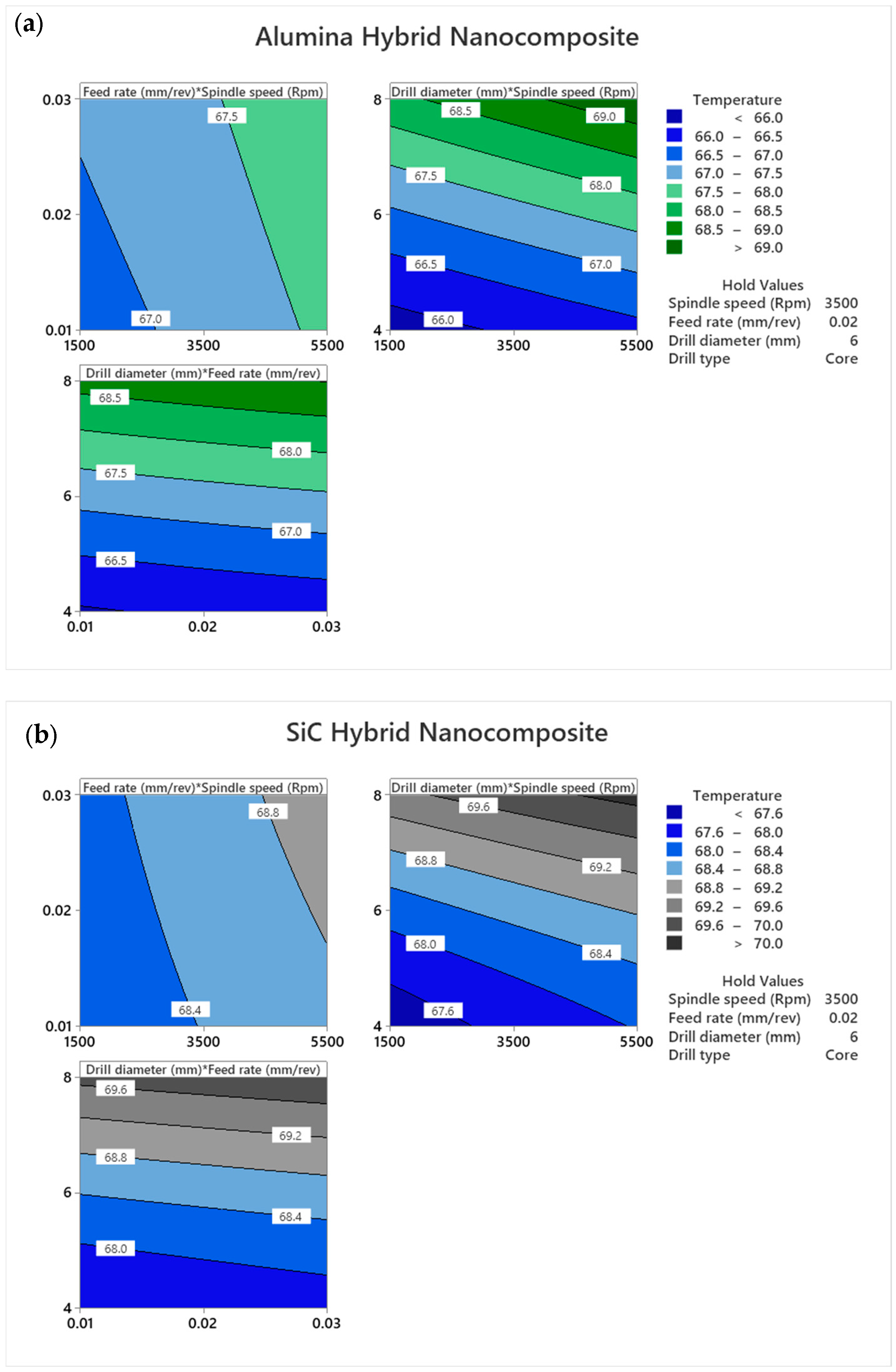
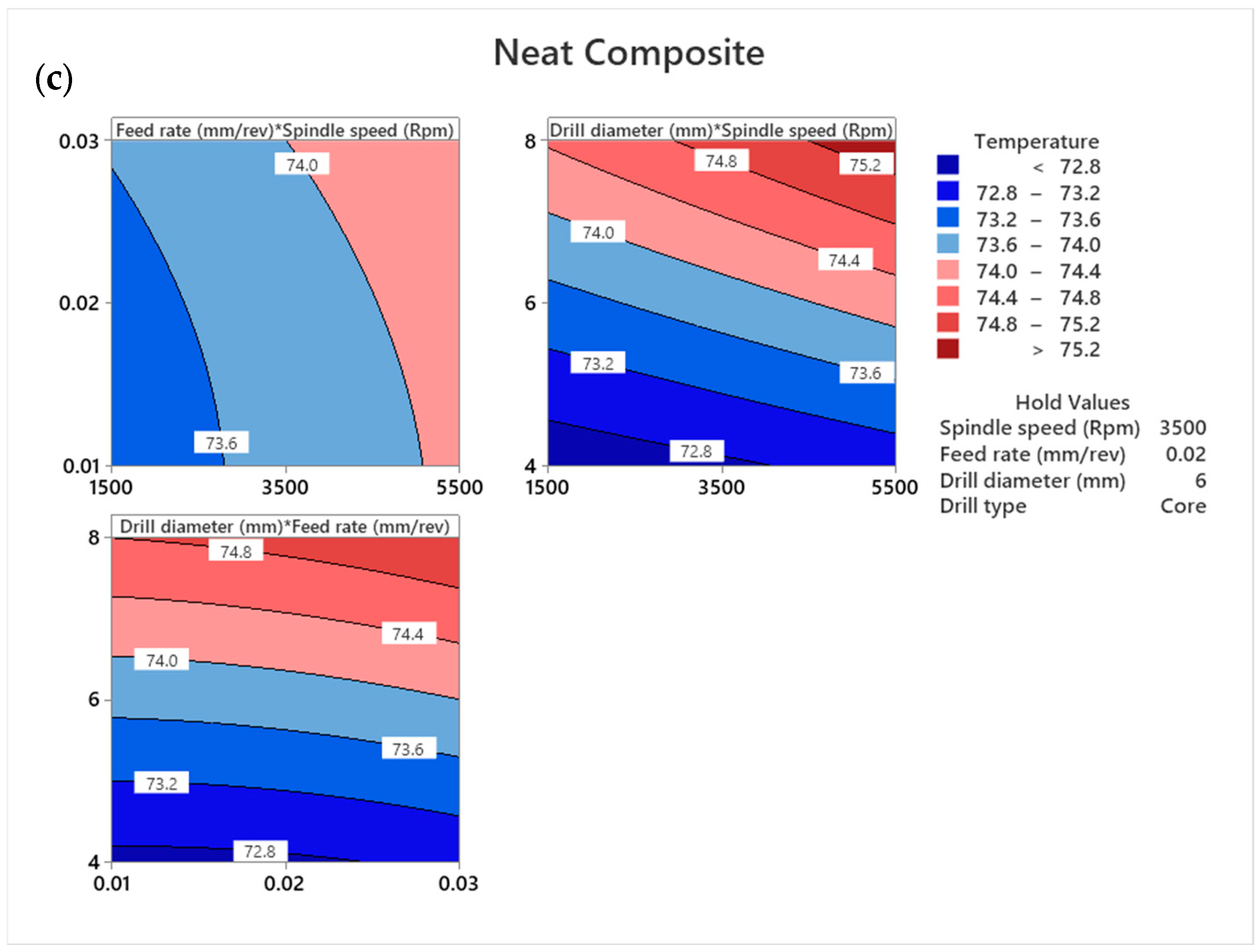
Contour plots were generated to assess the influence of spindle speed, feed rate, and drill diameter on hole temperature for hybrid nanocomposites and the neat composite (Figure 14a–c). For Al2O3 hybrid nanocomposites (Figure 14a), minimum hole temperatures were achieved at spindle speed (less than 5000 rpm), feed rates below 0.03 mm/rev, and drill diameter of 4 mm, whereas SiC hybrid nanocomposites (Figure 14b) exhibited reduced temperature at spindle speed (less than 3500 rpm), feed rates at lower than 0.02 mm/rev, and at drill diameter (4 mm). For the neat composite (Figure 14c), minimal hole temperatures were detected at spindle speed (lower than 1500 rpm), a feed rate less than 0.03 mm/rev, and a drill diameter of 4 mm. These contour plots clearly indicate that the use of moderate feed rate, lower spindle speed, and larger drill diameter helps reduce the hole temperature under hot drilling conditions.

3.6. Optimization of Process Parameters

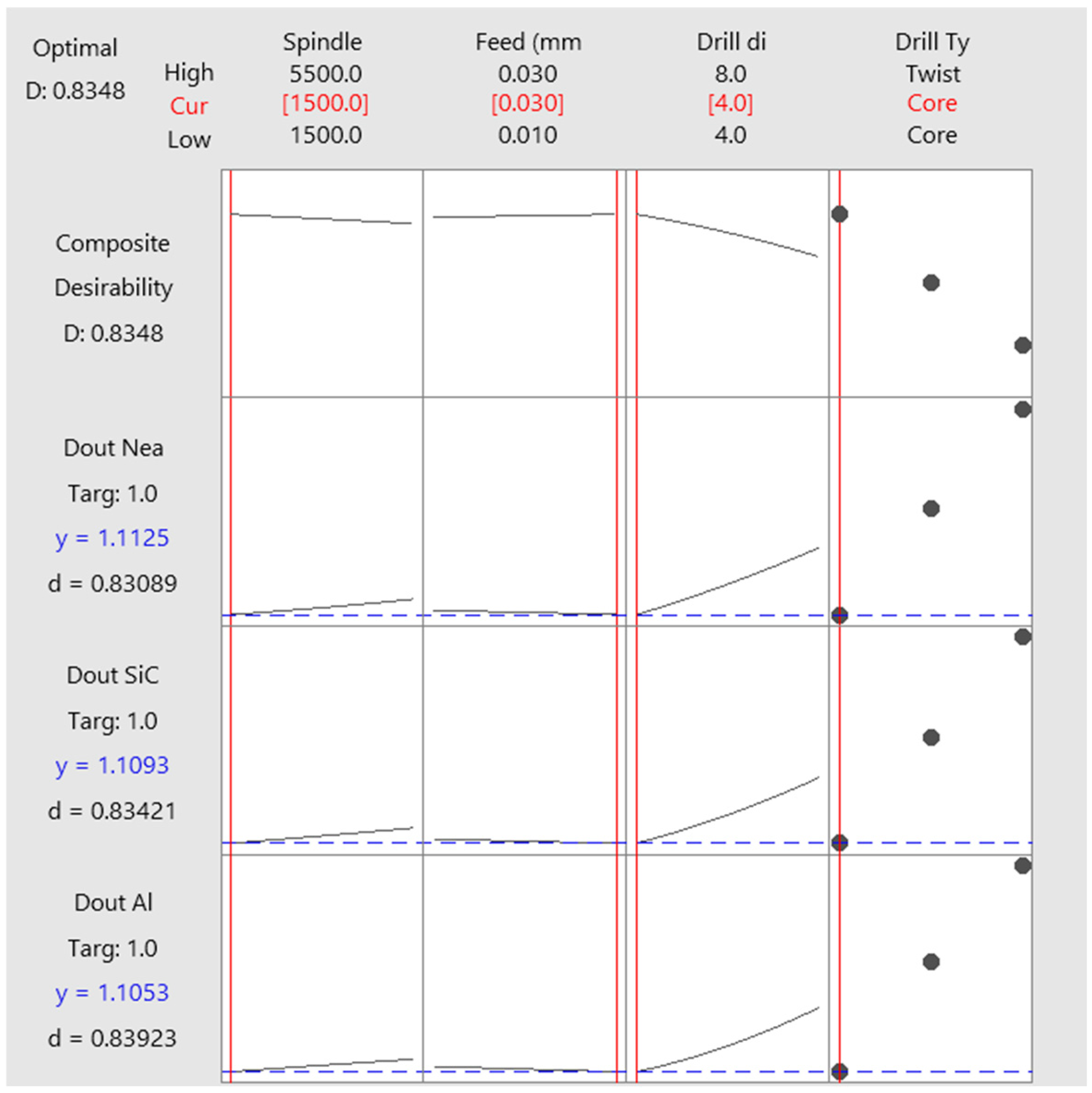
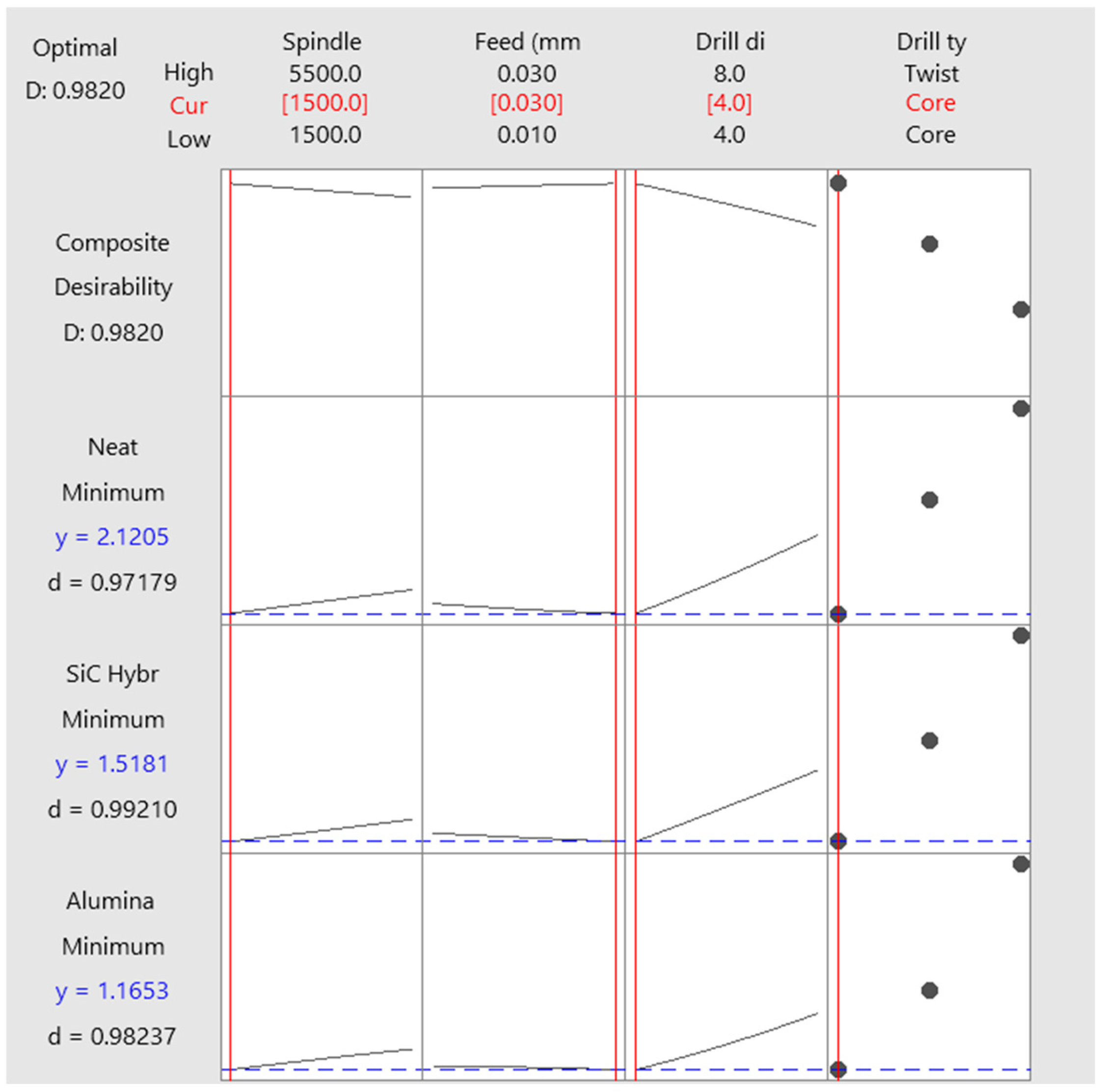
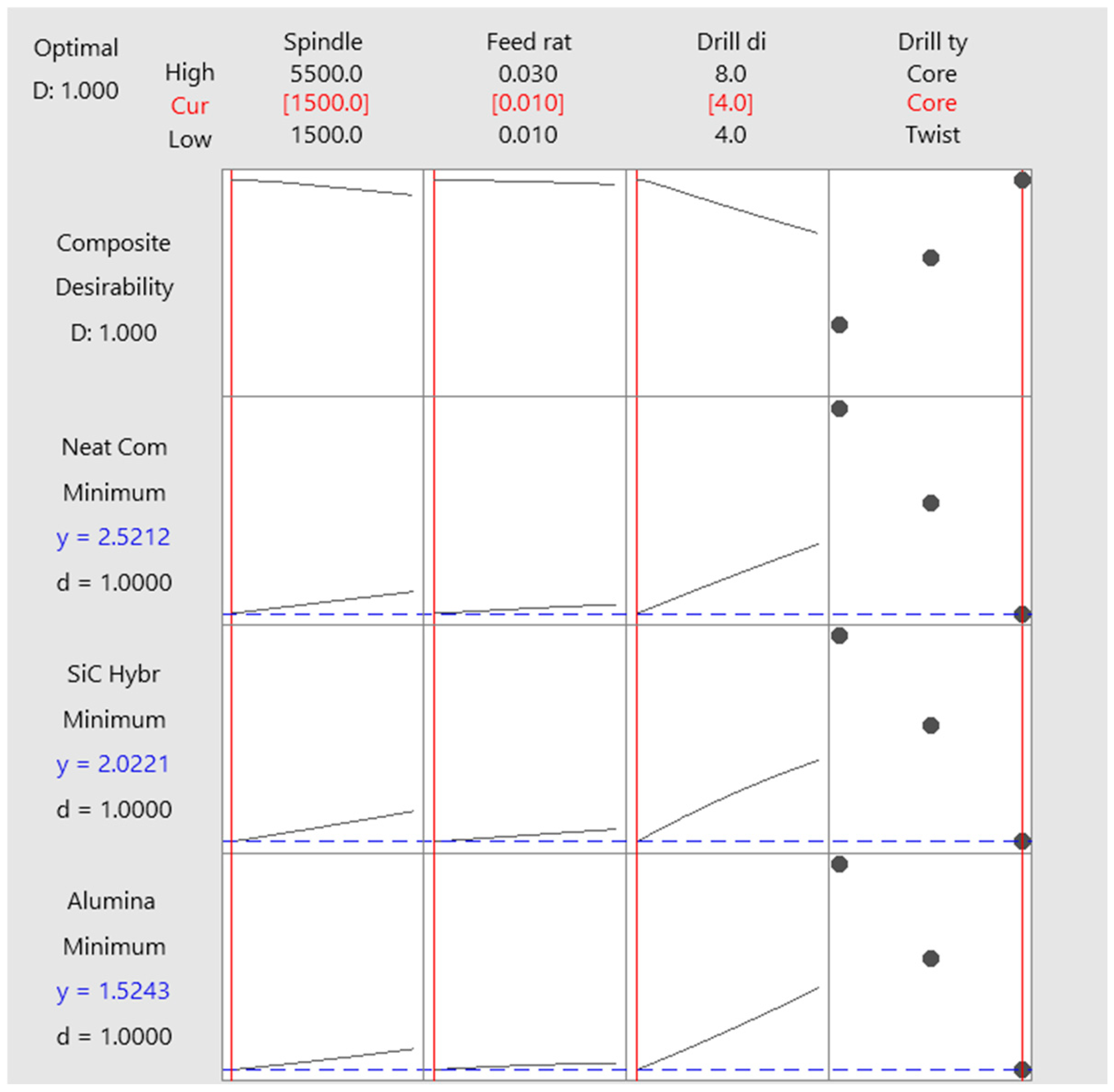
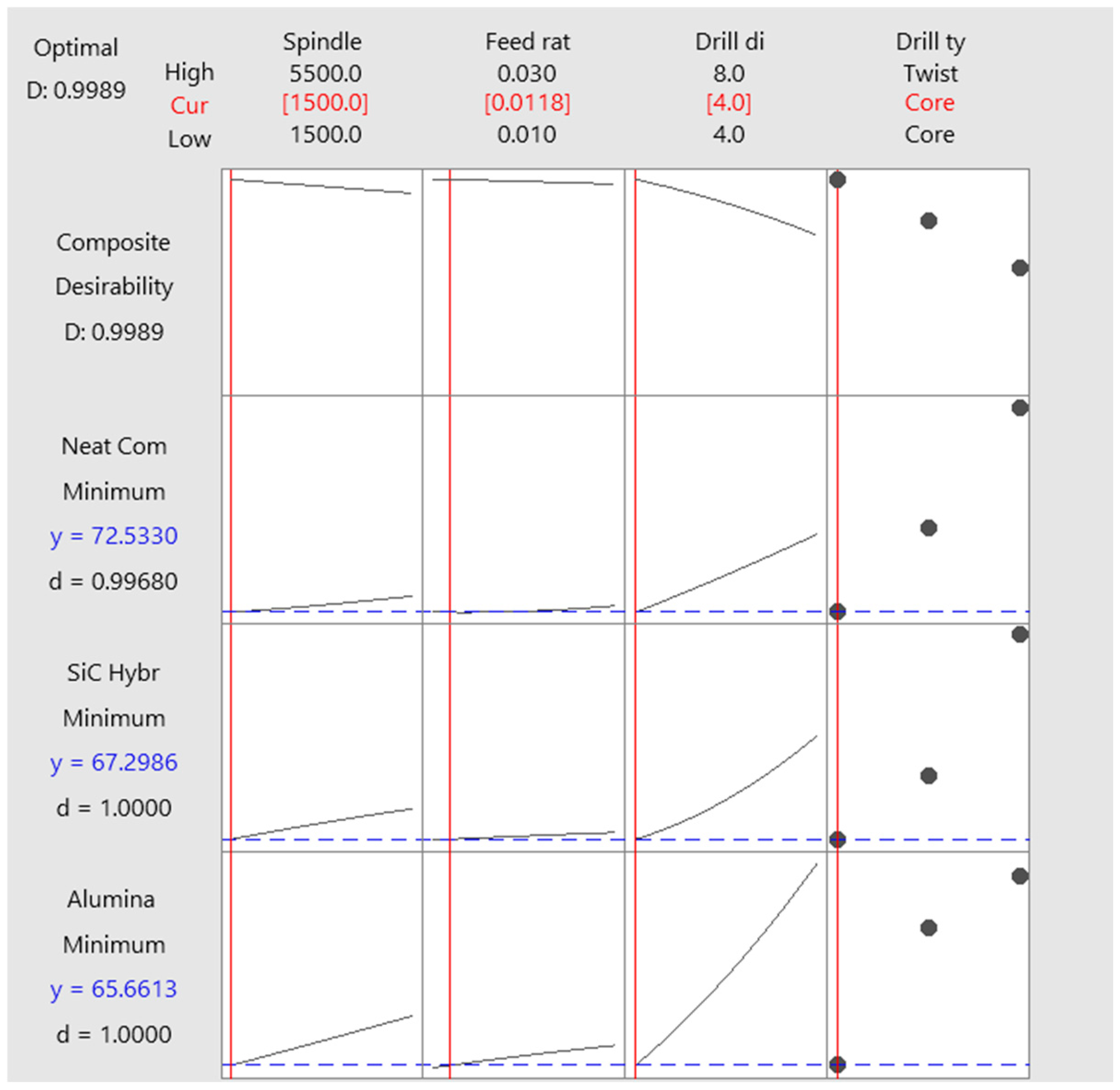
The primary objective of optimization is to determine a combination of process parameters that results in the most desirable output response values. This is achieved using the desirability function in RSM, which converts multiple responses into a single composite desirability value. In the case of the delamination factor, the optimum parameter settings for the hot drilling condition are obtained from Figure 15. The optimized combination of feed, drill diameter, spindle speed, and drill type gives the desirability value corresponding to minimum delamination. For the burr area, the optimum parameter settings for hot drilling conditions are shown in Figure 16. These parameters minimize the burr formation for the hybrid and neat composite. Similarly, for surface roughness, the optimization plot (Figure 17) gives the optimum feed, drill diameter, spindle speed, and drill type that minimize the value of surface roughness for all three composites. For hole temperature, the optimization plot under hot drilling condition (Figure 18) shows the optimum parameters that result in minimum hole temperature values. The optimization results confirm that for hot drilling, the selected parameter combinations effectively minimize surface roughness, and hole temperature, delamination and burr area for neat and hybrid nanocomposites.

3.7. Test Validation

The test validation was performed to determine the appropriateness of the developed regressions models from RSM. The different sets of input process parameters as shown in Table 8 were selected, which were not used in performing the experiment before, but they fall within the defined range of experiments. The test validation was conducted to evaluate the accuracy and predictive capability of the RSM model under hot drilling conditions. The experimental results were compared with the model-predicted values for burr area, surface roughness, delamination factor, and hole temperature for Al2O3 hybrid nanocomposite, SiC hybrid nanocomposite, and neat composite.
The validation results are presented in Table 9, Table 10 and Table 11. The percentage error between the experimental and predicted values was found to be minimal for all responses, demonstrating that the developed regression models are reliable and capable of accurately predicting performance under hot drilling conditions. The test validation confirms that the optimized parameters obtained from the desirability analysis are effective in minimizing burr formation, delamination, surface roughness, and hole temperature during hot drilling of neat and hybrid nanocomposites.

4. Conclusions

In the present work, the hot drilling behavior of UD–CFRP laminates reinforced with Al2O3 and SiC nanoparticles was investigated by analyzing burr formation, delamination, surface roughness, and temperature rise at the drilled hole. The results demonstrate that nanoparticle-reinforced composites exhibit improved thermal stability compared to neat CFRP, leading to reduced matrix softening and lower drilling-induced damage under hot drilling conditions. Among the machining parameters studied, drill geometry and drill diameter were identified as the most influential factors affecting hole quality, whereas spindle speed and feed rate showed comparatively lower contributions. Core drills generally produced lower damage levels due to their favorable geometry, which reduced fiber pull-out and ensured more stable cutting at elevated temperatures. ANOVA confirmed the statistical significance of these parameters for all material systems. Furthermore, RSM-based optimization successfully identified optimal drilling conditions, and validation experiments showed good agreement between predicted and experimental results. Overall, the findings confirm that hot drilling, combined with appropriate drill geometry and optimized parameters, can significantly improve hole quality in nanoparticle-reinforced CFRP laminates, highlighting its potential for applications requiring controlled thermal input and reduced drilling-induced damage.

Supplementary Materials

The following supporting information can be downloaded at: https://www.mdpi.com/article/10.3390/sci8020038/s1.

Author Contributions

Conceptualization, methodology, writing—original draft, review and editing, S.M.S.; methodology, writing—review and editing, N.N.P.; writing—review and editing, T.N.; supervision, project administration, K.K.P.; conceptualization, methodology, writing—review and editing, project administration, N.S. All authors have read and agreed to the published version of the manuscript.

Funding

This research received no external funding.

Data Availability Statement

All the data used in the article have been made available in the present article.

Conflicts of Interest

The authors declare no conflicts of interest.

References

  1. Sayam, A.; Rahman, A.N.M.M.; Rahman, M.S.; Smriti, S.A.; Ahmed, F.; Rabbi, M.F.; Hossain, M.; Faruque, M.O. A Review on Carbon Fiber-Reinforced Hierarchical Composites: Mechanical Performance, Manufacturing Process, Structural Applications and Allied Challenges; Springer Nature: Singapore, 2022; Volume 32, ISBN 0123456789. [Google Scholar]
  2. Xu, J.; Geier, N.; Shen, J.; Krishnaraj, V.; Samsudeensadham, S. A Review on CFRP Drilling: Fundamental Mechanisms, Damage Issues, and Approaches toward High-Quality Drilling. J. Mater. Res. Technol. 2023, 24, 9677–9707. [Google Scholar] [CrossRef]
  3. Ze, G.K.; Pramanik, A.; Basak, A.K.; Prakash, C.; Shankar, S.; Radhika, N. Challenges Associated with Drilling of Carbon Fiber Reinforced Polymer (CFRP) Composites—A Review. Compos. Part C Open Access 2023, 11, 100356. [Google Scholar] [CrossRef]
  4. Khan, F.; Hossain, N.; Mim, J.J.; Rahman, S.M.; Iqbal, M.J.; Billah, M.; Chowdhury, M.A. Advances of Composite Materials in Automobile Applications—A Review. J. Eng. Res. 2025, 13, 1001–1023. [Google Scholar] [CrossRef]
  5. Penner, E.; Caylak, I.; Mahnken, R. Experimental Investigations of Carbon Fiber Reinforced Polymer Composites and Their Constituents to Determine Their Elastic Material Properties and Complementary Inhomogeneous Experiments with Local Strain Considerations. Fibers Polym. 2023, 24, 157–178. [Google Scholar] [CrossRef]
  6. Jagadeesh, P.; Mavinkere Rangappa, S.; Suyambulingam, I.; Siengchin, S.; Puttegowda, M.; Binoj, J.S.; Gorbatyuk, S.; Khan, A.; Doddamani, M.; Fiore, V.; et al. Drilling Characteristics and Properties Analysis of Fiber Reinforced Polymer Composites: A Comprehensive Review. Heliyon 2023, 9, e14428. [Google Scholar] [CrossRef] [PubMed]
  7. Liu, W.; Qin, X.; Li, S.; Wang, X. Experimental Research on the Matrix Cracks and Delamination Distribution and Their Monitoring Methods during Drilling UD-CFRP. Int. J. Adv. Manuf. Technol. 2024, 130, 1595–1615. [Google Scholar] [CrossRef]
  8. Kim, D.; Ashrafi, S.A.; Shin, K.; Kim, T.G. Fiber Pull-out Damage Formations and Their Effect on Hole Quality When Drilling Carbon Fiber Reinforced Plastic (CFRP) Composites Using Various Tool Geometries. J. Mech. Sci. Technol. 2023, 37, 4271–4280. [Google Scholar] [CrossRef]
  9. Lee, J.H.; Ge, J.C.; Song, J.H. Study on Burr Formation and Toolwear in Drilling Cfrp and Its Hybrid Composites. Appl. Sci. 2021, 11, 384. [Google Scholar] [CrossRef]
  10. Yadav, M.; Tewari, A.; Divse, V.; Yelve, N.P. Exploring the Impact of Drilling Parameters on Damage Morphology and Strength of Carbon Fiber-Reinforced Plastic Laminates. J. Mater. Eng. Perform. 2025, 34, 7371–7385. [Google Scholar] [CrossRef]
  11. Li, S.; Dai, L.; Li, C.; Chen, R.; Qiu, X.; Li, P.; Jo Ko, T. Prediction Model of Chisel Edge Thrust Force and Material Damage Mechanism for Interlaminar-Direction Drilling of UD-CFRP Composite Laminates. Compos. Struct. 2022, 298, 116023. [Google Scholar] [CrossRef]
  12. Bolat, Ç.; Karakılınç, U.; Yalçın, B.; Öz, Y.; Yavaş, Ç.; Ergene, B.; Ercetin, A.; Akkoyun, F. Effect of Drilling Parameters and Tool Geometry on the Thrust Force and Surface Roughness of Aerospace Grade Laminate Composites. Micromachines 2023, 14, 1427. [Google Scholar] [CrossRef] [PubMed]
  13. Hassan, M.H.; Abdullah, J.; Franz, G. Multi-Objective Optimization in Single-Shot Drilling of CFRP/Al Stacks Using Customized Twist Drill. Materials 2022, 15, 1981. [Google Scholar] [CrossRef] [PubMed]
  14. Basmaci, G.; Yoruk, A.S.; Koklu, U.; Morkavuk, S. Impact of Cryogenic Condition and Drill Diameter on Drilling Performance of CFRP. Appl. Sci. 2017, 7, 667. [Google Scholar] [CrossRef]
  15. Balaji, D.; Kumar, P.S.; Bhuvaneshwari, V.; Rajeshkumar, L.; Singh, M.K.; Sanjay, M.R.; Siengchin, S. A Review on Effect of Nanoparticle Addition on Thermal Behavior of Natural Fiber–Reinforced Composites. Heliyon 2025, 11, e41192. [Google Scholar] [CrossRef]
  16. Shahabaz, S.M.; Shetty, P.K.; Shetty, N.; Sharma, S.; Divakara Shetty, S.; Naik, N. Effect of Alumina and Silicon Carbide Nanoparticle-Infused Polymer Matrix on Mechanical Properties of Unidirectional Carbon Fiber-Reinforced Polymer. J. Compos. Sci. 2022, 6, 381. [Google Scholar] [CrossRef]
  17. Nargis, T.; Shahabaz, S.M.; Acharya, S.; Shetty, N.; Malghan, R.L.; Shetty, S.D. A Comprehensive Study on the Optimization of Drilling Performance in Hybrid Nano-Composites and Neat CFRP Composites Using Statistical and Machine Learning Approaches. J. Manuf. Mater. Process. 2024, 8, 67. [Google Scholar] [CrossRef]
  18. Montgomery, D.C. Design and Analysis of Experiments; John Wiley & Sons: Hoboken, NJ, USA, 2017; ISBN 1119113474. [Google Scholar]
  19. Davim, J.P.; Reis, P.; Antonio, C.C. Experimental Study of Drilling Glass Fiber Reinforced Plastics (GFRP) Manufactured by Hand Lay-Up. Compos. Sci. Technol. 2004, 64, 289–297. [Google Scholar] [CrossRef]
  20. Heisel, U.; Pfeifroth, T. Influence of Point Angle on Drill Hole Quality and Machining Forces When Drilling CFRP. Procedia CIRP 2012, 1, 471–476. [Google Scholar] [CrossRef]
  21. Loganathan, S.; Valapa, R.B.; Mishra, R.K.; Pugazhenthi, G.; Thomas, S. Thermogravimetric Analysis for Characterization of Nanomaterials. In Thermal and Rheological Measurement Techniques for Nanomaterials Characterization; Elsevier: Amsterdam, The Netherlands, 2017; pp. 67–108. [Google Scholar]
  22. Foster, S.K.; Bisby, L.A. High Temperature Residual Properties of Externally-Bonded FRP Systems. In Proceedings of the 7th International Symposium on Fiber Reinforced Polymer Reinforcement for Reinforced Concrete Structures (FRPRCS-7) ACI SP230-70, Kansas City, MO, USA, 6–9 November 2005; Volume 7, pp. 1235–1252. [Google Scholar]
  23. Bisby, L.A.; Green, M.F.; Kodur, V.K.R. Modeling the Behavior of Fiber Reinforced Polymer-Confined Concrete Columns Exposed to Fire. J. Compos. Constr. 2005, 9, 15–24. [Google Scholar] [CrossRef]
  24. Hsissou, R.; El Rhayam, Y.; Elharfi, A. Synthesis and Characterization of a New Epoxy Resin Homologous to DGEBA (Diglycidyl 3-Aminopropyl Triethyl Silane): A Study of Thermal Properties. Int. J. Innov. Appl. Stud. 2014, 7, 674. [Google Scholar]
  25. Grich, M.; El Gouri, M.; Ziraoui, R.; Rami, N.; Meghraoui, H.; Cherkaoui, O.; El Harfi, A. Thermal and Rheological Study of Blended Carbon Nanotube/Epoxy Resin Nanocomposites. J. Mater. Environ. Sci. 2014, 5, 374–379. [Google Scholar]
  26. Anithambigai, P.; Mutharasu, D.; Huong, L.H.; Zahner, T.; Lacey, D. Synthesis and Thermal Analysis of Aluminium Nitride Filled Epoxy Composites and Its Effective Application as Thermal Interface Material for LED Applications. J. Mater. Sci. Mater. Electron. 2014, 25, 4814–4821. [Google Scholar] [CrossRef]
  27. Kiliaris, P.; Papaspyrides, C.D. Polymer/Layered Silicate (Clay) Nanocomposites: An Overview of Flame Retardancy. Prog. Polym. Sci. 2010, 35, 902–958. [Google Scholar] [CrossRef]
  28. Gimenes Benega, M.A.; Silva, W.M.; Schnitzler, M.C.; Espanhol Andrade, R.J.; Ribeiro, H. Improvements in Thermal and Mechanical Properties of Composites Based on Epoxy-Carbon Nanomaterials—A Brief Landscape. Polym. Test. 2021, 98, 107180. [Google Scholar] [CrossRef]
  29. Quan, Y.; Zhong, W. Investigation on Drilling-Grinding of CFRP. Front. Mech. Eng. China 2009, 4, 60–63. [Google Scholar] [CrossRef]
  30. Krishnaraj, V.; Prabukarthi, A.; Ramanathan, A.; Elanghovan, N.; Kumar, M.S.; Zitoune, R.; Davim, J.P. Optimization of Machining Parameters at High Speed Drilling of Carbon Fiber Reinforced Plastic (CFRP) Laminates. Compos. Part B Eng. 2012, 43, 1791–1799. [Google Scholar] [CrossRef]
  31. John, K.M.; Kumaran, S.T. A Feasible Strategy to Produce Quality Holes Using Temperature-Assisted Drilling on CFRP. Int. J. Adv. Manuf. Technol. 2020, 110, 3113–3127. [Google Scholar] [CrossRef]
Figure 1. Flow rate measurement of hot air using Digital Anemometer.
Sci 08 00038 g001
Figure 2. Experimental setup of hot air drilling.
Sci 08 00038 g002
Figure 3. Optical microscope image of delamination and burr.
Sci 08 00038 g003
Figure 4. Stereo zoom microscope for delamination and burr measurement.
Sci 08 00038 g004
Figure 5. Taylor–Hobson Surtronic instrument for measuring surface roughness.
Sci 08 00038 g005
Figure 6. Thermal behavior of neat and hybrid nanocomposites.
Sci 08 00038 g006
Figure 7. Main effect trends of delamination factor at hot drilling condition for (a) Al2O3 hybrid, (b) SiC hybrid, (c) neat composite.
Sci 08 00038 g007aSci 08 00038 g007b
Figure 8. Contour plots of delamination factor at hot drilling condition for (a) Al2O3 hybrid, (b) SiC hybrid, (c) neat composite.
Sci 08 00038 g008aSci 08 00038 g008b
Figure 9. Main effect trends of burr area at hot drilling condition for (a) Al2O3 hybrid, (b) SiC hybrid, (c) neat composite.
Sci 08 00038 g009aSci 08 00038 g009b
Figure 10. Contour plots of burr area at hot drilling condition for (a) Al2O3 hybrid, (b) SiC hybrid, (c) neat composite.
Sci 08 00038 g010aSci 08 00038 g010b
Figure 11. Main effect trends of surface roughness at hot drilling condition for (a) Al2O3 hybrid, (b) SiC hybrid, (c) neat composite.
Sci 08 00038 g011aSci 08 00038 g011b
Figure 12. Contour plots of surface roughness at hot drilling condition for (a) Al2O3 hybrid, (b) SiC hybrid, (c) neat composite.
Sci 08 00038 g012aSci 08 00038 g012b
Figure 13. Main effect trends of hole temperature at hot drilling condition for (a) Al2O3 hybrid, (b) SiC hybrid, (c) neat composite.
Sci 08 00038 g013aSci 08 00038 g013b
Figure 14. Contour plots of hole temperature at hot drilling condition for (a) Al2O3 hybrid, (b) SiC hybrid, (c) neat composite.
Sci 08 00038 g014aSci 08 00038 g014b
Figure 15. Optimization plot of delamination factor.
Sci 08 00038 g015
Figure 16. Optimization plot of burr area.
Sci 08 00038 g016
Figure 17. Optimization plot of surface roughness.
Sci 08 00038 g017
Figure 18. Optimization plot of hole temperature.
Sci 08 00038 g018
Table 1. Process parameters for drilling.
Sl. No.Parameters
Spindle Speed (rpm)Feed (mm/rev)Drill Diameter (mm)Drill Type
115000.014Twist
235000.026Step
355000.038Core
Table 2. RSM for process parameters and drill type.
TrialSpindle Speed (rpm)Feed (mm/rev)Drill Diameter (mm)Drill Type
155000.018Step
255000.018Core
355000.026Core
415000.014Twist
535000.026Step
615000.014Core
735000.016Step
815000.014Step
935000.026Twist
1055000.026Twist
1155000.038Twist
1255000.034Core
1315000.018Core
1435000.016Core
1535000.036Step
1615000.034Core
1755000.034Twist
1835000.026Core
1955000.014Core
2035000.026Core
2135000.028Step
2255000.038Core
2335000.036Twist
2415000.038Twist
2535000.026Core
2635000.026Twist
2715000.038Step
2815000.018Step
2955000.018Twist
3015000.026Core
3135000.026Step
3215000.034Step
3335000.026Core
3415000.034Twist
3515000.038Core
3635000.028Core
3735000.026Core
3835000.026Step
3935000.028Twist
4035000.036Core
4155000.038Step
4235000.026Twist
4335000.024Core
4455000.014Step
4535000.026Step
4615000.026Step
4735000.016Twist
4835000.026Core
4955000.026Step
5035000.026Twist
5135000.026Twist
5255000.034Step
5355000.014Twist
5435000.024Twist
5515000.018Twist
5635000.026Step
5735000.026Step
5835000.026Twist
5915000.026Twist
6035000.024Step
Table 3. Thermal characteristics of samples studied at the temperature range of 50–600 °C.
CompositeTd (°C)T10 (°C)T50 (°C)Sdr (°C)R500 (%)
Neat15033335634615.521
Al2O3 1 wt%28334337434513.732
Al2O3 2 wt%28534738234915.223
SiC 1 wt%18833837134013.622
SiC 2 wt%26534433235016.702
Table 4. Analysis of Variance (ANOVA) results for the delamination factor.
SourceAl2O3 HybridSiC HybridNeat
F-Valuep-ValueContributionF-Valuep-ValueContributionF-Valuep-ValueContribution
Spindle Speed (rpm)36.280.0000.26%35.850.0000.32%40.890.0000.38%
Feed (mm/rev)2.150.1500.02%1.170.2860.01%1.000.3220.01%
Drill Dia (mm)622.410.0004.46%571.560.0005.07%542.340.0005.02%
Drill type6613.410.00094.68%5304.900.00094.04%5083.650.00094.03%
Square6.450.0010.14%3.070.0380.08%1.340.2760.04%
Spindle Speed (rpm) × Spindle Speed (rpm)0.010.9350.05%0.020.8790.03%0.110.7370.02%
Feed (mm/rev) × Feed (mm/rev)0.000.9630.01%0.010.9390.01%0.020.8810.00%
Drill Dia (mm) × Drill Dia (mm)10.780.0020.08%4.440.0410.04%1.820.1840.02%
Two-Way Interaction2.280.0350.15%1.380.2270.11%1.670.1260.14%
Spindle Speed (rpm) × Feed (mm/rev)0.000.9710.00%0.000.9870.00%0.040.8360.00%
Spindle Speed (rpm) × Drill Dia (mm)0.160.6880.00%0.190.6620.00%0.250.6230.00%
Spindle Speed (rpm) × Drill type0.740.4830.01%0.100.9020.00%0.010.9940.00%
Feed (mm/rev) × Drill Dia (mm)0.660.4230.00%0.220.6380.00%0.570.4560.01%
Feed (mm/rev) × Drill Type0.110.8930.00%0.030.9710.00%0.240.7880.00%
Drill Dia (mm) × Drill Type9.010.0010.13%5.880.0060.10%6.850.0030.13%
R-square 99.7099.6399.61
Adjusted R-square 99.5899.4899.45
F-value—Variance ratio; p-value—Smallest level of significance.
Table 5. Analysis of Variance (ANOVA) results for the burr area.
SourceAl2O3 HybridSiC HybridNeat
F-Valuep-ValueContributionF-Valuep-ValueContributionF-Valuep-ValueContribution
Spindle Speed (rpm)108.850.0000.60%325.460.0000.96%145.380.0001.01%
Feed (mm/rev)12.360.0010.07%39.300.0000.12%24.970.0000.17%
Drill Dia (mm)1261.190.0006.96%2759.270.0008.10%1312.980.0009.15%
Drill type8303.750.00091.64%15,437.720.00090.66%6405.660.00089.24%
Square0.750.5310.01%0.370.7730.00%1.240.3070.03%
Spindle Speed (rpm) × Spindle Speed (rpm)0.050.8210.00%0.060.8080.00%0.000.9820.01%
Feed (mm/rev) × Feed (mm/rev)0.050.8210.00%0.020.8900.00%0.190.6660.01%
Drill Dia (mm) × Drill Dia (mm)1.800.1870.01%0.260.6130.00%1.300.2600.01%
Two-Way Interaction9.850.0000.49%1.520.1720.04%1.690.1230.11%
Spindle Speed (rpm) × Feed (mm/rev)0.230.6360.00%0.060.8050.00%0.070.7910.00%
Spindle Speed (rpm) × Drill Dia (mm)1.540.2210.01%1.030.3160.00%1.170.2850.01%
Spindle Speed (rpm) × Drill type1.900.1620.02%3.030.0590.02%0.830.4410.01%
Feed (mm/rev) × Drill Dia (mm)0.410.5280.00%0.060.8050.00%0.300.5850.00%
Feed (mm/rev) × Drill Type2.340.1090.03%0.310.7390.00%0.440.6440.01%
Drill Dia (mm) × Drill Type39.020.0000.43%2.930.0640.02%5.540.0070.08%
R-square 99.7799.8899.71
Adjusted R-square 99.6799.8299.59
F-value—Variance ratio; p-value—Smallest level of significance.
Table 6. Analysis of Variance (ANOVA) results for the surface roughness.
SourceAl2O3 HybridSiC HybridNeat
F-Valuep-ValueContributionF-Valuep-ValueContributionF-Valuep-ValueContribution
Spindle Speed (rpm)227.170.0000.91%283.390.0000.89%171.890.0000.61%
Feed (mm/rev)25.000.0000.10%32.860.0000.10%24.270.0000.09%
Drill Dia (mm)2250.250.0009.06%2477.630.0007.82%2058.990.0007.30%
Drill type11,129.270.00089.60%14,390.780.00090.79%12,907.120.00091.51%
Square1.070.3730.01%8.720.0000.08%0.700.5590.01%
Spindle Speed (rpm) × Spindle Speed (rpm)0.220.6420.01%0.090.7630.03%0.020.8980.00%
Feed (mm/rev) × Feed (mm/rev)0.580.4510.00%0.000.9660.01%0.070.7890.00%
Drill Dia (mm) × Drill Dia (mm)1.870.1790.01%15.540.0000.05%0.640.4290.00%
Two-Way Interaction4.150.0010.15%6.280.0000.18%10.500.0000.34%
Spindle Speed (rpm) × Feed (mm/rev)0.150.7030.00%0.100.7550.00%0.290.5910.00%
Spindle Speed (rpm) × Drill Dia (mm)1.720.1970.01%5.330.0260.02%0.010.9050.00%
Spindle Speed (rpm) × Drill type1.610.2110.01%3.130.0540.02%1.410.2550.01%
Feed (mm/rev) × Drill Dia (mm)0.050.8250.00%1.030.3160.00%0.480.4930.00%
Feed (mm/rev) × Drill Type0.070.9280.00%1.410.2570.01%0.330.7220.00%
Drill Dia (mm) × Drill Type16.010.0000.13%20.490.0000.13%45.140.0000.32%
R-square 99.8399.8799.82
Adjusted R-square 99.7699.7899.74
F-value—Variance ratio; p-value—Smallest level of significance.
Table 7. Analysis of Variance (ANOVA) results for the hole temperature.
SourceAl2O3 HybridSiC HybridNeat
F-Valuep-ValueContributionF-Valuep-ValueContributionF-Valuep-ValueContribution
Spindle Speed (rpm)171.900.0003.56%187.530.0001.66%284.900.0001.90%
Feed (mm/rev)28.410.0000.59%19.240.0000.17%26.970.0000.18%
Drill Dia (mm)2120.520.00043.91%2400.990.00021.25%2641.380.00017.59%
Drill type1218.160.00050.45%4247.010.00075.19%5927.740.00078.94%
Square3.850.0160.24%9.140.0000.24%1.700.1810.03%
Spindle Speed (rpm) × Spindle Speed (rpm)0.010.9400.09%0.130.7230.07%0.130.7200.02%
Feed (mm/rev) × Feed (mm/rev)0.040.8400.01%0.010.9390.02%0.860.3580.01%
Drill Dia (mm) × Drill Dia (mm)6.720.0130.14%17.070.0000.15%0.420.5230.00%
Two-Way Interaction2.050.0570.38%14.020.0001.12%17.990.0001.08%
Spindle Speed (rpm) × Feed (mm/rev)0.510.4790.01%0.520.4770.00%0.370.5490.00%
Spindle Speed (rpm) × Drill Dia (mm)9.600.0030.20%0.001.0000.00%20.030.0000.13%
Spindle Speed (rpm) × Drill type1.940.1560.08%3.100.0550.05%6.740.0030.09%
Feed (mm/rev) × Drill Dia (mm)0.510.4790.01%0.060.8120.00%1.770.1900.01%
Feed (mm/rev) × Drill Type0.730.4890.03%0.180.8330.00%0.110.9000.00%
Drill Dia (mm) × Drill Type1.260.2940.05%59.520.0001.05%63.020.0000.84%
R-square 99.1399.6399.72
Adjusted R-square 98.7899.4899.61
F-value—Variance ratio; p-value—Smallest level of significance.
Table 8. Process parameters adopted for validation trial.
Experiment No.Spindle Speed (rpm)Feed (mm/rev)Drill Diameter (mm)Drill Type
115000.024Twist
255000.036Step
315000.018Core
Table 9. Test validation results for Al2O3 hybrid nanocomposite.
Optimum Input Process ParametersComposite TypeExperimental ValueRSM Predicted ValueError (%)
SS (rpm)F (mm/rev)DD (mm)D
15000.024TwistDelamination factor1.5271.4326.22
Burr area (mm2)1.6291.5852.70
Surface roughness (µm)2.0222.1214.90
Hole temperature (°C)68.265.34.25
55000.036StepDelamination factor1.3891.3482.95
Burr area (mm2)1.4811.3916.08
Surface roughness (µm)1.9171.71510.54
Hole temperature (°C)69.467.33.03
15000.018CoreDelamination factor1.2421.1636.36
Burr area (mm2)1.2881.2235.05
Surface roughness (µm)1.7211.6325.17
Hole temperature (°C)68.667.31.90
SS—Spindle speed; F—Feed; DD—Drill diameter; D—Drill type.
Table 10. Test validation results for SiC hybrid nanocomposite.
Optimum Input Process ParametersComposite TypeExperimental ValueRSM Predicted ValueError (%)
SS (rpm)F (mm/rev)DD (mm)D
15000.024TwistDelamination factor1.5371.4893.12
Burr area (mm2)2.0142.1054.52
Surface roughness (µm)2.6702.5135.88
Hole temperature (°C)71.670.51.54
55000.036StepDelamination factor1.3971.3463.65
Burr area (mm2)1.8681.7456.58
Surface roughness (µm)2.5722.4166.07
Hole temperature (°C)71.570.31.68
15000.018CoreDelamination factor1.2521.2361.28
Burr area (mm2)1.7001.7251.47
Surface roughness (µm)2.2772.2630.61
Hole temperature (°C)69.465.26.05
SS—Spindle speed; F—Feed; DD—Drill diameter; D—Drill type.
Table 11. Test validation results performed for neat composite.
Optimum Input Process ParametersComposite TypeExperimental ValueRSM Predicted ValueError (%)
SS (rpm)F (mm/rev)DD (mm)D
15000.024TwistDelamination factor1.5411.4466.16
Burr area (mm2)2.5522.3428.23
Surface roughness (µm)3.2812.2988.20
Hole temperature (°C)77.376.41.16
55000.036StepDelamination factor1.4021.4161.00
Burr area (mm2)2.4662.3454.91
Surface roughness (µm)3.1583.0024.94
Hole temperature (°C)74.573.61.21
15000.018CoreDelamination factor1.2541.3457.26
Burr area (mm2)2.3112.1238.14
Surface roughness (µm)2.7762.7122.31
Hole temperature (°C)74.674.30.40
SS—Spindle speed; F—Feed; DD—Drill diameter; D—Drill type.
Disclaimer/Publisher’s Note: The statements, opinions and data contained in all publications are solely those of the individual author(s) and contributor(s) and not of MDPI and/or the editor(s). MDPI and/or the editor(s) disclaim responsibility for any injury to people or property resulting from any ideas, methods, instructions or products referred to in the content.