

A Review of the Transition from Industry 4.0 to Industry 5.0: Unlocking the Potential of TinyML in Industrial IoT Systems




Abstract
1. Introduction
- To identify the leading research directions and real-world industrial applications of TinyML in IIoT.
- To analyze the hardware and software solutions, algorithms, and architectural models employed in existing studies.
- To formulate the main technological and organizational challenges facing the implementation of TinyML in Industry 5.0.
- To outline the prospects and strategic directions for future research and implementation.
2. Concepts and Methodology
2.1. Conceptual Background
- AI model optimization–through knowledge distillation, quantization, and pruning, models are adapted for execution on end devices with limited resources [16].
- Energy-efficient hardware–microcontrollers with built-in DSP and NPU modules, enabling efficient operation with AI models.
- Local inference–minimizing data exchange with the cloud, which increases security and reduces latency.
- Real-time response: decisions are made locally, without delays from communication channels.
- Reduced network load: data exchange is minimal, which is critical for large sensor networks;
- Increased security: sensitive data does not leave the local environment;
- Energy efficiency and sustainability: local processing reduces the need for energy-intensive cloud operations.
2.2. Data Collection and PRISMA Strategy
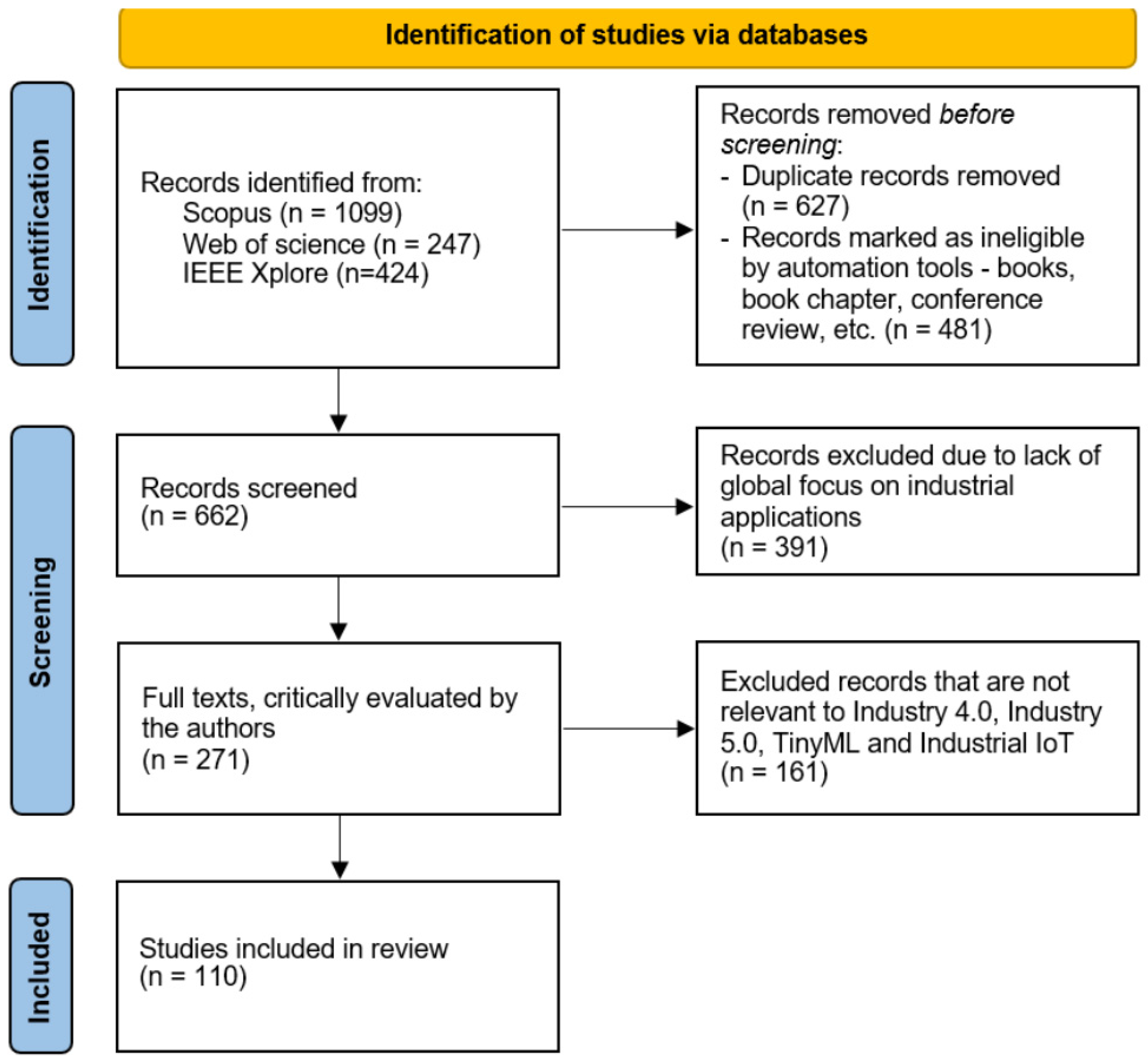
- Identification of relevant publications using predefined keywords;
- Screening–removal of duplicates and irrelevant documents;
- Evaluation of full texts against inclusion and exclusion criteria;
- Final inclusion and synthesis of data for analysis.
(“TinyML” OR “Tiny Machine Learning” OR “Tiny-ML” OR “Embedded Machine Learning” OR “Edge AI”) AND (“Industrial Internet of Things” OR “IIoT” OR “Industrial IoT”) AND (“Industry 4.0” OR “Industry 5.0” OR “Smart Factory” OR “Smart Manufacturing”) AND (PUBYEAR > 2019) AND (LANGUAGE(English))
2.3. Bibliometric Methodology
3. Results
3.1. Bibliometric and Thematic Analysis of TinyML in IIoT
3.1.1. Scientific Output and Impact
3.1.2. Sources and Publication Venues
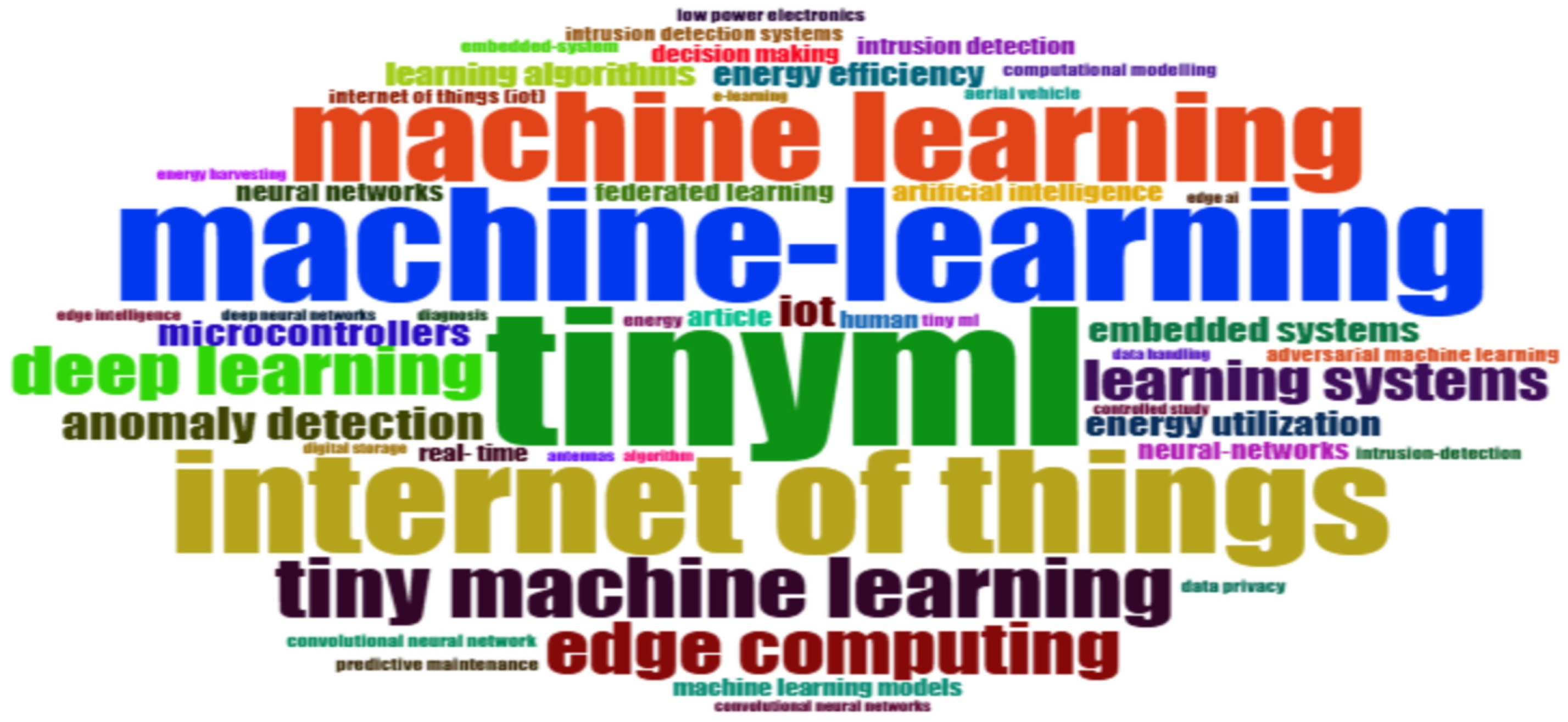
3.1.3. Keyword Landscape
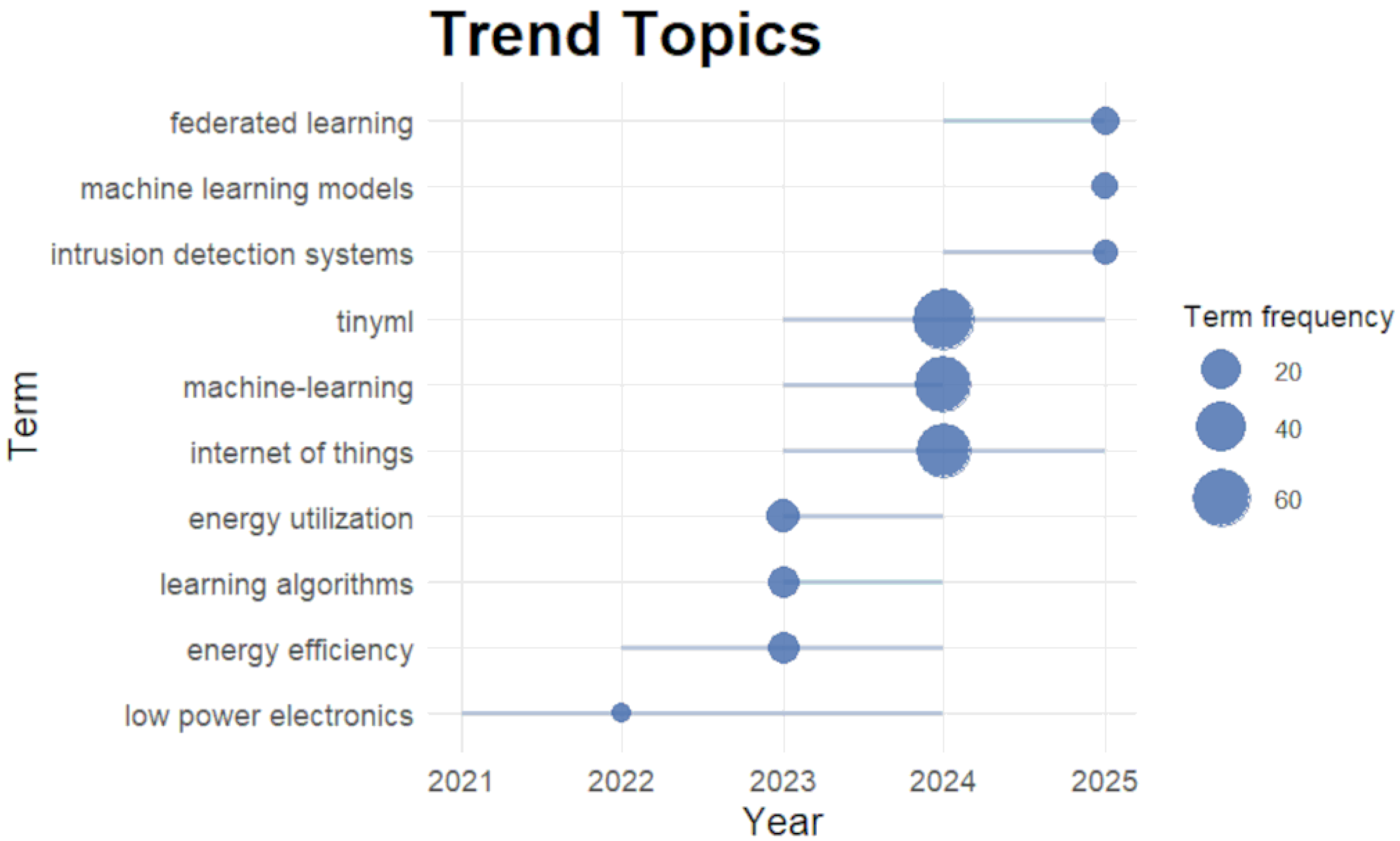
3.1.4. Thematic Evolution and Trend Topics
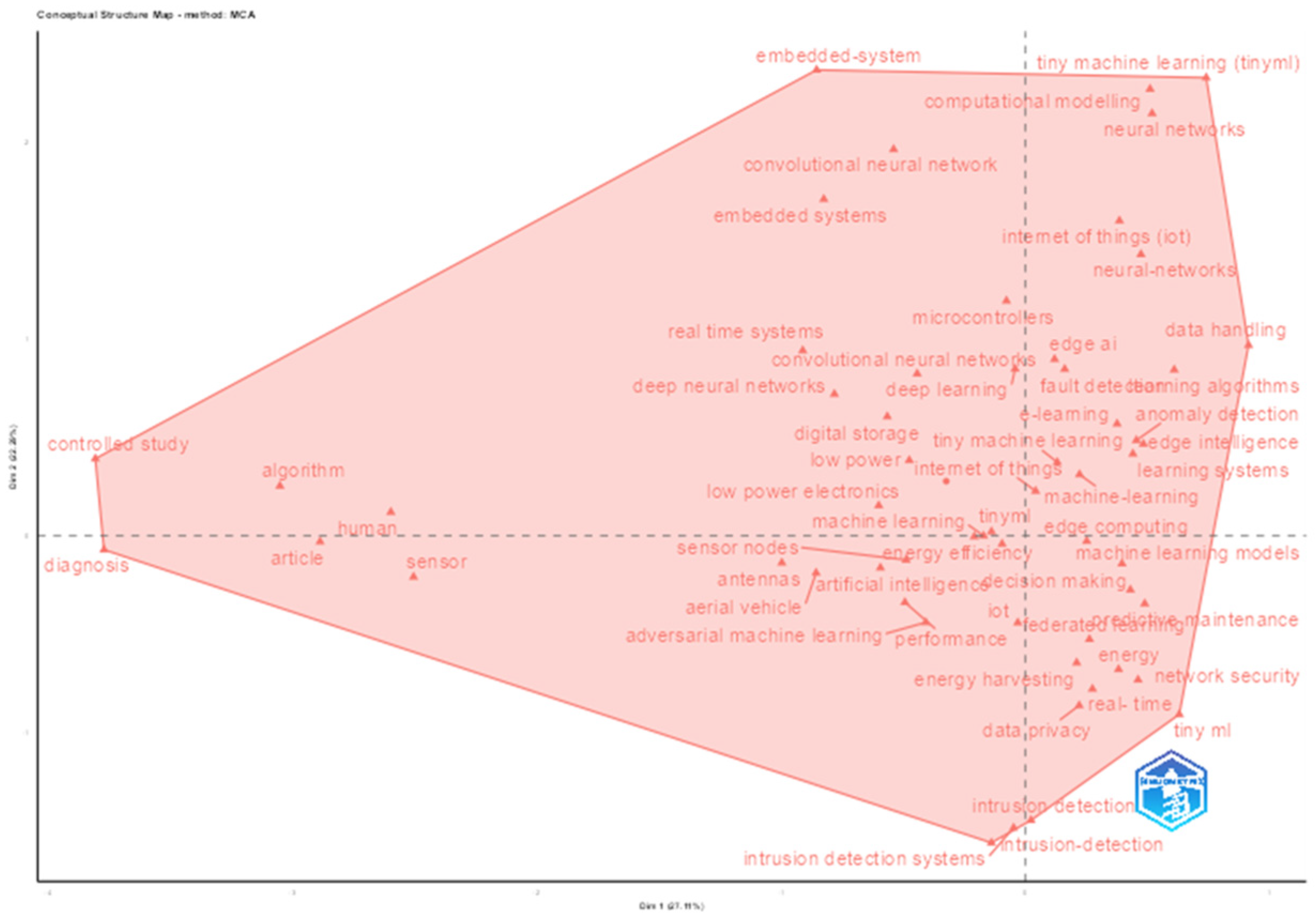
3.1.5. Conceptual Structure (MCA)
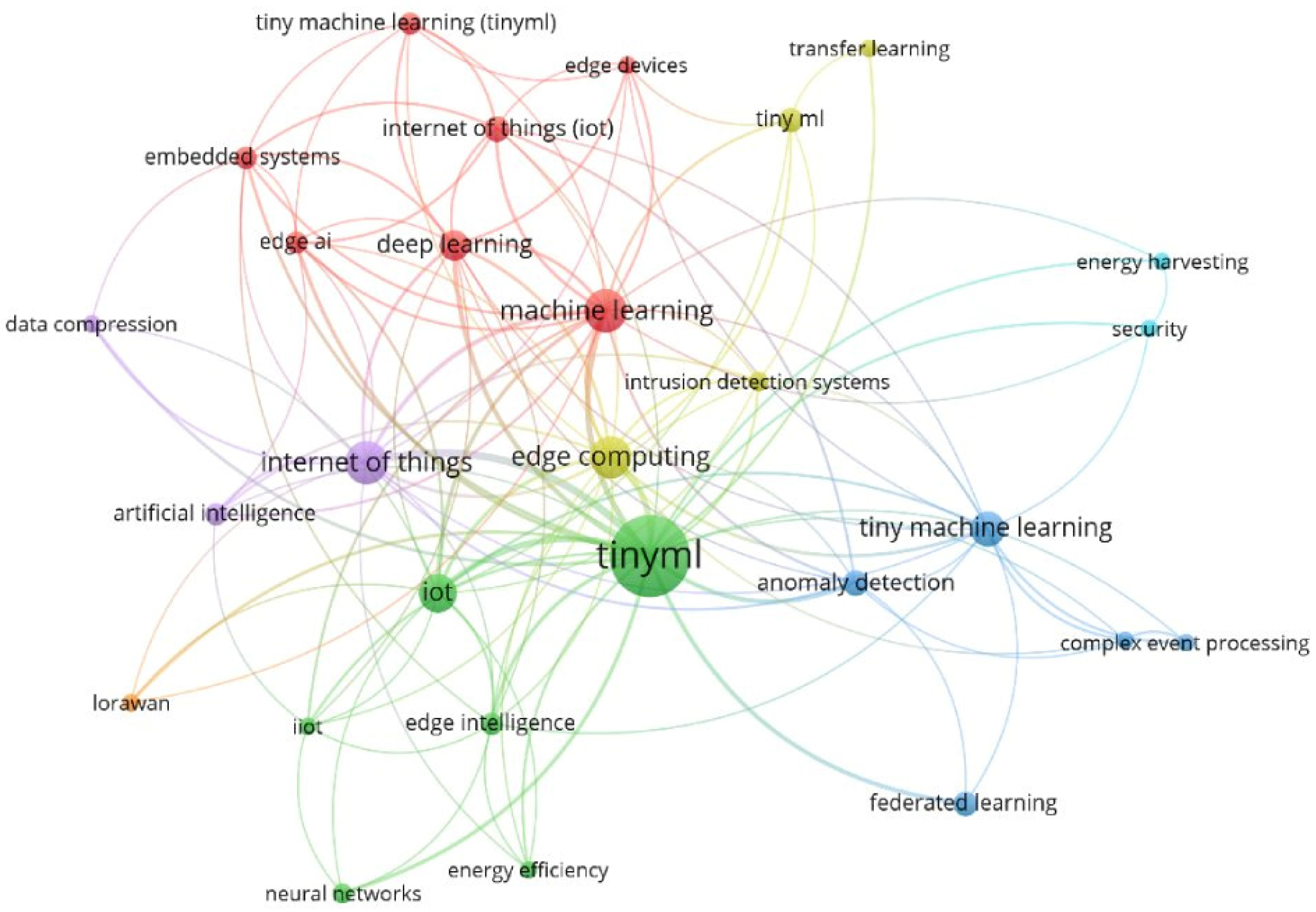
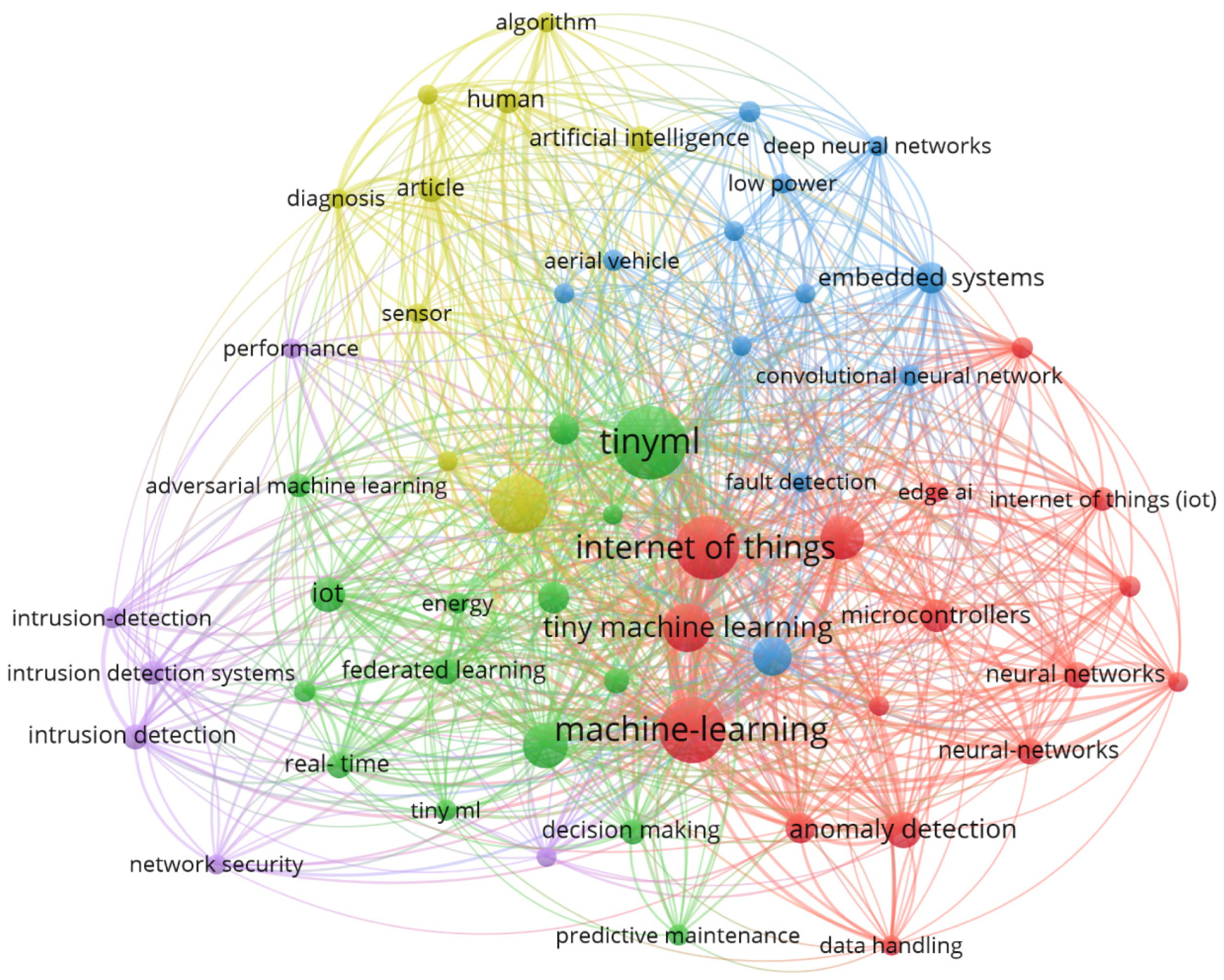
3.1.6. Co-Occurrence Networks (VOSviewer)
- Engineering and Algorithmic Architectures—encompassing machine learning, deep learning, and embedded systems, representing the technological and computational foundations of TinyML.
- Edge Intelligence and Decentralized Learning—including TinyML, federated learning, and learning systems, reflecting the evolution toward distributed and autonomous computation at the network periphery.
- Energy Efficiency and Real-Time Computing—characterized by low power electronics and real-time systems, emphasizing optimization of energy consumption and latency in industrial environments.
- Cybersecurity and Data Protection—involving network security, intrusion detection systems, and data privacy, highlighting the growing importance of trust, resilience, and secure communication in intelligent industrial networks.
- Human-Centricity and Sustainability—comprising decision making, human, and edge intelligence, signifying the alignment of TinyML research with the ethical, cognitive, and sustainable principles of Industry 5.0.
3.2. Thematic Synthesis
3.2.1. Edge AI and Resource Efficiency
3.2.2. Federated and Privacy-Preserving Learning
3.2.3. Human-Centric and Explainable Systems
3.2.4. Sustainability and Energy Awareness
3.2.5. Emerging Directions
3.3. Industrial Synthesis
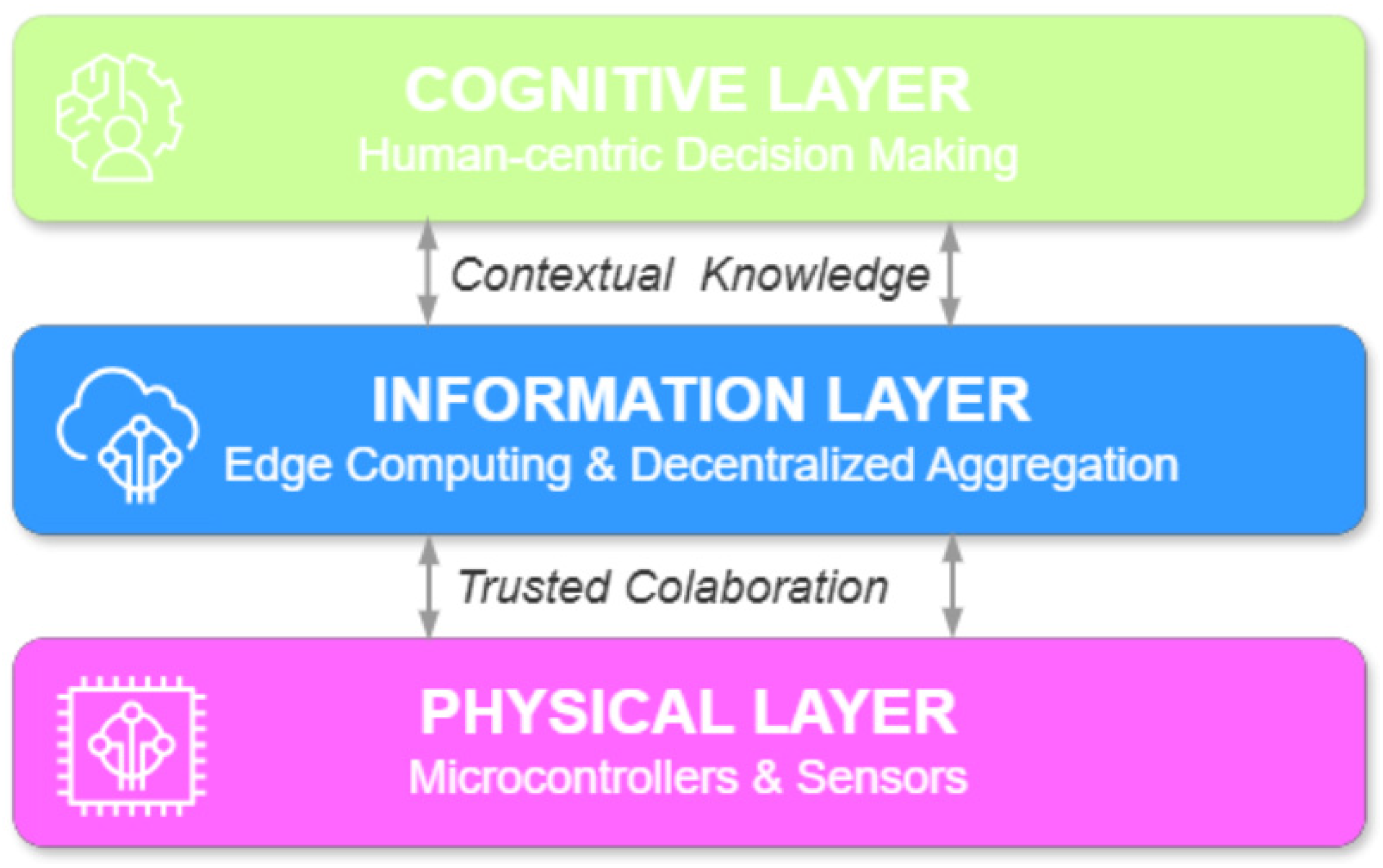
3.4. Conceptual Framework of the Future
4. Discussion
4.1. Synthesis of Main Results
- Technological contribution. TinyML allows for the execution of machine learning models with high accuracy and minimal latency directly on microcontrollers and embedded devices. This provides real-time autonomy at the edge and lays the foundation for intelligent, energy-efficient IoT systems, confirming the observations of [53,85] that TinyML acts as a key enabling technology for achieving ultra-low-power, locally adaptive computing architectures. A similar trend is also highlighted in the analysis of [86], who summarize that the integration of Edge AI and TinyML in industrial environments leads to a fundamental change in the way intelligence is distributed between the cloud and edge nodes.
- Architectural transformation. The decentralized architecture built on TinyML reduces dependence on cloud infrastructures, increases data security and optimizes energy management, which is in line with the analysis of [87], emphasizing the role of TinyML as a key catalyst for energy-efficient edge-based solutions. This achieves a more sustainable and reliable industrial ecosystem.
- Industrial applications. The most common practical implementations of TinyML are related to predictive maintenance, visual inspection of production, energy optimization and monitoring of operator safety. These applications prove the ability of TinyML to provide real-time intelligence even in resource-constrained environments.
- Socio-ethical aspect. TinyML supports the implementation of the human-centric model of Industry 5.0 by facilitating collaborative interaction between people and machines. This enhances safety, transparency, and trust in autonomous systems.
- Scientific Perspective. The development of TinyML 2.0, federated and quantum architectures outlines a new generation of intelligent systems that combine local adaptability, decentralized learning, and ethical autonomy. These trends herald the era of cognitively integrated and sustainable industry.
4.2. Strategic Guidelines for Industrial Implementation
4.3. Research Priorities (2025–2030)
4.4. Political and Economic Aspects
4.5. Limitations and Future Considerations
5. Conclusions
Supplementary Materials
Author Contributions
Funding
Institutional Review Board Statement
Informed Consent Statement
Data Availability Statement
Conflicts of Interest
References
- Wollschlaeger, M.; Sauter, T.; Jasperneite, J. The Future of Industrial Communication: Automation Networks in the Era of the Internet of Things and Industry 4.0. IEEE Ind. Electron. Mag. 2017, 11, 17–27. [Google Scholar] [CrossRef] [Scilit]
- European Commission. Directorate General for Research and Innovation. Industry 5.0: Towards a Sustainable, Human Centric and Resilient European Industry; Publications Office: Luxembourg, 2021. [Google Scholar]
- Warden, P.; Situnayake, D. TinyML: Machine Learning with TensorFlow Lite on Arduino and Ultra-Low-Power Microcontrollers, 1st ed.; O’Reilly: Sebastopol, CA, USA, 2020; ISBN 978-1-4920-5204-3. [Google Scholar]
- Heydari, S.; Mahmoud, Q.H. Tiny Machine Learning and On-Device Inference: A Survey of Applications, Challenges, and Future Directions. Sensors 2025, 25, 3191. [Google Scholar] [CrossRef] [Scilit]
- Abubakar, M.; Sattar, A.; Manzoor, H.; Farooq, K.; Yousif, M. IIOT: An Infusion of Embedded Systems, TinyML, and Federated Learning in Industrial IoT. J. Comput. Biomed. Inform. 2025, 8. [Google Scholar] [CrossRef]
- Hammad, M.Y.; Rahamaddulla, S.R.; Muhamad Tamyez, P.F.; Fauzi, M.A. From Industry 4.0 to 5.0: Leveraging AI and IoT for Sustainable and Human-Centric Operations. Int. J. Ind. Eng. Oper. Manag. 2025; ahead-of-print. [CrossRef] [Scilit]
- Nahavandi, S. Industry 5.0—A Human-Centric Solution. Sustainability 2019, 11, 4371. [Google Scholar] [CrossRef] [Scilit]
- Sabovic, A.; Aernouts, M.; Subotic, D.; Fontaine, J.; De Poorter, E.; Famaey, J. Towards Energy-Aware tinyML on Battery-Less IoT Devices. Internet Things 2023, 22, 100736. [Google Scholar] [CrossRef] [Scilit]
- Tsoukas, V.; Gkogkidis, A.; Boumpa, E.; Kakarountas, A. A Review on the Emerging Technology of TinyML. ACM Comput. Surv. 2024, 56, 1–37. [Google Scholar] [CrossRef] [Scilit]
- Capogrosso, L.; Cunico, F.; Cheng, D.S.; Fummi, F.; Cristani, M. A Machine Learning-Oriented Survey on Tiny Machine Learning. IEEE Access 2024, 12, 23406–23426. [Google Scholar] [CrossRef] [Scilit]
- Rejeb, A.; Rejeb, K.; Zrelli, I.; Süle, E. Industry 5.0 as Seen through Its Academic Literature: An Investigation Using Co-Word Analysis. Discov. Sustain. 2025, 6, 307. [Google Scholar] [CrossRef] [Scilit]
- Sarker, K.U. A Systematic Review on Lightweight Security Algorithms for a Sustainable IoT Infrastructure. Discov. Internet Things 2025, 5, 47. [Google Scholar] [CrossRef] [Scilit]
- Zyoud, S. Exploring the Promising Role of Internet of Things in Urban Water Systems: A Comprehensive Global Analysis of Insights, Trends, and Research Priorities. Discov. Internet Things 2025, 5, 31. [Google Scholar] [CrossRef] [Scilit]
- Monostori, L. Cyber-Physical Production Systems: Roots, Expectations and R&D Challenges. Procedia CIRP 2014, 17, 9–13. [Google Scholar] [CrossRef] [Scilit]
- Hayajneh, A.M.; Hafeez, M.; Zaidi, S.A.R.; McLernon, D. TinyML Empowered Transfer Learning on the Edge. IEEE Open J. Commun. Soc. 2024, 5, 1656–1672. [Google Scholar] [CrossRef] [Scilit]
- Lamaakal, I.; Yahyati, C.; Ouahbi, I.; Makkaoui, K.E.; Maleh, Y. A Survey of Model Compression Techniques for TinyML Applications. In Proceedings of the 2025 International Conference on Circuit, Systems and Communication (ICCSC), Fez, Morocco, 19–20 June 2025; IEEE: Piscataway, NJ, USA, 2025; pp. 1–6. [Google Scholar]
- Rajapakse, V.; Karunanayake, I.; Ahmed, N. Intelligence at the Extreme Edge: A Survey on Reformable TinyML. ACM Comput. Surv. 2023, 55, 1–30. [Google Scholar] [CrossRef] [Scilit]
- Nauman, A.; Khan, W.U.; Aldehim, G.; Alqahtani, H.; Alruwais, N.; Duhayyim, M.A.; Dev, K.; Min, H.; Nkenyereye, L. Communication and Computational Resource Optimization for Industry 5.0 Smart Devices Empowered by MEC. J. King Saud Univ.-Comput. Inf. Sci. 2024, 36, 101870. [Google Scholar] [CrossRef] [Scilit]
- Kayan, H.; Heartfield, R.; Rana, O.; Burnap, P.; Perera, C. CASPER: Context-Aware IoT Anomaly Detection System for Industrial Robotic Arms. ACM Trans. Internet Things 2024, 5, 1–36. [Google Scholar] [CrossRef] [Scilit]
- Costa, D.; Pereira, D.; Brochado, Â.F.; Rocha, E.M. Low-Cost and Non-Intrusive Human Digital Twin Component for Task and Navigation Tracking through Pose Estimation. CIRP J. Manuf. Sci. Technol. 2025, 61, 233–248. [Google Scholar] [CrossRef] [Scilit]
- Fu, W.; Luo, Z.; Liu, S.; Lloret, J.; Albuquerque, V.H.C.D.; Saudagar, A.K.J.; Muhammad, K. Spatiotemporal Correlation Based Self-Adaptive Pose Estimation in Complex Scenes. Digit. Commun. Netw. 2024, S2352864824000373. [Google Scholar] [CrossRef] [Scilit]
- Kim, E.; Shin, J.; Kwon, Y.; Park, B. EMG-Based Dynamic Hand Gesture Recognition Using Edge AI for Human–Robot Interaction. Electronics 2023, 12, 1541. [Google Scholar] [CrossRef] [Scilit]
- Fort, A.; Landi, E.; Moretti, R.; Parri, L.; Peruzzi, G.; Pozzebon, A. Hand-Arm Vibration Monitoring via Embedded Machine Learning on Low Power Wearable Devices. In Proceedings of the 2022 IEEE International Symposium on Measurements & Networking (M&N), Padua, Italy, 18–20 July 2022; IEEE: Piscataway, NJ, USA, 2022; pp. 1–6. [Google Scholar]
- Katib, I.; Albassam, E.; Sharaf, S.A.; Ragab, M. Safeguarding IoT Consumer Devices: Deep Learning with TinyML Driven Real-Time Anomaly Detection for Predictive Maintenance. Ain Shams Eng. J. 2025, 16, 103281. [Google Scholar] [CrossRef] [Scilit]
- Schneider, N.; Ruf, P.; Lermer, M.; Reich, C. Edge AI Deployment and Stream-Based Time Series Classification Within ARTHUR. In Cloud Computing and Services Science; Van Steen, M., Ferguson, D., Pahl, C., Eds.; Communications in Computer and Information Science; Springer Nature: Cham, Switzerland, 2024; Volume 1845, pp. 137–149. ISBN 978-3-031-68164-6. [Google Scholar]
- Oliveira, V.M.; Moreira, A.H.J. Edge AI System Using a Thermal Camera for Industrial Anomaly Detection. In Science and Technologies for Smart Cities; Paiva, S., Li, X., Lopes, S.I., Gupta, N., Rawat, D.B., Patel, A., Karimi, H.R., Eds.; Lecture Notes of the Institute for Computer Sciences, Social Informatics and Telecommunications Engineering; Springer International Publishing: Cham, Switzerland, 2022; Volume 442, pp. 172–187. ISBN 978-3-031-06370-1. [Google Scholar]
- Moallemi, A.; Burrello, A.; Brunelli, D.; Benini, L. Exploring Scalable, Distributed Real-Time Anomaly Detection for Bridge Health Monitoring. IEEE Internet Things J. 2022, 9, 17660–17674. [Google Scholar] [CrossRef] [Scilit]
- Zhao, S.; Xu, L.D. Intelligent Bearing System Health Monitoring for Smart Manufacturing Conveyors. In Proceedings of the 2025 8th International Conference on Enterprise Systems (ES), Cardiff, UK, 12–13 April 2025; IEEE: Piscataway, NJ, USA, 2025; pp. 1–5. [Google Scholar]
- Chen, Z.; Gao, Y.; Liang, J. A Self-Powered Predictive Maintenance System Based on Piezoelectric Energy Harvesting and TinyML. In Proceedings of the 2023 IEEE/ACM International Symposium on Low Power Electronics and Design (ISLPED), Vienna, Austria, 7–8 August 2023; IEEE: Piscataway, NJ, USA, 2023; pp. 1–6. [Google Scholar]
- Van Eck, N.J.; Waltman, L. Software Survey: VOSviewer, a Computer Program for Bibliometric Mapping. Scientometrics 2010, 84, 523–538. [Google Scholar] [CrossRef] [Scilit] [PubMed]
- Arif, M.; Rashid, M. A Literature Review on Model Conversion, Inference, and Learning Strategies in EdgeML with TinyML Deployment. Comput. Mater. Contin. 2025, 83, 13–64. [Google Scholar] [CrossRef] [Scilit]
- Dini, P.; Diana, L.; Elhanashi, A.; Saponara, S. Overview of AI-Models and Tools in Embedded IIoT Applications. Electronics 2024, 13, 2322. [Google Scholar] [CrossRef] [Scilit]
- Tekin, N.; Aris, A.; Acar, A.; Uluagac, S.; Gungor, V.C. A Review of On-Device Machine Learning for IoT: An Energy Perspective. Ad Hoc Netw. 2024, 153, 103348. [Google Scholar] [CrossRef] [Scilit]
- De La Fuente, R.; Radrigan, L.; Morales, A.S. Enhancing Predictive Maintenance in Mining Mobile Machinery Through a Hierarchical Inference Network. IEEE Access 2025, 13, 59480–59504. [Google Scholar] [CrossRef] [Scilit]
- Chaoraingern, J.; Numsomran, A. Embedded Sensor Data Fusion and TinyML for Real-Time Remaining Useful Life Estimation of UAV Li Polymer Batteries. Sensors 2025, 25, 3810. [Google Scholar] [CrossRef] [Scilit]
- Chang, Y.-H.; Wu, F.-C.; Lin, H.-W. Design and Implementation of ESP32-Based Edge Computing for Object Detection. Sensors 2025, 25, 1656. [Google Scholar] [CrossRef] [Scilit]
- De Vita, F.; Nocera, G.; Bruneo, D.; Tomaselli, V.; Falchetto, M. On-Device Training of Deep Learning Models on Edge Microcontrollers. In Proceedings of the 2022 IEEE International Conferences on Internet of Things (iThings) and IEEE Green Computing & Communications (GreenCom) and IEEE Cyber, Physical & Social Computing (CPSCom) and IEEE Smart Data (SmartData) and IEEE Congress on Cybermatics (Cybermatics), Espoo, Finland, 22–25 August 2022; IEEE: Piscataway, NJ, USA, 2022; pp. 62–69. [Google Scholar]
- Diana, L.; Dini, P. Review on Hardware Devices and Software Techniques Enabling Neural Network Inference Onboard Satellites. Remote Sens. 2024, 16, 3957. [Google Scholar] [CrossRef] [Scilit]
- Kim, K.; Jang, S.-J.; Park, J.; Lee, E.; Lee, S.-S. Lightweight and Energy-Efficient Deep Learning Accelerator for Real-Time Object Detection on Edge Devices. Sensors 2023, 23, 1185. [Google Scholar] [CrossRef] [Scilit]
- Liu, S.-C.; Gao, C.; Kim, K.; Delbruck, T. Energy-Efficient Activity-Driven Computing Architectures for Edge Intelligence. In Proceedings of the 2022 International Electron Devices Meeting (IEDM), San Francisco, CA, USA, 3–7 December 2022; IEEE: Piscataway, NJ, USA, 2022; pp. 21.2.1–21.2.4. [Google Scholar]
- Sanchez-Iborra, R. LPWAN and Embedded Machine Learning as Enablers for the Next Generation of Wearable Devices. Sensors 2021, 21, 5218. [Google Scholar] [CrossRef] [Scilit]
- Pradhan, N.M.; Chaudhari, B.S.; Zennaro, M. 6TiSCH Low Latency Autonomous Scheduling for Industrial Internet of Things. IEEE Access 2022, 10, 71566–71575. [Google Scholar] [CrossRef] [Scilit]
- Ren, H.; Anicic, D.; Li, X.; Runkler, T. On-Device Online Learning and Semantic Management of TinyML Systems. ACM Trans. Embed. Comput. Syst. 2024, 23, 1–32. [Google Scholar] [CrossRef] [Scilit]
- Seyedzadeh, S.; Christodoulou, V.; Turner, A.; Lotfian, S. Optimising Manufacturing Efficiency: A Data Analytics Solution for Machine Utilisation and Production Insights. J. Manuf. Mater. Process. 2025, 9, 210. [Google Scholar] [CrossRef] [Scilit]
- Velasquez, J.D.; Cadavid, L.; Franco, C.J. Emerging Trends and Strategic Opportunities in Tiny Machine Learning: A Comprehensive Thematic Analysis. Neurocomputing 2025, 648, 130746. [Google Scholar] [CrossRef] [Scilit]
- Sharma, A.; Rani, S.; Shabaz, M. An Optimized Stacking-Based TinyML Model for Attack Detection in IoT Networks. PLoS ONE 2025, 20, e0329227. [Google Scholar] [CrossRef] [Scilit]
- Alwaisi, Z.; Kumar, T.; Harjula, E.; Soderi, S. Securing Constrained IoT Systems: A Lightweight Machine Learning Approach for Anomaly Detection and Prevention. Internet Things 2024, 28, 101398. [Google Scholar] [CrossRef] [Scilit]
- Tekin, N.; Acar, A.; Aris, A.; Uluagac, A.S.; Gungor, V.C. Energy Consumption of On-Device Machine Learning Models for IoT Intrusion Detection. Internet Things 2023, 21, 100670. [Google Scholar] [CrossRef] [Scilit]
- Bhattacharya, S.; Pandey, M. Deploying an Energy Efficient, Secure & High-Speed Sidechain-Based TinyML Model for Soil Quality Monitoring and Management in Agriculture. Expert Syst. Appl. 2024, 242, 122735. [Google Scholar] [CrossRef] [Scilit]
- Hou, K.M.; Diao, X.; Shi, H.; Ding, H.; Zhou, H.; De Vaulx, C. Trends and Challenges in AIoT/IIoT/IoT Implementation. Sensors 2023, 23, 5074. [Google Scholar] [CrossRef] [Scilit] [PubMed]
- Giordano, M.; Baumann, N.; Crabolu, M.; Fischer, R.; Bellusci, G.; Magno, M. Design and Performance Evaluation of an Ultralow-Power Smart IoT Device With Embedded TinyML for Asset Activity Monitoring. IEEE Trans. Instrum. Meas. 2022, 71, 1–11. [Google Scholar] [CrossRef] [Scilit]
- Antonini, M.; Pincheira, M.; Vecchio, M.; Antonelli, F. An Adaptable and Unsupervised TinyML Anomaly Detection System for Extreme Industrial Environments. Sensors 2023, 23, 2344. [Google Scholar] [CrossRef] [Scilit]
- Schizas, N.; Karras, A.; Karras, C.; Sioutas, S. TinyML for Ultra-Low Power AI and Large Scale IoT Deployments: A Systematic Review. Future Internet 2022, 14, 363. [Google Scholar] [CrossRef] [Scilit]
- Koufos, K.; Ei Haloui, K.; Dianati, M.; Higgins, M.; Elmirghani, J.; Imran, M.A.; Tafazolli, R. Trends in Intelligent Communication Systems: Review of Standards, Major Research Projects, and Identification of Research Gaps. J. Sens. Actuator Netw. 2021, 10, 60. [Google Scholar] [CrossRef] [Scilit]
- Dehrouyeh, F.; Yang, L.; Badrkhani Ajaei, F.; Shami, A. On TinyML and Cybersecurity: Electric Vehicle Charging Infrastructure Use Case. IEEE Access 2024, 12, 108703–108730. [Google Scholar] [CrossRef] [Scilit]
- Immonen, R.; Hämäläinen, T. Tiny Machine Learning for Resource-Constrained Microcontrollers. J. Sens. 2022, 2022, 7437023. [Google Scholar] [CrossRef] [Scilit]
- Greis, N.P. From Self-Aware to Self-Healing for Perpetual Manufacturing. Manuf. Lett. 2022, 34, 53–57. [Google Scholar] [CrossRef] [Scilit]
- Campolo, C.; Genovese, G.; Iera, A.; Molinaro, A. Virtualizing AI at the Distributed Edge towards Intelligent IoT Applications. J. Sens. Actuator Netw. 2021, 10, 13. [Google Scholar] [CrossRef] [Scilit]
- Zhou, H.; Zhang, X.; Feng, Y.; Zhang, T.; Xiong, L. Efficient Human Activity Recognition on Edge Devices Using DeepConv LSTM Architectures. Sci. Rep. 2025, 15, 13830. [Google Scholar] [CrossRef] [Scilit] [PubMed]
- Mnif, M.; Sahnoun, S.; Ben Saad, Y.; Fakhfakh, A.; Kanoun, O. Combinative Model Compression Approach for Enhancing 1D CNN Efficiency for EIT-Based Hand Gesture Recognition on IoT Edge Devices. Internet Things 2024, 28, 101403. [Google Scholar] [CrossRef] [Scilit]
- Nguyen, T.; Nguyen, D.H.; Nguyen, Q.-T.; Tran, K.D.; Tran, K.P. Human-Centered Edge AI and Wearable Technology for Workplace Health and Safety in Industry 5.0. In Artificial Intelligence for Safety and Reliability Engineering; Tran, K.P., Ed.; Springer Series in Reliability Engineering; Springer Nature: Cham, Switzerland, 2024; pp. 171–183. ISBN 978-3-031-71494-8. [Google Scholar]
- Hülsmann, J.; Barbosa, J.; Steinke, F. Local Interpretable Explanations of Energy System Designs. Energies 2023, 16, 2161. [Google Scholar] [CrossRef] [Scilit]
- Abdel-Basset, M.; Moustafa, N.; Hawash, H.; Zomaya, A.Y. Explainable Artificial Intelligence for Trustworthy Internet of Things; The Institution of Engineering and Technology: Stevenage, UK, 2024; ISBN 978-1-83953-802-5. [Google Scholar]
- Habib, L.; Pacaux-Lemoine, M.-P.; Berdal, Q.; Trentesaux, D. From Human-Human to Human-Machine Cooperation in Manufacturing 4.0. Processes 2021, 9, 1910. [Google Scholar] [CrossRef] [Scilit]
- Trilles, S.; Hammad, S.S.; Iskandaryan, D. Anomaly Detection Based on Artificial Intelligence of Things: A Systematic Literature Mapping. Internet Things 2024, 25, 101063. [Google Scholar] [CrossRef] [Scilit]
- Lin, Z.; Cruz, F.; Sandoval, E.B. Self Context-Aware Emotion Perception on Human-Robot Interaction. arXiv 2024, arXiv:2401.10946. [Google Scholar]
- Butt, M.A.; Qayyum, A.; Ali, H.; Al-Fuqaha, A.; Qadir, J. Towards Secure Private and Trustworthy Human-Centric Embedded Machine Learning: An Emotion-Aware Facial Recognition Case Study. Comput. Secur. 2023, 125, 103058. [Google Scholar] [CrossRef] [Scilit]
- Saeed, M.M.; Saeed, R.A.; Ahmed, Z.E. TinyML for 5G Networks. In TinyML for Edge Intelligence in IoT and LPWAN Networks; Elsevier: Amsterdam, The Netherlands, 2024; pp. 167–229. ISBN 978-0-443-22202-3. [Google Scholar]
- Javed, A.; Awais, M.N.; Qureshi, A.-H.; Jawad, M.; Arshad, J.; Larijani, H. Embedding Tree-Based Intrusion Detection System in Smart Thermostats for Enhanced IoT Security. Sensors 2024, 24, 7320. [Google Scholar] [CrossRef] [Scilit]
- Costa, H.; Silva, M.; Sánchez-Gendriz, I.; Viegas, C.M.D.; Silva, I. An Evolving Multivariate Time Series Compression Algorithm for IoT Applications. Sensors 2024, 24, 7273. [Google Scholar] [CrossRef] [Scilit]
- Pradhan, N.; Chaudhari, B.S.; Zennaro, M. 6TiSCH Adaptive Scheduling for Industrial Internet of Things. In TinyML for Edge Intelligence in IoT and LPWAN Networks; Elsevier: Amsterdam, The Netherlands, 2024; pp. 283–309. ISBN 978-0-443-22202-3. [Google Scholar]
- Signoretti, G.; Silva, M.; Andrade, P.; Silva, I.; Sisinni, E.; Ferrari, P. An Evolving TinyML Compression Algorithm for IoT Environments Based on Data Eccentricity. Sensors 2021, 21, 4153. [Google Scholar] [CrossRef] [Scilit]
- Zeeshan, M. Efficient Deep Learning Models for Edge IOT Devices—A Review. TechRxiv 2024. [Google Scholar] [CrossRef] [Scilit]
- Jang, Y.J.; Lee, J.; Japhne, F.; Hong, S.; Hwang, S.; Hwang, I. Concept of Digital Twins for Autonomous Manufacturing through Virtual Learning and Commissioning. In Proceedings of the 2024 Winter Simulation Conference (WSC), Orlando, FL, USA, 15–18 December 2024; IEEE: Piscataway, NJ, USA, 2024; pp. 46–56. [Google Scholar]
- Xia, Z.; Sun, X.; Wang, Z.; Meng, J.; Jin, B.; Wang, T. Low-Power Memristor for Neuromorphic Computing: From Materials to Applications. Nano-Micro Lett. 2025, 17, 217. [Google Scholar] [CrossRef] [Scilit]
- Zhang, W.; Yang, D.; Wu, W.; Peng, H.; Zhang, N.; Zhang, H.; Shen, X. Optimizing Federated Learning in Distributed Industrial IoT: A Multi-Agent Approach. IEEE J. Sel. Areas Commun. 2021, 39, 3688–3703. [Google Scholar] [CrossRef] [Scilit]
- Chougule, S.; Chaudhari, B.S.; Ghorpade, S.N.; Zennaro, M. Cloud and Edge Intelligence. In TinyML for Edge Intelligence in IoT and LPWAN Networks; Elsevier: Amsterdam, The Netherlands, 2024; pp. 27–63. ISBN 978-0-443-22202-3. [Google Scholar]
- Sanchez-Iborra, R.; Zoubir, A.; Hamdouchi, A.; Idri, A.; Skarmeta, A. Intelligent and Efficient IoT Through the Cooperation of TinyML and Edge Computing. Informatica 2023, 147–168. [Google Scholar] [CrossRef] [Scilit]
- Oliveira, F.; Costa, D.G.; Assis, F.; Silva, I. Internet of Intelligent Things: A Convergence of Embedded Systems, Edge Computing and Machine Learning. Internet Things 2024, 26, 101153. [Google Scholar] [CrossRef] [Scilit]
- Keivanimehr, A.R.; Akbari, M. TinyML and Edge Intelligence Applications in Cardiovascular Disease: A Survey. Comput. Biol. Med. 2025, 186, 109653. [Google Scholar] [CrossRef] [Scilit] [PubMed]
- Thuppari, C.; Jannu, S.; Edla, D.R.; Vidyarthi, A.; Agarwal, K.K.; Alkhayyat, A. Energy-Aware Compression and Consumption Algorithms for Efficient TinyML Model Using Aquila Optimization in Industrial IoT. IEEE Trans. Consum. Electron. 2025, 71, 334–342. [Google Scholar] [CrossRef] [Scilit]
- Saha, S.S.; Sandha, S.S.; Aggarwal, M.; Wang, B.; Han, L.; Briseno, J.D.G.; Srivastava, M. TinyNS: Platform-Aware Neurosymbolic Auto Tiny Machine Learning. ACM Trans. Embed. Comput. Syst. 2024, 23, 1–48. [Google Scholar] [CrossRef] [Scilit]
- Villegas-Ch, W.; Gutierrez, R.; Maldonado Navarro, A.; Mera-Navarrete, A. Optimizing Federated Learning on TinyML Devices for Privacy Protection and Energy Efficiency in IoT Networks. IEEE Access 2024, 12, 174354–174370. [Google Scholar] [CrossRef] [Scilit]
- Kadve, G.; Chowdhury, A.; Singh, V.K.; Pal, A. Engineering a Multi Model Fallback System for Edge Devices. Results Eng. 2025, 26, 105165. [Google Scholar] [CrossRef] [Scilit]
- Elhanashi, A.; Dini, P.; Saponara, S.; Zheng, Q. Advancements in TinyML: Applications, Limitations, and Impact on IoT Devices. Electronics 2024, 13, 3562. [Google Scholar] [CrossRef] [Scilit]
- Singh, R.; Gill, S.S. Edge AI: A Survey. Internet Things Cyber-Phys. Syst. 2023, 3, 71–92. [Google Scholar] [CrossRef] [Scilit]
- Jouini, O.; Sethom, K.; Namoun, A.; Aljohani, N.; Alanazi, M.H.; Alanazi, M.N. A Survey of Machine Learning in Edge Computing: Techniques, Frameworks, Applications, Issues, and Research Directions. Technologies 2024, 12, 81. [Google Scholar] [CrossRef] [Scilit]
- Adlakha, R.; Kabbar, E. The Challenges of TinyML Implementation: A Literature Review. In Proceedings of the Proceedings: CITRENZ 2023 Conference, Auckland, New Zealand, 27–29 September 2023; Unitec ePress: Auckland, New Zealand, 2024; pp. 160–169. [Google Scholar]
- Ray, P.P. A Review on TinyML: State-of-the-Art and Prospects. J. King Saud Univ.-Comput. Inf. Sci. 2022, 34, 1595–1623. [Google Scholar] [CrossRef] [Scilit]
- Qureshi, R.; Irfan, M.; Ali, H.; Khan, A.; Nittala, A.S.; Ali, S.; Shah, A.; Gondal, T.M.; Sadak, F.; Shah, Z.; et al. Artificial Intelligence and Biosensors in Healthcare and Its Clinical Relevance: A Review. IEEE Access 2023, 11, 61600–61620. [Google Scholar] [CrossRef] [Scilit]
- Page, M.J.; McKenzie, J.E.; Bossuyt, P.M.; Boutron, I.; Hoffmann, T.C.; Mulrow, C.D.; Shamseer, L.; Tetzlaff, J.M.; Akl, E.A.; Brennan, S.E.; et al. The PRISMA 2020 statement: An updated guideline for reporting systematic reviews. BMJ 2021, 372, n71. [Google Scholar] [CrossRef] [Scilit] [PubMed]



| Category | Criterion | Explanation |
|---|---|---|
| Type of publications | Included: peer-reviewed journal articles and conference papers | Ensures scientific reliability |
| Excluded: books, book chapters, incomplete reports, and conference reviews | Limits the scope to validated research | |
| Time range | 2020–2025 | Covers the period of active TinyML development |
| Language | English | Ensures consistency of terminology |
| Application domain | Industrial IoT, smart factories, robotics, predictive maintenance | Focuses on real industrial scenarios |
| Technological focus | TinyML, Edge AI, Embedded ML, Industry 5.0 | Excludes cloud-centric ML approaches |
| Methodological quality | Clear description of architecture, algorithm, and metrics | Minimizes uncertainty in the analysis |
| Industrial Application | Hardware Platform | TinyML Model/Approach | Inference Latency | Energy Consumption | Reported Accuracy | Industrial Relevance | References |
|---|---|---|---|---|---|---|---|
| Predictive maintenance (vibration analysis) | STM32 (ARM Cortex-M) | Quantized CNN (8-bit) | <10 ms | <150 µJ per inference | >95% | Real-time fault detection directly at machine level, enabling early intervention and reduced downtime | [34,37,52,57] |
| Battery health monitoring | ESP32 | Autoencoder–LSTM (compressed) | ~10–15 ms | Sub-mW regime | ≈94–96% | Enables on-device estimation of remaining useful life with minimal communication overhead | [35,41] |
| Visual quality inspection | ESP32 + camera module | Lightweight CNN (Edge Impulse) | <10 ms | <1 mW | >96% | Supports in-line inspection in production environments without cloud dependency | [36,37] |
| Wearable operator safety monitoring | nRF52 | Shallow NN/feature-based classifier | <5 ms | <2 mW | ≈93–97% | Continuous privacy-preserving monitoring of physiological and ergonomic indicators | [59,61,64] |
| Human and motion detection | ESP32 | Quantized CNN/temporal NN | ~5–10 ms | Low-mW range | ≈95% | Improves ergonomic safety and reduces operator injury risk in collaborative environments | [50,65,66,67] |
| Edge intrusion detection (network telemetry) | ARM Cortex-M MCU‘s | Lightweight IDS classifier | <1 ms | ≈0.01–0.1 mW | >94% | Ultra-low-latency anomaly detection directly at the edge, reducing exposure to network attacks | [46,47,55] |
| Federated industrial sensing (distributed nodes) | Heterogeneous MCUs (STM32, ESP32) | Federated TinyML with compressed updates | Dependent on synchronization cycle | 30–40% lower than centralized ML | Comparable to centralized ML | Enables collaborative learning while preserving data privacy and reducing communication load | [53,54,55,68,72] |
| Energy-aware environmental monitoring | MCU + energy harvesting | Event-driven TinyML | Event-triggered (<ms) | Up to 80% energy savings | >90% | Extends autonomous operation in remote or resource-constrained industrial settings | [8,33,51,53] |
| Dimension | Industry 4.0 | Industry 5.0 | Sustainable Cognitive Industry |
|---|---|---|---|
| Primary focus | Automation, efficiency, connectivity | Human–machine collaboration, resilience | Cognitive autonomy, sustainability, ethical intelligence |
| Location of intelligence | Centralized cloud and CPS | Hybrid cloud–edge | Edge-native, distributed cognition (TinyML) |
| Role of AI | Optimization and automation | Decision support and collaboration | Embedded cognitive agent with local autonomy |
| Energy perspective | Secondary, system-level | Integrated at process level | Intrinsic to cognition (energy-aware intelligence) |
| Sustainability | Operational efficiency | Environmental and social alignment | Sustainability as a property of intelligence itself |
| Human role | Operator/supervisor | Partner and collaborator | Co-agent in a cognitive feedback loop |
| Trust & transparency | Implicit, system-centric | Emerging concern | Explicit, explainable, and verifiable by design |
| Adaptability | Predefined automation rules | Adaptive collaboration | Self-adaptive, learning-oriented edge systems |
| Typical technologies | CPS, PLCs, Cloud AI | Cobots, Edge AI, IoT | TinyML, Federated Learning, XAI, Energy-aware Edge |
| Scientific Direction | Short Description | Expected Effect |
|---|---|---|
| Adaptive TinyML | Local self-learning and autonomous model reconfiguration | Increased autonomy and resilience |
| Federated TinyML | Collaborative learning among devices without data sharing | Privacy and scalability |
| Explainable TinyML | Development of models with transparent logic | Ethical and trustworthy deployment |
| Quantum TinyML | Utilization of quantum circuits for inference | Drastically reduced latency |
| TinyML Digital Twins | Integration with digital twins of processes | Real-time prediction and adaptation |
Disclaimer/Publisher’s Note: The statements, opinions and data contained in all publications are solely those of the individual author(s) and contributor(s) and not of MDPI and/or the editor(s). MDPI and/or the editor(s) disclaim responsibility for any injury to people or property resulting from any ideas, methods, instructions or products referred to in the content. |
© 2026 by the authors. Licensee MDPI, Basel, Switzerland. This article is an open access article distributed under the terms and conditions of the Creative Commons Attribution (CC BY) license.
Share and Cite
Terziyska, M.; Ilieva, I.; Terziyski, Z.; Komitov, N. A Review of the Transition from Industry 4.0 to Industry 5.0: Unlocking the Potential of TinyML in Industrial IoT Systems. Sci 2026, 8, 10. https://doi.org/10.3390/sci8010010
Terziyska M, Ilieva I, Terziyski Z, Komitov N. A Review of the Transition from Industry 4.0 to Industry 5.0: Unlocking the Potential of TinyML in Industrial IoT Systems. Sci. 2026; 8(1):10. https://doi.org/10.3390/sci8010010
Chicago/Turabian StyleTerziyska, Margarita, Iliana Ilieva, Zhelyazko Terziyski, and Nikolay Komitov. 2026. "A Review of the Transition from Industry 4.0 to Industry 5.0: Unlocking the Potential of TinyML in Industrial IoT Systems" Sci 8, no. 1: 10. https://doi.org/10.3390/sci8010010
APA StyleTerziyska, M., Ilieva, I., Terziyski, Z., & Komitov, N. (2026). A Review of the Transition from Industry 4.0 to Industry 5.0: Unlocking the Potential of TinyML in Industrial IoT Systems. Sci, 8(1), 10. https://doi.org/10.3390/sci8010010