Article

Optimizing Mortar Strength for Infrastructure Applications Using Rice Husk Ash and Municipal Solid Waste Incineration Ash


by
Sura Shamkhi Altaher
1,*,
Nor Hasanah Abdul Shukor Lim
2,*,
Nor Fazlin Zamri
1,
Iman Faridmehr
3,4 and
Ghasan Fahim Huseien
4,*
1
Faculty of Civil Engineering, Universiti Teknologi Malaysia, Johor Bahru 81310, Malaysia
2
UTM Construction Research Centre (CRC), Faculty of Civil Engineering, Universiti Teknologi Malaysia, Johor Bahru 81310, Malaysia
3
Civil Engineering Department, Faculty of Engineering, Girne American University, N. Cyprus Via Mersin 10, Kyrenia 99428, Turkey
4
EcoStruct Building Technologies Ltd., 3299 Harvest Dr, Abbotsford, BC V3G 2X8, Canada
*
Authors to whom correspondence should be addressed.
Infrastructures 2025, 10(10), 273; https://doi.org/10.3390/infrastructures10100273
Submission received: 2 September 2025 / Revised: 9 October 2025 / Accepted: 10 October 2025 / Published: 13 October 2025
(This article belongs to the Section Infrastructures Materials and Constructions)

Abstract

Infrastructure development increasingly requires sustainable construction materials, with waste utilization serving as a key strategy to address this need. Employing eco-friendly materials with enhanced engineering properties not only mitigates the environmental impact of waste but also lowers the carbon footprint associated with cement production. Accordingly, this research aims to investigate the potential of enhancing the performance of municipal solid waste incineration ash (MSWIA) mortar through the incorporation of rice husk ash (RHA) as a supplementary cementitious material (SCM), thereby supporting the principles of a circular economy. The MSWIA mortar comprised 25% bottom ash (BA) and 5% fly ash (FA) as substitutes for fine aggregate and cement, respectively. Cement was then replaced with RHA at 5–30% to assess the influence of RHA on the properties of MSWIA mortars such as workability, strength development, and water absorption. Adding RHA led to a lower flow rate and setting time than mortar content-only MSWIA. Nonetheless, the various mechanical properties of MSWIA mortar, such as compressive strength, split tensile strength, and flexure strength, were found to be increased when the RHA quantity was used at 10% as a cement replacement. The water absorption of the mortar mixes was reduced by increasing RHA up to 15%. The test results revealed that the mortar’s microstructural properties were notably enhanced, and the UPV measurements confirmed the overall good quality of the mortar specimens. Therefore, incorporating RHA and MSWIA in construction not only enhances performance but also contributes to environmental sustainability by reducing the carbon dioxide emission and landfill waste.

1. Introduction

Global warming is responsible for a significant increase in natural catastrophes, which in turn causes considerable economic losses and human casualties, particularly in tropical regions [1]. Most of these are due to anthropogenic carbon dioxide emissions [2]. According to recent research, the threshold for triggering long-time, perhaps irreversible changes is likely to be exceeded prior to or around 1.5 °C for global warming, which is presently expected to occur by the beginning of the 2030s [3]. There is no doubt that the ecological footprint of construction materials is inevitable. Cement production globally is now approximately 4.1 billion tonnes per year [4], and it might grow to 5 billion tonnes by 2030 [5]. Cement production is thus responsible for global annual CO2 emissions of around 7–8% [6]. This figure is likely to rise due to population growth and infrastructure improvement in developed as well as developing nations, which has a significant impact on natural resources and thus in turn affects the interests of future generations [7]. The emphasis is frequently primarily on lowering the quantity of CO2 produced, energy utilized, and the use of natural resources [8,9]. In fact, doing so might easily result in a halving of the material’s service life or a significant decline in performance [10]. By doing this, no enhancement in sustainability is made; rather, the environmental impact is simply stretched out over time. To improve this situation, researchers seek to improve the sustainability of alternative building materials to match their properties with traditional materials, thus aiding in waste reduction and management in an environmentally sustainable manner [11].
Many studies over the last few decades have looked into the probability of applying municipal solid waste incineration ash (MSWIA) and rice husk ash (RHA) as supplementary cementitious materials or fine aggregate in the production of sustainable construction materials [12,13,14]. Indeed, the world’s waste production has expanded significantly due to the quickening of population expansion and booming economy. By 2050, global municipal solid waste (MSW) production is forecast to become 3.4 billion tonnes [15]. This considerable increase presents safety risks and environmental issues [16]. The predominant techniques for MSW management are incineration and landfilling. The primary concern with landfills is water and air pollution, the potential risk associated with the contaminants in landfilled waste, and considerable land use, as waste typically requires about 30 to 200 years to degrade completely [17]. Incineration, on the other hand, has grown in popularity across the world due to its low land use, potential for energy recovery, and ability to considerably reduce waste volume [18]. It is able to reduce waste volume by 90% and minimize quantity by 65–80% [19]. Different kinds of ash are produced during the incineration process, particularly bottom ash (BA), which settles at the base of the incinerator, and fly ash (FA), which exits with the incinerator’s combustion gases [20].
Bottom ash is an amorphous material that is characterized by a diverse array of particle sizes, ranging from very fine to coarse, with over 60% of the particles in the normal range of sand (between 0.075 mm and 4.75 mm) [21,22]. It represents over 80% of produced residues, making its use crucial for achieving a circular economy [23,24]. The majority of research examines the impact of BA on compressive strength development [25,26,27]. The use of bottom ash as aggregates in concrete can significantly influence its strength performance. Generally, replacing natural aggregates with bottom ash tends to reduce the strength of concrete, especially at higher replacement levels. This reduction is mainly due to the porous and irregular nature of bottom ash particles, which lead to higher water absorption, weaker interfacial bonding, and increased void content in the concrete matrix [28]. According to Huynh and Ngo [29], the mortar specimens’ compressive and flexural strengths are decreased when BA is used as a natural aggregate replacement; the higher drop in strength was observed when the volume replacement was up to 25%. However, the use of these unconventional components has a discernible effect on the structure of pore alterations caused by a distinct evolution of the microstructure [30]. Substituting fine aggregate with bottom ash typically leads to higher concrete porosity, especially at greater replacement levels, owing to the inherently porous structure of bottom ash. This rise in porosity, particularly within the interfacial transition zone between the bottom ash particles and the cement matrix, tends to reduce mechanical properties such as compressive strength. However, at optimal replacement levels, it may improve durability by facilitating the development of a denser microstructure [31,32].
Additionally, a reduced percentage of chlorides was discovered in every stratum, indicating that BA had a positive impact on tortuosity, penetrability, and water absorptivity, which aligns with the discovery made by Huynh and Ngo [29] and Nguyen et al. [33]. Practically, BA is subjected to initial treatments in some countries and is utilized for secondary applications such as fillers used in the construction of roads, low-grade concrete blocks, and barriers. However, in numerous locations, they remain unused and disposed of in landfills [23].
Similar to BA, FA is a by-products of coal combustion in power plants; however, they differ in particle size and collection methods. FA is a fine, powder-like material carried by flue gases and collected through electrostatic precipitators or filters. It is rich in aluminosilicate. Owing to its pozzolanic properties, FA is commonly used as a supplementary cementitious material in concrete, whereas bottom ash is primarily employed as a lightweight aggregate or filler. Overall, FA exhibits finer particles and higher reactivity, while bottom ash is denser and less reactive [34]. FA typically accounts for 5–20% of the total quantity of waste burnt [35]. Cement-based treatment is the most extensive FA stabilization, which is not only economical but also simple to execute [36]. Chen et al. [37] demonstrated that the inclusion of 20–30% RHA increased the immobilization effectiveness of potentially toxic components in FA as a result of extra hydration products. However, according to Zeng et al. [38], concrete’s strength may be increased with a maximum of 10% FA replacement, but this is dependent on the type and technique of FA formation. Nevertheless, Su et al. [39] and Lv et al. [40] found that the pores were fewer rounds, and the spatial distribution was more complex as the FA content increased. Liu et al. [41] demonstrated that although the inclusion of FA augmented the porosity of the mortar, it improved the structure of the bulk pores and reduced the number of linked pores.
Regarding RHA, it is a by-product created when rice grain husks are burned to create energy, which is often utilized to power an industrial plant [42]. Rice is an essential food crop around the globe. Its worldwide production in 2024–2025 was expected to reach 528 million tonnes [43]. Rice husk (RH), which contains less nutrient benefit, is taken from rice during milling; every 1 kg of rice separates around 0.28 kg of husk [44]. Typically, a sizeable amount of such waste is disposed of through landfills and incineration [45]. When RH is burned, RHA is generated. It accounts for around 20–25% of the weight of RH, depending on the geographic areas of the paddy fields, rice kinds, and climatic circumstances [46]. Reusing waste materials, like RHA, can contribute to a greener planet by reducing the amount of agricultural waste. In addition, the burning of RH without proper management results in the production of harmful gases like nitrogen oxides, carbon dioxide, and sulfur oxides [47], posing threats to both humans and the environment. Furthermore, burning RH in an open fire increases the number of crystalline particles that cannot be used in concrete compositions, as well as the carbon content, which has an undesirable impact on the qualities of the finished product [48]. Therefore, to enhance the number of amorphous particles, researchers apply various combustion procedures [48,49]. According to some reports, RHA is possible to contain more than 90% amorphous silica and a large surface area by carrying out the burning process at heats between 550 and 900 °C [50,51]. Numerous studies indicate that substituting cement with varying amounts of RHA results in improvements to the product’s mechanical, microstructure, and durability properties due to its elevated silica, pozzolanic action, and surface area [52,53,54]. Wang et al. [55] also reported on the sensitivity of RHA particle size to strength improvement. However, the findings of certain research indicated that an increase in replacement rates by up to 30% was associated with a reduction in compressive strength [56,57].
Incorporating RHA, FA, and BA into concrete production offers a sustainable and innovative approach to enhancing both performance and environmental efficiency. The novel aspect of combining multiple ashes lies in their complementary chemical and physical properties, which synergistically optimize mechanical and durability performance beyond what can be achieved with single-source replacements, thus presenting a promising pathway for developing next-generation, eco-friendly concrete. In light of the preceding considerations, two types of MSWIA (FA as a partial replacement of cement and BA as a partial replacement of sand) were combined to enhance the microstructure of pores. This reduced the strength of the produced mortar. Then, the strength of the resulting MSWIA mortar was enhanced by partially replacing cement with RHA (due to its high silica content). The binary and ternary replacement of mortar components was adopted to reduce the environmental impact of municipal solid waste and agricultural waste as well as improve the properties of mortar, resulting in extending the life of buildings and reducing maintenance costs. Thus, the present study has aimed to investigate the chemical, physical, and microstructural characterization of FA, BA, and RHA. Afterwards, the effect of RHA on the fresh, mechanical, and microstructural properties of sustainable mortar was explored. The results of the combination have been compared with traditional mortar.

2. Materials and Methods

2.1. Materials Characterization

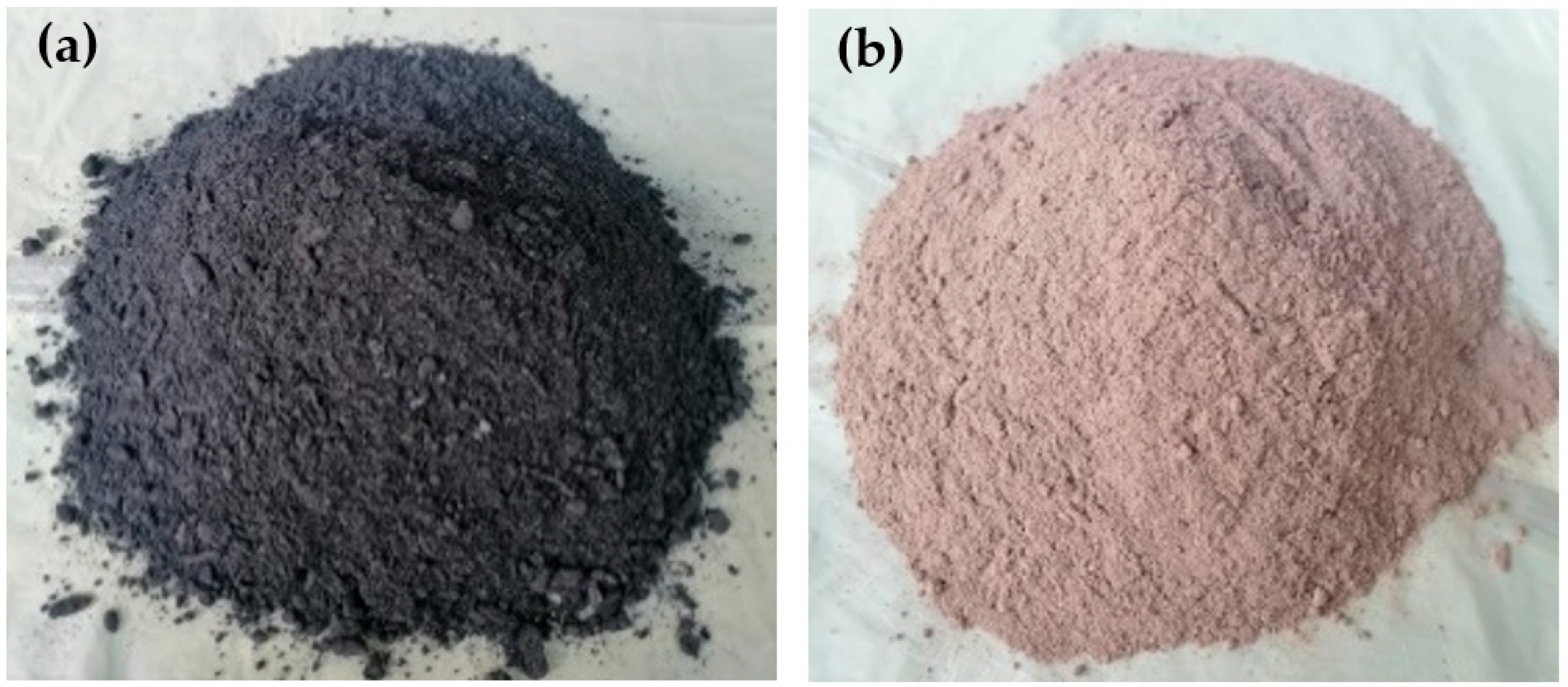
Cement, river sand, FA and BA (two varieties of MSWIA), RHA, and superplasticizer (SP) were used to prepare the proposed mortars. Throughout the experimental program, Type I Ordinary Portland Cement (OPC), branded as TASEK CEMENT, was sourced from a local cement manufacturer in Malaysia. The selected cement complied with the ASTM C150 standard [58] and was obtained from a single source. Clean river sand was chosen as a fine aggregate. In nearly all cases, a naphthalene-based superplasticizer in liquid Sodium Naphthalene Sulphonate Formaldehyde was used. Municipal solid waste incineration produces both fly ash and bottom ash, which are derived from the combustion of treated household waste. As illustrated in Figure 1, both FA and BA were obtained from a facility located in Cameron Highlands, Pahang, Malaysia. This small-scale plant operates using autogenous combustion technology to maintain continuous incineration. The collected FA was utilized as a cementitious material to partially replace ordinary Portland cement (OPC) due to its high content of CaO (41.2%) and SiO2 (13.9%). BA exhibits characteristics similar to fine aggregate; therefore, in this study, it was used as a partial replacement for sand after being screened through a 2 mm sieve to match the properties of the sand employed.
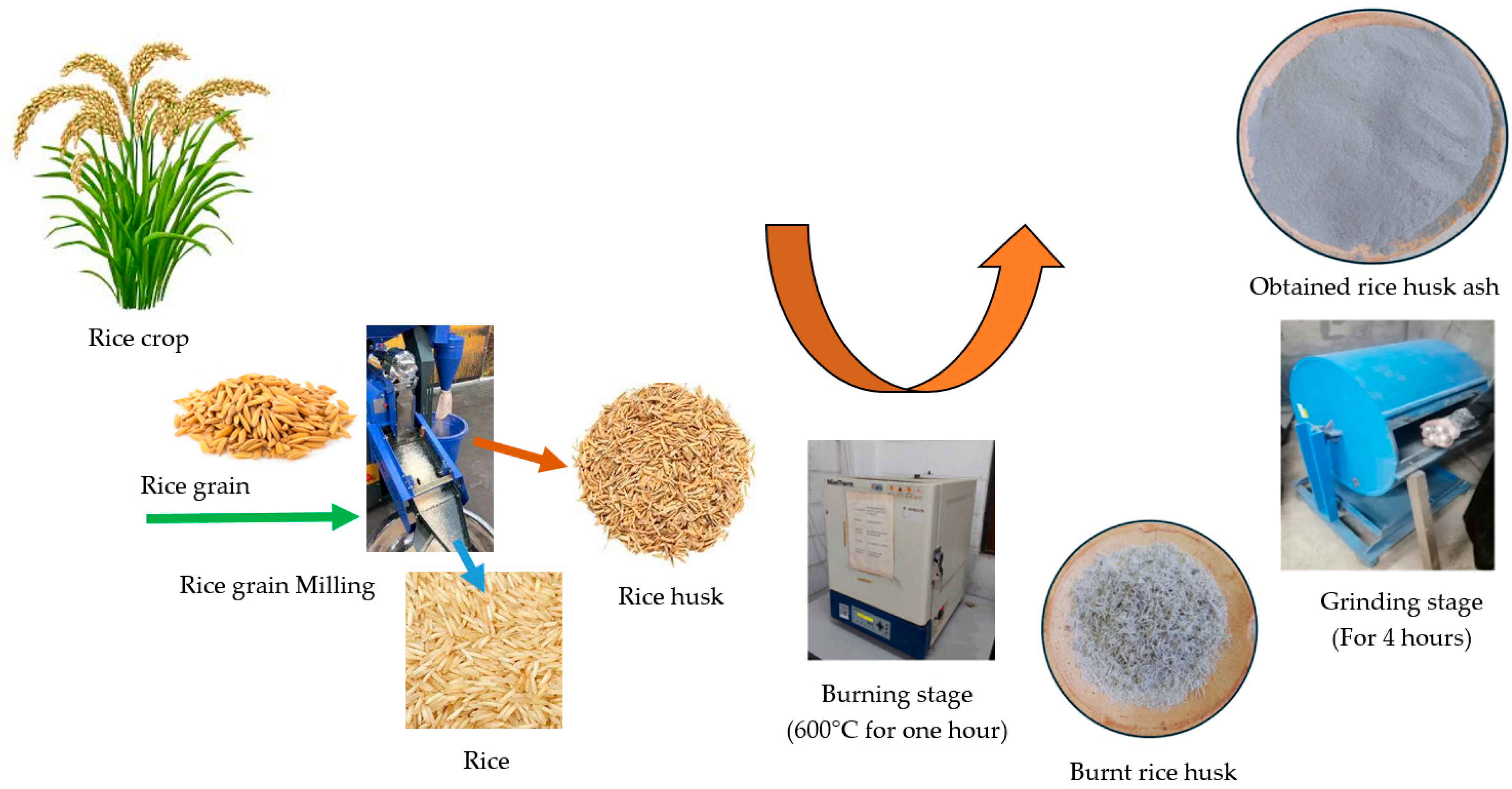
Regarding RHA, raw rice husk (RH) was procured from a local rice mill in Johor Bahru, Malaysia. It was then incinerated in a furnace at Universiti Teknologi Malaysia (UTM) at a regulated temperature of 600 °C for one hour. Then, RHA was ground in a mechanical grinder for four hours after cooling under normal air. Following ASTM C618 [59], grinding was carried out until roughly 95% of the RHA passed by the 45 mm sieve. Figure 2 depicts the RHA production process in the laboratory. Throughout the investigation, tap water was used for different uses, such as mixing and curing.
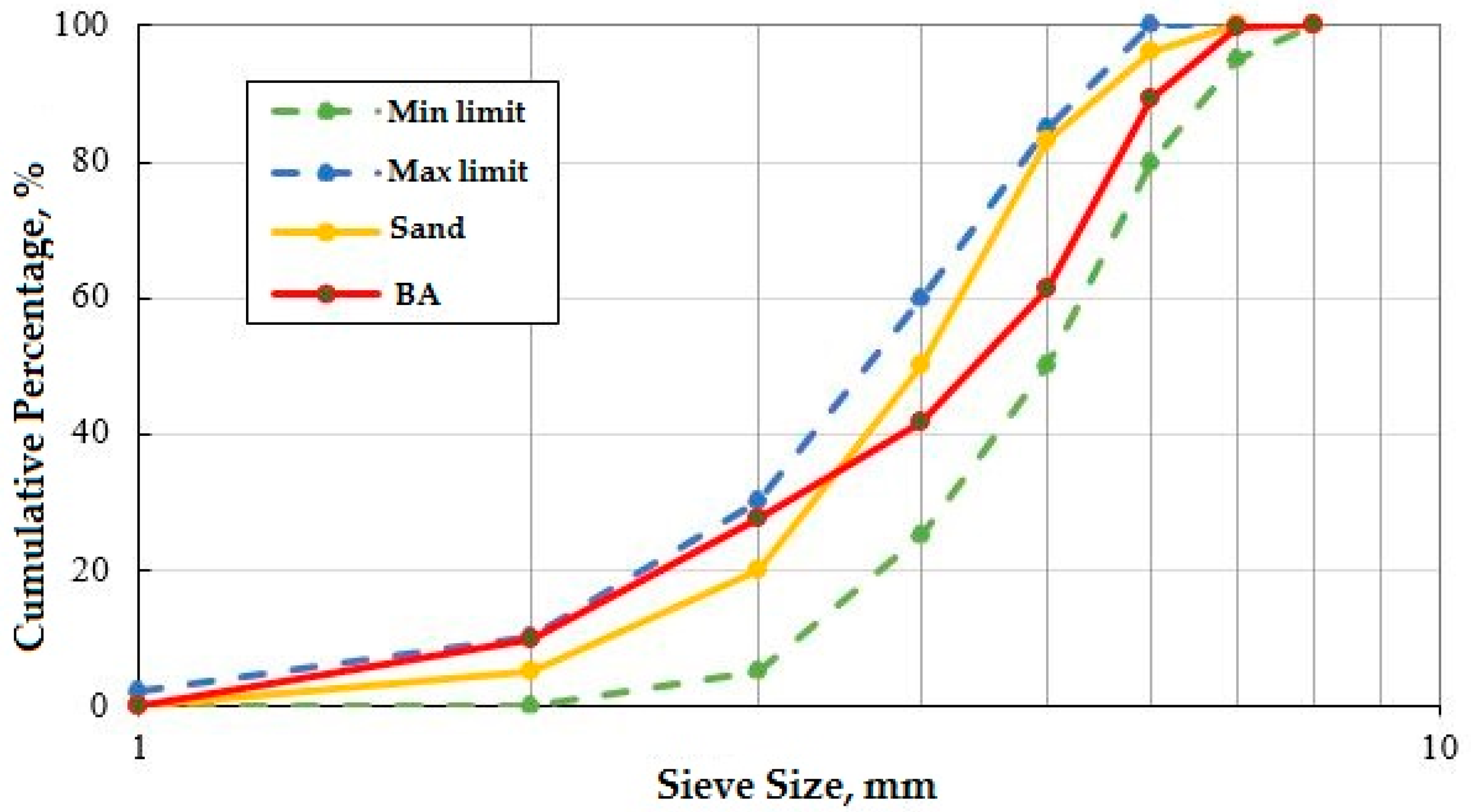
The physical properties and chemical composition of used materials were reported. Table 1 represents the physical characteristics of sand, BA, OPC, RHA, and FA. The colors of all subjects used are mentioned. Raw materials were assessed for bulk density and specific gravity using ASTM D1895 [60] and ASTM C188 [61], respectively. The bulk density of RHA, FA, and BA was less than OPC and sand. The density of RHA is around 39% of OPC density. Thus, it is important to depend on the volume replacement in the mixture. Therefore, adding RHA, FA, and BA has reduced the density of mortar. Besides that, due to their lower density and higher volume per unit mass, FA and RHA are more efficient void fillers than OPC. The water absorption value of BA (20.6%) is higher compared to the sand (1.9%). This increased the need for water in the mortar mixture; thus, SP has been used following the previous studies’ recommendation [29,32]. The percentage of OPC, FA, and RHA that passed via a 45 μm wet sieve was 99, 98, and 96%, respectively. This value is acceptable because it is more than the permissible limit, which is 95%, as satisfied by ASTM C618. According to the ASTM C33 specification [62], a sieve analysis was performed on river sand and bottom ash (BA) used as fine aggregates. The results revealed that the particle size distributions of both sand and BA complied with the standard requirements, as illustrated in Figure 3.
X-ray Fluorescence (XRF) testing is a non-destructive analytical method that requires minimal sample preparation, providing faster, more economical, and often more precise results across a broad range of materials and elements, particularly for determining bulk chemical composition. As illustrated in Table 2, the chemical compositions of OPC, FA, RHA, and BA were obtained by using the XRF test. From the reported results, it was found that the RHA contained 90.5% silicon dioxide (SiO2), which was a much greater amount than FA, 13.9%. The total proportion of silica, aluminum, and iron for RHA was more than 75%; therefore, it could be considered a pozzolan (class N) as stated in ASTM C618. It was compliant with recent research studies [63,64,65]. Besides, Sulphur trioxide (SO3) content in RHA was below 4%, which ASTM C618 considers acceptable. Due to fertilizer use on rice crops, RHA also had K2O levels below 3% [66]. Calcium oxide (CaO) content in FA and BA was more than 18%. An alkaline metal oxide, CaO, might help the carbonation process, producing tortuosity and decreasing mortar porosity [67]. The loss on ignition (LOI) was 1.0% for OPC, 1.4% for FA, 0.5% for RHA, and 6.4% for BA. All LOI values are within the class N requirement of ASTM C618, and 0.5% LOI for RHA indicates complete burning. According to the LOI, there was very little unburned carbon in the utilized ashes, and there was sufficient pozzolanic activity for hydration processes [67]. Furthermore, LOI value is a crucial parameter for cementitious materials, as it might raise water requirements, which can lower strength and durability.

2.2. Mix Design and Specimen Preparation

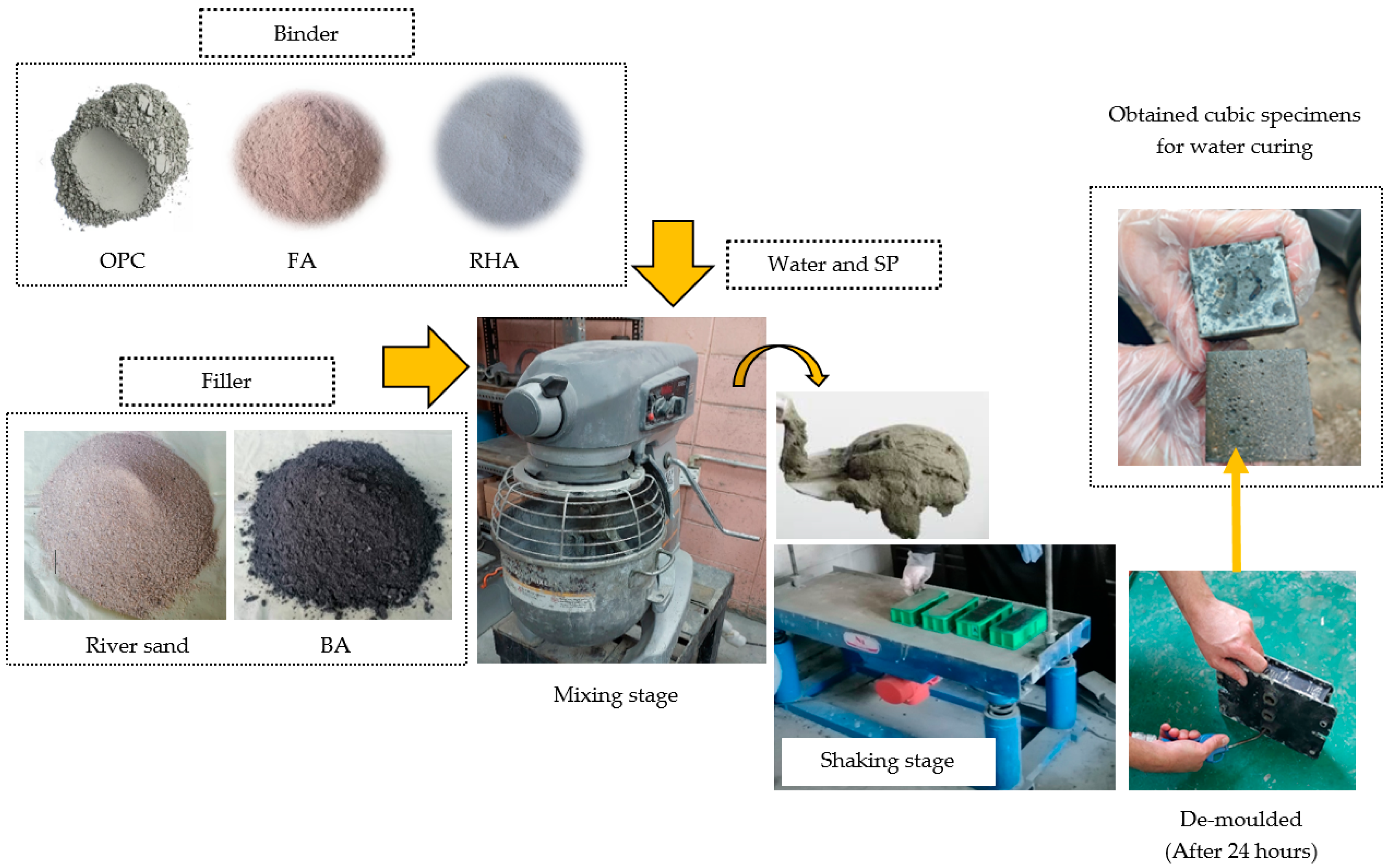
The current research used replacement volume strategies to keep the total mortar volume consistent. The ratio of cement to fine aggregates in all mortar mix designs was 1:2.75 according to ASTM C109M [68]. The target strength of the mortar used in the calculation is 30 MPa. The water-to-binding ratio has been set at 0.5 to achieve the acceptable fluidity and desired strength. The experiments involved using the superplasticizer as an admixture to increase workability while decreasing water use. Its maximum allowable dose was 2% of the binder. A number of experimental preliminary mixes were carried out to obtain an appropriate percentage of MSWIA used. The flow table, compressive strength, and UPV tests were adopted in the trial mixtures. A 25% of BA was used as sand replacements, and 5% of FA was chosen to replace OPC; the control mortar had 0% replacement. After that, the proportions of RHA replaced by cement were 5, 10, 15, 20, 25, and 30%, as presented in Table 3. Previous investigations guided the choice of these replacement doses. After laboratory preparation, processing, and storage to obtain the most accurate results, all materials were mixed in a Hobart mixer at the chosen design ratio at room temperature (25 ± 2 °C). The molds were prepared, and the fresh mortar was poured in two stages. A vibration table machine is employed to consolidate each layer for a duration of one minute (as presented in Figure 4). This is to release air from the fresh mortar and decrease voids. The excess mortar was leveled using a trowel to obtain a smooth surface finish. After remaining in the mold for 24 h, the sample was removed and immersed in tap water maintained at a temperature of 27 ± 3 °C for the specified testing period. The samples were wiped after processing and dried naturally for approximately 4 h before being tested. Three samples were utilized for each investigation from all of the batches. To facilitate the presentation of the result and discussion, the name ID for each mixture is assigned to be (B = bottom ash), (F = fly ash), and (R = rice husk ash).

2.3. Tests Procedure

To assess the performance of newly designed mortars incorporating different levels of RHA as a partial replacement for OPC, flowability and setting time tests were carried out. Flowability was measured using the flow table method in accordance with ASTM C1437, while the initial and final setting times were determined following ASTM C191 [69]. According to ASTM C109 [68], the compressive strength test was conducted using a compression machine at the structure and materials laboratory, UTM. The loading rate that was used was 3 kN/s. The dimension size of the cube was (50 × 50 × 50) mm. The splitting tensile test was accomplished per ASTM C496 [70] using a cylindrical specimen (50 × 100) mm, while the flexural strength test was completed per ASTM C348 [71] using a prism sample (40 × 40 × 160) mm. The machine utilized for these tests, albeit with different configurations, was the same one applied to assess compressive strength. All strength tests have been carried out at 7, 14, and 28 days of age.
In line with ASTM C597 [72], the cubic specimens underwent an ultrasonic pulse velocity (UPV) test to ascertain the length of time the pulse passed through the mortar. This was carried out before the compression test. Higher UPV indicates denser, more homogeneous mortar with fewer voids or microcracks. On the other hand, water absorption is a critical property that determines the durability of mortars. It measures the pore spaces inside the specimen’s matrix. The examination was performed in compliance with standard BS 1881 [73] at 7 days and 28 days post-curing.
A Field Emission Scanning Electron Microscopy (FESEM) was used to produce detailed, magnified, high-resolution morphological photographs of the mortar sample surface. Samples for FESEM and XRD analysis were obtained from the central section of the concrete cubes immediately after crushing during the compressive strength test and were promptly immersed in acetone-filled containers. Before conducting the FESEM test, the specimens were removed from acetone, dried, and crushed into small fragments approximately 2–5 mm in size, followed by coating with platinum. Additionally, X-ray diffraction (XRD) was used to analyze crystal structure and the hydration of the specimens. Diffraction samples were powder prepared by ball milling after the compressive strength test. In this study, the SmartLab goniometer at the Central Lab, UTM (Skudai, Malaysia), was employed. The step and spread of the scan were 0.02° and 8.25°/min, respectively. The angular value 2-theta-scale was from 3 °C to 100 °C, working with 40 kV and 30 mA.

3. Results and Discussion

3.1. Strength Activity Index of FA and RHA

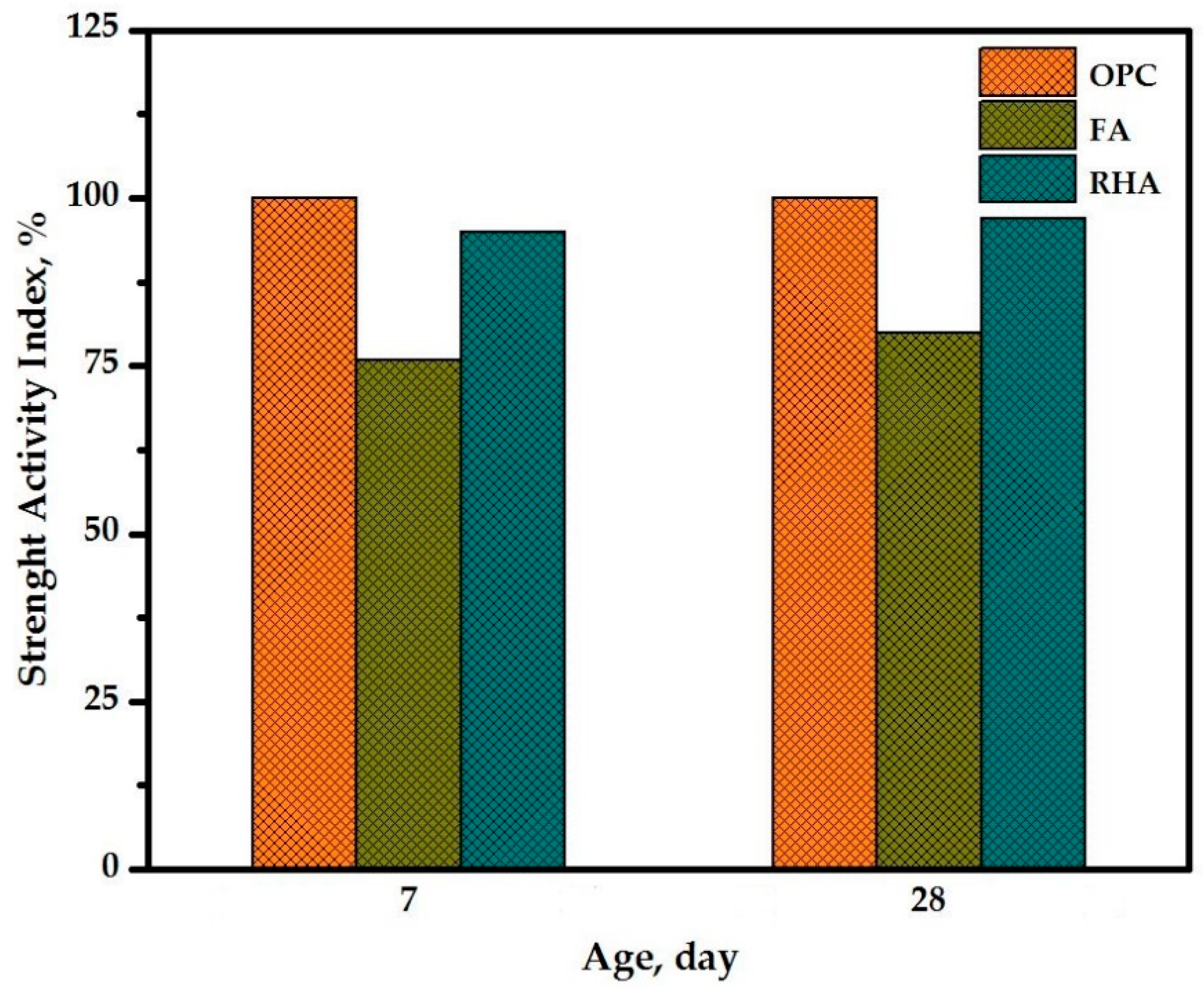
The strength activity index is an indirect approach used to measure and evaluate the pozzolanic properties of a material. Following ASTM C311, the strength activity index of FA and RHA was assessed. For FA and RHA powder, the strength activity index was determined in comparison with the control specimen (OPC). As illustrated in Figure 5, the strength activity indices of FA and RHA were measured at 7 and 28 days. At 7 days, FA achieved 76% and RHA reached 95%, whereas at 28 days, FA attained 80% compared to 97% for RHA. Both FA and RHA results fall within the acceptable range (greater than 75%) specified by ASTM C311. However, the pozzolanic activity of RHA is approximately 17% higher than that of FA. RHA generally exhibits higher pozzolanic reactivity than FA due to its very high amorphous silica content, large specific surface area, and porous microstructure. These features accelerate the pozzolanic reaction with calcium hydroxide, producing additional calcium silicate hydrate (C–S–H) gel, which significantly enhances the strength of modified cement [74,75].

3.2. Surface Morphology of Raw Materials

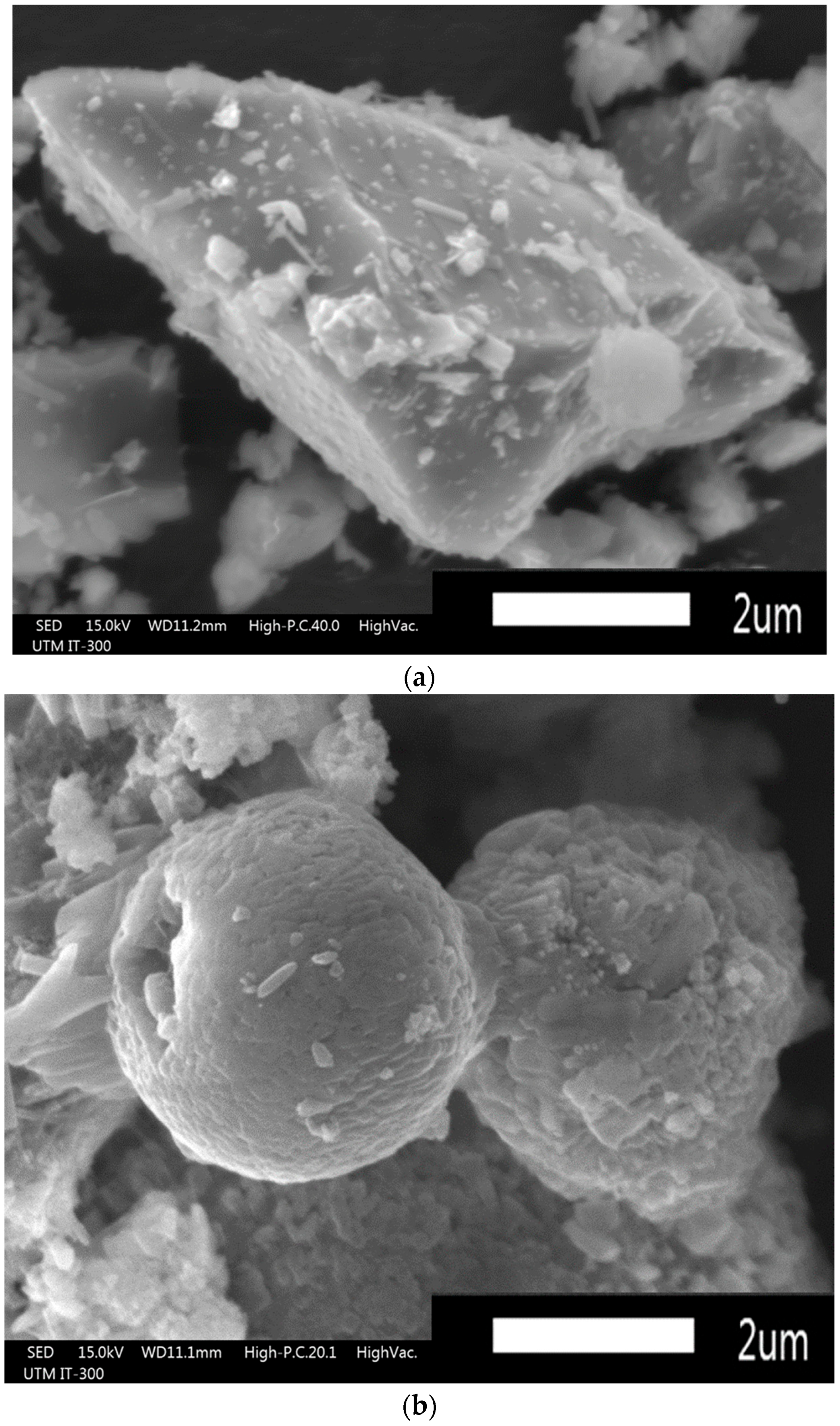
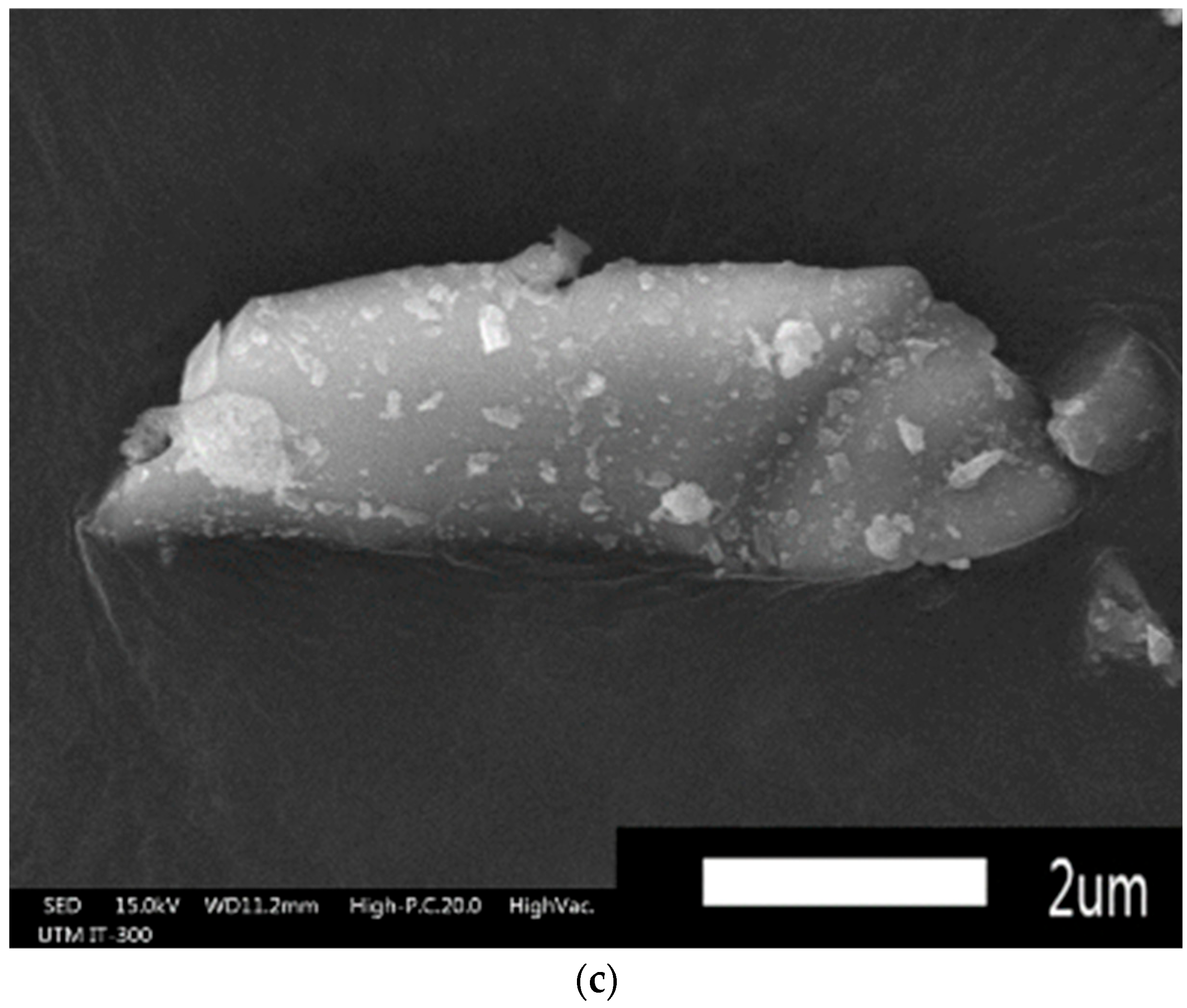
The surface morphology and particle shape of RHA and FA play a crucial role in influencing cement performance during hydration and strength development. The morphological features of OPC, FA, and RHA powders were examined using Scanning Electron Microscopy (SEM), and the corresponding results are illustrated in Figure 6. As shown in Figure 6a, OPC consists of irregularly shaped particles. In contrast, FA exhibits a wide range of particle sizes and is predominantly spherical in form (Figure 6b). While the smaller particles display relatively smooth surfaces, the larger ones tend to have rough textures. In the case of RHA, it maintains a cellular structure and consists of highly irregular particles with a porous surface, as presented in Figure 6c. The highly porous and irregularly shaped particles with large surface area of RHA enhance the pozzolanic reaction by providing more reactive sites for the consumption of calcium hydroxide and the formation of additional calcium silicate hydrate (C–S–H) gel. This accelerates the refinement of pore structure and improves the density of the cement matrix, thereby contributing to higher long-term strength and durability. While FA initial reactivity is lower than RHA due to their glassy structure and reduced surface area, the gradual pozzolanic reaction of FA contributes to later-age strength gain and improved microstructural stability. Therefore, the synergistic use of RHA and FA can optimize both the hydration process and mechanical performance of cementitious systems by balancing early reactivity with long-term strength development [76,77].

3.3. Workability Performance

The effect of varying content RHA as OPC partial replacement on MSWIA mortar workability was evaluated, and the obtained results of flowability and both initial and final setting times are presented in Table 4. From the obtained results, it can clearly be observed that the workability of the fresh mortar is inversely proportional to the ash concentration. The incorporation of 25% BA as a replacement for river sand reduced the flow diameter to 13.3 cm, compared with 15 cm for OPC. This decline in flowability is attributed to the higher water absorption capacity of BA, along with its irregular shape and rough surface [78]. The high porosity of BA particles leads to additional water absorption, thereby reducing the amount of free water available and consequently decreasing workability [79,80,81]. An additional 3% reduction in workability was observed when FA was incorporated into mortar containing BA. Generally, the spherical shape of FA particles is known to enhance workability by acting as tiny ball bearings that minimize internal friction between particles. However, in this case, the high reactivity of calcium compounds (41.2%) increased the water demand, thereby reducing workability. In contrast, the addition of 5%, 10%, 15%, 20%, 25%, and 30% RHA to MSWIA mortar caused significant reduction in workability by 4%, 7%, 9%, 10%, 13%, and 15%, respectively. The high reduction in flowability of proposed mortars is attributed to the RHA’ high surface area and spongy and porous nature [54], which demands water.
The integration of MSWIA and RHA in mortar can have varying effects on setting time depending on its proportion, fineness, and environmental conditions. The initial setting time was increased by 27% for 5% FA mortar, compared to OPC mortar. Long final setting time does not seem desirable [54], as noted with the FA; consequently, it may be regulated by including RHA in the mixture. During this investigation, RHA shortens the setting time, as seen in Table 4. The initial and final setting times are dropped from 110 to 30 min and from 380 to 280 min, respectively, as the RHA content grows from 0% to 30%. This is linked to RHAs water absorption capabilities due to its microporous structure, resulting in a lower w/c ratio in the surrounding matrix [82].
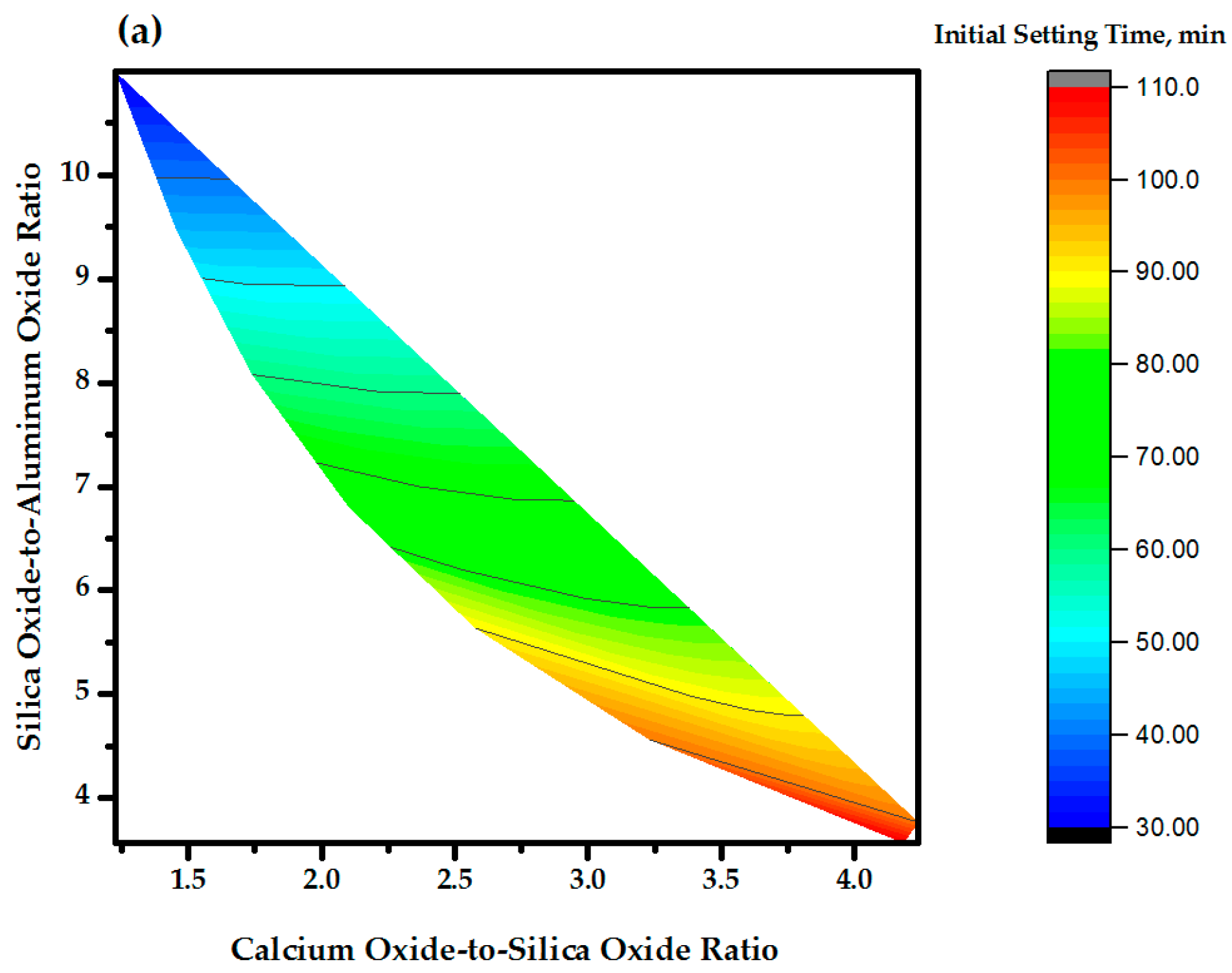
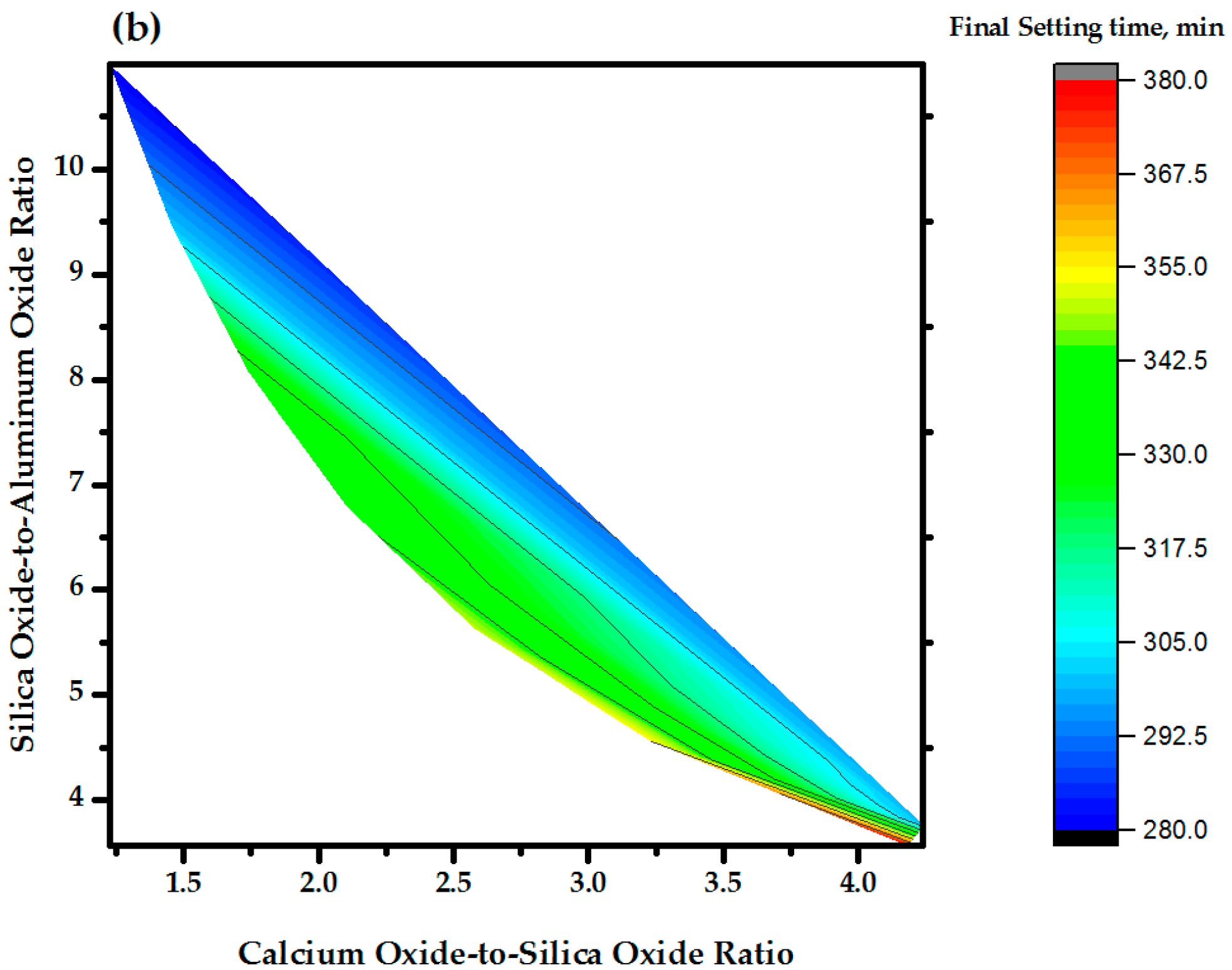
The content of amorphous silica from RHA incorporating binary binder (OPC+FA) as cement replacement strongly influences the hydration products, initial and final setting times, and the overall microstructure. Thus, balancing the SiO2/CaO/Al2O3 ratios is essential for optimizing pozzolanic reactivity, flowability, setting times, microstructural densification, and long-term performance of cementitious composites containing RHA. As shown in Figure 7, the ratios of CaO-to-SiO2 and SiO2-to-Al2O3 significantly influence the flowability performance of cementitious systems incorporating RHA as a partial replacement for cement. As well, the mortar’s flowability is influenced by the ratio of amorphous silica from RHA; the increasing content of silica oxides leads to a significant drop in workability performance. Amorphous silica generally accelerates hydration reactions and enhances the formation of calcium silicate hydrates (C–S–H), which can reduce workability due to faster setting, high viscosity and higher water demand, as shown in Figure 6a,b (initial and final setting times) [83].

3.4. Hardened Density

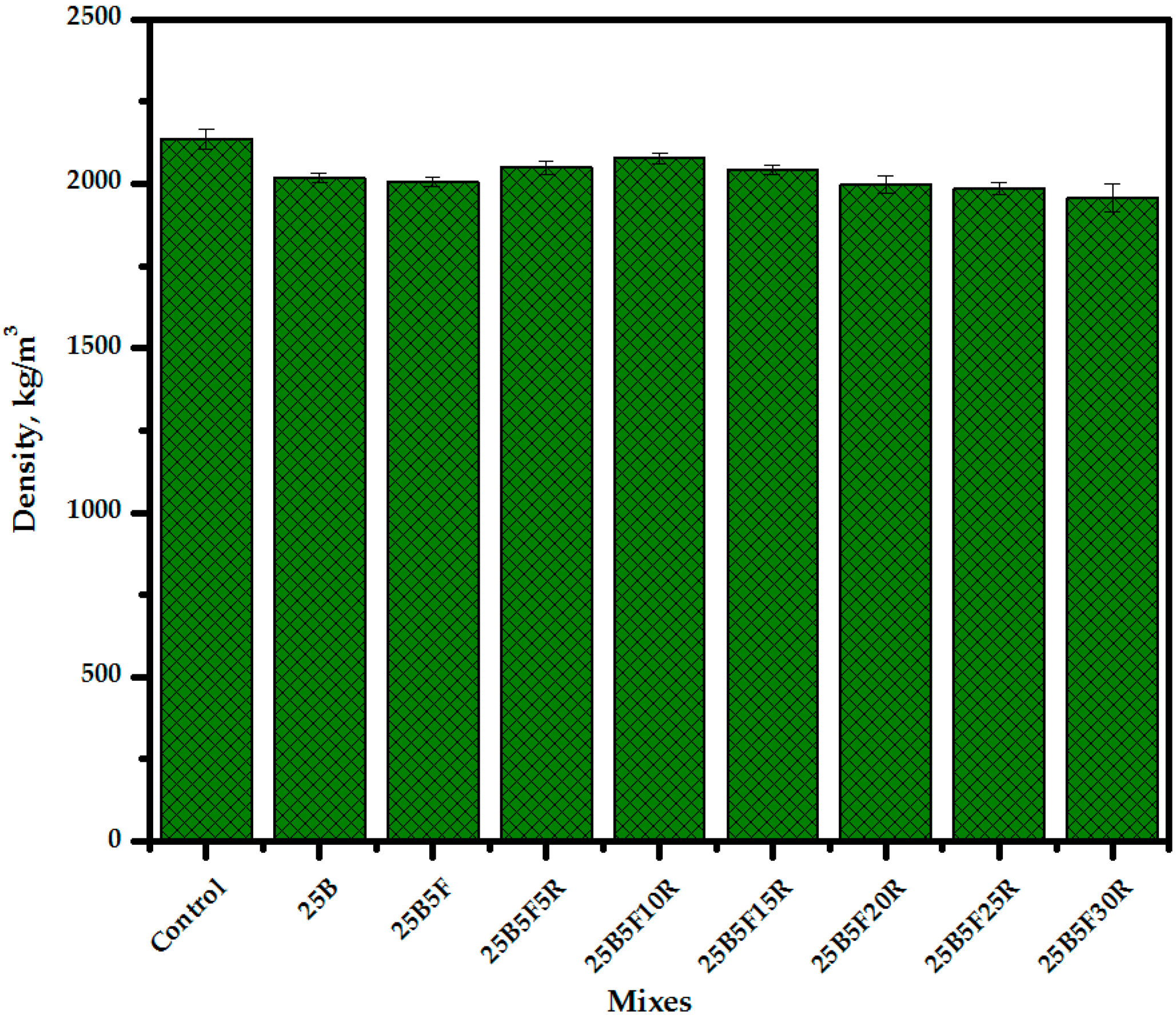
The density of the mortar is governed by several elements, including the bulk density of materials, water-cement ratio, and replacement level [84]. The density values of the specimen are depicted in Figure 8. It is evident that adding BA instead of sand and FA instead of OPC lowered the density of mortar by 6%. This was a result of the decreased density of BA itself (646 kg/m3) compared to sand (1402 kg/m3) and the decreased density of FA (658 kg/m3) compared to OPC (1239 kg/m3). Likewise, RHA possesses a porous structure, leading to a lower bulk density. As a consequence, the weight of the mortar is reduced. Conversely, the presence of secondary hydration compounds, as a result of the pozzolanic properties of RHA, leads to an increase in density because of its pore filling. Consequently, the density increased slightly when the OPC was partially replaced with RHA, reaching its highest value when the RHA concentration was 10% (increased by 4% compared to MSWIA samples). This conclusion lines up with the research conducted by Che Amat et al. [85]. The density of concrete gradually decreased when the amount of RHA exceeded 10%. This occurred because, above the optimal replacement level, the sluggish hydration and pozzolanic reaction of RHA-blended cement led to the formation of bigger voids within the concrete [86].

3.5. Compressive Strength

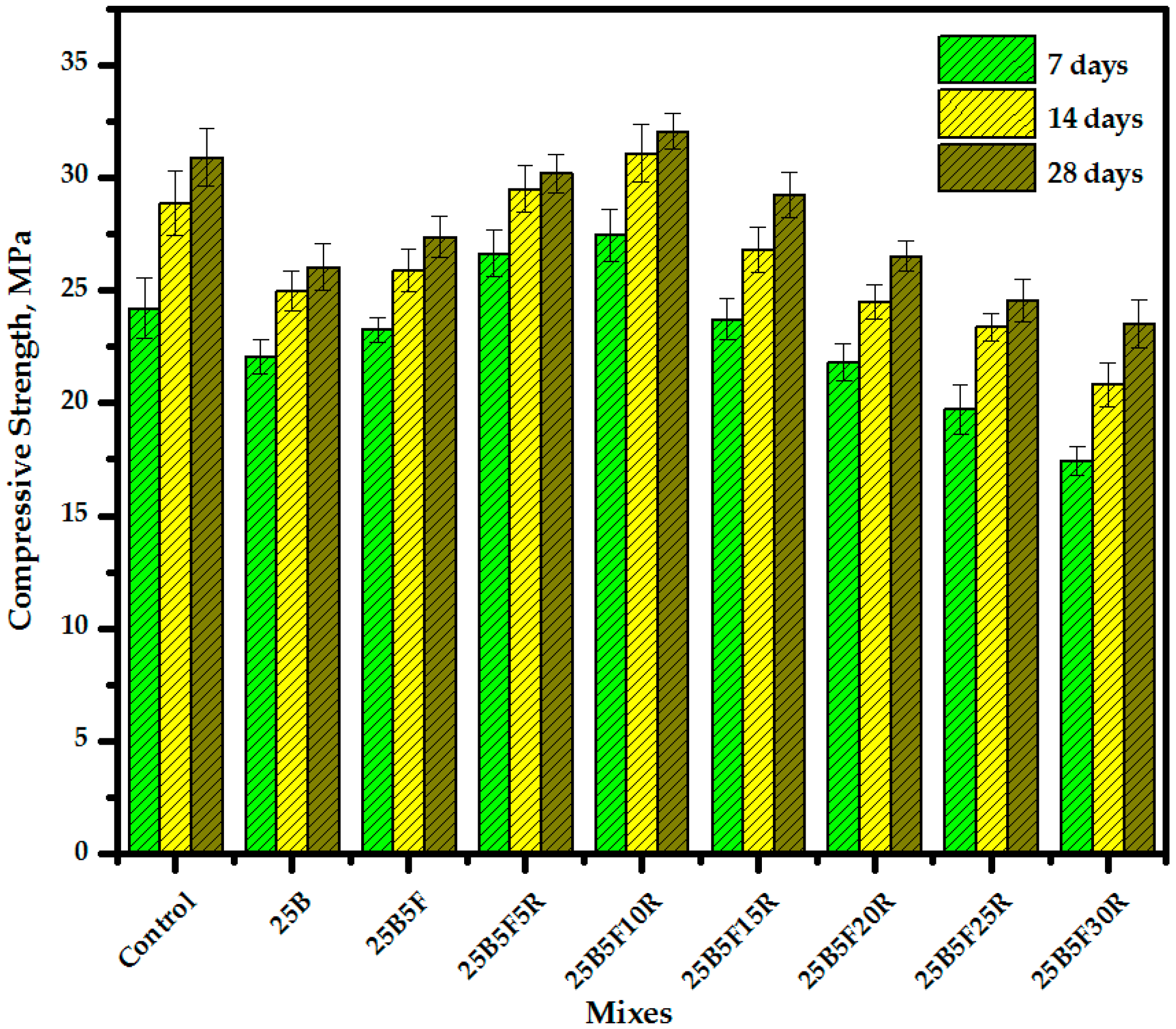
The compressive strengths of all mortar mixes are plotted in Figure 9. The compressive strengths generally decreased as BA was replaced with sand compared to control mortar regardless of the curing period. BA generally shows lower stiffness than natural river sand, mainly because its particles are porous, irregular, and rough in texture. These characteristics lead to a lower bulk density and make it more susceptible to crushing when subjected to confinement; thus, replacing 25% sand with BA led to a reduction of 16% in the mechanical strength of the mortar. Besides, BA has a high water absorption; thus, BA might have absorbed the water intended for hydration, causing an impediment to the hydration process and the cement reaction [27]. The BA adding effect was similar to the results by Irshidat et al. [87] and Vilarinho et al. [88]. Besides, the compressive strength increased by around 5% with 5% FA replacement and then deteriorated with an increasing FA replacement rate, similar to the result in [40]. A few amount of FA helps bridge the gap among particles and refine the capillary pores in the mortar. Although FA can create a constrained quantity of cementitious material, it is considerably less than the equivalent OPC; hence, mortar strength will inevitably be reduced. According to the above results, the ratio B25F5, which has the maximum replacement rate of BA and FA, was used as the optimum result of the MSWIA mortar.
For sustainable mortar, RHA content has the main effect on the development of MSWIA mortar strength because it has effects on the pozzolan interaction and binder hydration. The compressive strength improved progressively with increasing age. For MSWIA mortar, the compressive strength is 27.37 MPa, whereas those of 5%, 10%, 15%, 20%, 25%, and 30% RHA specimens are 30.2, 32.1, 29.3, 26.5, 24.6, and 23.5, respectively. Strengthening is primarily achieved by the formation of an additional calcium silicate-hydrated (C-S-H) gel, which is the result of a reaction between the reactive silica and calcium hydroxide (CH) produced by the initial hydration of cement. Nonetheless, mortar containing 10% RHA (25B5F10R) was the optimum level of replacement regardless of the aging, which corresponds to approximately 17% increase compared to that of the MSWIA mortar. The increase in compressive strength observed when replacing 10–15% of cement with RHA is mainly attributed to its high silica content and pozzolanic activity, which react with calcium hydroxide released during cement hydration to form additional C–S–H gel, the main strength-giving compound in concrete. The fine particle size of RHA also enhances the packing density, reduces pore volume, and refines the microstructure, leading to improved strength development. This optimum replacement level ensures sufficient pozzolanic reaction without significantly reducing the amount of cementitious material needed for hydration, thus resulting in higher compressive strength compared to plain cement concrete [89,90].
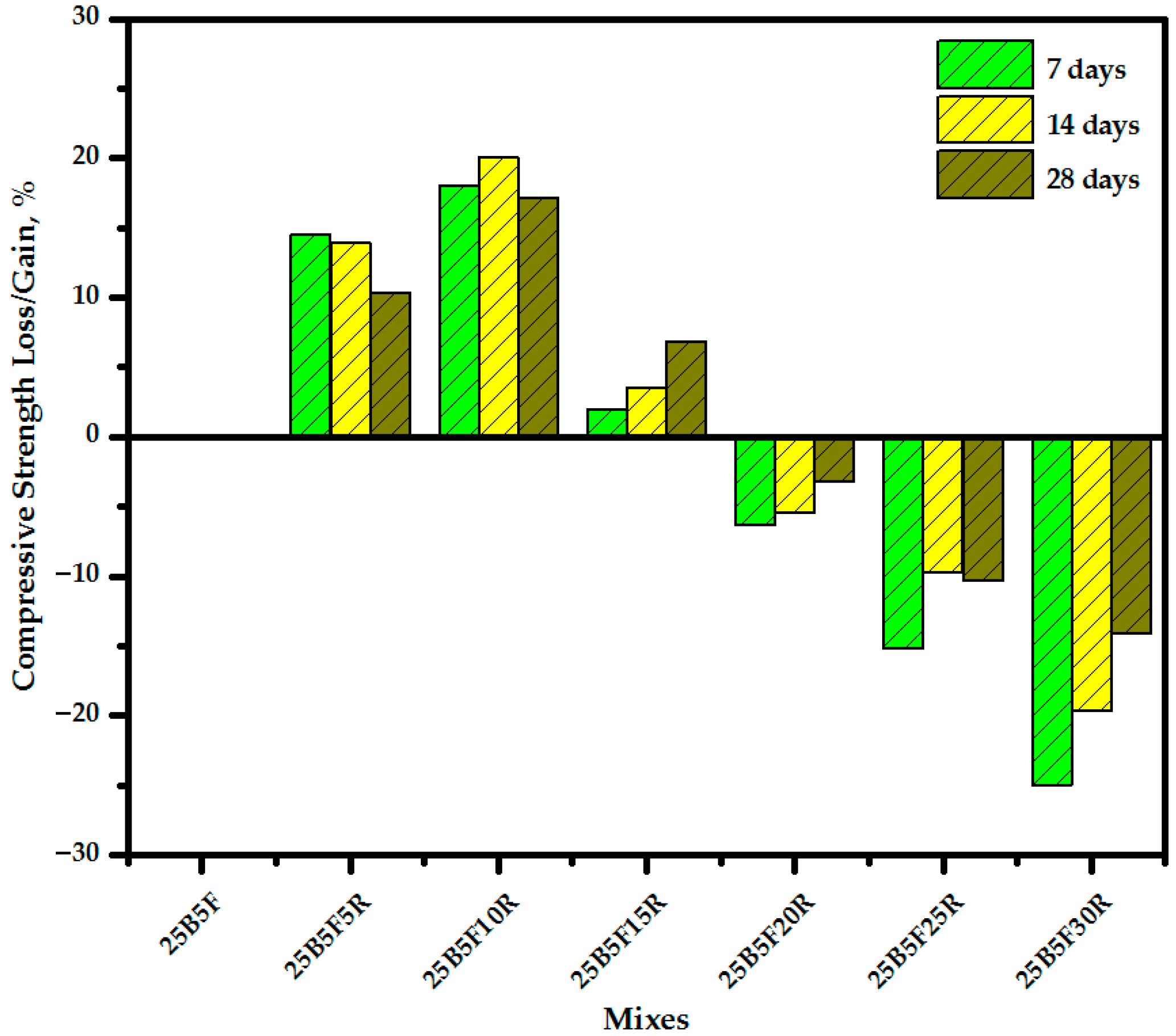
Figure 10 illustrates the effect of adding RHA on the loss and gain of the compressive strength of MSWIA specimens at curing ages of 7, 14, and 28 days. Compared to specimens prepared with 25% of BA as river sand replacement and 5% of FA as OPC partial substitute, the inclusion of 5% of RHA as OPC replacement leads to enhanced compressive strength by 14.5%, 13.9%, and 10.32% after curing ages of 7, 14, and 28 days, respectively. Likewise, the specimens prepared with 10% of RHA as OPC replacement showed 18%, 20.1%, and 17.2% increments in compressive strength at 7, 14, and 28 days of curing ages. Compared to 25B5F’ specimens, a lower strength development was observed when 15% of OPC was replaced with RHA, with compressive strength increases of 1.9%, 3.5%, and 6.9% recorded at 7, 14, and 28 days, respectively. In contrast, a significant reduction in compressive strength was noted when the RHA replacement level reached 15% or higher. The greatest loss in compressive strength occurred in specimens containing 30% RHA as a cement replacement, showing decreases of 24.9%, 19.6%, and 14.1% after 7, 14, and 28 days of curing, respectively.
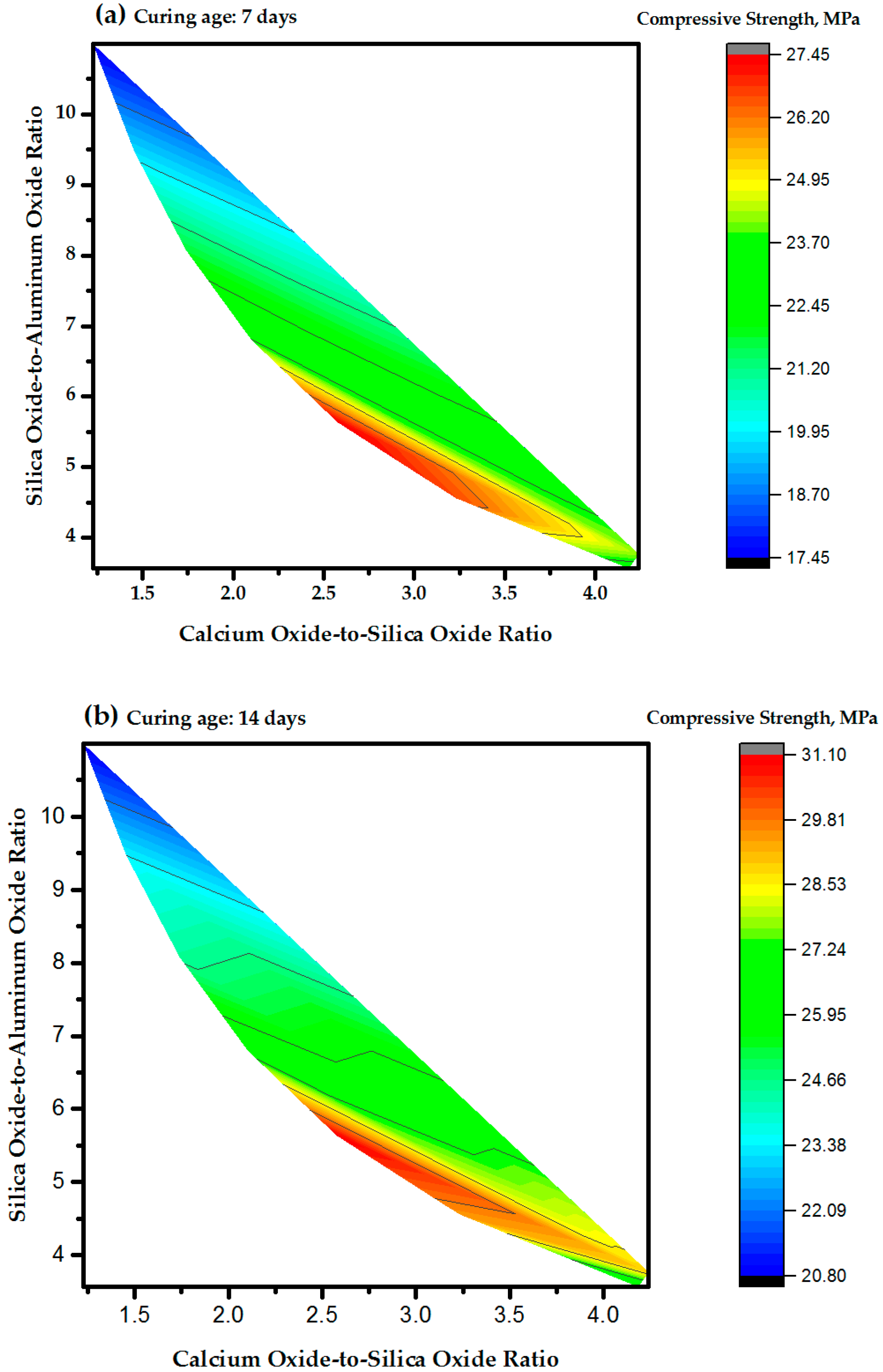
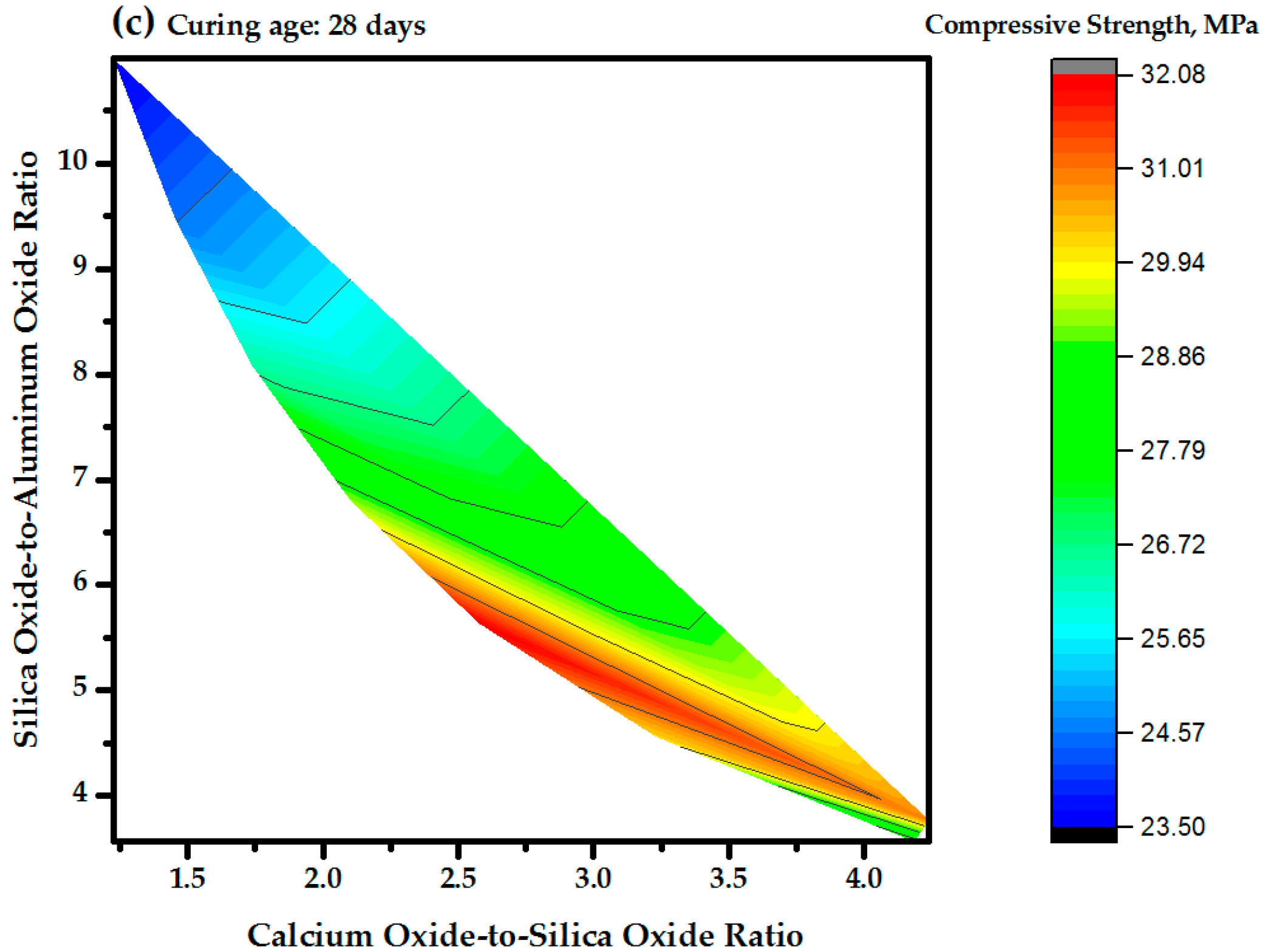
In concrete production, the CaO-to-SiO2 and SiO2-to-Al2O3 ratios significantly influence the strength development of modified cement containing pozzolanic materials. A balanced CaO-to-SiO2 ratio promotes the formation of C–S–H gel, which enhances early and long-term strength. For the designed binder (OPC, FA, and RHA), it is found that the early and late compressive strength of the proposed mortar is significantly influenced by ratios of CaO-to-SiO2 and SiO2-to-Al2O3. As shown in Figure 11, the specimens’ compressive strength development at ages of 7, 14, and 28 days tends to decrease with increasing SiO2-to-Al2O3 ratio and reducing the CaO-to-SiO2. The highest compressive strength values achieved at early and late ages were found to be when the CaO-to-SiO2 and SiO2-to-Al2O3 ratios were close to 2.58 and 5.60, respectively. A higher CaO-to-SiO2 ratio promotes the formation of additional calcium C–S–H gel, which enhances the early strength of the mortar. However, excessively high CaO-to-SiO2 values lead to a porous microstructure and reduced long-term durability. On the other hand, the SiO2-to-Al2O3 ratio influences the degree of pozzolanic reaction and the formation of aluminosilicate hydrates. An optimal balance between silica and alumina improves the hydration process, resulting in a denser microstructure and higher compressive strength at later ages. Thus, maintaining moderate CaO-to-SiO2 and SiO2-to-Al2O3 ratios is essential to maximize the pozzolanic reactivity of RHA, refine the pore structure, and achieve sustainable strength development in mortar specimens.

3.6. Splitting Tensile Strength

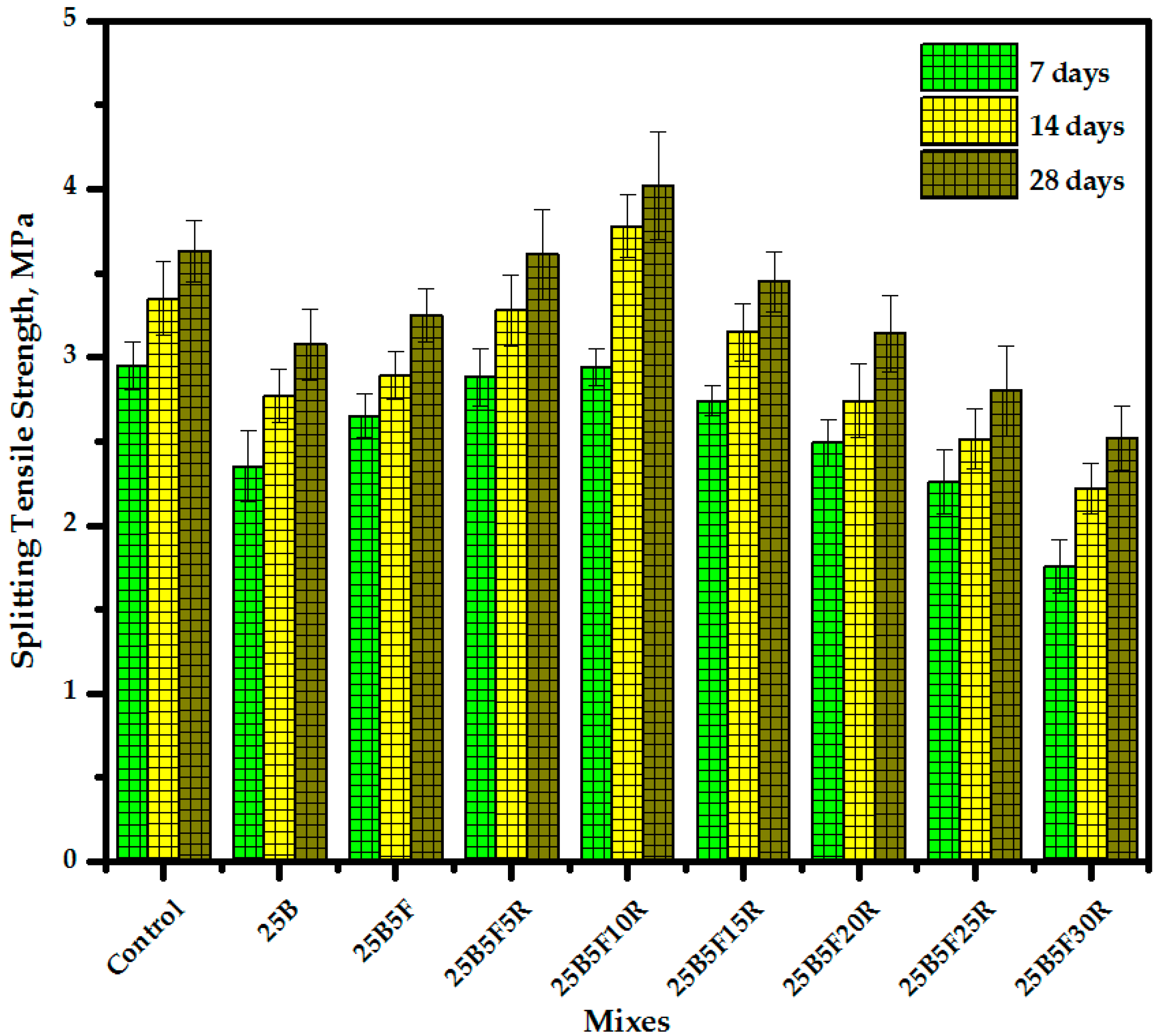
According to the findings portrayed in Figure 12, the splitting tensile strength for all mortars increased with increasing curing ages. The splitting tensile strength of the MSWIA mortar was measured to be 3.3 MPa. It can be observed that the addition of BA and FA from municipal waste reduced the splitting tensile strength of mortar by 10%. On the contrary, the strength exhibited an 11%, 24%, and 6% rise compared to the MSWIA mortar when the RHA replacement was 5%, 10%, and 15%, respectively. However, it declined as the RHA content was further raised to 20%, 25%, and 30% by 3%, 14%, and 22%, respectively. This is analogous to the pattern identified by Abd-Ali et al. [91]. The augmentation of strength is related to the enhancement of the pores by forming secondary hydration products resulting from the pozzolanic reaction.

3.7. Flexural Strength

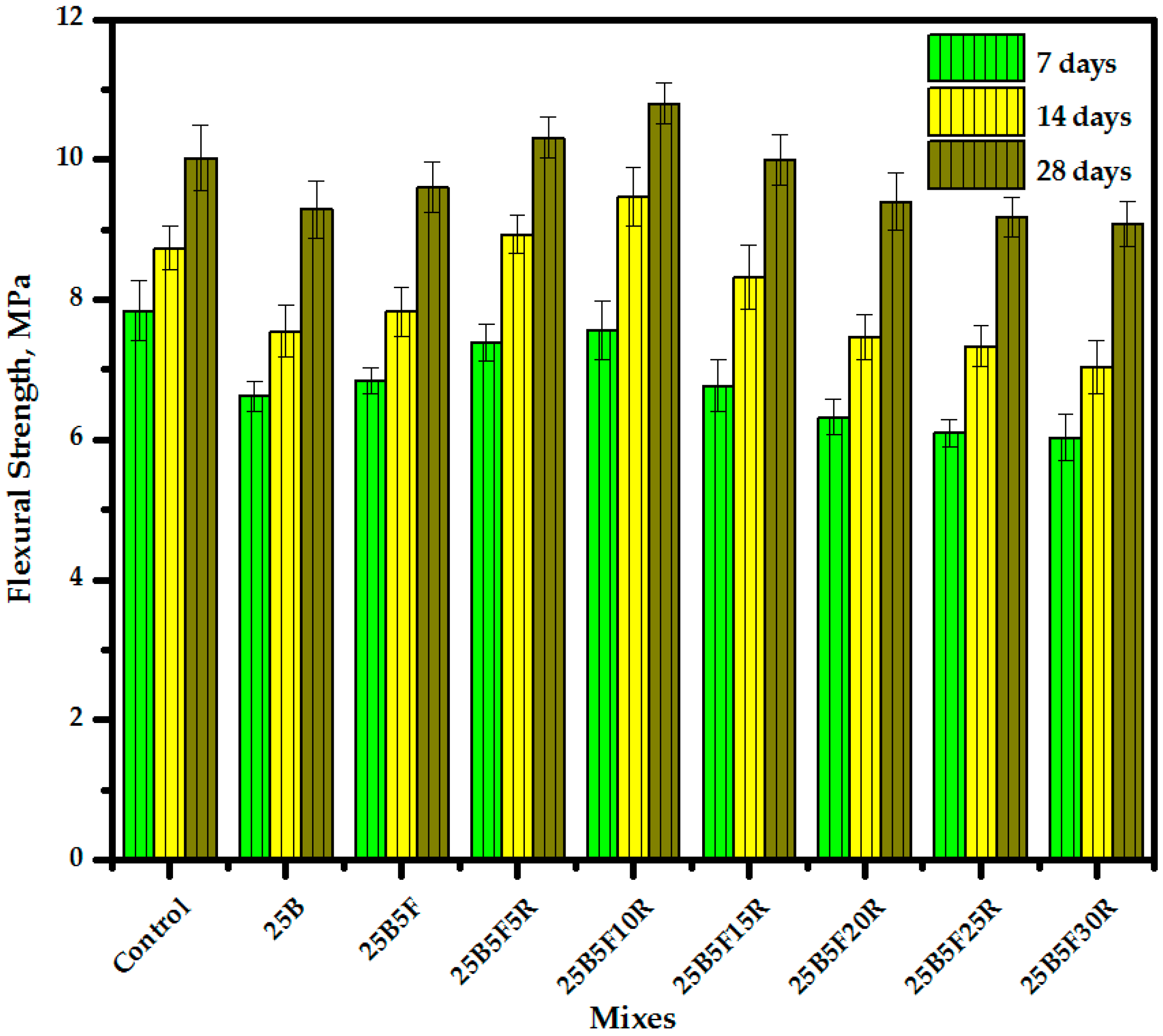
The flexural strength of mortar samples with added BA, FA, and different ratios of RHA are demonstrated in Figure 13. As a result, adding BA reduced flexural strength by 7.3%, from 10 MPa for control mortar to 9.3 MPa for BA mortar. Substituting sand with BA leads to reduced strength because bottom ash possesses higher porosity and water absorption, lower stiffness, and angular, rough particle shapes. These characteristics can weaken the bond with the cement paste and adversely affect the concrete’s overall density and hydration process [92]. Afterwards, adding FA increased the BA mortar’s flexural strength by 3% due to FA pozzolanic reactivity. Nonetheless, flexural strength remained 4% lower than the control mortar. On the other side, at a curing age of 28 days, the flexural strength was 10.3, 10.8, 10.0, 9.4, 9.2, and 9.1 MPa for 5%, 10%, 15%, 20%, 25%, and 30% of RHA replacement, respectively. An increase in the RHA concentration has improved the flexural strength of specimens, equivalent to its effect on compressive strength. Substituting 5%, 10%, and 15% of cement with RHA, the mortar achieved a flexural strength of 7%, 13%, and 4% more than MSWIA mortar. The enhanced resistance to the propagation of micro-cracking could be ascribed to the reduced porosity and permeability resulting from the addition of BA and FA. Subsequently, RHA contributed to the filling of the pores by increasing the secondary C-S-H gel production. The existence of amorphous SiO2 in RHA is primarily responsible for its excellent pozzolanic activity. Nevertheless, when the proportion of RHA is elevated, flexural strength experiences a decline, which aligns with the observations made by Bie et al. [93].

3.8. Relationships Between the Strengths

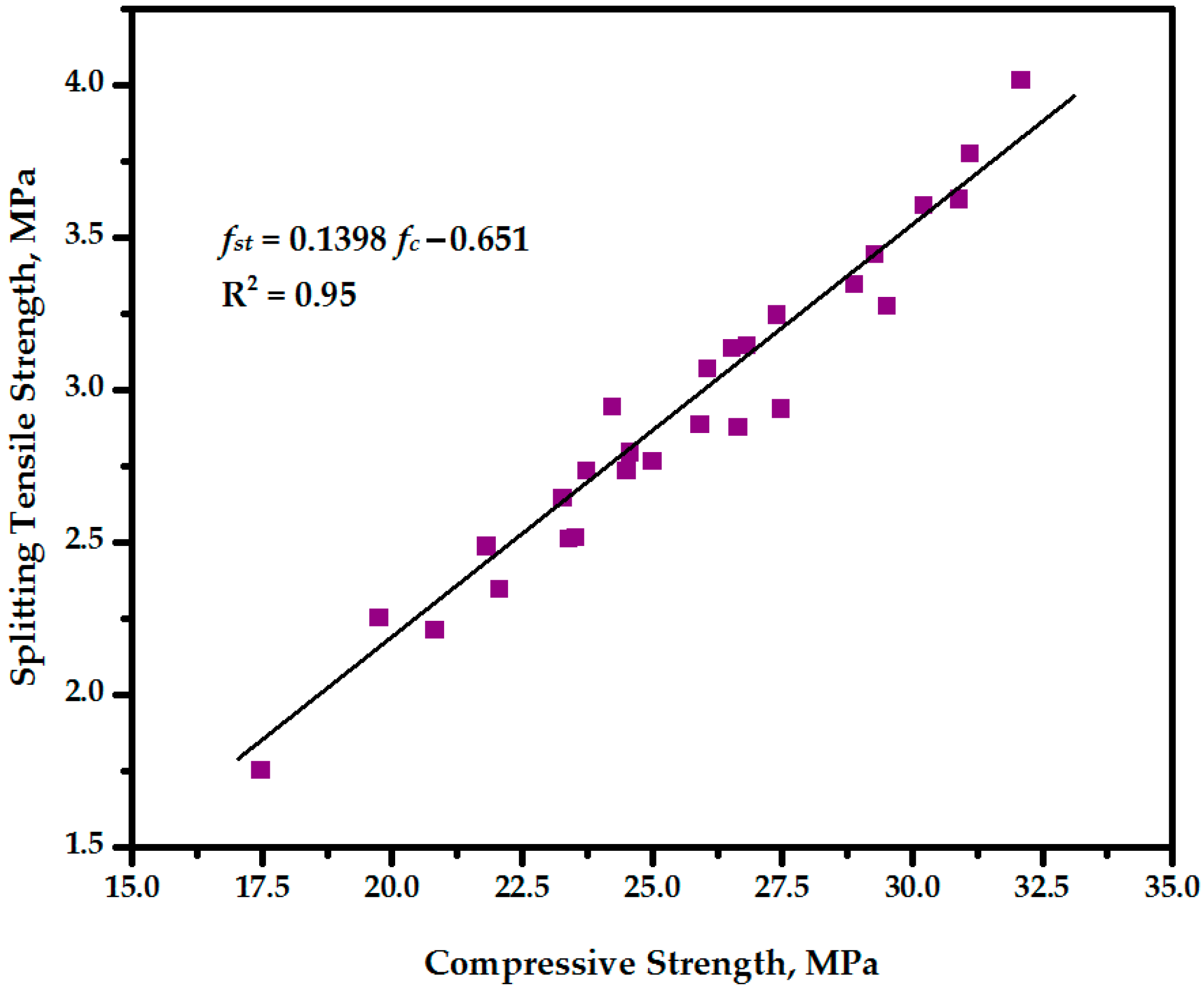
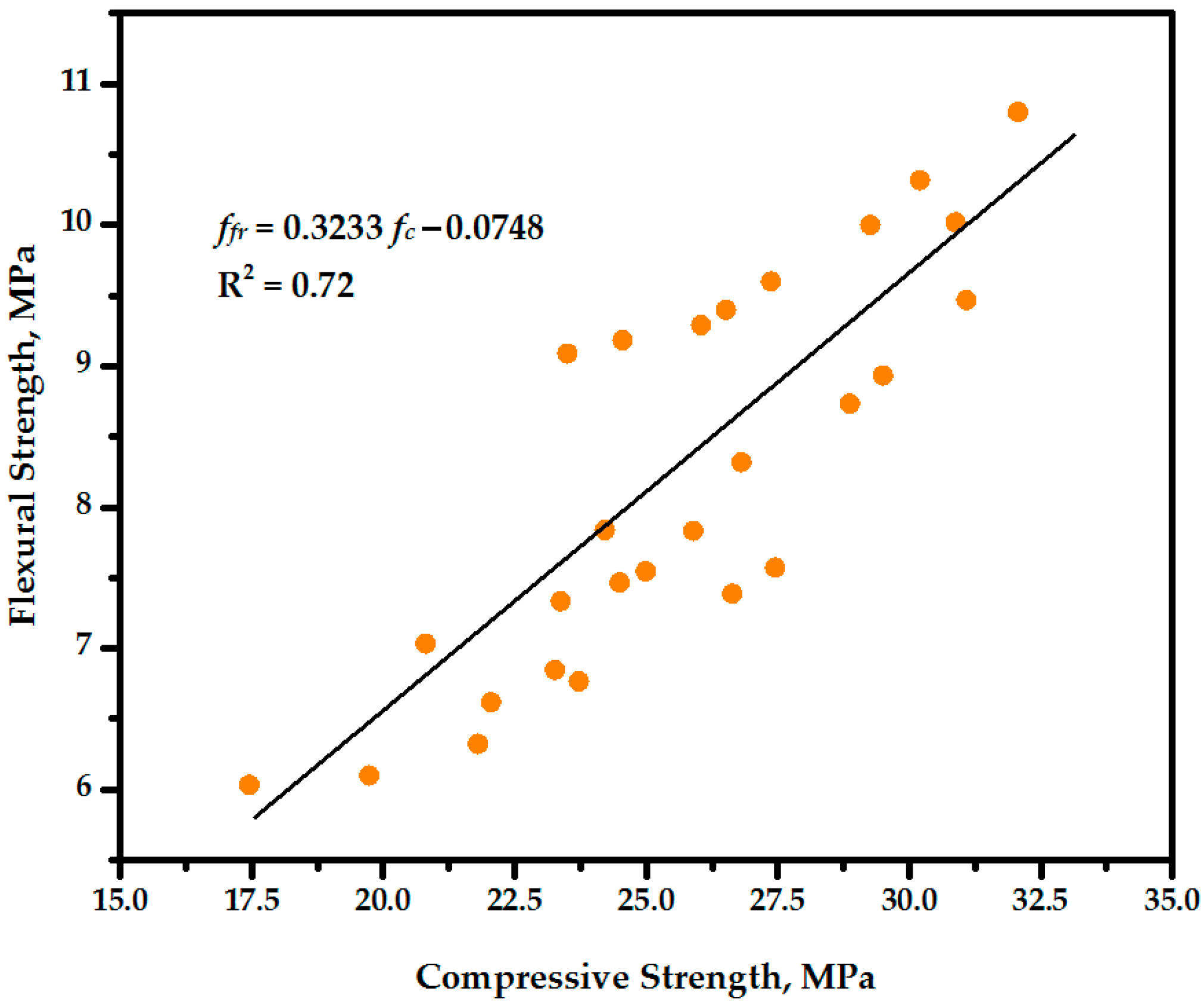
The mechanical characteristics of the MSWIA mortars with RHA (0% RHA to 30% RHA), as shown in Figure 14 and Figure 15, have been attempted to be correlated. Compressive strength (fc) measurements between 23.5 and 32.1 MPa, splitting tensile strength (fst) varying between 2.5 and 4.0 MPa, and flexural strength (ffr) within the range of 9.1 MPa to 10.8 MPa were used to compute the correlation, respectively. It found a robust and significant linear association among all the strengths. The coefficient correlation between splitting tensile and compressive strengths was 0.95, indicating a strong relationship, as shown in Figure 14. Additionally, a linear relationship between flexural and compressive strength was observed, with a coefficient of correlation of 0.72 (Figure 15). The correlation results were analogous to those achieved by Hasan et al. [94] when employing RHA as a supplemental cementitious material. This demonstrates that the split tensile and flexure strength may be effectively predicted from compressive strength data during the designing stage using the linear relations that were developed for mixtures including RHA in this study, as there is no direct theoretical correlation connecting them. Consequently, flexural strength constitutes 34–39% of compressive strength, whereas split tensile strength is approximately 11–13%.

3.9. Histograms Analysis

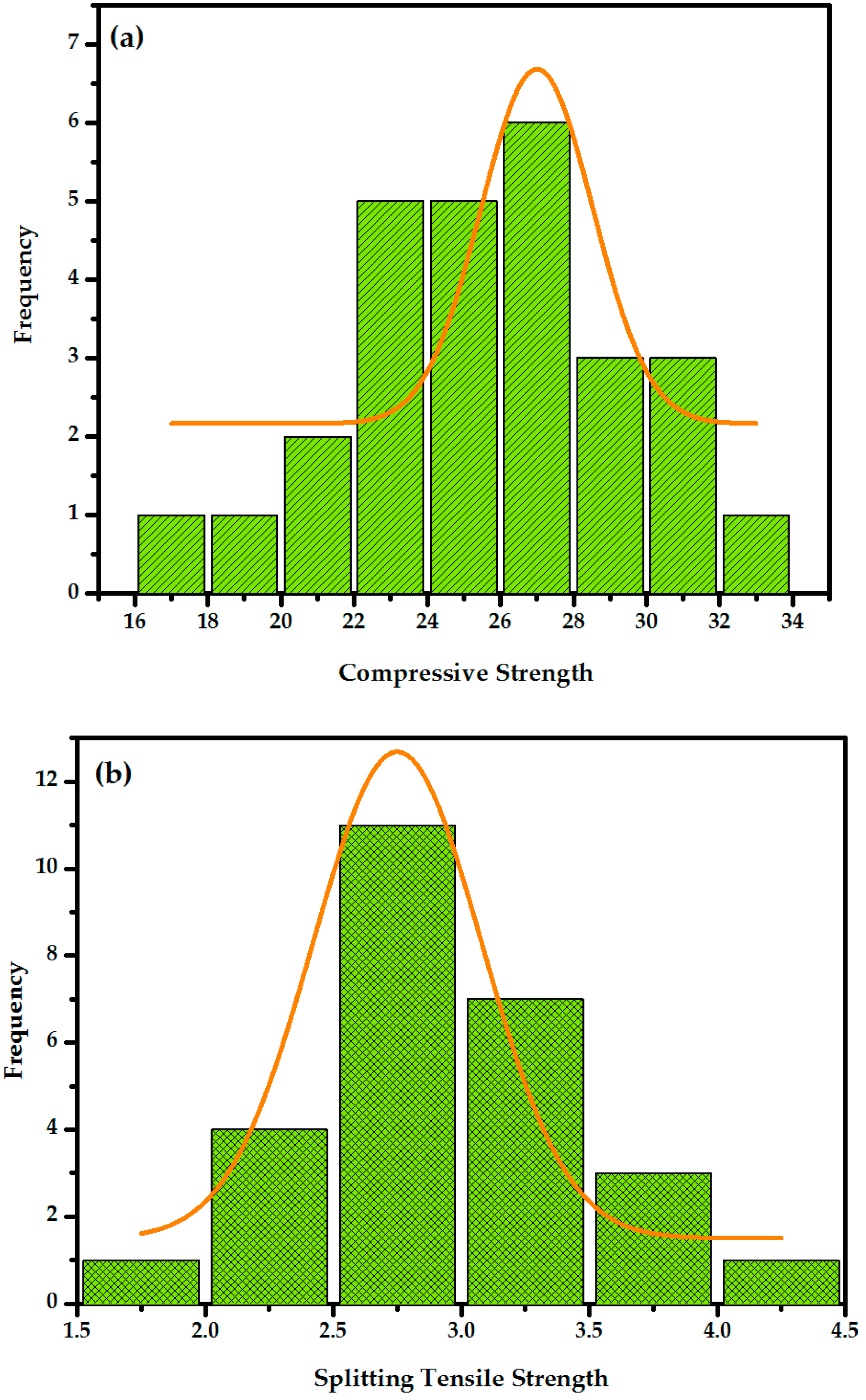
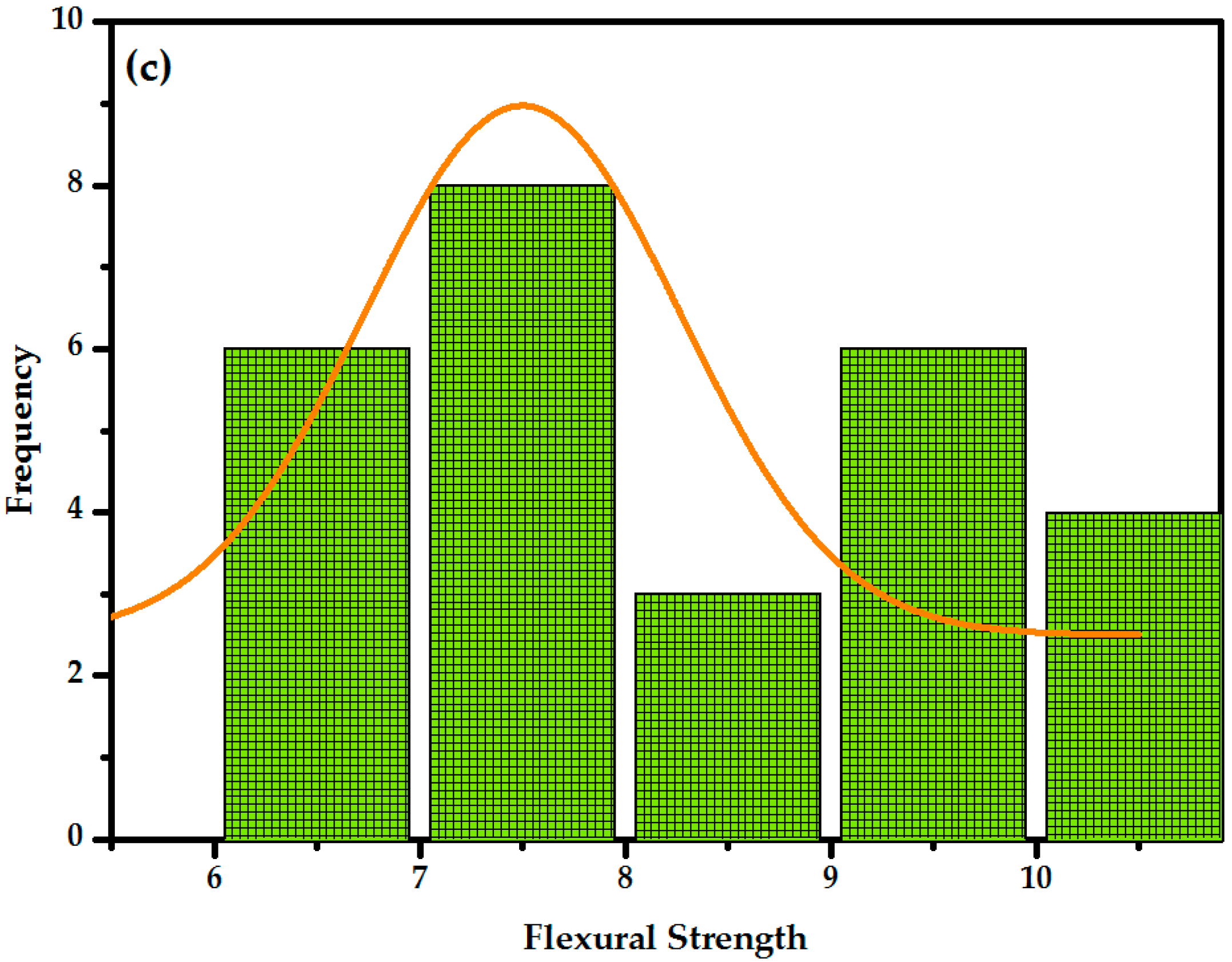
This statistical representation helps in identifying the reliability and uniformity of the MSWIA mortar’s compressive, splitting tensile, and flexural strength performance, as well as providing insight into its potential structural applicability. The histogram results derived from experimental data of compressive strength, splitting tensile, and flexural strength are presented in Figure 16. These results indicated that an increase in RHA content increased the interval difference between the minimum and maximum values of compressive and splitting tensile strength as well as the flexural strength of MSWIA mortar specimens. Figure 16a shows the frequency histogram of compressive strength of MSWIA mortar specimens. These results depicted that the compressive strength of specimens was normally distributed and fit well with the superimposed normal distribution curve. Similar trends were also observed for the splitting tensile and flexural strength of MSWIA mortar specimens, and the frequency histogram displayed a normal distribution as shown in Figure 16b and Figure 16c, respectively.

3.10. Water Absorption

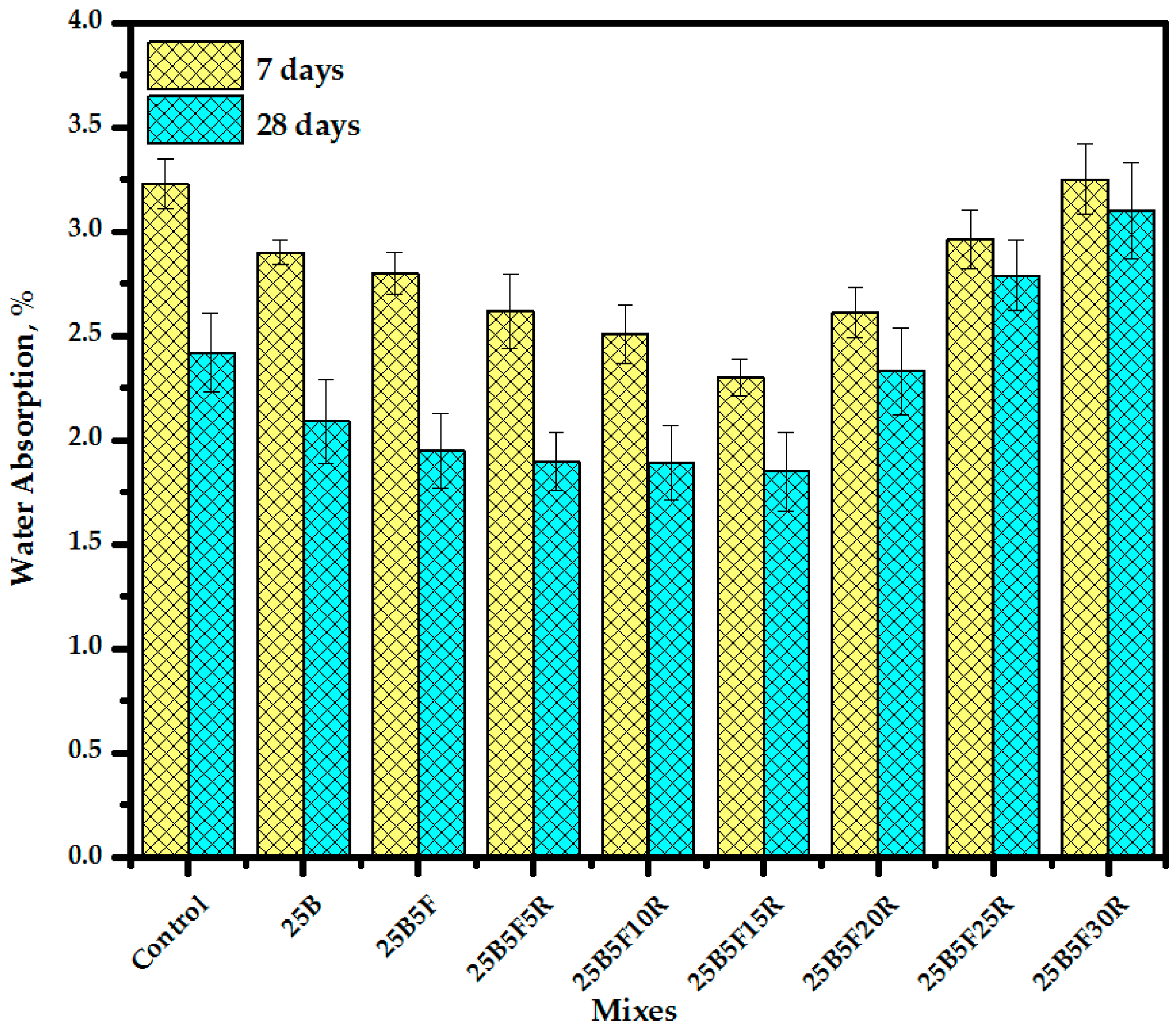
The influence of BA, FA, and RHA on the water absorption of MSWIA mortar specimens was examined, and the findings are presented in Figure 17. For all the mortar specimens, the water absorption percentage trended to decrease with increasing curing ages from 7 to 28 days. The reduction in water absorption percentages at the age of 28 days was attributed to extra-dense gel formulation, strength development, reduction in the number and size of pores, and microstructure enhancement. As shown in the figure, incorporating 25% BA as a partial replacement for sand and 5% FA as a partial replacement for OPC markedly improves the environmental resistance and reduces the permeability of the MSWIA mortar specimens. The improvement demonstrates modifications in the pore structure resulting from hydration, while also indicating the beneficial impact of BA on tortuosity [31]. Besides, FA refined the bulk pore structure and made the spatial distribution more complex [84]. Similarly, when the RHA concentration increases, the proportion of water adsorption reduces, which is an important determinant for enhanced durability and excellent resilience to environmental conditions. Nevertheless, the absorption percentage decrease is restricted to 3–5% as a result of the RHAs high surface area, thus enhancing its water absorption capacity. The inclusion of RHA at levels below 15% improves the microstructure of cementitious materials by filling voids and refining pore structure, which leads to reduced water absorption. This enhancement is attributed to the pozzolanic reaction between RHAs silica content and calcium hydroxide, forming additional C-S-H that densifies the matrix. Literature [52] reports similarly indicate that moderate RHA replacement (typically below 15%) optimizes durability and reduces porosity, while higher amounts may negatively affect workability and strength. Conversely, the water absorption percentage rises when the percentage of RHA replacement climbs above the ideal amount (15%) due to the porous nature of RHA. The results also indicate that, compared to 28 days, the rate of water absorption was substantially higher after 7 days. This occurrence is due to the fact that water is still required for the curing process over a span of 7 days. Subsequently, the pores undergo a reduction in both their structure and size as they get filled with C-S-H gel.
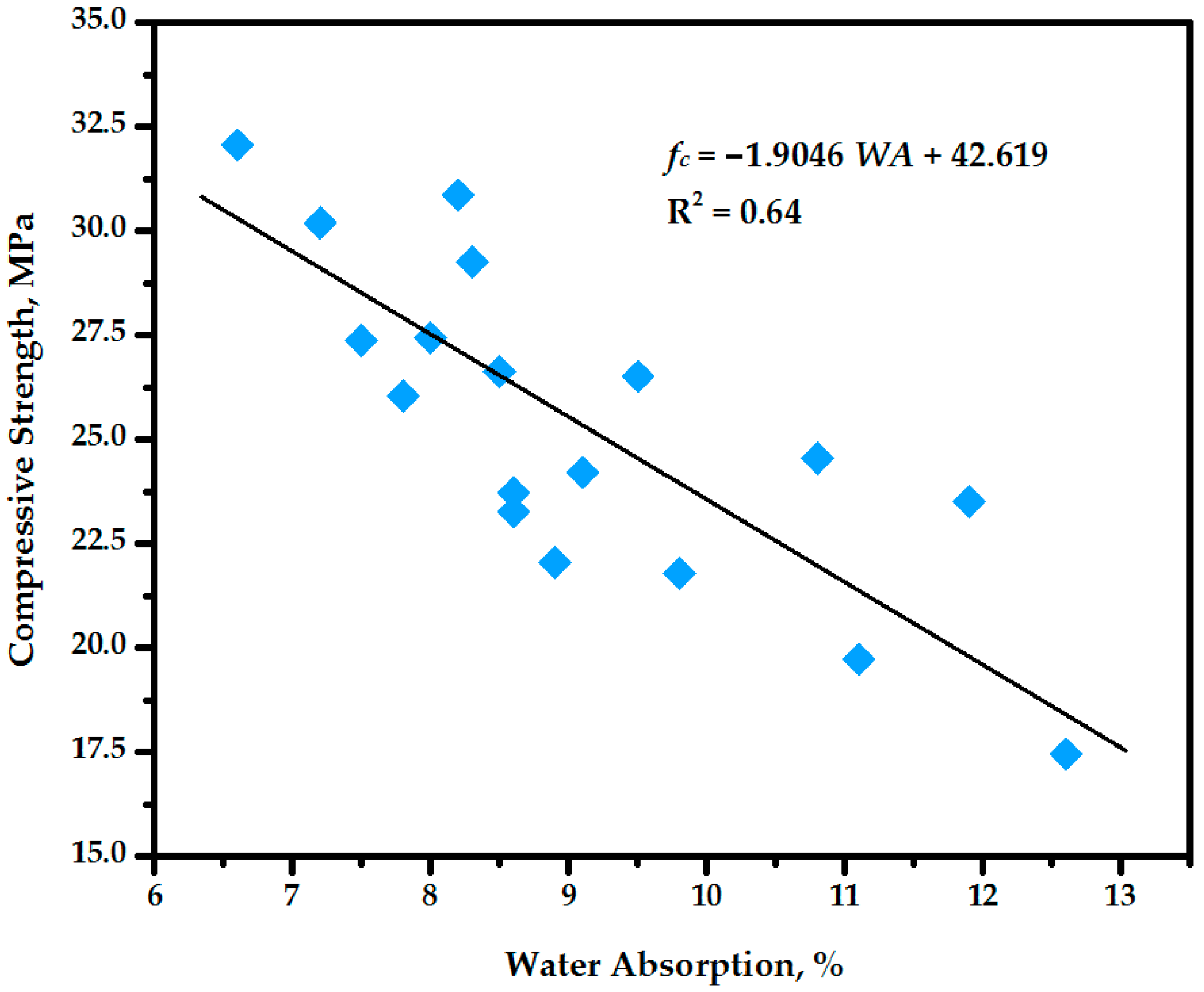
Figure 18 illustrates the relationship between water absorption and compressive strength of designed MSWIA mortars with varying levels of RHA as OPC replacement. The results show that water absorption is inversely proportional to compressive strength. The water absorption of specimens generally decreases as compressive strength increases because higher-strength mortar typically has a denser and more refined microstructure with fewer interconnected pores. When the 5–15% RHA is incorporated, the hydration products, such as C–S–H gel, fill more voids and refine the pore network. This process reduces the volume of capillary pores, particularly the larger ones that allow easy water ingress. Additionally, higher compaction, better particle packing, and improved curing practices associated with stronger mortar mixes further enhance matrix densification and limit permeability. As a result, less water can penetrate into the mortar, leading to lower absorption and improved durability. A linear regression analysis was performed to correlate the experimental data, as presented in Equation (1), yielding an R2 value of 0.64, which demonstrates a strong level of confidence in the established relationship.
f c = 1.9046   W A + 42.619

3.11. Ultrasonic Pulse Velocity

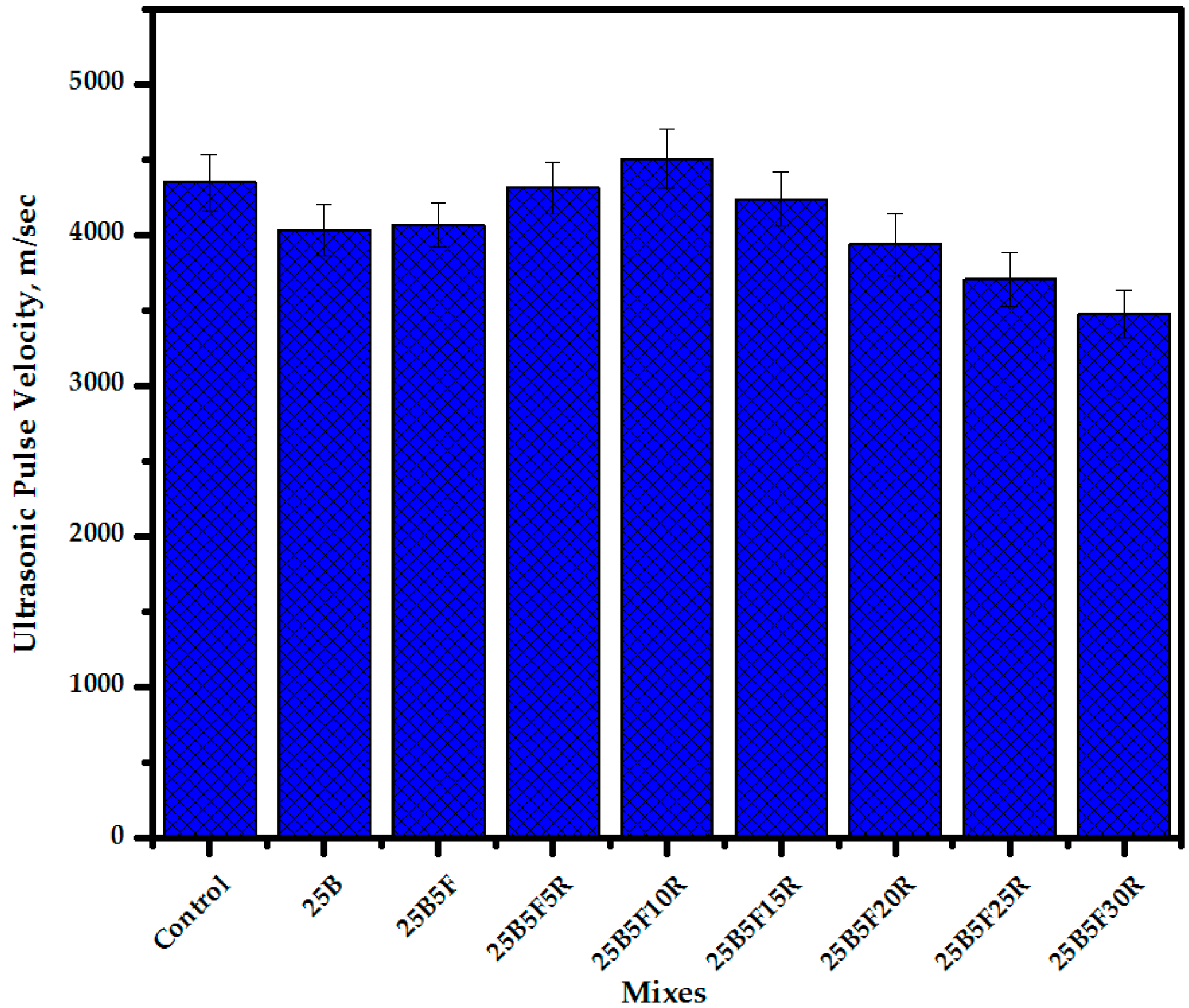
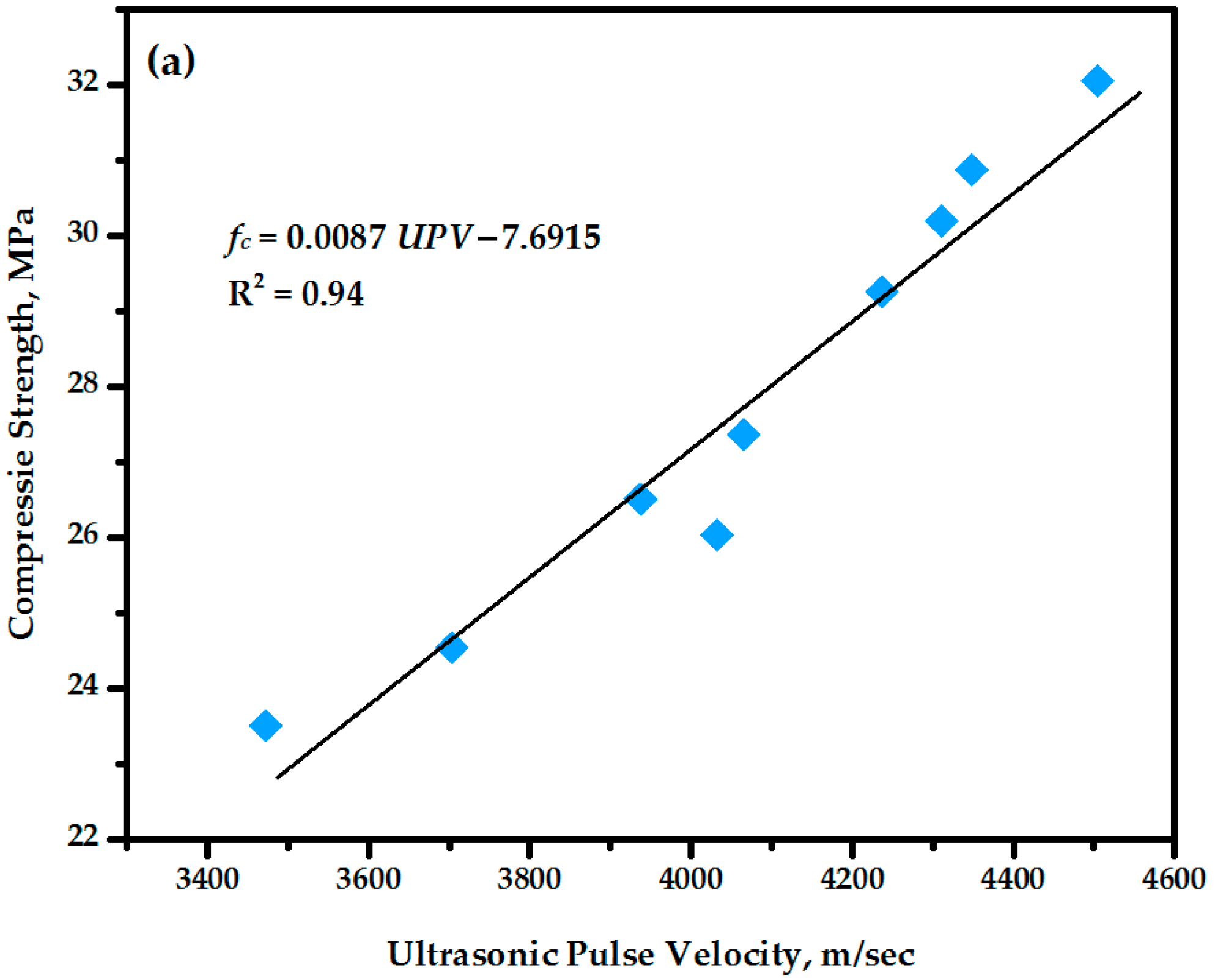
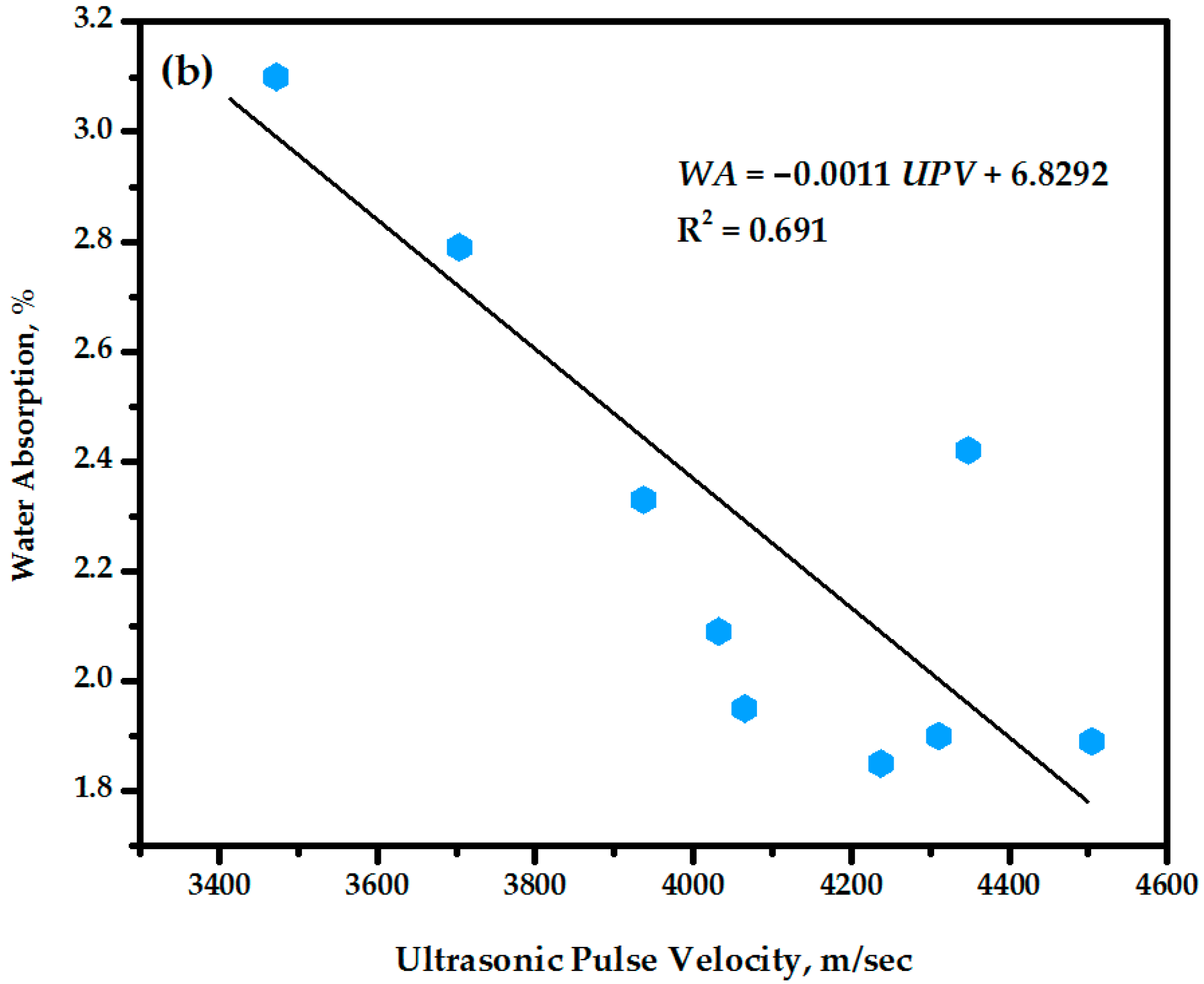
All ultrasonic pulse velocity (UPV) values of mortar mixtures fall within 3500–4500 m/s. According to Neville [95], this indicates that the mortar has good quality, which may be attributed to the enhanced pore shape of the mortar resulting from optimal particle packing and pozzolanic reaction. Consequently, the void within the mortar is reduced. As shown in Figure 19, the inclusion of 5%, 10%, and 15% of RHA as OPC replacement significantly enhanced the UPV reading compared to MSWIA specimens prepared with only 25% BA and 5% FA. Among all the tested mortar specimens, the mortar cubes containing 10% of RHA as OPC replacement displayed the highest UPV reading at the age of 28 days. To comprehend the interdependence of mortar properties, the compressive strength and the water absorption (WA) of mortars were presented against UPV in Figure 20a and Figure 20b, respectively. The correlation has been calculated for compressive strength, water adsorption, and UPV values within the ranges of 23.5 MPa to 32.06 MPa, 1.85% to 3.1%, and 3795 m/s to 4380 m/s, respectively. Typically, compressive strength is found to improve as UPV increases (the coefficient correlation (R2) value of 0.94), while water adsorption and UPV are inversely related (R2 value of 0.69), as shown in Figure 20. Nonetheless, the correlation coefficient was shown to be rather high. A high correlation value indicates a robust link between two distinct strength and durability assessments. A similar correlation was reported in the literature [86,96,97].

3.12. Microstructure of Prepared Mortars

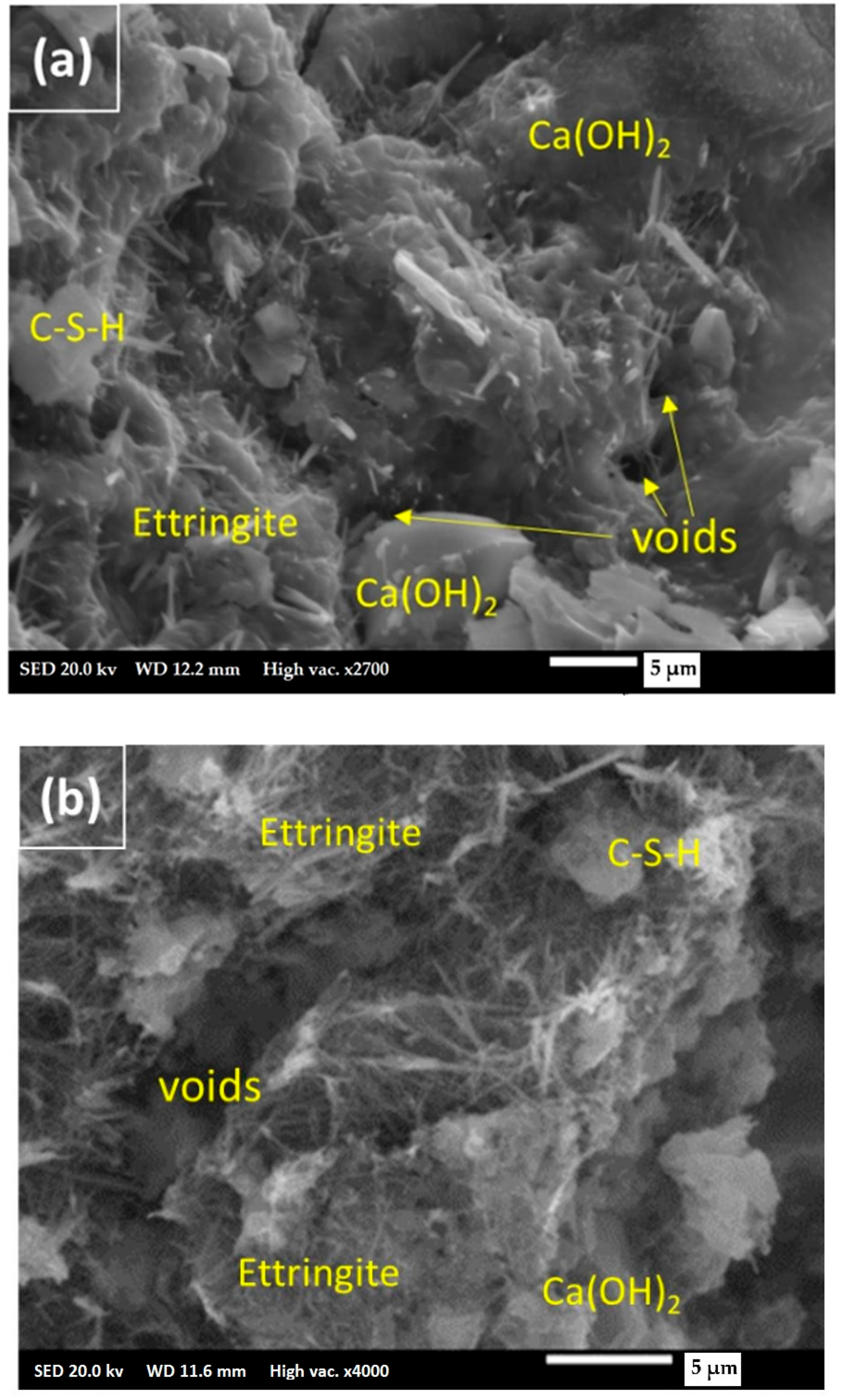
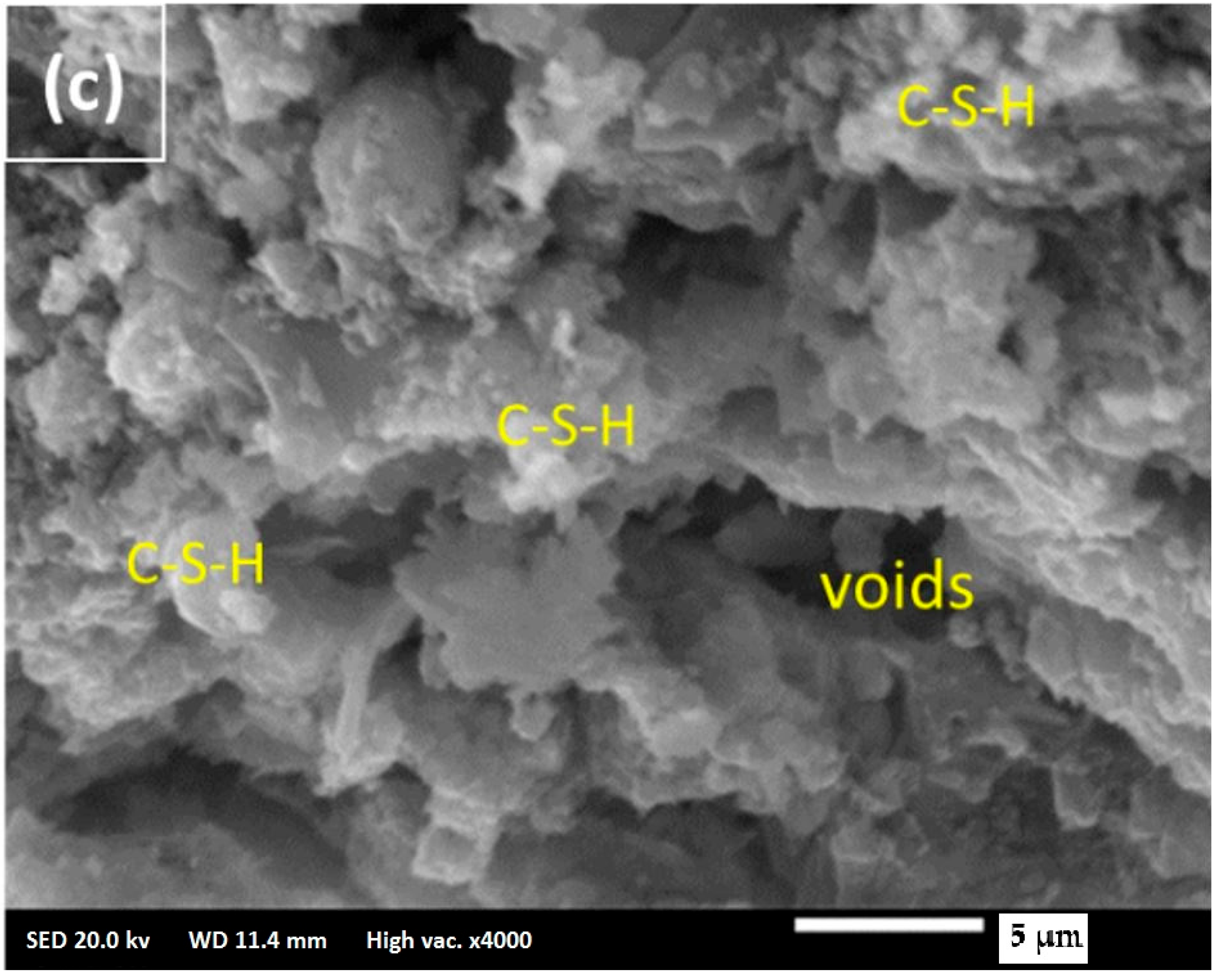
Figure 21a–c present the microstructures of the control mortar, the MSWIA mortar containing 5% FA, and the sustainable mortar incorporating 10% RHA as an OPC replacement after 28 days, respectively. The findings reveal that the addition of FA and RHA in the cement binder slightly enhances the hydration process, promotes the formation of dense C-(A)-S-H gels, and increases the compressive strength from 30.9 MPa to 32.1 MPa. It is evident that the 10% RHA specimens (Figure 21c) exhibited denser gel formation compared to the OPC (Figure 21a) and 5% FA (Figure 21b) specimens, which contained higher amounts of Portlandite in their microstructure. Since C-(A)-S-H gels contribute more significantly to strength development than Portlandite, this explains why the 10% RHA mixture demonstrated superior compressive strength relative to the other mixes. In contrast, both the OPC and 5% FA specimens showed a lack of dense C-S-H gel and weak particle bonding, leading to their lower performance. Moreover, the use of MSWIA as a partial replacement in mortar produced a heterogeneous structure consisting of multiple phases, such as C-S-H and Portlandite; however, the C-S-H gels in this case lacked the uniformity and density observed in the RHA mortar. Similar observations were reported by Lo et al. [50]. The sustainable mortar prepared with RHA was characterized by a denser paste, lower porosity, and fewer unhydrated cement particles, along with a higher concentration of C-S-H. The C-S-H gel displayed floc-like morphology, fine spherical grains, and some flake-shaped structures, which can be attributed to its high pozzolanic reactivity. The development of these C-S-H gels ultimately enhanced the mechanical strength of the mortar [98,99].

3.13. XRD

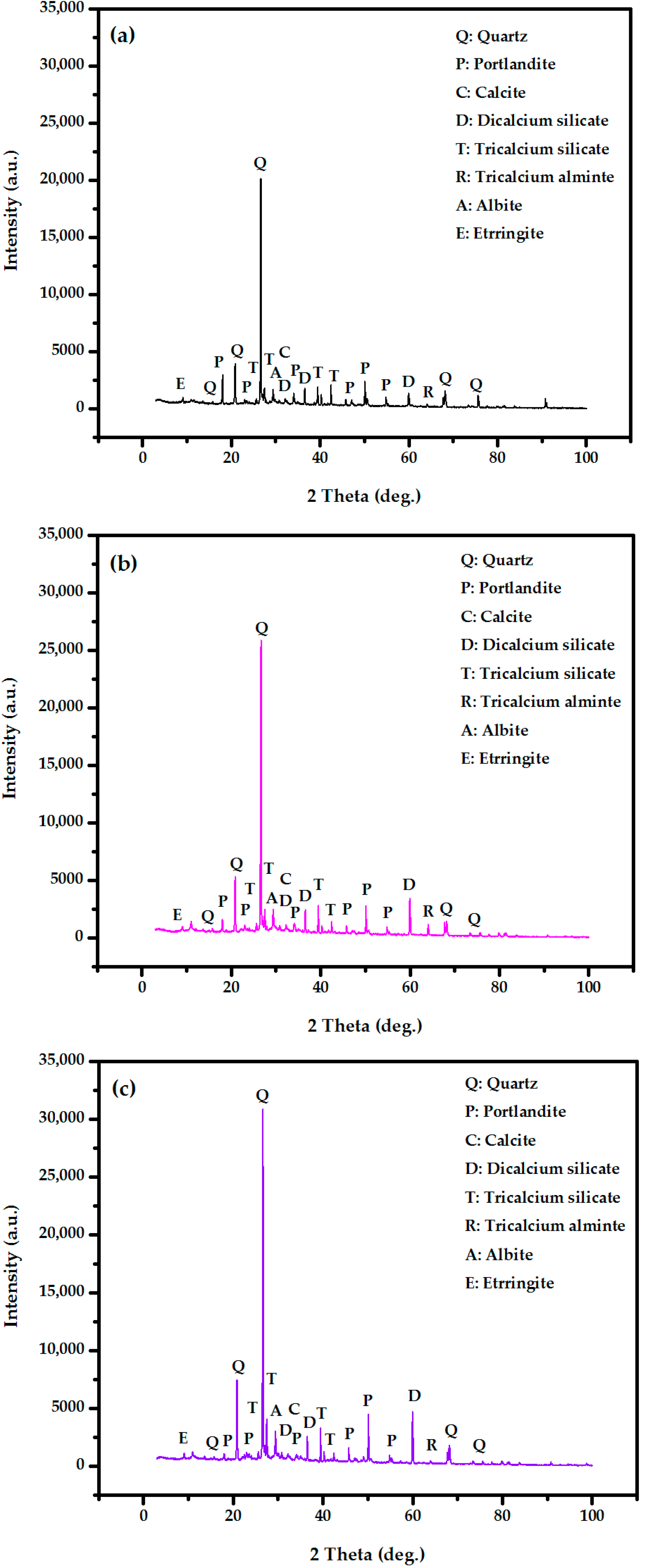
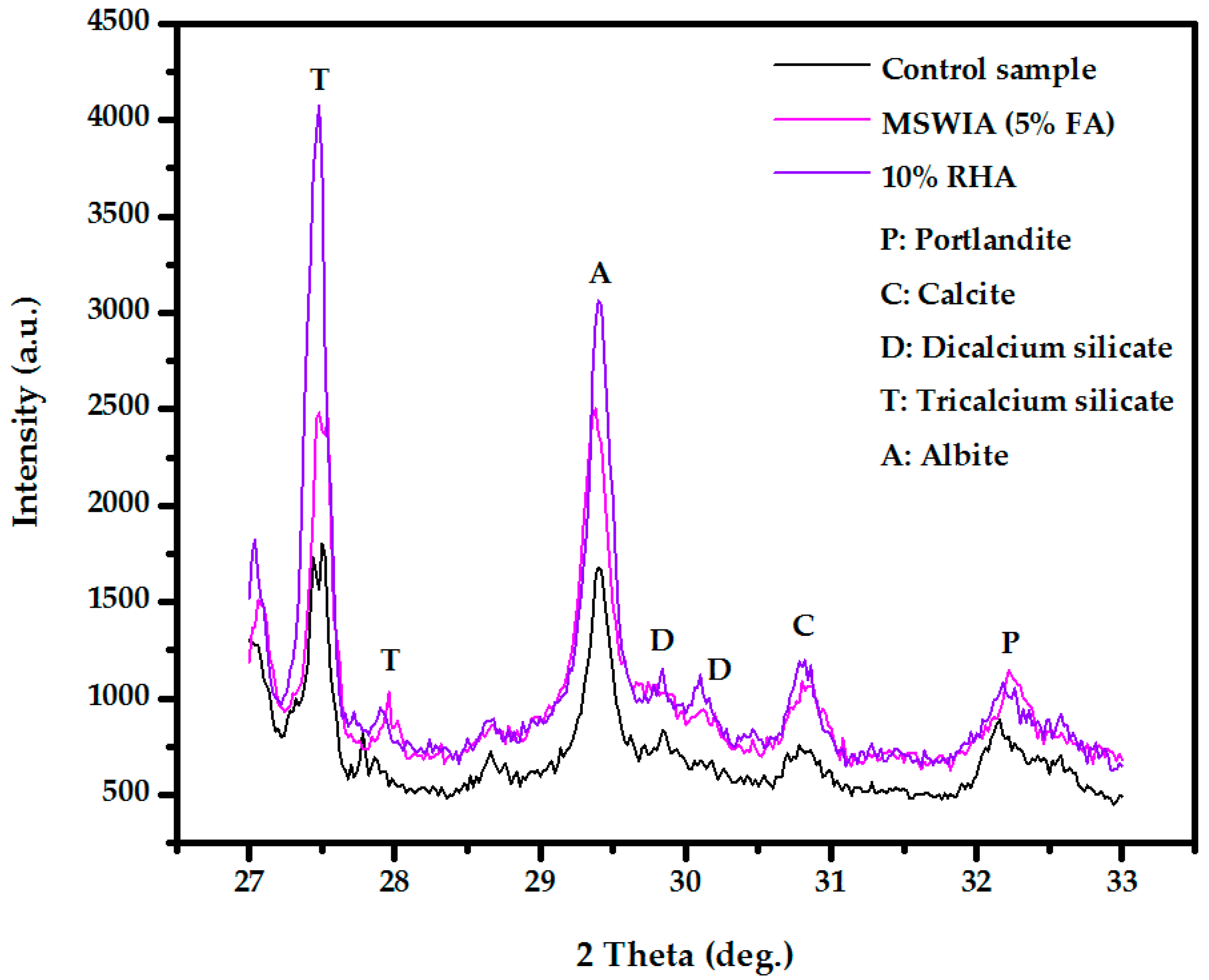
XRD analysis of control paste, MSWIA paste, and RHA paste at 28 days of curing to assess the structural evolution is presented in Figure 22. The findings indicate that the primary phases found in paste are Portlandite, calcite, Tricalcium silicate, and dicalcium silicate. The results presented in Figure 22a–c showed a gradual decrease in anhydrous calcium silicate by adding MSWIA and RHA, compared with the control sample. Additionally, the substitution of cement with MSWIA and RHA, the diffraction peak intensity of SiO2 showed an increase and gradually increased the content of C-S-H. The findings also indicated that the MSWIA and RHA samples showed less Portlandite content than the control ones. The reduction of cement content causes this decrease in Portlandite content after replacing it with ash. Furthermore, the amorphous silica in the RHA reacts with Portlandite to produce C-S-H, resulting in an additional decrease in Portlandite amount, which was in line with XRD results. Except for this, the trends of the XRD results were the same in all specimens. It is concluded that in the mix containing 10% of RHA as a partial cement substitute, the intensity of Portlandite peaks decreased significantly, indicating the consumption of Portlandite due to the pozzolanic reaction. Additionally, a broad amorphous hump was observed between 18° and 26.9° 2θ, corresponding to the amorphous silica in RHA (Figure 22c).
Figure 23 presents the crystalline peaks and amorphous phases of OPC, 5% FA, and 10% RHA at 27° and 33° 2θ. It is evident that the paste specimens containing 10% RHA exhibited higher amorphous content compared to OPC and 5% FA, indicating greater formation of C–S–H and C–A–S–H gels, attributed to the amorphous SiO2 present in RHA. The increased production of C–S–H gels significantly enhances the microstructure, reduces porosity, and improves strength. Furthermore, the high intensity of Albite at 29.6° contributes to the improved strength performance of MSWIA samples incorporating 10% RHA. Albite provides additional alkalis (mainly Na2O), which accelerate the dissolution of amorphous silica in RHA, promoting the formation of secondary C–S–H gels and thereby improving strength. Compared with the control cement paste, the RHA-blended sample also exhibited a lower Portlandite peak intensity at 32.4°, suggesting enhanced secondary C–S–H gel formation, which contributes to greater microstructural densification and long-term strength development.

4. Conclusions

The current study yielded the following conclusions concerning the effects of incorporating RHA into MSWIA mortars:
All RHA characterizations meet ASTM standard requirements; consequently, they are suitable for use as pozzolanic products (class N).
In the fresh state, replacing 5%, 10%, 15%, 20%, 25%, and 30% RHA with cement leads to a lower flow rate and lower initial and final setting time than mortar content-only MSWIA.
The mechanical properties, such as compressive strength, split tensile strength, flexure strength, and hardened density, increased when RHA was added into the MSWIA mortar up to a level of 10%, and after that, it reduced. Nonetheless, all UPV values of mortar mixtures fall within 3500–4500 m/s. This signifies good mortar quality, likely due to the enhanced pore structure resulting from optimal particle packing along with pozzolanic reaction.
A 10% dosage of RHA is considered the optimal content for enhancing the engineering properties of the proposed mortar. This dosage accelerates the hydration process, promotes gel formation, and strengthens the bond between filler surface particles and the cement paste, making it highly recommended for producing high-performance MSWIA mortars.
Increasing the RHA concentration by up to 15% reduces water adsorption, which is essential for longer durability and strong resistance to environmental conditions. In contrast, water absorption increases with the increase in the percentage of RHA replacement by more than 15% because of the porous nature of RHA.
SEM images showed a denser microstructure paste with low porosity, fewer unhydrated cement grains, and a high concentration of C-S-H. The increased production of C-S-H when utilizing RHA, as shown by XRD data, is regarded as the cause of the enhancement in compressive strength.

Author Contributions

Conceptualization, N.H.A.S.L. and N.F.Z.; methodology, S.S.A.; software, I.F.; validation, S.S.A., N.F.Z. and G.F.H.; formal analysis, S.S.A.; investigation, S.S.A.; resources, S.S.A.; data curation, S.S.A.; writing—original draft preparation, S.S.A.; writing—review and editing, N.H.A.S.L., I.F. and G.F.H.; visualization, N.H.A.S.L. and N.F.Z.; supervision, N.H.A.S.L. and N.F.Z.; project administration, G.F.H.; funding acquisition, I.F. All authors have read and agreed to the published version of the manuscript.

Funding

The authors wish to express their gratitude to Universiti Teknologi Malaysia (UTM) for providing financial support for this research under the UTM Encouragement Research Grant No. Q.J130000.3822.31J15. The authors also extend their appreciation to the University Industry Research Laboratory (UIRL), UTM, for providing access to advanced facilities, technical support, and valuable insights that significantly contributed to the successful completion of this research.

Data Availability Statement

The original contributions presented in this study are included in the article. Further inquiries can be directed to the corresponding authors.

Acknowledgments

Authors would like to take the opportunity to thank the grants provider, namely Universiti Teknologi Malaysia (UTM).

Conflicts of Interest

Author Ghasan Fahim Huseien was employed by the company EcoStruct Building Technologies Ltd. The remaining authors declare that the research was conducted in the absence of any commercial or financial relationships that could be construed as a potential conflict of interest.

Abbreviations

The following abbreviations are used in this manuscript:
MSWIAMunicipal solid waste incineration ash
RHARice husk ash
BABottom ash
FAFly ash
SPSuperplasticizer
SCMSupplementary cementitious material

References

  1. Coronese, M.; Lamperti, F.; Keller, K.; Chiaromonte, F.; Roventini, A. Evidence for sharp increase in the economic damages of extreme natural disasters. Proc. Natl. Acad. Sci. USA 2019, 116, 21450–21455. [Google Scholar] [CrossRef]
  2. Cao, M.; Xu, Y.; Sun, Y.; Cang, D. Natural disasters, economic growth, and carbon emissions: Empirical analysis of Chinese data based on a nonlinear auto-regressive distributed lag model. Sustainability 2023, 15, 15210. [Google Scholar] [CrossRef]
  3. WEF—World Economic Forum. The Global Risks Report; WEF: Geneva, Switzerland, 2023. [Google Scholar]
  4. Wu, S.; Shao, Z.; Andrew, R.M.; Bing, L.; Wang, J.; Niu, L.; Liu, Z.; Xi, F. Global CO2 uptake by cement materials accounts 1930–2023. Sci. Data 2024, 11, 1409. [Google Scholar] [CrossRef]
  5. Global Cement and Concrete Association. Global Cement and Concrete Industry Announces Roadmap to Achieve Groundbreaking ‘Net Zero’ CO2 Emissions by 2050; Global Cement and Concrete Association: London, UK, 2021. [Google Scholar]
  6. Cadavid-Giraldo, N.; Velez-Gallego, M.C.; Restrepo-Boland, A. Carbon emissions reduction and financial effects of a cap and tax system on an operating supply chain in the cement sector. J. Clean. Prod. 2020, 275, 122583. [Google Scholar] [CrossRef]
  7. Rafieizonooz, M.; Mirza, J.; Salim, M.R.; Hussin, M.W.; Khankhaje, E. Investigation of coal bottom ash and fly ash in concrete as replacement for sand and cement. Constr. Build. Mater. 2016, 116, 15–24. [Google Scholar] [CrossRef]
  8. de Brito, J.; Kurda, R. The past and future of sustainable concrete: A critical review and new strategies on cement-based materials. J. Clean. Prod. 2021, 281, 123558. [Google Scholar] [CrossRef]
  9. Samadi, M.; Huseien, G.F.; Lim, N.H.A.S.; Mohammadhosseini, H.; Alyousef, R.; Mirza, J.; Rahman, A.B.A. Enhanced performance of nano-palm oil ash-based green mortar against sulphate environment. J. Build. Eng. 2020, 32, 101640. [Google Scholar] [CrossRef]
  10. Coffetti, D.; Crotti, E.; Gazzaniga, G.; Carrara, M.; Pastore, T.; Coppola, L. Pathways towards sustainable concrete. Cem. Concr. Res. 2022, 154, 106718. [Google Scholar] [CrossRef]
  11. Javali, S.; Chandrashekar, A.R.; Naganna, S.R.; Manu, D.S.; Hiremath, P.; Preethi, H.G.; Kumar, N.V. Eco-concrete for sustainability: Utilizing aluminium dross and iron slag as partial replacement materials. Clean. Technol. Environ. Policy 2017, 19, 2291–2304. [Google Scholar] [CrossRef]
  12. Li, J. Municipal solid waste incineration ash-incorporated concrete: One step towards environmental justice. Buildings 2021, 11, 495. [Google Scholar] [CrossRef]
  13. Elhag, A.B.; Selmi, A.; Ahmad, Z.; Ghazouani, N. Enhancing mechanical properties and microstructural integrity of silica fume-based self-compacting geopolymer concrete through municipal solid waste incineration fly ash incorporation. Mater. Lett. 2025, 392, 138541. [Google Scholar]
  14. Suomie, R.W.; Mishra, B.P.; Das, S. Performance of rice husk ash (RHA) and recycled coarse aggregate (RCA) for sustainable concrete: A review. Next Mater. 2025, 8, 100778. [Google Scholar] [CrossRef]
  15. Kaza, S.; Yao, L.C.; Bhada-Tata, P.; Van Woerden, F. What a Waste 2.0: A Global Snapshot of Solid Waste Management to 2050; World Bank Publications: Washington, DC, USA, 2018. [Google Scholar]
  16. Sun, M.; Ma, L.; Dai, Q.; Yang, J.; Xie, L.; Hu, Y.; Duan, L.; Yan, X.; Zhou, G.; Zeng, L.; et al. Preparation of functional geopolymers from municipal solid waste incineration fly ash: An approach combining experimental and computational simulation studies. J. Environ. Manag. 2024, 355, 120226. [Google Scholar] [CrossRef]
  17. Chua, H.S.; Bashir, M.J.K.; Tan, K.T. A sustainable pyrolysis technology for the treatment of municipal solid waste in Malaysia. In AIP Conference Proceedings; AIP Publishing LLC: Melville, NY, USA, 2019. [Google Scholar]
  18. Zhang, Y.; Wang, L.; Chen, L.; Ma, B.; Zhang, Y.; Ni, W.; Tsang, D.C. Treatment of municipal solid waste incineration fly ash: State-of-the-art technologies and future perspectives. J. Hazard. Mater. 2021, 411, 125132. [Google Scholar] [CrossRef]
  19. Bertolini, L.; Carsana, M.; Cassago, D.; Curzio, A.Q.; Collepardi, M. MSWI ashes as mineral additions in concrete. Cem. Concr. Res. 2004, 34, 1899–1906. [Google Scholar] [CrossRef]
  20. Irshidat, M.R.; Al-Nuaimi, N.; Rabie, M. Sustainable alkali-activated binders with municipal solid waste incineration ashes as sand or fly ash replacement. J. Mater. Cycles Waste Manag. 2022, 24, 992–1008. [Google Scholar] [CrossRef]
  21. Dou, X.; Ren, F.; Nguyen, M.Q.; Ahamed, A.; Yin, K.; Chan, W.P.; Chang, V.W.-C. Review of MSWI bottom ash utilization from perspectives of collective characterization, treatment and existing application. Renew. Sustain. Energy Rev. 2017, 79, 24–38. [Google Scholar] [CrossRef]
  22. Al-Ghouti, M.A.; Khan, M.; Nasser, M.S.; Al-Saad, K.; Heng, O.E. Recent advances and applications of municipal solid wastes bottom and fly ashes: Insights into sustainable management and conservation of resources. Environ. Technol. Innov. 2021, 21, 101267. [Google Scholar] [CrossRef]
  23. Joseph, A.M.; Snellings, R.; Nielsen, P.; Matthys, S.; De Belie, N. Pre-treatment and utilisation of municipal solid waste incineration bottom ashes towards a circular economy. Constr. Build. Mater. 2020, 260, 120485. [Google Scholar] [CrossRef]
  24. Bawab, J.; Khatib, J.; Kenai, S.; Sonebi, M. A review on cementitious materials including municipal solid waste incineration bottom ash (MSWI-BA) as aggregates. Buildings 2021, 11, 179. [Google Scholar] [CrossRef]
  25. Faleschini, F.; Toska, K.; Zanini, M.A.; Andreose, F.; Settimi, A.G.; Brunelli, K.; Pellegrino, C. Assessment of a municipal solid waste incinerator bottom ash as a candidate pozzolanic material: Comparison of test methods. Sustainability 2021, 13, 8998. [Google Scholar] [CrossRef]
  26. Vaičienė, M.; Simanavičius, E. The effect of municipal solid waste incineration ash on the properties and durability of cement concrete. Materials 2022, 15, 4486. [Google Scholar] [CrossRef]
  27. Ghanem, H.; Khatib, J.; Elkordi, A. Effect of partial replacement of sand by mswi-ba on the properties of mortar. BAU J.-Sci. Technol. 2020, 1, 4. [Google Scholar] [CrossRef]
  28. Silva, R.; de Brito, J.; Lynn, C.; Dhir, R. Environmental impacts of the use of bottom ashes from municipal solid waste incineration: A review. Resour. Conserv. Recycl. 2019, 140, 23–35. [Google Scholar] [CrossRef]
  29. Huynh, T.-P.; Ngo, S.-H. Waste incineration bottom ash as a fine aggregate in mortar: An assessment of engineering properties, durability, and microstructure. J. Build. Eng. 2022, 52, 104446. [Google Scholar] [CrossRef]
  30. Obe, R.K.D.; De Brito, J.; Lynn, C.J.; Silva, R.V. Sustainable Construction Materials: Municipal Incinerated Bottom Ash; Woodhead Publishing: Cambridge, UK, 2017. [Google Scholar]
  31. Alderete, N.; Joseph, A.; Heede, P.V.D.; Matthys, S.; De Belie, N. Effective and sustainable use of municipal solid waste incineration bottom ash in concrete regarding strength and durability. Resour. Conserv. Recycl. 2021, 167, 105356. [Google Scholar] [CrossRef]
  32. Nakararoj, N.; Tran, T.N.H.; Sukontasukkul, P.; Attachaiyawuth, A.; Tangchirapat, W.; Ban, C.C.; Rattanachu, P.; Jaturapitakkul, C. Effects of High-Volume bottom ash on Strength, Shrinkage, and creep of High-Strength recycled concrete aggregate. Constr. Build. Mater. 2022, 356, 129233. [Google Scholar] [CrossRef]
  33. Nguyen, M.H.; Nguyen, V.T.; Huynh, T.-P.; Hwang, C.-L. Hwang. Incorporating industrial by-products into cement-free binders: Effects on water absorption, porosity, and chloride penetration. Constr. Build. Mater. 2021, 304, 124675. [Google Scholar] [CrossRef]
  34. Xue, Y.; Liu, X. Detoxification, solidification and recycling of municipal solid waste incineration fly ash: A review. Chem. Eng. J. 2021, 420, 130349. [Google Scholar] [CrossRef]
  35. Weibel, G.; Eggenberger, U.; Schlumberger, S.; Mäder, U.K. Chemical associations and mobilization of heavy metals in fly ash from municipal solid waste incineration. Waste Manag. 2017, 62, 147–159. [Google Scholar] [CrossRef]
  36. Fan, C.; Wang, B.; Zhang, T. Review on cement stabilization/solidification of municipal solid waste incineration fly ash. Adv. Mater. Sci. Eng. 2018, 2018, 5120649. [Google Scholar] [CrossRef]
  37. Chen, L.; Wang, L.; Zhang, Y.; Ruan, S.; Mechtcherine, V.; Tsang, D.C. Roles of biochar in cement-based stabilization/solidification of municipal solid waste incineration fly ash. Chem. Eng. J. 2022, 430, 132972. [Google Scholar] [CrossRef]
  38. Zeng, C.; Lyu, Y.; Wang, D.; Ju, Y.; Shang, X.; Li, L. Application of fly ash and slag generated by incineration of municipal solid waste in concrete. Adv. Mater. Sci. Eng. 2020, 2020, 7802103. [Google Scholar] [CrossRef]
  39. Su, L.; Fu, G.; Liang, B.; Sun, Q.; Zhang, X.; Shen, Z. Working performance and microscopic mechanistic analyses of municipal solid waste incineration (MSWI) fly ash-based self-foaming filling materials. Constr. Build. Mater. 2022, 361, 129647. [Google Scholar]
  40. Lv, Y.; Yang, L.; Wang, J.; Zhan, B.; Xi, Z.; Qin, Y.; Liao, D. Performance of ultra-high-performance concrete incorporating municipal solid waste incineration fly ash. Case Stud. Constr. Mater. 2022, 17, e01155. [Google Scholar] [CrossRef]
  41. Liu, B.; Yang, L.; Shi, J.; Zhang, S.; Yalçınkaya, Ç.; Alshalif, A.F. Effect of curing regime on the immobilization of municipal solid waste incineration fly ash in sustainable cement mortar. Environ. Pollut. 2023, 317, 120839. [Google Scholar] [CrossRef] [PubMed]
  42. Gursel, A.P.; Maryman, H.; Ostertag, C. A life-cycle approach to environmental, mechanical, and durability properties of “green” concrete mixes with rice husk ash. J. Clean. Prod. 2016, 112, 823–836. [Google Scholar] [CrossRef]
  43. Muthukrishnan, S.; Gupta, S.; Kua, H.W. Application of rice husk biochar and thermally treated low silica rice husk ash to improve physical properties of cement mortar. Theor. Appl. Fract. Mech. 2019, 104, 102376. [Google Scholar] [CrossRef]
  44. Tharani, D.; Ananthasubramanian, M. Ananthasubramanian. Influence of pre-treatment processes on the purity and characteristics of silica extracted from rice husk. Biomass Convers. Biorefinery 2024, 14, 12517–12529. [Google Scholar] [CrossRef]
  45. Faried, A.S.; Mostafa, S.A.; Tayeh, B.A.; Tawfik, T.A. The effect of using nano rice husk ash of different burning degrees on ultra-high-performance concrete properties. Constr. Build. Mater. 2021, 290, 123279. [Google Scholar] [CrossRef]
  46. Farid, S.A.; Zaheer, M.M. Production of new generation and sustainable concrete using Rice Husk Ash (RHA): A review. Mater. Today Proc. 2023, 23, 1–10. [Google Scholar] [CrossRef]
  47. Goria, K.; Kothari, R.; Singh, H.M.; Kour, H.; Ranjan, P.; Pathania, D. Exploration of waste rice husk-based nano-silica to fortify algal biomass harvesting with charge neutralization mechanism. Waste Biomass Valorization 2024, 15, 4103–4116. [Google Scholar] [CrossRef]
  48. Nguyen, D.T.; Nu, N.T. Effect of different types of rice husk ash on some geotechnical properties of cement-admixed soil. Iraqi Geol. J. 2020, 53, 1–12. [Google Scholar] [CrossRef]
  49. Steven, S.; Pasymi, P.; Hernowo, P.; Restiawaty, E.; Bindar, Y. Investigation of rice husk semi-continuous combustion in suspension furnace to produce amorphous silica in ash. Biomass Convers. Biorefinery 2024, 14, 25757–25772. [Google Scholar] [CrossRef]
  50. Lo, F.-C.; Lo, S.-L.; Lee, M.-G. Effect of partially replacing ordinary Portland cement with municipal solid waste incinerator ashes and rice husk ashes on pervious concrete quality. Environ. Sci. Pollut. Res. 2020, 27, 23742–23760. [Google Scholar] [CrossRef]
  51. Chindasiriphan, P.; Yokota, H.; Kawabata, Y.; Pimpakan, P. Combined effect of rice husk ash and superabsorbent polymer on self-healing capability of mortar. Constr. Build. Mater. 2022, 338, 127588. [Google Scholar] [CrossRef]
  52. Al-Alwan, A.A.K.; Al-Bazoon, M.; Mussa, F.I.; Alalwan, H.A.; Shadhar, M.H.; Mohammed, M.M.; Mohammed, M.F. The impact of using rice husk ash as a replacement material in concrete: An experimental study. J. King Saud. Univ. Eng. Sci. 2024, 36, 249–255. [Google Scholar] [CrossRef]
  53. Jayaraman, A.; Vasudevan, M.; Aravind, R.; Keerthika, M.; Prakash, J.H. Optimization of partial replacement of cement by silica fume and rice husk ash for sustainable concrete. Mater. Today Proc. 2023, 23, 1–6. [Google Scholar] [CrossRef]
  54. De Silva, G.S.; Naveen, P. Effect of rice husk ash and coconut coir fiber on cement mortar: Enhancing sustainability and efficiency in buildings. Constr. Build. Mater. 2024, 440, 137326. [Google Scholar] [CrossRef]
  55. Wang, Z.; Li, B.; Othman, A.; Zhang, Z. Performance of rice husk ash under different two periods combustion conditions and effect of particle size on the strength of mortar. Mater. Construcción 2023, 73, e305. [Google Scholar]
  56. Ma, W.; Wang, Y.; Huang, L.; Yan, L.; Kasal, B. Natural and recycled aggregate concrete containing rice husk ash as replacement of cement: Mechanical properties, microstructure, strength model and statistical analysis. J. Build. Eng. 2023, 66, 105917. [Google Scholar] [CrossRef]
  57. Liu, C.; Zhang, W.; Liu, H.; Lin, X.; Zhang, R. A compressive strength prediction model based on the hydration reaction of cement paste by rice husk ash. Constr. Build. Mater. 2022, 340, 127841. [Google Scholar] [CrossRef]
  58. ASTM C150/C150M-22; Standard Specification for Portland Cement. ASTM International: West Conshohocken, PA, USA, 2009.
  59. ASTM C-618-19; Standard Specification for Coal Fly Ash and Raw or Calcined Natural Pozzolan for Use in Concrete (ASTM). Annual Book of ASTM Standard: West Conshohocken, PA, USA, 2005.
  60. ASTM D1895–96; Standard Test Methods for Apparent Density, Bulk Factor, and Pourability of Plastic Materials. ASTM International: West Conshohocken, PA, USA, 1996.
  61. ASTM C188; Standard Test Method for Density of Hydraulic Cement. ASTM International: West Conshohocken, PA, USA, 2009.
  62. ASTM C33/C33M-18; Standard Specification for Concrete Aggregates. American Society for Testing and Materials: Philadelphia, PA, USA, 2003.
  63. Wang, X.; Cheng, C.; Wang, D. Effect of rice husk ash on mechanical properties of rubber doped geopolymer recycled concrete. Case Stud. Constr. Mater. 2024, 20, e03406. [Google Scholar] [CrossRef]
  64. Khan, M.A.; Khan, S.A.; Khan, B.; Shahzada, K.; Althoey, F.; Deifalla, A.F. Investigating the feasibility of producing sustainable and compatible binder using marble waste, fly ash, and rice husk ash: A comprehensive research for material characteristics and production. Results Eng. 2023, 20, 101435. [Google Scholar] [CrossRef]
  65. Ding, F.; Fan, X.; Xie, Y.; Jiang, S.; Qiu, C.; Sun, D.; Wu, R. Combined effect of rice husk ash and cementitious capillary crystalline waterproofing materials on the performance of mortar. J. Build. Eng. 2024, 84, 108479. [Google Scholar] [CrossRef]
  66. Mehtra, P.K.; Folliard, K.J. Rice husk ash—A unique supplementary cementing material: Durability aspects. Spec. Publ. 1995, 154, 531–542. [Google Scholar]
  67. Devahi, P.; Rathod, D.; Muthukkumaran, K. Building material synthesization using municipal solid waste incineration ash: A state-of-the-art review. Environ. Technol. Rev. 2022, 11, 33–48. [Google Scholar] [CrossRef]
  68. ASTM C-109; Standard Test Method for Compressive Strength of Hydraulic Cement Mortars (Using 2-in. or [50-mm] Cube Specimens). American Society for Testing and Materials: Philadelphia, PA, USA, 1999; p. 318.
  69. ASTM C191-18a; Standard Test Methods for Time of Setting of Hydraulic Cement by Vicat Needle. ASTM International: West Conshohocken, PA, USA, 2018.
  70. ASTM-C496; Standard Test Method for Splitting Tensile Strength of Cylindrical Concrete. American Society for Testing and Materials: West Conshohocken, PA, USA, 1996.
  71. ASTM C348-21; Standard Test Method for Flexural Strength of Hydraulic-Cement Mortars. American Society of Testing Materials: West Conshohocken, PA, USA, 2008.
  72. ASTM C597-09; Standard Test Method for Pulse Velocity Through Concrete. ASTM International: West Conshohocken, PA, USA, 2009.
  73. BS EN 12390-3:2009; Testing Hardened Concrete: Compressive Strength of Test Specimens. British Standards Institution: London, UK, 2009.
  74. Samadi, M.; Huseien, G.F.; Mohammadhosseini, H.; Lee, H.S.; Lim, N.H.A.S.; Tahir, M.M.; Alyousef, R. Waste ceramic as low cost and eco-friendly materials in the production of sustainable mortars. J. Clean. Prod. 2020, 266, 121825. [Google Scholar] [CrossRef]
  75. Khankhaje, E.; Jang, H.; Kim, J.; Rafieizonooz, M. Utilizing rice husk ash as cement replacement in pervious concrete: A review. Dev. Built Environ. 2025, 22, 100675. [Google Scholar] [CrossRef]
  76. Huseien, G.F.; Tang, W.; Yu, Y.; Wong, L.S.; Mirza, J.; Dong, K.; Gu, X. Evaluation of high-volume fly-ash cementitious binders incorporating nanosilica as eco-friendly sustainable concrete repair materials. Constr. Build. Mater. 2024, 447, 138022. [Google Scholar] [CrossRef]
  77. Alharthai, M.; Onyelowe, K.C.; Ali, T.; Qureshi, M.Z.; Rezzoug, A.; Deifalla, A.; Alharthi, K. Enhancing concrete strength and durability through incorporation of rice husk ash and high recycled aggregate. Case Stud. Constr. Mater. 2025, 22, e04152. [Google Scholar]
  78. Wang, Q.; Chu, H.; Shi, W.; Jiang, J.; Wang, F. Feasibility of preparing self-compacting mortar via municipal solid waste incineration bottom ash: An experimental study. Arch. Civ. Mech. Eng. 2023, 23, 251. [Google Scholar] [CrossRef]
  79. Chindasiriphan, P.; Meenyut, B.; Orasutthikul, S.; Jongvivatsakul, P.; Tangchirapat, W. Influences of high-volume coal bottom ash as cement and fine aggregate replacements on strength and heat evolution of eco-friendly high-strength concrete. J. Build. Eng. 2023, 65, 105791. [Google Scholar]
  80. Schackow, A.; Neto, J.d.S.A.; Hack, L.; Folgueras, M.V.; Kirchheim, A.P.; Martinez, E.D.R.; de Matos, P.R. Coal Bottom Ash as Supplementary Cementitious Material: Optimizing Reactivity Through Particle Grinding. Sustainability 2025, 17, 5031. [Google Scholar] [CrossRef]
  81. Kiruthiga, P.; Dave, N.; Shahabuddin, S.; Guduru, R. Development of sustainable concrete with pulverized coal bottom ash for low cost and carbon emission. Constr. Build. Mater. 2025, 462, 139949. [Google Scholar] [CrossRef]
  82. Singh, B. Rice Husk Ash, in Waste and Supplementary Cementitious Materials in Concrete; Elsevier: Amsterdam, The Netherlands, 2018; pp. 417–460. [Google Scholar]
  83. Trinh, H.T.; Fernando, P.H.; Tran, T.M.; Pham, T.M. Synergistic effect of rice husk ash and ceramic powder on mechanical properties of ultra-high-performance concrete. In Structures; Elsevier: Amsterdam, The Netherlands, 2024. [Google Scholar]
  84. Liu, F.; Liu, J.; Wang, B.; Yuan, X. Analysis of mechanical properties and pore structure of mortar prepared from municipal solid waste incineration slag. J. Test. Eval. 2023, 51, 2780–2800. [Google Scholar]
  85. Amat, R.C.; Ismail, K.N.; Ibrahim, N.M.; Malek, R.A.; Ahmad, K.R. Use of Municipal Solid Waste Incineration Bottom Ash and Rice Husk Ash as Blended Cement. Key Eng. Mater. 2022, 908, 664–671. [Google Scholar] [CrossRef]
  86. Siddika, A.; Al Mamun, A.; Alyousef, R.; Mohammadhosseini, H. State-of-the-art-review on rice husk ash: A supplementary cementitious material in concrete. J. King Saud. Univ. Eng. Sci. 2021, 33, 294–307. [Google Scholar]
  87. Irshidat, M.R.; Al-Nuaimi, N.; Rabie, M. Potential utilization of municipal solid waste incineration ashes as sand replacement for developing sustainable cementitious binder. Constr. Build. Mater. 2021, 312, 125488. [Google Scholar] [CrossRef]
  88. Vilarinho, I.S.; Guimarães, G.; Labrincha, J.A.; Seabra, M.P. Development of Eco-Mortars with the Incorporation of Municipal Solid Wastes Incineration Ash. Materials 2023, 16, 6933. [Google Scholar] [CrossRef]
  89. Almutlaqah, A.; Alshahrani, A.; Maddalena, R.; Kulasegaram, S. Performance of self-compacting concrete with treated rice husk ash at different curing temperatures. J. Build. Eng. 2024, 97, 110652. [Google Scholar] [CrossRef]
  90. Shirgire, A.; Thenmozhi, S.; Jesuraj, V.P.; Shelar, A.; Chavhan, V.S.; Javanjal, V. Experimental study on high performance concrete using rice husk ash. Mater. Today Proc. 2024, 103, 594–600. [Google Scholar] [CrossRef]
  91. Abd-Ali, M.S.; Kadhim, S.J. Experimental study on influence of Iraqi rice husk ash as supplementary material on the performance of concrete. In IOP Conference Series: Materials Science and Engineering; IOP Publishing: Bristol, UK, 2020. [Google Scholar]
  92. Cheng, Y.; Huang, X. Application of municipal solid waste incineration bottom ash into engineered cementitious composites. Int. J. Pavement Res. Technol. 2022, 15, 1106–1117. [Google Scholar] [CrossRef]
  93. Bie, R.-S.; Song, X.-F.; Liu, Q.-Q.; Ji, X.-Y.; Chen, P. Studies on effects of burning conditions and rice husk ash (RHA) blending amount on the mechanical behavior of cement. Cem. Concr. Compos. 2015, 55, 162–168. [Google Scholar] [CrossRef]
  94. Hasan, N.M.S.; Sobuz, H.R.; Khan, M.H.; Mim, N.J.; Meraz, M.; Datta, S.D.; Rana, J.; Saha, A.; Akid, A.S.M.; Mehedi, T.; et al. Integration of rice husk ash as supplementary cementitious material in the production of sustainable high-strength concrete. Materials 2022, 15, 8171. [Google Scholar] [CrossRef]
  95. Neville, A.M. Properties of concrete fifth edition. In Green Technology an A-to-Z Guide; SAGE Publication: California, CA, USA, 2011. [Google Scholar]
  96. Mosaberpanah, M.A.; Umar, S.A. Utilizing rice husk ash as supplement to cementitious materials on performance of ultra high performance concrete: A review. Mater. Today Sustain. 2020, 7, 100030. [Google Scholar]
  97. Thomas, B.S. Green concrete partially comprised of rice husk ash as a supplementary cementitious material–A comprehensive review. Renew. Sustain. Energy Rev. 2018, 82, 3913–3923. [Google Scholar] [CrossRef]
  98. Fapohunda, C.; Akinbile, B.; Shittu, A. Structure and properties of mortar and concrete with rice husk ash as partial replacement of ordinary Portland cement–A review. Int. J. Sustain. Built Environ. 2017, 6, 675–692. [Google Scholar] [CrossRef]
  99. Lin, Y.; Alengaram, U.J.; Ibrahim, Z. Effect of treated and untreated rice husk ash, palm oil fuel ash, and sugarcane bagasse ash on the mechanical, durability, and microstructure characteristics of blended concrete–A comprehensive review. J. Build. Eng. 2023, 78, 107500. [Google Scholar] [CrossRef]
Figure 1. Utilized (a) BA and (b) FA in preparing the MSWIA mortars.
Infrastructures 10 00273 g001
Figure 2. Procedure adopted to prepare the RHA in the lab utilizing rice husk waste.
Infrastructures 10 00273 g002
Figure 3. The sieve analysis of river sand and BA compared to the standard requirement.
Infrastructures 10 00273 g003
Figure 4. Proposed mortar specimens’ preparation procedure.
Infrastructures 10 00273 g004
Figure 5. Strength activity of FA and RHA compared to OPC at ages of 7 and 28 days.
Infrastructures 10 00273 g005
Figure 6. Surface morphology of (a) OPC, (b) FA, and (c) RHA.
Infrastructures 10 00273 g006aInfrastructures 10 00273 g006b
Figure 7. Effect of CaO-to-SiO2 and SiO2-to-Al2O3 ratios on (a) initial setting time and (b) final setting time of MSWIA pastes.
Infrastructures 10 00273 g007aInfrastructures 10 00273 g007b
Figure 8. Effect of FA and RHA content on hardened density of proposed mortars.
Infrastructures 10 00273 g008
Figure 9. Compressive strength development of control, MSWIA, and RHA mortar at ages of 7, 14, and 28 days.
Infrastructures 10 00273 g009
Figure 10. Effect of RHA on percentage loss/gain of MSWIA specimens’ compressive strength at ages of 7, 14, and 28 days.
Infrastructures 10 00273 g010
Figure 11. Effect of CaO-to-SiO2 and SiO2-to-Al2O3 ratios on compressive strength development of MSWIA specimens at ages of (a) 7 days, (b) 14 days, and (c) 28 days.
Infrastructures 10 00273 g011aInfrastructures 10 00273 g011b
Figure 12. Influence of proposed mortar’ splitting tensile strength by varying RHA content at ages of 7, 14, and 28 days.
Infrastructures 10 00273 g012
Figure 13. Effect of varying RHA content on flexural strength of MSWIA mortar specimens at early and late ages.
Infrastructures 10 00273 g013
Figure 14. Correlation between mechanical properties (compressive strength vs. splitting tensile strength) of sustainable mortars.
Infrastructures 10 00273 g014
Figure 15. Correlation between mechanical properties (compressive strength vs. flexural strength) of sustainable mortars.
Infrastructures 10 00273 g015
Figure 16. Histograms of (a) compressive strength, (b) splitting tensile strength, and (c) flexural strength of MSWIA specimens.
Infrastructures 10 00273 g016aInfrastructures 10 00273 g016b
Figure 17. Water absorption of MSWIA mortars prepared with varying RHA content.
Infrastructures 10 00273 g017
Figure 18. Correlation between the water absorption and compressive strength of MSWIA mortars.
Infrastructures 10 00273 g018
Figure 19. UPV readings of MSWIA mortars prepared with varying RHA content.
Infrastructures 10 00273 g019
Figure 20. Correlation between the ultrasonic pulse velocity and (a) compressive strength and (b) water absorption at age of 28 days.
Infrastructures 10 00273 g020aInfrastructures 10 00273 g020b
Figure 21. Microstructure of (a) control cement specimen, (b) MSWIA, and (c) 10% RHA specimens.
Infrastructures 10 00273 g021aInfrastructures 10 00273 g021b
Figure 22. XRD patterns of (a) control sample, (b) MSWIA, and (c) 10% RHA at age of 28 days.
Infrastructures 10 00273 g022
Figure 23. XRD patterns of MSWIA samples modified with 10% RHA at 27–33°.
Infrastructures 10 00273 g023
Table 1. OPC, FA, RHA, BA, and sand physical characterizations.
Physical PropertiesBinderFine Aggregates
OPCFARHABASand
ColourGreyLight brownLight greyBlackYellow
Specific Gravity2.62.51.61.72.4
Bulk Density (kg/m3)12396584826461402
Water Absorption (%)---20.61.9
Passing 45 µm Sieve (%)999896--
Table 2. The chemical properties of OPC, FA, RHA, and BA raw materials.
Chemical Composition (%)OPCFARHABAASTM C618
SiO216.213.990.521.0
Fe2O33.74.80.29.8
Al2O34.38.50.911.7
SUM (SiO2 + Al2O3 + Fe2O3)24.227.291.642.6≥75 (Class N)
SO33.417.70.12.6≤4 (Class N)
K2O1.02.12.13.3
CaO68.741.21.037.7>18(Class C)
MgO1.82.63.43.9
Moisture Content1.12.41.72.5≤3 (Class N)
Loss on Ignition (LOI)1.01.40.56.4≤10 (Class N)
Table 3. The mix design of proposed MSWIA mortars incorporating 5–30% of RHA as OPC replacement.
Specimens IDBinder, kg/m3Filler, kg/m3Binder:AggregatesW:CSP, %
OPCFARHASandBA1:2.750.502.0
Control mortar56500155401:2.750.502.0
25B5650011663891:2.750.502.0
25B5F53728011663891:2.750.502.0
25B5F5R509282811663891:2.750.502.0
25B5F10R480285711663891:2.750.502.0
25B5F15R452288511663891:2.750.502.0
25B5F20R4242811311663891:2.750.502.0
25B5F25R3962814111663891:2.750.502.0
25B5F30R3672817011663891:2.750.502.0
Table 4. Flowability and setting times of modified mortar and paste with FA and RHA.
WorkabilityDesign Mixtures of Modified Mortar
Control25BA25BA5F25B5F5R25B5F10R25B5F15R25B5F20R25B5F25R25B5F30R
Flow, cm15.013.313.012.512.111.911.711.311.0
Mixture of OPC, and 5% FA pastes incorporating varying of RHA binder (5, 10, 15, 20, 25, and 30%)
Initial setting time, min100-1101009075604530
Final setting time, min300-380355350340335300280
Disclaimer/Publisher’s Note: The statements, opinions and data contained in all publications are solely those of the individual author(s) and contributor(s) and not of MDPI and/or the editor(s). MDPI and/or the editor(s) disclaim responsibility for any injury to people or property resulting from any ideas, methods, instructions or products referred to in the content.