1. Introduction
Stroke remains a major global health challenge, ranking as the second leading cause of death and the third leading cause of disability worldwide [
1]. Although advances in acute stroke management have substantially improved survival, many survivors continue to experience permanent neurological deficits that limit long-term functional independence. Hemiplegia, one of the most prevalent post-stroke sequelae, impairs upper-extremity strength, dexterity, coordination, and fine motor control, severely restricting the performance of everyday activities [
2]. Consequently, millions of stroke survivors require prolonged rehabilitation and ongoing caregiver support, imposing substantial physical, psychological, and socioeconomic burdens on patients, families, and healthcare systems.
Functional independence in Activities of Daily Living (ADLs) is the cornerstone of modern stroke rehabilitation because it directly influences quality of life, psychological well-being, social participation, and successful community reintegration [
3]. While considerable research has focused on restoring mobility, gait, and upper-limb function, fundamental self-care activities that underpin personal hygiene have received comparatively little attention. Among these, nail care remains an overlooked yet essential component of independent living, despite its importance for hygiene, comfort, dignity, and prevention of secondary health complications.
Independent nail trimming is a highly demanding motor task requiring precise bimanual coordination, adequate grip strength, fine motor control, visual feedback, and stable object manipulation [
4,
5]. These functional abilities are frequently compromised after stroke, rendering conventional nail trimming extremely difficult or impossible for individuals with hemiplegia. Clinical observations at the Occupational Therapy Unit, Naresuan University Hospital, revealed that all 21 outpatient stroke survivors with hemiplegia required caregiver assistance for nail trimming. This dependence often resulted in delayed nail care, overgrown or sharp nails, increased risk of skin injury and infection, and reduced personal comfort. More importantly, reliance on caregivers for intimate self-care activities may undermine self-esteem, diminish perceived autonomy, and negatively affect psychosocial well-being.
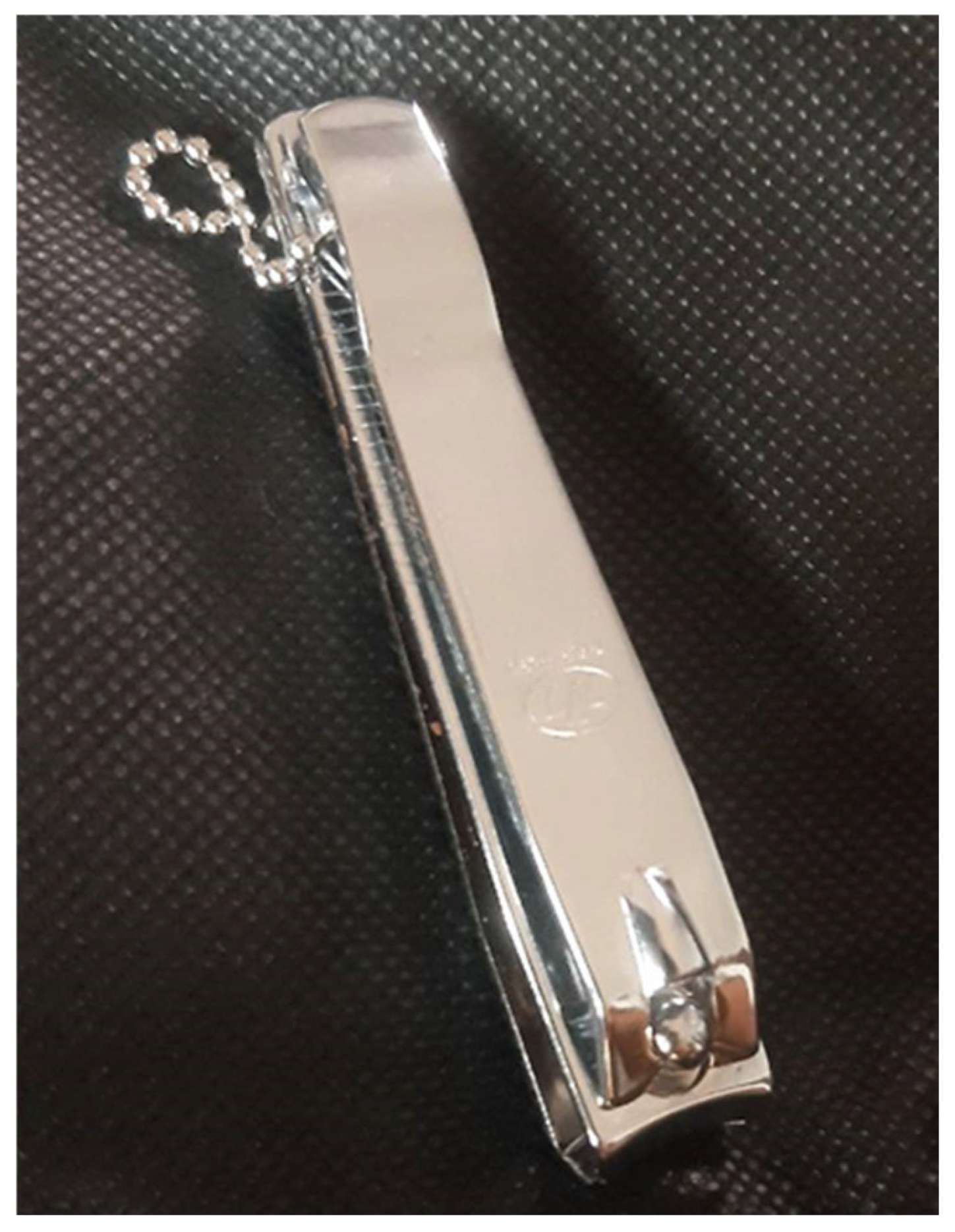
Despite these challenges, commercially available nail clippers (
Figure 1) are designed for users with normal bilateral hand function. Their operation requires simultaneous stabilization, sufficient pinch force, coordinated finger movements, and precise manual control, making them unsuitable for individuals with unilateral weakness, spasticity, impaired dexterity, or limited hand function following stroke. From the perspective of human-centered design, existing products inadequately accommodate the functional capabilities of hemiplegic users, particularly regarding one-handed operation, ergonomic force transmission, mechanical stability, operational safety, and intuitive usability [
6,
7]. This disconnect between user capability and device design represents a significant but largely neglected barrier to independent self-care.
Although assistive technologies have advanced considerably in areas such as mobility, feeding, dressing, and communication, innovations specifically addressing independent nail care remain scarce. This neglected area represents an important unmet clinical need at the intersection of rehabilitation medicine, occupational therapy, biomedical engineering, and assistive technology. Developing rehabilitation devices tailored to the unique functional limitations of stroke survivors has the potential not only to improve task performance but also to preserve dignity, promote autonomy, reduce caregiver burden, and support long-term independent living [
8,
9].
Therefore, this study aimed to design and develop a user-centered electric nail clipper specifically for individuals with post-stroke hemiplegia. Guided by principles of ergonomic engineering, human-centered design, and rehabilitation-focused innovation, the study translated user needs into functional and engineering requirements and iteratively developed and evaluated prototype configurations. The final design was intended to support stable, low-effort, and intuitive one-handed nail care while addressing the functional and ergonomic challenges identified during the user-needs assessment.
3. Methods
3.1. Study Design
This study employed a sequential mixed-methods, user-centered medical device development framework guided by the principles of ISO 9241-210 Human-Centred Design [
10,
11,
12]. The study comprised two distinct but sequential phases. Phase I, design and development, and Phase II, participant-based prototype evaluation.
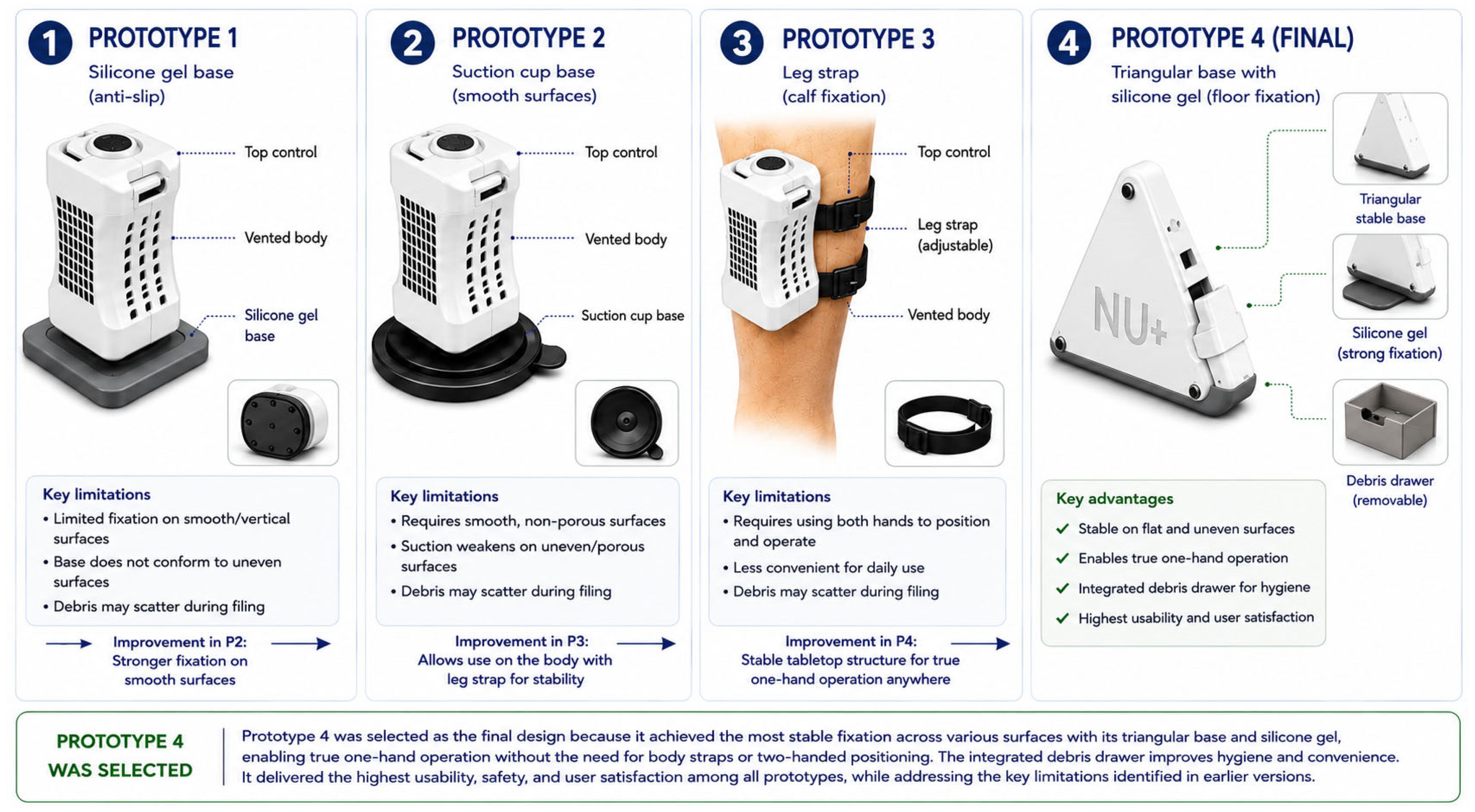
Phase I focused on identifying user needs and translating them into functional and engineering requirements for the assistive device. This phase comprised qualitative user-needs assessment, analysis of existing nail-care devices, formulation of engineering design requirements, iterative computer-aided prototype development and fabrication, controlled prototype testing, and multidisciplinary expert evaluation. Healthy volunteers participated during prototype development to provide preliminary assessment of mechanical operation and usability under controlled conditions. Four prototype configurations were subsequently evaluated by a multidisciplinary expert panel, and iterative feedback was incorporated into successive design refinements. The prototype demonstrating the most favorable overall performance and expert evaluation was selected and finalized for participant-based prototype evaluation.
Phase II consisted of a prospective participant-based prototype evaluation conducted among individuals with post-stroke hemiplegia. The finalized prototype was assessed under standardized and supervised conditions with respect to one-handed functional performance, usability, ergonomic acceptability, and operational safety.
The clinical evaluation component of the present device development program has been reported previously in a randomized controlled trial [
12]. The previous publication focused primarily on the comparative clinical evaluation of the novel nail-cutting device versus conventional nail trimming, including clinical outcomes such as pain and safety. In contrast, the present article focuses on the user-centered design and development process, including the identification of user needs, translation of user needs into engineering requirements, iterative prototype development, and multidisciplinary expert evaluation. Accordingly, the present article does not reproduce the previously published comparative clinical outcome data as primary findings. The relationship between the two publications is based on their shared device-development program and finalized prototype, while their primary objectives, analytical emphasis, and scientific contributions are distinct.
3.2. Participants
Participants were recruited using purposive sampling according to the objectives and predefined eligibility criteria of each study phase. The two participant groups served distinct methodological purposes and were recruited and evaluated separately.
In Phase I, 10 healthy adults aged ≥20 years with normal bilateral upper-extremity function were recruited for controlled prototype testing during the iterative device-development process. Eligible participants were required to have normal manual dexterity, adequate fingernail length (3–5 mm), and the ability to communicate in Thai. Individuals were excluded if they had an upper-extremity injury, a history of hand surgery, nail deformity, fungal nail infection, psoriasis, congenital nail abnormality, or any other condition that could alter nail morphology or interfere with prototype evaluation.
In Phase II, 20 individuals with post-stroke hemiplegia receiving rehabilitation services at the Occupational Therapy Unit, Naresuan University Hospital, participated in a supervised, participant-based evaluation of the finalized prototype. Eligible participants were aged ≥60 years, had a physician-confirmed diagnosis of stroke with unilateral hemiplegia, and exhibited impaired hand function requiring one-handed performance of activities of daily living. Participants were excluded if they had severe cognitive or visual impairment, a recent upper-extremity injury unrelated to stroke, recent nail surgery, or a nail disorder that could interfere with nail-trimming performance.
Overall, 30 participants were included across the two study phases: 10 healthy adults in Phase I and 20 individuals with post-stroke hemiplegia in Phase II. Importantly, the 20 Phase II participants constituted the same cohort previously reported in the randomized controlled trial [
12]. In the present study, data from this cohort were used only to describe participant-based evaluation of the finalized prototype within the broader device-development process. Comparative clinical outcomes previously reported in the randomized controlled trial [
12] are therefore not presented or interpreted as new findings in this article.
Accordingly, the distinct contribution of the present study lies in the user-centered design and development process, including iterative prototype development, engineering and design traceability, supervised evaluation of the finalized prototype, and multidisciplinary expert assessment. These design-development analyses were not the primary analytical focus of the previously published randomized controlled trial [
12].
3.3. Needs and Design-Requirements Assessment
During Phase I, semi-structured interviews were conducted with the 10 healthy volunteers who participated in controlled prototype testing. These participants were not intended to represent the lived experience of individuals with post-stroke hemiplegia. Rather, their feedback was used to identify general operational, ergonomic, and safety considerations during early prototype development. Stroke-specific functional requirements were informed by the clinical problem identified in the target population, relevant literature on unilateral upper-extremity impairment and assistive technology, and subsequent evaluation of the finalized prototype in participants with post-stroke hemiplegia. Interview findings were therefore interpreted as preliminary design-development inputs rather than direct qualitative evidence of the needs of individuals with post-stroke hemiplegia.
3.4. Prototype Design and Development
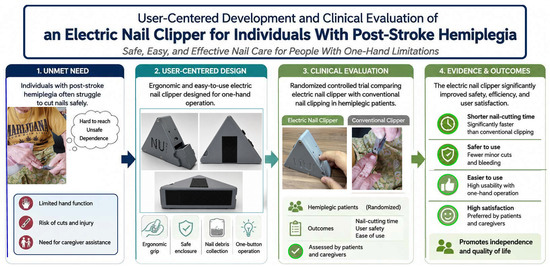
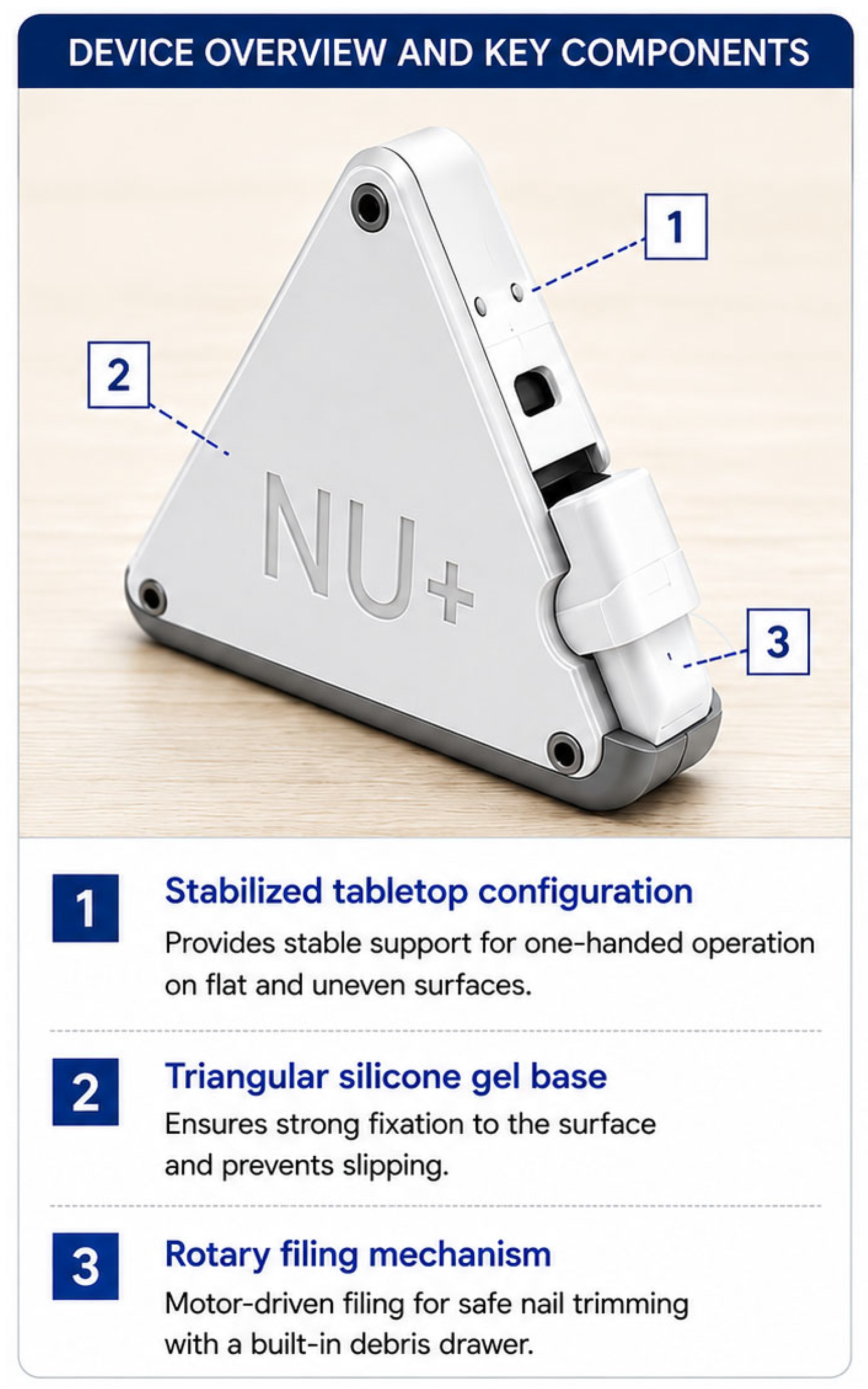
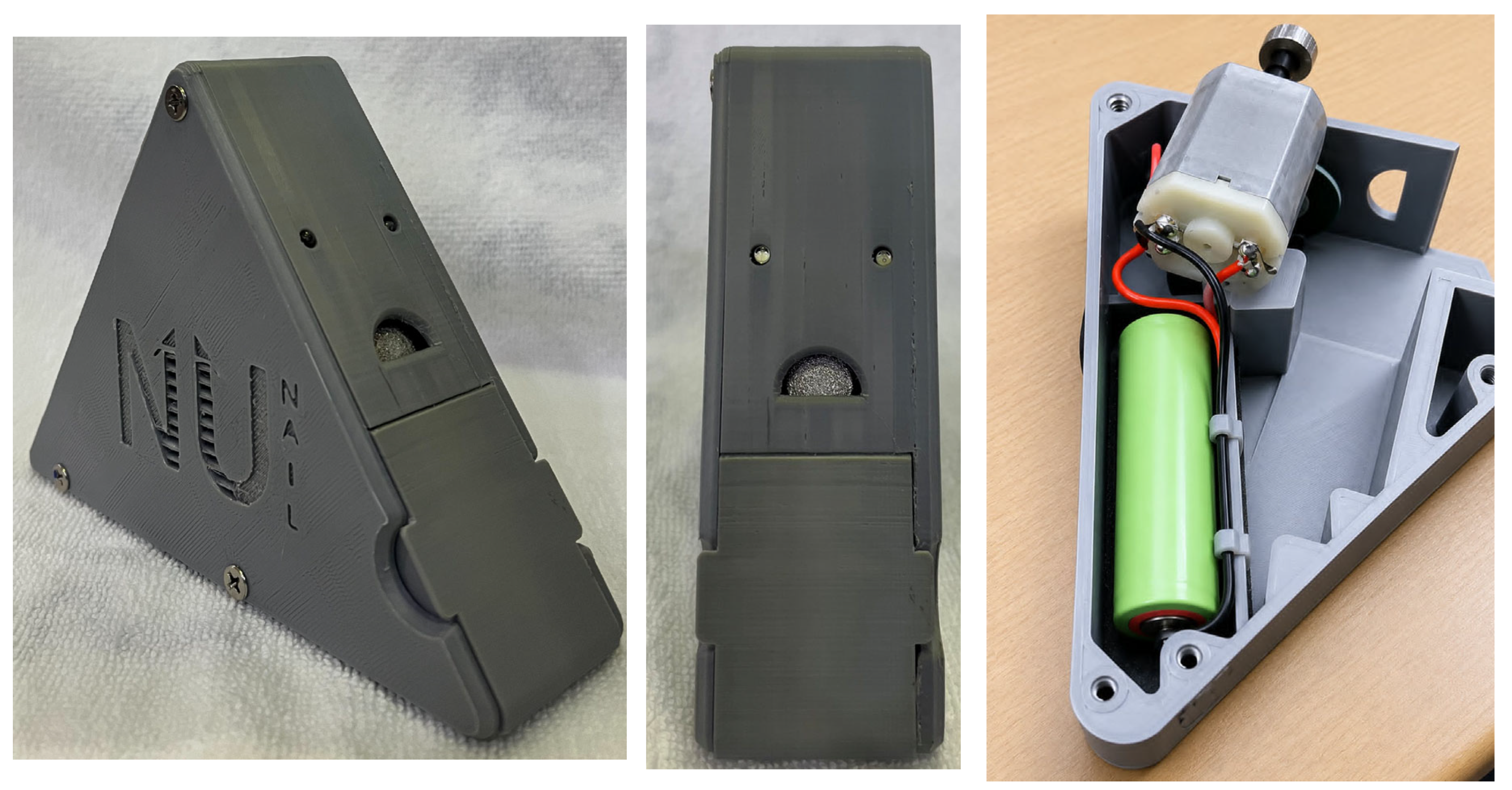
The electric nail clipper was developed through an iterative human-centered engineering process that integrated user-derived requirements, ergonomic principles, analysis of existing nail-care devices, and multidisciplinary expert feedback. Commercially available manual and electric nail clippers were initially examined to identify limitations related to one-handed operation, mechanical stability, grip requirements, cutting force, safety, and user comfort. These findings were translated into functional design specifications and incorporated into three-dimensional computer-aided design (CAD) models. Prototype components were subsequently fabricated using additive manufacturing (3D printing) with a 0.4-mm nozzle and iteratively refined based on mechanical assessment and multidisciplinary expert review. The finalized prototype incorporated a triangular tabletop structure with a silicone suction base for stabilization, a motor-driven rotary filing mechanism with adjustable operating speed, a removable buffing head, an enlarged nail-debris compartment, integrated LED illumination, and a rechargeable power supply. Collectively, these design features were intended to facilitate stable, low-effort, one-handed nail care while supporting operational safety, usability, and ease of maintenance.
3.5. Multidisciplinary Expert Validation
Before participant-based prototype evaluation, the prototype configurations underwent multidisciplinary expert validation to assess their engineering feasibility, ergonomic suitability, manufacturability, and operational safety. Five experts were purposively selected to provide complementary perspectives relevant to assistive-device development. The panel comprised two industrial or product designers, one specialist in pharmaceutical or medical materials, one neurologist with experience in stroke management, and one rehabilitation professional with expertise in neurological rehabilitation.
The multidisciplinary composition of the panel enabled the prototypes to be evaluated across engineering, materials, ergonomic, rehabilitation, and user-related domains before selection of the final configuration for testing in the intended user population.
3.6. Expert Evaluation and Prototype Selection
Prototype evaluation was conducted using a study-specific structured questionnaire developed to assess the predefined functional and engineering requirements established during the user-centered design process. Five multidisciplinary experts independently evaluated four prototype configurations across seven domains: functional suitability, ergonomic performance, structural stability, manufacturability, operational safety, practicality, and overall design quality. Open-ended questions were included to capture qualitative recommendations for further design refinement. Quantitative ratings were summarized descriptively and considered together with qualitative expert feedback to identify design strengths, limitations, and priorities for modification and to inform final prototype selection. Because the instrument was developed specifically for prototype evaluation within this exploratory device-development study, it was used as an evaluative design tool rather than as a formally validated psychometric instrument.
3.7. Outcome Measures
Following supervised use of the finalized prototype, participants completed a study-specific structured questionnaire designed to assess user-perceived characteristics of the device in relation to the predefined functional and user-centered design requirements. The questionnaire assessed six domains: functionality, usability, ergonomic design, material quality, aesthetics, and operational safety. Each domain was rated using a five-point Likert scale ranging from 1 (very low) to 5 (very high). Ratings were summarized descriptively using means and standard deviations, without applying categorical thresholds to the resulting mean scores. Participants were also invited to provide qualitative comments regarding device performance and suggestions for further design refinement. The questionnaire was developed specifically for the present device-development process and was not subjected to formal psychometric validation. Accordingly, the findings were interpreted solely as descriptive indicators of preliminary user-perceived feasibility and design acceptability of the finalized prototype and not as validated psychometric measures or evidence of clinical effectiveness.
3.8. Statistical Analysis
Continuous variables were summarized using means and standard deviations (SDs). Quantitative ratings from the expert and participant evaluations were analyzed descriptively using means and SDs. Qualitative feedback from the open-ended responses was analyzed using thematic content analysis to identify recurring design-related themes, strengths, limitations, and recommendations for further refinement. No inferential statistical testing was performed for the prototype evaluation outcomes, as these assessments were intended to support exploratory design validation rather than to evaluate clinical effectiveness.
3.9. Ethical Considerations
This study was approved by the Human Research Ethics Committee of Naresuan University (IRB No. P3-0057/2566) and conducted in accordance with the Declaration of Helsinki. Written informed consent was obtained from all participants prior to enrollment. Participant confidentiality was maintained through data anonymization and secure data management, and participants were free to withdraw at any time without affecting their clinical care.
5. Discussion
The present study demonstrates a user-centered approach to the development of an electric nail clipper tailored to the functional limitations associated with one-handed nail care after stroke [
13,
14,
15,
16]. The development process translated user-identified challenges into explicit engineering requirements and progressively incorporated these requirements into successive prototype configurations. Rather than focusing on comparative clinical effectiveness, the study emphasizes how user needs can be systematically converted into design specifications and evaluated through iterative prototyping and multidisciplinary review.
Independent nail care is a relatively underexplored self-care activity in rehabilitation engineering. Conventional nail clippers generally assume adequate bilateral hand function, grip strength, fine motor control, and coordinated manipulation. These assumptions may not be appropriate for individuals with unilateral upper-extremity impairment [
13,
14,
15,
17,
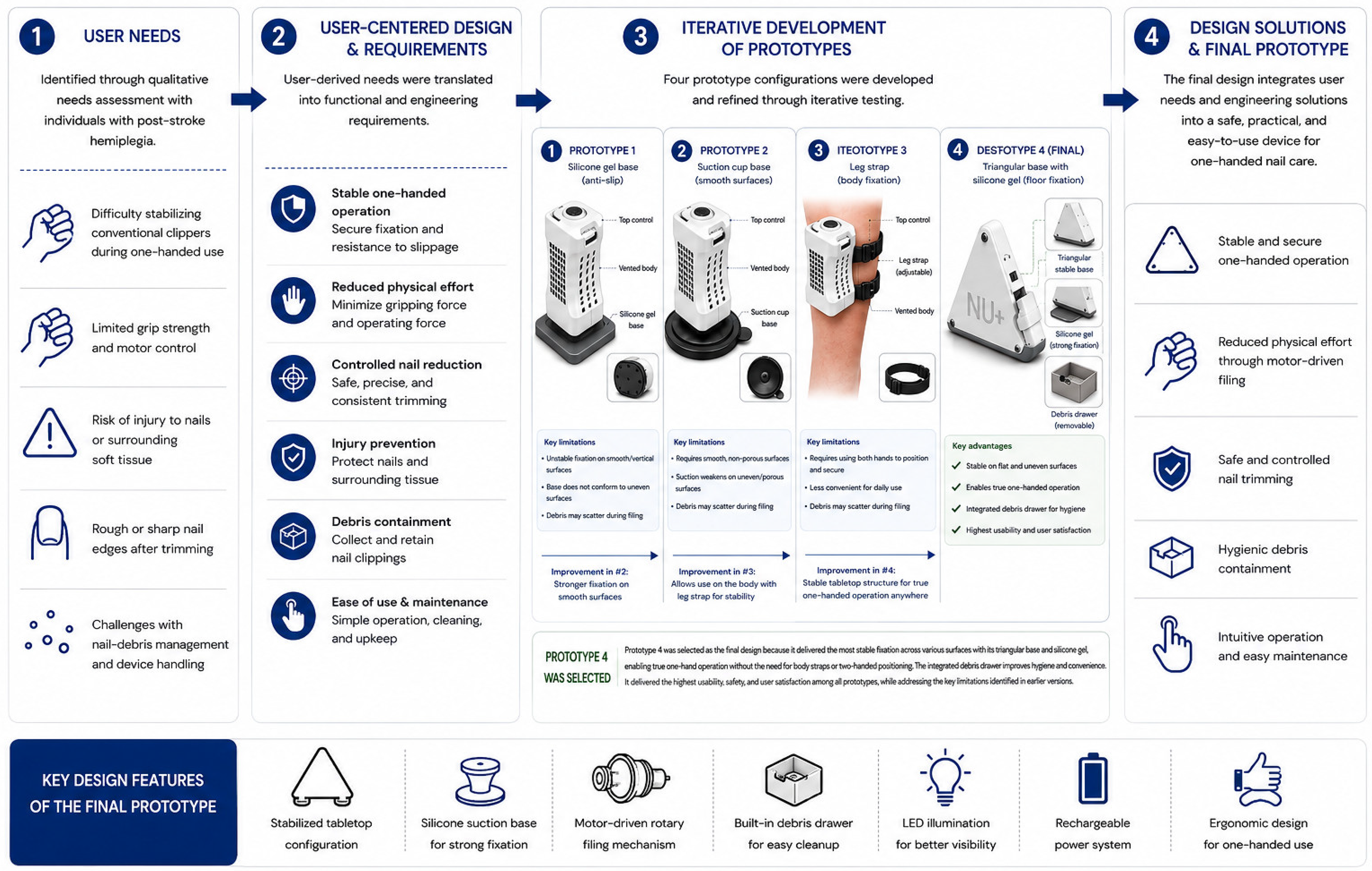
18]. The present needs assessment identified difficulties with stabilization, grip and motor control, controlled nail reduction, injury prevention, debris management, and device handling. These findings provided a specific design basis for developing a device that could be operated with one hand while minimizing the physical demands associated with conventional nail trimming.
The translation of user needs into engineering requirements was a central feature of the development process. Stable one-handed operation was addressed through the triangular tabletop configuration and silicone suction base, while reduced physical effort was addressed through the motor-driven rotary filing mechanism. The removable buffing head was incorporated to support controlled finishing, and the enlarged debris compartment was designed to facilitate containment and maintenance. Adjustable operating speed and integrated LED illumination were incorporated to provide greater control and visual guidance during operation. This direct traceability between user needs, engineering requirements, and design solutions provides a structured basis for evaluating and refining assistive-device prototypes [
17].
The iterative development process also demonstrated the value of multidisciplinary expert evaluation before finalizing the prototype. Four configurations were assessed across functional suitability, ergonomic performance, structural stability, manufacturability, operational safety, practicality, and overall design quality. Prototype 4 achieved the highest overall expert rating (mean = 4.43, SD = 0.48) and was therefore selected for subsequent participant-based evaluation. The expert assessment provided complementary perspectives from design, materials, neurological, and rehabilitation disciplines and helped identify the configuration that best balanced functional, ergonomic, structural, and practical considerations.
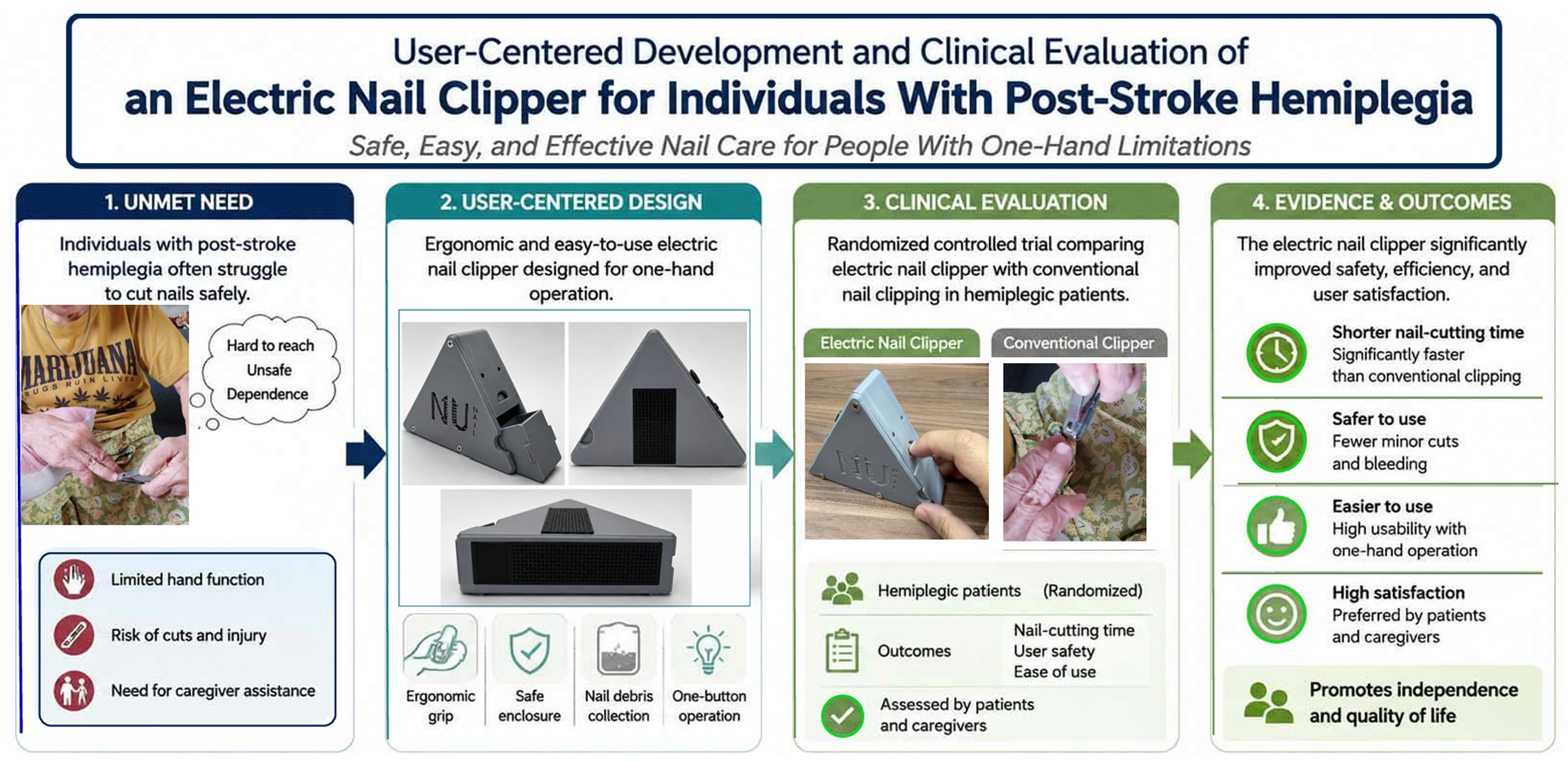
The findings further highlight the importance of evaluating assistive-device design beyond technical performance alone, as illustrated by the integrated user-centered development pathway presented in
Figure 5. For users with unilateral upper-extremity impairment, seemingly simple self-care tasks may involve multiple interacting requirements, including stabilization, force generation, precision, visual guidance, and safe interaction with the device. Addressing these requirements simultaneously requires an integrated design approach rather than modification of a single component [
19,
20,
21]. The present prototype therefore represents an example of how human-centered design can be applied to a specific self-care limitation within rehabilitation engineering.
A further contribution of the study is the explicit traceability framework linking user needs to engineering requirements, design solutions, and subsequent verification domains. This approach provides a reproducible pathway for documenting design decisions and can facilitate communication among designers, engineers, clinicians, and other stakeholders during assistive-device development. Such traceability may also support future iterations by allowing specific design features to be reassessed when user requirements or performance limitations are identified.
From a broader rehabilitation-engineering perspective, the design principles demonstrated in this study may be applicable to other assistive devices intended for unilateral use. Stable support, reduced operating effort, controlled mechanical interaction, accessible controls, and simplified maintenance are potentially relevant to a range of personal-care tasks requiring precision and limited bilateral hand function [
19]. However, the transferability of these principles to other populations and tasks requires further investigation.
This study has several strengths. It integrated qualitative user-needs assessment, iterative CAD-based development, additive manufacturing, multidisciplinary expert evaluation, and participant-based prototype assessment within a single human-centered development process. The use of predefined evaluation domains and explicit user-need-to-design traceability further strengthened the methodological structure of the development process. Collectively, these features provide a systematic foundation for continued refinement and future validation of the device [
22,
23,
24,
25].
Study Limitations
Several limitations should be acknowledged. First, this was an exploratory, early-stage user-centered device-development and prototype-validation study conducted at a single rehabilitation center. No formal hypothesis-driven sample-size calculation was performed because the participant cohort was intended to support preliminary evaluation of the finalized prototype rather than to establish definitive clinical effectiveness. The relatively small and single-center sample therefore limits the generalizability of the findings. Second, prototype evaluation was conducted under short-term, supervised conditions and may not fully reflect device performance, durability, safety, or user experience during prolonged and unsupervised use in real-world settings [
19,
20,
21]. Third, objective biomechanical and task-performance measures, such as hand force, muscle activity, movement efficiency, and task-completion time, were not systematically assessed as part of the prototype evaluation. In addition, the study-specific questionnaires were developed to assess functional, ergonomic, usability, and safety characteristics relevant to the device but were not subjected to formal psychometric validation. Accordingly, questionnaire-derived findings should be interpreted as preliminary indicators of user experience and prototype acceptability rather than as validated clinical outcome measures. Finally, long-term durability, home-based usability, broader user acceptability, and cost-effectiveness remain to be established. Future studies should therefore include larger and more diverse participant samples, objective performance measures, validated user-reported instruments where appropriate, and longer-term real-world evaluation to further establish the robustness and practical applicability of the developed device [
19,
20,
21].
Future research should include multicenter studies with larger and more diverse stroke populations, incorporate objective biomechanical and functional outcome measures, evaluate long-term home use and device durability, and compare the proposed device with commercially available assistive technologies. Economic evaluations and implementation studies will also be essential to determine scalability and real-world clinical adoption.
6. Conclusions
This study developed and refined a user-centered electric nail clipper designed to address the functional limitations associated with one-handed nail care among individuals with post-stroke hemiplegia. Through an iterative process integrating user needs, engineering requirements, multidisciplinary expert evaluation, and participant-based prototype assessment, the final configuration was optimized for stability, reduced physical effort, ergonomic handling, operational safety, and ease of use. During short-term supervised evaluation, participants were able to perform one-handed nail-care tasks using the finalized prototype, with no device-related adverse events observed. These findings provide preliminary support for the functional suitability of the developed design under controlled conditions but do not establish long-term safety, durability, or effectiveness during unsupervised real-world use. Further longitudinal and home-based evaluation with larger and more diverse user populations is warranted to assess the robustness, durability, usability, and practical applicability of the device.