


Abstract
Regular endurance exercise is consistently associated with lower cardiovascular mortality, a favorable cardiometabolic profile, and superior cardiorespiratory fitness. However, coronary imaging studies in master endurance athletes have raised a clinically relevant paradox: despite a low burden of conventional risk factors, some athletes—particularly older men with high lifetime exercise exposure—show a greater prevalence of coronary artery calcium and subclinical coronary plaque than sedentary or less active controls. This observation has challenged the long-standing assumption that high-volume endurance exercise is uniformly protective against coronary artery disease. A binary interpretation of this literature is inadequate. Coronary flow reserve and ischemic threshold may remain adequate in some athletes, although this concept is supported by limited functional and outcome data. Based on experimental vascular biology and indirect human evidence, repetitive high-flow states during endurance exercise generate sustained laminar shear stress, cyclic wall strain, and marked increases in coronary blood flow, thereby activating endothelial mechanotransduction pathways and influencing vascular smooth muscle cell behavior, extracellular matrix remodeling, and calcification biology. These adaptations may culminate in positive arterial remodeling, luminal enlargement, and, in some individuals, a predominantly calcified plaque phenotype. Importantly, structural remodeling does not necessarily equate to functional impairment. In selected athletes, when outward remodeling and endothelial responsiveness are preserved, coronary flow reserve and ischemic threshold may remain adequate, although this concept remains supported by limited functional and outcome data. This narrative review integrates the clinical imaging literature with current concepts in vascular mechanobiology to propose that coronary remodeling in endurance athletes exists along an adaptive–maladaptive continuum shaped by cumulative exercise load, aging, sex, conventional risk factors, and biological susceptibility. This framework may help clinicians interpret CAC/CCTA findings in athletes more appropriately and avoid equating plaque burden with equivalent functional or prognostic significance.
1. Introduction
Endurance exercise is universally associated with reduced cardiovascular risk, improved metabolic profile, enhanced endothelial function, and increased cardiorespiratory fitness [1]. Yet, an apparent paradox has emerged in master endurance athletes: despite favorable traditional risk factors and high aerobic capacity, several imaging studies report a greater prevalence of coronary artery calcification compared with sedentary controls [2,3]. This observation has fueled an ongoing debate—does lifelong endurance training confer protection or promote coronary atherosclerosis? The binary framing of this question, however, may oversimplify a far more complex biological process.
This apparent contradiction has generated the concept of an atherosclerotic paradox in endurance athletes.
The concept that endurance exercise may coexist with coronary atherosclerosis is not new. Early work by Möhlenkamp and colleagues drew attention to the paradox of coronary atherosclerosis in apparently healthy marathon runners and subsequently established the prognostic relevance of coronary calcium burden in veteran male runners [4,5,6]. In parallel, vascular physiology studies and reviews, including the work by Green and colleagues on the concept of an “athlete’s artery”, emphasized that athletic training can induce structural and functional vascular adaptation beyond the myocardium [7,8]. However, the paradox is probably not resolved by asking whether exercise is either protective or harmful [9,10]. That framing is too simplistic for a vascular system that is inherently load-responsive. Coronary arteries are not passive conduits. They are biologically active, mechanically sensitive structures that continually adapt to changing hemodynamic conditions. From this perspective, endurance exercise represents a chronic vascular stimulus capable of inducing both physiological remodeling and, in a subset of susceptible individuals, structural changes that overlap with subclinical atherosclerosis [11]. The central challenge, therefore, is not simply to determine whether athletes have more calcification, but to understand what that calcification means. In sedentary populations, CAC is an established marker of atherosclerotic burden and future risk [12,13,14]. Importantly, this principle should not be dismissed in athletes. Although plaque morphology and functional capacity may modify clinical interpretation, CAC remains a robust marker of total coronary atherosclerotic burden, and current evidence does not establish that elevated CAC in athletes carries fundamentally different prognostic implications than in non-athletic populations [15,16,17].
The aim of this narrative review is to integrate mechanical loading, endothelial mechanotransduction, structural remodeling, plaque phenotype, and functional performance into a unified coronary-specific framework. We begin by acknowledging the historical perspective on vascular adaptation in athletes and coronary atherosclerosis in endurance populations, including foundational work by Möhlenkamp et al. and Green et al. Building on this literature, we examine coronary remodeling as a load-conditioned biological response in endurance athletes and propose a mechanobiological continuum that may help distinguish adaptive vascular remodeling from pathological atherosclerosis. This framework should be interpreted as a conceptual model intended to organize selected clinical and mechanistic evidence, rather than as a proven causal pathway. While clinical imaging studies demonstrate altered CAC and plaque phenotypes in selected endurance-athlete cohorts, several mechanistic links between exercise-induced hemodynamic stress, endothelial mechanotransduction, inflammation, and calcific plaque transformation remain inferred from experimental vascular biology rather than directly proven in endurance athletes.
2. Literature Search Strategy
A selective narrative literature search was conducted across PubMed/MEDLINE, Scopus, Web of Science, Embase, Cochrane Library, and Google Scholar to identify relevant studies published from January 2000 up to the date of the final revised search. The search focused on studies evaluating the relationship between long-term exercise training, particularly endurance exercise, and coronary atherosclerosis, with special attention to cohorts of master athletes, marathon runners, cyclists, and other highly trained or lifelong endurance athletes assessed by coronary artery calcium scoring, coronary computed tomography angiography, or related imaging modalities. Search terms combined keywords such as athletes, endurance exercise, master athletes, marathon runners, coronary atherosclerosis, coronary artery calcium, CAC, coronary computed tomography angiography, CCTA, plaque, coronary plaque, coronary artery disease, training load, and exercise intensity.
This review was conceived as a narrative review rather than as a systematic review or scoping review. Therefore, no PRISMA or PRISMA-ScR framework was applied, no protocol was registered, no formal dual-review screening process was performed, no PRISMA flow diagram was generated, and no structured risk-of-bias assessment was conducted. Studies were selected and discussed according to their clinical relevance, methodological quality, imaging detail, mechanistic relevance, and contribution to the evolving concept of exercise-associated coronary remodeling and plaque phenotype in athletes. As a result, the review remains vulnerable to citation selection bias and does not provide a comprehensive or quantitative estimate of prevalence, prognosis, or causality.
We included relevant English-language studies involving humans, with emphasis on cross-sectional cohorts, prospective and retrospective observational studies, longitudinal imaging studies, and major review or consensus papers that provided important contextual interpretation of the field. Conference proceedings, corrections, early access articles without final data, news items, book chapters, retractions, reprints, biographical items, book reviews, meeting abstracts, editorial materials, and letters were excluded unless considered essential for historical or conceptual context. Earlier foundational publications before 2000 were included selectively when directly relevant to the historical development of the field. Accordingly, the conclusions of this review should be interpreted as based on selected evidence rather than as a systematic synthesis of all available literature.
3. Current Evidence of Coronary Artery Disease in Athletes
The current literature on the relationship between long-term exercise training and coronary atherosclerosis is complex and does not support a single uniform pattern across all athletic populations. Rather, it suggests that the coronary phenotype of athletes is heterogeneous and influenced by sex, age, comparator selection, exercise exposure, and imaging modality. The strongest and most consistent signal has emerged in middle-aged and older male endurance athletes, in whom several studies have demonstrated a higher burden of subclinical atherosclerosis than expected from conventional risk scores.
3.1. Athletes-Versus-Control Studies
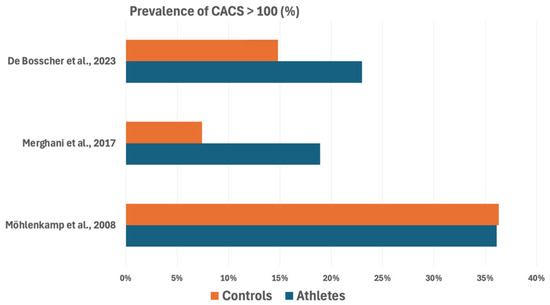
The first landmark report was the study by Möhlenkamp et al. [4], which compared 108 apparently healthy male marathon runners aged 50 years or older with age-matched and risk-factor-matched controls from the Heinz Nixdorf Recall Study [6]. Despite a substantially lower Framingham risk score (FRS), marathon runners had a CAC burden like age-matched controls and higher than risk-factor-matched controls. In that cohort, 36.1% of runners had CAC ≥ 100, and higher CAC burden was associated with myocardial late gadolinium enhancement and worse event-free survival on follow-up. This study established the important concept that some veteran endurance athletes may carry atherosclerotic burden that appears disproportionate to their otherwise favorable conventional risk profile. The main comparative studies are summarized in Table 1.
Table 1.
Main athlete-versus-control studies evaluating the association between long-term endurance exercise and coronary atherosclerosis.
Using coronary CT angiography rather than CAC alone, Schwartz et al. then showed that long-term male marathon runners had significantly greater total, calcified, and non-calcified plaque volume than sedentary controls, even though plaque prevalence itself was not significantly different [18]. This was a key step in the field because it shifted attention away from calcium burden alone and toward the broader concept of plaque burden and plaque composition.
A particularly influential low-risk comparison study was that of Merghani et al., who examined 152 master endurance athletes and 92 controls with similarly low Framingham risk profiles [19]. In this highly selected cohort, most athletes and controls still had CAC of zero, but important sex-specific differences emerged. Male athletes had more plaques than sedentary male controls, and only male athletes showed CAC ≥ 300 or luminal stenosis ≥ 50%. However, plaques in male athletes were predominantly calcific, whereas sedentary men more often had mixed plaques, raising the hypothesis that exercise-related plaque may differ phenotypically from plaque in less active individuals [19].
That possible sex difference was reinforced by Roberts et al., who compared long-term female marathon runners with sedentary controls and found that women marathoners had lower plaque prevalence and lower calcified plaque volume, with no significant increase in non-calcified plaque or stenosis severity [20]. Although the control group had a less favorable risk profile and the sample was small, this study suggested that the excess coronary atherosclerosis signal observed in male endurance athletes should not automatically be extrapolated to women.
More recently, the Master@Heart study by De Bosscher et al. provided one of the most rigorous modern datasets in the field [21]. This multicenter study compared lifelong endurance athletes, late-onset athletes, and non-athletic controls, all men with a very low cardiovascular risk profile by design. Unlike earlier studies that supported a more benign calcified-plaque narrative, Master@Heart showed that lifelong athletes had more plaques overall, including proximal, calcified, mixed, and non-calcified plaques, than controls. The prevalence of CAC >100 was also numerically highest in lifelong athletes. This study therefore challenged the reassuring notion that athlete plaque is simply “more calcified and thus safer,” and suggested that very high lifelong endurance exposure may be associated with a broader and more complex coronary plaque phenotype [21]. Because proximal location and non-calcified or mixed morphology are conventionally associated with higher ischemic risk, these findings argue against assuming that coronary plaque in athletes is uniformly stable or clinically benign. Therefore, the athlete plaque phenotype should be considered heterogeneous.
A visual overview of the comparative evidence can be summarized schematically in Figure 1. However, given the substantial heterogeneity across cohorts, direct numerical comparison of CAC thresholds across studies should be interpreted cautiously.
Figure 1.
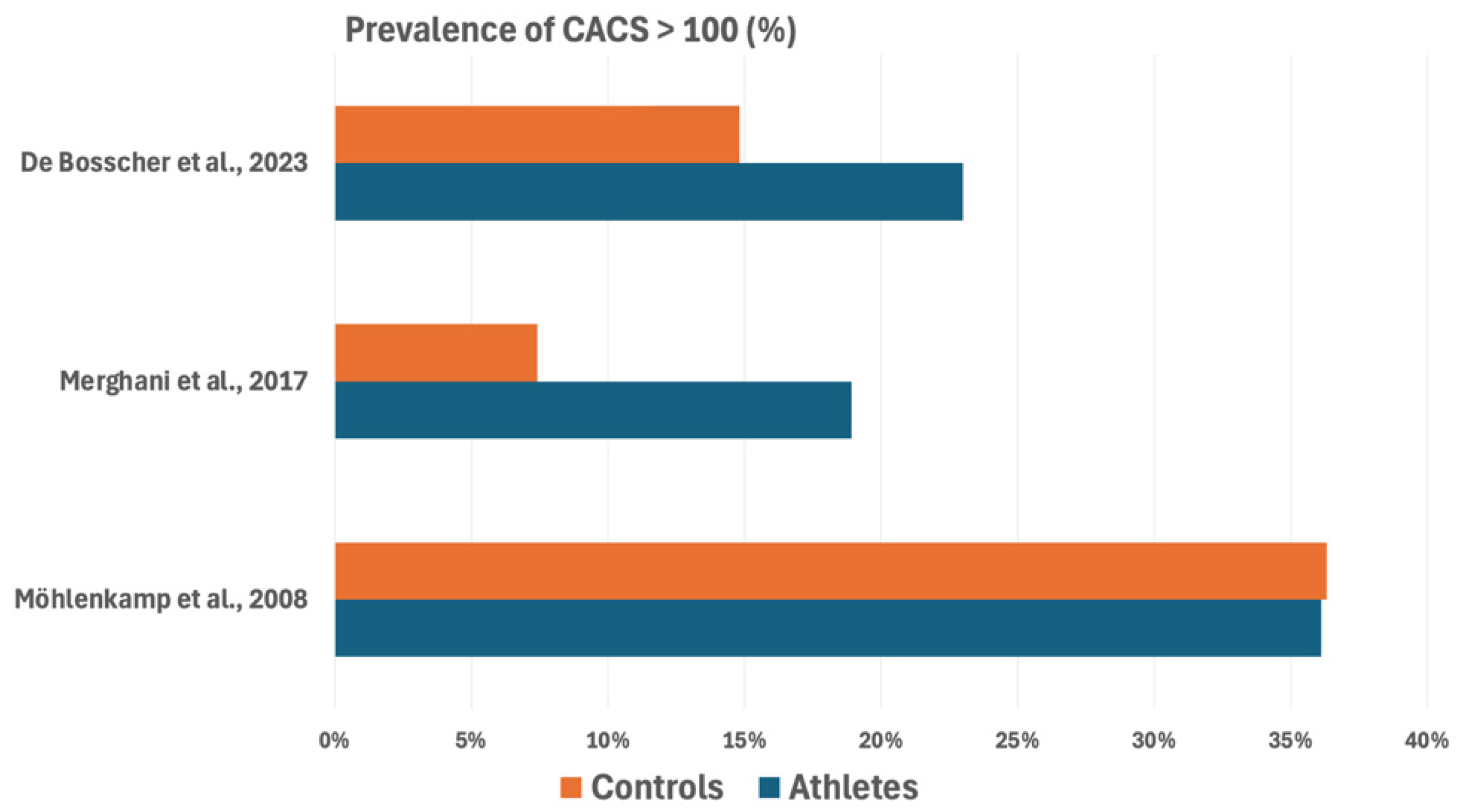
Prevalence of coronary artery calcification scores (CACS) > 100 among main athlete-control studies [4,19,21].
In contrast, Feuchtner et al. reported a more neutral pattern in a retrospective clinical coronary CTA cohort comparing high-exercise individuals with sedentary controls [22]. After matching and adjustment, there were no significant differences in CAC, CAD-RADS severity, obstructive CAD, high-risk plaque, or major adverse cardiovascular events. However, this was not a classic asymptomatic athlete-screening cohort, but rather a symptomatic clinical CTA population, and exercise exposure was self-reported. Accordingly, this study is best interpreted as showing that in a more real-world recreationally active population, approximately 9 h/week of exercise does not necessarily translate into a worse coronary CTA phenotype [22].
Taken together, athlete-versus-control studies suggest that the relationship between endurance exercise and coronary atherosclerosis is not binary. In older male endurance athletes with high cumulative exposure, plaque burden may be greater than expected from conventional risk profiles. Yet the composition of those plaques, and their functional and prognostic implications, remain heterogeneous.
3.2. Observational Studies
Athlete-only observational cohorts have added important context by showing that subclinical coronary atherosclerosis is not rare even in the setting of otherwise reassuring sports screening. The athlete-only observational cohorts and longitudinal analyses are summarized in Table 2.
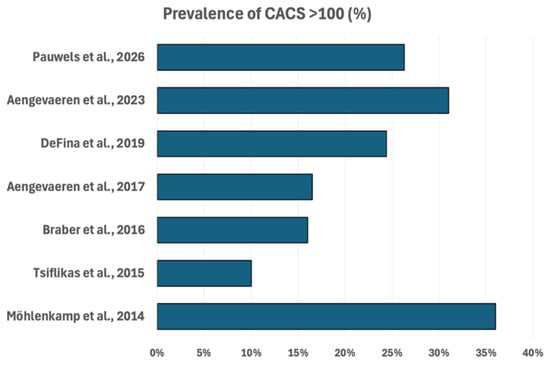
In the MARC study, Braber et al. evaluated 318 asymptomatic middle-aged male sportsmen with normal sports medical evaluation, including resting and exercise ECG [23]. Despite this reassuring profile, 18.9% had occult CAD (8.4% with moderate-to-severe stenosis), defined as CAC ≥ 100 and/or ≥50% stenosis, and 16.4% had CAC ≥ 100. This study showed that routine sports screening does not exclude meaningful subclinical coronary disease in older male athletes.
Within the same MARC framework, Aengevaeren et al. (MARC-1) demonstrated that athletes with the highest lifelong exercise volume had more CAC and more plaque than those in lower exercise-volume strata [24]. Yet among athletes with plaque, the most active individuals more often had calcified-only plaques and fewer mixed plaques, reinforcing the idea that exercise may influence not just plaque quantity but also plaque phenotype.
Other athlete-only cohorts have been broadly consistent. Tsiflikas et al. reported a high prevalence of coronary atherosclerosis in asymptomatic male marathon runners older than 45 years, including proximal plaques and occasional stenoses greater than 50%, despite very favorable conventional risk profiles [25]. Notably, treadmill testing was negative even in the athlete with significant anatomic disease, highlighting the limited sensitivity of standard functional screening for silent coronary plaque.
Table 2.
Main observational studies assessing the prevalence and clinical significance of coronary atherosclerosis in athletes and highly active individuals.
In more selected clinical settings, the prevalence of coronary disease is understandably higher. Gervasi et al. found that more than 40% of master athletes referred for CCTA because of symptoms or equivocal pre-participation findings had coronary atherosclerosis [26]. These data do not define prevalence in all athletes, but they do support the value of CCTA as a second- or third-line test when clinical suspicion is raised. The large prospective cohort by DeFina et al. broadened the field further by examining more than 21,000 generally healthy men across different physical activity strata [27]. Men with very high activity volumes were modestly more likely to have CAC ≥ 100, but high activity was not associated with increased all-cause or cardiovascular mortality, over about a decade of follow-up, even when clinically relevant CAC was present [27]. This study is particularly important because it helps reconcile the “more CAC, but not necessarily worse prognosis” paradox. The MATCH-40 study by Lee et al. added an especially useful functional dimension by combining CCT with stress echocardiography in marathon runners aged 40 years or older [28]. In this cohort, 20% had silent CAD on CCT, of which 23.1% had moderate-to-severe lesions, but none of those with positive CCT findings had inducible ischemia on stress echocardiography, even when moderate or severe lesions were present. However, this finding should be interpreted cautiously because the cohort was small, stress echocardiography was performed only in CCT-positive athletes, and long-term event data were unavailable.
Longitudinal observational data have also helped refine interpretation of these cross-sectional findings. In the prognostic follow-up of the original marathon cohort over approximately 6.5 years, by Möhlenkamp et al., coronary event rates increased stepwise with higher baseline CAC burden, whereas transient post-marathon troponin elevation did not predict outcome [4,5]. This suggests that among the biological signals observed in endurance athletes, subclinical coronary atherosclerosis burden carries greater long-term prognostic relevance than transient biomarker release after exercise. More recently, in MARC-2, Aengevaeren et al. showed that over approximately 6.3 years, CAC prevalence increased from 52% to 71% and plaque prevalence from 64% to 83% [29]. This study is particularly important because it is a longitudinal follow-up of the MARC cohort [24], and directly examines progression of CAC and plaque over time, rather than just cross-sectional prevalence. Interestingly, exercise volume during follow-up was not associated with progression, whereas exercise intensity appeared more informative: vigorous exercise was associated with less CAC progression, while very vigorous exercise was associated with greater CAC and calcified plaque progression [29]. The subsequent Berge et al. analysis of the same MARC-2 cohort further showed that, in aging male athletes, traditional risk factors such as age, systolic blood pressure, smoking exposure, and family history remain important predictors of CAC, but that non-traditional variables such as training load, serum phosphate, and diet-related measures add incremental predictive value [30]. This is relevant because it suggests that conventional cardiovascular risk models may incompletely explain coronary atherosclerosis in athletes. A particularly important methodological advance came from Pauwels et al., a secondary analysis of the Master@Heart cohort using 12 months of wearable-derived objective training data [21,31]. In this study, higher objective training duration and higher Edwards training impulse score (eTRIMP) were independently associated with more plaques, more CAC > 0, and more CAC > 100, whereas self-reported MET-based exercise metrics were less informative. Notably, high training duration, especially when combined with cumulative high-intensity effort, appeared more consistently associated with subclinical CAD than intensity alone [31]. These data suggest that future studies of exercise-related CAD may benefit substantially from objective wearable-based exposure assessment rather than relying solely on retrospective questionnaires. The observational literature is therefore better summarized through study-level methodological characteristics rather than through direct visual comparison of CAC prevalence (Figure 2).
Figure 2.
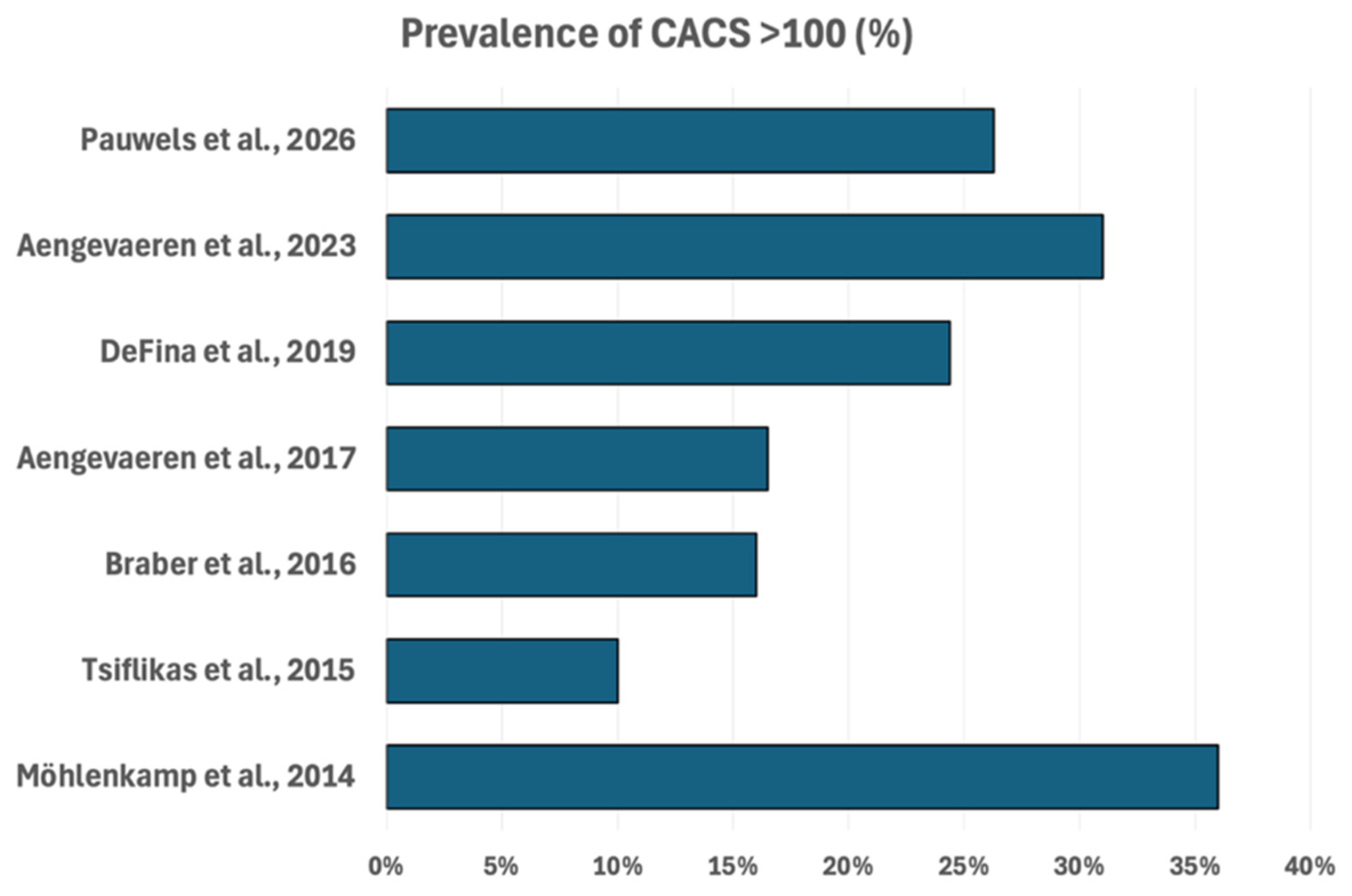
Prevalence of coronary artery calcification scores (CACS) > 100 among main observational studies [5,23,24,25,27,29,31].
Taken together, the evidence summarized in Table 1 and Table 2 supports several broad conclusions. First, long-term endurance exercise does not confer complete protection from coronary atherosclerosis, particularly in middle-aged and older men. Second, the athlete plaque phenotype is likely heterogeneous: some cohorts suggest a predominance of calcified plaque, whereas others, especially Master@Heart [21,31], also report more mixed, non-calcified, and proximal plaques. Third, greater coronary plaque burden or CAC in athletes does not invariably imply demonstrable ischemia in the limited cohorts studied, although the evidence base remains small and does not justify assuming a preserved ischemic threshold in all athletes, as shown by MATCH-40 and DeFina [27,28]. Finally, the effect of exercise exposure appears to depend not only on whether someone is “active,” but on the dose, duration, intensity, and probably also the lifetime pattern of endurance training. Overall, the evidence suggests that the relationship between endurance exercise and coronary atherosclerosis is non-linear and biologically complex. The strongest signal for increased subclinical disease comes from male veteran endurance athletes with high lifetime exposure, but the prognostic meaning of this disease may not be identical to that in the general population. This apparent paradox—more plaque but often preserved fitness and not necessarily worse outcomes—remains unresolved and underscores the need for further longitudinal studies integrating plaque phenotype, objective training load, ischemia testing, and clinical events.
3.3. Silent CAD and Agonistic Versus Non-Agonistic Participation in Master Athletes
A clinically relevant issue in master athletes is that CAD may remain silent or present with attenuated, atypical, or exercise-misinterpreted symptoms. High cardiorespiratory fitness, preserved coronary flow reserve, ischemic preconditioning, and possible collateral adaptation may delay the appearance of typical angina until more advanced disease or higher workloads. In addition, athletes may attribute exertional chest discomfort, dyspnea, fatigue, or reduced performance to musculoskeletal pain, overtraining, respiratory factors, or aging rather than to myocardial ischemia [8]. This may partly explain why anatomical coronary disease may be detected despite normal or non-diagnostic functional testing in selected cohorts, and why CAD may become clinically evident only during very high-intensity exercise or through acute events. Therefore, the absence of typical angina should not be considered sufficient to exclude clinically relevant CAD in master athletes, particularly in the presence of conventional risk factors, abnormal pre-participation screening, reduced performance, or high cumulative training exposure [32].
A further distinction concerns competitive versus non-competitive master athletes. Master athletes are a heterogeneous population including former professional athletes who continue to compete, lifelong competitive endurance athletes, late-onset athletes who begin structured training after adulthood, and highly active recreational individuals. Competitive or agonistic master athletes may be exposed to greater cumulative training load, more frequent high-intensity sessions, competition-related adrenergic surges, dehydration, and a stronger tendency to continue exercising despite symptoms [33]. Conversely, non-competitive or recreationally active master athletes may have lower cumulative exposure and less frequent peak-intensity triggers, although they may also include individuals returning to sport after years of inactivity and therefore with a less favorable cardiovascular risk profile. Current data do not allow a definitive separation of coronary risk according to agonistic versus non-agonistic status, because most studies classify participants by training volume, endurance exposure, age of sport initiation, or athlete-control status rather than by competition level alone. However, the distinction is clinically relevant: in master athletes, sports eligibility and risk interpretation should integrate not only CAC or CCTA findings, but also competition level, lifetime training history, recent training load, symptoms or performance decline, cardiovascular risk factors, and the intended intensity of sport participation [17,33].
4. Adaptive Vascular Morphology: Hemodynamic Conditioning of the Coronary Tree
A more coherent way to interpret coronary findings in endurance athletes is to begin not with plaque, but with vascular adaptation. Accordingly, this section separates direct observations in athlete imaging studies from biological mechanisms extrapolated from vascular biology. The latter are presented as plausible pathways rather than established causal mechanisms in endurance athletes. Coronary arteries are load-sensitive biological structures that remodel continuously in response to repeated mechanical stimulation. In endurance athletes, the most immediate and sustained stimulus is hemodynamic. During strenuous exercise, marked increases in heart rate, stroke volume, systolic pressure, pulse pressure, and coronary blood flow expose the arterial wall to repeated episodes of laminar shear stress and cyclic strain [34]. Over years and decades, this cumulative “vascular dose” may induce a conditioned coronary phenotype characterized by outward remodeling, luminal enlargement, altered wall composition, and preserved vasomotor responsiveness [35,36].
4.1. Hemodynamic Load as the Initiating Stimulus
During maximal endurance exercise, cardiac output can increase several-fold, often reaching values well above 25 L/min in highly trained athletes. This produces substantial increases in coronary flow velocity, laminar shear stress, and cyclic arterial wall deformation [37]. Endurance athletes therefore expose their coronary arteries to amplified mechanical forces not sporadically, but repeatedly over many years [38,39].
The vascular consequences of endurance exercise are driven less by isolated exercise bouts than by cumulative exposure. Lifetime training volume, intensity, frequency, and duration of athletic career define the hemodynamic burden imposed on the coronary tree. In this sense, endurance training can be understood as a chronic vascular-conditioning stimulus, analogous to how it induces remodeling of cardiac chambers, skeletal muscle, and autonomic control [40].
Although data on discipline-specific coronary phenotypes remain limited, some evidence suggests that the burden and progression of coronary calcification may differ across endurance sports. In the follow-up of the MARC study, cyclists showed a lower incidence and less progression of coronary artery calcification over time than runners and athletes practicing other sports, despite a broadly similar cardiovascular risk profile [41]. This observation raises the possibility that sport-specific hemodynamic and mechanical characteristics may modulate coronary wall stress and, in turn, influence coronary remodeling. Cycling is typically characterized by a more continuous and relatively stable hemodynamic load, whereas running involves repetitive impact-related mechanical stress that may expose the coronary vasculature to greater cyclical strain [42]. Moreover, even in runners, the plaque phenotype described in athlete cohorts is often predominantly calcific, which is generally considered less rupture-prone than mixed or non-calcified plaque [42,43,44]. Importantly, however, these findings should be interpreted cautiously, as current evidence remains observational and does not establish causality.
4.2. Mechanotransduction and Endothelial Adaptation
Endothelial cells are the primary mechanosensors of the coronary circulation. Through the glycocalyx, integrins, ion channels, and cytoskeletal structures, they detect changes in shear stress and convert them into intracellular signals. In experimental and non-athlete vascular models, sustained laminar shear stress activates transcriptional programs associated with vascular homeostasis, including Kruppel-like factor 2 (KLF2) signaling and increased endothelial nitric oxide synthase activity [45]. The result is greater nitric oxide bioavailability, enhanced vasodilation, reduced leukocyte adhesion, and suppression of pro-inflammatory and proliferative pathways.
Laminar shear also downregulates NF-κB-dependent inflammatory signaling and reduces expression of adhesion molecules such as VCAM-1 and ICAM-1. These responses promote an anti-atherogenic endothelial phenotype and provide a mechanistic basis for many of the vascular benefits attributed to regular exercise [46]. Yet mechanotransduction is not uniformly protective. Flow patterns vary across the coronary tree, and areas of curvature or bifurcation may experience disturbed or oscillatory flow, creating regional heterogeneity in adaptation [47]. Thus, the same exercise exposure that promotes beneficial remodeling globally may coexist with focal sites of vulnerability.
4.3. Adaptive Coronary Remodeling as a Morphological Phenotype
Repetitive high-flow states may promote positive arterial remodeling characterized by luminal enlargement and adaptive wall thickening, in part to normalize wall shear stress despite chronically elevated flow. Changes in extracellular matrix composition, elastin organization, collagen content, and vascular smooth muscle alignment may further contribute to a distinct athlete-specific arterial phenotype [48].
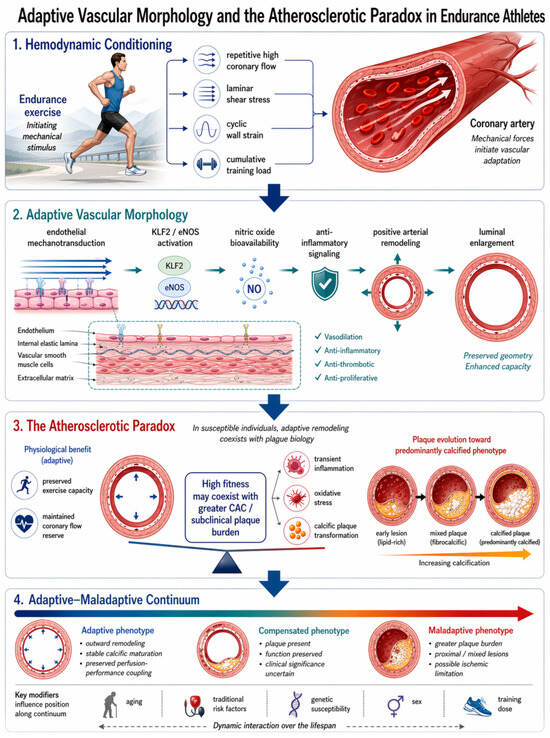
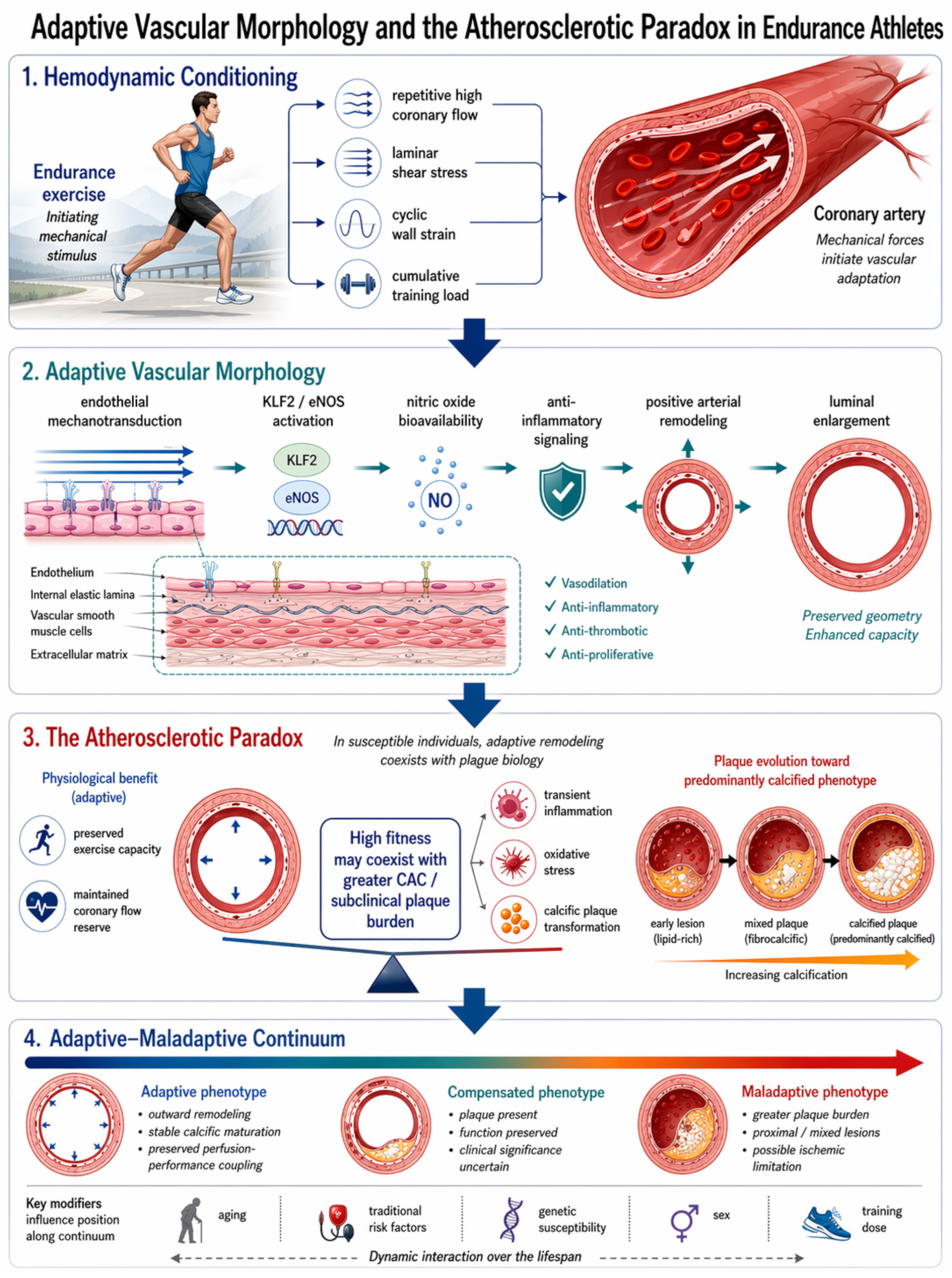
This adaptive morphology is clinically relevant because it may preserve lumen dimensions and perfusion capacity even in the presence of plaque. In other words, the coronary artery in an endurance athlete may not simply accumulate structural change; it may compensate for it. This concept may help explain why, in selected small cohorts, anatomic plaque burden and functional impairment have not always paralleled each other. However, the available evidence remains limited, and preserved exercise capacity should not be assumed to exclude clinically relevant CAD [49,50,51]. Figure 3 illustrates a mechanobiological framework linking long-term endurance exercise to coronary remodeling and plaque phenotype.
Figure 3.
Adaptive vascular morphology and the atherosclerotic paradox in endurance athletes. This schematic illustrates a mechanobiological framework linking long-term endurance exercise to coronary remodeling and plaque phenotype. Panel (1) shows the initiating mechanical stimulus acting on the coronary arterial wall. Panel (2) depicts adaptive vascular morphology favoring preservation of vascular geometry and flow capacity. Panel (3) summarizes the atherosclerotic paradox in susceptible individuals. Panel (4) conceptualizes these findings along an adaptive–maladaptive continuum. The position along this continuum is likely modulated over time by aging, conventional cardiovascular risk factors, genetic susceptibility, sex, and cumulative training dose. The clinical imaging associations summarized in this figure are supported by athlete cohort studies, whereas the cellular and molecular mechanisms are extrapolated from experimental vascular biology and should be interpreted as conceptually informative and suggestive of future research directions rather than as definitive evidence of causal mechanisms in endurance athletes. Abbreviations: CAC, coronary artery calcium; CAD, coronary artery disease; CCTA, coronary computed tomography angiography; KLF2, Kruppel-like factor 2; eNOS, endothelial nitric oxide synthase; NO, nitric oxide.
5. From Adaptive Remodeling to the Atherosclerotic Paradox: Inflammation, Oxidative Stress, and Calcific Plaque Transformation
If adaptive vascular morphology provides the physiological starting point, the atherosclerotic paradox emerges when this adaptive process intersects with plaque biology. A major unresolved question is why some athletes develop greater coronary calcification or plaque burden despite favorable risk profiles and preserved performance. One plausible explanation is that repeated hemodynamic stress, although largely beneficial, may under certain biological conditions be accompanied by transient inflammatory and oxidative responses that influence plaque development and maturation [32,52].
Importantly, these pathways should not be conceptualized as isolated from hemodynamics. They are better understood as downstream or parallel biological responses to the same mechanical environment that drives adaptive remodeling. The paradox, therefore, may not reflect two separate processes—beneficial adaptation on one side and atherosclerosis on the other—but rather a single load-conditioned spectrum in which vascular conditioning and plaque transformation coexist.
5.1. Repetitive Inflammatory Activation as a Modifier of Plaque Biology
Habitual physical activity is generally associated with lower chronic systemic inflammation. However, prolonged and intense endurance exercise can acutely increase circulating cytokines, catecholamines, leukocyte trafficking, and other stress-related signals. Acute exercise bouts are accompanied by mobilization of neutrophils, monocytes, and other leukocyte populations, together with short-term elevations in inflammatory cytokines such as tumor necrosis factor-alfa (TNF-α) and several interleukins, including IL-1β, IL-6, IL-8, and IL-10 [53,54,55]. In most athletes, these responses are transient and likely offset by the long-term anti-inflammatory effects of regular training [56]. In susceptible individuals, however, repeated decades-long exposure may create a vascular environment in which endothelial activation, inflammatory-cell recruitment, and local plaque remodeling become more likely.
Repeated inflammatory activation may promote transient endothelial activation, increase expression of adhesion molecules, facilitate leukocyte recruitment into the intima, and amplify local signaling pathways involved in vascular remodeling [57]. In older athletes, or in those with coexisting dyslipidemia, hypertension, prior smoking exposure, or genetic predisposition, such responses may be superimposed on a vessel wall that is already undergoing age-related structural change [58]. Under these circumstances, inflammation may contribute not only to early atherogenic processes, but also to the remodeling of pre-existing plaques. This interpretation remains inferential, but it offers a biologically coherent link between repeated extreme exercise exposure and the paradoxical imaging phenotype described in some master athletes.
5.2. Oxidative Stress and Loss of Biological Reserve
A related mechanism involves reactive oxygen species generation during repeated intense exercise. Mitochondrial activation, inflammatory-cell activity, and ischemia–reperfusion-like phenomena may increase oxidative stress and reduce nitric oxide (NO) bioavailability [59]. In principle, this may impair endothelial function, promote LDL oxidation, and facilitate foam-cell formation and low-grade intimal inflammation. These changes could facilitate macrophage recruitment, foam-cell formation, and low-grade intimal inflammation, thereby shifting an otherwise adaptive phenotype toward a more atherosclerotic trajectory. The relevance of oxidative stress in athletes should be interpreted carefully. Moderate habitual exercise enhances endogenous antioxidant defenses and is overall vasoprotective [60]. The question is therefore not whether exercise is intrinsically harmful, but whether repeated exposure to very high exercise loads may, in selected individuals, exceed biological reserve or interact unfavorably with aging and conventional risk factors [61]. In this context, oxidative signaling may function less as an isolated cause of disease than as a permissive pathway that modifies plaque biology when combined with pre-existing susceptibility. This framework is particularly useful because it preserves the well-established cardiovascular benefits of exercise while allowing for the possibility that extreme cumulative exposure may not be biologically neutral in every athlete.
5.3. Calcification as Maturation, Healing, or Disease Progression?
The transition from inflammation to calcification is central to the athlete’s paradox. Vascular calcification is now understood as an active and highly regulated biological process involving osteogenic differentiation of vascular smooth muscle cells, extracellular matrix remodeling, and controlled mineral deposition within plaque, rather than passive calcium accumulation alone [62,63]. In endurance athletes, repeated inflammatory and oxidative signaling has been proposed as one mechanism favoring calcific plaque transformation, although direct causal evidence remains limited [64,65].
Exercise-induced changes in mediators of calcium homeostasis may provide an additional mechanistic link. Parathyroid hormone (PTH), a key regulator of calcium and phosphate metabolism, can increase transiently during prolonged or intense endurance exercise, particularly when calcium flux, sweating, and metabolic stress are substantial [66]. Because PTH and related mineral-regulatory pathways are implicated in vascular calcification biology, repeated episodic activation of calcium–phosphate signaling has been proposed as another contributor to calcific plaque remodeling in athletes [67]. Although this hypothesis remains speculative, it is biologically attractive because it links systemic exercise physiology with local vascular biomineralization and may help explain why calcification can emerge even in athletes with otherwise favorable metabolic profiles [68].
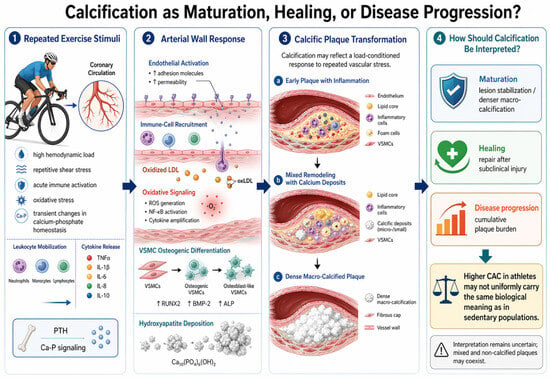
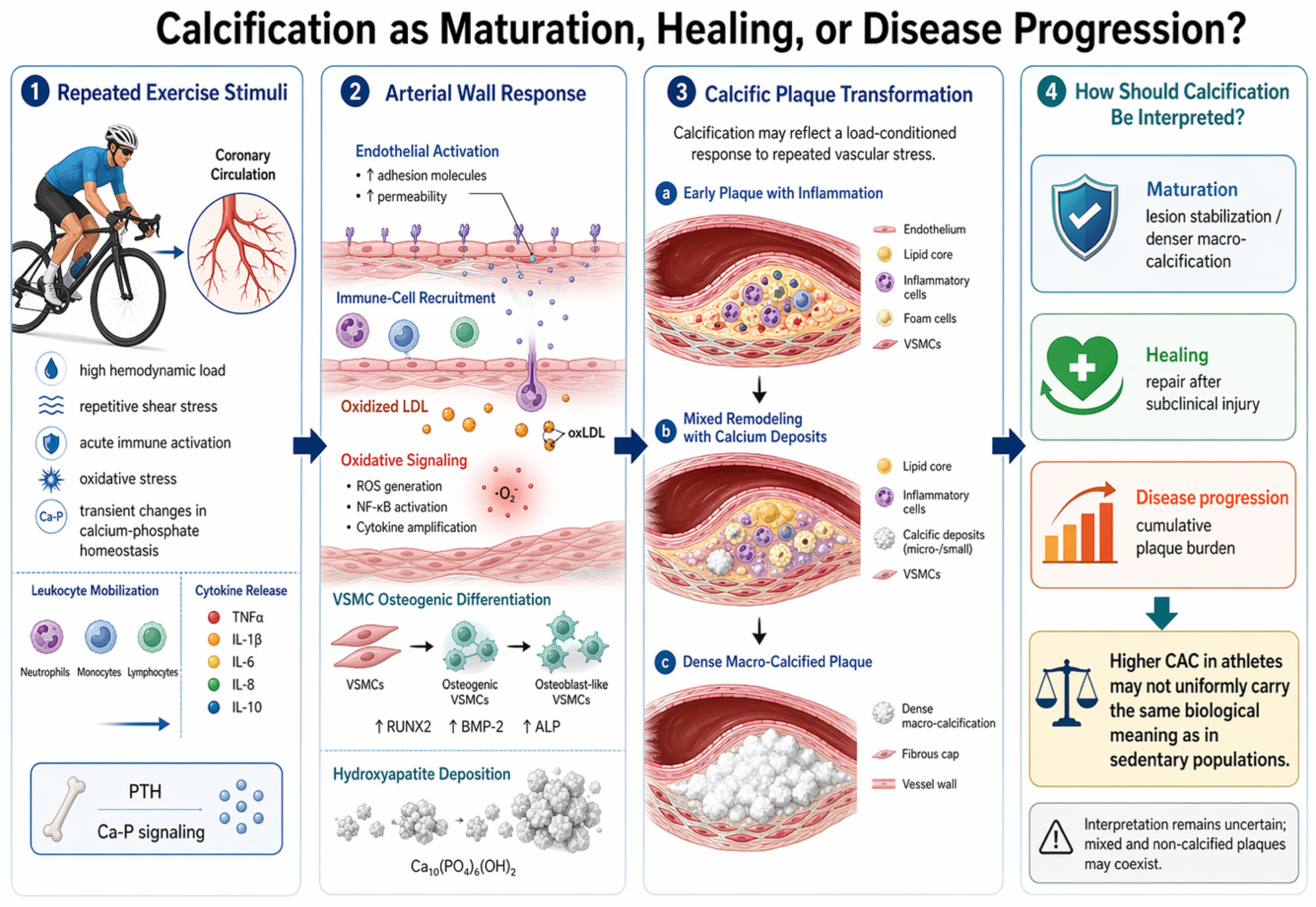
At the tissue level, inflammatory and mineral-regulatory signals may converge on vascular smooth muscle cell phenotype. Chronic or repetitive exposure to cytokine signaling, oxidative stress, and altered calcium–phosphate balance can promote osteogenic pathways, favoring expression of bone-associated proteins and hydroxyapatite deposition within plaque. From this perspective, calcification may represent the morphological endpoint of repeated cycles of vascular stress, subclinical injury, and repair [69]. In some settings, dense macro-calcification may reflect lesion maturation, structural stabilization, or healing after repeated plaque injury. In others, it may simply indicate cumulative plaque burden and advancing disease. Therefore, the interpretation of CAC in athletes should remain clinically cautious. Dense calcification may reflect plaque maturation in some lesions, but a high CAC score also indicates greater total atherosclerotic burden. Athlete status alone should not be used to reclassify elevated CAC as benign, particularly when CAC coexists with mixed or non-calcified plaque, proximal disease, stenosis, symptoms, or conventional risk factors [70]. Figure 4 illustrates how repeated endurance exercise may contribute to calcific plaque transformation.
Figure 4.
This schematic illustrates how repeated endurance exercise may contribute to calcific plaque transformation through hemodynamic stress, transient inflammation, oxidative stress, and calcium–phosphate signaling. The figure shows progression from early inflammatory plaque to mixed plaque with calcium deposits and dense macro-calcified plaque and highlights that calcification in athletes may reflect lesion maturation, healing after subclinical injury, or cumulative disease progression. The figure also emphasizes that higher coronary artery calcium burden in athletes may have heterogeneous biological correlates, but CAC remains a marker of total plaque burden and should not be assumed to be benign or prognostically neutral. Abbreviations: ALP, alkaline phosphatase; BMP-2, bone morphogenetic protein-2; Ca-P, calcium–phosphate; CAC, coronary artery calcium; eNOS, endothelial nitric oxide synthase; IL, interleukin; LDL, low-density lipoprotein; NF-κB, nuclear factor kappa B; NO, nitric oxide; oxLDL, oxidized low-density lipoprotein; PTH, parathyroid hormone; ROS, reactive oxygen species; RUNX2, runt-related transcription factor 2; TNFα, tumor necrosis factor alpha; VSMCs, vascular smooth muscle cells.
6. The Adaptive–Maladaptive Continuum: Reconciling Coronary Fitness and Coronary Plaque
The concept that best integrates the above observations is an adaptive–maladaptive continuum. At one end lies physiological vascular conditioning: repetitive shear stress promotes endothelial resilience, positive remodeling, preserved vasomotor function, and efficient perfusion under high metabolic demand. In this adaptive window, structural changes may represent optimized coronary morphology rather than clinically important disease [71].
At the other end, the same hemodynamic and biological forces may, under certain conditions, contribute to plaque accumulation, calcification, proximal lesion development, or functionally relevant disease. Aging, dyslipidemia, smoking exposure, hypertension, inflammatory burden, menopause, and inherited susceptibility likely determine where an individual athlete falls along this spectrum [72,73,74].
This model is particularly useful because it reconciles the two apparently contradictory observations that define the field: first, endurance exercise is profoundly cardioprotective; second, selected athletes may still exhibit greater CAC or plaque burden than expected. The paradox, then, may not be a true contradiction but the expression of a load-dependent biological continuum in which adaptation and atherosclerosis are not mutually exclusive [75].
Clinically, this continuum argues against binary labels such as “benign athlete calcification” or “harmful exercise-induced CAD”. Instead, coronary findings should be interpreted in terms of how far remodeling remains compensated, how plaque phenotype evolves, and whether structural change has translated into functional limitation or increased risk [76,77,78,79].
7. Sex Differences and Coronary Atherosclerosis in Female Athletes
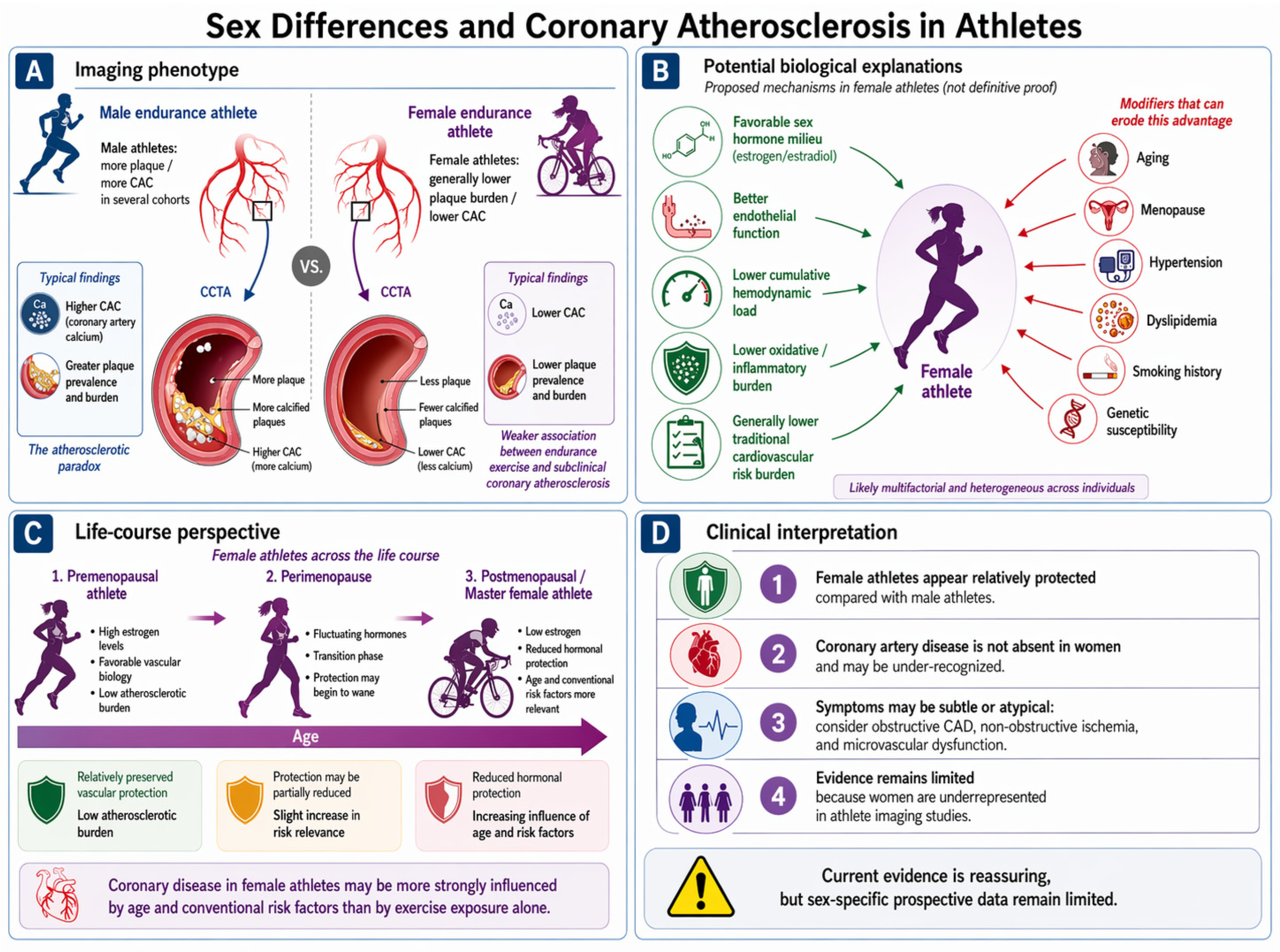
Sex is an important but still underexplored modifier of exercise-related coronary remodeling. Most studies investigating coronary plaque burden in athletes have included predominantly male cohorts, which limits the generalizability of their findings to women. The currently available data suggest that the relationship between high-volume endurance training and subclinical coronary atherosclerosis differs substantially between sexes [80,81,82].
In contrast to male master athletes, female endurance athletes have generally shown a low prevalence of coronary plaque, minimal CAC burden, and little evidence of exercise-associated acceleration of subclinical atherosclerosis [83,84]. Comparative studies and recent reviews suggest that when coronary atherosclerosis is identified in female athletes, it is more often explained by age and conventional cardiovascular risk factors than by exercise exposure itself [85,86]. These findings are reassuring, but they must be interpreted cautiously because female athlete cohorts have been small and underpowered for definitive conclusions.
Several mechanisms have been proposed to explain this apparent female advantage. Lower circulating androgen levels and higher estradiol levels before menopause may exert protective effects on endothelial function and coronary vasodilation. Female athletes also typically have lower maximal cardiac output and, in many settings, lower cumulative exposure to extreme hemodynamic shear stress than male counterparts. Differences in body composition, exercise intensity, and lifetime training patterns may also contribute.
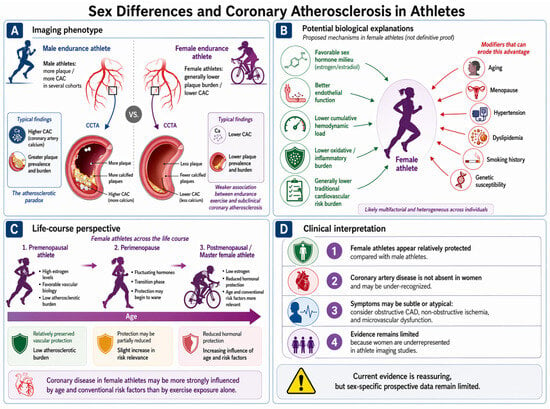
Despite these reassuring patterns, coronary disease in female athletes should not be dismissed. Women may present with atypical symptoms, delays in diagnosis, and a broader differential that includes non-obstructive ischemia and microvascular dysfunction. Menopause is particularly relevant because the decline in estrogen exposure may reduce endothelial nitric oxide bioavailability, alter vascular inflammation, worsen lipid profile, and increase central adiposity and blood pressure. Therefore, the coronary phenotype of premenopausal female athletes may differ substantially from that of peri- and postmenopausal master athletes. Future studies should report menopausal status, hormone therapy, reproductive history, and sex-specific risk factors, rather than simply adjusting for sex as a binary covariate. Accordingly, female athletes deserve dedicated prospective investigation rather than extrapolation from male data. Figure 5 summarizes current concepts regarding sex-related differences in coronary atherosclerosis in athletic populations.
Figure 5.
Sex differences and coronary atherosclerosis in athletes. This schematic summarizes current concepts regarding sex-related differences in coronary atherosclerosis in athletic populations. Panel (A) illustrates the imaging phenotype, highlighting that male endurance athletes more often show greater CAC burden and higher plaque prevalence in several cohorts than female endurance athletes. Panel (B) outlines potential biological explanations for this apparent female advantage. Panel (C) presents a life-course perspective, suggesting that coronary protection in female athletes may be greatest before menopause, may begin to decline during the perimenopausal transition, and may become increasingly influenced by age and conventional risk factors in postmenopausal or master female athletes. Panel (D) highlights the clinical interpretation: although current evidence is overall reassuring and suggests a lower atherosclerotic burden in female athletes compared with male athletes, coronary artery disease is not absent in women, symptoms may be subtle or atypical, and sex-specific prospective imaging and outcome data remain limited. The mechanisms shown are proposed explanations based on current evidence and should be interpreted as conceptually informative and suggestive of future research directions rather than as definitive evidence. Abbreviations: CAC, coronary artery calcium; CAD, coronary artery disease; CCTA, coronary computed tomography angiography.
8. Conclusions
Coronary remodeling in endurance athletes represents a load-conditioned vascular phenotype shaped by the interaction of mechanical stress, mechanotransduction, systemic biology, and time.
The available evidence synthesized in this narrative review suggests that lifelong endurance exercise does not uniformly prevent subclinical coronary atherosclerosis, particularly in older men with high cumulative exposure, though systematic reviews and prospective data are needed to confirm this conclusion. At the same time, coronary disease in athletes often appears phenotypically and functionally distinct from conventional sedentary atherosclerosis, with greater emphasis on calcification, outward remodeling, and preserved exercise capacity.
This perspective argues against binary interpretations. Coronary findings in endurance athletes should be understood along an adaptive–maladaptive continuum, in which structural remodeling may remain physiologically compensated in some individuals while becoming clinically relevant in others. Distinguishing plaque burden from plaque phenotype, and anatomy from function, is central to this interpretation. A mechanobiological framework may therefore offer a useful conceptual explanation for the atherosclerotic paradox in endurance athletes. By integrating exercise dose, endothelial biology, plaque morphology, and physiological performance, it provides a foundation for risk interpretation and more individualized clinical monitoring in the evolving field of sports cardiology. Clinically, particular attention should be given to master athletes with high cumulative exposure or ongoing competitive participation, because CAD may be clinically silent or associated with attenuated symptoms despite relevant anatomical disease. Importantly, this framework should not be interpreted as minimizing the clinical relevance of CAC. Elevated CAC in athletes remains a marker of coronary atherosclerotic burden and should prompt conventional risk-factor optimization and individualized assessment. Future studies should integrate objective training-load assessment, CCTA-based plaque characterization, ischemia testing, sex-specific analyses, and adjudicated clinical outcomes.
Author Contributions
Conceptualization, N.T., A.S. (Andrea Segreti) and F.G.; methodology, N.T., C.F. M.C., F.P., M.P., C.R., V.L. and A.F.; validation, A.S. (Andrea Segreti) and F.G.; formal analysis, investigation, resources and data curation, N.T., C.F. M.C., F.P., M.P., C.R., V.L., A.F., A.E.L. and T.T.; writing—original draft preparation, N.T., C.F. M.C., F.P., M.P., C.R., V.L., A.F., A.E.L., A.S. (Alberto Spagnolo) and T.T.; writing—review and editing, all authors; visualization, all authors; supervision, A.S. (Andrea Segreti), C.F., F.P. and F.G. All authors have read and agreed to the published version of the manuscript.
Funding
This research received no external funding.
Institutional Review Board Statement
Not applicable.
Informed Consent Statement
Not applicable.
Data Availability Statement
No new data were created or analyzed in this study.
Acknowledgments
The authors used OpenAI (ChatGPT, based on GPT-5.5) for language and editorial assistance during manuscript preparation. All content was critically reviewed and edited by the authors, who take full responsibility for the final manuscript.
Conflicts of Interest
The authors declare no conflicts of interest.
References
- Paluch, A.E.; Boyer, W.R.; Franklin, B.A.; Laddu, D.; Lobelo, F.; Lee, D.; McDermott, M.M.; Swift, D.L.; Webel, A.R.; Lane, A. Resistance Exercise Training in Individuals With and Without Cardiovascular Disease: 2023 Update: A Scientific Statement From the American Heart Association. Circulation 2024, 149, E217–E231. [Google Scholar] [CrossRef] [Scilit] [PubMed]
- Claessen, G.; Eijsvogels, T.M.H.; Albert, C.M.; Baggish, A.L.; Levine, B.D.; Marijon, E.; Michos, E.D.; La Gerche, A. Coronary Atherosclerosis in Athletes: Emerging Concepts and Preventive Strategies. Eur. Heart J. 2025, 46, 890–903. [Google Scholar] [CrossRef] [Scilit] [PubMed]
- Guarnieri, G.; Pozzi, F.E.; Conte, E.; Righetto, M.; Bartorelli, A.; Andreini, D. Extreme Endurance Training and Coronary Artery Disease: A Systematic Review and a Meta-Analysis. Int. J. Cardiol. 2025, 429, 133172. [Google Scholar] [CrossRef] [Scilit] [PubMed]
- Mohlenkamp, S.; Lehmann, N.; Breuckmann, F.; Brocker-Preuss, M.; Nassenstein, K.; Halle, M.; Budde, T.; Mann, K.; Barkhausen, J.; Heusch, G.; et al. Running: The Risk of Coronary Events: Prevalence and Prognostic Relevance of Coronary Atherosclerosis in Marathon Runners. Eur. Heart J. 2008, 29, 1903–1910. [Google Scholar] [CrossRef] [Scilit] [PubMed]
- Möhlenkamp, S.; Leineweber, K.; Lehmann, N.; Braun, S.; Roggenbuck, U.; Perrey, M.; Broecker-Preuss, M.; Budde, T.; Halle, M.; Mann, K.; et al. Coronary Atherosclerosis Burden, but Not Transient Troponin Elevation, Predicts Long-Term Outcome in Recreational Marathon Runners. Basic Res. Cardiol. 2014, 109, 391. [Google Scholar] [CrossRef] [Scilit] [PubMed]
- Erbel, R.; Möhlenkamp, S.; Moebus, S.; Schmermund, A.; Lehmann, N.; Stang, A.; Dragano, N.; Grönemeyer, D.; Seibel, R.; Kälsch, H.; et al. Coronary Risk Stratification, Discrimination, and Reclassification Improvement Based on Quantification of Subclinical Coronary Atherosclerosis. J. Am. Coll. Cardiol. 2010, 56, 1397–1406. [Google Scholar] [CrossRef] [Scilit] [PubMed]
- Basra, S.S.; Pokharel, Y.; Hira, R.S.; Bandeali, S.J.; Nambi, V.; Deswal, A.; Nasir, K.; Martin, S.S.; Vogel, R.A.; Roberts, A.J.; et al. Relation Between Playing Position and Coronary Artery Calcium Scores in Retired National Football League Players. Am. J. Cardiol. 2014, 114, 1836–1840. [Google Scholar] [CrossRef] [Scilit] [PubMed]
- Green, D.J.; Spence, A.; Rowley, N.; Thijssen, D.H.J.; Naylor, L.H. Vascular Adaptation in Athletes: Is There an ‘Athlete’s Artery’? Exp. Physiol. 2012, 97, 295–304. [Google Scholar] [CrossRef] [Scilit] [PubMed]
- Fyyaz, S.; Papadakis, M. Fit to a Fault? The Paradox of Coronary Artery Disease in Veteran Athletes. Eur. Heart J. 2023, 44, 2400–2402. [Google Scholar] [CrossRef] [Scilit] [PubMed]
- Eijsvogels, T.M.H.; Molossi, S.; Lee, D.; Emery, M.S.; Thompson, P.D. Exercise at the Extremes. J. Am. Coll. Cardiol. 2016, 67, 316–329. [Google Scholar] [CrossRef] [Scilit] [PubMed]
- Hsu, J.J.; Tintut, Y.; Demer, L.L. Paradox of Exercise and Coronary Artery Calcification: Potential Underlying Mechanisms. Circ. Res. 2025, 137, 335–349. [Google Scholar] [CrossRef] [Scilit] [PubMed]
- Miedema, M.D.; Dardari, Z.A.; Nasir, K.; Blankstein, R.; Knickelbine, T.; Oberembt, S.; Shaw, L.; Rumberger, J.; Michos, E.D.; Rozanski, A.; et al. Association of Coronary Artery Calcium With Long-Term, Cause-Specific Mortality Among Young Adults. JAMA Netw. Open 2019, 2, e197440. [Google Scholar] [CrossRef] [Scilit] [PubMed]
- Nurmohamed, N.S.; van Rosendael, A.R.; Danad, I.; Ngo-Metzger, Q.; Taub, P.R.; Ray, K.K.; Figtree, G.; Bonaca, M.P.; Hsia, J.; Rodriguez, F.; et al. Atherosclerosis Evaluation and Cardiovascular Risk Estimation Using Coronary Computed Tomography Angiography. Eur. Heart J. 2024, 45, 1783–1800, Correction in Eur. Heart J. 2024, 45, 2332. https://doi.org/10.1093/eurheartj/ehae318. [Google Scholar] [CrossRef] [Scilit] [PubMed]
- McClelland, R.L.; Jorgensen, N.W.; Budoff, M.; Blaha, M.J.; Post, W.S.; Kronmal, R.A.; Bild, D.E.; Shea, S.; Liu, K.; Watson, K.E.; et al. 10-Year Coronary Heart Disease Risk Prediction Using Coronary Artery Calcium and Traditional Risk Factors. J. Am. Coll. Cardiol. 2015, 66, 1643–1653. [Google Scholar] [CrossRef] [Scilit] [PubMed]
- Morrison, B.N.; Isserow, S.; Taunton, J.; Oxborough, D.; Moulson, N.; Warburton, D.E.R.; McKinney, J. Masters Athlete Screening Study (MASS): Incidence of Cardiovascular Disease and Major Adverse Cardiac Events and Efficacy of Screening over Five Years. Eur. J. Prev. Cardiol. 2023, 30, 887–899. [Google Scholar] [CrossRef] [Scilit] [PubMed]
- Cavarretta, E.; Pingitore, A.; Peruzzi, M.; Sciarra, L. Cardiovascular Screening of Master Athletes: Insights from the Master Athletes Screening Study. Eur. J. Prev. Cardiol. 2023, 30, 884–886. [Google Scholar] [CrossRef] [Scilit] [PubMed]
- Mascia, G.; Cammarano, M.; Palmieri, V.; Monti, R.; Della Bona, R.; Vergallo, R.; Andreini, D.; Zeppilli, P.; Porto, I. Coronary CT Angiography in Master Athletes: Redefining Primary Prevention of Ischemic Heart Disease beyond the Italian 2023 COCIS Guidelines. Int. J. Cardiol. 2026, 450, 134214. [Google Scholar] [CrossRef] [Scilit] [PubMed]
- Schwartz, R.S.; Kraus, S.M.; Schwartz, J.G.; Wickstrom, K.K.; Peichel, G.; Garberich, R.F.; Lesser, J.R.; Oesterle, S.N.; Knickelbine, T.; Harris, K.M.; et al. Increased Coronary Artery Plaque Volume Among Male Marathon Runners. Mo. Med. 2014, 111, 89–94. [Google Scholar] [PubMed]
- Merghani, A.; Maestrini, V.; Rosmini, S.; Cox, A.T.; Dhutia, H.; Bastiaenan, R.; David, S.; Yeo, T.J.; Narain, R.; Malhotra, A.; et al. Prevalence of Subclinical Coronary Artery Disease in Masters Endurance Athletes With a Low Atherosclerotic Risk Profile. Circulation 2017, 136, 126–137. [Google Scholar] [CrossRef] [Scilit] [PubMed]
- Roberts, W.O.; Schwartz, R.S.; Kraus, S.M.; Schwartz, J.G.; Peichel, G.; Garberich, R.F.; Lesser, J.R.; Oesterle, S.N.; Wickstrom, K.K.; Knickelbine, T.; et al. Long-Term Marathon Running Is Associated with Low Coronary Plaque Formation in Women. Med. Sci. Sports Exerc. 2017, 49, 641–645. [Google Scholar] [CrossRef] [Scilit] [PubMed]
- De Bosscher, R.; Dausin, C.; Claus, P.; Bogaert, J.; Dymarkowski, S.; Goetschalckx, K.; Ghekiere, O.; Van De Heyning, C.M.; Van Herck, P.; Paelinck, B.; et al. Lifelong Endurance Exercise and Its Relation with Coronary Atherosclerosis. Eur. Heart J. 2023, 44, 2388–2399, Correction in Eur. Heart J. 2023, 44, 3668. https://doi.org/10.1093/eurheartj/ehad546. [Google Scholar] [CrossRef] [Scilit] [PubMed]
- Feuchtner, G.M.; Ruf, E.; Barbieri, F.; Senoner, T.; Deeg, J.; Scharll, Y.; Widmann, G.; Lacaita, P.G. The Influence of High Exercise Levels on the Coronary Atherosclerosis Profile by Computed Tomography Angiography and Outcomes. Am. J. Prev. Cardiol. 2025, 23, 101044. [Google Scholar] [CrossRef] [Scilit] [PubMed]
- Braber, T.L.; Mosterd, A.; Prakken, N.H.; Rienks, R.; Nathoe, H.M.; Mali, W.P.; Doevendans, P.A.; Backx, F.J.; Bots, M.L.; Grobbee, D.E.; et al. Occult Coronary Artery Disease in Middle-Aged Sportsmen with a Low Cardiovascular Risk Score: The Measuring Athlete’s Risk of Cardiovascular Events (MARC) Study. Eur. J. Prev. Cardiol. 2016, 23, 1677–1684. [Google Scholar] [CrossRef] [Scilit] [PubMed]
- Aengevaeren, V.L.; Mosterd, A.; Braber, T.L.; Prakken, N.H.J.; Doevendans, P.A.; Grobbee, D.E.; Thompson, P.D.; Eijsvogels, T.M.H.; Velthuis, B.K. Relationship Between Lifelong Exercise Volume and Coronary Atherosclerosis in Athletes. Circulation 2017, 136, 138–148. [Google Scholar] [CrossRef] [Scilit] [PubMed]
- Tsiflikas, I.; Thomas, C.; Fallmann, C.; Schabel, C.; Mangold, S.; Ketelsen, D.; Claussen, C.; Axmann, D.; Schroeder, S.; Burgstahler, C. Prevalence of Subclinical Coronary Artery Disease in Middle-Aged, Male Marathon Runners Detected by Cardiac CT. RöFo-Fortschr. Geb. Röntgenstrahlen Bildgeb. Verfahr. 2015, 187, 561–568. [Google Scholar] [CrossRef] [Scilit] [PubMed]
- Gervasi, S.F.; Palumbo, L.; Cammarano, M.; Orvieto, S.; Di Rocco, A.; Vestri, A.; Marano, R.; Savino, G.; Bianco, M.; Zeppilli, P.; et al. Coronary Atherosclerosis in Apparently Healthy Master Athletes Discovered during Pre-PARTECIPATION Screening. Role of Coronary CT Angiography (CCTA). Int. J. Cardiol. 2019, 282, 99–107. [Google Scholar] [CrossRef] [Scilit] [PubMed]
- Defina, L.F.; Radford, N.B.; Barlow, C.E.; Willis, B.L.; Leonard, D.; Haskell, W.L.; Farrell, S.W.; Pavlovic, A.; Abel, K.; Berry, J.D.; et al. Association of All-Cause and Cardiovascular Mortality with High Levels of Physical Activity and Concurrent Coronary Artery Calcification. JAMA Cardiol. 2019, 4, 174–181. [Google Scholar] [CrossRef] [Scilit] [PubMed]
- Lee, C.T.; Eastman, S.E.; Arcinas, L.A.; Asselin, C.Y.; Cheung, D.; Mayba, A.; Zhu, A.; Strzelczyk, J.; Maycher, B.; Memauri, B.; et al. Prevalence and Functional Implication of Silent Coronary Artery Disease in Marathon Runners Over 40 Years of Age: The MATCH-40 Study. CJC Open 2021, 3, 595–602. [Google Scholar] [CrossRef] [Scilit] [PubMed]
- Aengevaeren, V.L.; Mosterd, A.; Bakker, E.A.; Braber, T.L.; Nathoe, H.M.; Sharma, S.; Thompson, P.D.; Velthuis, B.K.; Eijsvogels, T.M.H. Exercise Volume Versus Intensity and the Progression of Coronary Atherosclerosis in Middle-Aged and Older Athletes: Findings From the MARC-2 Study. Circulation 2023, 147, 993–1003. [Google Scholar] [CrossRef] [Scilit] [PubMed]
- Berge, K.; Janssen, S.L.J.E.; Velthuis, B.K.; Myhre, P.L.; Mosterd, A.; Omland, T.; Eijsvogels, T.M.H.; Aengevaeren, V.L. Predictors of Coronary Atherosclerosis in Middle-Aged and Older Athletes: The MARC-2 Study. Eur. Heart J. Cardiovasc. Imaging 2025, 26, 461–470. [Google Scholar] [CrossRef] [Scilit] [PubMed]
- Pauwels, R.; Dausin, C.; Ruiz-Carmona, S.; De Bosscher, R.; De Paepe, J.; Bekhuis, Y.; Delpire, B.; Sinnaeve, P.; Dymarkowski, S.; Ghekiere, O.; et al. Wearable-Derived Training Load and Coronary Atherosclerosis in Middle-Aged and Older Athletes and Physically Active Controls: A New Perspective From the Master@Heart Study. Circulation 2026, 153, 1009–1022. [Google Scholar] [CrossRef] [Scilit] [PubMed]
- Boutsikos, I.; Gkraikou, T.; Saad, R.; Kasiakogias, A.; Patrikios, I.; Ntalianis, A.; Chatzis, D. Coronary Atherosclerosis in Master Athletes: Current Knowledge and Future Challenges. J. Pers. Med. 2026, 16, 172. [Google Scholar] [CrossRef] [Scilit] [PubMed]
- Eijsvogels, T.M.H.; Kim, J.H.; Aengevaeren, V.L.; D’Ascenzi, F.; Churchill, T.W.; Dineen, E.H.; Sanz-de la Garza, M.; Gati, S.; Halasz, G.; Haugaa, K.; et al. Masters Athletes With Abnormal Cardiovascular Findings. J. Am. Coll. Cardiol. 2026. Just accepted. [Google Scholar] [CrossRef] [Scilit] [PubMed]
- Henley-Martin, S.R.; Brade, C.J.; Riddell, H.; Watts, S.P.; Maiorana, A.J.; Naylor, L.H.; Binnie, M.J.; Spence, A.L. Vascular Adaptation in Elite Female and Male Rowers across a Competitive Season. Curr. Res. Physiol. 2025, 8, 100164. [Google Scholar] [CrossRef] [Scilit] [PubMed]
- Dausin, C.; Ruiz-Carmona, S.; Cauwenberghs, N.; De Bosscher, R.; Ntalianis, E.; Kuznetsova, T.; Foulkes, S.; Janssens, K.; Mitchell, A.; Vanderschueren, W.; et al. Cardiovascular Adaptation to Training Load in Endurance Athletes: A Longitudinal Study. Eur. Heart J. 2026, 47, ehaf1018. [Google Scholar] [CrossRef] [Scilit] [PubMed]
- Borjesson, M.; Dellborg, M.; Niebauer, J.; LaGerche, A.; Schmied, C.; Solberg, E.E.; Halle, M.; Adami, E.; Biffi, A.; Carré, F.; et al. Recommendations for Participation in Leisure Time or Competitive Sports in Athletes-Patients with Coronary Artery Disease: A Position Statement from the Sports Cardiology Section of the European Association of Preventive Cardiology (EAPC). Eur. Heart J. 2019, 40, 13–18. [Google Scholar] [CrossRef] [Scilit] [PubMed]
- Chiu, J.-J.; Chien, S. Effects of Disturbed Flow on Vascular Endothelium: Pathophysiological Basis and Clinical Perspectives. Physiol. Rev. 2011, 91, 327–387. [Google Scholar] [CrossRef] [Scilit] [PubMed]
- Monosilio, S.; Prosperi, S.; Netti, L.; Filomena, D.; Di Gioia, G.; Pedrizzetti, G.; Tonti, G.; Casciani, E.; Gualdi, G.; Squeo, M.R.; et al. A Novel Insight into the Athlete’s Heart: Hemodynamic Forces Evaluation by Cardiovascular Magnetic Resonance. Int. J. Cardiol. 2025, 441, 133773. [Google Scholar] [CrossRef] [Scilit] [PubMed]
- Neyroud, D.; Baggish, A. Exercise Dose and Cardiac Remodelling in Athletes: Unlocking the Magic of Long Slow Distance. Eur. Heart J. 2026, 47, ehaf1107. [Google Scholar] [CrossRef] [Scilit] [PubMed]
- Pelliccia, A.; Sharma, S.; Gati, S.; Bäck, M.; Börjesson, M.; Caselli, S.; Collet, J.-P.; Corrado, D.; Drezner, J.A.; Halle, M.; et al. 2020 ESC Guidelines on Sports Cardiology and Exercise in Patients with Cardiovascular Disease. Eur. Heart J. 2021, 42, 17–96. [Google Scholar] [CrossRef] [Scilit] [PubMed]
- Aengevaeren, V.; Mosterd, A.; Braber, T.L.; Nathoe, H.M.; Eijsvogels, T.M.H.; Velthuis, B.K. Sport Specific Incidence and Progression of Coronary Artery Calcification among Amateur Athletes: A Follow-up of the Measuring Athletes Risk of Cardiovascular Events (MARC) Study. Eur. Heart J. 2020, 41, 3118. [Google Scholar] [CrossRef] [Scilit]
- Veraldi, G.; Macrì, M.; Criscenti, P.; Scorsone, L.; Zingaretti, C.; Gnoni, M.; Mezzetto, L. Arterial Endofibrosis in Professional Cyclists. G. Chir.—J. Ital. Surg. Assoc. 2015, 36, 267–271. [Google Scholar] [CrossRef] [Scilit] [PubMed]
- Oja, P.; Kelly, P.; Pedisic, Z.; Titze, S.; Bauman, A.; Foster, C.; Hamer, M.; Hillsdon, M.; Stamatakis, E. Associations of Specific Types of Sports and Exercise with All-Cause and Cardiovascular-Disease Mortality: A Cohort Study of 80 306 British Adults. Br. J. Sports Med. 2017, 51, 812–817. [Google Scholar] [CrossRef] [Scilit] [PubMed]
- Abraham, P.; Saumet, J.L.; Chevalier, J.M. External Iliac Artery Endofibrosis in Athletes. Sports Med. 1997, 24, 221–226. [Google Scholar] [CrossRef] [Scilit] [PubMed]
- Dabravolski, S.A.; Sukhorukov, V.N.; Kalmykov, V.A.; Grechko, A.V.; Shakhpazyan, N.K.; Orekhov, A.N. The Role of KLF2 in the Regulation of Atherosclerosis Development and Potential Use of KLF2-Targeted Therapy. Biomedicines 2022, 10, 254. [Google Scholar] [CrossRef] [Scilit] [PubMed]
- Verheggen, R.J.H.M.; Eijsvogels, T.M.H.; Catoire, M.; Terink, R.; Ramakers, R.; Bongers, C.C.W.G.; Mensink, M.; Hermus, A.R.M.M.; Thijssen, D.H.J.; Hopman, M.T.E. Cytokine Responses to Repeated, Prolonged Walking in Lean versus Overweight/Obese Individuals. J. Sci. Med. Sport 2019, 22, 196–200. [Google Scholar] [CrossRef] [Scilit] [PubMed]
- Kim, J.H.; Baggish, A.L.; Levine, B.D.; Ackerman, M.J.; Day, S.M.; Dineen, E.H.; Guseh, J.S.; La Gerche, A.; Lampert, R.; Martinez, M.W.; et al. Clinical Considerations for Competitive Sports Participation for Athletes With Cardiovascular Abnormalities: A Scientific Statement From the American Heart Association and American College of Cardiology. Circulation 2025, 151, e716–e761, Correction in Circulation 2025, 151, e864. https://doi.org/10.1161/CIR.0000000000001326. [Google Scholar] [CrossRef] [Scilit] [PubMed]
- Fulghum, K.; Hill, B.G. Metabolic Mechanisms of Exercise-Induced Cardiac Remodeling. Front. Cardiovasc. Med. 2018, 5, 127. [Google Scholar] [CrossRef] [Scilit] [PubMed]
- Dores, H.; de Araújo Gonçalves, P.; Cardim, N.; Neuparth, N. Coronary Artery Disease in Athletes: An Adverse Effect of Intense Exercise? Rev. Port. Cardiol. 2018, 37, 77–85. [Google Scholar] [CrossRef] [Scilit] [PubMed]
- Kunadian, V.; Chieffo, A.; Camici, P.G.; Berry, C.; Escaned, J.; Maas, A.H.E.M.; Prescott, E.; Karam, N.; Appelman, Y.; Fraccaro, C.; et al. An EAPCI Expert Consensus Document on Ischaemia with Non-Obstructive Coronary Arteries in Collaboration with European Society of Cardiology Working Group on Coronary Pathophysiology & Microcirculation Endorsed by Coronary Vasomotor Disorders International Study Group. EuroIntervention 2021, 16, 1049–1069. [Google Scholar] [CrossRef] [Scilit] [PubMed]
- Celeski, M.; Di Gioia, G.; Nusca, A.; Segreti, A.; Squeo, M.R.; Lemme, E.; Mango, F.; Ferrera, A.; Ussia, G.P.; Grigioni, F. The Spectrum of Coronary Artery Disease in Elite Endurance Athletes—A Long-Standing Debate: State-of-the-Art Review. J. Clin. Med. 2024, 13, 5144. [Google Scholar] [CrossRef] [Scilit] [PubMed]
- Zambrano, A.; Tintut, Y.; Demer, L.L.; Hsu, J.J. Potential Mechanisms Linking High-Volume Exercise with Coronary Artery Calcification. Heart 2023, 109, 1139–1145. [Google Scholar] [CrossRef] [Scilit] [PubMed]
- Moore, K.J.; Sheedy, F.J.; Fisher, E.A. Macrophages in Atherosclerosis: A Dynamic Balance. Nat. Rev. Immunol. 2013, 13, 709–721. [Google Scholar] [CrossRef] [Scilit] [PubMed]
- Cerqueira, É.; Marinho, D.A.; Neiva, H.P.; Lourenço, O. Inflammatory Effects of High and Moderate Intensity Exercise—A Systematic Review. Front. Physiol. 2020, 10, 1550. [Google Scholar] [CrossRef] [Scilit] [PubMed]
- Hansson, G.K. Inflammation, Atherosclerosis, and Coronary Artery Disease. N. Engl. J. Med. 2005, 352, 1685–1695. [Google Scholar] [CrossRef] [Scilit] [PubMed]
- Suzuki, K.; Nakaji, S.; Yamada, M.; Liu, Q.; Kurakake, S.; Okamura, N.; Kumae, T.; Umeda, T.; Sugawara, K. Impact of a Competitive Marathon Race on Systemic Cytokine and Neutrophil Responses. Med. Sci. Sports Exerc. 2003, 35, 348–355. [Google Scholar] [CrossRef] [Scilit] [PubMed]
- La Gerche, A.; Inder, W.J.; Roberts, T.J.; Brosnan, M.J.; Heidbuchel, H.; Prior, D.L. Relationship between Inflammatory Cytokines and Indices of Cardiac Dysfunction Following Intense Endurance Exercise. PLoS ONE 2015, 10, e0130031. [Google Scholar] [CrossRef] [Scilit] [PubMed]
- Tikkanen, E.; Gustafsson, S.; Ingelsson, E. Associations of Fitness, Physical Activity, Strength, and Genetic Risk With Cardiovascular Disease. Circulation 2018, 137, 2583–2591. [Google Scholar] [CrossRef] [Scilit] [PubMed]
- Wang, Y.-X.; Liu, H.-B.; Li, P.-S.; Yuan, W.-X.; Liu, B.; Liu, S.-T.; Qin, K.-R. ROS and NO Dynamics in Endothelial Cells Exposed to Exercise-Induced Wall Shear Stress. Cell. Mol. Bioeng. 2019, 12, 107–120. [Google Scholar] [CrossRef] [Scilit] [PubMed]
- Valenzuela, P.L.; Ruilope, L.M.; Santos-Lozano, A.; Wilhelm, M.; Kränkel, N.; Fiuza-Luces, C.; Lucia, A. Exercise Benefits in Cardiovascular Diseases: From Mechanisms to Clinical Implementation. Eur. Heart J. 2023, 44, 1874–1889. [Google Scholar] [CrossRef] [Scilit] [PubMed]
- Shapero, K.; Deluca, J.; Contursi, M.; Wasfy, M.; Weiner, R.B.; Lewis, G.D.; Hutter, A.; Baggish, A.L. Cardiovascular Risk and Disease Among Masters Endurance Athletes: Insights from the Boston MASTER (Masters Athletes Survey To Evaluate Risk) Initiative. Sports Med. Open 2016, 2, 29. [Google Scholar] [CrossRef] [Scilit] [PubMed]
- Pavlovic, A.; DeFina, L.F.; Leonard, D.; Radford, N.B.; Farrell, S.W.; Barlow, C.E.; Shuval, K.; Berry, J.D.; Levine, B.D. Coronary Artery Calcification and High-Volume Physical Activity: Role of Lower Intensity vs. Longer Duration of Exercise. Eur. J. Prev. Cardiol. 2024, 31, 1526–1534. [Google Scholar] [CrossRef] [Scilit] [PubMed]
- Shin, S.; Kim, K.-J.; Chang, H.-J.; Cho, I.; Kim, Y.J.; Choi, B.-W.; Rhee, Y.; Lim, S.-K.; Yang, W.-I.; Shim, C.-Y.; et al. Impact of Serum Calcium and Phosphate on Coronary Atherosclerosis Detected by Cardiac Computed Tomography. Eur. Heart J. 2012, 33, 2873–2881. [Google Scholar] [CrossRef] [Scilit] [PubMed]
- Hou, Z.; Lu, B.; Gao, Y.; Jiang, S.; Wang, Y.; Li, W.; Budoff, M.J. Prognostic Value of Coronary CT Angiography and Calcium Score for Major Adverse Cardiac Events in Outpatients. JACC Cardiovasc. Imaging 2012, 5, 990–999. [Google Scholar] [CrossRef] [Scilit] [PubMed]
- Khan, M.; Ichikawa, K.; Krishnan, S.; Budoff, M.J. Coronary Artery Disease in Athletes-Insights from Cardiac CT. J. Clin. Cardiol. 2025, 6, 1–8. [Google Scholar] [CrossRef] [Scilit]
- Lombardi, G.; Ziemann, E.; Banfi, G.; Corbetta, S. Physical Activity-Dependent Regulation of Parathyroid Hormone and Calcium-Phosphorous Metabolism. Int. J. Mol. Sci. 2020, 21, 5388. [Google Scholar] [CrossRef] [Scilit] [PubMed]
- Hagström, E.; Michaëlsson, K.; Melhus, H.; Hansen, T.; Ahlström, H.; Johansson, L.; Ingelsson, E.; Sundström, J.; Lind, L.; Ärnlöv, J. Plasma–Parathyroid Hormone Is Associated With Subclinical and Clinical Atherosclerotic Disease in 2 Community-Based Cohorts. Arterioscler. Thromb. Vasc. Biol. 2014, 34, 1567–1573. [Google Scholar] [CrossRef] [Scilit] [PubMed]
- Wherry, S.J.; Swanson, C.M.; Kohrt, W.M. Acute Catabolic Bone Metabolism Response to Exercise in Young and Older Adults: A Narrative Review. Exp. Gerontol. 2022, 157, 111633. [Google Scholar] [CrossRef] [Scilit] [PubMed]
- Fernandez, A.B.; Chaudhry, W.; Thompson, P.D. Coronary Atherosclerosis in Masters Athletes: Mechanisms and Implications for Cardiovascular Disease Risk. Curr. Treat. Options Cardiovasc. Med. 2019, 21, 87. [Google Scholar] [CrossRef] [Scilit] [PubMed]
- Radford, N.B.; DeFina, L.F.; Leonard, D.; Barlow, C.E.; Willis, B.L.; Gibbons, L.W.; Gilchrist, S.C.; Khera, A.; Levine, B.D. Cardiorespiratory Fitness, Coronary Artery Calcium, and Cardiovascular Disease Events in a Cohort of Generally Healthy Middle-Age Men. Circulation 2018, 137, 1888–1895. [Google Scholar] [CrossRef] [Scilit] [PubMed]
- Lee, D.; Pate, R.R.; Lavie, C.J.; Sui, X.; Church, T.S.; Blair, S.N. Leisure-Time Running Reduces All-Cause and Cardiovascular Mortality Risk. J. Am. Coll. Cardiol. 2014, 64, 472–481, Erratum in J. Am. Coll. Cardiol. 2014, 64, 1537. [Google Scholar] [CrossRef] [Scilit] [PubMed]
- Palermi, S.; Cavarretta, E.; D’Ascenzi, F.; Castelletti, S.; Ricci, F.; Vecchiato, M.; Serio, A.; Cavigli, L.; Bossone, E.; Limongelli, G.; et al. Athlete’s Heart: A Cardiovascular Step-By-Step Multimodality Approach. Rev. Cardiovasc. Med. 2023, 24, 151. [Google Scholar] [PubMed]
- Aengevaeren, V.L.; Eijsvogels, T.M.H. Coronary Atherosclerosis in Middle-aged Athletes: Current Insights, Burning Questions, and Future Perspectives. Clin. Cardiol. 2020, 43, 863–871. [Google Scholar] [CrossRef] [Scilit] [PubMed]
- Nurmohamed, N.S.; Shim, I.; Gaillard, E.L.; Ibrahim, S.; Bom, M.J.; Earls, J.P.; Min, J.K.; Planken, R.N.; Choi, A.D.; Natarajan, P.; et al. Polygenic Risk Is Associated With Long-Term Coronary Plaque Progression and High-Risk Plaque. JACC Cardiovasc. Imaging 2024, 17, 1445–1459. [Google Scholar] [CrossRef] [Scilit] [PubMed]
- Tucker, W.J.; Fegers-Wustrow, I.; Halle, M.; Haykowsky, M.J.; Chung, E.H.; Kovacic, J.C. Exercise for Primary and Secondary Prevention of Cardiovascular Disease. J. Am. Coll. Cardiol. 2022, 80, 1091–1106. [Google Scholar] [CrossRef] [Scilit] [PubMed]
- Khera, A.; Budoff, M.J.; O’Donnell, C.J.; Ayers, C.A.; Locke, J.; de Lemos, J.A.; Massaro, J.M.; McClelland, R.L.; Taylor, A.; Levine, B.D. Astronaut Cardiovascular Health and Risk Modification (Astro-CHARM) Coronary Calcium Atherosclerotic Cardiovascular Disease Risk Calculator. Circulation 2018, 138, 1819–1827. [Google Scholar] [CrossRef] [Scilit] [PubMed]
- Waksman, R.; Merdler, I.; Case, B.C.; Waksman, O.; Porto, I. Targeting Inflammation in Atherosclerosis: Overview, Strategy and Directions. EuroIntervention 2024, 20, 32–44. [Google Scholar] [CrossRef] [Scilit] [PubMed]
- Arem, H.; Moore, S.C.; Patel, A.; Hartge, P.; Berrington de Gonzalez, A.; Visvanathan, K.; Campbell, P.T.; Freedman, M.; Weiderpass, E.; Adami, H.O.; et al. Leisure Time Physical Activity and Mortality. JAMA Intern. Med. 2015, 175, 959–967. [Google Scholar] [CrossRef] [Scilit] [PubMed]
- Arnson, Y.; Rozanski, A.; Gransar, H.; Hayes, S.W.; Friedman, J.D.; Thomson, L.E.J.; Berman, D.S. Impact of Exercise on the Relationship Between CAC Scores and All-Cause Mortality. JACC Cardiovasc. Imaging 2017, 10, 1461–1468. [Google Scholar] [CrossRef] [Scilit] [PubMed]
- Li, L.; Le Douairon Lahaye, S.; Ding, S.; Schnell, F. Sex Differences in the Incidence of Sudden Cardiac Arrest/Death in Competitive Athletes: A Systematic Review and Meta-Analysis. Sports Med. 2025, 55, 697–712. [Google Scholar] [CrossRef] [Scilit] [PubMed]
- Bots, S.H.; Peters, S.A.E.; Woodward, M.; Sanne, D.; Peters, A.E. Sex Differences in Coronary Heart Disease and Stroke Mortality: A Global Assessment of the Effect of Ageing between 1980 and 2010. BMJ Glob. Health 2017, 2, e000298. [Google Scholar] [CrossRef] [Scilit] [PubMed]
- Hunter, S.K.; Angadi, S.S.; Bhargava, A.; Harper, J.; Hirschberg, A.L.; Levine, B.D.; Moreau, K.L.; Nokoff, N.J.; Stachenfeld, N.S.; Bermon, S. The Biological Basis of Sex Differences in Athletic Performance: Consensus Statement for the American College of Sports Medicine. Transl. J. Am. Coll. Sports Med. 2023, 8, 1–33. [Google Scholar] [CrossRef] [Scilit]
- Papatheodorou, E.; Aengevaeren, V.L.; Eijsvogels, T.M.H.; AlFakih, K.; Hughes, R.K.; Merghani, A.; Kissel, C.K.; Fyyaz, S.; Bakalakos, A.; Wilson, M.G.; et al. Prevalence of Coronary Atherosclerosis in Female Masters Endurance Athletes. Circulation 2024, 150, 1478–1480, Correction in Circulation 2024, 150, e709. https://doi.org/10.1161/cir.0000000000001320. [Google Scholar] [CrossRef] [Scilit] [PubMed]
- Castelletti, S.; Gati, S. The Female Athlete’s Heart: Overview and Management of Cardiovascular Diseases. Eur. Cardiol. Rev. 2021, 16, e47. [Google Scholar] [CrossRef] [Scilit] [PubMed]
- Kazum-Beisr, S.; Schamroth-Pravada, N.; Porter, A.; Moshe, R.; Hamdan, A.; Kornowski, R.; Constantini, N. Coronary Artery Disease in Female Athletes. JACC Case Rep. 2026, 31, 106860. [Google Scholar] [CrossRef] [Scilit] [PubMed]
- Abdelaziz, A.; Elshahat, A.; Gadelmawla, A.F.; Desouky, M.; Hafez, A.H.; Abdelaziz, M.; Hammad, N.; Eldosoky, D.; Bhatia, K.; Filtz, A.; et al. Sex Differences in the Impact of Exercise Volume on Subclinical Coronary Atherosclerosis. JACC Adv. 2025, 4, 101786. [Google Scholar] [CrossRef] [Scilit] [PubMed]

Disclaimer/Publisher’s Note: The statements, opinions and data contained in all publications are solely those of the individual author(s) and contributor(s) and not of MDPI and/or the editor(s). MDPI and/or the editor(s) disclaim responsibility for any injury to people or property resulting from any ideas, methods, instructions or products referred to in the content. |
© 2026 by the authors. Licensee MDPI, Basel, Switzerland. This article is an open access article distributed under the terms and conditions of the Creative Commons Attribution (CC BY) license.