Article

Development of an RPE-Based Prediction Model for Trunk Muscle Activation During Water Inertia Load Exercise: A Pilot EMG Study


Department of Sports Rehabilitation, Busan University of Foreign Studies, Busan 46234, Republic of Korea
*
Author to whom correspondence should be addressed.
J. Funct. Morphol. Kinesiol. 2026, 11(1), 89; https://doi.org/10.3390/jfmk11010089
Submission received: 23 January 2026 / Revised: 12 February 2026 / Accepted: 18 February 2026 / Published: 21 February 2026
(This article belongs to the Section Functional Anatomy and Musculoskeletal System)

Abstract

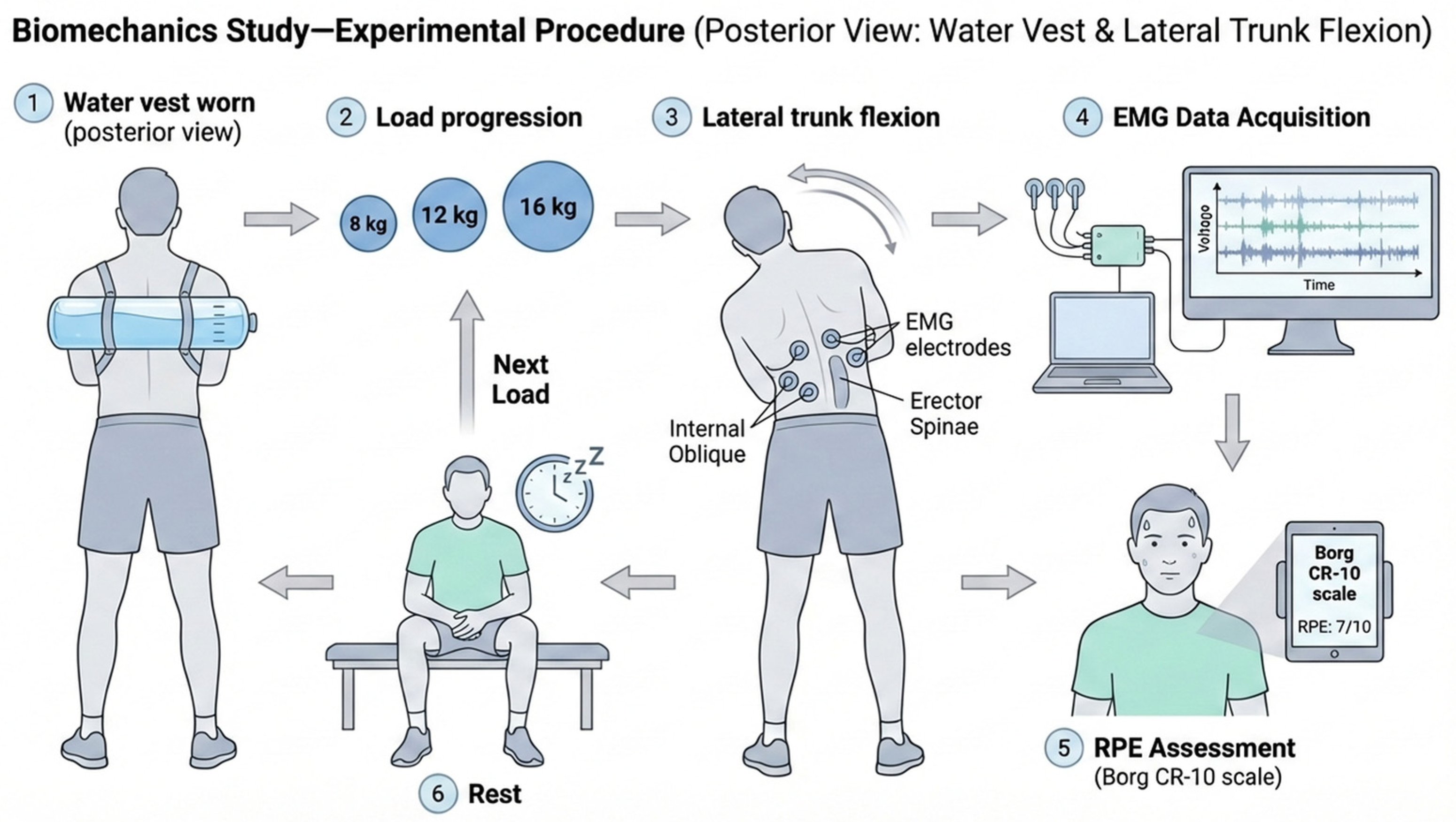
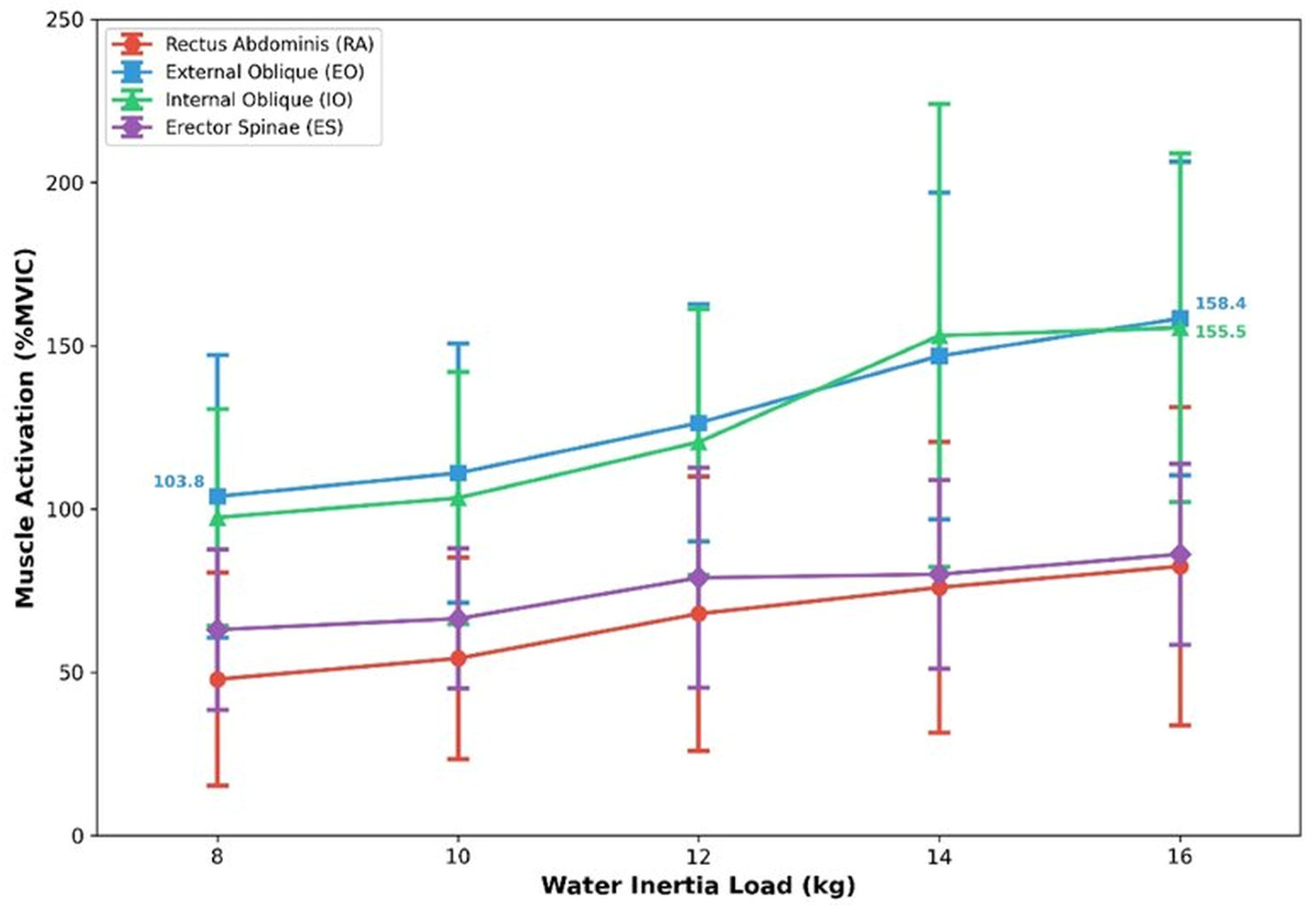
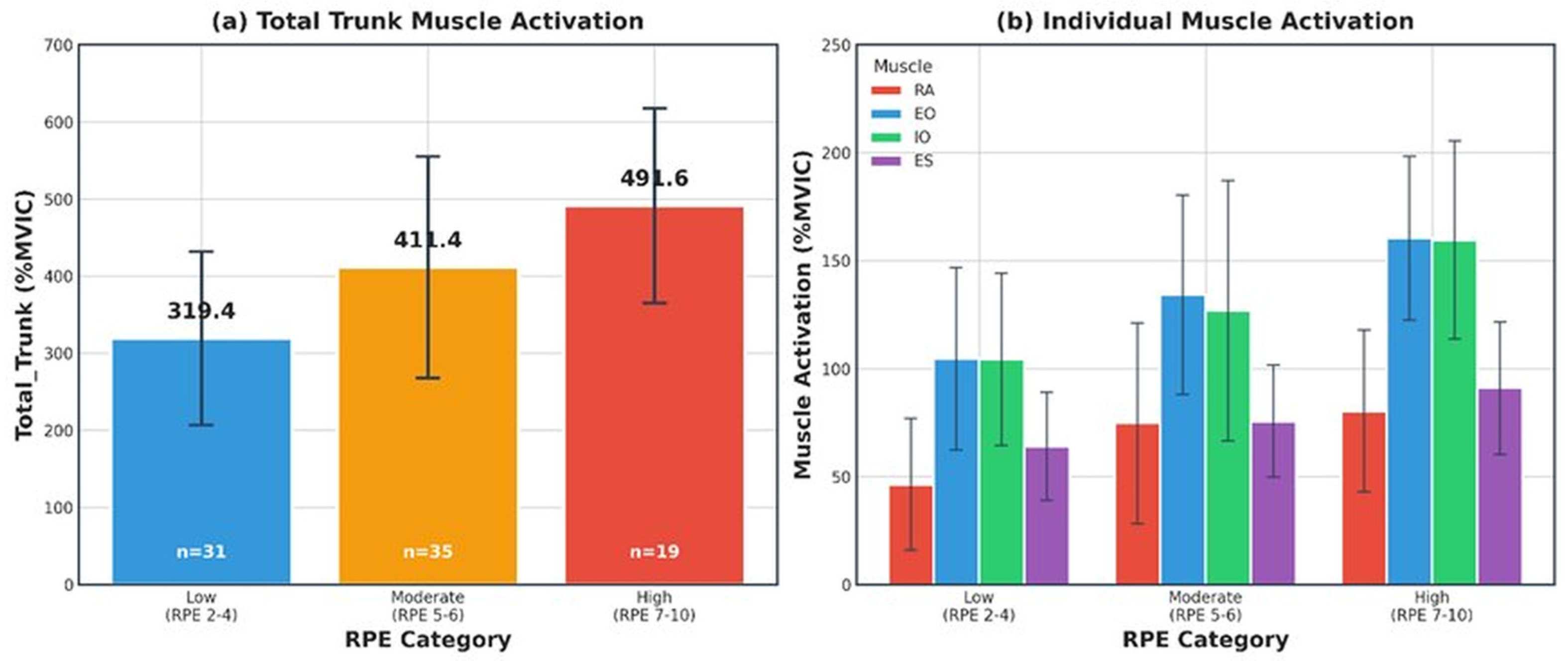
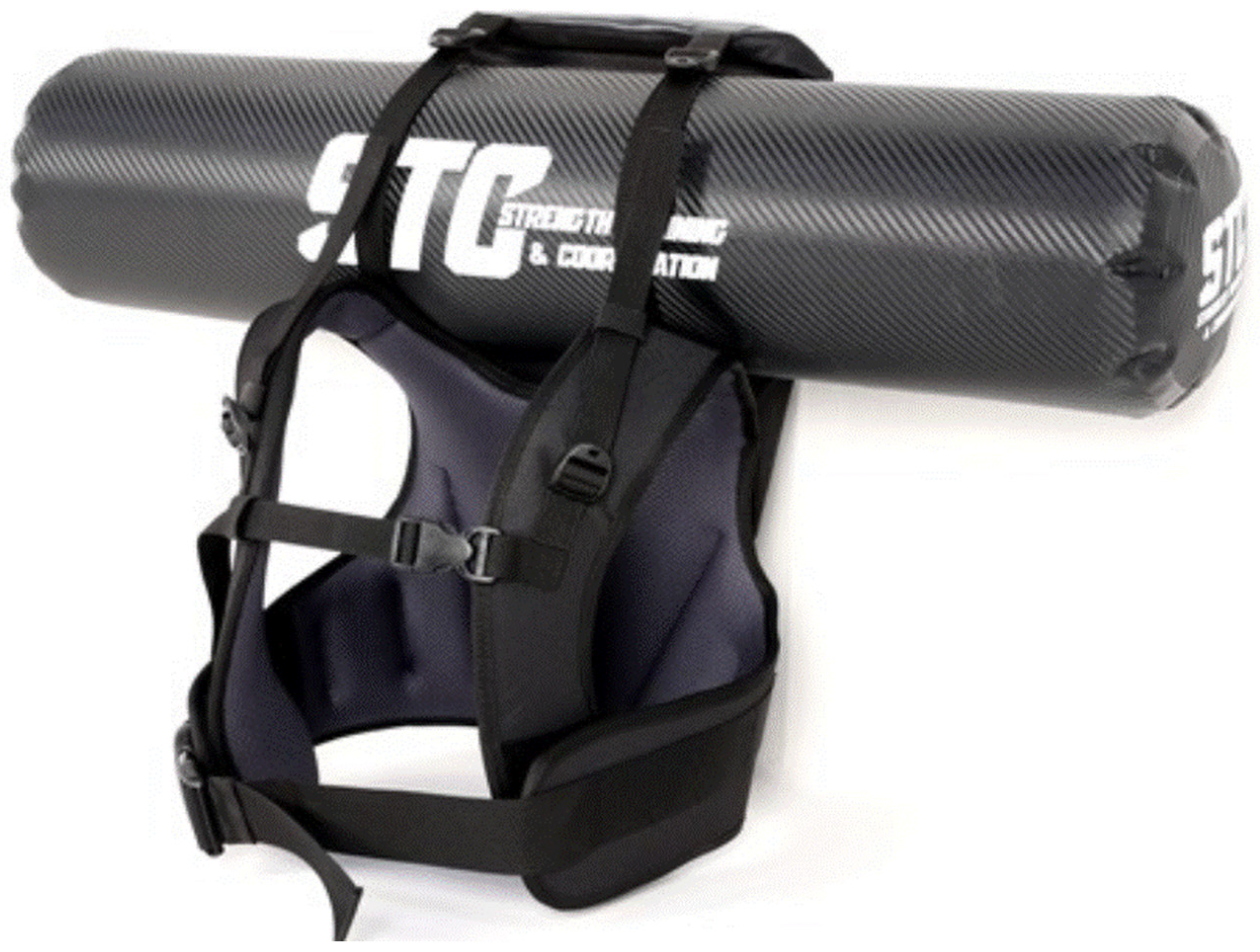
Background: Water inertia load training using equipment such as water vests provides unstable resistance that enhances trunk muscle activation. However, practical methods for prescribing exercise intensity without expensive electromyography (EMG) equipment remain limited. This pilot study aimed to develop prediction models for estimating trunk muscle activation using rating of perceived exertion (RPE) during water inertia load exercises. Methods: Seventeen healthy adults (20.45 ± 2.02 years) performed lateral trunk flexion exercises wearing a water vest at five progressive loads (8–16 kg in 2 kg increments). Surface EMG was recorded from four trunk muscles (rectus abdominis, external oblique, internal oblique, erector spinae) and normalized to maximal voluntary isometric contraction (%MVIC). Rating of perceived exertion (RPE) was assessed using the Borg CR-10 scale. Load-dependent changes in muscle activation were examined using repeated-measures ANOVA, and relationships between RPE and EMG were analyzed using regression and linear mixed-effects models. Results: All trunk muscles showed significant increases in activation with increasing load (all p < 0.001, ηp2 = 0.381). RPE demonstrated significant positive correlations with all abdominal muscles (r = 0.37–0.46, p < 0.001). Simple regression analyses indicated predictive accuracy (R2 = 0.267), representing a 29% increase compared with the strongest individual muscle model. Linear mixed-effects modeling confirmed RPE as a significant predictor after accounting for inter-individual variability. Conclusions: This pilot study provides preliminary evidence that RPE can be used to estimate trunk muscle activation during water inertia load exercise. The proposed composite activation index enhances prescription when EMG measurement is not feasible.
Keywords: water inertia load; surface electromyography; rating of perceived exertion; unstable resistance exercise: trunk muscle activation; prediction model water inertia load; surface electromyography; rating of perceived exertion; unstable resistance exercise: trunk muscle activation; prediction model