


Abstract
Background: Firefighters are at elevated risk of low back pain (LBP), yet predictors, mechanisms, and interventions for LBP in this occupation remain poorly defined. The purpose of this study was to systematically review the literature and synthesize the evidence on functional biomarkers associated with the risk of LBP in firefighters. Methods: PubMed, EMBASE, CINAHL, and PEDro were searched for studies evaluating functional biomarkers in firefighters with or without LBP, including aerobic capacity, anthropometric measures, disability/kinesiophobia, functional work tasks/capacity, imaging/structural/morphological characteristics, kinematics, movement quality/range of motion, muscular fitness, overall physical fitness, physical activity. Empirical evidence statements were generated for each biomarker domain, under Protocol Registration PROSPERO (CRD420251010061). Results: Eighteen studies (n = 32,977) met inclusion criteria and were predominantly cross-sectional (14/18) with fair quality (13/18), which suggests a substantial risk of bias. Higher disability/kinesiophobia and poorer functional work task performance were linked to increased risk of LBP, although causal relationships cannot be determined. Associations for the eight other biomarkers were inconsistent. Two interventional studies demonstrated benefits from trunk-focused exercise. Conclusions: The literature examining functional biomarkers and LBP in firefighters is fragmented, which precludes making robust and broad clinical recommendations for evidence-based implementation. Findings of future research may ultimately lead to approaches to improve the safety and health of firefighters with LBP through patient-centered and tailored programs addressing integrated functional biomarkers across the continuum of prevention, clinical care, and resilience development.
1. Introduction
Firefighting is a physically demanding and psychologically stressful occupation, which puts firefighters at risk for a wide variety of health disorders [1]. Musculoskeletal injuries are notably troublesome in this population and negatively affect job performance and preparedness, quality of life, activities of daily living, physical function, and behavioral health [1,2]. Furthermore, musculoskeletal injuries are common in firefighters, accounting for 43–62% of all work-related injuries and occurring more frequently than burn, thermal, and inhalation injuries [3].
Among the many categories of musculoskeletal injuries and related disorders, low back pain (LBP) is especially burdensome in these tactical athletes [4]. For example, the prevalence of LBP in firefighters is high, with 45–86% reporting a lifetime prevalence [1,5,6], and approximately 20% reporting that they are currently working with LBP [7]. Firefighters with LBP typically have longer periods of absence from work and incur higher medical costs than those resulting from other types of injuries [1,4]. Furthermore, LBP is a primary reason for disability and early retirement in firefighters [1,4,7].
Various biopsychosocial health domains (e.g., kinematics, physical fitness, anthropometric measures, work environment and exposures, behavioral health, sleep) have been shown to be associated with LBP and other musculoskeletal injuries in firefighters [7,8,9,10]. With these relationships in mind, interventions for musculoskeletal injuries have been applied to the fire service and some successes have been reported in observational studies [11,12] and a controlled trial [6]. However, implementation of worksite musculoskeletal health programs for this occupation has substantial barriers [13]. While it is plausible that focusing on high-risk firefighters and customizing programs according to risk levels could facilitate adherence, clinical outcomes, and cost-effectiveness [14], this area has not been fully explored.
The aforementioned research has provided useful information about risk factors for general musculoskeletal injuries in this population, yet the relationship between functional biomarkers (e.g., biomechanical, functional performance, physical fitness, anthropometric) and the risk of LBP in firefighters has not been systematically reviewed. Hence, gaps in knowledge exist that preclude generalizability and informed decision-making about implementing tailored interventions and countermeasures for this disorder.
Assessing LBP as a distinct entity from other musculoskeletal injuries is critical for several reasons. For example, LBP is consistently identified as a leading cause of disability worldwide [15], with substantial health and socioeconomic consequences in the fire service [1,4]. Despite this impact, LBP is often grouped together with other musculoskeletal injuries (e.g., shoulder, knee, and other regions) in firefighters in both clinical assessments and research designs, limiting the ability to isolate its unique biomechanical, psychosocial, and physiological contributors. From a clinical standpoint, the spine is biomechanically and neurologically distinct from other musculoskeletal structures [16]. Therefore, effective management of LBP requires approaches specifically designed for spinal health, rather than generic musculoskeletal assessments [17], and clinical practice guidelines have been produced by major health professional associations specifically for LBP [18,19].
Previous research suggests that LBP represents a physiological protective mechanism [20] and indicates a maladaptive pathological process when it persists [21,22]. Thus, LBP in firefighters could arise from an interplay of biomechanical, psychosocial, and environmental stressors, with adaptive responses that may either protect or predispose individuals to chronic dysfunction [22]. Furthermore, this dysfunction should be interpreted and addressed within the context of unpredictable, high-intensity, and unscheduled physical demands of firefighters [23,24]. However, these concepts have not been systematically examined in firefighters.
The purpose of this study was to systematically review the literature and synthesize the evidence on functional biomarkers associated with the risk of LBP in firefighters.
2. Materials and Methods
2.1. Study Design, Reporting, and Registration
A systematic review of the scientific literature was conducted using methods adapted from previous reviews on LBP [25,26,27,28]. The findings were reported according to the Preferred Reporting Items for Systematic Reviews and Meta-Analyses (PRISMA) guidelines [29], and the PRISMA checklist is depicted in Table A1 of Appendix A. The review was registered with the International Prospective Register of Systematic Reviews (PROSPERO) (CRD420251010061), which contains key details of the protocol, including background and significance, search strategies, review processes, methods, and analyses. A full protocol is not available elsewhere and no meaningful amendments were made to the protocol provided in the registration.
2.2. Eligibility Criteria
Condition being studied: LBP in firefighters.
Participants/population: Studies that assessed firefighters were included, as defined by the U.S. Bureau of Labor Statistics [30]: “Firefighters control and put out fires and respond to emergencies involving life, property, or the environment.” Firefighters of any employment status (e.g., career, volunteer), type (e.g., structural firefighting, wildland firefighting), and location were included.
Intervention/Exposure: LBP was assessed considering the various occupational hazards faced by the target population (firefighters), leading to this condition that may be influenced by functional biomarkers and related characteristics. Firefighters with a history of LBP served as cases. The operational definition of LBP is [6,31,32] “… an injury (e.g., sprain, strain, trauma) or illness (e.g., infection, neurologic disorder) that resulted in pain or discomfort below the rib cage and above the lower buttocks.” Studies that used any of the following terms to describe LBP were included: back pain, back injury, back injuries, LBP, low back injury, low back injuries, lower back pain, lower back injury, and lower back injuries. Studies that assessed LBP using patient-reported outcome measures or administrative data, such as workers’ compensation claims and costs, were included.
Comparator/Control: Firefighters without a history of LBP served as comparators/controls. Also, for eligible one-arm interventional studies with more assessments at two or more time points, firefighters served as their own controls. Studies that did not compare firefighters with a history of LBP to those without a history of LBP were excluded.
Outcomes: Dependent variables—The authors could not find a standard and published definition of functional biomarker in the context of musculoskeletal disorders, particularly for LBP in high-risk occupations. Thus, the term functional biomarker was broadly defined and consisted of heterogeneous variables that were arbitrarily categorized into domains. The conceptual framework behind the domains was based on the authors’ experience with research, clinical, and evidence-based practices, and the authors’ consensus process. For the purpose of this research, a pragmatic operational definition of functional biomarker is an “objective, quantifiable measure that reflects changes in the body’s function related to the pain condition or its response to treatment” that “serves as an indicator of a person’s ability to perform everyday tasks or that reflects the underlying biological and neurological processes related to function, physical fitness, and disability” (Google AI, response to question from author, 4 November 2025). To align with this review’s primary aim and to avoid being overly broad, the operational definition of functional biomarker does not include other dimensions within the biopsychosocial model, such as psychosocial and cognitive factors.
Various quantitative measures assessing functional biomarkers and related characteristics were included, such as motion analysis, electromyography, exercise tests, functional capacity tests, physical fitness tests, and anthropometric measures (e.g., body fat, waist circumference, body mass index). Patient-reported outcome measures for function and disability were also included. For analysis, outcomes were categorized in the following domains: aerobic capacity, anthropometric measures, disability/kinesiophobia, functional work tasks/capacity, imaging/structural/morphological characteristics, kinematics, movement quality/range of motion, muscular fitness, overall physical fitness, and physical activity.
Independent variable—Pain measures (i.e., patient reported outcome measures, administrative data) were used to characterize the case (with LBP) versus control (without LBP). Additionally, interventions aimed at addressing the functional biomarkers described above for prevention or treatment of LBP were considered.
Time: Any duration or frequency measurement of the exposure or intervention period was included. Studies that assessed any duration (acute, subacute, chronic) or frequency (e.g., incidence, prevalence) for a history of LBP were included. This research was the first known attempt to systematically review the literature on functional biomarkers and related characteristics, LBP, and firefighters. Hence, the authors believed that including heterogenous LBP parameters was justified, despite potential limitations of such an approach [31].
Setting: Studies in any setting for which firefighters can perform work activities (actual or simulated), activities of daily living (actual or simulated), or laboratory-based tests were included. Studies could have been conducted in the participant’s natural environment (e.g., work, home, recreational) or in controlled laboratory settings where biomechanical and functional outcomes are measured.
Study types: Full-text peer-reviewed literature of various study types was included, such as cross-sectional, observational cohort, interventional, and controlled trials. Abstracts had to have been available for initial review, and full-text articles had to have been available for final study selection. Studies had to have been original reports of human research. Case reports, review articles, books, government reports, academic theses, dissertations and related publications, non-peer-reviewed publications, and animal, basic science, and laboratory studies were excluded.
2.3. Information Sources and Search Strategy
A comprehensive search of PubMed, the Excerpta Medica Database (EMBASE), the Cumulative Index to Nursing and Allied Health Literature (CINAHL), and the Physiotherapy Evidence Database (PEDro) was conducted to identify studies evaluating functional biomarkers in firefighters with or without LBP. The investigators developed search terms for the domains of interest: firefighters, functional biomarkers, and LBP. For LBP, search terms were adapted from previous recommendations of the Cochrane Back and Neck Review Group [33,34]. The PubMed search strategy is shown in Table A2 of Appendix A. Other databases were searched using a comparable approach that was tailored to the database’s specific features. Study publication date was not constrained; databases were searched from their first release through April 2025. Reference lists within eligible studies from the original search, along with investigator files, were also searched.
2.4. Selection Process
Covidence systematic review software (https://support.covidence.org/doc/how-can-i-cite-covidence, accessed on 8 October 2025, Veritas Health Innovation, Melbourne, Australia) was used to facilitate the article screening and data extraction processes, including assisting with citation management, screening articles, extracting data, assessing study quality, and synthesizing evidence. Following the searches described above, citations were exported to Covidence software (Melbourne, Australia) and related spreadsheets. Duplicates were removed, and non-English language papers and those without abstracts were excluded. Two authors (JM, RH) independently screened the remaining citations and abstracts to determine initial relevance. The two reviewers discussed disagreements until they reached a consensus. Full text articles were obtained for citations deemed relevant or of uncertain relevance. To establish final eligibility, the two reviewers assessed the full text articles, rectified disagreements, and reached a consensus. Automation instruments were not utilized to select studies.
2.5. Data Collection Process
One author (JM) extracted data from the eligible studies and entered these data into spreadsheets and evidence tables. Another author (MB) independently reviewed and verified the extracted data. In addition to the independent and dependent outcome variables described above, other extracted data included demographic variables (e.g., sample size, age, gender, eligibility criteria), study specific variables (e.g., location, funding source), and description of the exposure and intervention. After extracting data, the two reviewers rectified discrepancies until they reached a consensus. If consensus was not reached, a third author (RH) resolved discrepancies. Automation instruments were not utilized to extract data. Missing data are reported in the manuscript, accordingly.
2.6. Study Risk of Bias Assessment
The U.S. National Institutes of Health (NIH) instruments for controlled intervention studies and observational cohort and cross-sectional studies were used to assess risk of bias (study quality) [35]. These instruments include 14 items that assess various study characteristics (e.g., methods of randomization, treatment allocation, blinding). Each item is scored as 1 (yes) or 2 (no), and the sum of all items achieves a total score ranging from 0–14. From the total score, study quality categories are 0–4 Poor, 5–9 Fair, and 10–14 Good [27]. The study evidence level was categorized using approaches adapted from the Oxford Centre for Evidence-Based Medicine [27,36,37]. A similar approach with 2–3 authors was used to rate risk of bias and rectify discrepancies, as described for data extraction processes. Automation instruments were not utilized to assess risk of bias, and missing data are reported in the manuscript, accordingly. Examination of reporting bias from missing results was not carried out due to the quantity and quality of available evidence.
Steps were taken to avoid/reduce selection bias in the systematic review process, including the following: key aspects of the study protocol were documented in the registration; multiple databases were searched; all types of studies, publication dates, conference abstracts, years of publication, and grey literature were not excluded from the primary search and were included in the primary search results and subsequent abstract screening (considers unpublished data); and two reviewers independently screened abstracts.
Meta-analysis was not conducted in the review for the reasons described herein, hence publication bias was not assessed through formal statistical analyses such as Egger’s Test or funnel plot asymmetry [38]. Regardless, publication bias was examined through observation of potential differences in outcomes (positive vs. negative) based on study risk of bias and sample size.
2.7. Effect Measures
Given the case–control and risk assessment nature of this review, we expected that the analyses within eligible studies would primarily consist of odds ratios, hazard ratios, prevalence ratios, risk ratios, t-tests, ANOVA, regression, and similar relational analyses. For all measures, the primary sub-group comparisons were between participants with and without a history of LBP. Meta-analysis and sensitivity analysis were not conducted.
2.8. Synthesis Methods
Based on the evidence tables of extracted data for study characteristics, outcomes, type, and quality, two authors (JM, RH) synthesized data, developed empirical evidence statements, and interpreted findings with strategies adapted from the Oxford Centre for Evidence-Based Medicine [39], Clinical Information Access Portal [37], American Physical Therapy Association [19], and three systematic reviews on LBP [26,27,28], along with pertinent features of the Grading of Recommendations Assessment, Development, and Evaluation (GRADE) system [40]. Empirical evidence statements were developed regarding the relationship of LBP in firefighters for each primary dependent outcome variable category described above. Based on risk of bias, study quality, and quantity, each empirical evidence statement was accompanied by an estimate for level of confidence (high, moderate, low, insufficient, confirmatory, conflicting) [26]. The strategy for estimating level of confidence was adapted from a previous systematic review on LBP with a wide array of functional outcome measures, which had a preponderance of evidence from cross-sectional studies [26]. Descriptive criteria for the empirical evidence statements were as follows: Study findings—Support: All comparisons in the study support the empirical evidence statement. Mixed: Some comparisons in the study support the empirical evidence statement, while other comparisons do not support it. Against: All comparisons in the study do not support the empirical evidence statement. Conclusion—Support: ≥Two-thirds of fair–good quality studies support the ESS. Against: ≥Two-thirds of fair–good quality studies do not support the ESS. Inconclusive: Studies do not meet criteria for Support or Against categories. Confidence level—Studies with a high risk of bias were excluded from level-of-confidence estimates. Insufficient Evidence: This includes evidence from ≤1 study of fair–good quality. Low: This includes evidence from 2–3 studies of fair–good quality. Moderate: This includes evidence from 4–5 studies of fair–good quality. High: This includes evidence from ≥6 studies of fair–good quality. All authors reviewed the findings, provided suggestions (as appropriate), and reached a consensus for the final empirical evidence statements.
3. Results
3.1. Study Selection
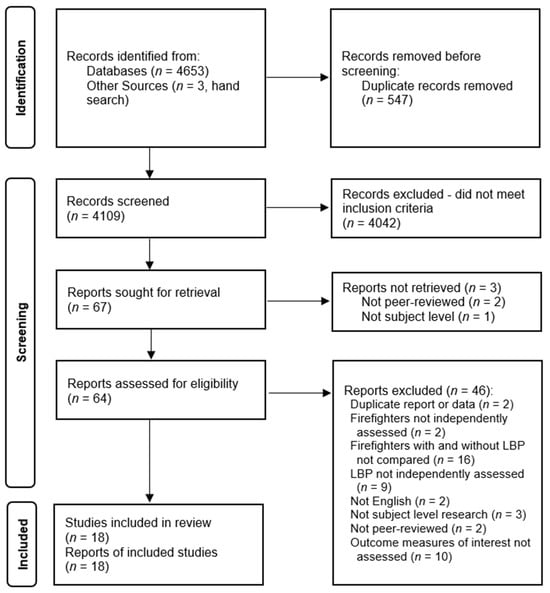
Search results are reported in the PRISMA diagram, which is shown in Figure 1. Of the 64 full-text reports assessed for eligibility, 18 studies, enrolling 32,977 human subjects, were deemed eligible [6,7,12,41,42,43,44,45,46,47,48,49,50,51,52,53,54,55]. Forty-six reports were excluded for the reasons described in Figure 1.
Figure 1.
PRISMA diagram of search results.
3.2. Study Characteristics and Outcomes
Study characteristics and outcomes are illustrated in Table 1 and Table 2, respectively. Nine studies were conducted in the United States [6,7,12,41,42,50,51,52,55]. The other studies were conducted in China (n = 1) [45], Greece (n = 1) [46], Korea (n = 2) [47,48], Poland (n = 1) [43], Singapore (n = 1) [49], South Africa (n = 2) [53,54], and Spain (n = 1) [44]. Ten studies were funded by federal grants [6,7,41,47,48,49,50,51,53,54]. The other studies were funded by a local grant (n = 1) [12], private foundation (n = 1) [45], private foundation, and federal source (n = 1) [44], or had no extramural funding (n = 1) [42] and funding not reported (n = 4) [43,46,52,55].
Table 1.
Study characteristics.
Table 2.
Study characteristics.
Fifteen studies did not report the duration of LBP [6,7,12,41,42,43,46,47,48,49,50,51,52,53,54]. The other studies assessed acute, subacute, and chronic LBP (n = 2) [45,55], and chronic LBP (n = 1) [44]. Fourteen studies assessed prevalence of LBP [6,7,42,43,44,45,46,47,48,49,50,51,52,55]. The other studies assessed incidence (n = 3) [6,12,41], while for some, it was unclear (n = 2) [53,54]. Five studies assessed LBP in the past 12 months [46,47,48,49]. The other studies assessed current LBP (n = 5) [7,42,43,44,55], unclear time period (n = 4) [45,52,53,54], lifetime history of LBP (n = 2) [6,55], LBP during a 12-month trial period (n = 2) [6,12], back injury in a 4-year period (n = 1) [41], back injury in the past 5 years (n = 1) [50], and first-time LBP (n = 1) [51].
Eight studies assessed anthropometric characteristics [6,7,42,43,45,46,50,53]. The other studies assessed functional work tasks/capacity (n = 6) [7,43,46,47,51,54], physical activity (n = 6) [7,43,44,46,47,53], muscular fitness (n = 5) [6,7,12,49,53], movement quality/range of motion (n = 4) [7,12,52,53], disability/kinesiophobia (n = 4) [6,7,47,55], kinematics (n = 2) [49,52], overall physical fitness (n = 2) [41,42], and imaging/structural/morphological characteristics (n = 1) [48].
The specific outcome measures used to assess functional biomarkers and related characteristics varied widely and were inconsistently applied among the studies (Table 2). The majority of measures were common tests for which reliability and validity have been established, such as body mass index, waist circumference, physical fitness tests of muscular strength, endurance, and motor control, objective kinematic, motion, and imaging metrics, and self-report measures of kinesiophobia and physical activity. However, other measures were developed by the investigators of each study for which the reliability and validity are unknown, such as aggregate fitness scores and assessment of functional work tasks collected over several time points.
3.3. Evidence Level and Risk of Bias
Evidence levels and risks of bias for each study are found in Table 3. Fourteen studies were cross-sectional [7,42,43,44,45,46,47,48,49,51,52,53,54,55], which limits the ability to make causal inferences about LBP risk. The other studies were prospective cohort (n = 2) [12,41], randomized controlled trial (n = 1) [6], and retrospective cohort (n = 1) studies [50]. Two studies were interventional [6,12]. The mean ± SD score for study quality was 7.2 ± 2.0 out of 14, indicating a substantial risk of bias. Thirteen studies were of fair quality (some concerns about risk of bias) [7,12,41,42,47,48,49,50,51,52,53,54,55]. The other studies were of poor quality (high risk of bias) (n = 4) [43,44,45,46] and good quality (low risk of bias) (n = 1) [6]. When examining study shortcomings illustrated in the 14 items of the risk of bias instrument, it is apparent that most studies lacked details on blinding, power calculation, and confounder control.
Table 3.
Study evidence level and quality (risk of bias).
No clear signs of publication bias were evident when comparing differences in outcomes (positive vs. negative) based on study risk of bias and sample size. Moreover, there were several occurrences of both positive and negative outcomes being reported in the same study, and many negative outcomes were published in the studies. Thus, study risk of bias and sample size did not appear to influence outcomes or publication.
3.4. Results of Syntheses
Empirical evidence statements for each functional biomarker domain and risk of LBP, including study findings, conclusion, and confidence level, are described in Table 4. Overall, the conclusion for most (7/10) of the empirical evidence statements was “Inconclusive” due to mixed findings across the studies. Similarly, the confidence level for most (6/10) of the empirical evidence statements was “Low” or “Insufficient Evidence” due to a lack of studies with fair–good quality from which to draw conclusions. Two of the functional biomarkers (disability/kinesiophobia, functional work tasks/capacity) displayed evidence to support a relationship with risk of LBP at a moderate confidence level, according to the authors’ descriptive grading system. While findings preclude assessment of causal relationships, a higher level of disability/kinesiophobia and poor performance on functional work tasks/capacity were associated with an increased risk of LBP. On the contrary, one functional biomarker (movement quality/range of motion) displayed evidence against a relationship with risk of LBP, with a low confidence level. Two interventional studies supported the clinical benefit of exercise interventions targeting trunk muscular fitness alone [6], or when trunk muscular fitness exercises are combined with movement quality/range-of-motion exercises [12].
Table 4.
Empirical evidence statements for functional biomarkers and risk of low back pain.
4. Discussion
The findings of this systematic review highlight the critical burden of LBP among firefighters, as well as limitations of the existing evidence base. Across 18 studies enrolling nearly 33,000 participants, we observed substantial heterogeneity in study design, functional biomarker domains, and outcome measures, with most studies being cross-sectional and of only fair methodological quality. The vast majority of empirical evidence statements (7 of 10) were rated as inconclusive, and confidence levels for six domains were low or insufficient, underscoring the lack of definitive guidance for clinical or occupational applications. Two functional biomarkers, disability/kinesiophobia and performance on functional work tasks, emerged as consistent predictors of LBP, with moderate confidence in the evidence according to the authors’ descriptive grading system. Conversely, other domains such as anthropometrics, muscular fitness, and physical activity, while well established in the general population, showed inconsistent or inconclusive associations in firefighters.
Key findings of this review include the following: 1. Numerous knowledge gaps exist in the peer-reviewed literature about the relationships among functional biomarkers and the risk of LBP in firefighters. Given the overall weakness and fragmentation of the evidence, robust claims about the potential clinical implications of functional biomarkers are likely premature. 2. Several studies, which were excluded from analysis, assessed functional measures in healthy firefighters or those with general musculoskeletal disorders and injuries, but did not separately assess the effects of LBP. 3. The outcomes assessed varied widely across the studies, such as different definitions of LBP and heterogenous functional biomarkers, which limits the ability to make clinical interpretations and precludes meta-analysis. 4. Most of the included studies (14/18) were cross-sectional, which limits the ability to make causal inferences about LBP risk. Only one study was rated as good-quality, and the average quality score was 7.2/.14, which suggests a substantial risk of bias overall. 5. Few studies considered the impact of multiple functional biomarkers together (e.g., covariates, regression). 6. Findings, as depicted in the empirical evidence statements, were mainly mixed and inconclusive. Some studies showed a substantial relationship between LBP and the assessed functional biomarker, while others showed no relationship. 7. Only monotherapies (e.g., exercise) aimed at closely aligned functional biomarkers were assessed in the two interventional studies, and only one of the interventional studies showed low risk of bias. 8. None of the eligible studies compared firefighters with and without LBP using gold standard biomechanical assessments for the spine.
Limitations of the evidence uncovered in this review should be acknowledged. First, several studies in the available literature exhibited fair-to-poor methodological quality (some concerns about bias or high risk of bias) and had cross-sectional designs, which limit the ability to infer causality or temporal relationships between functional biomarkers and LBP in firefighters. Second, the substantial heterogeneity in study populations, exposure definitions, outcome measures, and functional assessment methods precluded meta-analysis and reduced comparability across studies. Third, many studies lacked detailed reporting on LBP chronicity, occupational exposure, or firefighter-specific work demands, restricting generalizability to the broader tactical athlete population. Fourth, advanced biomechanical, neuromuscular, and imaging assessments were rarely incorporated, resulting in incomplete characterization of the multidimensional risk factors that are likely to contribute to LBP. Fifth, a standardized definition of functional biomarkers for LBP in high-risk occupations does not exist. Thus, the operational definition of functional biomarkers for this review was arbitrarily selected by the authors and, by design, did not integrate all components of the biopsychosocial model. Finally, the fragmentation of evidence, as described herein, has precluded a holistic understanding of the complex biopsychosocial mechanisms underlying LBP in firefighters. This gap represents a critical barrier to the development of targeted, evidence-based interventions for prevention, treatment, and workforce readiness.
Since the limitations of the evidence uncovered in this review preclude generalizability and widespread implementation within the fire service, confirmatory research is needed to guide clinical decision-making. There is an urgent need for rigorous, prospective, multimodal studies to establish mechanistic clarity, examine standardized theoretical models for functional domains, validate predictive biomarkers, and inform evidence-based prevention and rehabilitation strategies in firefighters. Future research must move beyond fragmented, single-domain studies and adopt integrative, prospective designs that capture the full spectrum of biomechanical, neuromuscular, functional, and biopsychosocial determinants of LBP in firefighters. In this population, research is needed to assess the validity and implementation of advanced motion analysis technologies, including wearable inertial measurement units (IMUs) and markerless motion capture, to assess the validity of such technologies to monitor functional performance during occupational and training activities. Likewise, the validity of integrating measures of anthropometric characteristics, muscular fitness, imaging metrics, disability/kinesiophobia, and task-specific performance (e.g., lifting, carrying, and climbing), along with other biopsychosocial domains, needs to be assessed. Interventional research should extend beyond physical fitness exercises to integrated programs that address various elements, such as strength, endurance, motor control, functional patterns, anthropometric characteristics, and biopsychosocial barriers, such as kinesiophobia [7].
From a clinical perspective, the available evidence prevents making robust and broad recommendations about pragmatic applications for functional biomarkers for occupational health in the fire service. Nonetheless, some recommendations can be made for the functional biomarkers with a moderate level of evidence according to the authors’ descriptive grading system. For example, disability and kinesiophobia are highly actionable domains. Early identification of “yellow flags” may help identify firefighters at elevated risk of recurrent or chronic LBP and guide targeted rehabilitative interventions that integrate behavioral and physical approaches, such as cognitive behavioral therapy and trunk muscular fitness exercises. Similarly, poor performance on work-related tasks is particularly relevant, as the physical demands of firefighting appear to require optimal biomechanical efficiency under high load and stress. Addressing deficits in work-related tasks is feasible through goal-oriented plans of care focusing on objective measures of physical performance and work-related activities that are tailored to the individual’s needs. Details of such programs are beyond the scope of the available evidence from this review. However, the authors recommend that clinicians implement specific strategies for decision-making according to the foundations of evidence-based practices—research evidence, clinical expertise, and patient values [56].
In addition to the aforementioned considerations for clinical decision-making, the current synthesis highlights the need to assess and adopt advanced conceptual and analytical frameworks to better characterize the complex, nonlinear dynamics underlying spinal function and LBP in firefighters. The limited evidence for validated task-specific functional biomarkers underscores the inadequacy of conventional linear models in fully capturing adaptive and maladaptive physiological responses. Increasing evidence suggests that disrupted coordination between automatic and voluntary neuromuscular systems may reflect protective movement strategies that, if persistent, evolve into maladaptive motor control patterns detectable through nonlinear analyses of movement variability and motor coordination [57,58]. Collectively, these findings may align with the inherently nonlinear nature of LBP [59], suggesting that fluctuations in pain, motor control, and recovery trajectories may represent dynamic adaptations rather than isolated biomechanical deficits, which could ultimately influence clinical decision-making and rehabilitation planning. Variability in recovery and return-to-duty outcomes may therefore represent inherent nonlinear system behavior rather than methodological inconsistency [60]. While these concepts are beyond the scope of the evidence synthesized in this review, they provide direction for future research to elucidate the clinical implications of nonlinear system behavior in LBP, specifically related to functional biomarkers in firefighters.
5. Conclusions
Firefighters experience uniquely high exposures to spinal loading, hazardous work environments, irregular schedules, and other occupational stressors, positioning them at elevated risk for LBP and its associated functional disabilities. This systematic review highlights the substantial knowledge gaps in the understanding of functional biomarkers related to LPB in this tactical athlete population. While select studies support associations among disability/kinesiophobia, functional work task performance, and LBP, the overall evidence base is fragmented, heterogeneous, and largely inconclusive. The limited interventional evidence, focusing primarily on trunk muscular fitness, demonstrates the benefit of addressing modifiable risk factors, but underscores the urgent need for more comprehensive approaches.
Collectively, the findings of this review preclude mechanistic understanding, predictive modeling, and precise recommendations for evidence-based prevention and rehabilitation strategies for this workforce. Future clinical trials and implementation research efforts are needed to examine multimodal assessments and interventions, incorporating advanced biomechanics, functional performance, anthropometric characteristics, physical fitness, imaging, and psychosocial profiling within tailored and patient-centered approaches. If positive findings are found in this research, such integrative efforts have the potential to identify modifiable risk factors, optimize injury prevention and recovery strategies, and inform return-to-work protocols across the continuum of prevention, clinical care, and resilience development. By systematically bridging the gap between functional biomarkers and clinical outcomes, these efforts can help transform the management of LBP, reduce disability, enhance recovery and operational readiness, and provide a scalable model for spine health initiatives in firefighters and other tactical athletes.
Author Contributions
Conceptualization, J.M.M. and R.H.; Methodology, J.M.M. and R.H.; Software, J.M.M., E.G. and R.H.; Validation, J.M.M., M.B., E.G. and R.H.; Formal Analysis, J.M.M. and R.H.; Investigation, J.M.M., E.G. and R.H.; Resources, J.M.M., E.G. and R.H.; Data Curation, J.M.M., M.B., E.G. and R.H.; Writing—Original Draft Preparation, J.M.M. and R.H.; Writing—Review & Editing, J.M.M., M.B., E.G. and R.H.; Visualization, J.M.M., M.B. and R.H.; Supervision, J.M.M. and R.H.; Project Administration, J.M.M. and R.H. All authors have read and agreed to the published version of the manuscript.
Funding
This research received no external funding.
Institutional Review Board Statement
Not applicable.
Informed Consent Statement
Not applicable.
Data Availability Statement
The original contributions presented in this study are included in the article. Further inquiries can be directed to the corresponding author.
Acknowledgments
AI statement: AI was used to assist with developing a pragmatic operational definition for “functional biomarker.” AI was not utilized elsewhere to conduct this research or prepare this manuscript. Registration: The research was registered with PROSPERO (CRD420251010061). Checklist utilized: Preferred Reporting Items for Systematic Reviews and Meta-Analyses (PRISMA) checklist.
Conflicts of Interest
John Mayer (J.M.) is an employee and board member of The Vert Mooney Research Foundation, which owns the Multidimensional Task Ability Profile (MTAP). J.M. does not benefit financially from MTAP. J.M. has received research grants from the US Department of Homeland Security (EMW-2017-FP-00711), US Department of Defense (W81XWH-18-2-0007). J.M. has been involved as a consultant for Converge Medical Technology LLC, Empatha LLC, Healthy Buildings LLC, and Spine Principles LLC. Mina Botros declares no conflicts of interest. Elizabeth Grace declares no conflicts of interest. Ram Haddas has received research grants from the Scoliosis Research Society and US National Institute for Occupational Safety and Health.
References
- International Association of Fire Fighters (IAFF); International Association of Fire Chiefs (IAFC). The Fire Service Joint Labor Management Wellness-Fitness Initiative, 4th ed.; IAFF: Washington, DC, USA, 2018; p. 116. [Google Scholar]
- Mayer, J.M.; Jahnke, S.A. Injury, musculoskeletal disorders, and ergonomics. In Health Risks and Fair Compensation in the Fire Service; Guidotti, T.L., Ed.; Springer: New York, NY, USA, 2016; pp. 209–225. [Google Scholar]
- Wang, S.; Wang, Y. Musculoskeletal model for assessing firefighters’ internal forces and occupational musculoskeletal disorders during self-contained breathing apparatus carriage. Saf. Health Work 2022, 13, 315–325. [Google Scholar] [CrossRef] [Scilit] [PubMed]
- Walton, S.M.; Conrad, K.M.; Furner, S.E.; Samo, D.G. Cause, type, and workers’ compensation costs of injury to fire fighters. Am. J. Ind. Med. 2003, 43, 454–458. [Google Scholar] [CrossRef] [Scilit]
- Verna, J.L.; Stowell, S.; Parker, R.; Duran, A.; Mayer, J.M. Firefighters & back injuries: The new study. Fire Rescue Mag. 2010, 4, 11. [Google Scholar]
- Mayer, J.M.; Lane, C.L.; Brady, O.; Chen, H.; Lu, Y.; Johnson, B.V.B.; Dagenais, S. Comparison of supervised and telehealth delivery of worksite exercise for prevention of low back pain in firefighters: A cluster randomized trial. J. Occup. Environ. Med. 2020, 62, e582–e592. [Google Scholar] [CrossRef] [Scilit]
- Mayer, J.M.; Verna, J.L.; Hubka, M.; Phelps, B.; Wolfinger, C.; Lane, C.L. Comparison between disability, physical performance, and other biopsychosocial factors in full-duty career firefighters working with and without current low back pain. Cureus 2024, 16, e62189. [Google Scholar] [CrossRef] [Scilit]
- Teegardin, M.M.; Kelly, N.B.; Zoughaib, W.S.; Wilson, M.A.; Veith, A.; Kleinschmidt, V.; Muegge, C.; Miller, J.; Moffatt, S.; Urtel, M. Identification and prevention strategies for musculoskeletal injuries among firefighters: A rapid review. Work 2025, 81, 2057–2067. [Google Scholar] [CrossRef] [Scilit] [PubMed]
- Smith, D.L. Firefighter fitness: Improving performance and preventing injuries and fatalities. Curr. Sports Med. Rep. 2011, 10, 167–172. [Google Scholar] [CrossRef] [Scilit] [PubMed]
- Jahnke, S.A.; Poston, W.S.C.; Haddock, C.K.; Jitnarin, N. Obesity and incident injury among career firefighters in the central United States. Obesity 2013, 21, 1505–1508. [Google Scholar] [CrossRef] [Scilit]
- Kuehl, K.S.; Elliot, D.L.; Goldberg, L.; Moe, E.L.; Perrier, E.; Smith, J. Economic benefit of the PHLAME wellness programme on firefighter injury. Occup. Med. 2013, 63, 203–209. [Google Scholar] [CrossRef] [Scilit]
- Peate, W.F.; Bates, G.; Lunda, K.; Francis, S.; Bellamy, K. Core strength: A new model for injury prediction and prevention. J. Occup. Med. Toxicol. 2007, 2, 3. [Google Scholar] [CrossRef] [Scilit]
- Lane, C.L.; Brady, O.; Mayer, J.M. Comprehensive assessment of implementation factors related to worksite exercise in firefighters. J. Occup. Environ. Med. 2022, 64, e13–e19. [Google Scholar] [CrossRef] [Scilit]
- Mayer, J.M.; Andres, A.A.; Lane, C.L. Implementation of a regional firefighter wellness initiative during a global pandemic. Fire Eng. 2021, 2, 6. [Google Scholar]
- Foster, N.E.; Anema, J.R.; Cherkin, D.; Chou, R.; Cohen, S.P.; Gross, D.P.; Ferreira, P.H.; Fritz, J.M.; Koes, B.W.; Peul, W.; et al. Prevention and treatment of low back pain: Evidence, challenges, and promising directions. Lancet 2018, 391, 2368–2383. [Google Scholar] [CrossRef] [Scilit]
- National Research Council (US) and Institute of Medicine (US) Panel on Musculoskeletal Disorders and the Workplace. Chapter 6. Biomechanics. In Musculoskeletal Disorders and the Workplace: Low Back and Upper Extremities; National Academies Press: Washington, DC, USA, 2001. [Google Scholar]
- Beach, T.A.C.; Frost, D.M.; Zehr, J.D.; Howarth, S.J.; McGill, S.M.; Callaghan, J.P. Spine loading during laboratory-simulated fireground operations—Inter-individual variation and method of load quantification. Ergonomics 2019, 62, 1426–1438. [Google Scholar] [CrossRef] [Scilit]
- Chou, R.; Qaseem, A.; Snow, V.; Casey, D.; Cross, J.T., Jr.; Shekelle, P.; Owens, D.K. Diagnosis and treatment of low back pain: A joint clinical practice guideline from the American College of Physicians and the American Pain Society. Ann. Intern. Med. 2007, 147, 478–491. [Google Scholar] [CrossRef] [Scilit]
- George, S.Z.; Fritz, J.M.; Silfies, S.P.; Schneider, M.J.; Beneciuk, J.M.; Lentz, T.A.; Gilliam, J.R.; Hendren, S.; Norman, K.S. Interventions for the management of acute and chronic low back pain: Revision 2021. J. Orthop. Sports Phys. Ther. 2021, 51, CPG1–CPG60. [Google Scholar] [CrossRef] [Scilit] [PubMed]
- Moseley, G.L.; Butler, D.S. Fifteen years of explaining pain: The past, present, and future. J. Pain 2015, 16, 807–813. [Google Scholar] [CrossRef] [Scilit]
- Brumagne, S.; Diers, M.; Danneels, L.; Moseley, G.L.; Hodges, P.W. Neuroplasticity of sensorimotor control in low back pain. J. Orthop. Sports Phys. Ther. 2019, 49, 402–414. [Google Scholar] [CrossRef] [Scilit] [PubMed]
- O’Sullivan, P.; Caneiro, J.P.; O’Keeffe, M.; O’Sullivan, K. Unraveling the complexity of low back pain. J. Orthop. Sports Phys. Ther. 2016, 46, 932–937. [Google Scholar] [CrossRef] [Scilit]
- Khoshakhlagh, A.H.; Al Sulaie, S.; Mirzahosseininejad, M.; Yazdanirad, S.; Orr, R.M.; Laal, F.; Bamel, U. Occupational stress and musculoskeletal disorders in firefighters: The mediating effect of depression and job burnout. Sci. Rep. 2024, 14, 4649. [Google Scholar] [CrossRef] [Scilit]
- Descatha, A.; Dousseau, H.; Pitet, S.; Magnolini, F.; McMillan, N.; Mangelsdorf, N.; Swan, R.; Steve, J.M.; Pourret, D.; Fadel, M. Work exposome and related disorders of firefighters: An overview of systematized reviews. Saf. Health Work 2025, 16, 145–155. [Google Scholar] [CrossRef] [Scilit]
- Dagenais, S.; Gay, R.E.; Tricco, A.C.; Freeman, M.D.; Mayer, J.M. NASS contemporary concepts in spine care: Spinal manipulation therapy for acute low back pain. Spine J. 2010, 10, 918–940. [Google Scholar] [CrossRef] [Scilit]
- Highsmith, M.J.; Goff, L.M.; Lewandowski, A.L.; Farrokhi, S.; Hendershot, B.D.; Hill, O.T.; Rábago, C.A.; Russell-Esposito, E.; Orriola, J.J.; Mayer, J.M. Low back pain in persons with lower extremity amputation: A systematic review of the literature. Spine J. 2019, 19, 552–563. [Google Scholar] [CrossRef] [Scilit]
- Gherscovici, E.D.; Mayer, J.M. Relationship of healthy building determinants with back and neck pain: A systematic review. Am. J. Health Promot. 2023, 37, 103–131. [Google Scholar] [CrossRef] [Scilit]
- Haddas, R.; Lawlor, M.; Moghadam, E.; Fields, A.; Wood, A. Spine patient care with wearable medical technology: State-of-the-art, opportunities, and challenges: A systematic review. Spine J. 2023, 23, 929–944. [Google Scholar] [CrossRef] [Scilit]
- Page, M.J.; McKenzie, J.E.; Bossuyt, P.M.; Boutron, I.; Hoffmann, T.C.; Mulrow, C.D.; Shamseer, L.; Tetzlaff, J.M.; Akl, E.A.; Brennan, S.E.; et al. The PRISMA 2020 statement: An updated guideline for reporting systematic reviews. BMJ 2021, 372, n71. [Google Scholar] [CrossRef] [Scilit] [PubMed]
- Bureau of Labor Statistics. U.S. Department of Labor. Occupational Outlook Handbook: Firefighters. Available online: https://www.bls.gov/ooh/protective-service/firefighters.htm (accessed on 10 April 2025).
- Cassidy, J.D.; Côté, P.; Carroll, L.J.; Kristman, V. Incidence and course of low back pain episodes in the general population. Spine 2005, 30, 2817–2823. [Google Scholar] [CrossRef] [Scilit] [PubMed]
- Occupational Safety and Health Administration. OSHA Technical Manual TED 01-00-015 [TED 1-0.15A]; Occupational Safety and Health Administration, U.S. Department of Labor: Washington, DC, USA, 1999.
- Furlan, A.D.; Malmivaara, A.; Chou, R.; Maher, C.G.; Deyo, R.A.; Schoene, M.; Bronfort, G.; van Tulder, M.W. 2015 updated method guideline for systematic reviews in the Cochrane Back and Neck Group. Spine 2015, 40, 1660–1673. [Google Scholar] [CrossRef] [Scilit] [PubMed]
- Furlan, A.D.; Pennick, V.; Bombardier, C.; van Tulder, M. 2009 updated method guidelines for systematic reviews in the Cochrane Back Review Group. Spine 2009, 34, 1929–1941. [Google Scholar] [CrossRef] [Scilit]
- U.S. National Heart Lung and Blood Institute. The National Institutes of Health NIH Quality Assessment Tools. Available online: https://www.nhlbi.nih.gov/health-topics/study-quality-assessment-tools (accessed on 18 November 2021).
- Oxford Centre for Evidence-Based Medicine (OCEBM) Levels of Evidence Working Group. The Oxford 2011 Levels of Evidence. Available online: https://www.cebm.net/wp-content/uploads/2014/06/CEBM-Levels-of-Evidence-2.1.pdf (accessed on 9 April 2025).
- Clinical Information Access Portal (CIAP). Introduction to Evidence-Based Practice and CIAP: Grading Levels of Evidence. Available online: https://www.ciap.health.nsw.gov.au/training/ebp-learning-modules/module1/grading-levels-of-evidence.html (accessed on 11 November 2021).
- Cochrane Collaboration. Webinar: Identifying Publication Bias in Meta-Analyses of Continuous Outcomes. Available online: https://www.cochrane.org/events/identifying-publication-bias-meta-analyses-continuous-outcomes (accessed on 28 October 2025).
- Oxford Centre for Evidence-Based Medicine. Resources: EBM Guides and Practical How to’s for Researchers, Clinicians, Students and Teachers. Available online: https://www.cebm.ox.ac.uk/resources (accessed on 23 April 2025).
- Guyatt, G.; Oxman, A.D.; Akl, E.A.; Kunz, R.; Vist, G.; Brozek, J.; Norris, S.; Falck-Ytter, Y.; Glasziou, P.; DeBeer, H.; et al. GRADE guidelines: 1. Introduction-GRADE evidence profiles and summary of findings tables. J. Clin. Epidemiol. 2011, 64, 383–394. [Google Scholar] [CrossRef] [Scilit]
- Cady, L.D.; Bischoff, D.P.; O’ Connell, E.R.; Thomas, P.C.; Allan, J.H. Strength and fitness and subsequent back injuries in firefighters. J. Occup. Med. 1979, 21, 269–272. [Google Scholar]
- Damrongsak, M.; Prapanjaroensin, A.; Brown, K.C. Predictors of back pain in firefighters. Workplace Health Saf. 2018, 66, 61–69. [Google Scholar] [CrossRef] [Scilit] [PubMed]
- Fiodorenko-Dumas, Ż.; Kurkowska, A.; Paprocka-Borowicz, M. Spine pain in the firefighter profession. Med. Pr. Work. Health Saf. 2018, 69, 365–373. [Google Scholar] [CrossRef] [Scilit]
- García-Heras, F.; Gutiérrez-Arroyo, J.; León-Guereño, P.; Carballo-Leyenda, B.; Rodríguez-Marroyo, J.A. Chronic pain in Spanish wildland firefighters. J. Clin. Med. 2022, 11, 989. [Google Scholar] [CrossRef] [Scilit]
- Gong, C.; Gao, W.; Zhang, B.; Tang, H.; Xie, Y. Investigation and analysis of training injury and its psychological effects on firefighters in Beijing: A cross-sectional study. Medicine 2023, 102, e35179. [Google Scholar] [CrossRef] [Scilit]
- Katsavouni, F.; Bebetsos, E.; Antoniou, P.; Malliou, P.; Beneka, A. Work-related risk factors for low back pain in firefighters. Is exercise helpful? Sport Sci. Health 2014, 10, 17–22. [Google Scholar] [CrossRef] [Scilit]
- Kim, M.G.; Seo, J.I.; Kim, K.; Ahn, Y.S. Nationwide firefighter survey: The prevalence of lower back pain and its related psychological factors among Korean firefighters. Int. J. Occup. Saf. Ergon. 2017, 23, 447–456. [Google Scholar] [CrossRef] [Scilit]
- Kim, M.G.; Ahn, Y.S. Associations between lower back pain and job types in South Korean male firefighters. Int. J. Occup. Saf. Ergon. 2021, 27, 570–577. [Google Scholar] [CrossRef] [Scilit]
- Kong, P.W.; Kan, T.Y.W.; Bin Mohamed Jamil, R.A.G.; Teo, W.P.; Pan, J.W.; Hafiz Abd Halim, N.; Kuddoos Abu Bakar Maricar, H.; Hostler, D. Low back pain and biomechanical characteristics of back muscles in firefighters. Ergonomics 2024, 67, 650–659. [Google Scholar] [CrossRef] [Scilit] [PubMed]
- Kuehl, K.S.; Kisbu-Sakarya, Y.; Elliot, D.L.; Moe, E.L.; Defrancesco, C.A.; Mackinnon, D.P.; Lockhart, G.; Goldberg, L.; Kuehl, H.E. Body mass index as a predictor of firefighter injury and workers’ compensation claims. J. Occup. Environ. Med. 2012, 54, 579–582. [Google Scholar] [CrossRef] [Scilit] [PubMed]
- Nuwayhid, I.A.; Stewart, W.; Johnson, J. Work activities and the onset of first-time low back pain among New York City fire fighters. Am. J. Epidemiol. 1993, 137, 539–548. [Google Scholar] [CrossRef] [Scilit] [PubMed]
- Parkhurst, T.M.; Burnett, C.N. Injury and proprioception in the lower back. J. Orthop. Sports Phys. Ther. 1994, 19, 282–295. [Google Scholar] [CrossRef] [Scilit]
- Ras, J.; Soteriades, E.S.; Smith, D.L.; Kengne, A.P.; Leach, L. Association between physical fitness and musculoskeletal health in firefighters. Front. Physiol. 2023, 14, 1210107. [Google Scholar] [CrossRef] [Scilit] [PubMed]
- Ras, J.; Soteriades, E.S.; Smith, D.L.; Kengne, A.P.; Leach, L. Evaluation of the relationship between occupational-specific task performance and measures of physical fitness, cardiovascular and musculoskeletal health in firefighters. BMC Public Health 2024, 24, 20. [Google Scholar] [CrossRef] [Scilit]
- Stassin, N.; Games, K.E.; Winkelmann, Z.K. The relationship between fear avoidance beliefs and low back pain in firefighters. Athl. Train. Sports Health Care 2021, 13, 18–24. [Google Scholar] [CrossRef] [Scilit]
- Sackett, D.L.; Strauss, S.E.; Richarson, W.S.; Rosengerg, W.; Haynes, R.B. Evidence-Based Medicine: How to Practice and Teach EBM, 2nd ed.; Churchchill Livingstone: Edinburgh, UK, 2000; p. 261. [Google Scholar]
- Alsubaie, A.M.; Mazaheri, M.; Martinez-Valdes, E.; Falla, D. Is movement variability altered in people with chronic non-specific low back pain? A systematic review. PLoS ONE 2023, 18, e0287029. [Google Scholar] [CrossRef] [Scilit]
- Schmid, S.; Bangerter, C.; Schweinhardt, P.; Meier, M.L. Identifying motor control strategies and their role in low back pain: A cross-disciplinary approach bridging neurosciences with movement biomechanics. Front. Pain Res. 2021, 2, 715219. [Google Scholar] [CrossRef] [Scilit]
- Shokouhyan, S.M.; Davoudi, M.; Hoviattalab, M.; Abedi, M.; Bervis, S.; Parnianpour, M.; Brumagne, S.; Khalaf, K. Linear and non-linear dynamic methods toward investigating proprioception impairment in non-specific low back pain patients. Front. Bioeng. Biotechnol. 2020, 8, 584952. [Google Scholar] [CrossRef] [Scilit]
- Nyayapati, P.; Booker, J.; Wu, P.I.; Theologis, A.; Dziesinski, L.; O’Neill, C.; Zheng, P.; Lotz, J.C.; Matthew, R.P.; Bailey, J.F. Compensatory biomechanics and spinal loading during dynamic maneuvers in patients with chronic low back pain. Eur. Spine J. 2022, 31, 1889–1896. [Google Scholar] [CrossRef] [Scilit] [PubMed]

Disclaimer/Publisher’s Note: The statements, opinions and data contained in all publications are solely those of the individual author(s) and contributor(s) and not of MDPI and/or the editor(s). MDPI and/or the editor(s) disclaim responsibility for any injury to people or property resulting from any ideas, methods, instructions or products referred to in the content. |
© 2025 by the authors. Licensee MDPI, Basel, Switzerland. This article is an open access article distributed under the terms and conditions of the Creative Commons Attribution (CC BY) license (https://creativecommons.org/licenses/by/4.0/).