1. Introduction
The human sense of smell has long been regarded as a secondary sensory modality, considered less relevant than vision and hearing in human evolution. However, this view has been increasingly challenged by evidence indicating that olfaction continues to play a meaningful role in human behavior, particularly in domains related to sexuality, attraction, and social bonding [
1]. Olfactory cues contribute to mate selection and interpersonal perception, with studies showing sex differences in sensory reliance, as women tend to attribute greater importance to olfactory information in both sexual and non-sexual contexts [
2].
Across vertebrate species, chemosignals mediate essential reproductive functions, including mate recognition, assessment of genetic compatibility, and coordination of reproductive behaviors [
3]. Although the vomeronasal organ (VNO) and accessory olfactory system are reduced in adult humans, evidence suggests that the main olfactory system retains the ability to process socially and sexually relevant chemosensory cues [
4,
5,
6].
Olfactory signals are also involved in mechanisms of romantic attachment and partner-specific perception. For example, romantic love has been associated with reduced attention to alternative partners’ odors, supporting a role for olfaction in maintaining pair bonds [
7]. In addition, body odor has been suggested to convey information related to mate quality, including aspects of dominance and genetic fitness, with preferences varying across hormonal and contextual conditions [
8].
Recent research has increasingly focused on the role of olfactory function in sexual well-being and relationship dynamics. Variations in olfactory ability have been associated with sexual motivation and satisfaction, while olfactory dysfunction has been linked to impairments in intimacy and relational quality [
9,
10,
11]. Furthermore, better olfactory function appears to correlate with relationship fidelity and sexual fulfillment [
12,
13]. Experimental evidence also suggests that olfactory sensitivity is more strongly associated with experiential aspects of sexuality, such as pleasure and orgasm, rather than with sexual desire
per se [
14].
Together, these findings support the view that olfaction represents a relevant, yet often underrecognized, component of human sexual behavior, with potential implications for clinical practice and sexual medicine.
This review aims to provide a comprehensive synthesis of contemporary empirical evidence regarding the role of olfaction in human sexuality. Specifically, it seeks to examine how olfactory function and chemosensory cues influence mate selection, sexual motivation, and relationship dynamics. Furthermore, this work explores the impact of olfactory sensitivity on sexual satisfaction and well-being, highlighting the clinical implications of these findings for the field of sexual medicine.
2. Materials and Methods
This review synthesizes literature published between 2010 and 2025 on the role of olfaction in human sexuality. This temporal restriction was adopted to enhance methodological consistency and comparability across studies, as earlier research frequently relied on non-standardized olfactory assessments and less validated measures of sexual functioning.
Citation tracking was also performed on the bibliographies of articles selected for review, which identified additional earlier relevant literature. Studies were included in this review only if they were considered scientifically relevant. This approach is consistent with reviews focusing on contemporary clinical and psychometric methodologies.
An extensive literature search was performed using PubMed and SCOPUS. The search employed combinations of keywords including “smell”, “olfaction”, “human sexuality”, “sexual behavior”, “sexual satisfaction”, “sexual desire”, “sexual arousal”, “orgasm”, “intimacy”, “attraction”, “mate choice”, “partner choice”, “pheromones”, and “emotional bonding”, combined using Boolean operators.
Studies were included if they met the following criteria: (i) empirical research conducted in human populations, (ii) assessment of olfactory function or chemosensory cues, (iii) evaluation of sexuality-related outcomes (e.g., sexual desire, arousal, satisfaction, intimacy, or mate selection), and (iv) publication in peer-reviewed journals in English.
The search strategy, screening process, and study categorization were designed to minimize bias and ensure consistency across included studies.
Given the heterogeneity of study designs and outcome measures, a quantitative synthesis was not feasible, and a qualitative approach was considered more appropriate.
Non-empirical works and studies not directly addressing sexual outcomes were excluded. Only empirical studies were included in the qualitative synthesis, while theoretical contributions were used exclusively for background and conceptual framing.
Screening and eligibility assessment were conducted independently by two authors (M.L., M.C.Z.). The full texts of the selected articles were revised, and incongruities were resolved by a third reviewer (G.S.) to confirm consistency in study selection.
The main thematic areas of interest were identified, and data were summarized and discussed for each specific area. Data were analyzed qualitatively and presented in a narrative and structured fashion. No attempt to perform a quantitative analysis was planned.
3. Synthesis of Evidence
Given the heterogeneity in study designs, populations, and outcome measures, a qualitative synthesis approach was adopted. The included studies were grouped into three thematic categories, to facilitate a structured narrative synthesis—(1) chemosignals and socio-sexual effects (n = 6), (2) olfactory function and sexual behavior (n = 9), and (3) olfactory dysfunction and sexual outcomes (n = 5)—as reported in
Table 1,
Table 2 and
Table 3.
This approach enabled the identification of recurring patterns and converging evidence regarding the role of olfaction in mate selection, emotional bonding, and relationship satisfaction. Particular attention was given to integrating neurobiological, psychological, and evolutionary perspectives, as well as to individual differences in olfactory sensitivity and the influence of social and cultural contexts on sexual experiences.
3.1. Neurobiological Mechanisms
Understanding how olfactory processing influences sexual behavior requires considering the interaction between chemosensory signals and neural systems involved in emotion, motivation, and reproductive regulation. Current evidence suggests that olfactory inputs are integrated within limbic and hypothalamic circuits associated with sexual behavior and affective processing [
15].
Although the vomeronasal organ (VNO), which mediates pheromonal communication in many mammals, is largely regressed in adult humans, socially and sexually relevant chemosensory signals appear to be processed through the main olfactory system [
4,
16,
17]. This supports the view that human chemosensory communication may remain functionally relevant despite the absence of a fully developed accessory olfactory pathway [
6].
Neuroendocrine mechanisms also appear to contribute to the interaction between olfaction and sexual behavior. Gonadal steroids, particularly testosterone and estradiol, modulate both olfactory processing and sexual motivation, while hypothalamic mediators such as kisspeptin may integrate sensory and reproductive signals [
18,
19,
20]. In addition, olfactory inputs are thought to interact with broader neurochemical systems involved in sexual functioning, including dopamine and oxytocin pathways [
21].
Human neuroimaging studies examining responses to body odors and putative chemosignals have implicated limbic and hypothalamic regions, although findings remain heterogeneous and largely correlational [
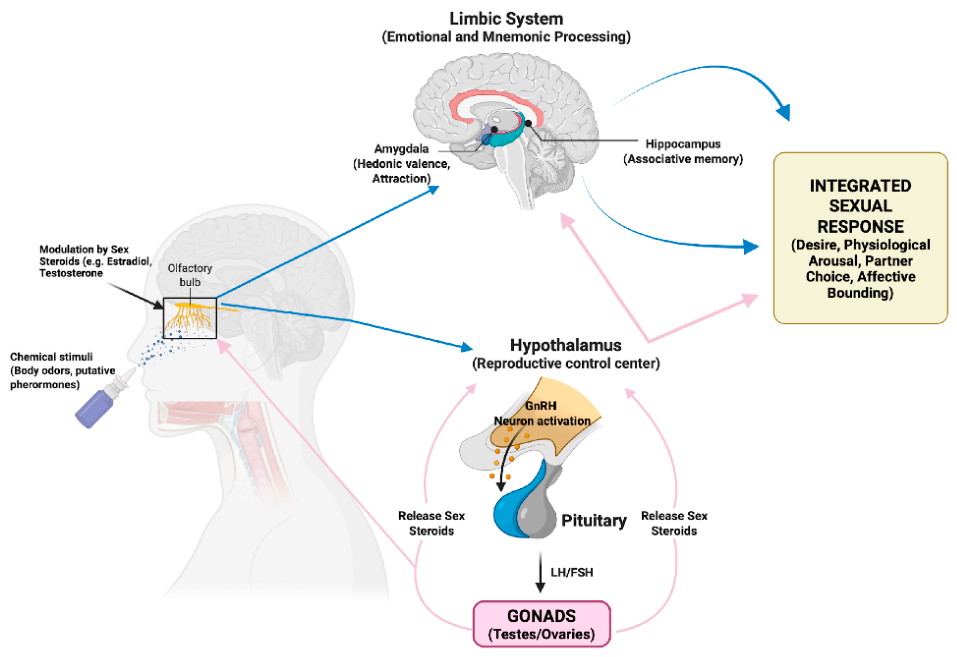
3]. Overall, available evidence supports a role for olfactory processing within neurobiological networks regulating human sexual behavior, while highlighting the need for further translational and clinically oriented research (
Figure 1).
External chemical stimuli are detected by the olfactory epithelium, whose sensitivity is modulated by circulating sex steroids [
22]. The signal transmitted through the olfactory bulb bifurcates into two main pathways: a direct pathway to the Limbic System (including amygdala and hippocampus) for the processing of emotional valence, attraction, and associative memory linked to odors [
3,
12,
13], and a parallel pathway direct to the Hypothalamus [
23]. Hypothalamic activation stimulates the Hypothalamic–Pituitary–Gonadal axis, leading to the release of sex steroids which exert positive and negative feedback on both brain centers and the olfactory periphery. The integration of emotional, mnemonic, and neuroendocrine inputs culminates in the integrated sexual response, which includes desire, arousal, and bonding behaviors, highlighting the critical role of olfaction for sexual well-being [
13,
24]. Overall, current evidence suggests that olfactory inputs are integrated within broader limbic and neuroendocrine networks involved in sexual regulation. Nevertheless, much of the available human evidence remains indirect and largely correlational, underscoring the need for further mechanistic and translational studies.
3.2. Human Pheromones and Chemosignaling
The existence of human pheromones, classically defined as chemical signals eliciting stereotyped behavioral or physiological responses within a species, remains a topic of ongoing debate. According to criteria derived from insect chemical ecology, pheromones should be species-specific, consistently produced, detected via specialized sensory systems, and capable of triggering reliable and reproducible responses. Under these stringent conditions, conclusive evidence for human pheromones remains limited [
1].
However, this framework may be overly restrictive for understanding human olfactory communication, which operates within a context of cognitive modulation, inter-individual variability, and multisensory integration. Notably, chemosensory communication in humans is not confined to classical body odors. Experimental evidence has shown that emotional secretions such as tears can convey biologically relevant social signals; for example, exposure to women’s emotional tears has been associated with reduced sexual arousal and decreased testosterone levels in men [
25].
For these reasons, contemporary research has increasingly adopted the broader concept of chemosignaling, referring to the transmission of socially relevant information through chemical cues that influence perception, affect, and behavior without necessarily eliciting fixed or universal responses. Within this framework, accumulating evidence indicates that chemosensory cues contribute to sexual cognition and social interaction in humans.
Among the most extensively investigated compounds there is androstadienone (AND), primarily found in male axillary secretions, and estratetraenol (EST), identified in female bodily fluids. Experimental studies suggest that these compounds can modulate neural and behavioral responses in a sex-dependent manner, including hypothalamic activation, attention to socio-emotional stimuli, and aspects of sexual decision-making [
3,
26,
27]. Importantly, these effects are generally subtle, context-dependent, and highly variable across individuals, and therefore do not meet the criteria for classical pheromonal responses.
Beyond isolated compounds, a growing body of research supports the role of natural body odors as carriers of dynamic social and sexual information. Individuals can discriminate between body odors associated with different emotional or physiological states, including sexual arousal, and exposure to such cues can influence sexual motivation and physiological responses [
28]. These findings suggest that human body odors encode biologically relevant information that may be processed partially outside conscious awareness.
Inter-individual variability represents a critical factor in chemosensory processing. Differences in sensitivity to compounds such as AND have been associated with variability in emotional processing, social interaction, and sexual behavior, highlighting the importance of individual differences in shaping chemosensory effects [
29]. Moreover, physiological responses to chemosignals, such as changes in nasal erectile tissue, indicate that these compounds can exert measurable peripheral effects, even in the absence of overt behavioral changes [
30].
Despite these converging findings, several methodological limitations must be acknowledged. Many studies rely on relatively small samples, lack replication, and employ artificial experimental paradigms that may not fully reflect real-world chemosensory interactions. In addition, cultural practices such as hygiene and fragrance use, as well as cognitive and contextual factors, are likely to modulate both the perception and impact of body odors.
Overall, current evidence supports the view that humans produce and respond to chemosensory cues relevant to social and sexual behavior. However, these processes appear to differ fundamentally from classical pheromone systems described in other species. Accordingly, future research should move beyond the search for discrete human pheromones and instead focus on understanding how olfactory signals interact with cognitive, emotional, and social processes to shape human sexual behavior.
Main findings on chemosignaling and human sexual behavior are summarized in
Table 1.
Table 1.
Key Studies on Chemosignaling and Human Sexual Behavior.
Table 1.
Key Studies on Chemosignaling and Human Sexual Behavior.
| Study | Country | Compound | Study Design | Sample Size | Primary Outcome |
|---|
| Mazzatenta et al. (2016) [30] | Italy | AND | Cross-sectional study | 11 healthy females in the ovulatory phase (aged 15–25) | After AND inhalation, performed rhinomanometry resulted in an increased swelling of the nasal turbinates |
| Oren et al. (2019) [26] | Israel | EST | Cross-Sectional; Two Experimental Groups | Two Heterosexual Men Groups respectively of 56 (aged 22–34) and 64 (aged 22–35) | EST enhanced visual attention to sexual stimuli; it also increased perception of emotional intensity in romantic touch (exposure to photos depicting humans or objects, with or without physical contact) |
| Wu et al. (2022) [27] | China | EST | Cross-sectional study | 76 Heterosexual Non-Smoking Men (54 single and 22 in a relationship; aged 18–33) | EST increased preference for larger, delayed sexual rewards (SDDT); no effect on general impulsivity. |
| Kern et al. (2023) [29] | United
States | AND | Cross-sectional study | 20 older adults (8 men and 12 women; aged 57–77) | Enhanced AND sensitivity (especially in women), in Sniffin’ Sticks Test, correlated with better social/sexual behavior, after NSHAP Questionnaires. |
| Gelstein et al. (2011) [25] | Israel | Tears | Experimental study | 24 heterosexual men exposed to emotional tears vs. saline (within-subject design) | Reduced testosterone and arousal |
| Agron et al. (2023) [31] | Israel | Tears | Experimental study | 130 adult men (experimental groups exposed to female tears vs. control condition) | Reduced aggression |
3.3. Olfactory Perception and Mate Selection
Beyond acute chemosignaling of arousal states, accumulating evidence indicates that individual body odor characteristics, reflecting genetic, hormonal, and health status, play a central role in human mate preferences and partner choice. In line with this perspective, studies on partner odor recognition show that individuals can identify and often prefer their partner’s body odor compared to that of unfamiliar individuals, highlighting the role of olfactory cues in maintaining pair bonds and relational familiarity [
32].
Among the biological factors underlying these processes, the major histocompatibility complex (MHC), a highly polymorphic gene cluster fundamental to immune function, has been widely recognized as a key substrate of vertebrate chemosensory communication. MHC-associated olfactory signaling has been described as “probably the basis for a chemosensory communication system common to all vertebrates” [
33], with extensive evidence documented across species.
In non-human mammals, individuals consistently prefer the body odors of MHC-dissimilar potential mates, a mechanism thought to enhance offspring heterozygosity and immune competence. In humans, seminal experimental findings demonstrated that women tend to prefer the scent of MHC-dissimilar men [
34], suggesting a conserved evolutionary mechanism underlying mate selection. Subsequent research has broadly supported the involvement of MHC-related olfactory cues in human social and sexual behavior [
35].
More recent evidence has refined this perspective, indicating that MHC-associated odor preferences in humans are not uniform but are influenced by contextual and individual factors. Hormonal status, relationship context, and cultural variables appear to modulate these preferences [
1]. In addition, similarity in human leukocyte antigen (HLA) profiles, the human equivalent of MHC, has been associated with reduced body odor attractiveness, particularly in women not using hormonal contraception [
36], supporting a role for MHC-related cues in mate discrimination processes.
In addition to its role in mate selection, olfactory communication has been implicated in reproductive investment and pregnancy-related outcomes, providing further clinical relevance to chemosensory processes. In several mammalian species, exposure to the scent of an unfamiliar male can induce pregnancy disruption, a phenomenon known as the Bruce effect, suggesting that chemosensory cues can influence reproductive physiology beyond mate choice [
37,
38]. This effect is mediated by neuroendocrine mechanisms linking olfactory input to hypothalamic regulation of pregnancy maintenance.
Although a direct equivalent of the Bruce effect has not been conclusively demonstrated in humans, emerging evidence suggests that olfactory processes may play a role in reproductive outcomes. Women with unexplained recurrent pregnancy loss have been reported to exhibit altered olfactory perception and enhanced recognition of their partner’s body odor compared to controls, pointing to a potential role of chemosensory processing in reproductive success [
39].
These findings suggest that olfactory mechanisms may contribute to processes such as partner recognition, immunological compatibility, and reproductive investment. From a clinical perspective, they raise the possibility that altered chemosensory processing could represent an underexplored factor in certain cases of infertility or recurrent pregnancy loss, although current evidence remains preliminary and requires further investigation.
The biological mechanisms underlying MHC-dependent odor signaling likely involve both direct and indirect pathways. While MHC molecules and their peptide ligands may act as olfactory cues, substantial evidence indicates that MHC genotype influences the composition of commensal microbiota, which in turn generate volatile compounds contributing to individual body odor profiles. This interaction between host genetics and microbial metabolism produces stable and distinctive odor signatures [
35].
An additional dimension of olfactory mate selection is the considerable inter-individual variability in olfactory perception, partly driven by genetic variation in odorant receptor genes. A large genome-wide association meta-analysis involving over 219,000 individuals identified sex-specific genetic variants influencing olfactory identification ability [
40].
These findings suggest that olfactory-based mate preferences are unlikely to be universal. Instead, variability in olfactory perception may contribute to heterogeneous preference patterns across individuals, potentially supporting the maintenance of genetic diversity in odor-relevant systems, including MHC.
Finally, individual differences in mating strategies, conceptualized as sociosexuality, appear to interact with olfactory processing. Unrestricted sociosexuality, reflecting a preference for short-term mating, has been associated with increased engagement with chemosensory cues during social evaluation. Validation of the Italian Revised Sociosexual Orientation Inventory (SOI-R) confirmed significant sex differences, with men displaying higher levels of unrestricted sociosexuality (Cohen’s d = 0.83), particularly in the desire domain [
24]. These findings suggest that olfactory processing may be functionally calibrated to individual mating strategies, with heightened sensitivity to socially relevant odor cues in individuals oriented toward short-term mating contexts.
3.4. Body Odor, Sexual Attraction, and Relationship Dynamics
Beyond initial mate selection, olfactory cues continue to influence sexual attraction, desire, and relationship quality within established partnerships. Specifically, body odors and olfactory ability are critical across all stages of romantic relationships: they moderate mate choice during initiation, provide a source of comfort during relationship maintenance, and can even signal relationship breakdown through disgust processes [
25,
41]. A growing body of research suggests that individual differences in olfactory function are associated with sexual well-being and relational outcomes (
Table 2).
Clinical and experimental studies indicate that olfactory function may be linked to key aspects of sexual physiology. For example, evidence from cross-sectional research shows that better olfactory performance is associated with improved erectile function in men, suggesting a functional relationship between chemosensory processing and sexual response [
42]. Similarly, olfactory dysfunction has been associated with erectile dysfunction, even after accounting for potential confounding factors such as cigarette smoking, supporting the hypothesis that shared vascular or neurobiological mechanisms may underlie both conditions [
43].
In addition to sexual function, olfactory processing may also be related to male reproductive capacity. Experimental findings indicate that reduced sensitivity to specific odorants, such as Bourgeonal, an agonist of the OR1D2 receptor expressed in both the olfactory epithelium and human sperm, is associated with impaired seminal parameters, including sperm concentration and motility [
44]. These results suggest a potential link between olfactory receptor function and male fertility, raising the important suggestion that olfactory testing could serve as a non-invasive marker in specific infertility profiles.
Taken together, these findings support the view that olfactory function is not only relevant for sexual attraction but may also be associated with physiological aspects of sexual performance and reproductive health. However, the available evidence is largely based on cross-sectional designs, and causal relationships remain to be established. Further research is needed to clarify the underlying mechanisms and to determine the clinical applicability of these associations.
Table 2.
Key Clinical studies on Olfaction and Human Sexual Behavior.
Table 2.
Key Clinical studies on Olfaction and Human Sexual Behavior.
| Study | Country | Instrument | Study Design | Sample Size | Primary Outcome |
|---|
| Ottaviano et al. (2013) [44] | Italy | Sniffin’ Sticks (Threshold) | Cross-sectional study | N = 63 (48 Young, 15 Elderly) | Olfactory threshold correlates with sexual desire in young men but not in elderly men |
| Özmen et al. (2016) [43] | Turkey | Sniffin’ Sticks (Butanol Threshold) | Case–control study | N = 62 (35 Smokers, 27 Non-smokers) | Smoking correlates with both olfactory and erectile dysfunction; non-smokers have significantly better scores in both domains |
| Deng et al. (2020) [42] | China | Sniffin’ Sticks (TDI) | Retrospective & Prospective | N = 574 (Retro); N = 142 (Prosp) | Olfactory dysfunction is a major risk factor for ED. Patients with both rhinitis and ED have the worst olfactory scores |
| Blomkvist et al. (2022) [12] | Italy | Olfaction: Self-reported (1-item) | Cross-sectional Web Survey | N = 1107 (646 F, 461 M) | Self-reported olfactory function positively predicts sexual well-being and negatively predicts infidelity. This relationship is fully mediated by pathogen disgust sensitivity, suggesting a “scent of monogamy” mechanism driven by selective hygiene/disease avoidance and partner attachment |
| Iuliano et al. (2023) [13] | Italy | Sexual: Sexual Well-being (CSFQ-14/FSFI), Infidelity (Binary) | Observational Clinical Study | N = 125 (51 M, 74 F) | Objective olfactory function correlates with sexual function in both sexes. In men, this is linked to BMI and Age (metabolic health). In women, smell predicts arousal and lubrication but not desire. Poor olfaction correlates with conservative sexual attitudes |
| Bendas et al. (2018) [14] | Germany | Disgust: BODS, TDDS | Cross-sectional study | N = 70 healthy adults (28 men, 42 women; mean age = 24.8 ± 4.1 years) | Higher olfactory sensitivity was positively associated with sexual experience, particularly increased pleasantness of sexual activity and, in women, higher orgasm frequency; no associations were found with sexual desire or sexual performance. |
| Murphy et al. (2025) [45] | Australia | Olfaction: Sniffin’ Sticks (TDI) | Cross-sectional study | N = 74 participants (mixed-sex sample; aged 17–56 years, mean age = 22.6 ± 7.1) | Olfactory ability was weakly positively associated with emotional and intellectual intimacy, while physical and social intimacy were associated with disgust sensitivity (particularly pathogen and sexual disgust), but not with olfactory ability. |
| Mahmut et al. (2019) [32] | Australia | Sexual: IIEF (Men), FSFI (Women), SAS | Experimental study | N = 82 heterosexual women (40 partnered, 42 single; aged 18–35 years) | Women rated body odor of familiar males (partner or known individual) as more familiar, similar, and sexually attractive than that of unknown males, and were able to reliably recognize it; however, preference for familiar odors was not consistently stronger, suggesting effects of familiarity rather than mate selection mechanisms. |
| Sorokowska et al. (2018) [36] | Germany | Health: BMI, PVD | Experimental study | N = 99 participants (52 women, 47 men; aged 18–35 years, mean age = 25.9 ± 4.8; all in romantic relationships; 28 women using hormonal contraception, 24 not) | HLA similarity influenced body odor attractiveness in women not using hormonal contraception, with HLA-similar odors rated as less attractive than HLA-dissimilar ones; no significant effects were observed in men or in women using hormonal contraception. |
3.5. Olfactory Function Predicts Sexual Well-Being and Fidelity
Emerging research indicates that individuals with a better sense of smell tend to experience greater sexual well-being and lower rates of infidelity. This connection may exist because high olfactory acuity makes people more sensitive to physical cues—such as pleasant scents or repulsive odors—which shapes how they evaluate partners and make sexual decisions. However, because the current data is observational [
12], we cannot confidently claim that smell directly causes these outcomes. The relationship between olfaction, disgust, and sexuality has been conceptualized within the framework of the behavioral immune system. Disgust is considered an evolved mechanism supporting pathogen avoidance, with olfactory cues representing a primary source of information about environmental and bodily contamination [
46,
47]. Experimental studies suggest that pathogen-related disgust can modulate sexual arousal and approach behavior in a context-dependent manner [
48,
49].
Individual differences in disgust sensitivity have been associated with variability in sexual attitudes and behavior, including lower sexual permissiveness and reduced sexual motivation [
50]. Moreover, some evidence suggests that olfactory acuity may be related to increased responsiveness to odor-based cues relevant to contamination and bodily signals [
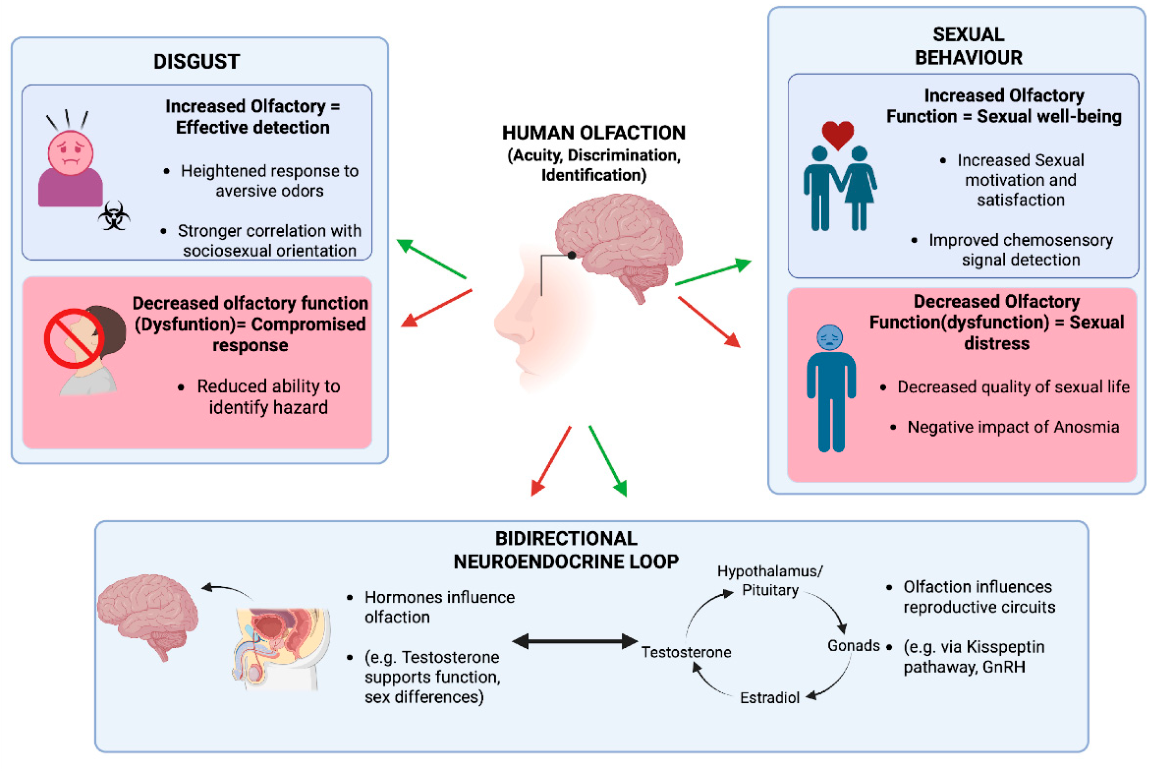
51]. Taken together, these findings support the hypothesis that olfactory processing and disgust sensitivity may jointly contribute to the modulation of sexual motivation and partner evaluation, along with the permissive role of sex steroid hormone modulation (
Figure 2).
Increased olfactory function supports sexual well-being, boosting motivation and facilitating mate choice through chemosignal detection [
1,
13,
28]. Conversely, olfactory dysfunction correlates with sexual distress and reduced quality of life [
10,
12]. Effective olfaction also enables appropriate disgust responses for pathogen avoidance [
13]. Finally, a neuroendocrine loop shows hormones influencing olfactory function [
22], while olfactory inputs reciprocally regulate reproductive circuits via mediators like kisspeptin [
20,
21]. Within the schematic representation, green arrows denote stimulatory pathways or positive modulation, while red arrows signify inhibitory mechanisms or negative regulatory feedback.
3.6. Objective Olfactory Testing and Sexual Function
Evidence from studies using objective olfactory assessment further supports the association between olfactory function and sexual well-being. In a controlled observational study, psychophysically measured olfactory performance was positively associated with overall sexual functioning in both men and women [
13].
Sex-specific patterns were observed, with broader associations across multiple domains of sexual function in men, whereas in women significant relationships were primarily found for arousal, lubrication, orgasm, and satisfaction, but not for sexual desire [
13]. These differences may reflect both biological factors and methodological variability in the assessment of sexual function.
Overall, these findings support the hypothesis that olfactory function is linked to both physiological and experiential dimensions of sexual functioning. However, given the observational design of the available studies and the potential influence of confounding variables such as age and metabolic status, these associations should be interpreted cautiously. Further research is needed to clarify the underlying mechanisms and clinical implications.
3.7. Olfactory Dysfunction and Sexual Behavior
If olfactory function contributes positively to sexual well-being, its impairment would be expected to negatively affect sexual experience and behavior. Consistent with this assumption, a growing body of evidence indicates that olfactory dysfunction is associated with alterations across multiple domains of sexual functioning, including motivation, satisfaction, and relational aspects.
Across clinical and population-based studies, reduced olfactory ability has been linked to poorer sexual outcomes in both men and women, including lower sexual satisfaction and reduced arousal, suggesting that chemosensory input contributes to both physiological and affective components of sexual experience [
10]. Qualitative reports from patients with acquired olfactory loss further describe changes in sexual desire, partner perception, and emotional intimacy, indicating that the absence of olfactory cues may impact both affective and experiential aspects of sexuality [
52].
Evidence from large cohort studies suggests that olfactory dysfunction may primarily affect motivational and emotional dimensions of sexuality rather than purely behavioral ones. Reduced olfactory function has been associated with lower sexual desire and decreased emotional satisfaction, without consistent effects on frequency of sexual activity or physical pleasure [
9]. This pattern supports the view that olfactory input plays a particularly relevant role in the affective and relational components of sexual experience.
Additional insights are provided by clinical and naturalistic models of olfactory loss. Congenital conditions such as Kallmann syndrome, characterized by anosmia and hypogonadotropic hypogonadism, illustrate the combined impact of olfactory and endocrine dysfunction on sexual development and behavior [
53]. Although hormonal treatment can restore reproductive function, olfactory deficits persist, suggesting that anosmia may independently contribute to possible social and sexual difficulties. Comparative observational studies with normosmic hypogonadotropic hypogonadism are lacking at present, making clinical differences very inconclusive [
54,
55].
The COVID-19 pandemic has provided an additional natural model to investigate acquired olfactory dysfunction. Longitudinal data indicate that recovery of olfactory function is associated with improvements in sexual desire and frequency, supporting a dynamic relationship between olfactory input and sexual motivation [
11]. Notably, these changes appear relatively specific to sexual domains, as olfactory recovery does not consistently correspond to parallel improvements in general psychological well-being.
Despite these converging findings, the current literature is characterized by important methodological limitations, including the predominance of cross-sectional designs, heterogeneity in assessment tools, and relatively small sample sizes in clinical populations. These limitations constrain causal inference and highlight the need for longitudinal and mechanistic studies to better define the role of olfactory dysfunction in sexual health.
Overall, the available evidence suggests that olfactory dysfunction represents a clinically relevant, yet often underrecognized, factor influencing sexual behavior and well-being.
Table 3 summarizes five studies related to olfactory dysfunction and humans’ sexual behavior.
Table 3.
Key Studies on Olfactory Dysfunction and Sexual Behavior.
Table 3.
Key Studies on Olfactory Dysfunction and Sexual Behavior.
| Study | Country | Condition | Study Design | Sample Size | Primary Outcome |
|---|
| Siegel et al. (2021) [9] | United States | Aging-related Olfactory Dysfunction | Cross-Sectional (NSHAP Data) | 2084 older adults (aged 57–85) | Decreased olfactory function was
associated with lower sexual motivation (frequency of thoughts) and less emotional satisfaction with sex; no significant association was found with frequency of sexual activity or physical pleasure. |
| Atmiş et al. (2025) [10] | Turkey | Smell Disorders (Dysosmia/Anosmia) | Cross-Sectional Case–Control | 100 participants (40 patients with smell
disorders, 60 healthy controls) | Patients with smell disorders had
significantly lower sexual function scores (IIEF for men, FSFI for women) and Quality of Life compared to normosmic controls. Hyposmia was linked to 4.9 times lower overall sexual satisfaction in men. |
| Hofer et al. (2025) [11] | Germany | COVID-19-associated Olfactory Dysfunction | Longitudinal (2 timepoints, ~6 months apart) | 73 patients with post-COVID smell loss | Within-person improvements in
psychophysical olfactory function longitudinally predicted increased sexual frequency. In stable couples, improved smell also predicted increased sexual desire. No link was found with mental health changes. |
| Miclet et al. (2025) [56] | Italy | COVID-19-associated Anosmia | Longitudinal (Retrospective)/Case–Control | 138 sexually active adults (61 with anosmia, 77 without) post-COVID infection | While non-anosmic subjects showed a recovery in orgasmic intensity post-infection, those with persistent anosmia reported a significant decline in orgasmic intensity after the acute phase. |
| Schäfer et al. (2019) [52] | Germany | Olfactory loss | Cross-sectional study | 151 participants (100 patients with olfactory dysfunction, 51 healthy controls; 84 women total; aged 21–63 years, patients: M = 40.1 ± 8.2, controls: M = 39.2 ± 13.1) | Olfactory dysfunction was associated with self-reported decreases in sexual desire in a subset of patients, with changes predicted by depressive symptoms and severity of olfactory impairment; no differences emerged between patients and controls on standardized measures of sexual desire. |
3.8. Sex Differences in Olfactory Function and Sexual Behavior
Sex differences in olfactory function are well documented, with women generally outperforming men in odor detection, discrimination, and identification tasks [
57,
58]. These differences emerge during puberty and are influenced by hormonal fluctuations across the menstrual cycle, pregnancy, and aging. However, methodological considerations are important, as psychophysical tests such as the
Sniffin’ Sticks show only partial metric invariance across sexes, suggesting that latent variable approaches may be more appropriate than raw score comparisons [
23].
Biological explanations for these differences include structural and functional variations in olfactory pathways, hormonal modulation of sensory processing, and sex-specific developmental trajectories [
40].
From a behavioral perspective, olfactory function appears to be associated with sexual well-being in both sexes, although domain-specific patterns have been reported. In clinical and observational studies, olfactory function has been linked to sexual outcomes in both men and women, with some differences in the specific domains involved [
10,
12,
13].
These findings suggest that, although women generally exhibit higher olfactory sensitivity, olfactory processing contributes to sexual motivation, partner evaluation, and sexual behavior in both sexes. Moreover, experimental evidence indicates that chemosensory cues can influence male sexual cognition and decision-making, further supporting the role of olfaction as a shared component of sexual functioning across genders [
26,
27].
Key sex-related differences in olfactory function and their association with sexual behavior are summarized in
Table 4.
4. Discussion
4.1. The Chemosensory Framework of Human Sexuality and Dysfunction
This narrative review highlights that the sense of smell is a significant but underappreciated contributor to sexual well-being and relationships in human models. It is closely tied to the brain and hormone systems that regulate sexual behavior and relationships. However, current research is limited by small study sizes and the challenge of accurately testing human scent communication in real-world settings.
Taken together, current evidence suggests that human chemosensory communication should be interpreted less as a classical pheromonal system and more as a flexible, context-dependent process integrating olfactory, neuroendocrine, emotional, and cognitive mechanisms.
From an evolutionary and behavioral perspective, olfaction appears to contribute to mate selection and pair-bond maintenance through mechanisms that are highly context-sensitive rather than fixed or universally expressed. This suggests that olfactory cues may shape sexual behavior by interacting with hormonal status, relationship context, individual preferences, and social environment.
Beyond mate selection, olfactory processing may act as a regulatory interface between attraction and avoidance. Its interaction with disgust sensitivity, pathogen avoidance, and sociosexual orientation suggests that smell may help calibrate sexual approach–avoidance responses according to both biological risk and relational opportunity.
Overall, the reviewed evidence indicates that olfactory function is more consistently associated with the affective and experiential dimensions of sexuality than with sexual behavior alone. Rather than acting as an isolated determinant of sexual desire, olfaction appears to contribute to sexual well-being through its influence on pleasure, partner perception, emotional closeness, and relational satisfaction.
From a clinical perspective, these findings suggest that olfactory function may represent an underexplored factor in sexual health assessment. Olfactory dysfunction, whether acquired (e.g., post-infectious) or congenital, may contribute to sexual difficulties not fully explained by hormonal or psychological factors alone. In this context, integrating basic olfactory assessment into sexual medicine practice could provide additional insights into patients presenting with unexplained sexual dysfunction.
In conclusion, olfaction appears to play a multifaceted role in human sexual behavior, influencing attraction, partner evaluation, and aspects of sexual well-being. While the field remains characterized by methodological limitations, the convergence of neurobiological, behavioral, and clinical evidence supports the inclusion of olfactory processes within contemporary models of human sexuality. Further investigation is warranted to clarify mechanisms, strengthen causal inference, and explore potential clinical applications.
4.2. Limitations of the Current Literature
While this review highlights a robust link between olfaction and sexuality, several methodological limitations in the available literature must be acknowledged. First, there is a strong predominance of cross-sectional designs, which prevents the establishment of direct causal relationships between olfactory acuity and long-term sexual outcomes. Second, a high heterogeneity exists among olfactory assessment tools across studies, ranging from subjective self-report questionnaires to diverse psychophysical tests (e.g., UPSIT vs. Sniffin’ Sticks), limiting data comparability. Third, significant cultural and behavioral confounders, such as distinct hygiene practices, widespread use of artificial fragrances, and cosmetics, are rarely controlled for in clinical trials, despite their potential to heavily mask or alter natural chemosignals. Fourth, many clinical studies are prone to self-report bias regarding sexual satisfaction and rely on relatively small sample sizes, particularly when investigating specific neurological, congenital, or post-viral cohorts. Future longitudinal studies with standardized chemosensory protocols and larger, culturally diverse populations are required to validate these findings.
5. Practical Implications
Future research should prioritize longitudinal designs and objective assessments to clarify the causal pathways linking olfactory function to sexual motivation and relational outcomes. From a clinical perspective, the available evidence suggests that olfactory processing may contribute to multiple domains of sexual functioning, including emotional bonding, physiological performance, and behavioral regulation.
Regarding relational and affective dimensions, olfactory cues appear to play a role in partner bonding and emotional intimacy. Reduced olfactory function has been associated with lower emotional satisfaction and diminished perceived closeness within sexual relationships, particularly in the context of acquired smell loss such as that observed following viral infections [
11,
12]. These findings suggest that olfactory input may contribute to the subjective quality of intimacy beyond purely physical aspects of sexual interaction.
From a physiological perspective, olfactory function has been linked to several aspects of sexual performance. Clinical studies indicate that reduced olfactory sensitivity is associated with erectile dysfunction in men and with impairments in arousal and lubrication in women [
13,
42]. In addition, preliminary evidence suggests a potential relationship between specific olfactory receptor sensitivity and male reproductive parameters, including sperm function, although these findings require further validation [
44].
In clinical practice, olfactory assessment may be considered in patients presenting with unexplained sexual dysfunction, reduced sexual motivation, impaired intimacy, or relational dissatisfaction, particularly when conventional hormonal and psychological evaluations fail to fully explain symptoms. Olfactory dysfunction may manifest through reduced emotional engagement, decreased partner attraction, diminished sexual satisfaction, or altered affective responses during intimacy. These manifestations appear especially relevant in patients with acquired anosmia or post-infectious smell disorders. Validated psychophysical tools such as the Sniffin’ Sticks Test and the University of Pennsylvania Smell Identification Test (UPSIT) may provide useful clinical information regarding olfactory performance. Objective olfactory testing could therefore represent a complementary component of sexual medicine assessment, particularly in patients with erectile dysfunction, post-COVID sexual complaints, hypogonadotropic conditions, or unexplained reductions in sexual well-being.
Olfactory processing may also interact with broader affective and behavioral regulatory systems, particularly those related to pathogen avoidance. Disgust sensitivity, partially mediated by olfactory input, has been associated with sexual decision-making and partner selectivity, suggesting a role for chemosensory cues in shaping approach–avoidance processes in sexual contexts [
12]. However, these associations are complex and likely influenced by individual, contextual, and cultural factors.
From a diagnostic perspective, integrating olfactory function into clinical reasoning may contribute to a more multidimensional understanding of sexual health by incorporating neurobiological, emotional, and relational components alongside endocrine and psychological factors. Although current evidence remains preliminary and insufficient to support routine screening protocols, greater clinical awareness of olfactory dysfunction may improve the identification of underrecognized contributors to sexual distress and relational impairment. The clinical relevance of olfaction in sexuality is therefore multifaceted. Olfactory screening may help identify unexplained sexual dysfunctions in medical settings, while targeted interventions addressing smell dysfunction could potentially improve aspects of intimacy and sexual well-being. In psychological and couples therapy contexts, increased awareness of chemosensory influences may also facilitate communication regarding attraction, emotional closeness, and relational dynamics.
Although current evidence does not yet support standardized olfactory-based therapeutic protocols, emerging findings suggest that restoring or improving olfactory function may have positive effects on sexual well-being, intimacy, and relational quality. This possibility appears particularly relevant in individuals with acquired olfactory dysfunction, such as post-infectious smell loss, where partial recovery of olfactory abilities has been associated with improvements in sexual motivation and relationship satisfaction [
11]. In this context, olfactory rehabilitation strategies and greater attention to chemosensory health may represent promising complementary approaches within multidisciplinary sexual medicine and couples therapy settings.
6. Conclusions
This narrative review underscores the multifaceted and clinically significant role of olfaction in human sexuality, mate choice, and relationship dynamics. Moving beyond the conventional debate surrounding classical human pheromones, contemporary evidence supports a broader framework of chemosensory communication processed via the main olfactory system, which integrates within limbic and neuroendocrine networks to modulate sexual behavior. Empirical findings demonstrate that robust olfactory function is positively associated with sexual satisfaction, partner bonding, and physiological response, whereas olfactory dysfunction, whether congenital or acquired, negatively impacts intimacy, sexual motivation, and erectile performance. Consequently, olfactory processing represents a vital, yet historically overlooked, component of sexual health. Integrating standardized olfactory assessments into clinical practice, particularly in andrology and sexual medicine, may provide novel diagnostic pathways and therapeutic insights for patients with unexplained sexual dysfunction.





 ,
,