
Article

Light Color and Intensity-Dependent Modulation of Phototactic Behavior Mediating Orientation Guidance in Schizothoracine Fishes

1
Nanjing Hydraulic Research Institute, Nanjing 210029, China
2
Sichuan Minjiang Port & Shipping & Electricity Power Development Co., Ltd., Chengdu 610000, China
3
POWERCHINA Chengdu Engineering Co., Ltd., Chengdu 611130, China
4
Yalong River Hydropower Development Co., Ltd., Chengdu 610041, China
5
Key Laboratory of Freshwater Fish Reproduction and Development (Ministry of Education), Key Laboratory of Aquatic Science of Chongqing, College of Fisheries, Southwest University, Chongqing 400715, China
*
Authors to whom correspondence should be addressed.
Fishes 2026, 11(4), 200; https://doi.org/10.3390/fishes11040200
Submission received: 26 January 2026 / Revised: 24 March 2026 / Accepted: 24 March 2026 / Published: 26 March 2026

Abstract

Visual cues are critical for orientation and migration in riverine fishes, providing potential mechanisms for behavioral guidance. This study investigated how light spectrum and intensity interact to modulate phototactic responses in two schizothoracine fishes from the upper Yalong River. Results showed Schizopygopsis malacanthus preferred blue light and avoided red light, with preferences shifting with flow intensity; Schizothorax kozlovi favored green light and avoided light-red light, with minimal flow impact. We propose that engineers build fishway entrances or ideal habitat attractors that prioritize low-intensity blue light (10 lx) and medium-intensity green light (50 lx), supplemented by medium-intensity blue light (50 lx). This study provides scientific evidence and application value for restoring fish habitats, fish passages, and fisheries.
Key Contribution: This study explores the regulatory effects of light parameters on the phototactic behavior of endemic schizothoracine fishes in the Yalong River, providing targeted light environment configurations for fishway design and habitat restoration, as well as offering scientific support for the ecological conservation of alpine river fishes.

1. Introduction

Environmental factors play a pivotal role in regulating fish growth and behavior, with light (spectrum and intensity), water flow, and temperature being the primary drivers of behavioral responses like avoidance, aggregation, and directional movement [1,2,3]. Among these, light functions as a major environmental signal for visual perception in fish: they sense light intensity and spectral changes via photoreceptors, and species-specific phototactic behaviors (positive or negative) are mediated by cone cells, supporting applications in guiding fish passage or diverting them from high-risk zones [4,5,6]. Water flow, detected by the lateral line system, similarly influences swimming efficiency and route selection, as optimal velocities enhance fishway attractiveness more than suboptimal velocities for passage success [7,8,9].
Light-based fish guidance technologies hold promise in improving fishway performance and mitigating anthropogenic threats, yet determining optimal light color and intensity parameters remains a core challenge. Fish exhibit spectral sensitivity across an expanded range (300–760 nm) that includes ultraviolet (UV) wavelengths. In addition to showing species-specific preferences for red, yellow, blue, and green light, numerous species—particularly damselfishes—utilize UV sensitivity for ecologically important behaviors such as predator-avoidant communication, with these traits often developing dynamically across ontogenetic stages [10,11]. For instance, green light repels American white sturgeon (Acipenser transmontanus) and walleye (Sander vitreus) [12], whereas juvenile lake sturgeon (Acipenser fulvescens) show positive phototaxis to blue light but negative to red [13]. Blue light attracts chub mackerel (Trachurus trachurus), whereas white light elicits avoidance [14]. Despite such findings, knowledge gaps persist regarding species-specific light preferences for many endemic Chinese fishes.
Light intensity also modulates fish behavior through dynamic adjustments of cone and rod cells, shifting visual circuits between photopic and scotopic vision [15]. Most fish avoid sudden intensity changes (e.g., at fishway inlets/outlets) [16,17] and exhibit habitat-specific preferences: herring favor < 1 lux [18], Atlantic salmon prefer 200–600 lux [19], and southern flounder opt for 350 lux [20]. However, the implications of illumination regimes for fishway design remain insufficiently understood [21].
Although international research has established a foundational framework for environmental regulation of fish behavior, systematic investigations into response patterns and mechanisms for endemic species in China are lacking [3]. This study targets two representative species from the middle-upper Yalong River—Schizopygopsis malacanthus and Schizothorax kozlovi—as the research objects, to explore their preferences for light color and light intensity. It aims to provide theoretical support for optimizing the light environment design of fishways and regional ecological restoration strategies, as well as to offer mechanistic insights into the adaptive sensory strategies of alpine river fishes.

2. Materials and Methods

2.1. Experimental Apparatus

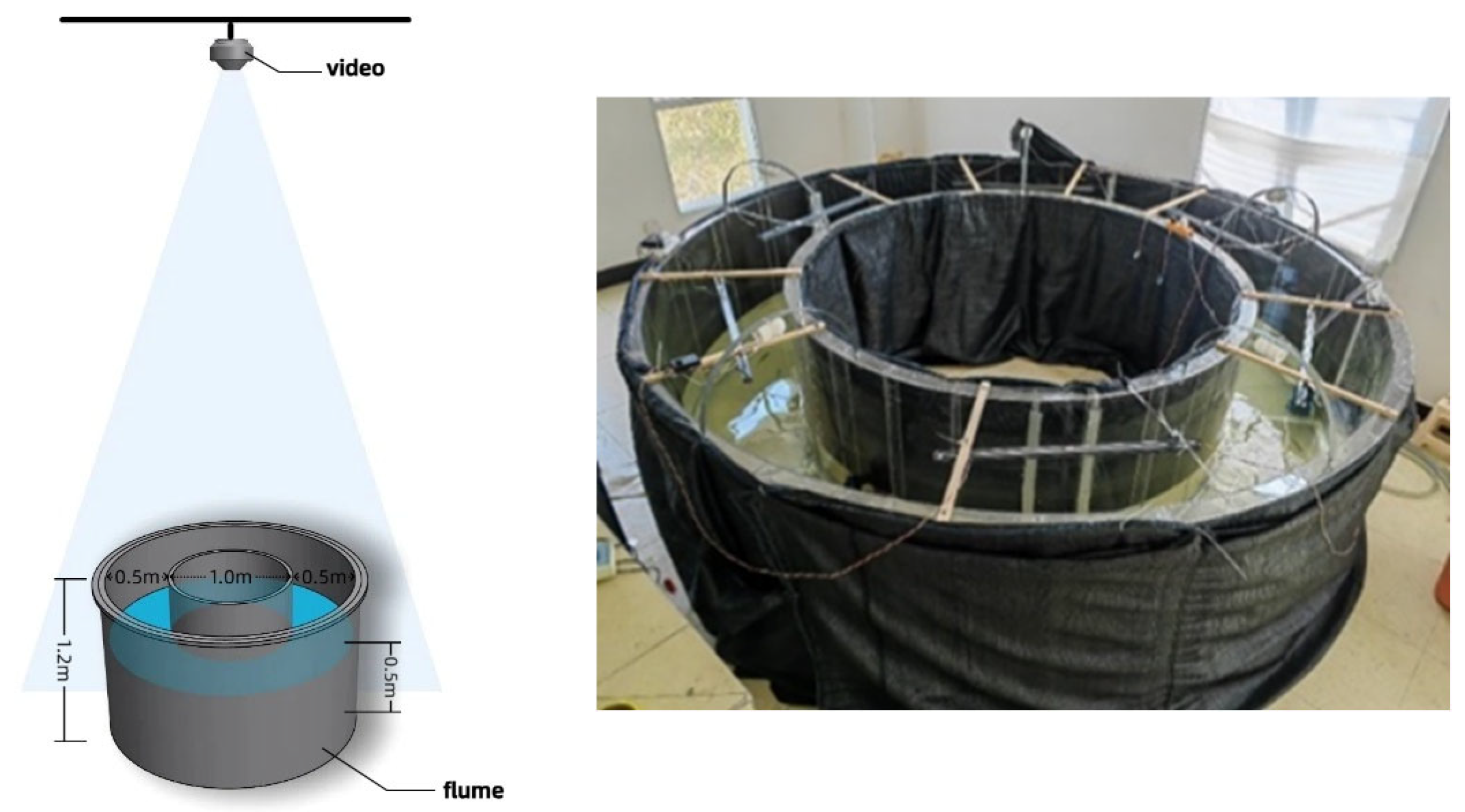
Experiments were conducted in a custom-designed annular flume integrated with a monitoring system. The flume (inner diameter 1.0 m, outer diameter 2.0 m, height 1.2 m) was operated at a 0.5 m water depth. Its inner and outer walls were covered with light-absorbing opaque materials to minimize external interference, and a camera was mounted directly above the experimental area center to record all trials.

2.2. Experimental Materials

Adult fish were acclimatized in hatchery flumes with river water to stabilize temperature and physicochemical parameters (Figure 1). A recirculating system replaced one-third of the water daily, maintaining depth > 0.5 m, dissolved oxygen > 6.0 mg/L, and temperature 11.95 ± 1.47 °C. Healthy, uninjured fish with normal swimming behavior were selected and acclimatized for ≥1 week without feeding (flumes netted to prevent escape). Total length (TL, cm) was measured from the tip of the snout to the posterior end of the caudal fin. Body length (BL, cm) was measured from the tip of the snout to the posterior end of the caudal peduncle, excluding the caudal fin. Wet weight (WW, g) was determined using an electronic balance after gently blotting excess water from the body surface. All morphological measurements were taken at the end of the experiment. Relevant parameters for Schizopygopsis malacanthus and Schizothorax kozlovi are presented in Table 1.

2.3. Experimental Method

Two sets of experiments were conducted in a dark, acoustically buffered environment to exclude external light/noise. Weak flow was generated by a side-mounted circulation pump, with velocities measured using an LGY-II intelligent propeller current meter (NHRI, Nanjing, China) and expressed in cm/s. This instrument exhibits high measurement accuracy and a reasonable error range, which fully meets the requirements of this experiment. Two hydraulic conditions were tested: hydrostatic (0 m/s) and weakly flowing water (0.2 m/s). The hydrostatic condition simulated the fish’s natural resting state to establish baseline visual preferences driven solely by light color and intensity. The weakly flowing condition, below the fish’s flow-sensing threshold and thus not inducing strong rheotaxis that could mask phototaxis, was used to test the stability of phototactic preference under ecologically relevant mild hydrodynamic conditions. Fish were acclimated to varying irradiance levels. A 5 min recording interval was used to avoid oversampling while detecting temporal preference shifts, ensuring recordings reflected true light preferences rather than transient movements.
The experimental fish were acclimated in a 6 m3 acclimation tank with a recirculating aquaculture system. One-third of the culture water was replaced daily, the dissolved oxygen concentration was maintained above 6.0 mg/L, and the water temperature during the acclimation period was controlled at (11.95 ± 1.47) °C to ensure that the experimental fish adapted to the environment and maintained a normal physiological state. Feeding was halted 24 h before the experiment to avoid the interference of feeding behavior on the results of the light selection experiment. During the experiment, the survival rate of all experimental fish was 100%, with no stress-induced death, injury, or other abnormal conditions observed. After the experiment, all experimental fish were transferred back to the holding tanks for continued standardized rearing (feeding frequency was once a day, and the feeding amount was 3~5% of the fish body weight).

2.3.1. Spectral Preference Experiment

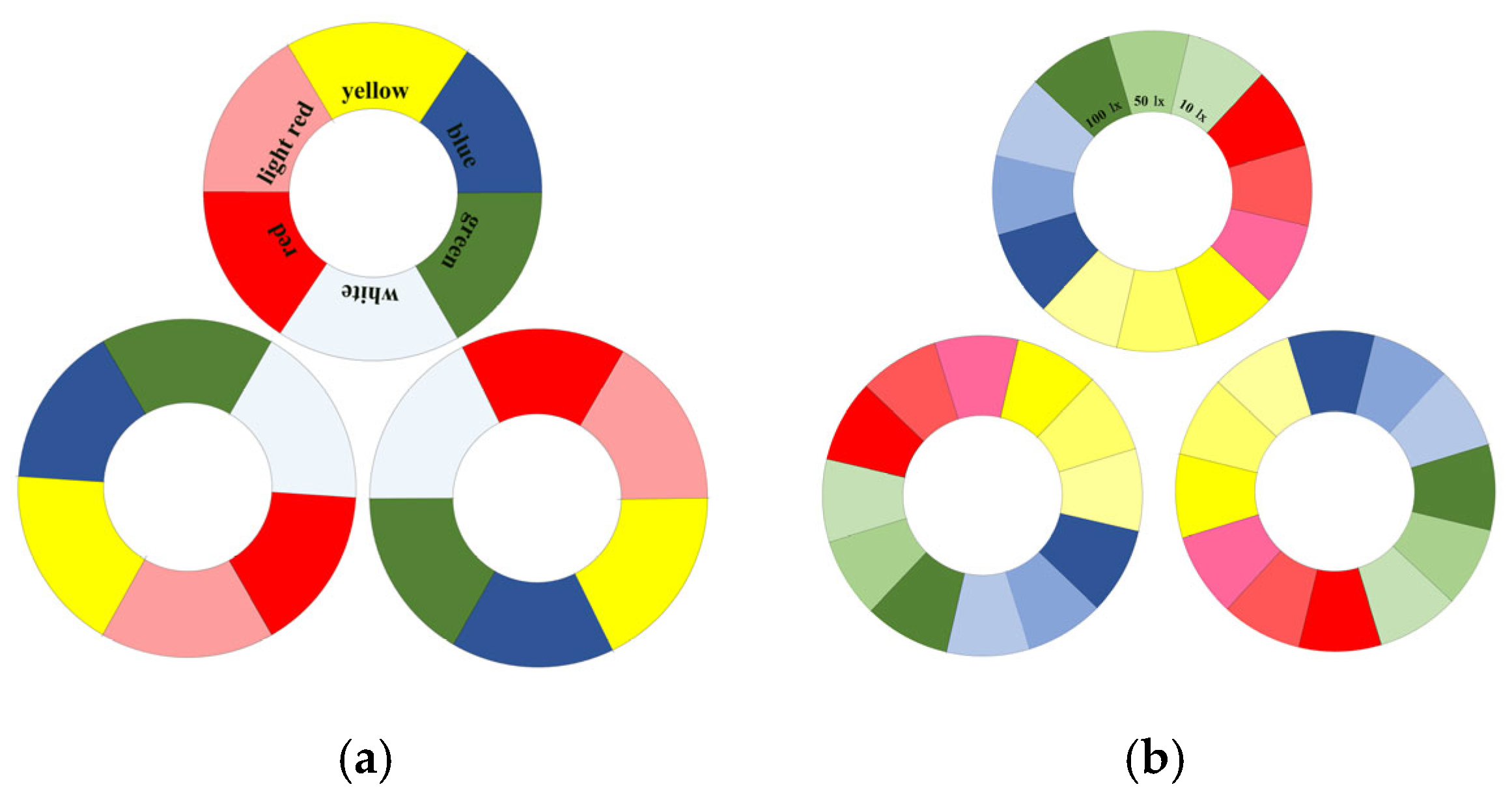
LED lights (white/red/light red/yellow/blue/green spectra) were centrally positioned above the test areas, set to maximum brightness, and calibrated to 500 ± 20 lux using a UNI-T UT381 photometer (manufactured by UNI-TREND (UNI-T) in Dongguan, China), with the light sources maintained 0.5 m below the water surface. Thirty uniform-sized, healthy fish were dark-acclimated for 15 min, followed by 30 min observations (distribution recorded every 5 min). The experiment was repeated three times (setup rotated 120° between replicates, (Figure 2a), with a 1 h rest interval between each repetition, and LED units rotated clockwise between trials to avoid location habituation (color order unchanged).

2.3.2. Intensity Preference Experiment

Submerged LED strips at the flume bottom provided red/yellow/blue/green light, with surface irradiance set to three intensities (low: 10 lx, medium: 50 lx, high: 100 lx; calibrated via UNI-T UT381 photometer) and light sources 0.5 m below the water surface. Thirty healthy, similarly sized fish were dark-acclimated for 15 min before 30 min trials (distribution logged every 5 min). The experiment was repeated three times (setup rotated 120° between replicates (Figure 2b), with a 1 h rest interval between each repetition, and LED units rotated clockwise between trials to avoid location habituation (color order unchanged).

2.4. Data Analysis

(1)
We employed the time proportion (F) as an indicator of preference for the two fish species across the various assay environments:
F ( % ) = f / N × 100 %    
where f is the number of fish distributed in a specific environmental zone, and N is the total number of fish.
(2)
We employed the selection index E to indicate the degree of preference for the two fish species across the various assay environments]:
( E = ( r _ i j P _ i ) / P _ i )
P i = ( j = 1 n r i j ) / N
where the selection index E = 0 indicates no preference, E < 0 indicates avoidance, and E > 0 indicates preference. A high absolute value indicates a stronger preference for environmental factors. r i j is the probability of fish in the i zone under the j light intensity, and P i is the probability of occurrence of fish in the i zone.
All data in this study were processed and analyzed using Microsoft Excel and SPSS 26.0 software. One-way analysis of variance (one-way ANOVA) combined with nonparametric tests was applied to determine whether significant differences existed in the distribution rate under different light conditions. All quantitative results are presented as the mean ± standard deviation (Mean ± SD) [22].

3. Results

3.1. Sensitivity of Two Fish Species to Different Light Colors

3.1.1. Selection of Light Colors by Two Fish Species

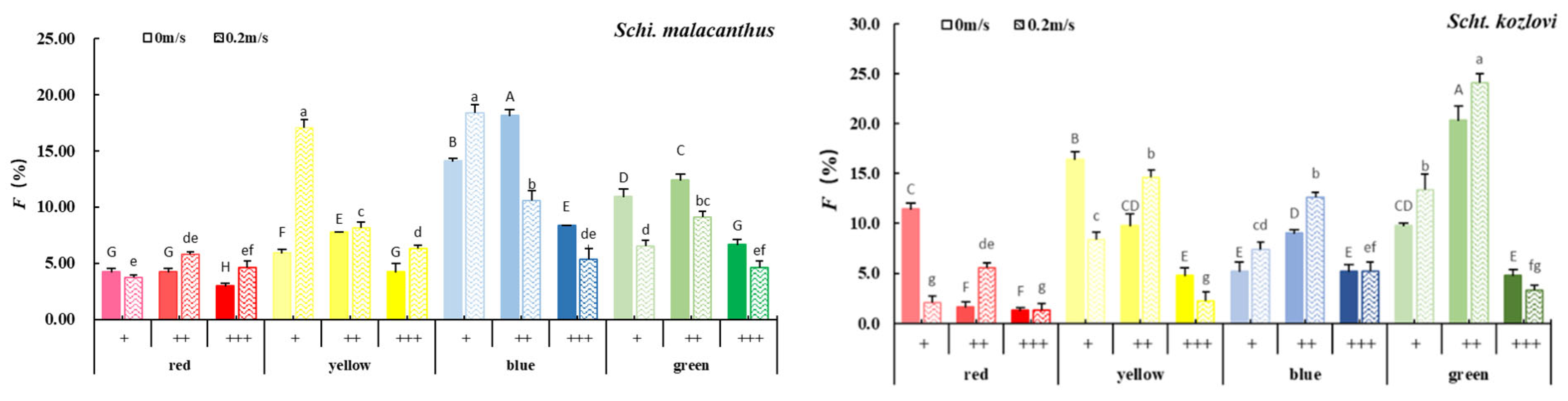
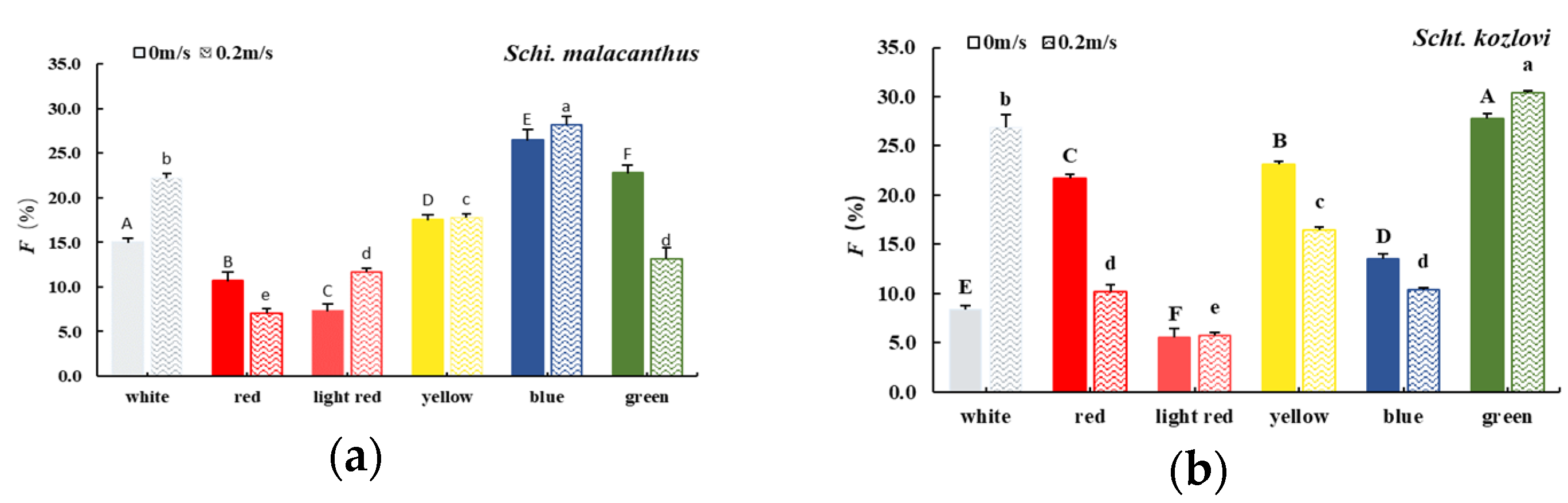
The distribution preferences of Schi. malacanthus and Scht. kozlovi across six light colors were investigated under hydrostatic and weak-flow conditions over 30 min. For Schi. malacanthus, hydrostatic conditions (Figure 3a) showed a significantly higher preference for blue light (26.5 ± 1.1%) than the other five colors (all conditions differed significantly). Under 0.2 m/s flow, a preference order was identified: blue (28.1 ± 0.9%) > white (22.2 ± 0.9%) > yellow (17.8 ± 0.5%) > light red (11.7 ± 0.5%)/green (13.1 ± 1.3%) > red (7.0 ± 0.5%), with significant differences between successive levels. For Scht. kozlovi, hydrostatic conditions yielded the following hierarchy: green (27.8 ± 0.5%) > yellow (23.1 ± 0.3%) > red (21.7 ± 0.5%) > blue (13.5 ± 0.5%) > white (8.3 ± 0.5%) > light red (5.6 ± 0.9%). Under 0.2 m/s flow (Figure 3b), the preference pattern was green (30.4 ± 0.3%) > white (26.9 ± 1.3%) > yellow (16.5 ± 0.3%) > red (10.2 ± 0.7%)/blue (10.4 ± 0.3%) > light red (5.7 ± 0.3%), with significant differences among these groups. The selection indices of the two fish species in response to different light colors are presented in Table 2.

3.1.2. Temporal Variations in Color Preference

Under hydrostatic conditions, blue light exhibited a significantly higher preference than green at 5 and 10 min, with both being significantly greater than the other four light colors (Table 3). At 15 min, yellow light rose to the highest rate, and yellow and blue were significantly higher than all colors except green. By 20 min, green light achieved the highest distribution rate, showing a significant advantage over red, yellow, and light red. A refined preference hierarchy emerged at 25 min: green > blue and white > yellow > red > light red. At 30 min, green, blue, white, and yellow collectively had significantly higher rates than red/light red.
Under weak-flow conditions, a distinct preference hierarchy was observed at 5 min: blue > white > yellow and green > red and light red. Blue light remained significantly dominant over the other five colors at 10 and 15 min. At 20 min, white, yellow, and blue were significantly higher than green, which in turn was significantly greater than red. By 25 min, white and blue were significantly higher than light red and yellow, and the latter two were significantly greater than red. Finally, at 30 min, white, yellow, and blue jointly exhibited significantly higher preference than red, light red, and green.
The light color preference of Scht. kozlovi exhibited temporal variation under different flow conditions (Table 4). In hydrostatic water, the distribution rate was initially higher for green and red than for blue, which exceeded yellow, white, and light red at 5 min. By 10 min, yellow was preferred over red and green, followed by blue, then white and light red. At 15 min, yellow remained the highest, significantly exceeding blue, red, and green—all of which surpassed light red and white. A shift occurred at 20 min, with green becoming the most preferred color, significantly higher than yellow, white, and red, which in turn exceeded blue and light red. At 25 min, a distinct hierarchy emerged: green > red/yellow > white/blue > light red, and by 30 min, with green remaining dominant by a significant margin.
Under weak-flow conditions, the preference order was green > white > yellow/red > blue > light red at both 5 and 10 min. At 15 min, the order changed to green > white/yellow > red/blue/light red. By 20 min, green and white were jointly preferred. At 25 min, the order shifted to white > green > yellow > blue > red/light red, and by 30 min, green and white remained co-dominant.

3.2. Sensitivity of Two Fish Species to Different Light Colors and Intensities

3.2.1. Selection of Light Color–Intensity Combinations

As shown in Figure 4, Schi. malacanthus and Scht. kozlovi’s distribution preferences across twelve light environments (four colors × three intensities) were investigated under hydrostatic and weak-flow conditions over the entire 30 min. For Schi. malacanthus, hydrostatic trials showed medium-blue > low-blue (both exceeding others, preferring blue/green); weak flow favored low-blue/low-yellow (exceeding all, preferring blue/yellow, consistent with Section 3.1). It preferred medium/low-blue > medium-green (0 m/s) and low-blue/low-yellow > medium-blue/green (0.2 m/s). For Scht. kozlovi, hydrostatic trials showed medium-green > low-yellow (both exceeding others, preferring yellow/green); weak flow favored medium-green > medium-yellow/low-green/medium-blue (these four exceeding the rest, preferring green, aligning with Section 3.1). It preferred medium-green/low-yellow > low-red/medium-yellow (0 m/s) and medium-green > low-yellow/low-green/medium-blue (0.2 m/s). The selection indices of the two fish species in response to different light colors and intensities are presented in Table 5.

3.2.2. Temporal Variations in Distribution Under Different Light Color–Intensity Combinations

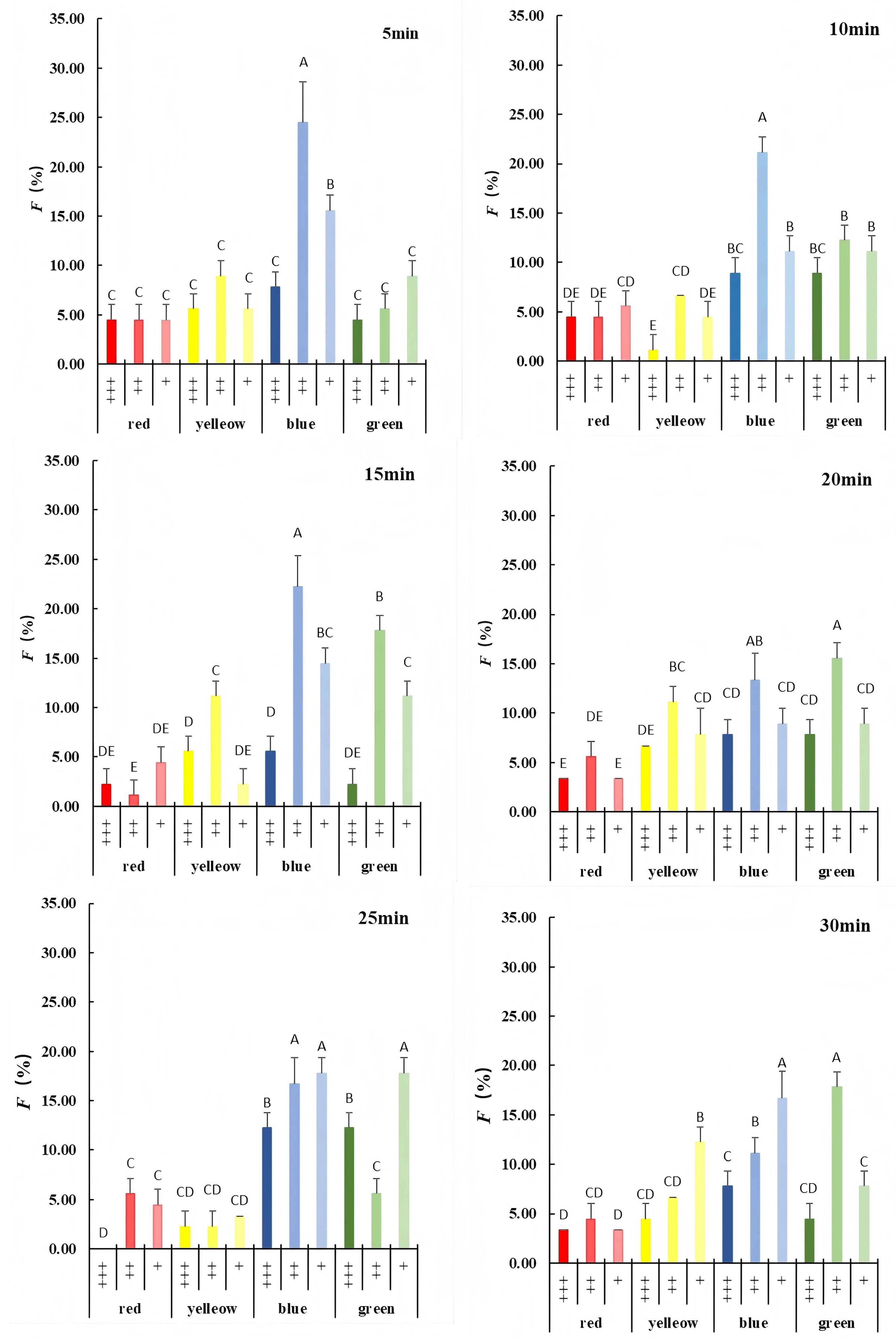
As shown in Figure 5, the distribution rates of Schi. malacanthus across twelve light environments (four colors × three intensities) were recorded at 5 min intervals over 30 min under hydrostatic conditions. The fish exhibited dynamic temporal preference shifts: medium-intensity blue light had a significantly higher rate than all other light conditions at 5 and 10 min; the pattern shifted to medium-blue > medium-green > others at 15 min; medium-green was significantly higher than all regions except medium-blue at 20 min; the hierarchy evolved to low-green/low-blue/medium-blue > high-green/high-blue > others at 25 min; and medium-green again became highest by a significant margin at 30 min.
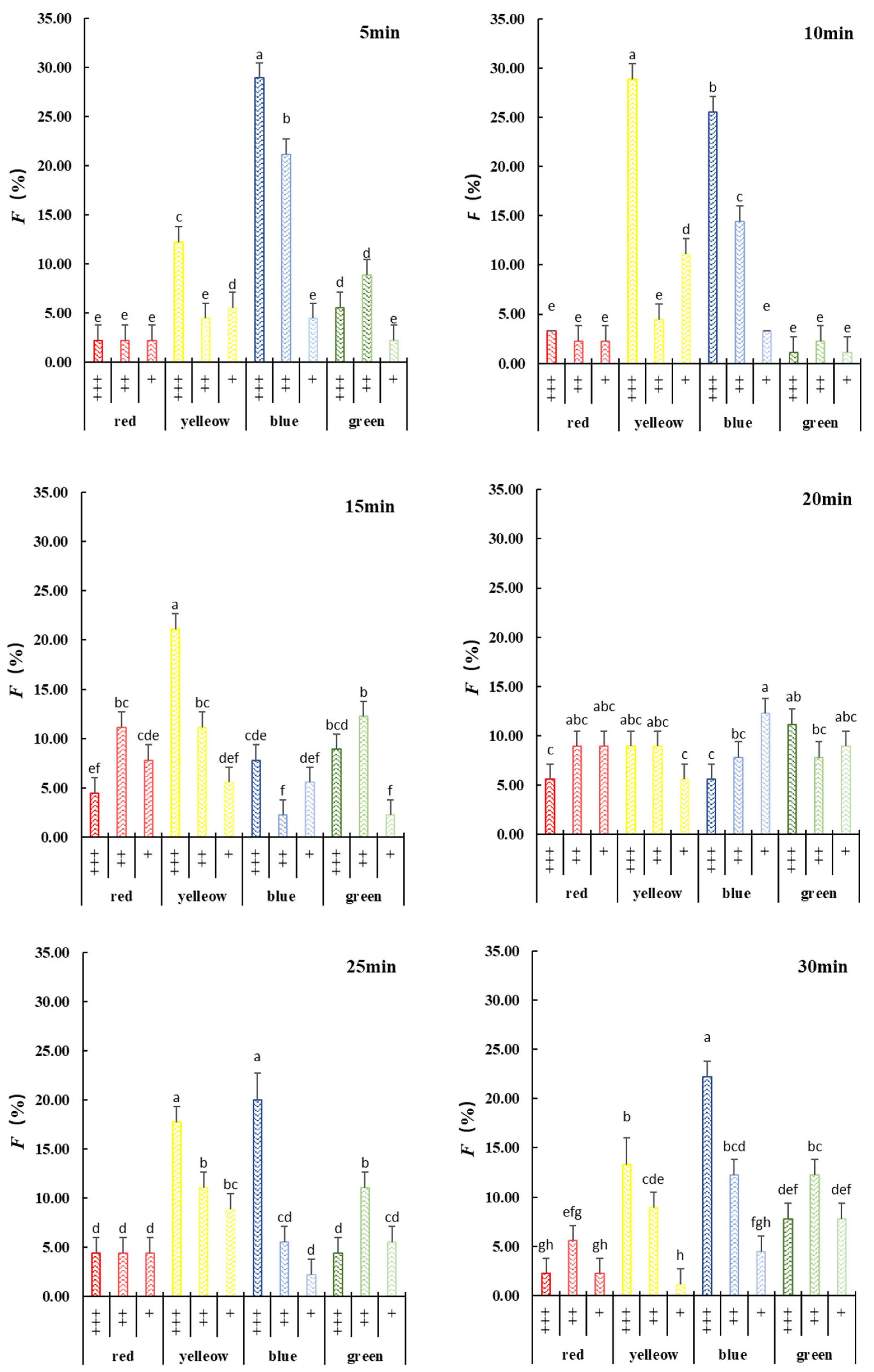
Under weak-flow conditions, as shown in Figure 6, the distribution rates of Schi. malacanthus exhibited distinct temporal preference progression: low-blue > medium-blue > other regions at 5 min; low-yellow/low-blue > medium-blue/high-yellow > other regions at 10 min; low-yellow was significantly higher than all regions at 15 min; low-blue exceeded medium-blue, high-blue, high-yellow, and low-red at 20 min (with no significant differences among the remaining regions); at 25 min, low-intensity blue and yellow were favored over medium-intensity yellow and green, which in turn were preferred over all other light conditions except high-intensity yellow; and low-blue again achieved the highest rate (significantly exceeding all other regions) at 30 min (data comparisons are provided in Supplementary Material Table S1).
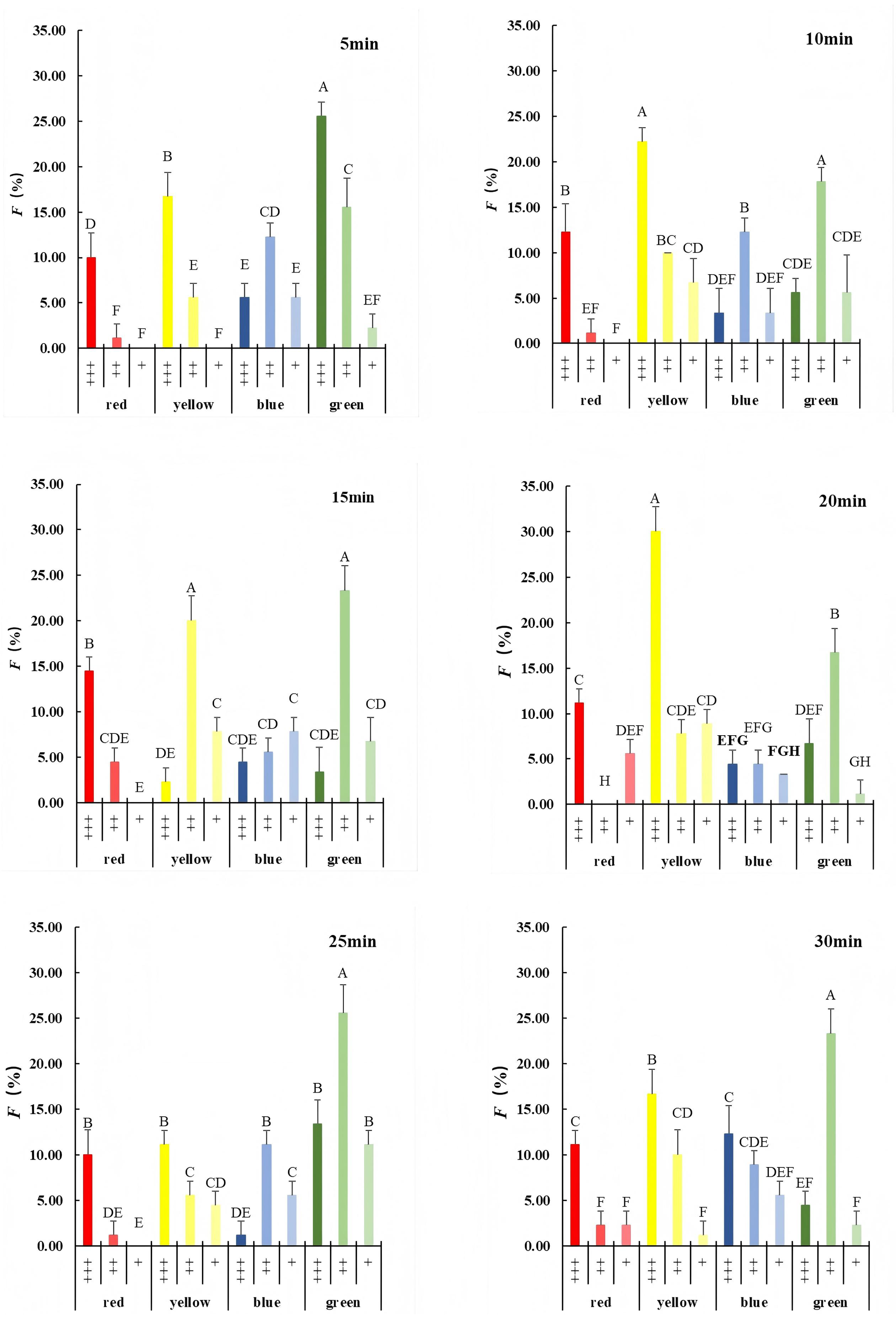
Scht. kozlovi exhibited distinct temporal habitat preference progression under hydrostatic conditions (Figure 7): low-green was significantly higher than all other regions at 5 min; low-yellow exceeded all regions except medium-green at 10 min; the pattern shifted to medium-yellow/medium-green > low-red > other regions at 15 min; low-yellow > medium-green > other regions at 20 min; and medium-green achieved significantly higher rates than all other regions at both 25 and 30 min.
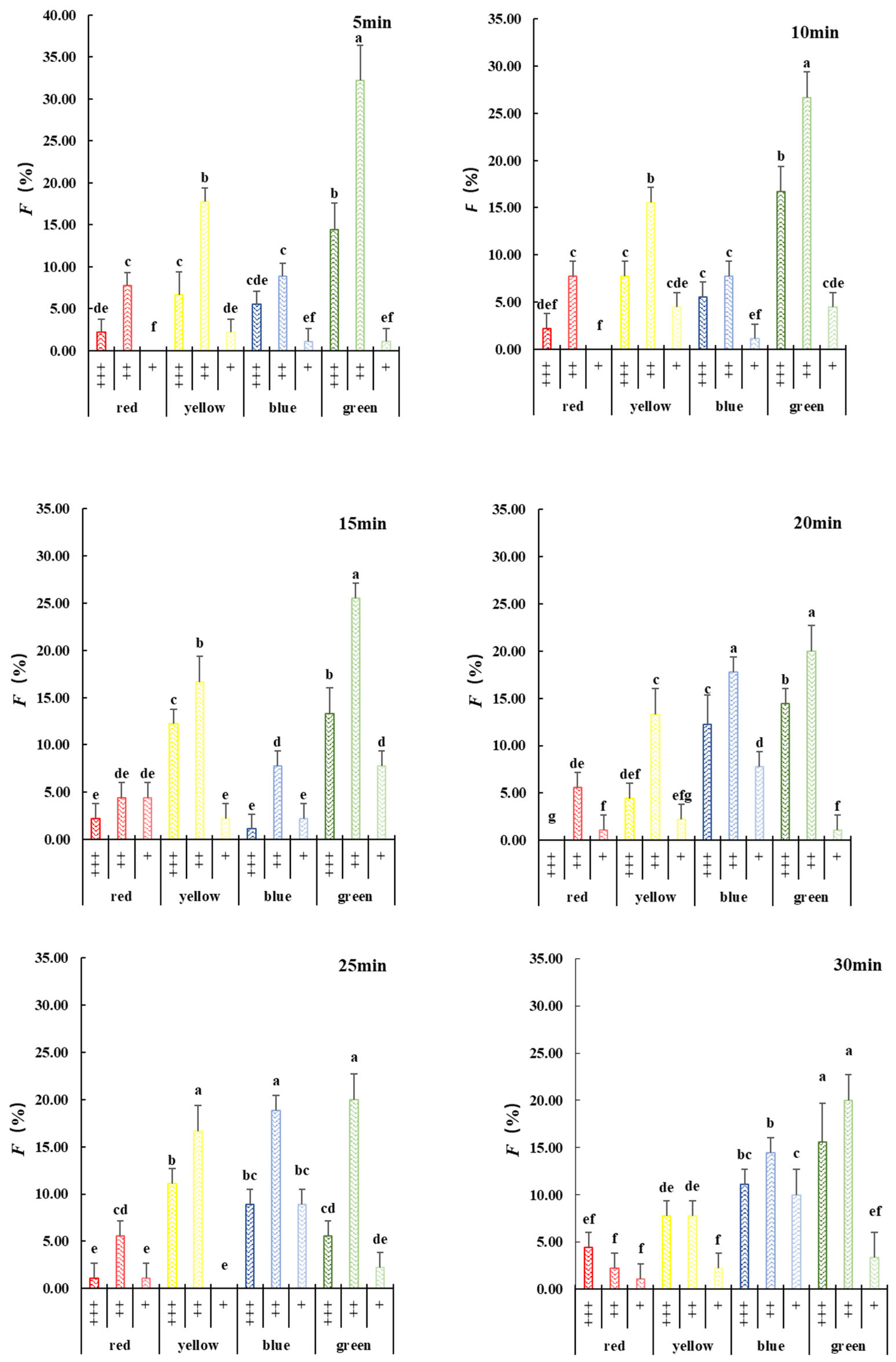
Under weak-flow conditions (Figure 8), Scht. kozlovi showed consistent temporal preference patterns: medium-green > low-green/medium-yellow > all other regions at 5 and 10 min; medium-green was significantly higher than all regions at 15 min; medium-green exceeded all regions except medium-blue at 20 min; medium-green, medium-yellow, and medium-blue collectively had significantly higher rates than all others at 25 min; and medium-green maintained significantly higher distribution than all light conditions except low-green at 30 min (data comparisons are provided in Supplementary Material Table S2).

4. Discussion

4.1. Effects of Light Color on Fish Distribution and Selection Behavior

Light color is a key environmental cue triggering approach or avoidance responses in fish. In this study, phototaxis was quantified using a selection index (positive/negative values indicate positive/negative phototaxis, respectively) [23]. Schi. malacanthus consistently exhibited positive phototaxis to blue light and negative phototaxis to light-red/red light under hydrostatic and weak-flow conditions, aligning with Jiang et al.’s research on Schizopygopsis younghusbandi [24] in suggesting limited flow impact on spectral preference of this fish group. Scht. kozlovi showed positive phototaxis to red, green, and yellow light under hydrostatic, similar to Dong et al. This suggests that Schizopygopsis species may generally prefer long-wavelength light, possibly due to evolutionary adaptation to their habitat light environment [25].
Phototactic responses differed significantly between the two schizothoracine species and exhibited flow-dependent sensitivity. Schi. malacanthus consistently preferred blue light and avoided red/light-red light across all flow regimes; flow only affected its responses to green and white light, with stable preferences for blue and yellow. In contrast, Scht. kozlovi mainly preferred green light and was uniquely attracted to red light under static water, representing the most pronounced interspecific difference. Scht. kozlovi showed stronger flow-dependent plasticity in phototaxis, with marked shifts in responses to red, yellow, and white light, whereas yellow light responses were comparable between the two species [22]. Deng et al. reported that rock bream (Oplegnathus fasciatus) shows higher aggregation rates and partial negative phototaxis for faster velocities [26]. Differences in phototactic responses to light between the two species (Schi. malacanthus and Scht. kozlovi) may relate to their natural water layers, as phototaxis is closely linked to inhabited water layers and watershed environments, representing an evolutionary adaptation to ecological niches. Generally, pelagic fish tend to exhibit positive phototaxis, whereas benthic fish often show negative phototaxis, possibly due to reduced photoreceptor sensitivity on dim streambeds [27,28].
Light induces optical changes in fish photoreceptors, which regulate motor organ activity and drive light-oriented responses. Migaud et al. found that Atlantic salmon (Salmo salar) prefers blue light, whereas some coastal fish are more attracted to green light [29], reflecting species-specific spectral preferences. Short-wavelength cone cells in the fish visual system contribute less to motor behavior guidance than long-wavelength (red/green) cone cells [30]. For example, Zimmermann et al. identified four cone cell types in zebrafish (Danio rerio) (sensitive to red, green, blue, and ultraviolet light) but no yellow-specific cone cells, which may explain weak phototaxis under yellow light [31].

4.2. Interactive Effects of Light Color and Intensity on Regulating Fish Distribution

Fish selectivity for light intensity is influenced significantly by physiological characteristics, including intrinsic mechanisms like visual acuity and iris color [7]. Under hydrostatic conditions, Schi. malacanthus preferred blue light and showed a stronger inclination toward medium-intensity blue, whereas Scht. kozlovi favored green light with a marked preference for medium-intensity green. Both species preferred a medium light intensity of 50 lx. Excessively low light failed to elicit effective behavioral responses, whereas overly intense light disrupted visual photosensory balance. These results support the signal-adaptation hypothesis of fish phototaxis, which posits that fish exhibit optimal behavior under medium light intensity, but not under extremely low or high intensities [2,32,33].
Further investigation revealed that under two water conditions, the preferences of the two species for light color–intensity combinations differed, indicating water velocity is an important factor regulating their phototactic behavior with distinct responses between hydrostatic and weak-flow environments. Light intensity modulates fish behaviors like aggregation and feeding, with species-specific optimal illumination ranges for gathering [25]. Notably, fish phototactic traits are not fixed, but are instead dynamic expressions regulated by internal and external environmental factors.
Experimental results indicated that both species avoided high-intensity light, likely due to their primary habitation of demersal (middle/lower) layers, leading to negative phototaxis under strong light—consistent with Bai et al.’s findings on Pelteobagrus vachelli [34]. Additionally, their preferences for light color–intensity combinations varied over time, with more pronounced changes in response to light color than intensity, suggesting faster adaptation to light color. Thus, in fish guidance and attraction facility design, light intensity parameter optimization should take precedence over light color. Based on this study, it is recommended that fishway entrance light source configurations prioritize low-intensity blue and medium-intensity green light, supplemented by low-intensity yellow light, to enhance fish attraction efficiency. Regarding the speculation on other light colors on the spectrum, relevant exploration will be carried out in our future research.

5. Conclusions

Schi. malacanthus consistently preferred blue light and avoided red light, whereas Scht. kozlovi showed consistent preference for green light and avoidance of light-red light. Schi. malacanthus’s preference shifted with water velocity: medium/low-intensity blue in hydrostatic water to low-intensity blue/yellow in flowing water. In contrast, Scht. kozlovi primarily preferred medium-intensity green and low-intensity yellow light under both conditions.
In summary, the light color and intensity selection behaviors of these two schizothoracine fish species in the Yalong River exhibit significant interspecific specificity and are modulated by flow conditions. Based on these findings, we propose that fish attraction devices at fishway entrances prioritize low-intensity blue light (10 lx) and medium-intensity green light (50 lx) as primary light sources, supplemented by medium-intensity blue light (50 lx). High light intensities should be avoided. This study provides a scientific basis and application value for fish habitat restoration, passage construction, and fishery resources conservation. It also offers key behavioral parameters for the ecological design of fish migration corridors in the Yalong River, whose practical application requires further validation and optimization through future field studies.
The differences in spectral preference between Schi. malacanthus and Scht. kozlovi likely reflect evolutionary adaptations of their visual systems to their respective habitats, but the relationship between their phototactic behaviors and the underlying visual mechanisms remains to be further explored.

Supplementary Materials

The following supporting information can be downloaded at https://www.mdpi.com/article/10.3390/fishes11040200/s1. Table S1: Distribution rates of 30 Schi. malacanthus across four monochromatic lights (three intensities each) monitored at 5-min intervals over 30 min under two flow conditions (%); Table S2: Distribution rates of 30 Scht. kozlovi across four monochromatic lights (three intensities each) monitored at 5-min intervals over 30 min under two flow conditions (%).

Author Contributions

Conceptualization, Z.W. and H.L.; methodology, T.H. and X.W.; software, Z.W.; validation, M.L., Y.W. and R.Z.; formal analysis, Z.W.; investigation, H.L. and T.H.; resources, M.L., Y.W. and R.Z.; data curation, Z.W. and H.L.; writing—original draft preparation, Z.W.; writing—review and editing, Z.W.; visualization, J.L. and C.H.; supervision, C.H. and X.W.; project administration, C.H. and X.W.; funding acquisition, J.L. and X.W. All authors have read and agreed to the published version of the manuscript.

Funding

This research was funded by National Key R&D Program of China (Grant No. 2022YFC3204200), Adaptive Management Research Project of fish Passage Facilities for Longxikou Navigation and Hydropower Hub Project on Minjiang River (Gran No. LXK-FW.075), Basic Scientific Research Funded Project of Nanjing Hydraulic Research Institute (Y125005).

Informed Consent Statement

All experiments were strictly conducted in accordance with the guidelines for the care and use of laboratory animals of Southwest University. Ethical approval for this study was granted by the Animal Ethics Committee of Southwest University (IACUC No.: IACUC-20260317-09; Approval Date: 18 March 2026).

Data Availability Statement

The data presented in this study are available on request from the corresponding author.

Acknowledgments

The authors wish to thank Tao He (College of Fisheries, Southwest University) for his technical support and assistance in experimental operations. We also acknowledge the support from our affiliated institutions.

Conflicts of Interest

The author Rukui Zeng was employed by Yalong River hydropower Development Co., Ltd. The remaining authors declare that the research was conducted in the absence of any commercial or financial relationships that would be a potential conflict of interest.

References

  1. Bao, J.; Li, W.; Zhang, C.; Mi, X.; Li, H.; Zhao, X.; Cao, N.; Twardek, W.M.; Cooke, S.J.; Duan, M. Quantitative assessment of fish passage efficiency at a vertical-slot fishway on the Daduhe River in southwest China. Ecol. Eng. 2019, 141, 105597. [Google Scholar] [CrossRef]
  2. Jones, M.J.; Baumgartner, L.J.; Zampatti, B.P.; Beyer, K. Low light inhibits native fish movement through a vertical-slot fishway: Implications for engineering design. Fish. Manag. Ecol. 2017, 24, 177–185. [Google Scholar] [CrossRef]
  3. Mesquita, F.D.O.; Godinho, H.P.; Azevedo, P.G.D.; Young, R.J. A preliminary study into the effectiveness of stroboscopic light as an aversive stimulus for fish. Appl. Anim. Behav. Sci. 2008, 111, 402–407. [Google Scholar] [CrossRef]
  4. Bayarri, M.J.; Madrid, J.A.; Sánchez-Vázquez, F.J. Influence of light intensity, spectrum and orientation on sea bass plasma and ocular melatonin. J. Pineal Res. 2002, 32, 34–40. [Google Scholar] [CrossRef] [PubMed]
  5. Rick, I.P.; Bakker, T.C.M. Males do not see only red: UV wavelengths and male territorial aggression in the three-spined stickleback (Gasterosteus aculeatus). Naturwissenschaften 2008, 95, 631–638. [Google Scholar] [CrossRef] [PubMed]
  6. Villamizar, N.; Blanco-Vives, B.; Migaud, H.; Davie, A.; Carboni, S.; Sánchez-Vázquez, F.J. Effects of light during early larval development of some aquacultured teleosts: A review. Aquaculture 2011, 315, 86–94. [Google Scholar] [CrossRef]
  7. Marchesan, M.; Spoto, M.; Verginella, L.; Ferrero, E.A. Behavioural effects of artificial light on fish species of commercial interest. Fish. Res. 2005, 73, 171–185. [Google Scholar] [CrossRef]
  8. Ruchin, A.B. Effect of illumination on fish and amphibian: Development, growth, physiological and biochemical processes. Rev. Aquac. 2021, 13, 567–600. [Google Scholar] [CrossRef]
  9. Silva, A.T.; Katopodis, C.; Santos, J.M.; Ferreira, M.T.; Pinheiro, A.N. Cyprinid swimming behaviour in response to turbulent flow. Ecol. Eng. 2012, 44, 314–328. [Google Scholar] [CrossRef]
  10. Akiyama, S.; Arimoto, T.; Inoue, M. Fish herding effect by air bubble curtain in small scale experimental tank. Bull. Jpn. Soc. Sci. Fish. 1991, 57, 1301–1306. [Google Scholar] [CrossRef][Green Version]
  11. Tettamanti, V.; Marshall, N.J.; Cheney, K.L.; Cortesi, F. Damsels in disguise: Development of ultraviolet sensitivity and colour patterns in damselfishes (Pomacentridae). Mol. Ecol. 2025, 34, e17680. [Google Scholar] [CrossRef] [PubMed]
  12. Ford, M.I.; Elvidge, C.K.; Patrick, P.H.; Sills, M.; Cooke, S.J. Coloured LED light as a potential behavioural guidance tool for age 0 and 2 year walleye Sander vitreus. J. Fish Biol. 2019, 95, 1249–1256. [Google Scholar] [CrossRef] [PubMed]
  13. Mu, X.; Zhen, W.; Li, X.; Cao, P.; Gong, L.; Xu, F. A study of the impact of different flow velocities and light colors at the entrance of a fish collection system on the upstream swimming behavior of juvenile grass carp. Water 2019, 11, 322. [Google Scholar] [CrossRef]
  14. Sardo, G.; Okpala, C.; Geraci, M.; Fiorentino, F.; Vitale, S. The effects of different artificial light wavelengths on some behavioural features of juvenile pelagic Atlantic horse mackerel, Trachurus trachurus (Actinopterygii: Perciformes: Carangidae). Acta Ichthyol. Piscat. 2020, 50, 85–92. [Google Scholar] [CrossRef]
  15. McFarland, W.N.; Ogden, J.C.; Lythgoe, J.N. The influence of light on the twilight migrations of grunts. Environ. Biol. Fishes 1979, 4, 9–22. [Google Scholar] [CrossRef]
  16. Ono, K.; Simenstad, C.A. Reducing the effect of overwater structures on migrating juvenile salmon: An experiment with light. Ecol. Eng. 2014, 71, 180–189. [Google Scholar] [CrossRef]
  17. Lambert, M.R.; Ojala-Barbour, R.; Vadas, R., Jr.; McIntyre, A.; Quinn, T. Do small overwater structures impact marine habitats and biota? Pac. Conserv. Biol. 2023, 30, PC22037. [Google Scholar] [CrossRef]
  18. Elvidge, C.K.; Reid, C.H.; Ford, M.I.; Sills, M.; Patrick, P.H.; Gibson, D.; Backhouse, S.; Cooke, S.J. Ontogeny of light avoidance in juvenile lake sturgeon. J. Appl. Ichthyol. 2019, 35, 202–209. [Google Scholar] [CrossRef]
  19. Mortensen, A.; Damsgård, B. Compensatory growth and weight segregation following light and temperature manipulation of juvenile Atlantic salmon (Salmo salar L.) and Arctic charr (Salvelinus alpinus L.). Aquaculture 1993, 114, 261–272. [Google Scholar] [CrossRef]
  20. Daniels, H.V.; Berlinsky, D.L.; Hodson, R.G.; Sullivan, C.V. Effects of stocking density, salinity, and light intensity on growth and survival of southern flounder Paralichthys lethostigma larvae. J. World Aquac. Soc. 1996, 27, 153–159. [Google Scholar] [CrossRef]
  21. Franklin, P.; Gee, E. Living in an amphidromous world: Perspectives on the management of fish passage from an island nation. Aquat. Conserv. Mar. Freshw. Ecosyst. 2019, 29, 1424–1437. [Google Scholar] [CrossRef]
  22. Xu, J.; Sang, W.; Dai, H.; Lin, C.; Ke, S.; Mao, J.; Wang, G.; Shi, X. A detailed analysis of the effect of different environmental factors on fish phototactic behavior: Directional fish guiding and expelling technique. Animals 2022, 12, 240. [Google Scholar] [CrossRef] [PubMed]
  23. Gong, J.H.; Guo, C.Y.; Tian, Z. Study on the selectivity of Carassius auratus under different environment colors and luminous intensities. J. Biol. 2016, 33, 13–18. [Google Scholar]
  24. Jiang, H.; Zhu, M.E.; Pan, B.K. The preferable light color and intensity for Schizopygopsis younghusbandi. Water Power 2023, 49, 1–4. [Google Scholar]
  25. Dong, P.; Li, F.; Wan, D.; Sheng, H.; Huang, Z. Studies on influence of illumination on schooling behavior of Schizothorax kozlovi. Trans. Oceanol. Limnol. 2021, 43, 139–143. [Google Scholar] [CrossRef]
  26. Deng, Y.M.; Liu, W.; He, J.J. Effects of flow velocity y and light color on attraction of Oplegnathus fasciatus by artificial reef. J. Zhejiang Ocean Univ. Nat. Sci. 2018, 37, 203–207. [Google Scholar]
  27. Greenstreet, E.H.; Djamgoz, M.B.A. Nitric oxide induces light-adaptive morphological changes in retinal neurones. Neuroreport 1994, 6, 109–112. [Google Scholar] [CrossRef]
  28. Duncan, W.P. Interspecific differences in the metabolic rate, gill dimension and hematology of fish in an Amazonian floodplain lake. Aquat. Sci. Technol. 2020, 8, 38. [Google Scholar] [CrossRef]
  29. Migaud, H.; Cowan, M.; Taylor, J.; Ferguson, H.W. The effect of spectral composition and light intensity on melatonin, stress and retinal damage in post-smolt Atlantic salmon, Salmo salar. Aquaculture 2007, 270, 390–404. [Google Scholar] [CrossRef]
  30. Mueller, K.P.; Neuhauss, S.C.F. Quantitative measurements of the optokinetic response in adult fish. J. Neurosci. Methods 2010, 186, 29–34. [Google Scholar] [CrossRef]
  31. Zimmermann, M.J.Y.; Nevala, N.E.; Yoshimatsu, T.; Osorio, D.; Nilsson, D.-E.; Berens, P.; Baden, T. Zebrafish differentially process color across visual space to match natural scenes. Curr. Biol. 2018, 28, 2018–2032.e5. [Google Scholar] [CrossRef]
  32. Meager, J.J.; Moberg, O.; Strand, E.; Utne-Palm, A.C. Effects of light intensity on visual prey detection by juvenile Atlantic cod (Gadus morhua L.). Mar. Freshw. Behav. Physiol. 2010, 43, 99–108. [Google Scholar] [CrossRef]
  33. Yang, M.; Yu, Y.; Ding, J.; Luo, J.; Sun, J.; Hu, F.; Chang, Y.; Zhao, C. Effects of light intensity on Opsin4, Opsin5, and Pax6 expressions of the sea urchin Strongylocentrotus intermedius. Mar. Ecol. 2020, 41, e12593. [Google Scholar] [CrossRef]
  34. Bai, Y.Q.; Wang, X.; Liu, D.F.; Tu, Z.; Lu, B.; Wang, B.; Luo, J.; Shi, X. The preferable light intensity and color for darkbarbel catfish and silver carp. Acta Hydrobiol. Sin. 2014, 38, 216–221. [Google Scholar]
Figure 1. Schematic diagram of the custom-designed annular flume.
Fishes 11 00200 g001
Figure 2. Experimental conditions. (a) Light color preference conditions; (b) intensity preference conditions.
Fishes 11 00200 g002
Figure 3. Distribution of Schi. malacanthus and Scht. kozlovi for six monochromatic lights under two water flow conditions. Capital letters indicate significant differences (p < 0.05) under hydrostatic conditions, whereas lowercase letters denote significant differences (p < 0.05) under weak-flow conditions, as detailed in the text. (a) Distribution of Schi. malacanthus. (b) Distribution of Scht. Kozlovi.
Fishes 11 00200 g003
Figure 4. Distribution of Schi. malacanthus and Scht. kozlovi across four monochromatic lights (three intensities each) under two flow conditions over the entire 30 min. Capital letters indicate significant differences (p < 0.05) under hydrostatic conditions, whereas lowercase letters denote significant differences (p < 0.05) under weak-flow conditions, as detailed in the text; “+” denotes low intensity, “++” denotes medium intensity, and “+++” denotes high intensity.
Fishes 11 00200 g004
Figure 5. Distribution rates of 30 Schi. malacanthus across four monochromatic lights (three intensities each) monitored at 5 min intervals over 30 min under 0 m/s flow. Note: Capital letters indicate significant differences (p < 0.05) under hydrostatic conditions; “+” denotes low intensity, “++” denotes medium intensity, and “+++” denotes high intensity.
Fishes 11 00200 g005
Figure 6. Distribution rates of 30 Schi. malacanthus across four monochromatic lights (three intensities each) monitored at 5 min intervals over 30 min under 0.2 m/s flow. Lowercase letters denote significant differences (p < 0.05) under weak-flow conditions, as detailed in the text; “+” denotes low intensity, “++” denotes medium intensity, and “+++” denotes high intensity.
Fishes 11 00200 g006
Figure 7. Distribution rates of 30 Scht. kozlovi across four monochromatic lights (three intensities each) monitored at 5 min intervals over 30 min under 0 m/s flow. Capital letters indicate significant differences (p < 0.05) under hydrostatic conditions; “+” denotes low intensity, “++” denotes medium intensity, and “+++” denotes high intensity.
Fishes 11 00200 g007
Figure 8. Distribution rates of 30 Scht. kozlovi across four monochromatic lights (three intensities each) monitored at 5 min intervals over 30 min under 0.2 m/s flow. Lowercase letters denote significant differences (p < 0.05) under weak-flow conditions, as detailed in the text; “+” denotes low intensity, “++” denotes medium intensity, and “+++” denotes high intensity.
Fishes 11 00200 g008
Table 1. Parameters associated with the two test fish species in the behavioral preference test.
SpeciesNumber of IndividualsWet Weight (g)Total Length (cm)Body Length (cm)
Schizopygopsis malacanthus3056.35 ± 13.5420.46 ± 1.0917.32 ± 0.97
Schizothorax kozlovi3017.59 ± 6.8212.78 ± 1.8410.51 ± 1.64
Note: To enhance readability, we use the following abbreviations for the two primary study species: Schizopygopsis malacanthus (Schi. malacanthus) and Schizothorax kozlovi (Scht. kozlovi). These abbreviated forms are employed in all subsequent sections.
Table 2. Selection indices for six monochromatic light colors under two water flow conditions.
Flow ConditionSpeciesColors of Light
WhiteRedLight Red Yellow Blue Green
0 m/sSchi.malacanthus−0.10−0.36−0.560.060.590.37
Scht. kozlovi−0.500.30−0.670.39−0.190.67
0.2 m/sSchi.malacanthus0.33−0.58−0.300.060.69−0.21
Scht. kozlovi0.61−0.39−0.66−0.01−0.380.82
Table 3. Distribution of 30 Schi. Malacanthus across six monochromatic lights, monitored every 5 min over 30 min under two flow conditions (%).
Flow
Condition
Colors of LightTime (Min)
51015202530
0 m/swhite8.89 ± 1.57 de10.00 ± 2.72 cd11.11 ± 1.57 cd17.78 ± 1.57 abc22.22 ± 1.57 b20.00 ± 2.72 b
red7.78 ± 1.57 e7.78 ± 1.57 d14.44 ± 1.57 c15.56 ± 4.16 bc7.78 ± 1.57 d11.11 ± 1.57 a
light red12.22 ± 1.57 cd5.56 ± 1.57 d5.56 ± 1.57 d11.11 ± 4.16 c1.11 ± 1.57 e8.89 ± 1.57 a
yellow15.56 ± 1.57 c15.56 ± 1.57 c27.78 ± 4.16 a13.33 ± 0.00 bc14.44 ± 1.57 c18.89 ± 1.57 b
blue35.56 ± 1.57 a37.78 ± 4.16 a23.33 ± 2.72 ab18.89 ± 1.57 ab23.33 ± 2.72 b20.00 ± 2.72 b
green20.00 ± 2.72 b23.33 ± 4.71 b17.78 ± 4.16 bc23.33 ± 2.72 a31.11 ± 4.16 a21.11 ± 1.57 b
0.2 m/swhite22.22 ± 3.14 b14.44 ± 1.57 bc21.11 ± 3.14 b22.22 ± 3.14 a26.67 ± 2.72 a26.67 ± 2.72 a
red2.22 ± 2.72 d8.89 ± 1.57 c8.89 ± 1.57 d5.56 ± 3.14 c5.56 ± 1.57 c11.11 ± 1.57 b
light red5.56 ± 1.57 d16.67 ± 2.72 b8.89 ± 1.57 d16.67 ± 2.72 ab14.44 ± 1.57 b7.78 ± 4.16 b
yellow16.67 ± 2.72 c13.33 ± 2.72 bc16.67 ± 2.72 bc22.22 ± 1.57 a16.67 ± 2.72 b21.11 ± 1.57 a
blue41.11 ± 1.57 a30.00 ± 2.72 a31.11 ± 1.57 a20.00 ± 2.72 a25.56 ± 4.16 a21.11 ± 3.14 a
green12.22 ± 1.57 c16.67 ± 2.72 b13.33 ± 2.72 cd13.33 ± 2.72 b11.11 ± 1.57 bc12.22 ± 3.14 b
Note: Different lowercase letters labeled in the same moment for the same streamflow condition indicate significant differences (p < 0.05), as described below in this chapter.
Table 4. Distribution of Scht. kozlovi across six monochromatic lights, monitored every 5 min over 30 min under two flow conditions (%).
Flow
Condition
Colors of LightTime (Min)
51015202530
0 m/swhite8.89 ± 1.57 d7.78 ± 1.57 d2.22 ± 1.57 c17.78 ± 1.57 b11.11 ± 1.57 c2.22 ± 1.57 d
red25.56 ± 1.57 a21.11 ± 1.57 b21.11 ± 1.57 b17.78 ± 1.57 b18.89 ± 1.57 b25.56 ± 1.57 b
light red2.22 ± 1.57 d4.44 ± 1.57 d5.56 ± 1.57 c8.89 ± 1.57 c4.44 ± 1.57 d7.78 ± 1.57 c
yellow15.56 ± 1.57 c32.22 ± 1.57 a30.00 ± 2.72 a18.89 ± 3.14 b17.78 ± 1.57 b24.44 ± 1.57 b
blue20.00 ± 2.72 b13.33 ± 2.72 c21.11 ± 1.57 b11.11 ± 1.57 c10.00 ± 2.72 c5.56 ± 1.57 cd
green27.78 ± 1.57 a21.11 ± 1.57 b20.00 ± 2.72 b25.56 ± 1.57 a37.78 ± 1.57 a34.44 ± 1.57 a
0.2 m/swhite22.22 ± 3.14 b26.67 ± 2.72 b20.00 ± 2.72 b21.11 ± 1.57 d36.67 ± 2.72 a34.44 ± 5.67 a
red15.56 ± 1.57 c11.11 ± 1.57 d8.89 ± 1.57 c14.44 ± 1.57 cd3.33 ± 2.72 e7.78 ± 1.57 b
light red5.56 ± 1.57 e4.44 ± 1.57 a4.44 ± 1.57 c7.78 ± 1.57 e2.22 ± 1.57 e10.00 ± 2.72 b
yellow17.78 ± 1.57 c13.33 ± 2.72 c21.11 ± 1.57 b17.78 ± 1.57 bc18.89 ± 1.57 c10.00 ± 2.72 b
blue11.11 ± 1.57 d11.11 ± 1.57 c8.89 ± 1.57 c13.33 ± 2.72 d13.33 ± 2.72 d21.11 ± 3.14 b
green27.78 ± 1.57 a33.33 ± 2.72 a33.33 ± 2.72 a25.56 ± 1.57 a25.56 ± 1.57 b34.44 ± 1.57 a
Note: Different lowercase letters labeled in the same moment for the same streamflow condition indicate significant differences (p < 0.05).
Table 5. Selection indices of Schi. malacanthus and Scht. kozlovi across four monochromatic lights (three intensities each) under two water flow conditions.
Flow
Conditions
Species Four Monochromatic Lights of Three Light Intensities
Red Yellow Blue Green
++++++++++++++++++++++++
0 m/sSchi. malacanthus−0.49 −0.49 −0.64 −0.29 −0.07 −0.49 0.69 1.18 0.00 0.31 0.49 −0.20
Scht. kozlovi0.38 −0.80 −0.84 0.98 0.18 −0.42 −0.38 0.09 −0.38 0.18 1.44 −0.42
0.2 m/sSchi. malacanthus−0.56 0.00 0.00 0.01 0.00 0.00 0.01 0.00 0.00 0.00 0.00 0.00
Scht. kozlovi−0.01 0.00 −0.01 0.00 0.01 −0.01 0.00 0.00 0.00 0.00 0.01 0.00
Note: “+” denotes low intensity, “++” denotes medium intensity, and “+++” denotes high intensity.
Disclaimer/Publisher’s Note: The statements, opinions and data contained in all publications are solely those of the individual author(s) and contributor(s) and not of MDPI and/or the editor(s). MDPI and/or the editor(s) disclaim responsibility for any injury to people or property resulting from any ideas, methods, instructions or products referred to in the content.