Phylogeographic Pattern and Genetic Structure of the Cyprinid Fish Microphysogobio kachekensis (Oshima 1926) in Mainland China and Hainan Island Based on Mitochondrial and Nuclear DNA
Abstract
1. Introduction
2. Materials and Methods
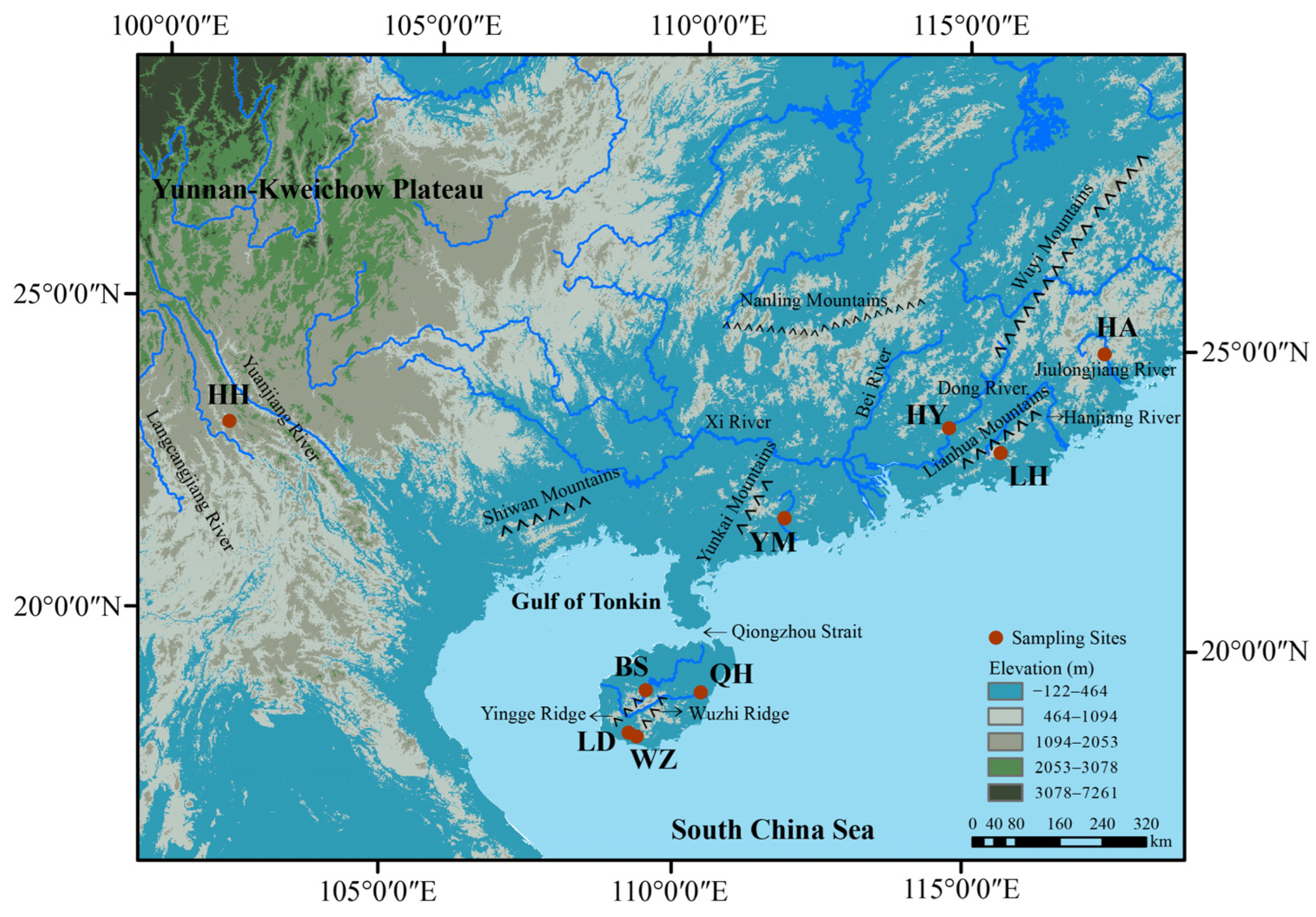
2.1. Population Sampling and Molecular Methods
2.2. Sequence Alignment and Phylogenetic Inference
2.3. Population Genetic Diversity and Structure
2.4. Historical Demography and Biogeographic Reconstruction
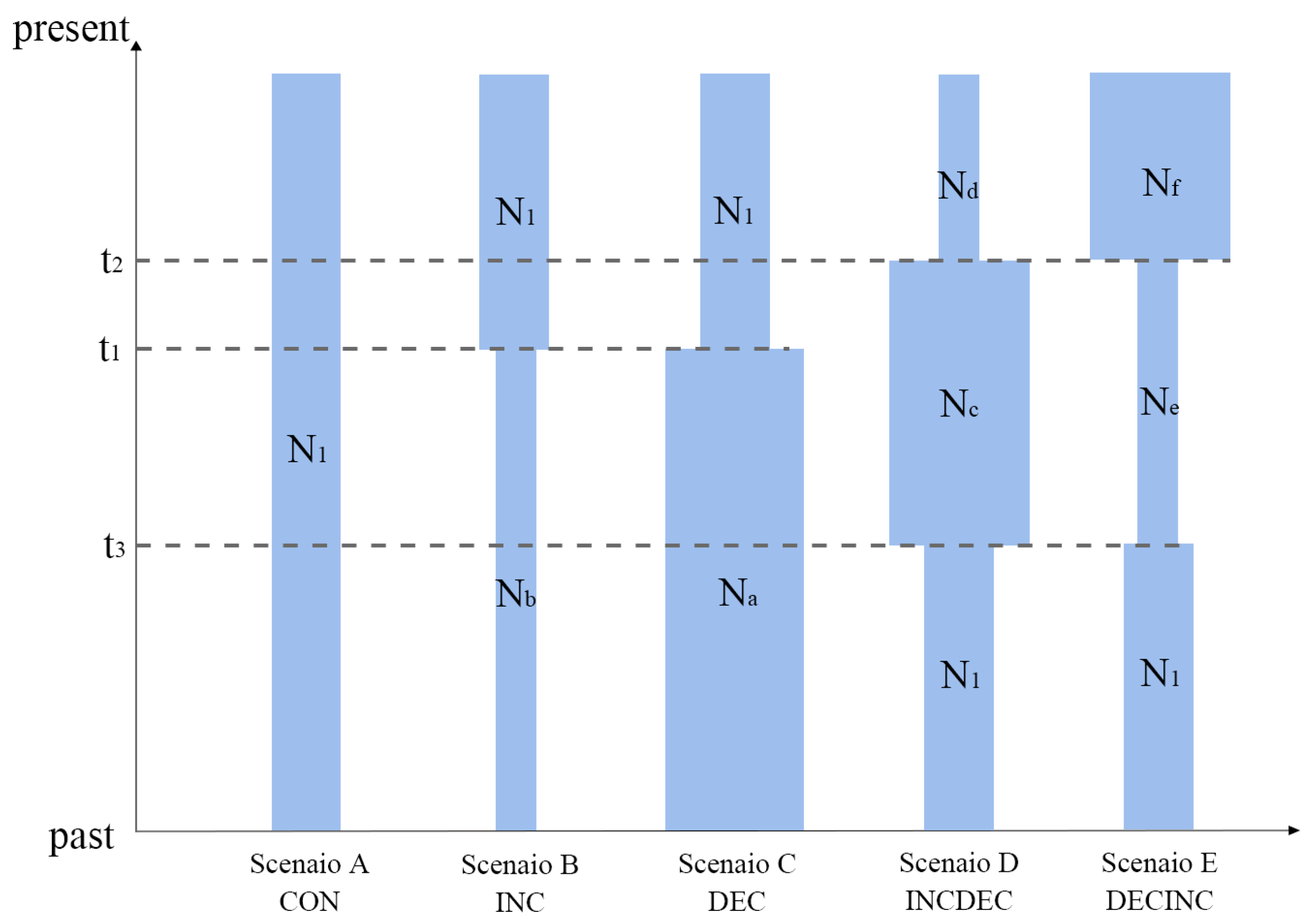
2.5. Approximate Bayesian Computation (ABC) Analyses
3. Results
3.1. Genetic Diversity of Microphysogobio Kachekensis
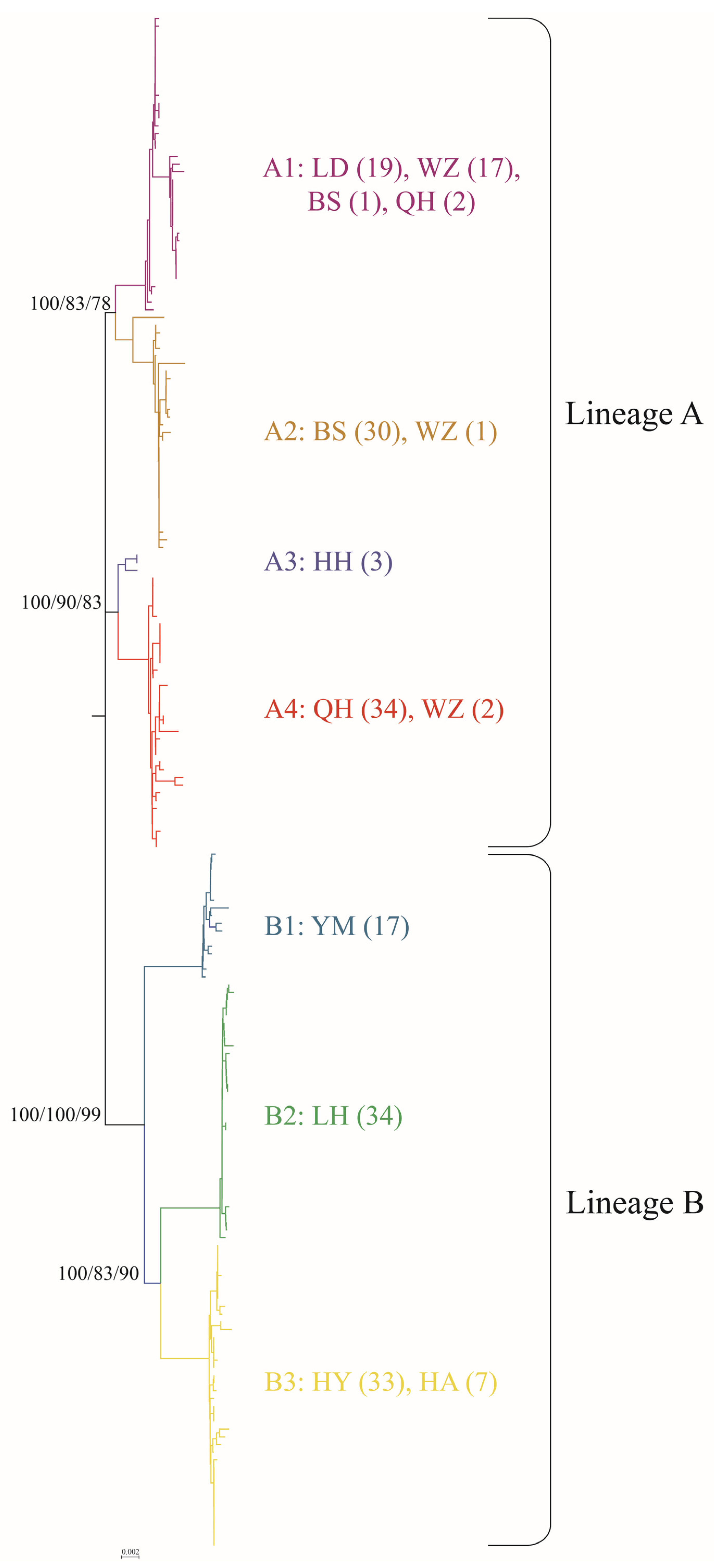
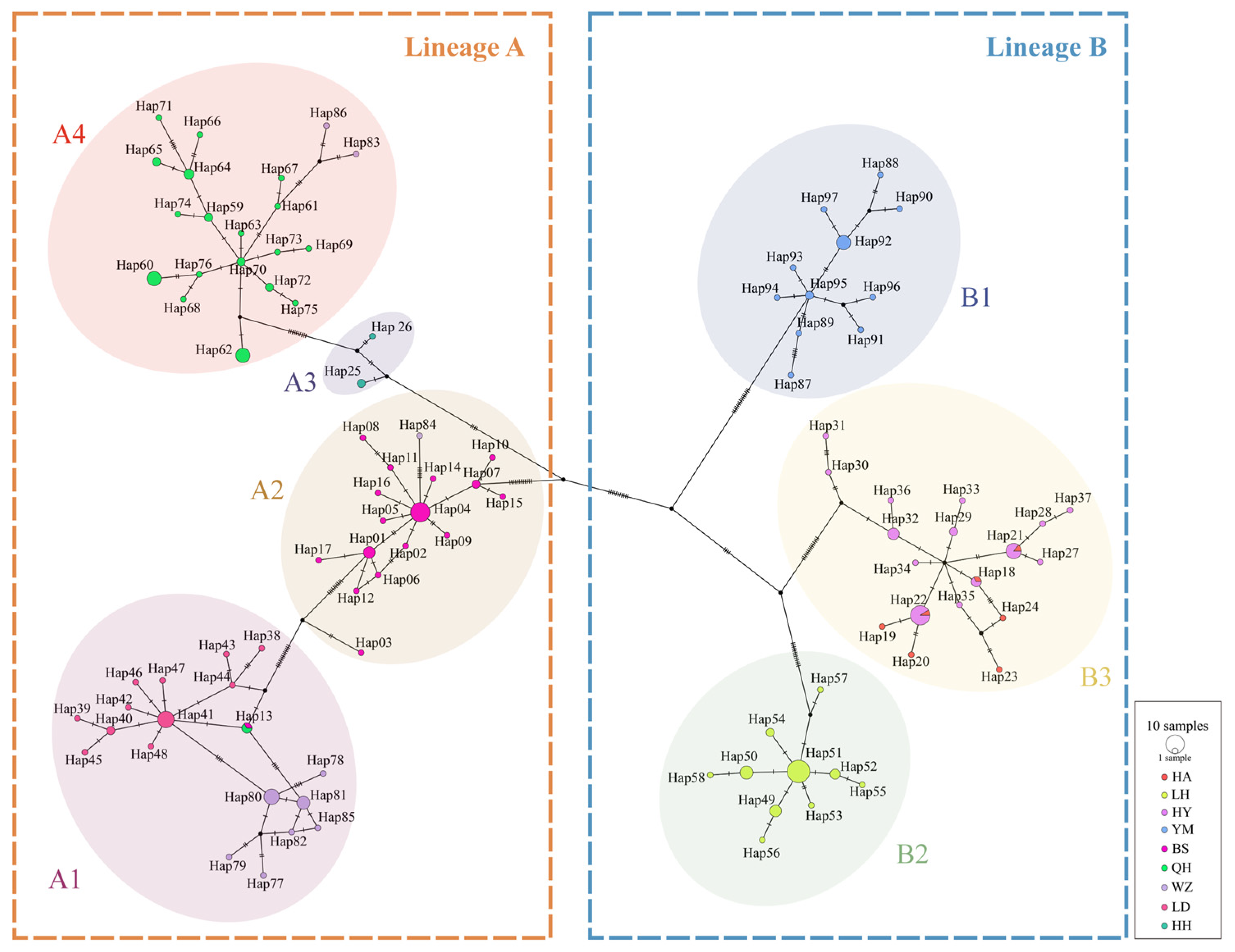
3.2. Phylogenetic Reconstruction and Genetic Structure
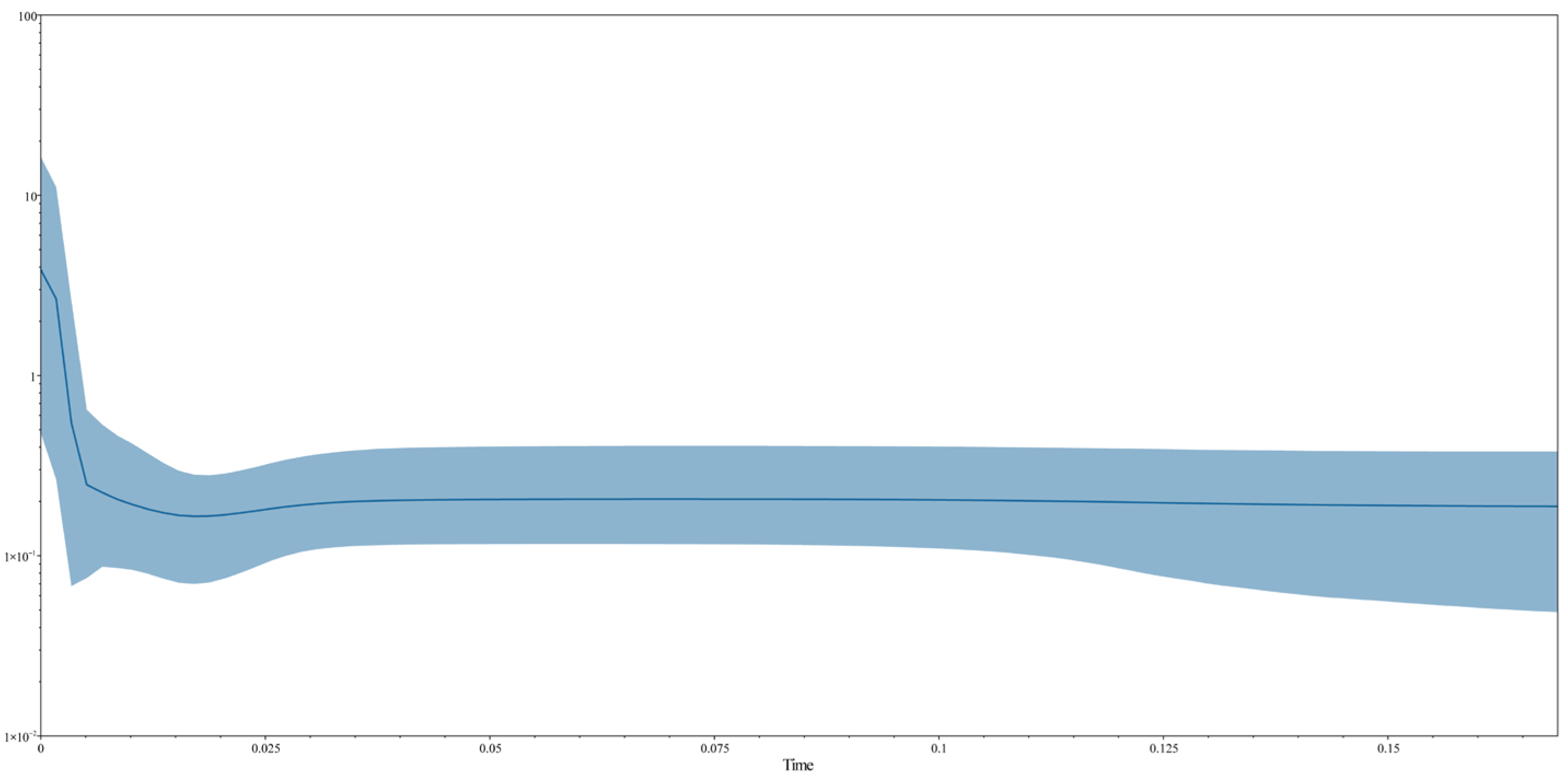
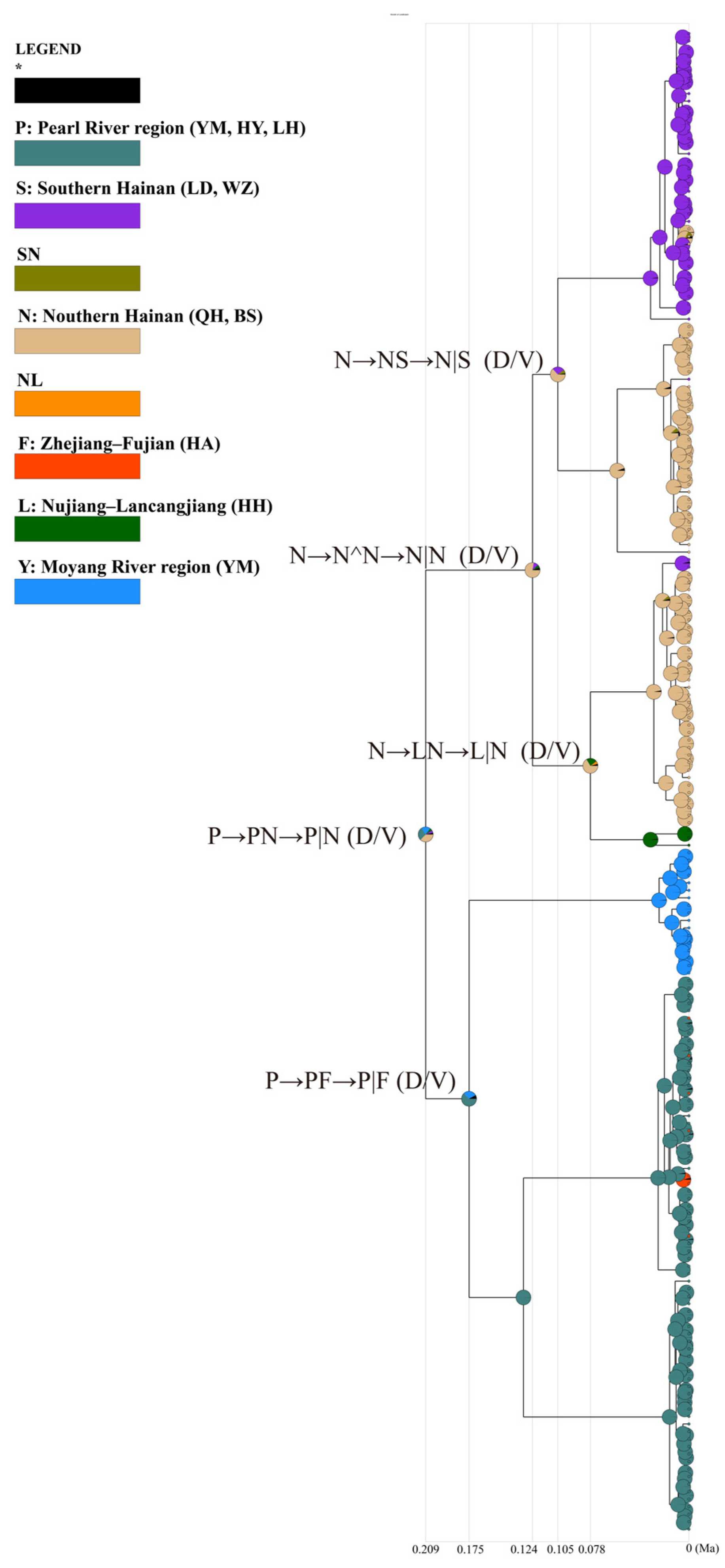
3.3. Historical Demography, Molecular Dating, and Historical Biogeography
3.4. Approximate Bayesian Computation
4. Discussion
4.1. High Population Differentiation and Low Genetic Diversity of Microphysogobio Kachekensis
4.2. Demographic History of Microphysogobio Kachekensis
4.3. Population Differentiation and Geographic Barriers
4.4. Phylogeography of Microphysogobio Kachekensis
4.5. Implications for Conservation
5. Conclusions
Supplementary Materials
Author Contributions
Funding
Institutional Review Board Statement
Data Availability Statement
Acknowledgments
Conflicts of Interest
References
- Economidis, P.S.; Bănărescu, P.M. The distribution and origins of freshwater fishes in the Balkan Peninsula, especially in Greece. Int. Rev. Gesamten Hydrobiol. 1991, 76, 257–283. [Google Scholar] [CrossRef]
- Li, S. Studies on Zoogeographical Divisions for Freshwater Fishes of China; Science Press: Beijing, China, 1981. [Google Scholar]
- Zhang, W.J.; Wang, J.J.; Li, C.; Chen, J.Q.; Li, W.; Jiang, S.Y.; Hsu, K.C.; Zhao, M.; Lin, H.-D.; Zhao, J. Spatial genetic structure of Opsariichthys hainanensis in South China. Mitochondrial DNA Part A 2020, 31, 98–107. [Google Scholar] [CrossRef]
- Chen, X.L.; Chiang, T.Y.; Lin, H.D.; Zheng, H.S.; Shao, K.T.; Zhang, Q.; Hsu, K.C. Mitochondrial DNA phylogeography of Glyptothorax fokiensis and Glyptothorax hainanensis in Asia. J. Fish Biol. 2007, 70, 75–93. [Google Scholar] [CrossRef]
- Wang, J.J.; Li, C.; Chen, J.Q.; Jin, J.J.; Jiang, S.Y.; Yan, L.B.; Lin, H.-D.; Zhao, J. Phylogeographic structure of the dwarf snakehead (Channa gachua) around the Gulf of Tonkin: Historical biogeography and pronounced effects of sea-level changes. Ecol. Evol. 2021, 11, 12583–12595. [Google Scholar] [CrossRef]
- Yang, L.; He, S. Phylogeography of the freshwater catfish Hemibagrus guttatus: Implications for South China biogeography and influence of sea-level changes. Mol. Phylogenet. Evol. 2008, 49, 393–398. [Google Scholar] [CrossRef]
- Zhou, T.Q.; Lin, H.D.; Hsu, K.C.; Kuo, P.H.; Wang, W.K.; Tang, W.Q.; Liu, D.; Yang, J.Q. Spatial genetic structure of the cyprinid fish Onychostoma lepturum on Hainan Island. Mitochondrial DNA Part A 2017, 28, 901–908. [Google Scholar] [CrossRef] [PubMed]
- Zhao, J.; Hsu, K.C.; Luo, J.Z.; Wang, C.H.; Chan, B.P.; Li, J.; Kuo, P.H.; Lin, H.-D. Genetic diversity and population history of Tanichthys albonubes: Implications for conservation. Aquat. Conserv. 2018, 28, 422–434. [Google Scholar] [CrossRef]
- Wang, J.J.; Zhang, W.J.; Wu, J.X.; Li, C.; Ju, Y.M.; Lin, H.-D.; Zhao, J. Multilocus phylogeography and population genetic analyses of Opsariichthys hainanensis reveal Pleistocene isolation followed by high gene flow around the Gulf of Tonkin. Genes 2022, 13, 1908. [Google Scholar] [CrossRef] [PubMed]
- Wang, J.J.; Wu, J.X.; Yang, J.Q.; Chen, J.B.; Yang, J.M.; Li, C.; Lin, H.-D.; Zhao, J. Phylogeography and demographic history of the cyprinid fish Barbodes semifasciolatus. Front. Ecol. Evol. 2023, 11, 1193619. [Google Scholar] [CrossRef]
- Chen, W.; Liu, L.; Wang, J.; Zhou, L. Threatened freshwater fish need protection. Science 2021, 374, 164. [Google Scholar] [CrossRef] [PubMed]
- Cao, L.; Shao, W.-H.; Yi, W.-J.; Zhang, E. A review of conservation status of freshwater fish diversity in China. J. Fish Biol. 2024, 104, 345–364. [Google Scholar] [CrossRef] [PubMed]
- Sušnik, S.; Berrebi, P.; Dovč, P.; Hansen, M.M.; Snoj, A. Genetic introgression between wild and stocked salmonids and the prospects for using molecular markers in population rehabilitation: The case of the Adriatic grayling (Thymallus thymallus). Heredity 2004, 93, 273–282. [Google Scholar] [CrossRef]
- Carim, K.J.; Vindenes, Y.; Eby, L.A.; Barfoot, C.; Vøllestad, L.A. Life history, population viability, and the potential for local adaptation in isolated trout populations. Glob. Ecol. Conserv. 2017, 10, 93–102. [Google Scholar] [CrossRef]
- Sun, Z.X.; Tang, W.Q.; Zhao, Y.H. Generic revision on the Biwia–Microphysogobio complex (Cypriniformes, Gobionidae) with descriptions of three new genera. Zoosyst. Evol. 2025, 101, 2013–2037. [Google Scholar] [CrossRef]
- Xiao, W.; Zhang, Y.; Liu, H. Molecular systematics of Xenocyprinae (Teleostei: Cyprinidae): Taxonomy, biogeography, and coevolution of a special group restricted in East Asia. Mol. Phylogenet. Evol. 2001, 18, 163–173. [Google Scholar] [CrossRef] [PubMed]
- Chow, S.; Hazama, K. Universal PCR primers for S7 ribosomal protein gene introns in fish. Mol. Ecol. 1998, 7, 1255–1256. [Google Scholar]
- Hall, T.A. BioEdit: A user-friendly biological sequence alignment editor and analysis program for Windows 95/98/NT. Nucleic Acids Symp. Ser. 1999, 41, 95–98. [Google Scholar]
- Rozas, J.; Ferrer-Mata, A.; Sánchez-DelBarrio, J.C.; Guirao-Rico, S.; Librado, P.; Ramos-Onsins, S.E.; Sánchez-Gracia, A. DnaSP 6: DNA Sequence Polymorphism Analysis of Large Data Sets. Mol. Biol. Evol. 2017, 34, 3299–3302. [Google Scholar] [CrossRef]
- Thompson, J.D.; Gibson, T.J.; Plewniak, F.; Jeanmougin, F.; Higgins, D.G. The CLUSTAL_X windows interface: Flexible strategies for multiple sequence alignment aided by quality analysis tools. Nucleic Acids Res. 1997, 25, 4876–4882. [Google Scholar] [CrossRef]
- Kumar, S.; Stecher, G.; Li, M.; Knyaz, C.; Tamura, K. MEGA X: Molecular evolutionary genetics analysis across computing platforms. Mol. Biol. Evol. 2018, 35, 1547–1549. [Google Scholar] [CrossRef]
- Guindon, S.; Dufayard, J.-F.; Lefort, V.; Anisimova, M.; Hordijk, W.; Gascuel, O. New algorithms and methods to estimate maximum-likelihood phylogenies: Assessing the performance of PhyML 3.0. Syst. Biol. 2010, 59, 307–321. [Google Scholar] [CrossRef] [PubMed]
- Huelsenbeck, J.P.; Ronquist, F. MRBAYES: Bayesian inference of phylogenetic trees. Bioinformatics 2001, 17, 754–755. [Google Scholar] [CrossRef]
- Suchard, M.A.; Lemey, P.; Baele, G.; Ayres, D.L.; Drummond, A.J.; Rambaut, A. Bayesian Phylogenetic and Phylodynamic Data Integration Using BEAST 1.10. Virus Evol. 2018, 4, vey016. [Google Scholar] [CrossRef] [PubMed]
- Dowling, T.E.; Tibbets, C.A.; Minckley, W.L.; Smith, G.R. Evolutionary relationships of the plagopterins (Teleostei: Cyprinidae) from cytochrome b sequences. Copeia 2002, 2002, 665–678. [Google Scholar] [CrossRef]
- Rambaut, A.; Drummond, A.J. TreeAnnotator v2.2.1. 2015. Available online: http://beast.community/treeannotator (accessed on 29 December 2025).
- Rambaut, A. FigTree v1.4.4. Available online: http://tree.bio.ed.ac.uk/software/figtree/ (accessed on 4 February 2026).
- Leigh, J.W.; Bryant, D. POPART: Full-feature software for haplotype network construction. Methods Ecol. Evol. 2015, 6, 1110–1116. [Google Scholar] [CrossRef]
- Nei, M. Molecular Evolutionary Genetics; Columbia University Press: New York, NY, USA, 1987. [Google Scholar]
- Jukes, T.H.; Cantor, C.R. Evolution of protein molecules. In Mammalian Protein Metabolism; Munro, H.N., Ed.; Academic Press: New York, NY, USA, 1969; Volume 3, pp. 21–132. [Google Scholar]
- Templeton, A.R. The “Eve” hypotheses: A genetic critique and reanalysis. Am. Anthropol. 1993, 95, 51–72. [Google Scholar] [CrossRef]
- Pons, O.; Petit, R.J. Measuring and testing genetic differentiation with ordered vs. unordered alleles. Genetics 1996, 144, 1237–1245. [Google Scholar] [CrossRef]
- Excoffier, L.; Smouse, P.E.; Quattro, J.M. Analysis of molecular variance inferred from metric distances among DNA haplotypes: Application to human mitochondrial DNA restriction data. Genetics 1992, 131, 479–491. [Google Scholar] [CrossRef]
- Excoffier, L.; Lischer, H.E.L. Arlequin suite ver 3.5: A new series of programs to perform population genetics analyses under Linux and Windows. Mol. Ecol. Resour. 2010, 10, 564–567. [Google Scholar] [CrossRef]
- Dupanloup, I.; Schneider, S.; Excoffier, L. A simulated annealing approach to define the genetic structure of populations. Mol. Ecol. 2002, 11, 2571–2581. [Google Scholar] [CrossRef]
- Tajima, F. Statistical method for testing the neutral mutation hypothesis by DNA polymorphism. Genetics 1989, 123, 585–595. [Google Scholar] [CrossRef]
- Fu, Y.X. Statistical tests of neutrality of mutations against population growth, hitchhiking and background selection. Genetics 1997, 147, 915–925. [Google Scholar] [CrossRef]
- Rambaut, A.; Suchard, M.A.; Xie, D.; Drummond, A.J. Tracer v1.6. 2014. Available online: http://beast.community/tracer (accessed on 29 December 2025).
- Yu, Y.; Harris, A.J.; He, X.J. S-DIVA (Statistical Dispersal-Vicariance Analysis): A tool for inferring biogeographic histories. Mol. Phylogenet. Evol. 2010, 56, 848–850. [Google Scholar] [CrossRef] [PubMed]
- Yu, Y.; Harris, A.J.; Blair, C.; He, X.J. RASP (Reconstruct Ancestral State in Phylogenies): A tool for historical biogeography. Mol. Phylogenet. Evol. 2015, 87, 46–49. [Google Scholar] [CrossRef] [PubMed]
- Cornuet, J.-M.; Pudlo, P.; Veyssier, J.; Dehne-Garcia, A.; Gautier, M.; Leblois, R.; Marin, J.-M.; Estoup, A. DIYABC v2.0: A software to make approximate Bayesian computation inferences about population history using SNP, DNA sequence and microsatellite data. Bioinformatics 2014, 30, 1187–1189. [Google Scholar] [CrossRef]
- Cabrera, A.A.; Palsbøll, P.J. Inferring past demographic changes from contemporary genetic data: A simulation-based evaluation of the ABC approach. Mol. Ecol. Resour. 2017, 17, 45–59. [Google Scholar] [CrossRef]
- Vrijenhoek, R.C. Conservation genetics of freshwater fish. J. Fish Biol. 1998, 53, 394–412. [Google Scholar] [CrossRef]
- Huang, R.; Chen, J.; Zhang, R.; Chen, W. Phylogeography and demography of Pterocryptis cochinchinensis (Siluriformes: Siluridae) in southern China. Glob. Ecol. Conserv. 2025, 62, e03728. [Google Scholar] [CrossRef]
- Yang, J.Q.; Hsu, K.C.; Liu, Z.Z.; Su, L.W.; Kuo, P.H.; Tang, W.Q.; Lin, H.-D. The population history of Garra orientalis using mitochondrial DNA and microsatellite data with approximate Bayesian computation. BMC Evol. Biol. 2016, 16, 73. [Google Scholar] [CrossRef]
- Huang, Y.; Wang, J.; Chen, J.; Wu, Y.; Lin, H.-D.; Chiang, T.-Y. Phylogeography and population genetic structure of Aphyocypris normalis in South China. Mitochondrial DNA Part A 2019, 30, 771–780. [Google Scholar] [CrossRef]
- Chang, H.-Y.; Wang, W.-K.; Chen, K.-N.; Su, J.-K.; Hsin, C.-Y.; Li, J.; Lin, H.-D. Phylogeography and genetic structure of the endemic cyprinid fish Microphysogobio brevirostris in northern Taiwan. Biochem. Syst. Ecol. 2016, 65, 176–184. [Google Scholar] [CrossRef]
- Jean, C.-T.; Wu, C.-Y.; Tsai, K.-C.; Wang, W.-K.; Hsu, Y.-Y.; Chang, Y.-M.; Lin, H.-D. Population genetic structure in the endemic cyprinid fish Microphysogobio alticorpus in Taiwan: Evidence for a new phylogeographical area. Biochem. Syst. Ecol. 2014, 57, 108–116. [Google Scholar] [CrossRef]
- Manel, S.; Guerin, P.E.; Mouillot, D.; Blanchet, S.; Velez, L.; Albouy, C.; Pellissier, L. Global determinants of freshwater and marine fish genetic diversity. Nat. Commun. 2020, 11, 692. [Google Scholar] [CrossRef]
- De Kort, H.; Prunier, J.G.; Ducatez, S.; Honnay, O.; Baguette, M.; Stevens, V.M.; Blanchet, S. Life history, climate and biogeography interactively affect worldwide genetic diversity of plant and animal populations. Nat. Commun. 2021, 12, 516. [Google Scholar] [CrossRef]
- Kang, B.; Deng, J.; Wu, Y.; Chen, L.; Zhang, J.; Qiu, H.; Lu, Y.; He, D. Mapping China’s freshwater fishes: Diversity and biogeography. Fish Fish. 2014, 15, 209–230. [Google Scholar] [CrossRef]
- Yang, J.Q.; Hsu, K.C.; Kuo, P.H.; Li, L.L.; Tang, W.Q.; Liu, D.; Lin, H.-D. Mitochondrial and nuclear genetic structure in Rhodeus ocellatus with approximate Bayesian computation. Environ. Biol. Fishes 2018, 101, 829–841. [Google Scholar] [CrossRef]
- Yang, J.-Q.; Tang, W.-Q.; Liao, T.-Y.; Sun, Y.; Zhou, Z.-C.; Han, C.-C.; Liu, D.; Lin, H.-D. Phylogeographical Analysis on Squalidus argentatus Recapitulates Historical Landscapes and Drainage Evolution on the Island of Taiwan and Mainland China. Int. J. Mol. Sci. 2012, 13, 1405–1425. [Google Scholar] [CrossRef] [PubMed]
- Gouthier, L.; Duval, E.; Blanchet, S.; Loot, G.; Veyssière, C.; Galan, M.; Jacquin, L. Spatial patterns of neutral and functional genetic variations along dendritic networks of riverscape in brown trout populations. Diversity 2023, 15, 784. [Google Scholar] [CrossRef]
- Deng, C.-X.; Zhou, W.-Y.; Gao, X.-C.; Xu, Z.-N.; Zhang, Q. Genetic diversity of Carassioides cantonensis from Hainan Island based on mitochondrial control region sequence analysis. Guangdong Agric. Sci. 2014, 41, 151–155. (In Chinese) [Google Scholar]
- Wang, J.P.; Lin, H.D.; Huang, S.; Pan, C.H.; Chen, X.L.; Chiang, T.Y. Phylogeography of Varicorhinus barbatulus (Cyprinidae) in Taiwan based on nucleotide variation of mtDNA and allozymes. Mol. Phylogenet. Evol. 2004, 31, 1143–1156. [Google Scholar] [CrossRef]
- Waters, J.M.; Burridge, C.P.; Craw, D. River capture and freshwater biological evolution: A review of galaxiid fish vicariance. Diversity 2020, 12, 216. [Google Scholar] [CrossRef]
- Lin, H.-D.; Kuo, P.-H.; Wang, W.-K.; Chiu, Y.-W.; Ju, Y.-M.; Lin, F.-J.; Hsu, K.-C. Speciation and differentiation of the genus Opsariichthys (Teleostei: Cyprinidae) in East Asia. Biochem. Syst. Ecol. 2016, 68, 92–100. [Google Scholar] [CrossRef]
- Hewitt, G. The genetic legacy of the Quaternary ice ages. Nature 2000, 405, 907–913. [Google Scholar] [CrossRef] [PubMed]
- Hewitt, G.M. Genetic consequences of climatic oscillations in the Quaternary. Philos. Trans. R. Soc. Lond. B 2004, 359, 183–195. [Google Scholar] [CrossRef] [PubMed]
- Moritz, C. Defining “Evolutionarily Significant Units” for conservation. Trends Ecol. Evol. 1994, 9, 373–375. [Google Scholar] [CrossRef] [PubMed]
- Moritz, C. Strategies to protect biological diversity and the evolutionary processes that sustain it. Syst. Biol. 2022, 51, 238–254. [Google Scholar] [CrossRef]
- Palsbøll, P.J.; Bérubé, M.; Allendorf, F.W. Identification of management units using population genetic data. Trends Ecol. Evol. 2007, 22, 11–16. [Google Scholar] [CrossRef]


| Locations (Abbreviation) | Longitude Latitude | Sample Size (mt/nu) | Haplotype Size (mt/nu) | mtDNA | nuDNA | ||||
|---|---|---|---|---|---|---|---|---|---|
| Haplotype Diversity (h) | Nucleotide Diversity | Haplotype Diversity (h) | Nucleotide Diversity | ||||||
| θπ | θω | θπ | θω | ||||||
| Zhejiang-Fujian | |||||||||
| 1. Huaan (HA) | 24.99 N 117.52 E | 7/6 | 7/5 | 1.000 | 0.001 | 0.002 | 0.933 | 0.008 | 0.009 |
| Pearl River | 84/29 | 35/24 | 0.940 | 0.010 | 0.007 | 0.959 | 0.007 | 0.011 | |
| 2. Luhe (LH) | 23.34 N 115.63 E | 34/5 | 10/5 | 0.777 | 0.001 | 0.001 | 1.000 | 0.009 | 0.010 |
| 3. Heyuan (HY) | 23.74 N 114.69 E | 33/15 | 14/10 | 0.871 | 0.001 | 0.002 | 0.829 | 0.001 | 0.002 |
| 4. Yangchun (YM) | 22.17 N 111.77 E | 17/9 | 11/9 | 0.882 | 0.001 | 0.002 | 1.000 | 0.005 | 0.006 |
| Hainan Island | 106/57 | 56/53 | 0.971 | 0.009 | 0.007 | 0.993 | 0.018 | 0.026 | |
| 5. Basha (BS) | 19.22 N 109.45 E | 31/18 | 18/18 | 0.867 | 0.001 | 0.004 | 1.000 | 0.020 | 0.025 |
| 6. Qionghai (QH) | 19.23 N 110.41 E | 36/15 | 20/14 | 0.948 | 0.002 | 0.005 | 0.971 | 0.003 | 0.004 |
| 7. Wuzhi (WZ) | 18.44 N 109.32 E | 20/11 | 10/10 | 0.837 | 0.003 | 0.006 | 0.982 | 0.016 | 0.017 |
| 8. Ledong (LD) | 18.50 N 109.18 E | 19/13 | 11/5 | 0.830 | 0.001 | 0.001 | 0.987 | 0.018 | 0.015 |
| Nujiang-Lancangjiang | |||||||||
| 9. Red River (HH) | 23.13 N 101.84 E | 3/3 | 2/3 | 0.667 | 0.001 | 0.001 | 1.000 | 0.001 | 0.001 |
| Total | 200/95 | 97/83 | 0.980 | 0.0147 | 0.0129 | 0.991 | 0.0147 | 0.0291 | |
| Population | BS | HA | HH | HY | LD | LH | QH | WZ | YM |
|---|---|---|---|---|---|---|---|---|---|
| BS | 0.401 | 0.450 | 0.398 * | 0.313 | 0.385 | 0.367 | 0.232 | 0.310 | |
| HA | 0.749 * | 0.882 | −0.045 | 0.462 | 0.478 | 0.725 | 0.405 | 0.563 | |
| HH | 0.396 | 0.838 | 0.862 | 0.471 | 0.612 | 0.591 | 0.427 | 0.611 | |
| HY | 0.852 * | 0.054 | 0.679 * | 0.449 * | 0.473 * | 0.707 * | 0.390 * | 0.547 * | |
| LD | 0.769 * | 0.884 * | 0.733 | 0.887 * | 0.421 | 0.371 | 0.018 | 0.377 | |
| LH | 0.885 * | 0.843 * | 0.806 * | 0.882 * | 0.935 * | 0.533 | 0.388 | 0.459 | |
| QH | 0.692 * | 0.657 * | 0.221 * | 0.813 * | 0.686 * | 0.851 * | 0.311 | 0.472 | |
| WZ | 0.657 * | 0.692 * | 0.379 | 0.798 * | 0.311 * | 0.840 * | 0.584 * | 0.300 | |
| YM | 0.817 * | 0.815 | 0.715 | 0.843 * | 0.893 * | 0.886 * | 0.755 * | 0.771 * |
| Scheme Category Description | %Var. | Statistic | p |
|---|---|---|---|
| Scenario I, two groups divided primarily by the Qiongzhou Strait—Hainan Island (BS, QH, LD, WZ) versus mainland China (HA, HH, HY, LH, YM) | |||
| Among groups | 30.47 | FCT = 0.305 | 0.011 |
| Among populations within groups | 56.06 | FSC = 0.806 | 0.000 |
| Within populations | 13.47 | FST = 0.865 | 0.000 |
| Scenario II, four groups as defined by Li (1981) [2]—Zhejiang–Fujian (HA), Nujiang–Lancangjiang (HH), Pearl River (HY, LH, YM), and Hainan Island (BS, QH, LD, WZ) | |||
| Among groups | 27.35 | FCT = 0.273 | 0.001 |
| Among populations within groups | 58.77 | FSC = 0.809 | 0.000 |
| Within populations | 13.88 | FST = 0.861 | 0.000 |
| Scenario III, five groups separated by the Qiongzhou Strait (BS, QH, LD, WZ), Gulf of Tonkin, Shiwandashan Mountains (HH), Yunkai Mountains (YM) and Nanling Mountains (HY, LH), Wuyi Mountains (HA) | |||
| Among groups | 31.66 | FCT = 0.317 | 0.000 |
| Among populations within groups | 54.38 | FSC = 0.796 | 0.000 |
| Within populations | 13.96 | FST = 0.860 | 0.000 |
| Scenario IV, six groups that further refine the Scenario III by subdividing the Hainan region with the WY Range into northern Hainan (BS, QH) and southern Hainan (LD, WZ) | |||
| Among groups | 32.65 | FCT = 0.326 | 0.000 |
| Among populations within groups | 52.67 | FSC = 0.782 | 0.000 |
| Within populations | 14.68 | FST = 0.853 | 0.000 |
| Scenario V, best group divided by SAMOVA [(BS), (HA, HY), (HH), (LD), (LH), (YM), (QH), (WZ)] | |||
| Among groups | 84.29 | FCT = 0.843 | 0.029 |
| Among populations within groups | 0.44 | FSC = 0.028 | 0.000 |
| Within populations | 15.27 | FST = 0.847 | 0.000 |
Disclaimer/Publisher’s Note: The statements, opinions and data contained in all publications are solely those of the individual author(s) and contributor(s) and not of MDPI and/or the editor(s). MDPI and/or the editor(s) disclaim responsibility for any injury to people or property resulting from any ideas, methods, instructions or products referred to in the content. |
© 2026 by the authors. Licensee MDPI, Basel, Switzerland. This article is an open access article distributed under the terms and conditions of the Creative Commons Attribution (CC BY) license.
Share and Cite
Yang, J.-Q.; Chen, J.; Wang, J.; Zhou, T.-Q.; Chiu, Y.-W.; Lin, H.-D.; Ou, W.-S. Phylogeographic Pattern and Genetic Structure of the Cyprinid Fish Microphysogobio kachekensis (Oshima 1926) in Mainland China and Hainan Island Based on Mitochondrial and Nuclear DNA. Fishes 2026, 11, 122. https://doi.org/10.3390/fishes11020122
Yang J-Q, Chen J, Wang J, Zhou T-Q, Chiu Y-W, Lin H-D, Ou W-S. Phylogeographic Pattern and Genetic Structure of the Cyprinid Fish Microphysogobio kachekensis (Oshima 1926) in Mainland China and Hainan Island Based on Mitochondrial and Nuclear DNA. Fishes. 2026; 11(2):122. https://doi.org/10.3390/fishes11020122
Chicago/Turabian StyleYang, Jin-Quan, Jiabo Chen, Junjie Wang, Tian-Qi Zhou, Yuh-Wen Chiu, Hung-Du Lin, and Wen-Sheng Ou. 2026. "Phylogeographic Pattern and Genetic Structure of the Cyprinid Fish Microphysogobio kachekensis (Oshima 1926) in Mainland China and Hainan Island Based on Mitochondrial and Nuclear DNA" Fishes 11, no. 2: 122. https://doi.org/10.3390/fishes11020122
APA StyleYang, J.-Q., Chen, J., Wang, J., Zhou, T.-Q., Chiu, Y.-W., Lin, H.-D., & Ou, W.-S. (2026). Phylogeographic Pattern and Genetic Structure of the Cyprinid Fish Microphysogobio kachekensis (Oshima 1926) in Mainland China and Hainan Island Based on Mitochondrial and Nuclear DNA. Fishes, 11(2), 122. https://doi.org/10.3390/fishes11020122