Article

Cooperative Associations Between Fishes and Bacteria: The Influence of Different Ocean Fishes on the Gut Microbiota Composition


1
College of Oceanography and Ecological Science, Shanghai Ocean University, Shanghai 201306, China
2
College of Marine Living Resource Sciences and Management, Shanghai Ocean University, Shanghai 201306, China
3
Marine Biomedical Science and Technology Innovation Platform of Lingang Special Area, Shanghai 201306, China
*
Authors to whom correspondence should be addressed.
Fishes 2026, 11(1), 65; https://doi.org/10.3390/fishes11010065

Submission received: 21 November 2025 / Revised: 7 January 2026 / Accepted: 15 January 2026 / Published: 21 January 2026
(This article belongs to the Section Biology and Ecology)

Abstract

Gut microbial communities perform a multitude of physiological functions for their hosts; however, the drivers and distribution patterns of microbiota in wild animals remain largely underexplored. Our understanding of how these microbial communities are structured across hosts in natural environments—especially within a single host species remains limited. Here, we characterized the gut microbial communities of four species of ocean fish using 16S rRNA high-throughput sequencing to investigate the structural and functional features of these microbial communities across different fish species. By comparing the gut microbiota compositions of blue sharks (Prionace glauca), bigeye tuna (Thunnus obesus), sickle pomfret (Taractichthys steindachneri), and mackerel (Scomber japonicus), we identified several microbial taxa—including Photobacterium, Pelomonas, Ralstonia, and Rhodococcus—that were consistently detected across all samples, indicating they likely constitute a “common microbiota”. However, the relative abundances of these taxa varied significantly among species, with Photobacterium exhibiting the highest diversity. Blue sharks and bigeye tuna harbored relatively few dominant microbial species, but the abundance of these dominant bacteria was remarkably high, and inter-individual differences in microbial composition were pronounced. In contrast, mackerel and sickle pomfret contained a greater variety of dominant genera, each with low relative abundance, and inter-individual differences within the same species were minimal. Functionally, metabolic pathways, biosynthesis of secondary metabolites, and microbial metabolism represent the predominant functional categories of the intestinal microbiota in marine fish, with only minor interspecific differences observed. In contrast, biosynthesis of amino acids, ABC transporters, and two-component systems are the key functional pathways that exhibit significant variations across different fish species. Collectively, these findings reveal differences in gut microbial stability among different fish hosts. Such variations may be associated with the hosts’ energy utilization needs, and changes in the gut microbiota play a critical role in shaping the diverse survival strategies of these fish species.
Key Contribution: The gut microbial communities of different marine fish species exhibit distinct structures and functions which are closely linked to host dietary preferences and energy utilization strategies the findings demonstrate a close relationship between microbial variations and host survival strategies.

1. Introduction

Interactions between animals and their gut microbiota play an integral role in regulating host physiological processes, including energy metabolism [1], the synthesis of essential metabolites from otherwise indigestible food substrates [2,3], and modulation of the immune system [4]. Despite growing insights into these interactions, identifying consistent associations between the gut microbiota and its host remain challenging, as different species often exhibit divergent microbial responses to environmental stressors [5]. Additionally, the complexity of microbial communities can vary substantially across host species, and significant microbial diversity may even exist within the same intestinal niche among individuals of the same species [6]. While host genetics, diet [2], and environmental factors are thought to contribute to this inter-individual diversity [7], most of this variation remains unexplained. Dissecting the structure and function of host-associated microbial communities has therefore emerged as a major focus of contemporary research [8,9].
The assembly of gut microbiota is not a random process. The observation that specific microbial taxa are consistently associated with particular hosts suggests that hosts may actively participate in shaping their microbial communities [10], potentially coordinating community assembly to maximize fitness benefits [11]. However, current research lacks comprehensive data on the structure of gut microbial communities in wild marine fish and the interrelationships between these communities and their hosts. Exploring the fish gut microbiota is thus critical for advancing our understanding of marine ecosystems and host-microbe symbioses.
The blue shark (Prionace glauca) belongs to Chondrichthyes in class, Carcharhiniformes in order, and Carcharhinoidei in family [12]. Bigeye tuna (Thunnus obesus) belongs to Osteichthyes in class, Perciformes in order, Scombrida in family, and Tunas in genera [13]. Mackerel (Scomber japonicus) belongs to Perciformes in order, Scombridae in family and Scomber in genera. Sickle pomfret (Taractichthys steindachneri) belongs to Perciformes in order and Bramidae in family [14]. All studied fish are exclusively marine-dwelling, predominantly carnivorous, and endowed with strong swimming abilities that enable long-distance migrations across oceanic habitats. Furthermore, these species hold significant economic importance (e.g., as commercial fisheries targets) and ecological value (e.g., as key components of marine food webs). They have different physiological behaviors, but all face the same complex marine environment [15], and the common microbiota and function of these fish are still poorly understood.
The objective of this study was to characterize the structure and function of the gut microbiota in these four ocean fish species using 16S rRNA high-throughput sequencing. By analyzing the gut microbial communities of blue sharks, bigeye tuna, mackerel, and sickle pomfret, we aimed to identify core microbial taxa and shared functional traits across species. This research enhances our understanding of the physiological behaviors of these fish and provides a scientific basis for marine ecological conservation.

2. Materials and Methods

2.1. Collection of Samples

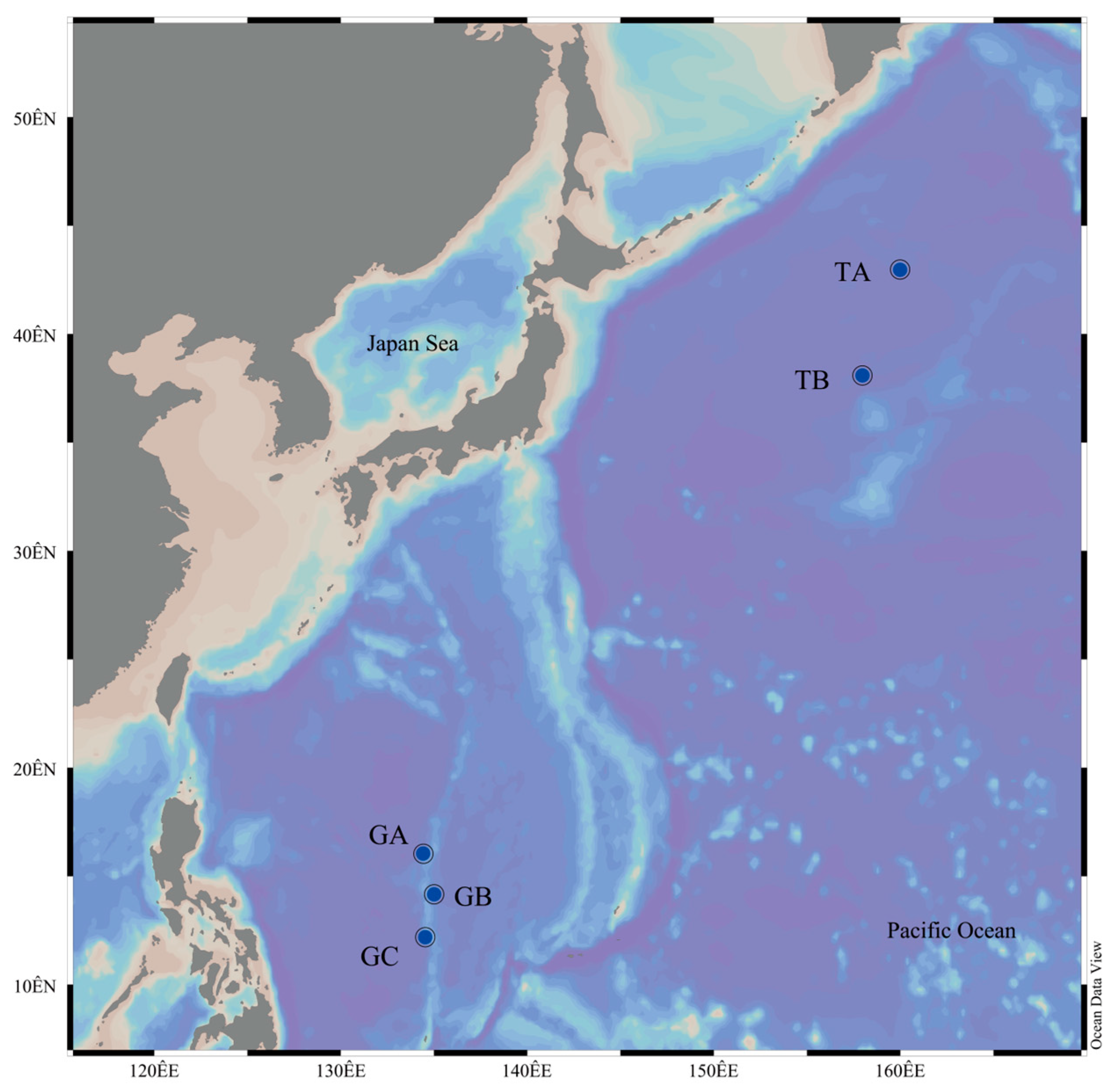
The four different fish species were from the Pacific Ocean (Figure 1) and were collected by the research vessel Song Hang during the fishery resource investigation. The fish samples were harvested via longlines and trawling. The fish samples were categorized based on differences in fishing methods and geographic origins: “T” denotes samples captured by trawling, “G” denotes those captured by longlining, while “A”, “B”, and “C” represent samples originating from distinct latitudinal regions, respectively. All mackerel samples were from the TA and TB sites. The other fish came from the GA, GB and GC sites. The GA site included bigeye tuna, blue shark and sickle pomfret, the GB site included bigeye tuna, blue shark and sickle pomfret, and the GC site included sickle pomfret and blue shark. The intestinal segment contents were extracted and frozen at −20 °C, the extracted intestinal contents were a mixture of the entire intestines, with no fixative added.

2.2. DNA Extraction and Sequencing

The Fast DNA™ Fast DNA™ Spin Kit for Soil (MP Biomedicals, Santa Ana, CA, USA) was used according to the manufacturer’s protocols. The quality and quantity of the DNA were determined via 1% agarose gel electrophoresis and NanoDrop2000c UV-Vis spectrophotometer (Thermo Scientific, Wilmington, NC, USA) [16]. 16S rRNA was amplified via the universal bacterial primers 338F (5′-ACTCCTACGGGAGGCAGCAG-3′) and 806R (5′-GGACTACHVGGGTWTCTAAT-3′) to amplify the V3–V4 region of the bacterial ribosome 16S rRNA gene [17], with a random 6-nucleotide barcode added to the 5′-ends. PCR was set up with 5 μL of primer at 10 μM, 4 μL of 10 mM dNTP, 10 μL of 5x PCR buffer, 1 μL of TransStart Fastpfu DNA Polymerase (TransGen, Beijing, China), 10–20 ng of genomic DNA template, and enough ddH2O to bring the volume to 50 μL. PCR was performed on an ABI GeneAmp® 9700 (ABI Applied Biosystems, Foster City, CA, USA) via the following program: initial denaturation at 95 °C for 5 min; 30 cycles of denaturation at 94 °C for 30 s, annealing at 50 °C for 30 s, and extension at 72 °C for 30 s; and a final extension at 72 °C for 10 min. PCR products were purified with an AxyPrep DNA Gel Extraction Kit (Axygen Biosciences, Union City, CA, USA) and quantified via a QuantiFluor™-ST blue fluorescence quantitative system (Promega, Madison, WI, USA) [18]. Finally, equal amounts of PCR-purified amplicons were pooled in equimolar amounts and paired-end sequenced on an Illumina MiSeq platform (Illumina, San Diego, CA, USA) accord he standard protocols of Majorbio Bio-Pharm Technology Co. Ltd. (Shanghai, China) [19].

2.3. Amplicon Processing and OTU Clustering

Bioinformatics analysis of the gut microbiota was performed via the Majorbio Bio-Cloud Platform (https://cloud.majorbio.com/ (accessed on 23 December 2024)). First, according to the overlap relationship between PE reads, the pairs of reads were spliced into a sequence, the quality and effect of the reads were filtered by quality control, effective sequences were distinguished according to the barcode and primer sequences at the beginning and end of the sequence, and the sequence direction was corrected. Uparse (version 7.0.1090, http://drive5.com/uparse/ (accessed on 23 December 2024)) was used to cluster the sequences, remove single sequences without duplication, cluster nonrepeating sequences (excluding single sequences) according to 97% similarity, remove chimeras in the clustering process, and obtain representative sequences of OTUs. The databases adopted include SILVA (version 138, https://www.arb-silva.de/ (accessed on 23 December 2024)), the species annotation method was RDB, with a classification confidence of 0.7. R software (version 3.3.1) was used to generate visualizations based on the taxonomic information. The dominant species in each sample were identified and quantified at different taxonomic levels.

2.4. Statistical Analyses

To test the impact of the differences in microbial community structure and function, community barplot and Venn diagrams were used to obtain the microbial composition. We subsequently built UPGMA (Unweighted Pair-group Method with Arithmetic Mean) tree for each distance matrix. Finally, NMDS (Non-metric multidimensional scaling) was used to compare the degree of differences between different species, the distance algorithm of NMDS was used to draw group ellipses based on the Bray-Curtis method, ANOSIM was used to test for differences between groups. Networkx software (version 1.11) was used to construct a correlation network to analyze the interactions between different microorganisms, Spearman’s correlation analysis was used to calculate the interspecific correlation coefficients in the network analysis.

2.5. Function Prediction

PICRUSt2 (version 2.2.0, https://github.com/picrust/picrust2/ (accessed on 23 December 2024)) functional predic-tion is used to predict the functional information of microbial communities in envi-ronmental samples, and further explore some potential microbial functional charac-teristics during environmental changes based on functional composition and abundance.

3. Results

3.1. Sequencing Information Statistics

After demultiplexing and quality filtering of raw 16S rRNA sequencing reads, a total of 963,647 high-quality sequences (409,355,694 base pairs) were obtained, with an average read length of 421 base pairs. Clustering at 97% sequence similarity yielded 2675 OTUs, which were annotated to 31 phyla, 74 classes, 166 orders, 284 families, 497 genera, and 675 species.

3.2. Dominant Gut Microbiota of Blue Shark, Bigeye Tuna, Sickle Pomfret and Mackerel

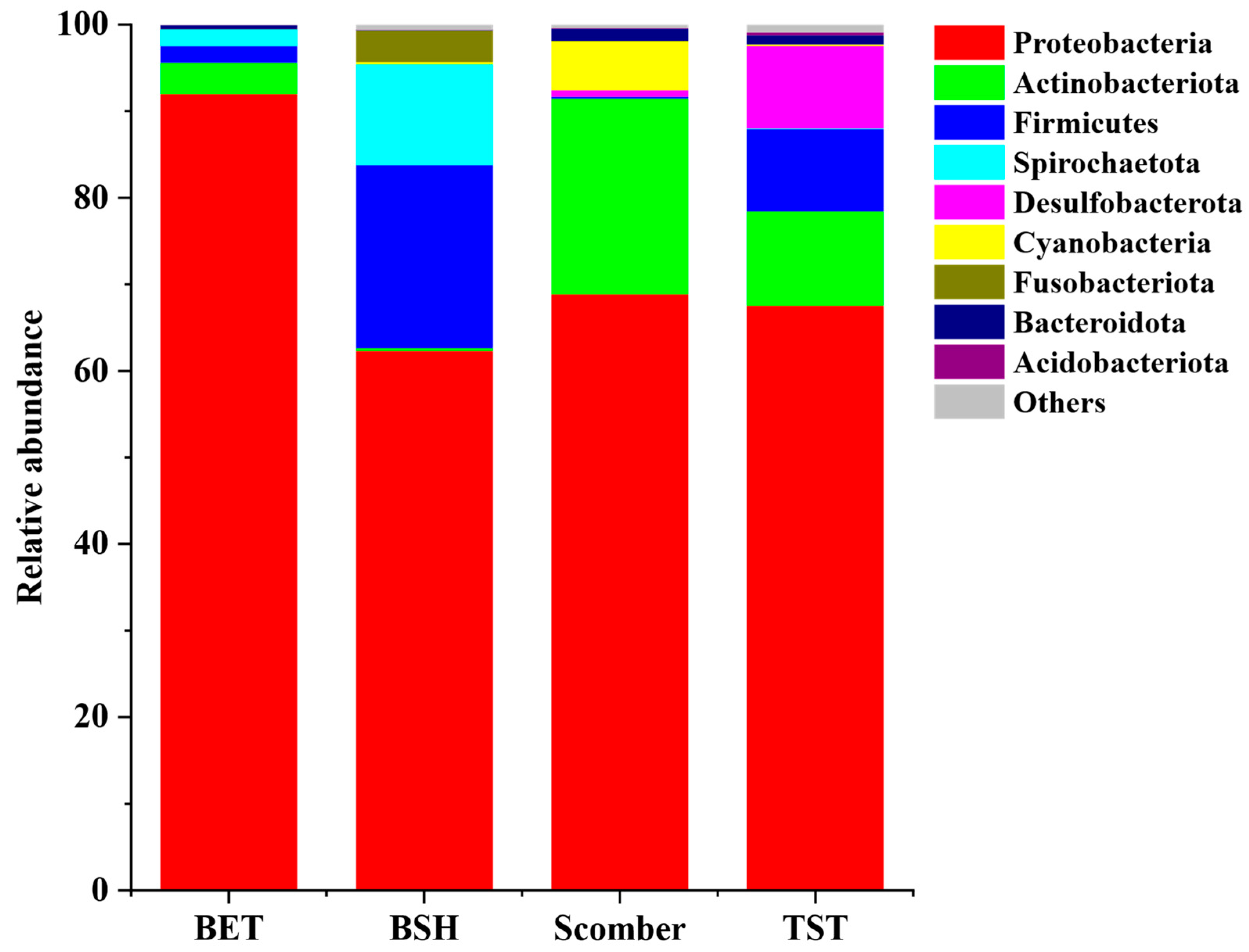
At the phylum level, the dominant microbiota included Proteobacteria, Actinobacteria, Firmicutes, Spirochaetota, Desulfobacterota, Cyanobacteria and Fusobacteriota (Figure 2). In terms of relative abundance, Proteobacteria was dominant in all samples, accounting for 67.53% of the sickle pomfret samples, 68.83% of the mackerel samples, 91.96% of the tuna samples and 58.06% of the shark samples. Firmicutes (29.03%) and Spirochaetota (7.21%) were more abundant in sharks, and Actinobacteria was more prevalent in mackerel (22.61%) and sickle pomfret (10.9%). Mackerel also contains a high abundance of Cyanobacteria (5.68%), and sickle pomfret contains the most Desulfobacterota (9.53%). Only Proteobacteria were significantly enriched in all the fishes, and the abundance composition was similar in sickle pomfret and mackerel. There were significant differences in the enrichment of other dominant phyla among the different species, so there were obvious differences in the microbial composition of the marine fish among the different species.
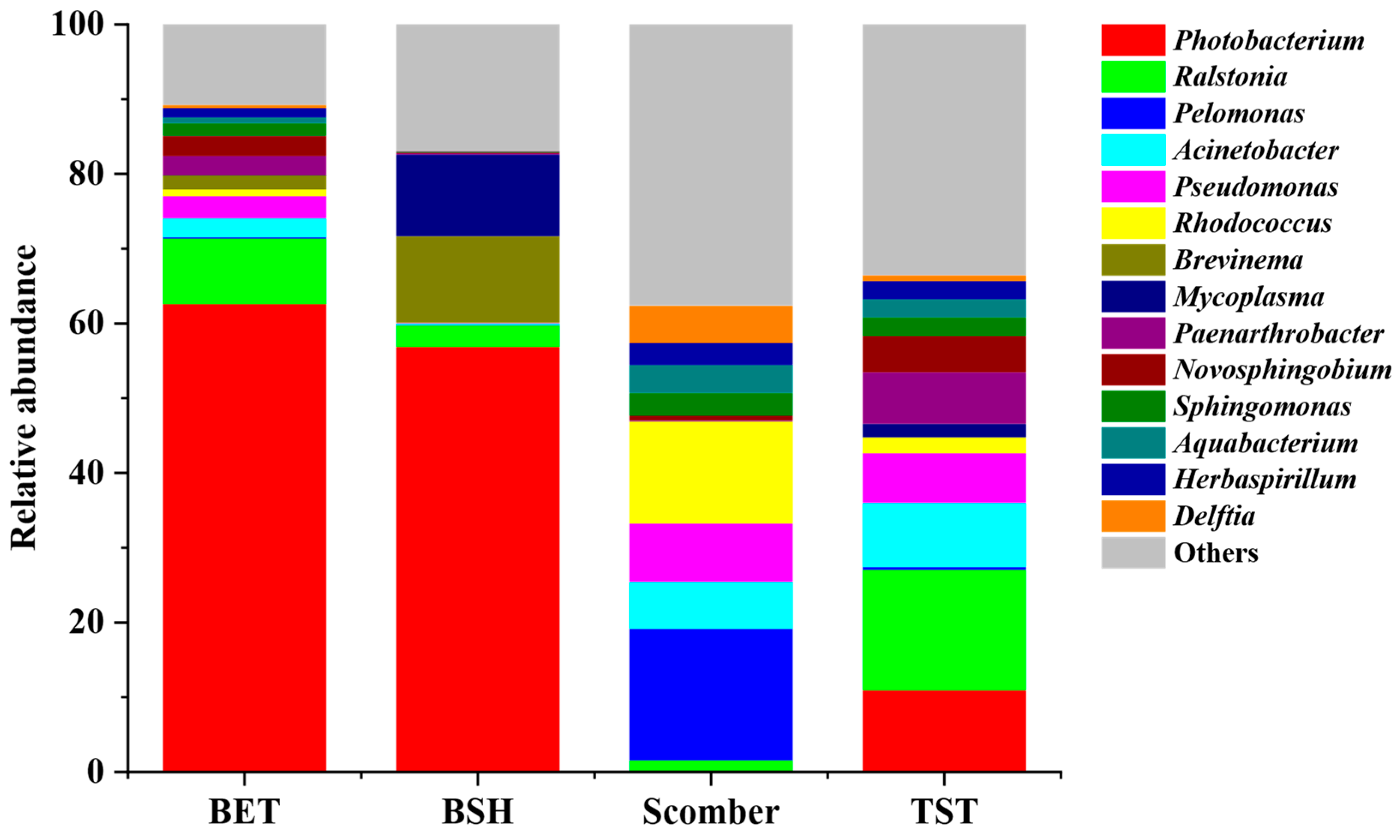
At the genus level, the microbiota included Photobacterium, Mycoplasma, Ralstonia, Pelomonas, Acinetobacter, Pseudomonas, Rhodococcus, Paenarthrobacter, Brevinema and Novosphingobium (Figure 3). The dominant genera were Photobacterium (56.84%), Brevinema (11.56%) and Mycoplasma (10.90%) in blue sharks; Photobacterium (62.57%) and Ralstonia (8.77%) in bigeye tuna; and Pelomonas (17.60%), Rhodococcus (13.66%), Pseudomonas (7.79%) and Acinetobacter (6.26%) in mackerel, Ralstonia (16.11%), Photobacterium (10.94%), unclassified_o__Desulfovibrionales (9.30%), Acinetobacter (8.59%), Paenarthrobacter (6.90%) and Pseudomonas (6.62%) in sickle pomfret. Photobacterium was the most significant species, blue shark and bigeye tuna presented five increases in abundance but were almost nonexistent in mackerel. In addition, there were more dominant species in sickle pomfret and mackerel, but their abundances were lower. These findings indicate that the structure of intestinal microbial communities varies greatly among different fishes.
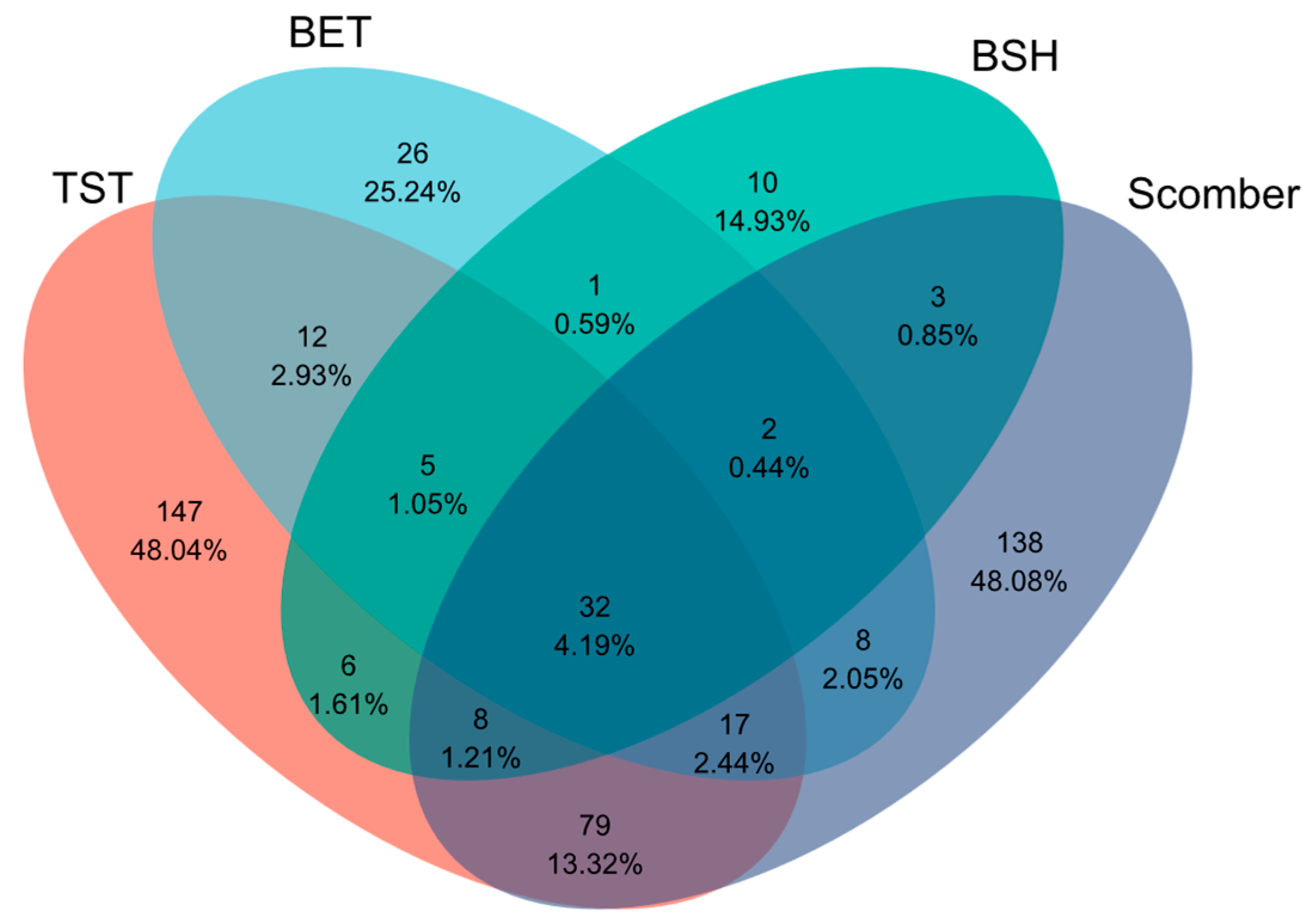
The Venn diagram reveals 32 microbiota shared among the four fish species at the genus level (Figure 4). Among them, the top 10 microbiota in terms of abundance include: Photobacterium (40.14%), Pelomonas (7.53%), Ralstonia (6.99%), Rhodococcus (6.51%), Pseudomonas (5.78%), Acinetobacter (5.61%), Paenarthrobacter (2.54%), Stenotrophomonas (2.47%), Aquabacterium (2.41%) and Delftia (2.40%). Most of the common microorganisms were the dominant species in different fishes; although there were many unique microbial species in different fishes, the main source of microbial community structure was almost always from common microorganisms.

3.3. Differences in Fish Intestinal Microbiota Stability

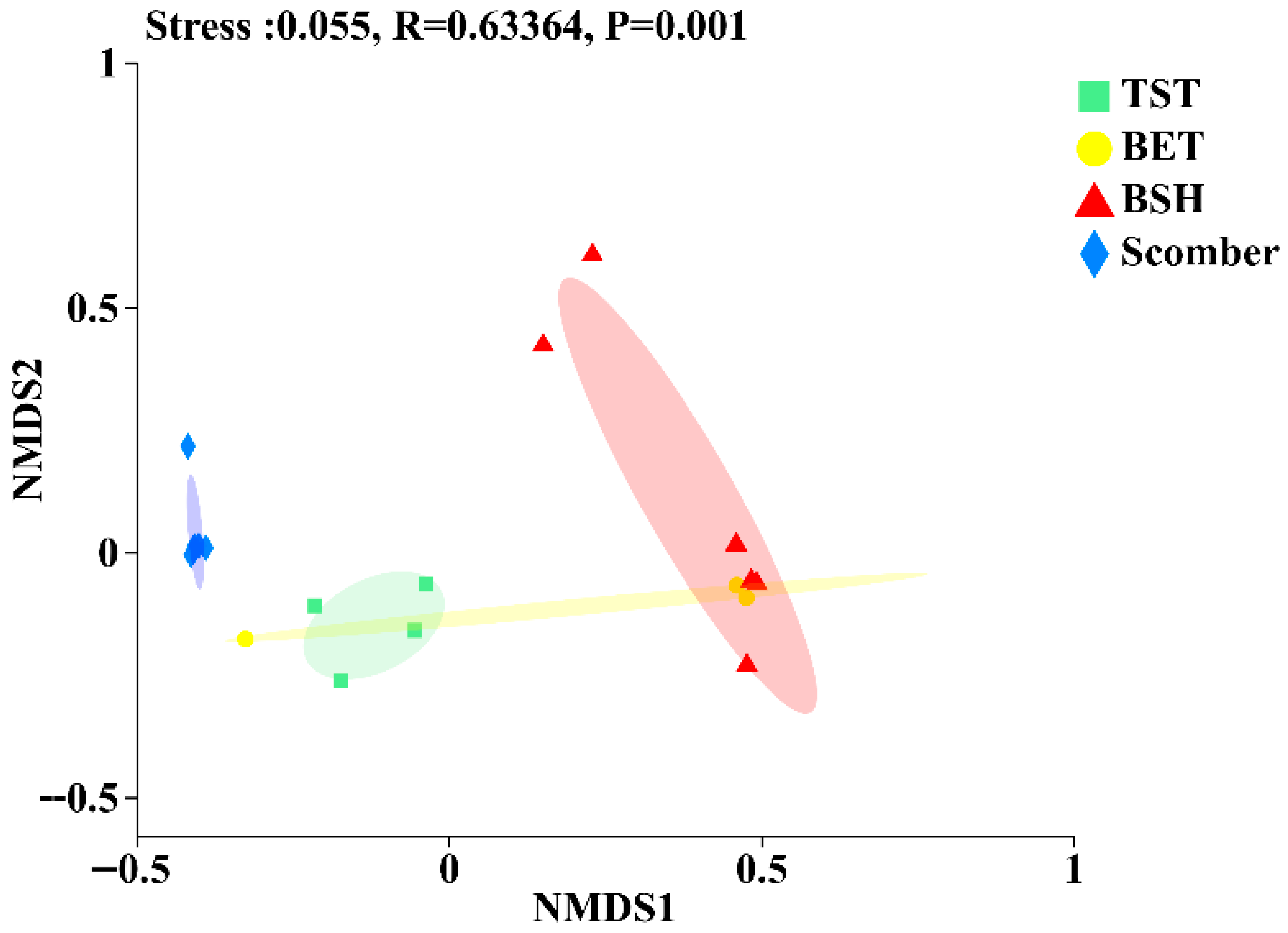
NMDS analysis (Figure 5) revealed a strong association between gut microbial community composition and fish species (stress = 0.055, R = 0.6336, p = 0.001). Within the same species, individuals exhibited relatively similar microbial communities (as indicated by overlapping data points). However, significant inter-species differences were observed: blue sharks and bigeye tuna showed large variations in gut microbial composition, whereas mackerel and sickle pomfret exhibited smaller inter-individual differences. These results suggest that gut microbial stability varies among fish species, with mackerel and sickle pomfret having more stable gut microbiota than blue sharks and bigeye tuna.
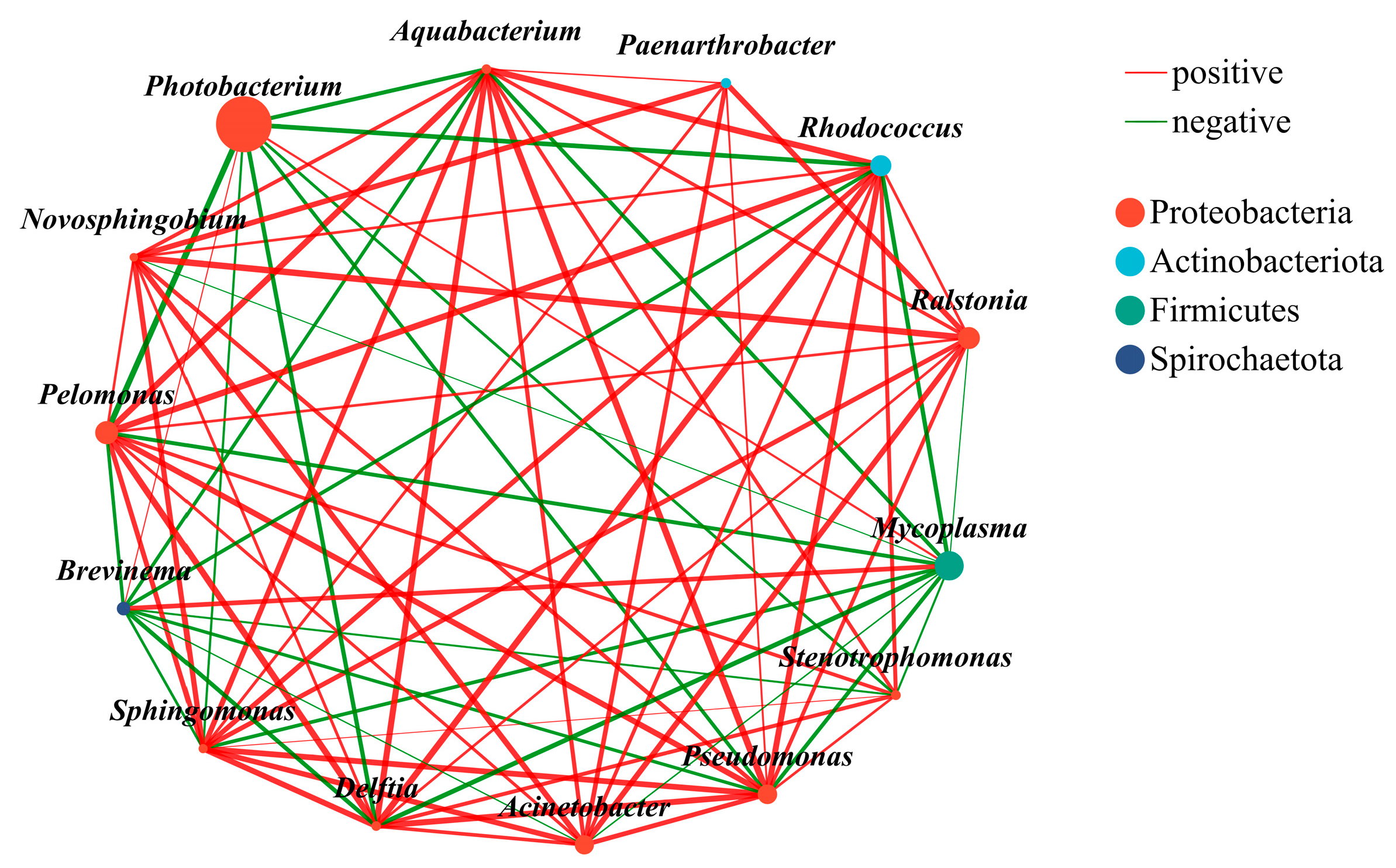
Correlation network analysis at the genus level (Figure 6) revealed complex interactions between dominant microbial taxa. Photobacterium, Mycoplasma, and Brevinema exhibited positive correlations with each other but negative correlations with other genera. Within the same fish species, dominant microbial genera were primarily positively correlated, indicating strong cooperative relationships. Notably, Photobacterium showed the strongest negative correlations with other genera, suggesting it may play a key role in regulating microbial community dynamics.

3.4. Shared Dominant Functions Across Different Fish Species Were Associated Primarily with Energy Metabolism

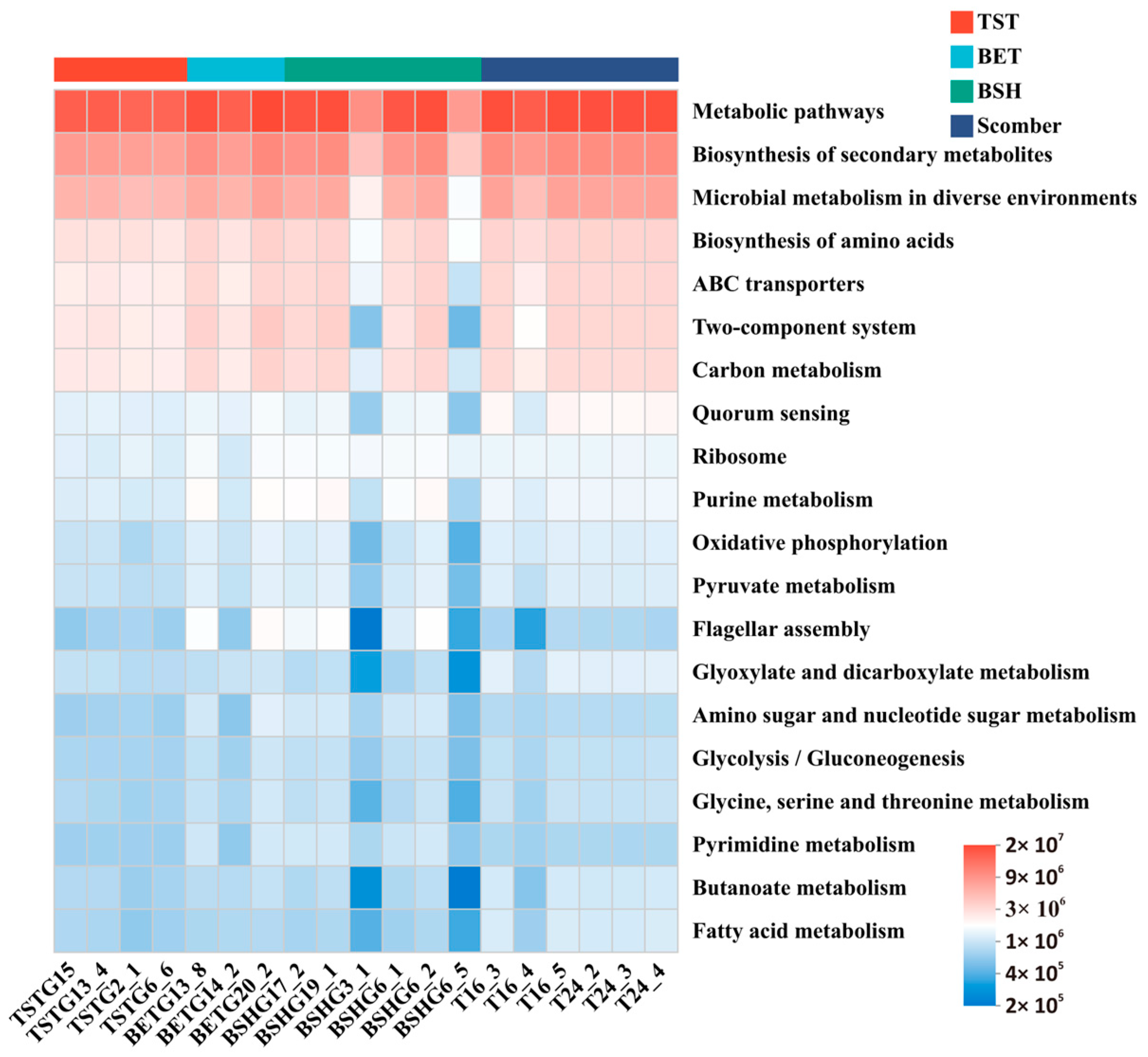
PICRUST2-based KEGG pathway analysis (Figure 7) revealed that the primary functions of the fish intestinal microbiota included nutrient synthesis, metabolism, and environmental adaptation, with nutrient metabolism and synthesis accounting for the dominant proportion. Metabolic pathways, biosynthesis of secondary metabolites, and microbial metabolism in diverse environments were the core functional pathways shared across all fish species—among these, metabolic pathways showed no significant interspecific differences.
Additionally, biosynthesis of amino acids, ABC transporters, two-component systems, and carbon metabolism were identified as predominant functions, but these exhibited substantial variations among different fish species. Such differences indicated interspecific discrepancies in nutrient uptake strategies and energy utilization patterns of the intestinal microbiota. The remaining low-abundance functions were primarily associated with various auxiliary metabolic processes.
Notably, the functional profiles of the microbial communities in sharks and tuna were more susceptible to individual-level fluctuations compared to other species. Collectively, for marine fish, the functional differences in intestinal microbiota were mainly reflected in nutrient metabolism and energy allocation, whereas variations in functions related to environmental adaptation were relatively subtle.

4. Discussion

Intestinal microbiota can participate in the anabolism and catabolism of nutrients such as amino acids. These functions can not only improve the efficiency of nutrient absorption, transformation and energy utilization in fish, but also help fish better adapt to the diverse marine habitats. Understanding changes in gut microbial composition across fish species is critical for unraveling the unique symbiotic relationships between hosts and their microbiota [20]. In this study, we characterized the gut microbiotas of four ecologically distinct fish species—blue sharks, bigeye tuna, mackerel, and sickle pomfret—to address two key questions: (1) How do gut microbial communities vary among these fish species? (2) What functional roles does the gut microbiota play in supporting host adaptation to the marine environment? Our findings advance our understanding of the host-microbiota interface and highlight the importance of gut microbiota in fish physiology and ecology.

4.1. Blue Shark, Bigeye Tuna, Sickle Pomfret and Mackerel Gut Microbial Communities

We identified six core microbial genera Rhodococcus, Pseudomonas, Ralstonia, Photobacterium, Pelomonas, and Acinetobacter, which were consistently present across all four fish species. These core taxa may be actively maintained by the host, as wild animals often select for gut microbiota that provide fitness benefits [21].
Notably, the relative abundance of core taxa varied dramatically among species. Blue sharks and bigeye tuna had extremely high abundances of Photobacterium (over 50% of the microbial community) but fewer dominant and unique taxa, with pronounced inter-individual differences. In contrast, mackerel and sickle pomfret had lower abundances of Photobacterium but a greater diversity of dominant genera, with minimal inter-individual variation.
Photobacterium is a common facultative anaerobic taxon in marine fish guts [22,23], and its abundance may reflect host feeding behavior. Blue sharks and bigeye tuna are apex predators with broad diets and undergo long-distance migrations [24], during which they often experience unpredictable food availability [25]. Prolonged fasting can reduce gut microbial diversity [26], and host selection pressures may favor a small number of highly efficient taxa (e.g., Photobacterium) that can persist under fluctuating resource conditions [27]. Additionally, long-distance migration reduces intestinal blood flow, leading to partial gut atrophy and suspended digestion [28,29], which may disrupt gut homeostasis and allow opportunistic pathogens (e.g., Brevinema, Mycoplasma, Ralstonia) to proliferate that consistent with the higher abundance of these taxa in blue sharks and bigeye tuna [30,31], no obvious pathological changes were found in the captured fish. Meanwhile, the contents in their intestines were relatively scarce, which may indicate that these fish were in a state of hunger. An unhealthy intestinal flora allowed these microorganisms to occupy a dominant abundance.
In contrast, mackerel and sickle pomfret are smaller, more sedentary species with more stable diets. Their gut microbiota may be less affected by environmental fluctuations, leading to higher microbial diversity and lower inter-individual variation. This aligns with the “stability-diversity” hypothesis, which suggests that more stable environments support more diverse microbial communities.

4.2. Functional Roles of the Gut Microbiota in Host Energy Acquisition

The function of intestinal microbiota is affected by the physiological behavior of fish. There are differences in the feeding habits of different fish species. For large fish, the intestinal tract is more likely to maintain an oxygen-depleted environment, and anaerobic microorganisms are more prone to dominate [32]. Flexibility in microbial community composition or activity can potentially be beneficial to a host since it can allow the host to respond to changing food availability or metabolic demands [33]. Through fermentation and other processes, marine fish can make full use of various nutrients and energy, and meet different nutritional needs through distinct strategies [34], many predators employ strategies to prolong digestion and increase energy efficiency through fermentation [35]. This process provides most of the energy needed for the function of the host’s intestinal cells. Differences in nutrient metabolism and synthesis among the intestinal microbiota of marine fish facilitate the efficient absorption of nutrients by their hosts. For instance, crustaceans—common prey of many marine fish—often contain chitin, a recalcitrant polysaccharide that requires degradation via specific microbial metabolic pathways to release bioavailable nutrients [36]. Carbohydrates and nitrogenous compounds (e.g., amino acids, peptides) serve as key nutrient sources for marine fish, and the core functions of their intestinal microbiota are centered on the decomposition, transformation, and synthesis of these substances. This microbial-mediated process enhances the hosts’ capacity to fully utilize dietary nutrients [37]. More research data are needed to determine whether gut microbiota function can have an important effect on fish.

5. Conclusions

This study demonstrates significant differences in gut microbial stability among four wild marine fish species. While all species share a core gut microbiota, the relative abundance of core taxa varies substantially, and distinct inter-species differences in microbial functional profiles were observed. Collectively, the composition and function of the gut microbiota are strongly associated with fish species, reflecting adaptations to diet, migration behavior, and energy requirements.
These findings suggest that gut microbiota analysis can serve as an indirect tool for investigating the physiological behavior and environmental adaptation strategies of marine fish. Future research should focus on: (1) exploring the mechanisms underlying host-microbiota interactions (e.g., how hosts select for core taxa); (2) investigating the impact of environmental stressors (e.g., ocean warming, pollution) on gut microbial composition and function; and (3) validating the functional roles of key microbial taxa through in vitro and in vivo experiments. Such research will enhance our understanding of marine ecosystems and support the development of conservation strategies for wild fish populations.

Author Contributions

Y.W. and B.L. conceived the experiments and led the entire project. Y.L. analyzed some of the data. J.L. collected the samples, extracted the DNA and wrote the manuscript. All authors have read and agreed to the published version of the manuscript.

Funding

This research was supported by 2022 Jiangsu Provincial Agricultural Ecological Protection and Resource Utilization Special Fund-Fisheries Ecology and Resource Monitoring (2022-SJ-061-01) and National Key Research and Development Program of China (2025YFE0219000).

Institutional Review Board Statement

All fish experiments were conducted under the national regulations on laboratory animals of China and were reviewed and approved by the ethics committee of laboratory animals of Shanghai Ocean University (Approval code: SHOU-DW-2019-012, Approval date: 13 July 2019).

Informed Consent Statement

Not applicable.

Data Availability Statement

All the data generated or used during the study appear in the submitted article.

Acknowledgments

We would like to thank Song Hang for the research and survey vessel for sample collection.

Conflicts of Interest

The authors declare no conflicts of interest.

References

  1. Diwan, A.D.; Harke, S.N.; Panche, A.N. Host-microbiome interaction in fish and shellfish: An overview. Fish Shellfish. Immunol. Rep. 2023, 4, 100091. [Google Scholar] [CrossRef]
  2. Han, M.; Wang, C.; Liu, P.; Li, D.; Li, Y.; Ma, X. Dietary fiber gap and host gut microbiota. Protein Pept. Lett. 2017, 24, 388–396. [Google Scholar] [CrossRef]
  3. Sunagawa, S.; Coelho, L.P.; Chaffron, S.; Kultima, J.R.; Labadie, K.; Salazar, G.; Djahanschiri, B.; Zeller, G.; Mende, D.R.; Alberti, A.; et al. Ocean plankton. Structure and function of the global ocean microbiome. Science 2015, 348, 1261359. [Google Scholar] [CrossRef] [PubMed]
  4. van de Wouw, M.; Schellekens, H.; Dinan, T.G.; Cryan, J.F. Microbiota-Gut-Brain Axis: Modulator of host metabolism and appetite. J. Nutr. 2017, 147, 727–745. [Google Scholar] [CrossRef] [PubMed]
  5. Xiao, Y.; Wang, H.; Lan, Y.; Zhong, C.; Yan, G.; Xu, Z.; Lu, G.; Chen, J.; Wei, T.; Wong, W.C.; et al. Changes in community structures and functions of the gut microbiomes of deep-sea cold seep mussels during in situ transplantation experiment. Anim. Microbiome 2023, 5, 17. [Google Scholar] [CrossRef] [PubMed]
  6. Burns, A.R.; Stephens, W.Z.; Stagaman, K.; Wong, S.; Rawls, J.F.; Guillemin, K.; Bohannan, B.J. Contribution of neutral processes to the assembly of gut microbial communities in the zebrafish over host development. ISME J. 2016, 10, 655–664. [Google Scholar] [CrossRef]
  7. Yang, H.; Wu, J.; Du, H.; Zhang, H.; Li, J.; Wei, Q. Quantifying the colonization of environmental microbes in the fish gut: A case study of wild fish populations in the Yangtze River. Front. Microbiol. 2022, 12, 828409. [Google Scholar] [CrossRef]
  8. Avella, M.A.; Place, A.; Du, S.J.; Williams, E.; Silvi, S.; Zohar, Y.; Carnevali, O. Lactobacillus rhamnosus accelerates zebrafish backbone calcification and gonadal differentiation through effects on the GnRH and IGF systems. PLoS ONE 2012, 7, e45572. [Google Scholar] [CrossRef]
  9. Tian, S.; Chen, M. Global research progress of gut microbiota and epigenetics: Bibliometrics and visualized analysis. Front. Immunol. 2024, 15, 1412640. [Google Scholar] [CrossRef]
  10. Näpflin, K.; Schmid-Hempel, P. Host effects on microbiota community assembly. J. Anim. Ecol. 2018, 87, 331–340. [Google Scholar] [CrossRef]
  11. Li, X.; Zhou, L.; Yu, Y.; Ni, J.; Xu, W.; Yan, Q. Composition of gut microbiota in the gibel carp (Carassius auratus gibelio) varies with host development. Microb. Ecol. 2017, 74, 239–249. [Google Scholar] [CrossRef] [PubMed]
  12. Xia, M.; Gao, C.X.; Dai, X.J.; Wu, F. Preliminary analysis of biology for the blue shark, (Prionace glauca), in the southwest Indian Ocean. J. Ocean China 2017, 26, 271–277. [Google Scholar]
  13. Wu, H.; Shao, K.; Lai, C. Latin-Chinese Dictionary of Fish Names by Classification System; Sueichan Press: Keelung, Taiwan, 1999. [Google Scholar]
  14. Robins, C.R.; Smith, M.M.; Heemstra, P.C. Smiths’ Sea Fishes; Springer: Berlin/Heidelberg, Germany, 1986. [Google Scholar]
  15. Du, J.; Ye, G.; Zhou, Q.; Chen, B.; Hu, W.; Zheng, X. Progress and prospects of coastal ecological connectivity studies. Acta Ecol. Sin. 2015, 35, 6923–6933. [Google Scholar] [CrossRef]
  16. Desjardins, P.; Conklin, D. NanoDrop microvolume quantitation of nucleic acids. J. Vis. Exp. 2010, 45, 2565. [Google Scholar]
  17. Abellan-Schneyder, I.; Matchado, M.S.; Reitmeier, S.; Sommer, A.; Sewald, Z.; Baumbach, J.; List, M.; Neuhaus, K. Primer, Pipelines, Parameters: Issues in 16S rRNA gene sequencing. mSphere 2021, 6, e01202-20. [Google Scholar] [CrossRef]
  18. Strathdee, F.; Free, A. Denaturing gradient gel electrophoresis (DGGE). Methods Mol. Biol. 2013, 1054, 145–157. [Google Scholar] [PubMed]
  19. Chan, J.; Geng, D.; Pan, B.; Zhang, Q.; Xu, Q. Gut microbial divergence between three hadal amphipod species from the isolated hadal trenches. Microb. Ecol. 2022, 84, 627–637. [Google Scholar] [CrossRef]
  20. Wang, X.; Qu, M.; Liu, Y.; Schneider, R.F.; Song, Y.; Chen, Z.; Zhang, H.; Zhang, Y.; Yu, H.; Zhang, S.; et al. Genomic basis of evolutionary adaptation in a warm-blooded fish. Innovation 2022, 3, 100185. [Google Scholar] [CrossRef]
  21. Dapa, T.; Xavier, K.B. Effect of diet on the evolution of gut commensal bacteria. Gut Microbes 2024, 16, 2369337. [Google Scholar] [CrossRef] [PubMed]
  22. Labella, A.M.; Borrego, J.J. Photobacterium. In Bergey’s Manual of Systematics of Archaea and Bacteria; Wiley: Hoboken, NJ, USA, 2025; pp. 1–35. [Google Scholar]
  23. Kalantar-Zadeh, K.; Berean, K.J.; Burgell, R.E.; Muir, J.G.; Gibson, P.R. Intestinal gases: Influence on gut disorders and the role of dietary manipulations. Nat. Rev. Gastroenterol. Hepatol. 2019, 16, 733–747. [Google Scholar] [CrossRef]
  24. Li, Y.K.; Gao, X.D.; Wang, L.Y.; Fang, L. Trophic niche partitioning of pelagic sharks in Central Eastern Pacific inferred from stable isotope analysis. J. Appl. Ecol. 2018, 29, 309–313. [Google Scholar]
  25. Ren, T.; Boutin, S.; Humphries, M.M.; Dantzer, B.; Gorrell, J.C.; Coltman, D.W.; McAdam, A.G.; Wu, M. Seasonal, spatial, and maternal effects on gut microbiome in wild red squirrels. Microbiome 2017, 5, 163. [Google Scholar] [CrossRef]
  26. Sonoyama, K.; Fujiwara, R.; Takemura, N.; Ogasawara, T.; Watanabe, J.; Ito, H.; Morita, T. Response of gut microbiota to fasting and hibernation in Syrian hamsters. Appl. Environ. Microbiol. 2009, 75, 6451–6456. [Google Scholar] [CrossRef] [PubMed]
  27. Sekirov, I.; Russell, S.L.; Antunes, L.C.; Finlay, B.B. Gut microbiota in health and disease. Physiol. Rev. 2010, 90, 859–904. [Google Scholar] [CrossRef]
  28. Gentile, C.L.; Weir, T.L. The gut microbiota at the intersection of diet and human health. Science 2018, 362, 776–780. [Google Scholar] [CrossRef] [PubMed]
  29. Battley, P.F.; Piersma, T.; Dietz, M.W.; Tang, S.; Dekinga, A.; Hulsman, K. Empirical evidence for differential organ reductions during trans-oceanic bird flight. Proc. Biol. Sci. 2000, 267, 191–195. [Google Scholar] [CrossRef]
  30. Khosravi, A.; Mazmanian, S.K. Disruption of the gut microbiome as a risk factor for microbial infections. Curr. Opin. Microbiol. 2013, 16, 221–227. [Google Scholar] [CrossRef] [PubMed]
  31. Risely, A.; Waite, D.W.; Ujvari, B.; Hoye, B.J.; Klaassen, M. Active migration is associated with specific and consistent changes to gut microbiota in Calidris shorebirds. J. Anim. Ecol. 2018, 87, 428–437. [Google Scholar] [CrossRef]
  32. Gong, L.; Liu, B.; Wu, H.; Feng, J.; Jiang, T. Seasonal dietary shifts alter the gut microbiota of avivorous bats: Implication for adaptation to energy harvest and nutritional utilization. mSphere 2021, 6, e0046721. [Google Scholar] [CrossRef]
  33. Foster, K.R.; Schluter, J.; Coyte, K.Z.; Rakoff-Nahoum, S. The evolution of the host microbiome as an ecosystem on a leash. Nature 2017, 548, 43–51. [Google Scholar] [CrossRef]
  34. den Besten, G.; van Eunen, K.; Groen, A.K.; Venema, K.; Reijngoud, D.J.; Bakker, B.M. The role of short-chain fatty acids in the interplay between diet, gut microbiota, and host energy metabolism. J. Lipid Res. 2013, 54, 2325–2340. [Google Scholar] [CrossRef]
  35. Papastamatiou, Y.P.; Watanabe, Y.Y.; Bradley, D.; Dee, L.E.; Weng, K.C.; Lowe, C.G.; Caselle, J.E. Drivers of Daily Routines in an Ectothermic Marine Predator: Hunt Warm, Rest Warmer? PLoS ONE 2015, 10, e0127807. [Google Scholar] [CrossRef] [PubMed]
  36. Sanders, J.G.; Beichman, A.C.; Roman, J.; Scott, J.J.; Emerson, D.; McCarthy, J.J.; Girguis, P.R. Baleen whales host a unique gut microbiome with similarities to both carnivores and herbivores. Nat. Commun. 2015, 6, 8285. [Google Scholar] [CrossRef] [PubMed]
  37. Zhang, S.; Chen, K.Y.; Zou, X. Carbohydrate-Protein Interactions: Advances and Challenges. Commun. Inf. Syst. 2021, 21, 147–163. [Google Scholar] [CrossRef] [PubMed]
Figure 1. Sampling station information. TA and TB were the stations used for mackerel capture. Bigeye tuna, blue shark and sickle pomfret were obtained from GA, GB and GC.
Fishes 11 00065 g001
Figure 2. Barplot of relative abundance at the phylum level for intestinal samples from different species, the species included mackerel (Scomber), sickle pomfret (TST), bigeye tuna (BET) and shark (BSH). Except for the top 10 phylum in terms of abundance, the remaining ones are classified as “others”.
Fishes 11 00065 g002
Figure 3. Barplot of the relative abundance of intestinal samples of marine fish at the genus level, the species included mackerel (Scomber), sickle pomfret (TST), bigeye tuna (BET) and shark (BSH). Except for the top 15 genus in terms of abundance, the remaining ones are classified as “others”.
Fishes 11 00065 g003
Figure 4. Venn diagrams of the gut microbiota of four fishes from different groups. The top 32 species overlapped among blue shark, bigeye tuna, sickle pomfret and mackerel gut microbiota. The numbers in the figure indicate the species count and their corresponding percentages.
Fishes 11 00065 g004
Figure 5. NMDS analysis at the genus level. Blue shark and bigeye tuna significantly altered the intestinal microbiota, the color of blue shark was red, bigeye tuna was yellow, mackerel was blue, sickle pomfret was green.
Fishes 11 00065 g005
Figure 6. Network analysis at the genus level. Correlation of the top 15 microbiota in abundance at the genus level. Interactive correlations between the gut microbiota genera Photobacterium, Mycoplasma and Brevinema were negatively correlated with other genera.
Fishes 11 00065 g006
Figure 7. PICRUST2 functional analysis of intestinal microbiota. A heatmap showed the functional pathways with different abundances among the distinct fish gut microbes. Red indicated a relatively high relative abundance of a species, and blue indicated a relatively low relative abundance.
Fishes 11 00065 g007
Disclaimer/Publisher’s Note: The statements, opinions and data contained in all publications are solely those of the individual author(s) and contributor(s) and not of MDPI and/or the editor(s). MDPI and/or the editor(s) disclaim responsibility for any injury to people or property resulting from any ideas, methods, instructions or products referred to in the content.