Article

Transition to Time-Dependent Artificial Feed Induces Histological and Apoptotic Alterations in Mandarin Fish (Siniperca chuatsi)

1
Hunan Fisheries Research Institute and Aquatic Products Seed Stock Station, Changsha 410153, China
2
Hunan Academy of Agricultural Sciences, Changsha 410153, China
*
Author to whom correspondence should be addressed.
Fishes 2026, 11(1), 49; https://doi.org/10.3390/fishes11010049
Submission received: 5 December 2025 / Revised: 5 January 2026 / Accepted: 10 January 2026 / Published: 13 January 2026

Abstract

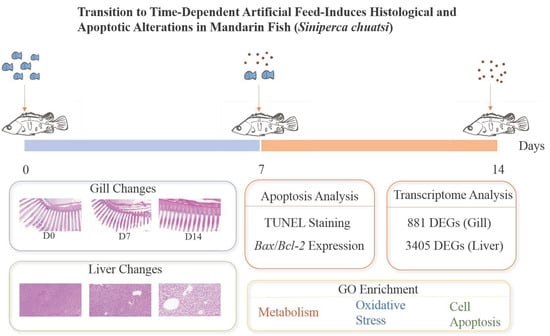
This study aimed to investigate the response mechanisms of liver and gill tissues in mandarin fish (Siniperca chuatsi) at the histological, apoptotic, and gene expression levels during the weaning process from live prey to artificial feed. By analyzing fish samples at different domestication stages (D0, D7, D14), the results revealed that: (1) Histologically, the gill filaments exhibited shortening and thickening post-domestication, while the liver showed increased vacuolation; (2) apoptosis detection (TUNEL assay) and analysis of apoptosis-related gene (Bax/Bcl-2) expression indicated that the gill tissue experienced a significant increase in apoptosis at the mid-domestication stage (D7), which returned to baseline levels later (D14), whereas hepatic apoptosis showed no significant changes throughout the process; (3) transcriptome sequencing identified 3405 and 881 differentially expressed genes (DEGs) in the liver and gill tissues, respectively, and the significantly enriched pathways were steroid biosynthesis in the liver and alanine, aspartate, and glutamate metabolism in the gills. The apoptosis pathway was also significantly enriched in both tissues. GO analysis further indicated that the DEGs were primarily associated with metabolic processes, oxidative stress, and cell apoptosis. In conclusion, artificial feed domestication induces adaptive changes in the tissue structure and molecular profiles of the gill and liver in mandarin fish. The gill response to dietary transition is more rapid and characterized by a reversible apoptotic process, providing a theoretical foundation for understanding the stress mechanisms associated with domestication and promoting healthy aquaculture practices for this species.
Key Contribution: This study innovatively explores the adaptive changes in mandarin fish during food domestication from the perspective of apoptosis, while employing transcriptomic analysis to investigate the variations in differentially expressed genes before and after the domestication process.

Graphical Abstract

1. Introduction

Given the increasing global demand for food, aquaculture holds a pivotal role in both the national economies of developing countries and the international food supply [1]. The mandarin fish (Siniperca chuatsi) is characterized by their palatable texture—being plump and tender without muscle spurs—and high nutritional value. These attributes have led to their growing popularity among consumers in recent years [2]. As a highly prized carnivorous freshwater species, Siniperca chuatsi is traditionally cultivated with live prey such as fish and shrimp [3]. The expanding scale of mandarin fish aquaculture has intensified the inherent limitations of traditional feeding practices, which predominantly rely on the use of ice-fresh fish or live bait. This dependency presents multiple operational and sustainability challenges: such feed sources not only incur substantial costs and logistical burdens related to transportation and storage, but also elevate the risk of introducing pathogenic microorganisms and parasitic infections to farmed fish. Further-more, the residual waste from live feed contributes to water pollution, exacerbating environmental management concerns in aquaculture systems [4,5,6,7]. In light of these issues, and supported by recent progress in artificial feed domestication methodologies, formulated feed has emerged as a scientifically viable and increasingly adopted alternative [8,9,10]. Therefore, in recent years, domestication of feed for mandarin fish has gradually be-come popular.
For carnivorous fish, with the continuous advancement of artificial feed substitution for live bait fish or frozen fish, the impact of compound feed on the growth performance and nutritional value of carnivorous fish has received widespread attention. Zhao and Ren studied the effects of alternative protein sources on Micropterus salmoides, with Zhao et al. [11] focusing on growth, meat quality, and intestinal health using defatted Hermetia illucens larvae meal, and Ren et al. [12] investigating the improvement of feather meal as a fish meal alternate via gamma ray irradiation. Song and Ye [13,14] studied the pearl gentian grouper (Epinephelus fuscoguttatus ♀ × Epinephelus lanceolatus ♂) Growth, antioxidant capacity and intestinal health of Epinephelus gentianus. Ye’s study also showed that formulated diets, compared with chilled trash fish diets, did not hamper hybrid grouper growth, led to a significant increase in digestive enzyme activities, and resulted in a significant decrease in intestinal pathogenic bacteria alongside an increase in beneficial bacteria. At present, there have been studies on the growth performance, muscle nutritional components, glucose and lipid metabolism, and gut microbiota of feed fed and live bait fed mandarin fish [15,16]. Artificial feed can cause varying degrees of oxidative stress in aquatic animals [17]. Our previous research has shown that compared to live feed fed mandarin fish, the liver and gills of domesticated mandarin fish undergo varying degrees of oxidative stress and immune response [18]. Apoptosis is the autonomous and orderly death of cells controlled by genes, which plays a crucial role in maintaining the homeostasis of the biological environment and promoting the occurrence of various pathological processes [19]. The interaction between B-cell lymphoma 2 (Bcl-2) and Bcl-2 associated X protein (Bax) plays a crucial role in the regulation of cell apoptosis [20]. Bcl-2 can inhibit the apoptotic signal induced by Bax, while Bax enhances mitochondrial membrane permeability, promotes the release of cytochrome C, and further activates caspase to promote apoptosis [21]. Therefore, in this study, we further investigated whether feed acclimated mandarin fish respond to food changes through apoptosis as a key regulatory mechanism during the process of taming.

2. Materials and Methods

2.1. Ethics Statement

All animal procedures were strictly carried out in accordance with the relevant guidelines (license No. HNFRI20250509) and were approved by the Animal Welfare and Ethics Committee of Hunan Fisheries Research Institute and Aquatic Products Seed Stock Station (program approval on 22 March 2025). Feeding live mrigal carp is a conventional practice during the seedling cultivation stage of mandarin fish. This method was adopted in the present study to replicate actual aquaculture conditions. Prior to any invasive procedures such as tissue sampling, all fish were deeply anesthetized using MS-222 and euthanized afterward to ensure freedom from pain.

2.2. Animal Holding and Experimental Design

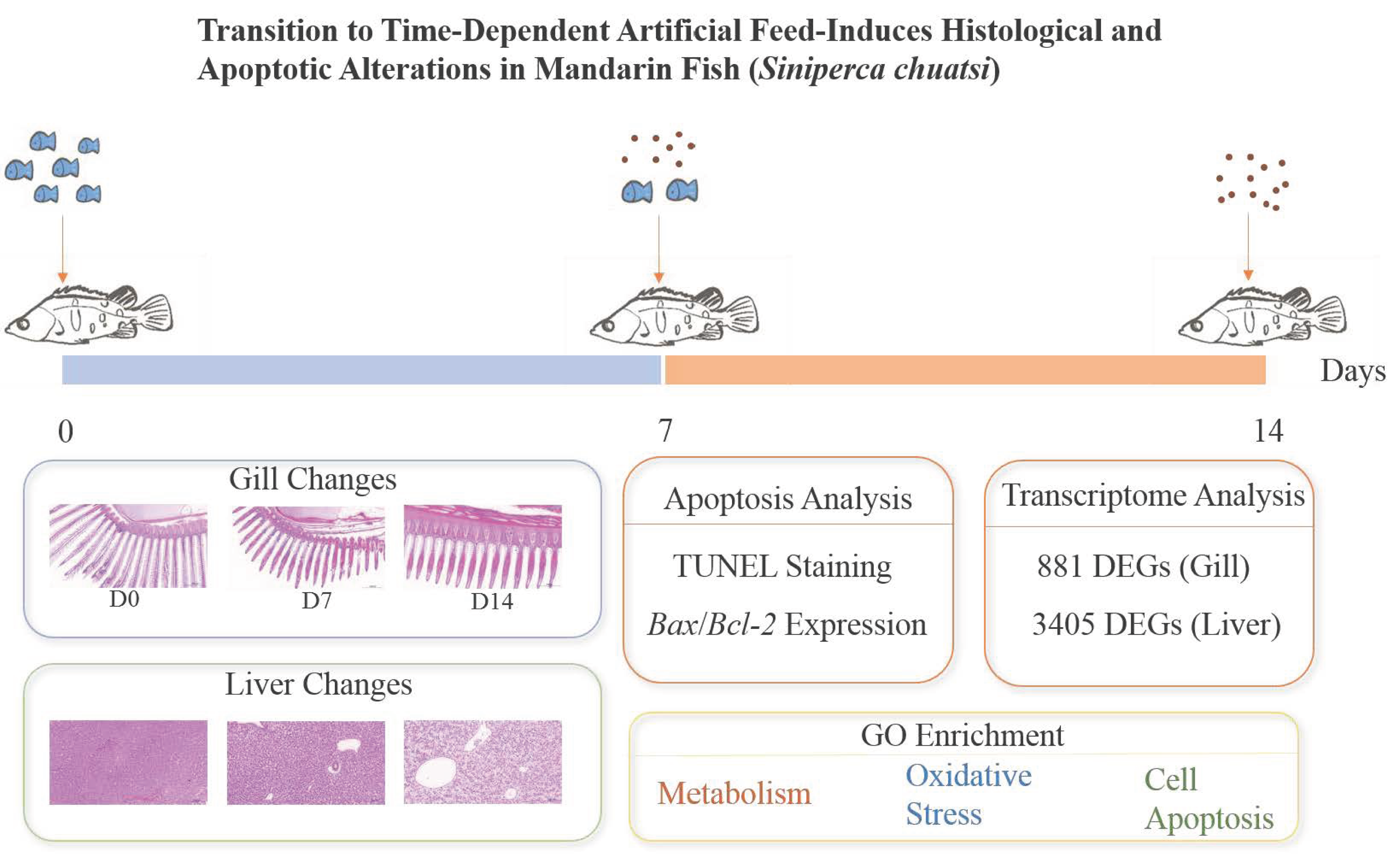
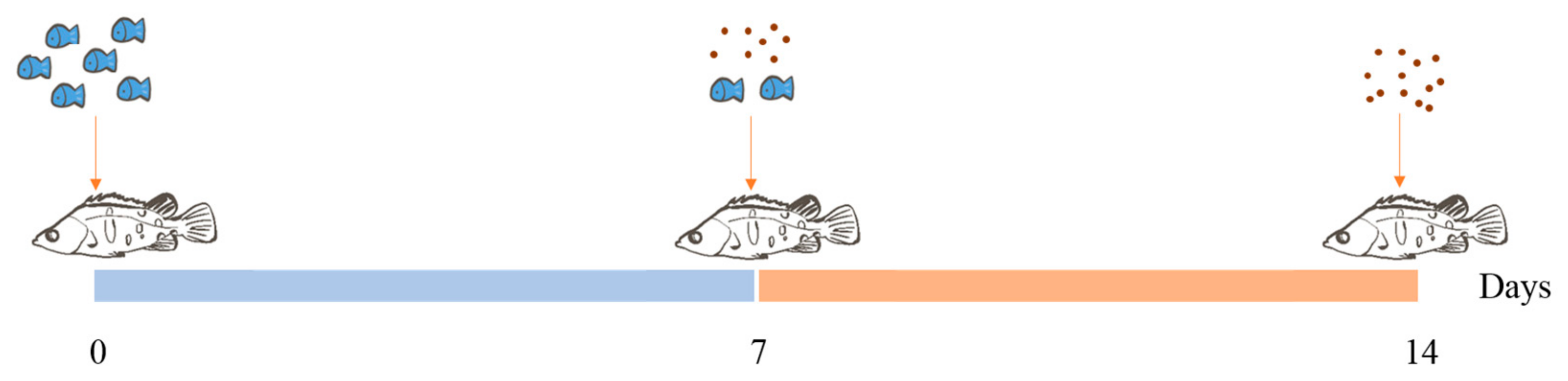
A total of 2000 healthy mandarin fish (Siniperca chuatsi) from the same batch of fry at Hunan Fisheries Research Institute and Aquatic Products Seed Stock Station (Changsha, China) were used in this study. The initial average body mass and total length were 4.71 ± 0.35 g and 6.82 ± 0.43 cm, respectively. Prior to the domestication trial, all fish were acclimated for one week in a common pond and fed to satiation twice daily at 6am and 6pm with live mrigal carp (Cirrhinus mrigala), All mrigal carp were purchased from local farmer, 3000 to 4000 fish per 500 g. The domestication process was conducted in specialized circular aquaculture tanks (diameter: 4.5 m; depth: 1.8 m) that were sterilized prior to stocking. The feeding protocol was divided into three sequential stages as shown in Figure 1: Live Feed Phase (D0): Upon transfer to the tanks, the fish continued to be fed exclusively with live baitfish to satiation for 5 days. Feed Transition Phase (D7): This phase employed a gradual weaning strategy. The diet was shifted to a 1:1 wet-weight mixture of live baitfish and a formulated compound feed (crude protein ≥ 48; coarse fat ≥ 7; coarse fiber ≥ 3; calcium 1.0–5.0; total phosphorus 1.2–3.0; lysine ≥ 2.9, Guangdong Shangshang Biotechnology Co., Ltd., Zhanjiang, China). Over the seven-day period, the proportion of live feed was progressively reduced until the diet consisted solely of the compound feed. Formulated Feed Phase (D14): Once the fish had fully adapted, they entered the pure compound feed feeding stage to reinforce the domestication effect. The compound feed used referred to our previous study [18]. Throughout the experimental period, the aquaculture water environment was strictly controlled: the water temperature was maintained at 25 ± 1 °C, dissolved oxygen was no less than 5.2 mg/L, and the pH remained stable between 7.2 and 7.4. Feeding was conducted during dim light conditions, specifically before dawn and after dusk. To evaluate the domestication effect, sampling was performed at the end of the transition phase and the consolidation phase. Before sampling, the fish were fasted for 24 h. Each time, six fish were randomly selected from each net, anesthetized with MS-222 (Sigma, St. Louis, MO, USA), after which their body length and weight were measured. Liver and gill tissue samples were collected and promptly stored in a −80 °C ultra-low temperature freezer for subsequent analysis.

2.3. Histological Analysis by Hematoxylin and Eosin (H&E) Staining

Tissue samples from the liver and gill were fixed in 4% paraformaldehyde for 24 h at room temperature. Following dehydration through a graded ethanol series, the tissues were cleared in xylene and embedded in paraffin. Subsequently, the embedded tissues were sectioned into 4-μm thick slices using a microtome (Leica RM2016, Wetzlar, Germany). The sections were deparaffinized in xylene and rehydrated through a graded ethanol series to distilled water. Thereafter, the sections were stained with hematoxylin solution for 5–10 min, followed by rinsing in running tap water. Differentiation, Counterstaining and dehydration were carried out step by step. The morphological changes were observed and imaged under a light microscope (Nikon Eclipse E100, Tokyo, Japan).
To quantify tissue injury, histopathological changes in the gill and liver were evaluated using a semi-quantitative scoring system. For each tissue section from every biological replicate (n = 3 per group), five non-overlapping fields of view were randomly selected and examined at 100× magnification. The scoring criteria for hepatic injury were: 0, normal; 1, mild vacuolation (<25% of the field); 2, moderate vacuolation (25–50%) with occasional pyknosis; 3, severe vacuolation (>50%) with prominent pyknosis and sinusoidal dilation; 4, very severe damage characterized by extensive necrosis. The scoring criteria for gill filament’s morphological changes were Lamellar Fusion (0: none; 1: focal adhesion < ⅓ length; 2: moderate adhesion ⅓–⅔ length; 3: extensive/complete fusion forming plates); Epithelial Hyperplasia (0: single cell layer; 1: mild thickening 1–2×; 2: moderate thickening 2–3×; 3: severe thickening >3× or mass formation); Edema (0: absent; 1: slight swelling with mild sinus dilation; 2: moderate swelling with structural loosening; 3: severe swelling with clear structural disruption); Inflammatory Cell Infiltration (0: none/minimal; 1: scattered few cells; 2: moderate multifocal infiltration; 3: severe diffuse infiltration).

2.4. Detection of Apoptosis by TdT-Mediated dUTP Nick-End Labeling (TUNEL) Assay

Apoptotic cells in paraffin-embedded tissue sections were detected using a TUNEL assay kit (Roche, Basel, Switzerland) according to the manufacturer’s instructions. In brief, after deparaffinization and rehydration as described above, the tissue sections were treated with Proteinase K (20 μg/mL) for 15 min at room temperature to expose the DNA fragments. The sections were then washed with phosphate-buffered saline (PBS). Subsequently, the sections were incubated with the TUNEL reaction mixture (containing TdT enzyme and fluorescein-dUTP) for a night at 4 °C in a humidified dark chamber. After washing with PBS, the sections were mounted with an antifading mounting medium containing DAPI (Beyotime, Shanghai, China) to stain the cell nuclei. The TUNEL-positive (apoptotic) cells, which exhibited green fluorescence, were visualized and captured using a fluorescence microscope (Nikon Eclipse, Tokyo, Japan). The number of TUNEL-positive cells and the total number of DAPI-stained nuclei in at least five random fields per section were counted. The apoptosis index was calculated as the percentage of TUNEL-positive cells relative to the total number of cells.

2.5. RNA Isolation and Reverse Transcription

Total RNA was isolated from mandarin fish liver and gill tissues using the FORE-GENE RNA extraction kit (FOREGENE, Chengdu, China). RNA quality was verified by two methods: purity was assessed with a NanoDrop 2000 (Thermo Fisher, Waltham, MA, USA) spectrophotometer (A260/A280 ratio ≈ 1.9), and integrity was confirmed by gel electrophoresis. Subsequently, 1 μg of qualified total RNA was reverse-transcribed into cDNA using PrimeScript™ RT reagent and gDNA eraser kit (FOREGENE, Chengdu, China) according to the manufacturer’s instructions, with strict RNase-free precautions maintained throughout the process.

2.6. Gene Expression Analysis

Quantitative Real-time polymerase chain reaction (qPCR) was performed on a Roche Light-Cycler® 480 system (Basel, Switzerland). The reaction mixture included 1 µL of cDNA, 0.4 µmol/L of each primer, 5 µL of 2× SYBR Green Master Mix (Takara, Tokyo, Japan), and 3.2 µL of water. The thermal cycling protocol consisted of an initial denaturation at 95 °C for 30 s, followed by 40 cycles of 95 °C for 5 s and 58 °C for 20 s, with a final melting curve analysis at 95 °C for 1 s and 65 °C for 15 s. All primer sequences (see Table 1) were designed based on NCBI database references and synthesized by Sangon Biotech (Shanghai, China), with specificity verified by PCR and gel electrophoresis prior to use. The rpl13 gene was used as the internal reference, and relative gene expression levels were calculated using the 2–ΔΔCt method.

2.7. Transcriptome Sequencing and Analysis

For transcriptome analysis, RNA integrity was evaluated using an Agilent 2100 Bio-analyzer (Agilent Technologies, Santa Clara, CA, USA). Use the VAHTS Universal V10 RNA seq Library Prep Kit (Premixed Version) (Vazyme, Nanjing, China) to construct a transcriptome library according to the instructions. Transcriptome sequencing and analysis were conducted by Shanghai OE Biotechnology Co., Ltd. (Shanghai, China). After being sequenced on an Illumina NovaSeq 6000 platform to generate 150 bp paired-end reads, the raw data were processed with fastp for quality control. Clean reads were then aligned to the reference genome using HISAT2, and gene expression levels were estimated. Differential expression analysis was carried out using DESeq2, with genes meeting the criteria of q-value < 0.05 and foldchange > 2 or fold-change < 0.5 considered significant. Significant DEGs were further analyzed for hierarchical clustering and functional enrichment (GO, KEGG).

2.8. Statistics Analysis

All statistical analyses were performed using SPSS 22.0 (IBM, Armonk, NY, USA). Data are presented as mean ± SD. After verifying the assumptions of homogeneity of variance (Levene’s test) and normal distribution (Shapiro–Wilk test), group means were compared by one-way ANOVA with Tukey’s post hoc test. Significance levels are denoted as * p < 0.05, ** p < 0.01, *** p < 0.001, and **** p < 0.0001.

3. Results

3.1. Histological Observation of Gill and Liver During Domestication

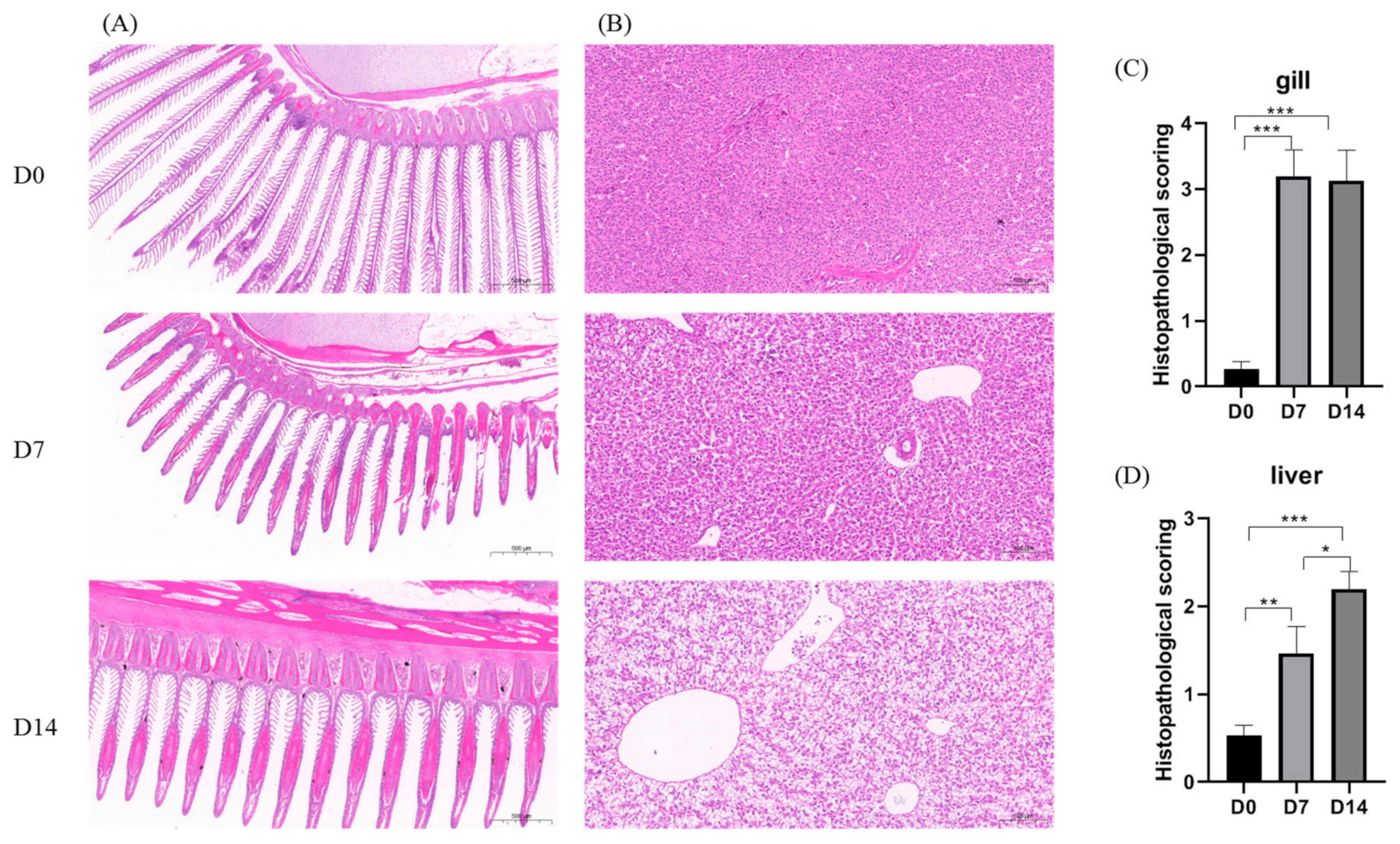
In our study, the HE staining results of the gills and liver slices of mandarin fish after artificial feed domestication were visible in Figure 2, where Figure 2A shows the gill staining pattern from top to bottom. The figure shows that in the initial group of mandarin fish undergoing artificial feed domestication, the gill filaments were straight, and the attached gill plates were arranged neatly and tightly, with a slender shape. The respiratory epithelium of the gill lobules is not thin, consisting only of a single layer of epithelial cells, and the structure of the inner column cells is clear. There are obvious blood sinuses between the gill plates, and no epithelial hyperplasia or inflammatory cell infiltration is observed. After 7 and 14 days of domestication, the gill filaments were arranged neatly, but there was a phenomenon of shortening and thickening of the gill filaments, as well as fusion of secondary gill filaments. In all experimental groups (including D0, D7, and D14 groups), the liver showed normal histological structures (Figure 2B). The morphology of liver cells is regular, with clear boundaries and a polygonal shape. The nucleus of liver cells is round or oval, located in the center of the cell, and the nucleolus is clearly visible. However, hepatic vacuolation were observed in the D7 and D14 groups.
To quantitatively assess the damage, we employed a blinded semi-quantitative scoring system. The results demonstrated that compared to the D0 group, the gill filament morphological change scores increased significantly in both the D7 and D14 groups, although no significant difference was observed between the D7 and D14 groups themselves. For the liver injury assessment, significant differences were found between each pair of the three groups (D0, D7, and D14), and the hepatic injury score increased progressively with the duration of feed training.

3.2. Cell Apoptosis of Gill and Liver During Domestication

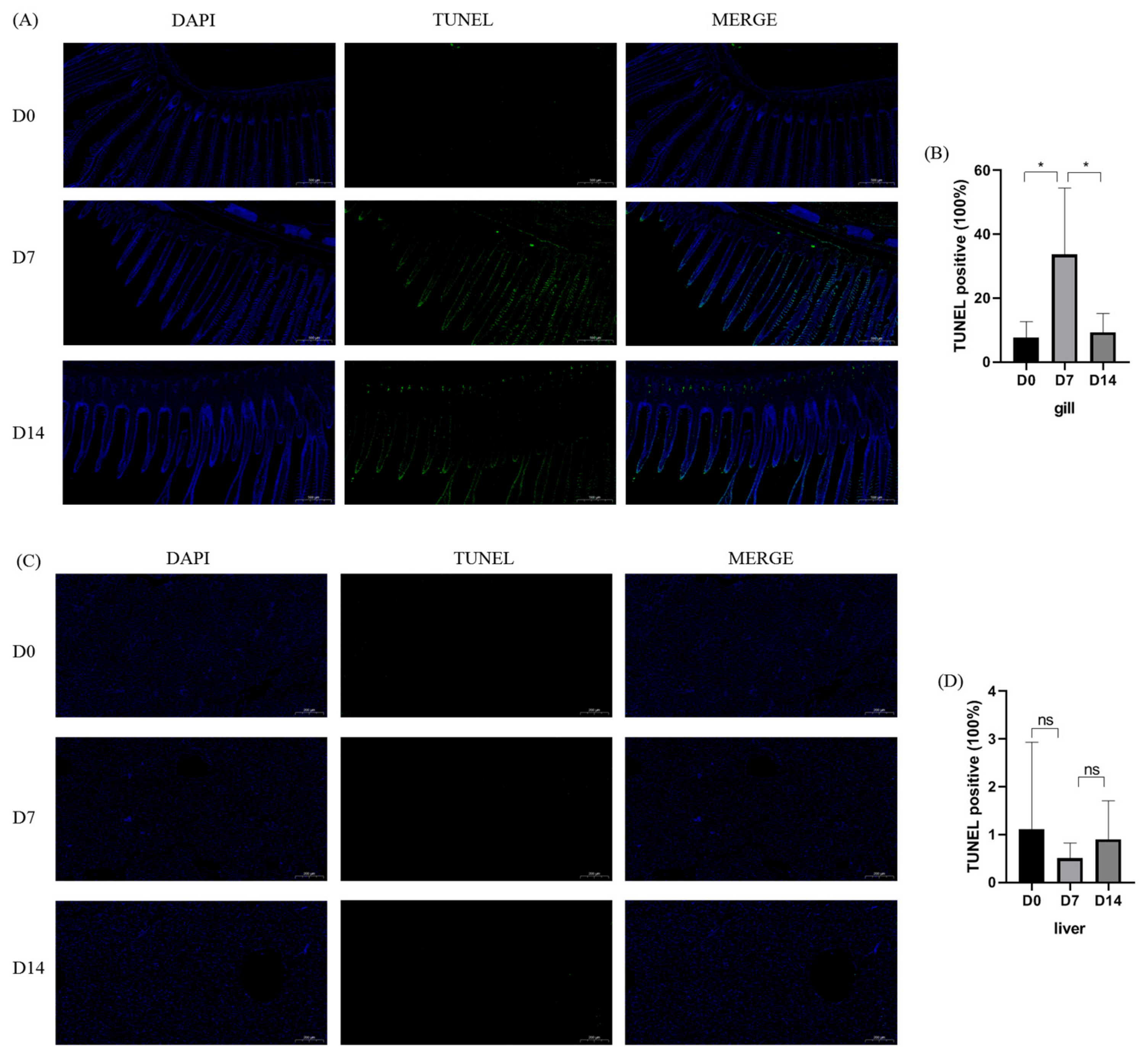
TUNEL staining was performed on the gills and liver, and after counting the positive cells, we plotted a bar chart. The TUNEL stained section of the gills are presented on Figure 3A. After comparison, we found a significant difference between D0 and D7, a significant difference between D7 and D14, but no significant difference between D0 and D14 (Figure 3B). Figure 3C shows the TUNEL stained sections of the liver. After statistical analysis, we found that the apoptosis rate of liver cells did not change at different artificial feeding acclimation times (Figure 3D).

3.3. Cell Apoptosis-Related Gene Expression Analysis

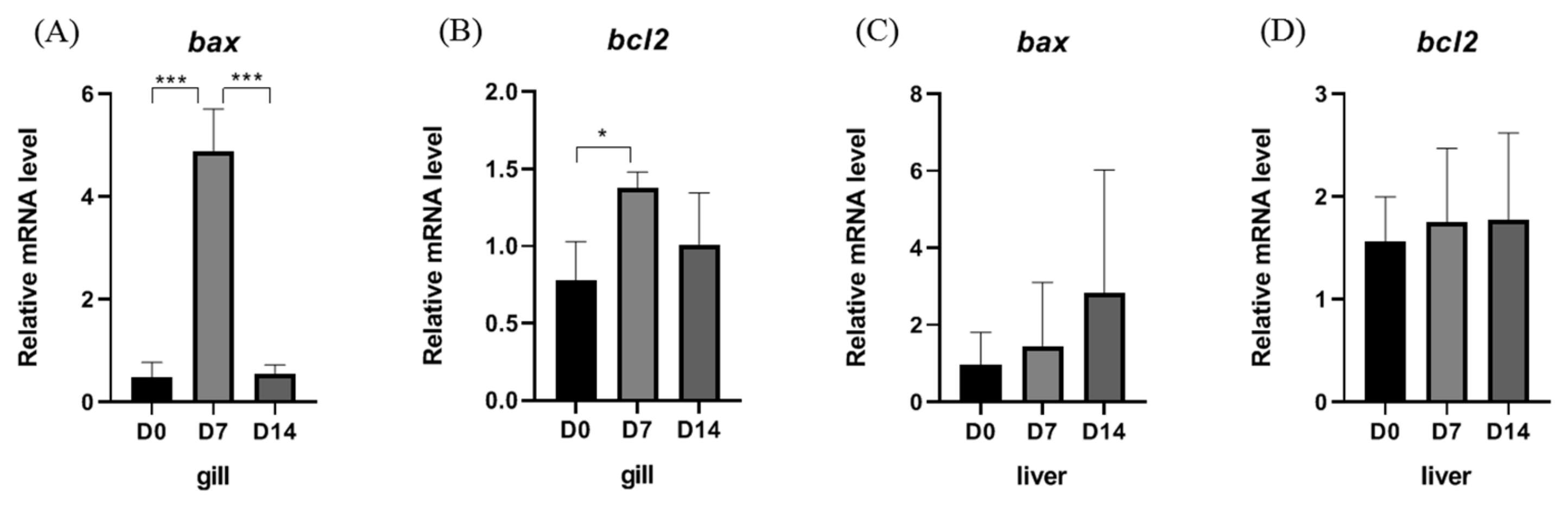
We conducted qPCR experiments on the expression of Bax and BCL2 genes in the liver and gills. In Figure 4, we found that after 7 days of acclimation in the gills, both Bax and BCL2 genes showed significant increases compared to 0 days of acclimation. After 14 days of acclimation, the expression of Bax and BCL2 genes showed a decreasing trend, but Bax had already shown significant differences compared with D0. In the liver, there was no significant difference in the expression of Bax and BCL2 genes between day 0, 7, and 14 of taming, but the overall expression trend gradually increased with the change in taming time.

3.4. Transcriptome Analysis

3.4.1. Identification of Differentially Expressed Genes (DEGs)

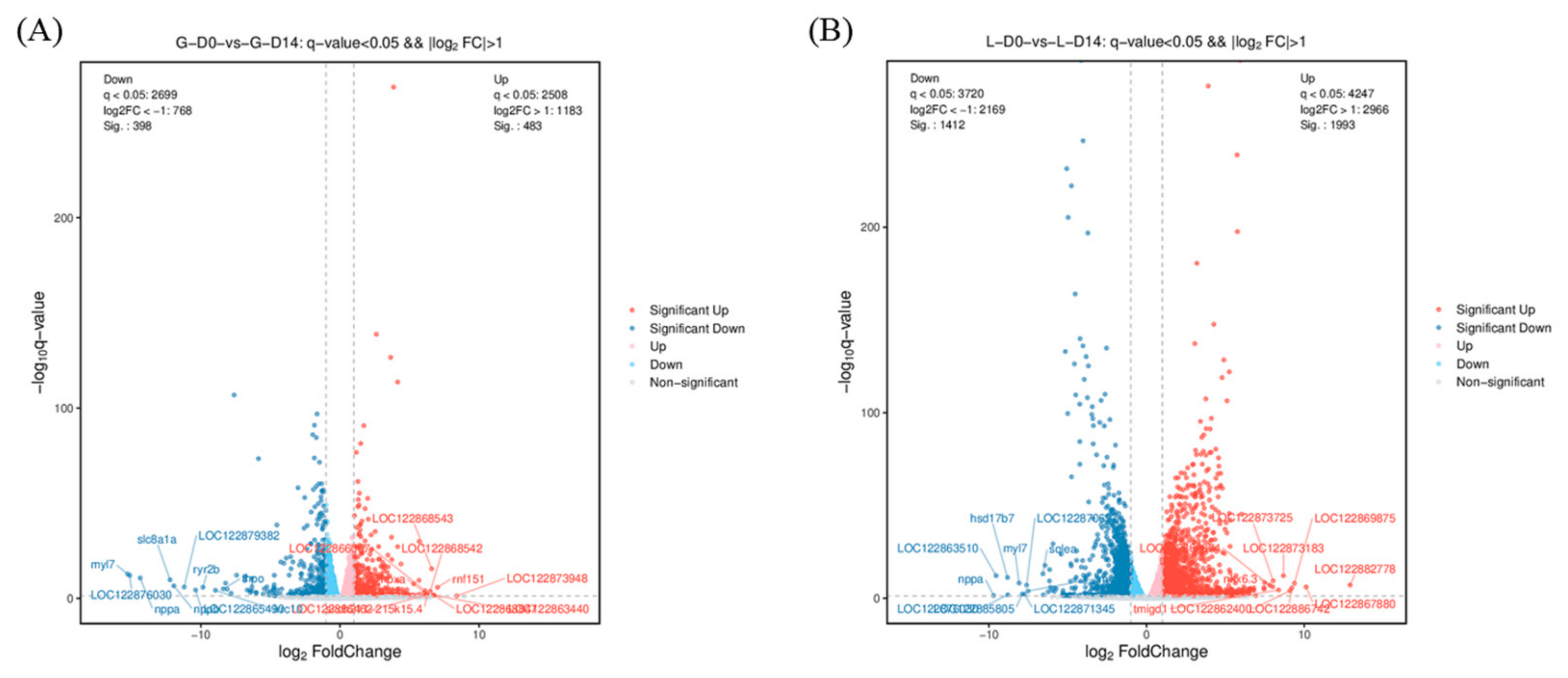
In this study, reference-based transcriptome sequencing of 12 samples was performed, yielding a total of 79.57 Gb of Clean Data. The valid data volume per sample ranged from 6.17 to 7.06 Gb, with Q30 bases distributed between 93.36% and 94.07%, and an average GC content of 47.93%. Comparative analysis between the D0 and D14 groups in gill tis-sues identified 881 differentially expressed genes (DEGs), of which 483 were up-regulated and 398 were down-regulated, as illustrated in Figure 5. In liver tissues, comparison of the D0 and D14 groups revealed 3405 DEGs, including 1993 up-regulated and 1412 down-regulated genes, as shown in Figure 5B.

3.4.2. KEGG Pathway Enrichment Analysis

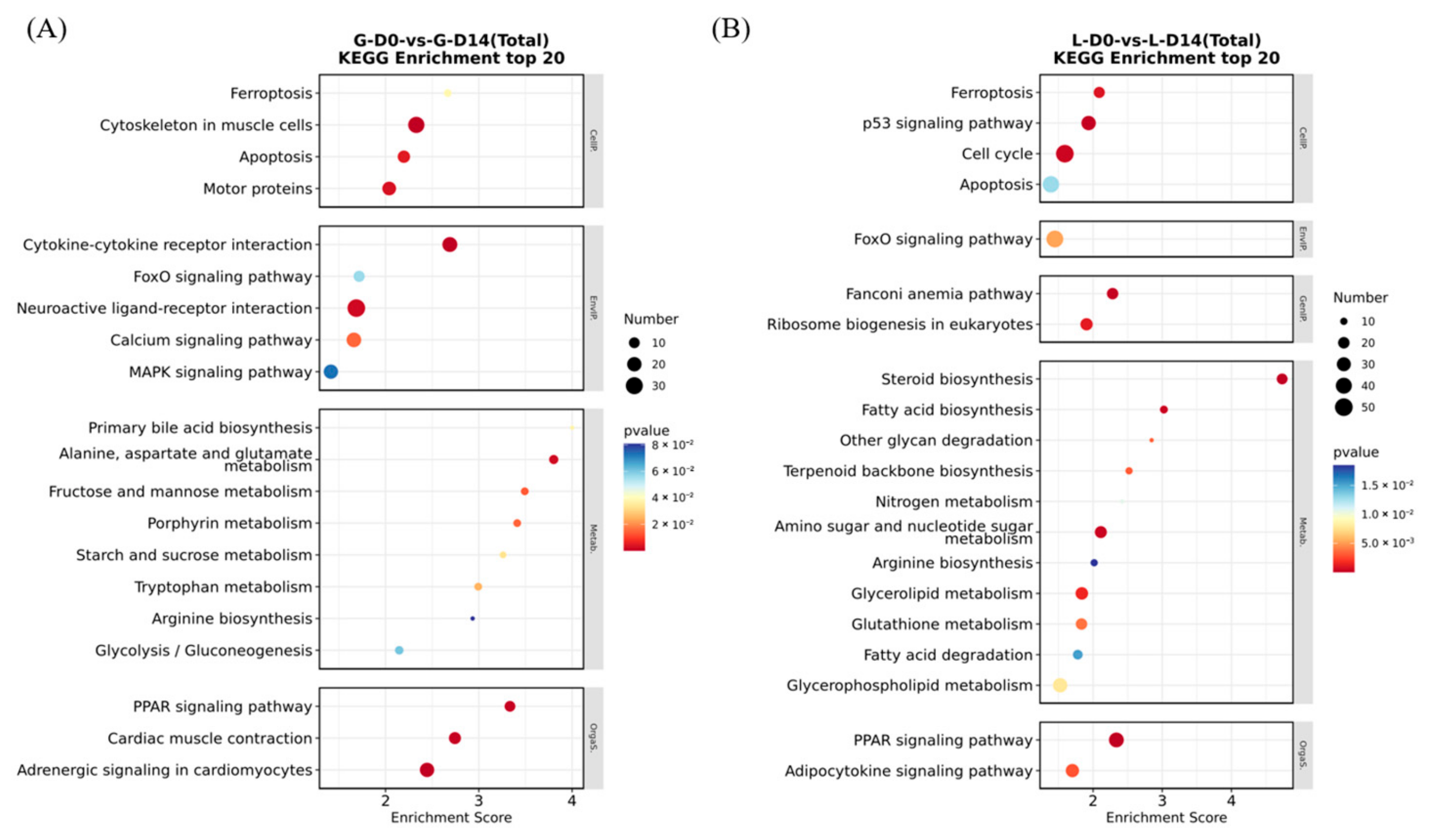
To further identify the most significantly enriched pathways in mandarin fish (Siniperca chuatsi) before and after the artificial diet acclimation process, KEGG pathway enrichment analysis was performed on all differentially expressed genes (DEGs). The top 20 significantly enriched pathways (p < 0.05) from the D0 vs. D14 comparison in both the liver and gill tissues were selected for detailed examination. In the liver, the most prominently enriched pathway was the steroid biosynthesis pathway (Figure 6A), while in the gill, the most significant enrichment was observed in alanine, aspartate, and glutamate metabolism (Figure 6B). Additionally, as illustrated in Figure 6, the apoptosis pathway was identified among the top 20 enriched pathways in both liver and gill tissues. Overall, the enriched pathways in liver and gill were primarily associated with metabolic processes, cellular oxidative stress balance, aging, and apoptosis.

3.4.3. GO Pathway Enrichment Analysis

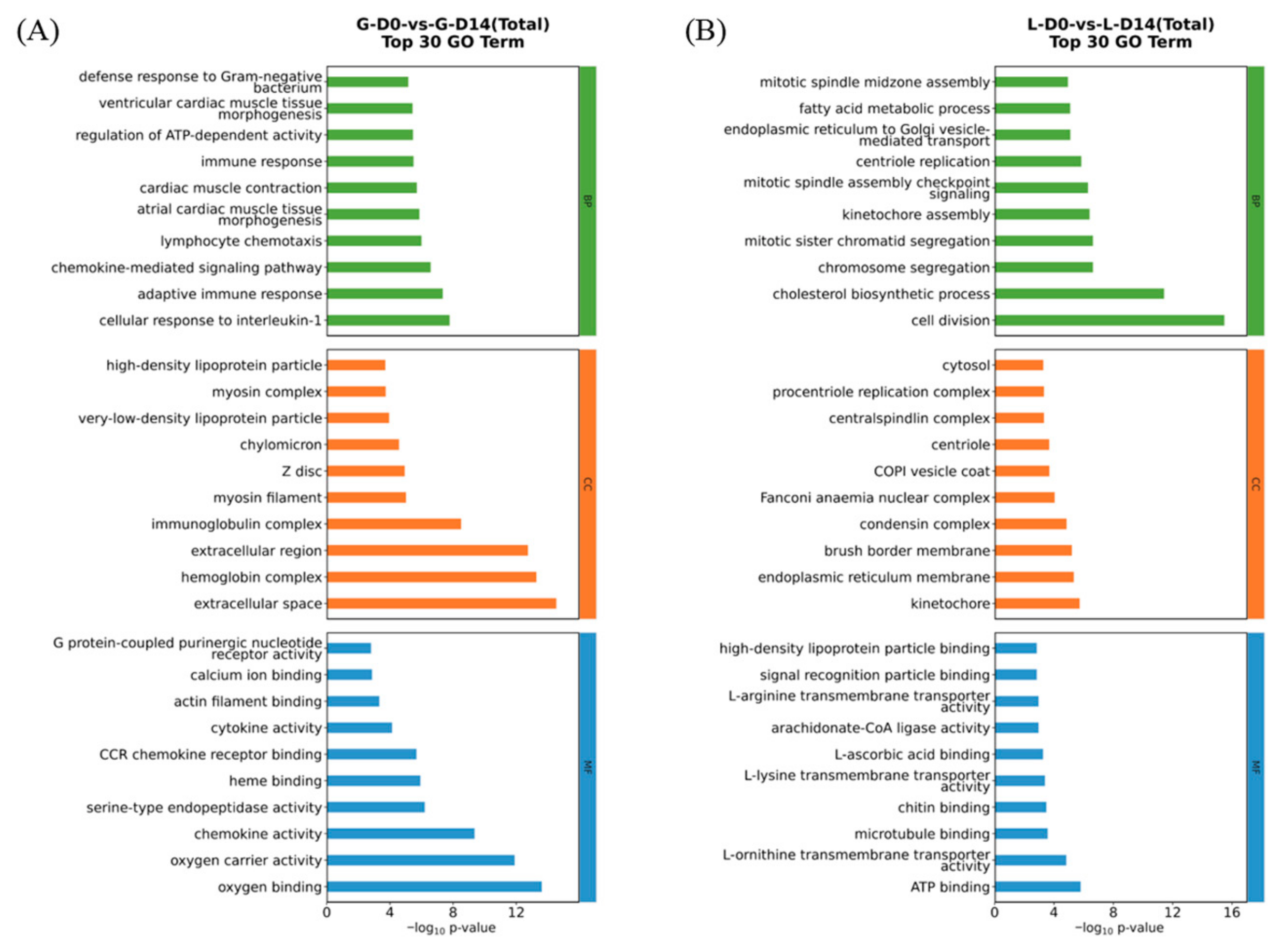
To gain insights into the functional implications of the differentially expressed genes (DEGs), we performed Gene Ontology (GO) enrichment analysis. The DEGs were significantly enriched (corrected p-value < 0.05) in the top 30 significantly enriched GO terms, spanning biological processes (BP), molecular functions (MF), and cellular components (CC) as shown in Figure 7. Within the BP category, the most significantly enriched terms were predominantly associated with cellular response to interleukin-1 in gill. While the most significantly enriched terms were predominantly associated with cell division in liver. The enrichment analysis of MF revealed that oxygen binding and ATP binding were most significant in the gills and liver, respectively. Regarding CC, the DEGs were primarily localized to extracellular space and kinetochore in gill and liver, respectively.

4. Discussion

In recent years, extensive progress has been made in the domestication of mandarin fish using artificial feed, and significant success has been achieved in both domestication techniques and feed nutrition research [22,23,24,25]. In our research, while precise consumption quantities were not measured, the standardized feeding protocol (offering feed to apparent satiation at fixed times) aimed to ensure ad libitum access. In this study, we conducted a multidimensional evaluation of the response of liver and gill tissues in mandarin fish before and after artificial feed domestication through histological, apoptosis detection, gene expression, and transcriptomic analysis.
Gills are important organs in aquatic organisms responsible for respiration, regulating osmotic pressure, excreting nitrogen-containing waste, and maintaining acid-base balance. Fish gills are often used as biomarkers for stress responses because they are the first organ to respond in adverse environments [26]. The HE staining results of the gills showed that the D0 group had upright gill filaments, neatly arranged and tightly attached gill plates, and slender shapes, but the D7 and D14 groups had shortened and thickened gill filaments, as well as fusion of secondary gill filaments. Due to direct exposure to the external water environment, gills are more sensitive to environmental factors compared to other organs [27]. Based on our previous research, the changes in gill tissue during the feeding process in this study may be mainly due to environmental changes caused by food changes during the feeding process of the mandarin fish. The early response of the gills may serve as the “first line of defense” for the organism to cope with changes in the environment, where feed acts as a new environmental factor. Feed residues and feces can easily lead to eutrophication of the water body, which in turn causes oxidative stress in the mandarin fish, resulting in changes in its gills. Adding different amounts of bamboo flour or rice straw to the feed can also lead to the bending and proliferation of secondary gills in mandarin fish, as well as an increase in the volume of interlamellar cell mass [28].
The liver is a vital organ in fish, central to metabolic, secretory, and detoxification processes [29]. H&E staining provides a direct visualization of hepatocellular structural integrity, vacuolization indicates metabolic dysfunction [30]. Our investigation identified enhanced hepatic vacuolation in mandarin fish after 7 and 14 days of feed training, corroborating previous findings by Wei et al. [31]. This result coincided with transcriptomic alterations in metabolic pathways from KEGG enrichment analysis, suggesting a potential link between vacuolation and disturbed lipid metabolism. Previous studies indicate that artificial diets may promote hepatic de novo lipogenesis [32] and inhibit lipid secretion [33], resulting in ectopic lipid deposition—a phenomenon also documented in other carnivorous species like the largemouth bass (Micropterus salmoides) [34] and yellowtail kingfish (Seriola lalandi) [35].
In our study, the TUNEL stained section of the gills showed a significant difference between D0 and D7, a significant difference between D7 and D14, but no significant difference between D0 and D14. The qPCR analysis of apoptosis-related genes revealed in the gill tissue, the expression of both Bax and Bcl2 was significantly upregulated at D7 compared to both the D0 and D14 groups. The TUNEL experiment results showed that, the apoptosis rate of liver cells did not change at different artificial feeding acclimation times, which is consistent with the qPCR results of apoptosis related genes. Consequently, we hypothesize that during the initial phase of acclimation, the gill exhibits a more rapid and pronounced response to dietary alteration than the liver, undergoing a transient increase in programmed cell death. However, this response appears to be reversible, as apoptotic activity returned to a level comparable to the D0 baseline by a later stage of adaptation. In addition, ROS, as a key signaling molecule, can induce cell apoptosis through endoplasmic reticulum stress and mitochondrial pathways [36].
The gill is the primary physiological barrier in direct contact with the external environment. The sudden change in feeding mode likely first and most directly affects its mechanical and chemical sensing, potentially triggering initial stress related to feeding behavior and gas exchange. Therefore, the apoptotic response in the gill occurs earlier (D7), possibly as a rapid adjustment or a means to clean damaged cells in response to an acute external stimulus. The liver, as the central organ for metabolism and detoxification, responds more as a secondary effect to changes in the internal biochemical milieu (e.g., nutrient composition, metabolic intermediates). Its response, though delayed, is more systemic, manifesting as large-scale gene expression reprogramming (a high number of DEGs) to adjust metabolic pathways and cope with oxidative stress, without necessarily triggering immediate large-scale apoptosis. These two different response modes precisely reflect the coordination and division of labor of different organs in the body when responding to food changes.
In order to reveal the molecular mechanism changes during the domestication process of mandarin fish, this study conducted transcriptome sequencing analysis on the liver and gills of mandarin fish (D14) after domestication, and identified differentially expressed genes. The identification results showed that 3405 and 881 genes responded in the liver and gills, respectively. The KEGG results showed that in the liver, the most significantly enriched pathway was the steroid biosynthesis pathway. This may be the result of changes in the source and composition of lipids in feed, leading to reprogramming of liver lipid metabolism. Combined with the hepatic vacuolization we found in HE staining, it may be related to lipid deposition. While in the gills, the metabolism of alanine, aspartate, and glutamate was most significantly enriched. This may be due to changes in protein/amino acid sources caused by changes in feed. As stress and osmoregulatory organs, the gills need to adjust amino acid metabolism to cope with changes in osmotic pressure or produce energy and neurotransmitters. Overall, the enrichment pathways in the liver and gills are mainly related to metabolic processes, cellular oxidative stress balance, aging, and apoptosis. Similar results were also found in the transcriptome analysis of Shan’s exploration of the dietary changes in Mandarin fish [9]. The GO enrichment analysis results showed that the most significantly enriched terms in the BP category were mainly related to the cellular response of interleukin-1 in the gills. The most significantly enriched terms are mainly related to cell division in the liver. The enrichment analysis of MF showed that oxygen binding and ATP binding were most significant in the gills and liver, respectively. For CC, DEGs are mainly located in the extracellular space and kinetochores of gills and liver, respectively.
This study is a time series observation that establishes associations, but the causal mechanism still needs to be validated through more controlled experiments such as in vitro studies, inhibitor interventions, etc. By studying the physiological changes during the weaning process, we can provide a scientific basis for developing effective compound feed, thereby promoting changes in aquaculture practices towards reducing or replacing the use of live bait. In the future, we will screen key candidate genes for functional validation based on transcriptome data; Explore whether optimizing feed formulas (such as adding antioxidants and hepatoprotective and choleretic substances) can alleviate stress responses in gills and liver.

5. Conclusions

This study investigated the physiological adaptation of mandarin fish during a controlled weaning process, which involved a gradual transition from an initial diet of live prey to a complete artificial feed formulation. We focused on the gills and the liver, two key organs, at different stages of this dietary transition. The results demonstrate that switching to artificial feed induces significant morphological remodeling in the gills, specifically manifested as shortening and fusion of secondary lamellae accompanied by increased early-stage apoptosis. In contrast, the liver primarily undergoes metabolic adjustments, characterized by the reprogramming of metabolism-related genes and vacuolation. Understanding these responses helps us better manage the health of farmed mandarin fish.

Author Contributions

Methodology, M.X.; software, Q.D.; formal analysis, Z.Z.; data curation, Q.D. and Z.Z.; writing—original draft preparation, Z.Z.; funding acquisition, Z.X. and S.L. All authors have read and agreed to the published version of the manuscript.

Funding

This research was funded by Changsha Natural Science Foundation for Changsha Science and Technology Bureau, grant number kq2402140, the fund for China Agriculture Research System of MOF and MARA (CARS-46), and supported by the earmarked fund for HARS (HARS-07).

Institutional Review Board Statement

All animal procedures were strictly carried out in accordance with the relevant guidelines (license No. HNFRI20250509) and were approved by the Animal Welfare and Ethics Committee of Hunan Fisheries Research Institute and Aquatic Products Seed Stock Station (program approval on 22 March 2025).

Data Availability Statement

The original contributions presented in this study are included in the article. Further inquiries can be directed to the corresponding authors.

Conflicts of Interest

The authors declare no conflicts of interest.

References

  1. Pradeepkiran, J.A. Aquaculture Role in Global Food Security with Nutritional Value: A Review. Transl. Anim. Sci. 2019, 3, 903–910. [Google Scholar] [CrossRef] [PubMed]
  2. Li, L.; Tang, S.-L.; He, S.; Liang, X.-F. Transcriptome Analysis Provides an Overview of Genes Involved in the Peculiar Food Preference at First-Feeding Stage in Mandarin Fish (Siniperca chuatsi). Fishes 2022, 8, 17. [Google Scholar] [CrossRef]
  3. Guo, W.; Yin, H.; Mo, A.; Zhai, Y.; Yi, L.; Yang, H.; Yuan, Y. Effects of Dietary Protein Levels on Growth, Digestion and Metabolism of Siniperca chuatsi. J. Huazhong Agric. Univ. 2023, 42, 215–224. [Google Scholar] [CrossRef]
  4. Tao, J.-J.; Gui, J.-F.; Zhang, Q.-Y. Isolation and Characterization of a Rhabdovirus from Co-Infection of Two Viruses in Mandarin Fish. Aquaculture 2007, 262, 1–9. [Google Scholar] [CrossRef]
  5. Zhang, W.; Liu, M.; Sadovy De Mitcheson, Y.; Cao, L.; Leadbitter, D.; Newton, R.; Little, D.C.; Li, S.; Yang, Y.; Chen, X.; et al. Fishing for Feed in China: Facts, Impacts and Implications. Fish Fish. 2020, 21, 47–62. [Google Scholar] [CrossRef]
  6. Li, Y.; Li, J.; Lu, J.; Li, Z.; Shi, S.; Liu, Z. Effects of Live and Artificial Feeds on the Growth, Digestion, Immunity and Intestinal Microflora of Mandarin Fish Hybrid (Siniperca chuatsi ♀ × Siniperca scherzeri ♂). Aquacult. Res. 2017, 48, 4479–4485. [Google Scholar] [CrossRef]
  7. Deng, Y.; Zhou, F.; Ruan, Y.; Ma, B.; Ding, X.; Yue, X.; Ma, W.; Yin, X. Feed Types Driven Differentiation of Microbial Community and Functionality in Marine Integrated Multitrophic Aquaculture System. Water 2019, 12, 95. [Google Scholar] [CrossRef]
  8. He, S.; Liang, X.-F.; Sun, J.; Li, L.; Yu, Y.; Huang, W.; Qu, C.-M.; Cao, L.; Bai, X.-L.; Tao, Y.-X. Insights into Food Preference in Hybrid F1 of Siniperca chuatsi (♀) × Siniperca scherzeri (♂) Mandarin Fish through Transcriptome Analysis. BMC Genom. 2013, 14, 601. [Google Scholar] [CrossRef]
  9. He, S.; You, J.-J.; Liang, X.-F.; Zhang, Z.-L.; Zhang, Y.-P. Transcriptome Sequencing and Metabolome Analysis of Food Habits Domestication from Live Prey Fish to Artificial Diets in Mandarin Fish (Siniperca chuatsi). BMC Genom. 2021, 22, 129. [Google Scholar] [CrossRef]
  10. Liu, S.; Xu, P.; Liu, X.; Guo, D.; Chen, X.; Bi, S.; Lai, H.; Wang, G.; Zhao, X.; Su, Y.; et al. Production of Neo-male Mandarin Fish Siniperca chuatsi by Masculinization with Orally Administered 17α-Methyltestosterone. Aquaculture 2021, 530, 735904. [Google Scholar] [CrossRef]
  11. Zhao, H.; Fu, Y.; Zheng, X.; Sun, X.; Shen, J.; Fang, Z. Gut Microbiota Mediates the Improved Growth, Flesh Quality and Intestinal Health of Largemouth Bass (Micropterus salmoides) Fed Defatted Hermetia illucens Larvae Meal. Appl. Food Res. 2025, 5, 101456. [Google Scholar] [CrossRef]
  12. Ren, X.; Huang, D.; Wu, Y.B.; Jiang, D.L.; Li, P.; Chen, J.M.; Wang, Y. Gamma Ray Irradiation Improves Feather Meal as a Fish Meal Alternate in Largemouth Bass Micropterus salmoides Diet. Anim. Feed Sci. Technol. 2020, 269, 114647. [Google Scholar] [CrossRef]
  13. Song, H.; Li, Z.; Fu, G.; Cai, W.; Huang, W.; Zhou, M.; Li, B.; Lu, B.; Liu, H.; Tan, B.; et al. Effects of Different Lactobacillus pentosus Feeding Strategies on the Growth, Antioxidant Capacity, and Intestinal Health of Pearl Gentian Grouper (♀ Epinephelus fuscoguttatus × ♂ Epinephelus lanceolatus) Fed with Oxidized Fish Oil Diet. Aquac. Rep. 2025, 45, 103180. [Google Scholar] [CrossRef]
  14. Ye, G.; Dong, X.; Yang, Q.; Chi, S.; Liu, H.; Zhang, H.; Tan, B.; Zhang, S. A Formulated Diet Improved Digestive Capacity, Immune Function and Intestinal Microbiota Structure of Juvenile Hybrid Grouper (Epinephelus fuscoguttatus ♀ × Epinephelus lanceolatus ♂) When Compared with Chilled Trash Fish. Aquaculture 2020, 523, 735230. [Google Scholar] [CrossRef]
  15. Fang, W.; Leng, X.; Yun, B.; Wang, L.; Qian, X. Artificial Diets Affect Glucose and Lipid Metabolism, Antioxidant Capacity, and Inflammatory Response in the Muscle of Mandarin Fish (Siniperca chuatsi). Front. Mar. Sci. 2024, 11, 1445902. [Google Scholar] [CrossRef]
  16. Zhang, Y.; Liang, X.; He, S.; Wang, J.; Li, L.; Zhang, Z.; Li, J.; Chen, X.; Li, L.; Alam, M.S. Metabolic Responses of Chinese Perch (Siniperca chuatsi) to Different Levels of Dietary Carbohydrate. Fish Physiol. Biochem. 2021, 47, 1449–1465. [Google Scholar] [CrossRef]
  17. Mai, Q.; Jin, Y.; Chen, Y.; Dong, H.; Wu, Y.; Sun, D.; Liu, W.; Yu, Y.; Wei, X.; Yang, Y.; et al. Assessing the Effects of Dietary Live Prey versus an Artificial Compound Feed on Growth Performance, Immune Response, and Intestinal Microflora of Largemouth Bass Micropterus salmoides. Aquacult. Int. 2023, 31, 1213–1230. [Google Scholar] [CrossRef]
  18. Zhang, Z.; Yuan, X.; Wu, H.; Gao, J.; Wu, J.; Xiong, Z.; Feng, Z.; Xie, M.; Li, S.; Xie, Z.; et al. The Effect of Short-Term Artificial Feed Domestication on the Expression of Oxidative-Stress-Related Genes and Antioxidant Capacity in the Liver and Gill Tissues of Mandarin Fish (Siniperca chuatsi). Genes 2024, 15, 487. [Google Scholar] [CrossRef]
  19. Fuchs, Y.; Steller, H. Programmed Cell Death in Animal Development and Disease. Cell 2011, 147, 742–758. [Google Scholar] [CrossRef]
  20. Dejean, L.M.; Martinez-Caballero, S.; Manon, S.; Kinnally, K.W. Regulation of the Mitochondrial Apoptosis-Induced Channel, MAC, by BCL-2 Family Proteins. Biochim. Biophys. Acta (BBA)—Mol. Basis Dis. 2006, 1762, 191–201. [Google Scholar] [CrossRef] [PubMed]
  21. Cory, S.; Adams, J.M. The Bcl2 Family: Regulators of the Cellular Life-or-Death Switch. Nat. Rev. Cancer 2002, 2, 647–656. [Google Scholar] [CrossRef]
  22. Li, H.; Zeng, Y.; Zheng, X.; Wang, G.; Tian, J.; Gong, W.; Xia, Y.; Zhang, K.; Li, Z.; Xie, W.; et al. Dietary Betaine Attenuates High-Carbohydrate-Diet-Induced Oxidative Stress, Endoplasmic Reticulum Stress, and Apoptosis in Mandarin Fish (Siniperca chuatsi). Antioxidants 2023, 12, 1860. [Google Scholar] [CrossRef]
  23. Xie, R.-P.; Liang, X.-F.; Peng, D.; Zhang, Q.-W.; Wu, D.-L.; Chen, J.-L.; Zeng, M. Dietary Supplementation of Pyridoxine Can Enhance the Growth Performance and Improve the Protein, Lipid Utilization Efficiency of Mandarin Fish (Siniperca chuatsi). Fish Physiol. Biochem. 2023, 49, 1063–1078. [Google Scholar] [CrossRef] [PubMed]
  24. Guan, W.-Z.; Qiu, G.-F.; Liu, F. Transcriptome Analysis of the Growth Performance of Hybrid Mandarin Fish after Food Conversion. PLoS ONE 2020, 15, e0240308. [Google Scholar] [CrossRef] [PubMed]
  25. Lu, H.-L.; Li, L.; Miao, Y.-L.; Liang, H.; Zou, J.-M.; You, J.-J.; Liang, X.-F.; He, S. Effects and Regulatory Pathway of Proopinmelanocortin on Feeding Habit Domestication in Mandarin Fish. Gene 2023, 878, 147581. [Google Scholar] [CrossRef] [PubMed]
  26. Benli, A.Ç.K.; Köksal, G.; Özkul, A. Sublethal Ammonia Exposure of Nile Tilapia (Oreochromis niloticus L.): Effects on Gill, Liver and Kidney Histology. Chemosphere 2008, 72, 1355–1358. [Google Scholar] [CrossRef]
  27. Xing, H.; Li, S.; Wang, Z.; Gao, X.; Xu, S.; Wang, X. Oxidative Stress Response and Histopathological Changes Due to Atrazine and Chlorpyrifos Exposure in Common Carp. Pestic. Biochem. Physiol. 2012, 103, 74–80. [Google Scholar] [CrossRef]
  28. Zhang, H.; Deng, Z.; Chen, S.; Xiong, X.; Zeng, W.; Chen, F.; Tan, H.; Chen, X.; Yang, C.; He, Y.; et al. Evaluation of the Application Effects of Siniperca chuatsi in Biofloc Systems: A Comparative Study on the Use of Bamboo Flour and Rice Straw as Carbon Sources. Microorganisms 2025, 13, 1631. [Google Scholar] [CrossRef]
  29. Cao, J.; Chen, J.; Wang, J.; Jia, R.; Xue, W.; Luo, Y.; Gan, X. Effects of Fluoride on Liver Apoptosis and Bcl-2, Bax Protein Expression in Freshwater Teleost, Cyprinus carpio. Chemosphere 2013, 91, 1203–1212. [Google Scholar] [CrossRef]
  30. Gissen, P.; Arias, I.M. Structural and Functional Hepatocyte Polarity and Liver Disease. J. Hepatol. 2015, 63, 1023–1037. [Google Scholar] [CrossRef]
  31. Fang, W.; Leng, X.; Yun, B.; Wang, L.; Qian, X. Effects of Artificial Diets on Lipid and Glucose Metabolism, Antioxidative Capacity, and Inflammation in the Liver of Mandarin Fish (Siniperca chuatsi). Front. Mar. Sci. 2024, 11, 1474836. [Google Scholar] [CrossRef]
  32. Pang, Y.; Xu, X.; Xiang, X.; Li, Y.; Zhao, Z.; Li, J.; Gao, S.; Liu, Q.; Mai, K.; Ai, Q. High Fat Activates O-GlcNAcylation and Affects AMPK/ACC Pathway to Regulate Lipid Metabolism. Nutrients 2021, 13, 1740. [Google Scholar] [CrossRef]
  33. Cao, X.-F.; Dai, Y.-J.; Liu, M.-Y.; Yuan, X.-Y.; Wang, C.-C.; Huang, Y.-Y.; Liu, W.-B.; Jiang, G.-Z. High-Fat Diet Induces Aberrant Hepatic Lipid Secretion in Blunt Snout Bream by Activating Endoplasmic Reticulum Stress-Associated IRE1/XBP1 Pathway. Biochim. Biophys. Acta (BBA)—Mol. Cell Biol. Lipids 2019, 1864, 213–223. [Google Scholar] [CrossRef]
  34. Liu, Z.; Chen, N.; Wang, M.; Lian, X.; Yan, C.; Yin, J. Suitable Dietary Starch Source and Supplementation Level for Largemouth Bass (Micropterus salmoides). J. Fish. Sci. China 2017, 24, 317. [Google Scholar] [CrossRef]
  35. Booth, M.A.; Moses, M.D.; Allan, G.L. Utilisation of Carbohydrate by Yellowtail Kingfish Seriola lalandi. Aquaculture 2013, 376–379, 151–161. [Google Scholar] [CrossRef]
  36. Feng, L.; Li, W.; Liu, Y.; Jiang, W.-D.; Kuang, S.-Y.; Wu, P.; Jiang, J.; Tang, L.; Tang, W.-N.; Zhang, Y.-A.; et al. Protective Role of Phenylalanine on the ROS-Induced Oxidative Damage, Apoptosis and Tight Junction Damage via Nrf2, TOR and NF-κB Signalling Molecules in the Gill of Fish. Fish Shellfish. Immunol. 2017, 60, 185–196. [Google Scholar] [CrossRef]
Figure 1. The process of domesticating mandarin fish with artificial feed. Note: Fishes 11 00049 i001, live baitfish; Fishes 11 00049 i002, formulated compound feed.
Fishes 11 00049 g001
Figure 2. Hematoxylin and Eosin (H&E) staining of gills (A) and liver (B) of domesticated mandarin fish (Siniperca chuatsi) fed with artificial feed for 0 days, 7 days, and 14 days. Semi-quantitative analysis of (C) gill filament’s morphological score and (D) hepatic injury score. Note: The data were quantified from at least three randomly selected fields per section. n = 3; * p < 0.05, ** p < 0.01, *** p < 0.001; Scale bar, (A) 500 μm, (B) 100 μm.
Fishes 11 00049 g002
Figure 3. TdT-mediated dUTP Nick-End Labeling (TUNEL) staining (A,C) and positive rate statistics (B,D) of gills (A,B) and liver (C,D) of artificially reared mandarin fish (Siniperca chuatsi) after 0 days, 7 days, and 14 days. Note: The data were quantified from at least six randomly selected fields per section; n = 6; * p < 0.05; Scale bar, 200 μm.
Fishes 11 00049 g003
Figure 4. The effect of domestication of artificial feed on the expression of apoptosis related genes. Bax, B-cell lymphoma 2; Bcl-2, Bcl-2 associated X protein. (A) the relative mRNA level of Bax in the gills; (B) the relative mRNA level of Bcl2 in the gills; (C) the relative mRNA level of Bax in the liver; (D) the relative mRNA level of Bcl2 in the liver. Note: n = 3, * p < 0.05, *** p < 0.001.
Fishes 11 00049 g004
Figure 5. The effect of artificial feed domestication for D14 on gill (A) and liver (B) gene expression. Note: n = 3.
Fishes 11 00049 g005
Figure 6. KEGG pathway analysis of gene expression in gills (A) and liver (B) after 14 days of domestication with artificial feed. Note: n = 3.
Fishes 11 00049 g006
Figure 7. GO pathway analysis of gene expression in gills (A) and liver (B) after 14 days of domestication with artificial feed. Note: n = 3; group green, biological processes (BP); group orange, cellular components (CC); group blue, molecular functions (MF).
Fishes 11 00049 g007
Table 1. The table shows the qPCR primers of Mandarin fish.
PrimerPrimer Sequences (5′–3′)Function
Rpl13F: CACAAGAAGGAGAAGGCTCGGGT
R: TTTGGCTCTCTTGGCACGGAT
Housekeeping gene
BaxF: TGGAACAAGGAGATCACCGC
R: TTTCAGCTAAAGGCGACCGT
Apoptosis-related gene
Bcl2F: TACATGTCGCTTCACTTCGCT
R: AACTGAGACAAGTCTGGCAGG
Apoptosis-related gene
Disclaimer/Publisher’s Note: The statements, opinions and data contained in all publications are solely those of the individual author(s) and contributor(s) and not of MDPI and/or the editor(s). MDPI and/or the editor(s) disclaim responsibility for any injury to people or property resulting from any ideas, methods, instructions or products referred to in the content.