Article

β,β-Dimethylacrylshikonin Alleviates Zebrafish (Danio rerio) Soyasaponin-Induced Enteritis by Maintaining Intestinal Homeostasis and Improving Intestinal Immunity and Metabolism


1
Pinglu Canal and Beibu Gulf Coastal Ecosystem Observation and Research Station of Guangxi, Guangxi Key Laboratory of Marine Environmental Disaster Processes and Ecological Protection Technology, College of Marine Sciences, Beibu Gulf University, Qinzhou 535011, China
2
Higher Institution Centre of Excellence (HICoE), Borneo Marine Research Institute, Universiti Malaysia Sabah, Kota Kinabalu, Sabah 89000, Malaysia
*
Authors to whom correspondence should be addressed.
These authors contributed equally to this work.
Fishes 2025, 10(11), 567; https://doi.org/10.3390/fishes10110567
Submission received: 9 October 2025 / Revised: 26 October 2025 / Accepted: 4 November 2025 / Published: 6 November 2025
(This article belongs to the Special Issue Genetic Breeding and Immunity of Aquatic Animals)

Abstract

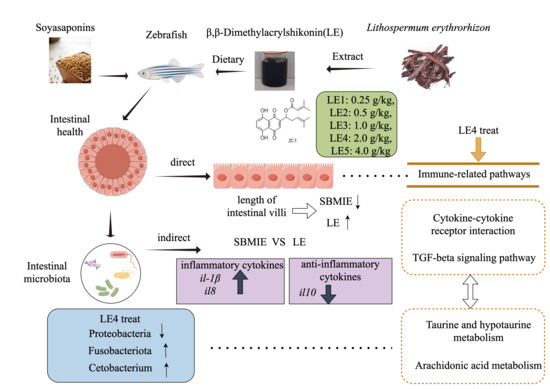
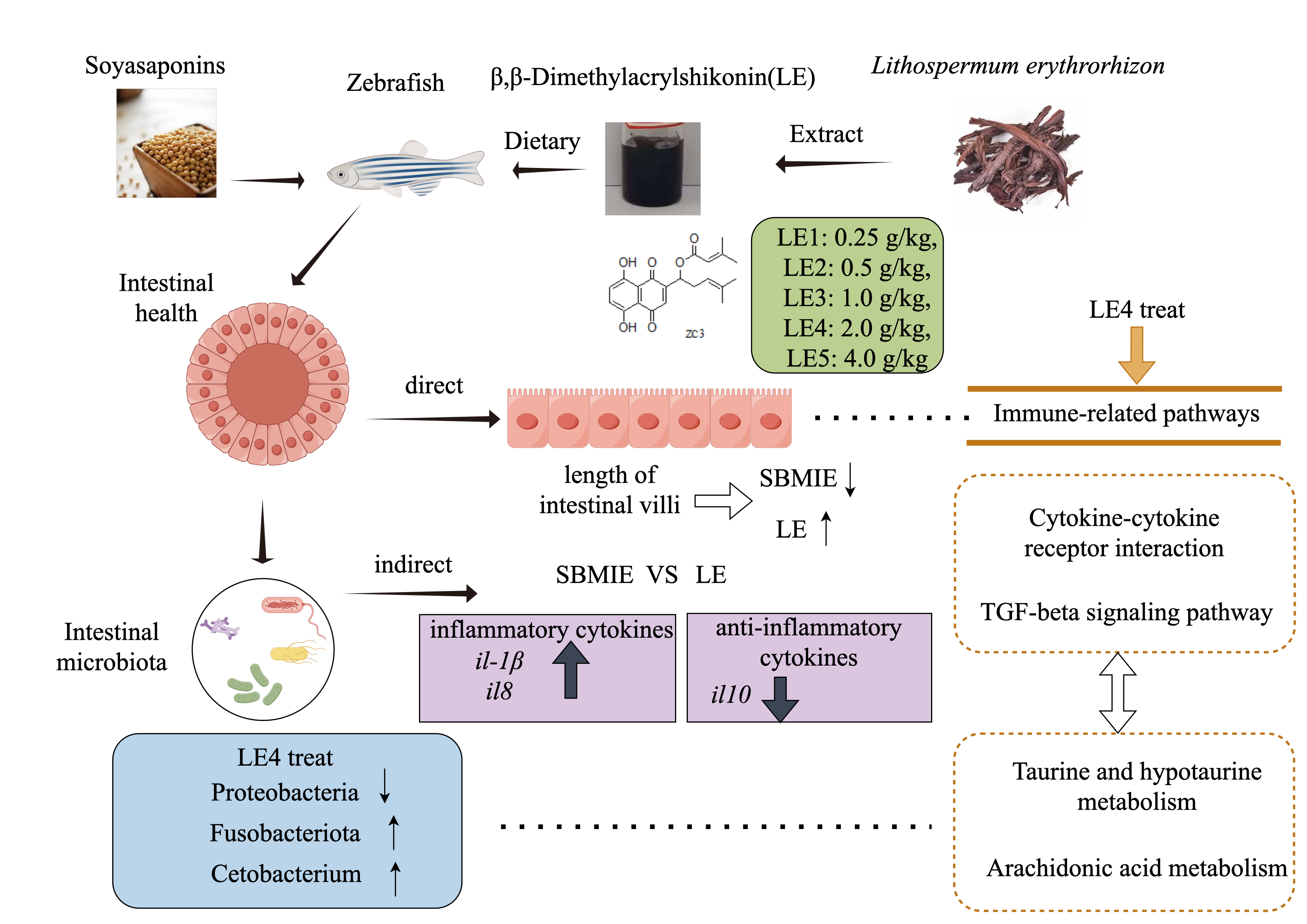
Soyasaponin intolerance is common in ancient fish species, making them susceptible to enteritis caused by dietary soybean meal. β,β-Dimethylacrylshikonin is the key active monomer found in Lithospermum erythrorhizon and is known for its multiple pharmacological activities. However, its effect on soybean meal-induced enteritis remains unknown. The administration of 2 g/kg of β,β-Dimethylacrylshikonin (LE) effectively alleviated 5 g/kg of soyasaponin-induced histopathological changes and dysfunction, as evidenced by the expression of inflammation-related genes (il-1β, il-8, and il10). Regarding the gut microbiota composition, LE therapy decreased the population of inflammation-linked Proteobacteria and concurrently elevated the proportion of Fusobacteriota, effectively sustaining the balance of the zebrafish gut microbiota. Moreover, at the genus level, LE treatment also increased the abundance of Cetobacterium. Transcriptional results suggested that LE intervention mainly regulated immune-related pathways, including cytokine–cytokine receptor interaction, the TGF-beta signaling pathway, taurine and hypotaurine metabolism, and arachidonic acid metabolism. In conclusion, 5 g/kg of soyasaponins caused intestinal injury in zebrafish, and β,β-Dimethylacrylshikonin can reduce intestinal inflammation by regulating the intestinal microbial balance and metabolic disorder, with the best effect at 2 g/kg.
Key Contribution: 1. β,β-Dimethylacrylshikonin can mitigate the soyasaponin-induced enteritis in zebrafish, and the optimal dosage is 2 g/kg. 2. β,β-Dimethylacrylshikonin can maintain intestinal health by regulating intestinal microbiota. 3. β,β-Dimethylacrylshikonin alleviates soyasaponin-induced enteritis by regulating immune-related pathways.

Graphical Abstract

1. Introduction

In recent years, aquaculture production has been steadily rising annually, and with the increase in fish meal costs and the limitation of fish meal supply, the cost of aquaculture has also increased rapidly [1]. Therefore, it is common to replace fish meal with plant proteins such as soybean meal in aquatic feed [2,3]. However, a significant quantity of studies have observed the negative effects of soybean meal on the gut health of both omnivorous and carnivorous fish (Atlantic salmon, rainbow trout, carp, and zebrafish) [4,5,6,7,8]. The specific manifestations are the proliferation or inflammation of the intestinal mucosa at the distal part of the intestine. These intestinal histopathological changes are commonly referred to as soybean meal-induced enteritis (SBMIE) [1,9].
Soyasaponins can bind to the membrane cholesterol of intestinal epithelial cells, thereby forming pores and changing membrane permeability, weakening intestinal barrier function [10,11]. It has also been reported that soybean saponin-induced enteritis leads to the up-regulation of inflammatory cytokines (il-1β and il8) and down-regulation of anti-inflammatory cytokines (il10) [1,12]. In addition, the heat-stabilizing factors, including saponins and phytic acid in the anti-nutritional factors (ANFs) of soybean meal, are the main limiting factors for using soybean products in aquafeed [13]. The extrusion process of soybeans can remove heat-labile ANFs but does not affect heat-stable ANFs. Studies have shown that heat-stable ANFs negatively affect fish growth performance and impair gut health [14]. Soyasaponins are heat-stable amphipathic glycosides present in soybean meal, and their amphiphilic properties allow them to bind to cholesterol and form non-absorbable complexes [15]. There is much evidence that soyasaponins in soybean meal induce SBMIE. Specifically, soyasaponin-induced fish SBMIE has been reported in zebrafish [1], Atlantic salmon [16], juvenile turbot [14], eel [10], and other aquatic animals. Currently, two main methods exist for preventing and treating SBMIE caused by ANFs. The first is adding important energy substances of the intestinal mucosa, including sodium butyrate and tributyrin, and the second is the addition of Chinese herbal extracts to the feed to replace antibiotics. Presently, the research on Chinese herbal medicine includes Lithospermum erythrorhizon, Sinomenine Hydrochloride, Hippophae rhamnoides, etc. [3,17,18].
β,β-Dimethylacrylshikonin, a naphthoquinone pigment, is the primary component of root extracts from the traditional medical herb Lithospermum erythrorhizon [19,20]. Previous reports have shown that β,β-Dimethylacrylshikonin has anti-inflammatory, anti-HIV, anti-platelet, and anti-bacterial effects [21,22,23,24]. Previous studies have suggested that β,β-Dimethylacrylshikonin has been used to improve inflammatory bowel disease (IBD) due to its anti-inflammatory effect. For example, β,β-Dimethylacrylshikonin may play a significant anti-inflammatory role in ameliorating dextran sulphate sodium-induced ulcerative colitis by inhibiting TNF-α production and NF-κB activation and blocking the amplified inflammatory response [25]. However, little is known about the effects of β,β-Dimethylacrylshikonin on the gut health of zebrafish under soyasaponin-induced inflammatory conditions.
It is well known that easy reproduction and high reproduction rates are the advantages of breeding zebrafish [26]. Fish such as zebrafish, trout, and cavefish have been widely used as model organisms to study trophic diseases in fish [27]. Zebrafish are increasingly recognized as potentially excellent model organisms for screening and demonstrating innovative and efficient addition processes [17]. Recently, zebrafish has emerged as a widely utilized model for investigating mucosal inflammatory mechanisms and drug development in the context of foodborne enteritis [28]. Numerous studies have investigated potential drugs as dietary supplements to mitigate foodborne enteritis using the adult zebrafish SBMIE model [3,17,28].
In this study, the relieving effect of β,β-Dimethylacrylshikonin on SBMIE was first observed, and the optimal concentration and mechanisms of action were further screened. The results will provide reference value for β,β-Dimethylacrylshikonin as an additive in foodborne feed for the prevention and treatment of SBMIE in fish.

2. Materials and Methods

2.1. Animal Ethics Statement

The Science and Technology Ethics Review Committee of Beibu Gulf University reviewed and approved this study—ethical review number: LW2024-0005.

2.2. Zebrafish, Diets, and Feeding Trial

In this study, wild-type AB zebrafish were purchased from the China Zebrafish Resource Center (CZRC, http://zfish.cn/ (accessed on 2 November 2023)). Briefly, zebrafish were reared according to the method of Li et al. [29]. The cultivation of zebrafish was conducted within the indoor circulating water system housed at the School of Food Science, Beibu Gulf University. The breeding water temperature was controlled at 28 ± 0.5 °C, the lighting cycle was 14 h of light and 10 h of darkness. Dissolved oxygen was kept at 5–8 mg/L, total ammonia < 0.02 mg/L, and other conditions referred to the standard of Westerfield [30].
β,β-Dimethylacrylshikonin (90%) was provided by Professor Yingrui Wu from the Biopharmaceutical Research Group of Beibu Gulf University. After crushing Lithospermum erythrorhizon, naphthoquinone components were extracted by the carbon dioxide supercritical method. The specific extraction conditions were as follows: the extraction temperature was 44.4 °C, the pressure was 29.5 mpa, the separation pressure was 8 mpa, the separation temperature was 47.5 °C, the extraction time was 156 min, and the extracts were obtained after carbon dioxide was recovered from the extraction solution. The extracts were further separated by silica gel column chromatography and gel column chromatography using petroleum ether–chloroform (XiLong Scientific, ShenZhen, China) and petroleum ether–ethyl acetate (XiLong Scientific, ShenZhen, China) as solvent systems, and the extracts were then separated and purified. After this procedure, β,β-Dimethylacrylshikonin was obtained. The extraction process of soyasaponins was described as follows: the extruded soybean meal (COFCO OILS (Qinzhou) Co., Ltd., Qinzhou, China) was extracted by heat reflux with ethanol (XiLong Scientific, ShenZhen, China), the extraction liquid was filtered, and the solvent was recovered. After the solvent was recovered, the extraction liquid was diluted with water. Diluents were adsorbed using a D101 macroporous resin (Shanghai Angelde Biotechnology Co., Ltd., Shanghai, China), washed with water, eluted with alcohol, and, after solvent recovery, lyophilized.
Referring to the method of Hedrera et al. [1], with slight modifications, the model of the diet inducing SBMIE in zebrafish was formulated, which can be explicitly described as follows: FM was used as a negative control, and a commercial fish feed was used (Penison, Zhangzhou City, China), which was a pure fish meal diet without any soybean meal. SBM was used as a positive control, supplemented with 5 g/Kg of soyasaponins (90% purity) (COFCO OILS (Qinzhou) Co., Ltd., Qinzhou, China) based on commercial fish feed. To examine the modulating effect of β,β-Dimethylacrylshikonin as an effective additive, the positive control (SBM diet) in the dietary formulation was supplemented with 0.25 g/kg (LE1), 0.5 g/kg (LE2), 1 g/kg (LE3), 2 g/kg (LE4), and 4 g/kg (LE5), respectively, of β,β-Dimethylacrylshikonin (Table 1).
Feeding trials were performed using a previously published model of inducing SBMIE in zebrafish adults with simple modifications [1]. To summarize, 630 3-month-old wild-type zebrafish (initial weight 0.210 ± 0.006 g) were fed an FM diet for 1 week in the zebrafish indoor culture system. Then, the 630 zebrafish were divided into 7 groups. Each group had 3 tanks, a total of 21 tanks were used, and 30 fish were fed in each tank. Then, they were fed the experimental diets for 2 weeks, including the FM (negative control), SBM (positive control), and drug groups (LE1, LE2, LE3, LE4, and LE5). During the feeding phase, food was provided at two daily intervals: 8:00 A.M. and 5:00 P.M.

2.3. Sampling

Upon completion of the experiment, measurements were taken for the zebrafish’s final body weights, weight gain rate (WGR), specific growth rate (SGR), feed efficiency rate (FER), and survival percentage (SR). The particular formulas used for calculating these indices were obtained by consulting by Lu et al. [31]. After the feeding trial, the hindgut was sampled after the fish were anesthetized using MS222 (Sigma-Aldrich (Shanghai) Trading Co., Ltd., Shanghai, China) [32]. Part I screening experiment: the hindgut tissue samples of each group (9 fish per group, 3 fish merged into one EP tube) were collected for RT-qPCR to screen for the optimal dosage of β,β-Dimethylacrylshikonin. To further determine the optimal dosage of β,β-Dimethylacrylshikonin, hindgut samples were collected from 3 fish per group and fixed with 4% paraformaldehyde for sectioning and staining with HE for the further study of histopathological changes. In the second part of the mechanism exploration experiment, to prepare for the RNA-seq and 16S rRNA studies, we again randomly selected 9 fish from each group. The hindgut tissues (3 fish of 9 fish) were aseptically cut and stored in RNA-free EP tubes, snap-frozen in liquid nitrogen, and stored at −80 °C for transcriptome sequencing. Sterile tubes were used to collect the hindgut contents (6 fish of 9 fish), which were then stored at −80 °C for subsequent 16S rRNA gene-sequencing analysis [33].

2.4. RT-qPCR and Tissue Sections Were Used to Screen for the Optimal Dosage

Based on previously reported methodologies, RNA was extracted from the seven group’s intestinal tissue (FM, SBM, LE1, LE2, LE3, LE4, and LE5) [1]. According to the previous report by Hedrera et al. [1], we designed primers for il-1β, il8, and il10 for RT-qPCR. Moreover, the β-actin gene was used as an internal reference (Table 2). RT-qPCR was performed as described by Mao et al. [34,35]. Each experiment was conducted three times.

2.5. Histological Analysis

Intestinal tissues taken from fish in the seven groups (FM, SBM, LE1, LE2, LE3, LE4, and LE5) were stained with HE according to the previously published method to observe their histopathological changes [17]. For H&E staining, 3 fish per group were used to embed the previously fixed hindgut tissue through a standardized paraffin embedding procedure. The embedded tissue was made into 5 μm sections, stained with hematoxylin and eosin (H&E) (Shanghai yuanye Bio-Technology Co., Ltd., Shanghai, China), and examined under a microscope (Olympus, Tokyo, Japan). Tissue sections were analyzed using Image J (6.0). For the semi-quantitative analysis of enteric tissue inflammation, we adopted the method outlined by Uran Carmona [36]. The heights of intestinal villi and widths of mucosal fold were scored on a scale from 1 to 5. Scores of 1–2 were considered to fall within normal bounds while scores ranging between 3 and 5 were considered to represent significant, well-established, and substantial enteritis, respectively.

2.6. 16S rRNA Sequencing Analysis of Gut Microbial Community

The bacterial composition of the gut contents of three zebrafish groups (FM, SBM, and LE4) was investigated by sequencing 16S rRNA gene amplicons on a NovaSeq platform (Illumina, San Diego, CA, USA) (n = 6), following previously established protocols. Briefly, the genomic DNA of the contents was extracted, and the V3–V4 region of the 16S rRNA gene was amplified. Libraries were constructed and sequenced on the Illumina NovaSeq platform. Raw sequencing data were in FASTQ format. Paired-end reads were then preprocessed using Cutadapt software (5.0) to detect and cut off the adapter. After trimming, paired-end reads were filtered for low-quality sequences, denoised, merged, and the chimera reads were detected and cut off using DADA2 with the default parameters of QIIME2. Lastly, the software provided the representative reads and the ASV abundance table. The representative read of each ASV was selected using the QIIME2 package. All representative reads were annotated and blasted against the Silva database (Version 138) using q2-feature-classifier with the default parameters. OE Biological Co., LTD. (Shanghai, China) performed sample sequencing and analysis.

2.7. Transcriptome Sequencing

Gene expression patterns in the hindgut RNA (n = 3) of adult zebrafish from three groups—the negative control (FM group), the positive control (SBM group), and the experimental drug-administered group (LE4 group)—were analyzed through transcriptomic profiling. RNA extraction was performed using a TRIzol reagent (Invitrogen, Carlsbad, CA, USA), according to the manufacturer’s instructions. RNA purity and quantification were assessed using a NanoDrop 2000 spectrophotometer (Thermo Scientific, Waltham, MA, USA), while RNA integrity was evaluated using the Agilent 2100 Bioanalyzer (Agilent Technologies, Santa Clara, CA, USA). The libraries were sequenced on a llumina Novaseq 6000 platform and 150 bp paired-end reads were generated. About 47.51 M raw reads for each sample were generated. Raw reads in fastq format were first processed using fastp and the low-quality reads were removed to obtain the clean reads. Then, about 46.91 M clean reads for each sample were retained for subsequent analyses. The clean reads were mapped to the zebrafish reference genome (https://www.ncbi.nlm.nih.gov/ (accessed on 9 June 2023)) using HISAT2 (V2.2.0). The FPKM of each gene was calculated and the read counts of each gene were obtained by HTSeq-count (2.0.3). PCA analyses were performed using R (v 3.2.0) to evaluate the biological duplication of samples.
DESeq2 (V.1.22.2) [37] was used for DEGs analysis, with the analysis parameters set for |log2FoldChange| > 1 and padj < 0.05. To annotate the differential genes, enrichment analysis was conducted using the clusterProfiler (version 3.12.0) to identify Gene Ontology (GO) terms and Kyoto Encyclopedia of Genes and Genomes (KEGGs) pathways [38], and significant enrichment was defined as having a p-value of less than 0.05. The radar map of the top 30 genes was drawn to show the expression of up-regulated or down-regulated DEGs using the R packet ggradar. Based on the hypergeometric distribution, GO, and KEGG, pathway enrichment analyses of DEGs were performed to screen the significant enriched term using R (v 3.2.0), respectively. R (v3.2.0) was used to draw the column diagram of the significant enrichment term. Sequencing and preliminary data analysis were performed by OE Biological Co., LTD. (Shanghai, China). The data discussed in this publication have been deposited in NCBI’s Gene Expression Omnibus and are accessible through GEO Series accession number GSE273916 (https://www.ncbi.nlm.nih.gov/geo/query/acc.cgi?acc=GSE273916 (accessed on 4 November 2024)).

2.8. RT-qPCR

2.8.1. RT-qPCR Validation

Using transcriptome data, primer 5.0 was used to design the primers for transcriptome validation (Table 3). RT-qPCR analysis was carried out according to the methodologies detailed in our previously published work [34].

2.8.2. Verification of DEGs in Immune- and Lipid Metabolism-Related Pathways

This study also involved designing immune- and lipid metabolism-related genes based on the transcriptome sequencing data, including Ak8, casp8l1, epob, nog2, cyp2j20, ggt1a, and alox5b.2. The expression of β-actin was also determined. The gene primers mentioned above are listed in Table 4.

2.9. Statistical Analysis

The Image J software V5.4 was used for the quantitative analysis of intestinal tissue sections. For comparisons among multiple groups, the one-way ANOVA was employed, followed by LSD’s test for statistical analysis. Significant differences were determined at p < 0.05. The GraphPad Prism 9 software V9.0 was utilized for data visualization, presenting the results as bar diagrams with mean ± SEM.

3. Result

3.1. Growth Performance

Table 5 shows no statistically significant differences among the seven groups that were observed in FBW, WGR, and SR (p > 0.05). However, the SGR in the LE4 and FM groups were notably higher compared to that of the SBM group (p < 0.05).

3.2. Relative mRNA Expression of il1β, il8, and il10

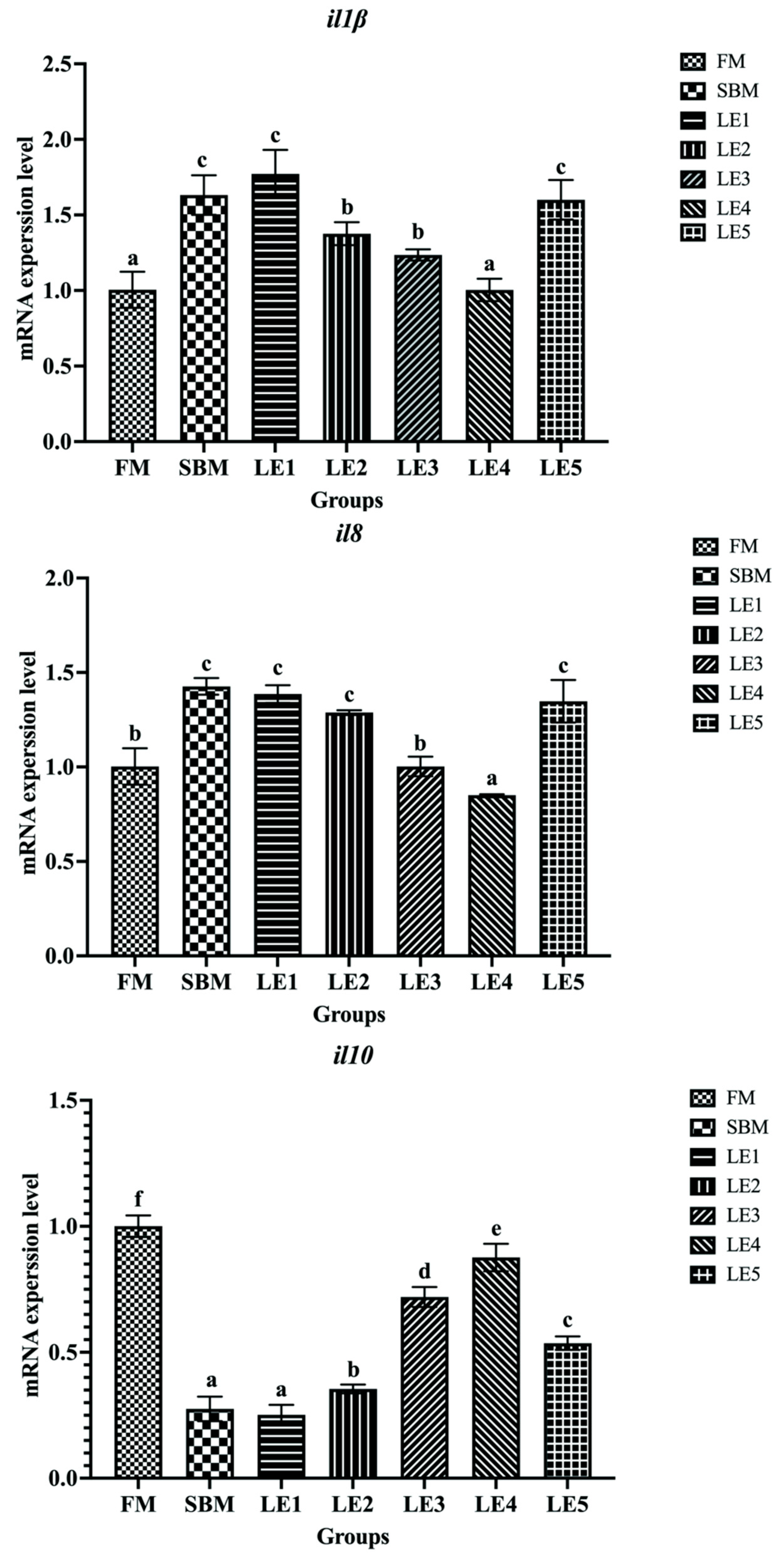
Gene expression results are shown in Figure 1. Compared with the FM group, the expression of il1β and il8 in the SBM group were significantly increased (p < 0.05). The expression of il1β and il8 showed a trend of first decreasing and then increasing from LE1 to LE5, especially in the LE4 group (p < 0.05). Compared with the FM group, the expression of il10 in the SBM group was significantly decreased (p < 0.05), and the expression of il10 showed a trend of first increasing and then decreasing from LE1 to LE5, especially in the LE4 group (p < 0.05). Accordingly, adding 2 g/kg of LE can effectively alleviate intestinal inflammation.

3.3. β,β-Dimethylacrylshikonin’s Effect on the Intestinal Pathology of Zebrafish SBMIE

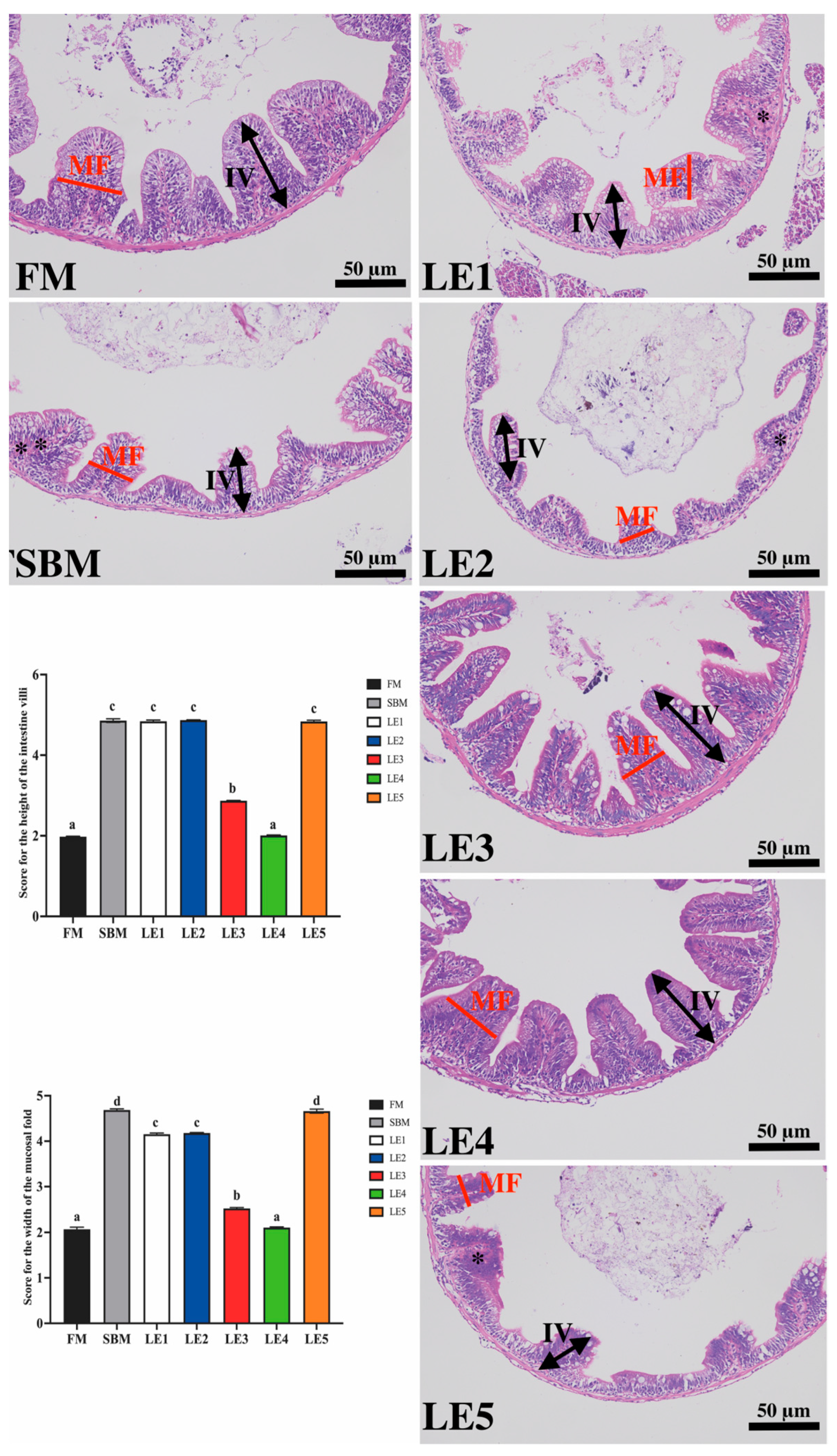
The histological influence of β,β-Dimethylacrylshikonin in the intestine was investigated using HE staining. The results showed that the height of the zebrafish’s intestine villi and the width of the mucosal fold in the LE4 group were significantly larger than those in the SBM group and similar to those in the FM group. In addition, this study found that there was a significant neutrophil infiltration in the SBM group, while a significant reduction in neutrophil infiltration could be observed in the LE4 group (Figure 2).

3.4. Intestinal Microbiota Analysis

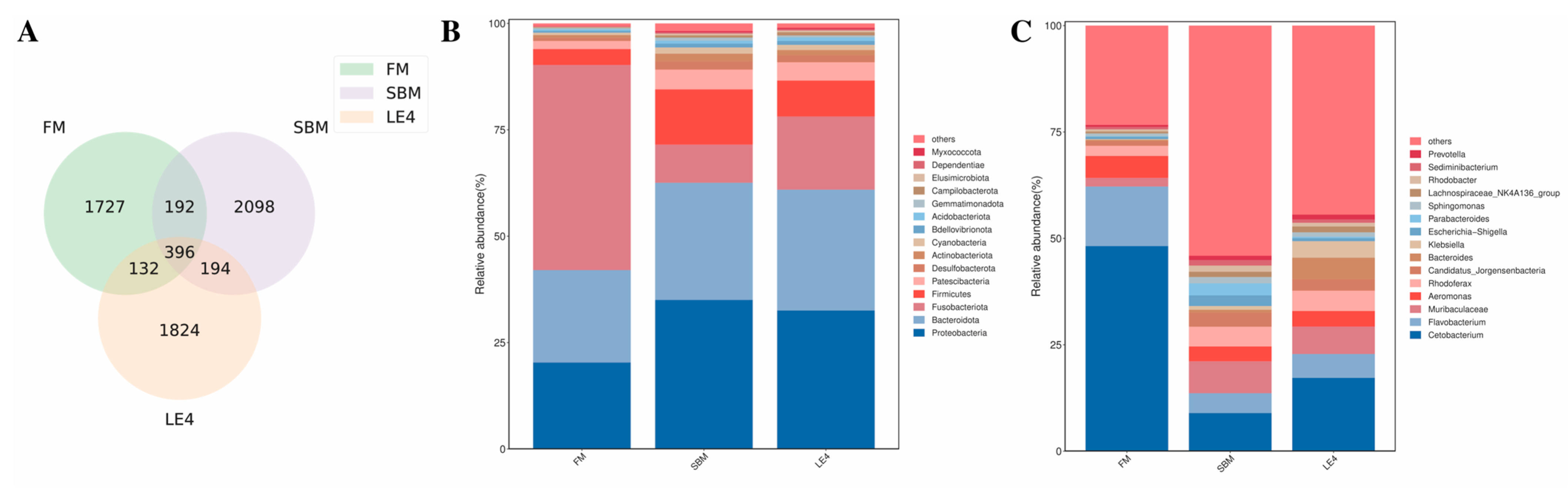
Figure 3A shows the ASVs of the fish meal treatment (FM), treatment without added LE (SBM), and treatment with added 2 g/kg LE (LE4), in which a total of 6563 ASVs were screened. A total of 396 ASVs were shared among the three groups, with the highest number of screened ASVs being observed in the SBM group. Figure 3B,C show the microbial composition in the fish intestine. Intestinal microbiota contents between the three groups comprised four main phylums, including Proteobacteria, Bacteroidetes, Fusobacteriota, and Firmicutes. Compared with the FM group, there were significantly more Proteobacteria and Firmicutes and significantly fewer Fusobacteriota in the SBM group. On the contrary, compared with the SBM group, the LE4 group had significantly more Fusobacteriota and significantly fewer Firmicutes. At the same time, the abundance of Proteobacteria in the LE4 group was decreased but not significantly different from that in the SBM group. Detected at the genus level, the first three are Cetobacterium, Flavobacterium, and Muribaculaceae. The LE4 group had significantly more Cetobacterium than the SBM group.
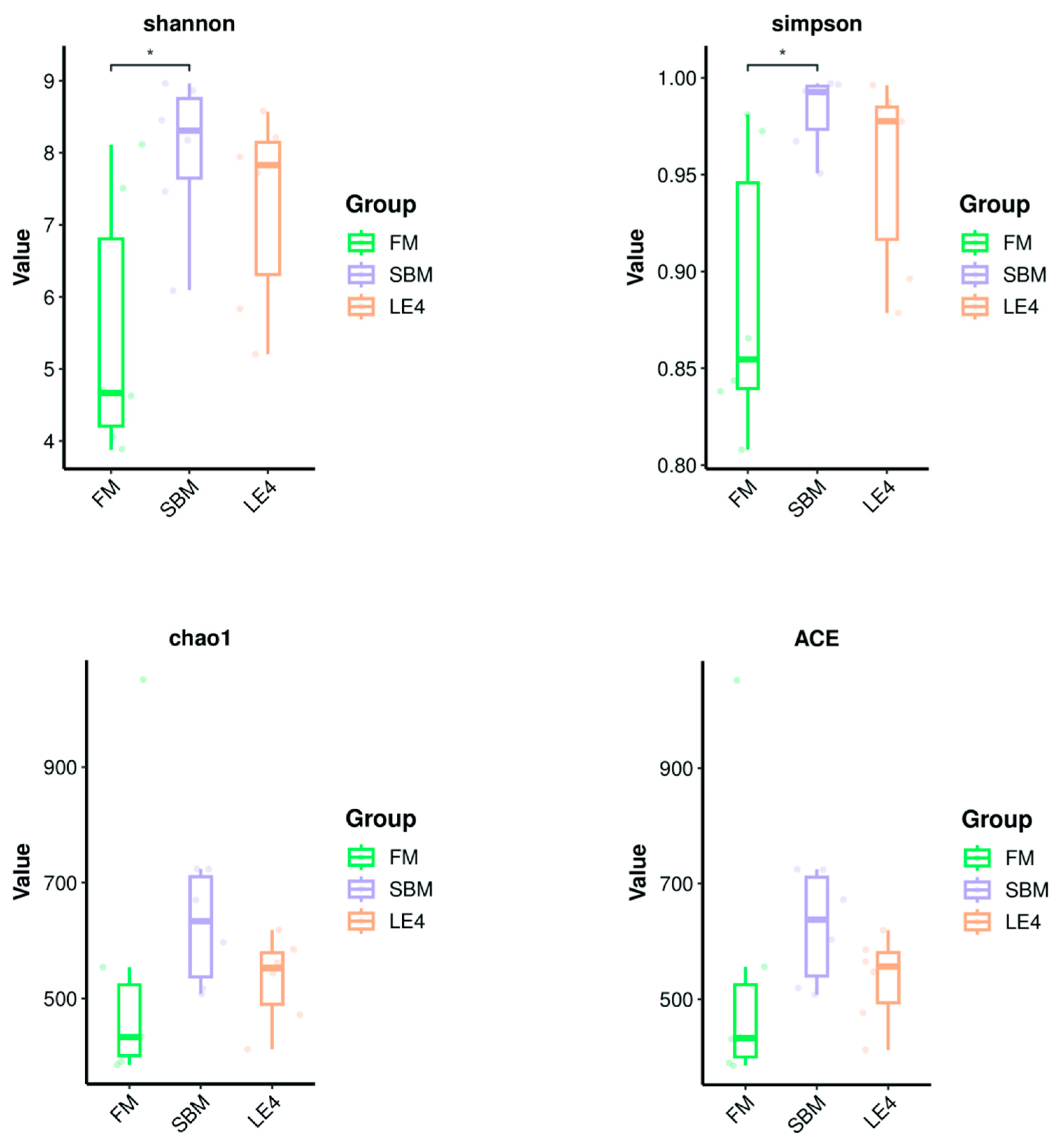
Four indices—Shannon, Simpson, Chao1, and ACE—were utilized to measure alpha diversity. Notably, the Shannon and Simpson indices of the FM group significantly differed from those of the SBM group (p < 0.05). In contrast, no significant differences were observed in the Chao1 and ACE indices among the three groups (p > 0.05) (Figure 4).
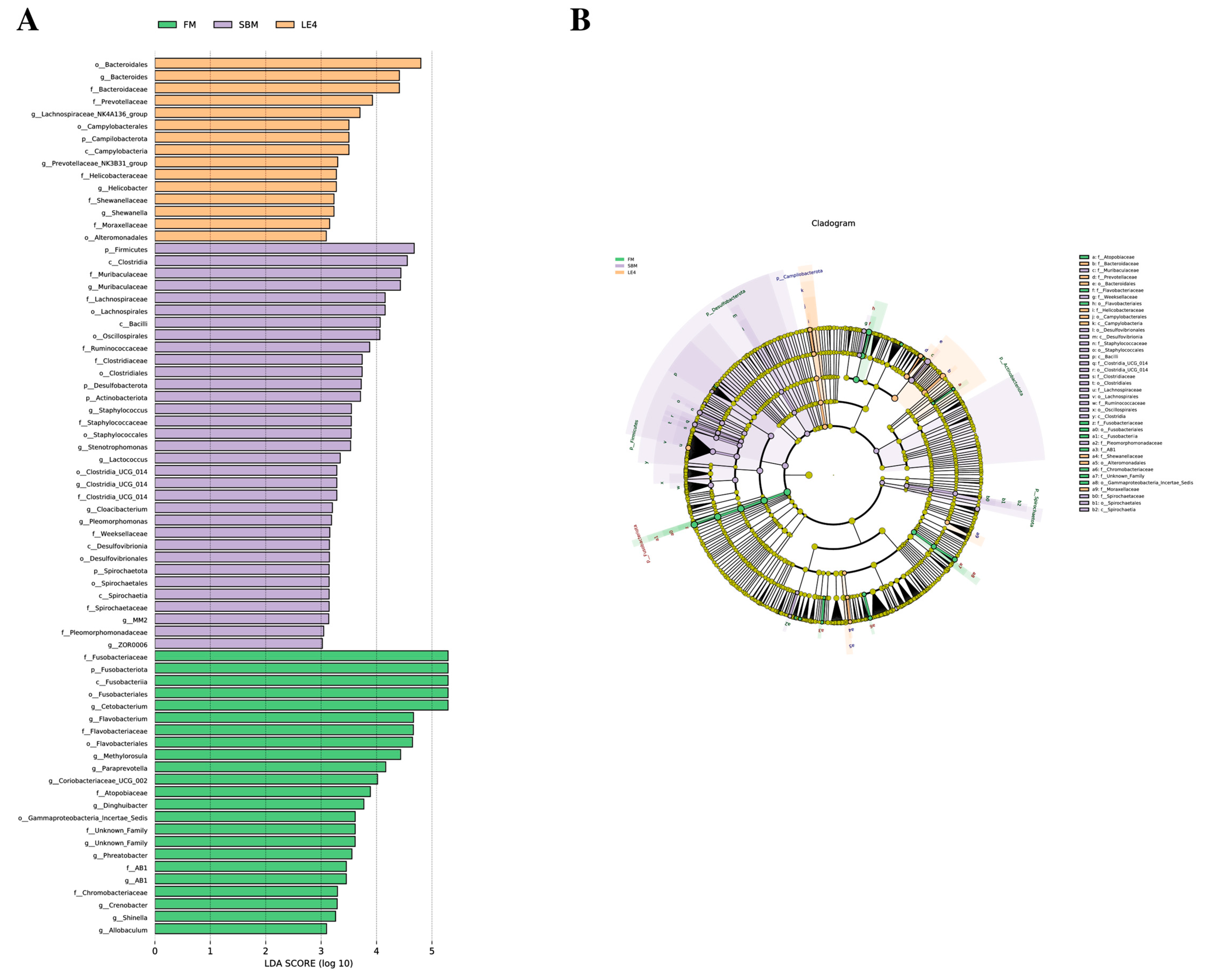
LEfSe analysis identified 71 differential bacteria in the FM, SBM, and LE4 groups, including 6 phyla, 6 classes, 13 orders, 20 families, and 26 genera (Figure 5A,B). In the FM group, Fusobacteriaceae, Fusobacteriota, and Fusobacterlia exhibited the highest abundance. Conversely, in the SBM group, Firmicutes and Clostridia were predominant. Additionally, in the LE4 group, Bacteroidales exhibited the highest abundance.

3.5. Results from Transcriptome Sequencing Analysis

3.5.1. DEGs

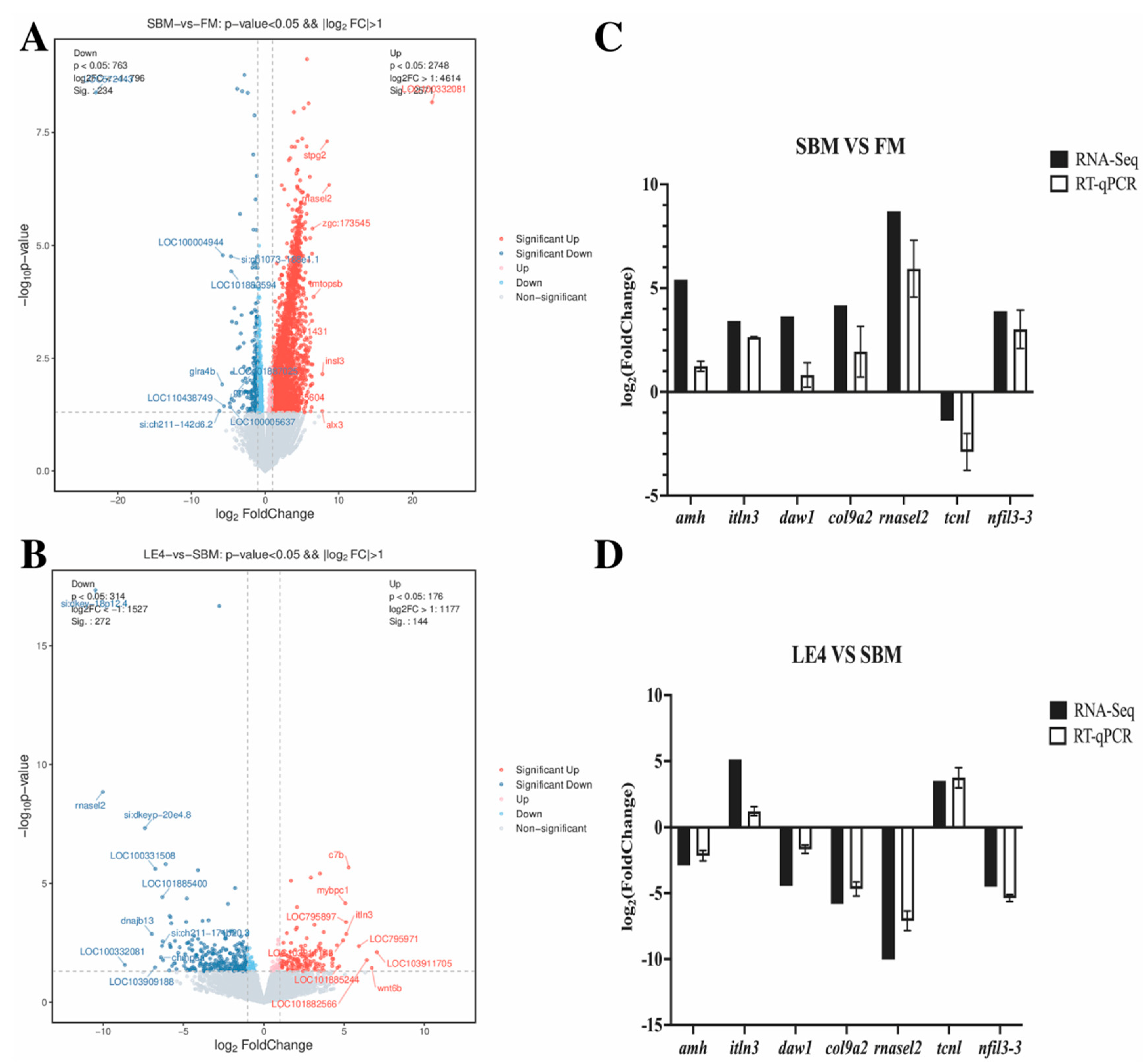
As shown in Figure 6A,B, compared with the FM control, the SBM group showed significant variation in 2805 DEGs (p < 0.05), including 2571 up-regulated genes and 234 down-regulated DEGs. Similarly, in comparison with the SBM group, the LE4 group showed significant variation in 416 DEGs (p < 0.05), including 144 up-regulated genes and 272 down-regulated DEGs. Seven DEGs were chosen at random for real-time quantitative polymerase chain reaction verification to ascertain the credibility of the sequencing data. The RT-qPCR results, as depicted in Figure 6C,D, agreed with those from RNA-Seq, thereby validating the reliability of the sequencing results.

3.5.2. Intestinal DEG-Associated Enriched GO Annotations and KEGG Pathways

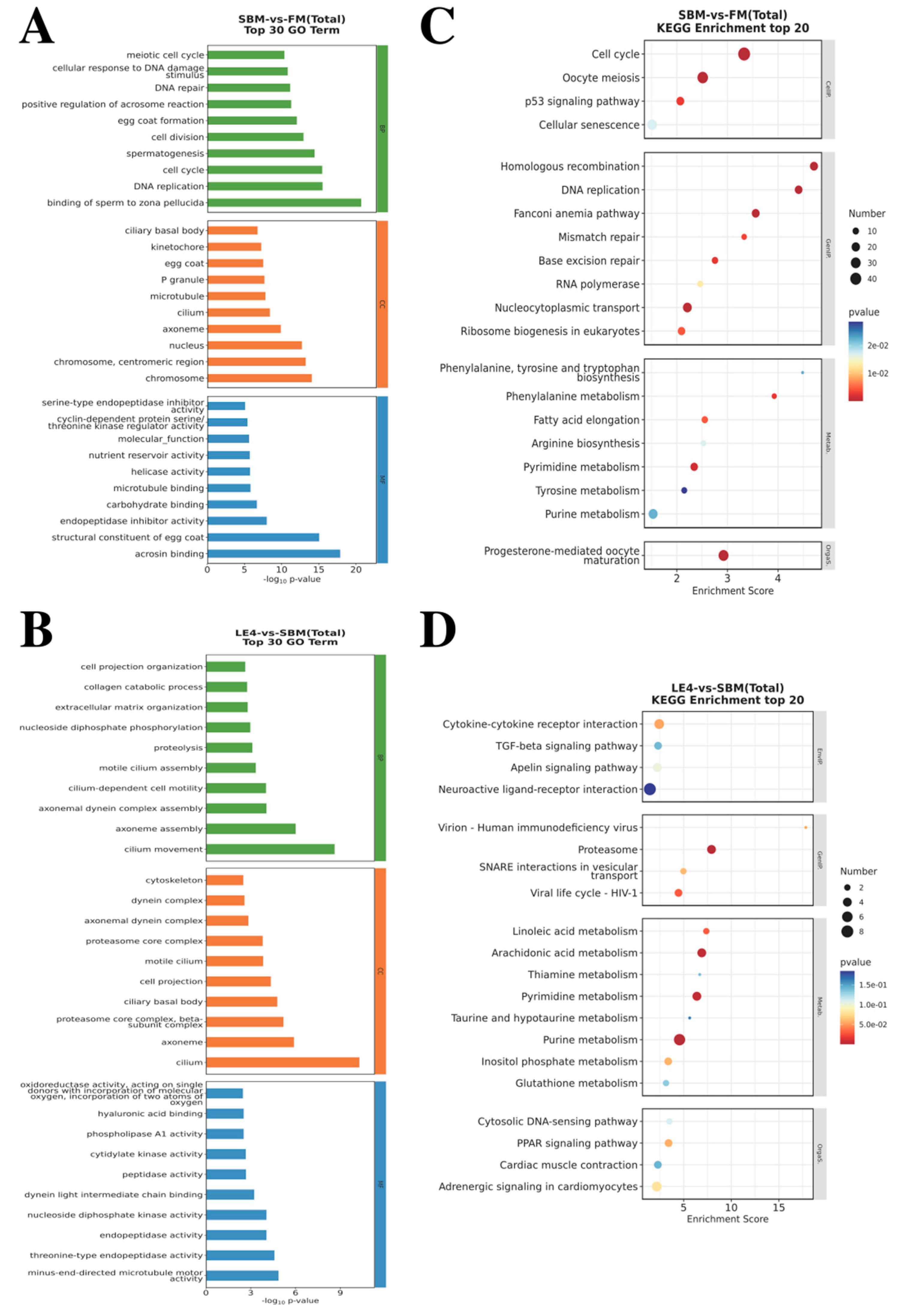
The comparison between the SBM and FM groups yielded intestinal GO terms that are linked to biological processes, such as “DNA replication,” “cell cycle,” and “cell division” (Figure 7A). The KEGG pathways “cell cycle” and “DNA replication” were determined to be related to intestinal cell proliferation in the comparison between the SBM and FM groups. Additionally, the lipid metabolism-associated pathway “fatty acid elongation” was also enriched. At the same time, the “p53 signaling pathway” associated with intestinal inflammation was also enriched (Figure 7C). Subsequently, by utilizing DEGs in the intestine, the moderating influence of LE4 on SBMIE can be examined (Figure 7B,D). Numerous terms enriched the GO terms for biological processes, including “cilium movement,” “axoneme assembly,” and “axonemal dynein complex assembly.” Meanwhile, among the enriched KEGG pathways, the lipid metabolism-associated ones were “taurine and hypotaurine metabolism,” “linoleic acid metabolism,” and “arachidonic acid metabolism.” The “Cytosolic DNA-sensing pathway” was the immune-related pathway. Pathways involved in signal transduction included “cytokine–cytokine receptor interaction” and the “TGF-beta signaling pathway.”

3.6. Validation of the Immune-Associated and Lipid Metabolism-Associated Pathways by RT-qPCR

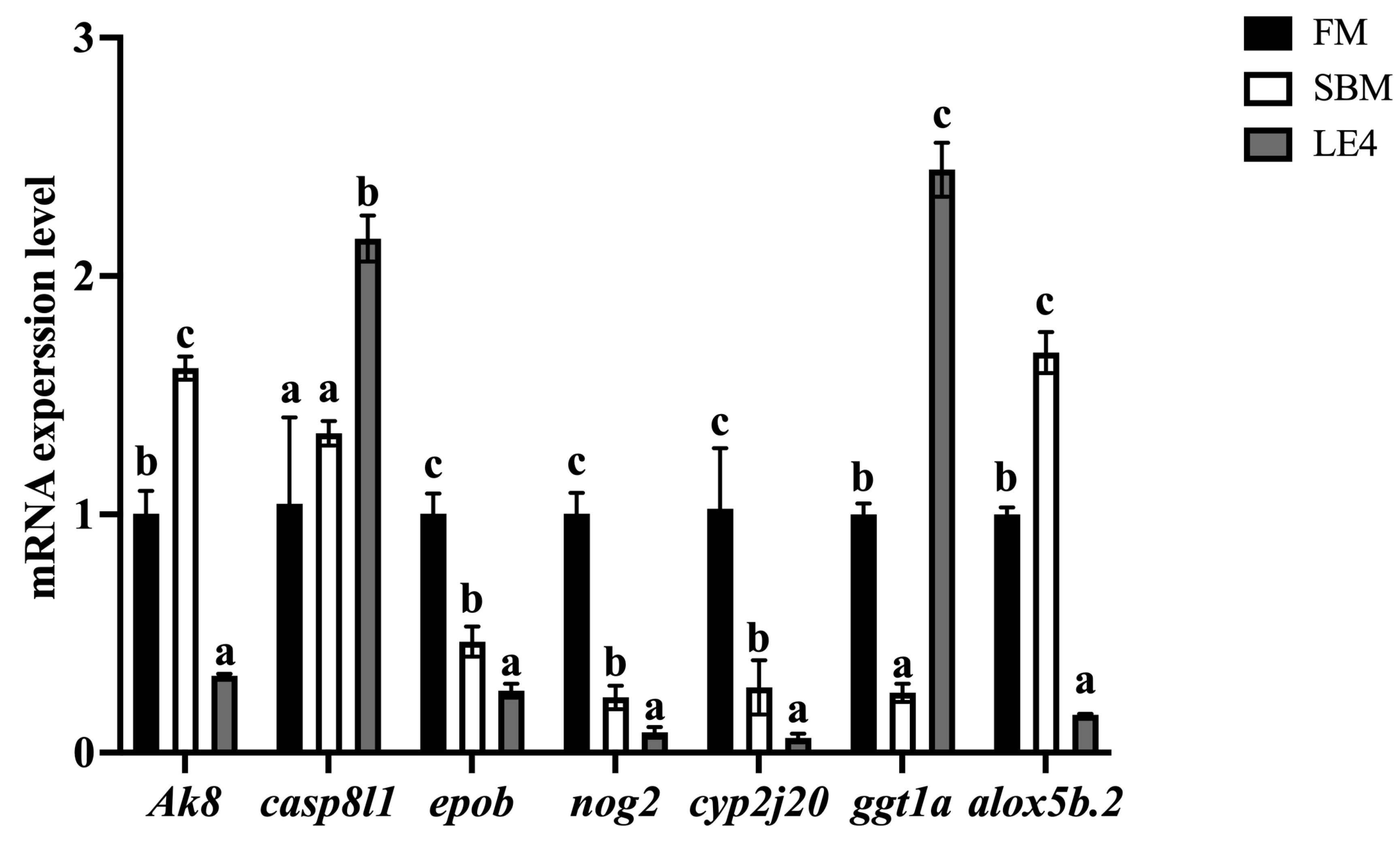
In this study, the immune-associated and lipid metabolism-associated pathways were employed to investigate how β,β-Dimethylacrylshikonin enhances the recovery from enteritis in zebrafish. RT-qPCR was applied to detect the expression of genes involved in the immune-associated and lipid metabolism-associated pathways, including Ak8, casp8l1, epob, nog2, cyp2j20, ggt1a, and alox5b.2 in the gut. The results are shown in Figure 8. In contrast to the FM group, the SBM group exhibited a notable up-regulation of AK8 and alox5b.2 expression in the gut, accompanied by a significant down-regulation of ggt1a expression (p < 0.05). In comparison with the SBM group, the expression levels of AK8 and alox5b.2 in the LE4 group were significantly decreased, and the expression levels of casp8l1 and ggt1a were significantly increased (p < 0.05). Concurrently, in comparison with the SBM group, epob, nog2, and cyp2j20 expression were significantly decreased in the LE4 group (p < 0.05).

4. Discussion

4.1. Alleviating Effect of β,β-Dimethylacrylshikonin on SBMIE

Using an appropriate amount of soybean meal instead of fish meal can effectively save on feed costs in aquaculture [13]. However, anti-nutritional factors (ANFs) in soybeans, including phytic acid, soybean lectins, and soyasaponins, impair the ability of animals to digest, utilize, and metabolize nutrients, which significantly limits the application of soybean in aquaculture [39,40]. In this study, 14-day feeding did not have a significant effect on fish growth. This may be due to the slower growth rate of the adult zebrafish and the short culturing period. In addition, the zebrafish was only used as a model animal to induce SBMIE in this study. Recent evidence has shown that soyasaponins can induce SBMIE [14,41]. Our study reinforces these conclusions. In addition, it has been reported that SBMIE induced by soyasaponins can lead to the high expression of pro-inflammatory factors (including il-1β and il-8) in zebrafish intestinal tissues [1]. Similar results were observed in our study. It can be concluded that SBMIE in zebrafish was successfully induced through the use of soyasaponins in our study. In this study, compared with other groups, the expression of pro-inflammatory factors (il-1β and il-8) in the intestinal tissue was significantly decreased from LE3 to LE4, and the expression was the lowest in LE4. Compared with other groups, the expression of anti-inflammatory factor (il-10) in the intestinal tissue in the LE3 and LE4 groups were significantly increased, and expression in the LE4 group was similar to the expression of the FM group. It is suggested that an appropriate amount of LE will alleviate SBMIE to some extent, and the best effect is achieved at the dosage of 2 g/kg. However, when 4 g/kg of LE was added to the diet, the relieving effects on SBMIE seem to disappear. Therefore, further studies are needed to determine whether excessive LE in the diet can negatively affect fish. The histologic features of intestinal studies have shown that soyasaponins can reduce intestinal mucosal fold width and villis height, which can be used in the reaction to inflammation caused by intestinal damage state standards [7,14,41]. In the present study, the histological features of SBMIE described above were observed in the distal intestine of zebrafish fed a diet containing soyasaponins. When 2 g/kg of LE was added, the distal gut morphology of fish was improved. Incorporating LE seemed to alleviate the structural alterations in the distal gut linked to SBMIE.

4.2. β,β-Dimethylacrylshikonin Alleviates SBMIE by Regulating Intestinal Microbial Composition, Enhancing Immunity, and Improving Metabolism

FM exhibited the lowest ASV count in the intestinal flora analysis, whereas SBM showed the highest. However, as the Chao1 and ACE indices indicated, the alpha diversity results did not vary significantly among the three groups. This suggests that, despite the difference in ASV numbers detected, there was no notable discrepancy in community richness among them. The Shannon index was highest in the SBM group, followed closely by the LE4 group, with the most notable difference observed between the FM and SBM groups. The result of the Simpson index was similar to that of the Shannon index. This suggested that the community diversity in the SBM group consuming a soyasaponin-rich diet was markedly higher compared to the FM group. Conversely, the LE4 group, which received a moderate amount of LE in addition to soyasaponins, exhibited a reduced community diversity. The FM group, which was fed solely on fish meal, demonstrated the lowest community diversity.
Compared with healthy animals, in animals with intestinal disease and imbalanced gut microbiota, significant changes have occurred on the phylum level. For example, when zebrafish suffer from metabolic syndrome and gut microbiota dysbiosis, the abundance of Proteobacteria in the gut increases [42]. Other studies have pointed out that a high-fat diet increases the abundance of Proteobacteria compared with normal zebrafish [43]. Wang et al. found that, in a diabetic zebrafish model with insulin resistance deformation, bacteria abundance increase may be one of the influencing factors of inflammatory stress [44]. Studies have shown that the increase in Proteobacteria abundance is positively correlated with the activation of inflammation [45]. In this study, compared with the FM group, the abundance of Proteobacteria in the gut flora of zebrafish in the SBM group was significantly increased, which was consistent with the results of gut flora imbalance and intestinal inflammatory response in zebrafish mentioned before. After treatment with 2 g/kg of LE, the abundance of Proteobacteria was reduced while the abundance of Fusobacteriota was increased. This suggests that LE may decrease the abundance of Proteobacteria and increase Fusobacteriota, thereby inhibiting the activation of inflammatory responses. Doing so promotes restoration of the stability of the zebrafish gut microbiota and alleviates SBMIE.
Further studies found that Cetobacterium in Fusobacteriota was significantly increased after LE treatment. Cetobacterium is an anaerobic bacteria belonging to the core microbiota of fish intestinal systems [46]. Cetobacterium is an acetate producer that helps to promote glucose utilization, regulate glucose homeostasis, and improve gut health in zebrafish [47,48,49]. Cetobacterium was found to be a probiotic that can improve tilapia intestinal health and enhance resistance to pathogens [50]. In general, our results show that the use of LE can increase the abundance of beneficial gut bacteria.
The comparison of DEGs between the LE4 and SBM groups has offered hints that β,β-Dimethylacrylshikonin may ameliorate SBMIE. The increased gut expression of AK8 may indicate improved intestinal epithelial migration. Studies have pointed out that AK8 may play a role in the negative regulation of epithelial cell migration [51,52]. Compared with the SBM group, the up-regulation of the casp8l1 gene in the LE4 group may indicate increased enterocyte apoptosis [53]. The down-regulation of epob, nog2, alox5b.2, and cyp2j20 gene expression in the LE4 group contrasted with the SBM group may indicate the reduction in gut inflammatory response. At a high level in the intestinal tract, the expression of ggt1a might indicate the improvement in glutathione metabolism [54].
Enrichment studies of differentially expressed genes at the omics level suggested that LE may regulate the cytosolic DNA-sensing pathway, cytokine–cytokine receptor interaction, and the TGF-beta signaling pathway, playing a role in mitigating SBMIE. The cytosolic DNA-sensing pathway is an essential component of innate immune signal transduction and plays a vital role in innate immunity in zebrafish disease resistance [55,56]. Cytokine–receptor complexes included protein–protein interactions and exerted vast immunoregulatory effects on the host [57]. TGF-beta signaling is a ubiquitous cellular pathway involved in various processes, including immune response, cellular differentiation, and proliferation [58]. The study by Xie et al. pointed out that the TGF-beta signaling pathway is involved in repairing zebrafish intestinal tissue [3]. In terms of lipid metabolism, the analysis of differentially expressed genes showed that the main enriched KEGG pathways included linoleic acid metabolism, arachidonic acid metabolism, taurine and hypotaurine metabolism, and purine metabolism. Prior research has indicated that linoleic acid is an antioxidant in fish and also plays a role in improving taurine metabolism [59,60]. Moreover, both linoleic acid and taurine exhibit positive effects on maintaining intestinal balance, which includes decreasing intestinal inflammation, enhancing immune function, and optimizing microbiota [61,62]. The arachidonic acid metabolic pathway is an important metabolic pathway in the inflammatory response [63]. Thus, the LE may promote immune regulation in zebrafish and has a positive role in lipid metabolism.

5. Conclusions

In summary, the results of the present study showed that LE could effectively alleviate soybean-induced enteritis in zebrafish, and 2 g/kg of LE had the best effect. In addition, the effect of LE on the composition of zebrafish gut microbiota was also evident, with LE treatment increasing the abundance of Fusobacteriota and ameliorating the destruction of zebrafish gut microbiota. At the same time, it reduces the abundance of Proteobacteria and inhibits the occurrence of inflammatory stress. Based on gut transcriptome analysis, it was found that LE exerted anti-inflammatory effects by regulating immune-related pathways and lipid metabolism-related pathways. LE intervention in SBMIE zebrafish has many positive effects, including maintaining intestinal flora steadily, improving lipid metabolism disorders, and enhancing immunity.

Author Contributions

M.L. (Ming Liu): Investigation, formal analysis, and writing—original draft. X.L.: Investigation, data curation, and methodology. L.-S.L.: Writing—reviewing and editing. Y.P.: Investigation and data curation. L.L.: Methodology and data curation. K.T.: Writing—reviewing and editing. P.X.: Validation. M.L. (Mingzhong Liang): Methodology. Y.W.: Investigation and data curation. Q.G.: Conceptualization and writing—reviewing. X.C.: Conceptualization, validation, writing—reviewing, and editing. All authors have read and agreed to the published version of the manuscript.

Funding

This work was financially supported by Natural Science Foundation of Guangxi Province [Grant No. 2025GXNSFHA069123, Grant No. 2023GXNSFAA026335], Guangdong Provincial Key Laboratory of Aquatic Animal Disease Control and Healthy Culture [Grant No. PBEA2022ZD04], Marine Science Guangxi First-Class Subject, Beibu Gulf University [Grant No. DRC004].

Institutional Review Board Statement

The research in this manuscript has been conducted under the Ethical Review Committee of Beibu Gulf University (approval code: LW2024-0005 and approval date: 10 September 2024).

Data Availability Statement

The data discussed in this publication have been deposited in NCBI’s Gene Expression Omnibus and are accessible through GEO Series accession number GSE273916 (https://www.ncbi.nlm.nih.gov/geo/query/acc.cgi?acc=GSE273916, accessed on 14 November 2024).

Conflicts of Interest

The authors declare no conflict of interest.

References

  1. Hedrera, M.I.; Galdames, J.A.; Jimenez-Reyes, M.F.; Reyes, A.E.; Avendaño-Herrera, R.; Jaime, R.; Carmen, G.F. Soybean Meal Induces Intestinal Inflammation in Zebrafish Larvae. PLoS ONE 2013, 8, e69983. [Google Scholar] [CrossRef]
  2. Liu, L.H.; Zhao, Y.B.; Huang, Z.F.; Long, Z.Y.; Qin, H.H.; Lin, H.; Zhou, S.S.; Kong, L.M.; Ma, J.R.; Lin, Y.; et al. Dietary supplementation of Lycium barbarum polysaccharides alleviates soybean meal-induced enteritis in spotted sea bass Lateolabrax maculatus. Animal Nutr. 2025, 20, 1–22. [Google Scholar] [CrossRef]
  3. Xie, J.; Li, M.; Ye, W.; Shan, J.; Zhao, X.; Duan, Y.; Liu, Y.; Unger, B.H.; Cheng, Y.; Zhang, W.; et al. Sinomenine Hydrochloride Ameliorates Fish Foodborne Enteritis via α7nAchR-Mediated Anti-inflammatory Effect whilst Altering Microbiota Composition. Front. Immunol. 2021, 12, 766845. [Google Scholar] [CrossRef]
  4. Krogdahl, Å.; Penn, M.; Thorsen, J.; Refstie, S.; Bakke, A.M. Important antinutrients in plant feedstuffs for aquaculture: An update on recent findings regarding responses in salmonids. Aquac. Res. 2010, 41, 333–344. [Google Scholar] [CrossRef]
  5. Van den Ingh, T.S.G.A.M.; Krogdahl, Å.; Olli, J.J.; Hendriks, H.G.C.J.M.; Koninkx, J.G.J.F. Effects of soybean-containing diets on the proximal and distal intestine in Atlantic salmon (Salmo salar): A morphological study. Aquaculture 1991, 94, 297–305. [Google Scholar] [CrossRef]
  6. Rumsey, G.L.; Siwicki, A.K.; Anderson, D.P.; Bowser, P.R. Effect of soybean protein on serological response, non-specific defense mechanisms, growth, and protein utili-zation in rainbow trout, Vet. Immunol. Immunopathol. 1994, 41, 323–339. [Google Scholar] [CrossRef]
  7. Wu, N.; Wang, B.; Cui, Z.W.; Zhang, X.Y.; Cheng, Y.Y.; Xu, X.; Li, X.-M.; Wang, Z.-X.; Chen, D.-D.; Zhang, Y.-A. Integrative Transcriptomic and Micrornaomic Profiling Reveals Immune Mechanism for the Resilience to Soybean Meal Stress in Fish Gut and Liver. Front. Physiol. 2018, 9, 1154. [Google Scholar] [CrossRef]
  8. Wu, N.; Xu, X.; Wang, B.; Li, X.M.; Cheng, Y.Y.; Li, M.; Xia, X.-Q.; Zhang, Y.-A. Anti-Foodborne Enteritis Effect of Galantamine Potentially via Acetylcholine Anti-Inflammatory Pathway in Fish. Fish Shellfish Immunol. 2020, 97, 204–215. [Google Scholar] [CrossRef] [PubMed]
  9. Merrifield, D.L.; Olsen, R.E.; Myklebust, R.; Ringø, E. Dietary effect of soybean (Glycine max) products on gut histology and microbiota of fish. Soybean Nutr. 2011, 231, e50. [Google Scholar] [CrossRef][Green Version]
  10. Hu, Y.J.; Zhang, J.Z.; Xue, J.J.; Chu, W.Y.; Hu, Y. Effects of dietary soy isoflavone and soy saponin on growth performance, intestinal structure, intestinal immunity and gut microbiota community on rice field eel (Monopterus albus). Aquaculture 2021, 537, 736506. [Google Scholar] [CrossRef]
  11. Johnson, I.T.; Gee, J.M.; Price, K.; Curl, C.; Fenwick, G.R. Influence of saponins on gut permeability and active nutrient transport in vitro. J. Nutr. 1986, 116, 2270–2277. [Google Scholar] [CrossRef]
  12. Gu, M.; Pan, S.H.; Li, Q.; Qi, Z.Z.; Deng, W.Z.; Bai, N. Protective effects of glutamine against soy saponins-induced enteritis, tight junction disruption, oxidative damage and autophagy in the intestine of Scophthalmus maximus L. Aquaculture 2021, 114, 49–57. [Google Scholar] [CrossRef]
  13. Zhou, Z.; Ringø, E.; Olsen, R.E.; Song, S.K. Dietary effects of soybean products on gut microbiota and immunity of aquatic animals: A review. Aquac. Nutr. 2018, 24, 644–665. [Google Scholar] [CrossRef]
  14. Gu, M.; Jia, Q.; Zhang, Z.; Bai, N.; Xu, X.; Xu, B. Soya-saponins induce intestinal inflammation and barrier dysfunction in juvenile turbot (Scophthalmus maximus). Fish Shellfish. Immunol. 2018, 77, 264–272. [Google Scholar] [CrossRef]
  15. Malinow, M.R.; McLaughlin, P.; Papworth, L.; Stafford, C.; Kohler, G.O.; Livingston, A.L.; Cheeke, P.R. Effect of alfalfa saponins on intestinal cholesterol absorption in rats. Am. J. Clin. Nutr. 1977, 30, 2061–2067. [Google Scholar] [CrossRef]
  16. Gu, M.; Kortner, T.M.; Penn, M.; Hansen, A.K.; Krogdahl, Å. Effects of dietary plant meal and soya-saponin supplementation on intestinal and hepatic lipid droplet accumulation and lipoprotein and sterol metabolism in Atlantic salmon (Salmo salar L.). Br. J. Nutr. 2014, 111, 432–444. [Google Scholar] [CrossRef] [PubMed]
  17. Li, M.; Zhao, X.; Xie, J.; Tong, X.; Shan, J.; Shi, M.; Wang, G.; Ye, W.; Liu, Y.; Unger, B.H.; et al. Dietary Inclusion of Seabuckthorn (Hippophae rhamnoides) Mitigates Foodborne Enteritis in Zebrafish Through the Gut-Liver Immune Axis. Front. Physiol. 2022, 13, 831226. [Google Scholar] [CrossRef] [PubMed]
  18. Lu, X.; Kianann, T.; Gong, Q.F.; Peng, Y.H.; Liang, M.Z.; Xu, P.; Liang, X.Y.; Liu, W.J.; Wu, Y.R.; Cai, X.H. Positive effects of Lithospermum erythrorhizon extract added to high soybean meal diet on growth, intestinal antioxidant capacity, intestinal microbiota, and metabolism of pearl gentian grouper. Aquac. Rep. 2024, 39, 102500. [Google Scholar] [CrossRef]
  19. Wang, H.; Zhang, G. Activation of CaMKKβ-AMPK-mTOR pathway is required for autophagy induction by β,β-dimethylacrylshikonin against lung adenocarcinoma cells. Biochem. Biophys. Res. Commun. 2019, 517, 477–483. [Google Scholar] [CrossRef]
  20. Kwak, S.Y.; Jeong, Y.; Kim, B.Y.; Lee, J.; Ahn, H.J.; Jeong, J.H.; Kim, M.S.; Kim, J.; Han, Y.H. β,β--Dimethylacrylshikonin sensitizes human colon cancer cells to ionizing radiation through the upregulation of reactive oxygen species. Oncol. Lett. 2014, 7, 1812–1818. [Google Scholar] [CrossRef]
  21. Tanaka, S.; Tajima, M.; Tsukada, M.; Tabata, M. A comparative study on anti-inflammatory activities of the enantiomers, shikonin and alkannin. J. Nat. Prod. 1986, 49, 466–469. [Google Scholar] [CrossRef]
  22. Chen, X.; Yang, L.; Zhang, N.; Turpin, J.A.; Buckheit, R.W.; Osterling, C.; Oppenheim, J.J.; Howard, O.M.Z. Shikonin, a Component of Chinese Herbal Medicine, Inhibits Chemokine Receptor Function and Suppresses Human Immunodeficiency Virus Type 1 Antimicrob. Agents Chemother. 2003, 47, 2810–2816. [Google Scholar] [CrossRef]
  23. Ko, F.N.; Lee, Y.S.; Kuo, S.C.; Chang, Y.S.; Teng, C.M. Inhibition on platelet activation by shikonin derivatives isolated from Arnebia euchroma. Biochim. Biophys. Acta 1995, 1268, 329–334. [Google Scholar] [CrossRef]
  24. Shen, C.C.; Syu, W.J.; Li, S.Y.; Lin, C.H.; Lee, G.H.; Sun, C.M. Antimicrobial activities of naphthazarins from Arnebia euchroma. J. Nat. Prod. 2002, 65, 1857–1862. [Google Scholar] [CrossRef]
  25. Zhang, Z.L. Therapeutic Effect of Hydroxynaphthoquinone from Shikonin Sinensis on Dextran Sodium-Induced Ulcerative Colitis in Mice. Ph.D. Dissertation, Jilin University, Jili, China, 2014. [Google Scholar]
  26. Jia, K.; Shi, P.; Zhang, L.; Yan, X.K.; Xu, J.L.; Liao, K. Trans-cinnamic acid alleviates high-fat diet-induced renal injury via JNK/ERK/P38 MAPK pathway. J. Nutr. Biochem. 2025, 135, 109769. [Google Scholar] [CrossRef] [PubMed]
  27. Lv, M.D.; Yang, K.; Wang, X.; Liu, C.D.; Zhou, H.H.; Mai, K.S.; He, G. The modulation of mTOR signaling on dietary carbohydrate utilization in largemouth bass (Micropterus salmoides). J. Nutr. Biochem. 2025, 145, 110008. [Google Scholar] [CrossRef]
  28. Zhao, X.Y.; Zhang, L.; Wu, N.; Liu, Y.H.; Xie, J.Y.; Su, L.; Zhu, Q.S.; Unger, B.H.; Altaf, F.; Hu, Y.H.; et al. Gallic acid acts as an anti-inflammatory agent via PPARγ-mediated immunomodulation and antioxidation in fish gut-liver axis. Aquaculture 2024, 578, 740142. [Google Scholar] [CrossRef]
  29. Li, M.; Xie, J.Y.; Zhao, X.Y.; Li, X.M.; Wang, R.; Shan, J.W.; Cheng, Y.Y.; Zhang, W.T.; Wu, N.; Xia, X.Q. Establishing the foodborne-enteritis zebrafish model and imaging the involved immune cells’ response. Acta Hydrobiol. Sinica 2022, 46, 226–237. [Google Scholar] [CrossRef]
  30. Westerfield, M. The Zebrafish Book: A Guide for the Laboratory Use of the Zebrafish (Danio Rerio), 2.1; Eugene, Ed.; University of Oregon Press: Eugene, OR, USA, 1994. [Google Scholar]
  31. Lu, X.; Wu, Y.R.; Peng, Y.H.; Liu, W.J.; Liu, M.; Xu, P.; Kianann, T.; Liang, X.Y.; Cai, X.H.; Gong, Q.F. Effects of Sophora flavescens dietary supplementation on the growth performance, haematological indices, and intestinal bacterial community of Oreochromis niloticus. J. Fish Biol. 2024, 105, 1830–1842. [Google Scholar] [CrossRef] [PubMed]
  32. Lickwar, C.R.; Camp, J.G.; Weiser, M.; Cocchiaro, J.L.; Kingsley, D.M.; Furey, T.S.; Sheikh, S.Z.; Rawls, J.F. Genomic Dissection of Conserved Transcriptional Regulation in Intestinal Epithelial Cells. PLoS Biol. 2017, 15, e2002054. [Google Scholar] [CrossRef] [PubMed]
  33. Deng, Y.; Zhang, Y.; Chen, H.; Xu, L.; Wang, Q.; Feng, J. Gut-Liver Immune Response and Gut Microbiota Profiling Reveal the Pathogenic Mechanisms of Vibrio Harveyi in Pearl Gentian Grouper (Epinephelus Lanceolatus × E. Fuscoguttatus). Front. Immunol. 2020, 11, 607754. [Google Scholar] [CrossRef]
  34. Mao, M.Q.; Lan, Z.Y.; Peng, Y.H.; He, J.X.; Lu, X.; Li, J.; Xu, P.; Wu, X.Z.; Cai, X.H. Identification and functional characterization of complement regulatory protein CD59 in golden pompano (Trachinotus ovatus). Fish Shellfish. Immunol. 2022, 131, 67–76. [Google Scholar] [CrossRef]
  35. Mao, M.Q.; Peng, Y.H.; Tan, K.N.; Lan, Z.Y.; Guo, X.Y.; Huang, F.P.; Xu, P.; Yang, S.Y.; Kwan, K.Y.; Cai, X.H. Molecular characterization of complement regulatory factor CD46 in Trachinotus ovatus and its role in the antimicrobial immune responses and complement regulation. Fish Shellfish. Immunol. 2023, 141, 109092. [Google Scholar] [CrossRef]
  36. Urán Carmona, P.A. Etiology of Soybean-Induced Enteritis in Fish. Ph.D. Thesis, Wageningen University, Wageningen, The Netherlands, 2008. [Google Scholar] [CrossRef]
  37. Love, M.I.; Huber, W.; Anders, S. Moderated Estimation of Fold Change and Dispersion for RNA-Seq Data with DESeq2. Genome Biol. 2014, 15, 550. [Google Scholar] [CrossRef]
  38. Yu, G.; Wang, L.G.; Han, Y.; He, Q.Y. clusterProfiler: An R Package for Comparing Biological Themes Among Gene Clusters. OMICS A J. Integr. Biol. 2012, 16, 284–287. [Google Scholar] [CrossRef] [PubMed]
  39. Pang, A.B.; Zhang, S.; Dong, S.H.; Zhang, X.X.; Liang, J.H.; Fang, Y.X.; Tan, B.P.; Zhang, W. Effects of indole-3-butyric acid supplementation in diets containing high soybean meal on growth, intestinal inflammation, and intestinal flora of pearl gentian grouper (Epinephelus fuscoguttatus ♀ × Epinephelus lanceolatus ♂). Aquacult. Int. 2024, 32, 4429–4447. [Google Scholar] [CrossRef]
  40. Shang, R.; Wu, H.; Guo, R.; Liu, Q.; Pan, L.; Li, J.; Hu, Z.; Chen, C. The diversity of four anti-nutritional factors in common bean. Hortic. Plant J. 2016, 2, 97–104. [Google Scholar] [CrossRef][Green Version]
  41. Krogdahl, Å.; Gajardo, K.; Kortner, T.M.; Penn, M.; Gu, M.; Berge, G.M.; Bakke, A.M. Soya saponins induce enteritis in Atlantic salmon (Salmo salar L.). J. Agric. Food Chem. 2015, 63, 3887–3902. [Google Scholar] [CrossRef] [PubMed]
  42. Do, M.H.; Lee, E.; Oh, M.J.; Kim, Y.; Park, H.Y. High-glucose or -fructose diet cause changes of the gut microbiota and metabolic disorders in mice without body weight change. Nutrients 2018, 10, 761. [Google Scholar] [CrossRef]
  43. Zhang, Z.; Ran, C.; Ding, Q.W.; Liu, H.L.; Xie, M.X.; Yang, Y.L.; Xie, Y.-D.; Gao, C.-C.; Zhang, H.-L.; Zhou, Z.-G. Ability of prebiotic polysaccharides to activate a hif1α-antimicrobial peptide axis determines liver injury risk in zebrafish. Commun. Biol. 2019, 2, 274. [Google Scholar] [CrossRef]
  44. Wang, P.; Tao, F.Y.; Dai, Z.R.; Wang, T.C.; Zhang, C.X.; Fang, H.L.; Qin, M.; Qi, C.; Li, Y.; Hao, J.G. Neohesperidin dihydrochalcone can improve intestinal structure and microflora composition of diabetic zebrafish. J. Funct. Foods 2024, 115, 106118. [Google Scholar] [CrossRef]
  45. Zhu, L.; Baker, S.S.; Gill, C.; Liu, W.; Alkhouri, R.; Baker, R.D.; Gill, S.R. Characterization of gut microbiomes in nonalcoholic steatohepatitis (NASH) patients: A connection between endogenous alcohol and NASH. Hepatology 2013, 57, 601–609. [Google Scholar] [CrossRef]
  46. Cai, M.C.; Den, H.; Sun, H.C.; Si, W.T.; Li, X.Y.; Hu, J.; Huang, M.J.; Fan, W.Q. Changes of intestinal microbiota in the giant salamander (Andrias davidianus) during growth based on high-throughput sequencing. Front. Microbiol. 2023, 14, 1052824. [Google Scholar] [CrossRef]
  47. Wang, A.R.; Zhang, Z.; Ding, Q.W.; Yang, Y.L.; Bindelle, J.; Ran, C.; Zhou, Z.G. Intestinal Cetobacterium and acetate modify glucose homeostasis via parasympathetic activation in zebrafish. Gut Microbes 2021, 13, 1–15. [Google Scholar] [CrossRef] [PubMed]
  48. Wang, A.R.; Meng, D.L.; Hao, Q.; Xia, R.; Zhang, Q.S.; Ran, C.; Yang, Y.Y.L.; Li, D.J.; Liu, W.S.; Zhang, Z.; et al. Effect of supplementation of solid-state fermentation product of Bacillus subtilis HGcc-1 to high-fat diet on growth, hepatic lipid metabolism, epidermal mucus, gut and liver health and gut microbiota of zebrafish. Aquaculture 2022, 560, 738542. [Google Scholar] [CrossRef]
  49. Yang, J.; Zhou, W.W.; Shi, D.D.; Pan, F.F.; Sun, W.W.; Yang, P.L.; Li, X.M. The Interaction between Oxidative Stress Biomarkers and Gut Microbiota in the Antioxidant Effects of Extracts from Sonchus brachyotus DC. in Oxazolone-Induced Intestinal Oxidative Stress in Adult Zebrafish. Antioxidants 2023, 12, 192. [Google Scholar] [CrossRef]
  50. Zhou, W.; Xie, M.X.; Xie, Y.D.; Liang, H.; Li, M.; Ran, C.; Zhou, Z.G. Effect of dietary supplementation of Cetobacterium somerae XMX-1 fermentation product on gut and liver health and resistance against bacterial infection of the genetically improved farmed tilapia (GIFT, Oreochromis niloticus). Fish Shellfish Immunol. 2022, 124, 332–342. [Google Scholar] [CrossRef]
  51. Simpson, K.J.; Selfors, L.M.; Bui, J.; Reynolds, A.; Leake, D.; Khvorovam, A.; Brugge, J.S. Identification of genes that regulate epithelial cell migration using an siRNA screening approach. Nat. Cell Biol. 2008, 10, 1027–1038. [Google Scholar] [CrossRef] [PubMed]
  52. Tanabe, T.; Yamada, M.; Noma, T.; Kajii, T.; Nakazawa, A. Tissue-specific and developmentally regulated expression of the genes encoding adenylate kinase isozymes. J. Biochem. 1993, 113, 200–207. [Google Scholar] [CrossRef] [PubMed]
  53. Zhao, J.; Huang, G.; Xu, T.; Yin, D.; Bai, J.; Gu, W. Early developmental exposure to pentachlorophenol causes alterations on mRNA expressions of caspase protease family in zebrafish embryos. Chemosphere 2017, 180, 141–148. [Google Scholar] [CrossRef]
  54. Yang, F.; Zhang, S.; Yang, H.; Luo, K.; Wen, J.; Hu, Y.; Hu, R.; Huang, Q.; Cheng, J.; Fu, J. Prognostic significance of gamma-glutamyltransferase in patients with resectable esophageal squamous cell carcinoma. Dis. Esophagus 2014, 28, 496–504. [Google Scholar] [CrossRef]
  55. Yang, H.; Ju, J.; Wang, Y.T.; Zhu, Z.; Lu, W.Y.; Zhang, Y.Y. Micro-and nano-plastics induce kidney damage and suppression of innate immune function in zebrafish (Danio rerio) larvae. Sci. Total Environ. 2024, 931, 172952. [Google Scholar] [CrossRef]
  56. Mathavarajah, S.; Thompson, A.W.; Stoyek, M.R.; Quinn, T.A.; Roy, S.; Braasch, I.; Dellaire, G. Suppressors of cGAS-STING are downregulated during fin-limb regeneration and aging in aquatic vertebrates. J. Exp. Zool. B Mol. Dev. Evol. 2023, 342, 241–251. [Google Scholar] [CrossRef]
  57. Chen, H.L.; Yang, T.L.; Xu, Y.R.; Liang, B.B.; Liu, X.Y.; Cai, Y. Anti-inflammatory and immunoregulatory effects of colistin sulphate on human PBMCs. J. Cell Mol. Med. 2024, 28, e18322. [Google Scholar] [CrossRef] [PubMed]
  58. Sloin, H.E.; Ruggiero, G.; Rubinstein, A.; Storz, S.S.; Foulkes, N.S.; Gothilf, Y. Interactions between the circadian clock and TGF-β signaling pathway in zebrafish. PLoS ONE 2018, 13, e0199777. [Google Scholar] [CrossRef]
  59. Zuo, R.; Ai, Q.; Mai, K.; Xu, W. Effects of conjugated linoleic acid on growth, non-specific immunity, antioxidant capacity, lipid deposition and related gene expression in juvenile large yellow croaker (Larmichthys crocea) fed soyabean oil-based diets. Br. J. Nutr. 2013, 110, 1220–1232. [Google Scholar] [CrossRef]
  60. Hajri, T.; Pronczuk, A.; Hayes, K.C. Linoleic acid-rich diet increases hepatic taurine and cholesterol 7 alpha-hydroxylase activity in conjunction with altered bile acid composition and conjugation in gerbils. J. Nutr. Biochem. 1998, 9, 249–257. [Google Scholar] [CrossRef]
  61. Fleck, A.K.; Hucke, S.; Teipel, F.; Eschborn, M.; Klotz, L. Dietary conjugated linoleic acid links reduced intestinal inflammation to amelioration of CNS autoimmunity. Brain 2021, 144, 1152–1166. [Google Scholar] [CrossRef]
  62. Fang, H.; Meng, F.; Piao, F.; Jin, B.; Li, W. Effect of taurine on intestinal microbiota and immune cells in Peyer’s patches of immunosuppressive mice. Adv. Exp. Med. Biol. 2019, 1155, 13–24. [Google Scholar] [CrossRef] [PubMed]
  63. Ma, Y.; Bao, Y.R.; Wang, S.A.; Li, T.J.; Chang, X.; Yang, G.L.; Meng, X.S. Anti-Inflammation Effects and Potential Mechanism of Saikosaponins by Regulating Nicotinate and Nicotinamide Metabolism and Arachidonic Acid Metabolism. Inflammation 2016, 39, 1453–1461. [Google Scholar] [CrossRef] [PubMed]
Figure 1. Changes in anti-inflammatory versus pro-inflammatory factors triggered by soyasaponins and β,β-dimethylacrylshikonin (n = 3). Values in the same row with different superscripts are significantly different (p < 0.05). A, interleukin 1β (IL-1β); B, interleukin 8 (il-8); and C, interleukin 10 (IL-10). FM: 0 g/kg of soyasaponins. SBM: 5 g/kg of soyasaponins. LE1: 5 g/kg of soyasaponins plus 0.25 g/kg of LE. LE2: 5 g/kg of soyasaponins plus 0.5 g/kg of LE. LE3: 5 g/kg of soyasaponins plus 1 g/kg of LE. LE4: 5 g/kg of soyasaponins plus 2 g/kg of LE. LE5: 5 g/kg of soyasaponins plus 4 g/kg of LE. The different letters indicate that the difference is significant at 0.05 level.
Fishes 10 00567 g001
Figure 2. HE staining of intestinal tissue sections of Zebrafish (n = 3). FM: 0 g/kg of soyasaponins; SBM: 5 g/kg of soyasaponins; LE1: 5 g/kg of soyasaponins plus 0.25 g/kg of LE; LE2: 5 g/kg of soyasaponins plus 0.5 g/kg of LE; LE3: 5 g/kg of soyasaponins plus 1 g/kg of LE; LE4: 5 g/kg of soyasaponins plus 2 g/kg of LE; LE5: 5 g/kg of soyasaponins plus 4 g/kg of LE. MF: the width of the mucosal fold, IV: the height of intestine villi, and *: inflammatory cell infiltration. Scale bar: 50 μm. The different letters indicate that the difference is significant at 0.05 level.
Fishes 10 00567 g002
Figure 3. Effects of LE4 on the intestinal microbiota composition of zebrafish (n = 6). (A) Venn diagram of ASV in the FM, SBM, and LE4 groups; (B) hindgut bacteria composition at the phylum level; and (C) hindgut bacteria composition at the genus level.
Fishes 10 00567 g003
Figure 4. Effect of LE4 on the alpha diversity of the intestinal flora of zebrafish (n = 6). The gut microbiome’s richness and diversity were evaluated using the Shannon and Simpson indices, as well as the Chao1 and ACE estimators, respectively. *: p < 0.05. FM: 0 g/kg of soyasaponins; SBM: 5 g/kg of soyasaponins; LE4: 5 g/kg of soyasaponins plus 2 g/kg of LE.
Fishes 10 00567 g004
Figure 5. Core bacterial phenotype analysis of zebrafish (n = 6). (A) LDA scores of taxa enriched at different taxonomy levels (LDA significant threshold = 4); (B) taxonomic cladogram generated by LEfSe analysis showing taxa significantly enriched in the NC group. FM group (green), SBM group (purple), and LE4 group (yellow), respectively. Each ring represents a taxonomic level from phylum to genus.
Fishes 10 00567 g005
Figure 6. Transcriptional profiling and confirmation (n = 3). (A) Volcano plots for SBM versus FM; (B) volcano plots comparing LE4 to SBM; (C) correlation analysis between RT-qPCR and RNA-Seq data for SBM and FM; and (D) correlation analysis between RT-qPCR and RNA-Seq results for LE4 and SBM. FM: 0 g/kg of soyasaponins. SBM: 5 g/kg of soyasaponins. LE4: 5 g/kg of soyasaponins plus 2 g/kg of LE.
Fishes 10 00567 g006
Figure 7. GO enrichment and KEGG enrichment analysis of DEGs (n = 3). (A) GO terms of DEGs in SBM vs. FM; (B) GO terms of DEGs in LE4 vs. SBM; (C) KEGG pathways of DEGs in SBM vs. FM; and (D) KEGG pathways of DEGs in LE4 vs. SBM. FM: 0 g/kg of soyasaponins. SBM: 5 g/kg of soyasaponins. LE4: 5 g/kg of soyasaponins plus 2 g/kg of LE. BP: Biological Process; CC: Cellular Component; MF: Molecular Function.
Fishes 10 00567 g007
Figure 8. Effect of LE4 on core transcripts (n = 3). FM: 0 g/kg of soyasaponins. SBM: 5 g/kg of soyasaponins. LE4: 5 g/kg of soyasaponins plus 2 g/kg of LE. Values within the same row bearing different superscript notations indicate statistically significant differences (p < 0.05).
Fishes 10 00567 g008
Table 1. Formulation of experimental diets.
Raw Material g/kgFMSBMLE1LE2LE3LE4LE5
Fish meal615615615615615615615
Soyasaponins0555555
Wheat meal250250250250250250250
Starch45454545454545
Fish oil60606060606060
Vitamin mix a10101010101010
Mineral mix b10101010101010
Cellulose1054.754.5431
β,β-Dimethylacrylshikonin000.250.5124
Gross weight (g)1000100010001000100010001000
Proximate composition
(%, dry weight)
Crude protein (%)44.6344.5844.6644.6144.5944.5844.62
Crude lipid (%)11.0311.0211.0510.9811.0411.0310.99
a: The Vitamin blend contains 2000 mg of vitamin B1, 6000 mg of vitamin B2, 1400 mg of vitamin B6, 200 mg of vitamin B12, along with 120,000 mg of vitamin C, 2000 mg of biotin, 80,000 mg of calcium pantothenate, 2000 mg of inositol, and 600 mg of folic acid per kilogram of feed. b: The mineral blend offers a range of 3000 to 1200 mg of copper, 5000 to 20,000 mg of iron, 8000 to 32,000 mg of zinc, 10,000 to 4000 mg of manganese, 200 to 800 mg of iodine, and 100 to 400 mg of selenium per kilogram of feed. Note: red fish meal is about 68% protein content and 7.8% lipid content. Fish oil has about 0% protein content and about 100% lipid content. FM: 0 g/kg of soyasaponins; SBM: 5 g/kg of soyasaponins; LE1: 5 g/kg of soyasaponins plus 0.25 g/kg of LE; LE2: 5 g/kg of soyasaponins plus 0.5 g/kg of LE; LE3: 5 g/kg of soyasaponins plus 1 g/kg of LE; LE4: 5 g/kg of soyasaponins plus 2 g/kg of LE; LE5: 5 g/kg of soyasaponins plus 4 g/kg of LE.
Table 2. Primer sequences used for amplification of specific gene production with the RT-qPCR technique.
Gene
Name
Forward Primer
(5′-3′)
Reverse Primer
(5′-3′)
Amplicon
(bp)
Reference
il-1βTGGACTTCGCAGCACAAAATGGTTCACTTCACGCTCTTGGATG150Hedrera et al., 2013 [1]
il8TGTGTTATTGTTTTCCTGGCATTTCGCGACAGCGTGGATCTACAG81Hedrera et al., 2013 [1]
il10CACTGAACGAAAGTTTGCCTTAACTGGAAATGCATCTGGCTTTG120Hedrera et al., 2013 [1]
β-actinGCCAACAGAGAGAAGATGACACAGCAGGAAGGAAGGCTGGAAGAG110Hedrera et al., 2013 [1]
Table 3. Primers employed for quantitative real-time PCR confirmation.
Gene
Name
Forward Primer
(5′-3′)
Reverse Primer
(5′-3′)
Amplicon
(bp)
amhTACCGTTCAGTGTTGCTCCTTTGTTGGCGTTGTTCAGAGG226
itln3ACGGCACCTACATAAACCCACCACAAGAGTCCATCCACCT192
daw1CGTATGCCTGGCCTTTAACCGACCAATCGATCACCCGTTG166
col9a2CCTCCTGGTCTTGATGGTGTCCGCTTCTTGTAGTCTGGGA178
rnasel2AAAATTCCTGAGGCAGCACGGTGACCACAGGAAAAGGCTG222
tcnlGGAAGGCCTGATGTTTGGAGCGACTCCGCTTTTCTCAGAC173
nfil3-3TGGAAATGAAGGCGCTGATGTGAGCTCGGCCACTTCTTTA197
β-actinGCCAACAGAGAGAAGATGACACAGCAGGAAGGAAGGCTGGAAGAG110
Table 4. Primers utilized for assessing mRNA expressions of genes related to gut tissue.
Gene
Name
Forward Primer
(5′-3′)
Reverse Primer
(5′-3′)
Amplicon
(bp)
Ak8AGCTGCAACCTATCTCTGGGTCAGTTGGCGTTTCTGTGTG194
casp8l1GGAGCCTCTTCAATCCACCTAAATCGTCCCGCACTTCAAC240
epobTGGACCACTTCGTTCGAGAATTGCTGACTGTTTTCCTGGC214
nog2CGCTACATCAAGGAGGGGAAGCACTGGGAGATGATGGGAT177
cyp2j20AACCCTTTGACCCTCGCTTAGTCCAGGCAGCAATCTCATG201
ggt1aTCTCTTGTTGCTGGGATGGTCCCTCCCAACCTCAGAACAT163
alox5b.2CAAAGAGAGAAGCAGCGACCCCGATAACAGGGGAACTCGA223
β-actinGCCAACAGAGAGAAGATGACACAGCAGGAAGGAAGGCTGGAAGAG110
Table 5. Comparison of growth performance.
FMSBMLE1LE2LE3LE4LE5
FBW (g)0.241 ± 0.0170.244 ± 0.0390.236 ± 0.0300.252 ± 0.0350.251 ± 0.0080.238 ± 0.0180.236 ± 0.036
WGR (%)17.964 ± 0.74314.841 ± 2.62014.954 ± 1.84215.358 ± 2.11214.989 ± 1.76817.067 ± 1.84614.869 ± 1.648
SGR (%)1.180 ± 0.090 a0.988 ± 0.021 b0.995 ± 0.008 b1.021 ± 0.023 ab0.998 ± 0.011 b1.126 ± 0.100 a0.990 ± 0.092 b
SR (%)100100100100100100100
Values in the same row marked with distinct superscript letters indicate statistically significant differences (p < 0.05). Abbreviations: FBW, final body weight of a fish; WGR, average weight gain rate; SGR, specific growth rate; and SR, survival rate. FM: 0 g/kg of soyasaponins; SBM: 5 g/kg of soyasaponins; LE1: 5 g/kg of soyasaponins plus 0.25 g/kg of LE; LE2: 5 g/kg of soyasaponins plus 0.5 g/kg of LE; LE3: 5 g/kg of soyasaponins plus 1 g/kg of LE; LE4: 5 g/kg of soyasaponins plus 2 g/kg of LE; LE5: 5 g/kg of soyasaponins plus 4 g/kg of LE.
Disclaimer/Publisher’s Note: The statements, opinions and data contained in all publications are solely those of the individual author(s) and contributor(s) and not of MDPI and/or the editor(s). MDPI and/or the editor(s) disclaim responsibility for any injury to people or property resulting from any ideas, methods, instructions or products referred to in the content.