Article

Reversible Data Hiding in Absolute Moment Block Truncation Codes via Arithmetical and Logical Differential Coding


1
Information and Communication Security Research Center, Feng Chia University, Taichung 40724, Taiwan
2
Department of Information Engineering and Computer Science, Feng Chia University, Taichung 40724, Taiwan
*
Authors to whom correspondence should be addressed.
Cryptography 2025, 9(1), 4; https://doi.org/10.3390/cryptography9010004

Submission received: 28 October 2024 / Revised: 19 December 2024 / Accepted: 28 December 2024 / Published: 30 December 2024

Abstract

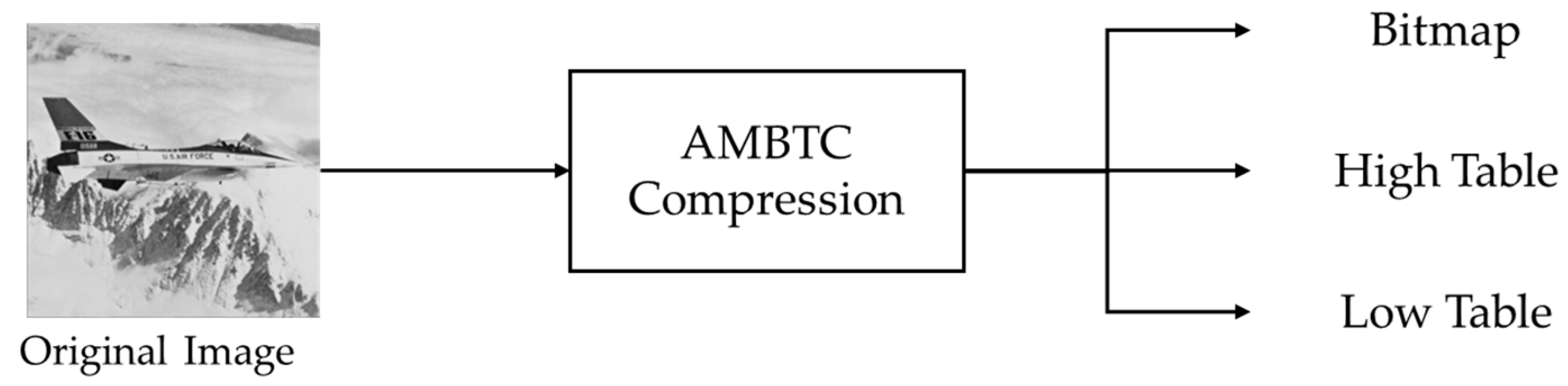
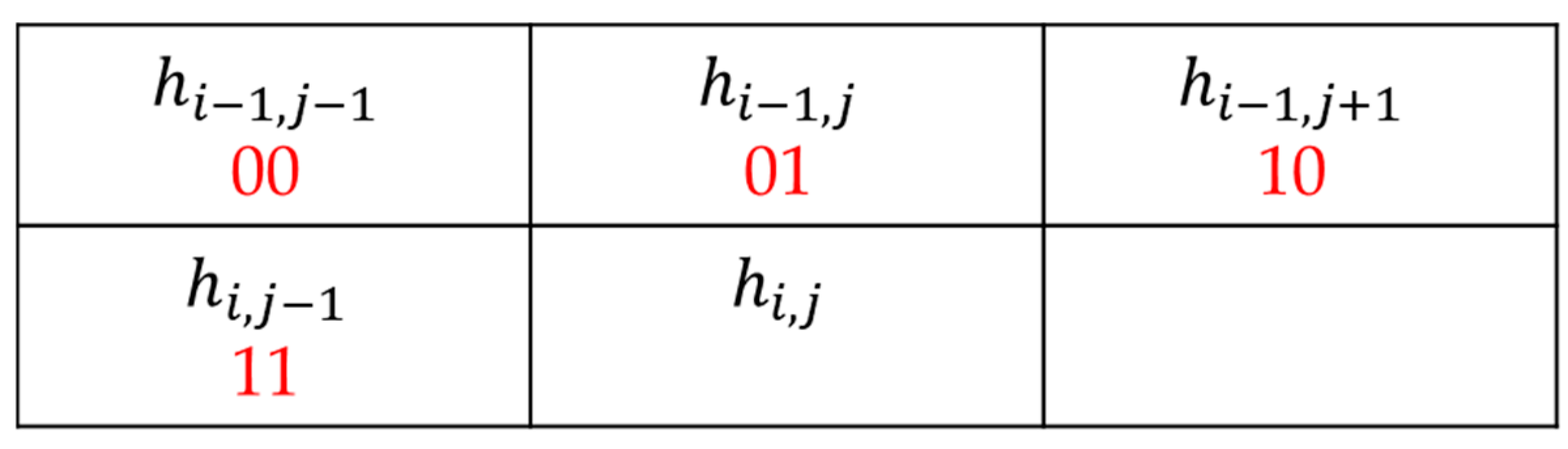
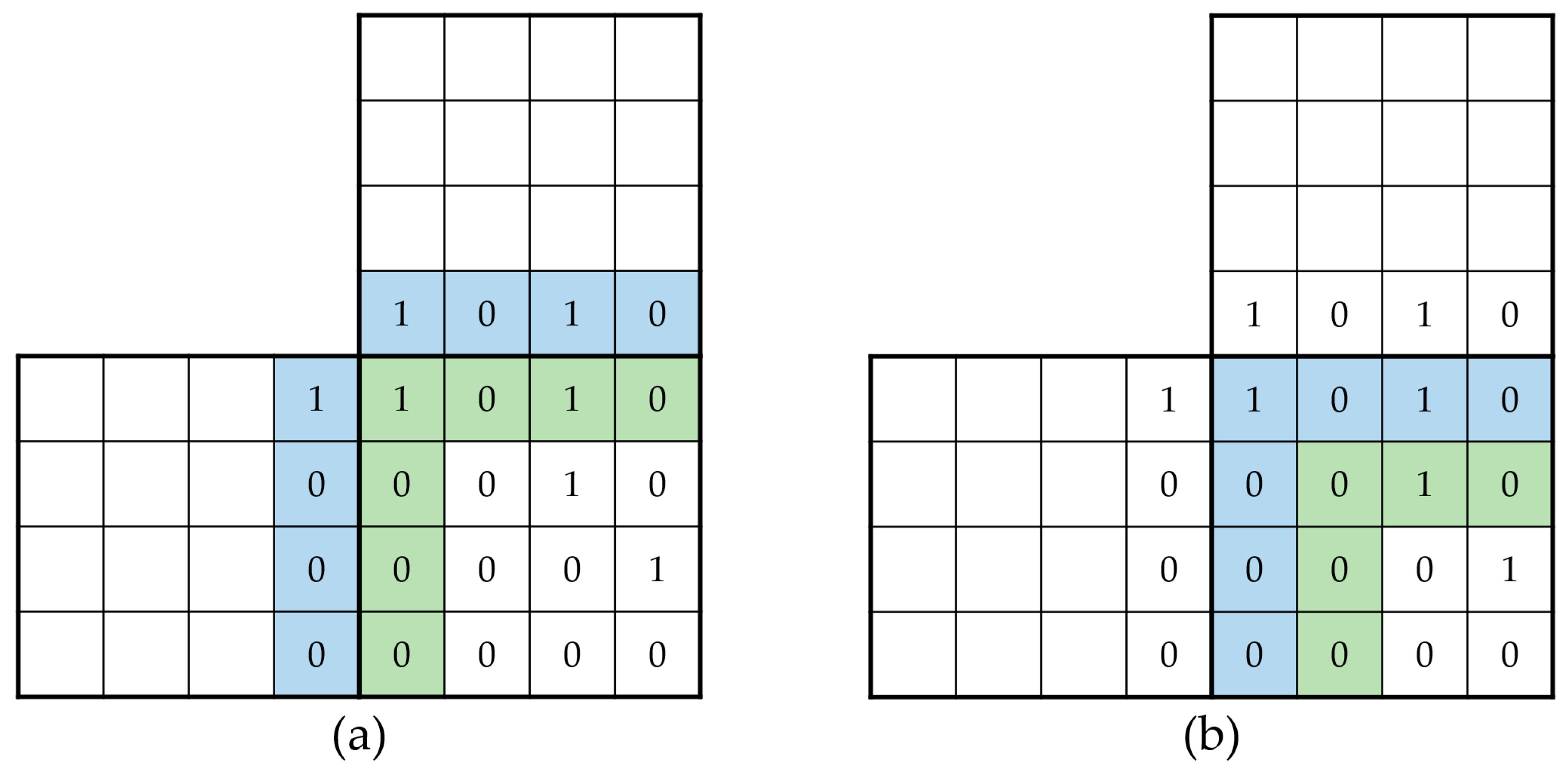
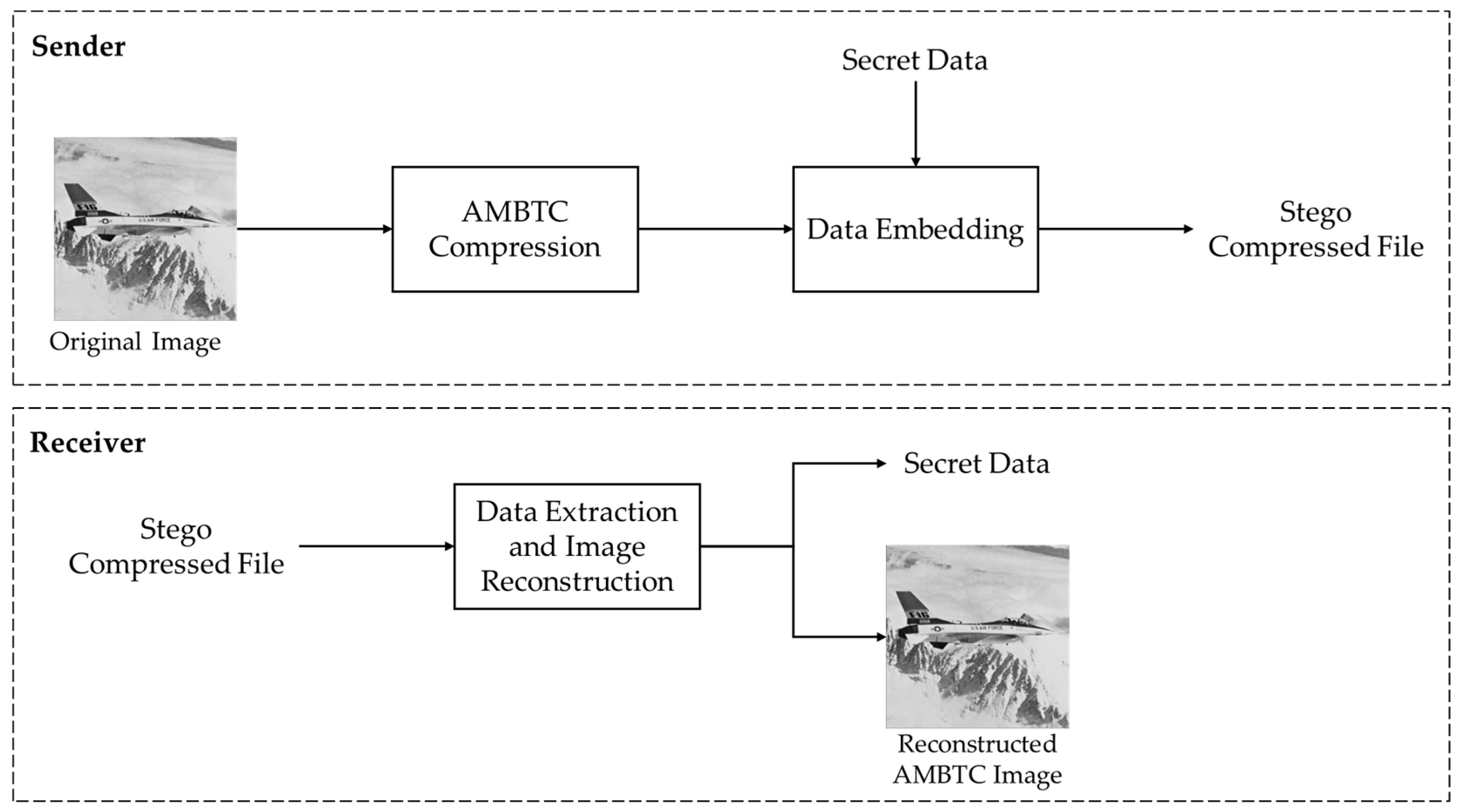
To reduce bandwidth usage in communications, absolute moment block truncation coding is employed to compress cover images. Confidential data are embedded into compressed images using reversible data-hiding technology for purposes such as image management, annotation, or authentication. As data size increases, enhancing embedding capacity becomes essential to accommodate larger volumes of secret data without compromising image quality or reversibility. Instead of using conventional absolute moment block truncation coding to encode each image block, this work proposes an effective reversible data-hiding scheme that enhances the embedding results by utilizing the traditional set of values: a bitmap, a high value, and a low value. In addition to the traditional set of values, a value is calculated using arithmetical differential coding and may be used for embedding. A process involving joint neighborhood coding and logical differential coding is applied to conceal the secret data in two of the three value tables, depending on the embedding capacity evaluation. An indicator is recorded to specify which two values are involved in the embedding process. The embedded secret data can be correctly extracted using a corresponding two-stage extraction process based on the indicator. To defeat the state-of-the-art scheme, bitmaps are also used as carriers in our scheme yet are compacted even more with Huffman coding. To reconstruct the original image, the low and high values of each block are reconstructed after data extraction. Experimental results show that our proposed scheme typically achieves an embedding rate exceeding 30%, surpassing the latest research by more than 2%. Our scheme reaches outstanding embedding rates while allowing the image to be perfectly restored to its original absolute moment block truncation coding form.
Keywords: reversible data hiding; absolute moment block truncation coding; joint neighborhood coding; XOR operation; Huffman coding reversible data hiding; absolute moment block truncation coding; joint neighborhood coding; XOR operation; Huffman coding