Article

The Cognitive Philosophy of Communication


by
Trond A. Tjøstheim
1,
Andreas Stephens
2,*,
Andrey Anikin
1,3 and
Arthur Schwaninger
4
1
Department of Philosophy, Cognitive Science, Lund University, 221 00 Lund, Sweden
2
Department of Philosophy, Theoretical Philosophy, Lund University, 221 00 Lund, Sweden
3
Equipe de Neuro-Ethologie Sensorielle (ENES)/Centre de Recherche en Neurosciences de Lyon (CRNL), University of Lyon/Saint-Etienne, CNRS UMR5292, INSERM UMR_S 1028, 42100 Saint-Etienne, France
4
Department of Philosophy, University of Zurich, 8044 Zurich, Switzerland
*
Author to whom correspondence should be addressed.
Philosophies 2020, 5(4), 39; https://doi.org/10.3390/philosophies5040039

Submission received: 15 October 2020 / Revised: 16 November 2020 / Accepted: 17 November 2020 / Published: 19 November 2020
(This article belongs to the Special Issue Contemporary Natural Philosophy and Philosophies - Part 3)

Abstract

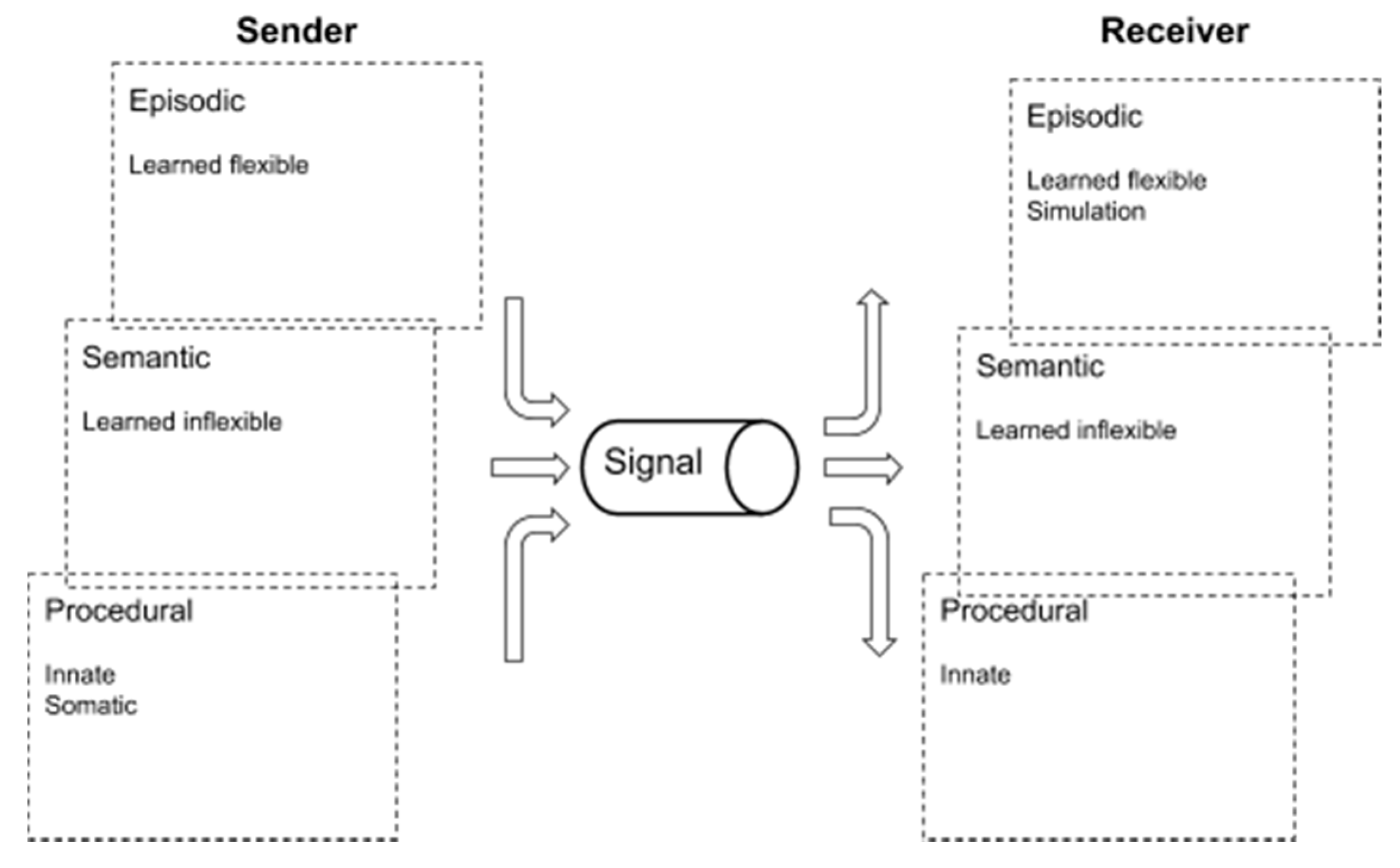
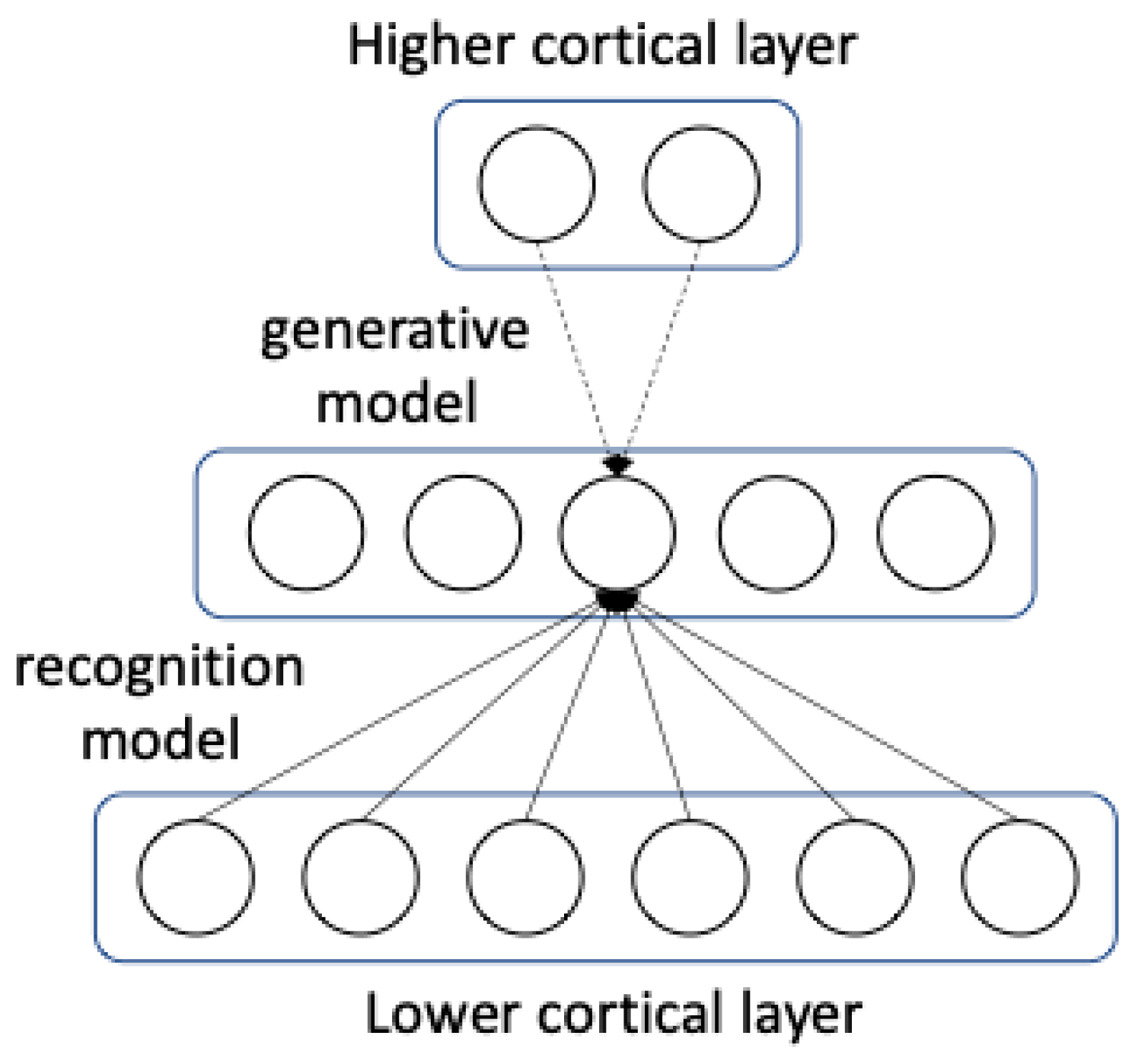
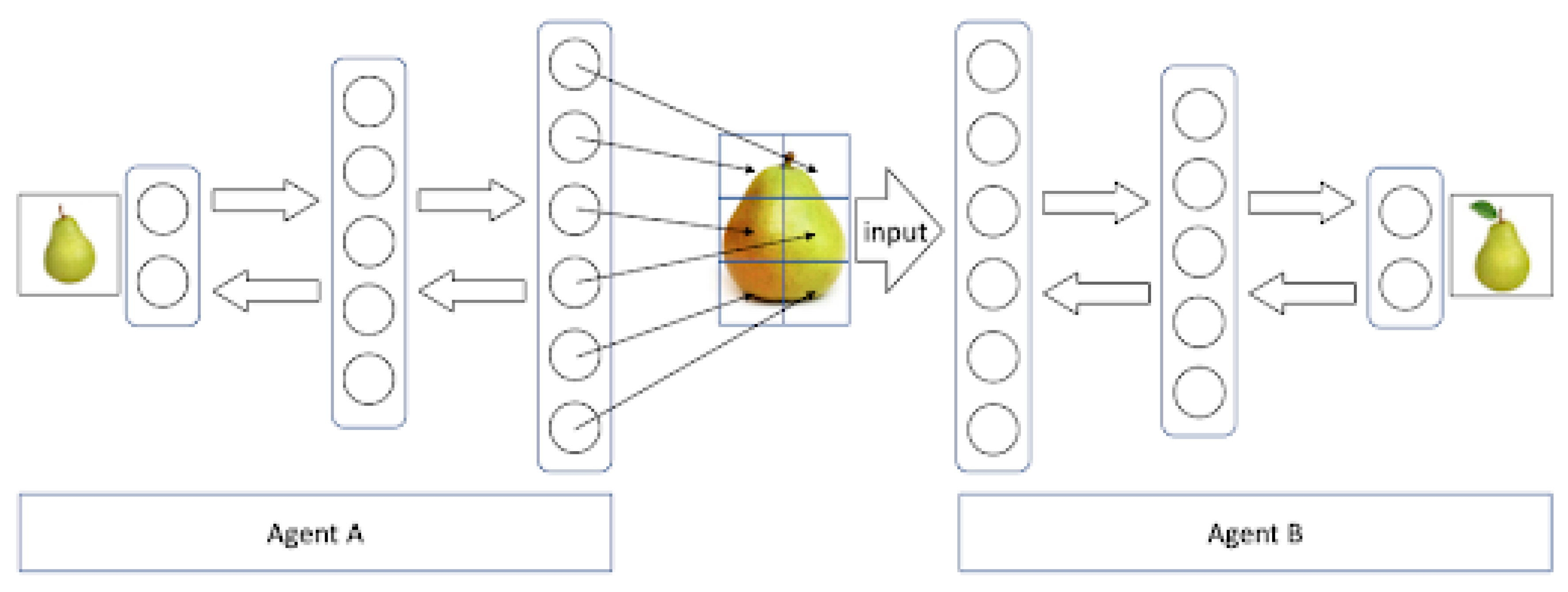
Numerous species use different forms of communication in order to successfully interact in their respective environment. This article seeks to elucidate limitations of the classical conduit metaphor by investigating communication from the perspectives of biology and artificial neural networks. First, communication is a biological natural phenomenon, found to be fruitfully grounded in an organism’s embodied structures and memory system, where specific abilities are tied to procedural, semantic, and episodic long-term memory as well as to working memory. Second, the account explicates differences between non-verbal and verbal communication and shows how artificial neural networks can communicate by means of ontologically non-committal modelling. This approach enables new perspectives of communication to emerge regarding both sender and receiver. It is further shown that communication features gradient properties that are plausibly divided into a reflexive and a reflective form, parallel to knowledge and reflection.
Keywords: communication; reflexive communication; reflective communication; knowledge; memory; artificial intelligence communication; reflexive communication; reflective communication; knowledge; memory; artificial intelligence