
Position-Dependent Hemodynamics of Popliteal Artery Stent Grafts: The POPFLEX Study


 ,
,  , , and
Abstract
1. Introduction
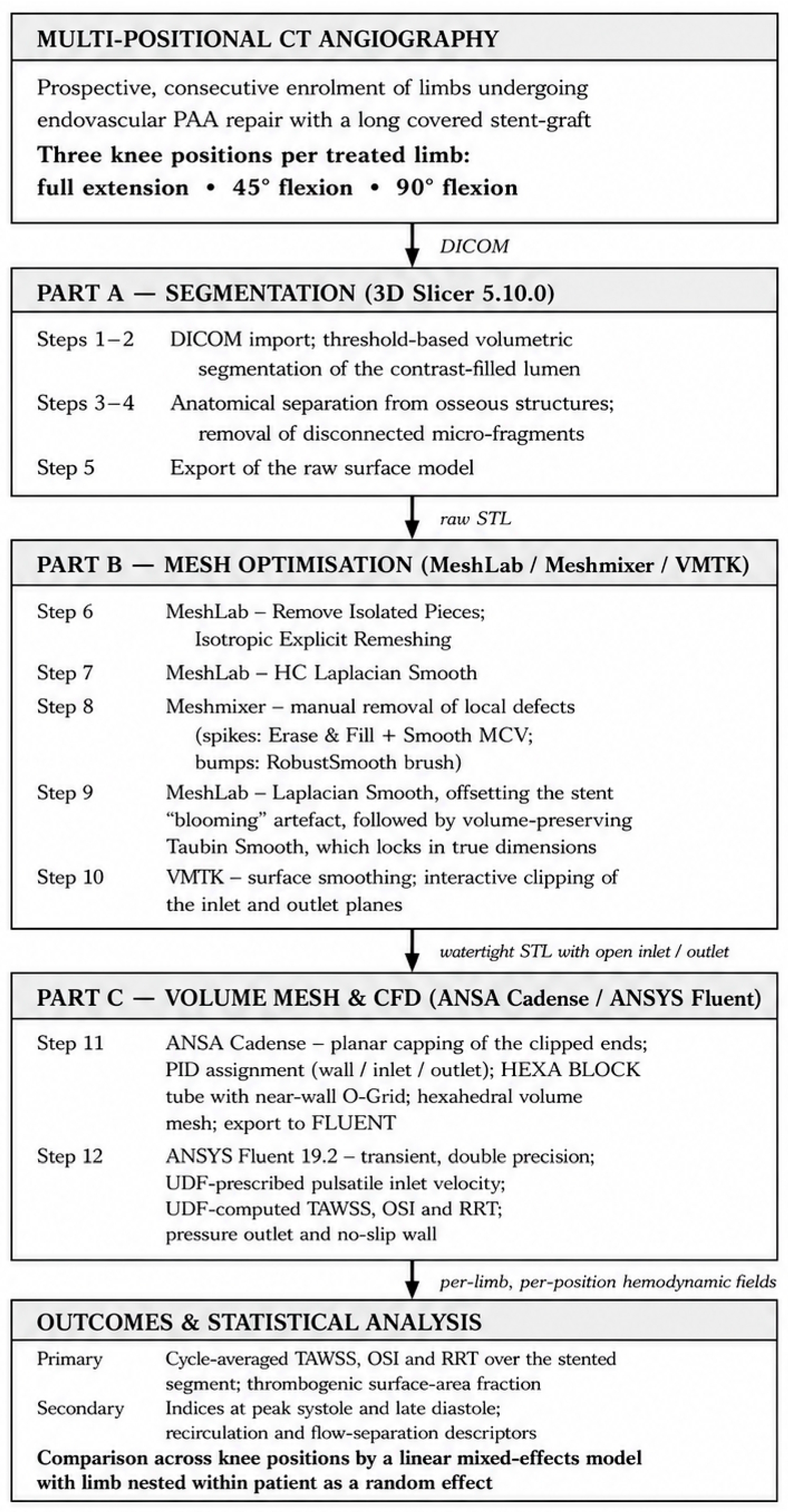
2. Experimental Design
2.1. Study Design, Population and Recruitment
2.2. Materials and Software
2.3. Outcome Measures and Definition of Thrombogenic Thresholds
2.4. Statistical Analysis Plan
3. Procedure
3.1. Part A: Model Generation and Anatomical Separation (3D Slicer)
3.2. Part B: Mesh Optimization (MeshLab, Meshmixer and VMTK)
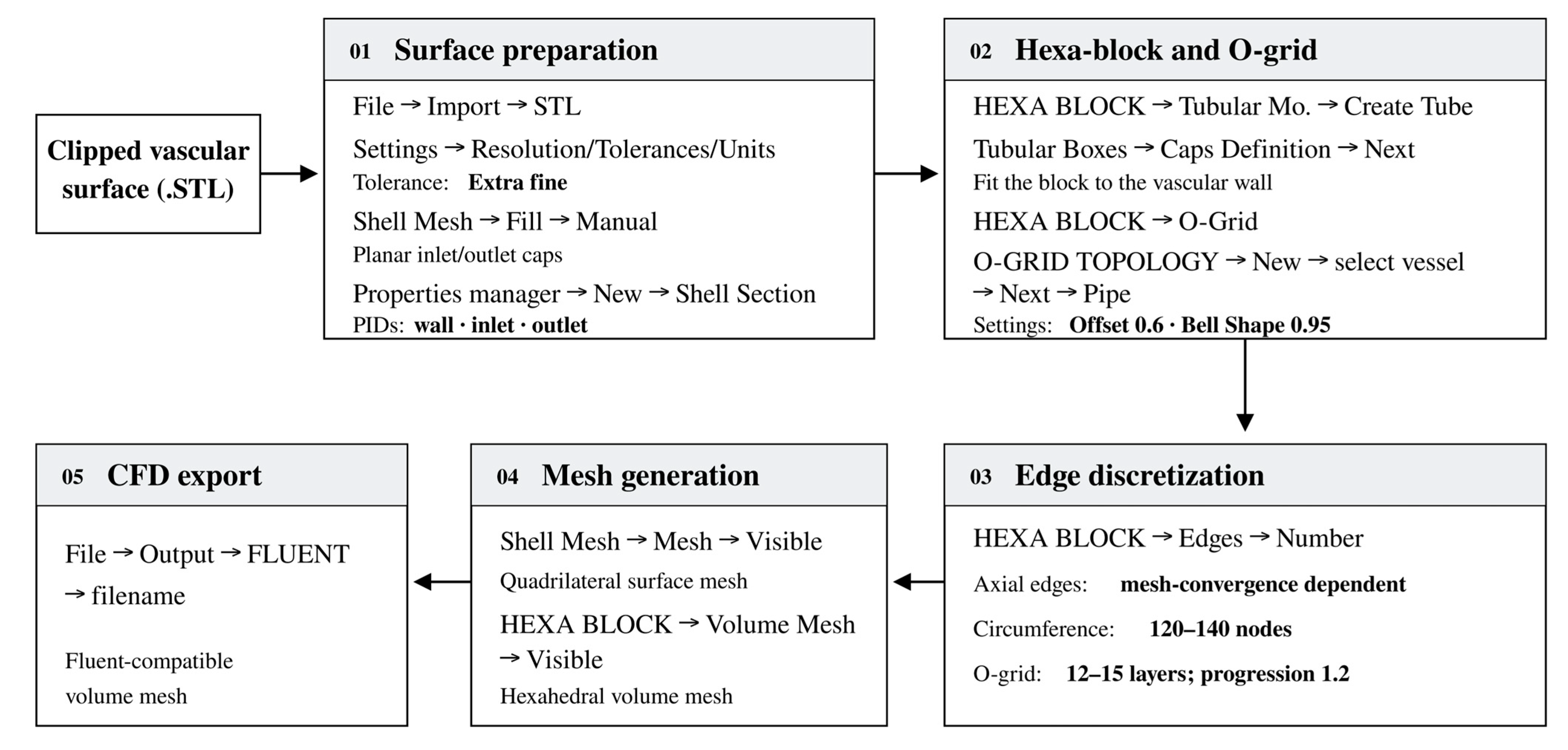
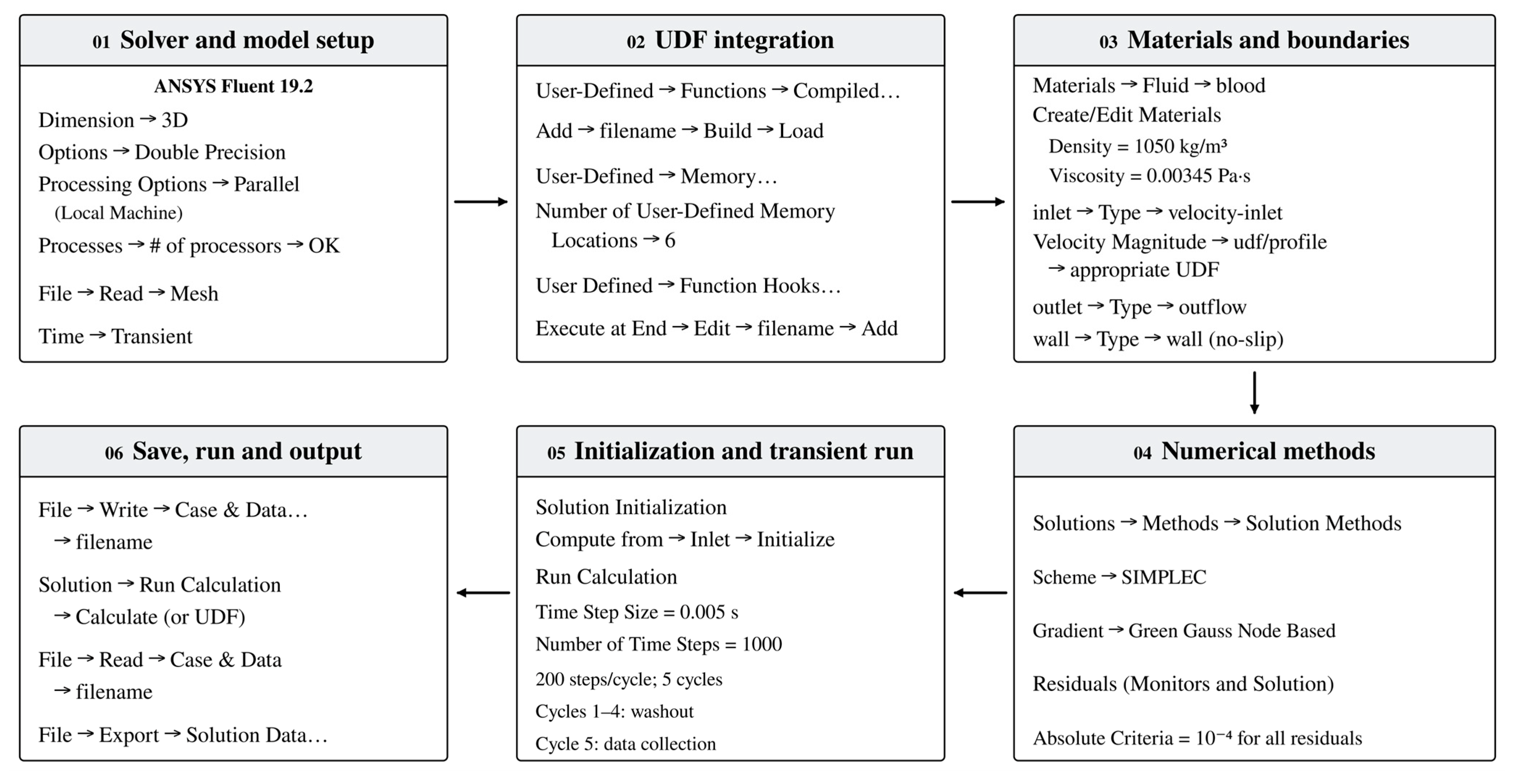
3.3. Part C: Volume Mesh and Blood Flow Simulation (ANSA Cadense, ANSYS Fluent)
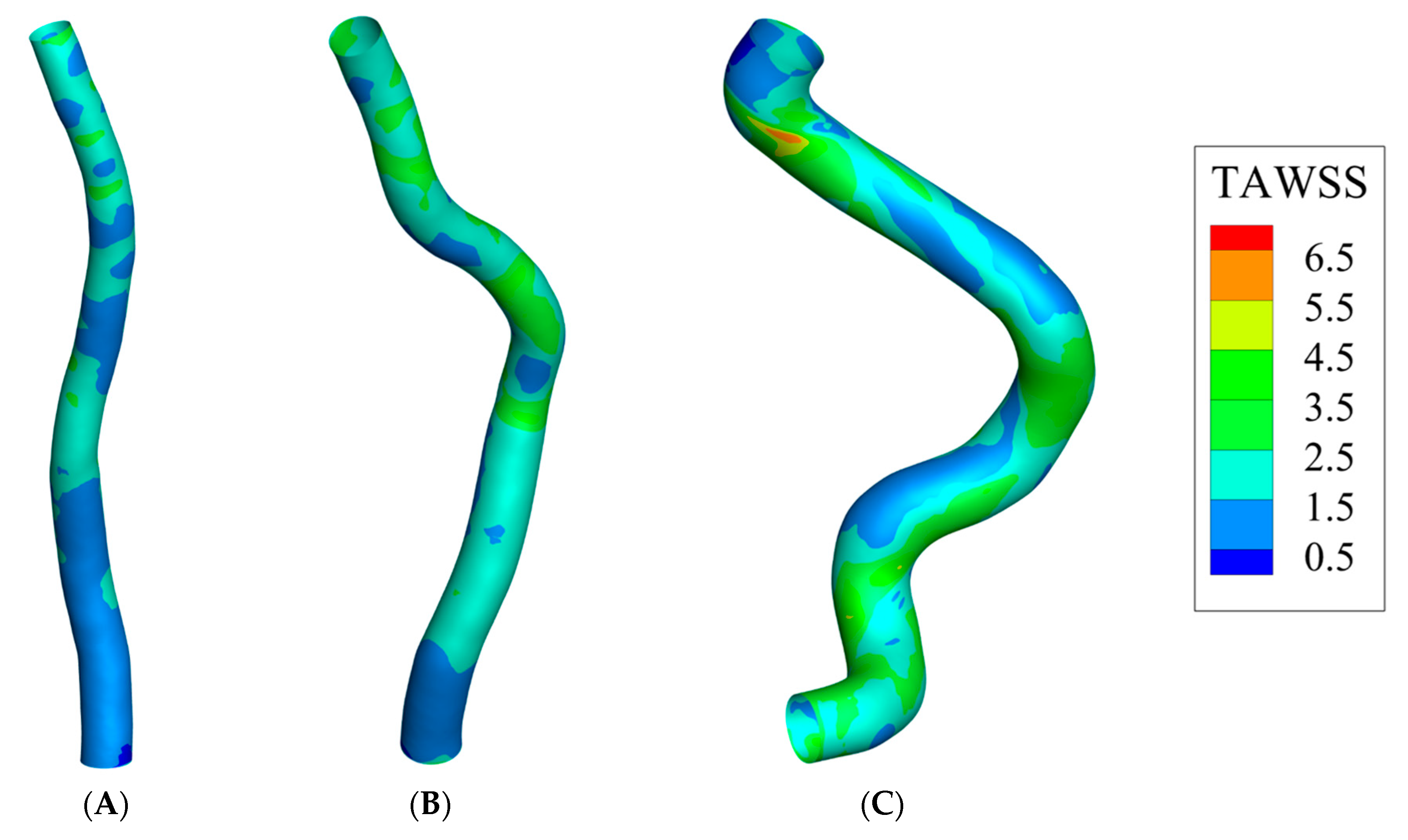
4. Expected Results
- Wall Shear Stress (WSS) and Time-Averaged Wall Shear Stress (TAWSS): Identifying focal areas of abnormally low WSS, which are heavily correlated with endothelial dysfunction and localized thrombus formation.
- Oscillatory Shear Index (OSI): Mapping regions where the direction of blood flow fluctuates significantly during the cardiac cycle, indicating highly disturbed and pro-thrombotic flow regimes.
- Relative Residence Time (RRT): Highlighting areas of severe flow stagnation where blood particles remain trapped near the vessel wall, increasing the likelihood of coagulation.
- Velocity Flow Profiles and Recirculation Zones: Visualizing flow separation and the development of vortices at different angles of knee flexion.
Author Contributions
Funding
Institutional Review Board Statement
Informed Consent Statement
Data Availability Statement
Acknowledgments
Conflicts of Interest
References
- Antonello, M.; Frigatti, P.; Battocchio, P.; Lepidi, S.; Cognolato, D.; Dall’antonia, A.; Stramanà, R.; Deriu, G.P.; Grego, F. Open repair versus endovascular treatment for asymptomatic popliteal artery aneurysm. J. Vasc. Surg. 2005, 42, 185–193. [Google Scholar] [CrossRef] [Scilit] [PubMed]
- Midy, D.; Berard, X.; Ferdani, M.; Alric, P.; Brizzi, V.; Ducasse, E.; Sassoust, G. A retrospective multicenter study of endovascular treatment of popliteal artery aneurysm. J. Vasc. Surg. 2010, 51, 850–856. [Google Scholar] [CrossRef] [Scilit] [PubMed]
- Tielliu, I.F.; Verhoeven, E.L.; Zeebregts, C.J.; Prins, T.R.; Span, M.M.; Dungen, J.J.v.D. Endovascular treatment of popliteal artery aneurysms: Results of a prospective cohort study. J. Vasc. Surg. 2005, 41, 561–567. [Google Scholar] [CrossRef] [Scilit] [PubMed]
- Gökgöl, C.; Diehm, N.; Kara, L.; Büchler, P. In vivo quantification of the deformations of the human popliteal artery during knee flexion. Eur. J. Vasc. Endovasc. Surg. 2013, 46, 597–603. [Google Scholar]
- MacTaggart, J.N.; Phillips, N.Y.; Lomneth, C.S.; Pipinos, I.I.; Bowen, R.; Baxter, B.T.; Johanning, J.; Longo, G.M.; Desyatova, A.S.; Moulton, M.J.; et al. Three-dimensional bending, torsion and axial compression of the femoropopliteal artery during limb flexion. J. Biomech. 2014, 47, 2249–2256. [Google Scholar] [CrossRef] [Scilit] [PubMed]
- Poulson, W.; Kamenskiy, A.; Seas, A.; Deegan, P.; Lomneth, C.; MacTaggart, J. Limb flexion-induced axial compression and bending in human femoropopliteal artery segments. J. Vasc. Surg. 2018, 67, 607–613. [Google Scholar] [CrossRef] [Scilit] [PubMed]
- Ansari, F.; Pack, L.K.; Brooks, S.S.; Morrison, T.M. Design considerations for studies of the biomechanical environment of the femoropopliteal arteries. J. Vasc. Surg. 2013, 58, 804–813. [Google Scholar] [CrossRef] [Scilit] [PubMed]
- Cheng, C.P.; Wilson, N.M.; Hallett, R.L.; Herfkens, R.J.; Taylor, C.A. In vivo MR angiographic quantification of axial and twisting deformations of the superficial femoral artery resulting from maximum hip and knee flexion. J. Vasc. Interv. Radiol. 2006, 17, 979–987. [Google Scholar] [CrossRef] [Scilit] [PubMed]
- Nikanorov, A.; Smouse, H.B.; Osman, K.; Bialas, M.; Shrivastava, S.; Schwartz, L.B. Fracture of self-expanding nitinol stents stressed in vitro under simulated intravascular conditions. J. Vasc. Surg. 2008, 48, 435–440. [Google Scholar] [CrossRef] [Scilit] [PubMed]
- Fedorov, A.; Beichel, R.; Kalpathy-Cramer, J.; Finet, J.; Fillion-Robin, J.-C.; Pujol, S.; Bauer, C.; Jennings, D.; Fennessy, F.; Sonka, M.; et al. 3D Slicer as an image computing platform for the Quantitative Imaging Network. Magn. Reson. Imaging 2012, 30, 1323–1341. [Google Scholar] [CrossRef] [Scilit] [PubMed]
- Taubin, G. A signal processing approach to fair surface design. In Proceedings of the 22nd Annual Conference on Computer Graphics and Interactive Techniques, Los Angeles, CA, USA, 6–11 August 1995; pp. 351–358. [Google Scholar]
- Izzo, R.; Steinman, D.; Manini, S.; Antiga, L. The Vascular Modeling Toolkit: A Python Library for the Analysis of Tubular Structures in Medical Images. J. Open Source Softw. 2018, 3, 745. [Google Scholar] [CrossRef] [Scilit]
- BETA CAE Systems International AG. ANSA, version 24.1.7; Cadence Design Systems, Inc.: San Jose, CA, USA, 2024. Available online: https://www.cadence.com/en_US/home/tools/engineering-simulation/ansa-preprocessor.html (accessed on 20 August 2026).
- Ansys® Fluent, Release 2019 R2; ANSYS, Inc.: Canonsburg, PA, USA, 2019.
- Belkacemi, D.; Abbes, M.T.; Al-Rawi, M.; Al-Jumaily, A.M.; Bachene, S.; Laribi, B. Intraluminal Thrombus Characteristics in AAA Patients: Non-Invasive Diagnosis Using CFD. Bioengineering 2023, 10, 540. [Google Scholar] [CrossRef] [Scilit] [PubMed]
- Tzirakis, K.; Kamarianakis, Y.; Metaxa, E.; Kontopodis, N.; Ioannou, C.V.; Papaharilaou, Y. A robust approach for exploring hemodynamics and thrombus growth associations in abdominal aortic aneurysms. Med. Biol. Eng. Comput. 2017, 55, 1493–1506. [Google Scholar] [CrossRef] [Scilit] [PubMed]
- Peiffer, V.; Sherwin, S.J.; Weinberg, P.D. Computation in the rabbit aorta of a new metric—The transverse wall shear stress—To quantify the multidirectional character of disturbed blood flow. J. Biomech. 2013, 46, 2651–2658. [Google Scholar] [CrossRef] [Scilit] [PubMed]
- Pack, J.D.; Xu, M.; Wang, G.; Baskaran, L.; Min, J.; De Man, B. Cardiac CT blooming artifacts: Clinical significance, root causes and potential solutions. Vis. Comput. Ind. Biomed. Art. 2022, 5, 29. [Google Scholar] [CrossRef] [Scilit] [PubMed]
- Tan, S.; Soulez, G.; Martinez, P.D.; Larrivée, S.; Stevens, L.-M.; Goussard, Y.; Mansour, S.; Chartrand-Lefebvre, C. Coronary stent artifact reduction with an edge-enhancing reconstruction kernel—A prospective cross-sectional study with 256-slice CT. PLoS ONE 2016, 11, e0154292. [Google Scholar] [CrossRef] [Scilit] [PubMed]
- Li, P.; Xu, L.; Yang, L.; Wang, R.; Hsieh, J.; Sun, Z.; Fan, Z.; Leipsic, J.A. Blooming Artifact Reduction in Coronary Artery Calcification by A New De-blooming Algorithm: Initial Study. Sci. Rep. 2018, 8, 6945. [Google Scholar] [CrossRef] [Scilit] [PubMed]
- Gamage, P.T.; Dong, P.; Lee, J.; Gharaibeh, Y.; Zimin, V.N.; Dallan, L.A.; Bezerra, H.G.; Wilson, D.L.; Gu, L. Hemodynamic alternations following stent deployment and post-dilation in a heavily calcified coronary artery: In silico and ex-vivo approaches. Comput. Biol. Med. 2021, 139, 104962. [Google Scholar] [CrossRef] [Scilit] [PubMed]
- Colombo, M.; He, Y.; Corti, A.; Gallo, D.; Casarin, S.; Rozowsky, J.M.; Migliavacca, F.; Berceli, S.; Chiastra, C. Baseline local hemodynamics as predictor of lumen remodeling at 1-year follow-up in stented superficial femoral arteries. Sci. Rep. 2021, 11, 1613. [Google Scholar] [CrossRef] [Scilit] [PubMed]
- Tzirakis, K.; Kamarianakis, Y.; Kontopodis, N.; Ioannou, C.V. The Effect of Blood Rheology and Inlet Boundary Conditions on Realistic Abdominal Aortic Aneu-rysms under Pulsatile Flow Conditions. Bioengineering 2023, 10, 272. [Google Scholar] [CrossRef] [Scilit] [PubMed]
- Tzirakis, K.; Kamarianakis, Y.; Kontopodis, N.; Ioannou, C.V. Classification of Blood Rheological Models through an Idealized Symmetrical Bifurcation. Symmetry 2023, 15, 630. [Google Scholar] [CrossRef] [Scilit]
- Lotfi, A.; Simmons, A.; Barber, T. Evaluation of Different Meshing Techniques for the Case of a Stented Artery. J. Biomech. Eng. 2016, 138, 4032502. [Google Scholar] [CrossRef] [Scilit] [PubMed]
- Prakash, S.; Ethier, C.R. Requirements for mesh resolution in 3D computational hemodynamics. J. Biomech. Eng. 2001, 123, 134–144. [Google Scholar] [CrossRef] [Scilit] [PubMed]
- Abbasian, M.; Shams, M.; Valizadeh, Z.; Moshfegh, A.; Javadzadegan, A.; Cheng, S. Effects of different non-Newtonian models on unsteady blood-flow hemodynamics in pa-tient-specific arterial models with in-vivo validation. Comput. Methods Programs Biomed. 2020, 186, 105185. [Google Scholar] [CrossRef] [Scilit] [PubMed]
- Fuchs, A.; Berg, N.; Fuchs, L.; Wittberg, L.P. Assessment of rheological models applied to blood flow in human thoracic aorta. Bioengineering 2023, 10, 1240. [Google Scholar] [CrossRef] [Scilit] [PubMed]



| Processing Step | VMTK Command(s) | Principal Options | Purpose |
|---|---|---|---|
| Surface conversion | vmtksurfacereader → vmtksurfacewriter |
| Imports the original STL surface and converts it to VTK PolyData format for subsequent processing. |
| Surface smoothing | vmtksurfacesmoothing |
| Reduces surface irregularities and segmentation noise while preserving vascular geometry. |
| Surface clipping | vmtksurfaceclipper |
| Interactively removes unwanted portions of the model and defines the final inlet and outlet boundaries. |
| Surface subdivision | vmtksurfacesubdivision | Subdivision settings | Refines the polygonal surface by subdividing its elements before final export. |
| Final surface export | vmtksurfacereader → vmtksurfacewriter |
| Converts the processed VTP surface back to STL format for downstream meshing or simulation. |
| Visual inspection | vmtksurfaceviewer | Used after processing operation via --pipe | Provides visual quality control of the surface throughout the preprocessing workflow. |
Disclaimer/Publisher’s Note: The statements, opinions and data contained in all publications are solely those of the individual author(s) and contributor(s) and not of MDPI and/or the editor(s). MDPI and/or the editor(s) disclaim responsibility for any injury to people or property resulting from any ideas, methods, instructions or products referred to in the content. |
© 2026 by the authors. Licensee MDPI, Basel, Switzerland. This article is an open access article distributed under the terms and conditions of the Creative Commons Attribution (CC BY) license.
Share and Cite
Chronis, C.; Tzirakis, K.; Kontopodis, N.; Galanakis, N.; Kehagias, E.; Ioannou, C.V. Position-Dependent Hemodynamics of Popliteal Artery Stent Grafts: The POPFLEX Study. Methods Protoc. 2026, 9, 133. https://doi.org/10.3390/mps9050133
Chronis C, Tzirakis K, Kontopodis N, Galanakis N, Kehagias E, Ioannou CV. Position-Dependent Hemodynamics of Popliteal Artery Stent Grafts: The POPFLEX Study. Methods and Protocols. 2026; 9(5):133. https://doi.org/10.3390/mps9050133
Chicago/Turabian StyleChronis, Christos, Konstantinos Tzirakis, Nikolaos Kontopodis, Nikolaos Galanakis, Elias Kehagias, and Christos V. Ioannou. 2026. "Position-Dependent Hemodynamics of Popliteal Artery Stent Grafts: The POPFLEX Study" Methods and Protocols 9, no. 5: 133. https://doi.org/10.3390/mps9050133
APA StyleChronis, C., Tzirakis, K., Kontopodis, N., Galanakis, N., Kehagias, E., & Ioannou, C. V. (2026). Position-Dependent Hemodynamics of Popliteal Artery Stent Grafts: The POPFLEX Study. Methods and Protocols, 9(5), 133. https://doi.org/10.3390/mps9050133